The world saw its worst refugee crisis between 1988 and 1994, coinciding with the end of the so-called Cold War, increasing globalisation and civil wars along ethnic lines.
After two decades of relative ease, 2015 and 2016 again witnessed an upsurge in refugee population, starting with the Syrian crisis and the latest, the Rohingya exodus from Myanmar.India is home to nearly 2 million refugees, with a large percentage coming from China (including a large number of Tibetan refugees) and Sri Lanka (which was torn by civil war from 2006-09).
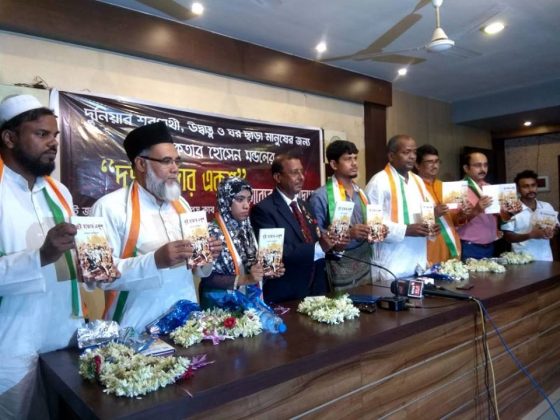
A book called “Dui Hazar Ekush”for the Refugees worlwide is published today at Kolktata Press Club. Renown Poet & Journalist Mokter Hossain Mondal has written this book for the Refugees people in Mynanmar and Syria. He dedicated this book to the refugees people across the globe.
The cover of this book has been unveiled by Ayesha Noor, three time gold winner in karate championship who dwelt in a slum area in Kolkata.
The life story of the footpath dwellers and the life story of the Refugees of Syria, Somalia & Rohingya people were narrated in this book. Here the poet tried to make the way to solve their problems.
This book has been published by Disha Prakashani.
source: http://www.financialsamachar.com / F Samachar / Home> Metrolife / July 05th, 2018
Mir Qasim Ali Khan Bahadur was the Nawab of Bengal between 1760 and 1763. He is most famous for his dealings with the British: he was put on the throne through the intervention of the East India Company, but a few years later was defeated by their forces at the Battle of Buxar. This defeat marked the decline of the political power of the Nawabs of Bengal and was an important moment in East India Company imperial consolidation in Bengal.
All of this is important, of course, but I’m here to discuss a far more pressing question: what did the Nawab and his contemporaries eat?
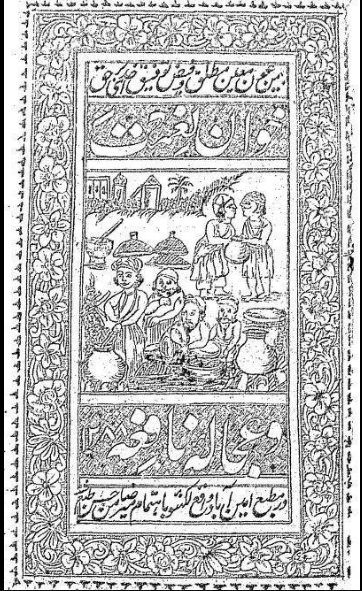
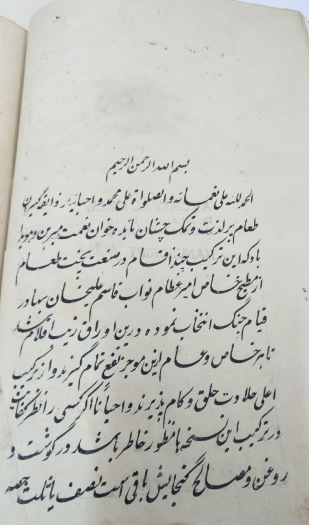
I encountered this manuscript, titled Khwan-e Nimat, “The Beneficent Table,” at the library of Jamia Millia Islamia here in Delhi. Composed in Persian, the text promises its readers a description of “the art of cooking from the private kitchen of the chef of Nawab Qasim Ali Khan Bahadur.”
The text describes how the Nawab’s chef prepared fish kabab with rice, several types of meat kababs, fried eggs, sweets made with almonds, a few different types of pickles, pulao, khichri, qorma, various dals, mango jam, sheermal (a sweet bread), and on and on.
Although I originally encountered this work in manuscript form at Jamia, after some hunting I discovered that a lithographed version was printed in 1871 in Lucknow.
The printing was done by a small press, but it means that there was at least some awareness of and interest in the text in the late nineteenth century, a century after the political power of the Nawabs of Bengal had waned. As such, it offers us insight into not only the culinary preferences of Mir Qasim and his court, but also the culinary interests and understanding of food history among North Indians in the high colonial era.
Over the course of my research I’ve stumbled on several cookbooks written in Persian and Urdu over the course of the eighteenth and nineteenth century, but I’ve found there is very little written on colonial-era traditions of writing about food in these languages. Many of the Indian food histories written on this period focus on the British adaptations of Indian cuisine, and exchanges between British and Indian cooks and palates. This text and its later publication tell an alternative (and I’d argue more interesting!) story: that of Indian interest in various local cuisines, and the desire of members of broader literate classes to know and perhaps try to prepare cuisines cooked by regional elites and leaders.
I’m craving fish today, so here’s a rough translation of how the Nawab’s chef prepared his fish kabab. Following these recipes is a bit of a challenge because most of the units of measurement appear to be regionally or temporally specific, and have changed significantly; many are not in any of the Urdu or Persian dictionaries I’ve consulted. I’ve therefore taken educated guesses based in large part on what I know about cooking, and the limited information I could find on the units used.
Ingredients:
Fish (type not specified, perhaps about 650 grams)
Butter (possibly referring to ghee; approximately 80 grams)
Onion (perhaps two-three)
Curd (approximately 15 grams)
Malai (approximately 20 grams)
Coriander (approximately 20 grams)
Black pepper (approximately 15 grams)
Gram (Chickpea) Flour (approximately 60 grams)
Pepper (mirch, presumably red?) (approximately 20 grams)
Cloves
ٓA pinch of lemon juice
A pinch of cardamom
Several pinches of salt
Cut the fish into chunks in the size of kababs and place them aside. Prepare the gram flour well (toast it?). After that, mix it together with the salt, pepper, crushed coriander, and some of the butter. Mix this into each kabab. Then finely chop up the onions, and fry them in some butter and then also mix the onions with some butter into the kababs. Then mix the lemon juice, cloves, and cardamom together. Drain the curd of water and strain the malai, and coat the kababs with these things. Then place these kababs in pot with the (cooked?) rice, and take the remaining spices and sprinkle them into with the rice and kababs. Roast/fry (prepare over a hot surface) and enjoy!
source: http://www.archivaldistractions.wordpress.com / Archival Distraction / by Amanda Lanzillo / July 07th, 2018
Underneath the violence, the festering heart of Kashmiri society
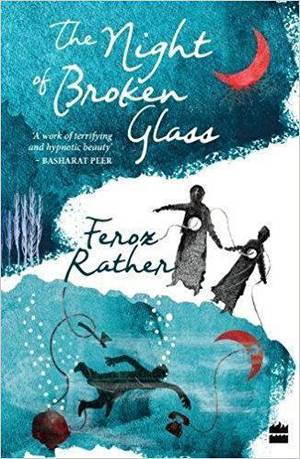
Fiction has the power to transform our perceptions about peoples and places. Feroz Rather’s The Night of Broken Glassis such a book; it hits you right in the gut. The author peeks into the dark, festering heart of Kashmiri society, while dramatising the spectacle of military violence. Recurring characters interconnect the 13 chapters/ short stories of the novel. Through these characters the author reveals the larger issues of religion, caste and gender that shape Kashmir.
The first story, ‘The Old Man in the Cottage’, is a disturbing tale of unfulfilled revenge, narrated by a man who seethes with an anger he has buried inside for 25 years. He broods and savours the idea of killing a policeman who tortured him along with Major S, a sadistic military man.
Major S’s presence hovers like a dark cloud over the lives of all the characters. After inflicting unthinkable violence on them he has to deal with his restive subconscious. ‘The Nightmares of Major S’ captures his internal chaos acutely and is probably the most powerful story.
The author pierces the blanket of violence that envelops the lives of these characters, and draws the reader’s attention to the internal contradictions of Kashmiri society. The mosque, for example, is a site of caste hierarchy, where Gulam, a lower-caste cobbler, is under great social pressure.
When two friends, Mohsin and Tariq, are incarcerated together, I was struck by the force of Tariq’s words: “Faith, my friend, is the consolation of the weak and foolish…”
Rather’s lyricism evokes the scarred landscape beautifully. His sense of place is so strong, it reminded me of Banville and Nabokov.
Rather is a poet at heart who has decided to engage with history, a sentiment reflected in the epigraph from the Polish poet Wislawa Szymborska: “History did not greet us with triumphal fanfares/ It flung dirty sand into our eyes.”
The writer is assistant editor with New York-based magazine Café Dissensus, and writes for several publications in India and Pakistan.
The Night of Broken Glass; Feroz Rather, Harper Collins, ₹399
source: http://www.thehindu.com / The Hindu / Home> Books / by Adil Bhat / July 07th, 2018
An Exhibition on Holy Quran was inaugurated at the Dr Zakir Husain Library in Jamia Millia Islamia (JMI) on 11 June. The exhibition, organised in collaboration with the Iran Cultural House, was launched by Prof Talat Ahmad in the presence of Masood Rezvanian, Ambassador of the Islamic Republic of Iran.
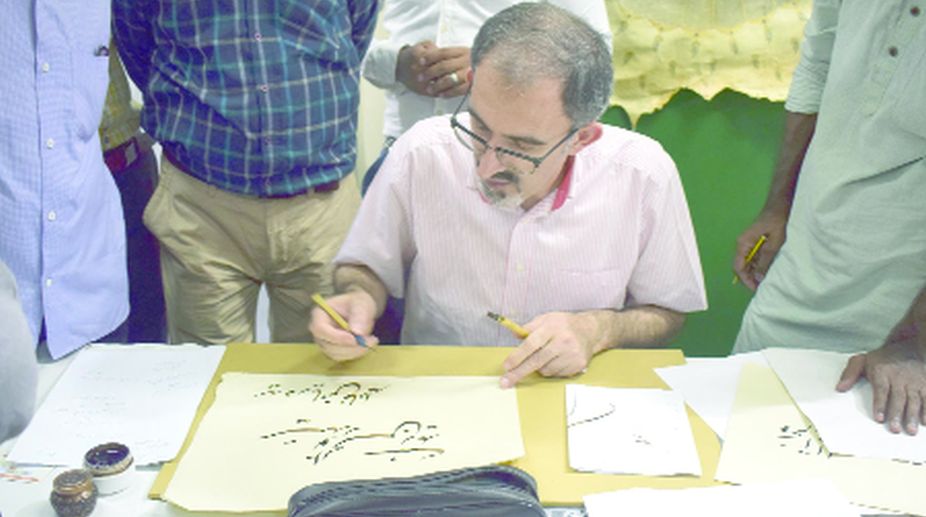
The exhibition includes a rare collection of manuscripts of the Holy Quran dating back to the 15th century. The manuscripts, written in Arabic, are in different calligraphic styles like Naskh, Thuluth, Muhaqqaq, Nashtalique and Shibasta. Beside this, the exhibition also displays rarely published translations of the Holy Quran in several Indian languages, including Hindi, Urdu, Kannada, Tamil and Malayalam, and in foreign languages, including English, Japanese, French, German, Burmese, Turkish and Persian.
Calligraphy as an art form came to India during the Mughal period between 16th century and 19th century. The Mughal Empire had close ties with the Iranian Empire, which led to the cultural exchange of the art forms. This led to the spread of Iranian influence in art, architecture and calligraphy.
Among the exhibits are the smallest and the largest Quran. Other exhibits include rare Quranic manuscripts and Quran written on different materials like ivory, metal, animal skin, wood and handmade paper.
source: http://www.thestatesman.com / The Statesman / Home> Features / by Majid Alam / New Delhi / June 24th, 2018
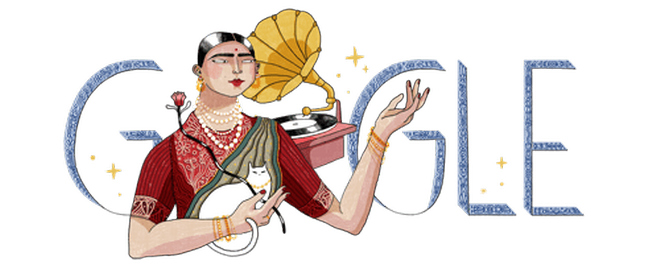
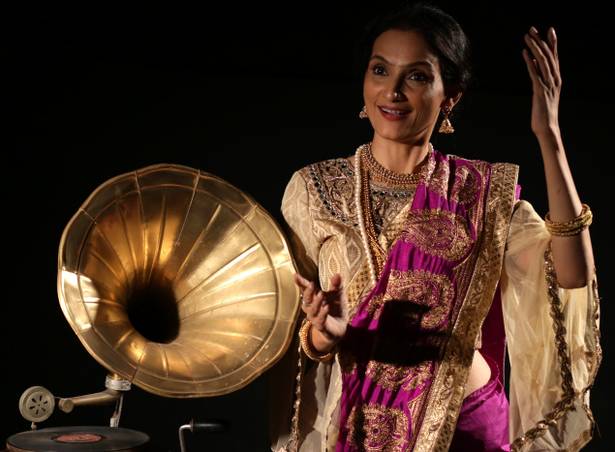
Today’s Google doodle features legendary musician and dancer Gauhar Jaan, the first Indian to record music on a 78 rpm record, thus opening up a new avenue for Indian classical music. Gauhar Jaan was born on this day in 1873.
The illustration is by Aditi Damle, showing Gauhar Jaan with her cat, and the gramaphone in the background.
Gauhar Jan
Gauhar Jaan was born Angelina Yeoward to an Armenian Christian father and an Indian Jewish mother. Angelina converted to Islam along with her mother in the 1880s and became Gauhar Jaan. Her mother, ‘Badi’ Malka Jaan, was an accomplished Kathak dancer and singer and was a courtesan in Benaras. Gauhar learned classical music and dance from her mother. The duo moved to Kolkata later, where Gauhar learned more classical forms such as the Patiala gharana, Dhrupad, Thumri, and the Bengali keertan. She started singing songs penned by Rabindranath Tagore much before it came to be known as ‘Rabindra Sangeet.’
Her maiden music concert was when she was as young as 17 years. Gauhar began giving dance performances too after a few years. She went on to perform in many parts of India, including Mysuru, Chennai, Dharbanga, and Allahabad. Gauhar used her travels as an opportunity to learn regional art forms. She could sing in as many as 20 languages.
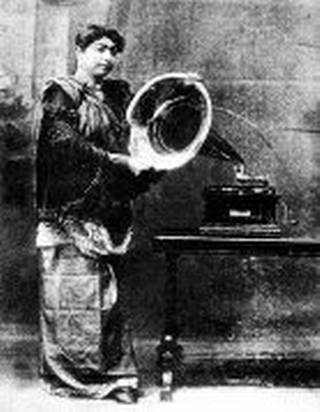
When Frederick William Gaisberg, the iconic recording engineer from the Gramophone Company, visited India to record Indian music, Gauhar Jaan was the first musician to accept his offer. This was at a time when her male counterparts were reluctant to accept a new technology, which they feared would spoil their voice. On the day of the trial recording, she is believed to have said “My name is Gauhar Jan,” according to Suresh Chandvankar of the Society of Indian Record Collectors.. This eventually became the label of the first Indian album. Gauhar has over 200 records to her credit. In 1994, the Gramophone Company re-released 18 of her songs as a collection.
Rajeshwari Sachdev as Gauhar.
“Gauhar Jaan was exceptional in more ways than one… she created a template to showcase something as expansive as Hindustani music in just three minutes!” said Vikram Sampath, who wrote her biography ‘My Name Is Gauhar Jaan! The Life and Times of A Musician.’ . Earlier gramaphone records would last only for three minutes and artists had to scream into horns as the acoustic technology was in its nascent stage. Gauhar’s method of recording was adopted by many women singers, which eventually led to more women taking up recording.
In the book, Mr. Sampath has chronicled the life and times of Gauhar, including her lavish lifestyle, her ill-fated relationships, and dwindling health during later years. There is an interesting story about the cat that is featured along with Gauhar in Tuesday’s Doodle. It is said that Gauhar spent ₹20,000 in the early 1900s and threw a party when her cat delivered a litter of kittens, according to historian V. Muthiah. However, she spent her last days as a court musician in the Mysore Maharaja’s palace for a sum of ₹500 per month, before she passed away on January 17, 1930.
Director Ashutosh Gowarikar has bought the movie rights for Mr. Sampath’s book, hoping to bring Gauhar’s life to the silver screen. Gauhar’s life had been enacted as a play directed by Lillete Dubey. Singer Rajeshwari Sachdev played the title role, while Zila Khan played the older Gauhar.
source: http://www.thehindu.com / The Hindu / Home> Sci-Tech> Internet / by K. Deepalakshmi / June 26th, 2018
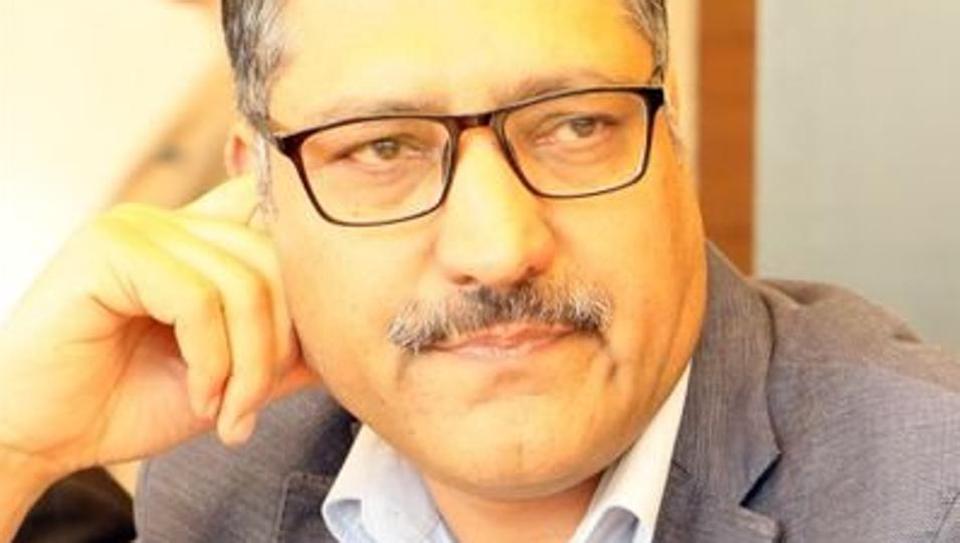
Shujaat Bukhari was leaving his office in Press Enclave in Srinagar’s Lal Chowk when he was shot at. He is in a critical condition, police said.
Shujaat Bukhaari is the editor of newspaper Rising Kashmir. (Picture courtesy: Twitter/Shujaat Bukhari)
Veteran journalist and Rising Kashmir editor Shujaat Bukhari was shot dead by unidentified gunmen outside his office in the heart of this Jammu and Kashmir capital, police officials said on Thursday.
Bukhari, who was leaving his office in Press Enclave in the city centre Lal Chowk for an iftar party when he was shot, officials said.
The two policemen who were guarding him are also injured, they added.
source: http://www.hindustantimes.com / Hindustan Times / Home> India / by PTI, Srinagar / June 14th, 2018
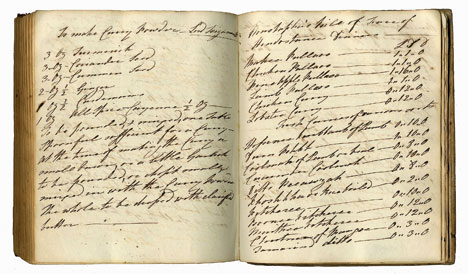
RICH DIET: A handwritten cookery manuscript containing a glimpse of the menu from England’s first Indian restaurant has sold for $11,344 (Rs 7.6 lakh) at a London book fair.
It refers to dishes like “pineapple pullaoo” and “chicken currey” from the Hindoostane Dinner and Hooka Smoking Club, opened in 1809 at Portman Square, London, by Sake Dean Mahomed, whose roots lay in Bihar.
“This is the first known record of a priced menu from Britain’s first Indian restaurant – at a time when printed menus were rarely available,” said Brian Lake of Jarndyce Antiquarian Booksellers in London, which sold the volume at the ABA Rare Book Fair to an American institution last month.
The manuscript, titled Receipt Book 1786 on the front, also contains handwritten recipes and receipts. It includes a two-page “bill of fare” from Hindoostane, listing 25 Indian dishes with prices.
These include makee pullaoo (1.1.0 pounds), pineapple pullaoo (1.16.0 pounds), chicken currey (0.12.0 pounds), lobster curry (0.12.0 pounds), coolmah of lamb or veal (0.8.0 pounds), together with breads, chutneys and other dishes.
It ends by noting that there are “various other dishes too numerous for insertion”.
Towards the end is a recipe “to make a curry powder”, attributed to Lord Teignmouth (1751-1834), who was governor-general of Bengal between 1793 and 1797 and later became a patron of Mahomed’s restaurant.
Mahomed went bankrupt in 1812, and the eatery struggled on as Hindostanee Coffee House under a new management before disappearing in 1833.
source: http://www.telegraphindia.com / The Telegraph,Calcutta,India / Home> India / PTI / June 04th, 2018
In the heart of Hazratganj, at the cut which turns into Lalbagh, stands a large bank. The cars and two-wheelers parked there spill onto the road. There are vendors, mechanics, and just people waiting to go back into the bank when the clerk beckons them. The atmosphere looks like any bland public sector office.
However, a few steps into the compound will lead you to a large colonial-era house. The exterior is yellowing, the plaster is coming off but the sheen of its wooden door frames is intact. The windows, too, retain the same glass, broken at several places but reflecting, literally, the charm of what the house must have seen through the years.
Called No. 2 Mall Road by the family that lived there and generations after it, the house did not belong to ordinary people. It was the abode of one of the finest writers Lucknow has produced.
Author Attia Hosain was born in that house in 1913 and lived there for the first 19 years of her life. Traces of the house are found in her only but much acclaimed novel, ‘Sunlight on a Broken Column’. It is also part of the Masters’ in English syllabus at Delhi University.
“The front part was my grandfather’s domain — a big study filled with books. Here he entertained visitors. The rear part of the house was my grandmother’s domain. Behind the house was a garden. There was a second house, called the small house, but in fact two stories high, and each of the children had their own rooms,” says Shama Habibullah, Attia’s daughter, now 75 years old. She is a filmmaker and lives in Mumbai. She spent a large part of her childhood there.
The house was sold to government in 1956. Attia’s older brother sold it because zamindari was abolished and no one had the means to maintain a house of that size. Besides, he was nominated for foreign service and had to leave India. “No matter how much we miss it, at that time, selling the house was the best solution and it was the right thing to do,” says Shama.
Eighty-six year-old Shahid Mushir Kidwai was born in No. 2 Mall Road in 1929. “I lived there for the first 10 years of his life. I used to go to La Martiniere College from there,” says Kidwai, the son of Attia’s eldest sister. Attia khala is special to him. “She loved me dearly. When my mother was carrying me, she felt it would be a daughter but Attia khala said she would have a son. When I was born, Attia khala was delighted.”
Kidwai vividly remembers Attia’s wedding in 1933. “Her husband Ali Bahadur Habibullah’s family lived across the street in Hazratganj. He was my aunt’s son. We used to have lot of fun running across both houses. It was a beautiful wedding.” Many characters in Attia’s stories are people Kidwai saw in his childhood. “From a servant we had to a pet dog, many have figured in her stories on some form or the other,” he says. Not only the family, but several homeless and destitute people lived in that house, that had exquisite Carrara marble floors. “After it was sold, whenever my mother, her siblings or their children passed by that side in Ganj, they never looked at the house. Such was the pain of losing it,” he says. “It is a period piece. It could have been a heritage building. Now, there is a garbage heap in front of it. People spit against the walls. It is sad,” says a family member.
Attia left India in 1947 when her husband was sent on an assignment to England. However, they never knew they wouldn’t come back. “The Partition of India was a major setback to her. She was distraught. She didn’t want to see the pain of partition in India. Hence, she stayed in Britain.
But Lucknow never left her,” says Shama. There is a poem, The City, by CP Cavafy. That best describes her bond with Lucknow, she says. The memories of Lucknow that Attia instilled in Shama are what brought Shama back to India. In the 1990s, when she was not in the best of heath, there were restrictions on her food. However, during a trip to Lucknow, she asked for kebabs and they did her no harm. Instead, she gained healthy weight and felt much better. “It wasn’t disease but the atmosphere that made her unwell. The atmosphere of Lucknow cured her,” says a member of the family.
Attia died in January 1998 in England.
In 2013, Shama and her brother filmmaker Waris Husein organized a small function to mark her centenary year. That was their last visit to Lucknow. There were films, book readings and recordings at the event. About the house, Shama says, “The house is a symbol of a Lucknow kept alive only in writings and memories. Attia took these memories to the world. She made the story of her displacement a story of everyone else.”
Attia’s works Phoenix Fled, 1953 Sunlight on a Broken Column, 1961 Cooking the Indian Way, 1967 Distant Traveller: New and Selected Fiction, 2013 (Chapters from an unfinished novel and unpublished stories)
The last work The last literary piece Attia created was not written but recorded by her. It was for a compilation called “Voices of the Crossing”. It was about the impact of Britain on writers from Asia. Due to ill-heath and failing eyesight, Attia recorded the chapter “Deep Roots” and it was transcribed and printed in big fonts for her to verify. She spoke of Partition in it. “This can be termed her last work,” says Shama
Shakespearean Urdu at BBC Attia was a born actor, Shama says. Working for the Urdu Service of BBC in England, Attia was once playing Lady Macbeth. The iconic dagger scene, Shama says, is one she can never forget. “Khoon, khoon”, she went. This was Shakespearean Urdu I was listening to on BBC.” She adds in the same breath that it was unfortunate that AIR, in 1995, could not record her when she visited Lucknow. “My mother and I went to AIR for a possible recording show but they said their tape recorder wasn’t working!”
source: http://www.timesofindia.indiatimes.com / The Times of India / Home> News> City News> Lucknow News / TNN / January 17th, 2016
Attia Hosain, writer: born Lucknow, India 20 October 1913; married Ali Bahadur Habibullah (one son, one daughter); died London 23 January 1998.
The people who came to see Attia Hosain honoured at a book launch a few weeks ago could have been forgiven for expecting a subdued and fragile old lady. After all, Hosain was 84, had had a long and turbulent life and for years had been in poor health. The launch demanded nothing of her but that she sit on stage as a sort of icon and accept the homage of her admirers, while her daughter – the film producer Shama Habibullah – read from one of her mother’s early World Service pieces.
But Hosain was not one to sit back passively letting encomiums wash over her. Despite her physical difficulties, she immediately engaged with her audience, vividly sharing her emotions and memories. Her indomitability and eloquence swept problems aside, with a degree of hauteur and a magnificent sense of style.
Those qualities must have stood her in good stead. She was born in 1913 into an aristocratic family in Lucknow – a city that is a byword for Muslim scholarship and culture. From her father she inherited a keen interest in politics and nationalism. From her mother’s family of poets and scholars she drew a rich knowledge of Urdu, Persian and Arabic. Her knowledge of English came from an English governess, and subsequently as one of the few Indian girls at an English medium school. She was the first woman from her background to take a degree at Lucknow University.
From early on she was a communicator, first through feature articles for Indian papers, the Pioneer and the Statesman, and membership of the radical Progressive Writers’ Movement. The fiction came later, as a result – she recently speculated – of politics and dislocation.
In 1947, when India was partitioned into India and Pakistan, Hosain was in London with her husband, who had been posted the year before to the High Commission. The division of the two countries and the separation of two religious communities caused her great pain. Immensely proud of her heritage as both a Muslim and an Indian, she chose to remain in England and bring up her daughter and son – now the film director Waris Hussein – on her own. The change brought her a career as a regular broadcaster with her own women’s programme on the BBC World Service and a new perspective.
But the sense of damaged cultural roots never fully died away. “Here I am, I have chosen to live in this country which has given me so much; but I cannot get out of my blood the fact that I had the blood of my ancestors for 800 years in another country.” It was that, she said in her last piece – to be published in an anthology later this year – that drove her to write.
In 1953, Chatto and Windus brought out her book of short stories Phoenix Fled. Eight years later came Sunlight on a Broken Column, an evocative and carefully detailed novel which traces, via the story of young Laila, a society in transition. It was over 20 years, however, before the book was widely recognised. Brought out of oblivion by Virago in their splendid Modern Classics in 1988, it re-established Attia Hosain in the public eye and gave her a platform which she embraced with zest.
– Naseem Khan
source: http://www.independent.co.uk / Independent / Home> News> Obituaries / by Naseem Khan / February 05th, 1998
Muslim women who were at the forefront of the nationalist and feminist discourse in the country, during and after the independence movement, were eventually overlooked or excluded from the mainstream narrative.
MWF exhibition featured 21 Muslim women who contributed to nation-building during and after the independence struggle. Credit: Khushboo Kumar
New Delhi:
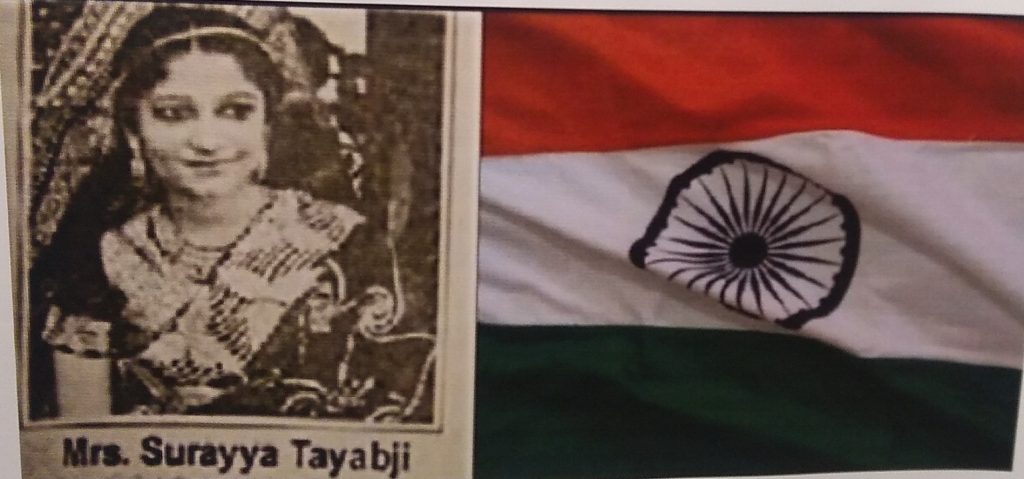
Most Indians today may not be aware that the national flag was designed by a Muslim woman, Surayya Tayabji, an active member of the Indian National Congress. Jawaharlal Nehru assigned this task to Tayabji, and it was her idea to replace the symbol of the charkha used and popularised by Mahatma Gandhi with that of Ashoka Chakra at the centre of the flag. Tayabji felt that the charkha, a symbol of the Congress party, might appear partisan.
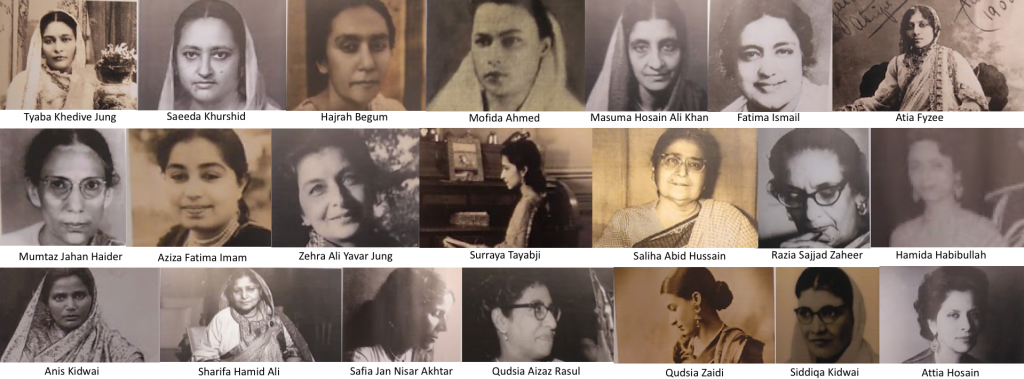
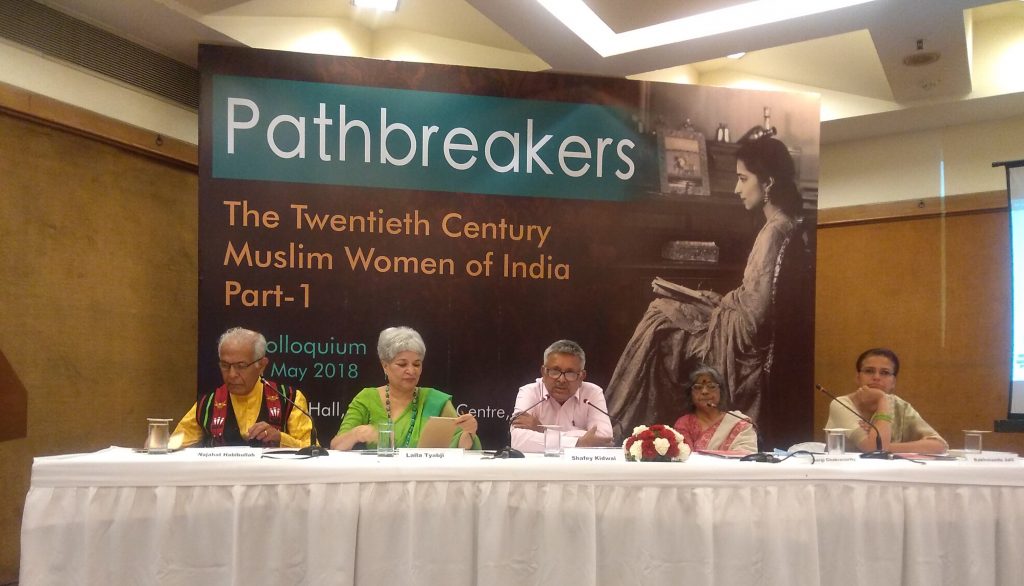
Narratives like this – often forgotten or lost in public memory – were the central theme of a colloquium that was organised by the Muslim Women’s Forum (MWF), an organisation engaged in the advocacy of Muslim women’s rights. Titled ‘Pathbreakers: The Twentieth Century Muslim Women of India’, the colloquium held in partnership with UN Women showcased the achievements of 21 Muslim women in various spheres of public life during and after the independence struggle.
Other women who featured in the exhibition included Saeeda Khurshid, Hamida Habibullah, Aziza Fatima Imam, Qudsia Zaidi, Mofida Ahmed, Zehra Ali Yavar Jung, Razia Sajjad Zaheer, Tyaba Khedive Jung, Atiya Fyzee, Sharifa Hamid Ali, Fathema Ismail, Masuma Hosain Ali Khan, Anis Kidwai, Hajrah Begum, Qudsia Aizaz Rasul, Mumtaz Jahan Haider, Siddiqa Kidwai, Attia Hosain, Saliha Abid Hussain and Safia Jan Nisar Akhtar.
The speakers participating in the discussion talked about the need to reclaim the lost narratives of Muslim women and take control of their representation.
Speaking on the occasion, Seema Mustafa, an Indian print and television journalist, pointed out that these women would not fit even the current stereotypical representation of hijab-clad, oppressed and orthodox Muslim women, who need a messiah to rescue them. Mustafa, in her keynote address, said that these women had broken barriers and challenged patriarchal order in their time; they followed Islam in its liberal spirit, refusing to be shackled by societal norms. Most of them abandoned the purdah system, she said.
Speakers panel for the session ‘Recognising and Nurturing Pathbreakers’ at Muslim Women’s Forum colloquium. Credit: Khushboo Kumari
Stereotypes in modern India
The speakers insisted that the reality was and still is that Muslim women, just like women belonging to any other socio-cultural group in India, do not constitute a monolithic, homogenous entity. They come from diverse backgrounds and subscribe to varying ideologies. Muslim women have been and still are writers, teachers, artists, scientists, lawyers, educators, political workers, legislators in parliament and in assemblies. The speakers said clubbing them under the generic rubric of backwardness was a misrepresentation.
As the regular use of terms like triple talaq, halala and purdah has come to demonstrate subjugation of Muslim women, Islam has acquired the status of the most oppressive religion for women, the speakers said. Muslim women have become an object of pity.
Commenting on Islam and feminism, Farida Khan, former dean of education at Jamia Millia Islamia and former member of the National Commission for Minorities, pointed out that gender oppression is common to all religions. “Why should Islam have the burden of taking on feminism?” asked Khan. She further explained that Islam should be perceived and understood in the social and historical context of the day. Every religion has to and does evolve with time.
Referring to the exhibition, Khan said, “It makes me sad to think that you need to have an exhibition and you need to project these women in a country where they should be well known, where they should be part of the mainstream, where everybody should know their names and know the work they have done.”
Gargi Chakravartty, former associate professor of history in Maitreyi College and author, said, “Muslim women’s political and social contributions in the pre-independence period during the major Gandhian movements or in the field of spreading education, or in the sphere of literary activities, cannot be erased from history.” She shared many anecdotes that came up in her own research about largely unknown Muslim women who have extensively worked among the poor throughout the 20th century and still continue to do so.
An eminent speaker at the colloquium, Rakshanda Jalil, recently wrote a book A Rebel and Her Cause on the life of Rashid Jahan. Jalil spoke of the inspiring life of Jahan, who was a doctor, writer, political activist and member of the Communist Party of India.
Farah Naqvi, member of the Post-Sachar Evaluation Committee (Kundu Committee) 2013-2014, summed up the purpose of the colloquium and the exhibition. “This colloquium is a response. There is a nostalgia about it. But it is not just about the nostalgic nawabi Muslim. It has a political purpose, the colloquium, which is that you cannot allow any one strand of history to be obliterated from this country. Any strand. It could be Muslim women today. It could be someone else tomorrow,” Naqvi said.
Questioning if Muslim women needed to be forced into a separate constituency, Naqvi said it was indeed a tragedy that these women’s contributions were not a part of mainstream knowledge – and that reflected failure on the part of Indian historiography.
Naqvi also pointed out that the undercurrent of the entire exhibition was nation-building because they were “also responding to a moment when Muslims are repeatedly being told that they are ‘anti-national’”. She further explained that against such a background, the Muslim community in general should not take the bait of proving that they are ‘good’ nationalists. Instead they should take pride in the achievements they have made in their respective spheres of work – especially for those who stayed on in India after the Partition.
Wajahat Habibullah, India’s first chief information commissioner and the son of Hamida Habibullah, one of the 21 women featured in the exhibition, talked about Partition and how it divided his family. He said, “It is necessary to remember and nurture the memories of all those Muslim women who then very consciously, despite family pressure and contradictions within the family, opted clearly to be a part of India”.
Contribution to literature, politics and education
The exhibition showed how extensively Muslim women have contributed in the spheres of politics, literature, education and social work.
Many like Saeeda Khurshid, founder of the Muslim Women’s Forum, actively campaigned for the Congress party. Hamida Habibullah was the the president of the Mahila Congress. Few like Aziza Fatima Imam, Fathom Ismail, Anis Kidwai, Siddiqa Kidwai and Qudsia Aizaz Rasul were members of the parliament and legislative assemblies for years.
Rasul was also the only Muslim woman member of the constituent assembly.
Sharifa Hamid Ali founded the All India Women’s Conference (AIWC), with the likes of Sarojini Naidu, Rani Rajwade and Kamaladevi Chattopadhyay, and was involved in its work alongside others like Masuma Hosain Ali Khan and Hajrah Begum – who also founded the National Federation of Indian Women.
These women actively worked with the poor and marginalised sections of society, trying to improve their access to health and education.
Zehra Ali Yavar Jung, who was awarded the Padma Bhushan in 1973, worked to improve the condition of women detainees in Hyderabad’s prisons and presided over a women’s workshop that trained and provided employment to destitute women. Fathom Ismail helped in opening rehabilitation clinics for children suffering from polio. Anis Kidwai worked tirelessly in refugee camps after Partition.
Surayya Tayabji and the Indian national flag displayed at the MWF exhibition. Credit: Khushboo Kumari/The Wire
Mumtaz Jahan Haider, who was appointed the principal of the Aligarh Women’s College in 1937, worked for women’s education her entire life.
Sharifa propagated legal reforms for Muslim women, including raising the age of marriage and drafting a model marriage contract ‘nikahnama‘.
In the field of literature and arts, these women won multiple awards. Razia Sajjad Zaheer, the recipient of the Nehru Award and Uttar Pradesh State Sahitya Academy Award, wrote novels like Sar-e-Sham, Kante and Suman. Anis Kidwai recieved the Sahitya Kala Parishad Award.
Attia Hossain used to write for Pioneer, Statesman and Atlantic monthly and wrote several novels, most notably Sunlight on a Broken Column and a short story collection Phoenix Fled. Aliya Fyzee wrote Indian Music (1914), The Music of India (1925) and Sangeet of India (1942) with her husband.
Qudsia Zaidi wrote and translated books for children, with Chacha Chakkan ke Draamae among the most loved ones. She also founded Hindustani Theatre in 1954, the first urban professional theatre company in independent India.
Khushboo Kumari has a BTech in information technology and is pursuing an MBA in marketing from MICA, Ahmedabad. She is an intern at The Wire.
source: http://www.thewire.in / The Wire / Home> History> Religion> Women / by Khushboo Kumari / May 30th, 2018