A majority, 13 of the 18 came from political families, and no southern state, including Kerala, Tamil Nadu, Karnataka, Andhra Pradesh, or Telangana, has ever elected a Muslim woman to the Lok Sabha.
Amid demands for reservation for Muslim and OBC women triggering sharp exchanges in the House, the stark underrepresentation of Muslim women is evident, with only 18 elected to the Lok Sabha since 1947 despite Muslims comprising about 7.1% of the population, and five Lok Sabhas having no Muslim woman MP at all.
A majority, 13 of the 18 came from political families, and no southern state, including Kerala, Tamil Nadu, Karnataka, Andhra Pradesh, or Telangana, has ever elected a Muslim woman to the Lok Sabha.
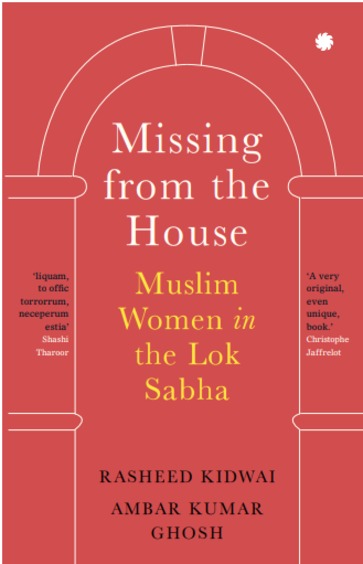
The issue is documented in the book “Missing from the House, Muslim Women in the Lok Sabha” by Rasheed Kidwai and Ambar Kumar Ghosh, which profiles these 18 leaders.
“It is a shockingly abysmal figure,” Kidwai notes, pointing out that in five of the 18 Lok Sabhas constituted till 2025, there was not a single Muslim woman member.
In the current Lok Sabha, there is only one Muslim woman MP, Iqra Hasan Choudhury of the Samajwadi Party.
The list of Muslim women MPs includes Mofida Ahmed of the Congress (1957), Zohraben Akbarbhai Chavda of the Congress (1962–67), Maimoona Sultan of the Congress (1957–67), Begum Akbar Jehan Abdullah of the National Conference (1977–79; 1984–89), Rashida Haque of the Congress (1977–79), Mohsina Kidwai of the Congress (1977–89), Abida Ahmed of the Congress (1981–89), Noor Bano of the Congress (1996; 1999–2004), Rubaab Sayda of the Samajwadi Party (2004–09), Mehbooba Mufti of the People’s Democratic Party (2004–09; 2014–19), Tabassum Hasan of the Samajwadi Party, Lok Dal and Bahujan Samaj Party (2009–14), Mausam Noor of the Trinamool Congress (2009–19), Kaisar Jahan of the Bahujan Samaj Party (2009–14), Mamtaz Sanghamita of the Trinamool Congress (2014–19), Sajda Ahmed of the Trinamool Congress (2014–24), Ranee Narah of the Congress (1998–2004; 2009–14), Nusrat Jahan Ruhi of the Trinamool Congress (2019–24), and Iqra Hasan Choudhury of the Samajwadi Party (2024–present).
On Thursday, a confrontation began in Lok Sabha when SP MP Dharmendra Yadav demanded that Muslim and OBC women be included within the reservation framework, saying the party would oppose the Bill otherwise and arguing that delinking delimitation from the Census was unconstitutional.
His remarks drew strong objections from the Treasury Benches, with Union Home Minister Amit Shah and Parliamentary Affairs Minister Kiren Rijiju asserting that reservation on religious grounds is unconstitutional. Rijiju said quota cannot be granted on the basis of religion and urged members to “talk about women of the whole country.”
SP president Akhilesh Yadav countered by asking whether Muslim women were not part of the “aadhi aabadi” and questioned whether the government was avoiding a caste census.
source: http://www.maktoobmedia.com / Maktoob Media / Home> India / by Maktoob / April 16th, 2026
18 Muslim Women Made It To Lok Sabha Since Independence; 13 Of Them Dynasts: Book
New Delhi :
That women were always under-represented in the Lok Sabha is a known fact, but Muslim women members have been a greater rarity with only 18 making it to the Lower House since independence, according to a new book.
And while dynastic politics may not be conducive for democracy to deepen its roots, it has played a positive part in giving chances to Muslim women, with 13 out of the 18 being from political families.
pix: sapnaonline.com
From royalty to a tea vendor-turned-politician’s wife and from a first lady to a Bengali actress, the 18 Muslim women who treaded the hallowed corridors of power in the Lok Sabha are an eclectic mix, with each of them having an interesting backstory, but one common thread — their path to power was always strewn with struggle and hurdles.
The story of these 18 Muslim women has been chronicled in an upcoming book– ‘Missing from the House — Muslim women in the Lok Sabha’ by Rasheed Kidwai and Ambar Kumar Ghosh. Kidwai says he wanted to document the profile of 20 Muslim women who made it to the Lower House, but two of them — Subhasini Ali and Afrin Ali — had openly proclaimed that they did not follow Islam.
“Only eighteen Muslim women have made it to the Lok Sabha since the first parliamentary polls in 1951-52. It is a shockingly abysmal figure, considering Muslim women are about 7.1 per cent of India’s 146 crore population. Out of the 18 Lok Sabhas constituted till 2025, five times the Lok Sabha did not have a single Muslim woman member,” Kidwai and Ghosh write in their book, published by Juggernaut and will be released next month.
Equally shocking is the fact that the number of Muslim women elected to Parliament in one tenure never crossed the mark of four in the 543-seat lower house of Parliament, the book points out. The book also notes that none of the five southern states — Kerala, Tamil Nadu, Karnataka, Andhra Pradesh and Telangana — otherwise known for better political representation than the North and with better literary levels and other socio-economic indicators, have not yet sent a single Muslim woman MP to the Lok Sabha.
The 18 Muslim women who made it to the Lok Sabha include Mofida Ahmed (1957, Congress); Zohraben Akbarbhai Chavda (Congress, 1962-67); Maimoona Sultan (Congress, 1957-67); Begum Akbar Jehan Abdullah (National Conference, 1977-79, 1984-89); Rashida Haque (Congress 1977-79); Mohsina Kidwai (Congress, 1977-89); Abida Ahmed (Congress, 1981-89); Noor Bano (Congress, 1996, 1999-2004); Rubab Sayda (Samajwadi Party, 2004-09); and Mehbooba Mufti (People’s Democratic Party, 2004-09, 2014-19).
The other Muslim women who entered the Lower House are Tabassum Hasan (Samajwadi Party, Lok Dal, Bahujan Samaj Party 2009-14); Mausam Noor (Trinamool Congress 2009-19); Kaisar Jahan (Bahujan Samaj Party, 2009-14); Mamtaz Sanghamita (Trinamool Congress 2014-19); Sajda Ahmed (Trinamool Congress 2014-24); Ranee Narah (Congress, 1998-2004, 2009-14); Nusrat Jahan Ruhi (Trinamool Congress, 2019-24); and Iqra Hasan (Samajwadi Party, 2024-present).
A dominant political figure who made an indelible mark on Indian politics was Mohsina Kidwai. She not only entered the Lok Sabha but also went on to join the council of ministers and hold several portfolios, including labour, health and family welfare, rural development, transport and urban development.
Another fascinating personality that the book talks about is the wife of Mohammad Jasmir Ansari, a tea vendor-turned-politician. In 2009, Kaisar Jahan, wife of Ansari, won a fiercely fought four-corner contest even though she had barely thirty-five days to prepare and campaign. As 2009 Lok Sabha polls neared, Mayawati summoned MLA Jasmir and Kaisar Jahan to Lucknow. “Jasmir and Kaisar stopped at ‘Sharmaji ki Chai’ in Hazratganj before heading to the chief minister’s residence. Jasmir was anticipating a ministerial position, but instead, Mayawati came straight to the point by asking him to contest the polls. The lingering taste of chai vanished quickly as Jasmir struggled, looking tentatively at his wife for an answer. Mayawati, a politician among politicians, sensed his unease. She directly asked Kaisar: ‘Tu ladegi? The answer came immediately and spontaneously from both Jasmir and Kaisar-yes,” the book narrates.
There is also a first lady among the 18 Muslim women – Begum Abida Ahmed, wife of the country’s fifth president, Fakhruddin Ali Ahmed.
Over four years after Ahmed passed away in 1977, Abida Ahmed agreed to fight a Lok Sabha by-election from Bareilly, Uttar Pradesh, in 1981 and won, becoming the first and only First Lady of India to have entered the competitive arena of politics. She won again in 1984, making it two in a row from Bareilly.
Begum Noor Bano, originally Mahatab Zamani and the widow of the former ruler of Rampur, was royalty who was a key figure in the political landscape of that area and fought many battles with Azam Khan of the Samajwadi Party and Jaya Prada, who also contested on an SP ticket. Her husband, Nawab Syed Zulfikar Ali Khan Bahadur, belonged to the Rohilla dynasty and was popularly addressed as ‘Mickey Mian’. He was killed in a freak road accident in 1992 while returning from New Delhi to Rampur.
Noor Bano won the 1996 and 1999 Lok Sabha polls, but her electoral battles with Jaya Prada in 2004 and 2009 ended in defeats.
Among the 18 Muslim women, Bengali actress Nusrat Jahan Ruhi also broke a number of glass ceilings as she went on to win the Lok Sabha polls on a TMC ticket in 2019.
In the current Lok Sabha, there is just one Muslim woman MP, and that is SP’s Iqra Hasan Choudhury. From earning the distinction of being one of the youngest MPs after defeating a veteran leader from the BJP to becoming the centre of social media discussion as a young, London-educated Muslim woman leader, Iqra Hasan has appeared to have carved out a space for herself in the public imagination.
In his foreword to the book, Congress MP Shashi Tharoor writes, “Nearly seventy-eight years have passed since that portentous stroke of midnight on 15 August 1947, when Pandit Jawaharlal Nehru proclaimed a ‘tryst with destiny’ and India awakened to ‘life and freedom.’ …Yet even after almost eight decades, a shameful reality, which should deflate our self-congratulatory fervour over our democratic track record, still haunts us.”
“Not everyone has found ‘utterance’ in the world’s largest democracy, many of whose towering leaders eulogize it as the ‘Mother of Democracy.’ This self-serving description is enabled, in part, by a too-pliant news media, an ineffectual civil society and a menaced academic class, so that no one dares point out the irony inherent in the claim,” Tharoor says.
“Although we depict India as a doting mother nurturing and nourishing a clamorous, combative and chaotic republic, corrupt and inefficient, perhaps, but nonetheless flourishing, the truth is that throughout our democratic history, we have consistently failed our women citizens: failed to afford them, in the thoroughfares of our country, a life of dignity and decency,” he says. (Agencies)
source: http://www.dailyexcelsior.com / Daily Excelsior.com / Home> Latest News / by DailyExcelsior.com / book pix edited: sapnaonline.com / July 20th, 2025
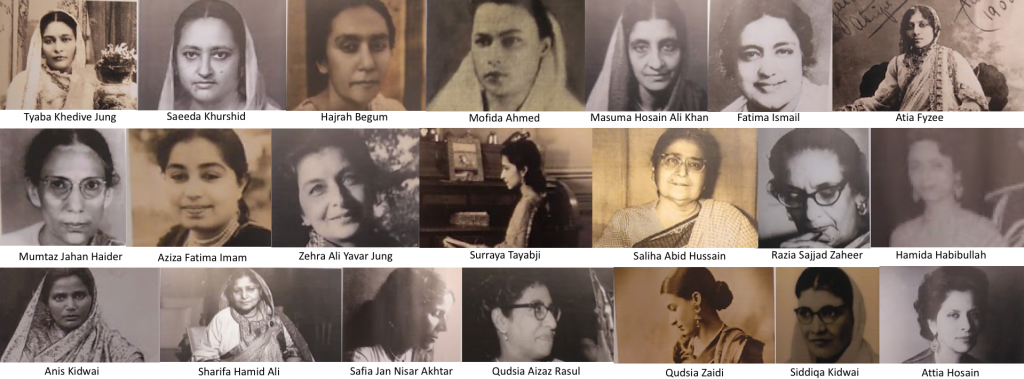
Stories of conviction and contribution of Indian Muslim women, who “gave up the purdah” and were at “the forefront of the nationalist and feminist discourse” in the past century are on display here.
The exhibition on 21 “pathbreakers” opened for public view on Saturday.
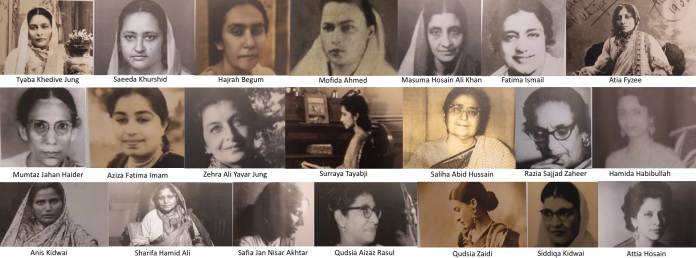
Organised by Muslim Women’s Forum at the India International Centre (IIC), the show “Pathbreakers: The Twentieth Century Muslim Women of India” features women who remain largely unheard of and unsung in the mainstream narrative.
During and after the freedom movement, a note on the exhibition said, many Muslim women shed the ‘purdah’ and became partners in the project to build a new India.
They went on to become writers, teachers, artists, scientists, lawyers, educators, political workers, trade unions, MPs, and MLAs.
“With a few exceptions, most of them have been forgotten in time.”
The show, inaugurated by author-filmmaker Syeda Imam (granddaughter of early 20th century writer-educator Tyaba Khedive Jung), embodies the spirit of the active contribution of these women, and as Imam said, “were not in the recesses of home and kitchen”.
Far from the commonly-held impression of silenced, cloistered and acquiescent women, ‘Pathbreakers’ narrates the stories of strong, determined and engaged women, the note said.
Some of these women include Qudsia Aizaz Rasul, the only Muslim woman member of the Constituent Assembly and author of “From Purdah to Parliament: A Muslim Woman in Indian Politics”; Assam’s first woman MP Mofida Ahmed, elected from Jorhat in 1957; and Aziza Fatima Imam, who served in the Rajya Sabha for 13 years starting 1973.
Why Muslim women?
The exhibition of photographs, text and video installations, points to their significant contribution towards the building of the nation, along with their sisters of other communities, through its freedom struggle, independence and beyond.
“A multiplicity of stereotypes are constructed by diverse actors regarding Muslim women. But the fact is there is no undifferentiated amass’ of Muslim women. Like women of all socio-cultural groups, they too are a divergent, shifting composition of individuals, often dumped in popular parlance into one single heap. This homogenisation has to be rejected,” the note read.
The show also projects video recordings of readings from writings of some of the featuring women.
The organisers, however, said while the participating women might seem elite, it is only the first step in identifying and recognising pathbreakers from all sections.
Muslim women who were at the forefront of the nationalist and feminist discourse in the country, during and after the independence movement, were eventually overlooked or excluded from the mainstream narrative.
MWF exhibition featured 21 Muslim women who contributed to nation-building during and after the independence struggle. Credit: Khushboo Kumar
New Delhi:
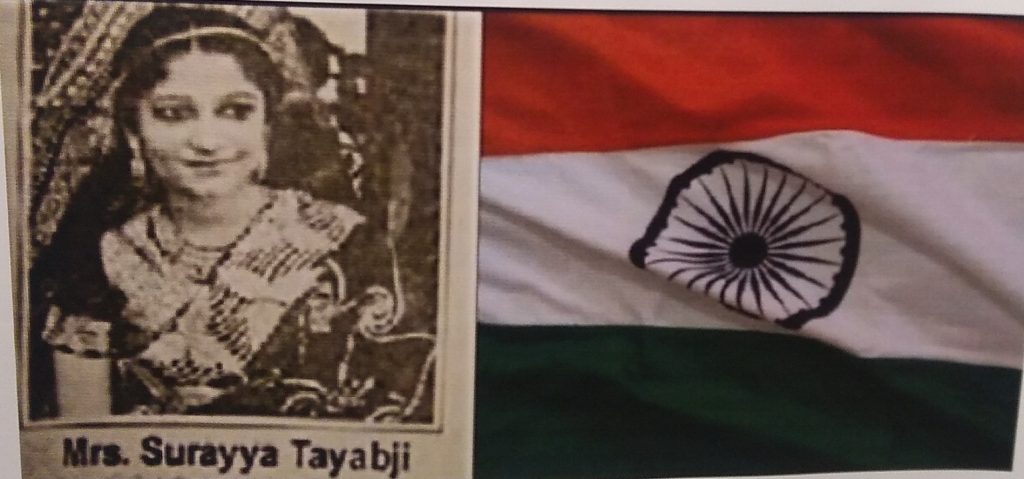
Most Indians today may not be aware that the national flag was designed by a Muslim woman, Surayya Tayabji, an active member of the Indian National Congress. Jawaharlal Nehru assigned this task to Tayabji, and it was her idea to replace the symbol of the charkha used and popularised by Mahatma Gandhi with that of Ashoka Chakra at the centre of the flag. Tayabji felt that the charkha, a symbol of the Congress party, might appear partisan.
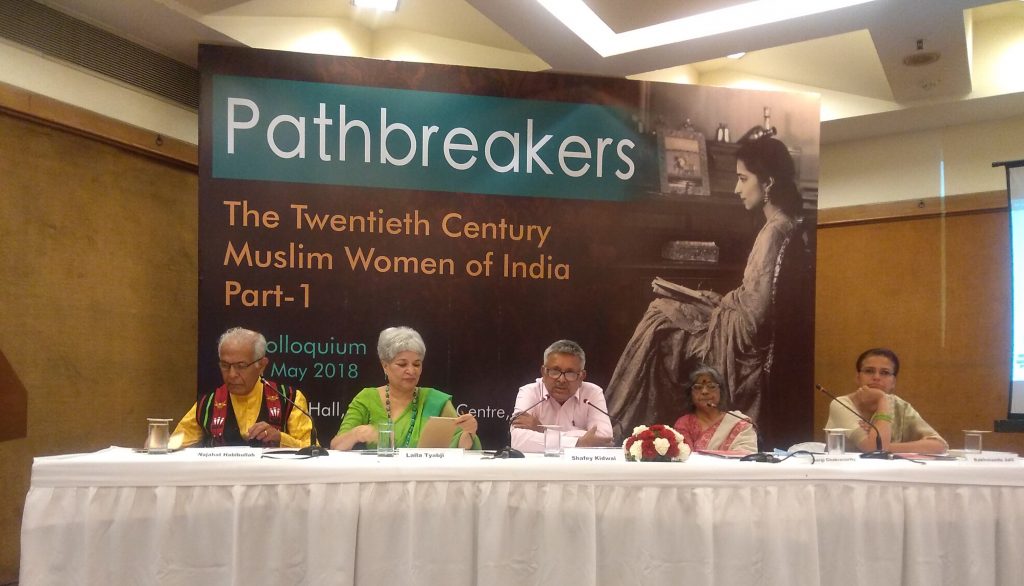
Narratives like this – often forgotten or lost in public memory – were the central theme of a colloquium that was organised by the Muslim Women’s Forum (MWF), an organisation engaged in the advocacy of Muslim women’s rights. Titled ‘Pathbreakers: The Twentieth Century Muslim Women of India’, the colloquium held in partnership with UN Women showcased the achievements of 21 Muslim women in various spheres of public life during and after the independence struggle.
Other women who featured in the exhibition included Saeeda Khurshid, Hamida Habibullah, Aziza Fatima Imam, Qudsia Zaidi, Mofida Ahmed, Zehra Ali Yavar Jung, Razia Sajjad Zaheer, Tyaba Khedive Jung, Atiya Fyzee, Sharifa Hamid Ali, Fathema Ismail, Masuma Hosain Ali Khan, Anis Kidwai, Hajrah Begum, Qudsia Aizaz Rasul, Mumtaz Jahan Haider, Siddiqa Kidwai, Attia Hosain, Saliha Abid Hussain and Safia Jan Nisar Akhtar.
The speakers participating in the discussion talked about the need to reclaim the lost narratives of Muslim women and take control of their representation.
Speaking on the occasion, Seema Mustafa, an Indian print and television journalist, pointed out that these women would not fit even the current stereotypical representation of hijab-clad, oppressed and orthodox Muslim women, who need a messiah to rescue them. Mustafa, in her keynote address, said that these women had broken barriers and challenged patriarchal order in their time; they followed Islam in its liberal spirit, refusing to be shackled by societal norms. Most of them abandoned the purdah system, she said.
Speakers panel for the session ‘Recognising and Nurturing Pathbreakers’ at Muslim Women’s Forum colloquium. Credit: Khushboo Kumari
Stereotypes in modern India
The speakers insisted that the reality was and still is that Muslim women, just like women belonging to any other socio-cultural group in India, do not constitute a monolithic, homogenous entity. They come from diverse backgrounds and subscribe to varying ideologies. Muslim women have been and still are writers, teachers, artists, scientists, lawyers, educators, political workers, legislators in parliament and in assemblies. The speakers said clubbing them under the generic rubric of backwardness was a misrepresentation.
As the regular use of terms like triple talaq, halala and purdah has come to demonstrate subjugation of Muslim women, Islam has acquired the status of the most oppressive religion for women, the speakers said. Muslim women have become an object of pity.
Commenting on Islam and feminism, Farida Khan, former dean of education at Jamia Millia Islamia and former member of the National Commission for Minorities, pointed out that gender oppression is common to all religions. “Why should Islam have the burden of taking on feminism?” asked Khan. She further explained that Islam should be perceived and understood in the social and historical context of the day. Every religion has to and does evolve with time.
Referring to the exhibition, Khan said, “It makes me sad to think that you need to have an exhibition and you need to project these women in a country where they should be well known, where they should be part of the mainstream, where everybody should know their names and know the work they have done.”
Gargi Chakravartty, former associate professor of history in Maitreyi College and author, said, “Muslim women’s political and social contributions in the pre-independence period during the major Gandhian movements or in the field of spreading education, or in the sphere of literary activities, cannot be erased from history.” She shared many anecdotes that came up in her own research about largely unknown Muslim women who have extensively worked among the poor throughout the 20th century and still continue to do so.
An eminent speaker at the colloquium, Rakshanda Jalil, recently wrote a book A Rebel and Her Cause on the life of Rashid Jahan. Jalil spoke of the inspiring life of Jahan, who was a doctor, writer, political activist and member of the Communist Party of India.
Farah Naqvi, member of the Post-Sachar Evaluation Committee (Kundu Committee) 2013-2014, summed up the purpose of the colloquium and the exhibition. “This colloquium is a response. There is a nostalgia about it. But it is not just about the nostalgic nawabi Muslim. It has a political purpose, the colloquium, which is that you cannot allow any one strand of history to be obliterated from this country. Any strand. It could be Muslim women today. It could be someone else tomorrow,” Naqvi said.
Questioning if Muslim women needed to be forced into a separate constituency, Naqvi said it was indeed a tragedy that these women’s contributions were not a part of mainstream knowledge – and that reflected failure on the part of Indian historiography.
Naqvi also pointed out that the undercurrent of the entire exhibition was nation-building because they were “also responding to a moment when Muslims are repeatedly being told that they are ‘anti-national’”. She further explained that against such a background, the Muslim community in general should not take the bait of proving that they are ‘good’ nationalists. Instead they should take pride in the achievements they have made in their respective spheres of work – especially for those who stayed on in India after the Partition.
Wajahat Habibullah, India’s first chief information commissioner and the son of Hamida Habibullah, one of the 21 women featured in the exhibition, talked about Partition and how it divided his family. He said, “It is necessary to remember and nurture the memories of all those Muslim women who then very consciously, despite family pressure and contradictions within the family, opted clearly to be a part of India”.
Contribution to literature, politics and education
The exhibition showed how extensively Muslim women have contributed in the spheres of politics, literature, education and social work.
Many like Saeeda Khurshid, founder of the Muslim Women’s Forum, actively campaigned for the Congress party. Hamida Habibullah was the the president of the Mahila Congress. Few like Aziza Fatima Imam, Fathom Ismail, Anis Kidwai, Siddiqa Kidwai and Qudsia Aizaz Rasul were members of the parliament and legislative assemblies for years.
Rasul was also the only Muslim woman member of the constituent assembly.
Sharifa Hamid Ali founded the All India Women’s Conference (AIWC), with the likes of Sarojini Naidu, Rani Rajwade and Kamaladevi Chattopadhyay, and was involved in its work alongside others like Masuma Hosain Ali Khan and Hajrah Begum – who also founded the National Federation of Indian Women.
These women actively worked with the poor and marginalised sections of society, trying to improve their access to health and education.
Zehra Ali Yavar Jung, who was awarded the Padma Bhushan in 1973, worked to improve the condition of women detainees in Hyderabad’s prisons and presided over a women’s workshop that trained and provided employment to destitute women. Fathom Ismail helped in opening rehabilitation clinics for children suffering from polio. Anis Kidwai worked tirelessly in refugee camps after Partition.
Surayya Tayabji and the Indian national flag displayed at the MWF exhibition. Credit: Khushboo Kumari/The Wire
Mumtaz Jahan Haider, who was appointed the principal of the Aligarh Women’s College in 1937, worked for women’s education her entire life.
Sharifa propagated legal reforms for Muslim women, including raising the age of marriage and drafting a model marriage contract ‘nikahnama‘.
In the field of literature and arts, these women won multiple awards. Razia Sajjad Zaheer, the recipient of the Nehru Award and Uttar Pradesh State Sahitya Academy Award, wrote novels like Sar-e-Sham, Kante and Suman. Anis Kidwai recieved the Sahitya Kala Parishad Award.
Attia Hossain used to write for Pioneer, Statesman and Atlantic monthly and wrote several novels, most notably Sunlight on a Broken Column and a short story collection Phoenix Fled. Aliya Fyzee wrote Indian Music (1914), The Music of India (1925) and Sangeet of India (1942) with her husband.
Qudsia Zaidi wrote and translated books for children, with Chacha Chakkan ke Draamae among the most loved ones. She also founded Hindustani Theatre in 1954, the first urban professional theatre company in independent India.
Khushboo Kumari has a BTech in information technology and is pursuing an MBA in marketing from MICA, Ahmedabad. She is an intern at The Wire.
source: http://www.thewire.in / The Wire / Home> History> Religion> Women / by Khushboo Kumari / May 30th, 2018