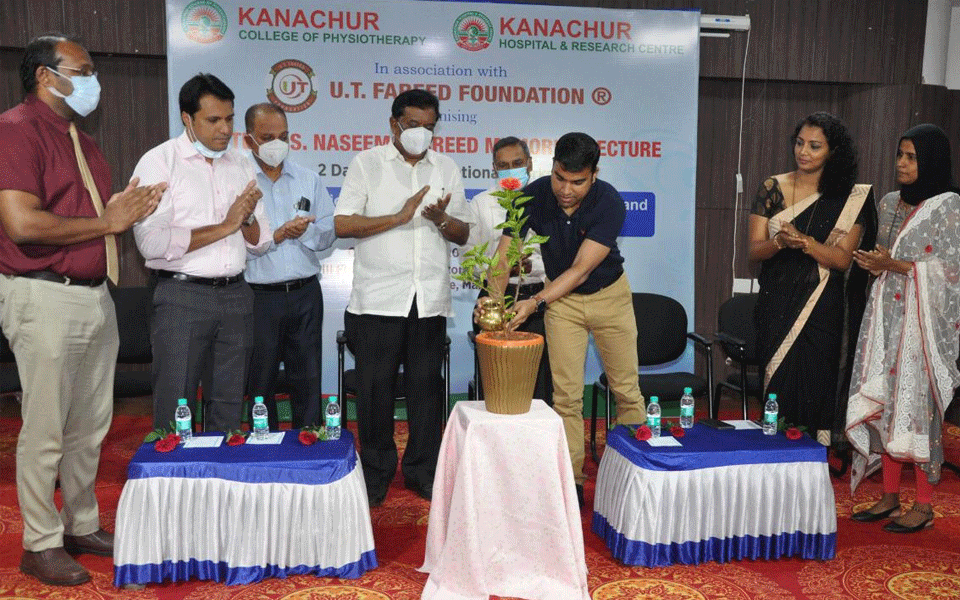
Kanachur College of Physiotherapy & Kanachur Hospital & Research Centre in association with U.T Fareed Foundation (R) organized Late Naseema Fareed Memorial Lecture on May 12, 13 here.
As a part of the event, two-day free international workshops on topics “CARDIOPULMONARY PHYSICAL THERAPY IN ICU” & “CHEST X-RAY INTERPRETATIONS” were also held by Dr. Meryl Joe Colaco, HOD , Medeor Hospital, Dubai and Dr. A. Raguram Chandar, Senior Resident, Department of Radiology , Kanachur Institute of Medical Sciences, Mangaluru .
In an official press statement the hospital added the event was organised for eighth consecutive year for Interns and PG’s from different colleges across Mangalore.
The inaugural function was held on 12th May 2022 at 9.30 AM at 3rd Floor Auditorium, Kanachur Hospital & Research Centre, Mangaluru.
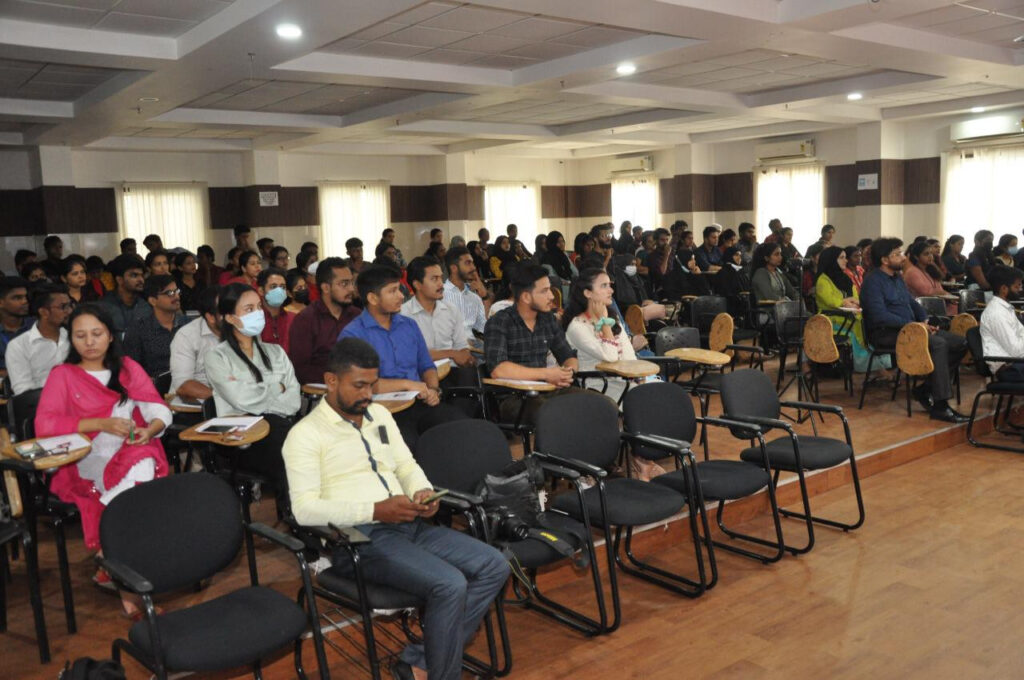
The Workshop was attended by Interns and PG students from Kanachur College of Physiotherapy, Dr. M V Shetty College of Physiotherapy, Yenepoya Physiotherapy College, Father Muller’s College of Physiotherapy, Karavali College of Physiotherapy, and Nethaji College of Physiotherapy.
Haji U.K Monu, Chairman, Kanachur Islamic Education Trust(R), Mangaluru, Abdul Rahiman. Director, Kanachur Institute of Medical Sciences, Dr. Vaishali, Chairman, Board of Studies, UG Physiotherapy and Academic Council Member, Rajiv Gandhi University of Health Sciences, Bengaluru, Dr. Meryl Joe Colaco, HOD, Medeor Hospital, Dubai, Dr. Harish Shetty, Medical Superintendent, Kanachur Hospital & Research Centre, Dr. H S Virupaksha, Dean, Kanachur Institute of Medical Sciences, Dr. Rohan Monis, Chief Administrative Medical Officer, Kanachur Hospital & Research Centre, Dr. Reshma, Associate Professor, Kanachur College of Physiotherapy were present on the stage during the inaugural event.
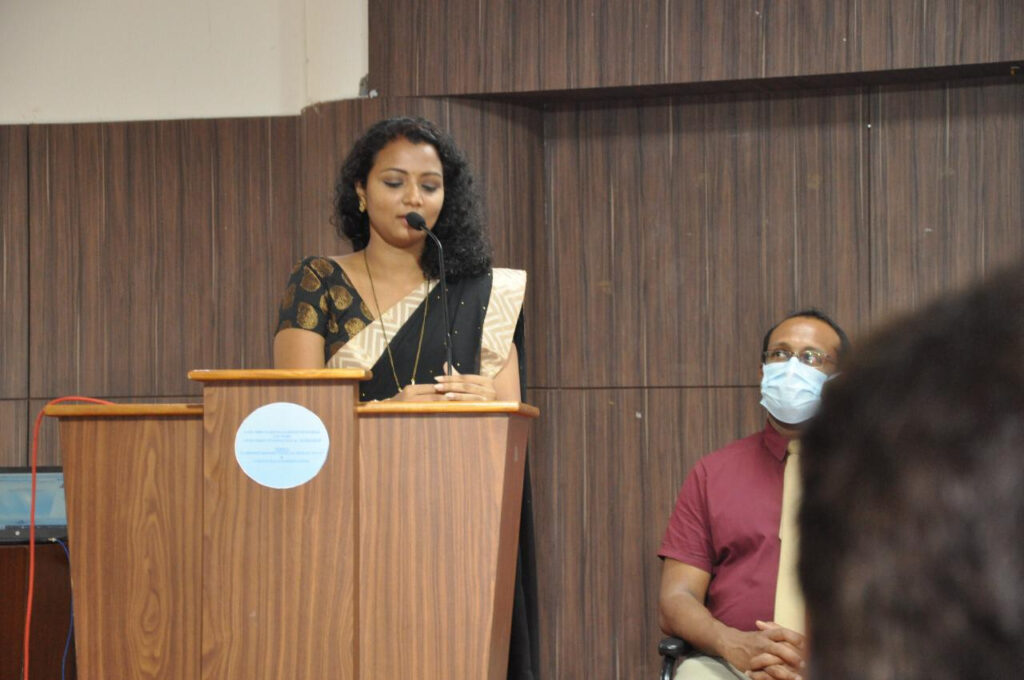
Dr. Reshma, welcomed the Guests and Delegates. Haji U.K Monu, Chairman, Kanachur Islamic Education Trust(R), inaugurated the 2 Days free international workshop by watering plant and delivered inaugural address.
Dr. Vaishali, Chairman, Board of Studies, UG Physiotherapy and Academic Council Member, Rajiv Gandhi University of Health Sciences, Bengaluru, addressed the students about the importance of the workshop being held.
Abdul Rahiman, Director, Kanachur Institute of Medical Sciences, address the students about the workshop. Dr. Meryl Joe Colaco, delivered the keynote address. Dr. Rohan Monis, Chief Administrative Medical Officer, Kanachur Hospital & Research Centre, also briefed the importance of Physiotherapy in ICU.
Vote of thanks was delivered by Dr. Rakshith Bangera K, Associate Professor, Kanachur College of Physiotherapy.
Passionate about photography: Aziz Mahdi, a Persian scholar, who teaches youngsters in Delhi
Aziz Mahdi, a Persian scholar, on how he balances his love for images and the language of his forefathers
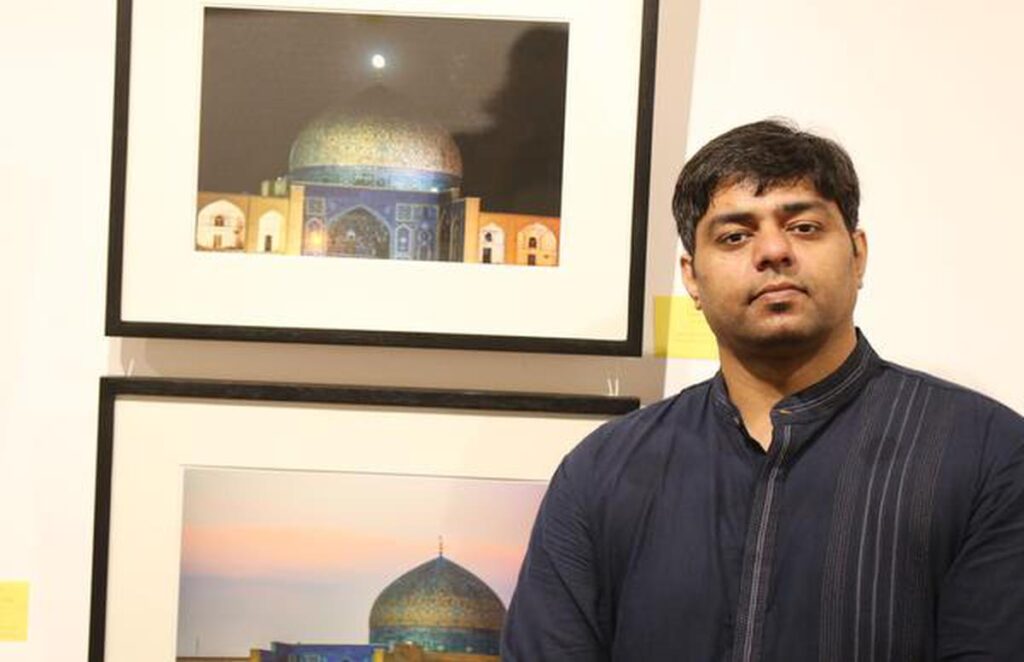
To get us, in Delhi, at least a little bit curious about understanding Iran, Aziz Mahdi, a Delhi-ite who lived for a decade in Tehran, where he studied Persian and then taught the language, is showcasing a pictorial exhibition. On display are 40 photographs (selected arduously out of 50,000 images) in different sizes, of this West Asian nation that gives us a glimpse into its culture and history. Aziz, or Dr. Mahdi, as he is fondly called by his Iranian and Indian students in Tehran and Delhi, has used handmade German paper to print on, ensuring the pictures last a lifetime.
Little is known in India about Iran, barring its “political and bureaucratic side”. On the other hand, there’s a fair amount Iranians know about our country. “Some people think Iran is a desert country. Even my father’s friend asked me if I got adequate drinking water in Tehran. I had to explain to him that there are reservoirs all across the country.”
Travel tales
Between 2005 to 2016, when Aziz lived there, doing a Ph.D. at Tehran University, he would get asked questions relating to Amitabh Bachchan, Shah Rukh Khan and Salman Khan. He’s watched Sholay in Persian, while travelling on a bus there. “Most Iranians know that India is a nation of diversity and democracy. They describe India as Haftado do Mellat . In English, it would mean a nation of 72 ethnicities.”
Sheikh Lotfollah Mosque
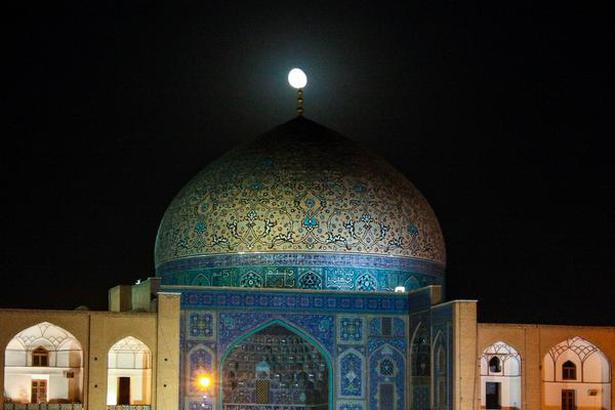
As a history student at Jamia Millia Islamia in Delhi, Aziz had come across a classical dome of Persian architecture umpteen times in his textbooks. But the moment of seeing the Sheikh Lotfollah Mosque was something else. A perfect example of preserving heritage, it was built during the Safavid Empire, in the early 17th century, and has now been designated by UNESCO as a world heritage site.
“It was almost a surreal experience. Architecturally speaking, Sheikh Lotfollah Mosque has a perfect dome. Domes are usually uneven structures. It also has glazed tiles. It was a palace of princess; royal women would go through the tunnel and come back.”
Everyday life and some of the exotic
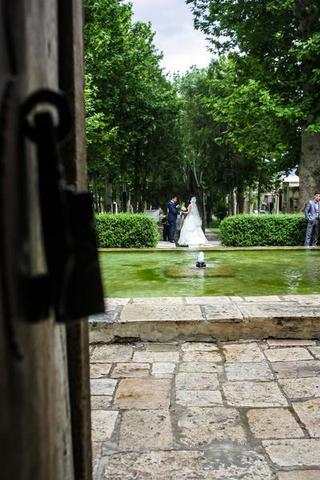
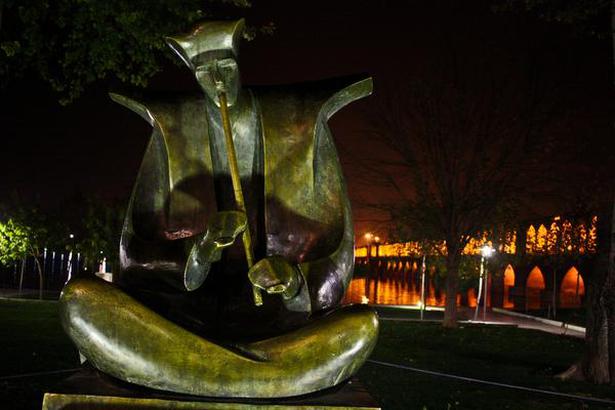
The exhibition has different aspects of daily life, along with architecture. There’s the Zoroastrian side of Iran with the Chakchak Fire temple; a ring seller leaning on his bike, the confidence in the way he wears his hat; the scissor-maker, an elderly man, with eyes sans pessimism, despite his years. Tehran as a cosmopolitan city comes through in a picture of a wedding where the bride and groom wear Western attire.
Early on, one of his friends gave him “sane advise” that if he wanted to be an Iranologist, he needed to know the country inside out. One way was to study it; the other, was through travel. “I explored this scenic country. However, I still like describing myself as a part Iranologist,” says the 36-year-old, who stands at six feet, four inches.
Persian heritage
Iranian Wedding
Aziz’s father, Akhtar Mahdi, retired as professor of Persian language and literature from JNU. “While growing up, I was guided by him and learnt how Persian is important from the historical perspective. From the 11th century onwards, all our official documents, land deeds of the State and historical texts were printed in Persian. So for 800 years, Persian was the official language until the Mughal rule ended and the British abolished it.”
In fact, Urdu is the daughter of Persian. “It was used during Nadir Shah’s military campaign. It was basically a camp language which was spoken by Persian and Turk soldiers.”
Musician playing a flute
He has roots in Persia too, with his forefathers migrating during the Mughal reign. As for photography, he’s dabbled since childhood, but he began taking it seriously only in Iran. “The sheer beauty of Iran supported the artist in me. Architecturally, it grabs the eye.”
Living in Delhi, where he was used to seeing smoky skies, Aziz was bowled over by blue skies of Tehran (also seen at the exhibition). “They were a welcome relief. Cleanliness and absolute stunning weather are other features of this country.”
His next step is to do a coffee table book. “Not many Indians have stayed in Iran for so long,” says Aziz, on a parting note.
Rowzaneh: Iran Through my Lens is on at the India International Centre Annexe until July 30th
source: http://www.thehindu.com / The Hindu / Home> Entertainment> Art / by Madhu Tankha / July 26th, 2019
He received the award from AIIMS Director Randeep Guleria
Kozhikode
Thoracic surgeon Nasser Yusuf has bagged the prestigious A.S. Paintal-RC Jain Memorial Chest Oration Award instituted by the National College of Chest Physicians.
He received the honour from the All India Institute of Medical Sciences Director Randeep Guleria during the national conference on pulmonary diseases hosted between March 31 and April 3 in Varanasi.
source: http://www.thehindu.com / The Hindu / Home> News> National> Kerala / by Staff Reporter / April 06th, 2022
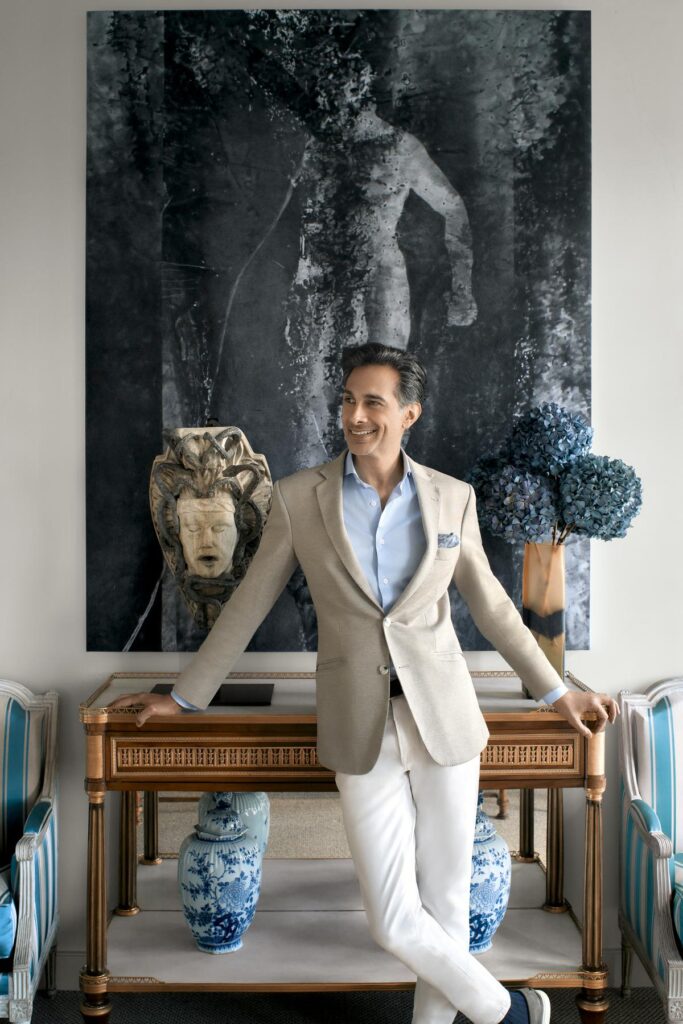
Amin Jaffer in his library dining room, standing in front of Yuntao Zhang’s painting of Cellini’s Medusa | Photo Credit: Architectural Digest / Antonio Martinelli
The Rwanda-born Indian curator, who has made the French capital his home, on the Al Thani collection’s first museum, his new book, and the importance of private collections
Writer, curator, collaborator, colonial furniture specialist: Amin Jaffer wears his titles effortlessly. And in the last couple of years, he’s added another one — that of Paris denizen — after he uprooted his English life of 25 years to move into a hôtel particulier (a grand townhouse) on Quai Voltaire along the Seine.
The move made sense. An “éminence grise of the international art world”, as an Architectural Digest article calls him (Jaffer is on the cover of the magazine’s 10th anniversary issue this month), he was “spending a lot of time in Venice, and the commute to London was becoming taxing”. But more importantly, his newest project, a private museum for the Al Thani Collection, is in the city, at Place de la Concorde’s Hôtel de la Marine.
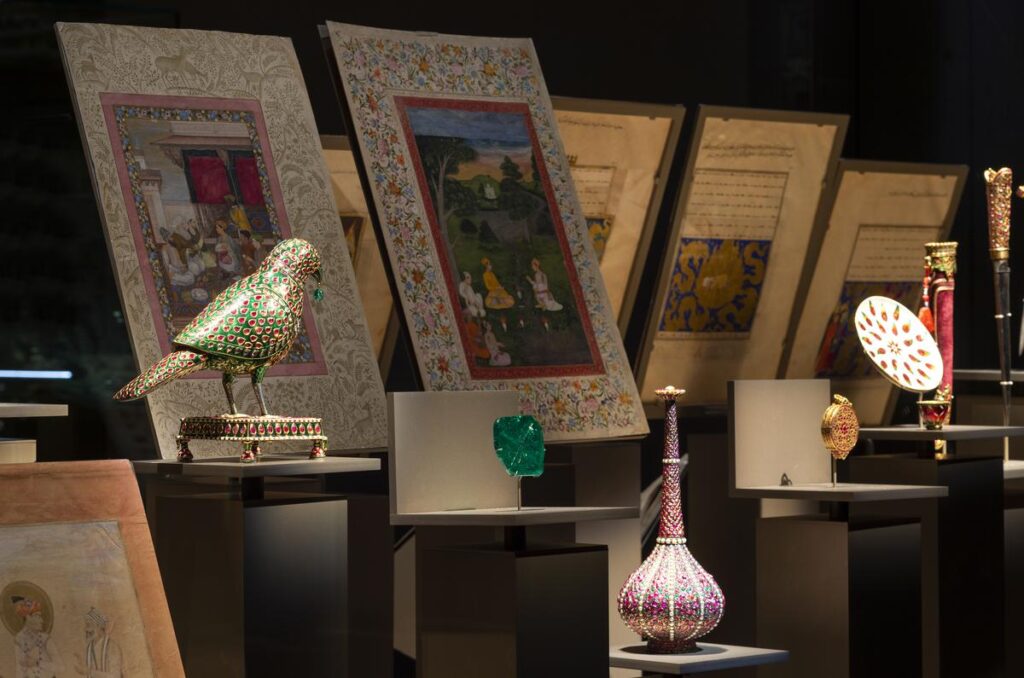
“Sheikh Hamad bin Abdullah Al Thani was looking for a more permanent place to house the treasures of his collection,” says Jaffer, recalling how at the time, the French government body Centre des Monuments Nationaux was thinking of converting the former storage space for royal tapestries at the Hôtel — a four-year, €132 million restoration project. “They proposed that the Al Thani Collection could exhibit its masterpieces there.” With a 20-year agreement in place, acquiring a Parisian pin code thus gave him a twofold advantage, both with work and keeping up his continental way of life. (The last few weeks alone have seen Jaffer travel to Seville and Carmona in Spain and Parma and Venice in Italy.)
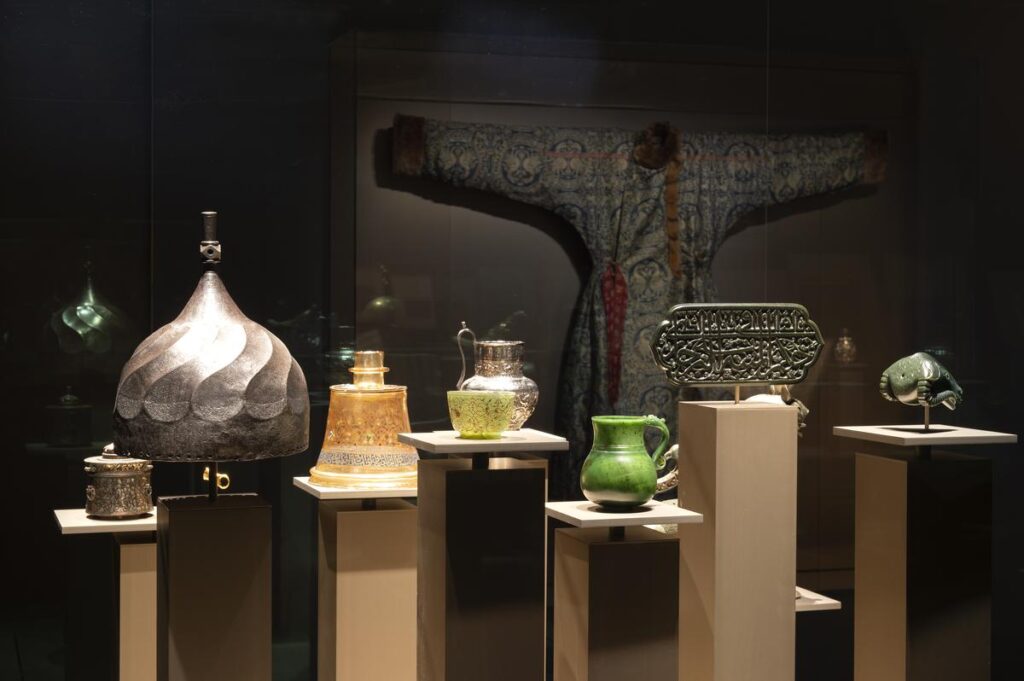
The Al Thani Collection at Hôtel de la Marine | Photo Credit: Marc Domage
Polaroid and a passion for art
The view of the Louvre from his third floor flat definitely tipped the scales in its favour. (The photos he shares on his Instagram, @aminjaffer_curator, are proof enough.) And the fact that Vivant Denon, the first director of the museum, had once been a resident in the 17th century building. Moreover, as he explains in an email that he squeezes in between flights, he’s always had a special connection with the Louvre. As a six-year-old, he had visited the museum with his mum, spending an entire day exploring its rooms, a Polaroid camera clutched tightly in his hands. He still has the photographs. “The adrenalin rush of seeing a great work of art inspired me then — as it does now,” he says, adding how by the time he turned 10 he had visited most of the major museums in Europe. “Other seminal moments include an early visit to the Musée des Beaux-Arts in Brussels and a trip to Rome to see the Vatican collections.”
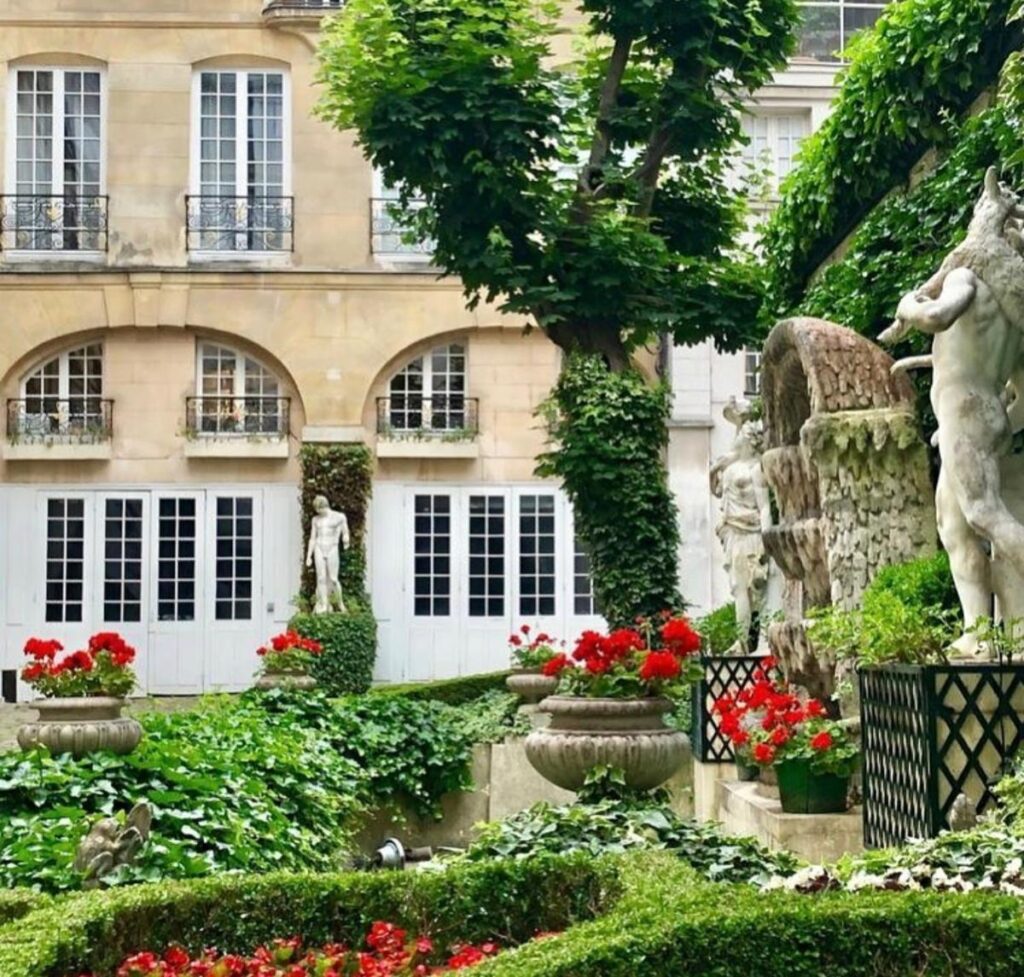
The courtyard at L’Hôtel de Beuvron with its Rococo fountain | Photo Credit: @aminjaffer_curato
But he nearly missed his calling. Born into an Indian business family in Kigali, Rwanda, a career in art wasn’t an option growing up. His subjects in university were economics and commerce! That is, until he chose the history of French opera and French Renaissance châteaux as his first year electives and reignited his love affair with the arts.
Today, Jaffer, who is in his early 50s, is not only the chief curator of the Al Thani Collection, but also works with leading museums around the world in a “curatorial role, focussed on public projects, exhibition programming and producing catalogues”. His resume includes long stints at the V&A Museum in London as curator and as the International Director of Asian Art at Christie’s.
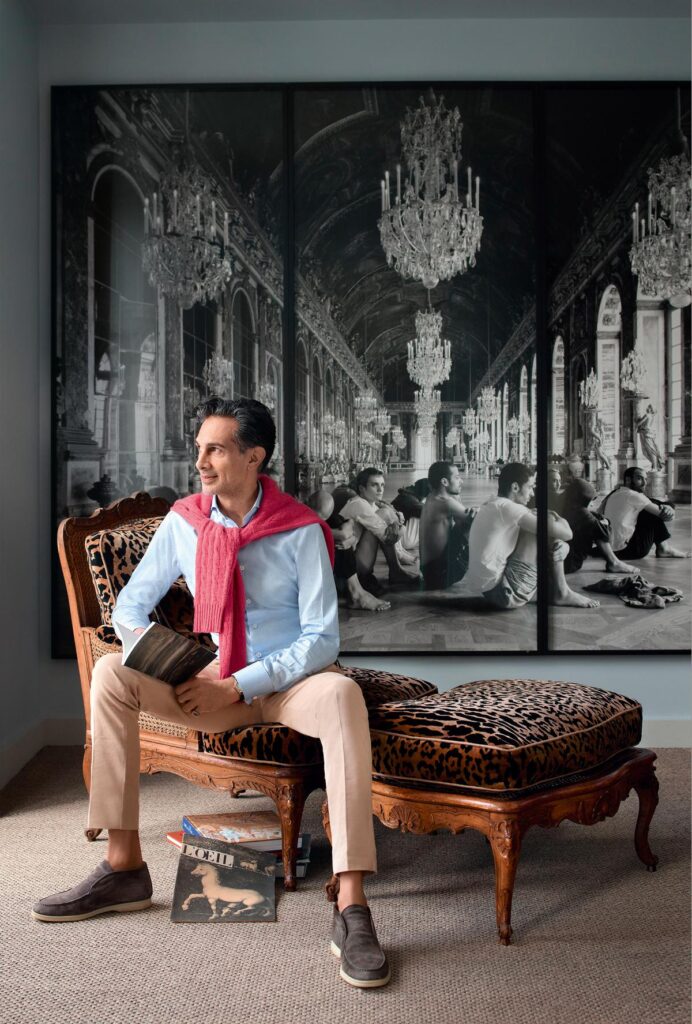
Amin Jaffer in his home office, sitting in front of a triptych by Reza Aramesh | Photo Credit: Architectural Digest / Antonio Martinelli
The perks of a private collection
“Born in central Africa, educated in Europe and America, I do feel something of a hybrid and I am drawn by works of art that are born from the encounter of two — or more — civilisations,” says Jaffer, who has recently “been fascinated by the fusion of Spanish and Amerindian culture, particularly in the domain of painting”. This ties in beautifully with the Al Thani Collection and its catalogue of more than 5,000 works of art drawn from across world civilisations.
It makes us wonder, how important are such private collections in the art world? “Pioneer collectors have vision and resources that compliment the public art offering,” he says, explaining how such collections play a significant role in the programming of national institutions. “Recent examples in Paris [besides the Al Thani Collection] includes the Bourse de Commerce and the Fondation Louis Vuitton. In India, Kiran Nadar has developed a programme of exhibitions around her collection that makes an essential contribution to the art scene,” adds the Indian art expert who played a key part in launching Christie’s first auction in Mumbai in 2013.
At Hôtel de la Marine | Photo Credit: Marc Domage
On board with digital
Jaffer’s personal collection is equally varied. A triptych by Iranian photographer Raza Aramesh, of Afghan refugees sitting in the Versailles’ Hall of Mirrors, takes pride of place in his home office, while a painting of Italian sculptor Benvenuto Cellini’s Medusa by Chinese contemporary artist Yuntao Zhang hangs in the library dining room. Elsewhere, Qing period armchairs, Louis XVI commodes, and Bouke De Vries’ Memory Jars are tucked into corners and under tables. “My most recent passions are French 18th century silver and hardstones from late Antiquity, especially objects in porphyry. I am learning more about Symbolist painting, too,” he says.
His days of confinement (as the French called the lockdown) helped broaden his base. When not watching life on the river, he was visiting digital museums and “researching parallel institutions” around the world. “What’s certain,” he says, “is that technology will play a greater role in the way we enjoy works of art — whether through the presence of more immersive, digitally-led exhibitions [such as the RMN Grand Palais’ immersive Venice show opening in autumn] or the sharing of information about works of art through digital platforms [like the one for the Palazzo Pilotta collection in Parma, which he experienced last weekend].” Does this mean he’s also on board with NFTs? “Of course, the phenomenon interests me,” he says, “but I do not yet have sufficient expertise to comment on anything in this new domain.”
The Al Thani Collection | Photo Credit: Marc Domage
Left Bank to the Concorde
For now, he’s back at his home at L’Hôtel de Beuvron, listening to Wagner and Mahler, and updating his Instagram. V&A’s new exhibition, Fashioning masculinities — on the male dress and its influences — has caught his eye, though he admits his personal wardrobe is rather formulaic. Tailored clothes in a limited palette of colours is the ‘uniform’, accented by pocket squares and ties that reflect the season or his mood. “Cufflinks are a weakness,” he shares, “and the best ones are by [Indian jeweller] Viren Bhagat, without doubt.”
Even as Jaffer immerses himself in life on the Left Bank, work at the museum is keeping up its momentum. “Some substantial pieces have been added to the collection in the past two years, which reflect the diversity of interests [of Sheikh Al Thani]. These will be shared with the public through displays at the Hôtel de la Marine,” he concludes.
source: http://www.thehindu.com / The Hindu / Home> Entertainment> Art / by Surya Praphulla Kumar / March 19th, 2022
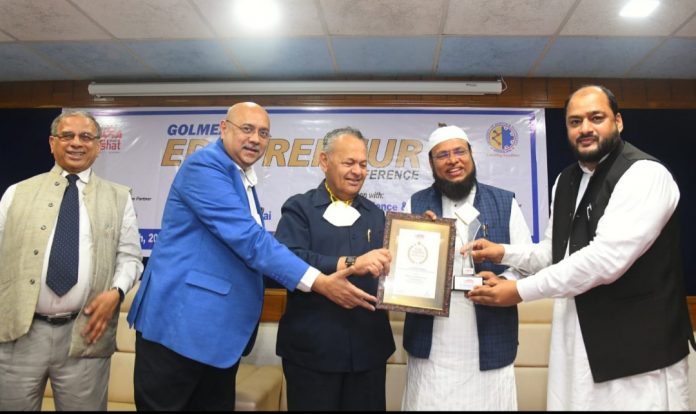
Mahbubul Hoque, Chancellor of USTM receiving Maeeshat Edu Doctor Award-2022 from the hands of P. A. Inamdar, Founder President, Azam Campus, Pune (centre) at Golmez Edupreneur Conference held at USTM on March 10, 2022
9th Mile, Khanapara, Ri Bhoi :
Maeeshat Media Pvt. Ltd, India’s first media outlet dedicated to covering economic activities of minority communities, has given away its 11th edition of business awards at the Golmez Edupreneur Conference held in association with the University of Science and Technology Meghalaya (USTM) here today. Mahbubul Hoque, Chancellor of USTM and P. A. Inamdar, Founder President, Azam Campus, Pune was conferred with Edu Doctor Award-2022 while Dr Abdul Qadeer, Founder Chairman, Shaheen Group, Karnataka was conferred with the Edupreneur of the Year Award.
The keynote address of the conference was delivered by Dr Frank F Islam, Chairman and CEO of FI investment group, USA. The conference has been attended by economic experts, business leaders, entrepreneurs, social workers, and professionals from across India.
Addressing the gathering of entrepreneurs, P. A. Inamdar urged, “Let us not talk about anything negative. We have to talk how much we have achieved and how far we have to achieve for development.” Emphasizing on imparting spoken English in all vernacular medium schools, he said that technology can create a much better environment and contribute to educational progress. He suggested all to think about how to empower neighbourhood small institutions.
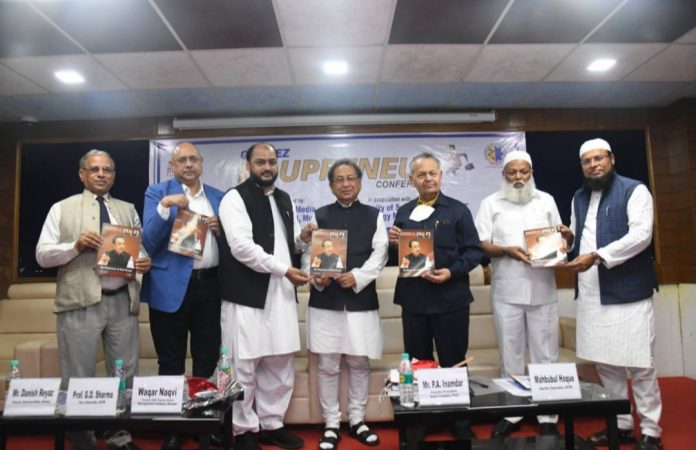
(From left) Prof. G. D. Sharma, VC, USTM, Waqar Naqvi, Managing Partner, RDVLLP Mumbai; Danish Reyaz, Managing Editor, Maeeshat Media; M. Nurul Islam, Founder General Secretary, Al Ameen Mission, Kolkata; P. A. Inamdar, Founder President, Azam Campus, Pune; Dr Abdul Qadeer, Founder Chairman, Shaheen Group, Karnataka and Mahbubul Hoque,
Delivering the keynote address in the inaugural session, Dr Frank F Islam emphasized on the need for edupreneurship in India. “Much has been done for the development of education among the minorities in India, and unfortunately much remains to be done”, he said.
Welcoming the guests, Mahbubul Hoque said that through institution building one can change the environment of a particular place and bring progress to the people of the area. He thanked all the participants for coming over to the North East and for their desire to contribute for the development of the people through promotion of education. “We as Indians have to think for development of every citizen, not simply of the minorities”, he added.
Speaking on the occasion, Prof G. D. Sharma, VC, USTM mentioned about National Education Policy-2020 and said that USTM is preparing 82 teachers for technology oriented courses so that the university becomes a global university through technology. “We have to establish peace in the North East region though the means of education”, he added.
A magazine of Maeeshat Media was released on the occasion by M. Nurul Islam, Founder General Secretary, Al Ameen Mission, Kolkata and other dignitaries.
Some of the distinguished participants in the conference include: Waqar Naqvi, Former CEO, Taurus Asset Management Company, Mumbai; Danish Reyaz, Managing Editor, Maeeshat Media; Munir uz Zaman Deshmukh, Pearls Academy, Aurangabad; Rashid Nayyar; M Mohammed Tahir Madani, M Burhanuddin Qasmi, Director, MMERC, Mumbai; Moulana Mohammad Ilyas Nadvi, GS, AHAN Islamic Academy; Moulana Mutiur Rahman Madni, Founder, Imam Bukhari University, Kishanganj; M Azizurrahman, Founder, TCIS, Malda, Dr Nazibur Rahman, Principal, Kaliachak College, Malda; M Wajihuddin, Assistant Editor, Times of India, Mumbai; Zaya Ahmed from Delhi; Izhar Khan and Affan Ahmed Kamil from Mumbai.
source: http://www.muslimmirror.com / Muslim Mirror / Home> Indian Muslim> Positive Story / by Muslim Media Networks / March 10th, 2022
Kalaburagi-based artist Mohammed Ayazuddin Patel will participate in a three-day International Art Festival titled Colours of the World organised in collaboration with Amman Greater Municipality and SMD Foundation at Ras Al Ain Art Gallery, Amman in Jordan.
The festival will be inaugurated under the patronage of Anwar Halim, Ambassador of India in Oman, on Saturday.
Artists from the U.S., Jordan, Canada, Taiwan, India and other countries are taking part in the art festival.
Mr. Patel will display his digital painting works based on Indian culture.
source: http://www.thehindu.com / The Hindu / Home> News> National> Karnataka / by Staff Reporter / Kalaburagi – March 02nd, 2022
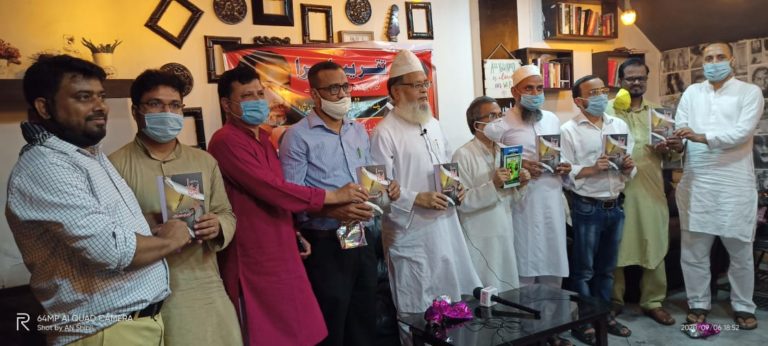
Andaz-e-Bayan is the outcome of my passion, a passion which I did not allow to die even during unemployment and the pandemic. These views were expressed by renowned Urdu critic and writer Haqqani Al-Qasmi.
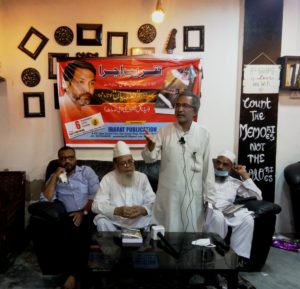
He was speaking at the launch of the third book of his famous single-theme Andaze-e-Bayan series at a cafe in Shaheen Bagh, New Delhi on Sunday, 6 September, 2020.
The present journal, which in fact, is part of a series of books, “discusses about those poets, litterateurs, authors and novelists, who, despite being in the medical profession, are serving Urdu in areas of research and criticism”, said Haqqani.
Speaking on this occasion Maulana Ajaz Urfi Qasmi, president of All India Tanzeem Ulama-e-Haq, who chaired the session, lauded the author for his powerful, creative style of writing which had won him global acclaim.
Haqqani Al-Qasmi is an accomplished and distinguished litterateur and critic serving Urdu with great sincerity and humbleness. There is an unusual amount of literary taste in his works which can be felt by the reader. He further said that Haqqani is not unaware of the social world. “From above the literary firmament, Haqqani surveys the mundane world”, Mualana Urfi said adding that one can see that in his literary journal series Andaz-e-Bayan as well.
Abid Anwar, a senior journalist with UNI remarked that to say anything about Haqqani would amount to explaining the obvious.
Urdu critic and Post-Doctoral Research Fellow, Dr Noman Qaisar presented an overview of the author’s literary journey mentioning about some of his well-received and critically acclaimed books like Philisteen Ke Chaar Mumtaz Shu’ara, Tawaaf-e-Dasht-e-Junoon, La Takhaf, Takalluf Bar Taraf, etc which are full of literary aesthetics, creative imagination and academic insights.
It should be noted that the first issue of this book series (Andaz-e-Bayan-1, May-July 2016) was dedicated to literary contributions of women, especially of women from marginalized sections of society, with reference to biographical writings and their analysis.
The second one was dedicated to the creative facets of the police while the latest is an effort to unmasking the unrevealed literary contributions of doctors and medical professionals not just in Urdu literature but in English and Hindi literature as well.
Persons from media and different Urdu literary circles present on this occasion included Shahidul Islam, A N Shibli, Dr Khan Mohammad Asif, Ashraf Bastawi, Zubair Khan Saeedi, Majid Khan, Manzar Imam, Mohammad Alamullah, Nayab Hasan, Maulana Firoz Akhtar Qasmi, Shams Tabrez Qasmi, Ahsan Mehtab, Anwarul Haq, Abdul Bari Qasmi.
The launch programme was coordinated by T M Ziaul Haque. Salam Khan, head of Ibarat Publication which has published the book, presented the vote of thanks.
source: http://www.millattimes.com / Millat Times / Home> Education> National / by Md Irshad Ayub / Manzar Imam / September 11th, 2020
This year marks the 100th anniversary of the eventful Malabar Uprising of 1921.
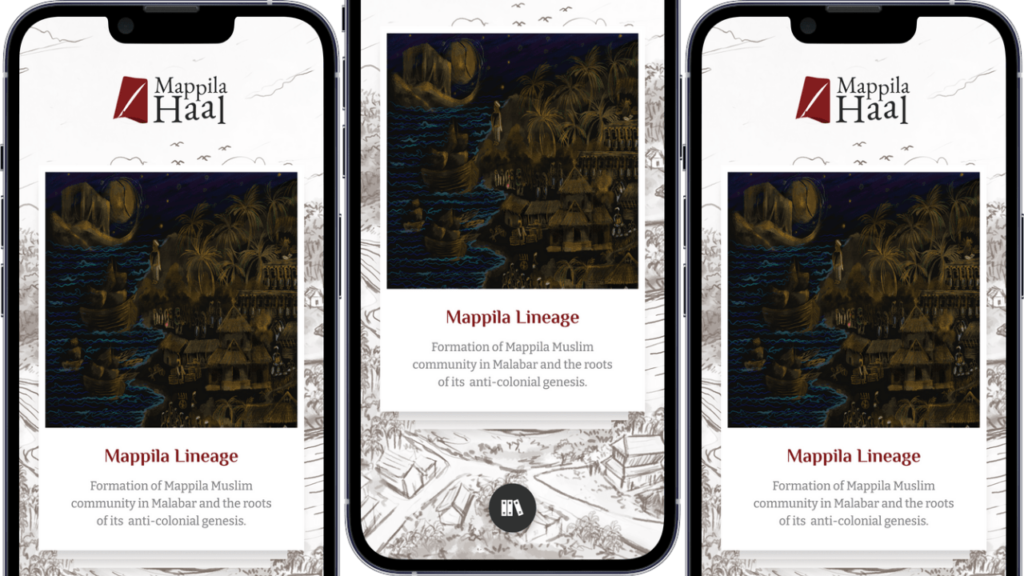
In this historic context, SIO Kerala has come up with a new venture: an interactive virtual exhibition titled ‘Mappila Haal’.
‘Mappila Haal’ is a comprehensive creative expression of the Malabar Uprising enabling the viewer to travel through the revolutionary days and nights.
SIO acknowledges the memories, discussions on various factors and celebration of the Malabar Uprising as a crucial socio-political engagement.
History is not merely a record of the past. For any community, history is a decisive factor in their present life. That is why history is said to be a never-ending dialogue between the past and the present. Historical narratives play a major role in shaping contemporary socio-political perspectives and imaginations.
Every community should have a deep understanding of their history, and they should record and promote it. Failure to do so will result in the tragedy of having to live in a history written by others. That condition will adversely affect their future. Because their history written by the mainstream-dominant ideologies will be understood as the real one. If the dominant powers decide to marginalize or annihilate any community forever, they will use history as an easy tool. For that, they will do injustice to history in two ways. One is to hide and erase the rich history of that community, and the other – to present a distorted narration of it.
How Islam and Muslims were treated in colonial historiography is an apt example of this. The colonial powers hid the prestigious and glorious history of Muslims all over the world. Later, colonialism defined Islam and Muslims in their own way, based on which the history of Muslims was written – Islam is primitive, it was spread in the world by sword, Islam is utter terror, Muslims are savage, bloodthirsty, war-loving, violent and dangerous. Based on this definition, they presented a distorted version of world Muslim history. In doing so, they sought to create a public perception that the very presence of Muslims would be dangerous to any nation and all forms of social and political expression based on Islam reflects extremism and terrorism. The aim was to make people believe that they were the ones who needed to be eliminated. Thus, this narrative became a justification for all violence, injustice and genocide against Muslims. This is how history itself becomes the greatest instrument of oppression. It is in this colonial narrative that the roots of present-day Islamophobia too lie, be it global, national or in Kerala.
Here comes the relevance of the remembrance and celebration of the Malabar Uprising. This is a time when Hindutva politics is gaining strength and the Sangh Parivar is working on the genocide of Muslims. Hindutva forces use the history of Muslims in two ways to facilitate ethnic cleansing: One is the attempt to erase the history of Muslims in India and to uproot the glorious roots of Muslims in this country. Second, to distort the history of Muslims in India into an anti-Hindu history. Through these two forms of violence against history, Hindutva quickly finds pace for its racist propaganda. In other words, the Hindutva forces are trying to create a public conscience that the Muslims are a group that came from somewhere, that they have no roots in this country, that the history since their arrival here is one of violence, that their presence is a danger to the country and therefore they should be eradicated. The question of how one’s mind allows Muslims to be lynched to death in broad daylight turns irrelevant there. When a person believes that Muslims deserve to be killed, he will not feel any remorse for killing them.
In this particular political context, there is a special significance for popularizing and celebrating the memories of the Malabar Uprising. By remembering the Malabar Uprising and the fighters involved within, we are also positioning ourselves against the Hindutva ideology. The British colonial powers portrayed the Malabar Uprising as fanatic aggression. Such a propagation was quite natural because it was a battle against them. However, the Sangh Parivar is also propagating the Malabar Uprising as a brutal anti-Hindu massacre, inciting hatred against Muslims in its name and using the history of the Malabar Uprising as fuel to accelerate the aforesaid process of genocide. In 1921 itself, the Hindutva forces propagated the Malabar Movement as a Hindu genocide and used it as a fertilizer for the formation of the RSS.
Moreover, the historical point of the Malabar Uprising is constantly disturbing Hindutva politics in many ways. One of them is that the Malabar Uprising reminds us of the crucial role of Muslims in the anti-colonial struggles that led to the formation of the nation of India. Another is that the Malabar Uprising was also a struggle against the upper caste hegemony which is the foundation of Hindutva politics. That is why the Sangh regime’s dictionary of martyrs cannot include the names of the Mappila fighters. Therefore, remembering and celebrating the Malabar struggle is a strong statement against Hindutva politics.
The memory of the Malabar Struggle is also a memory of our own glorious tradition. It also gives us an idea of how strong and deep our roots are in this land. It shows the pivotal role played by our ancestors in the freedom struggle of this country, social renaissance and civilizational development. For the Muslim community in India, this memory and realization will provide the energy to move forward with self-respect in the face of several crises.
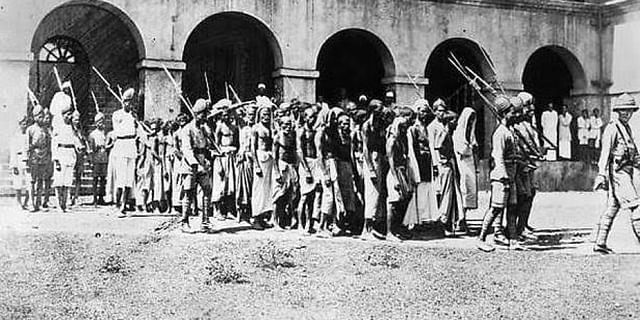
The Malabar Uprising had two main stages. One was the struggle against the colonial British forces. Second, the struggle against the feudal and caste lords who oppressed and exploited the peasants and lower castes like slaves. The extraordinary struggle led by Ali Musliyar and Variamkunnath Kunhahammad Haji shook the foundations of the colonial powers and the caste leaders. It instilled a new dream of liberation in the oppressed masses. It was these two brave leaders who gave direction to the Malabar Uprising in which thousands of agricultural workers and labourers rallied. Many non-Muslims too took part in the Malabar Uprising along with the Mappilas.
We also need to think about the theological factor that motivated the Mappilas to fight. The Islamic faith was the basic factor that inspired the Mappila warriors to take their own lives and go to battlefield. It is a part of the Islamic faith to stand for justice and to fight against injustice, discrimination, slavery and exploitation. The Qur’an and the Sunnah teach us to fight for the victims of injustice. It is part of Tawheed (monotheism) that slavery and obedience are permissible only to Allah. Believers do not accept slavery or obedience before another. And they believe that the struggle for truth and justice is Jihad in the way of Allah. The scholars of Malabar passed on these divine lessons of justice and liberation taught by Islam to the common Mappilas. That is how the struggles against the occupying forces and caste lords took place in Malabar from the sixteenth century onwards.
Indeed, a cosmopolitan component was involved in the Malabar Uprising. After a short gap, the anti-colonial struggle in Malabar gained momentum again in 1921, with the advent of the Khilafat Movement. Even the national movement became popular as a result of the influence of the Khilafat movement. The Khilafat movement and the political ideology of the Khilafat acted as a new force in the anti-colonial anti-caste struggle. Globally, western modernity strengthened its political power by overthrowing the Ottoman caliphate. It was on the basis of these political convictions that the Mappila community, having global perceptions, embraced the Khilafat movement.
The historical narratives formed by the dominant ideologies can be defended and overcome only when studies are carried out in the light of such different elements involved in the Malabar Uprising. In particular, it is imperative in modern times to enable a critical reading focusing on the agency of the warriors, theological thought, social position, and decolonization. The SIO came up with the idea of a virtual exhibition based on the conviction that such alternative narratives and analyzes focused on these considerations should be brought to the fore.
In the context of the 100th anniversary of the Malabar Uprising, SIO’s main objective through this virtual exhibition is to look at the history of Kerala’s Muslim intellectual and struggle history through an alternative perspective, to enable the production of knowledge about it, and to celebrate it politically and culturally. This can only be comprehensive when the various narratives that have been formed post rebellion are critiqued and analyzed from a realistic perspective. This is a continuation of the knowledge politics that SIO has been raising from time to time. We mark this interactive virtual exhibition as a continuation of the knowledge politics that SIO promotes through its rejection of hegemonic ideas and its critical reading of knowledge such as history, politics, theology and aesthetics.
The virtual exhibition will be available on a mobile application with a feast of video contents, paintings, calligraphy, digital art, rare archives, exclusive photos, the timeline of the uprisings of Kerala Muslims, different narratives on the Malabar Uprising, articles, profiles, events and graphical maps of the places of rebellion.
‘Mappila Haal’ will also be marked as a critical alternative to the colonial and savarna narratives which portrayed the long intellectual and revolutionary tradition of Malabar against the colonial and caste powers as fanatic and barbaric.
Khan achieved the rare feat recently by qualifying for the his second event — giant slalom — a month after booking his first Winter Olympics ticket in alpine skiing slalom category in an Olympic qualifier in Dubai.
Alpine skier Arif Mohammed Khan. (Twitter/jswsports)
Jammu and Kashmir-based alpine skier Arif Mohammed Khan has become the first Indian athlete to qualify for two different events of the Winter Olympics, set to be held in Beijing from February 4, next year.
Khan achieved the rare feat recently by qualifying for his second event — giant slalom — a month after booking his first Winter Olympics ticket in alpine skiing slalom category in an Olympic qualifier in Dubai.
The news was confirmed by his promoter JSW Sports.
JSW-supported Alpine skier Arif Khan, who had earlier earned a provisional quota for the Slalom event at the 2022 Winter Olympics, has now qualified for the Giant Slalom event as well. ??#BetterEveryday ???? #Beijing2022pic.twitter.com/Ua6EfIRJ65
— JSW Sports (@jswsports) December 29, 2021
“JSW-supported Alpine skier Arif Khan who had earlier earned a provisional quota for the slalom event at the 2022 Winter Olympics, has now qualified for the giant slalom event as well.
“For the first time in history, an Indian will be competing in two different events at the Winter Olympics,” JSW Sports wrote in a facebook post on Wednesday night.
While India was represented by two athletes — Jagdish Singh (cross country skiing) and Shiva Keshavan (luge) — in the 2018 Winter Games, Khan is the only person to have qualified for the 2022 Winter Games so far.
Khan is a professional alpine skier from north Kashmir’s Tangmarg and has qualified for giant slalom event at Kolasin, Montenegro recently. He has represented India in more than 100 ski events held across the world and has been undergoing training in Europe for the most part of this year.
source: http://www.indianexpress.com / The Indian Express / Home> Sports / December 30th, 2021
While the origin of Mygurudu is unknown, it is believed that the word originated from ‘Mozhi Kurudu’, which means misleading with words.
The 1921 revolt grew as an agitation against the feudal lords who aided the British. (Photo | Special Arrangement)
Kozhikode :
The centenary observations of the Malabar rebellion of 1921 are also becoming an occasion to retrieve many forgotten things part of local history. Mygurudu, the secret language that was prevalent in some parts of Malabar, is among them. For the coded language was used widely by the rebels to hoodwink the British during the rebellion.
While the origin of Mygurudu is unknown, it is believed that the word originated from ‘Mozhi Kurudu’, which means misleading with words. The language was developed by swapping Malayalam alphabets. For example, Malayalam alphabet ‘Aa’ is replaced by ‘Sa’ and ‘Eee’ by ‘See’.
In his book ‘Anglo-Mappila War 1921’, historian A K Kodoor recorded that the rebel leaders had instructed that all messages should be communicated through Mygurudu. He added that rebels’ meeting at Vellinezhi had decided to teach all group members the language, and that the Mappilas of Malabar used the secret language from 15th century AD when they were battling the Portuguese.
The Students Islamic Organisation (SIO) recently organised an exhibition ‘Al Jamia Mygurudu’ at the Al Jamia Al Islamia at Santhapuram near here. “The exhibition was part of a protest against the move from the Indian Council of Historical Research (ICHR) to delete the name of those who participated in the 1921 rebellion from the list of freedom fighters,” said Ayman M A, convener of the exhibition.
Dr Pramod Irumbuzhi, who has done extensive research on the language, said he first came to know about it when he was studying at the Calicut University. “I realised that some people can still speak the language. There will be around 500 people who can fluently speak Mygurudu in the seven districts of Malabar,” said Pramod, whose book on the subject has run into the fourth edition.
source: http://www.newindianexpress.com / The New Indian Express / Home> States> Kerala / by Express News Service / October 24th, 2021