Category Archives: Green Products

The kernel of rice conservation

Kirugavalu Village (Malvadi Taluk, Mandya District), KARNATAKA :

Passionate efforts
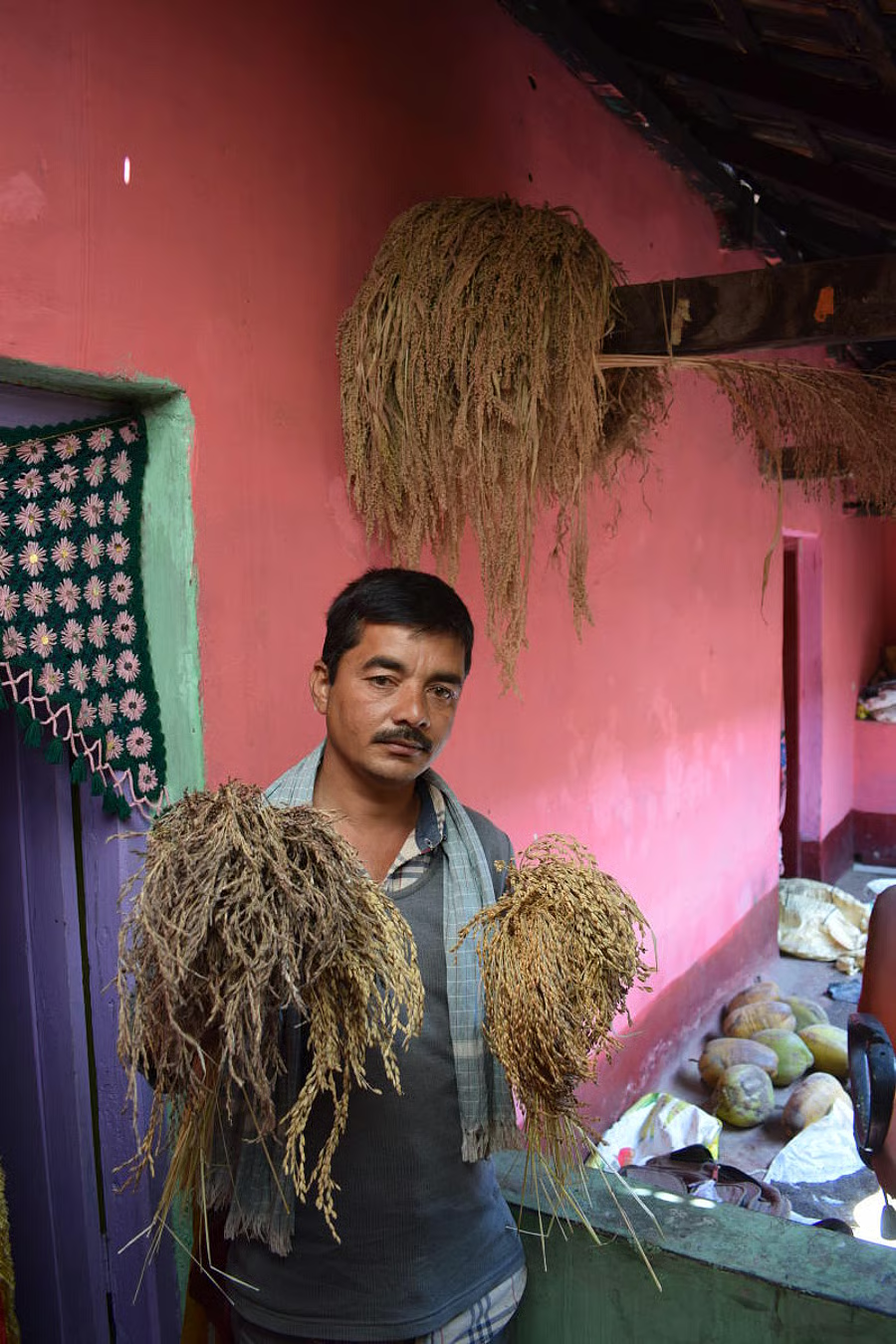
Farmer Syed Ghani Khan has brought back the use of traditional varieties even as farmers are lured into buying unsustainable varieties.

Some farmers have been the victims of forceful marketing and have opted for commercial varieties of rice and other crops promoted by seed firms.

In effect, they have switched from native varieties — which suit the soil and climatic conditions — to the ones that consume more water and fertilisers, and are easy prey for insects and pests. But it does not take farmers long to realise that the yield comes down after a few years, leaving the soil toxic.

Remedy lies in returning to traditional grains. But wooing farmers away from commercially promoted seeds, fertilisers and insecticides is a task.

Syed Ghani Khan, a farmer from Kirugavalu, a village in Mandya district, has been pursuing that task as a lifetime passion.

He has set up a museum in his village home by setting apart two rooms for the purpose.

He has conserved over 700 varieties across 15 and more acres of land. These crops are harvested carefully, and the panicles laden with grain are bunched, marked with names and numbers, and arranged systematically on the walls of the two-room museum.

Some of them are even stored in bottles to be given away to farmers around the village to experiment with the heritage crops they lost in the race to boost harvest with new varieties.

Khan is a graduate from Mysore University with a degree in Archaeology and Museology. After completing his studies in Mysuru, Khan joined his father in tending to his farm.

He was pained at the sight of farmers getting addicted to industrial products and giving up the traditional varieties and practices.

He took up the task of preserving traditional seeds in packets and supplying them to those who were converts to his cause. Yet, he was not satisfied with what he did. He thought he needed more systematic efforts to create awareness about the usefulness of the old varieties and the supply of seeds.

According to Khan, continuous onslaught of publicity for industrial farm products has misled farmers into switching over to newer seeds — be it cereals, lentils, vegetables or fruits. This has led to enmasse shift to high-yielding varieties like MTU-1001, IR-64, Jaya etc.

Khan says traditional varieties hold the key to sustainable farming that is less expensive, does not erode the fertility of the soil. “In our pursuit of bumper harvest, we have damaged the soil and have made paddy an aquatic crop, which it is not,” he laments.

He began collecting varieties like Rajmudi, Ghamgadale, Doddibatta, Parimala Sanna, Basmati, Ratnachudi, Gandhasale, Mysore Mallige, Jeerige Sanna, Burma Black, Rasakdam, Thai Jasmine etc in earnest. Several of these varieties harbour medicinal properties while others emit aroma while being cooked.

According to Khan, varieties such as Doddibatta, Ghamgadale and Biddi Doddi can be grown in farms that receive just one or two spells of shower.

Ratnachudi, HMT, NMS-II are high-yielding traditional varieties while Jeerige Sanna, Rasakdam, Gandha Sale, Parimala Sanna and Mugadh Sugandh turn aromatic while being cooked.

He says most of the seeds of paddy varieties collected by him have a shelf life of 18 months. In contrast to the practice of preserving seeds in freezers, he applied on-field conservation methods where no synthetic chemicals were used.

Propagator

Farmers from all over South India have been approaching him for seeds of the native varieties.

Shiv Prasad, who has a farm in the outskirts of Hyderabad, took seeds of nearly 200 varieties from him. He has since been a promoter of the cause in his region.

Khan maintains a meticulous record of all those who have procured seeds from him. During the last two decades, nearly 10,000 farmers have accessed supplies from him.

Krishna, a farmer from a village in Maddur taluk, is a regular visitor to his farms. Rachanna, from Hosamalangi village in T Narsipura taluk, successfully grows around 25 varieties in his farm. He had visited him a decade ago.

A corner of his museum displays several medals, certificates and awards. He was conferred with Krishi Pandit Prashasti by the Govt of Karnataka (2008). National Genome Seed-saver Recognition Award was conferred on him a year later by Plant Protection Variety Forum. Govt of Karnataka chose him for ‘Biodiversity Award’ in 2010, while Directorate of Rice Research in Hyderabad presented him ‘Rice Innovative Farmer Award’ for the year 2011-12.

Ghani Khan says one should not be surprised to find one variety being replaced by another after every 40 km as India is home to thousands of varieties of rice.

He says several of them carry medicinal properties.

He says while Karigajivili and Ambe Mohur from Karnataka are said to be good for lactating mothers, Navara of Kerala is good for those who have joint pain. While Mappillai Samba from Tamil Nadu improves virility, Mehdi is held to be good for healing of bone fracture. Khaima provides relief for those suffering from piles.

Mangoes, too

Ghani Khan has taken up the conservation of native varieties of mango, too. He has registered himself with the National Bureau for Plant Genetics, New Delhi.

He has trees that have been there in the family farm for the last six to seven generations. These trees yield native varieties like mosambi ka aam (tastes like sweet lime); seb ka aam (tastes like apple); pheeka aam (bland mango) for those with diabetes; kaale malghoba, bada gola; mangamari; manji bi pasand and mittmia pasand.

His family has been supportive of his efforts and to this day help him in maintaining their farms and marketing the produce.

Womenfolk of his family use paddy in making decorative art.

Syed Ghani Khan can be reached on 9901713351 or muhinuha786@gmail.com

source: http://www.deccanherald.com / Deccan Herala / Home> India> Karnataka / by M A Siraj / October 12th, 2019

Kerala’s child climate warrior proposes recycled paper for passports

Kozhikode, KERALA :

Roohi Mohazzab at the UN Conference in Bangkok


New Delhi :

In 2023, India issued more than 13 million passports, using about 468 metric tons of paper. Globally, about 100 million passports are issued each year, requiring about 3,600 metric tons of paper—the equivalent of cutting down about 86,400 trees.

At this scale, using recycled paper passports could save thousands of trees each year and greatly reduce environmental damage. These statistics were compiled by six-year-old environmentalist Roohi Mohazzab of Kerala.

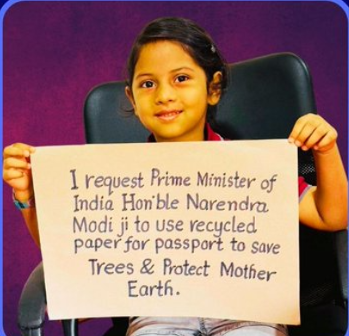
In a handwritten letter to world leaders, including Prime Minister Narendra Modi and the heads of 195 countries, Roohi has asked the leaders to replace traditional passport paper with recycled paper to save trees and protect Mother Earth.

Roohi Mohazzab also set a remarkable global milestone by delivering the keynote address during the Global Conference on Education for a Sustainable Future (GCE 2026) at the United Nations Asia-Pacific Headquarters in Bangkok.

Roohi Mohazzab has taken on a challenge that many adults might never even consider – to revolutionise the way passports are made. 

Their idea is not only profound but also practical—a step that could make India the first country in the world to issue passports made from recycled paper, setting an inspiring example for global sustainability.

Roohi Mohazzab, a first-standard student of Common Ground International Academy, Kozhikode, was formally invited as a keynote speaker and SDG (Sustainable Development Goals) Impact Award winner.

The event was organised by the UNESCO Youth Education Research Centre and the Sustainable Development Council, which has special consultative status with the United Nations Economic and Social Council ECOSOC.The conference was held at the United Nations Conference Centre, Bangkok, on 11-12 February 2026.

At the conference, the young environmental activist spoke about the devastating impacts of paper use on forests and climate change.

He stressed that a common item like a passport, which is issued in millions every year, can become a symbol of sustainability rather than being harmful to the environment.

In a symbolic moment on the UN platform, Roohi officially launched her global initiative, “The Children’s Movement for Climate Action.” The foundation aims to foster environmental responsibility and civic awareness among children so that young minds can become active participants in climate policy and sustainability solutions.

Roohi was recognised as one of the world’s youngest environmental voices and is known for her impactful local initiatives.

Other initiatives launched on the occasion:

The Country Tree Project  – Launched on World Environment Day 2025, aims to plant 10 million trees through one million school micro-nurseries.

Tree Bank Nursery Project  – Inaugurated by Rajendra Vishwanath Arlekar, which aims to create a green educational environment in 10,000 schools.

Recycled Paper Passports Campaign   – At the age of five, Roohi wrote a letter to Narendra Modi and 195 world leaders, recommending eco-friendly passports to save trees.

 The conference sent out a message that Children are not just the future – they are the present custodians of Mother Earth.”

source: http://www.awazthevoice.in / Awaz, The Voice / Home> Stories / by ATV / posted by Aasha Khosa / February 18th, 2026

Jharkhand IIT-ISM students develop eco-friendly fuel by enriching coal bed methane with hydrogen

Ranchi, JHARKHAND :

Assistant Professor Ejaz Ahmed further informed that the carbon nanotubes produced during the separation of hydrogen from methane are a high-strength material.

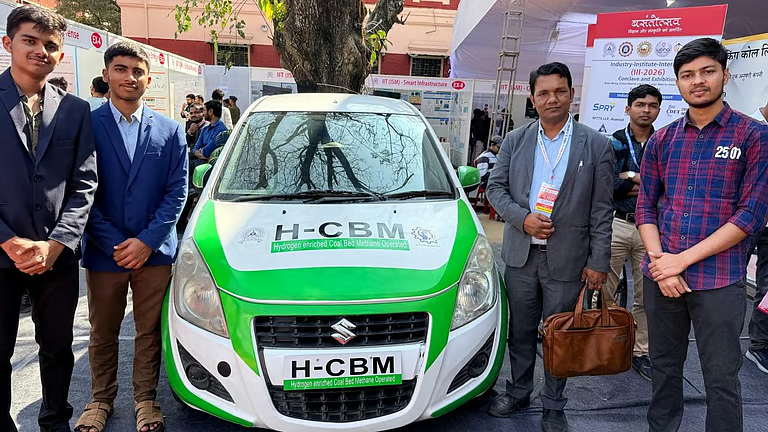
Jharkhand IIT-ISM students develop eco-friendly fuel by enriching coal bed methane with hydrogen.(Photo | Special Arrangement)

Ranchi :

Second-year students of the Chemical Engineering department at IIT-ISM Dhanbad have developed a technology to convert greenhouse gases like coal bed methane into environmentally friendly fuel, which can be used directly in CNG cars.

The eco-friendly fuel has been named as H-CBM (Hydrogen Enriched Coal Bed Methane). Chemical engineering students Kailash Krishna, Nitin Gaur, and Devashish Das, under the guidance of Assistant Professor Ejaz Ahmed, have also developed a hydrogen-enriched coal bed methane-powered car. Professor Alok Das of Mechanical Engineering Department also helped them in research work.

Coal-bed methane gas is released during coal mining. It is a dangerous greenhouse gas, considered to be approximately 25 times more harmful than carbon dioxide.

Ahmed said they are using a waste product that previously polluted the environment and creating an environmentally friendly fuel that can be used in any CNG car without any modifications.

Coal bed methane contains sulphur and methane, he said. “It is purified to produce pure methane. Then, a portion of the methane is cracked, through which hydrogen and carbon nanotubes are obtained. The hydrogen-enriched coal bed methane, produced through this process, can be used directly in cars as a substitute for CNG,” said Ahmed.

He further informed that the carbon nanotubes produced during the separation of hydrogen from methane are a high-strength material. They are used in bulletproof jackets and the steel industry. Its market price is up Rs 500,000 per kilogram, he said. The associate professor said that since carbon nanotubes are produced alongside hydrogen, the cost of the hydrogen becomes virtually zero.

Ahmed informed that the release of coal bed methane significantly increases environmental pollution. However, capturing coalbed methane offers considerable benefits. “Capturing 1 kilogram of coalbed methane is equivalent to reducing pollution by the same amount as 25 kilograms of carbon dioxide, which is crucial for environmental protection,” said the professor. It will prove to be a game-changer in the field of green mining, he added.

Second-year student Devashish Das, who is also a part of the research team, explained that CNG cars emit less carbon dioxide than petrol and diesel vehicles, but the emissions are not completely eliminated.

“Coal bed methane gas, extracted from the coal mines of Dhanbad, is far more dangerous. Considering this, hydrogen fuel has been developed from CBM,” said Das. Because hydrogen has a higher calorific value than CNG, it also provides better fuel efficiency for vehicles, he added.

source: http://www.newindianexpress.com / The New Indian Express / Home> Nation / by Mukesh Ranjan / February 09th, 2026

Manzoor Wangnoo Honoured with Environmental Stewardship Award at Shaheen Group Convocation

Bidar, KARNATAKA / JAMMU & KASHMIR :

Hyderabad :

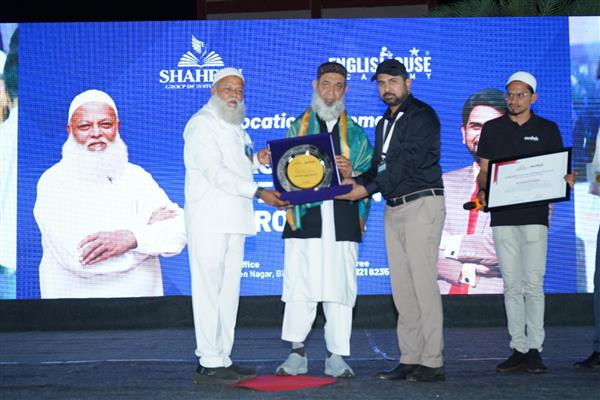
In a special ceremony held at the iconic campus of the Shaheen Group of Institutions, environmentalist and conservationist Manzoor Ahmad Wangnoo, Chairman of the Nigeen Lake Conservation Organisation (NLCO), was conferred with the prestigious Environmental Stewardship Award.

The award was presented during the Convocation and Personality Development Program, a flagship event hosted by the Shaheen Group, which houses over 6,000 boarding students and has earned nationwide acclaim for producing doctors, engineers, scientists, and civil servants.

Wangnoo was invited as the Chief Guest at the event by Munawar Zama Sahib, renowned for his exemplary work in motivation, value-based education, and moral leadership. The award was presented by Abdul Qadeer Sahib, CEO of the Shaheen Group of Institutions, alongside Dr.Zama.

The Environmental Stewardship Award was conferred upon only two individuals, selected from among a vast network of students and alumni spread across the globe, marking this recognition as a specail one.

In his address, Wangnoo expressed his sincere gratitude and dedicated the award to his beloved parents, well-wishers and supporters, and dedicated NLCO team,.

 “This is not just an award—it is a call to continue. For Nature. For the Future,” said Wangnoo.

The event highlighted the synergy between education, moral vision, and environmental action, serving as a reminder of the vital role youth and institutions can play in healing our planet.(KNS)

source: http://www.knskashmir.com / Kashmir News Service / by KNS Desk Srinagar / June 02ns, 2025

An interview with the two winners of the EARTH scholarships from India

KERALA :

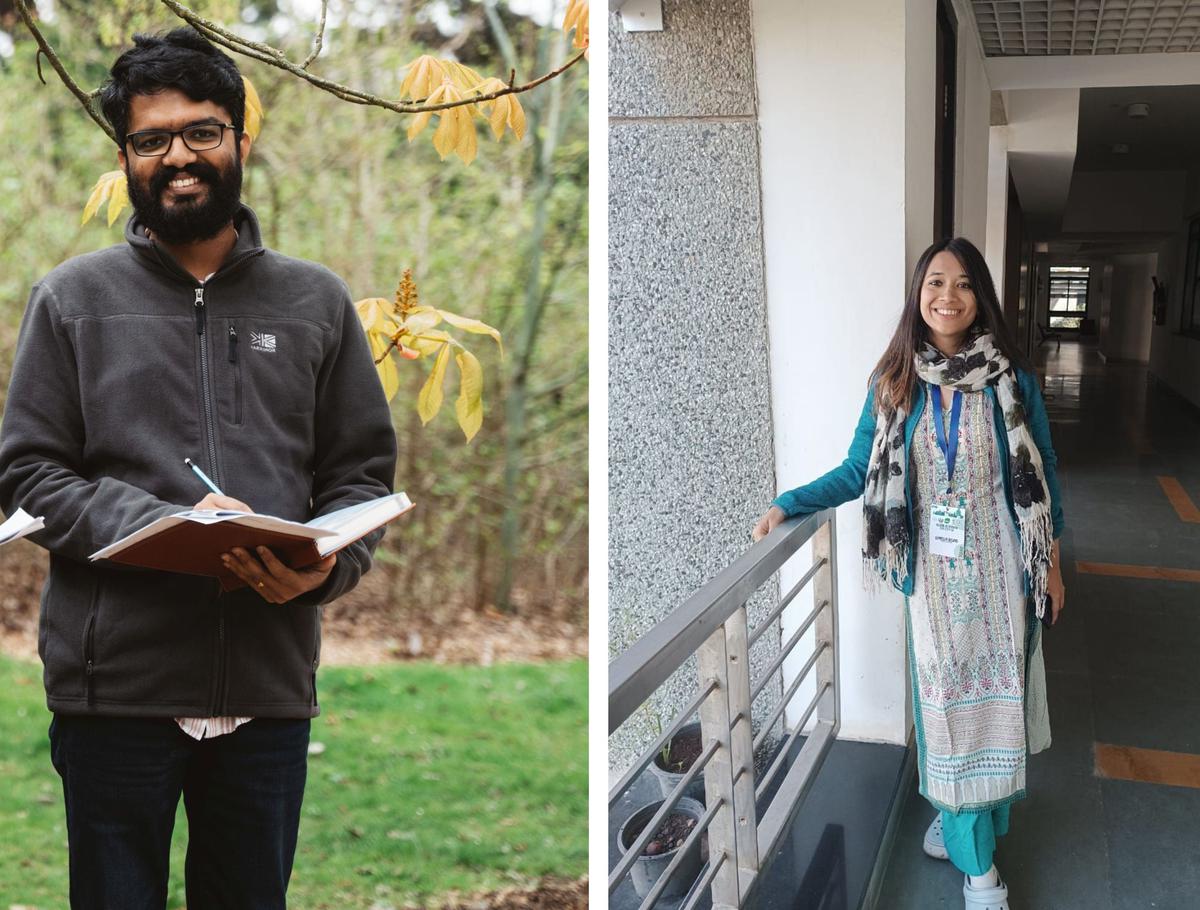
Camellia Biswas and Ajmal S. Rasaq, who won the EARTH scholarships, on how they moved to studying the environment and sustainability through various perspectives.

Recognising the impact of climate change. | Photo Credit: Freepik

Two Indian doctoral researchers, Camellia Biswas and Ajmal S. Rasaq, have been awarded the prestigious EARTH scholarships funded by British Council Scotland and delivered by the Scottish Graduate School for Arts and Humanities. It supports early-career researchers from around the world studying environment and sustainability through the Arts, Science, and the Humanities.

Biswas, who is in the Humanities department of IIT-Gandhinagar, specialises in ecological anthropology, human-animal studies, disaster studies and participatory research methodologies. Her Ph.D thesis focuses on mapping the dynamics of human and non-human interactions in the Indian Sundarbans, under the larger discourse of the climate disaster. In 2022, she was named British Council’s Women Leadership Fellow.

Rasaq, who secured the first rank in B.A. Political Science from St. Thomas College in Palai, Kerala, and pursued M.A. and M.Phil. degrees in Political Science at the University of Hyderabad and Jawaharlal Nehru University in New Delhi, switched over to climate change studies in his Ph.D course in IIT-Guwahati.

Since April, they have been undertaking in-person and hybrid exchanges in Scotland, which would go on until June in environmental arts and humanities. During her scholarship period, Biswas will collaborate with University of the Highlands and Islands (UHI) in Inverness, while Rasaw is affiliated with the University of Glasgow’s Human Geography department. They shared their experiences over an e-mail interaction. Edited excerpts:

From left: Ajmal S. Rasaq and Camellia Biswas, winners of the Earth scholarship winners. | Photo Credit: Special Arrangment

 What inspired you to take up your field/subject of study?

Camellia Biswas (CB): I am deeply intrigued by the ever-changing realm of interactions between multiple species in the context of climate change. In this project, my focus lies on the study of zooarchaeology entwined with cultural and political ecology. I will be utilising a deep-time perspective to explore the implications of climate change. Specifically, I am examining the ecological-cultural evolution of human-seal relationships in the Northern Scottish Islands, from past to present, to comprehend climate emergency and conservation action.

Ajmal S. Rasaq (ASR): My Ph.D. project looks into how the changing weather conditions, particularly unseasonal precipitation and cyclones, impact the socio-economic relations in Chellanam, a coastal suburb of Kochi in Kerala. Though my academic background is in Political Science, I shifted to human geography in my Ph.D. programme after seeing significant weather events in recent times, such as the devastating floods of 2018 and the Ockhi and Tauktae cyclones (in Kerala). Over time, I came to recognise the profound impact of climate, which I had until then seen only as a background for agricultural and fisheries production.

 How can the EARTH scholarship help you to enhance your understanding of your subject?

CB: The programme will enrich my understanding of STEAM (Science, Technology, Engineering, the Arts, and Mathematics) education in Scotland, and I hope to bring some of these learnings to apply in India. I’ve realised that topics across Humanities have implications for my own work. Scotland is very rich in visual narratives such as storytelling, folktales and myths embedded in historical records. Therefore, this will be very useful for my research. During my time here, I’m learning that topics across Science and Humanities are all connected. Scholars can help each other through different expertise and subjects.

ASR: I had already spent over a year collecting data through ethnographic fieldwork before joining this programme in April. This is an opportunity to connect with leading professors and other fellow scholars for three months. The training programme offered during the initial two weeks of the scholarship helped me to look deeper into the data. My mentor, Dr. David Featherstone at Glasgow University, has also been helping me in enriching my understanding in my area of research.

 Any advice for students who may wish to apply for such programmes?

CB: Students who are interested in these scholarships must stay alert and proactive by subscribing to notification pages and newsletters. Also, customise your applications to align with the specific requirements and goals of the scholarship(s).

ASR: Start early and allow sufficient time for the application process. Begin by identifying a potential supervisor who aligns with your area of research. In the proposed application, it is vital to emphasise the anticipated impact of the research. Applicants must highlight how their work can help in fostering cross-national collaborations in future.

source: http://www.thehindu.com / The Hindu / Home> Education / by Nahla Nainar / June 24th, 2023

Solapur Boy Abdullah Imran Modifies Bicycle to Run on Solar and Battery Power

Solapur, MAHARASHTRA :

Solapur :

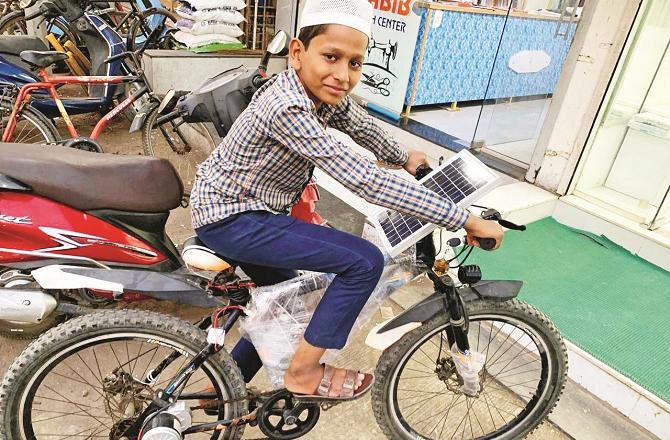
In a remarkable display of innovation, 12-year-old Abdullah Imran Mangalgeri from Solapur has converted a regular bicycle into a hybrid model that runs on battery and solar power, eliminating the need for pedaling.

A Class 7 student of M.A. Pangal Anglo-Urdu High School & Junior College of Arts and Science, Abdullah received the bicycle as a prize for excelling in a district-level speech competition on ethics. Instead of using it conventionally, he invested ₹9,000 and spent six months modifying it into a three-mode bicycle that can be powered by pedaling, a rechargeable battery (lasting up to 25 km), or solar energy (for continuous daytime use).

Abdullah incorporated a solar panel, battery, voice controller, speedometer, central lock system, GPS, and a network controller, giving his bicycle features akin to modern e-vehicles. His passion for science and innovation has driven him to attempt similar experiments in the past, including efforts to create a solar-powered air cooler.

Expressing gratitude for his success, Abdullah stated, “I love inventing. My next project is a solar-powered motorcycle.”

Recognizing his achievement, the school organized a felicitation event where Principal Dr. Haroon Rashid Bagban lauded his potential, calling him a bright mind with a promising future.

source: http://www.radiancenews.com / Radiance News / Home> Latest News> Report / by Radiance News Bureau / March 03rd, 2025

Bilal Mir’s Solar Car ‘RAY’ Set for Launch in Srinagar

JAMMU & KASHMIR :

Photo Credit: Basit Zargar

Srinagar:

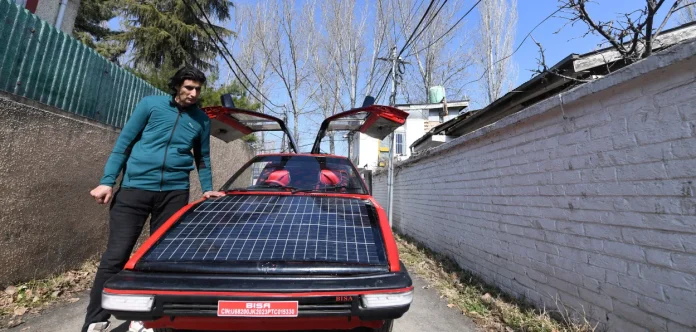
After three years of relentless efforts, mathematics teacher Bilal Ahmad Mir is set to launch his solar-powered car, RAY, revolutionizing eco-friendly transportation. The much-anticipated vehicle will hit the roads on Monday, February 10, marking a significant step in clean energy innovation.

Mir, who entirely self-funded his project with an investment of ₹20-22 lakh, embarked on this journey in 2022. He extensively studied automobile designs from the 1950s to modern-day luxury cars, incorporating cutting-edge technological advancements into his solar vehicle. His research, published in six countries, has earned him the moniker ‘Elon Musk of Kashmir’.

The RAY solar car boasts a 1 kW solar-powered engine, a high-tech Battery Management System (BMS), and autonomous parking sensors. Its gull-wing doors, embedded with solar panels, enhance both aesthetics and energy efficiency. Unlike traditional electric cars that require sunlight for charging, RAY can charge itself even in cloudy or snowy conditions.

Mir initially caught the attention of Mahindra Group Chairman Anand Mahindra, but a potential collaboration fell through due to technical constraints. Despite this, Mir remains optimistic about his prospects in the global market.

While Indian manufacturers are producing electric vehicles, Mir believes his solar innovation faces no domestic competition. Instead, he aims to compete with international firms like Lightyear and Aptera Motors, both pioneers in solar-powered vehicles. His research continues to receive global recognition, further strengthening his reputation in the field.

The prototype of RAY was developed by modifying a 1988 Nissan Micra, a process that took Mir 13 years of dedication. The car, which features a dual power system—solar energy and a rechargeable battery—will officially launch on February 10 and is expected to hit the roads by June 2025. However, Mir remains tight-lipped about future production plans.

As the world shifts toward sustainable solutions, Bilal Mir’s innovative solar car serves as an inspiration for India’s clean-energy future.

source: http://www.radiancenews.com / Radiance News / Home> Pride of the Nation / by Radiance News Bureau / February 11th, 2025

Uppinangady’s Abdul Gaffar successfully transports 100 stingless bee colonies to Gujarat

Uppinagady (Puttur Taluk, Dakshina Kannada Distric), KARNATAKA :

Puttur :

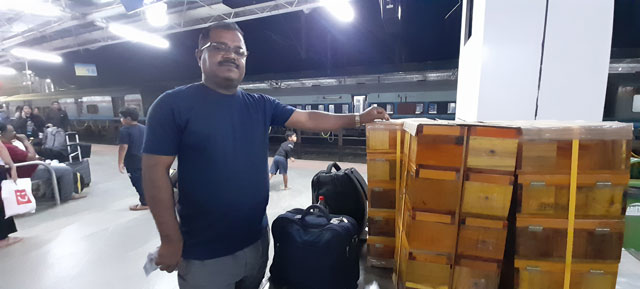
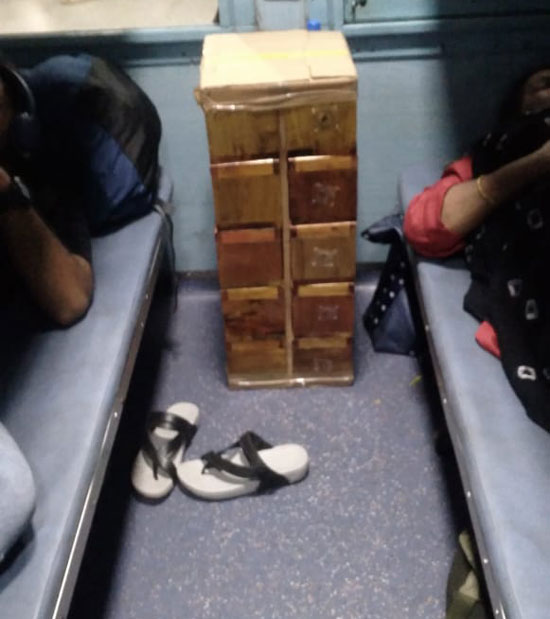
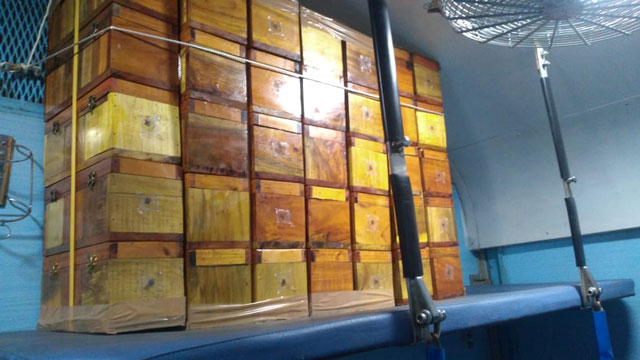
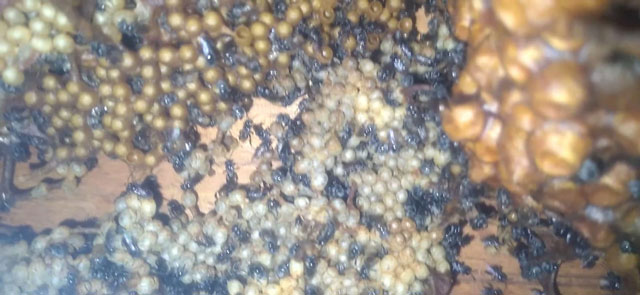
In a significant achievement, Abdul Gaffar, a resident of Berikey House, Nekkilady, Uppinangady, has successfully transported 100 stingless bee colonies along with bees to Gujarat. The transportation was carried out via train from Mangaluru to Gujarat, passing through Bengaluru.

A Gulf returnee, Gaffar initially took up beekeeping as a hobby during the COVID-19 pandemic. However, his passion soon turned into a full-time profession. He attributes his success to the guidance of Manmohan Arambya, who directed him to RUDSETI Ujire for scientific training in beekeeping.

Today, Gaffar manages an extensive collection of bee colonies, including 2,000 stingless bee colonies, 500 cerana bee colonies, and 10 white stingless bee colonies, known as Lisotrigona.

Notably, he is the only beekeeper in Karnataka to own Lisotrigona colonies. As part of his contribution to research, he has also donated one Lisotrigona colony to the University of Agricultural Sciences, Bengaluru.

Gaffar has expanded his work beyond beekeeping. He now deals in high-quality honey, bee pollen, beeswax, bee comb, and bee propolis. Additionally, he has designed innovative beehives tailored for stingless bees, making beekeeping more accessible and efficient. With the increasing demand for stingless bee colonies due to their medicinal benefits, his work has gained widespread recognition.

Acknowledging his journey, Gaffar expressed gratitude to his mentor Manmohan Arambya, RUDSETI Ujire, and senior researchers from the University of Agricultural Sciences, Bengaluru—Dr Shashidhar and Dr K T Vijayakumar—for their unwavering support and guidance.

His remarkable success stands as an inspiration, highlighting the potential of beekeeping as a promising profession and contributing to the preservation of these essential pollinators.

source: http://www.daijiworld.com / Daijiworld.com / Home> Karnataka / by Media Release / January 29th, 2025

Jamia Hamdard established the Asian Federation of Societies for Alternatives to Animal Experiments

NEW DELHI :

New Delhi :Prof

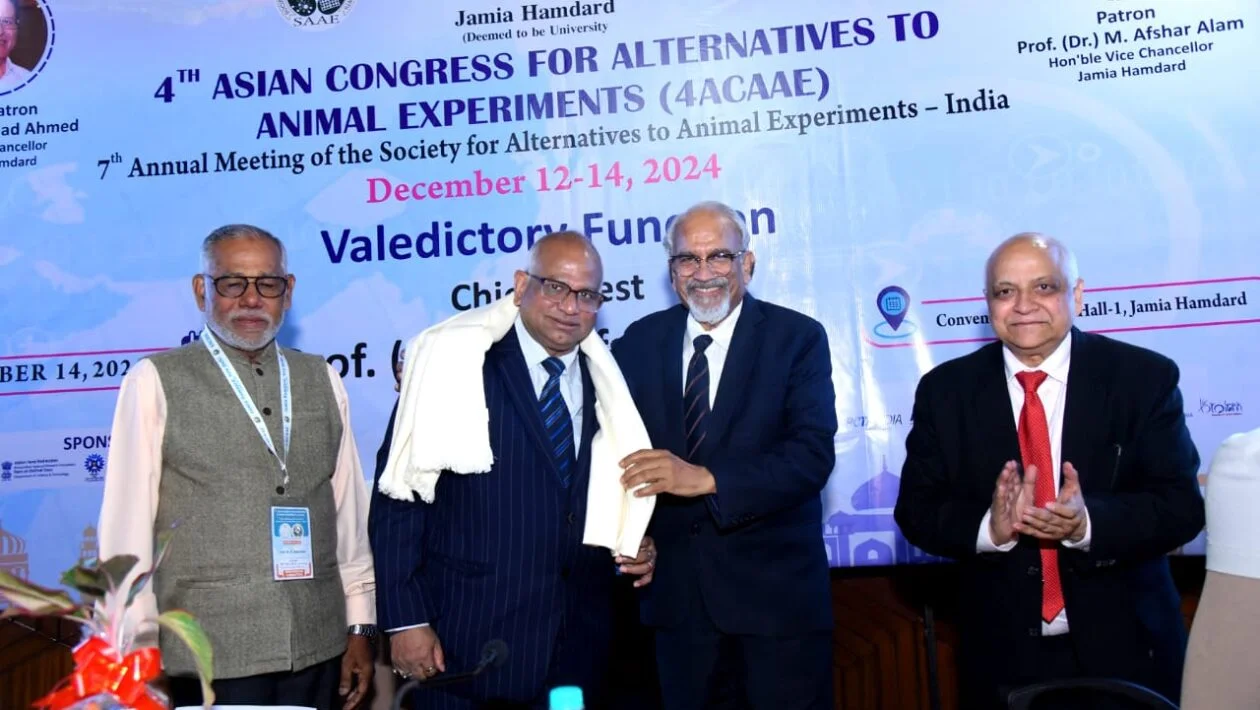
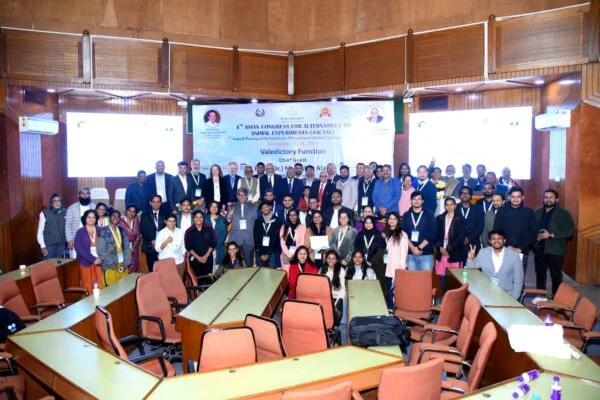
The valedictory function of the 4th Asian Congress for Alternatives to Animal Experiments held at Jamia Hamdard Convention Centre where Prof. (Dr.) M. Afshar Alam, Vice-Chancellor, Jamia Hamdard was the Chief Guest of the programme.

Organizing secretary Prof. S. Raisuddin informed that this congress is being held for the first time in India. During this congress the founding members of the society and representatives from India, China, Japan, and South Korea signed a joint declaration to establish the Asian Federation of Societies for Alternatives to Animal Experiments (AFSAAE).

Well-wishers from societies working for alternatives from America, Europe, and Sri Lanka also wished good link to the foundation. All the representatives were felicitated by the Organizing Secretary. Prof. Y.K. Gupta and Dr. M. A. Akbarsha graced the occasion as Guest of Honour.

Prof. Y. K. Gupta urged the scientists to understand the pain of Animals while using them for scientific experiments.

Dr. Akbarsha announced the next meeting to be held at Hyderabad. Prof. Raisuddin presented a detailed report of 3 days deliberations during the conference. He also announced various awards for best presentations by young scientists. Dr. Christian Pellevoisin, Scientific Director, MatTek & CEO Urbilateria France sponsored best poster presentation awards and cash prizes to the budding scientists. Dr. Kristie Sullivan, Vice President, Education and Outreach, Institute for In Vitro Sciences, USA and Prof Winfried Neuhaus, member of the Austrian Commission for Animal Experimentation also appreciated the successful organization of the Congress.

Prof. (Dr.) M. Afshar Alam, Vice Chancellor congratulated the Organising committee members for the successful organisation of the conference. He appreciated the patronage of Janab Hammad Ahmed, Chancellor, Jamia Hamdard and financial support of Hamdard National Foundation along with other funding agencies for enabling Jamia Hamdard to develop alternative models of animal experiments.

Programme ended with vote of thanks by the Organising Secretary and National Anthem.

source: http://www.taasir.com / Taasir.com / Home> Education / by Taasir News Network / December 15th, 2024

Greening the waste stream

Sadiwara (Anantnag District), JAMMU & KASHMIR :

Farooq Ganai’s approach to recycling food waste is benefitting him and the community too. Fayaz Wani highlights Ganai’s eco-friendly entrepreneurship.

Jammu & Kashmir :

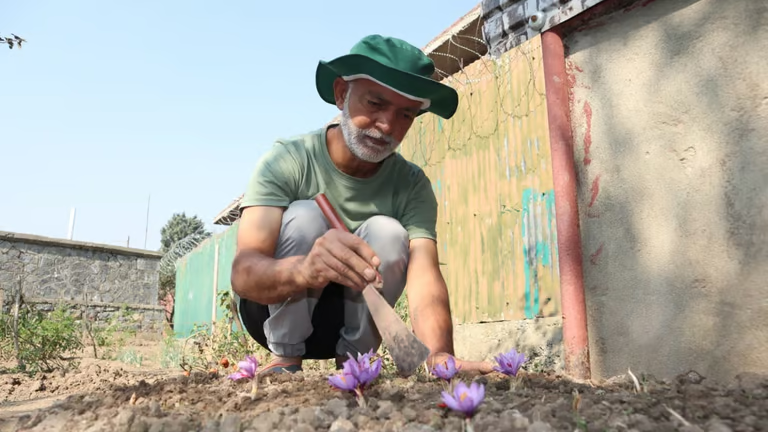
A lawyer by profession and a former sarpanch Farooq Ahmed Ganai, who is also known as a ‘garbage man’, has successfully grown saffron by using compost made from vegetable scraps generated at his home.

His actions have a message that not only can discarded waste contribute to a cleaner and greener environment but it can bring wealth as well.

He is leading a “quiet revolution” of turning waste into wealth and now, wants to educate people about the incredible potential of managing waste.

“I had started the initiative ‘give me garbage, I give you gold coins’ in my village (Sadiwara in Anantnag district) when I was sarpanch of the hamlet. The motive behind the initiative was to attract people and inform them as to how worthy the waste is,” Farooq told The Morning Standard.

Now, with this latest effort, he has been stressing behavioural changes – segregating waste at source, i.e. dividing waste into multiple categories but mainly organic (food waste) and recyclable (plastic, paper etc.)

“From the last year, I have been working on it. People usually throw the domestic waste in rivers and nallahs, and it leads to choking of drains and unhealthy living conditions during the rainy season,” Farooq said.

“I segregate whatever waste is generated in my home. The onion, potato, banana and orange peels, and egg shells; whatever has to be discarded in the form of domestic waste, I segregate it from non-organic waste,” he said.

The primary objective of this, he said, is to promote source segregation of waste at the household level and use the food waste for composting. Now, this effort has led to the successful cultivation of saffron in his garden.

Saffron, known as red gold, is traditionally grown in Pampore and adjoining areas in south Kashmir’s Pulwama district. It requires specific climatic conditions, and its cultivation has remained confined to some areas of the district.

Recalling how he got the idea of growing saffron in his village, Farooq said when he had to say “no” to a friend who had asked him if saffron is grown in his village.

“It pinched me and also motivated me to grow saffron,” he said. “I got some saffron corn from a farmer from Awantipora in Pulwama. He provided me 60 corns on October 2 this year, and I sowed those corns using the domestic waste and other things,” the lawyer-cum-farmer mentioned, holding back the excitement.

Farooq said what followed was nothing short of miraculous. “Within just 19 days, the first saffron flower bloomed. And I have harvested 85 saffron flowers so far,” Farooq said.

According to him, the result proves two things – with proper management, organic waste can be turned into wealth and traditionally climate-specific crops like saffron can be grown in different parts.

“If we can grow saffron using domestic waste as compost, we can turn all the waste in our surroundings into a resource, which will not only make our environment clean but also help us monetarily,” Farooq said.

He now plans to adopt four households in every village and teach the villagers about source segregation, which he hopes will lead to behavioural change.

Through education, community involvement, and transformative potential of waste, Farooq is hoping to pave the way for a cleaner, greener and wealthier Kashmir.

source: http://www.newindianexpress.com / The New Indian Express / Home> The Sunday Standard / by Fayaz Wani / November 24th, 2024