A museum in Bhatkal is a treasure trove of Nawaiti culture and heritage.
Ajaib Shabbir with a writing desk which also acts as a jewel box | Subhash Chandra NS
Bhatkal (Uttara Kannada):
There stands a heritage building in Bhatkal. This 150-year-old edifice is home to a very unique museum. Within its halls is a trove of artefacts, which visitors want to touch and feel. But Ajaib Shabbir stands guard with his eyes roving around, warning people against doing so. “Do not touch anything! Just look at them,” he repeats every now and then, concerned about the safety of the property. In the museum is the collection of a community’s culture, that of the Nawaitis.
The old house — a unique Nawaiti museum — was opened by the Navayathi Mehfil. On entering, visitors are greeted by a replica of an old boat with a mast. On entering another room, there are old brass, porcelain, and other artefacts made of tin and iron. Just below the high-beam lamps, hang at least two dozen lanterns collected over a hundred years.
“These have been collected from various people in Bhatkal, who have preserved them like treasure. I requested them that these be displayed in a museum and they obliged. Many families like those of Damudi Abdulla and Saeed Shoupa, and others, donated their collections. A few even lent them,” says Shabbir, whose brainchild is this museum.
Pointing out to some of the lanterns, he says these were our means of lighting before the advent of electricity in Bhatkal, sometime in the 1960s. Then turning to a visitor, he describes a writing desk nearby, saying, “This would act as a writing desk and a jewellery box. It’s a 100-year-old design. You can hide your valuables and lock it, and then cover it with materials for writing to use as a desk.”
Moving on, there are areca cutters, hookahs, and coconut graters in designer brass, which look like they are from another era. Explains Shabbir: “The use of these tools in households stopped several decades ago… Maybe when I was a child. These are all very valuable.”
The porcelain products displayed at the museum are among his most valued possessions, and he reminisces how his forefathers collected them from various places. Lifting one of the exhibits, he says, “This plate is from Holland. It was in the possession of a family here.” He adds, “We have materials from Italy, Yemen, England and other European countries, contributed by various families. We are all proud of them,” he says.
Large copper pots, both carved and uncarved, pans, kettles and other products are displayed too. The latest exhibit to join the collection is about 50-years-old, while the oldest is at least 150 years. “We do not look at our exhibits as old articles. They are aimed at explaining how we lived in our past, and the place we came from. That’s why we placed a replica of the ship in which legendary historian Ibn Batuta came to Bhatkal. We consider him as our pioneer,” said businessman and philanthropist Jaan Abdul Rehman Motisham.
Replicas of several old mosques have also been highlighted in the museum. One of the mosques, said to be the second oldest in the country, has undergone several changes except to crucial parts inside, and in its dome.
“These are some replicas of old mosques, how they were in the days gone by,” he says, adding that this museum is a symbol of co-existence as both Muslim and Jain communities have been living in harmony here. Likewise, the Basti constructed by Chennabhaira Devi, the queen of Gerusoppa, is a living holy spot where the devout come and worship.
Preserving culture
The Navayathi Mehfil, which began the museum, came into existence 20 years ago, with an aim to preserve Nawaiti culture, language and social life. The language spoken by the community is a unique mix of Marathi, Urdu and Konkani.
Communal harmony
Nawaitis share a special bond with the Jain community, and both have coexisted in Bhatkal for centuries. According to studies, Nawaitis claim that they have a 1,400-year-old culture. Accordingly, they came with horses for trade and immediately liked Betkal (the name for ancient Bhatkal), the place where they landed. According to Ajaib Shabbir, their culture matches with Yemenis, Arabs and Jains. They consider Ibn Batuta, the great traveller who visited the court of the Vijayanagara Rayas, as their pioneer.
source: http://www.newindianexpress.com / The New Indian Express / Home> Good News / by Subhash Chandra NS / Express News Service / February 05th, 2023
Famous from the cafeteria in Alliance Francaise de Madras, Yousuf is now cooking from his kitchen in Royapettah and impresses with delicious biryani, chicken curry and a chocolate mousse
Mohammed Yousuf
In South India we often say that cooking is an art form and while it can be taught — some have ‘kai rasi’ (gifted hands) that makes any food they make a delicious dish. Mohammed Yousuf would come into that category. When we ask him about the addictive biryani that is part of the menu of Yousuf’s Kitchen, the home chef modestly avers, “It’s a simple recipe — most Muslim homes in Chennai follow this one.”
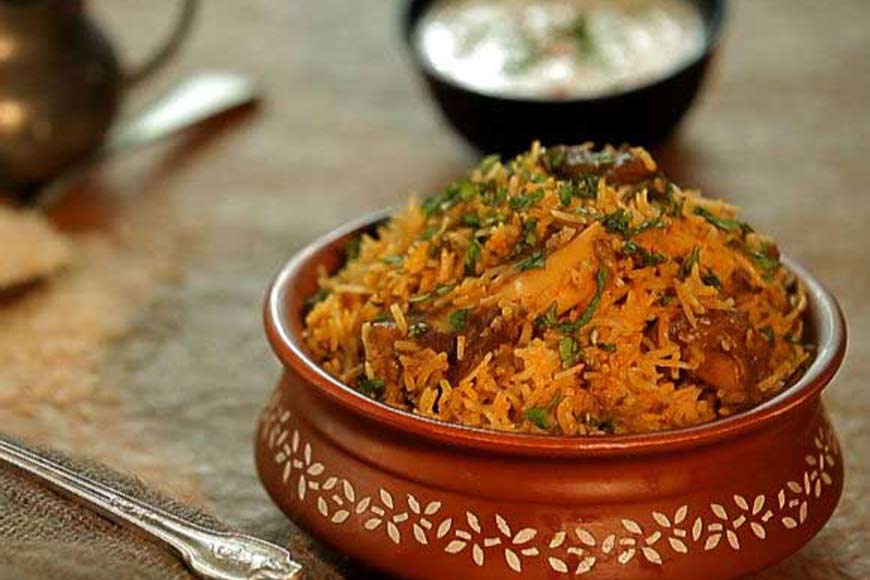
Muslim style mutton biryani
We have been sampling chicken quiches, chocolate cakes and puffs made by Yousuf since 1996 at the cafeteria at Alliance Française of Madras, down College Road.
Those were the days when before the pandemic hit us — we remember nursing a steaming cuppa coffee and a slice of freshly baked warm chocolate cake, dripping with chocolate sauce, as we waited for a play to begin at the Edouard Michelin Auditorium.
Often, we would pack a few slices of chicken quiche to take home after the show, and make a dinner of it. Like all spaces, the pandemic threw a spoke in the wheels here too and Yousuf found himself stuck at home through lockdown. “I started cooking from home since the first lockdown,” says the self-taught 46-year-old chef who started by adding biryani and curries to his repertoire. Expect café signatures like doughnuts, cupcakes, chocolate lava cake and chocolate mousse, besides options like cutlets, samosas, biryani and gravies.
Last weekend we went ahead and ordered the mutton biryani and the pepper chicken curry – and when we say that we plan to order the same again this weekend, you get the picture! The mutton biryani is delectable, packed with flavour and meat that falls off the bone delightfully. The pepper chicken has the perfect punch of spice and pairs well with the rice dish. So, we ask him what makes his food so delectable. And he answers simply, “It’s the slow cooking. Not just the meat — but even when cooking the gravy base and masalas — I take my time.”
Minimum order of mutton biryani at INR 1,800 for a kilo, that serves up to seven people. (Delivery within five kilometers is free). Place orders via yousufafm@ gmail.com
source: http://www.indulgexpress.com / The New Indian Express / Home> Food> Chennai / by Sabrina Rajan / August 13th, 2021
Bengalis are a race of foodies who practically eat to live and live to eat. It’s an inevitable component of any adda and the Bengalis are dead serious about it, any day, any time. Even people who have lived all their lives in the comfort zone of their homes and hearth do not hesitate to become the quintessential explorer when discovering new food or joints.
And when it comes to something like biriyani, the happiness of the Bengali Epicurean is one of exuberance and excitement and all one’s self-restraint is defeated as the flavourful aroma overpowers the senses. Truly, biryani is one dish that Bengalis unanimously love indulging in though it is not an indigenous dish of India.
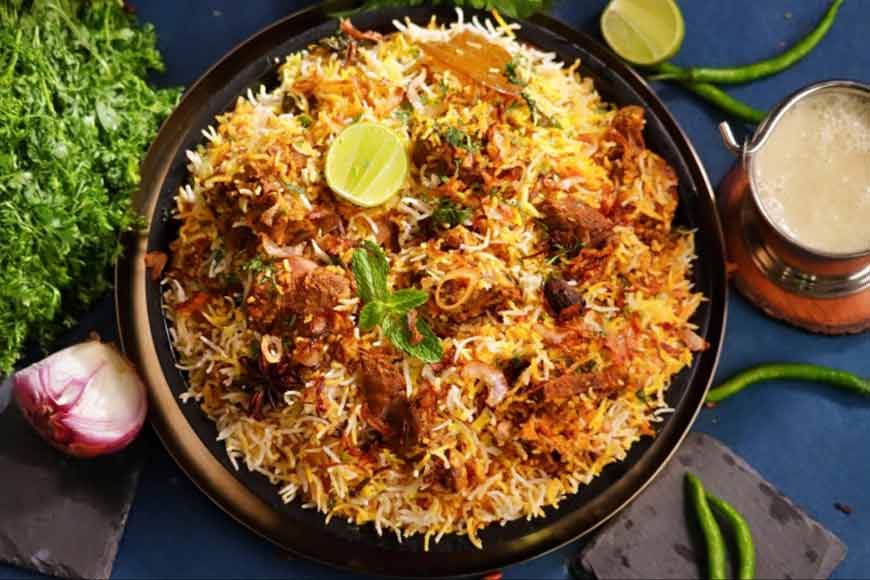
The exact origin of biriyani is not known, though historian Lizzie Collingham writes that the modern biryani was developed in the royal kitchens of the Mughal Empire (1526–1857) and is a mix of the native spicy rice dishes of India and the Persian pilaf. According to Pratibha Karan, who wrote the book ‘Biryani,’ biryani is of Mughal origin, derived from pilaf varieties brought to the Indian subcontinent by Arab traders. She speculates that the pulao was an army dish in medieval India. Armies would prepare a one-pot dish of rice with whichever meat was available. Different varieties of biryani developed in the Muslim centers of Delhi (Mughlai cuisine), Rampur, Lucknow (Awadhi cuisine), and other small principalities in North India. In South India, where rice is more widely used as a staple food, several distinct varieties of biryani emerged from the Hyderabad Deccan. Whereas, some believe that the dish originated from Tamil Nadu (Ambur, Thanjavur, Chettinad, Salem, Dindigul), Kerala (Malabar), Telangana, and Karnataka (Bhatkal), where Muslim communities lived.
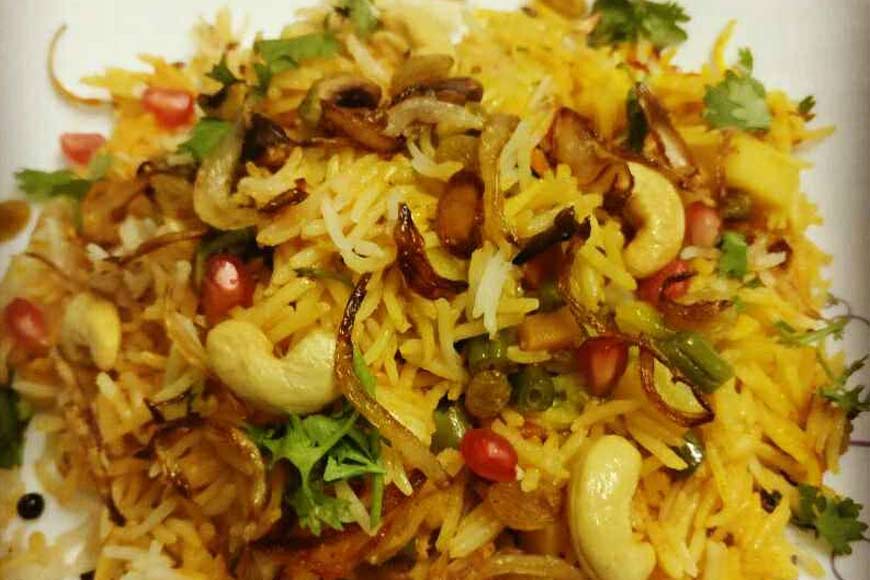
Navratan Biryani
All said and done, there is no denying that biriyani staged a bloodless coup and became the monarch of all gourmets in India, kings and paupers alike. The deliciously complex blend of flavours, spices, and aromas in biryani epitomizes the zenith of Indian cuisine. The ingredients for biryani vary according to the region and the type of meat and vegetables used. Meat (of either chicken, goat, beef, lamb, prawn, or fish) is the prime ingredient with rice. As is common in dishes of the Indian subcontinent, vegetables are sometimes also used when preparing biryani. Corn may be used depending on the season and availability. Navratan biryani tends to use sweeter, richer ingredients such as cashews, raisins, and fruits, such as apples and pineapples. The spices and condiments used in biryani also differ according to regional preferences.
The evolution of biryani spans many centuries, many cultures, many ingredients, and many cooking styles. From an army dish to a dish fit for royalty, the biryani today is a pan-India culinary favourite. Its varieties reflect the local tastes, traditions, and gastronomic histories of their regions of evolution. There are so many types of biriyanis with local and hyperlocal variations that one is truly spoilt for options when it comes to experiencing this melting pot of flavours.
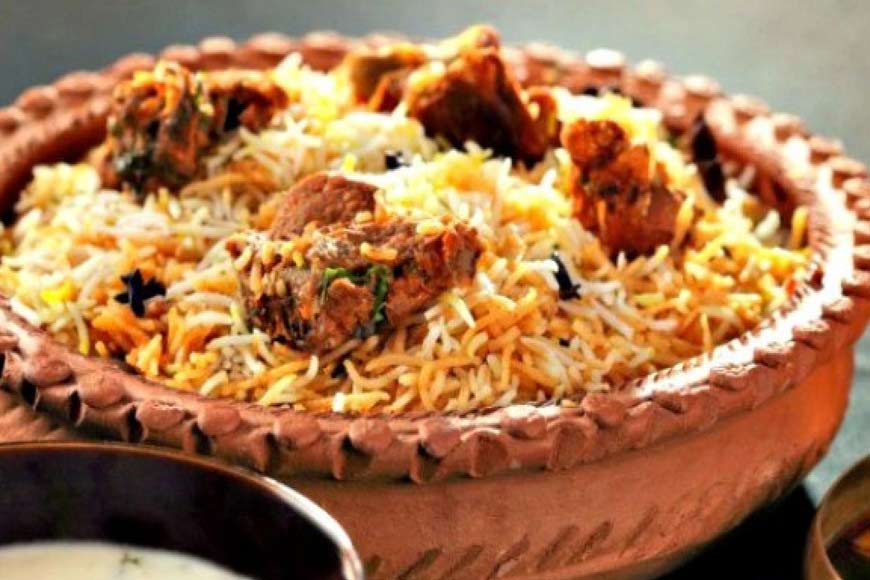
Biryani can be cooked using one of two styles/techniques, pakki (“cooked”) and kacchi (“raw”). In pakki biryani, the rice, marinated meat, and vegetables are partially (“three-quarters”) cooked separately, before being combined into layers in a cooking vessel. Different layers of rice may be treated with different spices (e.g., with dissolved saffron or turmeric to give the rice different colours and flavours). The contents are then baked to complete the cooking and allow the flavours to combine. Alternatively, the components may be fully cooked, and then simply combined by layering before serving.
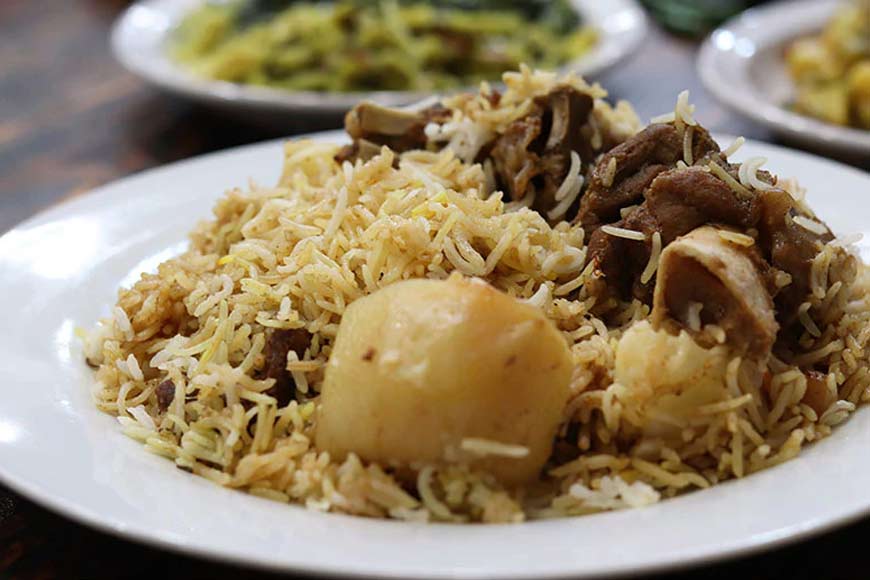
Kacchi Biryani
In kacchi biryani, layers of raw marinated meat are alternated in layers with wet, pre-soaked, raw rice (which may be treated with different spices as above), and cooked together by baking, or applying medium-to-low heat (typically, for at least an hour). Cooking occurs by a process of steaming from the ingredients’ moisture: the cooking vessel’s lid is sealed (traditionally, with a strip of wheat dough) so that the steam cannot escape (proper Dum pukht). A yogurt-based marinade at the bottom of the cooking pot provides additional flavour and moisture. Potatoes often comprise the bottom-most layer because, with their natural moisture content, they brown with less risk of getting burned accidentally. The lid is not opened until the dish is ready to serve.
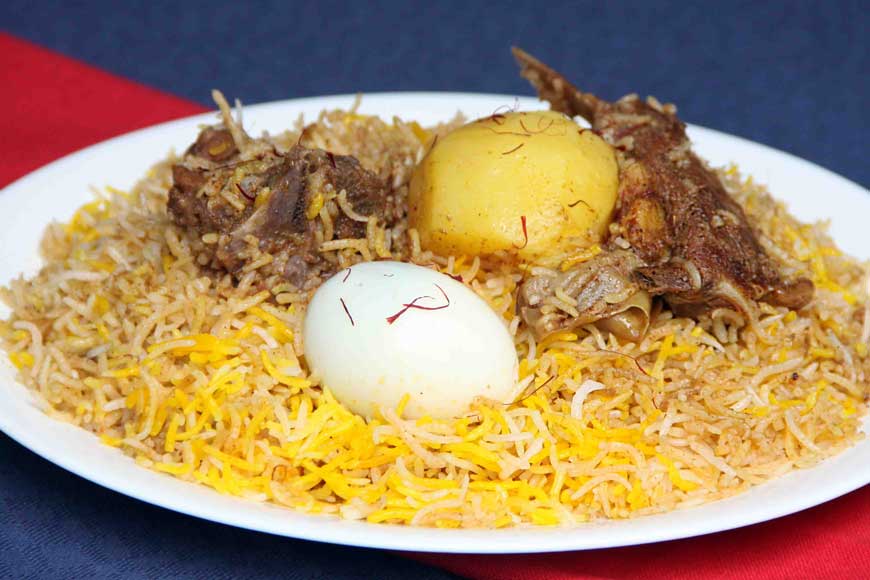
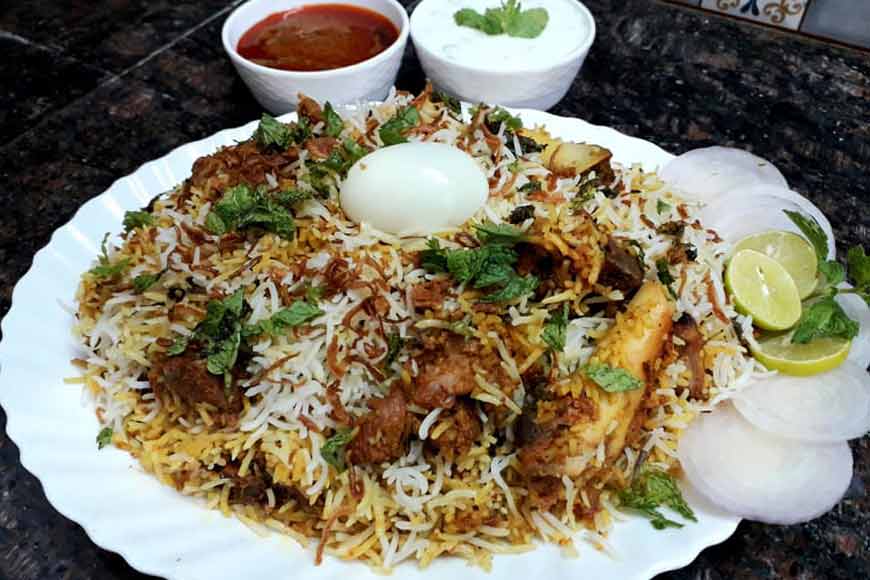
Kolkata Biryani
In Bengal, the Calcutta or Kolkata biryani evolved from the Lucknow style, when Awadh’s last Nawab Wajid Ali Shah was exiled in 1856 to the Kolkata suburb Metiabruz. Shah brought his chefs with him. The Kolkata biriyani is characterized by the unique presence of potato, along with meat and egg. It is said that the former Nawab of Awadh was a great connoisseur of good food and encouraged his chefs to try new ingredients in the dish. The potato was an exotic vegetable in India and his chefs added it to biriyani, transpiring pure magic!
Unlike other Indian biryanis, which are eaten with salan or raita, the Kolkata biryani is a complete meal and needs no accompaniment. Many, however, many swear by the combination of biryani and chaap—slow-cooked meat in a luscious gravy. It’s a great spicy companion to the otherwise mellow biryani. As one of the most popular dishes in Kolkata, it also has a fan following to match.
Dhum Pokht Biryani
Some of the oldest and best-known biriyani joints in Kolkata include names like Shiraz Golden Restaurant on Park Street, Aminia in New Market, India Restaurant in Kidderpore, ZamZam in Park Circus, and New Aliah Hotel. Many new players have entered the fray and are also doing very well. The delicate flavour of Kolkata biriyani combines well with mutton pasanda and mutton chaap. Gourmets recommend Kachi Gosht biryani at India Restaurant, a recipe derived from Hyderabadi biryani preparations.
The Dhakai version of the dish from the Bangladeshi capital is no less seductive and is believed that it could have traversed the sea route to reach this port city, which was once ruled by nawabs. In 1610, after the Mughal rulers declared Dhaka as the provincial capital, Mughal subedars and other high officials arrived in Dhaka to manage the administration, and they brought — along with intrigue, grandeur, and tantrums — the biryani. Back then, people believed that the biryani could be prepared only for members of the ruling family, and that too on special occasions. The cooks came from the west, where the Hyderabadi biryani had only started to spread its aroma around India.
Somewhere along the way though, the Dhaka biryani developed its characteristics, which set it apart from its Hyderabadi progenitor – and even from the Sindhi, Kozhikode, Kolkata, Lucknow, and Tehari offshoots. The Kachchi Biryani is perhaps the most pleasant and authentic cuisine of Bangladesh. So, what makes Dhakai Kachchi different from other schools of biryani?
It refers to the ingredients which are cooked raw and in layers. Layers of meat, rice, and potatoes are infused with delicious blends of aromatic spices to prepare the Dhakai Kachchi Biryani. The key is to get the right balance of spices – not too spicy, not too bland, just right with succulent pieces of meat and potatoes.
Dhaka is also known for selling Chevon Biryani, a dish made with highly seasoned rice and goat meat. The recipe includes highly seasoned rice, goat meat, mustard oil, garlic, onion, black pepper, saffron, clove, cardamom, cinnamon, salt, lemon, curd, peanuts, cream, raisins, and a small amount of cheese (either from cows or buffalo). Haji Nanna Biriyani is a favourite joint as are Hazi Fakhruddin Kachchi, Shalimar Kachchi, Bashmoti Kachchi, Sultan’s Dine, and scores of others.
Awadhi Biryani
Unfortunately, a majority of biriyani lovers are not acquainted with the real taste of true-blue biriyani because the fare dished out at most eateries can be best described as “frying pan biriyani”. Here you may find long grain Basmati rice with a hint of saffron, but the traditional cooking process is not followed. Instead, most chefs have developed the fine art of “assembling” the dum ki biriyani. Despite all, Bengal’s love affair with biriyani continues unhindered and grows by the day. mellow biryani. As one of the most popular dishes in Kolkata, it also has a fan following to match.
Some of the oldest and best-known biriyani joints in Kolkata include names like Shiraz Golden Restaurant on Park Street, Aminia in New Market, India Restaurant in Kidderpore, ZamZam in Park Circus, and New Aliah Hotel. Many new players have entered the fray and are also doing very well. The delicate flavour of Kolkata biriyani combines well with mutton pasanda and mutton chaap. Gourmets recommend Kachi Gosht biryani at India Restaurant, a recipe derived from Hyderabadi biryani preparations.
The Dhakai version of the dish from the Bangladeshi capital is no less seductive and is believed that it could have traversed the sea route to reach this port city, which was once ruled by nawabs. In 1610, after the Mughal rulers declared Dhaka as the provincial capital, Mughal subedars and other high officials arrived in Dhaka to manage the administration, and they brought — along with intrigue, grandeur, and tantrums — the biryani. Back then, people believed that the biryani could be prepared only for members of the ruling family, and that too on special occasions. The cooks came from the west, where the Hyderabadi biryani had only started to spread its aroma around India.
Hyderabadi Biryani
Somewhere along the way though, the Dhaka biryani developed its characteristics, which set it apart from its Hyderabadi progenitor – and even from the Sindhi, Kozhikode, Kolkata, Lucknow, and Tehari offshoots. The Kachchi Biryani is perhaps the most pleasant and authentic cuisine of Bangladesh. So, what makes Dhakai Kachchi different from other schools of biryani?
It refers to the ingredients which are cooked raw and in layers. Layers of meat, rice, and potatoes are infused with delicious blends of aromatic spices to prepare the Dhakai Kachchi Biryani. The key is to get the right balance of spices – not too spicy, not too bland, just right with succulent pieces of meat and potatoes.
Dhaka is also known for selling Chevon Biryani, a dish made with highly seasoned rice and goat meat. The recipe includes highly seasoned rice, goat meat, mustard oil, garlic, onion, black pepper, saffron, clove, cardamom, cinnamon, salt, lemon, curd, peanuts, cream, raisins, and a small amount of cheese (either from cows or buffalo). Haji Nanna Biriyani is a favourite joint as are Hazi Fakhruddin Kachchi, Shalimar Kachchi, Bashmoti Kachchi, Sultan’s Dine, and scores of others.
Unfortunately, a majority of biriyani lovers are not acquainted with the real taste of true-blue biriyani because the fare dished out at most eateries can be best described as “frying pan biriyani”. Here you may find long grain Basmati rice with a hint of saffron, but the traditional cooking process is not followed. Instead, most chefs have developed the fine art of “assembling” the dum ki biriyani. Despite all, Bengal’s love affair with biriyani continues unhindered and grows by the day.
source: http://www.getbengal.com / Get Bengal / Home> Culture> Food / by Shuvra Dey / November 16th, 2022
We are celebrating the 811 annual Urs (death anniversary) according to the lunar calendar of Khwaja Gharib Nawaz of Ajmer who was born on February 1 1143 AD in Sijz, Sistan, Iran. He left the world on March 15, 1236 AD in Ajmer, Rajasthan. Since that time his disciples and followers have been celebrating his death anniversary as per the Sufi traditions.
The Sufi mystics celebrate the death and not birth as for them death means a reunion with Almighty Allah.
He was brought up in Khurasan, Iran, while his father Ghayasuddinn died when he was 15. He studied in Isfahan, Samarqand, and Bukhara, and went to Baghdad in search of a spiritual mentor. There, he met Hazrat Khawaja Usman Harooni. Thereafter, he went to visit the two holy cities of Mecca and Medina. Eventually, he came to Ajmer in India via Lahore where he lived for the rest of his life and became his resting place after death.
It’s a surprising truth that Muslim kings ruled for around 800 years over India and built many historical monuments such as the Taj Mahal, Red Fort, Humayun Tomb, and Qutub Minar, and yet none of them is alive in the hearts of people except in the history books. Unlike kings and rulers, Khwaja Gharib Nawaz won the hearts of millions of helpless, poor, weaker, and underprivileged people and seekers of truth. With divine mercy, he became Gharib Nawaz (supporter of the poor), though his original name is Moinuddin (helper of the religion).
He fulfilled Huqooq ullah (God’s rights) and Huqooqul ibad (human rights) equally and served the weak and poor, loved the unloved, and fed the hungry irrespective of caste, creed, gender, and religion. It was his outstanding service and love towards humanity that attracted people from across the society, unlike any rulers. They loved and followed this Sufi mystic and therefore he was called “Sultanul Hind”, the king of the Indian subcontinent. He then developed the Chishti Sufi order in this subcontinent and became the Sufi mystic with the highest following in the world.
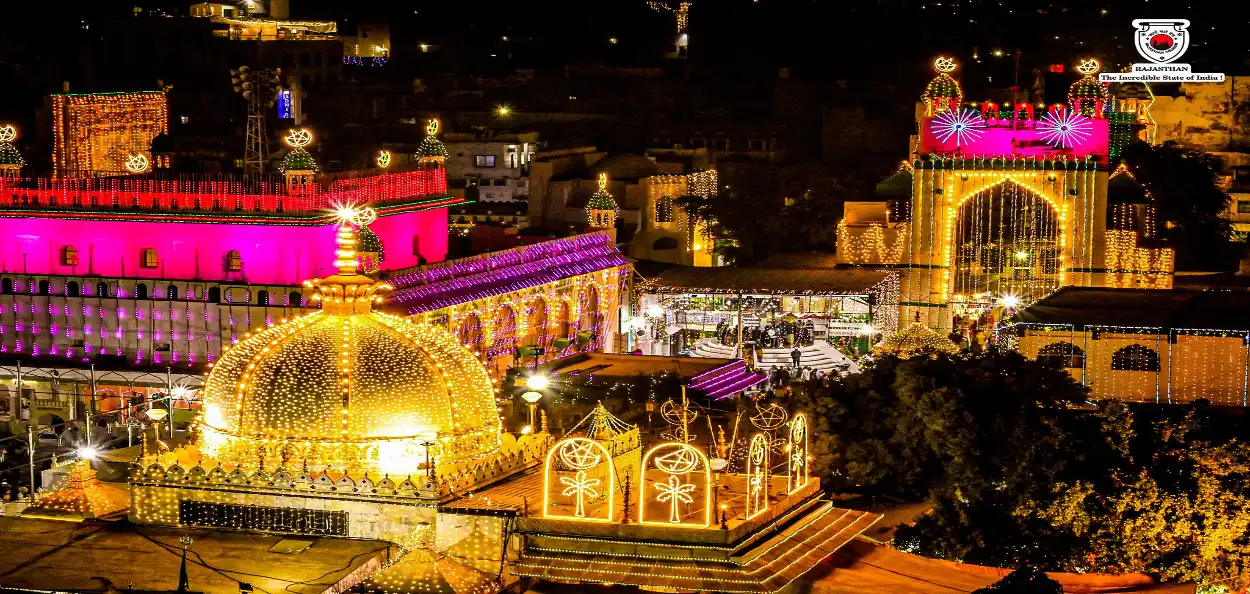
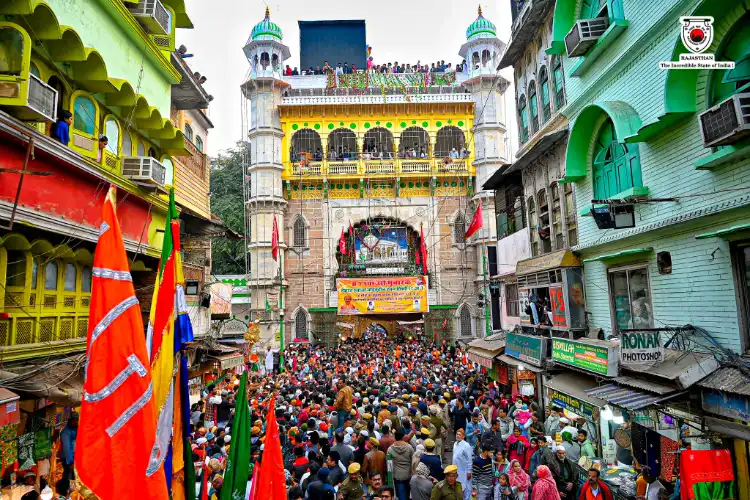
The scene outside the Ajmer Sharif dargah
The uniqueness of his Sufi order and his character was that he greatly impacted others with his pious character and selfless service and he accepted and accommodated the local traditions and made them part of his Sufi order.The message of universal fraternity, harmony, and brotherhood spread by the Sufis saints was so loud and inclusive that even after their union with God (Wisal-e-ilahi), their hospices remain abuzz with the people of all walks of life.
On top of all Indian shrines, the Dargah of Khwaja Moinuddin Chishti known as Daghah Khwaja Gharib Nawaz in the heart of Ajmer city surrounded by Tara Gadh hills is the shining example of love, harmony, unity, and fraternity.
Maulana Rumi beautifully talks about the human heart:
Ek dil behtar hazaran Ka’be ast
(One heart is far better than a thousand Ka’baas).
He further says (Translated version):
Bring your heart in your hand; your soothing is more important than a pilgrimage. A single heart is better than a thousand Ka’abas. The K’aba was built by Allah’s Khalil (friend) Prophet Hazrat Ibrahim (Abraham), while the heart, in contrast, was created and tested by the Almighty God Himself.
The great Sufi saint of India Khwaja Moinuddin Chishty who is also known as Gharib Nawaz of Ajmer often taught the people: love towards all and malice towards none. His disciples and successors held this message of their mentor by tooth and their hospices became the center for spreading universal love and affinity. His disciple Khwaja Nizamuddin Auliya of Delhi often recited the following couplets of Persian poet Abu Said Abul Khair:
“If people spread thorns in your path, you just put flowers in their way; otherwise the entire path would become thorny”.
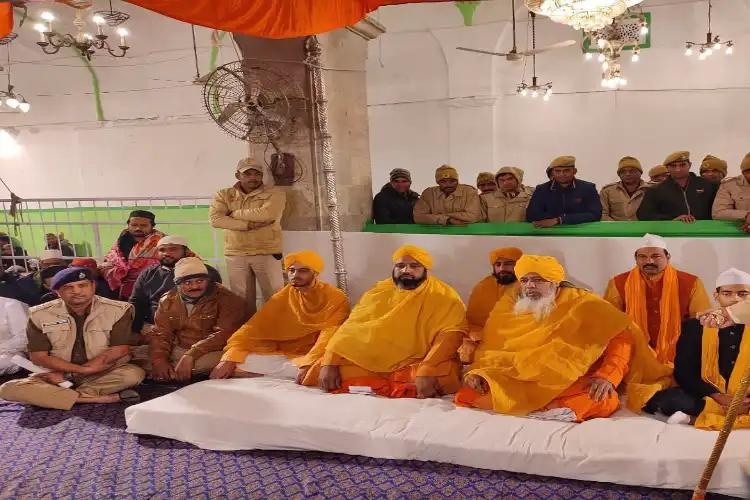
Sufi saints in a prayers at the Dargah during the Urs
Today, we Muslims in India must not forget what Khwaja Gharib Nawaz of Ajmer Sharif and Hazrat Nizamuddin Auliya of Delhi taught us.
The love, fraternity, and affection shown by the Sufi saints to the common people won their hearts, and their hospices (khanqahs were the center of love where people from all walks of life began to flock to seek succor for their miseries. These Sufi saints respected the local customs and culture to the extent that even many of them became vegetarian due to respect for their non-Muslim brothers. Khwaja Gharib Nawaz, Khawaja Nizamuddin Aulia, Sarmad Shaheed, Bu Ali Shah Qalandar, and many others had become pure vegetarians in respect of their non-Muslim brethren. Their philosophy was simple: live and let live; love and compassion to all, no hate or discrimination on the ground of caste, creed, culture, religion, and gender.
Chishty Sufis continued to adopting of local traditions. For instance in Delhi, Hazrat Amir Khusrau was the one who started celebrating Basant Panchami to make his mentor Nizamuddin Auliya happy. Since then, the Basant celebration is continuing on the premises of Dargah Hazrat Nizamuddin Auliya.
Being a Persian scholar and follower of a Sufi order, I came across the anthology of Sufi poets like, Rumi, Jami, Khusro, Shah Niaz be Niaz, Baba Bulle Shah, Shah Zaheen Taji, Bedam Shah Warsi in both Urdu and Persian languages. Their metaphysical and mystic poems were very impressive, moving, and touching. This has increased my curiosity to know more about it, I got a chance to attend a 3-day-long Sufi music concert in Delhi, organized by famous music composer and film director Muzaffar Ali with the title of Jahan-e-Khusrau in Humayun tomb. This concert is organized by him every year and attended by world-famous Sufi musicians and vocals from India, Pakistan, Afghanistan, Iran, Turkey, and many other countries. However, every year the well-known vocalist Abida Parveen of Pakistan steals the show.
As soon as she starts her melody in the most fascinating and moving voice, the people begin crying in their hearts. It seems as if she is on the direct hotline with the Almighty God. Though more than 2 decades have passed, I still remember the rhythm of her voice and her selection of poems from the anthologies of Amir Khausrau, Baba Bulle Shah, Shah Zaheen Taji, and Shah Niaz Bareilvi.
The following metaphysical mystic poems of Shah Niaz Barelvi recited by Abida Perveen attracted my special attention:
Yaar ko hum ne ja baja dekha, kahin zahir kahin chupa dekha…
I saw my beloved everywhere, somewhere apparent and somewhere hidden.
Kahin mumkin hua kahin wajib, Kahin fani kahin baqi dekha.
Somewhere He was merely a possibility and somewhere He was imperative. Somewhere I saw Him ephemeral, and somewhere I found him eternal.
Kahin wo badshah takht nashin, Kahin kasa liye gada dekha.
Somewhere, I saw Him a king sitting on His throne, and sometimes I saw Him mendicant with a begging bowl.
Kahin wo dar libas e mashooqan, Bar sare naz aur ada dekha.
Somewhere He was in the most beautiful attire, displaying His unique charm and attraction.
Kahin ashiq Niaz ki surat, Seena giryan to dil jala dekha.
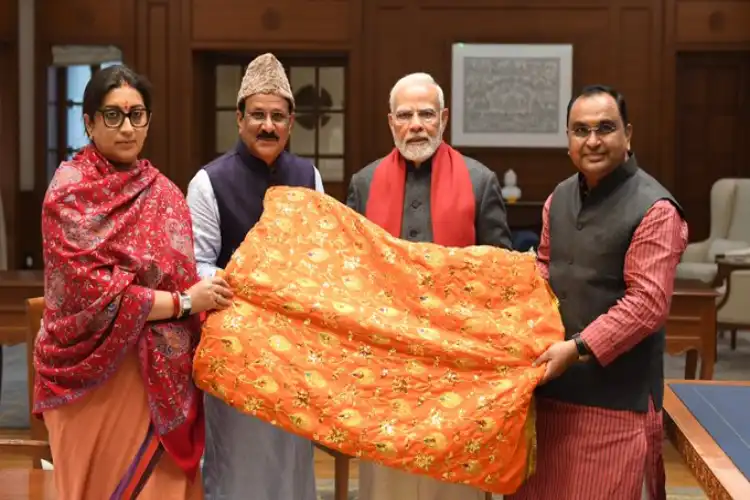
Prime Minister Narendra Modi handing over a Chadar for offering at the tomb of Moinuddin Chisty for the Urs
Somewhere He was like a lover Niaz, beating his chest and his heart was in flame.
This unique hymn of God almost mesmerized the entire audience. There was a pin-drop silence as the people felt that divine light is pervading from all sides. After hearing this fabulous hymn, I decided to pay my obeisance at his shrine built about 300 years ago in Bareilly.
Though he associated himself with both the Chishti and Qadri orders of the Sufis, he favoured the Chishty order in which the saints were encouraged to reach the maximum number of people whoever they may be. In the footsteps of his predecessors, he also followed the local customs and traditions to win the hearts of people from all creeds and castes. His main emphasis was to clean the heart instead of cleaning the apparent body and clothes.
The Chishty Sufi order was established in Indian Sub-Continent by Khwaja Gharib. It’s organised by Baba Fariduddin Ganj Shakar Pak Patan and it flourished to the highest level by Hazrat Nizamuddin Auliya of Delhi. The basic philosophy of Chishty Sufis is to love the unloved, welcome the ignorant, and serve the unserved. They united the human heart and lived in harmony by their nature of acceptance of others’ good things from local tradition and influenced others by their pious and selfless character. They said that whoever comes to us give them food and don’t ask about their religion. that’s the beauty behind flourishing their Sufi order even though it’s increasing day by day after 800 years. Khwaja Gharib Nawaz shrine is 5th largest gathering spiritual place in the world after the holy cities of Mecca and Medina in Saudia Arabia and Najaf and Karbala in Iraq..
Right from Khwaja Gharib Nawaz of Ajmer to Baba Farid Pak Patan, Nizamuddin Auliya Delhi, Sabir e pak in Peeran Kaliyar, Amir khusrau Dehlavi,
Sarmad Shaheed, Bande Nawaz Gesu Daraz in Gulbaga, Baba Tajuddin in Nagpur, Makhdoom Ashraf Jahangir Simnani in kichowcha and Alaul Haq Pandvi in Bengal, Shah Niaz in Bareilly and Haji Waris Ali shah in Dewa have their respective chains of Sufi shrines spread all over the Indian Sub-Continent. They continue to rule over millions of hearts through their unique philosophies of unconditional love and compassion. Anyone observes the impact of local traditions in their shrines’ rituals and amongst their followers.
Dr. Hafeezur Rahman is an author, Islamic scholar, TV host and the founder of Sufi Peace Foundation.
source:http://www.awazthevoice.in / Awaz, The Voice / Home / by Dr Hafeezur Rahman / posted by Aasha Khosa / January 29th, 2013
The celebrations will include a series of live performances.
The Westin Kolkata Rajarhat is evoking the memories of Nawab Wajid Ali Shah, the last Nawab of the Kingdom of Awadh and the man behind introducing the Urdu culture and the rich Awadhi cuisine in Kolkata. The great grandson of Nawab Wajid Ali Shah, Shahanshah Mirza in collaboration with The Westin Kolkata Rajarhat, has curated a series of soiree and Awadhi cuisine on January 8, 2023, to celebrate the 200th birth anniversary of Nawab Wajid Ali Shah.
This is the only occasion in the world where Shaam-e-Awadh is being organised in honour of Wajid Ali Shah’s 200th birth anniversary. The celebration will commence with a series of live performances where guests can immerse in the diverse Urdu culture. The evening is set to begin with a Kathak performance by Nandini Sinha, an eminent Lucknowi Gharana-style Kathak exponent. The Kathak performance will be followed by Mehfil-e-Tarannum, also known as Dastangoi, a soulful poetry performance directed by Askari Naqvi. Adding to the celebration, Atif Ali Khan, the great grandson of the doyen of Indian Classical music, Ustad Bade Ghulam Ali Khan, singer of Kasur Gharana, will enchant the audiences with his nostalgic Ghazal and Hindustani classical performance.
To mark the birth anniversary celebration, Awadhi Begum Sheeba Iqbal and Chef Shafiqun along with the culinary team of The Westin Kolkata Rajarhat will showcase the ambrosial spread of Awadhi cuisine with dishes include non-vegetarian classics like ‘Kakori Kebab’ and ‘Mutton Nihari’, ‘Seekh kebabs’, ‘Ghutwan kabab’, ‘Yakhni Pulao’ and vegetarian classic such as ‘Ulte Pulte’, ‘Sagpaita with Ghee Chawal’ ‘Qiwami Seewai’, ‘Tali gobhi ka salaan’ to name a few. Through the skills of Chef Sheeba Iqbal and Chef Shafiqun, the food festival will offer delicacies of not just Awadhi cuisine but also of the remnants of the Awadhi food of the royals.
Commenting on the event, Subhash Sinha, General Manager of The Westin Kolkata Rajarhat said, “We are honoured to celebrate the 200th Birth Anniversary of Nawab Wajid Ali Shah of Awadh with his great grandson Shahanshah Mirza. It is a privilege to host a one-of-kind Shaam-e-Awadh evening with such great fervour and gusto. Guests will get to witness an evening filled with performances by eminent artists showcasing a varied rich culture from Lucknow through Kathak, Ghazal and Awadhi delicacies. It is a pleasure and an honour to host both Chef Sheeba Iqbal and Chef Shafiqun as we continue to exhibit and collaborate with culinary masters from across the country. Our aim at The Westin Kolkata Rajarhat has always been to provide guests with the opportunity to experience unique events and cuisines. We look forward to hosting more such soulful evenings in the City of Joy.”
Commenting on the event, Shahanshah Mirza, the great grandson of Nawab Wajid Ali Shah said, “I am very grateful to The Westin Kolkata Rajarhat, which is one of the finest five star hotels in this country, for organising this event. This is perhaps the only occasion in the world where Shaam-e-Awadh is being organised in honour of Wajid Ali Shah’s 200th birth anniversary. It will be an evening which will be memorable and an evening which people will remember for a very long time.”
source: http://www.bwhotelier.businessworld.in / BW Hotelier.com / Home / by BW Online Bureau / December 27th, 2022
This sleepy north Indian town is all set to become a major pilgrimage centre for Shia Muslims following the chance discovery of a tomb said to belong to Imam Sayyid Mash-had Ali, a son of Imam Ali Raza, the eighth descendant of Prophet Muhammad. Samana is located 28 kilometers from Patiala in the Indian state of Punjab.
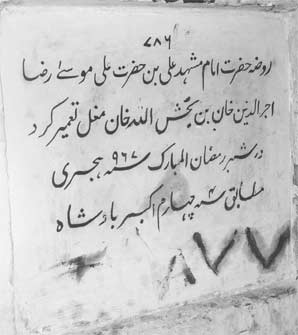
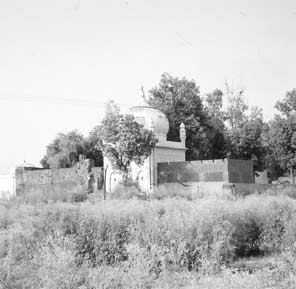
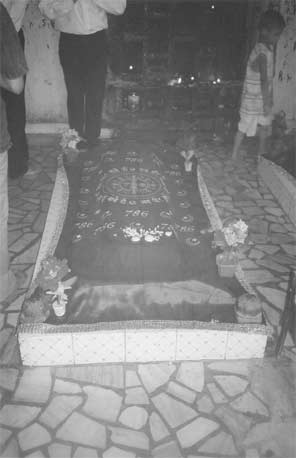
Front gate to the graveyard,Rear side of the graveyard,The grave and the epitaph planted in the wall facing the grave. a. (http://www.imamjawad.net/htm/ara/ library/mosoa_imam_jawad/m2_ 3.htm#m4).
According to scholars of Muslim history, the discovery of the mazar is significant in that there is no mazar of any Imam in South Asia.
Scholars are of the view that Imam Sayyid Mash-had Ali was buried here about 1200 years ago and the town of Samana also takes its name from his mother. Facts related to this have been confirmed with old religious books, sources claimed. But we do not find “Mash-had” as one of the sons of Imam Ali Raza who, according to historical sources, had only two sons: Ali (the ninth Imam) and Moosa. According to some sources, he also had a third son called Yahya. (http://www.imamjawad.net/h
The Samana tomb was discovered by chance during the visit of Lahore High Court Judge, Shabbar Rizvi, about three months ago, when the stone at the shrine was cleared. Judge Rizvi, whose family emigrated from Samana at the time of Partition, told the local administration that a great saint lies buried at the place and he asked them to clear the place. Upon clearing it the inscription emerged.
Since its discovery, the mazar has been thronged by a host of important Shia dignitaries, including clerics from Lucknow and diplomats from the Iranian embassy in Delhi. They are now working on plans for its restoration and renovation.
A team comprising of Lucknow’s Maulana Kalbe Jawwad and two functionaries of the Iranian Embassy in Delhi accompanied by Dr Nasir Naqvi, a teacher of Punjabi University, visited the tomb. The Iran Cultural House in Delhi is planning to hold a seminar on this discovery in Chandigarh.
Maulana Kalbe Jawwad informed MG that while visiting Delhi recently he was told that there existed a tomb of a “saint” who is said to be a pedigree of the Eight or the Ninth Imam of the Shiites. During his visit to the place, he was told that Sayyids were living at the place but after Partition it was ruined as the Muslim inhabitants emigrated to Pakistan. Sikh Nihangs told him that they tried to build a Gurudwara on the spot but whenever they erected any structure it crumbled. Owing to superstition, they left the place untouched and asked the Punjab Waqf Board to grant them some other land and the same was granted to them at a distance of 200 meters from the site of the grave. Maulana Jawwad added that the tomb exists from the time of Emperor Akbar. He said that he would be leaving for Iran on 11 July to track the history of the tomb and if proved it would be the greatest religious site of Muslims in the Subcontinent as there is no proof that any descendant of the Prophet is buried in South Asia.
Maulana Jawwad also said that he is thinking of facilitating the transfer of about 5000 Shiite families to Samana in order to inhabit the place and take care of the tomb.
In Samana, Sant Kirpalji of Gurudwara Thada Saheb (situated at a distance of a kilometer from the tomb) told MG that the Sikh order called “Buddha Dal” took care of the tomb after Partition. Earlier the place was served by Thambi Baba who disappeared one day. Now a Brahmin called Mangat Ram takes care of the place and keeps it clean out of love. Sant Kirpalji also said that he has seen a book in Urdu about the history of Samana. According to him Persians of “Samanat” caste came here and inhabited the place centuries ago. They were cloth merchants.
According to Sant Kirpalji and others in the area, the important tomb belongs to “Chauda Peer” (Wide Saint) who is considered the most important saint in the area. The adjacent tomb, according to them, belongs to his brother or wife. A third tomb to the right belongs to his maternal uncle who is addressed by the villagers as “Imam Saheb” or “Bada Peer” (Big Saint). Around 80 kela land (about 320 bighas) is attached to the tomb but most of it has been usurped by the villagers. Only five kelas is left for the tomb which is used for agriculture and the income is utilised for the upkeep and repair of the tomb. Sant Kirpalji keeps a separate register for this purpose.
The tomb is located in a large compound which is about four kilometers outside Samana town. It has an impressive Mughal style gate but the structures inside are in need of urgent repair. A number of graves are found all over the place (see sketch where G denotes graves; 1 is for Chauda Peer’s grave, 2 for his brother or wife’s grave, and 3 for the grave of his maternal uncle). The Persian epitaph planted in the wall facing the grave seems to be recent and made by a novice (see above). It reads: “Tomb of Hazrat Imam Mash-had Ali son of Hazrat Ali Moosa Raza. Built by Ajruddin Khan Mughal son of Bakhsh Allah Khan in the month of Blessed Ramadan 967 Hijri corresponding to Year 4 of Emperor Akbar.”
The Chief Minister of Punjab, Captain Amrinder Singh, has ordered the concerned authorities to start working on the site immediately so that it could be declared a sacred place.
Additional reporting and photographs by Nadim Ahmad, Samana and Rizvi Syed Haider Abbas, Lucknow
source: http://www.milligazette.com / The Milli Gazette Online / Home / by Zafarul Islam Khan / June 16-30, 2005
The dargah Hazrat Syedina Shaikh Badruddin Shah Arif Chishti is in possession of several archival records, but its real claim to fame is a copy of the Holy Quran calligraphed by Mughal Emperor Aurangzeb Alamgir.
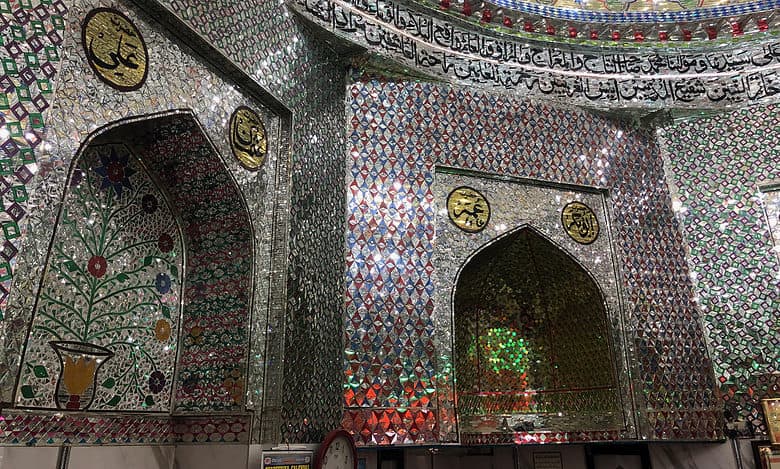
The shrine of Shaikh Badruddin Chishti in Belgaum recently underwent renovation with some scintillating Persian glass work. (Image: Shafaat Shahbandari).
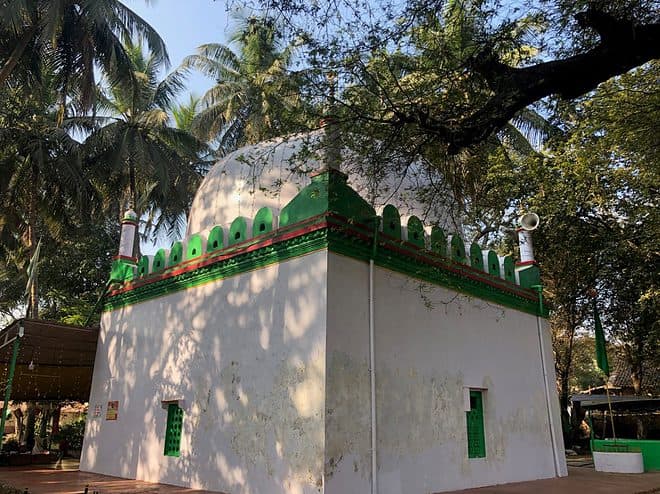
The historic town of Belgaum is home one of Karnataka’s oldest Dargahs. Located within the ancient fort of Belgaum, the dargah Hazrat Syedina Shaikh Badruddin Shah Arif Chishti is believed to be more than eight centuries of old.
Among the first sufi saints to settle in the region, Shaikh Badruddin travelled across south India spreading the message of peace and harmony. The historic tomb in Belgaum is still a great symbol of harmony in the city.
“Hazrat Syedina Shaikh Badruddin Shah Arif Chishti arrived in Deccan more than 800 years ago. He travelled extensively across southern India to spread the message of peace and love. He was among the first sufi saints to settle down in this region,” said Rafeeq Ahmed Ghawwas, caretaker of the Dargah in Belgaum.
Located in the historic Belgaum Fort, the mausoleum of Shaikh Badruddin Chishti was revered by rulers from various dynasties irrespective of their faith. (Shafaat Shahbandari)
Origins
Originally from Delhi, Shaikh Badruddin he was a disciple of Hazrat Shaikh Qutubuddin Bakhtiyar Kaki, who was a 12th century saint and scholar based in Delhi. According to Ghawwas, Shaikh Badruddin migrated to the Deccan in Belgaum on the advice of his spiritual master. He was the one who introduced the Chishti order of the revered saint Khwaja Muinuddin Chishti in the south.
“Our ancestors were the disciples of Shaikh Badruddin and we have been in the service of this place since the earliest times. I took over as the caretaker of this dargah from my uncle Khattal Ahmed, who had taken over from my father Abdur Raheem Mujawar. Before him our grandfather Ebrahim Ahmed was the caretaker, who took over from his father Shaikh Jangu Mian,” said Ghawwas, who has been the caretaker of the dargah for more than 30 years.
Venerated by kings, ministers and commanders of all faiths, the dargah and the saints of this order have had close ties with several dynasties across its history of almost 800 years.
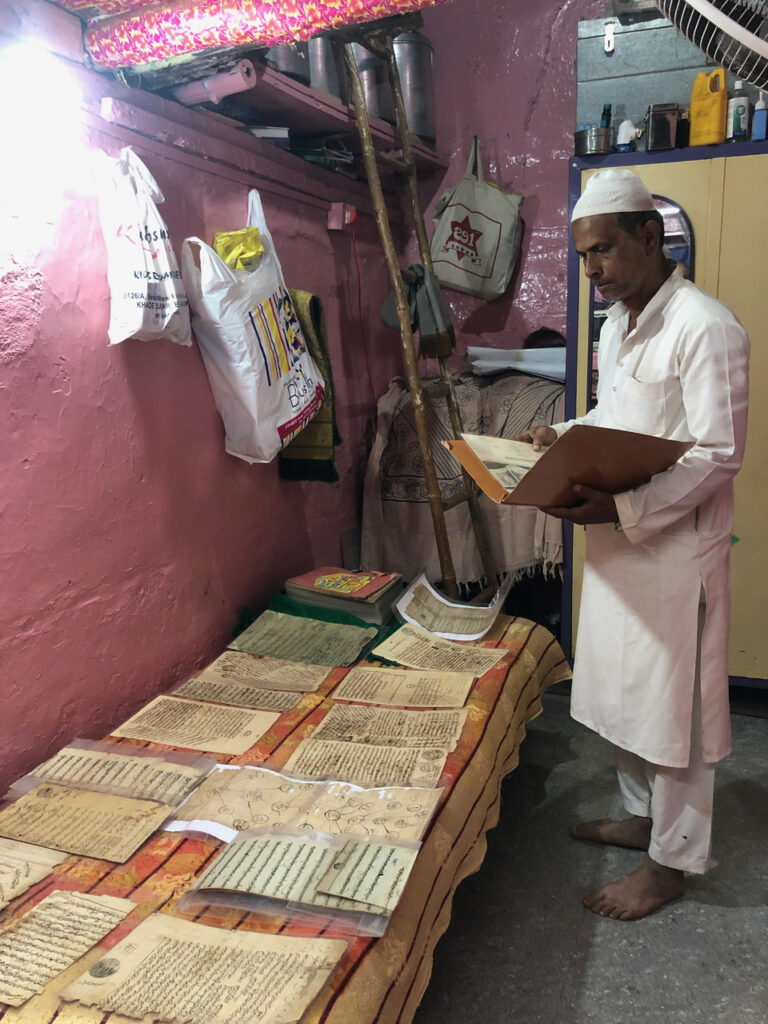
Ghawwas with some prized remnants of Maratha, Mughal and Adil Shahi heritage. (Shafaat Shahbandari)
The Aurangzeb connection and the Quran
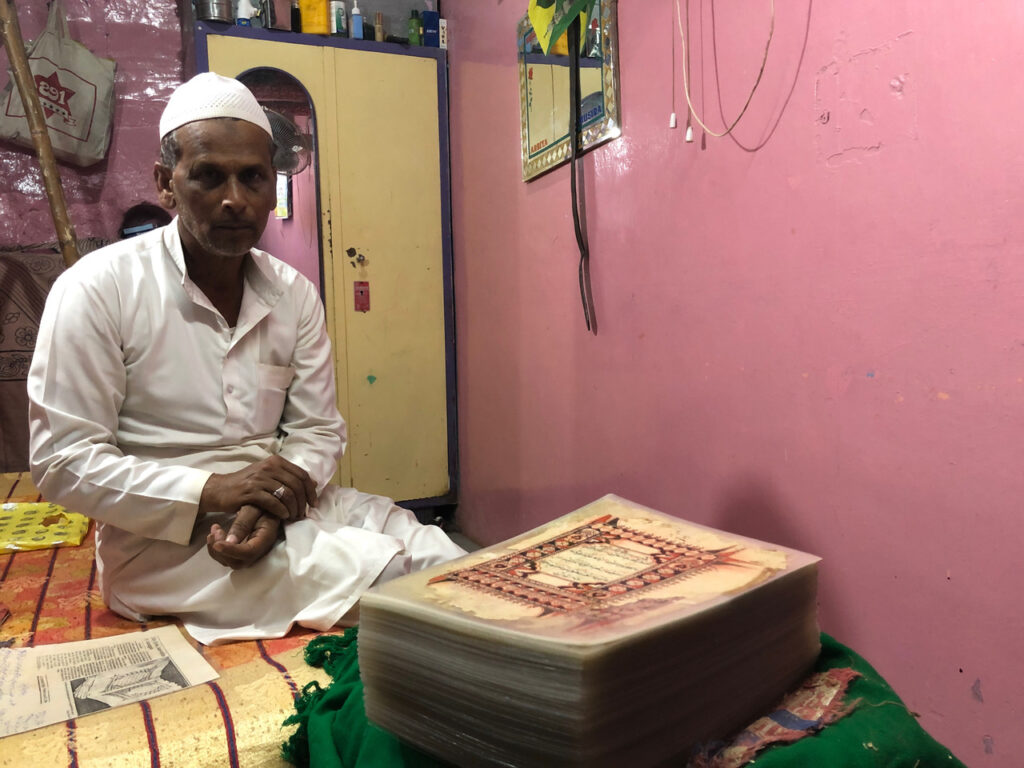
More interestingly, the dargah Hazrat Syedina Shaikh Badruddin Shah Arif Chishti is in possession of several archival records that reflect its rich and vibrant history. And among its biggest inheritances is a 16th century copy of the Holy Quran that was calligraphed and gifted by the sixth Mughal Emperor Aurangzeb Alamgir.
Rafeeq Ahmed Ghawwas with his prized possession – a 17th century calligraphed copy of Quran. (image: Shafaat Shahbandari)
“The emperor had actually gifted the copy to the dargah of Khwaja Muinuddin Chishti in Ajmer, but we are not sure how and when it reached into the possession of our ancestors. We feel fortunate to have this blessed copy and we are doing our best to preserve it for posterity,” added Ghawwas, who has preserved the copy with great care.
According to local history, after his travels across South India, Shaikh Badruddin arrived in Belgaum and settled within the premises of the then newly built fort. The fort was originally built in 1204 AD by Raja Jaya Raya of the Ratta Dynasty and Shaikh Badruddin lived here until his death in 1251 AD.
This mausoleum was built in the early 16th century by the Adil Shahi general and the then governor of Belgaum Asad Khan Lari. The structure has been preserved with some renovation and restoration. Recently, the interiors of the dargah went through a facelift with Iranian glasswork adorning the walls, the dome and the ceilings.
Throughout its long history in Belgaum, the has received patronage from the rulers irrespective of their faith. The caretaker is in possession of several firmans and sanads issued by the Maratha rulers who venerated Shaikh Badruddin and offered their patronage.
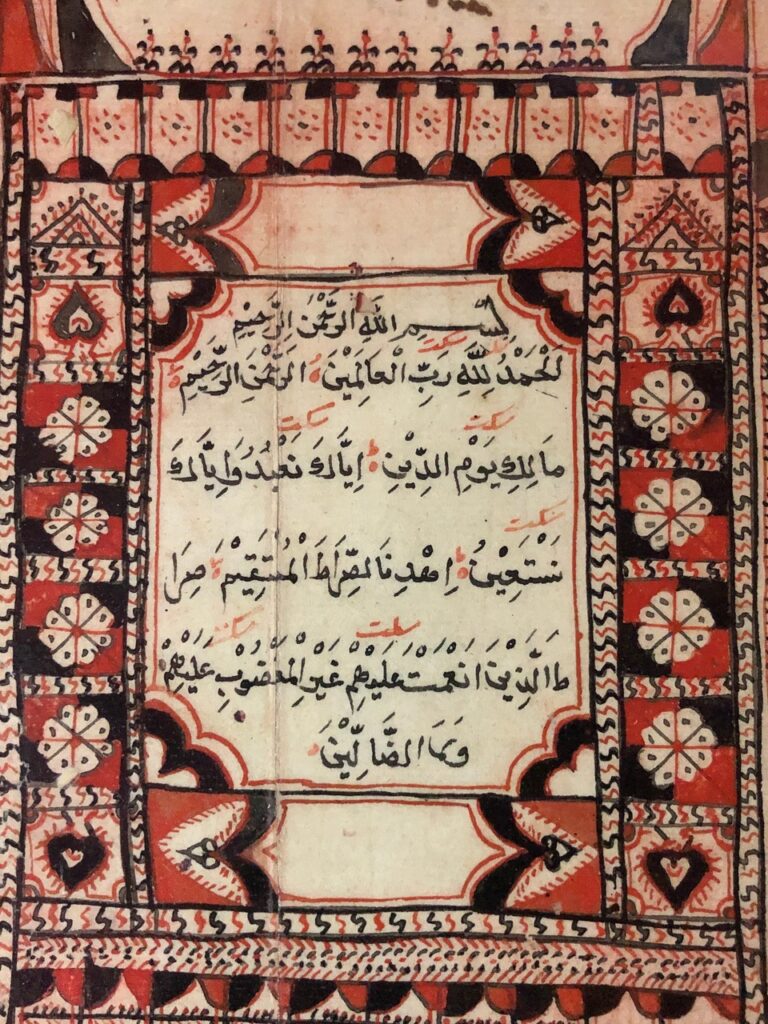
The ornamented page of the calligraphed work representing the first chapter of the Holy Quran. (Image: Shafaat Shahbandari)
“This dargah has always been the abode of peace and harmony and we are continuing with our age-old motto of love for all,” added Ghawwas.
source: http://www.siasat.com / The Siasat Daily / Home> News> Bangalore / by Shafaat Shahbandari / December 13th, 2022
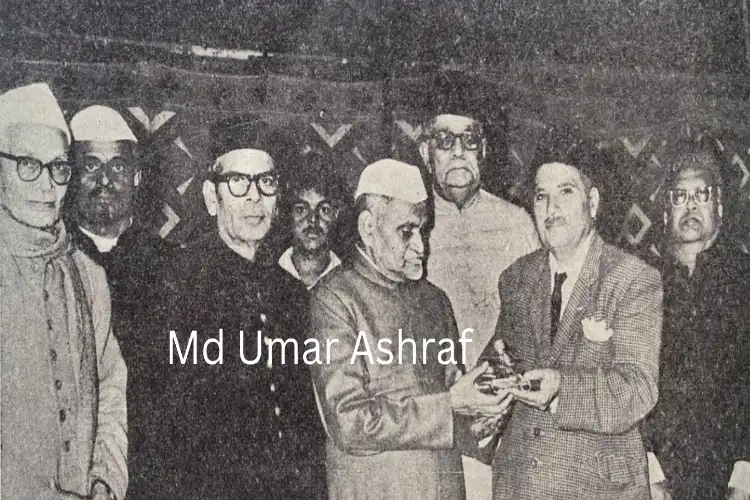
Administrator of Ajmer Sharif Aley Mohammad Shah donating gold to the minister (Courtesy: Md Umar Ashraf)
If I tell you that the Dargah of Khwaja Moinuddin Chishti at Ajmer, Rajasthan, played a role in the war against China when India was invaded in 1962, will you believe it?
In October 1962, the Chinese Army invaded India which had gained freedom 5 years ago. Such national crises test the character of a country. Indians of all creeds, castes, races, and social groups joined hands to fight the mighty enemy.
After 200 years of British colonialism, the Indian economy was in shambles when the colonial rulers left in 1947. When China invaded, India was not as big an economy as it is now. Prime Minister Jawaharlal Nehru appealed to his compatriots to donate gold and money to the defence funds.
Responding to the call, Dargah at Ajmer opened its vaults for the country’s defence forces. The management of the shrine of Hazrat Khwaja Moinuddin Chishti believed that national service comes before any other service. The administrator of the committee handed over 2 kilograms of gold and invested Rupees one lakh in Defence Saving Certificates to the Union Minister of Irrigation and Power at a meeting held at the Dargah. It also announced holding special prayers for the success of the Indian Army daily.
The administrator who handed over the gold, to the minister was Aley Mohammad Shah. His elder son Zameruddin Shah rose to become the Deputy Chief of Army Staff in India while his other son Naseeruddin Shah is a popular film actor.
The episode is a testimony to the fact that for Indian Muslims following Islam and serving the nation are not contradictory.
source: http://www.awazthevoice.in / Awaz, The Voice / Home> Culture / by Saquib Salim / December 14th, 2022
‘People feel it is lucky to have tea here. There is something charming, something random about this place which makes it cool,’ said Ritu, a student.
People eat at a vegetarian restaurant ‘Lucky Tea Stall’ built on a graveyard, in Ahmedabad. (Photo | PTI)
Ahmedabad:
To the outsider, the idea of an eatery built on a Muslim graveyard, run by a Muslim, serving pure vegetarian food and frequented by all communities seems an anomaly.
Not so for its customers though, many who believe that Lucky is actually lucky for them.
Like Sagar Bhatt, a devout Hindu and a resident of Dariapur, who makes it a point to stop by for a cuppa every morning after visiting the temple.
“It feels auspicious to have tea at this place. There is something special about this place,” Bhatt, sporting a red ’tilak’ on his forehead, told PTI while pointing to a grave.
On one wall is a painting by M F Husain, showing an oasis, camels and a ‘kalma’ – ‘La Ilaha Illallah Muhammadur Rasul Allah’ (There is only one God and he is Allah, and Muhammad is his prophet).
“It is the only tea shop boasting a Husain painting,” said a proud Abdul Rajak Mansury, who operates the tea stall.
Every night, the painting by one of India’s most valued artists is taken off the wall and kept away safely.
The six-decade shop in what is essentially a Muslim-dominated area is a common person’s eating joint, he said.
As the campaign hots up, the tea stall in Old Ahmedabad’s Jamalpur-Khadia is also an oasis of calm, far removed from the din and aggression of the Gujarat assembly election being held in two phases on December 1 and 5.
While the Congress has fielded Imran Khedawala, its sitting MLA, the Aam Aadmi Party has given a ticket to Haroon Bhai Nagori and the BJP is fielding a Hindu candidate, Bhushan Bhatt.
The AIMIM is also contesting the seat with Sabir Kabliwala in the fray.
Talk of ‘dhandha’ (business) supersedes ‘dharam’ (religion) at Lucky – so popular that the traffic light point is also called Lucky Chowk.
It is at the centre of several colleges and offices, and a big hit with students and office-goers.
According to Bhatt, a small-time construction contractor, economic issues and issues impacting his business matter more than religious sentiments.
“Sir, I am following my religion but from the government, I expect to further improve the economy so that my business flourishes. For us Gujaratis Dhandha sab se pehle (business comes first),” he said.
On the menu is the perennial favourite ‘bun maska’ and a range of Chinese and Indian dishes. No eggs are used.
College students Ritu and Tanya said the place is cool. “People feel it is lucky to have tea here. There is something charming, something random about this place which makes it cool,” said Ritu, a third year commerce student.
The first-time voter said better jobs and better business environment are bigger issues for her as a student and daughter of a businessman.
Tanya, studying chartered accountancy, agreed. “The business environment in maru Gujarat (my Gujarat) is its USP, it should not be get disturbed at any cost.”
Lucky started on a handcart under a neem tree, and expanded and developed around the graveyard as business grew, said Mansury.
The 26 graves have grills around them.
The staff clean them everyday and place fresh flowers on them.
Some people put ‘chadars’ on the graves seeking fulfilment of their wishes.
Representing the best of a syncretic India, may many more Luckys flourish and thrive, hope its customers.
source: http://www.newindianexpress.com / The New Indian Express / Home> Nation / by PTI / November 23rd, 2022
Muhammadi Begum was a student of Osmania University, Hyderabad, where she topped the Bachelor’s examination in 1932.
Highlights
Having received a scholarship from the Nizam for higher education, Muhammedi Begum, a young woman from Hyderabad, travelled to Oxford University in 1934.
What makes her story even more remarkable is that she maintained an extensive record of her four years abroad.
Her diary has been translated from Urdu into English, and published, by her daughters
In 1934, a young woman from Hyderabad travelled to Oxford University in England to study, accompanied by her husband. She had received a scholarship from the Nizam of Hyderabad to pursue her higher education (for which she studied French, Arabic and English). During the nearly four years she spent in the UK, she had two children, travelled around Europe and established a pattern of living that would hold her in good stead her entire life.
The young woman was Muhammadi Begum, student of Osmania University, Hyderabad, where she topped the Bachelor’s examination in 1932. She was married to Delhi-born, Syed Jamil Husian, an alumnus of the Aligarh Muslim University.
Those days, women travelling abroad to pursue education was a rarity; although what made Muhammadi Begum’s story remarkable is a diary that she maintained at Oxford which recounted everything from her day-to-day concerns to reflections on the state of society.
Muhammadi Begum’s diary remained under a shroud till the year of her passing, in 1990. The little note-book, where she detailed her daily life as she lived across continents, was eventually a precious find. It went to her cousin first and meandered in the family, till it caught the attention of her eldest daughter towards the end of the decade.
“I was pleasantly surprised and was taken aback by it,” said Zehra Ahmad, Muhammadi Begum’s eldest daughter. “I came across the diary after she passed away. I would’ve asked her many questions if I knew about its existence.”
What followed over the years was translation (as Muhammadi wrote in Urdu), editing, followed by COVID-induced delays in publishing, before A Long Way from Hyderabad saw the light of the day in 2022. Zehra translated the book along with her sister Zainab Masud.
Translating the diary was no mean feat, as Muhammadi Begum made detailed records, even writing in the margins. The sisters read it multiple times, transcribed it, and then translated it – all of it laborious and time consuming.
Kulsoom Husein, her youngest, who came out of retirement to edit and rework her mother’s diary said, “The tone of the diary is true to her experience. It was a new experience for her to travel to England as few women did so in those days.”
Charting new paths
Muhammadi Begum belonged to a well-known family of writers. Her mother, Qaiseri Begum, was the granddaughter of famous writer Moulvi Nazeer Ahmed, who’s work Mirat-ul-aroos is often dubbed as Urdu’s first novel. Qaiseri Begum, herself was a prolific writer whose memoirs Kitab-i-Zindagi details changes in Indian social history from the 1880s to the 1960s.
The diary successfully encapsulates the journey of a young couple making their way in the London of 1930s. Her observations are detailed, precise and provide an invaluable peek into the world at the time – be it shopping at Harrod’s, visiting the Victoria and Albert Museum, eating ice-cream at a restaurant in Elliston & Cavell or taking walks in University Parks in Oxford, it paints vivid vignettes of pre-World war- II London.
The diary, according to Ahmad, who also spoke for her other sister and co-translator Zainab, brought her mother alive. “Everything she wrote was an accurate account of herself; her worries for her baby or exams, her management of the household and juggling her studies with a baby. She was on the move all the time and led a full and active life,” said she.
The writing is assured and confident. It stays true to what it is intended to be — a record of its keeper’s time in a foreign land. It comments on the English way of life (an interesting nugget is the usage of blackcurrant jam to treat colds), the trials of learning French and the easy camaraderie between students from India. Her letters to her mother Qaisari Begum were even published in a Hyderabad Urdu daily, Ismat.
It also showcases Muhammadi Begum as an independent woman with agency. Travelling in Europe along with a toddler can be a daunting task at any time, but she managed it with a remarkable spirit. It is in fact this spirit that would hold her in good stead later in life, when at 42 she lost her husband and had to look after many children.
A Long Way from Hyderabad can be nostalgic. It’s all about an era gone by, of Urdu publications in Hyderabad which have long ceased to exist (Rahbar and Tehzeeb) or local traditions like Kalzana, a medicine made from chalk and calcium, and given to pregnant women.
What she wrote holds relevance even today, as her struggles (with food, culture and money) are similar to ones faced by many students studying abroad. The diary also strikes a balance between everyday details of life, reflections of the time and personal observations.
A record of the time
Records of women travellers are rare. The few accounts which exist are those of Sikandar Begum, the ruler of Bhopal who wrote of her pilgrimage to Mecca in 1869, Maimuna Sultan who wrote an account of London in 1911 and Atiya Fyzee who published her travel writings in Zamana-I Tehsil in 1921. Typically, the women who published at the time were queens, politicians or activists; Muhammadi Begum was none of them and hence her account stands out because of its simplicity and honest rendition of her life.
Her writing is as much a record of her own life as it is of the times she lived in. The Independence movement was on in full throttle and she along with her husband eagerly took part in discussions with friends. She actively participated in cultural exchanges even though she was reluctant to lend her sarees to curious British women.
“My mother was very stirred by the experiences she had. Technology, in the form of planes and ship liners, was just coming up and when she visited the science museum she was struck by the difference in Indian and British kids. While rote learning was accepted in India, the children there were curious to explore scientific apparatus and experiments. She makes a mention of all these in her daily jottings,” observed Husein.
Indeed, the travel account shows that concerns have not changed much between 1935 and 2022. The author lamented the state of Indian museums on a visit to the V and A Museum and was entranced by a Buddha statue. She worried about land prices shooting up in Hyderabad and wondered if the family could afford to buy a house — valid concerns even after a century.
She throws light on the comfortable relationship between her and her husband. Muhammadi Begum’s husband, Jamil, took leave of absence from his work as a civil servant in Hyderabad to travel with his wife. According to Ahmad, her father was a hands-on parent. “He looked after the baby with her, which was unusual for the time. Also, they shared an equitable relationship,” she said. “He was an admirer of Gandhi and she looked up to Iqbal, which led to many discussions around each. They both liked exploring places and had a wide circle of friends.”
The years in Oxford had a lasting impact on her, as throughout her life she remained fond of open air, long strolls and staying independent. In fact, later in life, she took in paying guests in Lahore when she retired from her job and needed to supplement her income.
A nod to the past
In producing the book, Muhammadi Begum’s daughters became closer, as Husein noted, “We exchanged information about relatives mentioned and forgotten. My elder sisters have translated and I reworked the text — so it was a collaborative effort. My daughter, Amena, helped with research on key figures who were at Oxford at that time, such as educationist Sir Michael Sadler and GM Sufi, a retired University of Delhi registrar and historian, and Miss Bharti Sarabhai, who hailed from a prominent Indian civil rights activist family.”
With an account of food, state of women, culture, feelings and a life well lived, A Long Way from Hyderabad, is a perfect addition to the archives of writing from pre-Independent India. It provides a reliable record of the times gone by. It also shows the lasting impact of the written word and its ability to transcend time.
source: http://www.news9live.com / News Nine / Home> Arts & Culture / by Mallik Thatipalli / June 03rd, 2022

.png?w=640&dpr=1.0)