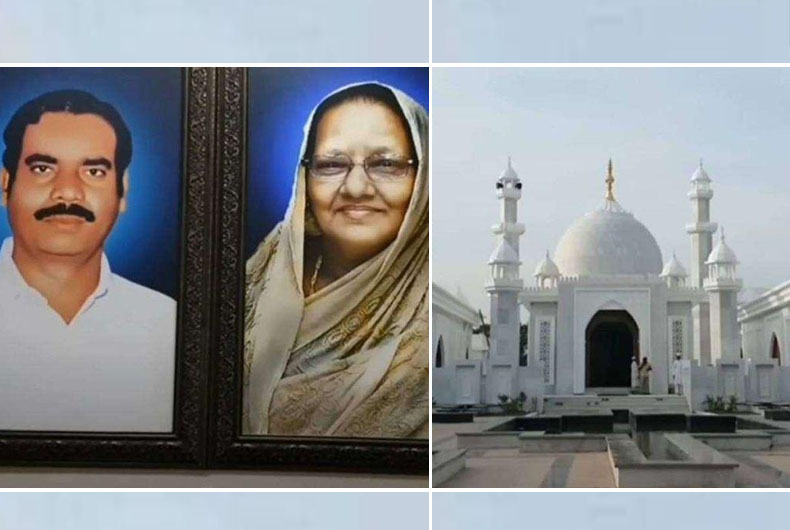
The mini Taj Mahal constructed at a cost of Rs 5 crore at Tiruvarur in Tamil Nadu which is the hometown of the businessman is drawing crowds from across the state.
Chennai:
In a unique love for his mother, a Chennai-based businessman has constructed a mini Taj Mahal in memory of his mother.
The mini Taj Mahal constructed at a cost of Rs 5 crore at Tiruvarur in Tamil Nadu which is the hometown of the businessman is drawing crowds from across the state.
Family History
Amrudeen Sheik Dawood Sahib is a hardware businessman in Chennai and the only male member among the five siblings. His father Abdul Kader Sheik Dawood was a businessman in Chennai and dealt with leather goods.
However, Abdul Kader Sheik passed away while his children were very young. His wife, Jailani Beevi was a person who did not give up easily and struggled hard to run the business and to bring up the five children, including four girls. All the children grew up and after the four sisters were married off, Amrudeen Sheik also got married.
In 2020 Jailani Beevi passed away, which was a major shock to Amarudeen, as he was the one who had helped his mother from a very tender age in the shop and was always moving around with her. She passed away on a new moon day and Amarudeen decided to feast 1,000 people on every new moon day with biryani.
However, Amarudeen thought that this was not enough and later came across the idea of constructing a mini Taj Mahal for his mother. He bought one acre land at his ancestral village, Ammayiappan, and with the support of a builder friend started constructing the monument.
What’s inside this Taj Mahal?
He bought marble from Rajasthan and made pathways and walkways around the monument just like in the Taj Mahal at Agra and on June 2, the monument was opened to the public.
It has meditation centres where people of all faiths can meditate and a madrasa where 10 students are presently staying.
Amarudeen, however, did not give publicity to the Taj Mahal of the South and people came to know of this through word of mouth.
source: http://www.ummid.com / Ummid.com / Home> Life & Style / by IANS / June 11th, 2023
In popular memory, historical narratives are more often than not laced with silence, neglect, nostalgia and heroism thus blurring the line between history and fiction. Public memory tends to remember the selective events according to ideological or political conveniences while the whole narrative in its context is often forgotten.
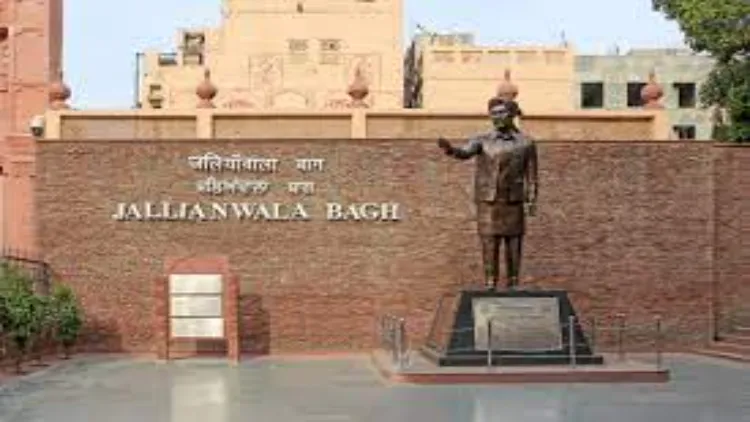
The Jallianwala Bagh Massacre is one such event which stands out in public memory as a solitary incident. Popular imagination puts the killing of hundreds of Indians on 13th April, 1919 at Amritsar as an event completely disassociated from time and space. It is needed that the massacre should be read in context with the time and space.
Why did the people gather at Jallianwala Bagh?
Indian leadership in general supported the war efforts of the British during the World War – I (WWI) on a promise that the country would be granted self rule or some kind of political autonomy after the war would be over. The British, after the war, backtracked on the promise. Rather to check the nationalist voices brought a Rowlett Act in force which enabled police to imprison Indians without evidence. Several Indian Muslims were aggrieved at the humiliation of Turkey and the British believed that it was their only challenge. With the Rowlett Act at their disposal these Pro-Khilafat voices could be easily suppressed. They did not foresee the possibility of Hindus joining hands with the Muslims, and vice versa and pose a problem for their colonial rule.
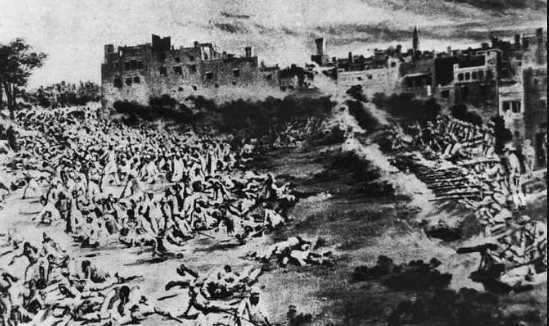
An artist’s depiction of the scene of massacre
On 18th March, 1919, the Rowlett Act was passed. Mahatma Gandhi along with other nationalist leaders termed it a Black Act and called for a protest movement against the same. The day chosen for protests and strikes was the 30th March that was later changed to 6th April. In Delhi a protest was held on 30th, because of lack of communication, and the police did not hesitate from firing upon the unarmed people. More than 50 protestors were killed in Delhi. The British had cleared their intention of using violence against the non-violent protesters.
On 6th April protests and strikes were held across the country, yet Punjab displayed an exemplary zeal of nationalism. What disturbed the British most was the fact that orthodox Hindus of Arya Samaj and orthodox Muslims of different Wahabi and pan-Islamist organizations joined hands against the British. The most popular leaders of Punjab at the time – Dr. Saifuddin Kitchlew and Dr. Satyapal, were prohibited from making public statements but still unity could not be broken. At different places people were fired upon but the nationalist sentiments could not be killed.
On April 9, Muslims came out to celebrate Ram Navami across Punjab. This was becoming too much for the British. In Amritsar Saifuddin and Satyapal oversaw a grand Ram Navami procession where Muslims were as zealous as Hindus were. It led the British to arrest the two leaders and sent them to an unknown location. The people gathered at the Deputy Commissioner’s office to register their protest and they were fired upon. Many were killed. The fear of a Hindu-Muslim unity was so frightening for the British that even after Jallianwala Massacre they arrested and killed Muslims for participating in Ram Navami celebrations.
Ghulam Jilani, who was an Imam of a mosque, was arrested on 16th April with Khair Din for leading the Ram Navmi processions. Police tortured them in the most horrific and inhuman fashion by inserting sticks up in their anus until their excreta and urine would not come out. Khair Din died of the torture while Jilani survived to narrate the ordeal. More than a hundred Muslims were tortured in this manner to celebrate Ram Navmi.
On the other hand in Lahore, on receiving this news, in an unprecedented manner more than 25,000 Hindus and Muslims gathered in Badshahi Mosque and Hindu leaders, like Rambhaj Datta, addressed the people from the pulpit of the mosque. In Lahore, not only the British used bullets but also brought their loyalists into the picture.
A few sold out Indians like the leaders of Muslims League issued statements that allowing Hindus into the mosque and addressing from pulpit amounted to the sacrilege. Still, most of the Muslims in Punjab were supporting the war cry of the protestors: Hindu-Musalman ki Jai (Victory to Hindu-Muslims).
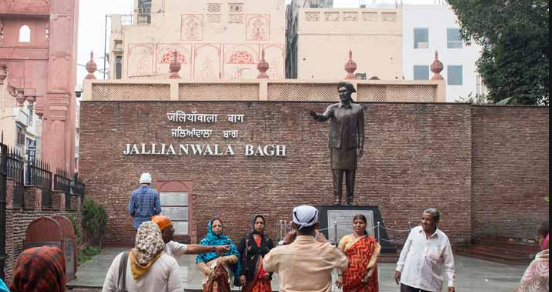
Visitors clicking pictures at Jallianwala Bagh
It was noted in a government report tabled at the British Parliament, “It (Hindu-Muslim) union had only one purpose, a combined attack on the government.”
Meanwhile, on 13 April, the Baisakhi Day, a meeting was scheduled at Jallianwala Bagh, near Golden Temple, to protest the arrests of Saifuddin and Satyapal. Hindus, Muslims and Sikhs gathered at the Bagh. Colonel Dyer with his troops entered the place and fired upon the unarmed protesters. A gory story of blood, death and massacre happened that each and every Indian knows by heart. Hundreds of Indians died. The tale of this massacre became folklore and inspired generations of revolutionary Indians like Bhagat Singh, Ram Mohammad Singh Azad and others. But, what we miss out is that the British did not stop at this. Punjab remained a laboratory of British atrocities.
The next day, April 14, people in Gujranwala woke up to find a beheaded calf at a public place. It did not take a rocket science to decipher a sinister plot to cause enmity between Hindus and Muslims. People gathered and protested such malicious attempts of the government to disturb the peace. Frustrated at their failed attempt and seeing that the unity has strengthened even further, army airplanes were called in to bomb the city. Yes, you are reading it correctly.
Within two decades of the invention of aero planes and less than a decade of its first military use in WWI when the technology was novel even for armies the British used it upon the innocent civilians of Punjab. A fleet of three planes dropped bombs and fired machine guns on the city and adjacent rural areas. Bombs were dropped at schools, hostels, mosques, marriage ceremonies etc. The government report specifically mentioned that the district is dangerous because followers of Arya Samaj and orthodox Muslim Wahabis like Fazal Ilahi and Zafar Ali Khan had joined hands. An armoured train with machine guns mounted in it was also used to kill along the railway tracks in Gujranwala.
The tales of torture, suppression and killings was repeated allover Punjab. While Jallianwala Bagh rightly gets its mention in our books and survived the public memory the causes behind it and a long trail of violence proceeding and succeeding the event have been forgotten. The very fact that the British used their worst form of violence to counter Hindu-Muslim unity itself speaks about the power of this unity. We need to remember the cause for which our forefathers and foremothers had laid down their lives.
(Saquib Salim is a historian-writer)
source: http://www.awazthevoice.in / Awaz, The Voice / Home> Story / by Saquib Salim / 2021
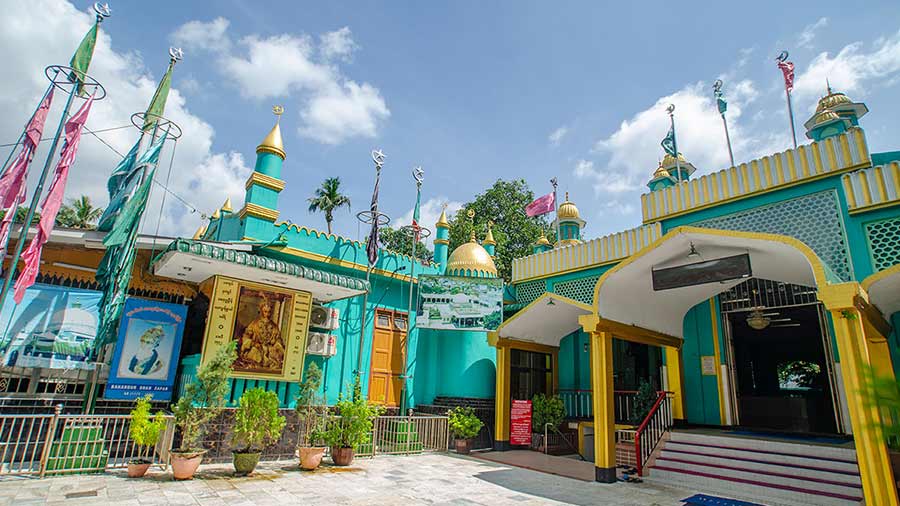
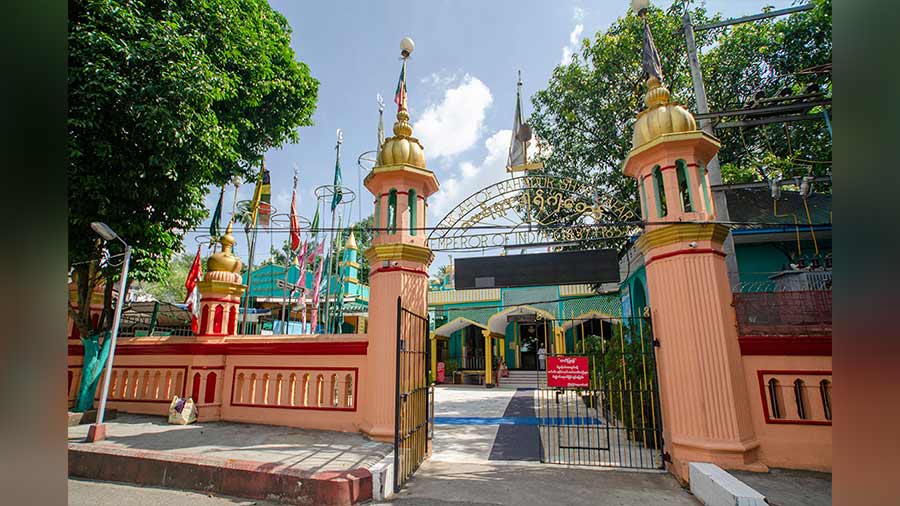
Close to the Shwedagon Pagoda in Myanmar, this dargah is the last tribute to the Mughal ruler and poet.
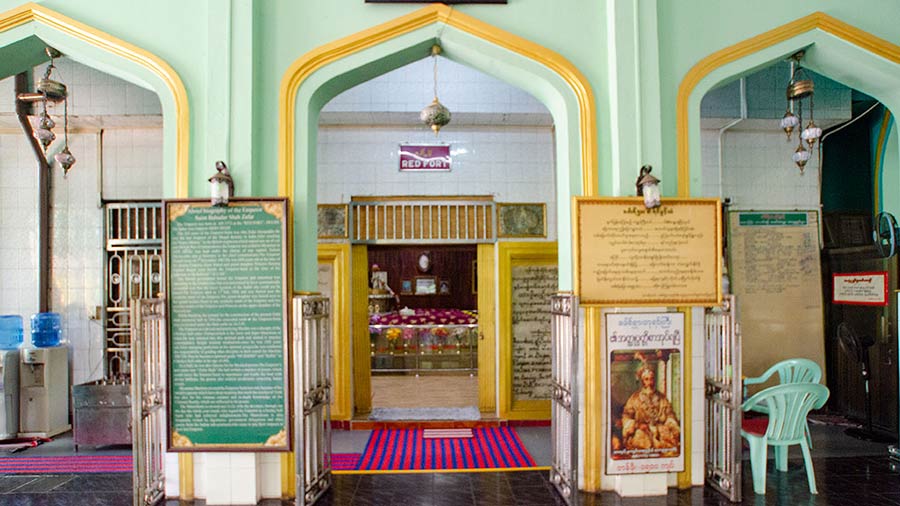
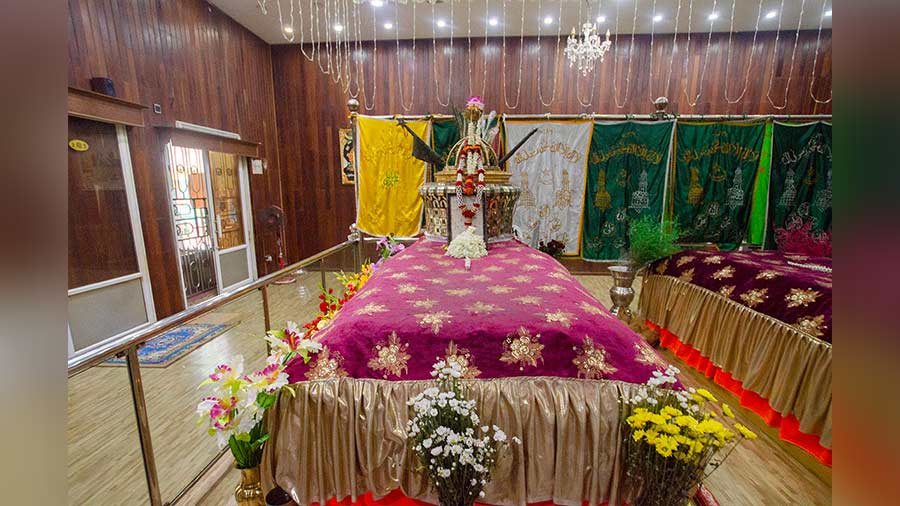
The main hall at the Dargah of Bahadur Shah Zafar Photos: Subhadip Mukherjee
Myanmar (Burma) has some uncanny ties with India when it comes to the freedom struggle. Netaji Subhas Chandra Bose was imprisoned in Mandalay and the last Mughal emperor Bahadur Shah Zafar, who was also imprisoned, later died in Yangon (Rangoon).
If one visits Yangon, then one must visit the Dargah of Bahadur Shah Zafar. It is an irony of sorts when one thinks of the last Mughal emperor not being able to spend the last days of his life in a country where his ancestors once ruled. For the British, Bahadur Shah Zafar was more like a threat; they were constantly worried that he could be used as a proxy leader for another attempt at a revolt in India.
The Dargah of Bahadur Shah Zafar in Yangon
After being arrested from Humayun’s Tomb during the Sepoy Mutiny on September 19, 1857, he was spared the death sentence and negotiated a life in exile instead. They thought it was better to have him sent to exile in Myanmar, and considering his health, they were almost certain that he would never set foot in India again. Bahadur Shah Zafar left Delhi along with his wife, two sons, and some close support staff on October 7, 1858.
More than a rebellious ruler, Bahadur Shah was more into poetry and that’s exactly how he spent the sunset years of his life in Myanmar. The British were paranoid and even prevented him from getting supplies of pen and paper fearing that he would pass messages to his supporters back in India.
Life in Yangon
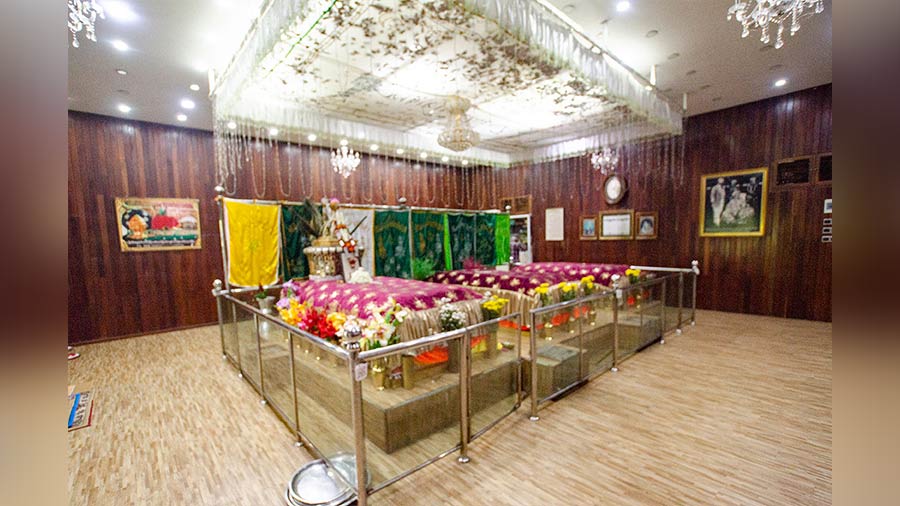
Room next to the main hall, housing the tombs
He lived in a small wooden house that was located very near Shwedagon Pagoda. If you are visiting Yangon, then you’ll find Shwedagon Pagoda as one of the major landmarks in the city. His life was miserable out here with a very limited supply of food and without any pen and paper. So, as a last-ditch attempt, he started using charcoal and scribbled poetry on the wall of his home.
His life came to an end at the age of 87 on November 7, 1862. By then, he was completely bedridden and unable to eat or drink. A very unfortunate end to the last Mughal emperor of India.
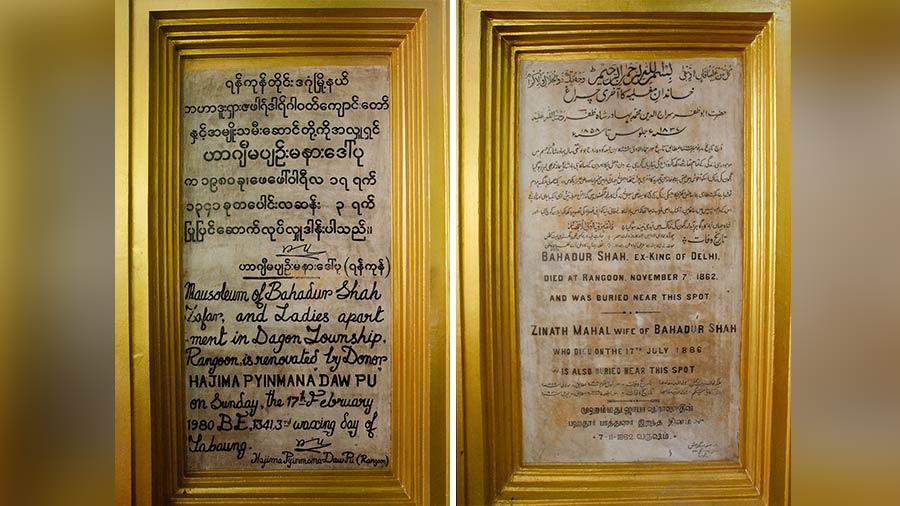
Memorial plaques inside the dargah
Even after his death, the British were paranoid and hurriedly buried him without giving him the last respect that he deserved as the last emperor. Just a small plaque was placed on top of the grave and the rest was kept as simple as possible. This was purposely done to prevent his followers from making this place into a pilgrimage spot.
Four years later, his wife also passed away in Yangon and was buried right next to him.
The Lost Grave
The Lost Grave
With time, people simply forgot about this grave just exactly as the British wanted. To make matters more complicated no official records were kept as to the exact place where he was buried.
The discovery of the grave happened by chance in the year 1991 during an expansion work of a prayer hall that was being carried out by labourers. Two graves were found with small inscriptions on top of them. While one had the name Bahadur Shah Zafar, the one next to it was that of his wife Zinat Mahal.
Further excavation was carried out on the two graves and upon opening up the grave of Bahadur Shah Zafar, the skeletal remains were found wrapped in a silk shroud.
Interiors of Bahadur Shah Zafar Memorial Hall at the dargah
After this discovery and realising the importance of the grave, it was decided to restore and renovate the graves and the surrounding area. With support from the local community, the local government, and further support from the Government of India, a permanent structure was constructed over these two graves. A dargah was constructed at this very spot making it fit for the last Mughal emperor.
Dargah of Bahadur Shah Zafar
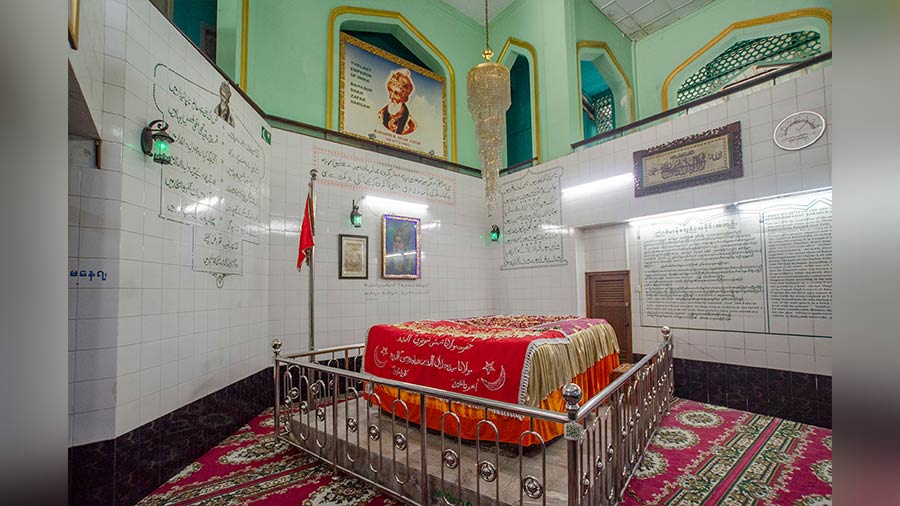
Original grave of Bahadur Shah Zafar at the basement
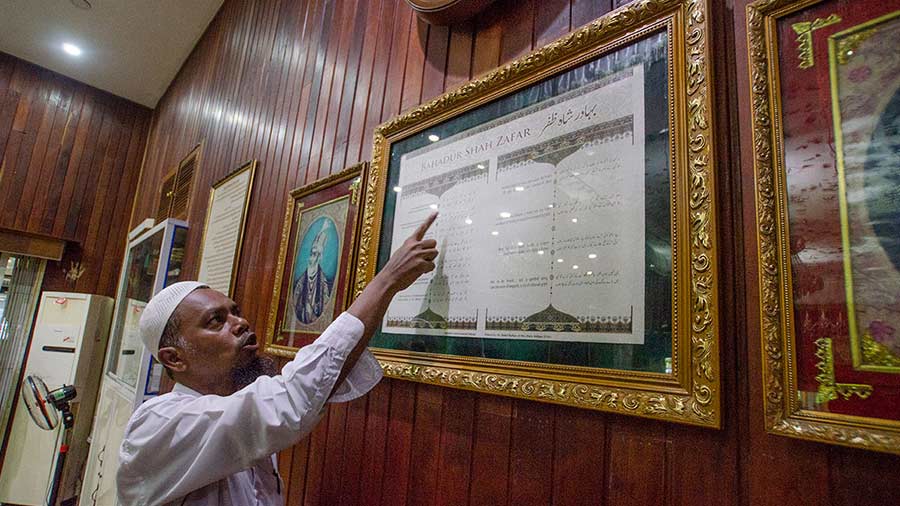
The dargah has two levels, the top level has a large prayer hall and a room with three decorated tombs. These tombs are that of Bahadur Shah Zafar, Zinat Mahal, and his granddaughter Raunaq Zamani. The surrounding walls in this room have only three known photographs of the emperor and poetry written by him lamenting his life in exile.
Kitnaa hai badnaseeb ‘Zafar’ dafn ke liye do gaz zamin bhi na mili kuu-e-yaar mein
Bahadur Shah Zafar
There is however another secret to this place. There is a room located in the basement of the dargah. This is the room where the original grave of Bahadur Shah Zafar was located when it was discovered. The grave now has been converted into a decorated tomb. This is the very place where the last Mughal emperor was buried and was thought would be forgotten. But as luck would have it, it is now somewhat fit for an emperor. It’s sad that Bahadur Shah Zafar could never return to the country he once ruled. He remained in exile even after he died in Myanmar.
The Kolkata Connection
A representative from the Dargah reading poetry written by Bahadur Shah Zafar
Bahadur Shah Zafar along with his wife Zinat Mahal were also accompanied by their two sons Jawan Bakht and Jamshed Bakht. His sons never left Burma and settled there and ultimately died there only. Jamshed Bakht had two sons. One of his sons, Mirza Bedar Bakht, came back to India and settled in Kolkata. He married Sultana Begum with whom he had five daughters. Mirza Bedar Bakht had a very quiet life living in a slum and earning by sharpening knives and scissors. He died in the year 1980 in this very city and was buried here in Kolkata.
Working for more than a decade in the book retail and publishing industry, Subhadip Mukherjee is an IT professional who is into blogging for over 15 years. He is also a globetrotter, heritage lover and a photography enthusiast.
source: http://www.telegraphindia.com / The Telegraph Online / Home> My Kolkata> Historical Landmark / by Subhadip Mukherjee / April 03rd, 2023
“The Dargah (Ajmer Sharif) is undoubtedly a danger-center….the sedition is more or less confined to the Dargah and that it is very difficult to get evidence of what goes on there.” The Above excerpt is from a secret report submitted to the British Government by Intelligence officials in 1922.
A common man may not think that the Dargahs, shrines, and Sufi centers were at the forefront of the Indian Freedom Struggle. For reasons unknown, most people believe that Ajmer Dargah played no, or little, role in the struggle. The fact is that it acted as a center of nationalist activities so much so that the British Government snooped over the activities in Dargah.
The official committee which was formed after Jallianwala Bagh Massacre in its findings pointed out that the Indians were planning a popular uprising against the British. The plan was discussed by nationalists at the Urs under the leadership of Maulana Abdul Bari Firangimahli.
The spies regularly updated the government on the nationalist activities in the Dragah. In 1920 they reported that more than 5,000 people attended a meeting at Idgah which was addressed by Lala Chand Karan who asked people to fight the British because they promote cow slaughter, massacred people in Punjab, and cause disunity between Muslims and Hindus. The same report notes that the Pesh Imam of the Ajmer Dargah prayed for the defeat of the British after which Maulvi Moinuddin asked people to renounce the titles bestowed upon them by foreign rulers.
Another report from 1921 notes that anti-British speeches were being delivered at the Dargah during Friday prayers.
In 1922, intelligence officers again reported that Urs at the Dargah would be an occasion where the nationalists would be meeting to discuss nationalist ideas.
An intelligence report from 1922 contains the most explosive information. The report claimed that Muslims and Hindus in Rajputana had taken an oath of allegiance with Maulvi Moinuddin of Ajmer. Under his instructions, they were preparing for a war against the British.
An armed militant organisation Jamiat ul-Thaba was founded and arms had been procured from different places in the country. Jamiat ul-Thaba passed a resolution and declared that the British were enemies of religion, nation, and country and that revenge would be taken from them.
75 years have passed since Independence and most of us are unaware of the role of Ajmer Dargah in winning this independence.
source: http://www.awazthevoice.in / Awaz, The Voice / Home> Story / by Saquib Salim / April 02nd, 2023
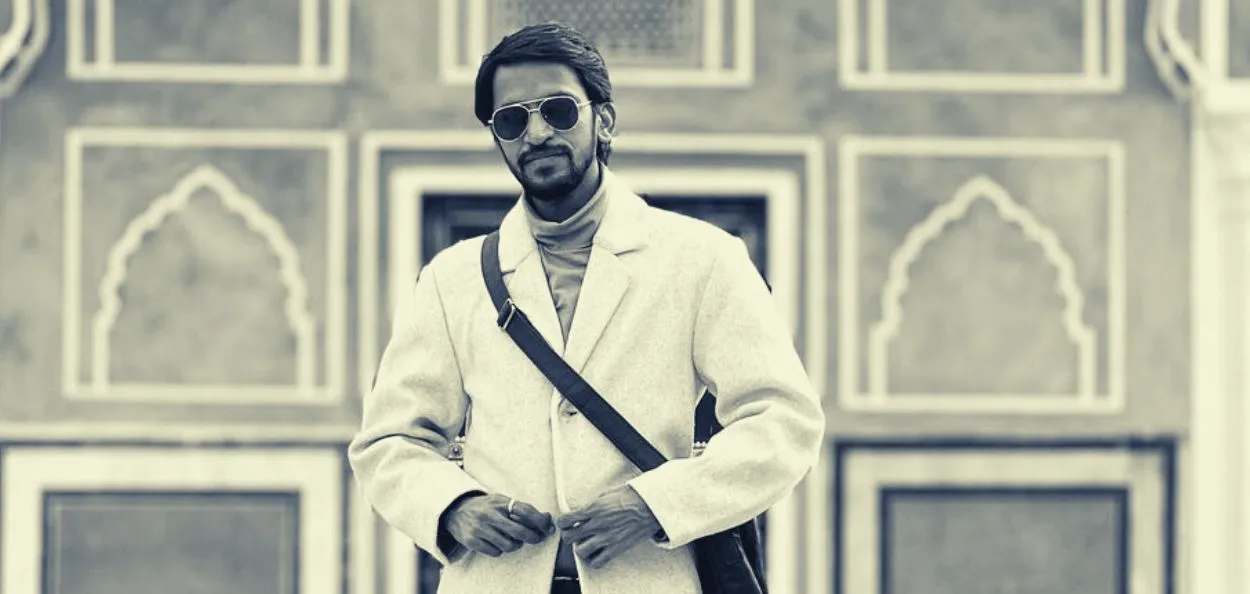
Abu Sufiyan at Jaipur Lit Festival (Source: Instagram)
Abu Sufyan was in the final year of his engineering course at a Chandigarh college when, one day, his mother called him. This call did make him realise the value of the quintessential Begmaati Zabaan (colloquial dialect) her mother used.
It changed his perspective on life and pulled him out of his mental depression. A decade later, sitting in a Café close to Jama Masjid in Old Delhi, Abu Sufiyan recalls his life-changing moment. “I hardly visited home those days, I was lying aimlessly on my hostel bed, my mother called me up to enquire about my returning home and I told her, “I am not coming.” “She started reprimanding me in her Lahja (colloquial style)… I had this habit of recording her calls as it was too much listening to all the wrongs I had done…”
When he listened to his mother’s recorded call later, he laughed out loud; “her dialogues and dialect were innocent and filled with wit, sarcasm, and humour.”, he adds. Sufiyan says, “that became my Eureka moment.”
He decided to create a page on social media to document the Begmaati Zabaan. Explaining the Begmaati Zabaan, this 31-year-old social media entrepreneur says, “in this dialect, the sarcastic remarks are never made directly. For example, if a person has to say ‘we must congratulate the family for the birth of a baby by presenting gifts’ they’ll say “500 rupaye ka money-order aa ri aaye..” and so on…”
His Purani Dilli Waloan Ki Batein page on Facebook has since turned into a Socio-Economic-Cultural community, with more than 105k followers. Sufiyan initially posted the conversations between his mother and aunts via different characters like #khabtikhala #aminkiphuppo and so on. He also took up various societal issues disguised as humour on the page. Even to his disbelieve the audience on social media liked it and he received good response
____________
“It played like nostalgia and many renowned faces soon joined the list of followers and it has grown since then. I was shocked as it became an instant hit and soon at dinner time around 9 pm the page received instant likes and comments.” Sufiyan says that he had no idea of developing the PDWKB page in a full-fledged community. “It was just for fun and to break the mental loop…”
No sooner than the hashtags #mobango #khalakhabti #tumharekhalu #winkiphuppo #tumharibaji #tumharidulhan #lafangaparinda started picking up, and these characters started becoming more defined. Sufiyan says, “I made Sadiya Saeed, Anas Faizi and others the co-admin of the page; some comments on the posts were going viral…the characters that earlier were managed solely by Sufiyan now had different managers, soon they developed into animated characters that today are known as avatars…”
Aye muhaav Te par raen.. jaldi se kapde la chhat pe se… Sab bheeg jayenge.. tujh se kehti hun teym se utaar laya kar nasoomdi.. hath se mobaail hi ni chhooTta… Paya ni kis se baatein milayi reti he sara din.. amma ko moo ni lagati.. ek ek jawab ghante bhar mein deti he.. Allah khair kare ab thand zor pakad legi… Angeethi jala ke liya aaj to dekhiyo.. Mere se uttha ni jata.. bas kya karein aulad ke rehm o karam par guzregi zindegi.. jo khila diya kha liya.. jaisa kiya usi mein sabar.. wakhat se bewakhat chai milti hai… haaye bas kuch kehne ka ijaara ni riya ab… Moo ko aate hain sab… Allah kisi ki bana ke na bigaade…
Today, Abu Sufiyan is involved in conducting heritage walks, dastan goi (Storytelling), book reading sessions, and food walks related to Old Delhi. He also runs a tech company. Sufiyan hails from an Old Delhi family with a Mughal and Sufi lineage and says that his ancestors had a haveli near Old Delhi. “During partition, times were very tough yet they stayed in the interiors as it was very safe even back then..”. soon after the partition the Haveli near Suivaran, Chandini Mahal, was bought by my grandfather…”
“Our old haveli had two floors where the first floor belonged to my maternal household and the ground floor to my paternal household. They were friends and my nana was in the income tax department and they belonged to Agra. My mother was beautiful and dad was handsome and they were compared to Reena Roy and Rakesh Roshan…” The love between the parents blossomed and soon the marriage happened after a lot of resistance from Sufyan’s would be aunts, whose impact can be seen and felt on his page PDWKB, “Both my parents were very educated but my mother was more educated in comparison to other women of her times and used to wear jeans in the 1980s…thus Daddy’s sisters were a bit skeptical but Daddy was adamant…”
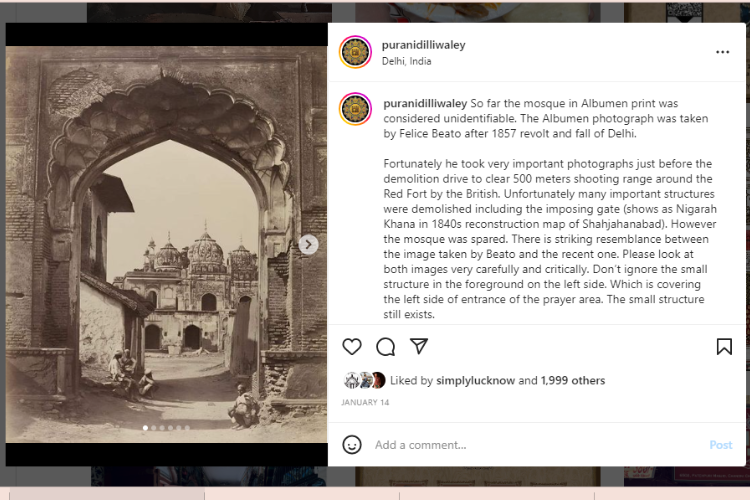
A screengrab from PDWKB’s Instagram page
Sufiyan says that his great-grandfather was a magnanimous human who welcomed many with an open heart and had rented space at his haveli. Sufiyan’s father was a technician and taught electronics to the retired army and navy officers at the Delhi engineering College and later opened a television shop in Daryaganj. Back then it was a new technology and therefore technicians like his father were much sought after, “All his students got the sets repaired by him as he was the only mechanic in Delhi…”
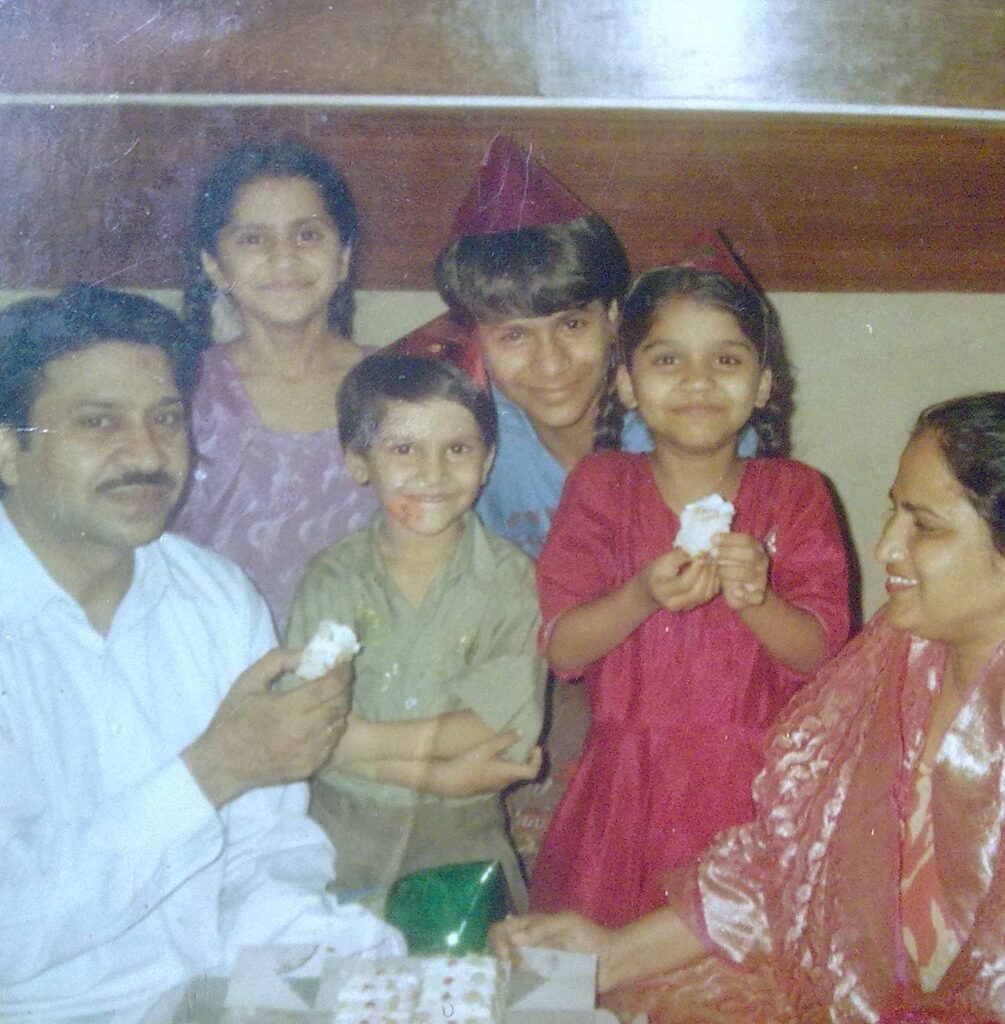
Young Sufiyan with his parents and sisters
Sufiyan says during the early ‘80s there was no driving force that emphasized education and also the families around him had no educational background but they were brought up in a protective and educational environment.
“It was my father’s wish to make his children erudite. I was just allowed to visit the coaching institute, a family from Lucknow and our English teacher Geetanjali Mam, rest the Maulana used to visit the home to teach Arabic and Urdu…” Sufiyan sat in his father’s television shop after school. “Cricket matches and television go hand in hand in sync with my interest in electronics… I used to repair TV, and remotes, and soon I was selling TV sets in my father’s absence.” Sufiyan says that it was APJ Abdu Kalam who inspired him to pursue Engineering. “when I was in the 12th standard, APJ Abdul Kalam visited our Anglo-Arabic School. My question was among the top five questions selected and I attended a one-to-one session with President Kalam.”
President Kalam later told my father, who was among the parents assembled in the school, that he should allow me to study further. After completing his engineering In 2015, Abu Sufiyan started an e-commerce company. He along with 3 more partners launched an e-commerce website Godkonnect.com, which primarily focussed on selling artefacts of all religions. The site was shut down later. He then joined Paytm as a Data Analyst and was later, got promoted to Team Lead – Revenue Assurance at Paytm Marketplace. After dabbling with firms like Cognizant and Google he gave up the 9 to 5 job and started working as a freelancer.
He says, “I was working 24 by 7 but my passion for PDWKB overruled everything else…” Three years later, he quit his job and closed down his ventures and got interested in PDWKB on a full-time basis. In August he decided to create a trust named “Tareekh, Arts and Culture Trust ” to manage PDWKB. A year later his business was getting had started getting the attention of big clients like Gaurang Shah – an award-winning designer based in Chennai, who specializes in Jamdani weaves for Sarees and outfits, Sahitya Kala Parishad, art culture and language department of the Delhi Government thus Sufiyan took the big leap and established a separate business under his proprietorship “Tech Charmers” to manage the Digital Marketing Projects, Web & App Development, and Virtual Reality Projects.
Sufiyan was visiting a monument and there by chance he participated in a heritage walk, “the guide had no idea about the importance of the place and his vision of Old Delhi was flimsy, this made me sad and I decided to take up the initiative of organizing the heritage walks…” In March 2016, the venture PDWKB organized its first heritage walk, “We wanted people to know the real culture of Shahjahanabad and feel connected to the Old Delhi, thus our very first themed cultural walk started from the Turkmen Gate to Church to Qala Masjid to Razia Sultan Mazhar to Pahadi Imli’s old library to Changezi Bazaar and finally we ended at the rooftop of Pahadi Imli…all the while we made them savour the iconic dishes of Old Delhi…”
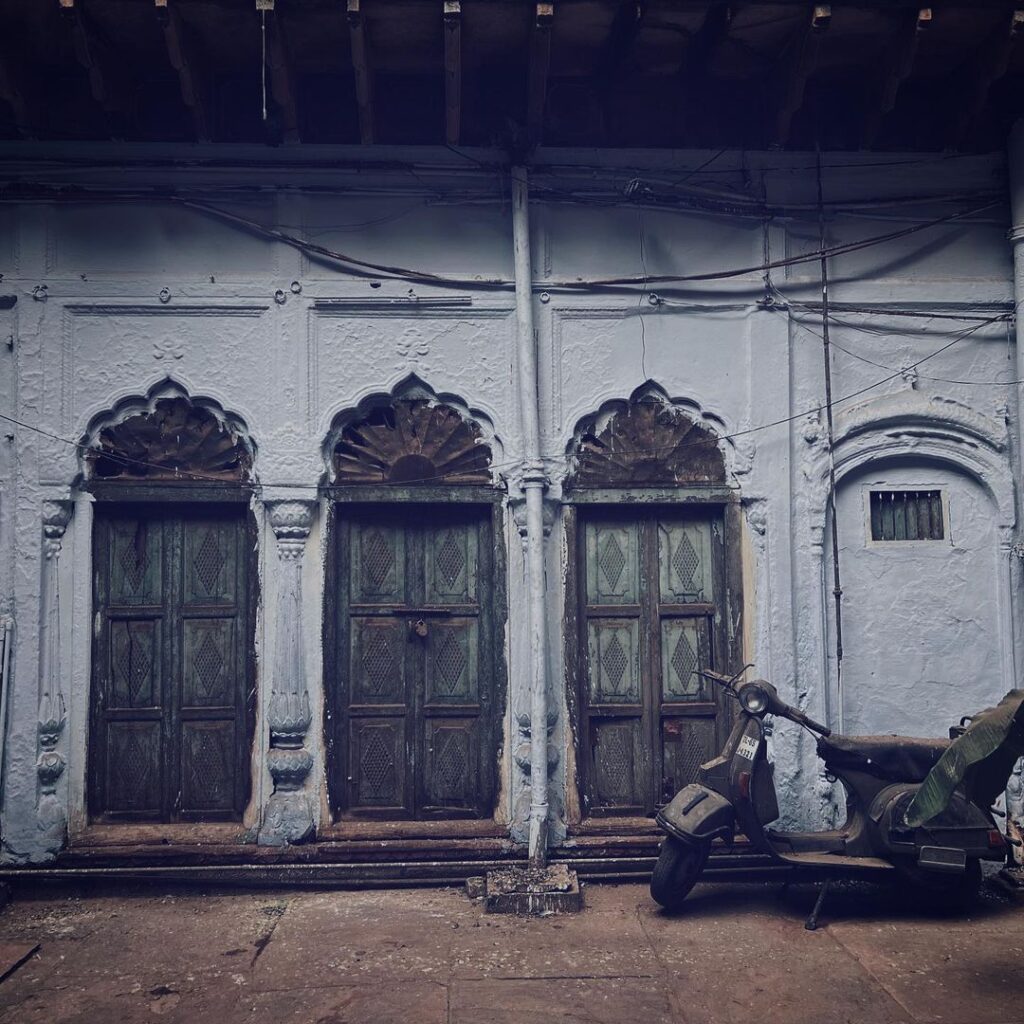
A scene as captured by the page of PDWKB
He feels that this narrative of his has helped in spreading a positive note about Old Delhi, “From Asar Ud Sanadid (narrating the events of 1857) to Twilight in Delhi (narrating 1947) to Mayank Austen Soofi’s first-hand account in the year 2001 and then PDWKB is a first-hand account of Old Delhi since 2014…”
Sufiyan feels that he has been the early technology adapter and that his initiative was one of the early pages that adapted and tested the technology in real-time, “We started the concept of storytelling through pictures in 2014, short videos and avatars were a rage even back then…”
Winding up he says, “PDWB is a socio-cultural community and the first-hand witness accounts of old Delhi mood, it isn’t influenced by anyone, it is the voice of people when people need it…” Looking forward he says, “It is a community voice and it’ll always be there and I wish to retrieve the food culture of Old Delhi like mutanjan, shab gosht, Haleem, and various kinds of Sharbats (sweet drinks), etc.”
His page played a major role in maintaining the Ganga-Jamuna tehzeeb during the 2018 temple brawl in Old Delhi, “We circulated three fact-checking videos when there was a hint of disharmony in Old Delhi and by God’s grace we were able to control the situation…such is the power of community vis-a-vis social media…” Sufiyan assisted Rana Safvi in her research for her book Shahjahanabad.
source: http://www.awazthevoice.in / Awaz, The Voice / Home / by Shaista Fatima , New Delhi / February 22nd, 2023
Later, he also visited Sira town in Tumakuru district and distributed Saudi Riyal 500 and other essential items to 26 pilgrims.
Congress MLA Zameer Ahmed Khan. (File Photo)
Bengaluru :
Chamarajpet Congress MLA BZ Zameer Ahmed Khan on Saturday arranged Umrah (an Islamic pilgrimage to Mecca) for 16 Accredited Social Health Activists (ASHA) workers at Jagjivan Ram Nagar ward office and distributed Saudi Riyal 500 (Rs 11,097) to each of them.
Taking to Twitter, the MLA said that a pilgrimage send-off programme was organised in his constituency during which he distributed the money and also other Umrah essentials to the workers. Later, he also visited Sira town in Tumakuru district and distributed Saudi Riyal 500 and other essential items to 26 pilgrims.
Meanwhile, the BJP hit out at the MLA saying he was indulging in such activities only to attract voters ahead of the Assembly elections. They have also demanded that the police file a suo motu case immediately and take necessary action.
K Somashekhar, state president, ASHA Workers Association, said that he was not aware of the programme organised by the Congress leader. The MLA was not available for a comment.
source: http://www.newindianexpress.com / New Indian Express / Home> States> Karnataka / by Express News Service / February 27th, 2023
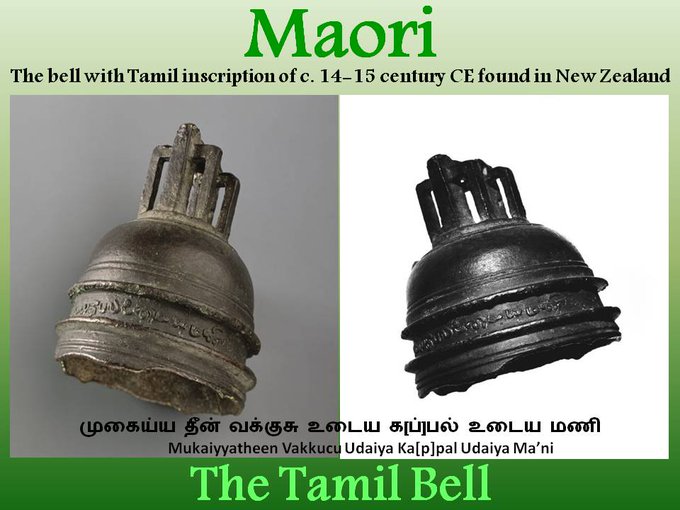
It was 1836 when William Celenso, a Christian missionary from Cornwall in England, first stumbled upon the mysterious Tamil Bell in a remote Maori village in New Zealand. It was being used as a cooking pot by some of the local people, who told the fluent Maori speaker that it had been found under the roots of a large tree, swept up from the ground by a storm many years prior.
Upon inspection, Celenso discovered a series of markings and runes in an unfamiliar language. Realizing the strangeness of the find, he traded it for a cooking pot, and deposited the curiosity in the Otago Museum in Dunedin. It was later bequeathed to the Dominion Museum, which today is the Museum of New Zealand Te Papa Tongarewa in Wellington.
Deciphering the Strange Inscriptions on New Zealand’s Tamil Bell
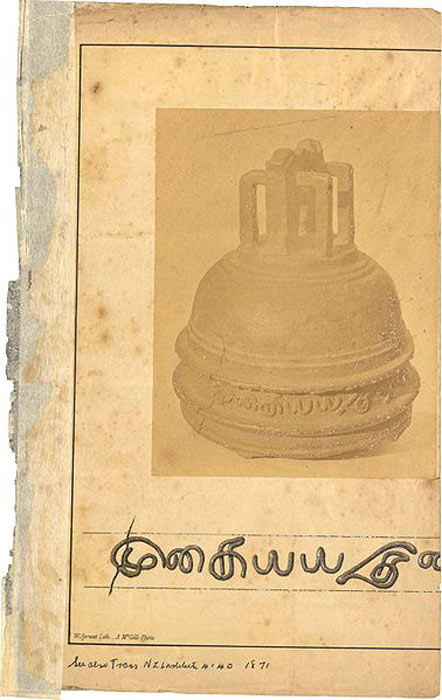
In 1870, ethnographer J. T. Thompson chanced upon the bell, and puzzled by the strange archaic writing, he took photos and sent them all around India in the hope of producing a translation. Just two months later, Thompson had replies from Ceylon, which is modern-day Sri Lanka, and Penang, a settlement on the Malaysian Straits.
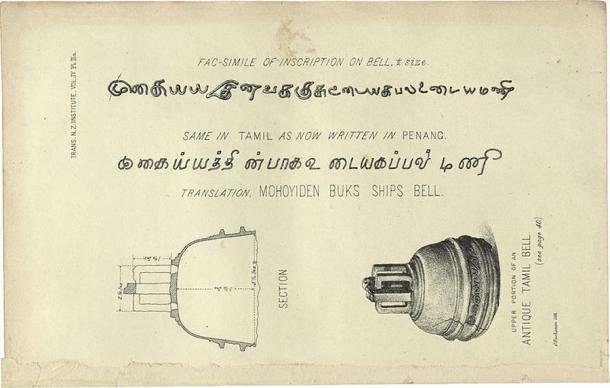
The obscure inscriptions had been identified as ancient Tamil, a language that hadn’t been in use for hundreds of years. The primitive words that adorned the curious metal oddity were Mohoyideen Buks , which were translated to mean “Bell of the Ship of Mohaideen Bakhsh.”
This led to several fascinating revelations. It illustrated that the owner was a Muslim Tamil, of high stature and probably from a famous Indian shipping company based in Nagapattam, in the south-east of India. This was because his name was Arabic, and his first name came from the Tamil phrase meaning “owner of ships.”
Later, in 1940, the age of the Tamil Bell was estimated to be 400 to 500 years old, dating back to the period between 1400 to 1500 AD. This was a remarkable surprise, suggesting that outside contact with New Zealand had been made hundreds of years before English captain Thomas Cook landed on the windswept coast of Poverty Bay in 1769. But had it really?
Facsimile of inscription on the Tamil Bell. ( Public domain )
Evidence of a Tamil Colony in New Zealand
Only 7 years later, another perplexing discovery would further mystify the people of New Zealand, leading to a possible explanation for the out-of-place artifact. In 1877, a shipwreck was discovered half-buried in sand between the ports of Raglan and Aotea. It was first assumed to be a modern ship, as the New Zealand coast was renowned for being extremely dangerous and accidents were common. But this was different.
The vessel appeared to be of Asian origin and extremely old. C. G. Hunt noted how the ship was constructed of teak beams that were placed diagonally and secured by wooden screws, strongly suggesting it was built in South East Asia. Inside, a brass plate with Tamil inscriptions and a plank of wood containing the familiar name Mohoyd Buk were found.
Inexplicably both pieces of tantalizing evidence vanished in Auckland, and experts were never able to compare it to the timeworn letters of the Tamil bell. Nevertheless, several early theories were put forward by the historians of the day. Some argued this was proof of an early Tamil colony on New Zealand. Others maintained that the skillful construction and expertise of the Tamil seafarers made it perfectly possible they could have sailed to New Zealand.
On the other hand, the evidence for such arguments remains scarce. As far as historical record is concerned, the eastern-most frontier for Indian sailors was the island of Lombok, next to Bali in current-day Indonesia. Furthermore, the Spice Islands of West New Guinea, where nutmeg, mace, and cloves could be exclusively found, although in use, were never controlled by the Tamils and instead remained in the hands of local magnates of Ternate, Tidore, and Amboyna. Add to this that no other Indian relics have ever been found in New Zealand.
Facsimile of inscription on the Tamil Bell. ( Public domain )
A Lost Portuguese Trading Ship?
Another theory put forward is that the Tamil Bell was originally Portugese, and from a lost ship sent as part of a fleet by the Portuguese emperor to secure the Spice Islands. From the 1490s, the Portugese became a major player in the Indian Ocean trade network, securing Asian goods for a booming demand back in Europe. In 1511 the Portuguese even established a trading colony on the Malacca Straights and in many places on the Indian mainland.
One of these places was Goa, and in 1521 the Portuguese Viceroy sent out a fleet of three caravels captained by Cristovas de Mendonca, to explore the lands beyond the Spice Islands. Only Mendonca’s caravel returned, the other 2 being lost at sea and never seen or heard from ever again.
In 1877, the shipwreck found on the New Zealand coast was identified as being constructed in Goa, precisely where the Portuguese ships had set out from. Tamil was widely spoken in Goa which neatly explained the Tamil writing on the bell.
However, all of this is incredibly unlikely. There is no direct evidence that points to a bell being on the Portuguese caraval. Lastly, the Portuguese had already established an incredibly lucrative trade system, which meant there was no motive for them to explore further as the known world of the Indian Ocean was already providing them sufficiently.
Spanish Castaways or Anthropological Science Fiction
One of the most famous and controversial theories was advanced by Robert Langdon in his book The Lost Caravel , in which he proclaimed that the Tamil Bell was brought to New Zealand by a group of Spanish sailors from the East Indies who became disorientated and eventually settled in New Zealand, hundreds of years before Thomas Cook’s arrival.
He wrote that in 1524 the King of Spain ordered an expedition to the Spice Islands, sending a sortie of six ships. A maelstrom of disasters ensued, with two wrecked on the coasts of Patagonia and the Philippines, one reaching Mexico, another returning to Spain, and the remaining two disappearing. One of the stray caravels, the San Lesmes, which contained the Tamil Bell, was last observed in 1526, voyaging across the Pacific Sea.
After running aground at Amanu, an atoll of French Polynesia, where four cannons were later discovered, the crew repaired their ships and sailed on to the atolls of Ana and Raiatea, where several of them settled down and married the native woman. Later on, in a bid to return to Spain, the weary seamen set out west, discovering New Zealand in the process and deciding to make a home on its verdant shores.
The descendants of the castaways explored further, discovering new lands as far as Easter Island, and introduced new cultures, customs, and languages to the Polynesian people influenced by their Basque origins. Langdon was convinced that the additional discovery of a Spanish helmet dated from the 16th century in Wellington Harbor in the 1880s gave his hypothesis more credibility.
However, like the Tamil and Portuguese ship propositions, Langdon’s argument has been highly criticized for its extravagant interpretation of available evidence. Bengt Danielsson, an academic from French Polynesia, described it as “anthropological science fiction.” Throughout his account, Langdon disregarded all existing archaeological and historical literature of the Pacific which often contradicts and disproves his ideas.
The existence of Caucasian-like individuals with fair-skin, red hair, and blue eyes on many Pacific Islands was deemed proof of his hypothesis. While there is no doubt that these traits existed, even in the earliest contact with Polynesian natives, Langdon argued the Spanish castaways were the only source of these genetics, a fact that is impossible given that there were only reportedly 20 to 50 castaways in the forgotten band. It was equally as unlikely that they had travelled to all of the Polynesian Islands .
Next, Langdon pointed to linguistic anomalies as a sign that Spanish words were absorbed into the local dialects. However, there are no identifiable Spanish words in the languages of Eastern Polynesians. Without a shred of evidence, Langdon explained that this was because the children only learned the language of their mothers, leading to the decline and eventual disappearance of the Spanish, Basque, and Galician languages of the fathers. He even proposed that the lack of sounds in the Polynesian tongue meant that Spanish words could easily have been changed beyond recognition after only a day or two.
On the other hand, in all other cases of European and native intermixture in Polynesia, European languages were adapted into the local speech. A diverse array of English words still remain in Polynesian languages today after being incorporated 200 years ago. For example, on the Pitcairn Islands, where only one Englishman lived with eight native women, his descendants still speak English!
In addition, Langdon believed that the indigenous beliefs of Polynesians were derived from the Christian faith of the Spanish diaspora. He utilized sources from 1874 from Catholic missionary Albert Montiton, who remarked on how Christian the native religion seemed to him. Yet Langdon completely ignored the wide conversion of natives to Christianity that happened from 1817 onwards, which presents a more reasonable explanation.
Finally, Langdon cited the “talking boards” of Easter Island, a series of stone tablets discovered in the 1860s with archaic runes, as a type of script invented by the Spanish castaways. Yet his main source for this point was a native guru called Hapai, a man who claimed that Europeans had inhabited Easter Island, and whose evidence was subsequently found out to be fabricated. In the end, Langdon’s farfetched argument was systematically disproven, and the confusion over the Tamil Bell persisted.
There are many examples of ghost ships found floating at sea without any sailors. ( muratart / Adobe Stock
The Derelict Theory: Did the Tamil Ship Drift to New Zealand?
After years of fantastical hypothesizes, Brett Hilder entered the debate with a theory more rooted in reality. His so-called derelict theory re-invigorated the earlier claim that the bell came from a Tamil ship. Hilder’s theory attacked the assumption prevalent in most theories that the crew who possessed the Tamil bell were alive. In the choppy, capricious oceans, there had been many instances of intact wooden ghost ships being found without any sailors.
The Flying Dutchman was perhaps the most famous example, having been discovered with full sails and without anyone on board. Nearer the Pacific, the wreck of the sailboat Joyita, on a journey from Apia to the Tokelau Islands, was observed to have no remaining personnel when it was detected half-submerged in the sea.
These “derelicts” were usually still floating, even after many years at sea, because of the buoyancy of their hulls. Hilder entertained the idea that the Tamil Bell originated from a Tamil merchant ship that was caught in the eastward sea current between Antarctica and the southern parts of the continents.
During the late 1400s and 1500s, when the bell was dated, Tamil seafarers dominated the trade networks of the vast Indian Ocean. Muslim Tamils were particularly skilled navigators, plying their wares across the sea as far as the eastern coast of Africa. Indeed, modern examples of the power of the great Southern Current, which stretches from New Zealand to the Cape of Good Hope in South Africa, cement his idea.
For instance, in June 1973 it was reported in the Nautical Magazine of Glasgow that an unmanned lifeboat had travelled 7,000 miles from the coastline of East London, South Africa, to the Princess Royal Harbor in Albany, Australia. Thirty jars of barley, sugar, and lifeboat biscuits were found in perfect condition, sealed in two compartments. It is more likely, then, that a similar fate befell a Muslim Tamil ship, and that the preservation of its wooden hull helped bring the Tamil Bell to a wild new frontier of the world.
@tamilancient
Enduring Enigma of the Tamil Bell
Since its discovery in 1836, most theories surrounding the Tamil Bell were highly speculative and lacked the sufficient evidence to be taken seriously. Unlike others, Brett Hilder’s focus on the Great Southern sea current, a real geographical phenomenon, presented a case for the Tamil Bell that finally made sense without the mental leaps and bounds taken by other theorists such as Langdon, whose sole proof that the crew of the San Lesmes reached Amanu and married the native woman was the fact that four rusty old cannons had been found there.
Yet even Hilder’s theory has weaknesses. All of the theories incorporated the 1877 shipwreck as a key piece of evidence that identified if the bell was brought by the Tamils, Portuguese, or Spanish. Yet by 1890 the shipwreck, said to be half-sunken in the sand, had mysteriously disappeared, never to be seen again. Subsequent attempts to re-find the wreck, as late as 1975, were all unsuccessful.
“The problem with all these and other ‘mystery’ items, such as ancient shipwrecks on New Zealand’s wild west coast beaches that are reputed to be uncovered briefly in storms, is that in the absence of hard evidence to explain their existence and context, numerous fanciful interpretations are often placed upon them according to particular agendas,” explained Katherine Howe, summing up the situation perfectly. Thus, the mystery of the Tamil Bell lives on.
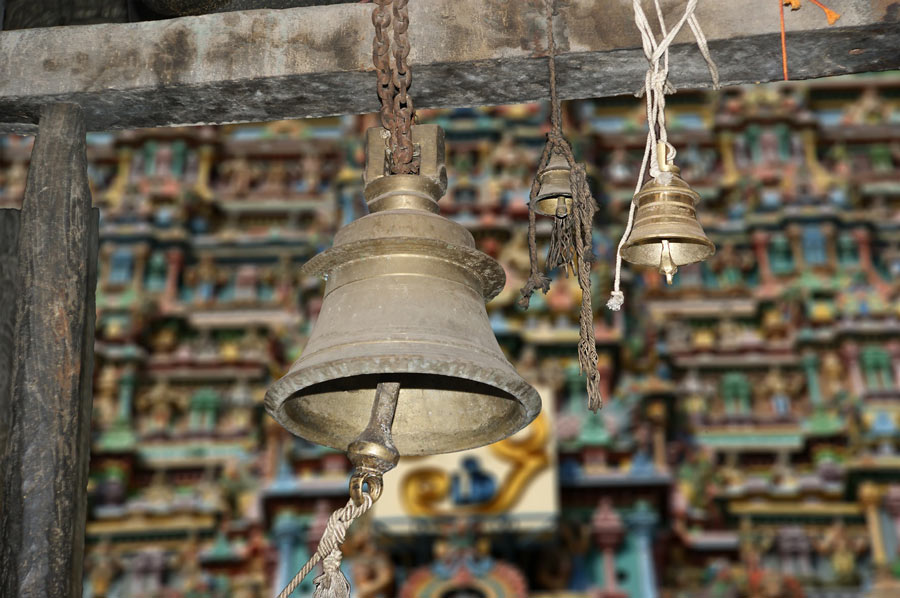
Top image: Representational image of a tamil bell from inside of Meenakshi Hindu temple in Tamil Nadu, South India. Source: Владимир Журавлёв / Adobe Stock
‘Hyderabadi Shaadi Ki Dawat’ is going to be a unique event to experience the food, culture, and hospitality that Hyderabad is known for, all in one place.
Dr Ahmed Ashfaq aka Dr Foodie gears up to host the first ever edition of ‘Hyderabadi Shaadi Ki Dawat’ (Instagram)
If you’ve ever attended a Hyderabadi wedding, you’ll know that it’s a celebration unlike any other. From the colourful outfits, the lip-smacking food to of course the ‘marfa’, it’s a feast for the senses. Agree?
Are you eagerly waiting to attend a Hyderabadi Shaadi and indulge in the rich, flavorful cuisine that our sheher is famous for? If yes, mark your calendars for March 5th, 2023 because a unique event is going to happen in the city that promises to satisfy your craving for Hyderabadi Shaadi ka Khana. But there’s a twist – it’s not an actual wedding!
Idea behind hosting ‘Hyderabadi Shaadi Ki Dawat’
Organized by Hyderabad’s popular food blogger Dr Foodie aka Dr Ahmed Ashfaq, ‘Hyderabadi Shaadi Ki Daawat’ is going to be a unique event to experience the food, culture, and hospitality that Hyderabad is known for, all in one place. And the best part? Nobody gets married here, so you can just enjoy all the festivities without any of the pressure or stress that comes with attending an actual wedding. You will be able to enjoy the shadi without fear of judgement from your ‘phuppu or ‘chachi. The event is powered by Zetch Digital Solutions (Ayesha Sultana & Hasnain Ul Haq).
Speaking to Siasat.com, Dr Foodie spilled beans on the main idea behind the ‘one-of-a-kind’ concept and said, “Whenever I was posting reels about Hyderabadi wedding food, I noticed a lot of interest from people in Hyderabad and across India who were curious about where they could find this cuisine. This got me thinking about how I could provide this delicious food to others.”
He further added, “With the demand for this cuisine being high, I came up with the idea of hosting a shaadi ka event, where people could experience the authentic Hyderabadi wedding food without actually attending a wedding ceremony. It’s a great opportunity for people to savor the flavors and experience the culture of this cuisine.”
Timings: 7pm to 12am Venue: King’s Palace, Gudi Malkapur, Hyderabad.
What’s in the menu?
From the aromatic Biryani (The Star Of The Daawat) to the succulent kebabs, the mouth-watering haleem and many desserts, you’ll have the opportunity to savor a lengthy spread of delicious dishes that will leave your taste buds tingling. Lip-smacking vegetarian food items will also be there.
Bhulo Nakko, Dabake Khao!
Check out the menu below:
Beyond the Food!
Hyderabadi Shaadi Ki Daawat is not just about the food.
The event promises to be a cultural extravaganza, featuring music, interactions with your favourite influencers and the ‘vibe’ that is sure to transport you to the heart of Hyderabad.
Entrepreneur, vlogger, and ace tennis player Sania Mirza‘s sister Anam Mirza, popular YouTubers Amer Bin Ishaq and Shahbaaz Khan are among special guests who will be gracing the event.
“We will be creating a mock setup of a stage where attendees can take pictures or even pose as a bride and groom for a fun and memorable experience. In addition, we will have live mehendi stations, so guests can get their henna designs applied by skilled artists,” Dr Foodie said.
He also added, “We also have other surprise stalls planned, but we’ll keep the details under wraps for now to add an element of excitement and anticipation for our guests”.
So, prepare your best attire to glam up, look your best as you join Dr Foodie and his team for a celebration of all things Hyderabadi, and experience the best of the city’s rich culinary heritage.
Tickets For Hyderabadi Shaadi Ki Dawat
If you want to be a part of this unforgettable evening of food, fun, and cultural immersion, click here to book tickets and block your seats!
source: http://www.siasat.com / The Siasat Daily / Home> Lifestyle / by Rasti Amena / February 21st, 2023
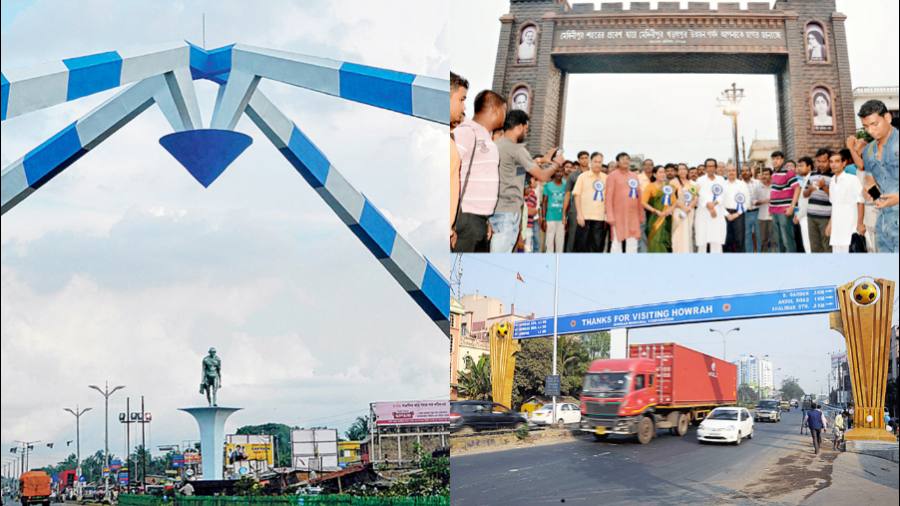
Suddenly, Bengal has become dotted with gateways — elaborate, ugly and expensive.
MONUMENTAL: (Top right) Gate to West Midnapore, a toron near Nabanna and Haldia Gate in East Midnapore.
In Burdwan, Curzon Gate was built even earlier, in 1902, to celebrate the coronation of Maharaja Bijay Chand Mahatab. It was named Curzon Gate later when Lord Curzon paid a visit. Other examples abound — the Pathar Darwaja of Bishnupur Fort in Bankura district; the four gates that lead to the palace of Siraj-ud-Daulah in Murshidabad; Namak Haram Deorhi, so named for his fabled treachery, leading to the house of Mirzafar, also in Murshidabad; the gates leading to Fort William and so on. Recently, there was a proposal to build a gateway to Metiabruz in southwest Calcutta, to mark Little Lucknow, which was Wajid Ali Shah’s home when he was exiled.
Back to the present.
The enormous Biswa Bangla Gate in Calcutta’s New Town came up in 2019. It was designed in 2015 at the time of the launch of the beautification project for New Town. Then there are the Beleghata Gate, Nabanna Gate, Uttarpara Probesh Duar, Jalpaiguri Gate, Birbhum toron, Haldia Gate, West Midnapore toron, Digha Gate, Tarapith toron. The Biswa Bangla Gate cost Rs 25 crore, according to some estimates.
“What is the use of these gateways,” asks Minakshi Mukherjee, who is the state secretary of the Democratic Youth Federation of India, the CPI(M)’s youth wing. She continues, “There is one in Birbhum that lies on the way to Anubrata Mondal’s house in Bolpur’s Nichupatty area. A government tender of Rs 8 crore was sanctioned for this. There is another one in Midnapore, a few kilometres away from Suvendu Adhikari’s house. It was also built on a government tender of Rs 2 crore.”
Mukherjee has reason to be vociferous — the Left, after all, does not have a history of using gateways to make a power point.
“But in 2005 (during Left rule) a very fancy gate came up on Kona Expressway. The ornate gate with horses and elephants was built by the Unitech group,” says Joydeep Mukherjee, a Calcutta-based architect. He adds, “As an architect, I have always thought of gates as something that gives one a sense of reaching or destination. Gates, in modern times, have been used as a line of demarcation. And these recent additions appear to me to be really ornate gates sans any particular motive.”
It is unlikely, though, that so many torons would come up without fulfilling some expectation somewhere but there are no answers, only theories blowing in the wind.
Anindita Chakrabarti, who teaches urban sociology at IIT Kanpur, says, “The gates in ancient times had quite a different connotation. Fortification was important; security mattered. Rajasthan and Gujarat have walled cities. In Rajasthan, even the smallest village was known to have a toron. But the same was not true for Calcutta. The gateway is an Islamic import. It came from Central Asia — in Iran and Iraq, there are gates leading to religious buildings.”
Chakrabarti adds how the Kashmere Gate and Lahori Gate of Delhi’s Red Fort were thus named because one led to the road that goes to Kashmir and another led to Lahore. She says, “They were made with the purpose of the movement of the battalions.”
No matter what purpose they serve or where they draw inspiration from, gates in Bengal continue to mushroom. As you get off the bridge to Nabanna, there is a toron that has two ornate pillars and a football atop them. It appeared in 2021.
The Digha beautification project involved the construction of the Digha Welcome Gate. It was completed in 2014; about Rs 6.57 crores were spent. The Haldia Gate was built in 2017- 18. Another gate came up around the same time at the juncture of Kharagpur and Midnapore. It is decorated with photographs of Ishwar Chandra Vidyasagar, Kazi Nazrul Islam and Shahid Khudiram. The one in Bishnupur has a huge “Om” carved in the middle.
“It is not a Calcutta-specific phenomenon if you ask me,” says Rezavi exasperatedly. “Right here, in Aligarh, where I stay, every now and then a gate is constructed. The purpose could be to welcome someone or to commemorate something.” He adds, “In the medieval era, they were a requirement. Gateways were constructed mostly in the western part of the country where the weather is hot and dry, and also in South India. The gates provided respite to people coming from the scorching heat. It was almost like entering heaven.”
source: http://www.telegraphindia.com / The Telegraph Online / Home> Culture / by Moumita Chaudhuri / September 04th, 2022
Al Afadhil’s branches in Dubai and Sharjah are known for their spiced, slow-cooked kebabs.
Syed Jafar Husain started the restaurant in 1979. Photo: Husain family
When Syed Jafar Husain arrived in the UAE from India in the 1970s he longed for home.
Like countless others who came in search of a better life, he missed family and friends but there was also one other important ingredient missing — the food.
He longed for the spiced, slow-cooked kebabs and thick sweet lassi of his native Lucknow.
Mr Husain left his job in sales and opened a small restaurant named Al Afadhil dedicated to the traditional food of his home city.
He never hired a chef and made the food himself. Al Afadhil first opened on Dubai Creek in 1979 and moved several times before settling in its current location in Al Nahda, Sharjah in 1990.
View of the Al Afadhil restaurant in Sharjah. Pawan Singh / The National
Today, trucks from the adjacent industrial area rumble past the dark wooden doors, while the clank of weights drifts across from a nearby gym. On the side of the wall is a simple sign stating: “Lucknow Kabab”. Inside is a collection of small tables and booths. A simple menu, barely unchanged in decades, lists only seven recipes.
An old menu from Al Afadhil restaurant. Photo: Husain family
Mr Husain died in 2018 but his legacy is being carried on by his two sons, Mohammed, 30, and Mustafa, 27.
It has become renowned among generations from Lucknow and, to this day, has only a handful of items on the menu.
“My dad simply missed the traditional food of Lucknow,” said Mohammed. “In the early 1980s there just weren’t as many options.”
One of the specialities is “galouti kebab” that takes about 14 hours to prepare. The dish has its roots in the historic royal kitchens of Lucknow and consists of tenderised, soft lamb mixed with spices, slow-cooked and served with a tamarind chutney that is a family secret.
This dish costs just under Dh14. A thick sweet lassi that people dip their paratha into is also a favourite.
“Nothing can be changed in the recipe,” said Mohammed. The two brothers work seven days a week from 4am to the afternoon to ensure they respect their father’s legacy.
Customers who have left the UAE have also spread the name of the restaurant far and wide. They even catered a wedding in Bonn, Germany. “We have fans across the world,” said Mohammed. “They tell us our food has to be there when they have guests over.”
Al Afadhil (it loosely translates as “generous”) moved from its first location in Dubai to Sharjah’s Bank Street in the 1980s. Bank Street has since been restored to a heritage area known as the Heart of Sharjah but it was here where the restaurant made its name. Scores of workers in offices and banks there came in droves in search of a taste of home.
“Customers used to fight to get into the place,” said Mohammed, with a smile. “The majority of the crowd told dad to increase their prices and stop giving it for cheap but he said no. He never wanted to overcharge. To this day customers say the same. We say no.”
After Bank Street, it moved to Al Nahda. A second branch opened in Dubai’s Karama in 2014 which is now the most popular of the two.
A second branch of Al Afadhil restaurant opened in Dubai’s Karama in 2014. Pawan Singh / The National
The pandemic and rising costs hit the business, but now the brothers said it is back to about 60 per cent of what it was.
Today they employ more than 20 staff across two branches. People from the Lucknow community travel from across the UAE to eat there, while it also attracts celebrities from the cricket and entertainment world.
“My dad never thought of customers’ money,” said Mustafa. “He just wanted them to be happy.”
Mohammed said: “It is more than 40 years of legacy here. If we can improve and provide the same quality, then we will be following in our dad’s footsteps.”
source: http://www.thenationalnews.com / The National / Home> UAE / by John Dennehy / February 04th, 2023
.webp)







:quality(70)/cloudfront-eu-central-1.images.arcpublishing.com/thenational/2VFPMGVZM5HTNMOUNRUF7WP4EU.jpg)
:quality(70)/cloudfront-eu-central-1.images.arcpublishing.com/thenational/WLYYZSCND5BAVA7HFLLLRMW4CQ.jpg)
:quality(70)/cloudfront-eu-central-1.images.arcpublishing.com/thenational/Q3NSK7PLVNFKVHYJXIWDGCYNZU.jpg)
:quality(70)/cloudfront-eu-central-1.images.arcpublishing.com/thenational/3UD7UX4BLVHMXOJ2OFJCWML6LE.jpg)