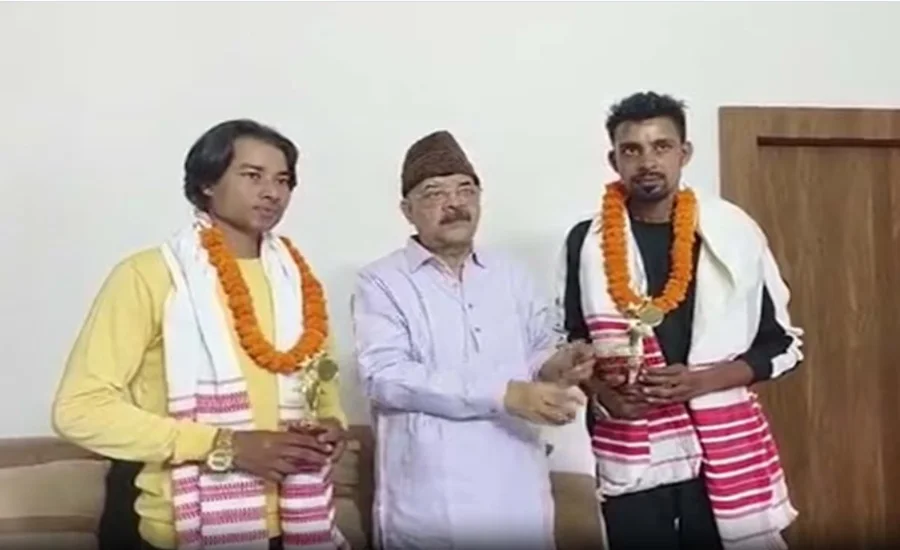
In a remarkable demonstration of courage and humanity, two young men from this capital city of Jharkhand, Abul Fazal and Mohammad Naushad, saved the life of Narayan Pandey, who was drowning in Bada Talab. Their swift and fearless action has earned them widespread accolades across the city.
According to eyewitnesses, Narayan Pandey was struggling in the waters of Bada Talab when Abul and Naushad immediately jumped in, pulling him to safety without any hesitation. “I couldn’t believe my eyes,” said one onlooker. “They didn’t think of anything else; their only concern was saving a life.”
Residents have praised the two youths, emphasising that their bravery is not only heroic but also a strong message against communal prejudice. “The courageous act by Abul and Naushad is like a slap on the face of those who try to divide people on religious lines,” said a local community leader.
Recognising their selfless act, Shamsher Alam, Vice President of the Minority Commission, formally honoured the youths by presenting them with a memento and incentive money. “This work is an example of true humanity,” Alam said. “They did not see religion or caste; they saved a life for the sake of humanity alone. I urge the district administration and government to provide them employment for their brave efforts.”
The Mahavir Mandal has also appealed to local authorities to encourage and reward such acts of heroism. Jai Singh Yadav, President of Mahavir Mandal, said, “Youth like Abul and Naushad should be recognised and provided small employment opportunities as a token of appreciation for their dedication to human life.”
This incident has highlighted the spirit of communal harmony and the exemplary bravery of young Muslims in the country. Social media users have shared their admiration widely, calling Abul Fazal and Mohammad Naushad role models for all.
In the current climate, where communal tensions often make headlines, the actions of these two youths remind the nation of the enduring values of courage, humanity, and unity. “We must celebrate people who rise above divisions to protect life,” said one resident. “Abul and Naushad have shown the true meaning of bravery.”
As the city hails their heroism, calls for formal employment and recognition reflect a broader desire to encourage selfless acts and reinforce inter-community respect. Their story now serves as an inspiring example for young Indians everywhere.
source: http://www.clarionindia.net / Clarion India / Home> Editor’s Pick> India> Indian Muslims / by Team Clarion (headline edited) / September 05th, 2025
In a period marked by suspicion and sharp communal divides, a quiet act of integrity by a Muslim scrap dealer in Faridabad has drawn attention for its moral clarity.
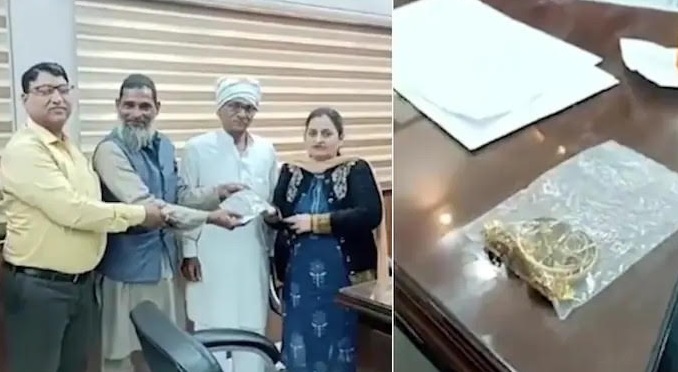
Haji Akhtar Khan, a kabadi trader in Ballabhgarh, returned gold jewellery worth around Rs 15 lakh to its Hindu owner nearly four months after unknowingly buying it as scrap. The jewellery, weighing close to 100 grams, had been accidentally mixed with household waste during a Diwali clean up and sold along with other discarded items.
The ornaments belonged to Ashok Sharma, a resident of Ballabhgarh. Weeks after selling the scrap, the Sharma family realised that a small packet containing gold jewellery was missing. The loss caused distress, since the ornaments represented years of savings and family memory. By then, the scrap had already passed into the informal recycling chain.
Khan had purchased the scrap in bulk, a routine practice in the trade. Months later, while sorting stored material in his warehouse, he noticed a packet hidden among old items. On opening it, he discovered gold jewellery. The find came at a time when Muslims in several regions face frequent suspicion in public life and trade.
Instead of treating the discovery as an unexpected gain, Khan chose a different path. When Sharma later approached him with inquiries, Khan admitted finding the jewellery and promised to return it without delay.
To maintain transparency, the handover took place at the office of ACP Ballabhgarh Jitesh Malhotra, in the presence of police officials. The moment carried visible emotion for the Sharma family, who received back their belongings intact. Police officers present described the act as rare and worthy of recognition.
Those familiar with Khan describe him as a practising Muslim who has performed Hajj and regards honesty as central to faith and livelihood. In Islamic teaching, amanah or trust holds deep importance, especially in trade and public dealings. Khan reportedly said the discovery felt like a trust placed upon him and returning it remained a duty before God.
The episode unfolded against a broader backdrop of heightened communal tension, economic boycotts, and stereotyping directed at Muslims in public discourse. In such an environment, everyday acts often receive communal labels. Khan’s decision challenged such narratives through conduct rather than argument.
Faridabad, part of the National Capital Region, mirrors many of north India’s social complexities. It hosts factories, migrant labour, and small traders from diverse communities. In this setting, an ordinary scrap transaction turned into a moment of shared trust between neighbours of different faiths.
For Ashok Sharma and Haji Akhtar Khan, the exchange rested on honesty rather than identity. The story has since circulated locally as an example of lived communal harmony. It offered a reminder that ethical choices remain possible even amid strained social conditions.
What began as a Diwali mistake ended with restored faith in human conscience. The return of the jewellery did more than correct a loss. It affirmed dignity, trust, and coexistence through a simple decision guided by principle.
source: http://www.radiancenews.com / Radiance News / Home> Latest News> Report / by Radiance News Bureau / February 23rd, 2026
A video by American author Aija Mayrock has drawn global attention to a small embroidery shop in Jew Town, Mattancherry. The store stands as one of the last working links to the once thriving Cochin Jewish community of Kerala.
The shop belonged to Sarah Cohen, born in 1925. She was among the last Jews who lived permanently in Jew Town. Her store sold hand embroidery and souvenirs and became a known landmark in the area. After large scale emigration in the mid twentieth century, many Jewish homes and businesses shut down. This shop stayed open.
Thaha Ibrahim, a Muslim man, now runs the store. As a child, he sold goods on the street near Cohen’s shop. She later hired him and taught him embroidery and shop management. He assisted her for decades, handling customers, production, and daily operations.
Before her death in 2019, Cohen asked Ibrahim to continue the shop and preserve its character. He agreed. Today, the store functions under the same name and layout. It closes on Saturdays in respect of the Jewish Sabbath. Candles are lit on Friday evenings. Cohen’s photographs and belongings remain displayed inside.
Ibrahim has stated he remains Muslim. He sees his role as protecting the legacy entrusted to him.
Historians note that Jews lived in Kerala for over two thousand years. Although the community declined sharply after 1948, synagogues and heritage sites in Kochi still reflect that history. This small embroidery shop now stands as a living record of shared trust and continuity.
source: http://www.radiancenews.com / Radiance News / Home> Latest News> Report / by Radiance News Bureau / February 21st, 2026
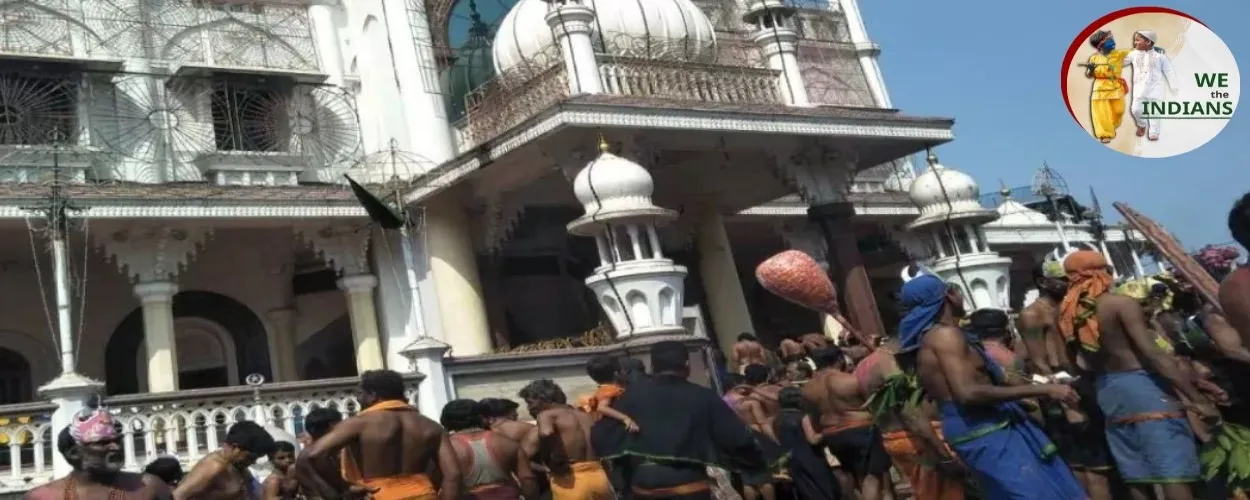
Pilgrims on way to Ayyappa shrine in Sabrimala at Vavar mosque, Erumeli, Kerala
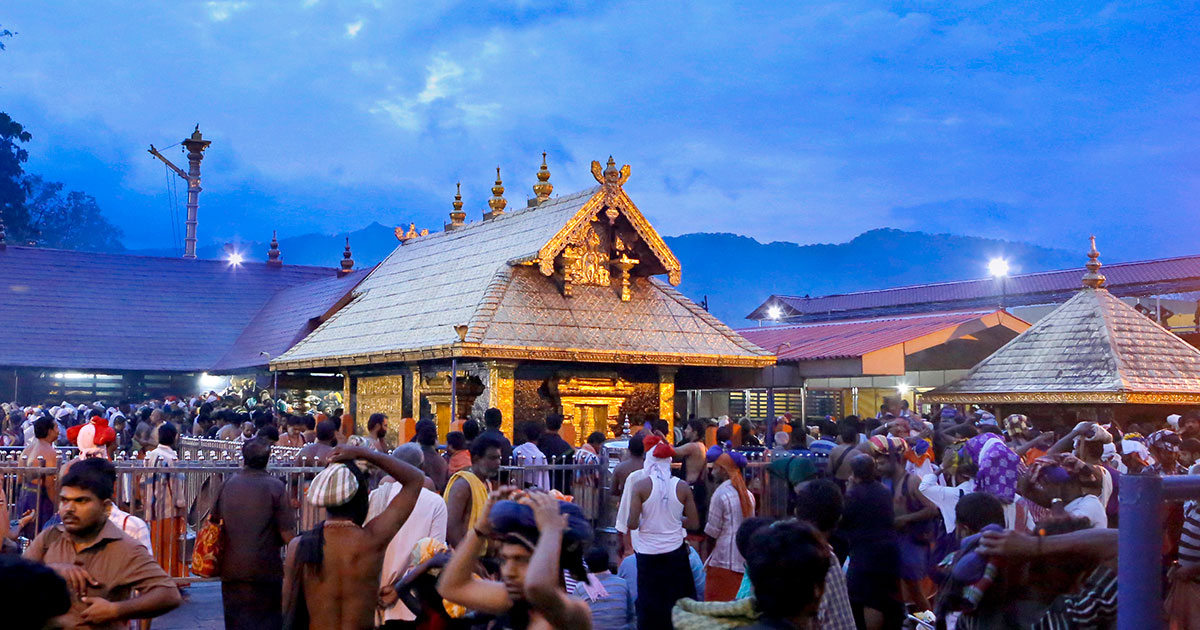
I had waited to go to Sabarimala, a hilltop shrine dedicated to Lord Ayyappa in Kerala’s Pathanamthitta district, for a long time. Lord Ayyappa, the deity of truth and righteousness, is described as the son of Shiva and Mohini (the female avatar of Vishnu). He was said to have been adopted by the local king of Pandalam.
Ungorgettable Experiences
As a youngman, Ayyappa abdicated the crown and renounced the palace to vanish into the forests of Sabarimala to live a celibate and ascetic life. It’s in deference to Ayyapa’s celibacy that women are not allowed there till they turn 55.
After a 41-day mandatory fast, I joined my sister and her husband for the pilgrimage. The pilgrims wear black clothes and carry a bundle containing a couple of coconuts filled with ghee and other offerings for the deity.
We carried the bundle on our heads at the start of the four-kilometre uphill trek. We were not supposed to remove it before reaching the shrine.
At the crack of dawn, after breaking coconuts at the local shrine to ward off all obstacles, we left for the shrine.I was thrilled at the thought of visiting some of my favourite temples and shrines on the route, some of which I had only heard of but never visited.
Lord Ayyapa temple at Sabrimala
Holding our heavy bundles (kettu) on our heads, we stopped at Chottanikakara, Vaikom, and Ettumanoor shrines.
Soon we were at Erumeli. According to legend, Ayyappa defeated the demoness Mahishi (sister of Mahishasura) here. The name Erumeli is comes from Eruma-kolli—“the place where the buffalo-demon was slain.”
At Erumeli, the road streamed with pilgrims, mostly men and children, all clad in black. They had bright colours smeared on their faces, held colourful feather arrows, and danced to drum beats as part of a ceremonial dance called Petta thullal to mark the victory of the warrior Ayyappa over enemies and bandits.
We too swayed lightly, trying to shake off our inhibition-clad egos.
Holding arrows, wild leaves, and smeared in bright colours, we walked towards a temple there dedicated to a deity called Shastha. Shastha is an ancient protective warrior deity worshipped in Kerala even before the incarnation of Ayyappa. Ayyappa is considered a modern avatar of Sastha and is now almost synonymous with Sastha.
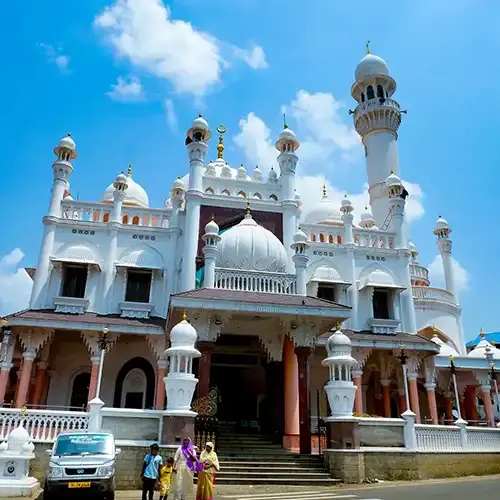
Vavar Juma Mosque, Erumeli
As we walked towards the temple, I was surprised. Were we at the threshold of a temple or a mosque? I saw taps for the ritual cleansing ceremony (wuzu) and a handful of Muslims saying namaz through the glass windows. It was a mosque.
We lined up respectfully outside the mosque. It was Vavar Palli (Vavar mosque), my brother-in-law explained.
Vavar was a close associate of Ayyappa. Their friendship is celebrated in folklore and devotional movies. Vavar was a Muslim, and thus the story gets significant.
“Vavar Swami may have worshipped at the mosque. That is why he is associated with the mosque,” Nasruddin Musaliyar, who traces his lineage from Vavar, explained to me when I spoke to him a few days later.
I felt pure joy at seeing Hindus offering respect outside a mosque and making offerings before worshipping the Shastha temple. After breaking a coconut at the Shastha temple, we began our long trek towards the Ayyappa shrine on Sabarimala.
It took us four or five hours, followed by a long five-hour wait in the crowd. Anyway, we had darshan in the morning. When we came out of the temple, another surprise awaited.
The shrine dedicated to Vavar Swamy
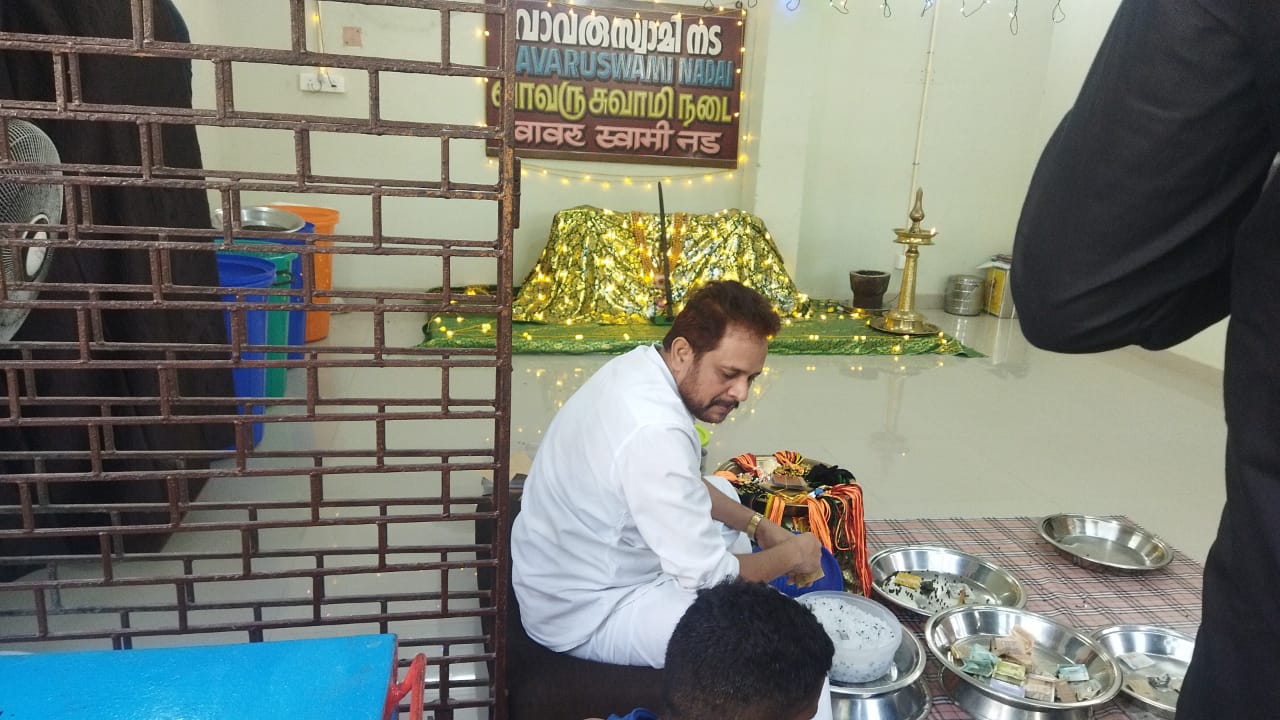
I found myself standing outside a small shrine just outside the Ayyappa temple. It was like a dargah, but I was told that it was called Vavarpadi, or the threshold of Vavar, a memorial to Ayyappa’s friend.
Pilgrims stopped to offer prayers and accept prasad of sugar candy and pepper. The man giving the prasadam said he was a descendant of Vavar and managed his tomb. He gave me his father’s number and asked me to speak to him for details about the shrine.
Nasruddin Musaliyar said that Vavar was part of a group of Arab settlers who were close to Lord Ayyappa.”This shows that the highest authority at that time accepted Vavar despite his different faith or origin,” Musaliyar said.
“Vavar Swami’s tomb and a mosque at Erumeli, where Vavar is said to have prayed, just cry out loud to us today that two faiths can co-exist and respect each other. All religions believe that there is one God. And that almighty wants to tell us that Hindus, Christians, and Muslims can co-exist in harmony,” he added.
Emotions well up as Mursliyar says that neither Ayyappa nor Vavar had asked anyone to build shrines and pray to them. These shrines represent the principle that they did not see any difference between man and man.
Author (left) with her sister and brother-in-law on the way to Sabrimala
Shrines and differences are man-made. “The Muslims don’t worship at Vavars shrine as they believe only in Allah,” he said.
There is no evidence that Vavar was buried there, though the royal records claim so. This shrine is symbolic, he says.
Ayyappa is believed to have renounced the throne, family, and palace to live as an ascetic in Sabarimala’s forests and merged with Sastha. He loved and honoured Vavar, expecting his devotees to do the same. In these times of religious tensions, such traditions continue thanks to a deity who rejected differences of caste and religion and loved everyone as human beings.
After darshan at Sabarimala, pilgrims feel lightheaded as they have all offered their heavy burdens at the shrine.
Perhaps they have removed something else also besides the kettu —the thought of differences itself.
They go as Hindus to worship a Hindu god but return feeling more than just a Hindu…a more complete human being, who embraces all differences.
source: http://www.awazthevoice.in / Awaz, The Voice / Home> Stories / by Sreelatha Menon / December 29th, 2025
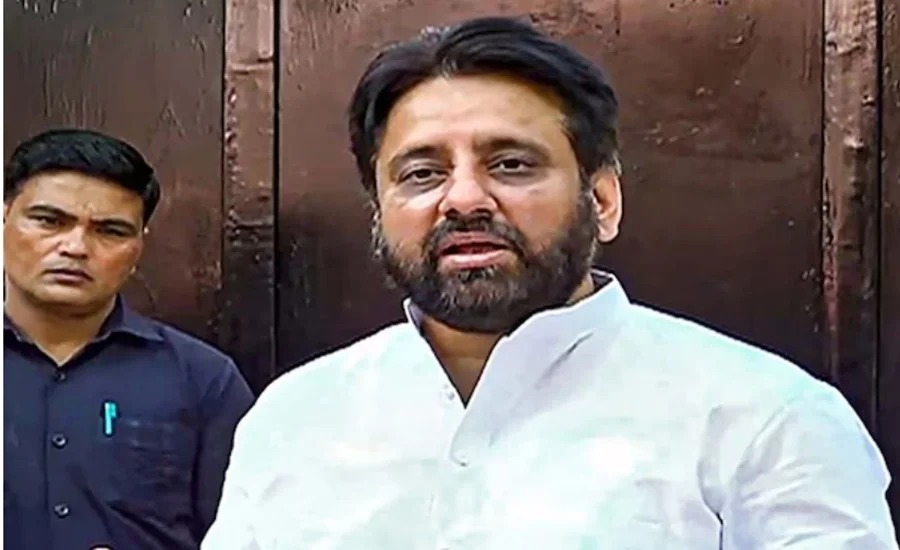
Punjab is facing severe devastation due to floods, with entire villages destroyed, crops submerged, and cattle swept away. Thousands of families have been left homeless. In response, Okhla MLA Amanatullah Khan of Aam Aadmi Party (AAP) has initiated a large relief campaign in Delhi.
Khan has urged people of Jamia Nagar and surrounding areas to unite in this humanitarian mission. He announced the setting up of relief camps at several locations in Okhla, including Zakir Nagar Jama Masjid, Batla House Chowk near Government School, Jamia Metro Station close to Swatantrata Senani Fountain, and High Tension Khamba No. 1.
“These camps will serve as collection centres for aid,” Khan said. “We appeal to every household to contribute so that the people of Punjab can feel that the nation stands with them in this testing hour.”
On social media, Khan stressed Punjab’s long tradition of helping people across India whenever disasters struck. He recalled how Punjabis extended support to people in Okhla and other parts of Delhi during times of difficulty.
“Punjab is currently facing the brunt of floods,” Khan wrote. “Whenever there was a disaster anywhere in the country, the people of Punjab stood with everyone. Today Punjab needs us. I urge people to support Punjab in this hour of trouble.”
Khan also reminded citizens of Punjab’s contribution during earlier national struggles. He cited the role of Sikh and Punjabi organisations during the Shaheen Bagh protests against NRC, when they arranged food through langar services.
He further highlighted their assistance during the Delhi riots, when Punjabis came forward to help distressed families regardless of religion.
“During Shaheen Bagh, Punjab’s organisations not only extended moral support but also arranged langar for protestors,” Khan said. “During the Delhi riots, their help reached victims across communities. That spirit of humanity must inspire us today.”
The Okhla MLA urged residents of Jamia Nagar, particularly Muslims, to show solidarity at a time when Punjab is suffering. He called it both a moral and human duty to support those in pain.
“Punjab’s people have always been by our side. Today, they are in need. It is our turn to stand by them,” Khan appealed.
Local residents in Okhla have responded positively. Abdul Rashid, a shopkeeper in Batla House, said: “We remember how Punjabi brothers brought langar for us during the protests. Now, we will surely give whatever we can for them.”
Another resident, Shabana Begum, added: “This is the time to prove that humanity comes first. Amanatullah Sahib is right; it’s our duty to support Punjab now.”
With relief camps being set up, people in Okhla are expected to donate essential supplies including food, clothing, and medicines. Khan emphasised that no contribution is too small, urging citizens to participate actively in the campaign.
“We can overcome any disaster when we stand together,” Khan concluded. “Punjab stood with us; now it’s our turn.”
source: http://www.clarionindia.net / Clarion India / Home> Big Story> India> Indian Muslim / by Team Clarion / September 08th, 2025
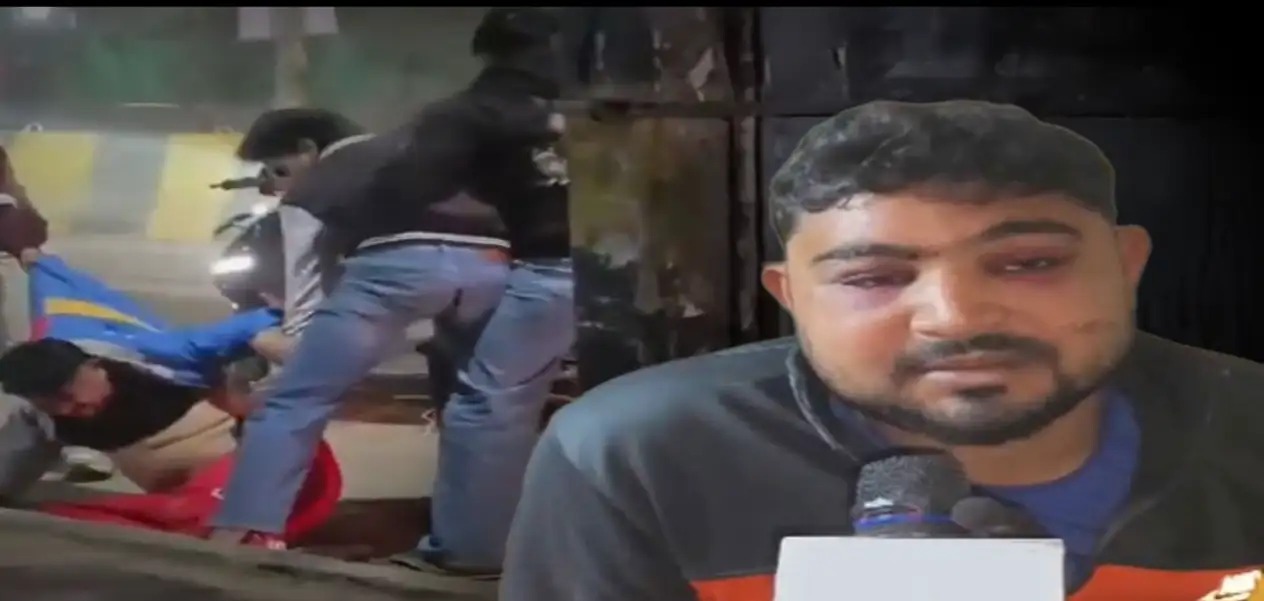
This is the story of 26-year-old transport businessman Mukesh Kumar, who was brutally assaulted for standing upto goons who were harrassing women in a Delhi area and the lone man in a crowd of onlookers – an unidentified Muslim – who saved him from nearly being killed while the people around watched this roadside fight silently.
The incident happened on February 3 at around 5:00 AM. Mukesh Kumar, who was returning from his cousin’s wedding in Sangam Vihar, stopped at a tea stall in the Mehrauli area. In the early hours the streets were relatively quiet, but then he noticed three women standing nearby, being subjected to lewd and offensive remarks and obscene gestures by four young men.
Passersby were around, shops were opening, but most simply watched and did not intervene as per the video of the brawl which has surfaced on social media recently, Mukesh couldn’t bear the scene. He confronted the young men and asked them to stop harassing the women.
The goons resented being challenged. In an instant, all four of them attacked Mukesh. One of them picked up a stone and struck him on the head, while another attacked him with a stick.
Mukesh was knocked to the ground and brutally beaten with kicks and punches. Within moments, Mukesh was seriously injured and lost consciousness.
Many people were present, but most of them held back due to fear, confusion, or maybe even indifference. None came forward. It was at this moment that a man—whom Mukesh still respectfully refers to as “Mulla Ji“—stepped forward from the crowd. From his skull cap and flowing beard it was clear that he was a Muslim
Without regard for his own safety, he stood in front of the attackers and prevented them from further beating Mukesh. He shielded him with his body, stopped the attackers, and somehow managed to help Mukesh to a safe place.
When Mukesh regained consciousness and learned what had happened, he became emotional. He said, “If that man hadn’t helped me at that time, I probably wouldn’t be alive today. He saved my life. Humanity is still alive.”
A video of the entire incident went viral on social media, clearly showing the attack, the crowd’s reaction, and the role of the courageous man who intervened. After the video surfaced, the matter gained widespread attention. The police were informed, and upon arriving at the scene, they took Mukesh to a local hospital and then, due to his serious condition, to the AIIMS Trauma Centre.
After treatment, his condition improved, and he was later discharged from the hospital.
Based on Mukesh’s statement, the complaints of the victimised women, and the evidence collected from the scene, the police registered an FIR. All four accused have been arrested. According to police officials, the case is being investigated with utmost seriousness. It is also noteworthy that the women who were being harassed showed courage by calling the police and summoning help in time, which allowed Mukesh to be taken to the hospital quickly.
Following the incident, a lively discussion began among the people of the area. Residents and shopkeepers wholeheartedly praised the Muslim man who stepped forward and saved a life. One shopkeeper said, “In today’s world, when people are caught up in their own problems and are afraid to help others, this man showed what it truly means to be human”.
source: http://www.awazthevoice.in / Awaz, The Voice / Home> Stories / by Onika Maheshwari,New Delhi / February 09th, 2026
A mosque imam in Assam used the mosque loudspeaker at dawn to raise an alarm that ultimately saved seven lives after a vehicle plunged into a pond.
The incident occurred early Tuesday in Sribhumi district when a car lost control on the National Highway, skidded off the road and crashed into a waterbody.
The passengers, most of whom were asleep, found themselves trapped as the vehicle began sinking with its windows shut.
Upon hearing the sudden crash, Maulana Abdul Basit, Imam of Jama Masjid and a teacher at Mirabari Madrasa, immediately turned to the mosque’s microphone to alert the community.
He called on residents to rush for help, a local resident told NDTV.
The appeal sparked a swift response. Villagers hurried to the site and launched a rescue effort, eventually pulling all seven passengers out of the submerged vehicle.
“I noticed the car’s lights glowing under the water and realised we had to act without delay,” Basit said, The Observer Post reported.
He added that his actions were driven purely by humanity: “We did not think about religion. Saving lives was all that mattered.”
source: http://www.maktoobmedia.com / Maktoob Media / Home> India / by Maktoob Staff / December 03rd, 2025.
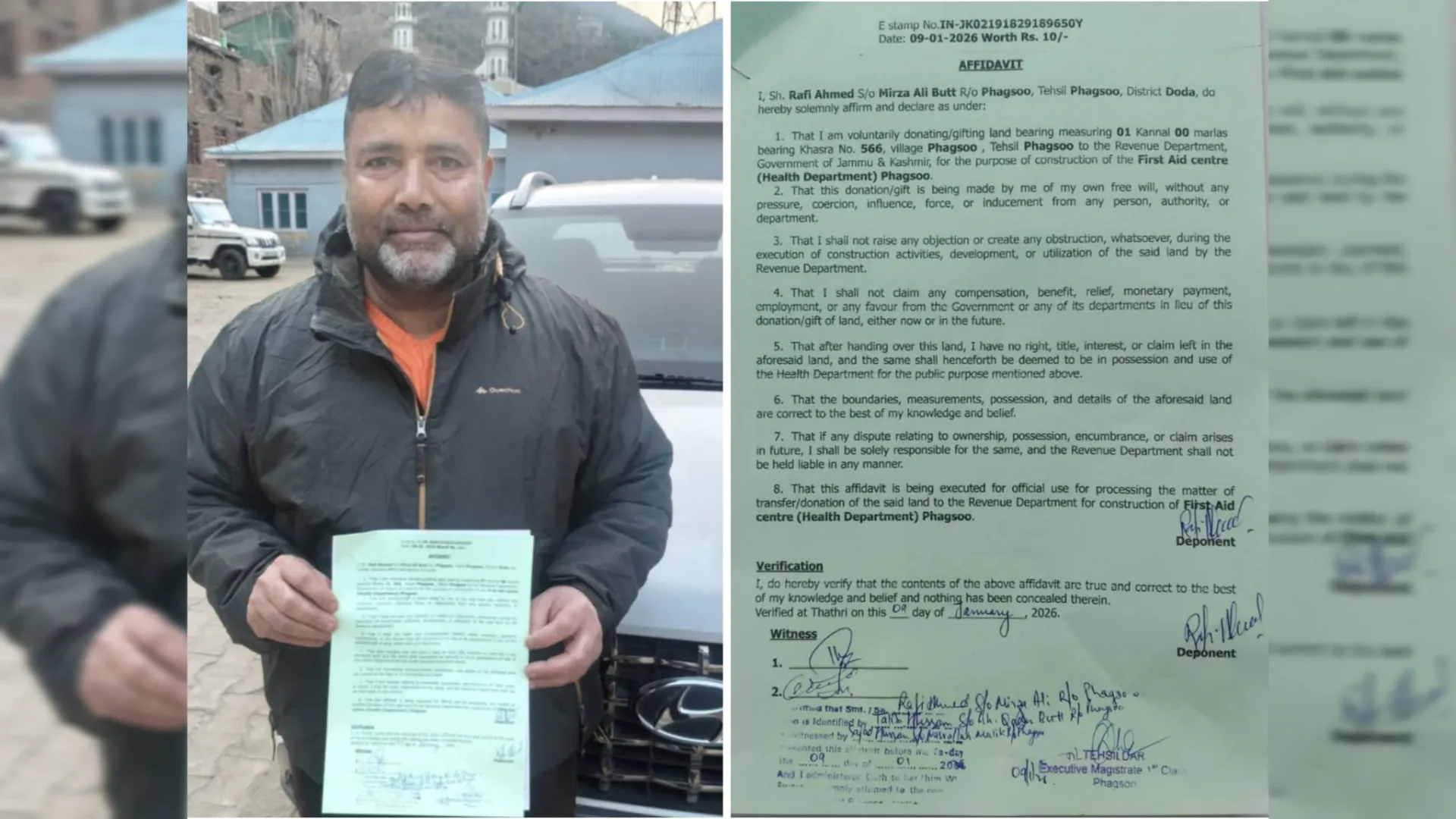
A resident of a remote village in Doda district has voluntarily donated one kanal of land for the construction of a First Aid Centre, underscoring a civic gesture that cuts across religious identity in a region with limited healthcare access.
A Muslim resident of Phagsoo village in Jammu and Kashmir’s Doda district has donated one kanal of his land to the government for the construction of a First Aid Centre, an initiative aimed at improving basic healthcare services in the hilly and remote area.
According to official records, Rafi Ahmed of Phagsoo has transferred land measuring one kanal (20 marlas) to the Revenue Department for use by the Health Department. The land, recorded under Khasra number 566, will be utilised for establishing a First Aid Centre to cater to Phagsoo and neighbouring villages, where residents currently have to travel long distances for even primary medical assistance.
In an affidavit submitted to the authorities, the donor has stated that the land has been given voluntarily, without any pressure or inducement, and that he will not seek compensation, employment, or any other benefit from the government. The document also records that ownership and possession of the land will vest permanently with the Health Department and that no objections will be raised during construction or future use of the facility.
Local officials confirmed that the affidavit has been executed for official processing of the land transfer and that the proposal will be taken forward in accordance with established procedures.
Rural healthcare infrastructure remains uneven across parts of Jammu and Kashmir, particularly in mountainous districts of Chenab Valley. The donation has been welcomed by residents, who have long sought a nearby facility for emergency and first-response medical care.
Once approved and constructed, the First Aid Centre is expected to ease access to essential health services for the local population, regardless of religious or social identity.
source: http://www.muslimmirror.com / Muslim Mirror / Home> Positive Story / by Anzer Ayoob / January 11th, 2026
The Madras High Court has invoked a famous Hadith of Prophet Muhammad on prompt and fair payment upon completion of work, while directing the Madurai Municipal Corporation to settle the long-pending professional fees claimed by its former lawyer. The judgment has come as a pleasant surprise in the present atmosphere of hostility towards Islam and Muslims.
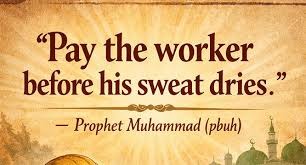
While deciding the case on December 19, Justice G.R. Swaminathan at the High Court’s Madurai Bench referred to the prophetic saying – “Pay the worker before his sweat dries” – and observed that this principle was only a facet of fairness and was eminently applicable in labour jurisprudence. The court’s observations have upheld the truth and timelessness of Islamic principles of justice and fairness.
By citing Prophet Muhammad’s saying to stress the moral duty of employers to pay workers without delay, the Judge came to the aid of a lawyer struggling to recover his unpaid legal fees from the Municipal Corporation. The court observed that the principle of fairness should equally apply to labour and service jurisprudence.
Justice Swaminathan directed the Municipal Corporation to settle the lawyer’s fees and censured the practice of engaging advocates who charge a hefty sum for a single appearance in court, citing an instance when a senior counsel was paid Rs. 4 lakh per appearance. “The university, which is pleading that its financial situation is such that it is unable to pay the dues of its retired staff, has no difficulty in paying exorbitant fees to its counsel,” he said.
Additional Advocate Generals appeared even for small matters where their presence was not really required and where even a “novice of the government counsel could handle,” the court observed. “All this for a few pennies. Marking appearance is a matter of money. It is time an audit is undertaken regarding the payment of fees to the law officers,” the Judge noted.
Coming to the rescue of the Municipal Corporation’s former standing counsel P. Thirumalai who sought a direction to the civic body to pay Rs. 13.05 lakh due for him as fee for representing it in numerous cases, Justice Swaminathan said: “Pay the worker before his sweat dries is an instruction attributed to the Holy Prophet (PBUH).”
“This principle is only a facet of fairness and is eminently applicable in labour jurisprudence. It can also be invoked in the case at hand,” the judgement stated, while making it clear that timely payment is not just a legal requirement but also a matter of basic justice.
The Prophet’s famous saying has been narrated as a Hadith from Abdullah bin Umar, saying: The Messenger of Allah (PBUH) said, “Give the worker his wages before his sweat dries.” (Sunan Ibn Majah). The command to give wages before the sweat dries is a metaphor. It is a form of excellence to pay someone before they finish the job and it becomes an injustice if one does not pay them after they complete the job.
The writ petition was filed by the standing counsel for Madurai City Municipal Corporation for over 14 years from 1992 to 2006. He had represented the Corporation in the Madurai district courts. His grievance was that the Corporation had not settled his fee bills. Hence, he filed a writ in 2006 seeking the payment.
According to the petitioner, the Corporation had to pay him Rs. 14.07 lakh, but it paid only Rs. 1.02 lakh and a balance of Rs. 13.05 lakh remained to be paid. The petitioner had appeared in 818 cases, the Judge noted, and recorded submissions that the lawyer was in penurious circumstances and unable to even afford the cost of obtaining certified copies.
The court directed the Legal Services Authority attached to the Madurai district court to verify the list of cases, obtain certified copies and provide them to the petitioner within two months.
Upon submission of the verified fee bills, the Municipal corporation was directed to settle the bills within a further two months without interest.
While upholding the Islamic principles of justice, the judgment has also sent a strong message to government bodies and public institutions on the need to treat legal professionals fairly, ensure prompt payment for services rendered, and review excessive spending on senior counsels, especially when ordinary matters can be handled by junior or regular government advocates.
Ironically, a Muslim Traffic Sub-Inspector, Afaq Khan, in Uttara Pradesh’s Kannauj was recently sent to the Police Lines as a punishment after being removed from active duty, following an event in which he referred to Prophet Muhmmad while addressing the students at a college on the issue of girls’ safety. Khan cited the Prophet’s saying: “A home in which a daughter is born is blessed with mercy.”
After a video of the programme went viral on social media platforms, members of Hindu right-wing organisations – Vishwa Hindu Parishad and Bajrang Dal – objected to it and filed a complaint, alleging that Khan was imparting religious teachings while in uniform. Subsequently, the Kannauj Superintendent of Police placed Khan on line duty.
In a state where the police personnel have been seen showering flowers during the Kanwar Yatra, and where the Sambhal Circle Officer Anuj Chaudhary was seen participating in a religious programme carrying a mace, Khan was removed from active duty as a punishment. On the other hand, the Madras High Court has invoked the Prophet’s saying in the case involving payment of wages.
source: http://www.indiatomorrow.net / India Tomorrow / Home> Economy> India Tomorrow Correspondent / December 23rd, 2025
The historic Jama Masjid in Sukhana village reopened for prayers after remaining closed since the Partition of 1947. The mosque stood unused for seventy eight years and fell into disrepair during this period. Its small brick walls weakened and decorative dome work suffered damage after decades without regular worship.
Local residents said the structure survived due to the care of a Sikh couple, Nirmal Singh and his wife Kamaljeet Kaur. The couple cleaned the premises and ensured basic upkeep over the years. Their efforts prevented further damage and kept the site intact until restoration began.
Members of the Muslim community from Raikot and Noorpura supported the revival work. Kareef Fukran Ahmed of Ahmedgarh led sustained efforts to restore the mosque. The Gram Panchayat and the mosque management committee organised a special religious programme to mark the reopening.
Punjab Shahi Imam Hazrat Maulana Muhammad Usman Ludhianvi attended the event along with MLA Hakam Singh Thekedar and Punjab Waqf Board senior member Advocate Abdul Qadir. Speakers highlighted shared responsibility in protecting places of worship. They stressed respect for faith and social harmony.
The Muslim community honoured Nirmal Singh and Kamaljeet Kaur for their long service to the mosque. The Shahi Imam said religion guides people toward humanity and unity. He praised the couple for preserving a religious heritage site through personal commitment.
Maulvi Muhammad Mursaleen of Madrasa Bassian conducted proceedings. Several Muslim and Sikh leaders joined the programme, including Qari Mohammad Sadiq Yazdani, Hafiz Mohammad Ashraf, Babbu Khan Raikot, Sarpanch Manjeet Singh, former Sarpanch Ujagar Singh, and Panch Sukhdev Singh.
Speakers urged continued cooperation and respect among communities.
source: http://www.radiancenews.com / Radiance News / Home> Latest News> Report / by Radiance News Bureau / December 13th, 2025