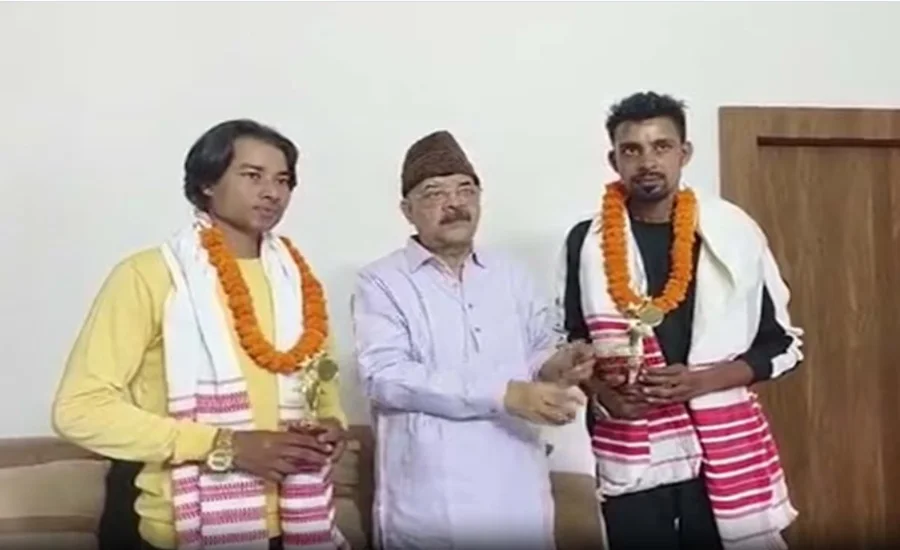
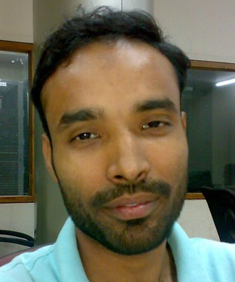
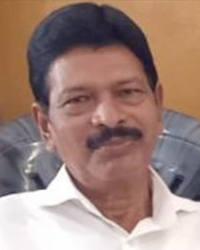
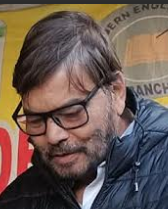
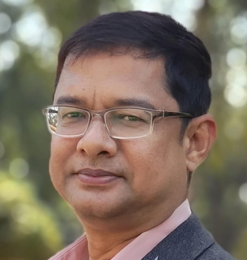
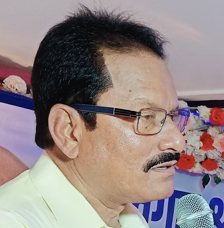
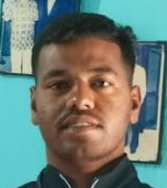
In a remarkable demonstration of courage and humanity, two young men from this capital city of Jharkhand, Abul Fazal and Mohammad Naushad, saved the life of Narayan Pandey, who was drowning in Bada Talab. Their swift and fearless action has earned them widespread accolades across the city.
According to eyewitnesses, Narayan Pandey was struggling in the waters of Bada Talab when Abul and Naushad immediately jumped in, pulling him to safety without any hesitation. “I couldn’t believe my eyes,” said one onlooker. “They didn’t think of anything else; their only concern was saving a life.”
Residents have praised the two youths, emphasising that their bravery is not only heroic but also a strong message against communal prejudice. “The courageous act by Abul and Naushad is like a slap on the face of those who try to divide people on religious lines,” said a local community leader.
Recognising their selfless act, Shamsher Alam, Vice President of the Minority Commission, formally honoured the youths by presenting them with a memento and incentive money. “This work is an example of true humanity,” Alam said. “They did not see religion or caste; they saved a life for the sake of humanity alone. I urge the district administration and government to provide them employment for their brave efforts.”
The Mahavir Mandal has also appealed to local authorities to encourage and reward such acts of heroism. Jai Singh Yadav, President of Mahavir Mandal, said, “Youth like Abul and Naushad should be recognised and provided small employment opportunities as a token of appreciation for their dedication to human life.”
This incident has highlighted the spirit of communal harmony and the exemplary bravery of young Muslims in the country. Social media users have shared their admiration widely, calling Abul Fazal and Mohammad Naushad role models for all.
In the current climate, where communal tensions often make headlines, the actions of these two youths remind the nation of the enduring values of courage, humanity, and unity. “We must celebrate people who rise above divisions to protect life,” said one resident. “Abul and Naushad have shown the true meaning of bravery.”
As the city hails their heroism, calls for formal employment and recognition reflect a broader desire to encourage selfless acts and reinforce inter-community respect. Their story now serves as an inspiring example for young Indians everywhere.
source: http://www.clarionindia.net / Clarion India / Home> Editor’s Pick> India> Indian Muslims / by Team Clarion (headline edited) / September 05th, 2025
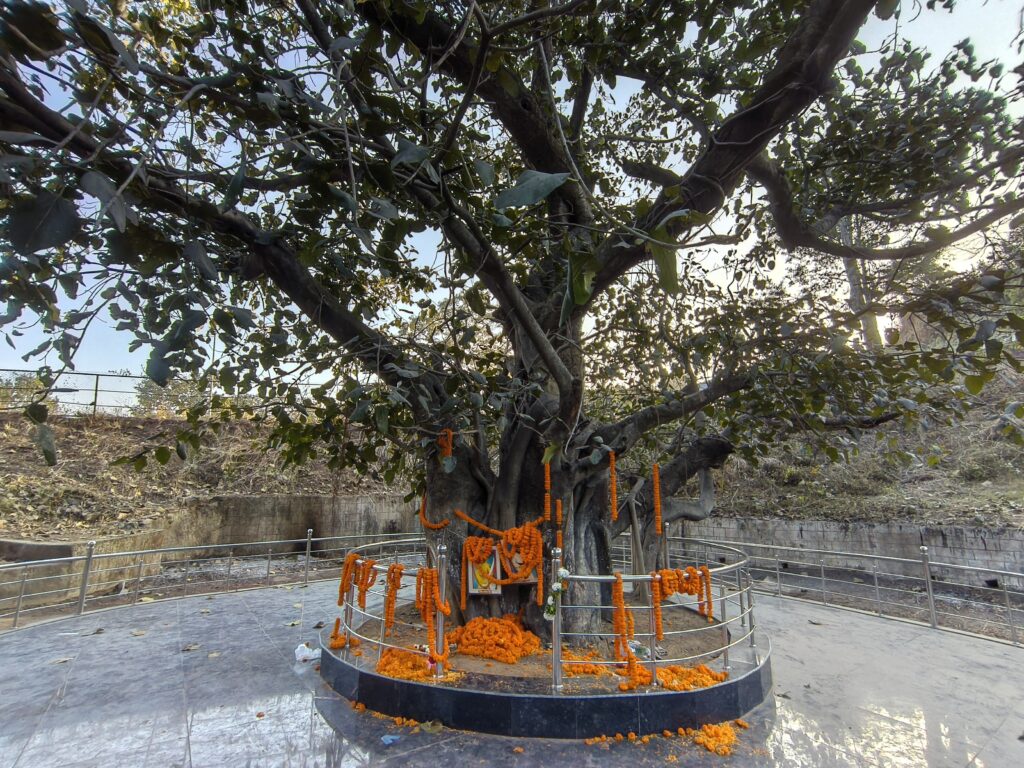
The Banyan tree on which the execution took place. Photo: Ghulam Ahmad Raza
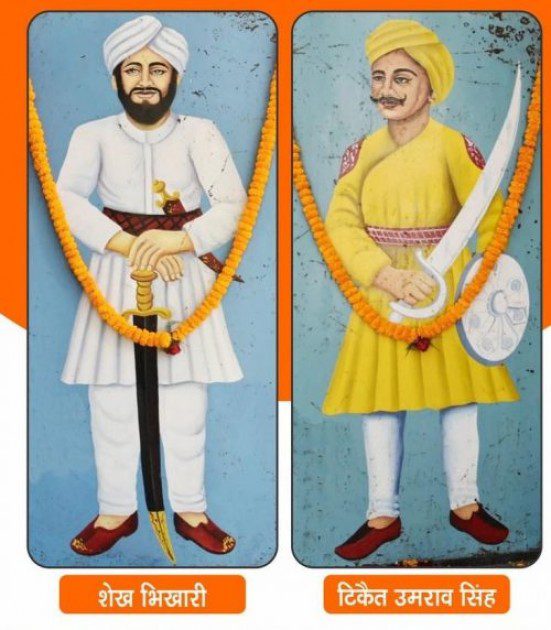
During the 1857 revolt against British rule, Jharkhand too witnessed armed resistance. The rebellion had spread across regions including Ranchi, Hazaribagh, Ramgarh, Palamu and Singhbhum. In the dense forested border areas of Ranchi and Hazaribagh, the rebel forces were led by Shaheed Sheikh Bhikhari Ansari and Tikait Umrao Singh. From the dense jungles of the Chuttu Palu valley, their army fought British troops and prevented Ranchi from falling under colonial control. Both leaders were captured by the British forces on January 6, 1858 and were publicly executed by hanging on January 8, 1858, in the same Chuttu Palu valley.
The banyan tree on which they were hanged still stands today. The Jharkhand government has developed the surrounding area as a martyr memorial with the stated aim of preserving history and keeping alive the legacy of the region’s sites of resistance. Yet even today, many residents of the Chuttu Palu village where the memorial stands remain unaware of who these martyrs were.
Fifty-eight-year-old Nirmal Kumar, who works as a stone breaker near the memorial, often rests inside the premises during breaks. He says he has been coming here since childhood. Despite this, he is unaware of the historical significance of the site and does not recognise the names of Sheikh Bhikhari Ansari or Tikait Umrao Singh.
“I only know that blankets are distributed here every year on January 8,” he said. On the martyrdom anniversary, social workers and officials visit the site to pay tribute and distribute essentials among the poor.
Sanjay Munda, a resident of Chuttu Palu village, said that even today, most villagers do not know about the martyrs or the memorial’s history. “Members of the surrounding Scheduled Tribe (ST) and Scheduled Caste (SC) communities refer to the site in the local language as Fasiyahi Bar (tree where the hanging took place). Most people do not know about the 1857 revolt or the sacrifice of Sheikh Bhikhari and Tikait Umrao Singh,” he told Maktoob.
Despite the lack of awareness, locals often bow their heads in respect when passing the site.
The memory of these two revolutionaries who laid down their lives fighting British rule is slowly fading. Their history has largely been reduced to government files and digital web pages. On martyrdom days, ministers, officials and locals pay tributes, but beyond symbolic gestures, little is done. While the Jharkhand government has taken some steps to acknowledge them, no substantial initiative has been taken by the central government to formally recognise or honour their contributions.
Dr Muzaffar Hussain, researcher and author of Jharkhand ki Muslim Vibhutiyaan, says Muslim, SC and Adivasi martyrs have not received the recognition they deserve. “Jharkhand has produced many revolutionaries who sacrificed their lives for India’s freedom, but recognition has been limited largely to Birsa Munda only,” he said.
He points out that the 1857 revolt took place nearly 40 years before Birsa Munda’s Ulgulan (revolt). “Names like Nadir Ali, Imam Ali, Jatra Tana Bhagat, Sidhu–Kanhu, Phulo–Jhano, Nilambar–Pitambar, Sohbat Miyan, Chandan Miyan, Jaggu Miyan and Najahat Hussain are a part of Jharkhand’s resistance history during the 1857 revolt, yet they remain largely forgotten.”
Hussain argues that the Jharkhand government must project its revolutionaries on a larger scale for the central government to take meaningful steps. “Even platforms like Google and Wikipedia carry very limited information about them,” he said.
He suggests state-funded research, naming welfare schemes and government buildings after revolutionaries and honouring their descendants are ways to restore their place in public memory.
Ruchi Kujur, an activist working on SC and ST rights and a member of the Jharkhand State Commission for Protection of Child Rights, said every state has its own history, and Jharkhand is rich with stories of courage and resistance. “The list of Adivasi and SC heroes is long,” she said.
“People need to be made aware of their ancestors’ sacrifices. When these revolutionaries are honoured, it inspires the younger generation to work for society and the nation.”
Situated amid a valley rich in natural beauty, the martyr memorial complex (Shaheed Sthal) has been developed with basic amenities. Yet, several factors discourage people from visiting the site, further deepening the lack of public awareness about the martyrs. Surrounded by dense forests and hills, the memorial lies in an isolated location, with no human habitation within a radius of nearly five kilometres. This isolation is a major reason why people hesitate to visit the site, either alone or with their families.
The premise includes resting sheds, benches and toilet facilities. However, due to poor maintenance, thick shrubs have grown across the complex. Lights installed in the area and doors of the toilets have reportedly been stolen. Although the police conduct patrols from time to time, the absence of adequate security continues to deter visitors.
Ghulam Ahmad Raza is a Jharkhand-based freelance journalist with over four years of experience. He has worked as a City Reporter with Pratah Awazand as aSub Editor with Prabhat Mantra. His reporting focuses on marginalised communities, forgotten histories and grassroots political narratives.
source: http://www.maktoobmedia.com / Maktoob Media / Home> East India / by Ghulam Ahmad Raza / January 29th, 2026
Jharkhand is one of the youngest Indian states, located in eastern India, and is also known as the tribal homeland. Since its inception, it has seen good growth, but the teething problems posed their own challenges. During these exciting times, some individuals have made significant contributions to society.
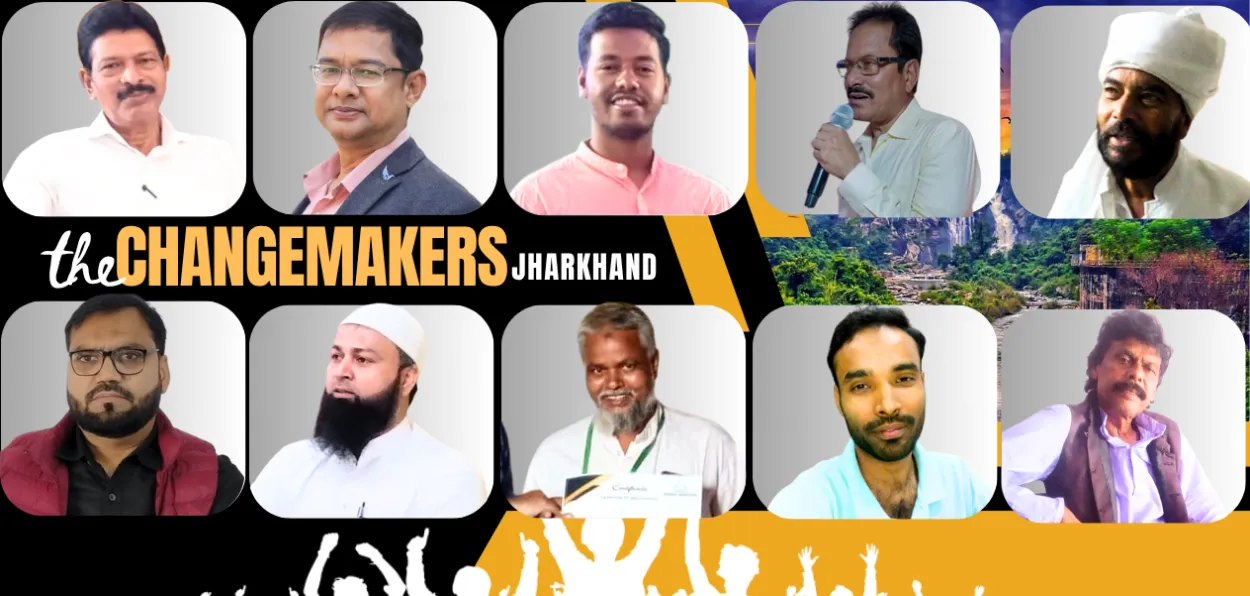
We, at Awaz-The Voice, bring to you stories of such unsung heroes from the length and breadth of India. Here are stories of ten extraordinary Muslim personalities of Jharkhand, who made a lot of difference to the lives of people and thereby helped state’s growth:
Dr Sajid Hussain
Dr Sajid Hussain left a prestigious research career to build a brighter future for the children of Chitarpur village in Ramgarh. His model, ‘Schoologium’, is redefining education across India.
Sajid explains, “Just as our body needs exercise to stay fit, the brain too needs regular practical workouts to stay active.” At Schoologium, children don’t just study from textbooks — they learn through touch, smell, taste, and experience. It’s learning through interaction and imagination — reminiscent of Rabindranath Tagore’s vision of Shantiniketan.
Sajid worked as a scientist at the National Aerospace Laboratories. But his exposure to premier institutions in India and abroad revealed a painful truth — rural children do not lag because of a lack of intelligence, but because they lack access to quality educational tools.
Determined to bridge this gap, Sajid resigned from his government job in 2012 and returned to his village. That’s where Schoologium was born — the name itself blending “school” and “gymnasium.”
Sattar Khalifa
Sattar Khalifa, better known as Painter Jilani, has brought hope to the people of Palamu, a division in Jharkhand that lags in development and where people face economic deprivation.
In college, Jilani always dreamed of serving people. A painter by profession, Jilani channels his earnings into helping the needy. “Art is my tool, service is my purpose,” he says.
His reputation made sure that even during the peak of Naxal and extremist dominance, Jilani travelled fearlessly between Bishrampur and Daltonganj, through a Naxal-dominated area.
For the poor, Dalits, Mahadalits, and marginalised communities of Palamu and Garhwa, Jilani is a symbol of assurance. From securing ration cards and pensions to arranging drinking water and hospital aid, he is always there.
Mohammad Minhaj
Mohammad Minhaj’s calm countenance hides the fire inside his mind that has driven him to serve society for over four decades. Mihaj has changed many lives in Ranchi’s slums. He ensures the people living in slums get education, health services, and social rights.
His journey began in 1982, when Ranchi was rapidly expanding, but its slums remained shrouded in neglect. Daily wage earners, rickshaw pullers, and working-class families struggled each day just to earn enough for two meals. For them, education was a distant dream. That was when Minhaj decided to step in and make a difference in many lives.
Muzaffar Hussain
Muzaffar Hussain’s dream is simple yet profound — no one in Jharkhand’s Santhal Pargana should sleep hungry. In this remote region, poverty isn’t just a condition — it’s a living reality. The six districts of Pakur, Godda, Sahebganj, Dumka, Jamtara, and Deoghar carry a long and painful history of deprivation, now slowly being rewritten.
A study claims that 82 percent of Santhal people live in extreme poverty, with most owning no land. In the middle of this harsh reality stands Muzaffar Hussain of Pakur, whose battle began even before the Right to Food Act was passed in 2013. Today, while the Act exists on paper, the real task is ensuring food reaches the truly needy — a task Muzaffar has made his life’s purpose. His efforts have borne fruit: around 600–700 families now have ration cards and receive regular supplies of food grains.
Ibrar Ahmad
In Ranchi, the capital of Jharkhand, its lanes, neighbourhoods, and beyond, one name that resonates hope is that of Ibrar Ahmad. Once employed in a bank and associated with the cultural organisation IPTA, Ibrar has been engaged in improving the lives of people around for over three decades. He is known as the person who steps in when a child drops out of school for want of fees, where poor patients wander helplessly for treatment, or where communal tension threatens to tear society apart.
Ibrar Ahmad has consistently reached out to children and youth. As President of Anjuman Islamia Ranchi, he arranged scholarships for poor children, launched talent shows and quiz competitions, ensuring that education went beyond textbooks to build both confidence and skills.
Dr. Shahnawaz Qureshi
The Quraish Academy of Ranchi has produced doctors, engineers, teachers, software developers, and many other bright minds. Located close to Ranchi’s iconic Albert Ekka Chowk is Gudri Qureshi Mohalla, officially declared a slum by the municipal corporation, where the founder of this academy, Dr Shahnawaz Qureshi, was born.
Whether through journalism or social service, Dr Qureshi changed not just the image of his locality but also the mindset of its people.
In 1993, while working with the National Literacy Mission, Dr. Qureshi established a night school in his own neighbourhood. After long days of labour, elderly men and women would gather after evening prayers, notebooks and pens in hand. The sight of wrinkled fingers tracing letters under the dim glow of a kerosene lamp became a symbol of hope and awakening. The classes were free, and the locals provided fuel for the lamps.
Mukhtar Alam Khan
Mukhtar Alam Khan’s efforts have transformed the image of Azad Basti in Jamshedpur, which was once a notorious place. It was once associated with crime, fear, and a negative image—much like Dhanbad’s Wasseypur. Mukhtar is among the few locals who brought about a positive change in this area. Today, Azad Basti’s name is taken with pride.
On any given day, Mukhtar and his team could be seen arranging blood and medicines for patients, feeding the hungry, or supporting children in education and competitive exams.
Tanveer Ahmad
In 2010, when areas like Islam Nagar and Baba Khatal in Ranchi were demolished under encroachment drives, hundreds of families were rendered homeless. The greatest sufferers were children, as some missed their exams, and others dropped out of school permanently.
In this situation, Tanveer Ahmad decided to extend a helping hand to the suffering children.
He thought, if circumstances had taken schools away from them, why not return education to them, as friends. This idea marked the beginning of a journey—from friendship to education.
Tanveer Ahmad says, “Our mission is to reach underprivileged children in Ranchi and Jharkhand who are drifting away from mainstream education. We believe education is the key that can transform their future.”
When one hears the name Ranchi, images of lush greenery, hills, and a rapidly developing city often come to mind. But hidden behind this image lies another reality—a large section of the city’s population lives in slums and makeshift settlements.
Anwarul Haq
Anwarul Haq, a resident of Chadri village in Kanke block, has launched a unique initiative that is changing the lives of children who would otherwise lag due to poverty. By day, he teaches football, and by night, he tutors children. In just three years, his efforts have transformed the lives of many children for whom both education and sports were once a distant luxury.
It all began when Anwarul Haq, a sports teacher at a residential girls’ school in Ranchi, decided to go beyond his job to make a difference. He was disturbed by the condition of children in his and neighbouring villages. Most children were from families surviving on daily wages, skipped school, and some fell into bad company. He had a plan up his sleeve to change their lives by imparting education and sports training to the underprivileged children.
SyedTariq Alam
Syed Tariq Alam has been quietly transforming lives, supporting poor and underprivileged families through education, employment, and social welfare in the Kolhan region of Jamshedpur.
His efforts have been focused on Kapali, a small township just 20 kilometres from Jamshedpur — the industrial hub of eastern India. Jamshedpur draws thousands of laborers from across the country, many of whom settle in Kapali where living costs are lower. While these workers find temporary employment in the steel city, the jobs are often low-paying and unstable.
This insecurity directly affects their children’s education, leading to high dropout rates in Kapali and nearby areas. It was this grim reality that moved Syed Tariq Alam deeply. Determined to bring change, he embarked on a mission that has now become a beacon of hope for thousands.
source: http://www.awazthevoice.in /Awaz, The Voice / Home> The Changemakers / by Aasha Khosa / October 26th, 2025
Everything cannot always be in your hands. But working hard to achieve something is definitely in your hands. Rena Jameel also had to work hard, and today she has become an IAS because of her hard work.
Born in Chhatabad village of Katras area of Dhanbad district of Jharkhand, Rena Jamil has secured 380th rank in the UPSC Civil Service Examination this time. Whereas in the year 2016 examination, she had secured 882 rank.
Rena Jameel says that she got Indian Information Service in 2016. But she had dreams of becoming an IAS. It was also necessary to join training. That is why she gave UPSC again in 2017 along with training, but failed in the prelims itself. Still, I did not give up. I took a few days off and prepared. And as a result, I got 380 rank and now I have become an IAS.
Rena Jamil, UPSC Rank -380
Rena Jameel’s father Mohammad Jameel Ansari has retired from Tata Company. He was a mechanical engineer in Tata. While mother Naseem Ara is a home maker. She has four siblings. Elder brother Raunak Jameel Ansari is in Indian Revenue Service. He had secured 763 rank in 2014. Younger brother is an engineer and is currently working with Prasar Bharati. While younger sister is doing her masters and is preparing for admission in PhD.
Rena studied in Urdu medium from Chhatabad Urdu Middle School till class 8. Then she completed her 10th and 12th from the same school. After that she did BSc in Zoology from S.S.L.N.T. Mahila Mahavidyalaya and M.Sc from P.K. Roy Memorial College. After this she also did B.Ed.
Rena says, Ammi was always motivating for me. She never made me do household chores, rather she always insisted on studying. However, all this was not so easy for me. Just to study in college, I had to travel about 50 kilometers every day. Sometimes by bus, sometimes by auto or sometimes by walking for hours… I would leave in the morning and reach home only at night.
When asked that now you are an IAS, what will be your first task in the district you go to after training, Rena says that every district has its own problems. But my special focus will be on education and health sector. Because my experience with both these sectors has been very bad. I would not want that in my district someone loses his life due to health service and someone’s daughter’s education gets interrupted just because the college is very far away.
Rena Jameel loves Urdu poetry. She has been reading Faiz, Ghalib and Iqbal in particular. The special thing is that Rena herself has written about 50 poems so far. All these poems are in Urdu language.
What was the reason that made you decide that I have to join the civil service?
In response to this question, Rena says that, generally, there is not much focus on the education of girls in our society. Even if the family is educating them, the only purpose is that they will get married in a good family. I also had many friends who were very sharp in studies, but somewhere they could not study further. Could not go ahead. Due to family pressure or other reasons. Many were not sent to college only because the distance to the college was too much, but in my case my family was a little supportive. In such a situation, I started thinking that I have to do something that becomes an example for others. Such people should listen to me who educate their girls only for marriages or do not educate them at all. Then I decided that I have to do something big so that I can become an inspiration for girls.
How and where did you prepare for the exam?
On this, Rena Jameel says that in 2014, my elder brother succeeded in this exam. I came to Jamia on his guidance. Before this, I had read NCERT thoroughly. I also used to read newspapers regularly. I took Zoology for this exam because I had done BSc and MSc in this subject.
In a long conversation, Rena tells about her struggles that there were many ups and downs in my life journey. I could not succeed even after reaching the mains twice. I succeeded the third time but did not get what I wanted. Despite this, I had confidence in myself and kept working towards my goal. Today I am successful because of this. Although I was happy with this service too, but it was not my aim or goal. That is why I kept preparing along with the service. I only wanted to become an IAS and I became one.
What message would you like to give to those preparing for UPSC?
On this question, Rena says that many things are not in your hands. Only hard work is in your hands. And yes! The fruit of hard work is always sweet. I also faced many problems. I also failed. All things kept happening with me. But I kept working hard continuously. I will tell you the same thing that always think about fulfilling your dreams. If I had not done this, then I would definitely not have been an IAS. I would have been doing the service of 2016. Therefore, patience is very important for success in this exam.
Also I would like to say that you must read newspapers because it is important to read people’s thoughts, it helps you to develop your own thoughts. And yes! You should always keep your resources limited. If you keep yourself busy reading everything then you will never be able to complete your syllabus. Whatever you read, read it with all your heart and give it enough time.
What would you like to say to the youth of the country, especially the girls of your community?
On this, Rena says that education is everything today. So pay attention to education at all costs. Never shy away from working hard. If I can do it, then believe me anyone can do it. But for this you will have to come forward and work hard.
She especially tells girls that you need to come forward and work hard. It is also the responsibility of the society to stop looking at girls with narrow mindedness. Rather, they should be encouraged. Girls have a lot of talent. If we just become a little open minded, they will go far ahead. It is also the responsibility of girls to work hard and fulfill their dreams… and yes, the dreams should be a little big.
source: http://www.beyondheadlines.in / Beyond Headlines / Home> India> Real Heroes / by Afroz Alam Sahil, Beyond Headlines / June 19th, 2019
Salima Tete’s goal gave India the lead and they led 1-0 at halftime, paving the way for an entertaining second half.
Birmingham:
The Indian women’s hockey team beat defending champions New Zealand 2-1 in a shootout to win the bronze medal and finish its campaign at the Commonwealth Games on a high note here on Sunday.
Leading 1-0, India conceded a penalty corner with less than 30 seconds to go for the final hooter, as the match went into a shootout after Olivia Merry’s equaliser.
India though held their nerves in the shootout to emerge winners.
Coming off their heartbreaking loss to Australia in a controversial semifinal, India showed the intent to wrap up their campaign with a win and earn a podium finish.
Salima Tete’s goal gave the Indian women’s hockey team the lead and they led 1-0 at halftime, paving the way for an entertaining second half.
Neha Goyal almost doubled the lead after the break, but good defending by New Zealand prevented the Indians from consolidating their position.
New Zealand has had to do a lot of defending and they’ve done quite well to remain disciplined until that Tete’s goal.
source: http://www.eastmojo.com / East Mojo / Home> News / by Press Trust of India / August 07th, 2022