Category Archives: Women/Girls(since May26-2021)

Atiqa Bano’s Meeras Mahal heritage museum to be refurbished

Sophore (Suvyyapur) Town (Baramulla District), JAMMU & KASHMIR :
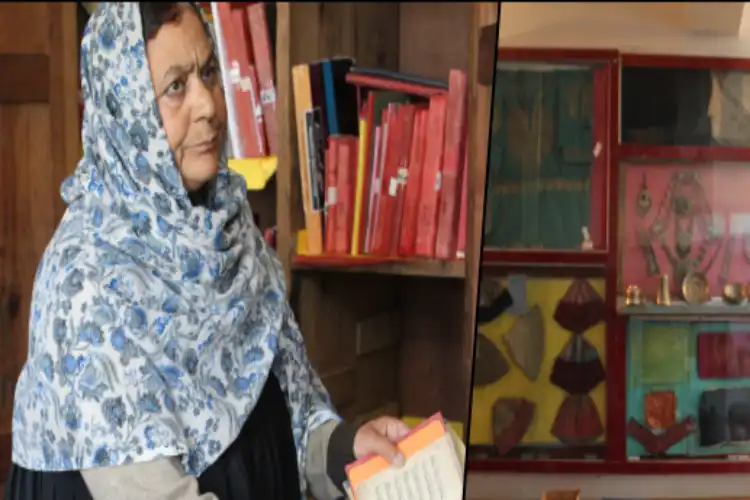
Atiqa Bano
Atiqa Bano

Atiqa Bano’s vision that the generations to come must know how people lived in Kashmir over centuries had made this retired Kashmiri educationist collect ancient households articles like hey mats (Waguv), multipurpose earthen pots, wooden doors, latches, and possibly all things used by humans over two centuries and create the first-ever private museum in the Valley.

Called “Meras Mahal” (The palace of heritage), it houses more than 5,000 artifacts reflecting the social and cultural life of Kashmir over two centuries.
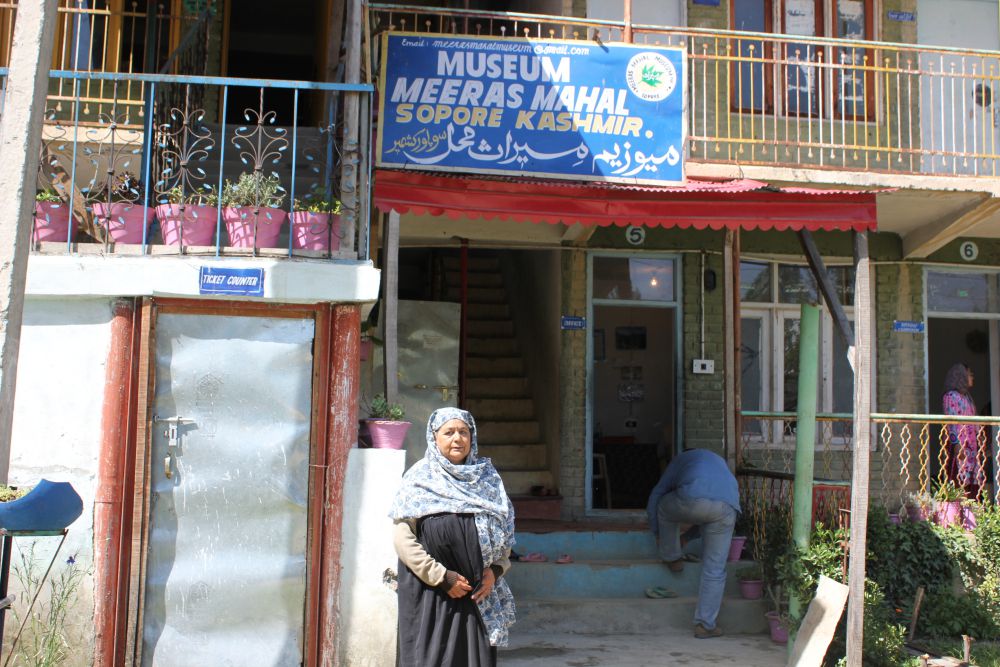
Atiqa Bano standing in front of Meeras Mahal

Atiqa Bano passed away in 2017 and her family continued to struggle to maintain it and not let forces of Nature damage this treasure trove. However, they always lacked resources for this gigantic task.

Finally, Atiqa Bano’s love of her labour is all set for a major revamp and scientific conservation as this historic treasure had attracted the attention of the Indian National Trust for Art and Heritage (INTACH), J&K Chapter.

Atiqa Bano, an educationist, had made great efforts to collect the exhibits over two decades after she retired from the J&K Government services in 1998. A woman of strong resolve, Atiqaji, as she was popularly called, had taken to looking after her father after her mother’s death. She had chosen to remain single and devote her life to education, women’s welfare, and society.
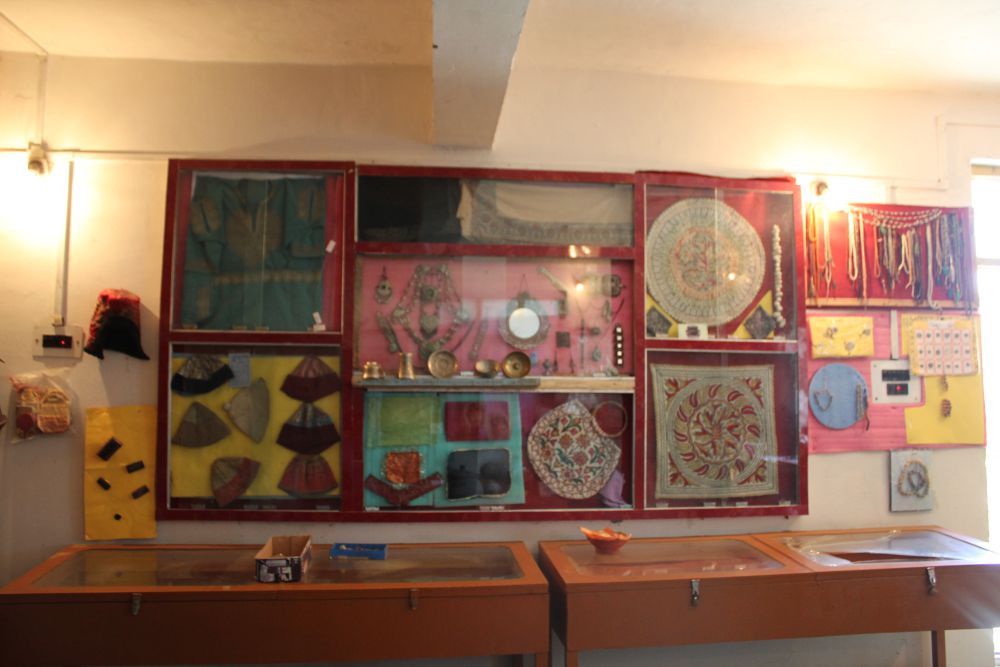
Household items on display in Meeras Mahal

It was during her campaigns for women’s empowerment that she was drawn to the collection of rare kitchenware, old ornaments, agricultural tools, clothing, earthenware, and manuscripts lying around in many Kashmiri households. It dawned upon her that with the changing times, all these human inventions would be lost to time if not preserved for posterity.

She started collecting artifacts in 2002 and continued her mission till her death.

Atiqa Bano is gone from this world, but her memory and work is commemorated for posterity, and, as she wished, for the generations to come.
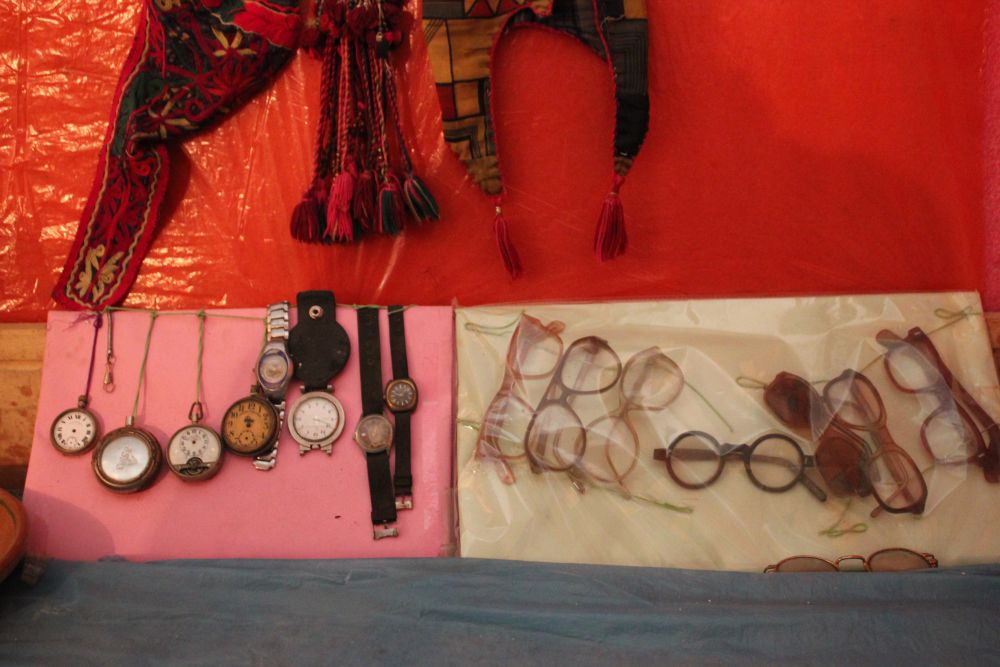
A collection of watches and eye glasses on display at Meeras Mahal

Realizing the importance of Atiqaji’s rich heritage collection, the J&K Chapter of INTACH and HELP Foundation have taken up the gigantic task of rejuvenating  Meeras Mahal.

Saleem Beg, head of the INTACH, J&K Chapter, said, “Saima Iqbal and INTACH team are digitizing, curating and contextualizing the rich collection of vernacular objects after preventive conservation. The museum will have a thematic display demonstrated through sketches and write-ups supported by an elaborate digital presence.”

Saima Iqbal said, the work, supported by ALIPH- an international alliance for the protection of heritage in conflict areas, is getting streamlined. She stated that a team comprising a web designer, photographer, conservator, curator, and illustrator is working in tandem as all are interdependent and need to work in sync.
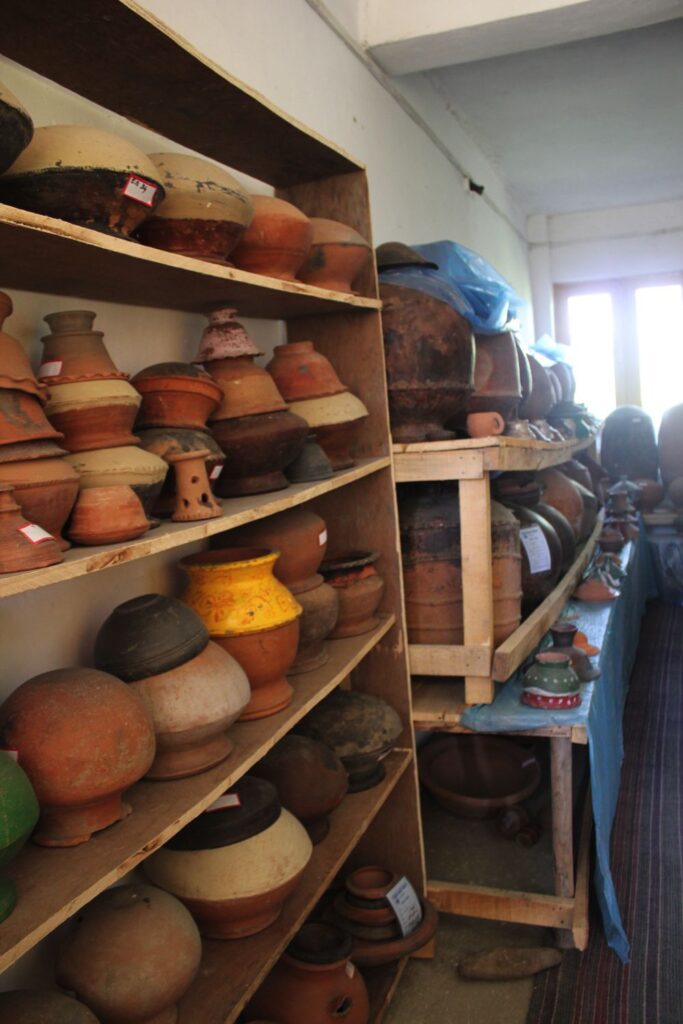
Earthenware used in Kashmiri households in Meeras Mahal

“I have to say that the challenges are many and we are making the best use of available meager resources here but the passion is alive and the project will be a great success”, she said.

“The first article preserved in the museum is Kondul, an earthen bowl that holds smoldering embers in Kangri, a personal and portable heating device of Kashmiri, said Muzamil Bashir Masoodi, Caretaker or (Honorary) President of the five-member Trust of prominent literary personalities, constituted to look after the museum.

Muzamil, who is also Atiqa Ji’s nephew had been taking a keen interest in maintaining and preserving the rare articles of the museum. The initially preserved items also included hand-written books of Ghulam Mohammad Hanfie, a scholar, Ateeqa Ji’s grandfather.

“All the items are counted one by one like 10 different Charkhas (spinning wheels) are counted as 10 separate items”, explained Muzamil.

The museum was initially set up in their private B. Ed College, Kashmir Women’s College of Education, at Noorbagh, Sopore. It was shifted in 2012 and called Meeras Mahal to a Hostel building of the College, at Highland Colony, where the rare items are “stored” due to the paucity of space.
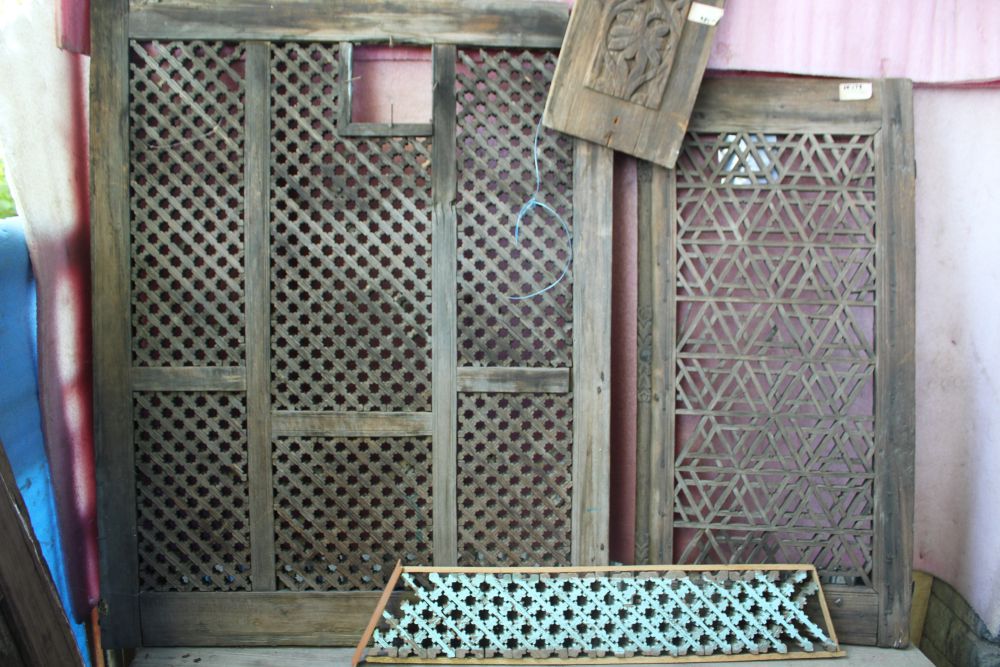
Doors and windows used in Kashmiri architecture

Muzammil said that “we cannot provide the normal gap of at least two feet between the items”, which makes it difficult to maintain the entire treasure. “There has been no support from the Government”, he said. He said so far he has been getting a token amount from the college funds for maintaining the museum.

“During the Covid restrictions, when everything was closed, we managed to be in the museum to provide basic maintenance,” Muzamil said. He had submitted a detailed project report, for conservation and preservation of the museum to the UT Government in 2019.”

Nothing has came his way so far.

source: http://www.awazthevoice.in / Awaz, The Voice / Home> Culture / by Ehsan Fazli, Srinagar / April 11th, 2022
Khassa brings alive the century-old legacy of the Royals

Hyderabad, TELANGANA :

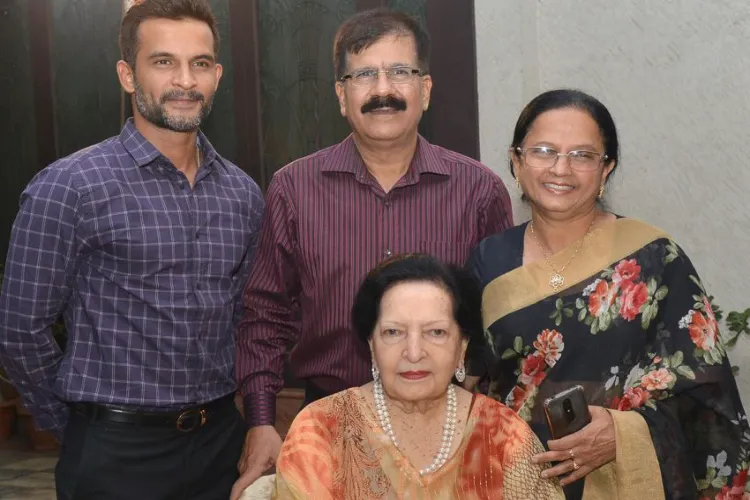
Shahmnoor Jahan with her family

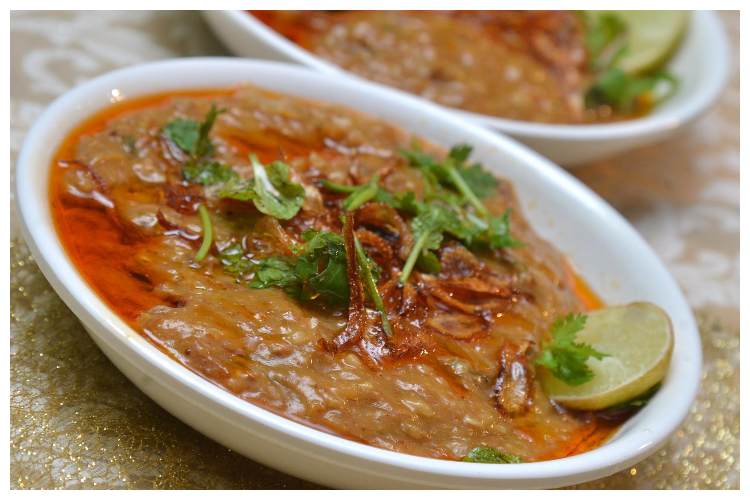
Whether it is a hundred-year-old dish Kuzi or Fish Salad or Badam Ka Kund or the Noorani Seviyaan, Shahnoor Jehan, the descendent of a Sultan of Yemen, dishes out these mystic 100-year old cuisines for the connoisseurs and the gourmands.   

Even as the erstwhile nawabs of India deal with the loss of their titular legacy, tables laden with succulent meats, and the foods flavoured with freshly ground spices and their untranslatable code of tehzeeb- their last standing bastions of power, wealth, and heritage – Shahnoor Jehan, whose grandmother Muzaffar Unissa Begum hailed from the family of the Sultan of Yemen, has kept it alive.

Meeting this soft-spoken lady was a quiet grounding experience given her repertoire of knowledge on food. 

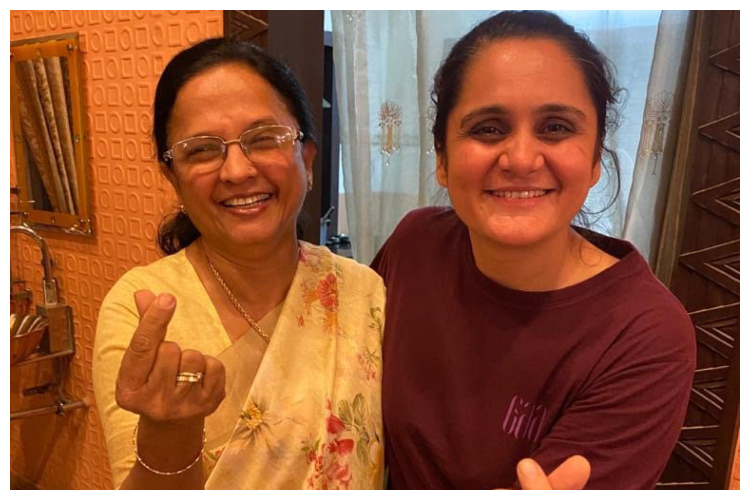
Shahnoor Jehan with her daughter

Daughter of an IAS officer and wife of a very supportive businessman Adil Mirza, Shahnoor Jehan was also encouraged by her adorable children Shohrab Mirza and Nimrah Mirza to use her knowledge and the knowhow inherited from her blue-blooded family and preserve the 100-year-old recipes for posterity. Khassa, a food brand, is a reality because of the support Shahnoor Jehan got from her family.

Shahnoor Jehan says, “There’s a certain etiquette that embraces all nawabi culture. It’s not so much about the commonality of ingredients or dishes but the way the food is prepared and served and the way we host our guests. And for these families, it’s comforting if you understand that,” she says. “Khassa is just that.”

In earlier days people never said “food is ready’ while inviting guests to the table,; they would say but said “Khassa Taiyaar Hain.” Shahnoor Jehan has preserved her well-guarded recipes dating back to several generations.

A dish from Shahnoor Jahan’s cook book

Her cookbook which she has preserved to date from her school days takes on a narrative beyond food; it’s about legends, anecdotes, and antiquities that comprise heritage. It is this inherited legacy that has made her take up cooking as a passion and make it her business. “I think cooking was a hidden talent in me. Most of the time friends appreciating my cooking made me ponder over the possibility of taking it up as my profession and when my kids and family support came, I converted my culinary skills into a startup.”

“Till I got married, I never had any experience of cooking; it was only an interest. It was my grandmother and mother who inspired me initially and the realization and confidence that I can cook well came with the appreciation I got from my friends and family who eagerly awaited the indulgence. The original cuisine is slowly fading away. I kept up the tradition of preparing dishes on charcoal and grounding spices made by hand..”   

Begum Shahnoor Jehan the granddaughter of Nawab Ahmed Baig and her Grandmother Muzaffar Unissa Begum shares a princely legacy of the Sultan of Yemen and her food is an amalgamation of Mughal, Turkish and Arabic and influences of Hyderabadi cuisine.

She has infused local foods like rice, wheat, and meat dishes and the skilled use of spices herbs, and natural edibles in Khassa,

Owner of brand Khassa, Shahnoor Jehan serves cuisines like mutton haleem, mutton Shikamaru, dum ka murgh, or whether it is her signature dish a hundred-year-old dish called the Kuzi- leg of mutton cooked in pure almonds, saffron, and spices like black pepper enriched further with dry fruits, sugar candy ( Rock Mishri ) saffron, and silver foil are steeped in history.

Shahnoor Jahan’s recipies

While Khassa has been in the limelight for its iconic Kuzi, mutton roast or the kebabs like Shikampoor Shahnoor has also drool-worthy desserts to her credit that you can never say ever! Whether they are the innovative desserts like the Noorani Seviyan or the most rich ones like the Badam ka Kund– a traditional Hyderabadi dessert rich in almonds infused with saffron and cooked for hours together to get that creamy finish.   

Says Shahnoor Jehan some of the recipes are native but they have been prepared and perfected down the generations at Shah Manzil, which is the present-day Raj Bhavan (the official residence of the State Governor). They have been part of Shahnoors family legacy for generations over a hundred years of age Adds Shahnoor my maternal Grandmother Muzzafar Unissa Begum, the daughter of the Sultan of erstwhile Yemen, and her grandfather Nawab Ahmed Baig, the son of late Shehzoor Jung, was influenced prominently by the flavours of Yemen, where she was from. I picked up most of her techniques and recipes which were well guarded and preserved by Shahnoor Jehan’s mother Faiq Jehan Till date Shahnoor continues to preserve the diaries and books belonging to her royal family. She adds that while her mother has been an inspiration for her she did pick up a few techniques from her mother-in-law Shaheda Begum she adds. 

Today this luxury dining has come alive with her cuisine “Khassa” which is offered to her customers by way of food based on orders from her customers. It is indeed a luxe dining experience as nothing is too extravagant at her end whether it is the use of the saffron or the almonds, or whether it is the use of gold and silver foil, they season most of her meals. Only the finest cuts of meat make it to your orders. Whether it is ordering the mutton roast -chunks of meat soaked in sauces, ginger garlic paste, pepper, and roasted or whether it is Kairi Ka Do Pyaaza chunks of meat cooked alongside with raw mangoes spices and silky onion gravy a seasonal specialty. 

Shahnoor says some of her dishes are cooked languorously , sometimes for entire day-the dum (where food is cooked for hours over low heat in lagan and smoked with the piece of burning coals placed on top to flavor the food , and these remain her techniques of choice.

Shahnoor Jahan with Khassa

In the earlier days, the chefs or the bawarchis at her Shah Manzil sometimes specialized in just one dish. Kitchens were considered laboratories, and chefs artists were encouraged to experiment innovate and create. Today we are preserving this past heritage as an agenda. She recalls the Nawabs of yore were patrons of food, helping the food to evolve Now dining With The Khassa brings back some of the grandeur and is a beautiful reminder of the lavish brilliance of nawabi food.

Says Shahnoor Jehan we want to bring a culinary slice of Yemen and the Nawabs of Hyderabad at Khassa with dishes that resonate with our philosophy of cooking with the choicest of ingredients.

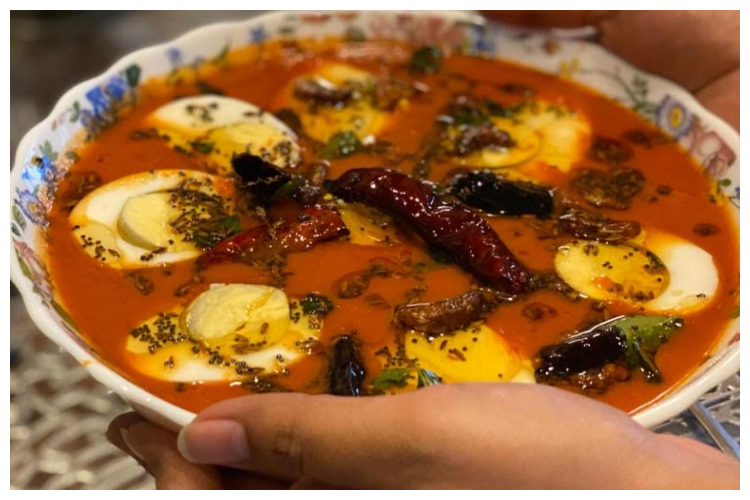
Her spread in her menu looks fit for a king. There are Shammi Kebab-succulent pieces of tender lamb cooked with spices a melt-in-the-mouth experience and the Mutton Shikampur, the iconic kebabs from the royal kitchens of Hyderabad. The main course consists of Tamatar ka Kut a classic Hyderabadi dish and a rich tomato gravy topped with mild temperate spices and boiled eggs. Mutton Dalcha, is an age-old recipe of mutton cooked with lentils and bottlegourd. There are classic dishes such as Chicken or Mutton Korma cooked in rich gravy sauce or the traditional Kairi Do Pyaza a tangy lamb preparation. Her signature dishes include Haleem, Kuzi, Fish Salad Mutton Roast, Dum Ka Murgh, or the Dum Ka Raan all slow-cooked in mild spices.

Also, there are desserts to die for whether it is the Zafrani Badami Kheer, Sheer Khorma, or the Qubani ka Meetha.

Khassa indeed brings the hidden treasures of food that is heavy on aroma and boasts of rich flavours that will hit the spot if you’re looking for a feast.

www.khassabyshahnoorjehan.com

source: http://www.awazthevoice.in / Awaz, The Voice / Home> Culture / by Ratna G. Chotrani, Hyderabad / April 17th, 2022

Shaharabanu is bringing smiles on faces of would-be brides from poor families

Chettali (Madikeri Talu), Kodagu, KARNATAKA :

From pre-wedding shoots to the selection of bridal outfits, the stress, especially on the bride-to-be, is tremendous.

Shaharabanu shows one of the many bridal outfits which is available at The Rainbow Free Bridal Boutique, opened just weeks ago | Express

Madikeri : 

From pre-wedding shoots to the selection of bridal outfits, the stress, especially on the bride-to-be, is tremendous. It is the day when she hopes to look her most beautiful.

However, not every bride can afford a dream wedding, and many young women are forced to stick to simple and inexpensive wear. The Rainbow Free Bridal Boutique in Kodagu is taking these weddings up by a notch. Established by Shaharabanu (20), the Free Bridal Boutique is just weeks old, and operates from the rural part of Chettalli in Madikeri taluk.

Shaharabanu, who quit studies after completing PU examinations last year, is a YouTuber, and had also worked as a beautician for some time. The strong calling to do charity work has manifested itself in the form of this boutique.

“I always looked forward to doing charity work, but my family is not very well-to-do. Financial hurdles are many. However, a unique initiative has been started by one of my friends in Kerala, which led to the establishment of the Rainbow Free Bridal Boutique, a first of its kind in Karnataka,” explained Shaharabanu.

So, what is so unique about this boutique? It provides free bridal dresses to brides from economically weaker sections of society. “Weddings are very special to girls, and almost every girl dreams of wearing a special outfit on that day. However, many cannot afford these bridal outfits, and hence, I started a boutique to collect bridal clothes from women from rich families,” she explained.

She laid out her plan on social media platforms and received positive feedback and support. Responding to her social media post, many women donated their wedding attire, like sarees which they had worn for their own nuptials, and fancy outfits from their trousseau.

The clothes were collected and dry cleaned. “I have collected many wedding clothes, some even from my family members. These clothes will be handed over to brides from weaker sections of society, including orphaned girls who are unable to afford wedding clothes,” she said.

“Our generation is very active on social media and we often make new friends virtually. A WhatsApp group of like-minded girls who were on Instagram was created almost a year ago. In the group, one of the girls, who was poor, requested us to help her out for her wedding,” recalls Shaharabanu.  

However, she felt helpless with her family’s meagre earnings, since her parents, Ameena and Maanu from Chettalli, are daily wage workers. Despite the impediments, the girls managed to collect funds and bought their friend a new bridal outfit, she added.

Following the incident, she realised that many girls face this challenge before their wedding, which the girls discussed in the group. That is when one of the girls from Kerala informed her about a boutique that donates bridal dresses to girls from poor families. “This boutique was started by a Kannur resident, Sabeeda, and I contacted her for support. Initially, when everyone was reluctant to donate their bridal wear to my boutique, Sabeeda helped me and brought many dresses all the way from Kannur to Chettalli,” she recalled.

When dresses were donated to a couple of poor girls, residents from Madikeri and Virajpet came forward and donated their bridal outfits. “My house is small. I had to make space to keep the dresses without damaging them. I bought a shelf for this purpose which is in my mother’s room, where the dresses are kept neatly,” she said. “It has been just 15 days since I started the boutique. There is no bar on religion or community of the brides. They can book the service and visit my place in Chettalli to select the dresses they want from what’s available. They can keep the outfits for themselves. This service is for those brides across the state who are battling economic hardship,” she said.  

To ensure that the dresses reach the needy, she asks the beneficiary to submit a letter from the religious committees concerned, about the family’s financial situation. In just two weeks, more than 40 brides from across the state contacted the boutique, and Shaharabanu is working towards making their weddings special. “I ask the girls to visit my place 20 days prior to the wedding day. Their happy faces when they find the right bridal dress give me immense pleasure and satisfaction,” she added.

source: http://www.newindianexpress.com / The New Indian Express / Home> Good News/ by Prajna GR, Express News Service / April 24th, 2022

Dr. Mehar Sultana

Mysuru, KARNATAKA :

Dr. Mehar Sultana (64), daughter of late Maj. M.S. Khan and a resident of Bogadi here, passed away yesterday.

She was serving as the Principal of Karwar PU College in Karwar.

She leaves behind her husband S. Nisar Ahmed Bilgunda (South Coorg), two daughters, sons-in-law, and a host of relatives and friends. Namaz-e-Janaza was held at Kabristan Mosque in Bade Makan after Zohar.

source: http://www.starofmysore.com / Star of Mysore / Home> Obituary / December 29th, 2018

Show of strength

Bengaluru, KARNATAKA :

Becoming the youngest female lifter wasn’t an easy task but Maryam Mohammed’s focus helped her achieve it

Maryam Mohammed lifting weight during the tournament

Bengaluru:

Among the many champions who participated in the event, it was 13-year-old Maryam Mohammed who became the youngest female lifter to set a deadlift record in the Push-Pull Championship. Sports establishment Professional Raw organised the first championship at Onyx Fitness which Mohammed was a part of. There were over 300 athletes from across the country who registered themselves for the event.

It’s not the first win for the young lifter either. Speaking to CE, she says, “It’s the fourth competition that I have won so far. I started powerlifting two and half years ago, when the pandemic started and schools went online.” Her father, Mohammed Azmat, who is a powerlifter himself, has been doing it for over three decades now. “He’s my biggest inspiration. He’s the one who trains me and my younger brother has also started participating in competitions now,” Mohammed says.

She spends her weekdays on school work and uses her weekends to train. The basement of their home has been converted into a gym set-up which has helped her practice more. “I know there are many strong people out there but all I do is focus on the bar and just lift it. There’s nothing else to do,” she says, adding that her younger brother is more focused, something she is working on. 

While Mohammed is hoping to get better and win more awards, her father encourages another strategy. “Medals can always be achieved but if they grow up without character, it won’t be of any use,” he says, pointing out that Mohammed always grew up watching him practice in their home set-up. “After she was born, my wife needed my help at home. So, I set up a gym to spend more time at home. Maryam grew up watching me lift weights and when she was finally ready, she showed interest,” he explains.

He adds that neither of the children was ‘forced’ into following in their father’s footsteps. “Seeing them be happy with what they want to do is what I encourage them to follow. They were never forced to follow my footsteps but it’s definitely an icing on top for them to have shown interest,” Azmat says.

source: http://www.newindianexpress.com / The New Indian Express / Home> Cities> Bengaluru / by Anila Kurian, Express News Service / April 18th, 2022

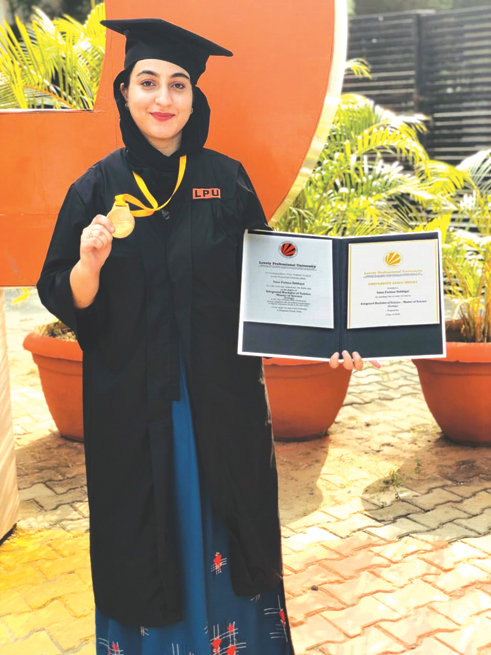
Kishtwar girl awarded gold medal in Integrated Zoology

Kishtwar, JAMMU & KASHMIR :

Kishtwar ::

Once again showing her excellence in the field of education, Kishtwar girl identified as Sana Fatima Siddiqui Daughter of Syed Ajaz Ahmed Resident of Bunastan Kishtwar was awarded University Gold Medal for standing First in Order of Merit in Integrated BSc- MSc Zoology program, Class of 2019 at 10th Annual Convocation Ceremony of Lovely Professional University by Mr. Michael Ashwin Satyandre Adhin, Hon’ble Vice-President of Suriname (South American Country).

The convocation was recently held at Ludhiana.


Speaking to Early Times, Sana attributed her success to her parents, siblings, friends and family members added that without support from parents and family it is not possible for girls to get her admissions in universities which are far away from home.
She said that she will continue her hardwork to bring lure for her parents and Kishtwar District in future as well.

She also thanked her teachers who guided her from time to time through out her life.

source: http://www.earlytimes.in / Early Times / Home> News Details / by Early Times Report / September 10th, 2019

There’s a museum in the corridors of Jehan Numa Palace

Bhopal, MADHYA PRADESH :

The New Museum

Tall marble pillars frame photos, automobiles and more, as the Bhopal royals open up their past at the Jehan Numa Palace Hotel

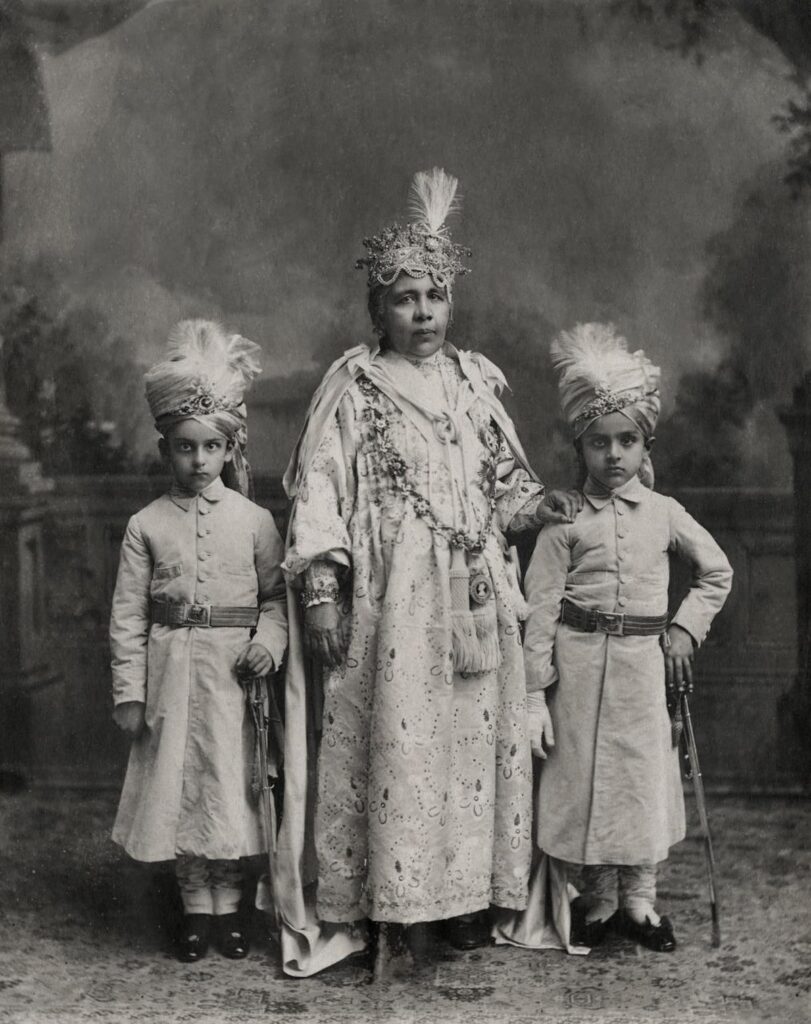
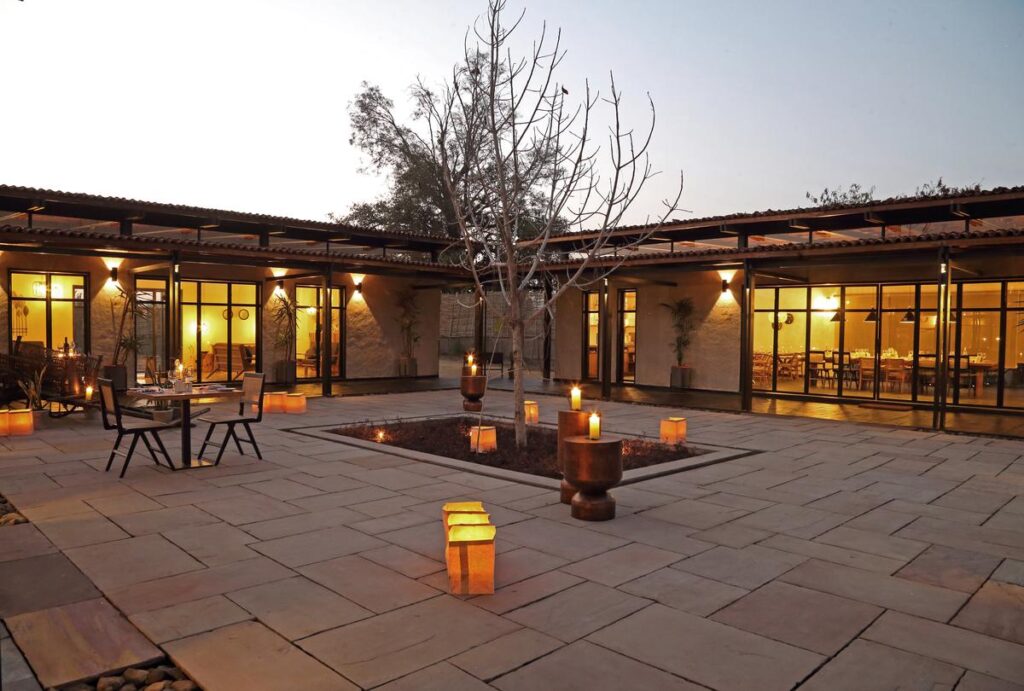
Over the years, the Jehan Numa Palace in Bhopal — built on the slopes of the Shyamla Hills in 1890 by General Obaidullah Khan, commander-in-chief of the Bhopal State Force, and the second son of Nawab Sultan Jehan Begum — has worn many garbs.

The white marble edifice, which melds British Colonial, Italian Renaissance and Classical Greek architectural styles with facets of Art Deco, was constructed as the general’s office, and then used as his sons’ secretariat. After Independence, it became a government hostel, and later, the offices of the Geological Survey of India.

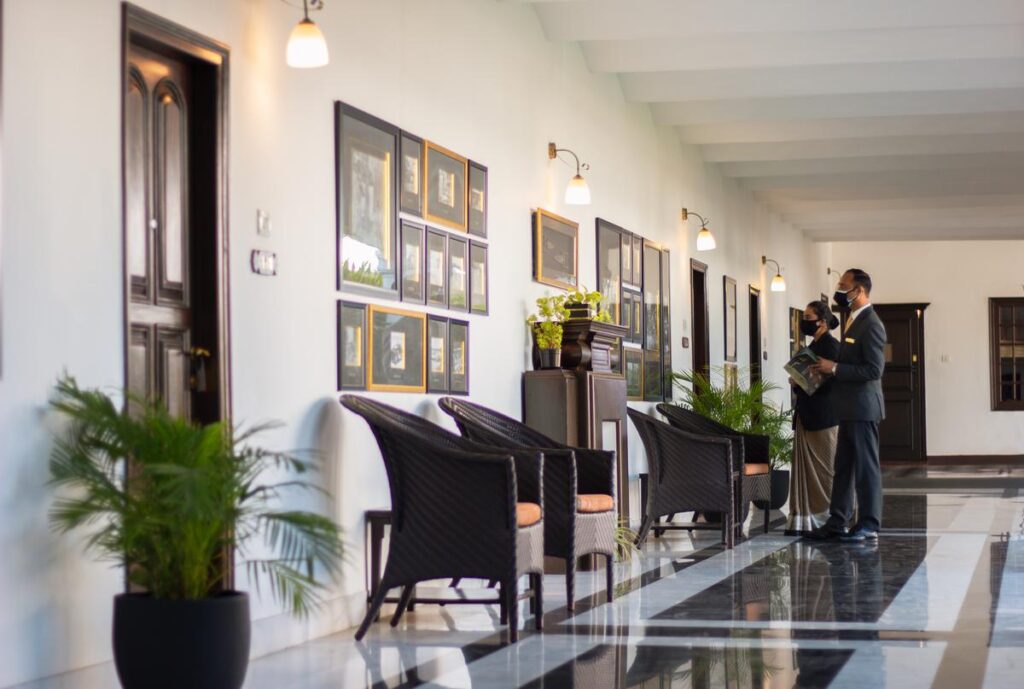
In 1983, after restoring the five-acre property, the general’s grandsons reopened it as a heritage hotel — its colonnaded corridors showcasing sepia-toned portraits, and the interiors housing rooms, four restaurants, two bars and a spa. Now, the pandemic has given it another facet: a museum, which came together almost like a “jigsaw puzzle”, says Faiz Rashid, director of the Jehan Numa Group of Hotels and a member of the Bhopal royal family.

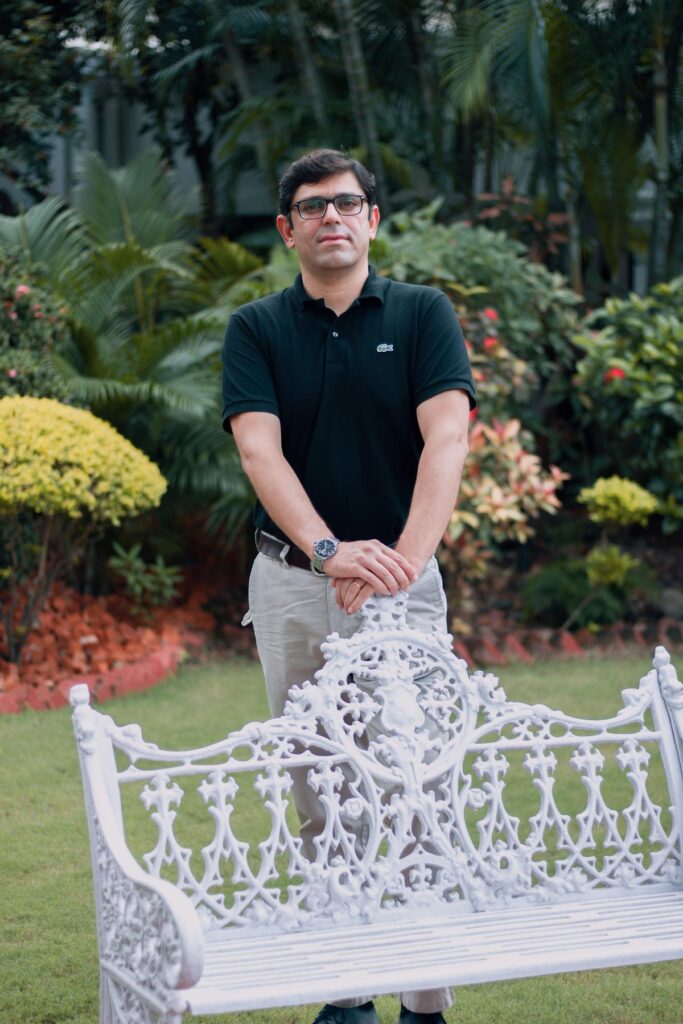
Faiz Rashid

A colonnaded showcase

“[Over the last 20-odd months] we tried to come up with innovative ways to nurture hospitality. Because of the time on hand, we started looking at family archives and thought why not share the legacy with the world,” says Rashid. He tells me about putting together memorabilia: artefacts, attire, “lovely letters in Urdu” written to his great grandfather, documents, “invoices of the cars the royal family bought [like a Ford Phantom and a customised Bentley]” — all of which are now on show at the hotel.

“General Obaidullah Khan accompanied his mother, the last begum, on her foreign trips. He was inspired by different architectural styles, and the display is a pictorial history of the hotel’s evolution from the time it was built in the 19th century,” he says.

The corridors along the central courtyard, with its famed 100-year-old mango tree, were chosen as the ideal backdrop for the display. I take a virtual tour of the elegantly-framed archives, arranged in clusters on the walls of the chequered black-and-white marble and granite corridors, zooming into the photographs, and taking in glimpses of the life and times of a pre-Independence royalty that was progressive and involved, wealthy but not flamboyant, stylish but never garish.

From letters to thoroughbreds

The family took the help of Joe Alvarez, the well-known jazz singer who has written a coffee-table book on Bhopal, to curate the memorabilia.

“We divided them into nine subjects, starting with the four begums, the last nawab, dignitary visits, nawabi sports and the outdoors, and such,” says Alvarez, who has also generated a voice-over, and added a QR code to enable a Walk-In Museum audio guide.

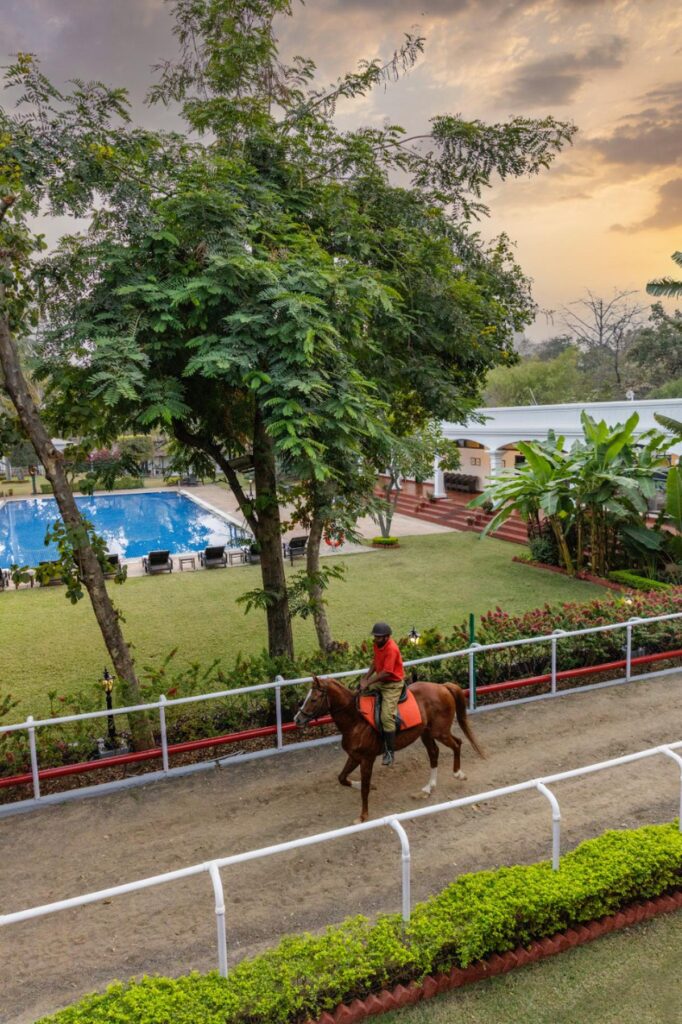
The track at the Jehan Numa Palace Hotel

He expounds about the images of a thriving stud farm, something that continues till date (a trotting track set up when the hotel opened gives visitors a peek into the royal family’s passion for breeding thoroughbreds), of custom-built automobiles, branded guns and weapons, and official visits by dignitaries.

The begum’s photo from the archives

“The nawab begums of Bhopal were very dynamic and built the city differently from male rulers. They focussed on all areas, from education to women’s empowerment. We realised so much of their contribution — like building hospitals, enhancing the railways, opening schools — while putting this together,” shares Rashid, adding that, in 1889, Shah Jehan Begum funded the construction of Britain’s first purpose-built mosque at Woking. The collection is still evolving as more memorabilia makes its way to them slowly, from the extended family. A plan to restore and display the wedding dresses of the begums is also in the pipeline.

The museum is open to all. Rooms at the hotel are from ₹8,000 onwards. Details: jehannuma.com

Bori Safari Lodge

Spot the tiger at Bori Safari Lodge

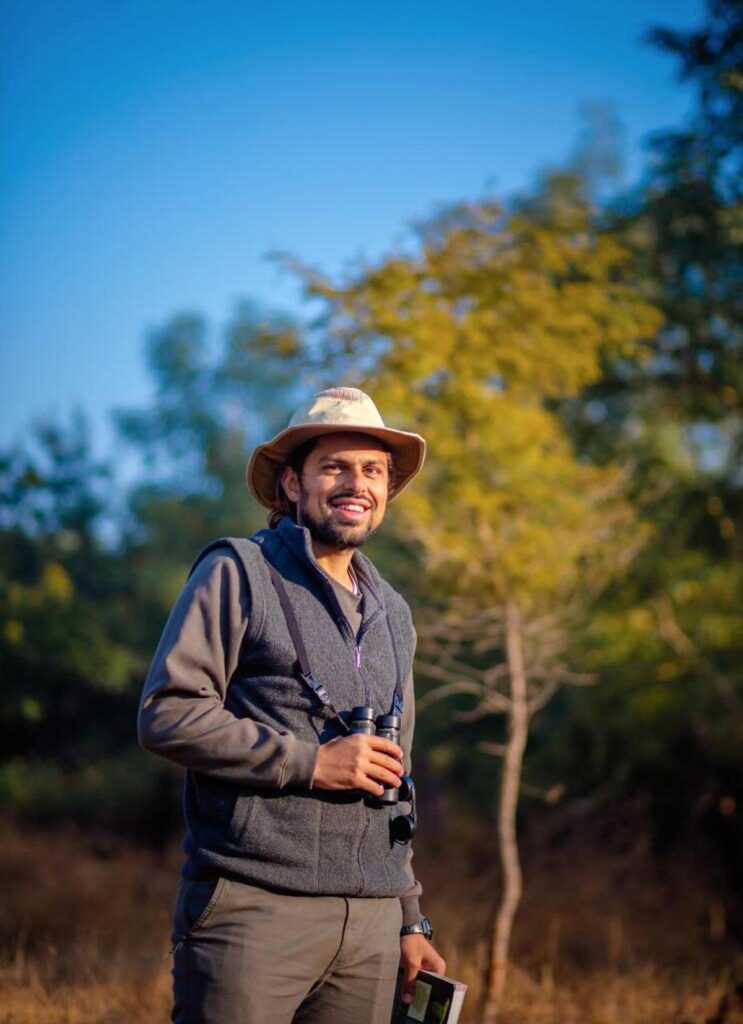
Another post-pandemic hospitality initiative is Bori Safari Lodge, an eight-room wildlife camp started by Rashid’s brother, Aly, in the Satpura Forest. “When we started the Reni Pani Jungle Lodge [a two-and-a-half hour drive away] in 2009, it was about experiencing the diversity of the forest, with river safaris, walking trails and birding. With the Bori, the tiger comes centre stage,” says the trained naturalist, who has partnered with the state tourism department.

Aly is a trained naturalist

A tiger relocation programme successfully initiated four years ago has revitalised the habitat and the local population. “The tigers have not only flourished, but have actively begun mating.” Aly — who has great memories of spending his childhood in the forests — also leads expeditions to spot snow leopards in Ladakh and seek out the red panda in the Northeast. “This [project] is a means to conserve the landscape. The alternate income for the locals will recharge the community, support conservation, and will help wildlife be seen as an asset.”

From ₹25,000 onwards (all inclusive)

source: http://www.thehindu.com / The Hindu / Home> Entertainment> Art> Weekend Travel Special 2022 / by Priyadershini S / April 15th, 2022

Telangana’s first Muslim woman IPS officer Shaik Saleema stands as epitome of woman empowerment

Komatlagudem Village (Khammam District), TELANGANA :

Apart from being Telangana’s first Muslim woman IPS officer, Saleema is also the first woman from the erstwhile Khammam district to have been appointed to the IPS.

Rachakonda DCP Shaik Saleema
Rachakonda DCP Shaik Saleema (Photo| EPS)

Khammam :

A festive air has gripped Komatlagudem village of Chintakani mandal in Khammam district after Shaik Saleema, who was a non-cadre Superintendents of Police (SP), was appointed to the Indian Police Service (IPS) by the Central government. She is currently posted as a DCP in the Rachakonda commissionerate.

Apart from being Telangana’s first Muslim woman IPS officer, Saleema is also the first woman from erstwhile Khammam district to have been appointed to the IPS.

Hailing from a middle-class family, Saleema’s father Lal Bahadur also served in the Police Department and retired as Sub-Inspector (SI) a few years ago. Her mother Yakubbi was a stay-at-home parent. The couple has three other children – Zareena, Munni and Khasim – and all of them are in good positions now.

After completing her schooling and graduation in Khammam, Saleema joined the Kakatiya University in Warangal for pursuing a postgraduate degree in bio-technology. After cracking the group exams, she was selected as a DSP in 2007 and got her first posting at Kagaznagar in erstwhile Adilabad district.

Later, she worked as the vice-principal of Amberpet Police Training Centre in Hyderabad. She also served as Addl DCP (Admin) in Cyberabad police commissionerate. Saleema’s sister Zareena is currently awaiting her interview after clearing the Andhra Pradesh Group-1 exam.

While her another sister Munni currently works as a vehicle inspector in Khairatabad, Hyderabad, Saleema’s brother Khasim is a doctor at Care Hospital in Hyderabad. The cop’s husband works as a software engineer. 

When The New Indian Express spoke to a couple of villagers, they all expressed their happiness over Saleema’s promotion. Speaking to The New Indian Express, Saleema shared her joy and said that she has always strived to be honest in her job throughout her career.

The officer says: “More and more women should join the force. For this, one has to step out of their comfort zone and come forward. Only then, you would be able to achieve the name and fame that you dream of. I also did the same. Thanks to my family members for supporting me throughout the journey.”

Mentioning that getting a government job had always been her dream, Saleema said after receiving one, she never looked back. “My family supported me the same way they would if I received any other job. They never let me face any difficulties alone. After I got married, my husband Baji Ahmed, who works as project manager, became my spot driver,” chuckles Saleema.

Ahmed looks after both their kids, studying in Classes IX and II, without any complaints. She says her younger child still wonders as to why her picture appears in newspapers once a while. When asked if there was any incident that gave her complete satisfaction, the cop shared one such instance with The New Indian Express.

“We were given complete freedom by CP Mahesh Bhagwat to put an end to two major threats the city was facing in 2018 — sex determination in Uppal and sex trafficking in Yadagirigutta. One of those nights, I received a call with a tipoff and we had to conduct, not a raid but, a decoy operation. I saw many grave things that night. But, after successfully detecting the case and sending the victims to shelter homes, I felt complete satisfaction. Memories of that day still give me immense pleasure,” she said.

source: http://www.newindianexpress.com / The New Indian Express / Home> States> Telangana / by B Satyanarayana Reddy and Priya Rathnam / by Express News Service / December 26th, 2021

Moscow Wushu Stars Championship: Gold medalist Sadia Tariq receives a warm welcome in Srinagar

JAMMU & KASHMIR :

Moscow Wushu Stars Championship: Gold medalist Sadia Tariq receives warm welcome in Srinagar

Srinagar : (ANI):

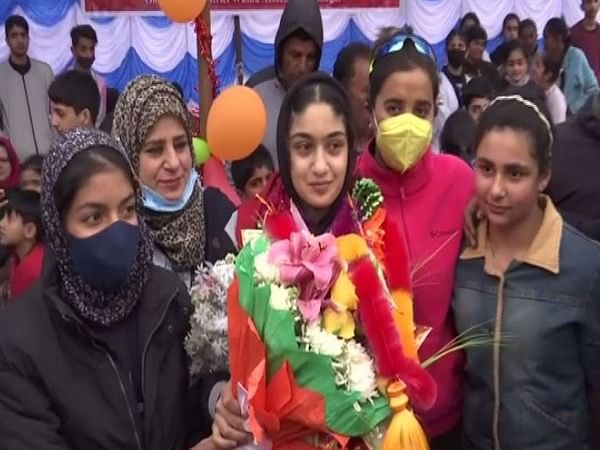
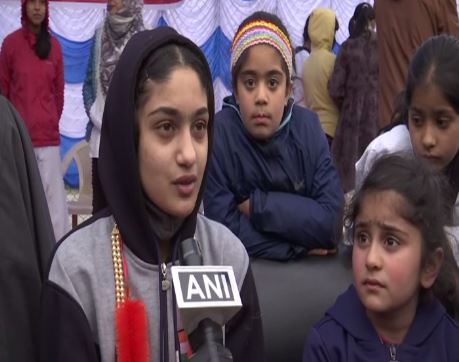
Sadia Tariq who won a gold Medal in the Moscow Wushu Stars Championship received a warm welcome from family and friends who reached Jammu and Kashmir’s Srinagar on Saturday.

Speaking to ANI, Tariq shared her happiness and thanked her family and coach for supporting her.

“My eyes were in tears when I won the gold medal. If this happened today it is only because of my coach and family. I want to thank my coach who was there supporting me all the time,” she said.

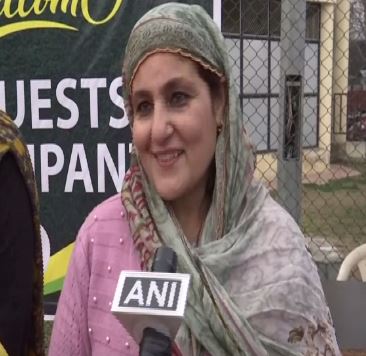
Maimoona Tariq, mother of Sadia said her daughter was passionate about this since she was in the third standard, today she made all of us proud.

“I am proud of my daughter, she made us proud. She was always engaged in this game since the third standard. I want other children to participate in the game also and made their parents proud,” she added.

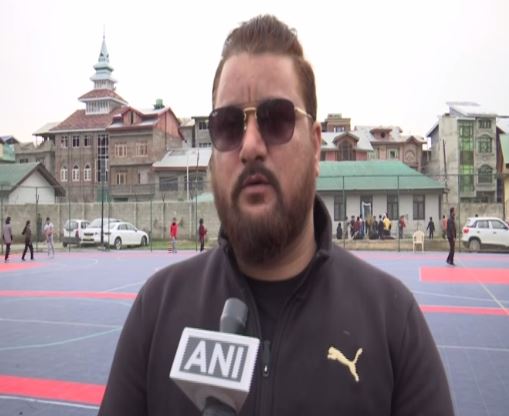
Masood Rather, Joint Secretary of Srinagar Wushu Association said “we all are very proud of Sadia. She performed very well in Wushu Stars Championship. Sadia already won two gold in national, it is her third gold medal.”

“As far as talking about Wushu, it is very popular in Jammu and Kashmir,” he further added.

Earlier in the last week of February, Prime Minister Narendra Modi congratulated Sadia Tariq on winning a gold medal in the Moscow Wushu Stars Championship, which is being held from February 22 to 28.

Sadia won the gold medal in Wushu Championship in Moscow by defeating a local player. Moscow Wushu Stars Championship is the approved event in the Annual Calendar Training and Competition of the Sports Authority of India. (ANI)

This report is auto-generated from ANI news service. ThePrint holds no responsibility for its content.

source: http://www.theprint.in / The Print / Home> India / by ANI / March 06th, 2022

These Muslim artisans in Jaipur are preserving traditional art-form of Gulal Gota for celebrating Holi

Jaipur, RAJASTHAN :

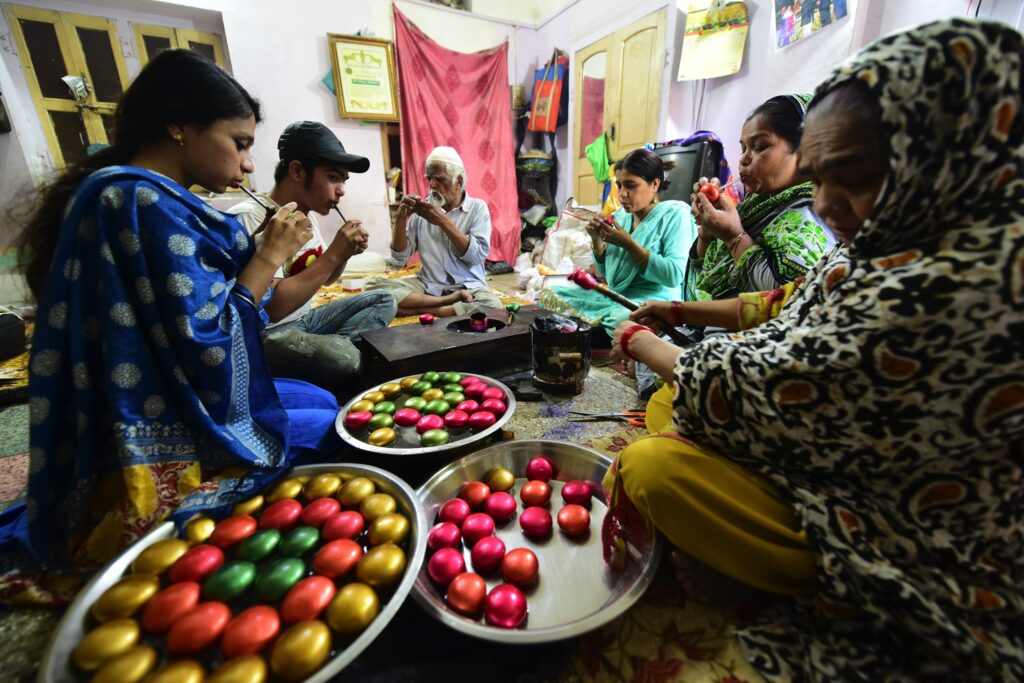
‘Gulal Gota’ is made with unique craftsmanship and compliments the festival of colours. | Picture by Tabeenah Anjum

Dozens of Muslim artisans in Jaipur have kept the 400-year-old traditional art form of Gulal Gota alive.

Jaipur :

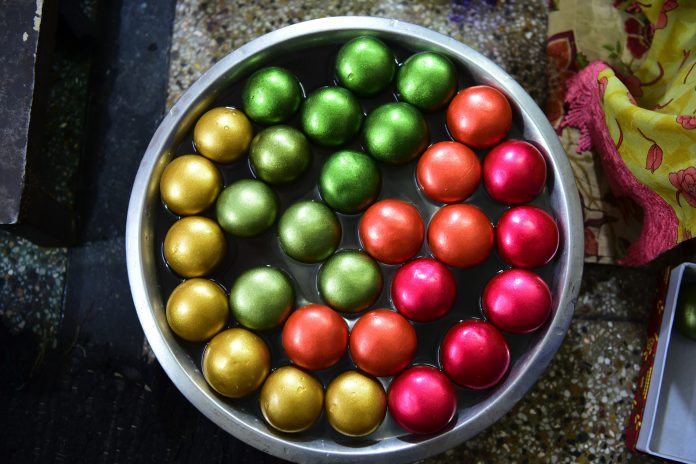
The narrow lanes of Jaipur’s walled city are abuzz with festive fervour ahead of Holi, the festival of colours to be celebrated on March 17. Twenty-eight-year-old Amjad Khan, a seventh-generation lac bangle maker is busy selling Gulal Gotas (lac balls filled with colours) at his shop situated in the Maniharon-Ka-Raasta inside the Tripolia Bazar in the walled city of Jaipur.

Every year, two months ahead of the Holi, Amjad along with his eight siblings starts making the lac balls and fills them with colours before packing them in boxes. Amjad is not alone. Dozens of artisans in Jaipur have kept this traditional art form alive, which is as old as 400 years. 

Gulal Gota is made with unique craftsmanship and compliments the festival of colours. After completing his basic education, Amjad learnt this art from his father late Babbu Khan. The family does not earn much from the sale of Gulal Gota but they don’t want to give up on this traditional art form that they have inherited from their forefathers.

‘Gulal Gota’ is made with unique craftsmanship and compliments the festival of colours. | Picture by Tabeenah Anjum

“In the last two decades and especially from the last two years because of the pandemic, the demand for Gulal Gota has come down a bit but for the love of this art form, we want to keep it alive and pass this to our next generation irrespective of gender. My siblings, mother and late father used to participate. It brings families together,” Amjad shared.

“Every year for two months our entire family gets busy making Gulal Gotas. It is an art to add colours in the lac containers. It is again re-heated and then, with the help of a steel rod and the air is blown into the small balls. We fill it later with organic colours. We are not even earning 50 per cent of what we are spending to make these balls but we are only doing to make the Holi special,” Amjad said. 

Each ball weighs from 10 to 20 grams and costs anywhere between Rs 100 to 150. 

The Gulal Gotas are still popular with traditional families and are used at the famous Govind Dev Ji temple in Jaipur. According to the popular view of historians, Sawai Jai Singh II brought the artists from Amber to the walled city and developed the unique art of Gulal Gota. Even today during the annual Holi celebration at the city palace, revellers throw these balls at each other and get smeared with colours without hurting anyone.

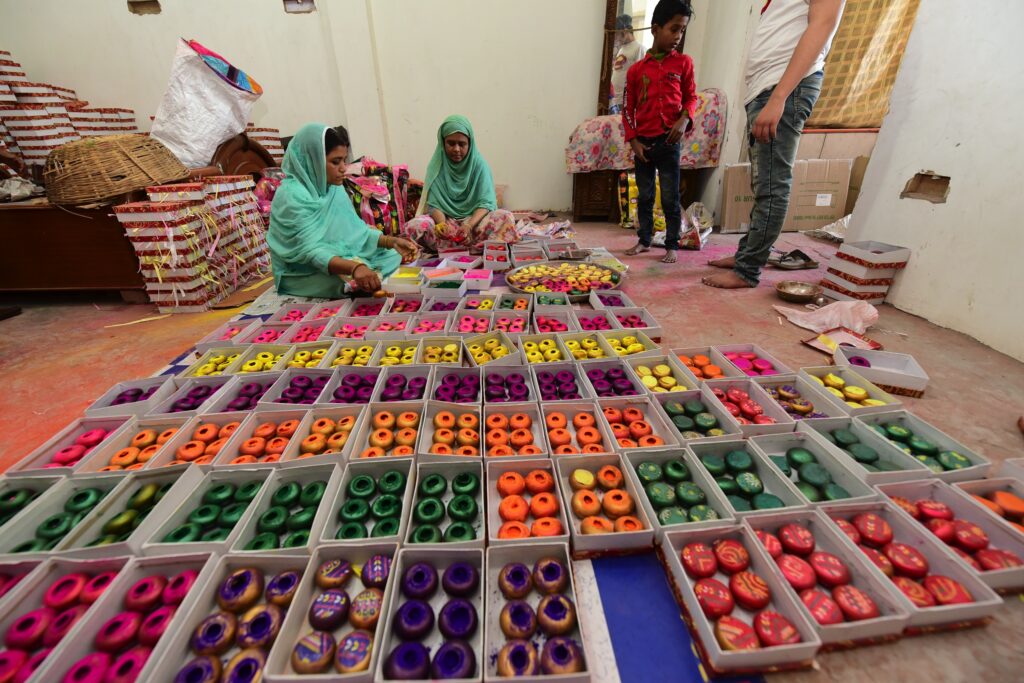
Boxes of Gulal Gotas being prepared for sale. | Picture by Tabeenah Anjum

Apart from states such as Madhya Pradesh, national capital New Delhi and Uttar Pradesh, it is shipped to other parts of the world including Canada, Britain, Australia, Spain, France and Nepal. However, packaging the balls needs careful handling to avoid the risk of the balls bursting in their wrapping. The balls are sold in packs of 6 or 8.

Those involved in the production of these balls belong to the Muslim community. Awaz Mohammed, a national award-winning artist who has been in this field for seven generations said, “This is a beautiful gesture and brings two communities together. The only sad part is that for an artist the sale from Gulal Gotas is not enough to sustain their livelihood.”

Awaz’s daughter Gulrukh Sultana who is a trained lac artist not only learnt the art from her father but is also sharing the skill at national institutes across India such as NIID, JJ School of Arts, Pearl Academy etc.

“Making lac artifacts is an intricate and unsafe job, but I want to share this art and skill with the future generation. It is the passing of tradition and heritage Jaipur is proud of. Lac is delicate and it needs proper handling. I have trained so many artists in different cities and also given demonstrations internationally,” said 35-year-old Sultana, a recipient of the state award in 2009 and a UNESCO award in 2013.

Looking at the market and interest of the younger generation, Sultana is apprehensive about whether this art could be saved. “Since there is not much earning, it is less attractive for youngsters to learn this skill but at the same time the government should come up with lucrative initiatives and ensure the art is kept alive”, she added.

Tabeenah Anjum is a journalist based in Rajasthan reporting on politics, gender, human rights, and issues impacting marginalized communities. She tweets at @TabeenahAnjum

source: http://www.twocircles.net / TwoCircles.net / Home> Lead Story / by Tabeenah Anjum, TwoCircles.net / March 16th, 2022