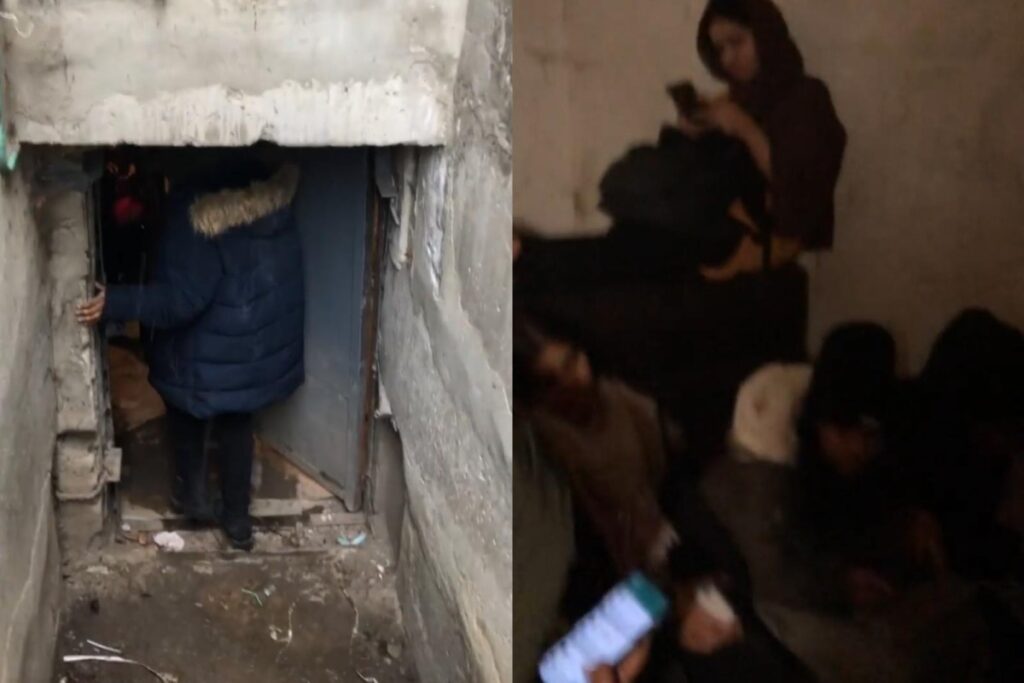
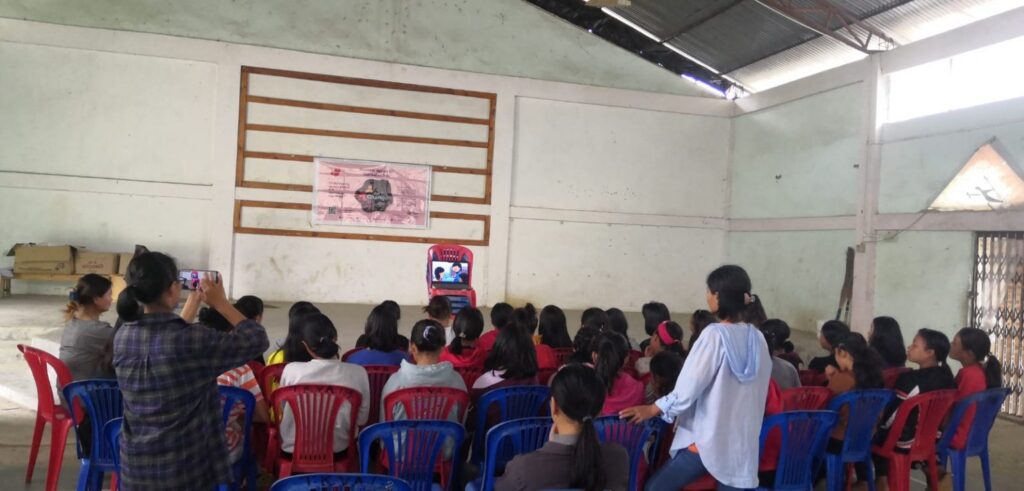
Screenshot from a video sent to The Peninsula by one of the students
Doha :
Around 23 Doha-based Indian medical students in Ukraine’s Kharkiv university have been staying in bunkers for the last four nights as fierce fighting between the Russian and Ukrainian forces has prevented them from fleeing the war-torn country.
The panic-stricken parents of these stranded students shared their anxiety with The Peninsula yesterday while requesting Indian authorities to quickly make arrangements for bringing back their children safely.
“It’s scary. We’re worried about the plight of our children after receiving disturbing text messages from them.
Even in this difficult situation, they’re consoling us saying Allah will show a way to overcome, says Doha resident Aysha Saibool, mother of Dua Khadeeja, a first-year medical student at the V N Karazin Kharkiv National University in Kharkiv.
She said that her daughter has informed that it will take at least seven hours from Kharkiv to reach the nearest border and since no security is guaranteed it is unsafe to travel.
The plight of the stranded students in the war zone was raised by her with the Minister of State of India’s External Affairs, V Muraleedharan.
The Minister said that travelling from Kharkiv, which lies in the eastern part of Ukraine, to the south – west borders of Romania, Hungary or Poland is not safe. He advised the students to stay where they are, until they receive further instructions from the Indian Embassy in Ukraine.
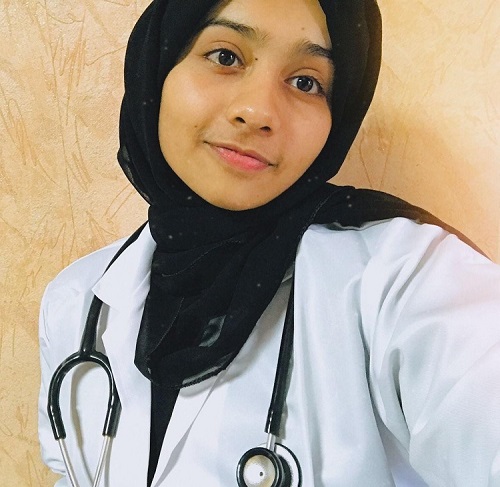
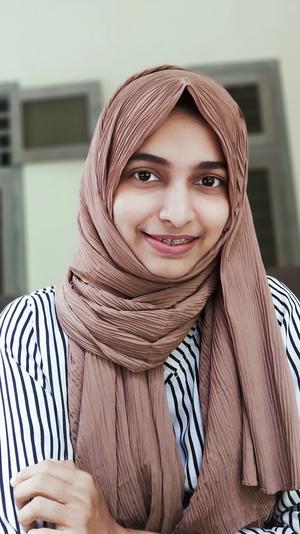
Dua Khadeeja
The Peninsula contacted Dua Khadeeja over telephone in Kharkiv and she said that she and 131 other students were stranded in the Mir hotel bunker in dire condition. They were told not to move out because of security reasons.
“We are sitting inside the bunker with the hope that we will be evacuated soon. Everyone is terrified. Some experience nose bleeding due to allergies and severe cold,” said Dua.
“There’s hardly any space to stand. We cannot even go to toilet. This morning we were allowed to go to hostel for a few minutes to freshen up. That was a little bit of comfort from this harrowing experience. Dua said that food is provided at the bunker.
The parents of Doha-based students have been sharing the latest developments through their whatsapp group.
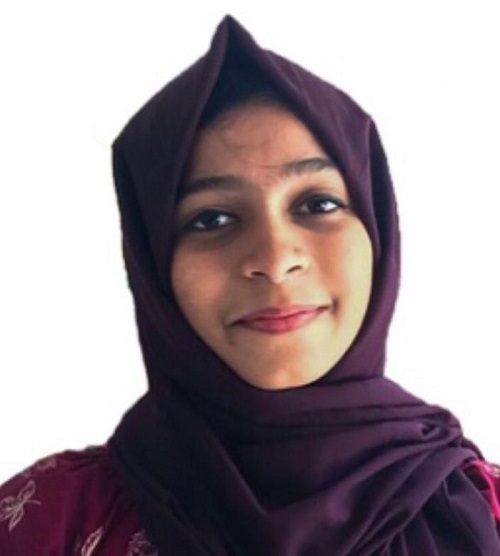
Nusrath Shamseer, whose daughter Fathima Sharbeen is also stranded in the hostel bunker in Kharkiv University, said they are worried about the situation. Fathima’s classmates Hiba and Riya are also staying in the hostel bunker since Thursday.
Fathima Sharbeen
“The easiest way for the students from Kharkiv to be evacuated is via Russia. But it is dangerous to cross the border without adequate security escorts from both Ukraine and Russia,” one parent said quoting his son’s message.
“The alternative routes are Romanian border in the south-west and Poland, Hungary and Slovakia in the west. These are too far from Karkhiv,” he added.
India has so far evacuated 709 students from Ukraine with the third flight carrying 240 students arriving in Delhi from the Hungarian capital Budapest last morning. The flight landed a few hours after Air India’s second evacuation flight from the Romanian capital Bucharest carrying 250 Indian nationals landed at Delhi Airport.
India’s evacuation operation of its stranded citizens, codenamed as ‘Ganga’, began on Saturday with the first flight bringing back 219 people from Bucharest to Mumbai.
Disturbing accounts by Indian students stranded in Ukraine are also circulating in social media with some complaining that they were beaten up by Ukrainian forces and were being kept from leaving the country.
According to Ukraine’s Ministry of Education and Science, there are over 18,000 students from India study in the country. Most of the students are from the southern Indian state of Kerala.
source: http://www.thepeninsulaqatar.com / The Peninsula / Home> Qatar> General / March 01st, 2022
Amidst the blitzkrieg from the Russian military, three students from Kodagu managed to leave the conflict zones in Ukraine and safely returned to India much to the relief of their family members who were pleading for their safe evacuation ever since Russian forces invaded Ukraine.
Alisha Sayyad Ali, Siniya V.J. and M.P. Nirmala, who managed to reach the borders in available modes of transport from their respective cities, returned on Wednesday in the evacuation flights operated by the Indian government.
The girls’ return was confirmed to The Hindu by the Kodagu district administration, whose officials were in touch with the stranded students since the war broke out. A few of the students from Kodagu and Mysuru are said to have reached Poland and are waiting for their evacuation. All of them are safe.
Siniya, who landed in Bengaluru airport on Wednesday evening, was welcomed by her family members.
Jose, her uncle, said Siniya had to walk about 20 km from her shelter in Kyiv along with other students to the railway station to reach Livv. She was evacuated from Budapest in Hungary to New Delhi.
“Minutes before Siniya was supposed to board a flight to Dubai on February 24 from Kyiv to join her sister for a vacation, Russian forces attacked Ukraine and the flights got cancelled. She had to rush back to her accommodation in available means of transport for her safety. Her 40-kg baggage was stuck in Kyiv airport and she flew to India with only a few pairs of clothes as all her belongings are at the airport,” Mr. Jose said.
Alisha, a student of Ivan Francisco Medical University, has also returned.
M.P. Nirmala, a student of Bogomoleth National Medical University in Kyiv, was stranded at a school after the invasion. Her mother Rajani was praying for her early return, pleading with the authorities for her evacuation. Ms Rajani said, “My daughter landed in Delhi this morning and is on her way to Bengaluru.”
Karthik, brother of Likith, who was stranded in Kharkiv with eight others, said his brother and some of his friends have reached Poland. “It was tough for them to reach the borders but they managed and are now away from the conflict zone Kharkiv which is under siege. They are waiting for their turn to board the next evacuation flights,” he said.
source: http://www.thehindu.com / The Hindu / Home> News> National> Karnataka / by Special Correspondent / Mysuru – March 02nd, 2022
Salman, along with countless others have been left to navigate to borders 800 kms away as the Indian government has absolved themselves of any responsibility.
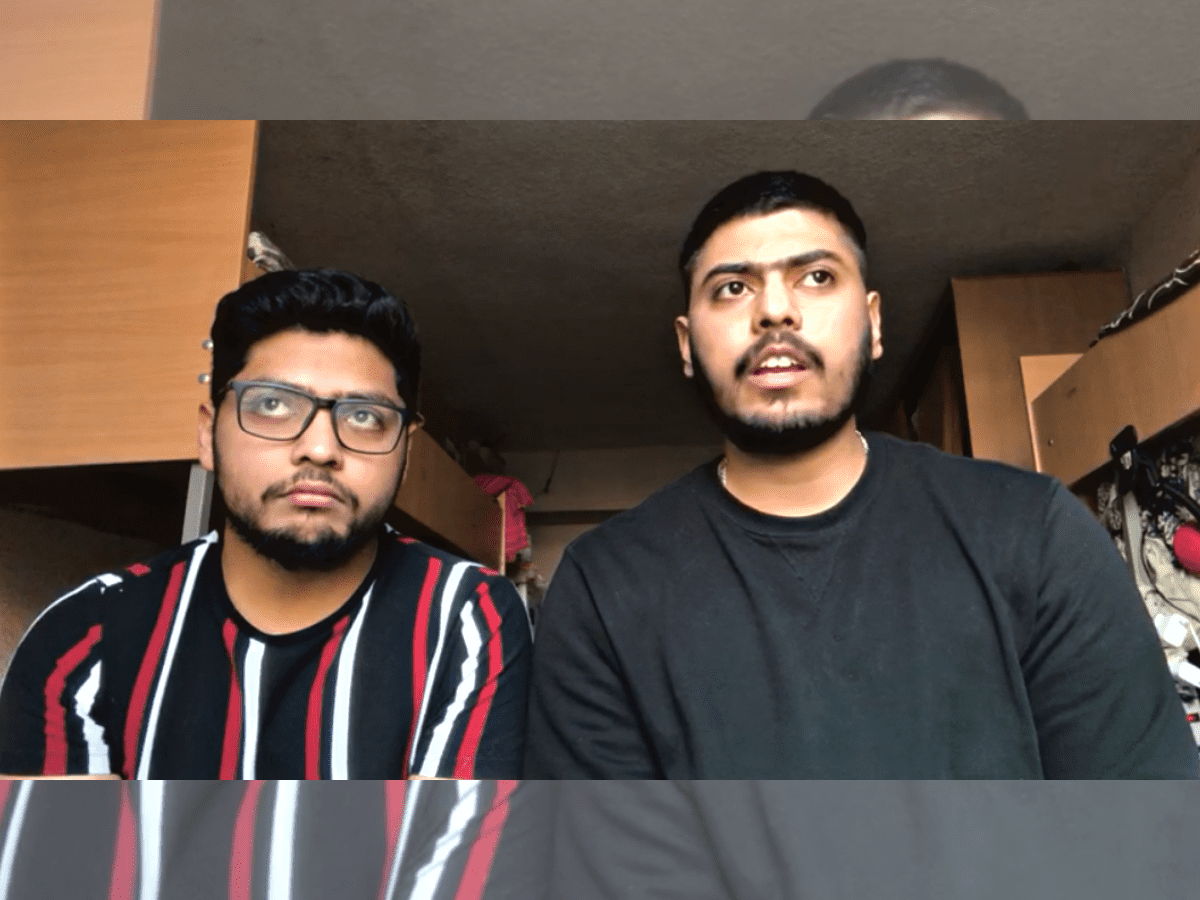
Salman (Left) and his friend Samiuddin. (Screengrab: Twitter)
Hyderabad:
At 8:30 pm, IST, Salman Mohiuddin, one of the countless Indian students stuck in Ukraine, over a WhatsApp call narrated the horrors he had witnessed over the last few days. His voice was meek, with hints of helplessness. He rushed through his statements and made it a point to mention that there was hope if the government chose to help them.
He used the collective word ‘them’ instead of the singular ‘me‘, as in times of war, nobody speaks in the singular.
Salman, along with countless others, has been stranded in the war-torn country since Russian President Vladimir Putin announced a military offensive against Ukraine, leaving expatriates stranded miles away from their homeland.
As a large number of students from the Dnipropetrovsk Medical Institute of Traditional and Alternative Medicine hurried to the airports in an attempt to fly to safety before the dreaded war began, their hopes were crushed as they were prevented from flying minutes before they boarded their flights.
“We were asked to leave the airport by officials and seek shelter elsewhere. A few minutes later, we heard a bomb detonate. We were a mere 1.6 kilometers from the bomb,” said a passive Salman over the call with Siasat.com.
Salman’s testimony made one thing clear.
The war had begun.
Students up until then were in a close-knit group. When the bomb made its presence known, they panicked and ran in different directions. Salman along with five of his friends ran towards and found shelter in the Kyiv Medical University’s hostel alongside 150 other resident students. Others ran towards the embassy in search of refuge.
When asked about bare necessities, Salman said that for the moment things were fine.
“We are a group of over 150 Indian students who are currently stuck in Kyiv. We have sufficient food to eat as we found shelter in the university’s hostel,” added Salman.
Salman’s account of Ukraine as mentioned before extends beyond his own self. While he hasn’t witnessed bodily offenses, he discusses how he has heard violence. The auditory account of violence is conveyed in his meek and yet somehow, detached tone.
“My friends who ran towards the Indian Embassy had been given shelter in a school nearby. However, the students have been struggling with little food, and are forced to bear the chilly weather, without mattresses or proper arrangements for a good night’s sleep,” he says.
Indian government and where they stand:
After three days of waiting around the students were able to contact the Indian Embassy in Ukraine.
“We were able to get in touch with the Embassy after a while. The Indian government claims to be rescuing students from Ukraine but we have been left to survive on our own,” said Salman. His up till then placid tone shifts to one of betrayal. “How can he do this to us?” he asks.
“We have been asked to stay where we are until the situation improves. The Embassy has left us to navigate the borders on our own, which are over 800 kilometers away,” said a now rootless Salman.
To make matters worse, the Indian embassy in Ukraine on Monday advised all Indian students stranded in Kyiv to reach the railway station in the Ukrainian capital for their onward journey to the western parts of the war-torn country.
The Indian government has so far rescued 907 stranded citizens from Ukraine following Russia’s military offensive against Ukraine.
Civil Aviation Minister Jyotiraditya Scindia said that approximately 13,000 Indians are stranded in Ukraine as of now, and the government is making efforts to bring them back as soon as possible.
Salman’s Hyderabad connection:
Salman’s family resides in Hyderabad’s Bahadurpura and like most families in Telangana has appealed to the state chief minister K Chandrasekhar Rao for help. Rao had earlier assured support for students from Telangana stranded in Ukraine.
Salman has earlier shared a video message, where he had shared glimpses of the heavily populated basement of the KMU as he pleaded with the Indian government for help.
Salman’s family resides in Hyderabad’s Bahadurpura and has appealed to the state chief minister K Chandrasekhar Rao for help, as he has promised to extend support in bringing back the students who are stranded in Ukraine, a copy of which has been accessed by Siasat.com.
“I spoke to my son a few hours ago. He told me that a few Ukrainian soldiers had tried to force their way into the hostel however were stopped and sent away by their hostel security guard. They are all stuck in the abasement of the hostel of KMU,” said Salman’s father Dr. Ghulam Mohiuddin.
They are stuck in Ukraine amidst a war. We are worried about them as bombs are dropping a few kilometers away from their location. We are appealing to the government for help,” said a helpless father.
Salman’s twin brother, Nomaan Hyder, who resides in Kazakistan, was the first to reach out to Siasat.com seeking help for his brother.
“He has been stuck in the basement alongside other students and we have been informed that they heard shots being fired at a distance when the Ukrainian soldiers arrived at the hostel. No one was hurt, however. Our family has been kept in the dark about a few terrifying incidents that have unfolded before my brother’s eyes in Ukraine,” said Nomaan.
The ongoing Russia-Ukraine War
The Russian army has launched coordinated missile attacks on several Ukrainian cities including the capital city Kyiv, on Thursday in Europe’s worst conflict in decades that was launched by Vladimir Putin on Thursday.
Negotiation talks are taking place in Belarus for Kyiv and Moscow however with little expectations.
Before the meeting, President Zelensky urged Russian forces to lay down their weapons and called for immediate EU membership.
On the fifth day of the Russian invasion of Ukraine, people in Kyiv are emerging from their homes after a weekend-long curfew.
As the Russian currency plunges, the interest rate is increased by 20 percent and experts warn of a possible run on banks.
UK’s defense secretary says that Russia could indiscriminately bomb cities as its frustration grows.
The northeastern city of Chernihiv was heavily bombed overnight however is still under Ukrainian control. However, reports of Belarus, a Russian ally, have decided to deploy its own soldiers to fight.
A number of World leaders have condemned the invasion and imposed sanctions against Russia, however, they have left little to no impact on the war-driven country. The US, EU, UK, and other allies have reportedly agreed to remove some Russian banks from the Swift payments system.
Germany also announced that it is sending anti-tank missiles and other weapons to Ukraine – marking a major change in policy.
A curfew had been put in place from Saturday to Monday morning after Russian missiles hit an oil depot in Vasylkiv, its mayor said, which has prompted fears of toxic fumes. Anyone who is seen on the street during the curfew will be treated as a Russian “saboteur”, said the capital’s mayor.
A large number of people have already fleed Ukraine, while some attempt to flee the war-struck country with a 27-hour-long queue of women and children, on the Moldovan border.
Heavy street fighting took place in Kyiv on Saturday as officials urged locals to take immediate shelter. Kyiv was struck by two missiles. As many as 198 Ukrainians, including three children, have been killed since the invasion began.
source: http://www.siasat.com / The Siasat Daily / Home> News> Hyderabad / by Syeda Faiza Kirmani / February 28th, 2022
Hyderabads Humera and Rashmikaa with the doubles trophies.
Hyderabad:
Hyderabad tennis players Shrivalli Rashmikaa and Humera Baharmus pair lifted the women’s doubles crown at the Haryana Women’s ITF $15k tennis tournament, in Gurugram on Saturday.
The talented youngsters, who were unseeded in the tournament, defeated top seeds Kovapitukted Punin of Thailand and Anna Ureke of Russia 6-3, 1-6, 10-3.
This is their maiden ITF women’s title. In the singles, Rashmikaa lost to Kovapitukted Punin in quarterfinals on Friday.
Safana Shamna who was selected for Sustainability Leadership Programme offered by Geneva-based United People Global. | Photo Credit: The Hindu
Safana Shamna, a young social worker and Kudumbashree trainer from Mankada in Malappuram district, has been selected for this year’s Sustainability Leadership Programme offered by Geneva-based United People Global (UPG).
She is among the handful of Indians who made it to the 500 young leaders selected from 159 countries. Announcing the selection, the UPG said that Ms. Shamna was selected after an intense review by 130 panelists.
The UPG offers training in sustainability leadership every year for select candidates from across the world. “It gives nine-week-long classes in sustainable leadership with the objective of attaining social sustainability,” said Ms. Shamna.
The chairperson of the Mankada Readers Forum, Ms. Shamna is also the district treasurer of Haritha, the women’s wing of the Muslim Students Federation. “I have been focusing on the idea of attaining sustainable development through mini training sessions,” she said.
The UPG Sustainability Leadership Programme classes will begin on March 14.
source: http://www.thehindu.com / The Hindu / Home> News> National> Kerala / by Staff Reporter / Malappuram – February 15th, 2022
Muskan khan was facilitated by members of Maharashtra-based NGOs [Special arrangement]
The family of Muskan Khan, a Muslim student who became a symbol of pro-hijab resistance after confronting an unruly mob and chanting the ‘Allah-u-akbar’ slogan in Karnataka, have expressed happiness over the widespread support they have received from across the world.
Muskan’s father Husain Khan said that after the college incident, they were a bite worried but Muskan calmed them down and told them that they are on the right path and they have nothing to worry about.
Karnataka’s Muskan Khan has become the poster girl of pro-Hijab protests. Muskan hogged headlines after her video of shouting “Allah Hu Akbar” went viral. The video showed Muskan being heckled by saffron-clad students in Karnataka. Muskan opened up about her viral video in an exclusive interview with ZEE News. / www.youtube.com / DNA India News _________________
“She is a daughter of a Pathan,” Khan proudly said.
“Muskan is a very religious girl who believes in the importance of connection with their creator and performs tahajjud on daily basis (midnight prayers.)” he said while speaking to this correspondent over a call.
He further said that he wanted Muskan to become an advocate but many well wishers are now suggesting her to start preparations for civil services exams.
“Insha Allah, we will do our best for her better education to become good a human being and serve her nation,” he said.
Hussain Khan raised his concerns over rumour and fake news about his family. “When our opponents spread rumours and fake news like receiption of crores of rupees ,gifts and rewards etc.,it can be ignored easily but when our own people do it and try to let us down by doing so then it hurts” he added.
He added that Muskan has received overwhelming media attention and activists from all over India keep coming to appreciate Muskan’s brave act.
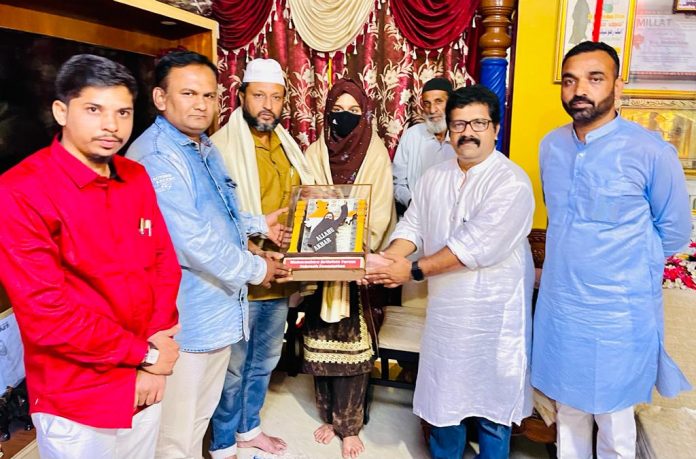
Members of Maharashtra-based NGOS – Maharashtra active Forum, Gaziuddin Research Centre, Tahzeeb Foundation and Sada Foundation – visited Muskan to felicitate her. One of the visiting member Sarfaraz Ahmad said that motive behind the visit was protection of Muskan’s constitutional rights. All the present members including Muskan and family read “preamble to the constitution of India” there, he added.
source: http://www.muslimmirror.com / Muslim Mirror / Home> Indian Muslim / by Imran Inamdar / edited and video of DNA Indian News inserted / February 27th, 2022
Notably, Fathima’s father, Abdul Samad, an ex-Member of Parliament, won from the Harbour area during the 1958 urban local body polls.
AS Fathima Muzaffer led numerous anti-CAA protests in Chennai. (Photo | Special Arrangement)
Chennai :
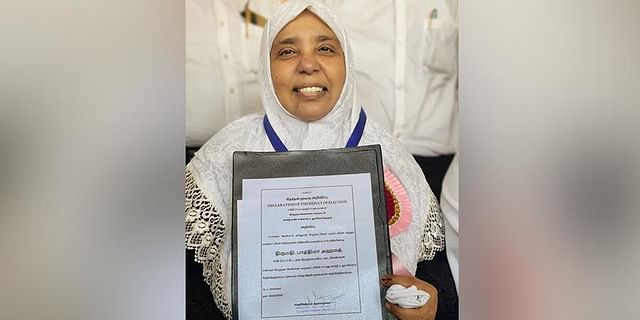
The woman, who led numerous anti-CAA protests in Chennai, AS Fathima Muzaffer from the Indian Union Muslim League (IUML)-DMK alliance emerged victorious in ward 61 of the Chennai Corporation on Tuesday by a huge margin of votes.
After five and a half decades, IUML’s own symbol (ladder) was used and this is the first time in the history of the party that a woman candidate has contested in Chennai.
Notably, Fathima’s father, Abdul Samad, an ex-Member of Parliament, won from the Harbour area during the 1958 urban local body polls. Fathima bagged 6,347 of 11,443 votes in her ward.
“It is a historic moment for IUML as we contested only from one ward and won. This is a silent answer to the ongoing hijab fiasco. Also, this is my first political campaign. I have been a social activist largely and hope to do the same as a councillor — serve the public,” said Fathima, who is also the national president of IUML’s women’s wing.
With numerous colleges, a prestigious stadium and four slums in her ward, Fathima says she wishes to bridge the gap between the elite and downtrodden.
“I want to implement a lot of youth programmes. Since this ward has good population of youth, it is crucial. Apart from this, social equality and communal harmony will always be at the forefront.”
Fathima’s family has been in politics for three generations.
Her grandfather, Moulana Abdul Hameed Baqavi was a freedom fighter and reportedly the first person to translate the holy Quran into Tamil.
She has also won a lot of awards in the field of social service for her work on women’s empowerment and education, especially in the Muslim community.
source: http://www.newindianexpress.com / The New Indian Express / Home> Cities>Chennai / by KV Navya, Express News Service / February 22nd, 2022
Farheen Naaz (39), an experienced education professional, calls herself a “menstrual educator by passion.” | Picture by arrangement
The objective of Farheen Naaz’s organisation is to break the taboo that has been built around menstrual hygiene since ages and normalise period talk, which is frequently hushed by elders in most Indian households.
New Delhi :
During the first and second wave of Covid-19, Farheen Naaz was busy distributing relief kits to marginalized communities in New Delhi. The kits however, had only one sanitary napkin packet. One of the women told her there was more than one menstruator in her house. That interaction left her thinking how the menstruation needs were left unaddressed during the pandemic and in ordinary times.
Farheen (39), an experienced education professional, calls herself a “menstrual educator by passion.”
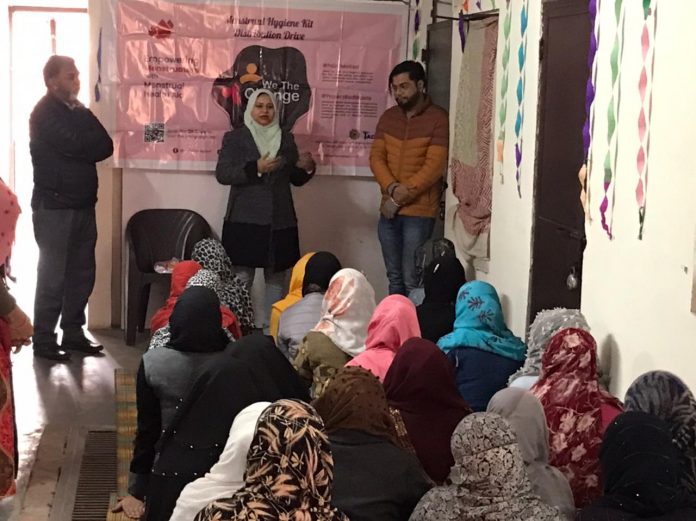
In September 2019, she started We The Change, a women-led Delhi-based not for profit, working towards creating awareness and inculcating correct knowledge about menstrual hygiene amongst the community, including members who do not menstruate. The organisation started with online sessions and talks, soon growing to conducting on-ground drives.
We The Change distributed more than 950 menstrual hygiene kits (containing 50 sanitary pads, 50 disposal bags, two cloth panties and a bar of soap) across India during the pandemic. They plan to double their target and reach out to 2000 menstruators pan India.
“The objective of our organisation is to break the taboo that has been built around it since ages and normalise period talk, which is frequently hushed by elders in most Indian households,” says Farheen. “While this might be a topic that might have been directed towards only adolescent menstruators over time, our organisation has decided to include families of the menstruators as well to create a comfortable and safe space for these conversations.”
Farheen says she realised the problems are far deeper than just not getting access to menstrual products. “Mothers and grandmothers are the main sources of information for many menstruators, and hence they do not get access to the kind of resources and information that they should get,” she says. “Shame makes many menstruators susceptible to harm because they learn taboos and misinformation.”
We The Change initiative has collaborated with Menstrupedia, an educational comic book on menstruation that is used in schools across the country for workshop and training purposes. | Photo by arrangement
Having worked in sectors focusing on institutional education, menstrual education, skill development and social work, she hopes she can bring a significant change in the society and smooth over the differences that exist between different genders, castes and socio-marginalised classes.
“We partner with and train local teachers so that students can come to them with their issues and get information from menstrual health-trained teachers,” she explains.
We The Change initiative has collaborated with Menstrupedia, an educational comic book on menstruation that is used in schools across the country for workshop and training purposes.The plan is to buy and donate these books to menstruators pan-India, and use this material to train adolescents in menstrual health and menstrual waste management.
Sustainability in menstrual health and hygiene is often talked about. But a majority of women are unable to use sustainable menstrual products due to lack of resources such as clean water and the cost of these products.
Farheen has come up with a menstrual waste-management project called the #ProjectRedWaste, which is specifically aimed at providing recycled paper bags with a red dot on them to menstruators to safely dispose of menstrual waste, such that sanitation workers also identify these and separately handle them.
Farheen says this work has helped her realise how fixing menstrual issues is central to breaking several societal barriers. A large part of her programme therefore involves education about menstruation, women empowerment, battling transphobia, and inculcating leadership amongst young menstruators.
Suchitra is an independent journalist working on social justice, focusing primarily on gender justice. She tweets at @Suchitrawrites
source: http://www.twocircles.net / TwoCircles.net / Home> Lead Story / by Suchitra, TwoCircles.net / February 07th, 2022
The convocation ceremony of KGMU will be held on December 17. 42 meritorious people will be awarded with Gold, Bronze and Silver medals.
In this, 24 girls and 18 boys have won medals.
Foundation Day celebrations will be celebrated on 18th December. In this, 90 medals will be awarded to 57 students. In this also the female students continue to dominate. 38 meritorious girl students will be decorated with medals around their necks, while 19 students have succeeded in capturing the medals. In both the ceremonies, 154 medals and prizes will be given to the meritorious.
This information was given by Vice Chancellor Dr. Bipin Puri on Monday.
Name of the three medals for Uzair : In the Brown Hall, the Vice Chancellor told a press conference that the celebrations would be held at the Atal Bihari Vajpayee Scientific Convention Center. Vice Chancellor Dr. Bipin Puri informed that MBBS student Ahmed Uzair has won the most prestigious Chancellor of KGMU, Hewett and University Gold Medal.
After a long time, a meritorious has captured all the three medals. Uzair will get the maximum 13 gold in the convocation. There will also be a book prize and a silver medal. The Vice-Chancellor said that MBBS student Shivam Singh would be awarded four gold and one silver medal. MBBS student Akanksha Singh will get a gold medal.
Prime Minister can be the chief guest Prime Minister Narendra Modi may be the chief guest of the function. The administration has intensified the preparations for his arrival. The Vice Chancellor said that an invitation has been sent to the Prime Minister. There is every chance of them coming. Governor Anandiben Patel will preside over the convocation. He said that Justice Ramesh Sinha of the High Court would be present at the foundation day celebrations.
Two new medals Medical Dean Dr. Uma Singh informed that two new medals have been started this year. Gold medal has been started in the name of Dr. GK Malik, former Chairman of the Department of Pediatrics. Medals are being awarded to the student securing the highest marks in the written paper in Neonatal. Whereas Gold Medal has been started in the memory of Dr. BN Dhawan in the Department of Pharmacology.
Meritorious said: Work in research “Hard work never goes in vain,” said Ahmed Uzair, chancellor, Hewett, and university medical laureate. I never studied for a medal. To become a better doctor and researcher, he has worked hard day and night.
It gives great pleasure to receive all three prestigious medals of KGMU. It feels good if you get the fruits of your hard work.
My father Dr. Maulana Mohammad Ansari, mother Dr. Shahla Haleem and maternal grandfather Dr. Abdul Halim are also doctors.
All the members of the house are associated with the service of humanity. That’s why I also have an inclination to become a doctor from the beginning. I am a student of MBBS 2016 batch.
Many research papers have been published till now. That’s why we have to go ahead in the field of research. Under the same, got a job in Drugs Medical School to do research work in neuro surgery. For research area, the company office will have to go to New Jersey, US.
Going into surgery Dr. RML Mehrotra Memorial Gold Medalist Akanksha Singh said, ‘When I was seven years old, my father Late. The shadow of Mahendra Singh had risen from his head. Mother Rajeshwari Singh is posted in the DRM office. Nana Uma Shankar has retired from RPF. Mother worked hard and taught. I live with family in Alambagh. Brother is an engineer. He says that from the beginning he had dreamed of becoming a doctor. Which is now coming true. My name is in the list of gold medal winners, it is nothing less than a dream for me.
I am the first doctor in the family Dr. BR Agarwal Memorial Gold Medal winner Dr. Neelam Chauhan said, ‘I had a dream to become a doctor since childhood. I am the first doctor in my family. Mother is a housewife. While the father has retired from the bank. At present, work has to be done by staying in KGMU. In the future, I have to become a plastic surgeon so that the faces of people who have been burnt in the fire can be cured. My husband is also a doctor in KGMU.
Dreamed of becoming a doctor after seeing Aprin and Aala Dr. TN Chawla Gold Medal Dennistry winner Dr. Neeti Solanki said, ‘I had a dream to become a doctor since childhood. Seeing Aprin and Aala in childhood, he decided to become a doctor. After working hard, I have achieved this position. Some marks could not get admission in MBBS. But got a seat in Dental. Now we have to move forward in the field of dental. I am working in prosthodontistry. I am the first doctor in my house. Mother is a housewife and father is a businessman.
These will be honored on the foundation day MBBS Ananya Tripathi, Aviral Dua, Aaradhya Garg, Y Ashutosh Bhardwaj, Ayush Sahu, Sonal Yadav, Nikita Chauhan, Ramji Ballabh, Vidushi Verma, Mishakt Fatima, Anjali Singhal, Guneet Kaur, Anamika Gupta, Deepak Bansal, Aparajita Kulshrestha, Aparna Singh, Lipika Agarwal, Mahima Keshari, Vikram Pal, Sumit Singh, Kaushal Kishore Singh, Priya Gangwar, Anubhav Mukherjee, Pradyut Kumar Amat, Durgeshwari Balaji, Shiva Gupta, Ayesha Khan, Nishant R Subhash, Akanksha, Purvi Gupta, Divyanshu Gupta, Devanshi Katiyar, Girjanand Mishra
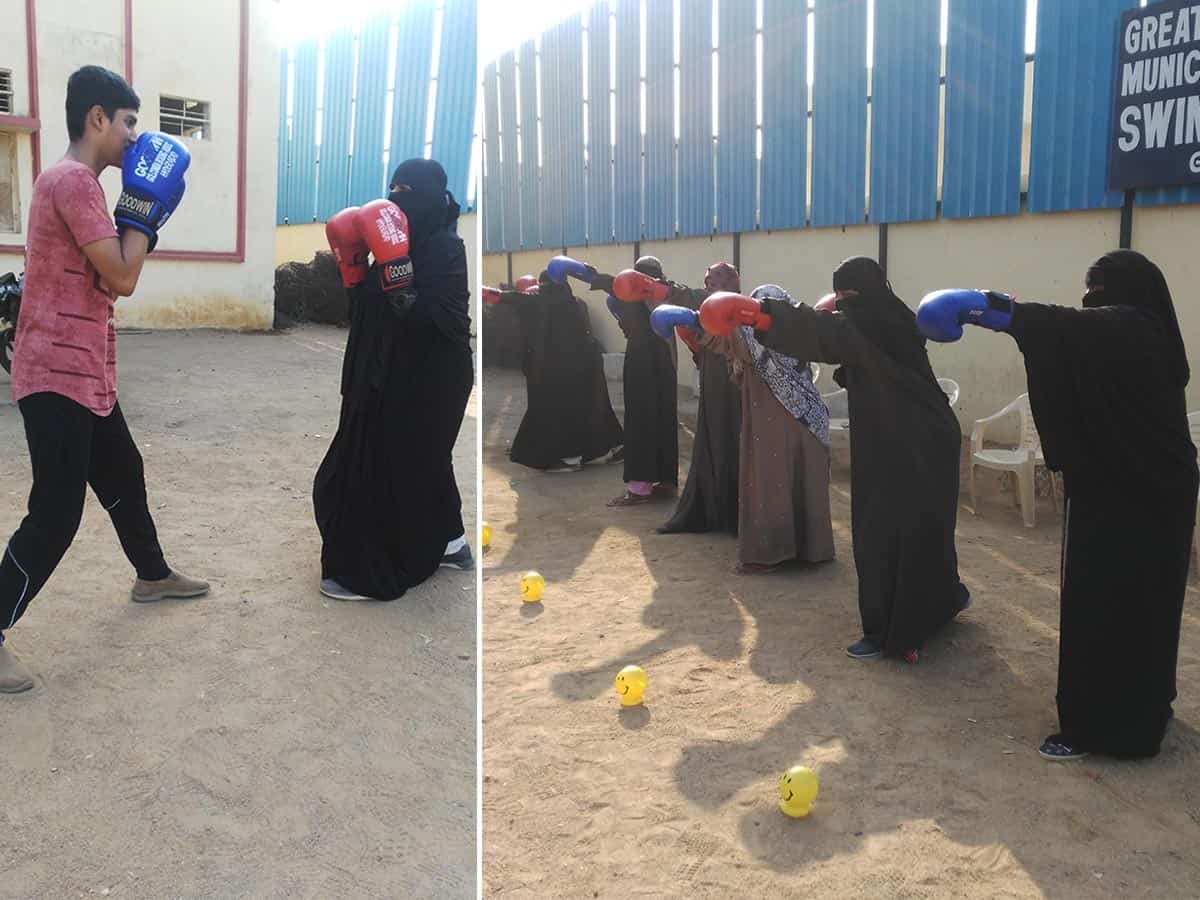
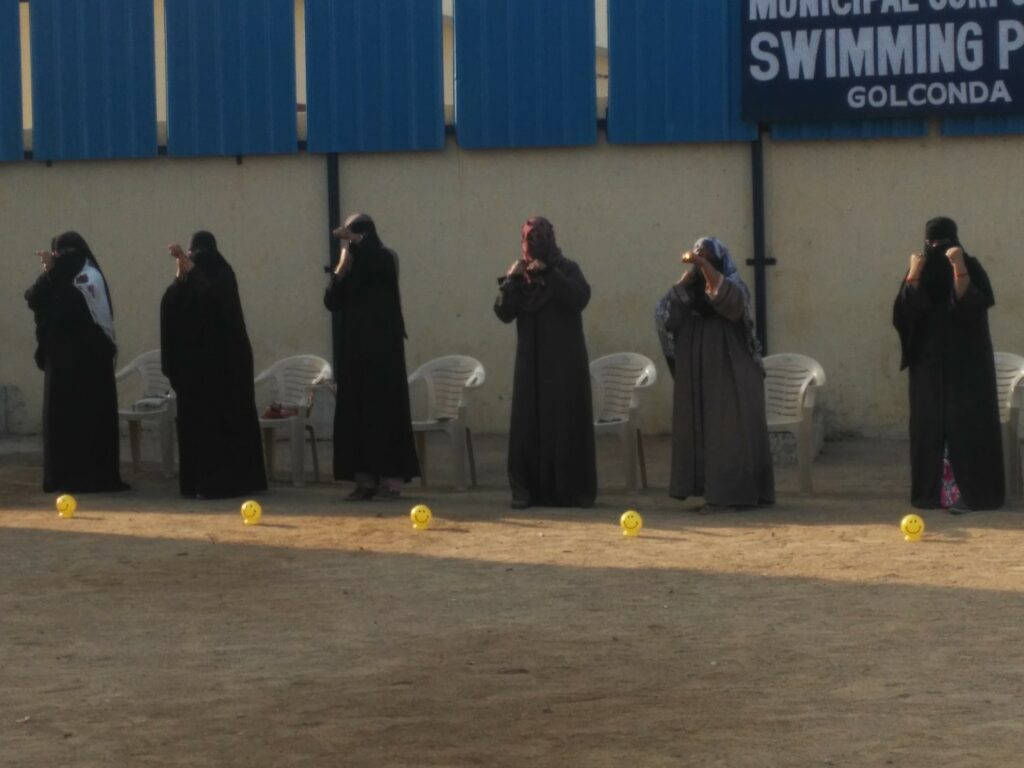
Considered to be one of the academy’s finest students, Amena (name changed) makes it a point to train at least for three hours a day. A burqa-clad woman, she resolved to break the shackles of the oppression that is often wrongly associated with the piece of clothing. She is 39-year-old and one of the fifteen women in this boxing school between the ages of 35-50.
Surprisingly enough, both Amena and her 15-year-old son Uzair train together. “The duo gives each other a good fight in the boxing ring,” said their coach Shaikh Aijaz Ahmed.
A national-level gold medalist himself, Aijaz Ahmed set up Golconda Boxing Academy in 2002 at Owaisi playground, Golconda and has been giving free coaching to all. “I believe that women must train for boxing, as it is best for self-defence. I am glad that more women are willing to learn boxing at my academy,” he said.
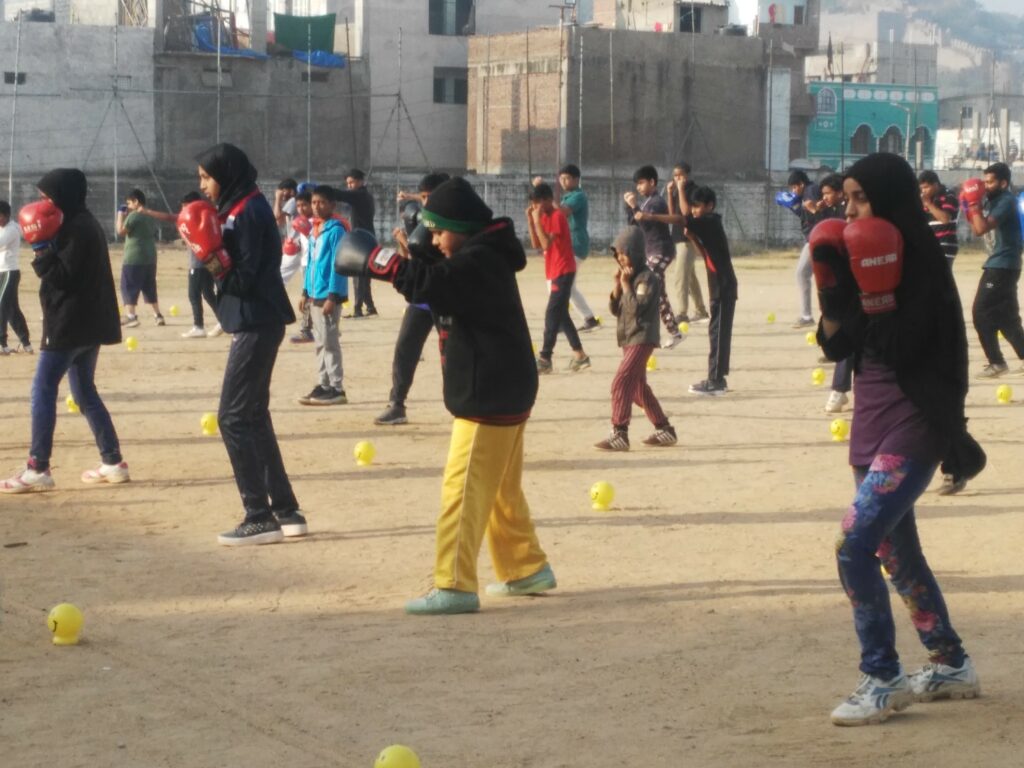
As many as 150 students are enrolled in the academy as of now. Of them, there are children, young girls and married women.
35-year-old Naseema Begum believes ‘hijab’ is not an excuse to quit learning new things. “It is all about dedication and enthusiasm for learning and productivity,” Begum says. “Even if we don’t participate in any tournaments, it at least keeps us healthy and fit,” said 41-year-old Najma Sultana, who trains with her 6-year-old granddaughter.
Many women prefer to take these classes as a break from their routine and also because the classes are given for free.
Young girls between the ages of 13 – 20, seen in a headscarf, give a tough fight to the boys. Many of them are very keen on taking boxing as their career ahead too. One of them is Afsha Shah, a 14-year-old, who is already making a mark. She took part in the national and state-level games and won prizes. “At times these girls give a tough time to me as well,” Ahmed laughs, saying it also builds their character.
youtube.com / The Siasat Daily
It was Ahmed’s grandfather Subedar Major Shaik Ahmed inspired him to continue the tradition. “My grandfather dreamt of these changes in the community. He was a great boxer and even served the Army. My father Shaik Abdul Gani, participated in national-level tournaments before he retired from the army in 1980. He set up this Golconda Boxing Association in 1990,” Ahmed added.
source: http://www.siasat.com / The Siasat Daily / Home> Featured News / by Nihad Amin edited by Sruthi Vibhavan / January 21st, 2021