Habeebullah Khan, head of Arabic Department at Jamia Millia Islamia, New Delhi, inaugurating a national Arabic conference at Calicut University on Sunday.
Says language is a major factor in employability in the Gulf
A national Arabic conference held at Calicut University under the banner of the Wisdom Islamic Students Organisation on Sunday demanded that finishing schools be set up in the State. “A large number of our professional students are depending on jobs abroad, particularly in the Gulf. Language is widely considered a barrier for our students, and that affects their employability skills,” the conference pointed out.
A resolution passed by the conference pointed out that the problems in communicating through a new language could be solved to a great extent by adding finishing schools to minority coaching centres in the State. The government should set up centres to promote foreign languages, including Arabic.
The conference also asked the government to end the discrimination in offering elective languages for higher secondary students. Higher secondary students should be given choice to select second languages like Arabic, Urdu, and Sanskrit.
The conference also demanded that university syllabi be revamped in accordance with the demands of the changing times. Habeebullah Khan, head of Arabic Department at Jamia Millia Islamia, New Delhi, inaugurated the conference. Wisdom Islamic Students Organisation State vice president P.P. Naseef presided. P. Abdul Hameed, MLA, was the chief guest. Wisdom youth wing president C.M. Sabir Navas, Jamia Al-Hind Al-Islamia director Faizal Ahamed, and organizing committee chairman P.M. Shahul Hameed spoke.
source: http://www.thehindu.com / The Hindu / Home> News> States> Kerala / by Staff Reporter / Malappuram – September 02nd, 2018
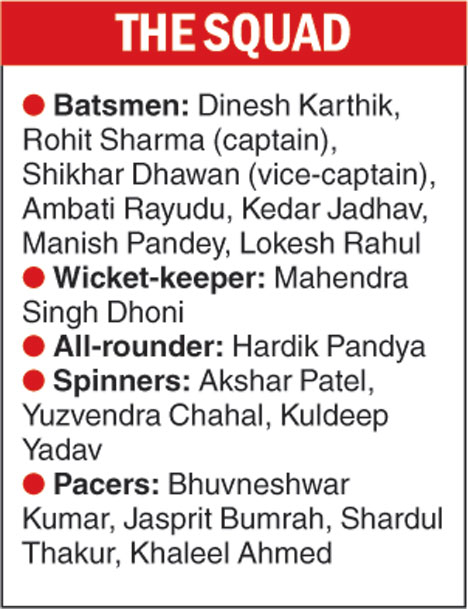
Rajasthan left-arm pacer Khaleel Ahmed is the only new face in the 16-member squad for the Asia Cup, which was picked in Mumbai on Saturday.
The 20-year-old has played only two first-class matches, but has more experience in List A and T20 cricket, having played 29 games across the two shorter formats. He was part of the India A limited-overs squad that toured England in June-July, and also played for India A in the recently concluded 50-over quadrangular series against South Africa A.
Rohit Sharma will lead the side while Shikhar Dhawan is the vice-captain.
Khaleel, who has taken 15 wickets in his last nine limited-overs matches for India A, had been on the selectors’ radar for a while.
Chief selector MSK Prasad said they had identified most of the squad for next year’s World Cup in England, apart from two or three slots, of which one was in the pace-bowling department.
“Two to three slots we are yet to finalise, so for those slots we are trying and we’ll look at these 24 matches (in the lead-up to the World Cup). You’ll come to know the slots more specifically as we go ahead … Among those, one of those seamers’ slot is open. We are looking at a left-arm option in Khaleel,” Prasad said at a media conference.
Khaleel also played in the IPL for Delhi DareDevils in 2016 and Sunrisers Hyderabad in 2017. While Delhi had bought him for just Rs 10 lakh at the auction, the Hyderabad franchise spent Rs 3.2 crore to get him in their ranks.
source: http://www.telegraphindia.com / The Telegraph,Calcutta,India / Home> Sports / by The Telegraph Bureau & Agencies / September 02nd, 2018
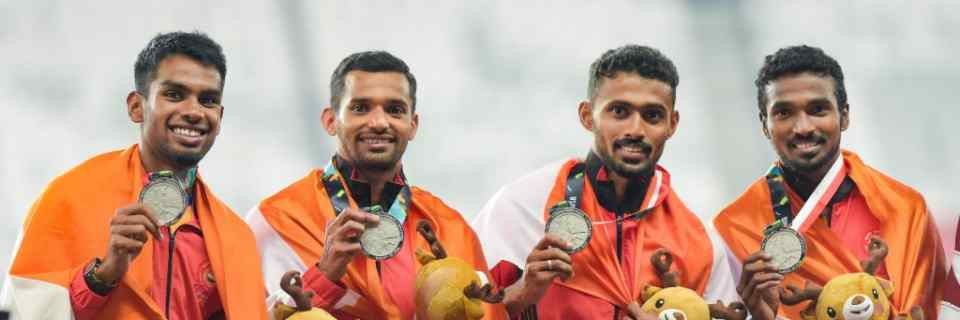
India’s 4x400m men’s relay team bagged silver in the final event of athletics at the Asian Games in Jakarta on Thursday.
The Indian quartet of Kunhu Muhammed, Dharunn Ayyasamy, Mohd. Anas and Arokia Rajiv clocked 3:01.85 to finish behind Qatar who won gold in an Asian record time of 3:00.56.
Japan took the bronze after clocking 3:01.94.
Kunhu Muhammed ran the first lap, followed by Dharun Ayyasamy but by the time the baton reached Anas, Qatar was pulling away. The Indian team was placed fourth at that time but Anas pulled off a great run to pass two runners and Arokia Rajiv managed to maintain the second position
India had finished fourth in this event in the 2014 Asian Games.
(With inputs from PTI)
source: http://www.thequint.com / The Quint / Home> Asian Games / August 31st, 2018
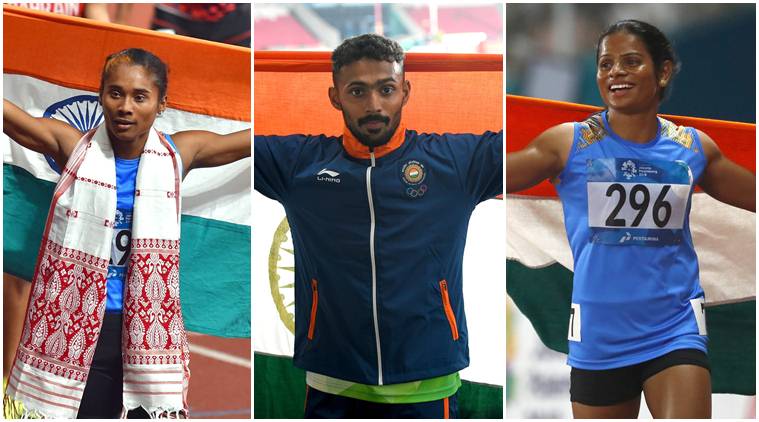
Hima Das and Muhammed Anas won a silver medal each in women’s and men’s 400m on Day eight of Asian Games 2018, continuing India’s strong show at the tournament in athletics.
Hima Das, Muhammed Anas and Dutee Chand added three silvers to India’s medal tally.
Hima Das and Muhammed Anas won a silver medal each in women’s and men’s 400m on Day eight of Asian Games 2018, continuing India’s strong show at the tournament.
Hima beat her own national record in two days as she clocked 50.59 seconds to win the silver, behind Bahrain’s Salwa Naser who won the gold in a new Games record time 50.09 seconds. She had qualified for the final with a national record time 51.00 seconds on Saturday, bettering the 14-year-old mark set by Manjeet Kaur (51.05) in Chennai in 2004.
Asian champion Anas also settled with a silver in the men’s 400m final as he timed 45.69 seconds, behind Asian season leader and 2017 World Championships bronze medallist Hassan Abdalelah of Qatar, who clocked in 44.89 seconds. Anas, who holds the national record of 45.24, had clocked 45.30 in the preliminary heats.
Dutee Chand clinched a silver in women’s 100m dash to win the country’s first medal in 20 years in this event. Running in lane number 7, Dutte clocked 11.32 seconds, a tad below her national record of 11.29 seconds.
source: http://www.indianexpress.com / The Indian Express / Home> Sports> Asian Games 2018 / by Sports Desk / August 27th, 2018
Barbaria (Narsingpur District) MADHYA PRADESH / NEW DELHI :
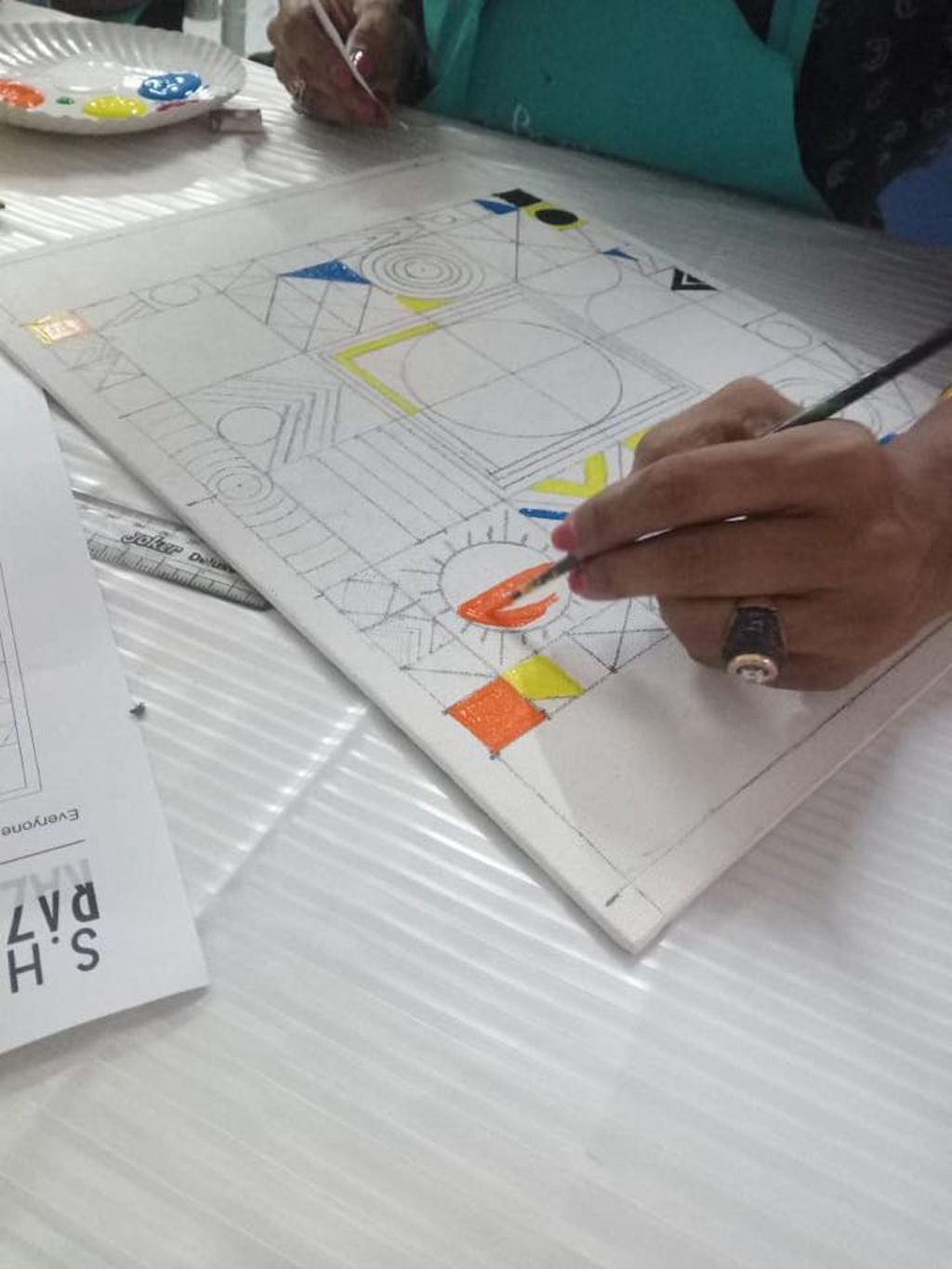
S.H. Raza: Traversing Terrains which opened at the Piramal Museum of Art, Mumbai, will be on view till 16 December 2018. Through the paintings, photographs, diary extracts, and written correspondence between the artist and his contemporaries of the renowned Indian painter, the exhibition presents the story of Raza’s life from the early 1940s to the late 1990s.
A painting workshop that individuals can choose to participate in.
An extensive outreach programme has been put together that draws upon key themes in Raza’s work and the narrative focus of the exhibition to make it accessible and engaging. A host of events including talks, film screenings, workshops and walkthroughs designed to increase the accessibility of Raza’s work for a wide range of audiences are also scheduled.
Programmes like Cycle 16 which will allow visitors to engage with the artists in residence and their on-going projects and a children’s workshop called Raza’s Bindu, which introduces children to the world of art using the most recognizable symbol from Raza’s work, the bindu, are to be held.
A second edition of Art Night Friday, part of the newly established Mumbai Midtown Arts Collective, will take place in late-September. Piramal Museum of Art will hold guided tours in English and Marathi till 10 pm. Towards the end of the month, Connect the Dots 2 is scheduled to be hosted. In this adventurous programme, participants will trace the footsteps of Raza by visiting locations around Mumbai that he frequented.
The registration for a few events is free or starts at INR 650. While most programmes will be held at Piramal Museum of Art in Lower Parel itself, ‘Connect the Dots’ will begin at Jehangir Art Gallery.
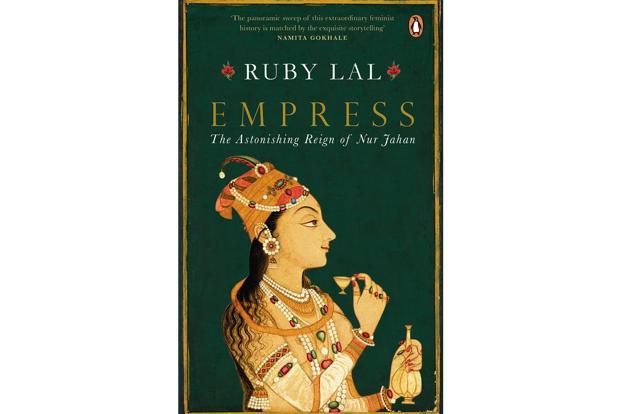
Ruby Lal’s book gives a new life to Nur Jahanas Jahangir’s co-sovereign, a position never held by any Mughal woman
While there may be more than a grain of truth in Jahangir’s devotion to his beloved spouse (it has been the subject of several movies), Nur Jahan’s political acumen and gallantry make her phenomenal career trajectory seem inevitable.
The polemical potential of Ruby Lal’s new book is apparent from its title, even before we get to the text proper. Empress: The Astonishing Reign Of Nur Jahan takes the spotlight away from Jahangir, one of the Great Mughals, to shine it on his 20th and favourite wife, who, as Lal proposes, not only scaled untold heights during his reign but also announced herself to be his “co-sovereign”.
“Scholars have for some time acknowledged her power, almost in bullet points, but never in any concrete way thought through it,” says Lal, who teaches at Emory University in the US, on email. “There is still the tendency in scholarly and other writings to lock Nur’s power in a romantic story with Jahangir: in fact, that romance becomes the explanation for her rise.”
While there may be more than a grain of truth in Jahangir’s devotion to his beloved spouse (it has been the subject of several movies), Nur Jahan’s political acumen and gallantry make her phenomenal career trajectory seem inevitable. Lal begins, for instance, with a spectacular scene of a hunt, in which a musket-bearing Nur Jahan kills a man-eating tiger in Mathura, where the royal cavalcade made a stop on its way to the Himalayan foothills in the autumn of 1619. Nur, 42 at the time, had been married to Jahangir, her second husband, since 1611. It was a fate her parents, Ghiyas Beg and Asmat Begum, could never have foreseen when their daughter, Mihr un-Nisa, was born in 1577 by the roadside outside Kandahar, as they fled their home in Herat.
Hounded out of Persia due to religious persecution, Beg sought Akbar’s patronage in the late 16th century, and it was generously provided. Eventually decorated as I’timad ud-Daula, or the Pillar of the State, by his regal son-in-law, Beg went on to assume the highest rank in Jahangir’s service. His family did well by the Mughal rulers too. Beg’s son, Asaf Khan, would turn out to be the future emperor Shah Jahan’s father-in-law. But it was Beg’s daughter, Mihr un-Nisa, honoured by her royal husband as Nur Jahan, or the Light of the World, who assured him a place in history.
If Nur was exemplary for being the first woman in the subcontinent to exercise direct executive privilege, she was doubly impressive for achieving such a status as a rank outsider. “Remember, she was not a Mughal by bloodline,” says Lal, “not like Queen Elizabeth I (of England) or Queen Christina (of Sweden), who were from royal families.” Nur’s elevation, in the context of her times, was certainly unprecedented, though women in the Mughal harem, especially the elders, often did act as confidantes, advisers and counsellors to the emperor.
Gulbadan Banu Begum, Babar’s daughter and Akbar’s aunt, and Hamideh Begum, Akbar’s mother, were matriarchs to reckon with. Nur’s mother, a lady of refinement and education, was credited with the discovery of an itar (perfume) while boiling petals to make rosewater. But no one went as far as Nur, who made appearances on the imperial balcony, issued firmans (orders) and had coins embossed with her own image—all of which were kingly prerogatives. A skilled marksman, Nur would also lead an army later in life in a failed attempt to rescue Jahangir when he was held hostage by one of his aggrieved officials.
Although the Mughal harem has claimed the attention of scholars, Ira Mukhoty’s recent feminist history, Daughters Of The Sun: Empresses, Queens And Begums Of The Mughal Empire, breathed fresh life into it, making it accessible and emotionally absorbing to the common reader. Lal’s book, replete with research but also narrated with a sense of drama befitting a novel, complements it beautifully.
With the paucity of first-person testimonies from the women of the era, it is not surprising that much of the narrative of Empress is pieced together from observations left behind by Nur Jahan’s contemporaries in the footnotes and interstices of archival documents. “The records are plenty and rich,” says Lal, emphatically, “it’s how you approach the courtly documents, paintings, poetry, coins, architecture, and even legends.”
The British diplomat Thomas Roe, for instance, who visited Jahangir’s court to woo him for exclusive trading rights, was piqued by Nur’s bossiness. But her charisma, intelligence and stately demeanour didn’t escape him. “Noormahel fulfils the observation that in all actions of consequence in Court, a woman is not only always an ingredient, but commonly a principal drug of most virtue,” he noted, “and she shows that they are not incapable of conducting business, nor her self void of wit and subtlety.” It’s not hard to imagine why tales were spun around Jahangir’s early infatuation with Nur, since the days he was Prince Salim. Some chroniclers even claim that young Mihr was married off to a fellow Persian nobleman, Ali Quli, to keep her away from the smitten crown prince.
Yet it would be patently unfair to reduce Nur’s influence to her “womanly wiles”. As an astute observer of court politics, she played her hand shrewdly. Initially, she forged an alliance with the ambitious Prince Khurram (later Shah Jahan), but then Nur got her only daughter, Ladli Begum (by her first husband), married to the younger Prince Shahryar, hoping to push the latter for the throne. With Jahangir’s health worsening due to his addiction to alcohol and opium and civil wars breaking out between factions of the royal family, Nur became increasingly anxious about her hold over the palace. The last straw was the ascension of Shah Jahan to the throne after Jahangir’s death when he stripped Nur of her privileges. She was packed off to live on a modest pension away from the court. In exile, too, she conducted herself with the dignity and grace suited to her station as a noblewoman. Known for her philanthropic work for the poor, she also built a tomb for her parents in Agra that would become the model for the Taj Mahal.
Nur Jahan was neither a Machiavellian dissenter nor a feminist rebel, as Lal writes tellingly. She seemed to have accepted the “emphatically patriarchal” norms of her time, the rules of the feudal, aristocratic world she spent her life in. “I do not believe feminist history should be one in which the woman is always a winner,” says Lal. “It is (rather) what she does, and how effectively she does it, despite all odds. Vulnerability is feminist history.”
source: http://www.livemint.com / Live Mint / Home> Lounge> Leisure / by Somak Ghoshal / August 31st, 2018
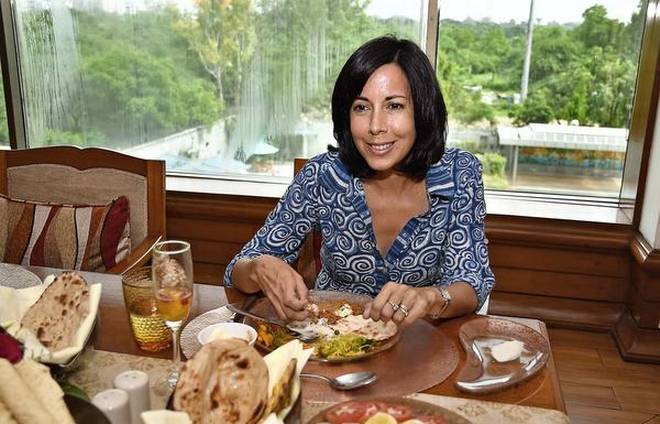
Of History and Gastronomy: Ira Mukhoty at Jaypee Vasant Continental’s Paatra restaurant in New Delhi | Photo Credit: SHIV KUMAR PUSHPAKAR
From the resilience of Khanzada Begum to the food habits of Akbar, author Ira Mukhoty reveals many Mughal secrets over a lavish vegetarian meal
Those who suffer from colonial hangover or know their Mughals through movies have an exotic notion about the haramam or harem – a place where many women were housed to please the most important man in the empire. Author Ira Mukhoty, who scans history and mythology to find the status of women in India, counters the perception through a well-argued book, “Daughters Of The Sun” (Aleph). “This idea of ‘oriental harem’ came through the British historians because they had a long association with Islam right from the times of crusades. For them, the Mughals, the Sultans and the Tughlaqs were all the same – part of one Islamic marauding entity. The idea was completely false.”
The whole harem space, she says, evolved from the time of Babur, who wanted his women to be well-educated and was pragmatic about women who ‘fell’ to an enemy. “Over a period of time, when Mughals absorbed some elements of Rajput culture, it became a little different but even then it was completely alien to the oriental idea of a sexual space. Most of these women were in no way sexually available to the Padshah. The harem had relatives, other noble men’s wives; there were servants and attendants…there was a huge collection of women but not to please the emperor,” says Ira, as we settle for an elaborate lunch at Jaypee Vasant Continental’s Paatra restaurant.
The catalyst came from Ira’s previous book, Heroines, where she wrote about powerful women in myth and history. “One of them was Jahanara Begum. I was interested in finding more women like her associated with the Mughal empire.” She found many. But the one story that is most compelling is that of Khanzada Begam, the sister of Babur, whom he left behind with Shaybani Khan as war conquest when he escaped from Samarkand. She remained with Khan for ten years but remained true to her brother’s cause. And when she eventually returned to Babur’s household, her sacrifice and resilience was celebrated. “In fact, she went on to be anointed Padshah Begum of Hindustan during Humayun’s reign,” says Ira.
Powerful women
Women are a neglected lot in our history. Ira says this is not specific to our country. “Around the world, women stories are neglected to a smaller space – it is not just about Mughals or India. You first talk about the kings and and rajas. Women were treated like wallpapers. It is not that I have found something special here. The resources have been there but they have seldom been used to join the dots. For instance, Gulbadan Begum’s biography of her father Babur and brother Humayun was translated from Persian into English in 1907.” She reminds how Jahanara Begum wrote about her Sufi masters in two books. “Her lines are very powerful and erotically charged for Sufis believe in erotic love as means for union with the divine. A 17th Century Muslim woman writing such a powerful language is extraordinary.” Ira has tried to find out first hand information about these women who engaged in diplomacy and patronised the arts. “ I have written about Mughal women who were highly educated, who advised emperors and traded with foreigners. Babur saw them as symbols of Timur legacy. He wanted them to engage in verbal repartees and write poetry.”
Ira says her study of royal firmans reveal that Jahanara Begum asked for permission to go for Haj but it was denied. “Years before her, Gulbadan Begum had made the famous journey that lasted seven years. But by the time of Jahanara, royal women were not encouraged to take this hazardous journey. But she did make a request. I looked at the date and it was one month after her sister Roshanara Begum had died. I wondered that did something come over her.” It is her ability to join these dots that makes Ira’s work much more engaging and accessible than academic works by the likes of Prof Ruby Lal, whom Ira has extensively quoted.
“I try to find a thread between these stories to make fully-rounded characters. With women’s stories you get that sense. However, I tell the reader where I am not sure and am talking about possibilities.” Ira, who studied Immunology in Cambridge University, says her science background has always helped her in research. “It gives me patience. History brings subtlety and nuances which interest me much more. Science is no good for that,” she chuckles. Having said that, she doesn’t believe in speculating. “You should tell the reader where you are not sure even if it breaks the rhythm of the story. If I say it could have happened, I expect the reader to make his own mind.”
A vegetarian these days, Ira undertook ‘walks’ to the Walled City to understand the fragrances and the language of the time gone by. “They might not help you with facts, but they definitely help in writing about a past whose remains are very much part of our ecosystem.” As she appreciates the lavish spread at Paatra, she remembers the meal she had at the Nizamuddin dargah.
Introduction to ghee
Ira hasn’t written much about the Mughal kitchen but she has mentioned some instances which give us an idea of what was cooking. For instance, she captures Humayun’s exile in Persia with Hamida Banu Begum after the embarrassing defeat to Sher Shah Suri. “At one point they were actually cooking horsemeat to survive. But when they went to Persia, they were greeted as kings. Suddenly, the meal changed from fibrous, overcooked horsemeat to the amazing food that the Shah would offer them. When they were leaving, Shah Tahmasp wanted a banquet in Hindustani fashion prepared by his guests. What he liked the most was something called dal khuske which was like matar ka pulao. He tasted ghee for the first time as Persians used to cook in fat.”
Over the years, Mughal food became more and more refined. “There came a time when hens were massaged so that the chicken would be soft and tender. Akbar was a frugal eater who used to have just one meal a day but the time for it was not fixed. At any given time around 100 dishes were kept almost ready for him so that they could be served to the emperor at a short notice.”
Ira, who is now working on a biography of Akbar, says the emperor turned vegetarian under the influence of his Rajput wives. “Luckily for us, we have the Akbar’s biography of Bada’uni. He was a conservative person and his account is not glowing with praise like that of Abu’l-Fazl’s. He could not do what Akbar expected of him. He wrote the biography in secret and it was published during Jahangir’s rule. It is fascinating because it tells truthful things about Akbar. He writes that Akbar is so influenced by his Rajput wives that he gave up meat and indulged in Hindu rituals.” Similarly, she says, Gulbadan Begum’s account is very honest in comparison to a male biographer because she is not looking for building an image for posterity. “She writes very candidly like she explains why Humayun was very angry one day. He believed in astrology and always made the journey when the stars were in right alignment. One day he told the women in harem that they would go on an expedition at such and such time. Unfortunately, his new wife fell off the horse. It took her some time to get back. He got furious. He said he would need some opium to calm down. A male biographer would not have put all this but Gulbadan mentions all these intimate details so that we would know the man not just as a king and a conqueror but also as a father, a husband and a son.”
Ira has emerged at a time when Akbar’s legacy is being questioned and anecdotal history is gaining currency in mainstream discourse. She says hers is not a political book. “I am not trying to push any agenda. However, in this atmosphere, it is not unimportant to hear these stories also to clear many of the prejudices that we may have had. When things remain in anecdotal form, it is easy to manipulate them.”
source: http://www.thehindu.com / The Hindu / Home> Society> History & Culture / by Anuj Kumar / August 31st, 2018
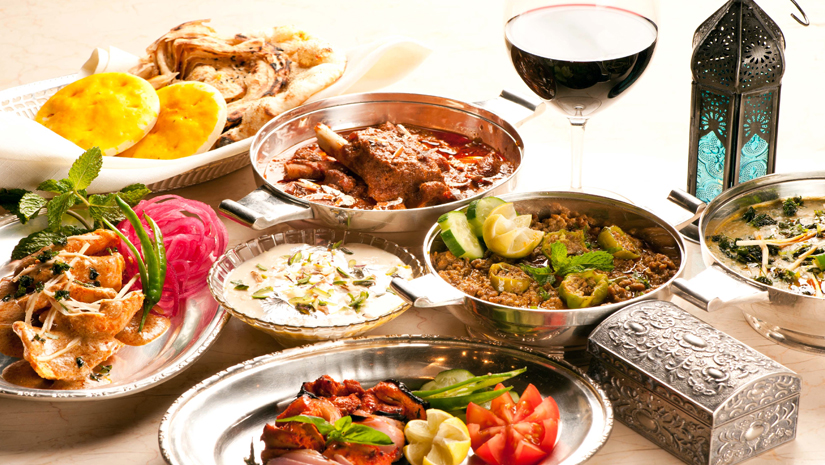
Unveiling a tale that is sure to tease your taste buds, we trace the gastronomic journey of Mughal cuisine in India from Babur to Aurangzeb.
One of the most powerful dynasties of the medieval world, the Mughals are entwined inseparably with India’s history and culture. From art and culture to architecture, they bequeathed to this country a substantial legacy that lives on even today.
But what often gets forgotten is that they also left us a rich culinary legacy — the deliciously complex blend of flavours, spices, and aromas called Mughlai cuisine.
Tracing the origins of this cuisine in India, we unveil a tale that is sure to tease your taste buds!
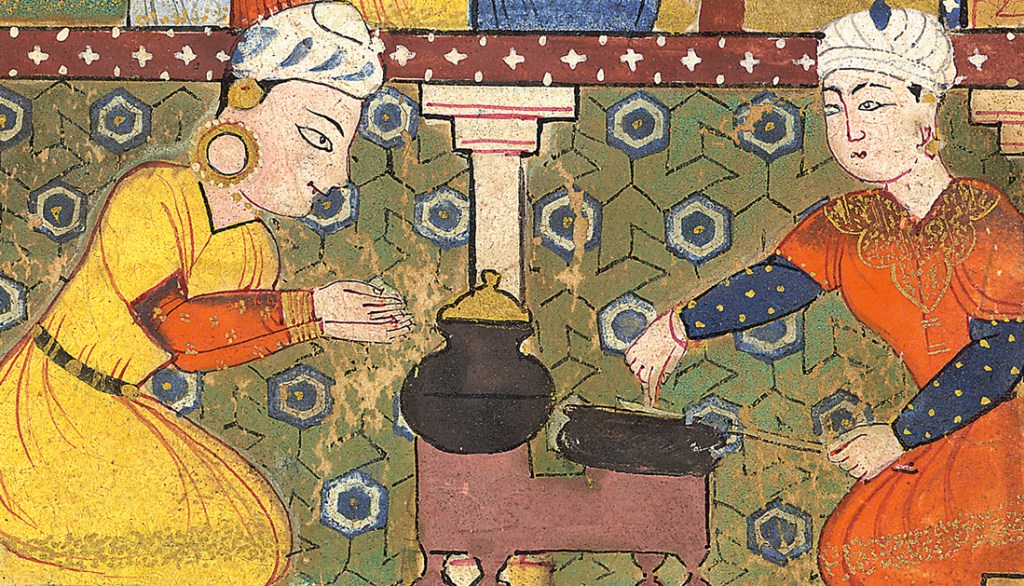
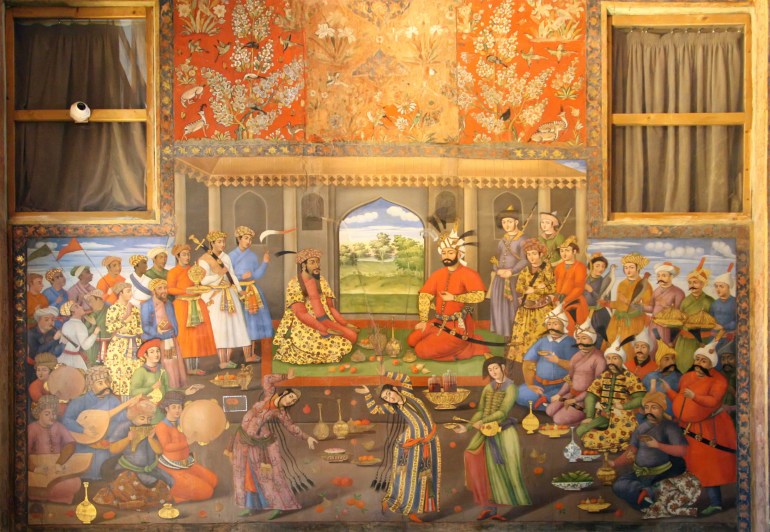
Lavish and extravagant in taste, the Mughals were connoisseurs of rich, complex and sumptuous recipes. Creating such dishes meant that cooking in royal kitchens was a riot of colours, fragrances, and harried experiments.
Curries and gravies were often made richer with milk, cream and yoghurt, with dishes being garnished with edible flowers and foils of precious metals like gold and silver.
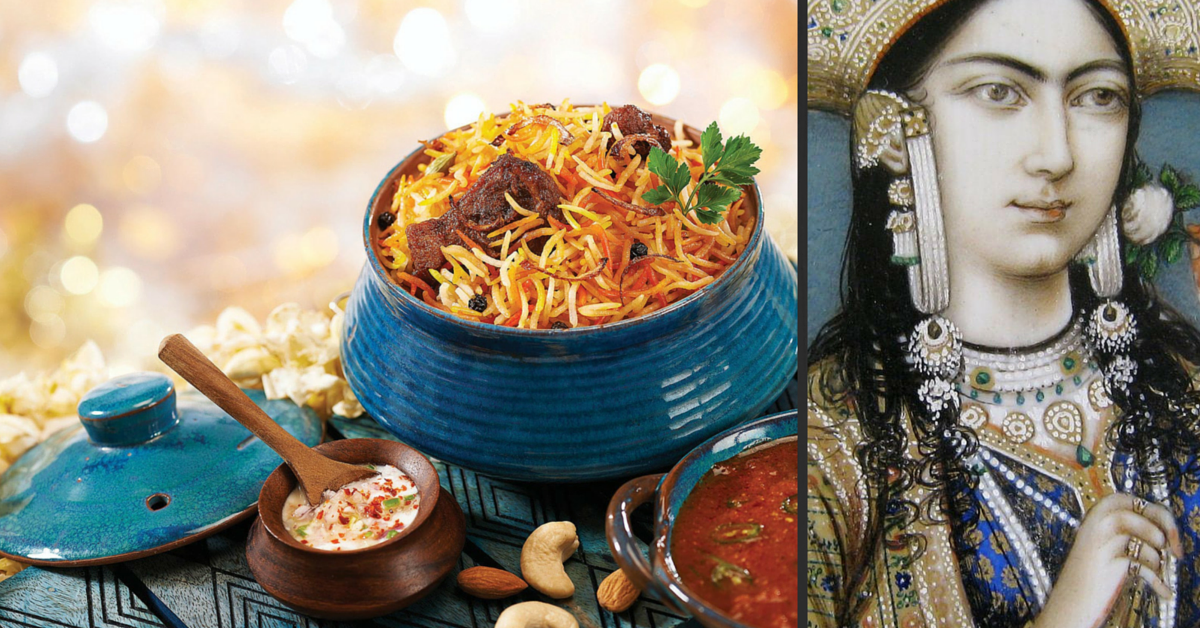
It was also not uncommon for the shahikhansama (chief cook) to consult with the shahihakim (chief physician) while planning the royal menu, making sure to include medicinally beneficial ingredients. For instance, each grain of rice for the biryani was coated with silver-flecked oil (this was believed to aid digestion and act as an aphrodisiac).
Flavour-wise, the royal cuisine of the Mughals was an amalgamation of all kinds of culinary traditions: Uzbek, Persian, Afghani, Kashmiri, Punjabi and a touch of the Deccan. Interestingly, Shah Jahan’s recipe book Nuskhah-yi Shah Jahani reveals much about the intermingling of these traditions in the imperial kitchens, including a fascinating account of the then-world’s largest sugar lump!
As for the contributions of the Mughal emperors themselves, each of them added his own chapter.
The foundation, of course, was laid by Babur — the dynastic founder who brought to India not just an army, but immense nostalgia for a childhood spent in the craggy mountains of Uzbekistan.
Not a fan of Indian food, he prefered the cuisine of his native Samarkand, especially the fruits. A legend has it that the the first Mughal emperor would often be moved to tears by the sweet flavour of melons, a painful reminder of the home he’d lost. Interestingly though, he loved fish – which he did not get back in Uzbekistan!
Historical accounts also reveal the prevalence of cooking in earth ovens — earthen pots full of rice, spices and whatever meats were available would be buried in hot pits, before being eventually dug up and served to the warriors. As this suggests, Babur’s cooks were primarily attuned to war campaign diets and employed simple grilling techniques that utilised Indian ingredients.
On the other hand, Humayun — an emperor who spent much of his life in exile — brought Persian influences to the Mughal table. More accurately, it was his Iranian wife Hamida who introduced the lavish use of saffron and dry fruits in the royal kitchens during the first half of the 16th century.
Humayun was also immensely fond of sherbet. So beverages in the royal household began being flavoured with fruits. As such, ice was brought from the mountains to keep the drinks cool and palatable.
However, it was during Akbar’s reign that Mughlai cuisine truly began evolving. Thanks to his many marital alliances, his cooks came from all corners of India and fused their cooking styles with Persian flavours.
The result? Some of the most unique, elaborate and delicious meals in Mughlai food.
Take, for instance, the magnificent Murgh Musallam, a whole, masala-marinated chicken stuffed with a spice-infused mixture of minced meat and boiled eggs before being slow-cooked.
Or Navratan Korma (curry of nine gems), a deceptively delicious dish prepared from nine different vegetables coated in a subtly sweet cashew-and-cream sauce.
Interestingly, Akbar was a vegetarian three times a week and even cultivated his own kitchen garden — the emperor ensured that his plants were carefully nourished with rosewater so that the vegetables would smell fragrant on being cooked!
Akbar’s wife, Jodha Bai, is also believed to have introduced panchmeldal (also called panchratna dal) into the predominantly non-vegetarian Mughal kitchen, along with a handful of other vegetarian dishes. It became such a big hit with Mughal royalty that by the time Shah Jahan took over the throne, the court had its own shahi panchmel dal recipe!
Mughlai cuisine continued to evolve swiftly during Jehangir’s reign. The reins of the empire lay with his twentieth wife, Mehr-un-Nisa (better known as Nur Jahan). An enormously powerful figure at the royal court, the empress would often be gifted unique preparations by visiting traders from European nations such as France, Britain and Netherlands.
A true aesthete by nature, Nur Jahan used these ideas to create her legendary wines, rainbow-coloured yoghurt and dishes decorated with pretty patterns of rice powder glaze and candied fruit peels!
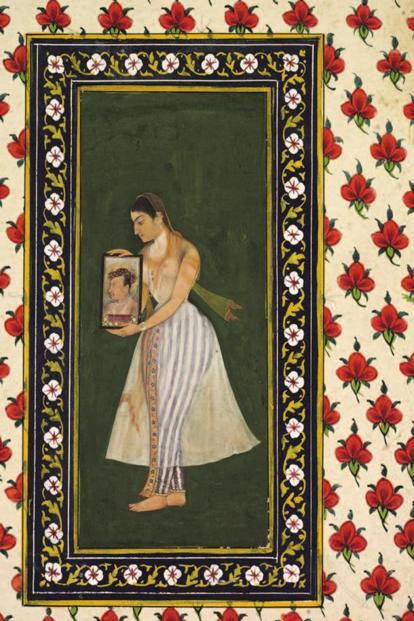
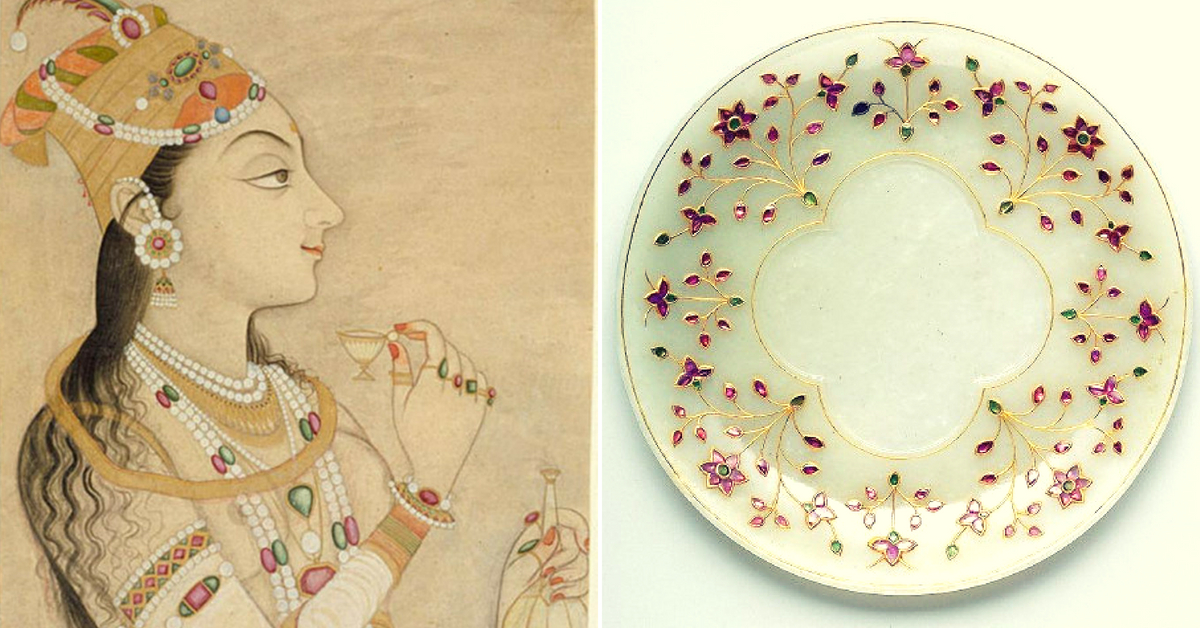
Noor Jahan (left) and her plate — it was decorated with an inlay of rubies, emerald and gold thread.
However, it was during the reign of Jehangir’s son that the Mughal cuisine reached its zenith. The greatest of the Mughals in pomp and show, Shah Jahan’s first step was to enlarge the menu devised by his father and grandfather.
He instructed his cooks to add more of spices like haldi, jeera and dhania to royal recipes for their medicinal properties. Interestingly, a legend has it that his cooks also added red chilli powder to keep evil spirits at bay!
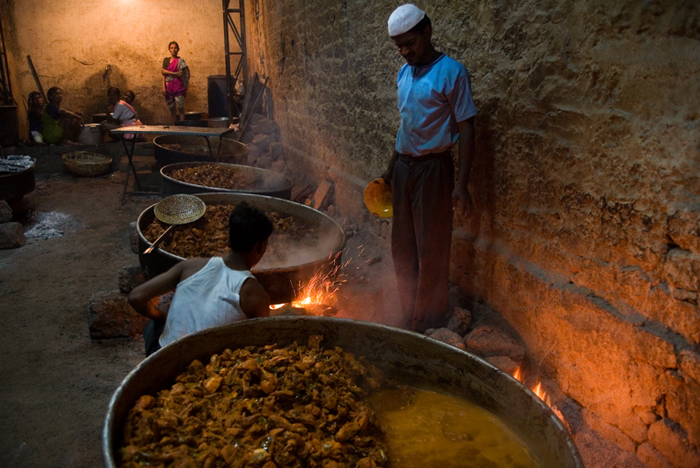
Another legend explains the origins of the nihari, a spicy meat stew that is slow-cooked overnight in large cauldrons called shab deg. This is how the story goes:
In the 17th century, soon after Shah Jahan established his capital in Delhi, a virulent flu swept through the sprawling city. It was then that the shahi khansama and the shahi hakim joined their hands to devise a robust spice-packed stew that would keep the body warm and fortified!
Interesting, another popular story traces the origins of biryani to Mumtaz Mahal, Shah Jahan’s beautiful queen who inspired the Taj Mahal.
It is said that Mumtaz once visited the army barracks and found the Mughal soldiers looking weak and undernourished. She asked the chef to prepare a special dish that combined meat and rice to provide balanced nutrition to the soldiers – and the result was the biryani of course!
The extravagance of Mughlai cuisine during Shah Jahan’s reign was toned down by his son Aurangzeb.
The most religious and frugal of all the Mughal emperors, Aurangzeb fancied vegetarian dishes like the aforementioned panchmel dal more than the roast meat dishes that found favour with his uncles and brothers.
According to Rukat-e-Alamgiri (a book with letters from Aurangzeb to his son), Qubooli — an elaborate biryani made with rice, basil, Bengal gram, dried apricot, almond and curd — also held a place of pride on the dining table of Aurangzeb.
It was also during Aurangzeb’s reign the intermingling of Mughal and Deccan culinary traditions gained momentum (the kitchen moved with the emperor when he went on wars). During this time, Agra and Delhi started to lose their preeminence as hubs of Mughal culture, with the focus shifting to cities like Hyderabad and Lucknow.
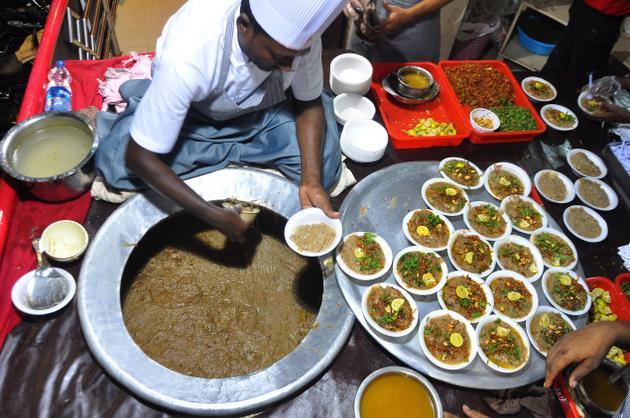
Take, for instance, haleem, present-day Hyderabad’s favourite Ramzan street food which also has a prized Geographical Indication (GI) tag.
A deliciously thick paste of meat, wheat, spices and ghee, haleem‘s first recorded appearance in India was in the 16th century according to the historical text Ain-i-Akbari.
Written by Abul Fazl, the book also mentions that there was a Minister of Kitchen during the reign of Akbar.
While the dish’s exact origins are difficult to pinpoint, haleem is believed to have made its gastronomical journey to the Deccan during the Mughal era.
In the years to come, the secrets of the imperial kitchens gradually made their way across the country — not just to the royal kitchens of princely states but also to the gullies and bazaars of many Indian towns.
And over the centuries, they made their way to fancy restaurants, old-school outlets and home delivery services in bustling cosmopolitan cities.
So the next time you dial for Mughlai paratha and Reshmi Tikka, spend a minute thinking about (and perhaps, thanking) all those food-loving emperors, their fashionable wives and their hardworking khansamas!
Interestingly, the tale of Mughal culinary culture is incomplete without a mention of the dynasty’s fondness for mangoes!
A sole exception to this rule, Babur had little time for mangoes. However, such was Humayun’s love for the fruit that he took care to ensure a good supply of mangoes (through a well-established courier system) while on the run from India to Kabul.
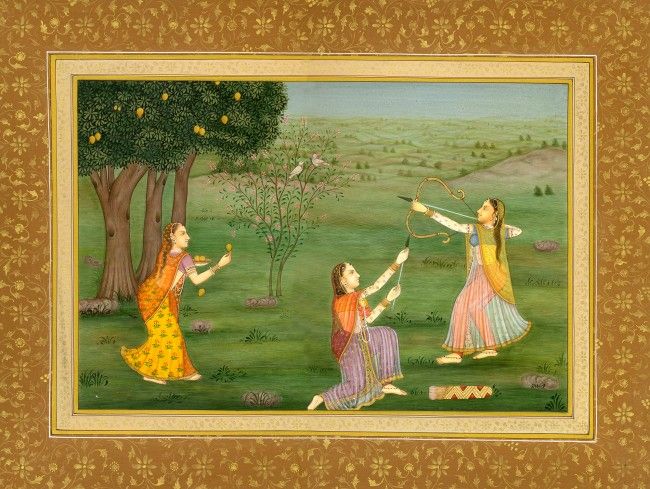
A painting of royal women shooting down mangoes during the Mughal era.
Akbar built the vast Lakhi Bagh near Darbhanga, growing over a hundred thousand mango trees. This was one of the earliest examples of the grafting of mangoes, including the Totapuri, the Rataul and the expensive Kesar.
Shah Jahan’s fondness for mangoes was so deep that he had his own son, Aurangzeb, punished and placed under house arrest because the latter kept all the mangoes in the palace for himself!
In fact, Jehangir and Shah Jahan even awarded their khansamas for their unique creations like Aam Panna, Aam ka Lauz and Aam Ka Meetha Pulao (a delicate mango dessert sold all through the summer in Shahjahanabad). It was also mangoes that Aurangzeb sent to Shah Abbas of Persia to support him in his fight for the throne!
(Edited By Vinayak Hegde)
source: http://www.thebetterindia.com / The Better India / Home> Food> History> India / by Sanchari Pal / August 31st, 2018
Three-day workshop on basketball helps them hone skills, aim for big events.
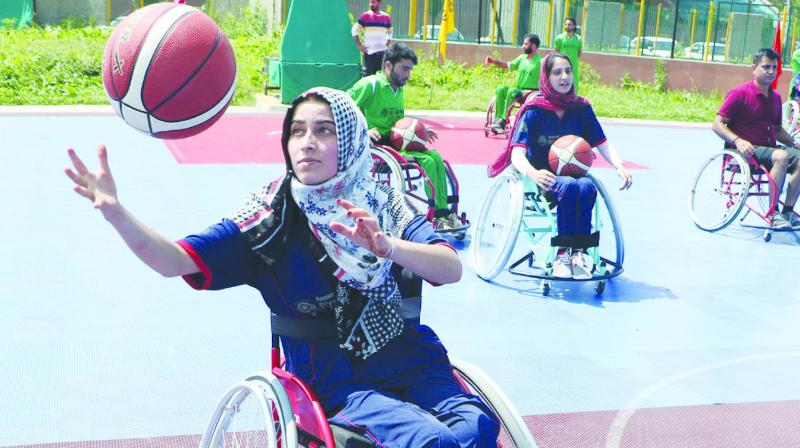
Wheelchair basketball players in Kashmir. (Photo:H.U. Naqash)
Srinagar:
An Urdu couplet goes Uth bandh kamar kiya darta hai; phir dekh Khuda kiya karta hai (Get up and grid your loins; then see what God does). Probably, inspired by the message hidden in the verse Jammu and Kashmir’s many young boys and girls, who have been left disabled due to various reasons, decided to show their calibre by doing something discordant and raucous. They opted for sports for their endeavour.
About two dozen such men and four women players participated in a three-day workshop on wheelchair basketball held in the state’s summer capital Srinagar recently and most of them astonished everybody with their performance.
These young men and women were happily leading their lives until spinal injuries pushed them in wheelchairs and with that were shattered their dreams for life. But as a Persian adage goes Himat-e-mardan, madad-e-Khuda (When men dare, God sends help), they took a pledge to do something great in their lives and get their calibre acknowledged by others. They chose wheelchair bound basketball for it.
Insha Bashir, 24, is in the forefront of the activity both as a player and a coach for budding players. She said, “When I met with an accident I went into a state of deep depression. I felt life is no longer worth living. My parents were also suffering with me”. However, she also said that after getting into games she feels “new and better”.
Insha is a national player today, representing Jammu and Kashmir. She takes pride in it and says, “I represent my state and I feel very good.”
Wheelchair basketball is played by people with varying physical disabilities that disqualify them from playing an able-bodied sport. Wheelchair basketball is included in the Paralympic Games and was first contested at the Summer Paralympic in Rome in 1960. The first national wheelchair basketball tournament in the world was held in Illinois, US, in 1949 with six teams. As the game soon become popular mainly, with those who had been disabled during the Second World War, the International Wheelchair Basketball Federation (IWBF) was formed as the governing body for the sport, thereby promoting it in various continents including Africa, Europe, Americas and Asia and Oceania.
In India, the sport got its godmother in Madhavi Latha, a paralympic swimming champion, who initiated a movement “Yes We Too Can” for the sportsmen with disability in 2014. Soon the Wheelchair Basketball Federation of India (WBFI) came into existence to promote the sport.
The sport is becoming popular fast also in Jammu and Kashmir which has, during the three-decade old turmoil, witnessed a rapid increase in the number of disabled people. Many people were rendered disabled in traffic accidents.
Varun Ahlawat, who has been a wheelchair basketball coach for 10 years, said that the purpose of holding the workshop was to teach the Valley’s disabled young boys and girls how to play wheelchair basketball in a better way so that it becomes easy to get them included in the national team. “We are promoting girls in Kashmir. There are four such girls this time. We’re optimistic about one of them being selected for the international contests,” the Delhi-based coach said.
Insha said that basketball has become a part of her life and has helped her in putting up a fight. She has a message of hope for J&K’s disabled youth who wish to make a mark in sports. She said, “You should never give up. It takes time to come to terms… I assure you, you will triumph over what you are carrying with you.”
Insha became disabled after she fell from the third floor of the family’s under construction house in central district of Budgam in 2009. She like, most other participants of workshop, learnt that disability is no barrier to achieving incredible things at a voluntary medicare society called Shafqat Rehabilitation Centre (VMS-SRC) which has been operating from Srinagar’s Bemina area since 2010.
source: http://www.asianage.com / The Asian Age / Home> India> All India / by Yusuf Jameel / August 25th, 2018
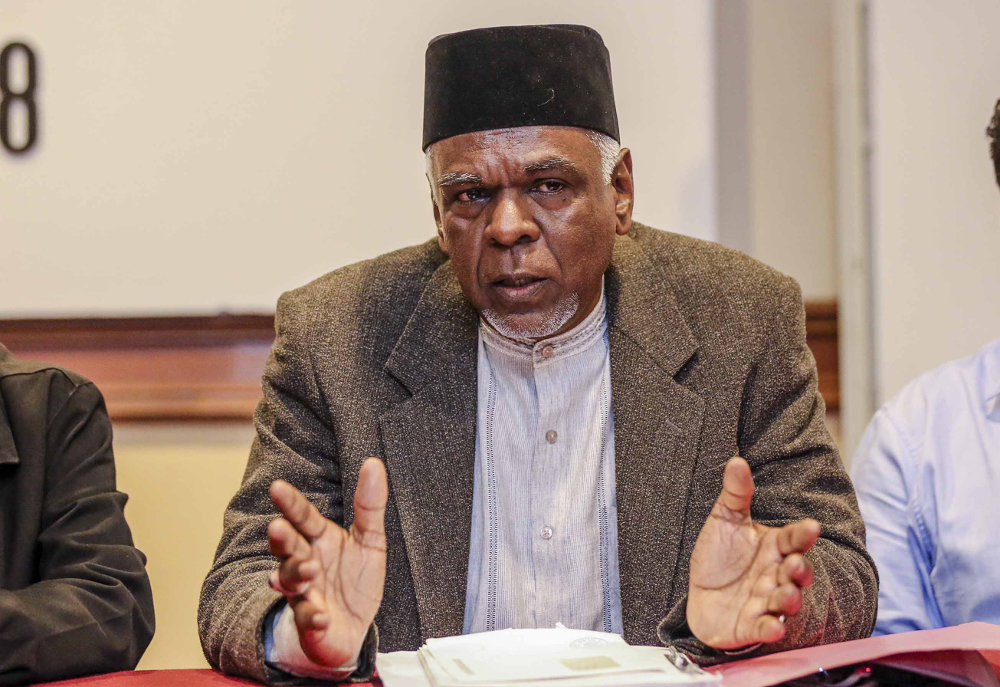
Muslim People’s Coalition president Amir Amsaa Alla Pitchay speaks during a press conference in Kuala Lumpur August 5, 2018. — Picture by Firdaus Latif
Kuala Lumpur :A group comprising mostly Indian Muslims urged the government today to appoint a senator to champion minority rights.The Malaysia Muslim People Coalition (Irimm) headed by Amir Amsaa Alla Pitchay, who used to be president of the pro-Barisan Nasional (BN) Malaysian Indian Muslim Congress (Kimma), also declared their support for the Pakatan Harapan (PH) government.
“We (Irimm) do not have any senatorship to highlight or voice our grievances from the grassroots through to the ministry level,” said Irimm president Amir Amsaa Alla Pitchay.
“This kind of things is where PH has to engage and appoint a person in every state to help the community,” he added.
Irimm, with just over 5,000 members nationwide, was formed in 2012 to champion the cause and help Muslim-minority communities in the country.
Amir Amsaa said he hopes that with the support of the PH government, more large scale events and welfare programmes can be organised and executed by Irimm.
He added the coalition was in the process of reaching out to Prime Minister Tun Dr Mahathir Mohamad and Deputy Prime Minister Datuk Seri Dr Wan Azizah Wan Ismail to arrange a meeting to officiate their support towards PH.
“We hope to have large scale events with the government’s support, as we are also looking to have the support of the ministers to help the causes we are championing,” he said.
source: http://www.malaymail.com / Malay Mail / Home> Malaysia / by Emmanuel Santa Maria Chia / August 05th, 2018