Mohammed distributed hand-decorated reusable ‘World Cup’ bags to a number of groceries.
A 10-year-old Dubai student who turned his love for the World Cup into an innovative way to reduce plastic bag waste, has been honoured by the Dubai Municipality (DM).
Following the Khaleej Times article on June 25, ‘Boy uses football frenzy to send a message against plastic waste’, Abdulmajeed Abdulaziz Saifaie, director of waste management department, was keen to meet the boy behind the story , Faiz Mohammed. And during a meeting between the two on Tuesday, he named the youngster one of the municipality’s ‘Sustainability Ambassadors’.
Using his own Eid money, Mohammed distributed hand-decorated reusable bags to a number of groceries near his home in Karama, after he grew tired of seeing so many plastic bags being wasted on home deliveries.
His own investigations revealed that on average, each small grocery was using about 1,200 bags a month to deliver goods. To combat the excess wastage, he distributed the free tote bags in replace of plastic ones. And it was that smart and sustainable thinking that caught the attention of Saifaie.
“I was so proud and happy to see the story. If you keep doing what you’re doing, we will see big change. Going forward I want you to keep in close contact with my team and give more ideas to help tackle waste here in the UAE,” Saifaie told Mohammed.
The municipality’s Ambassador for Sustainability initiative was launched in 2013 with the aim to train students on how to carry out lectures and workshops on various environmental topics.
“The fact that this boy didn’t use that Eid money to buy a ball, toy, something for himself, is commendable. He has a good hobby. If his family and community keep encouraging that, he will have a good future and so will the environment.”
Discussing different ideas to work on together in the future, Mohammed said his plan is to scale up his reusable bags initiative to groceries across Dubai. Only this time, Saifaie told him that the DM will help fund his move.
“We will visit you at your school and speak to your fellow students to spread awareness about what you are doing. We spend millions per year to bring this idea of sustainable practice into students’ minds, but you are doing it on your own. We will support you. You do not need to take money from your own pocket anymore.”
Thanking the municipality for the opportunity, Mohammed said he felt honoured to be named a Sustainability Ambassador.
“I feel so glad to be here. It gives me much encouragement to meet the director of waste management. He has been telling me to continue in my path to help curb waste so I will keep urging friends, family and shop workers about the importance of using reusable bags in place of plastic ones.”
kelly@khaleejtimes.com
source: http://www.khaleejtimes.com / Khaleej Times / Home / by Kelly Clarke , Dubai / July 04th, 2018
U.S. Consulate General selects two students from city to study abroad
It’s a dream come true for Md Mukram Ali, a trainee in refrigeration and air-conditioningcourse, and V. Sai Krishna Sruthi, a second year degree student at SGCSR College, Rajam, for they both have been selected by the U.S. Consulate General to pursue courses under Community College Initiative Programme (CCIP). They both study in institutes run by GMR Varalakshmi Foundation (GMRVF).
The programme supports students to study at an American community college for a year.
Ali, a resident of Shamshabad village, comes from a poor background. After his Intermediate, he joined the AC course offered by the Foundation. In U.S., he would pursue a course in heating, ventilation and air-conditioning at Northampton Community College, Bethlehem city, Pennsylvania State.
V. Sai Krishna Sruthi
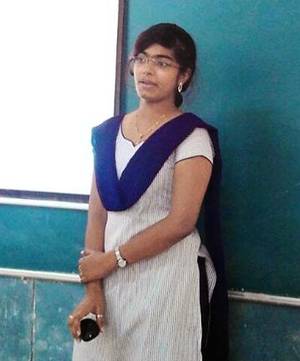
Sruthi comes from a middle-class family from Vizianagaram in Andhra Pradesh. She is in her second year degree in BSc (Electronics) and would study computer information systems (CIS)/computer science (CS) at Bunker Hill Community College in Massachusetts, USA.
Students generally are chosen from underprivileged communities and after they apply, a telephonic interview is done followed by a test in English communication. The entire expense – fees, airfare, boarding and lodging, books and medical aid – would be borne by the U.S. government. They would also be paid a monthly stipend for incidental expenses, a press release said.
“We are happy that our students are breaking the barriers and making a mark for themselves on the global canvas of learning. We are also thankful to the U.S. government for providing a platform for students to expand their knowledge horizon,” said Meena Raghunathan, GMRVF director.
source: http://www.thehindu.com / The Hindu / Home> News> Cities> Hyderabad / by Special Correspondent / Hyderabad – July 06th,2018
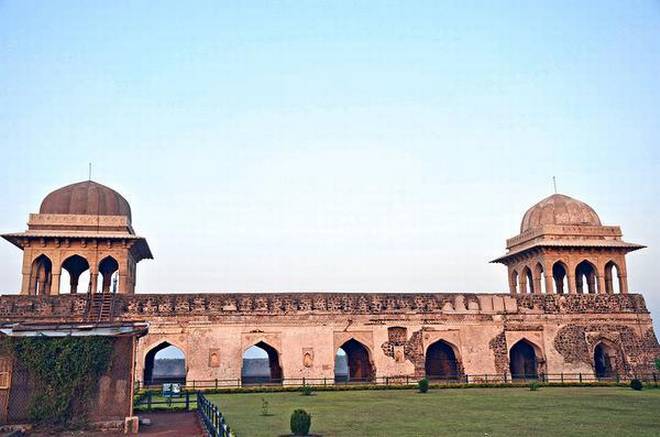
A section of Rani Roopmati Pavilion | Photo Credit: mail
Roopmati Pavilion is perched regally on the edge of a 365m precipice overlooking the Nimar Valley and to the south of the Baz Bahadur Palace in Mandu, Madhya Pradesh. A look by Chitra Ramaswamy
Among the plethora of monuments that dot the landscape of the historical city of Mandu in Madhya Pradesh, is the Roopmati Pavilion, an ode to love. The sandstone structure is perched regally on the edge of a 365m precipice overlooking the Nimar Valley and to the south of the Baz Bahadur Palace. It stands as testimony to the legendary tragic love story of Baz Bahadur, the mid-16th century Sultan of Mandu, a great musician, and his queen, Rani Roopmati, a singer of repute.
We traverse a broad, winding pathway to come upon a flight of stairs that brings us to the 16th century monument. The 72m high fort, Roopmati Pavilion, the southern-most monument in the city, is a magnificent expression of Afghan architecture in sandstone. It is evident that the monument underwent construction in phases during different time periods. The original design, sans pavilions, was built as an observation post for the royal army as a low, large hall with a pair of rooms on each side and a heavy sloping base. A symbol of their undying love, it was later transformed into the abode of Roopmati with a western side extension along the plinth. It was extended so as to enable the queen, who fervently worshipped the Narmada, to see the river and perform religious rites without stepping out of the fort.
The basement of the pavilion is characterised by corridors that have several arched openings along their width. The western ledge has a large reservoir from which rainwater collected during the monsoons would be channelled from the roof of the structure to a tank below by means of conduits.
However, it is the pavilions on the terrace of the original block that we access via spiral stairs, a later addition, which lends the structure its distinctive allure. The square-based pavilions are crowned with hemispherical domes that are fluted on the interior and exterior. We are treated to a visual delight as we climb a flight of steps to reach the pavilion top. Nature’s enchantment leaves us mesmerised as lush forests, plateaus, valleys and vast stretches of far away hills stretch before us.
Twin-storeyed palace
The Baz Bahadur Palace, closeby, lies on the hill-slope to the east of Rewa Kund and is set in the midst of picturesque verdure. Tall, sleek arches welcome us at the entrance to the twin-storeyed palace which is accessed by well laid, broad steps with landings at intervals. In its days of glory, an aqueduct ran on top of the arches, transporting water from Rewa Kund, the adjoining tank, to the pool in the palace courtyard. The water would be drawn upwards by Persian wheels that were powered by animals.
An inscription in Persian on the arch states that the palace was built in 1508 by Nasir-ud-Din. Incidentally, Nasir-ud-Din Shah Khilji, the Sultan of Malwa, is credited with designing this aesthetic structure which underwent repairs and renovations during the period of Baz Bahadur. Big courtyards and high terraces are distinct aspects of the palace that is an aesthetic blend of Mughal and Rajput architectural styles.
Halls and rooms with arched gates skirt the huge courtyard which is adorned by a stunning cistern with crystal clear water in the centre. The palace terrace is further adorned with a couple of chhatris or elevated domed pavilions. One of the big rooms, that even today has astounding natural acoustics, served as the music and dance hall of the palace.
source: http://www.thehindu.com / The Hindu / Home> Life & Style> Homes & Gardens / May 11th, 2018
From missing White Steams to a recently found Duesenberg, a new coffee-table book — Automobiles of the Nizams — looks at the Hyderabad royal house’s expansive car collection
Once upon a time, Duesenbergs, Napiers, Rolls-Royces, White Steams and Hispano-Suizas were the playthings of the Nizams, the ruling family of Hyderabad. Then they disappeared. “There were 400 of them; I’ve been able to trace around 50. The others remain missing, scrapped, hidden or in private collections,” says Muhammad Luqman, a Hyderabad-born, Dubai-based banker and vintage car collector who has chronicled the royal wheels in his book, Automobiles of the Nizams. Containing never-before-seen photos, the tome tracks significant cars from production lines to palatial palaces. It is set to be released at the Pebble Beach Concours D’Elegance in California in August.
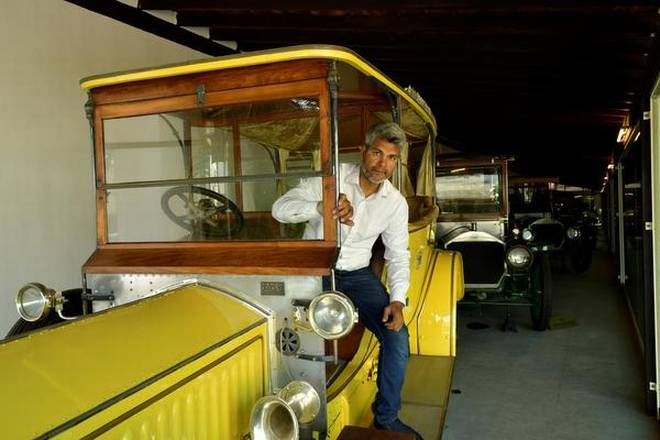
As we walk around the Chowmahalla Palace over the weekend — where some of these cars ferried the sixth Nizam, Mir Mahbub Ali Khan (1869-1911), and later his son, Mir Osman Ali Khan (1911-1948) — Luqman spins a fascinating yarn about the wealthy monarchs’ love affair with automobiles. The first to catch the motoring craze, he says, was Mahbub Ali. The story goes that to acquire one of the first Rolls-Royce Silver Ghosts, he roped in the services of the British Resident (an appointee of the British government), shelled out ₹25,000, and then got it modified to his taste. Painted yellow, as a sign of royalty, he ordered a crest shaped like the dastaar (traditional headgear) and metal work with a delicate lily pattern for the roof fringe. However, by the time the customisation on the Throne Car was completed, he passed away.
The Ghost chronicles
Last year, at Cartier’s Concours d’Elegance at Falaknuma Palace, his great-grandson, Prince Azmet Jah, sat in the Silver Ghost and reminisced about being driven around in Hyderabad. “This was a ceremonial car used on special occasions. The prince recalled how, to celebrate the golden jubilee of Osman Ali’s ascension in 1936, the courtiers wanted him to get a new car. But the Nizam, known for being frugal, asked the Railways (he had his own railway network) to spiff it up instead. They did so by adding horrible fenders,” says the author, who relied on the archival material at Chowmahalla Palace’s royal library for much of his research. “After being left to the elements, it was restored by Rana Manvendra Singh (one of the country’s foremost authorities on vintage vehicles) in 2012, with Cartier picking up the tab.” As we talk, I also spot a massive, newly-restored Wolesley beside the shiny Silver Ghost.
While the sixth Nizam bought cars in pairs and preferred the ultra-luxe versions, his son picked the simpler Humbers and Fords. Today, one of the 1933 Dodges used by Osman Ali is taken out for a spin every Sunday by Captain Kerman Pestonjee, a Hyderabad-based collector, who acquired it with a unique number plate: King Koti Hyd A. So does Luqman’s book overlap with Singh’s 2003 compendium, The Automobiles of the Maharajas, a sweeping history of Indian royalty and their tryst with cars? No, he replies, because his work is a micro history, with details about the vehicles and anecdotes about how the Nizams acquired them. “It has been my obsession for the past 30 years; this book is a culmination of the love story,” says Luqman, who houses his collection of 12 vintage cars, including a small 8 HP post-war Wolseley, in Hyderabad.
Disappearing act
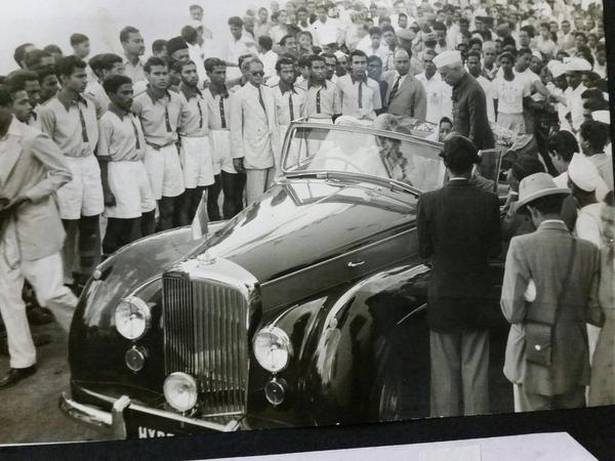
One of the cars he has been able to trace is a Bentley. When Prime Minister Jawaharlal Nehru visited in the ’50s, he was photographed in the vehicle with the Hyderabad number plate intact. Nizam Mukarram Jah had also used it extensively and once, in the ’60s, crashed it near Visakhapatnam — into a cart carrying coconuts. “The glass was smashed, the radiator twisted out of shape, but the Nizam continued with his programme and went to Calcutta. When he relocated to Perth, he took the Bentley with him. I traced it to a collector there,” says the writer, who also traced a Duesenberg to General William Lyon’s collection in the US.
But the mystery of the missing 350 cars remains. How do large automobiles just disappear? Luqman explains that after the 1948 merger with India, Hyderabad’s royal family simply lost interest in the vehicles — till Nizam Mukarram Jah Bahadur, an outdoorsman who loved tinkering with engines, took charge. His biographer, John Zubrzycki, talks about Jah’s fascination with everything with wheels, including earth movers and heavy machinery. “One of the Jeeps he had, had mounted guns,” he says. An interesting story that could explain a few of the disappearances, involves an electrician. “About 10 years back, the family wanted to install an AC at their Chiran Palace. Once done, a grateful Nizam asked the technician for the fee. ‘I want that Jeep,’ he replied, and the generous prince obliged. Now the Jeep, with the 8386 number, has passed on to another Hyderabadi family,” concludes Luqman, who hopes that more stories about the Nizams and their cars will come out once his book hits the market.
Automobiles of the Nizams, planned as the first of amulti-volumeseries,is published by Oxford Printing Press.
source: http://www.thehindu.com / The Hindu / Home> Life & Style> Luxury / by Serish Nanisetti / June 29th, 2018
The precious mango, so delicate that each piece has to be carefully plucked by hand and swathed in cotton, was developed in the late 18th century by the last nawab of Bengal.
New Delhi :
The West Bengal government is pushing for a GI tag for the Kohitur mango, arguably the most prized variety among the king of fruits that was ‘created’ during the reign of nawab Siraj-ud-Daulah strictly for royals only and now sells for up to Rs. 1,500 a piece.
The precious mango, so delicate that each piece has to be carefully plucked by hand and swathed in cotton, was developed in the late 18th century by the last nawab of Bengal. The mango was out of bounds for commoners with only royal orchards permitted to grow it, and only royals allowed to relish it.
Still out of reach for most, except for modern-day royals who have the means to spend, the the West Bengal government is trying to save and popularise the Murshidabad nawab’s favourite fruit all over the world and get a geographical indication (GI) tag.
“Kohitur is an exclusive variety from West Bengal. It can be only found in Murshidabad. At one time, there were 148 varieties in this district but now only 42 varieties are left. We are trying to save this variety. We have now applied for GI tag for Kohitur. Hopefully we will get it,” Gautam Roy, Deputy Director of Horticulture, Murshidabad told PTI.
The GI tag ensures that only those registered as authorised users are allowed to use the product name.
The rare and costly mango is presently on display and sold as a precious item from the state at the ongoing ‘Mango Festival” by the West Bengal government in the capital’s Janpath area.
“Legend has that, Siraj ud-Daulah, a connoisseur of mangoes, had gathered saplings of the best mangoes from all over the country for his garden in Murshidabad. He had even appointed few of his favourite mango breeders who were treated like Akbar’s Navratnas to do research and cross breed between various mangoes to create new varieties. Kohitur was created at that time and it was his favourite,” Roy stated.
The Kohitur is believed to have been created by a royal mango breeder called Hakim Ada Mohammadi, by cross breeding between a mango called Kalopahar and another variety, Roy said.
Though the Kalopahar, which got its name from its blackish green skin, is now extinct, the Kohitur continues to grow.
But the numbers are dwindling.
According to Kohitur growers, there are only 10 to 15 growers and only 25 to 30 Kohitur trees left in Murshidabad district despite the state government’s efforts to save the mango species.
“The district has more than 200 mango orchards but this variety is found only in a few. Some of these trees are over 150 years old. One tree does not bear more than 40 fruits in a season and the trees don’t bear fruit every year, making Kohitur one of the most sought after mangoes,” said Ashabul Mondol, a mango grower.
“It is an extremely delicate mango. It is not a very commercially viable mango,” he added.
But since each mango is priced at more than Rs. 500, growers tend to earn well.
“Last season we sold each mango at Rs. 1,500 per piece in Kolkata,” Mondol said.
The fruit is so delicate that fully ripe mangoes have to be plucked by hand. They start rotting if they fall from trees or get damaged in handling.
“It is so delicate that these mangoes need to be packed or kept separately wrapped in cotton. Legend has it that the nawabs kept the mangoes dipped in honey to preserve it and increase its shelf-life,” said Roy.
To relish the royal favourite, if you can afford it, eat them the way the royals did.
According to legend, Kohitur was not sliced by metal knives but bamboo knives to get the real flavour and taste. The nawabs would then use golden toothpicks to dig in delicately.
The Union Commerce Ministry has earlier given the GI tag for the Ratnagiri and Devgad Alphonso mangoes.
source: http://www.ndtv.com / NDTV / Home> Sections> All India / Press Trust of India / June 24th, 2018
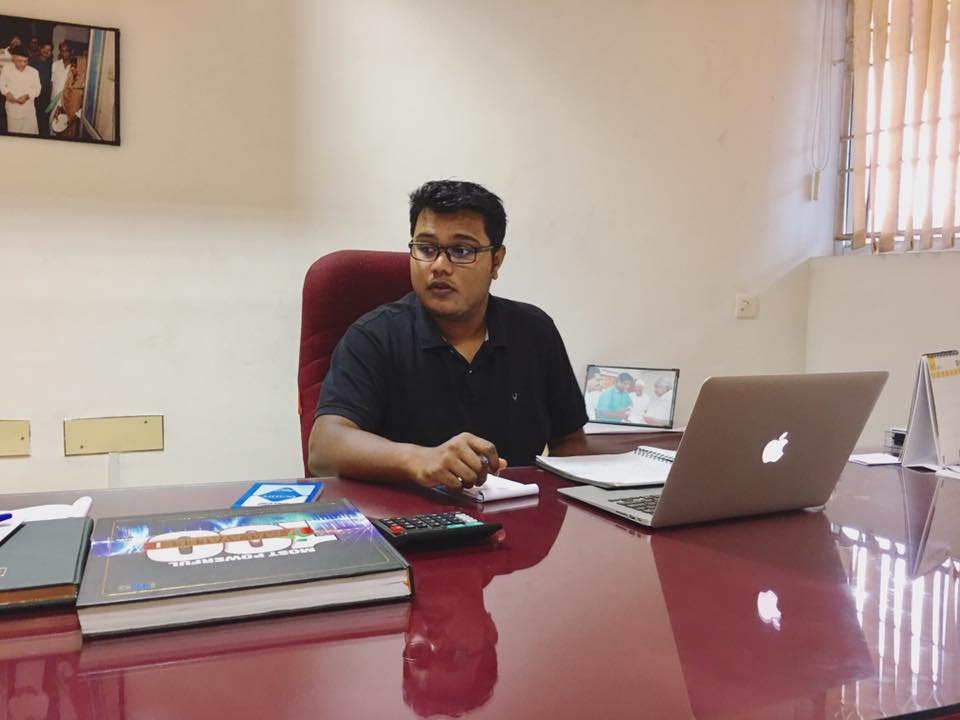
Today, Jawad is the managing director of TNM Online Solutions, a multi-crore IT establishment that deals with e-commerce, web designing and app development, and has a large clientele base from across the world.
It was a computer gifted to TNM Jawad which overturned his fortune and changed his life for the better. The 21-year-old from Kannur, Kerala, is a millionaire today and owns a company that rakes in an annual income of ₹2 crore. He also owns a house and a BMW car—and all this is thanks to Google!
This is the inspiring story of an enterprising youngster who entered uncharted territory at a very young age and emerged a winner through sheer hard work and trust in his abilities.
Today, Jawad is the managing director of TNM Online Solutions, a multi-crore IT establishment that deals with e-commerce, web designing and app development, and has a large clientele base from across the world.
But let’s go back to where it all began.
All of 10, a young Jawad made every possible use of the computer his father had gifted him along with an internet connection. Interestingly, Jawad’s original name is Mohammad Jawad TN, and it was his father who created his Gmail ID.
The 21-year-old genius.
“At that point, the user ID with my name wasn’t available, and instead Google came up with the suggestion ‘TNM Jawad’, and the name stuck! When I look back, that instance was the beginning of everything good in my life,” says the 21-year-old to The Better India.
Back then, Orkut and similar social networking sites were the rage, and this always intrigued Jawad. “I was keen to learn about everything—like how websites were created and how they worked and spent most of my after-school hours in the same pursuit. You could say that I was addicted to the computer but in a good way,” he recalls.
He soon learnt the basics of blogging and web design through free website building applications and even made a few blogs on his own. By the time he was a Class 10 student, he had launched a website along with his classmate, Srirag, named jasri.tk.
“Both of us were equally passionate about everything web related, and this was our first outing. However, we couldn’t afford a dot-com domain since we didn’t have any pocket money, so we created the site through a free domain,” Jawad adds.
Even as this went on, Jawad made sure that his studies never suffered. After scoring an ‘A1’ grade in all subjects in his exams, he had a lot of time on his hands and decided to explore the field further. He spent his vacation time understanding how great performing websites were different and what made them better.
By then, Jawad’s interest started becoming more pronounced. Realizing that there was a looming scope for website development, he decided to take the plunge by registering his first domain name—TNM Online Solutions—and running it as a virtual company. He started out by announcing on Facebook about designing a website at prices starting from ₹1,000.
Soon enough, enquiries started pouring in, but he admits to being technically ill-equipped to handle almost 99 percent of the queries that came his way.
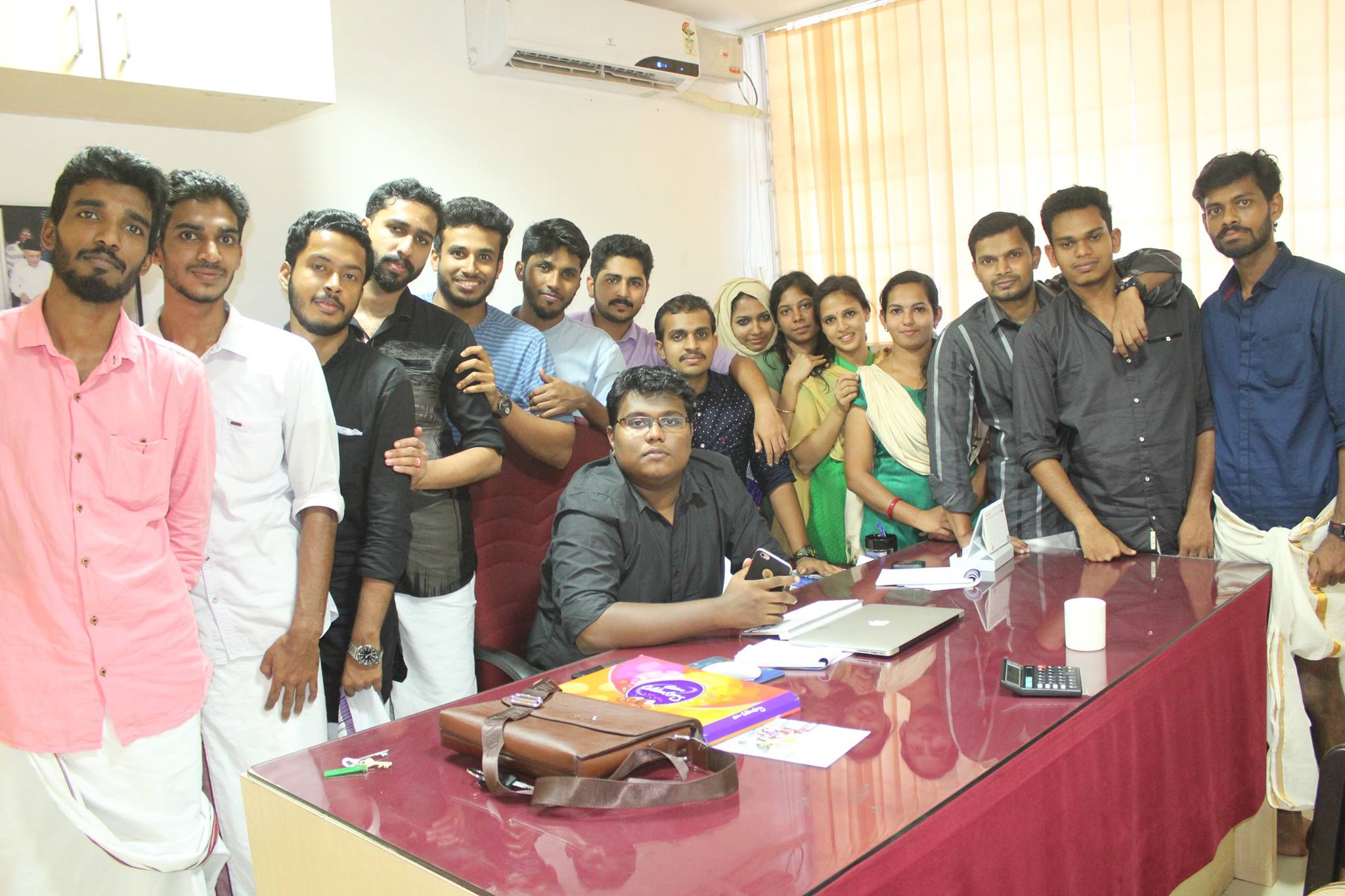
Jawad and his workforce.
“That is when I realised that I lacked strong tech-based skills that are important for website development, and to learn more, I even visited a couple of website design companies in Kannur and saw how they worked,” says Jawad.
When nothing seemed to be working for Jawad, the silver lining came in the form of a teacher from his school (where he was pursuing his higher secondary education) who had seen his Facebook post about website building. “Her brother had been an interior designer and was in need of a website. She came looking for me and requested if I could help, and guaranteed that she would pay the full amount I had quoted,” he recalls.
That was the first website formally developed under TNM Online solutions. “My teacher paid me the first ever remuneration I’d ever received in my life. Until then my folks at home had no clue about the company, so naturally, my mother, Fareeda, was shocked when I handed over an amount of ₹2,500 to her, and I had to explain what had happened,” laughs Jawad.
Somewhere around this time, Jawad’s family started grappling with a severe financial crunch after his father, who had been working in the banking sector in Dubai had to leave his job and return to India.
“Things started going from bad to worse, and I knew there was no time to brood over what had happened. Instead, I raised the subject of starting my own company to my parents and requested my father to somehow source ₹1 lakh for the venture. Knowing my penchant for computers and proclivity for web-based work, they wholeheartedly supported my ambition,” Jawad says.
In the meantime, he had signed up with an IT academy in Kannur, where he spent about a month professionally learning about website building and designing. This became yet another landmark turn in his life, as Jibin and Dinil, two of his teachers at the academy, agreed to work for him as salaried employees.
And thus on 23 June 2013, 17-year-old Jawad flagged off TNM Online Solutions at a small office in South Bazaar. Ably juggling school and work, Jawad would rush from school to office and work till 9:00 p.m., following which he would discuss business with clients till 2:00 a.m.
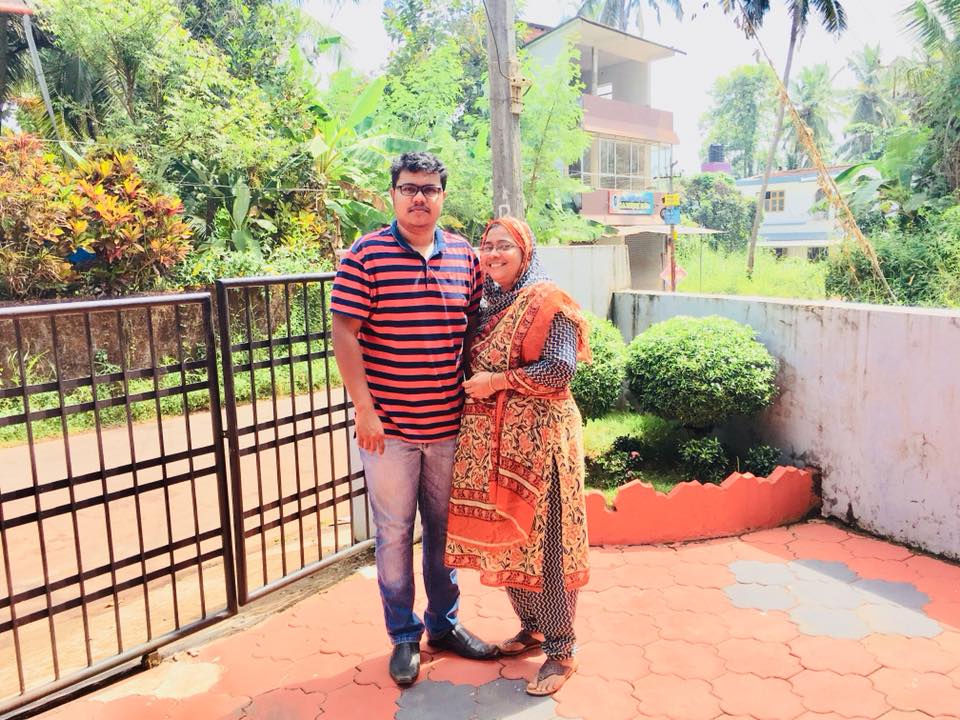
Jawad’s mother, whom he calls his backbone, was a constant pillar of support throughout his days of struggle.
Jawad with his umma, Fareeda.
What makes his commitment even more worthy of appreciation is that he managed to score 85 percent in his higher secondary exams.
However, nothing in life comes devoid of obstacles.
Jawad had been offering designing services at a paltry sum, and this provision wasn’t enough to cover the company expenses that included office rent and employee salaries. Also, business was slow, and the team was only getting 1-2 projects per month. That is when his mother stepped in and offered to pledge her golden bangles for money, as she was against the idea of not paying the employees on time.
After two years of testing times and learning curves, TNM Online solutions had worked with over 100 small-scale clients within Kerala itself. “In this time, I learnt that more than revenue generation, it is one’s portfolio that matters,” he adds.
Jawad cites his participation in the YES Kerala Summit for young entrepreneurs that gave him and his venture the visibility it needed and brought in many new projects, as a landmark achievement in his career.
The young man was always keen on living in his own home because, despite the fact that his father had a well-paid job while he was abroad, his family had always lived in rented houses. At the age of 19, he fulfilled this dream by building a home of his own in Varam.
Today, the 21-year-old works with clients from over 18 countries and has opened an office in Dubai, which has a clientele base of over 900.
The young man with his prized possession.
Another significant trajectory for TNM Online Solutions started when Jawad started incorporating Search Engine Optimisation (SEO) for the websites he created, making it much easier for websites to be found during a search.
For his incredible achievements at such a young age, Jawad was recently felicitated in the UAE and bestowed with an award by Dr Ram Buxani.
At present, Jawad is busy with a new initiative. He has started the TNM academy that provides professional training in areas like web designing and digital marketing to youngsters. The academy was recently inaugurated in Kannur and is open for anyone, irrespective of age.
Jawad’s resilience and determination deserve to be admired and recognised, and his story will surely motivate everyone. We wish him great success in life and hope that all his future endeavours are fruitful.
Maihar, MADHYA PRADESH / Kolkata, WEST BENGAL / San Alselmo – California, USA :
Kolkata :
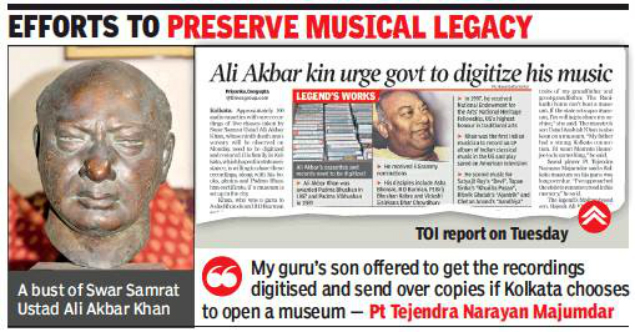
A day after Ustad Ali Akbar Khan’s family in Kolkata urged the government to digitise his 100-odd audio cassettes, offers to restore his works started pouring in. On Khan’s ninth death anniversary, TOI had reported about how the rare recordings of the Swar Samrat faced the risk of being lost forever.
On Monday, Raki Sree Eleperuma showed TOI the collection of her grandfather’s recordings of bandishes as well as orchestra pieces. The audio cassettes are currently with Raki’s mother. “They urgently need digitisation. It’s not possible for an individual to professionally treat these tapes with the latest technology to ensure long-time preservation. I hope, the state government offers professional expertise to preserve them properly,” she told TOI.
Immediately after the article was shared on social media by Khan’s disciple Pt Tejendra Narayan Majumdar, the legend’s California-based son responded. “I was so happy to see my guru’s son — Alam Khan – react immediately. He offered to get the recordings digitised at the Ali Akbar Khan library and send over copies if Kolkata chooses to open a museum. He also wanted to discuss this with Raki. Kishore Merchant — an art connoisseur in Mumbai — has also offered to help,” said Majumdar.
National Award-winning producer Sani Ghosh Ray was equally keen to chip in and help in the digitisation process. “These are part of our heritage. I don’t have any idea about the amount of money that is required to digitise them. But I’m ready to do my bit to get the funding for preserving this priceless collection. We just can’t let the recording get destroyed. If required, one can try to get crowdfunding,” he said from Mumbai.
Raki is happy that music connoisseurs are showing this interest in preserving a legacy. “I’m glad. I hope the government comes forward to digitise this collection,” she said.
source: http://www.timesofindia.indiatimes.com / The Times of India / Home> News> City News> Kolkata News / by Priyanka Dasgupta / TNN / June 20th, 2018
An Exhibition on Holy Quran was inaugurated at the Dr Zakir Husain Library in Jamia Millia Islamia (JMI) on 11 June. The exhibition, organised in collaboration with the Iran Cultural House, was launched by Prof Talat Ahmad in the presence of Masood Rezvanian, Ambassador of the Islamic Republic of Iran.
The exhibition includes a rare collection of manuscripts of the Holy Quran dating back to the 15th century. The manuscripts, written in Arabic, are in different calligraphic styles like Naskh, Thuluth, Muhaqqaq, Nashtalique and Shibasta. Beside this, the exhibition also displays rarely published translations of the Holy Quran in several Indian languages, including Hindi, Urdu, Kannada, Tamil and Malayalam, and in foreign languages, including English, Japanese, French, German, Burmese, Turkish and Persian.
Calligraphy as an art form came to India during the Mughal period between 16th century and 19th century. The Mughal Empire had close ties with the Iranian Empire, which led to the cultural exchange of the art forms. This led to the spread of Iranian influence in art, architecture and calligraphy.
Among the exhibits are the smallest and the largest Quran. Other exhibits include rare Quranic manuscripts and Quran written on different materials like ivory, metal, animal skin, wood and handmade paper.
source: http://www.thestatesman.com / The Statesman / Home> Features / by Majid Alam / New Delhi / June 24th, 2018
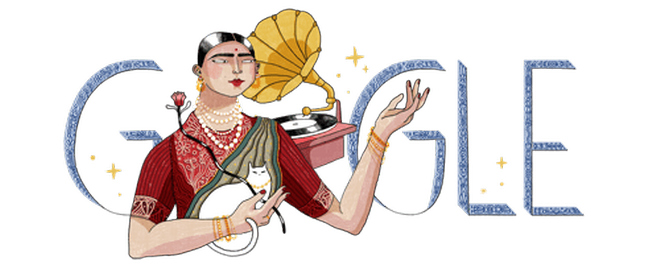
Today’s Google doodle features legendary musician and dancer Gauhar Jaan, the first Indian to record music on a 78 rpm record, thus opening up a new avenue for Indian classical music. Gauhar Jaan was born on this day in 1873.
The illustration is by Aditi Damle, showing Gauhar Jaan with her cat, and the gramaphone in the background.
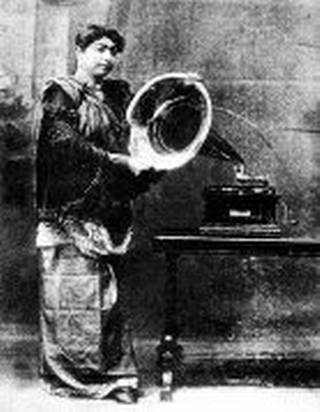
Gauhar Jan
Gauhar Jaan was born Angelina Yeoward to an Armenian Christian father and an Indian Jewish mother. Angelina converted to Islam along with her mother in the 1880s and became Gauhar Jaan. Her mother, ‘Badi’ Malka Jaan, was an accomplished Kathak dancer and singer and was a courtesan in Benaras. Gauhar learned classical music and dance from her mother. The duo moved to Kolkata later, where Gauhar learned more classical forms such as the Patiala gharana, Dhrupad, Thumri, and the Bengali keertan. She started singing songs penned by Rabindranath Tagore much before it came to be known as ‘Rabindra Sangeet.’
Her maiden music concert was when she was as young as 17 years. Gauhar began giving dance performances too after a few years. She went on to perform in many parts of India, including Mysuru, Chennai, Dharbanga, and Allahabad. Gauhar used her travels as an opportunity to learn regional art forms. She could sing in as many as 20 languages.
When Frederick William Gaisberg, the iconic recording engineer from the Gramophone Company, visited India to record Indian music, Gauhar Jaan was the first musician to accept his offer. This was at a time when her male counterparts were reluctant to accept a new technology, which they feared would spoil their voice. On the day of the trial recording, she is believed to have said “My name is Gauhar Jan,” according to Suresh Chandvankar of the Society of Indian Record Collectors.. This eventually became the label of the first Indian album. Gauhar has over 200 records to her credit. In 1994, the Gramophone Company re-released 18 of her songs as a collection.
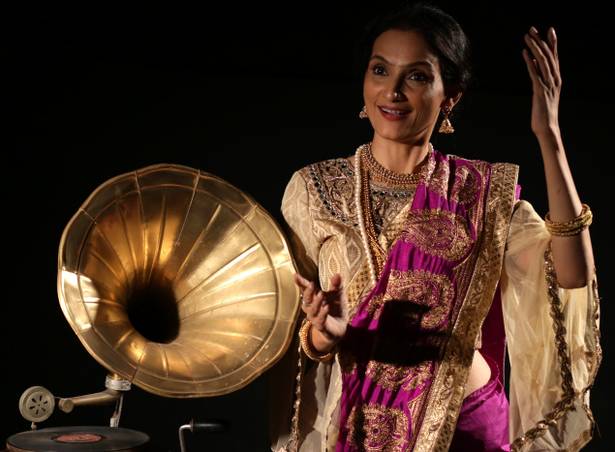
Rajeshwari Sachdev as Gauhar.
“Gauhar Jaan was exceptional in more ways than one… she created a template to showcase something as expansive as Hindustani music in just three minutes!” said Vikram Sampath, who wrote her biography ‘My Name Is Gauhar Jaan! The Life and Times of A Musician.’ . Earlier gramaphone records would last only for three minutes and artists had to scream into horns as the acoustic technology was in its nascent stage. Gauhar’s method of recording was adopted by many women singers, which eventually led to more women taking up recording.
In the book, Mr. Sampath has chronicled the life and times of Gauhar, including her lavish lifestyle, her ill-fated relationships, and dwindling health during later years. There is an interesting story about the cat that is featured along with Gauhar in Tuesday’s Doodle. It is said that Gauhar spent ₹20,000 in the early 1900s and threw a party when her cat delivered a litter of kittens, according to historian V. Muthiah. However, she spent her last days as a court musician in the Mysore Maharaja’s palace for a sum of ₹500 per month, before she passed away on January 17, 1930.
Director Ashutosh Gowarikar has bought the movie rights for Mr. Sampath’s book, hoping to bring Gauhar’s life to the silver screen. Gauhar’s life had been enacted as a play directed by Lillete Dubey. Singer Rajeshwari Sachdev played the title role, while Zila Khan played the older Gauhar.
source: http://www.thehindu.com / The Hindu / Home> Sci-Tech> Internet / by K. Deepalakshmi / June 26th, 2018
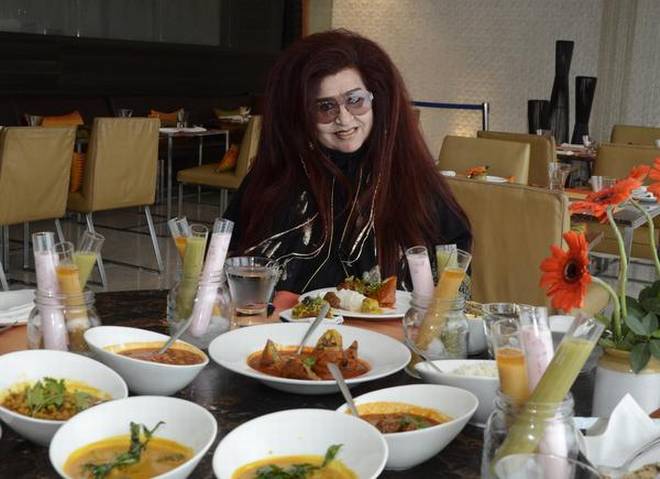
Appetite for knowledge Shahnaz Husain at The Park’s Fire restaurant in New Delhi | Photo Credit: Sushil Kumar Verma
Shahnaz Husain says quality of food plays a vital role in making a person look attractive.
It is usual to find film stars, sport personalities and politicians surrounded by fans and followers. One did not expect such response for Shahnaz Husain, one of the pioneers of herbal beauty care movement in the country. From the moment she steps into Fire, the multi-cuisine restaurant of The Park for a luncheon interaction, men and women of all age groups douse my cynical mind with their requests for selfies and autographs with the doyenne of cosmetic industry.
Perceiving my surprise, Shahnaz says, “This is the goodwill that I have earned thanks to my profession. For me, money was never primary. It was to help people look good without adverse effects. I’m always keen to help people including strangers whenever I observe a skin or hair problem. I try to suggest what is good for them. Recently, I noticed the girl doing my cardiogram at the doctor’s clinic had a bad case of skin pigmentation. I advised what was best for her.”
Chef Abhishek Basu has specially curated organic seasonal menu for the guest. Shahnaz remarks, “Being conscious about my diet, I am glad about this menu.”
Carving her own niche
Considering that Shahnaz comes from a family of legal luminaries — her grandfather Samiullah Beg served as the Chief Justice of Hyderabad High Court, father Nasirullah Beg was the CJ of Allahabad High Court and uncle Mirza Hameedullah Beg was the CJI — many find it surprising that she decided on cosmetic business as a career. “My father wished me become the Chief Justice of the International Court of Justice in Hague while I teased him that my limited schooling was not enough for that. Having been married at 15 and becoming a mother at 16, I wondered what to do with my life. Not keen on interior decoration or fashion, I decided to opt for cosmetic therapy and cosmetology.”
What she decided, she did with style, studying in eight countries and getting trained in globally reputed institutions like Helena Rubinstein, Swarzkopf, Christine Valmy, Lancome and Lean. “Having dropped out of school, I was hungry for knowledge , till they said, there is nothing else to teach,” she quips. Remarkably, Shahnaz paid the fees for these institutions on her own by writing articles on beauty for magazines and weeklies.
Shahnaz took a major decision when after learning Western techniques and methods she decided to create herbal products based on Ayurveda. She says it happened because of a chance incident. “At Rubinstein, my classmate Catherine used to come with a very beautiful woman whom she made wait outside. Unable to control my curiosity, I found out that the lady was her mother. A well known model, she had gone blind by using a famous eye make-up while advertising for the product. I was completely stunned and wondered that if a cosmetic product led to loss of sight, there is something wrong with the beauty business. Pondering over it, I decided to tap India’s more than 3000-year-old Ayurvedic heritage to find alternatives for the chemicals used in beauty products.” After returning to India, she employed several ayurveda practitioners for the job. “You would be surprised to know that for each formulation we discovered 20 alternatives. Such is the richness of this ancient science.”
Meanwhile, the chef fills the table with healthy options. There is sol kadhi, bael pathar ka sharbat and bhutte ka kees taco. Each finds favour with Shahnaz. “This is the strength of natural ingredients. It not only lends taste and flavour but also provides required nutrients.” As we finish the main course of Thanjavur manga curry, mangodi ki subzi and munsiari rajma masala is served. Shahnaz remarks, “The sheer colour, aroma and presentation makes the dishes so tempting. I will try a little of each.”
As we enjoy the delicacies, Shahnaz observes that while most people think that creams, lotions and treatment makes one look good, it is essentially our food intake that plays a major part. “If possible, people should go vegan, otherwise they must eat lots of fresh fruits and vegetables; go high on protein and less on carbohydrates; eat dal and rice after removing the water. These are the mantras for healthy skin and hair.” One couldn’t help observe the hotel staff, listening in rapt attention as did other guests around us.
Strict diet
On being asked if she herself practices what she preaches, Shahnaz says. “I follow my diet rigorously. Breakfast is oats, papaya and green tea. Lunch is usually fruit juice, brown bread, cheese and vegetables while dinner is one roti with subzi.” It must be tough to resist the temptation. “Yes it is,” she admits candidly. “I do have cheat days when I eat Hyderabadi biryani, korma, roast potatoes, kakori kababs, sheer mal and kheer.” Her favourite cuisine is of course South Indian. “Being light and healthy, I prefer idli and dosa with sambar. I learnt this from Vyjayanthimala, who told me that a doctor had advised her to eat these when she wanted to be fit for a particular film.” Likewise, she prefers Chinese cuisine, particularly chicken chowmein, Peking duck and sweet corn soup. “Bahut light hota hai!”
Amazingly dealing with chemicals and their formulations, Shahnaz does not lead from the front in kitchen. “I never had a chance to learn since we always had a cook at home. Once venturing to make rice, I was so confused about the quantity of water and the time required to boil it, that I ended up adding milk and sugar to make kheer,” she quips.
As the doyenne emphasises the need for proper diet for healthy body and mind, one wonders what beauty means to her. “Beauty is what a woman exudes from inside. There are essentially two aspects to it. A woman needs to be intelligent besides being attractive. One without the other never works. Secondly, neither the skin nor hair colour is important, it is the quality that counts.” Then what about this fanatic longing about fairness? “That is really unfortunate. I know several women having underwent chemically induced treatment to look fair. That never helps as the side effects are terrible. We too are entreated by parents to make their daughters fair to help them get a suitable match. All this pains me.” The cosmetic industry too fuels this fascination as evident from ads. “Instead of changing public perception, they are promoting it. Skin colour does not decide the character or nature of a person or how he or she will be as a life partner,” remarks Shahnaz.
Instead of this obsession for fairness, Shahnaz suggests one should take care of oneself. “Looking good is feeling good. People in general and women in particular must take out ‘me time’ to take care of themselves. This need not necessarily mean visiting salons or parlours.” Stating that beauty consciousness is no longer confined to the upper crust of the society, she narrates some interesting anecdotes. “I once met a woman selling Rajasthani cushions in Connaught Place. She recognised me and eagerly shared that she uses one of my products which she picks up in bulk during her visits to Delhi. Likewise, a guard once asked me what cream to buy for his wife. Beauty is everyone’s concern,” she sums up.
source: http://www.thehindu.com / The Hindu / Home> Life & Style> Food / by S. Ravi / June 20th, 2018