Category Archives: World Opinion

The ballad of the Khan Sahib

Madurai, TAMIL NADU :
KhanSahibMPOs07mar2018

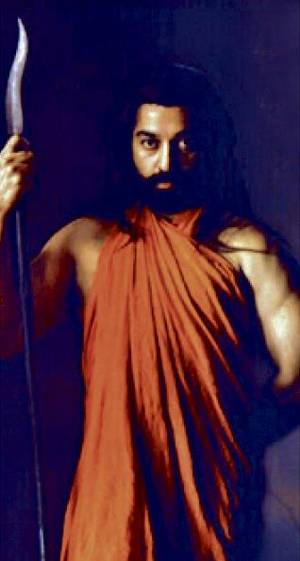
One explanation for Kamal Haasan launching his political party in Madurai was that his hero was Maruthanayagam Pillai, soldier, rebel and valiant son of the district.

It was about this hero that he wanted to make a film extraordinaire several years ago.

I was on the fringe of the project as, coining a term, the factioneer, engineering fact with fiction.

Part of the fiction is the name Maruthanayagam. More factual is the name Yusuf Khan, and it’s as Yusuf Khan he’s a military hero of mine. Much has been written about this soldier of fortune, but the Tamil ballad Khan Saibu Sandai (The War of Khan Sahib) offers much more personal detail. In it Maruthanayagam finds no mention; who it sings of is “the hero who belongs to the Alim family”. Adding, “…let me sing the story of the brave warrior of Sikkandar Sahib”.

Whatever his lineage, it is agreed he ran away from Panaiyur in the Pandya heartland and worked with Jacques Law in Pondicherry c.1744, where, possibly, he learnt his soldiering.


Then we hear of him with a troop of Nellore lances-for-hire teaming with Chanda Sahib and the French to besiege Robert Clive in 1751 at Arcot. Seeing him in action, Clive bought over the Nellore Subedar, as he called Yusuf Khan, who the next year helped Clive win at Kaveripakkam. Later, after action near Srirangam, Clive was told by a friend, “Your Nellore sepoys are glorious fellows, their Subedar as good a man as ever breathed. He is my sole dependence.”

Next, when the French besieged Nawab Wallajah and his British protectors in Trichy, Yusuf Khan lost not one food convoy from Madras over three months. Stringer Lawrence, ‘The Father of the Indian Army’, wrote, “He is an excellent partisan… brave and resolute, but cool and sensible in action – in short, a born soldier, and better of his colour I never saw … He never spares himself, but is out on all parties…” All this led to Lawrence recommending Yusuf Khan being made “Commandant of all the Sepoys” in 1754 and for a gold medal from the Company.

With the Nawab and the Company unable to collect revenue from the southern districts they had won, Khan Saheb who had been responsible for the gains was appointed Governor of Madurai.

Over the next three years, he subdued the local chieftains, collected revenue and earned a reputation for outstanding administration. But Yusuf Khan could never get away from soldiering. When Lally besieged Madras in 1758-59, he failed, because Yusuf Khan, racing up from Madurai, cut almost daily over two months Lally’s supply lines. Lally was to say, “They were like the flies, no sooner beat off from one part, they came to another.” Yusuf Khan was a master of guerilla warfare.

With such praise, Yusuf Khan began growing more ambitious. When he found revenue he collected going mostly to Wallajah from the English, he decided to rebel. He hoped for support from Hyder Ali (which never came) and from the French, who supplied a few hundred mercenaries led by a Marchand.

From August to November 1763 the English besieged Madurai, constantly shelling it, but unable to breach Yusuf Khan’s defences. They then withdrew to regroup. In February 1764, they recommenced the siege, but without significant progress. Yusuf Khan sent them a message early in April 1764: “As long as I have a drop of blood in my body I shall never render the place to nobody.”

English attack after attack was beaten back, many a British officer, once his comrades, killed. A British officer wrote: “You’ll easily form an idea of Yusuf Khan’s abilities from his being able to keep together a body of men of different nations, who with cheerfulness undergo the greatest miseries on his account; wretches who have stood two severe sieges, one assault and a blockade of many months.”

By September 1764 Yusuf Khan was prepared to negotiate surrender terms. The English insisted on unconditional surrender. And Marchand and his ilk, impatient with the negotiations (or heavily bribed), acted, arresting Yusuf Khan and surrendering Madurai on October 15, 1764.

The Company wanted Khan Saheb brought to trial in Madras, but Lawrence ordered him given to the Nawab who immediately hanged him and desecrated the body. He was buried where he was executed, two miles west of Madurai, his tomb at Samattipuram a dargah to some, a pallivasal (mosque) to others, but venerated by all in the Pandya country.

Footnote: A dissertation by Dr Asadulla Khan, then of New College, discusses Yusuf Khan’s family. It would appear that he married a Christian girl, Maza, c.1759; father, very likely Portuguese or French, her mother, possibly, a Maravar, a community which she often interceded for with Khan Saheb. They had a son, Mohammed Sultan, born c.1762. As a young man he joined Hyder Ali’s army. Mother and son, it is suggested, sought refuge in Mysore after fleeing Madurai.

The boats on the Canal

It was a lively presentation that Manohar Devadoss made recently at the Madras Literary Society on his life with books, most he’d illustrated. One striking illustration at the presentation is what I feature today; a boat in full sail on the Buckingham Canal. Mano says he saw this long country boat near Pulicat in 1966 and thought it “an artist’s delight”. His sketch became the first subject of “our heritage greeting card project,” ‘our’ being wife Mahema, who used to write the text for the illustrations he did for greeting cards they sold for charities.

Mahema concluded that year: “These boats are very picturesque, with sails billowing in the breeze. When there is no breeze, the boats are sometimes dragged by the boatmen from along the banks, their bare bodies glistening in the sun. As the boats approach the city, the sails are lowered so that they could pass under the numerous bridges. The men then punt the boats in rhythm to their melodious folk songs.” Taken up as he was with them, Mano did his first oil painting that year, based on his sketch, and several water-colours in later years, one of which I feature.

The chronicler of Madras that is Chennai tells stories of people, places, and events from the years gone by, and sometimes from today.

source: http://www.thehindu.com / The Hindu / Home> Society> Madras Miscellany – History & Culture / by S. Muthiah / March 06th, 2018
Disability rights crusader Javed Abidi dies at 53

Aligarh, UTTAR PRADESH / NEW DELHI :

JavedAbediMPOs05mar2018

New Delhi :

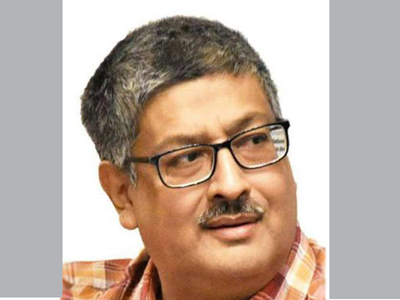
India’s global face of disability rights movement,  Javed Abidi , died of chest infection on Sunday. He was 53.

Abidi, who founded the Disability Rights Group (DRG), and was serving as the director of the National Centre for Promotion of Employment  for Disabled People, is survived by his mother and two siblings.
Born in Aligarh, Uttar Pradesh, he was diagnosed with spina bifida. Abidi wasn’t operated on for eight years, and as a result, suffered nerve damage. At the age of ten, he injured himself in a fall and required another operation. After this, his family moved to the United States and Javed Abidi received care at the Boston Children’s Hospital and the Rehabilitation Institute of Chicago. At the age of 15, he started using a wheelchair. Abidi, despite difficulties, studied at Wright State University , and in 1989, moved to India seeking a career in journalism.

The 1990s were marked by drastic changes in the disability sector of India through his DRG. He was instrumental in drafting the 1995 disability Act and forcing the inclusion of missing disabilities like autism, dyslexia in the new RPwD Act 2016. He was appointed the vice-chairman of the International Disability Alliance  2013.

“We have lost the most prominent voice of our sector. We have lost an international leader as he was the sole voice of the Global South. He pioneered the cross-disability movement in India and galvanized disability issues as developmental and human rights based issues. An era ends with Javed ji,” said disability rights’ activist, Dr Satendra Singh, Delhi University.

Abidi successfully led several path breaking advocacy initiatives in India, including the drafting and enactment of the Disability Act of 1995, inclusion of disability as a separate category in the Census; India’s ratification of CRPD in 2007, and setting up of a separate Department of Disability Affairs. Most recently, he led the movement towards India’s new disability rights law – the Persons with Disabilities Act 2016.

Abidi strongly believed that empowerment of persons with disabilities is connected to education, which in turn hinges on accessibility. And all three are not possible without enabling laws and policies.

“The world has lost is brightest crusader for disability rights. As an impassioned advocate of ‘Nothing About Us, Without Us’, he has given voice to an ‘invisible minority’ by catalysing path breaking changes in the policy and legislative space,” said Reeta Gupta, Abidi’s long-term friend and supporter in advocacy of disability rights in India.

Abidi started working for Sonia Gandhi in 1993, creating and building the Rajiv Gandhi Foundation’s disabilities Unit. A year later, he founded a small advocate group called the DRG and started raising awareness for the disabled people of India. A large pro-disability rights movement arose, with the goal of getting the Parliament to implement a bill of rights for the disabled.

Abidi led a protest before Parliament on December 19, 1995, that pushed Parliament into passing the Persons with Disabilities Act on December 22, 1995. In 2004, his letter to Chief Justice of India on making the polling booths accessible to persons with disabilities was converted into writ petition. Supreme Court of India then passed direction to make electoral process accessible.

source: http://www.timesofindia.indiatimes.com / The Times of India / News> India News / by Manash Pratim Gohain / TNN / March 04th, 2018

Young Rizvi shoots 10m air pistol gold, creates record on World Cup debut

Meerut, UTTAR PRADESH :

RizviMPOs05mar2018

Highlights 

  • Rizvi pipped Rio Games gold medallist Christian Reitz and teammate Jitu Rai for the yellow metal
  • He broke Japanese legend Tomoyuki Matsuda’s record of 241.8, which was created last year
  • Rizvi displayed confidence and it reflected in his performance as he shot only seven shots below 10

_______________________________________________________________

Pune :

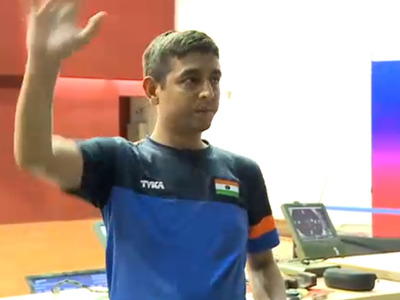
Shooting in his first ISSF World Cup,  Shahzar Rizvi showed nerves of steel as he clinched gold with a world record score in the men’s 10m air pistol event at ISSF World Cup in Guadalajara, Mexico, on Saturday.

Rizvi, 24, pipped Rio Games gold medallist Christian Reitz and teammate Jitu Rai for the yellow metal by scoring 242.3 in the final.

He broke Japanese legend Tomoyuki Matsuda’s record of 241.8, which was created in October last year.

Reitz finished second with a score of 239.7, while Rai secured bronze after scoring 219 in the final.

Another Indian, Om Prakash Mitharval, 23, who was also participating in his first senior World Cup, missed out on winning a medal after finishing fourth with a score of 198.4.

This is perhaps the first time that three Indians had entered the medal round of a World Cup.

With a score of 579, Rizvi was the top-scorer among the Indians and second in the top-eight qualifiers, while Rai was third with a score of 578. This is the first World Cup for Rizvi, and so is for Mitharval, who was fourth with a score of 576.

In the final, the Indians got off to good starts. After completion of 10 shots, Rizvi, with 99.4 points was second behind Brazil’s Julio Almeida (101.8), while Rai and Mitharval kept themselves in top-5.
Rizvi displayed confidence and it reflected in his performance as the Meerut boy shot only seven shots below 10. His best was 10.8, while his lowest shot was an 8.5.

Rai on the other hand was a little inconsistent. His 10 shots ranged between 9 to 9.9 that pulled him down in the ranking. Just before the 20th shot, the Army shooter was at risk of getting eliminated, but he saved himself by shooting 10.6 and 10.4 to finish 0.1 point ahead of Mitharval, who shot 10.7 and 9.2 to finish with 198.4 points.

Meanwhile, in the women’s 10m air rifle event, teenager Mehuli Ghosh, along with Apurvi Chandela  and Anjum Moudgil entered the final along with three Chinese shooters.

source: http://www.timesofindia.indiatimes.com / The Times of India / Home> News> Sports News> Shooting  / by Tushar Dutt / TNN  / March 04th, 2018

Affan Yesvi, A Social Activist From Kashmir Participates In UN Conference

JAMMU & KASHMIR :

AffanMPOs04mar2018

United Nations (KNB):

Affan Yesvi, a young social activist from Kashmir participated in a 3 days United Nations Global Sustainability Development Goals SDGs Conference – A global preparatory meet in support of SDG7 at 2018 High-Level Political Forum in Bangkok, Thailand.
Pertinent to mention that at a very young age he founded a non-profit organization by the name of ‘The Inner Call – a forum for Evolution, Development and Awareness’ in 2009. The organization has been contributing in spheres of mental health, environment protection, women empowerment, youth activities and social research, with the sole aim of promoting human values. The organization has also organized various legal awareness camps.
The United Nations High-level Political Forum on Sustainable Development (HLPF), serving as the central platform for follow-up and review of the 2030 Agenda for Sustainable Development.
To help provide a solid substantive foundation for the review of SDG7, a global preparatory meeting in support of the review of SDG7 at the 2018 High-Level Political Forum, jointly organized by United Nations Department of Economic and Social Affairs (UN DESA) and United Nations Economic and Social Commission for Asia and the Pacific (ESCAP), was held from  21-23 February 2018 at the United Nations Conference Centre in Bangkok, Thailand. (KNB)
source: http://www.kashmirnewsbureau.com / Kashmir News Bureau / Home / Jammu & Kashmir / March 01st, 2018

One man, one country, one cycle: for the cause of polio eradication

Mangaluru, KARNATAKA / MALAYSIA  :

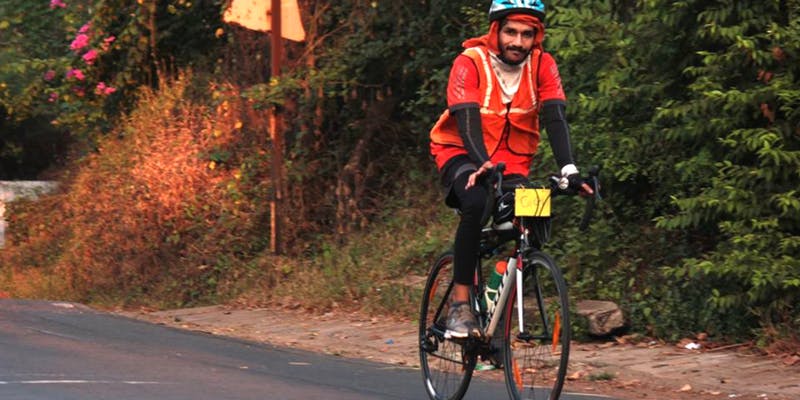
Prof SS Shameem cycled 2,140 kms across Malaysia to spread awareness on the Polio Virus and global eradication of the disease.

Shameem01MPOs02mar2018

The World Health Organization reports Polio cases have decreased by 99 percent across the world since 1988. Yet, even if one child contracts the disease today, the fear of it spreading to 200,000 cases a year lingers.

While awareness campaigns, and health camps, have achieved much in terms of spreading awareness, one man embarked on a solo journey on his bicycle, riding the length and breadth of Malaysia, to spread the word.

SS Shameem, an assistant professor in the Department of Computer Applications in Manipal Institute of Technology, Karnataka, who is posted at Manipal International University, Malaysia, cycled 2,140 km over two weeks from January 31 to February 14 to spread word on eradication of polio.

“Malaysia was declared a Polio-Free country a decade ago; but as it’s known – polio can spread anywhere, anytime unless properly taken care of. I am currently located at Malaysia; so it was decided that the expedition would be held here. Earlier, I had done similar events back in India for causes like Green and Healthy India, among others,” says Shameem.

The campaign 

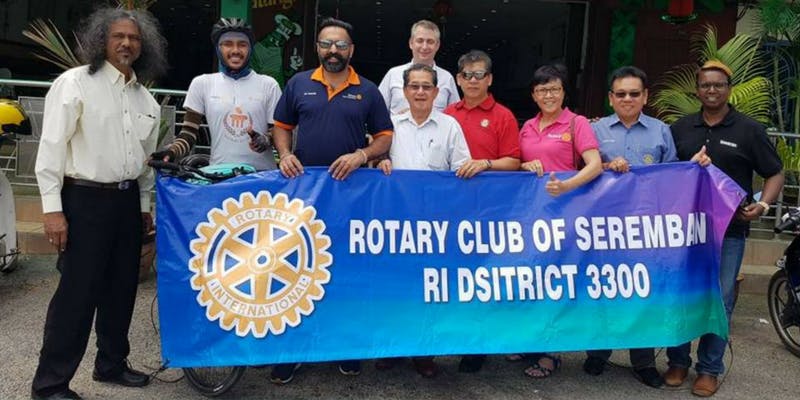
The cycling campaign helped raise Rs 3 lakh (over 18,000 Malaysian Ringgit) for the global EndPolio mission of Rotary International. Operation Polio Eradication by Manipal is a movement by Manipal Academy of Higher Learning and Manipal Global. Shameem’s cycling expedition also promoted the institution’s Green-Health Awareness Campaign.

Shameem02MPOs02mar2018

“Globally, most governments and NGOs are working on eradicating polio from the face of the earth. But we’re still yet to achieve 100 percent on this. As long as there’s one case, it can spread. Rotary International has been working tirelessly for many years with its EndPolio mission. This cycling expedition was in association with Rotary’s initiative. Manipal, having a strong presence in the medical sector in Malaysia as well, promoted this expedition for the same cause,” Shameem said.

In India, which reported its last case of polio virus in 2011, awareness to ensure the disease doesn’t make another appearance is imperative. Once known as a hotbed for the virus, various pulse polio campaigns led to the successful eradication of the disease.

“A lot of initiatives were taken; but as all would agree, content on an official document and facts/reality have a lot of difference. Much work is needed on the ground level; which needs lot of funding, and more importantly public awareness. At least, I can do my part through such cycling expeditions and campaigns,” he adds.

His journey also translated into a knowledge sharing space, where misunderstandings about the disease were cleared and information spread.

For the love of cycling 

While there are many methods to spread awareness on health issues, Shameem believes that to reach out to as many people as possible, one needs to travel. To support the cause of polio eradication, he cycled 100-200 km a day. He began the two-week voyage from Nilai, passing through Kuala Lumpur, Rewang, Taiping, Ipoh, Penang, Perlis, Kedah, Mersing, Johor, Bahru, Muar, Melacca, Tampin, Seremban, before ending it at Nilai. The expedition covered the whole of Malaysian mainland.

“The attempt caught people’s attention and they wanted to know more about it. That serves our purpose. Also, seeing a solo effort of riding 100-200 km per day, 2000+ km straight, people helped out; which helped in our EndPolio Fund-raising campaign. I don’t think we could have gotten a better response, or raised more money in a Greener way, through a mode other than this.”

Back in India, Shameem has had successful cycling expeditions. In 2016, he rode solo from Kanyakumari to Kashmir, covering a distance of 3200 km in 23 days. His other feats include a solo 1500 km expedition from Bengaluru to Odisha in eight days in 2015, a group stint from Manipal to Jaipur covering 2500 km in 20 days in 2016, and from Okha to Dibrugarh, covering 3200 km in 19 days in 2017.

Shameem03MPOs02mar2018

At the Manipal Institute of Technology, Karnataka, students, alumni and staff have created cycling clubs, and participate in various local and national circuits. Shameem believes the youth needs to be enthused about cycling and using it as a means to create greater community engagement.

“I love cycling. I like to push myself beyond limits; I want to try the tough things. Exploring places on cycle defines me; and that’s why I do it.”

From the cyclist’s journal

The only concerns were wildlife and reptiles. A particular 250 km stretch in northern Malaysia is full of mountains and thick forest, with no trace of human life for miles. Wild-pigs, elephants, even tigers are seen roaming freely on highways. I was lucky to have not encountered any at all. I was carrying two small knives at hands’ reach while cycling on the stretch. – Shameem

source: http://www.yourstory.com / YourStory.com / Home> Social Story / by Deepika Rao / March 02nd, 2018

Could Chicago’s Sameena Mustafa become the first Muslim woman in Congress?

Chicago, IL ,  U.S.A :

Sameena Mustafa / RICH HEIN/SUN-TIMES
Sameena Mustafa /
RICH HEIN/SUN-TIMES

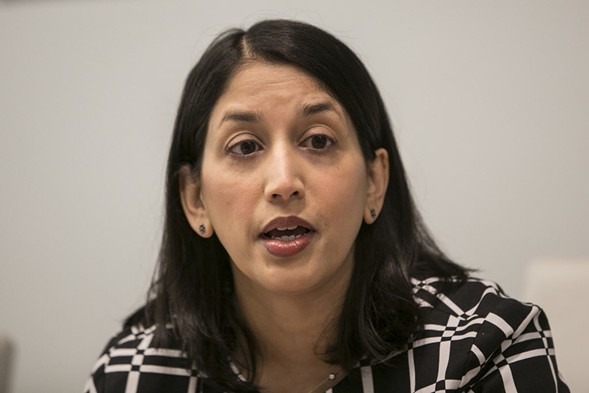
Sameena Mustafa has had a successful career as a real estate broker working with nonprofits and small businesses in addition to a rising profile in the city’s comedy scene. In 2015 she cofounded Simmer Brown , a South Asian comedy collective. But the 2016 election made her take a hard look at the local political arena and decide to get involved. Now Mustafa, 47, is one of three Democratic primary challengers to incumbent Fifth District U.S. representative Mike Quigley, who’s held that office for nearly a decade. Mustafa believes he’s out of touch with the progressive values that she sees to be increasingly animating the district. If she wins, Mustafa would be the first Muslim woman in Congress and the first Indian-American woman to represent Illinois.

Here at the Reader we’re familiar with your comedy work. Have you always been doing comedy alongside your real estate career?

I started comedy in 2014, and that’s the newest venture. Real estate I started in 2003. I was still working full-time while I was performing. Comedy is a late-night venture, as it were, so it’s not something that would conflict with business meetings.

I had been creative when I was younger. I wrote poetry, and I wrote in high school. So I had that creative side of me, and it was one of those things where someone was like, “Take a class at Second City!,” and it was fine. I took another one and a friend suggested, “Hey, if you like this but you want something a little bit different, try this women-only stand-up and storytelling class,” and that was the Feminine Comique. My graduation was four years ago, my comedy graduation. I never actually performed onstage before that graduation. It was so different from anything I’ve done in terms of writing. I did debate in college, so I had no problem speaking in public, but this is very different—it was me bringing my political ideas, my creative side, and my comfort with being in front of people. Immediately I had an affinity for it. I really enjoyed it. I was nervous the first time I was onstage, but I loved it.

I can’t find any of your stand-up on YouTube. Is there a reason for that?

I see comedy as something you do. It’s something you can be doing for 20 years and still be learning and evolving—it’s like any craft. To me it was more important for people to come to shows. I didn’t want to do, like, a Facebook live. It was more about having the interaction and immediacy. We’re essentially creating an experience, a community in real time.

You’re running against an incumbent who’s held this seat for nearly a decade. Some would say that it’s not a great strategy for a first attempt at political office. Why did you decide to spend your time and money on a race that’s really stacked against you?

The electorate is looking for a different type of leader, one that’s grassroots, connected to the community, that isn’t somebody that’s been selected for them. If you look at the last ten years, Democrats have lost over 1,000 seats on every level including the White House. So it’s one of those things where all the data is pointing against your assumptions, yet you’re still holding those assumptions? To me this was a district, this was an incumbent that was important enough to challenge because we have a completely different environment than we did two years ago. And so to have someone in that seat who doesn’t advocate for the values of the voters of the Fifth District was an opportunity to bring that, to bring that leadership.

And having lived in the district as long as I have and had immediate contact with people from all walks of life and different parts of the district—you get a sense of what people value. When you’re in an environment like a comedy show, it’s a flash focus group. It’s not hard to figure out what people are thinking and feeling and what they care about. Mike Quigley refused to do a town hall following the inauguration, which was something being done by Republican lawmakers across the country. And I thought: Why is my Democratic congressman, in a very Democratic district, refusing to do them?

You’ve been living in the district for 30 years. When did you first learn anything about your congressman? And can you describe your relationship with the congressman over the years?

I knew who he was and, frankly, because he has never been challenged, I voted for him. I knew he had the baseline: he was pro-choice, he was pro-LGBT. Then when I started looking at my stack of leaders up and down the ballot and started thinking about the issues I cared about and started doing some research on some stances that Mike Quigley had taken, it occurred to me that he may be good on those two issues but there’s so many issues on which he is falling short. Or, frankly, is in opposition to the values that I hold and that the voters hold in the district. Mike Quigley is not someone who sticks his neck out on issues.

If you were elected, you’d be the first Muslim woman in Congress. What goes through your mind as you consider that prospect?

It would certainly be a milestone, but I’m optimistic that people in Democratic politics are increasingly accepting of leaders irrespective of their religion, gender, or ethnicity and are looking for candidates who stand with them on the issues and share their values. More doors are opening for candidates who have something to offer but who historically have not had opportunities to serve.

In light of the conversation that you participated in with the Reader last year, talking about feminism and intersectionality in what would be considered a nonmainstream way, how are you bringing your political consciousness as a feminist committed to intersectionality to this very mainstream political arena?

It’s in how I’ve organized my campaign, it’s in how I’ve talked about the issues. . . . I gotta tell you, we’ve talked to thousands of voters, and this is a progressive district. So when you approach them, they assume you’re agreeing on some baseline principles. Are you pro-choice? Are you pro-LGBT? Do you support the Dreamers, immigration reform? Are you going to be supporting health care access for all? This is something I’ve found is resonating with voters.

On the intersectionality piece per se, I have made it a point to have a very inclusive team. The majority of the leaders on my team are women and women of color. Those are the kinds of things that resonate with volunteers, with donors, with voters.

And are you also mentally preparing yourself to step into an electoral political space which requires compromise and working with people who have a radically different political understanding of things?

I’ve spent the last 13 years advocating for people and organizations that are founded on values—nonprofits that are working on important issues like immigration, sexual assault survivors. It’s something where I’m literally negotiating against people who don’t necessarily share those values and they are not really committed to those outcomes. And they have their own agenda, and they have their own profit motive, specifically in the space of commercial real estate.

As it relates to being a public figure and having criticism—I’ve been doing it for the last six, seven months. I have put myself out there in a way that’s public, and in some ways it was an extension of what I was doing in the arts community. Because when you’re onstage, you’re essentially saying,  “I am open to anything. I’m declaring my values, I’m declaring my beliefs,  and I welcome you to challenge them.” But I’m not shying away from being a public figure.

You’ve talked about how problematic gerrymandering is, how it creates this strange monoculture of an electorate in one particular district. Is there anything you’ve been either pleasantly or unpleasantly surprised by as you’ve been campaigning around the absurd contours of the Fifth District?

I know this district, this is the district I grew up in, my parents have lived here for over 40 years, and I felt confident in my knowledge of what the values were that I held and that were shared by the voters. And one thing that I keep getting positive reinforcement on is how much, despite the gerrymandering, how much the voters and the district value diversity and believe in inclusion and view it as one of our strengths. I’m getting phone calls, e-mails, and messages from people who are saying, “We want to help you, we support you, we share your values and we want to see a leader like you represent us.” It’s humbling, and it’s an honor. This has been an incredible opportunity to connect with people on values and policies that they care about.

source: http://www.chicagoreader.com / The Chicago Reader – TheReader / Home> News> Politics> The Best of Chicago / by Maya Dokmasova / February 27th, 2018

Parveez Shaikh is M&C Saatchi’s senior VP and ECD

Bengaluru, KARNATAKA / Mumbai, MAHARASHTRA :

M&C Saatchi India has appointed Parveez Shaikh as their senior vice president and executive creative director.Shaikh is best known for building Contract’s creative reputation during the 11 years that he spent at the agency before he quit, in 2003. He has worked as a creative consultant with a few leading agencies for a few years after that.

ParveezShaikhMPOs28feb2018

M&C Saatchi India has appointed Parveez Shaikh as their senior vice president and executive creative director.

Shaikh is best known for building Contract’s creative reputation during the 11 years that he spent at the agency before he quit, in 2003.

He has worked as a creative consultant with a few leading agencies for a few years after that.

Shaikh has worked on premium, blue-chip clients such as Philips Audio, Franklin Templeton AMC, Asian Paints, Shoppers’ Stop, ICICI Bank and Cadbury India.

He has won over a hundred national and international awards, including two Cannes Lions and five finalists at the prestigious Cannes Advertising Festival, an entry in the D&AD, the One Show, the New York Festival and the ‘Copywriter of the Year’ award.

He has also featured in the Indian Copy Book as one of the 16 best Indian copywriters of all time. Shaikh will be based in Mumbai.

source: http://www.campaignindia.in / Campaign India / Home> Advertising / by Campaign India Team / May 22nd, 2008

The story of a Hyderabad Nizam and his diamond paper weight

Hyderabad, TELANGANA (formerly ANDHRA PRADESH ) :

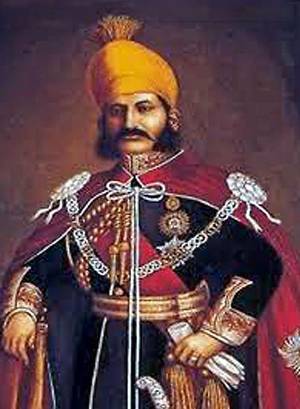
Mahboob Ali Khan
Mahboob Ali Khan

Mir Mahboob Ali Khan was taken to court by the trader who sold him the huge Jacob diamond

Of all the Nizams who ruled Hyderabad ,Mir Mahaboob Ali Khan — the sixth Nizam — was the most delightful and pleasure-loving monarch. He had great liking for everything western, be it dress, cars, manners and habits.

Born in 1866, he came to the throne at the age of three after the death of his father Afzal ud Daulah, and ruled till 1911. Mahaboob Ali kept the most lavish court in Hyderabad that several native rulers in India tried to emulate. He had a passion for expensive jewellery and precious diamonds. A number of exquisite pieces of jewellery including that of the famed necklace of Mary Antoinette of France, found place in his prized collections. However, the most renowned in his collection was the Jacob diamond, said to be the fifth biggest in the world.

Victoria Diamond

Originally known as Victoria Diamond, Jacob diamond had a short, but eventful, history  before reaching Hyderabad. It was found in Kimberly mines in South Africa in 1884 and was secretly transported to England to avoid heavy duties then in place for raw diamonds. It was sold to a consortium of jewellers at the Hutton Garden diamond market in London. The gem was then sent to Amsterdam in 1887 where it was polished in a specially erected workshop. The finished gem, with 58 facets, weighing 185. 75 carats was stunningly beautiful, in its cut, clarity and colour. (Kohinoor weighed only 105.6 carats).

DiamondMPOs28feb2018

It was this Victoria diamond, also called Imperial diamond that Alexander Jacob, the Shimla-based diamond dealer, sold to Mahaboob Ali Khan, the Nizam of Hyderabad in 1891. Since then it came to be called, Jacob Diamond.

Deal Went Murky

Like many famous diamonds of the world, Jacob diamond too had its own tale of woes due to the shady deal in its sale by Jacob to the Nizam. Jacob was a well-known, but notorious, Jewish merchant dealing in antiques and jewels having a shop in Shimla. Quite aware of Mahaboob Ali Pasha’s obsession for diamonds, Jacob arrived in Hyderabad in early 1891 to sell the Victoria diamond that was still in London. Jacob met the Nizam through Albert Abid, Nizam’s trusted Chamberlin, himself a jeweller and like Jacob, a Jew.

Jacob, with his alluring eloquence, spoke of the fabulous Victoria diamond and showed its glass replica that he had got made. Finally, after negotiations, both agreed for a mutual price of ₹46 lakhs. Half of the agreed amount, ₹ 23 lakhs, was paid as advance immediately by depositing in the bank and the remaining amount was to be paid on delivery of the diamond.

_______________________________________________

Czar Nicholas views Nizam’s Jewels
  • Czar Nicholas II, the last Emperor of Russia, was a guest of Mahboob Ali Khan in Hyderabad. Nicholas, as the Grand Duke of Russia, visited Hyderabad in 1892, two years before he succeeded his father as Emperor of Russia. The Duke stayed at the Falaknuma Palace along with other Russian officials accompanying him. The Nizam exhibited his famed jewel collection for the Russian Prince at a specially erected grand pavilion at the Chowmahalla Palace. Nicholas went on a hunting expedition in the Nekkonda forests near Warangal. A number of sports events were also organised at the magnificent Mahaboob Mansion in Malakpet for the visiting Prince and his entourage.
  • Much later, in the wake of Bolshevik Revolution that broke out in Russia, Czar Nicholas II was executed with family in July 1917

_________________________________________________

It was Jacob’s suggestion that the Nizam would use it as a paper-weight on his official papers and that his image would go up with such a use.

On July 21, 1891, when Jacob came with the original diamond, the Nizam to his disappointment found the diamond was much smaller than what the model was. Therefore he refused to buy the diamond and Jacob was asked to return the money paid as advance. But the wily Jacob by then, contrary to the understanding, had withdrawn all the advance money from the bank.

Jacob insisted that the Nizam pay him the remaining amount, and went so far as to file a case in the High Court in Calcutta. During the trial, the Calcutta High Court wanted to interrogate the Nizam as a witness. Accordingly, the Nizam met the commission at the Residency on October 5, 1891 but felt it an insult to go before a Commission of enquiry. On returning from the Residency, the angry Nizam, wrapped Jacob Diamond in a piece of cloth that was used to wipe the nib of his pen, pushed it into a shoe, and staved it off in his table draw, vowing never to open.

His son and successor, Mir Osman Ali Khan who succeeded his father in 1911, discovered it and used as paper weight, the purpose for which his father bought it.

What happened to Jacob?

The case Jacob filed proved to be his nemesis for, he had to spend all his money on his advocates. Born in Armenia , to Jewish parents, Alexander Malcolm Jacob was an ambitious and unscrupulous person. He came to India in 1871 with nothing and grew enormously influential as a dealer in jewels, diamonds and antiques. After his relations with the Nizam were strained, other native rulers treated him like the plague and refused seeing him. Jacob ultimately died in penury in Bombay. His life served a model for India-born Rudyard Kipling, to create the character, Lurgan in his Nobel prize winning novel, Kim, published in 1901.

source: http://www.thehindu.com / The Hindu / Home> Society> History & Culture / by K S S Seshan / February 21st, 2018

UK Asian Film Festival: Filmmaker Danish Iqbal’s movie will be screened

Allahabad, UTTAR PRADESH / NEW DELHI :

Allahabad:

Filmmaker Danish Iqbal’s movie, “Sadho” will be screened at UK Asian Film Festival. This festival will begin on 14th March and is planned to be held in Edinburgh, Manchester Leicester and London.

Sadho is a film based on true events and it highlights Child Trafficking menace.

Talking about the movie, Mr. Danish said that Sadho is a heart touching film. In the film, character Sadho finds a newborn child who survives in a car accident. He was supposed to make a decision whether to return the child to parents or not.

It may be mentioned that the movie was produced by Mr. Varad Gupta. Role of Sadho was played by Mr. Sukumar Tudu.

Earlier, Sadho was selected in nine international film festivals.

In Haryana International Film Festival, the movie won best film critics award and best actor award.

Filmmaker Danish’s career started from the theatre in 1994. He did graduation from Allahabad University and was a student of National School of Drama and Central School of Speech and Drama, London.

He got British Council’s Charles Wallace Award, Sahitya Kala Parishad’s Mohan Rakesh Award and Sangeet Natak Akademi’s Ustad Bismillah Khan Award.

source: http://www.siasat.com / The Siasat Daily / Home> Entertainment / February 21st, 2018

Kashmiri lensman bags 2016 Wisden-MCC Cricket ‘Photograph of the Year’ award

Srinagar, JAMMU & KASHMIR :

Saqib Majeed is the first Kashmiri and second Asian after Atul Kamble to receive the prestigious award.

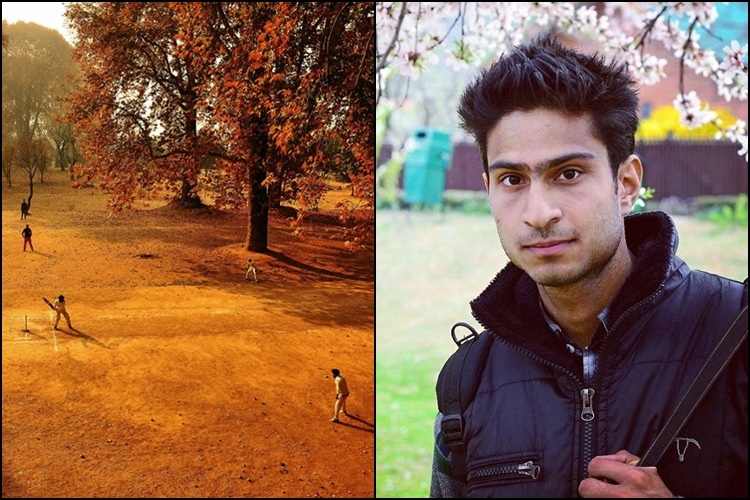
Saqib01MPOs28feb2018

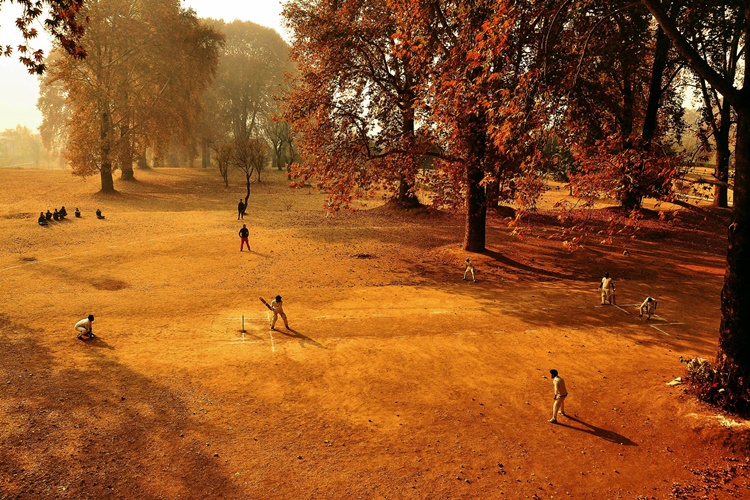
A Srinagar based freelance photographer has done Kashmir proud, pocketing the prestigious 2016 Wisden-MCC (Melbourne Cricket Council) Cricket Photograph of the Year for a stunning image, which captured boys playing cricket in the outskirts of the city, clicked by him.

Saqib Majeed, an engineer by profession clicked the award-winning picture at the Nishat garden in Srinagar.
Majeed is the first Kashmiri and second Asian after Atul Kamble to receive the prestigious award. Every year MCC publishes a book titled Wisden Cricketer Almanack, which includes best sports pictures from across the globe.

This year’s edition includes Majeed’s picture.

Majeed’s picture in Kashmir’s autumn setting certainly had all the ingredients to make the cut. It had nature’s own beauty coupled with cricketers playing the game in their own way that typify the sport with the man behind the camera having a feel of the occasion to capture the decisive moment.

SaqibMPOs28feb2018

“The historic Lords Cricket Ground will display my image for a year,” said a visibly happy Majeed, who was chosen among 450 participants.

“It was an autumn day when I visited the Nishat Garden with a friend to click some pictures. When I reached the garden, some guys were playing cricket under the shade of Chinar trees. I started to click the pictures for next half-an-hour,” he said.

Majeed recalls trying different angles to get a perfect shot, but ended up clicking only a few.
“I am very thankful to my family, friends and The Counselor Magazine, who always encouraged me,” he added.

source: http://www.inuth.com / inUth.com / Home> Sports> Cricket / by ANI News Agency / May 06th, 2017