Category Archives: World Opinion

When Malegaon rolled out red carpet for Dr. Abdullah Omar Naseef

Mumbai, MAHARASHTRA / SAUDI ARABIA :

Former Chief of Muslim World League, President of King Abdulaziz University and the brain behind a number of key projects and initiatives, including the exemplary Hajj crowd management system, Dr. Abdullah Omar Naseef breathed his last aged 86 in Jeddah on Sunday October 12, 2025.

Dr. Abdullah Omar Naseef with King Fahd

Dr. Abdullah Omar Naseef is no more. Former Chief of Muslim World League, President of King Abdulaziz University and the brain behind a number of key projects and initiatives, including the exemplary Hajj crowd management system, Dr. Abdullah Omar Naseef breathed his last aged 86 in Jeddah on Sunday October 12, 2025.

Dr Abdullah Omar Naseef’s funeral prayer was offered at Al-Juffali Mosque after Asr prayer Sunday. He was later buried at Al-Assad Cemetery in Jeddah.

Dr. Abdullah Omar Naseef was born in Jeddah in 1939. During his long career, Dr Abdullah Naseef held several key positions and also served as Secretary General of the Muslim World League (MWL) and Chairman of World Muslim Congress.

As Secretary General of the Muslim World League from 1983-1993, he extensively travelled all across the world to study the conditions of Muslim minorities and solve their problems.

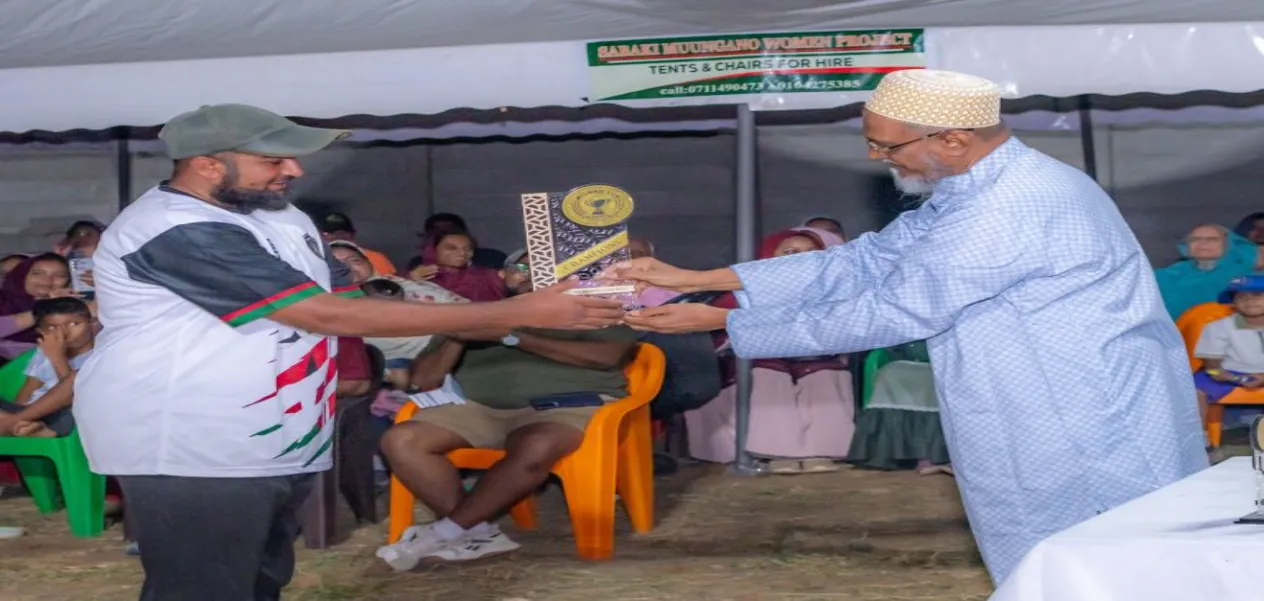
Dr Abudllah Omar Naseef in Malegaon

Dr. Abdullah Omar Naseef receiving King Faisal Award

During the same period, he visited Malegaon on May 01, 1992 leading an extraordinary delegation of Muslim scholars and Arab dignitaries.

After arrival in Mumbai by air, Dr Naseef travelled to Malegaon by road with Maulana Mukhtar Ahmed Nadvi, renowned Islamic Scholar, Founder of Jamia Mohammadia Mansoora Malegaon, former Vice President of All India Muslim Personal Law Board (AIMPLB) and his host in Malegaon.

“A huge crowd had gathered on the two sides of the road from Girna Bridge to Jamia Mohammadia Mansoora to greet Dr Naseef and the members of his delegation”, Abdul Qayyum Faizee, General Secretary of Jamiat Ahle Hadees Maharashtra at that time, told ummid.com.

Qari Abdus Samad led the crowd, standing along the Malegaon-Manmad Road and repeating the chants of Ahlan w Sahlan Marhaba to greet Dr Naseef and other guests”, Abdul Qayyum Faizee recalled.

“The grand welcome was indeed heart-warming for the onlookers as well as the visiting guests”, he added.

Abdul Qayyum Faizee said after offering Friday prayers at Masjid Ayesha Al Duaij in Mansoora, Dr Naseef and his delegation took a tour of Malegaon and also visited Jamiatul Huda.

“During his day-long visit to Malegaon, Dr Abdullah Omar Naseef’s focus of discussion was the social, educational and economic empowerment of Muslims”, he recalled.

Dr Abudllah Omar Naseef’s Mumbai and Bhiwandi connection

Dr Abudllah Omar Naseef’s mother was sister of Islamic Scholar Maulana Abdus Samad Sharafuddin. Abdus Samad Sharafuddin was a publisher of Islamic books, owning a printing press in Bhiwandi and a book shop in Mumbai. Sharafuddin and Sons at Mumbai’s iconic Mohammad Ali Road is still a one stop shop for rare books.

Maulana Abdus Samad Sharafuddin had formidable connections with Mumbai’s elites. When Saudi King Saud bin Abdulaziz visited Bombay in 1955, on his way to Jama Masjid Ahle Hadees Mominpura, he suddenly asked his convoy to halt at Abdus Samad Sharafuddin’s home.

“His visit to Maulana Abdus Samad Sharafuddin’s home was unscheduled and hence left the local security personnel puzzled”, Abdul Qayyum Faizee recalled.

King Saud’s visit to Dr Naseef’s maternal uncle Maulana Abdus Samad Sharafuddin’s home in Mumbai is reminiscent of the special relation Dr Naseef and his family had with the Saudi Royal family.

Dr Abdullah Omar Naseef’s Contributions

After completing primary education, Dr Naseef obtained bachelor’s degree in Chemistry from King Saud University in 1964. He was holder of a doctorate degree in Geology from the University of Leeds in 1971. He started his career as a Teacher first at King Saud University in Riyadh and then at King Abdulaziz University in Jeddah. He continued to rise through the academic ranks, until becoming a Professor and later appointed as the President King Abdulaziz University. He was also a fellow of the Geological Society of London and the Geological Society of America.

Dr Naseef also served as Chief Scout and member of the Board of Directors of the Saudi Arabian Boy Scouts Association, which he joined in 1956. Later, he served as President of the International Union of Muslim Scouts and member of the World Scout Committee.

Besides serving as the Secretary General of the Makkah-based Muslim World League, Dr Naseef also held several key positions – both in Saudi Arabia and abroad. His contributions were highlighted in the Islamic Relief Project, known as “Sanabel Al-Khair,” which aims to save the poor masses in the far reaches of the Islamic world from poverty, ignorance, and disease. He represented Saudi Arabia in several international conferences and forums, defending Islamic causes and calling for dialogue and understanding between peoples and religions.

Dr Naseef later also served as Vice President of the Saudi Shoura Council and carved his niche as a model of wisdom, broad vision, and service to the national interests. The positions held by Dr. Naseef include vice chairman of the Saudi National Dialogue Committee for 10 years, Secretary General of the International Islamic Council for Call and Relief from 2008 to 2019, Chairman of the Board of the International Islamic Relief Organization in 2000, President of the World Muslim Congress, Vice Chairman of the Saudi National Dialogue Committee for 10 years, and President of the Abdullah bin Omar Nassif Charitable Foundation.

Among the Arab and international positions that he held include Member of the Board of Trustees of the University of Dar es Salaam in New Mexico, the Islamic American College in Chicago, the Royal Moroccan Academy, the Islamic Academy in Cambridge, and Vice President of the International Islamic University in Islamabad. He chaired the Boards of Trustees of the Islamic Cultural Center in Geneva, the Institute for the History of Arabic and Islamic Sciences at the University of Frankfurt, the Islamic Cultural Center in Sydney, the International Islamic University in Chittagong, Darul Ihsan University in Bangladesh, and the Islamic University in Niger.

British-Pakistani writer Ziauddin Sardar in his book “Desperately Seeking Paradise: Journeys of a Sceptical Muslim” has described at length how Dr Abdullah Omar Naseef was instrumental in fomalising a system to manage crowd during Hajj, the annual ritual when over 2 million Muslims from around the world throng the Two Holy Cities – Makkah and Madinah.

Dr. Naseef was awarded with the King Faisal Prize for Service to Islam in 1991 and the King Abdulaziz Medal of the First Class in 2004. In 1983 Nasseef was awarded the Bronze Wolf, the only distinction of the World Organization of the Scout Movement, awarded by the World Scout Committee, for exceptional services to world Scouting.

Condolences

Condolences are pouring in from all across the world after the demise of Dr Abdullah Omar Naseef.

“The Departure of a Man Who Shaped a Civilization and Human Presence for Muslims Across the Globe”, Faid Mohammed Said, University Professor and a Member of the European Council for Muslim Leaders, said condoling the death of Dr Naseef.

“A great friend of the UK Muslim community”, the Muslim Council of Britain (MCB) in its condolence message on the passing of Dr Abdullah Omar Nassef.

In his condolence message, The Mufti of Uganda, Sheikh Shaban Ramadhan Mubaje, paid tribute to the late Dr. Abdallah Omar Naseef, recognising his key role in rebuilding and strengthening the country’s Muslim community in the 1980s and 1990s.

“One of the finest persons lived in Saudi Arabia. May Allah be pleased with the departed”, Dr Khaled Almaeena, Former Editor in Chief Arab News and Saudi Gazette, paid tribute to Dr Abdullah Omar Naseef in these words.

[With inputs from Saudi Gazette. The writer, Aleem Faizee, is Founder Editor of ummid.com. Aleem Faizee has also worked as Researcher at Tata Institute of Social Sciences (TISS) and with Action Aid for its research work published as “BROKEN PROMISES -A study on the socio-economic status of Indian Muslims: Seven years post Sachar”. Aleem Faizee’s research work “Mollywood: The Rise and Fall of a Subaltern Cinema” is part of the book “Creative Industries in India” published by Routledge India of Taylor and Francis Group, London. A prolific writer, Aleem Faizee has also worked with The Times of India and The Milli Gazette as Freelance Journalist for over 10 years. Aleem Faizee is also a Social Entrepreneur and heads Malegaon Industries and Manufacturers Association (MIMA) and Samara’s Education and Welfare Association (SEWA)]

source: http://www.ummid.com / Ummid.com / Home> Obituary / by Aleem Faizee / October 13th, 2025

Prof. Faisal Devji and Dr Abdul Qadeer to Receive Sir Syed Excellence Awards

Zanzibari, TANZANIA / CANADA / Bidar, KARNATAKA :

Prof. Faisal Devji (L) and Dr Abdul Qadeer to receive Sir Syed Excellence Awards

Aligarh:

Aligarh Muslim University (AMU) has announced the recipients of the 2025 Sir Syed Excellence Awards, which will be presented during the Sir Syed Day Commemorative Ceremony on October 17, marking the birth anniversary of AMU founder, Sir Syed Ahmad Khan.

Prof. Shafey Kidwai, Director, Sir Syed Academy, and convener of the jury informed that the International Sir Syed Excellence Award will be conferred upon Professor Faisal Devji, Beit Professor of Global and Imperial History, Balliol College, University of Oxford. Widely regarded as a leading scholar of South Asian studies, Islam, globalisation, and ethics, Prof. Devji holds a Ph.D. and M.A. in Intellectual History from the University of Chicago and a B.A. (Double Honours) in History and Anthropology from the University of British Columbia.

Born in Tanzania, Prof. Devji has taught at institutions, including Yale, Cornell, Harvard, and the University of Chicago. His acclaimed works include Waning Crescent: The Rise and Fall of Global IslamMuslim Zion: Pakistan as a Political Idea, and The Impossible Indian: Gandhi and the Temptation of Violence. His influential essay Apologetic Modernity explores the 19th-century Muslim engagement with modernity, particularly through the lens of Sir Syed Ahmad Khan and the Aligarh Movement.

The National Sir Syed Excellence Award will be presented to Dr. Abdul Qadeer, Chairman of the Shaheen Group of Institutions, for his transformative contributions to education among marginalised communities. Founded in 1989, the group now educates over 20,000 students with a faculty of 500+ across 13 Indian states. It operates schools, PU and degree colleges, and offers coaching for NEET, JEE, UPSC, as well as runs Hifz-ul-Quran Plus and Madrasa Plus programmes.

The awards, carrying cash prizes of ₹2,00,000 (international) and ₹1,00,000 (national), recognise exceptional contributions in Sir Syed Studies, South Asian Studies, Urdu Literature, Medieval History, Social Reform, Communal Harmony, Journalism, Interfaith Dialogue, and related fields.

Awardees were selected by a distinguished jury chaired by Prof. Azarmi Dukht Safavi and comprising Prof. Anisur Rehman, Prof. A.R. Kidwai, Prof. Imtiaz Hasnain, and Prof. Shafey Kidwai, with final approval by AMU Vice Chancellor Prof. Naima Khatoon.

source: http://www.radiancenews.com / Radiance News / Home> Pride of the Nation> Awards> Latest News / by Radiance News Bureau / October 09th, 2025

Shoaib’s journey from Naxal-hit Bihar village to Dubai cricket

Kothi Village (Imamganj, Gaya District), BIHAR :

Shoaib Khan with his trophy in Dubai

Shoaib Khan of the Gaya district of Bihar, has been selected in the development team of Dubai Capitals, the associate team of IPL franchise Delhi Capitals.

Shoaib comes from Kothi village of Imamganj, a Naxal-affected area of ​​Bihar. In his village, even basic facilities of education and sports were nearly missing, and, therefore, this is a dream come true for him.

Shoaib’s father, Adeeb Khan alias Jugnu Khan, is a farmer and social worker. Despite being from a Naxalite-affected and backward area, he always gave priority to education in his family.

A law graduate, Adeeb Khan, left no stone unturned in providing a good education to his children. In those days, there were no good schools in the village, so he got Shoaib admitted to Gyan Bharti School in Gaya city.

Shoaib with his team

From here, Shoaib’s passion for cricket deepened. Initially, his parents were apprehensive about his sports career, but they reconciled after seeing their son’s determination.

Shoaib’s elder brother, Altamash Khan, who works in District Disaster Management under the United Nations Development Programme, said that after playing at the school level, Shoaib also participated in district and state-level tournaments.

He joined Jamia Millia Islamia, Delhi, where he continued playing cricket while pursuing his graduation. Soon, he was selected for the university team and participated in charity matches and university development tournaments with many big players from the country.

Shoaib was disappointed after not being picked for the Bihar Ranji team. At one point, he had even decided to quit cricket.

It was when he stumbled upon the news that there was a vacancy in cricket in Dubai. Shoaib immediately started preparing to go there, and his father supported him. Soon, he was sending money to his parents. Gradually, Shoaib started playing in many clubs of Dubai and Sharjah and made his mark as a professional cricketer.

Shoaib’s hard work paid off, and now he has a contract with the Dubai International team. Due to his consistently excellent performance in club cricket, he has also started getting money for playing matches.

The Dubai cricket pitch has given a new flight to Shoaib’s dreams. He has also been honoured by the Emirates Cricket Board for his excellent fielding. Last year, he also received the Player of the Match and Best Fielder of the Tournament awards.

Shoaib performed brilliantly in his first match for Dubai Capitals in the ILT20 Development League. He played a blistering innings of 35 runs with the help of 3 sixes and 1 four in his first innings, giving his team a thrilling victory by 5 runs.

This performance not only gave the team its first win, but Shoaib also became the second-highest run scorer for his team. It is really unbelievable for a player from the Naxal-affected Kothi village to perform so well in the glittering T20 league of Dubai. When the news of his performance reached the village, there was an atmosphere of celebration there.

Shoaib Khan

Shoaib’s brother, Altamash Khan, said that if Shoaib performs well in the ILT20 Development League, he may be considered for the Emirates Cricket Board’s (ECB) auction for the International ILT20 2026 season.

Recalling his hard time, Jugnu Khan says that farming had also become difficult due to the fear of Naxalites. Despite this, he sent his children to schools in Gayaji.

He says when Shoaib was studying in a private school in Gaya, following his passion for cricket was not easy. During school holidays, Jugunu used to take him daily on a motorcycle to Gandhi Maidan in Gayaji, 100 km away, where he practiced.

All arrangements were made for Shoaib’s practice during his studies till matriculation. Later, the family got a pitch prepared on their farm in the village, where Shoaib used to practice regularly.

Shoaib started playing cricket at the age of 6. According to his father, this hobby was deep in him since childhood. At the age of 12, Shoaib established ‘Kothi Club’ in his village, Kothi, so that the children of the village could also enjoy cricket. He also got the ground prepared himself.

Father Jugunu Khan says, “There is a different passion for cricket in India, but the number of players is so high that it is very difficult to make a place in the national team from a backward village.”

This story of Shoaib Khan is not only about the success of a player, but it is also the story of the struggle of a family, the sacrifice of a father, and the big dreams of a small village.

source: http://www.awazthevoice.in / Awaz, The Voice / Home> Sports / by Naushad Akhtar, Gaya (Bihar) / September 08th, 2025

Tilak spoke with coach Salam Bayash from Dubai at crucial moment

Hyderabad, TELANGANA :

Tilak Varma from Dubai stadium and a Young Tilak with his coach Mohammad Salam Bayash (Right)

New Delhi :

Indian cricket’s latest hero, Tilak Varma, whose unbeaten 69 against Pakistan clinched the Asia Cup for India in Dubai, owes his career to his coach and mentor Mohammad Salam Bayash, who spotted and supported him all through his training to his rise as a star.

The 14-year relationship began when Tilak joined a summer camp of Salam Bayash in Hyderabad. He played on a dusty ground with a tennis ball when Salam spotted him. He told his father, Namboori Nagaraju, an electrician by profession, that his son was immensely talented and that he must join a cricket academy.

Nagaraju told him that he realizes his son is extraordinary, but given his financial condition, he can’t even afford to buy him a proper kit, let alone join a cricket coaching academy.

Tilak Varma and Mohammad Salam Bayash in different years of their association

Bayash took a young Tilak under his wings. Not only did he waive all his coaching fees, but he also took responsibility for the transport. Bayash would ride his bike 40 kilometers every day to pick up Tilak at 5 am to travel to the academy in Lingampalli.

Within a year, and with Bayash’s guidance, his family shifted closer to Lingampalli. A hard taskmaster, Bayash told Tilak that he would reward him with a cricket kit only after he performed. Tilak did not disappoint him and won his first cricket kit.

Bayash told the media in an earlier interview, “Tilak Verma came to me in 2011 when he joined a summer camp. He is very hard working; has a lot of patience, follows instructions meticulously, and has a good mind,” Bayash told the media in an older interview.

When Tilak arrived from Dubai to a rousing reception in Hyderabad, he was always seen with his coach and mentor, ‘Salam sahib’.

https://twitter.com/rushiii_12/status/1972963322699075737

Tilak played the Ranji trophy at the age of 16 when he was in the Hyderabad team.

Recalling Tilak Verma’s early days, Bayash says, “I first gave him basic training, and after the third month, he entered a local match. He immediately stood out with his temperament and technique. He would practice for hours and happily skip family functions to come to net sessions. His discipline was amazing. He never missed a net session. We, the guru and the disciple, would travel around the city on motorcycles for matches. Even today, he meets all the boys and the staff with great love and gentleness. Success did not make him complacent.

“Tilak called me before the match. I only told him to stay at the crease till the end. I am happy that he did that, and today he has emerged as a hero. I am not surprised at his temperament because even at a young age, he used to bat for hours during net practice.”

He says that after the victory against Pakistan, he made a video call from Dubai International Stadium, the venue of the Asia Cup. He spoke to everyone in my family. His father, Nagaraju, and mother, Gayatri, are on a religious journey to Nepal. Earlier, people used to call him ‘Baish ka bolaga’, today I am happy that people know me as ‘Tilak ka coach’.

https://twitter.com/ANI/status/1973000243802165392

A major fillip to his career came in 2022 IPL auction when the Mumbai Indians bought him for a whopping 1.7 crore.

Born as Namboori Thakur Tilak Varma on November 8, 2002, in Hyderabad, Telangana, Tilak grew up in a modest Telugu household.

Despite financial struggles, the family rallied behind Tilak’s passion for cricket. His parents often went out of their way to support his budding career, even when resources were scarce. Tilak never forgets to credit his coach and parents for his success.

Tilak’s international debut came in 2023 against New Zealand when he top-scored for India on debut and later registered his half-century, becoming the second Indian to reach the milestone in T20Is. By the end of the series, he was India’s top scorer.

However, his most memorable innings came at Dubai, where he turned around the finals of the Asia Cup for India by scoring an unbeaten 69 amid a crisis situation for India.

source: http://www.awazthevoice.in / Awaz, The Voice / Home> Stories / by ATV / October 01st, 2025

TS Sports Minister welcomes ‘Shooting Star’ Abid Ali Khan

Hyderabad, TELANGANA :

Hyderabad: 

Abid Ali Khan, the Shooting Star of Telangana, was accorded a warm welcome on his arrival, Rajiv Gandhi International Airport Shamshabad, on Thursday.

Sports Minister V. Srinivas Goud and offcials of Sports Authority of Telangana were waiting at airport to welcome the shooting star.

After a brief ceremony, a smiling Abid Ali Khan, accompanied by his grand parents Dr. Shahed Ali Khan, Director of Cure Well Hospital and father Dr. Sabir Ali Khan, himself a national rifle shooter, Amer Ali Khan, News Editor of The Siasat Urdu Daily and Wahab Qadri received Abid Ali Khan.

A group of students from NASR School from where Abid Ali Khan has completed his matriculation received him with complete honour.

Abid Ali Khan has bagged Gold Medal in 50 meter rifle prone, men junior, and Bronze Medal in individual contest at the14th Asian Shooting Championship held in Doha, Qatar from November 3-13.

source: http://www.archive.siasat.com / The Siasat Daily / Home / by Mohammed Hussain / November 14th, 2019

Sabir Ali, Iron Man of India, passes away at the age of 67

HARYANA / NEW DELHI :

‘Ironman of India’ Sabir Ali, who won the decathlon gold at the 1981 Asian Athletics Championships in Tokyo, passed away.

Ali won eight consecutive Open National titles in the gruelling event between 1979 and 1985. The Railways star was unbeatable at the Inter-State meets too – he represented Haryana — which he won twice in 1979 and 1981. His pet event was the javelin throw. Ali won a bronze and silver at the World Railway meets in 1981 and ’85 and was honoured with the Arjuna Award in 1981. Ali, who grew up in Delhi, is survived by his wife, son and daughter.

‘Ironman of India’ Sabir Ali, who won the decathlon gold at the 1981 Asian Athletics Championships in Tokyo, passed away. He was 67. Ali, who retired from Railways, won the title in the Japanese capital with a tally of 7,253 points beating Japan’s Nobuya Saito (7,078) and China’s Zu Qilin (7,074). He also won two silver medals at the South Asian Federation Games held in Kathmandu and Dhaka.

What is Decathlon :

Decathlon is a combined athletic event consisting of 10 track and field disciplines. Under this, various competitions are held over two days, including the 100-meter race, long jump, shot put, high jump, and 400 meters on the first day, while the 110-meter hurdle race, discus throw, pole vault, javelin throw, and 1,500 meters on the second day

source: http://www.currentaffairs.adda247.com / Adda 247 Current Affairs / by Sumit Arora (and edited – What is Decathalon) / January 27th, 2023

Businessman-philanthropist Haji Abdul Razzaq Kalsekar passes away

Dasur Village (Rajapur Tehsil, Ratnagiri) / Mumbai, MAHARASHTRA / Dubai, U.A.E. :

Late Abdur Razzak Kalsekar, Chairman, Rasasi Group

Dubai/Mumbai:

Distinguished citizen, pioneer businessman and philanthropist, Haji Abdul Razak
Kalsekar passed away on Monday at Dubai.

The well-known educationist and philanthropist who ran Kalsekar Trust, Kalsekar College and Kalsekar Hospital among many other charitable institutions. His special interest lay in the education sector and he had established many schools, colleges and orphanages.

“His philanthropy in India and West Asia will be remembered forever. He was very much concerned towards the upliftment of the downtrodden and empowerment of women.

Among his educational institutions, Kalsekar Girls Degree College for Women in Mumbra was established in order to provide quality education to girls. He was also very instrumental in setting up many hospitals, engineering, pharmacy and architecture colleges,” Aamir Edresy, president of the Association of Muslim Professionals, said.

Razzaq ran a perfume business in Dubai.

The AMP team offered deep condolences to his family and thousands of people, who considered him not just as an employer but also as a father and a guide.

source: http://www.twocircles.net / TwoCircles.net / Home> Indian Muslim / by TCN News / August 11th, 2015

Begum Qudsia Aizaz Rasul: The Only Muslim Woman In India’s Constituent Assembly | #IndianWomenInHistory

Lucknow, UTTAR PRADESH :

Begum Qudsia Aizaz Rasul was one of the 28 Muslim League members to join the Constituent Assembly of undivided India, and she was the only Muslim woman to be a part of the assembly.

Begum Qudsia Aizaz Rasul was born to the royal family of Malerkotla (situated in erstwhile united Punjab) on 4th April,  1908. Her father was Nawab Zulfiqar Ali Khan. Qudsia had a progressive upbringing and was encouraged from a very early age to lead a modern life, as opposed to several stringent restrictions imposed upon other contemporary Muslim women, such as that of the purdah.

She got married at quite an early age to Nawaab Aizaz Rasul from the erstwhile province of Awadh. Her husband held the position of a taluqdar,  or a landowner. Qudsia had political exposure both before and after marriage, and her formal political participation took place after she got married.

Image Source: Wikivividly

Political Career

Qudsia, along with her husband, joined the Muslim League in mid-1930s, soon after the passing of the Government of India Act in 1935. This was also her official entry into electoral politics, as she contested in the elections of 1937 from the U.P. legislative assembly, where she successfully held her seat till 1952. Aizaz was one of the very few female candidates to have contested and won from a non-reserved constituency during the pre-independent times.

She was the first Indian woman to achieve such feats, and this was truly commendable and noteworthy at a time when most formal political positions were almost implicitly reserved for men.

As an MLA, she also held several important posts, such as the Leader of Opposition (1950 to 1952) and the Deputy President of the Council (1937 to 1940). She was the first Indian woman to achieve such feats, and this was truly commendable and noteworthy at a time when most formal political positions were almost implicitly reserved for men. Moreover, to rise to prominence at a politically significant province such as the U.P. indeed made Qudsia Aizaz Rasul a trailblazer.

Image Source: Indian Express

She is well known for her progressive, anti-feudal stances, such as the abolition of the zamindari system. Qudsia was a strong advocate for the abolition of communal electorates as well, as she believed it divided the society more than it united – which was counterproductive for the Indian electoral candidates at a time when there was an urgent need of a united Indian front to oppose the colonial rulers. She went on to create a strong and convincing case for the abolition of electoral reservations for religious minorities during her tenure as a member of the Constituent Assembly.

Qudsia was one of the 28 Muslim League members to join the Constituent Assembly of undivided India, and she was the only Muslim woman to be a part of the assembly. Her contributions in the assembly debates remain monumental till date and have been recorded in many official sources.

Her contributions in the assembly debates remain monumental till date, and have been recorded in many official sources.

After the dissolution of the League, she joined the Indian National Congress, and served as a member of the Rajya Sabha from 1952 to 1958. Later, she became a member of the legislative assembly of Uttar Pradesh from 1969 to 1989.

Other Achievements

Begum Qudsia Aizaz Rasul is also well known for her autobiography, titled From Purdah to Parliament: A Muslim Woman in Indian Politics. It provides excellent insights into the intersectional aspects of organised politics as it functions in our country. Other than this, she also wrote a travelogue titled Three Weeks in Japan.

Besides her literary prowess, Qudsia had also served as the President of the Indian Women Hockey Federation for over fifteen years, and went on to become the President of the Asian Women’s Hockey Federation.

Begum Qudsia Aizaz Rasul was awarded the Padma Bhushan in 2000 for immense, invaluable contributions to the field of social work.

References

1. From Purdah to Parliament: Begum Aizaz Rasul (A Review) by Radhika Bordia
2. Begum Aizaz Rasul: The only Muslim woman to oppose minority reservations in the Constituent Assembly by Christina George

source: http://www.feminisminindia.com / Feminism in India – FII / Home / by Ekata Lahiri / February 15th, 2019

Bandipora’s Jahangir Arshid: Innovator par excellence

Bandipora District / Hazratbal (Srinagar), JAMMU & KASHMIR :

Has 20 patents in his name, winner of 5 medals

Innovation is the process of turning ideas into manufacturer and marketable form and this maxim has been proven by M-Tech degree holder Jahangir Arshid of North Kashmir’s Bandipora district.

He has over 20 patents in his name, out of which five of them have won him gold medals.
Jahangir, 27, is currently pursuing Artificial Intelligence and Machine Learning (AIML) at the University of Texas in the United States, and runs an institution called “Kashmir Innovates”, popularly known as KASHOVATIC, in Hazratbal, Srinagar.


Presently, he is working on a unique patent like “Spoon” that would check the concentration of salt in any dish that our womenfolk prepare in their kitchens.


The idea to determine the reading of salt in units was evolved after students often complained of not getting the taste of salt in their meals. Jahangir has six students of 9th to 12th standards assisting him at his Bandipora workshop, besides continuing with their learning.


Giving a reason for taking up the “Spoon” project, Jahangir said that, “In the dishes that our sisters and mothers prepare, the salt content either remains low or more. This encouraged students to create an electric device which will check the concentration of salt on the basics of 10th-level science, which teaches us the basis of conductivity and resistance.” Jahangir further said, “Spoon will show the reading of units of salt when it is put in the utensil containing the meal to be prepared and accordingly the quantity of salt can be added.” Describing it as a prototype, Jahangir said companies that accept it can take it and redesign it as per their requirement before marketing it.


“Presently, it works in battery mode and we are trying to make it battery less so that there is no need to charge it time and again,” Jahangir said, adding that it would take the boys at least two more months to reach perfection.


“We will make it on “Speck Effect”, which reacts to temperature and generates voltage and, when one dips the spoon in any hot dish, it will automatically show the content of salt,” Jahangir, adding, “We will change to super capacitor charge for it to run and work on its own.”


Jahangir said that “Spoon” will not only solve kitchen problems, but also help hypertensive people decide how much salt they should take.


He said that Adnan Farooq, Tabish Mushtaq, Tabasum Manzoor, Amaan, Seerat Jan and Zainab-un-nisa are presently on the job to take “Project Spoon” to its logical conclusion.


Jahangir’s first unique innovation was a “Baby Peace and Foretelling Device”, a diaper-shaped item meant for children and paralytic patients, giving advance signals about a baby or a paralytic patient about to go for a “Peep”. He said a nurse or attendant would get a message in advance when a patient wants to go for a “peep” and accordingly she can move the latter to the washroom.

Different companies from Japan, including Unicharm and Unitear, have shown interest after seeing our patents. “We have signed a Memorandum of Understanding (MoU) with them and are in constant touch rather than being in queue for medical research. Recently, we received an email stating that ‘we found your technology unique throughout the globe,’” said Jahangir.


“With the encouragement from Japanese companies, we have started a chain of innovations and presently we are working on more than 20 patents,” he added.


“Five of these patents are of international level and have won me four gold and one silver medal. We have also won the Medal of Honor from the Association of European Innovators, which are being run by the Republic of Serbia and the Republic of Portugal,” Jahangir said


Gold medals have been won for the baby peace and foretelling device, self-cleaning utensils, brain interface for specially-abled persons and hardware automation system for examinations. The patent for stabilisation and transformation frequency control won a silver medal.


“After achieving success, we started a patent institution where we teach our students how to make these patents and how to apply basic science to remove the problems of common people,” Jahangir said.


“The motive of KASHOVATIC is to develop an innovative culture and scientific temperament in the Kashmir Valley which would help students of 9th and 10th standards to differentiate and find out what is piquant in society and attracts them in a big way. Developing a scientific temperament and attitude will encourage them to innovate, take responsibility and help society deal with its many problems,” he added.


More than 150 students have given us innovations through “KASHOVATICS”.
“Recently, we got approval from the Association for Information Communication Technology (AICT),” he said, adding that “our institute is running successfully and our efforts are bearing fruit, as there is a lot of exposure in Srinagar.”


He said that under the National Education Policy (NEP) 2022, the promotion of innovative products needs enhancement of structure and development so that innovators can bring about a revolution in society. Jahangir further said that engineers who have completed their studies have great potential and could be great innovators in society.


“Not only engineers, but every student could be an innovator, but the need of the hour is to look at problems in a way that we can give solutions and that kind of thinking can make us innovators. Only innovation could take us forward in this world,” he concludes.

source: http://www.brighterkashmir.com / Brighter Kashmir / Home / by Qaisar Ahmad / March 10th, 2022

Old stones, new tales: How inscriptions rewrite Kashmir’s religious history

JAMMU & KASHMIR :

A new study has revealed narratives of syncretism that counter the politically motivated and polarised versions of the Valley’s history.

The 17th century limestone slab in the walls of Jamia Masjid in Srinagar. At the bottom, a small engraving reads, “the work of Hari Ram”. | Photo Credit: Tabish Haider, Barakat Trust 

Strolling inside the quadrangle of Kashmir’s 600-year-old Jamia Masjid, worshippers stop to take pictures of the mosque’s large steeple, its outlines sharpened against the backdrop of Hari Parbat, the famous fort-hill of Srinagar. What they usually overlook is a limestone plaque with Persian inscriptions embedded in the wall just above the mosque’s entrance.

In January 2024, when the Srinagar-based art historian Hakim Sameer Hamdani (he is currently the Design Director of the Jammu and Kashmir chapter of the Indian National Trust for Art and Cultural Heritage) examined the slab, he found that it mentioned names of medieval-era sultans and their governors involved in the repeated repair and rebuilding of the mosque since its original construction in 1402. At the bottom, he noticed the name of the engraver: Hari Ram. Hamdani told Frontline: “Based on our investigation, it appears that Hari Ram, who inscribed the text on the limestone plaque, was a master carver in the Mughal atelier. There is no information about Hari Ram in any Mughal source. But from this slab we know now that he was Hindu and part of the overall Mughal patronage system.”

The Jamia mosque was constructed during the reign of Sultan Sikandar Shah Miri in 1402, a few decades after the Turkic-origin Shahmirid dynasty took over the reins of the kingdom from the royal house of the Loharas, who were Hindus. In Kashmir’s narrative tradition, the mosque is invested with great symbolism: Jamia Masjid embodies not just the crowning of Islam as the State religion of Kashmir after eight centuries of Hindu rule, but also the start of the spread of a culture heavily influenced by Persia.

Hakim Sameer Hamdani, Srinagar-based architect and art historian who led the documentation project. Hamdani is Design Director with INTACH, Jammu & Kashmir. | Photo Credit: By Special Arrangement

The medieval era in Kashmir, particularly the 14th and 15th centuries, when it gradually transitioned to Islam, has been sought to be presented in contemporary political and cinematic discourse as a period of widespread persecution of Hindus. The movie The Kashmir Files (2022), for example, has a scene where the protagonist describes the Kashmir of yore as a thriving seat of Hindu learning until it was despoiled by Islamic rulers in the 14th century. However, historic epigraphs such as the one in Jamia Masjid and elsewhere in Srinagar point to a culture that was more syncretic than confrontational.

With such discoveries, Hamdani’s project intends to counter the politically motivated narratives around Kashmir’s history. He embarked on the project earlier in 2024, roping in a team of heritage architects and graphic designers from Srinagar. The team consisted of Umar Farooq (Assistant Professor, Department of Architecture, Islamic University of Science and Technology, or IUST, Jammu and Kashmir), who surveyed the inscriptions; Tabish Haider (cultural activist and Young India Fellow, 2022, at Ashoka University), who took life-size images of the plaques; Mehran Qureshi (Assistant Professor, Department of Architecture, IUST), who investigated the epigraphs and translated them into English; and Taha Mughal (a specialist in preservation), who rendered them into measured drawings. The team has examined several epigraphs, dating from the 15th to the 19th centuries, engraved in various heritage sites across the Valley. While the majority of them are in Persian, there are texts in Arabic and Sharda (an ancient script of Kashmir) as well.

Many of these inscriptions have been rendered almost undecipherable by the passage of time—the main reason why they had escaped the attention of historians so far. Hamdani and his team used technology and linguistic expertise to decipher their content and to bring the information to the public domain for the first time. Of the over 100 slabs that the team has investigated across Kashmir, the details of 40 were catalogued and put on display in an exhibition, “Naqsh-i-Dawaam”, held in Srinagar in June 2024. Hamdani is currently writing a coffee-table book that will make the findings accessible to readers across India and the world. Qureshi is further expanding the scope of the investigation by surveying similar inscriptions found in medieval-era tombstones in Kashmir. Qureshi’s work is sponsored by the Netherlands-based Prince Claus Fund while the grant for Hamdani’s project came from London’s Barakat Trust, which researches the art, architecture, and history of the Islamic world.

_______________

Highlights

A documentation project undertaken by Srinagar-based architect and art historian, Hakim Sameer Hamdani, has added layers to Kashmir’s history, challenging its unipolar representation in popular narratives.

————
Of the over 100 slabs that Hamdani’s team has investigated across Kashmir, the details of 40 were catalogued and put on display in an exhibition, “Naqsh-i-Dawaam”, held in Srinagar in June 2024.

————
Hamdani is currently writing a coffee-table book that will make the findings accessible to readers across India and the world.

________________________________

“The idea was to add a layer of nuance to Kashmir’s history,” Hamdani said while talking about his project. “We tried to flesh out what we already knew about the transmission of knowledge and culture from the Central Asian regions into Kashmir at the onset of the Sultanate period in the 14th century.”

Adding layers

The investigation has added layers to the understanding of Kashmir’s history. Take the Jamia Masjid slab, for instance. It dates back to 1622, when Jahangir was the emperor of Hindustan. In 1589, Jahangir’s father, Akbar, had forced Kashmir to surrender its sovereignty to the larger Mughal Empire. This created resentment, sparking off rebellion and political unrest that continued for years until a semblance of stability was achieved during Jahangir’s rule. To mark the end of hostilities, Jahangir commissioned a renovation of the mosque and installed the slab, which attempts to naturalise him as the legitimate ruler of Kashmir.

The 15th century Aali Masjid, Srinagar’s second largest mosque. It combines Mughal, Kashmiri and Safavid architectural styles. | Photo Credit: Tabish Haider, Barakat Trust 

Hamdani said: “The text seeks to connect Jahangir to a historical project, showing him as continuing the work of the sultans of Kashmir, who reigned before the Mughal annexation.” The association of a Hindu craftsman with a major imperial programme tells us something about the prevailing milieu, where royal patronage could be sought and obtained regardless of the craftperson’s religious affiliation.

The idea of exploring epigraphs to unravel history came to Hamdani when he was working on his thesis on Islamic architecture at the School of Planning and Architecture, New Delhi, six years ago. As part of his study, he examined extant Islamic epigraphs in the monuments and buildings of Kashmir. Among the ones he analysed was an Arabic hadith (essays on the words and actions of the Prophet Muhammad) etched on the 15th century hospice of a Sufi mystic, Malik Ahmad Itoo, located at Safa Kadal in Srinagar city. It is a small hermitage on the banks of the Jhelum river. The verses, engraved on the shrine’s tympanum, remind the faithful of the spiritual rewards that would accrue to the builder of a mosque.

The Persian slab inside Aali Masjid which identifies the architect of the mosque as Raja Bihisti Zargar. | Photo Credit: Tabish Haider, Barakat Trust 

Hamdani said: “Such inscriptions, commonly seen in Kashmiri shrines, are different from medieval Islamic epigraphy found in Delhi.” Speaking of the latter, the scholar Anthony Welch said that their “principal function in late-twelfth-century India was to warn the non-Muslim majority to accept Islam” (in his 2008 essay, “The Emperor’s Grief: Two Mughal Tombs”). The epigraphs associated with early Islam in Kashmir, by comparison, are devoid of such hegemonic overtones. “Their stress is rather on cultivating personal piety,” Hamdani said.

His project has thrown up unexpected stories that often go against the recorded textual histories of Kashmir. Consider the case of Aali Masjid, Srinagar’s second largest mosque. The 15th century mosque embodies a fusion of Iranian, Mughal, and Kashmiri architectural styles. Added during a renovation in the 17th century, the balusters of its portico rest on distinct stone bases reminiscent of those of Safavid pavilions in Iran; the technique was brought to Kashmir by the Mughals. Although the 1887 Persian text Tarikh-e-Hasan—thought to be an authoritative commentary on Kashmir’s medieval historyattributes its construction to Ali Shah, the eighth sultan of the Shahmirid dynasty, the stone slab restored by Hamdani names a different patron: Sultan Hasan Shah, who reigned 50 years later. The epigraph identifies Raja Bihisti Zargar as the architect of the mosque.

Startlingly, the same name was once engraved on a stone pillar inside Srinagar’s Shankaracharya temple. Today, no trace of this inscription remains in the temple, but it is important to remember its existence in view of recent attempts to polarise sentiments by creating a controversy over the name of the Shankaracharya hill, also called Takht-e-Suleiman.

The Shankaracharya temple is one of the oldest temples in Kashmir, mentioned by Kalhana, author of the 12th century Sanskrit text Rajatarangini (River of Kings), which gives a history of Kashmir. The Rajatarangini remained a text in progress for a long time, with Brahmin court historians adding bits to it at different periods. After Kalhana, Jonaraja took it up in the 15th century, followed by Srivara and Shuka in the 16th century.

The hadith inscription on the shrine of Sufi mystic, Malik Ahmad Itoo, in Srinagar. It is one of the earliest surviving Islamic epigraphies in Kashmir. | Photo Credit: Shakir Mir

Hamdani’s team was able to access a preserved facsimile of the temple epigraph in a book titled Illustrations of Ancient Buildings in Kashmir (1869), based on a survey conducted under the Archaeological Survey of India by Henry Hardy Cole. In the survey, Cole suggested that the inscriptions (there were more than one) were linked to repair work done in the temple in the 16th century. But he could not identify the ruler under whose leadership the work was carried out.

Cole was not the only one whose interest was piqued by the presence of Persian inscriptions inside a Hindu temple. The British explorer Alexander Cunningham (1814-93) also mentioned them in his “Essay on the Arian Order of Architecture in Temples of Kashmir” (1848), which says that he had copied out an inscription (a different one at the same site): “but since then it has been so completely defaced by the Dogar [Dogra] soldiery that I could with difficulty trace the name of Takht-i-Suliman”.

Later, in 1875, a group of European travellers made another attempt to decode the writings, scrawling a rudimentary translation in their diary. “This idol… was made by Haji Hashti… in the year 54 of the Samut (Samvat) or Hindoo era,” they wrote, adding that “the foot of the back part of the pillar states that he who raised up this idol was Quajah Rukm, son of Mirjan.”

The case seems to be have been buried in 1935 after it received a clumsy dismissal from an antiquarian, Pandit Anand Koul, who concluded: “Islam was unknown in that remote period when this temple was built, so there could not have been a Khwaja or a Mir then…. Nor would a Muhammadan build a temple as his own” (Archaeological Remains in Kashmir, 1935).

The restored epigraphs were put on display at an exhibition in Srinagar in June 2024. | Photo Credit: Tabish Haider, Barakat Trust 

But when Hamdani’s team examined the Aali Masjid slab, a different story emerged: the Muslim architect (Raja Bihisti Zargar) responsible for designing the mosque was the same one who oversaw the repair of the Shankaracharya temple in the 16th century. This suggests that even in the late Sultanate era, often depicted as a period of widespread destruction of Hindu places of worship, Muslim rulers continued to extend their patronage to Hindu cultural spaces. Understandably, the Dogra militia had tampered with this evidence in the 19th century.

Folds of history

Another epigraph documented by Hamdani was written in Sharada on the limestone wall of a 15th century almshouse at Khonmoh in Srinagar, built by a Hindu merchant, Purnaka. The text seems to heap praises on one of the Shahmirid kings by describing him as the son of the “illustrious Sakandra” (Sultan Sikandar). The effusive language used for Sikandar by a Hindu merchant is especially significant because the sultan was depicted as an iconoclast by the contemporary Brahmin chronicler Jonaraja in Rajatarangini. Jonaraja’s characterisation of Sikandar was perpetuated by colonial historiographers. In his 1848 booklet, Cunningham invoked the “destroying hand of Mahomedan [sic] bigotry” to explain the ruin into which Kashmir’s ancient temples had fallen.

But the Khonmoh inscription reveals that there existed a multiplicity of narratives around Sikandar in the 15th century and not all of them told the same story. “We are not denying that persecutions have happened in the past,” Hamdani said. “Our project drives home the point that history never uncoils in a linear way. History has many folds, each one with layers and textures of its own.”

Shakir Mir is a freelance journalist based in Srinagar. He was previously a correspondent with The Times of India.

source: http://www.frontline.thehindu.com / Frontline / Home> Arts & Culture> Heritage> History / by Shakir Mir ./ September 13th, 2024