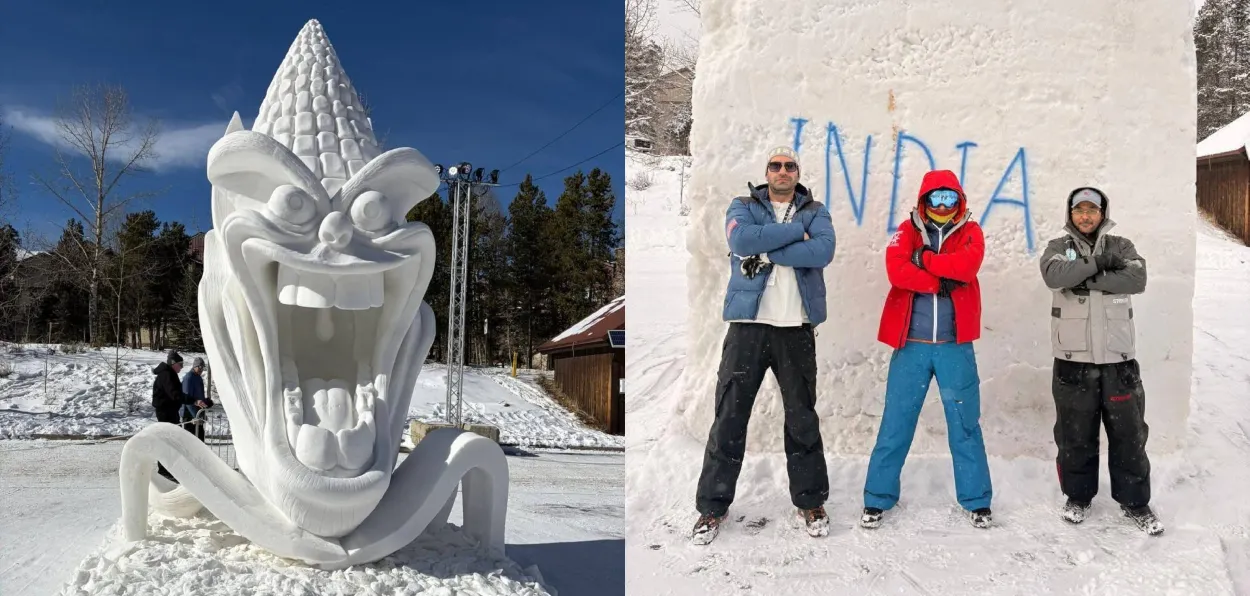
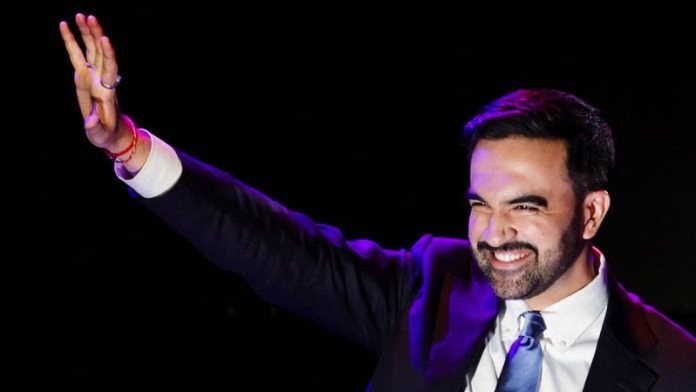
Team India -Zahoor Ahmed Lone, Suhail Mohammad Khan, Mridul Upadhyay with their snow sculpture
New Delhi :
For a second time, Team India has won a bronze medal and the People’s Choice Award in the international snow sculpture championship held in Colorado, USA.
The Indian team was led by the Kashmir-born Zahoor Ahmed Lone and comprised Suhail Mohammad Khan, Mridul Upadhyay, and Matt Seeley (USA).
While Lone belongs to Singhpora Pattan, Baramulla, Khan is a specially-abled person and also belongs to Kashmir.
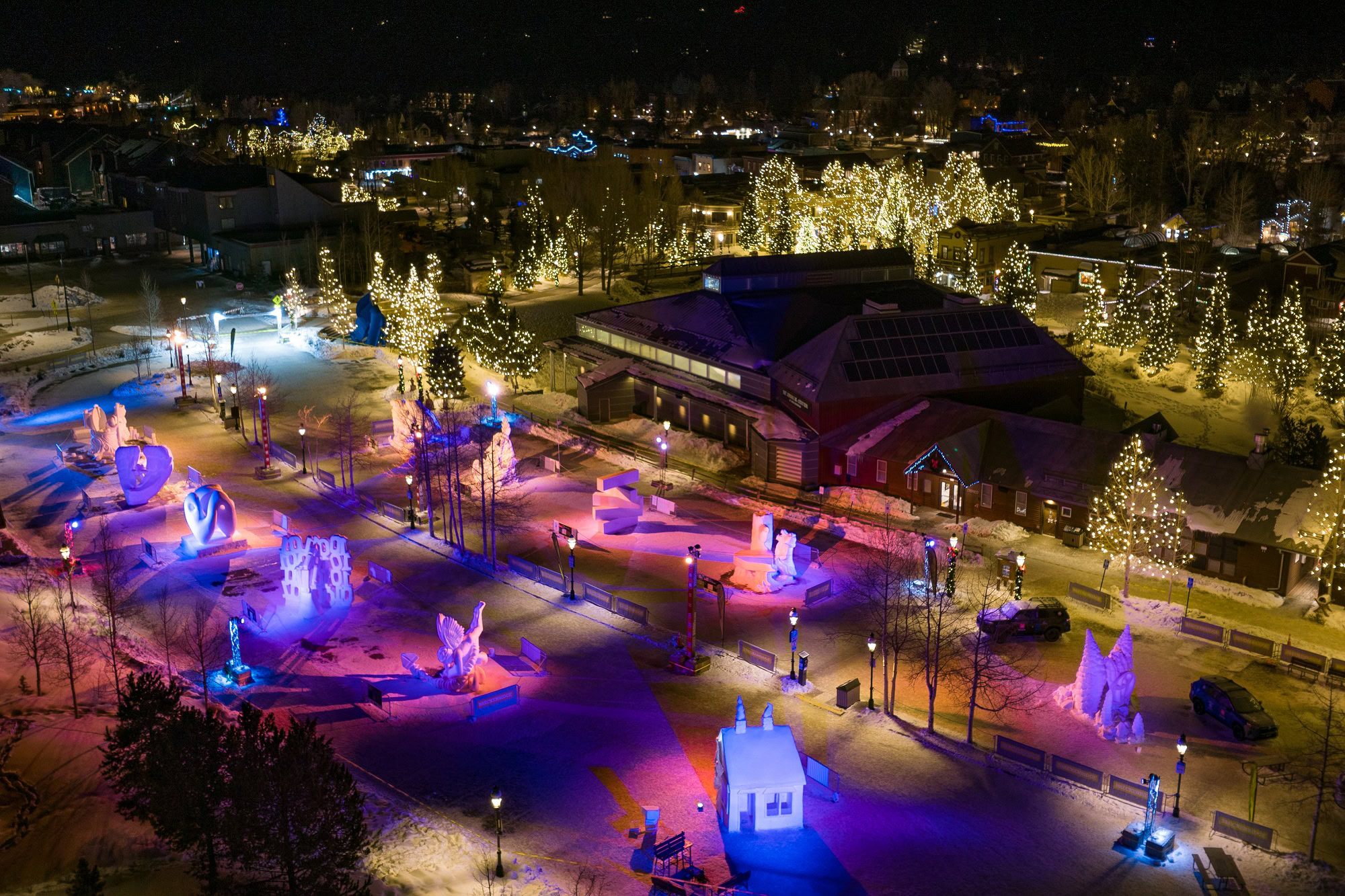
The organisers of the International Snow Sculpture Championship shared this visual of the competition on their website:
Breaking psychological barriers about India being a “hot country” and unfit for snow sports or arts, young Indians from “snow states” and others are gradually leaving their mark on snow art. Snow art has been associated with affluent First World Western European, Scandinavian & North American countries.
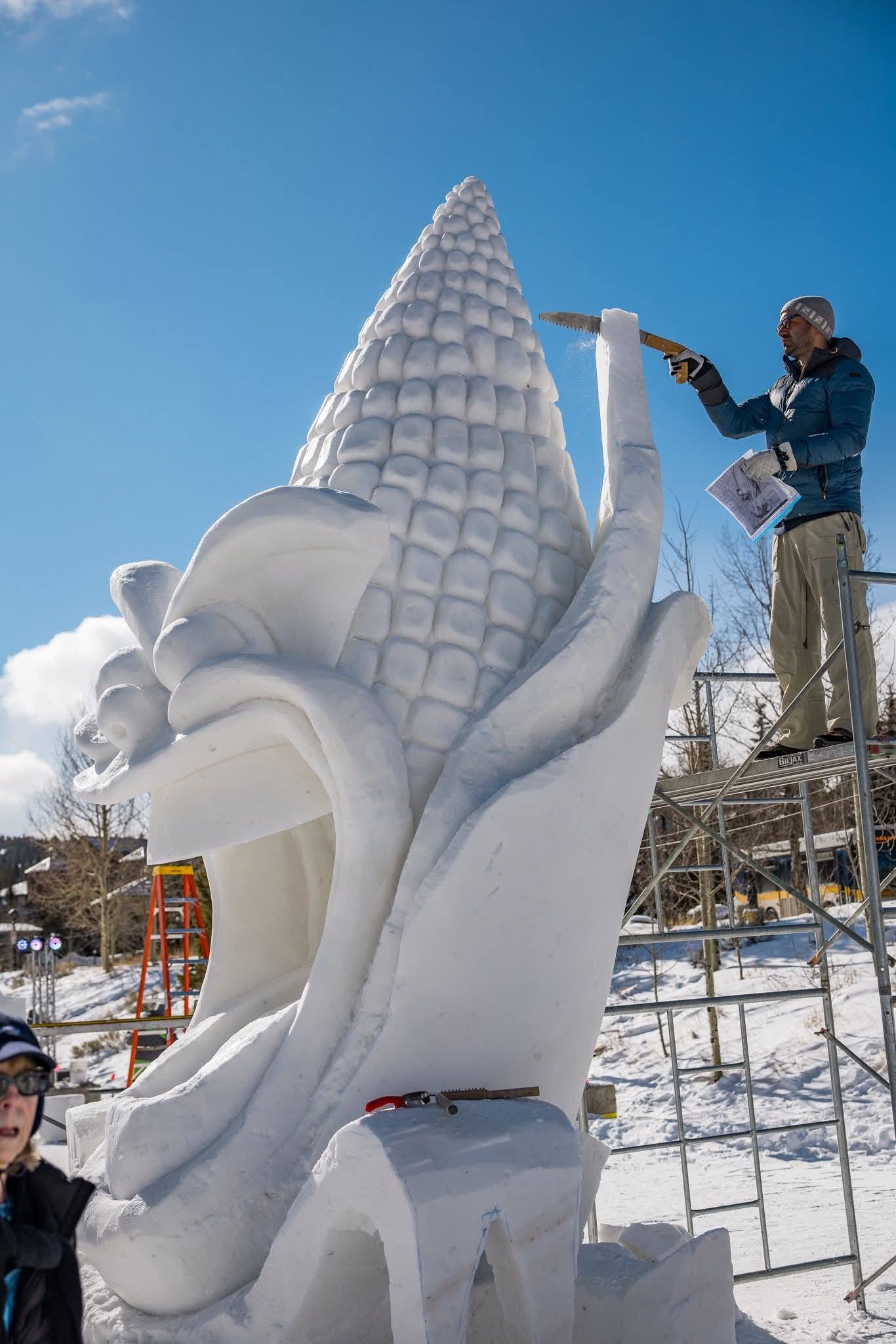
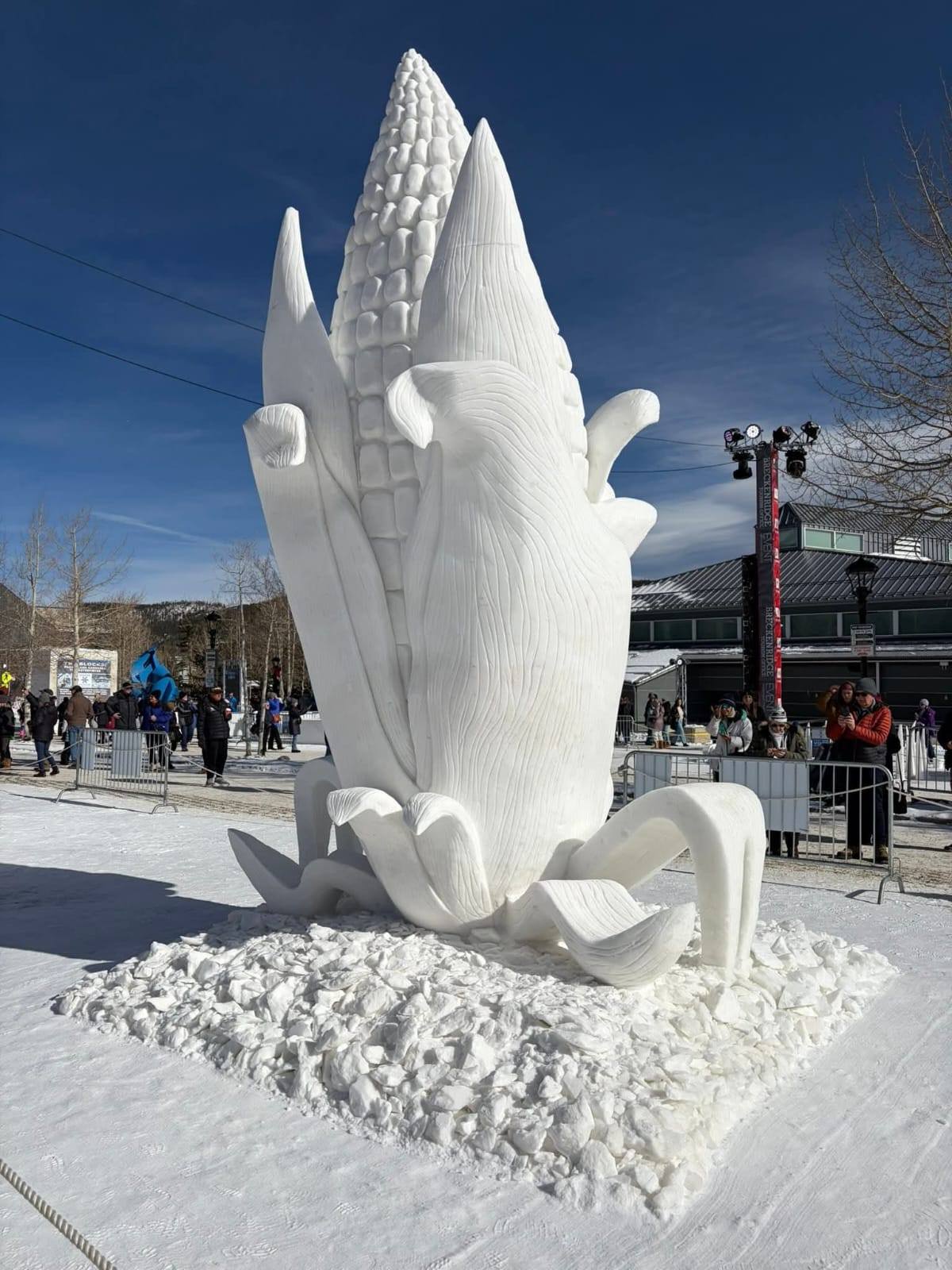
Team India’s 16 ft tall piece, “Corn: The Ultimate Domesticator — Who is truly in control?”, reimagines human history with humour and depth.
It’s inspired by Yuval Noah Harari’s Sapiens. The artists explored the idea that while humans believe they domesticated corn, perhaps corn—or crops—have been domesticating us, shaping our agriculture, diets, and landscapes for centuries.
The venue of the International Sculpting Championship
The sculpture invited audiences to reflect on the relationship between nature and humanity, sparking both curiosity and laughter among visitors and judges alike
The four-member Indian team, led by Suhail Mohammad Khan, worked tirelessly for four days in freezing temperatures ranging from -25°C to -35°C.
This marks Team Snow India becoming the first South Asian country to participate and win, a second time, an international medal in snow sculpting.
“Winning both the jury’s and the people’s awards is truly special. Every flake of snow here tells a story—of teamwork, passion, and India’s creative spirit,” said Mridul Upadhyay from Team Snow India, told the media.
Zahoor Ahmad Lone said that despite the challenging weather conditions and time constraints, Team India’s sculpture impressed the judges and spectators alike with its elegance and precision. The 5-judge panel took more than 6 hours to evaluate 12 snow sculptures.
India ranked third, while Korea secured first and Mongolia second, amongst teams like the US, Finland, Canada, Argentina, and Turkey.
This achievement marks a significant milestone for Indian snow sculpting, showcasing the country’s talent and creativity globally.
The competition, held in Breckenridge, Colorado, featured 12 teams from around the world, including the US, Germany, Mexico, Finland, Canada, Mongolia, South Korea, Argentina, and Turkey.
Teams from Argentina, Germany, Finland, India, Italy, Lithuania, Malta, Mongolia, the Republic of Korea, Ukraine, USA – Breckenridge, and USA – Vermont participated in the championship.
The first prize – a gold – was won by Team Republic of Korea for their work “Beauty Beyond Difference: Harmony of Coexistence”.
Team Magnolia won a Silver for “Lassoing Time”
source: http://www.awazthevoice.in / Awaz, The Voice / Home> Stories / by Aasha Khosa / February 01st, 2026
KUWAIT / Raigarh District (MAHARASHTRA) / New Jersey (U.S.A) :
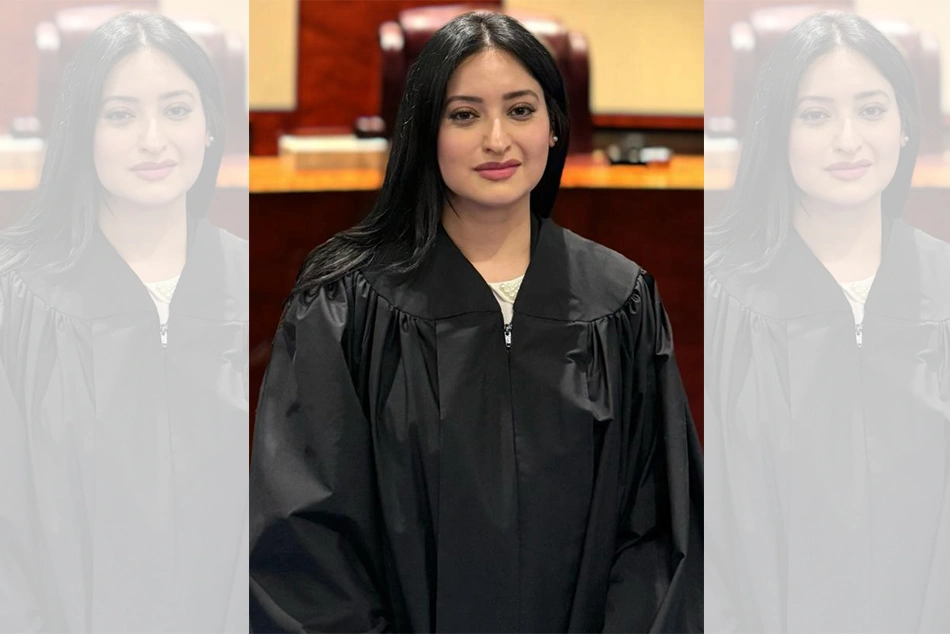
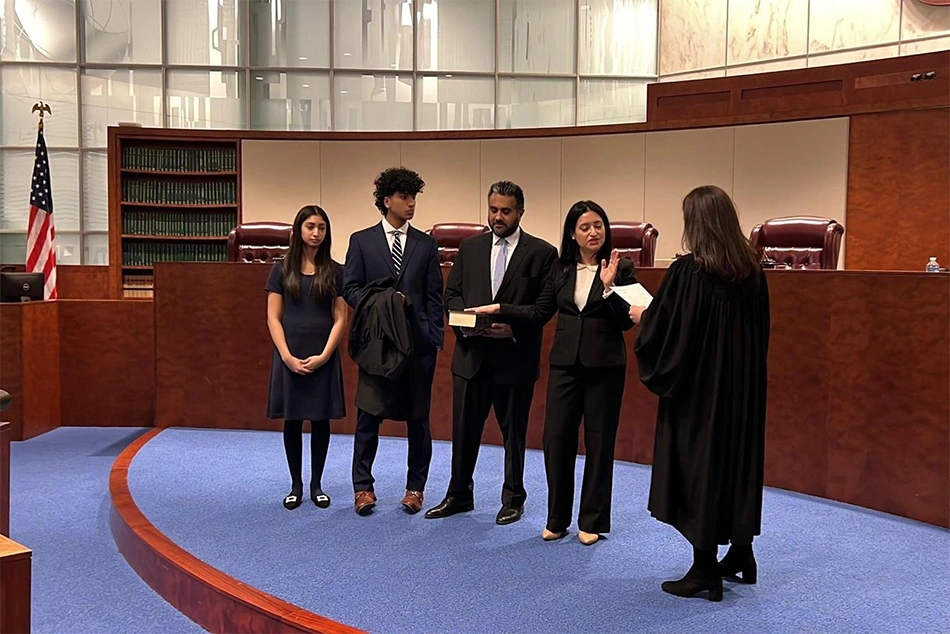
Kokan’s daughter Lubna Qazi Chaudhry took the oath as Administrative Law Judge in New Jersey with her hand placed on The Holy Quran, pledging to uphold constitutional responsibilities.
Mumbai:
Lubna Qazi, a lawyer originally from Maharashtra’s Raigad district, has created history by taking oath as an Administrative Law Judge (ALJ) in the US state of New Jersey, becoming the first Muslim woman to be appointed to this position in the state. The appointment is being widely regarded as a significant milestone for minority representation in the American judiciary.
The oath-taking ceremony was held recently, where Associate Justice Rachel Wainer Apter of the New Jersey Supreme Court administered the oath. On the occasion, Lubna Qazi placed her hand on the Holy Quran and pledged to faithfully discharge her constitutional duties.
The position of Administrative Law Judge holds considerable importance within the American judicial system. ALJs preside over cases involving decisions of government agencies, administrative disputes and public grievances, delivering rulings based on established legal principles.
Lubna Qazi’s Life Journey
Lubna Qazi’s life journey spans multiple countries and cultures. She was born in Kuwait, where she spent her early childhood with her parents. In 1990, during a school vacation, she travelled to the United States. However, following the outbreak of the Gulf War, the family decided to settle there permanently.
Lubna later pursued her education in California, completed her graduation from the University of California, and earned her law degree from Western State University College of Law.
After marrying Ahsan Chaudhry in 2005, Lubna moved to New Jersey, where she served in various government legal positions for nearly two decades. Recognising her extensive legal experience and professional competence, the Governor of New Jersey nominated her for the post of Administrative Law Judge in 2025.
Lubna Qazi is also distinguished for her linguistic abilities. In addition to English, she is fluent in Urdu, Hindi and Konkani, and has working knowledge of Arabic. Committed to preserving cultural and linguistic heritage, she is personally teaching Urdu and Arabic to her two children at home.
Family Feels Honoured
Expressing his pride, Lubna’s father Inayatullah Qazi said that the entire family feels honoured by her achievement. He described the appointment not merely as a position, but the result of years of hard work, sacrifice and prayers.
Speaking to the correspondent, Inayatullah Qazi said that his family hails from Tala taluka of Raigad district in the Konkan region. He completed his education up to Class VI at Jamia Millia Islamia School, Delhi, and his high school education at Anjuman Islam, Mumbai.
After obtaining a degree in Mechanical Engineering from Government College of Engineering, Aurangabad, in 1975, he moved to Kuwait for employment, beginning his career with an air-conditioning company. After working there for fifteen years, he migrated to the United States with a single suitcase following Iraq’s invasion of Kuwait after the Gulf War, as his children were already in the US at the time. He later ensured higher education for all four of his children.
Inayatullah Qazi said that the family’s roots are deeply embedded in Islamic tradition and that Urdu is spoken with pride at home. He added that Lubna completed recitation of the Holy Quran at the age of seven.
He further shared that around five to six generations ago, their ancestors were sent to the Konkan region as Qazis (judicial authorities) to administer justice without discrimination based on religion, caste or race. Although the profession discontinued a few generations ago, he expressed happiness that his daughter has now proudly revived the family’s judicial legacy.
Lubna Qazi is also the granddaughter of Dr Rehana Ahmed, a noted educationist and Executive Chairperson of the Girls’ Board of Anjuman Islam, Mumbai. Dr Ahmed expressed joy over Lubna’s achievement, stating that it serves as a shining example for young women across the community and will inspire girls to pursue higher education and professional careers. She is widely recognised for her dedicated efforts toward the promotion of girls’ education, particularly within the Muslim community.
Meanwhile, several social and legal organisations, including the Asian Pacific American Lawyers Association of New Jersey, have congratulated Lubna Qazi on her appointment. Observers believe that this development marks a significant step forward in strengthening Muslim and minority representation within the American judicial system.
source: http://www.ummid.com / Ummid.com / Home> United States / by Mohiyuddin Altamash / January 30th, 2026
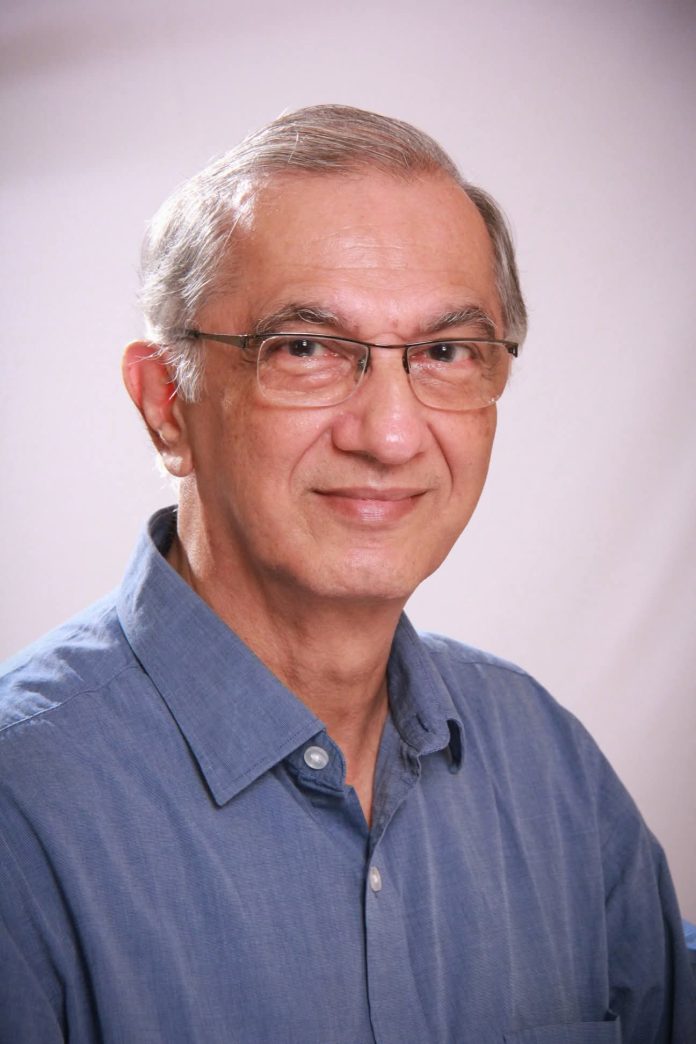
IIT Bombay has marked a proud moment with the conferment of the Padma Shri on Prof Juzer M. Vasi, former Deputy Director and senior academic of the institute. The national honour recognises his lifelong contribution to science and engineering, with a strong focus on semiconductors, microelectronics, and solar energy research.
Prof Vasi has served Indian academia for over four decades. He remains associated with IIT Bombay as Professor Emeritus in the Department of Electrical Engineering. His work spans nanoelectronics, solar photovoltaic deployment in India, global solar PV systems, nanocrystal-based solar cells, and the reliability of solar modules. These areas hold strong relevance for sustainable development and energy access.
An alumnus of IIT Bombay, Prof Vasi completed his B.Tech in 1969. He earned his Ph.D. in Electrical Engineering from The Johns Hopkins University in 1973. His academic journey reflects deep commitment to knowledge and public service, values strongly rooted in the Islamic tradition of ilm and community benefit.
Prof Vasi joined IIT Bombay as an Assistant Professor in 1981. He rose through the ranks to serve as Professor, Head of the Electrical Engineering Department, and later as Deputy Director from 2006 to 2009. He also taught at IIT Delhi and served as Visiting Assistant Professor at Johns Hopkins University.
Students and colleagues regard him as a dedicated teacher and institution builder. His leadership strengthened academic standards and research culture at IIT Bombay.
The Padma Shri recognises sustained excellence and service to the nation. For the Muslim community, Prof Vasi’s achievement stands as a reminder of the impact of scholarship, discipline, and ethical pursuit of knowledge in public life.
source: http://www.radiancenews.com / Radiance News / Home> Latest News > Report / by Radiance News Bureau / January 27th, 2026
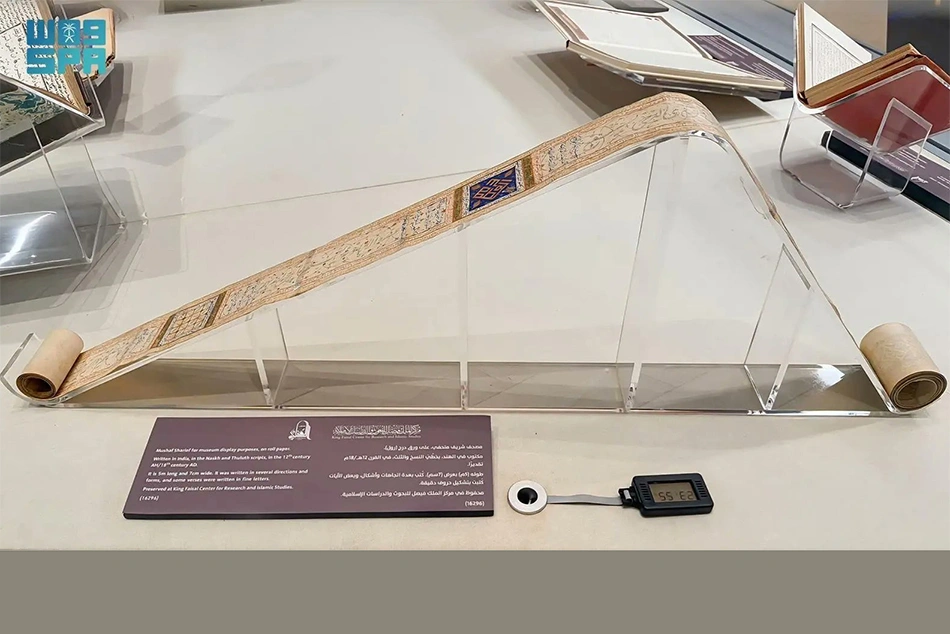
The Museum of The Holy Quran in the Hira Cultural District of Makkah is showcasing a rare 18th century Quran calligraphed in India exemplifying Muslim devotion to the Holy Quran.
Makkah al Mukarramah:
The Museum of The Holy Quran in the Hira Cultural District of Makkah is showcasing a rare Quranic manuscript exemplifying Muslim devotion to the Holy Quran.
This museum-grade Quran, written on roll paper, was completed in India during the 12th century AH (the 18th century AD), Saudi Press Agency reported.
Featuring Naskh and Thuluth scripts, the manuscript displays artistic skill and precision. Its diverse orientations and unconventional styles showcase creativity in Quranic production.
Measuring approximately five meters in length and seven centimeters in width, the scroll is unique in shape and size, reflecting the ingenuity of Quranic craftsmen in maximizing narrow spaces for clarity and aesthetic appeal.
Part of the King Faisal Center for Research and Islamic Studies (KFCRIS) collection, which houses a rich assortment of rare Islamic artifacts, this manuscript’s display at the Holy Quran Museum is part of a cultural partnership with KFCRIS.
This initiative is aimed at enriching visitors’ intellectual experience and providing access to unique examples of Islamic heritage.
source: http://www.ummid.com / Ummid.com / Home> Life & Style / by ummid.com news network / January 21st, 2026
Muslim Mirror’s 100 Most Influential Muslims of 2025
New Delhi:
Muslim Mirror has released its much-anticipated annual list of the “100 Most Influential Indian Muslims of 2025,” spotlighting individuals who have made significant contributions to India’s public life across a wide spectrum of fields including politics, culture, education, business, media, religion, sports, and social service. Now in its second edition, the list aims to document influence not merely as power or popularity, but as sustained impact, leadership, and the ability to shape public discourse.
A defining feature of the 2025 edition is the growing prominence of younger achievers, signalling a visible generational shift within Indian Muslim leadership. Alongside established national figures, the list includes emerging voices who have built influence through grassroots activism, professional excellence, digital platforms, legal advocacy, education, and community engagement. Editors associated with the project said this was a deliberate attempt to recognise new centres of influence beyond traditional hierarchies.
The list reflects the diversity and plural character of Indian Muslim society, cutting across geography, ideology, profession, and language. From seasoned politicians and religious scholars to artists, entrepreneurs, academics, and social reformers, the compilation offers a broad snapshot of leadership trends at a time when issues of representation, constitutional values, and social justice remain central to national debate.
Representation Across Sectors
The 2025 list features several eminent academicians and intellectuals who have shaped higher education, policy discourse, and social research. Among them are Abul Qasim Nomani, Ameerullah Khan, Furqan Qamar, Shahid Jamil, and Ubaid-ur-Rahman, recognised for their contributions to education, public policy, and academic leadership.
In the business and entrepreneurship category, the list includes influential names such as Azad Moopan, Azim Hashim Premji, Farah Malik, Irfan Razack, M. P. Ahammed, Mecca Rafiq Ahmed, Meraj Manal, Syed Mohamed Beary, P. Mohammed Ali, Shahnaz Hussain, Tausif Ahmad Mirza, Yusuff Ali, and Ziaullah Sharif. Their inclusion underlines the growing economic footprint of Indian Muslim entrepreneurs, both domestically and globally, spanning sectors from retail and healthcare to infrastructure and consumer goods.
Community leadership remains a strong pillar of the list, with figures such as Arshad Madani, Mahmood Madani, Malik Motasim Khan, Mehmood Pracha, Syedna Mufaddal Saifuddin, Navaid Hamid, Pirzada Md Abbas Siddiqui, Qasim Rasool Ilyas, Sadatullah Husaini, Umer Ahmed Ilyasi, and Yusuf Mohamed Abrahani recognised for their roles in religious guidance, legal advocacy, social mobilisation, and institutional leadership.
Culture, Media, and Public Discourse
In arts and entertainment, globally recognised names such as A. R. Rahman, Aamir Khan, Mammootty, Munawar Faruqui, and Shah Rukh Khan continue to command immense cultural influence, shaping narratives that extend well beyond cinema and music into social consciousness.
The list also acknowledges the growing importance of media and journalism in shaping opinion and challenging dominant narratives. Journalists and commentators such as Arfa Khanam, Irfan Meraj, and Seema Mustafa are recognised for their consistent engagement with issues of democracy, minority rights, and constitutional values.
Religious and Intellectual Scholarship
A significant section of the list is devoted to Islamic scholars and religious thinkers, reflecting their continued influence on moral leadership and intellectual discourse. Names such as A. P. Aboobacker Musliyar, Qasim Nomani, Prof. Akhtarul Wase, Asghar Ali Imam Mahdi Salafi, Asjad Raza Khan, Ibraheem Khaleel Al-Bukhari, Javed Jamil, Khalid Saifullah Rahmani, Khaleelur Rahman Sajjad Nomani, Qamaruzzaman Azmi, Rashid Shaz, Shakir Ali Noori, Shamail Nadvi, and Yasoob Abbas find place for their scholarly work, writings, and public engagement.
Politics and Governance
The political category features leaders cutting across party lines and regions, including Asaduddin Owaisi, Ghulam Nabi Azad, Hamid Ansari, Mehbooba Mufti, Omar Abdullah, Salman Khurshid, Najeeb Jung, Syed Naseer Hussain, Engineer Rashid, Akhtarul Iman, Iqra Hasan, Zameer Ahmed Khan, Rakibul Hasan, K. Rahman Khan, Kadir Mohideen, Mohibullah Nadvi, Md Shafi, Agha Mahadi, Asim Waqar, and Sadiq Ali Shihab Thangal. Their inclusion reflects influence exercised through electoral politics, governance, diplomacy, and legislative advocacy.
Changemakers and Social Reformers
One of the most dynamic sections of the 2025 list is that of changemakers and social reformers, featuring individuals such as Safeena Husain, Shahabuddin Yaqoob Quraishi, Syeda Hameed, Zameer Uddin Shah, Mahbubul Hoque, Sabahat S. Azim, Mehmood Pracha, Faiz Syed, and Zahir Ishaq Kazi, among others. Many of these figures have earned recognition through long-term grassroots work rather than formal authority.
International Booker Prize 2025 winner Banu Mushtaq for Heart Lamp, along with renowned poet Wasim Barelvi, has been placed in the category of Literary Figures.
In sports, iconic names Sania Mirza and Irfan Pathan continue to inspire younger generations through excellence and public engagement beyond the playing field.
Beyond Rankings
The editors emphasised that the list does not claim to be exhaustive, nor does it measure influence solely through fame, wealth, or official position. Instead, it seeks to capture real-world impact, moral authority, intellectual contribution, and the ability to shape conversations within and outside the community.
The annual list has increasingly become a reference point for understanding evolving leadership patterns among Indian Muslims. By foregrounding both established figures and rising talents, the 2025 edition reflects continuity as well as change, underscoring how Indian Muslims continue to contribute meaningfully to India’s democratic, cultural, and social field.
source: http://www.muslimmirror.com / Muslim Mirror / Home> Indian Muslim / by Muslim Mirror / January 15th, 2026
Tehmina Punvani (second from left) with Salman Khurshid and Manish Tewari releasing the Book
Tehmina Punvani offered a rare glimpse into her grandmother’s life. Her grandmother, Begum Qudsia Rasul, was no ordinary woman; she was the only Muslim woman in the Constituent Assembly that drafted India’s Constitution in 1949.
The occasion was the launch of Begum Qudsia Rasul’s book, 24 years after her death.
Tehmina Punvani, a lawyer, is the daughter of Begum Qudsia’s daughter.
Speaking at the book launch in Delhi, Tehmina said, “For the world, she was a fearless political figure, but for me, she was my Ammijan, gentle, grounded and unwavering in her integrity.”
Punvani recalled the period when a fatwa was issued against Rasool for entering public life. While the family felt fear, Rasul was composed.
“If my conscience is clear, no decree can frighten me,’ she would say,” Punvani recounted, drawing applause from the audience.
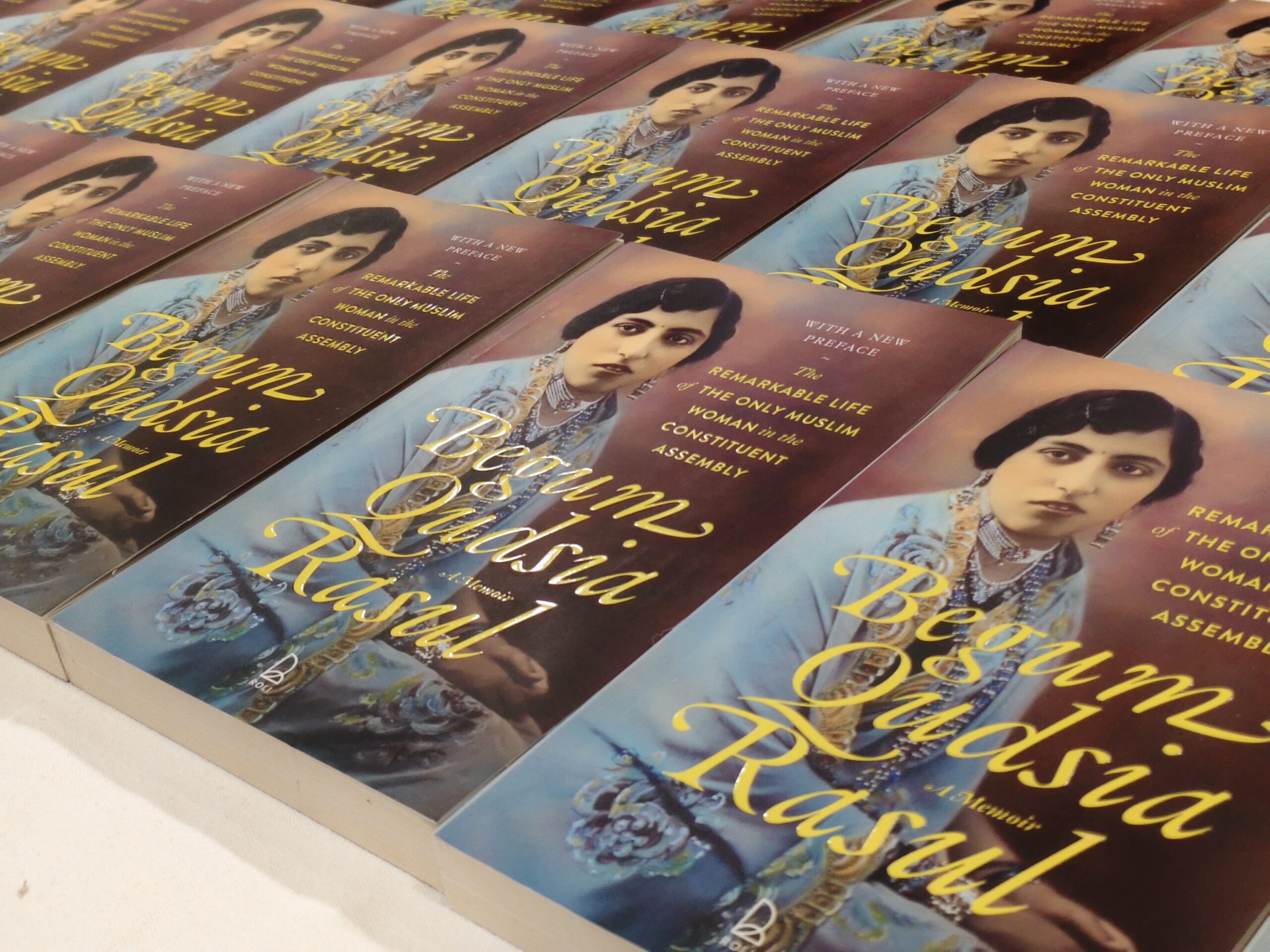
The book, Begum Qudsia Rasul – The Remarkable Life Of The Only Muslim Woman In the Constituent Assembly, is a relaunch of her autobiography “From Purdah to Parliament: The Memoirs of a Muslim Woman in Indian Politics” on the life and political legacy of this remarkable Muslim woman leader of India.
The Book Begum Qudsia Rasul – The Remarkable Life Of The Only Muslim Woman In the Constituent Assembly
The event brought together journalists, lawyers, and political leaders to revisit the contributions of a woman forgotten in mainstream historical narratives.
Moderated by journalist Nidhi Razdan, the panel featured Salman Khurshid, Indira Jaising, Manish Tewari, and senior lawyer Tehmina Punvani.
Begum Qudsia Rasul, born in 1909, was the only Muslim woman in India’s Constituent Assembly. A trailblazing politician, she opposed religious reservations, championed minority rights, and promoted women’s hockey.
Elected to the Rajya Sabha and Uttar Pradesh Assembly, she received the Padma Bhushan in 2000.
Besides being the only Muslim woman in the 1946 Constituent Assembly, she fought for minority equality and opposed religious reservations.
Qudsia Begum was also elected to the UP Assembly, Rajya Sabha and served as a minister.
She is credited with promoting women’s hockey, and a Hockey Cup is named after her. She was a trailblazing woman for giving up purdah. Besides her autobiography, she has authored a travelogue, Our Bapu, a book on Mahatama Gandhi and Hayat-e-Qudsi, about Bhopal’s Begums.
Tehmina said that despite her political stature, Rasul stayed close to the grassroots. “She met women daily, listened to their concerns, and worked for them without fanfare. Activism, for her, was a duty, not an identity.”
Other speakers highlighted Rasul’s exceptional resilience in an era when Muslim women faced social barriers.
Former Union Minister Salman Khurshid explained that Qudsia had won from a general seat to the United Province Assembly despite many technical hurdles. “It was an extraordinary act of courage,” he said.
Congress MP Manish Tewari underlined the democratic significance of her public life: “Her presence in the Constituent Assembly reflected India’s openness at a time of enormous political and social turbulence.”
Noted lawyer Indira Jaising praised Rasul’s moral clarity and empathetic leadership, calling her “a rare combination of conviction and humility.”
Speakers were unanimous in calling for acknowledging Begum Qudsia Rasul’s contributions and a prominent place for her in India’s political history.
Rolli Books has published this book.
source: http://www.awazthevoice.in / Awaz, The Voice / Home / by Aasha Khosa, ATV / December 11th, 2025
In 1936 he joined Indore Fine Art College where he trained under Devlalikar Sahab. Later he switched to Mumbai where he took admission in the JJ School of Art. The rest is history.
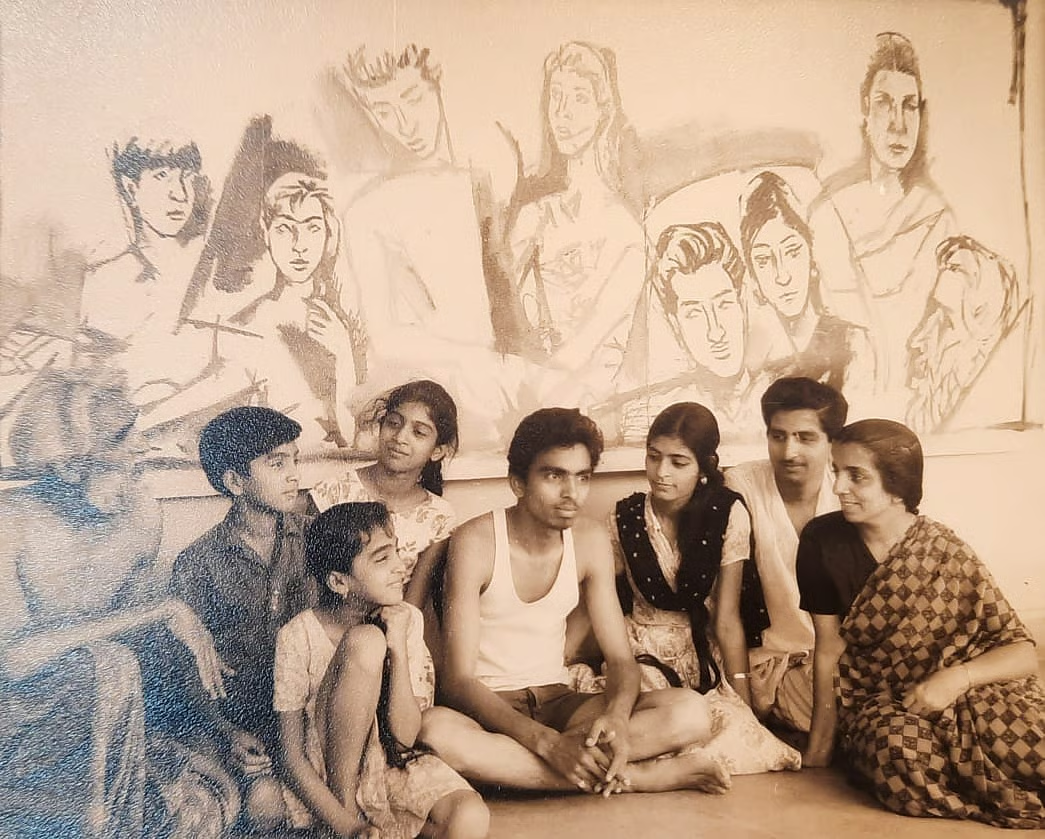
Husain made portrait of his family members and clicked a photograph. | The Zafar Ansari museum of achieves
Indore (Madhya Pradesh):
Maqbool Fida Husain is too well known to need an introduction, and most people are also aware of his connection with Indore. However, not very commonly known is the fact that his penchant for drawing horses started when he was a young lad in Indore.
While talking to Free Press, historian Zafar Ansari said, “Husain lived in Indore at a very young age in Chhawni area near Chhawni Bohra Mosque. When Husain was a teenager his Nana (maternal grandfather), who worked as a timekeeper in the Malwa Mill, wanted to make him a draftsman, but Husain was not interested. At one point he went to a Madrasa for becoming Alim but not much came of it.
His grandfather also bought him a camera and he got trained under the renowned photographer Ramchandra Rao and Pratap Rao but Husain did not show much interest in that art form. He started his painting career in Kagzipura area where he used to make Bada ghoda and Chhota ghoda.
His love for painting horses started here and it remained throughout his life as a professional painter.”
In 1936 he joined Indore Fine Art College where he trained under Devlalikar Sahab. Later he switched to Mumbai where he took admission in the JJ School of Art. The rest is history.
source: http://www.freepressjournal.in / The Free Press Journal / Home> Indore / by Staff Reporter / June 09th, 2023
Formula 1 Academy-backed Indian racer Atiqa Mir showed scorching speed for her second pole position in as many weeks before picking up a Heat win in Round 2 of the RMC UAE Karting Championship here.
After a pole and podium finish in the Formula 1-backed COTFA series last week, Atiqa switched seamlessly into different equipment to set a blistering pace at the Al Forsan Circuit. She is the first Indian to be supported by Formula 1.
In the Official Practice sessions, Atiqa topped three out of the four sessions and clocked the fastest time of the day in a highly competitive field of international drivers. She was the only female.
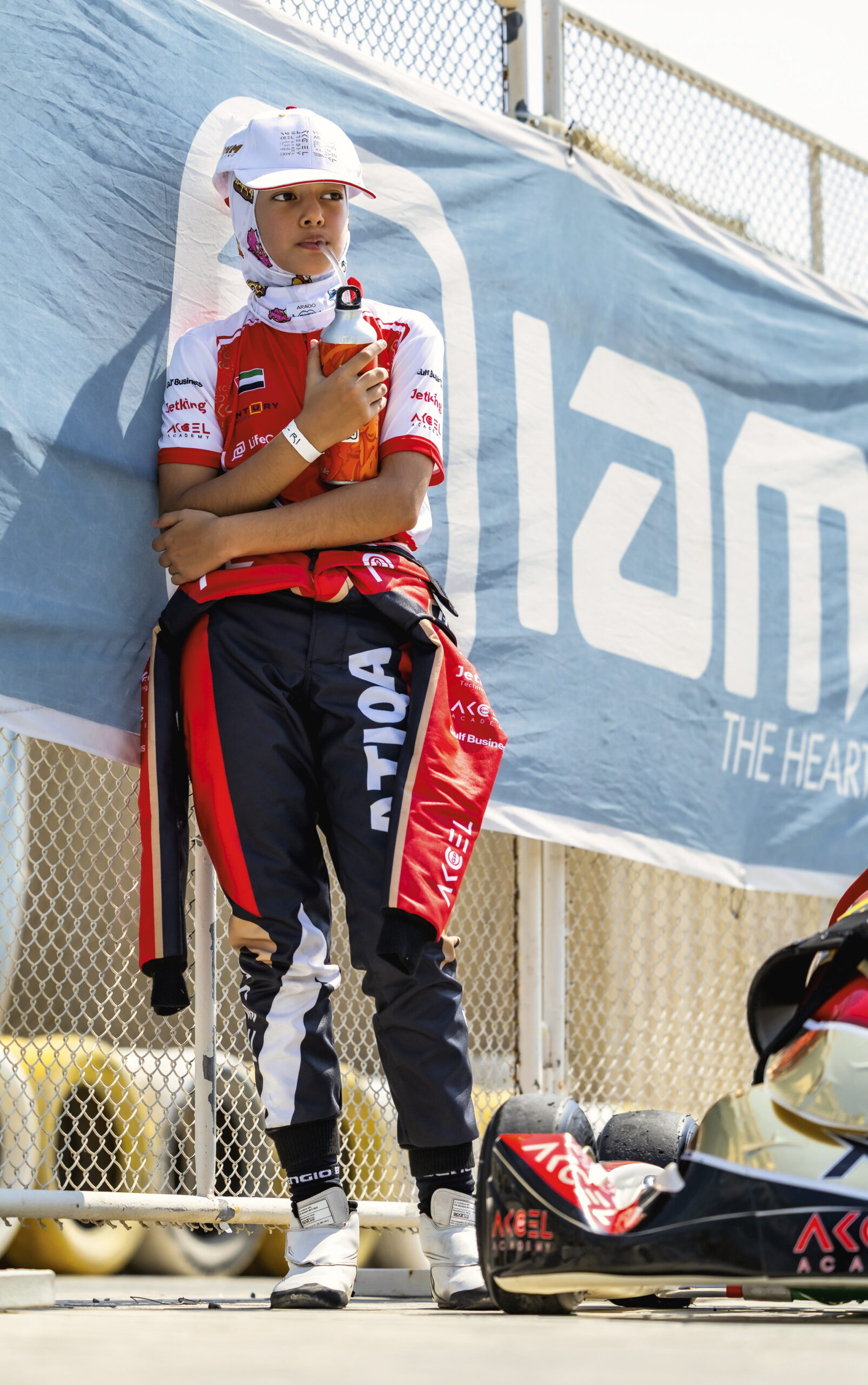
Dubai: Indian racer Atiqa Mir during round one of IAME UAE Karting Championship, in Dubai. (PTI Photo)
Atiqa, who turned 11 last week, carried that form into qualifying, clinching pole position in the dying minutes of the session with a sizzling time of 60.686 seconds.
Representing Akcel GP, she led from the front in the Heat race for a deserving victory. She lost the lead briefly on Lap 1 before regaining it soon after and pulling away from the field of 18 drivers.
In the pre-final race, Atiqa suffered a big crash while fighting for the lead on the last lap, injuring her elbow.
Her determination and fighting spirit came to the fore when she drove the final lap with the injury and a broken kart. After making up five places on the opening lap, Atiqa’s kart developed a technical problem, forcing an early retirement.
”What could have been a dominant weekend ended back in the pits. But that is racing, we are racing so close to each other at such high speeds that crashes are bound to happen.
“I got a hard hit on my elbow, and it is bruised quite badly. I wanted to fight and get back to the front in the final, but it wasn’t meant to be as my panel broke and due to that I couldn’t drive,” said Atiqa.
Her father and former Formula Asia Vice Champion Asif Mir said luck was not on her daughter’s side this weekend, but at the same time, he called the collision part of racing.
“A dominant show by her, a slight touch with another kart changed her entire weekend. She deserved a better result, but that is how it goes sometimes in sport. She is driving at a high level week in and week out in different karting championships.
“She has to switch engines, tyres almost every weekend, and she can adjust well,” said Asif.
source: http://www.awazthevoice.in / Awaz, The Voice / Home> Sports / by PTI / November 18th, 2025
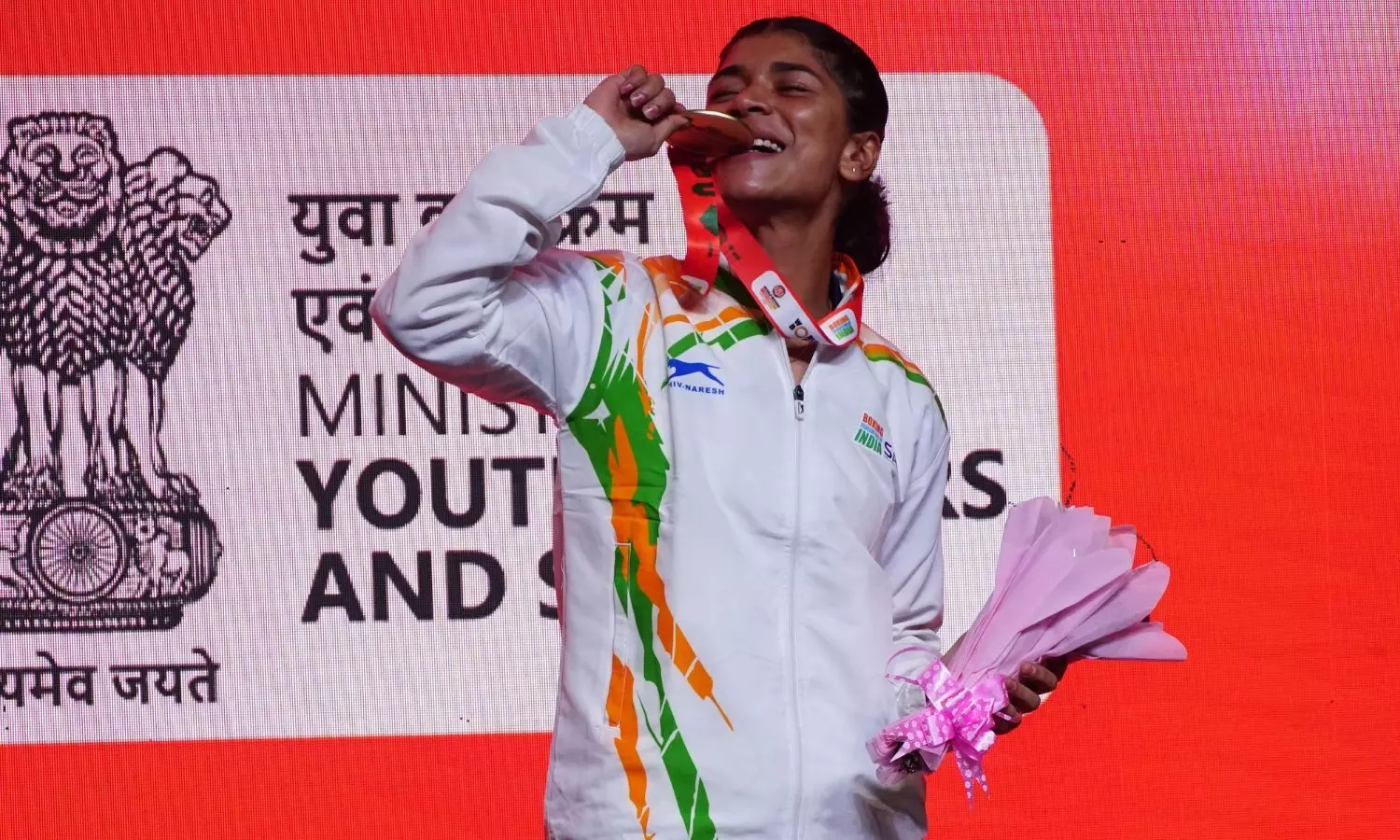
Nikhat clinched the women’s 51 kg gold medal at the 2025 World Boxing Cup Finals in Greater Noida.
Nikhat Zareen clinched the 51 Kg gold medal at the World Boxing Cup Finals 2025. (Photo Credits: The Bridge)
Greater Noida:
Star Indian boxer Nikhat Zareen has once again captured headlines after winning the gold medal at the 2025 World Boxing Cup Finals on Thursday.
The two-time World Champion delivered a commanding 5–0 victory over Guo Yi-xuan of Chinese Taipei in the women’s 51 kg final, returning to the top of the podium after 32 months.
Her last gold also came on home soil in 2023, when she clinched her second world title at the New Delhi World Championships.
“I always believe in manifestation, so I manifested that this time also, in India, I would repeat that. It’s always a pleasure to play in front of a home crowd, and today I did it,” Nikhat Zareen told the media after her win.
Bouncing back from two consecutive setbacks
Nikhat endured a difficult run in her last two major tournaments, the Paris Olympics and the World Boxing Championships, returning empty-handed from both.
At the Paris Games, competing as the reigning World Champion, she exited in the Round of 16 against eventual champion Wu Yu of China.
Later, at the 2025 World Championships in Liverpool, her first international event of the year, she fell in the quarterfinals to Turkiye’s Buse Naz Cakıroğlu.
Now, she has turned back the clock, returning to winning ways in front of her home crowd and putting behind her the disappointment of missing out on key medals.
“This medal is a big boost for my confidence. After a long time, I reached the final and won the gold. I’m very happy that I can once again compete as a gold medal contender,” Nikhat said, relieved to end her medal drought.
Nikhat also mentioned that she had very little time after the World Championships to prepare for this event. Within days, she shifted to Patiala to join the training camp.
“I spent a few days with my family, but then moved to Patiala for training since the Finals were in India and I didn’t want to disappoint fans. In Patiala, I sparred with boxers across weight categories, from 48 kg to 54 kg and even 57 kg, which helped me a lot,” she added.
Nikhat’s Road to the title
The World Cup Finals, expected to be a top-tier competition with the world’s best eight players in each weight category, did not fully live up to expectations as several major nations skipped the event.
In the women’s 51 kg category, only five boxers participated, which meant Nikhat received a bye in the quarterfinals and secured a medal without stepping into the ring.
Her campaign began in the semifinals against Uzbekistan’s Gulsevar Ganieva, where she won by unanimous decision to enter the final.
However, it wasn’t her most convincing bout, marked by frequent clinches and several clumsy falls near the ropes.
“The first bout was not as good as everyone expected, but I’m happy that I at least won and reached the final after so long,” Nikhat said after the semifinal.
In the final against Guo Yi-xuan, Nikhat looked much more composed, displaying sharper footwork and cleaner punches to seal the title at home.
“Today, I played against a boxer who moves a lot and is a counter-puncher. So I also opted for counter boxing instead of going all-out, which could have disadvantaged me,” Nikhat explained.
Future Plans
Nikhat shared that she often has to travel for training because there is no proper boxing academy near her home, something she now hopes to build herself for upcoming talent from Telangana.
“I mostly have to travel to Pune or IIS for training and don’t have a fixed location. So if the Telangana government allocates land, I will build my own academy where I can train and support rising boxers from the region,” she said.
This win may not carry immense competitive weight due to the limited field, but it has undoubtedly reignited her confidence after a challenging year.
With a packed 2026 season ahead, including major events like the Commonwealth Games and Asian Games, Nikhat will aim to use this momentum to elevate her performance further.
Her parting words, “This is just the start, and a lot more has to be done,” reflect the grit and hunger she will need as she prepares to face stronger opponents on the global stage.
source: http://www.thebridge.in / The Bridge / Home> Boxing / by Deepanshu Jain / November 21st, 2025
From Mughal ports to Dutch wars to Bombay’s merchant dynasties, Gujarati Muslims once shaped the Indian Ocean world — long before one of their descendants took New York.
File photo of Zohran Mamdani | Reuters 2025
_______________________________________________
What You Need to Know
Zohran Mamdani’s election highlights a forgotten Indian Muslim cosmopolitanism. Historically, Gujarati Muslim communities dominated Indian Ocean trade, challenging European powers and fostering diverse business relationships. Later, groups like the Khojas adapted through “corporate Islam” (jamaats), becoming powerful economic forces globally. This rich, diverse history is increasingly overshadowed by modern religious nationalism.
*AI-generated summary. Check context in original text.
________________________________________________
Having delivered speeches in Gujarati, Bengali, Arabic, Hindi, Luganda, and Spanish, Mamdani is a reflection of a long-forgotten Indian Muslim cosmopolitanism. The Gujarati Muslim communities he descends from once challenged the Dutch for hegemony in Indonesia; poured money into schools, hospitals, and printing presses from Japan to Arabia; and helped the British Empire consolidate its grip over Africa. To this day, that Indian Muslim history still echoes — in high-end London auction houses as much as in the working-class boroughs of New York.
The election of Zohran Mamdani as Mayor of New York last week has struck a surprising chord in the world’s media — especially considering he is technically the head of just one American city’s administration. But the buzz around this young Indian-origin Muslim, an avowed democratic socialist, is a ripple in a much older ocean.
Gujaratis in the Indian Ocean
This column began with a rather innocuous tweet pointing out that Mamdani’s multilingualism would have made him a fortune in the early modern Southeast Asian spice trade. As of writing, it has racked up over one million views and 54,000 likes — and it’s a pretty accurate reflection of what propelled Gujarati Muslims to international trade superstardom in the first place.
In her paper ‘Gujarat’s Trade with South East Asia (16th and 17th centuries)’, historian Ruby Maloni describes the great port of Khambhat in Gujarat as having “stretched out two arms — one towards Aden, the other towards Malacca.” While Banias were especially prominent in East Africa and the Persian Gulf at the time, Gujarati Muslim merchants dominated the Malacca trade, conveying relatively cheap block-print textiles from manufactories in Ahmedabad deep into Southeast Asia to trade for spices.
The most prominent among these merchants effectively formed ‘dynasties’ closely linked to the Mughal court, among others. But there was also a strong aspect of caste-based collective organisation, paralleling that of Hindu and Jain Gujaratis.
Nowhere was this more evident than in Surat, perhaps the most impressive port on India’s west coast. Its multilingual babble included Gujarati, Arabic, Persian, Urdu, Dutch, English, and Portuguese. Certainly, there were clear distinctions between caste and religious groups, and within their communities Gujarati merchants — Hindu and Muslim alike — could be quite rigid. At the same time, in interpersonal and business relationships, their shared Gujarati heritage encouraged cosmopolitan attitudes.
Historian Jawaid Akhtar offers several examples in his paper ‘The Culture of Mercantile Communities in Mughal Times.’ In Surat, Armenian merchants were in business with Parsis and Muslims; Vaishnavite Bhatias, despite a taboo against crossing the ocean, jointly owned cargo and ships with Muslims. Akhtar cites documentary evidence of Bania men adopting Muslim practices such as offering dowers to their wives. Muslim and Hindu merchants also collectively represented their grievances to Mughal authorities.
On one occasion in 1669, when the Qazi of Surat compelled a Vaishnavite Bania to convert to Islam, nearly 8,000 merchants — apparently of all religions — emigrated to Bharuch in protest against this infringement of their privileges.
Gujarati Muslims quickly identified Europeans as a threat to their trade dominance in Southeast Asia. Maloni notes that Dutch East India Company records mention their difficulties with these merchants, who took them on through price wars and by installing their own candidates as port authorities. It seemed that there was nothing the Dutch could do to prevent Gujarati Muslims from trading. The Sultanate of Johor welcomed ships belonging to the merchant Haji Zahid Beg, who bought tin in flagrant defiance of Dutch embargoes. Other merchants, Maloni writes, hired cargo space on English ships; the spectacularly wealthy merchant Abdul Ghafur of Surat even flew Dutch flags on his own ships. It was only when the Dutch forcibly colonised much of Indonesia that Gujarati Muslims finally lost their grip on Malacca. But by then, new opportunities were already emerging on the horizon.
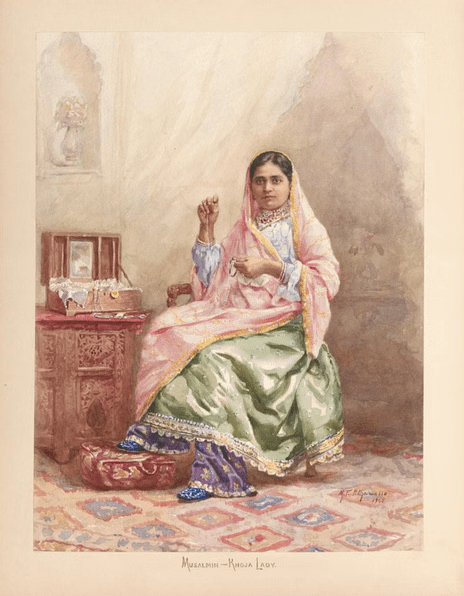
Khoja Lady | From the album presented to the Princess of Wales by the women of Bombay, featuring 13 full-page watercolours of Indian women by artist Manchershaw Fakirjee Pithawalla (1872-1937) | Wikimedia Commons
The rise of ‘Corporate Islam’
As the Mughal juggernaut began to shake and unravel in the 18th century, the old order of great merchant princes and dynasties started to fall apart. Surat, repeatedly raided by the Maratha king Shivaji, faced growing competition from the East India Company’s new port at Bombay.
Three Gujarati Muslim communities — the Bohras, Memons, and Khojas — who had hitherto been relatively small-time traders, found themselves ideally placed to benefit from the changing political landscape. Zohran Mamdani descends from the last of these.
In his seminal book No Birds of Passage: A History of Gujarati Muslim Business Communities, 1800–1975, historian Michael O’Sullivan notes that these three groups had spread “as far east as Ujjain, as far west as Karachi, as far south as Poona, and as far north as Udaipur… They thus inhabited a territory that was, by the reckoning of an Indian lexicographer in the 1840s, larger than Great Britain and Ireland, with their shared mother tongues [Gujarati] serving as the principal language of business in Central and Western India.”
The Bohras, Memons and Khojas had all converted to Islam around the 15th century, but their social and cultural practices varied drastically. Subgroups were affiliated with various Sunni and Shia sects; some were Ismaili and revered the Aga Khans, while others traced descent by region and worshipped Sufi saints.
What these groups shared, though, was the jamaat —an institution that O’Sullivan describes as a form of “corporate Islam”. Essentially, members of each jamaat shared some resources in common — schools, hospitals, that sort of thing. Particularly wealthy members, who often held senior religious positions, also maintained private family trusts and companies.
What the jamaat ensured, O’Sullivan writes, was a mechanism for organisation, exclusivity, and interpretation, allowing these communities to adapt the changing contours of Islamic practice to an era of globalisation. Jamaats could mobilise capital, human resources, and theological flexibility at a rate few other Indian institutions could match.
Collectively, these Gujarati Muslim jamaats emerged as some of the most powerful Indian economic forces of the late 19th and early 20th centuries. Though now outshone in the popular imagination by Parsi and Bania entrepreneurs, Gujarati Muslims similarly negotiated with the Marathas and the British, benefited from the Opium Wars, and switched soon after to manufacturing all sorts of commercial goods, especially in Bombay.
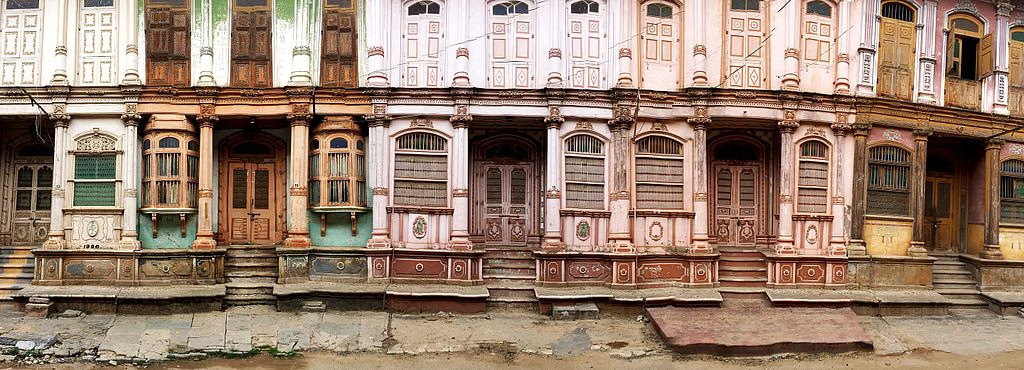
In the 1840s, Gujarati Muslims commissioned pioneering printed texts — in Gujarati — including travelogues and cultural primers for new markets like China. Their growing wealth also funded spectacular mansions, such as those in Sidhpur, now eerily abandoned. It was Gujaratis, perhaps more than any other Indian group, who built the financial infrastructure of the British Raj in East Africa — a migration line from which Zohran Mamdani himself descends.
All of this amounted to a decisive shift in the centre of gravity of Indian Ocean Islam. It was for this reason that the Aga Khan, revered by Ismaili Khojas, moved his seat from Iran to Bombay before Partition.
Sidhpur city in Gujarat | Wikimedia Commons
A cosmopolitanism forgotten
The versions of Islam promoted by Gujarati Muslims absorbed the modernist vocabulary of capital accumulation and inheritance, frequently splintering into new jamaats as they expanded into ever-new markets and cultures.
At the same time, as researcher Danish Khan notes, Gujarati Muslims attained positions of leadership and influence in Bombay well before they had even set foot in the United States of America. “The first Muslim baronet in colonial India,” he writes, “was a Khoja and the first Muslim ICS officer was a Sulaimani Bohra. Badruddin Tyabji and Rahimtoola Sayani were the first two Muslim Presidents of Congress party. Sir Adamjee Peerbhoy presided over the first session of the Muslim League in Karachi.”
But with the rise of pan-Islamic and Hindu nationalism in the early 20th century, the scales swung once again, and mercantile, oceanic histories were overridden by grievances inspired by long-dead inland kings.
Where does the history of Gujarati Muslims fit now? Mamdani’s election is ironic on many levels. In Bombay, once the historic home of the community, a BJP politician declared, in response to Mamdani’s victory in New York, that “We won’t allow any Khan to become mayor.”
The fact is that before and since, the history of Gujarati Muslims has, for all intents and purposes, disappeared into the ever–widening gap between radical Hindutva and radical Islam. Every news cycle, it seems, tears India’s many intertwined histories further apart.
Anirudh Kanisetti is a public historian. He is the author of ‘Lords of Earth and Sea: A History of the Chola Empire’ and the award-winning ‘Lords of the Deccan’. He hosts the Echoes of India and Yuddha podcasts. He tweets @AKanisetti and is on Instagram @anirbuddha.
This article is a part of the ‘Thinking Medieval’ series that takes a deep dive into India’s medieval culture, politics, and history.
(Edited by Prashant Dixit)
source: http://www.theprint.in / The Print / Home> Opinion> The Fine Print / by Anirudh Kanisetti / November 13th, 2025