The AR app will allow people to download 3D volumetric-captured celebrity holograms and take photographs standing beside them, holding their hands.
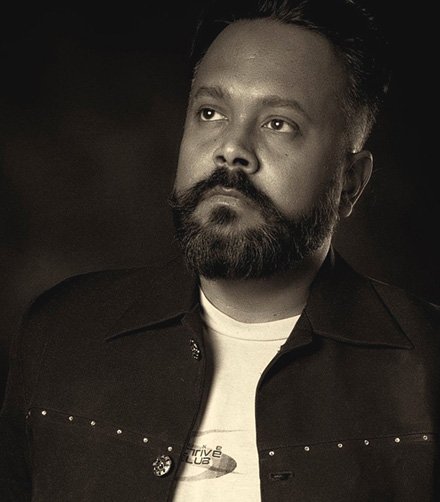
Oscar-winner AR Rahman (Photo | PTI)
Oscar-winner AR Rahman will be composing a special anthem for Hollywood music veteran and humanitarian Ken Kragen’s climate change effort.
Rahman, along with a team of international composers, will create a track titled Hand in hand for the initiative. Kragen, who was honoured with United Nations Peace Medal in 1985 for producing the charity anthem We Are the World, has joined hands with entertainment entrepreneur Neil Morgan to set up an augmented reality (AR) project named Hands Around The World.
The project aims at raising money and awareness for the cause of climate change. The initiative will be launched on April 22 next year, on the occasion of the 50th anniversary of Earth Day.
The AR app will also be launched the same day. While details about Rahman’s composition are still kept under wraps, it’s rumoured that the number will thematically be reminiscent of We Are the World.
The AR app will allow people to download 3D volumetric-captured celebrity holograms and take photographs standing beside them, holding their hands. They will then combine users’ photographs with hundreds of millions of others to form a virtual selfie chain that will become the digital Hands Around the World. Users will be prompted to spread the word and encouraged to donate towards ending climate change.
source: http://www.newindianexpress.com / The New Indian Express / Home> Entertainment> English / by Express News Service / December 11th, 2019
An experts’ committee constituted by the state government to look into the demand of BJP MLA Appachu Ranjan, who sought removal of content related to Tipu Sultan from textbooks, on Tuesday recommended against the demand by urging the government to retain the content on Tipu.
The committee, comprising academicians and historians, had submitted the report to the Karnataka Textbook Society on Monday and expressed an opinion that chapters on the ruler of Mysore currently prescribed in textbooks are only introductory in nature about the life of Tipu Sultan. “It is impossible to teach the history of Mysore without the introduction to Tipu,” the committee noted in its report.
Sources in the committee told DH that all textbooks contain only factual and introductory information about Tipu Sultan. “We have not arrived at any judgement based on the controversy. Being historians, it was our duty to submit a factual report,” revealed a member of the committee. Historians, who were part of the committee, have also advised that some of the documents submitted by Appachu Ranjan need to be verified.
Karnataka Textbook Society officials will now submit the report to the state government for a final decision. Textbooks for classes 6, 7 and 10 had lessons pertaining to Tipu Sultan and his administration.
BJP MLA from Madikeri Appachu Ranjan had appealed to Primary and Secondary Education Minister Suresh Kumar and Chief Minister B S Yediyurappa to drop content related to Tipu Sultan from school textbooks.
source: http://www.deccanherald.com / Deccan Herald / Home> City> Bengaluru Politics / by DHNS, Bengaluru / December 10th, 2019
Playing on hard mud surfaces, Nasreen’s early coach would ask her to train with boys’ teams, a daunting prospect given they were stronger and faster, and she was often left bruised.
Mohammad Gafoor, Nasreen’s father, flaunts a scarf her daughter brought from Nepal. Despite financial woes, he fully supported her. (Express Photo: Premnath Pandey)
India’s South Asian Games (SAG) gold-winning kho-kho captain Nasreen says she learnt the art of eluding chasers while rising to challenges life threw at her.
Playing on hard mud surfaces, Nasreen’s early coach would ask her to train with boys’ teams, a daunting prospect given they were stronger and faster, and she was often left bruised. “’Taang pakadke giraa do usko’ (pull her down by the leg) would be the standard instruction. I got so good at running fast and diving out of their grasp, I became fearless against tough chasing packs,” she recalls.
India’s ace diver in kho-kho, who is said to escape chasers like a pashmina slides through a ring, got even better at diving when she moved from mud to the cushioned mat.
A bigger leap had been taken by the family from Shakurpur in Delhi earlier. Her father Mohammad Gafoor sells steel utensils on the streets on most days. He is at the Monday market in Jahangir Puri near Machi market, selling thick, bright winter clothing material, proudly donning the scarf Nasreen brought from Nepal’s South Asian Games.
Nasreen (left) with South Asian Games medal
On some days, he earns a maximum margin of Rs 30 in the weekly markets, lugging his wares – bunches of stainless steel spoons and a pack of dozen water drinking glasses.
As soon as it became clear at school that Nasreen was exceptionally speedy on the kho-kho ground (she also participated in athletics and kabaddi), Gafoor knew he had to isolate her from ordinary woes that befall street sellers – from cops and municipality officials chasing away hawkers to unsteady income on lean days. “Khaane ki dikkat, police ke dande, karza, udhaari, thelaa uthaake le jaaneka dar, yeh sab dimaag ke tension se door karna tha usko,” he explains.
Nasreen recalls her father telling her that only her opponents were her enemies for the duration of the match. “Agar India khelegi to desh humaare liye sochega” (if you play for India, the country will think about us), Gafoor reckoned when the 21-year-old debuted a few years ago.
The father would also put his foot down against societal pressures holding her back. “We are Muslims. From childhood, we have been treated badly by all people, and nobody came to our help. When someone talked about purdah, I discussed with my wife and decided that we’ll not listen to anyone,” he says. His daughter’s dedication and stubbornness were infectious, he adds.
“Relatives had a problem with everything,” Nasreen recalls. “’Girls shouldn’t play, they can’t wear shorts, how did you let her go out for the Asian Championships for a week? How did you allow her to be at the national camp for a month in far-off Gujarat?’ My parents never got demotivated. They said ‘let people keep talking, we trust you’.”
Nasreen was fourth among seven sisters and four brothers. Gafoor had come to Delhi from Araria district in Bihar, after being orphaned by age 14, and robbed of his ancestral property by relations. After Nasreen won gold at SAG, Gafoor says with pride: “Pehle woh Gafoor ki chhori thi. Ab main Nasreen ka papa karke jaana jaata hoon. (Earlier, she was Gafoor’s daughter. Now I’m known as Nasreen’s father.)”
In Nepal, Nasreen’s team came up against a home team coached by Indians Munni Joon and Sheetal Chauhan. “They surprised us by showing our skills. We’ll have to up our game,” Nasreen says ahead of the inaugural franchise-based kho-kho league in February.
Now she brings home a monthly salary of Rs 26,000 from her Airport Authority of India job. Night markets meant renting out tables, lights and corners. “2000 in, 500 Rs out,” Gafoor laughs.
Having played age-group nationals and seniors simultaneously and shining at all levels, Nasreen started enjoying basic luxuries – like national holidays. “Earlier holidays meant markets closed for my father, and chances of no food on that day. As an athlete, I was always hungry, so we would dread holidays. Now I celebrate holidays like others,” she says.
Kho-kho also fulfilled a dream she hadn’t dared to dream as a municipal school girl in Class 3. “Properly London hoke aaye!” England plays kho-kho at the university level, so we went for an international series. I sat in a plane for the first time. My father laminated the entire newspaper page though my news was just two bars,” Nasreen laughs.
The father-daughter duo also gathered courage to travel to Bihar and meet local officials to reclaim their snatched property earlier this year. Gafoor says Nasreen is India’s gold-winning captain and speaks confidently “like an officer.” As India captain, she likes forging team bonds and camaraderie, and solving language problems of players from across the country as she is quick to grasp different tongues.
Nothing significant was achieved on the last visit to their native village, but Gafoor insists he was proud of how fearlessly his daughter put forward her point in front of highly-educated officials. “I’ve trained with men trying to drag me down by my feet in my sport. I can dive out of everyone’s reach. I’m also confident of talking to anyone,” says the second-year student.
source: http://www.indianexpress.com / The Indian Express / Home> Sports> Sport Others / by Shivani Naik / December 10th, 2019
Dr Adfer Rashid Shah of Sarojini Naidu Centre for Women’s Studies, Jamia Millia Islamia (JMI), has received George Greenia Research Fellowship of USA to study Amarnath Yatra.
Dr Adfer Rashid Shah of Sarojini Naidu Centre for Women’s Studies, Jamia Millia Islamia (JMI) has been awarded with George Greenia Research Fellowship in Pilgrimage Studies from USA’s William & Mary University for a qualitative study of Amarnath Yatra in Kashmir Valley.
The fellowship by George Greenia, the second-oldest university in the US after Harvard, provides funding for faculty to support original scholarship on pilgrimage.
Dr Shah’s project titled, ‘Understanding a Perpetual Pilgrimage in a Conflict Zone from Stakeholders’ Views and Experiences: A Qualitative Study of Amarnath Yatra in Kashmir Valley‘ has been accepted for the fellowship.
Dr Shah has been researching Muslim Endowments (Auqaf), peacebuilding and pilgrimages in India, especially Amarnath Pilgrimage in Kashmir valley for many years, this fellowship is the recognition of his years of work in this field.
He was chosen for this award during the Annual Symposium hosted by William and Mary’s Institute for Pilgrimage Studies in November this year.
The award also contains a cash prize of one thousand US dollars. Dr Shah also presented a paper (in absentia) titled ‘pilgrimage and peacebuilding in conflict zones: Notes on Amarnath pilgrimage in India’s Kashmir Valley’ in the symposium.
About Dr Adfer Rashid Shah
Dr Shah earned his doctorate in Sociology from JMI in 2015 and has authored three books and about 40 research papers in prestigious journals. He also edits Eurasia Review as Associate Editor and also served Women’s Link Journal as Associate Editor besides writing columns for leading newspapers.
source: http://www.indiatoday.in / India Today / Home> News> Education Today> News / by India Today Web Desk / New Delhi – December 07th, 2019
At the helm of this 300 million pounds (over Rs 28,06,09,18,200 roughly) investment is the Kerala born NRI businessman MA Yusuff Ali.
A night stay at the hotel will cost you over Rs 40,000 and lunch over Rs 10,000 | Photo from Twenty14 Holdings website
Once upon a time in London, United Kingdom the address people would have wanted to avoid might be now the place they might aspire to be in – The Great Scotland Yard Hotel.
Better known as the Old Scotland Yard that served as police headquarters, now is a plush 5-start hotel.
At the helm of this 300 million pounds (over Rs 28,06,09,18,200 roughly) investment is the Kerela born NRI businessman, MA Yusuff Ali of Lulu Group’s hospitality arm, Twenty14 Holdings.
Calling it a “dream come true” to transform world’s most historic addresses, Adeeb Ahamed, the managing director of Twenty14 Holdings said, “This building holds more tales than ever told and our approach has been multi-layered, with emphasis on stories that are unheard, the hotel is a tribute to the intrinsic spirit of London.”
Opened to public from the December 5, it was inaugurated by Nicky Morgan, UK secretary of state for digital, culture, media and sport.
Speaking about the “exceptional transformation” that the building has undergone Sir Edward Lister, special advisor to the Prime Minister, said, “It is a place which is right at the heart of the city and the government and the West End of London. It’s just a perfect location for a tourist.”
Event was also attended by the High Commission of India, her excellency Ruchi Ghanshyam amongst other Lords and dignitaries.
It might cost upward of 430 pounds (Rs 40,000 roughly) to stay for a night and 100 pounds (Rs 10,000 roughly) to lunch at the The Great Scotland Yard Hotel that has Trafalgar Square, Whitehall and the West End just round the corner.
Current building at 3-5 Great Scotland Yard has grand five storey Imperial Red brick and stone facade with arched main entrance | Photo from Twenty14 Holdings website
From staff wearing brass hand cuff in their belts to retaining some of the writings on the walls, this dog-friendly hotel endeavours to give its guests an eclectic experience of past and the present.
Shafeena Yousuff Ali, the daughter of Yusuf Ali, the woman behind the art and decor of the hotel said that they have tried to give their guests “a transformational experience that will inspire their souls”.
The operations of the hotel have been handed over to The Unbound Collection by Hyatt.
source: http://www.indiatoday.in / India Today / Home> News> World / by Loveena Tandon / December 06th, 2019
Naqvi made the remarks after signing the bilateral annual Haj 2020 agreement between India and Saudi Arabia with Haj and Umrah Minister of Saudi Arabia Mohammad Saleh bin Taher Benten.
Minority Affairs Minister Mukhtar Abbas Naqvi (File photo | PTI)
Jeddah / New Delhi :
India has become the first country to make the entire process for pilgrims going on Haj completely digital, Minority Affairs Minister Mukhtar Abbas Naqvi said on Sunday after signing the bilateral agreement for next year’s pilgrimage with the Saudi Haj Minister in Jeddah.
An online application, e-visa, Haj mobile app, “e-MASIHA” health facility, “e-luggage pre-tagging” providing all information in India itself regarding accommodation and transportation in Mecca and Madina will be provided to 2 lakh Indian Muslims going for Haj in 2020, he said.
Naqvi made the remarks after signing the bilateral annual Haj 2020 agreement between India and Saudi Arabia with Haj and Umrah Minister of Saudi Arabia Mohammad Saleh bin Taher Benten.
He said for the first time facilities were provided for digital pre-tagging of pilgrims’ baggage.
This will ensure the Indian pilgrims will get information in India itself about the building and the room allotted to them as well as the transportation details for travel after reaching the airport in Saudi Arabia, Naqvi was quoted as saying in a statement issued from his office.
Even the mobile phone SIM card has been linked to mobile App which will ensure pilgrims immediately get all the latest information regarding Haj in Mecca and Madina on their mobile phones.
This year, a 100-line information centre has been established at the Haj House, Mumbai for providing information regarding the entire Haj process.
A health card is being provided to Indian Haj pilgrims in the country, Naqvi said.
E-MASIHA (E-Medical Assistance System for Indian Pilgrims Abroad), an online system to create and maintain the complete health database of Indian pilgrims along with doctors’ prescriptions, medical treatment as well as medicine disbursal, has been developed to deal with any emergency in Mecca and Madina, Naqvi said.
“Haj Group Organisers (HGOs) have also been connected with 100 per cent digital system which has ensured transparency in their functioning and has also ensured better facilities to Indian Haj pilgrims,” Naqvi said.
“A portal of HGOs http://haj.nic. in/pto/ (Portal for Haj Group Organisers) has been developed which contains all the details of HGOs and their packages,” the minister said.
The Ministry of Minority Affairs has taken effective and successful steps during the last four years to make Haj and other programmes completely digital or online as a part of Digital India campaign of Prime Minister Narendra Modi, Naqvi said.
Making the entire Haj 2020 process digital has helped in providing better facilities to people going for Haj and ensured transparency by eliminating middlemen, he said.
The minister said the Indian government – in coordination with the Saudi Arabian government, the Indian Consulate and various concerned agencies in Saudi Arabia – was working to ensure safety, better services and medical facilities for the pilgrims during the Haj.
In 2020, a total 2 lakh Indian Muslims will perform Haj that too without any subsidy, he said.
Naqvi said that till November 30, 1.76-lakh haj applications, including 15,000 online applications from Jammu and Kashmir, had been received.
The last date of submission of Haj application is December 5, 2019.
The Saudi Arabian government has always played an active and effective role to ensure safety and better facilities to Indian Haj pilgrims, Naqvi said, adding that it is a part of strengthened bilateral relations between the two countries.
India-Saudi Arabia relations have achieved newer heights under the leadership and guidance of gulf nation’s King Salman bin Abdulaziz and Prime Minister Modi, Naqvi said.
Both the countries share strong cultural, historical, economic and political relations, he said.
Saudi Crown Prince Mohammad bin Salman’s visit to India and Prime Minister Modi’s visit to Saudi Arabia in October 2019 have further strengthened relations between the two countries, the minister said.
Naqvi thanked King Salman for his guidance and active support to make Haj 2019 successful.
Indian Ambassador to Saudi Arabia Ausaf Sayeed, Additional Secretary Ministry of Minority Affairs Jan-e-Alam, Consul General Mohd Noor Rehman Sheikh, Haj Committee of India Chairman Nabi Jinna Sheikh, Haj Committee of India CEO M A Khan and other senior officials were present on the occasion.
source: http://www.newindianexpress.com / The New Indian Express / Home> Nation / by PTI / December 01st, 2019
‘Dastan-e-Ghadar: The Tale of the Mutiny’ by Zahir Dehlvi offers insights that are particularly relevant today.
NDIAPICTURES VIA GETTY IMAGES Miniature of Bahadur Shah Zafar.
Butkhano’n mein jab gaya main kenchkar qashqa Zafar
Bol utha woh but, ‘Brahmin yeh nahin to kaun hai?’
(When Zafar went to the temple with a tilak on my forehead
The idol exclaimed, ‘If not a Brahmin then who is he?’)
—Bahadur Shah Zafar
Abu Zafar Sirajuddin Mohammed Bahadur Shah, better known by his pen name Bahadur Shah Zafar, was the son of Akbar Shah II and his Rajput wife Lal Bai.
He inherited an empire that was his only in name as the British writ ran through it. He was their pensioner. The British Resident in Delhi was responsible for everything that happened in Delhi as well as in the Qila.
Bahadur Shah Zafar [foresaw] trouble and banned cow-slaughter in the areas he nominally controlled… Bakr-Eid passed peacefully in 1857 thanks to the wise decisions of the emperor.
However, along with his empire he also inherited the national outlook of his ancestor Akbar and father Akbar Shah II. He believed in the wisdom that all his subjects were his children, and in fact his last prayer when he left the Qila after the fall of Delhi on the night of 16th September 1857 was:
“Khuda, the Hindus and Muslims of India are my children. Please keep them safe and don’t let them suffer for my deeds at the hands of the British.”
(Related by his daughter Kulsum Zamani Begum who saw him praying on his musalla the night he left it. This has been included in the story “Shahzadi ki Bipta” in the book Begumat ke Aansu which comprises eyewitness accounts recorded by Khwaja Hasan Nizami.)
The Hindu men and women who came to bathe in the River Yamuna every dawn would participate eagerly in the jharokha darshan when the emperor appeared before his subjects in the balcony of the Musamman Burj in the Qila every morning. Only after that would they go home and eat.
Bahadur Shah Zafar condemned the actions of maulvis who tried to divide the populace on religious lines:
Kaho mullah se kiya hum se rindo’n ko padhega
Ki hum Lahaul padh ke teri taqreer sunte hain
(Ask the mullah what can he teach one, so drunk in love
I hear his speeches with a disclaimer on my lips)
Akbar Shah II, who started the Phoolwaalon ki Sair , would offer pankhas both at Qutub Sahib’s dargah and Yogmaya temple in Mehrauli. Bahadur Shah Zafar went to the extent that he would not go to the dargah if for some reason he couldn’t visit the temple the previous day.
The Indian society of the 19th century was living quite happily and in communal harmony, bar a few incidents here and there. When Bahadur Shah Zafar was exiled there was a palpable sense of loss amongst the Hindus and Muslims alike; they felt as if they had lost their father.
Nowhere is this emotion more emphasized as in an anecdote described by Zahir Dehlvi in Dastan-e-Ghadar*.
“Once, some Hindus, along with officers of the British government, hatched a plot to throw all the butchers slaughtering cows out of the city. The British government gave orders stating that these butchers should take their shops out of the city. They had all the shops within the city closed.
When the butchers realized that they had no choice but to obey and lose their means of livelihood, they banded together, took their wives, children and possessions, and came and camped on the riverbank under the jharokha. From there, they appealed to the king, asking ‘How can we leave our city and go away?’
The cherisher of subjects, the emperor, heard their petition and gave the order that his tent be pitched alongside theirs on the riverbank.
‘Whatever is the state of my subjects is my state,’ he said.
As per the decree of their emperor, the servants immediately took the imperial paraphernalia and installed it on the bank of the river.
As soon as the British Resident heard the news, he came running to the emperor and respectfully asked, ‘Huzoor, what are you doing? All the people of the city will come and stand here with you.’
Badshah Salamat replied, ‘I am wherever my subjects are. My subjects are my children and I can’t be separated from them. Has flesh ever been separated from the fingernail? Today, the butchers have been given orders to leave the city; tomorrow, it will be some other community; the day after, it will be another one, and these orders will continue. Slowly, the entire city will be emptied. If the intention of the British government is to empty the city, then tell me so in plain words. I will take all my people and go and live in Khwaja Sahib. Since you have control over the city (Shahjahanabad), you can do whatever you will.’
The Resident was taken aback. ‘Huzoor, don’t even think of such an action. I will redress the complaints of these people immediately and settle them in the city. Huzoor, please have your camp removed from here.’
The Resident gave orders for the butchers to go back to their houses and ply their trade within the city as before. The tent of the emperor was removed.”
Bahadur Shah was equal in his treatment of his subjects and did the same for the ghosis or herdmen of Shahjahanabad when they were faced with a similar situation. Zahir Dehlvi in Dastan-e-Ghadar* writes:
“Once the British government gave orders to the herdsmen to take their family and cattle and leave the city and go and settle outside the city. There was a tumult in the entire city and once again the ghosi (herdsmen/milkmen) along with their families and cattle came and camped on the Reti.
Once again the Emperor, Raiyyat Panaah (shelter of the subjects) was so distraught by the cries of the children and the distress of the cattlemen the emperor gave orders for his tent to be pitched alongside theirs so he could share their sorrow. Once again the Resident came and pleaded with the Emperor and gave orders revoking the previous ones so that the herdsmen could go back to their original quarters in the city.
This time the Emperor told the Resident, ‘Look in my presence do not exile my subjects from their houses. After me you will be in control and can devastate the city (eeint se eeint baja dena).’
That is what was done (after the Emperor).”
On 12th May 1857 when the Indian soldiers who had risen up against the British crowned Bahadur Shah Zafar as the Emperor of India he issued the following decree:
“To all the Hindus and Muslims of India, taking my duty by the people into consideration at this hour, I have decided to stand by my people… It is the imperative duty of Hindus and Mussalmans to join the revolt against the Englishmen. They should work and be guided by their leaders in their towns and should take steps to restore order in the country. It is the bounden duty of all people that they should, as far as possible, copy out this Firman and display it at all important places in the towns. But before doing so, they should get themselves armed and declare war on the English.”
During the Uprising of 1857 the British tried their best to disrupt the Hindu-Muslim unity that was very apparent amongst those they called “baghi” or rebels.
Colonel Keith Young, Judge-Advocate General of the Indian Army who was present with the British forces on the ridge in Delhi regularly sent letters to his wife in the safety of Simla. This wife published them later as “Delhi—1857; the siege, assault, and capture as given in the diary and correspondence of the late Colonel Keith Young’.
On 29th July 1857 he wrote to her:
“Camp, Delhi Cantonments, Wednesday, 29th July:
Hodson just now came into our tent and interrupted my writing this. He tells me that a letter has just come in from the city confirming what we had before heard of the dissensions going on, and they seem likely to terminate in something serious at the Festival of the Eed, as some of the Mahomedan fanatics have declared their fixed intention of killing a cow as customary on that day at the Jumma Musjid. It is hoped that they will religiously adhere to their determination, and there is then sure to be a row between the Mahomedans and Hindoos.”
Colonel Keith Young to his wife. Camp, Delhi Cantonments, Thursday, 30th July:
“All is quiet in camp, and the mutineers must, I should hope— as we all believe—be quarrelling amongst themselves, and unable to agree to come out and attack us again. The Eed, we trust, will bring matters to a crisis with them, and be the day for a grand row between the Hindoos and Mahomedans.”
Camp, Delhi Cantonments, Sunday, 2nd August:
“Our hopes of a grand row in the city yesterday at the Eed Festival have not, apparently, been fulfilled—at least the only newsletter received from the city alludes to nothing of the kind. The King had issued strict orders against killing cows, or even goats, in the city, and this, if acted upon, must have satisfied the Hindoos; and instead of fighting amongst themselves they all joined together to make a vigorous attack to destroy us and utterly sweep us from the face of the earth, when it was arranged that the King should perform his evening prayers in our camp!”
Bahadur Shah Zafar had foreseen this trouble and banned cow-slaughter in the areas he nominally controlled. In The Great Uprising of 1857, Prof Z.H. Jafri cites that they found several documents in the Mutiny Papers in the National Archives, New Delhi by Bahadur Shah Zafar and Bakht Khan, the commander in chief of the Indian forces, asking the people to desist from cow-slaughter and to the kotwal to capture the cows from the houses of people who might go ahead with such sacrifices. There is evidence to support the fact that the police officers took these orders very seriously and thus prevented any sacrifice of cows by them, which could have led to the trouble that Young, and his colleagues were so eagerly anticipating.
Bakr-Eid passed peacefully in 1857 thanks to the wise decisions of the emperor.
The fallout of the First war of Indian Independence was the well-documented policy of divide and rule adopted by the British, which tried to create disharmony between Hindus and Muslims. The two communities fought together again in the freedom struggle leading up to Independence in 1947, but the partition of India and subsequent riots and murder show that the British did succeed to a great extent.
* Book excerpt from ‘Dastan-e-Ghadar : The Tale of the Mutiny ‘ by Zahir Dehlvi, translated from Urdu by Rana Safvi, Penguin Random House.
source: http://www.huffingtonpost.in / HuffPost / Home> The Blog / by Rana Safvi / May 18th, 2017
For 35 years, the activist dedicated his life to building a movement for justice. Unfortunately, Bhopal appears set to forget his contributions.
Abdul Jabbar. Photo: Facebook
India can learn a lot from Abdul Jabbar’s glorious struggle for justice for the dead and the survivors of the Bhopal gas tragedy.
At a violent time like this, when governments cannot tolerate even dissent on social media, the most indefatigable fighter for the victims can be a lodestar to all those who wish for an equitable society.
Jabbar Bhai, as he was fondly addressed, died of multiple ailments on November 12 in a Bhopal hospital, but his legacy endures. His evolution, through a 35-year-long struggle from a hand pump fitter to a tenacious strategist, is unparalleled in independent India’s history of people’s movements.
His strategy was essentially premised on eight pillars: secularism, empowerment of women, emphasis on self-employment through skill development, regular interactions with co-fighters, spreading education about mass struggles, frequent judicial recourse through public-spirited lawyers, street agitations, joining similar people’s movements and an uncompromisingly adversarial stance against the government, regardless of ideology. An overboard public relations exercise was anathema to him, though Jabbar would go all out to help journalists who sought his help.
His organisation, the Bhopal Gas Peedit Mahila Udyog Sangthan, metamorphosed from an assorted group of women to a well-organised fighting force. This was an extremely daunting task, which Jabbar Bhai himself was initially clueless about. But his undiminished righteous rage over the killing of innocent people in the world’s worst industrial disaster steeled his will to fight an epic battle through thick and thin.
How this came about is an inspiring story, which began the day the Union Carbide factory spewed 40 tons of poisonous MIC gas. On the night of December 2-3, 1984, Abdul Jabbar was asleep at his home in Rajendra Nagar when the deadly gas leaked.
The poisonous gas from the Union Carbide pesticide factory killed 8,000 people in its immediate aftermath, and nearly 25,000 over the next few decades. It also left over 1,50,000 people suffering with respiratory, hormonal and psychological illnesses.
When the strong smell emanating from the carbide plant made its way into Jabbar’s house, he took his mother, started his scooter and drove for almost 40 km to get her to a safe place. They left Bhopal for Abdullah Ganj. However, his escape proved futile. He soon lost his mother, father and an elder brother to the after-effects of this disaster. His own lungs and eyesight were substantially damaged. When he returned, an apocalypse was awaiting him on streets – dead bodies were strewn everywhere.
Then 28 years old, Jabbar was a changed man when he reached home. Keeping personal losses aside, he started taking the injured to the local government hospital for treatment. He also volunteered to take dead bodies for their post-mortem. The deeper he plunged himself into voluntary service, the more his anger surged.
He would later recall, “I started this campaign from my locality when I witnessed injustice around me. Politicians who were beneficiaries of carbide corruption were not coming forward to help us. So we the victims had to take matters in our own hands.”
Nearly three years later, in 1987, he started the Bhopal Gas Peedit Mahila Udyog Sangathan (Bhopal Gas Female Victims’ Association), an advocacy group for victims, survivors and their families. He led demonstrations seeking not merely allowances and compensation, particularly for widows who lost their husbands in the disaster, but also employment opportunities.
His first campaign slogan was the famous “Khairat nahi, rozgar chahiye (We don’t require charity, we want jobs)”. The slogan turned into a war cry as the organisation swelled.
Jabbar did not wait for the government to provide jobs to the women in his organisation. He succeeded in setting up tailoring centres where about 2,300 women learnt how to make zardozi strips and bags. He helped them fight lawyers, doctors, bureaucrats and the police. Soon enough, Jabbar’s organisation included nearly 30,000 survivors, predominantly women, in Bhopal.
The members began to gather every Tuesday and Saturday at Bhopal’s Yaadgaar-i-Shahjahani Park, a historic site where the battle against British colonial rulers was staged in 1942.
In 1988, Jabbar moved the Supreme Court urging it to order interim relief to the survivors until they get their final compensation. The next year, the Centre settled with the Union Carbide for $470 million or Rs 7,200 crore, and the Supreme Court endorsed the agreement. The gas victims were outraged at the meagre amount. They felt cheated. It took a decade-long legal and street battles by Jabbar’s organisation before the apex court ordered the government of the day to disburse a further Rs 1,503 crore and admitted that there were over 5,70,000 claimants to be compensated. Earlier, only one lakh claimants were recognised.
His relentless fight since his first victory in the Supreme Court is well documented. Nearly all judicial interventions and mass agitations that have resulted in the gas victims getting compensation, houses and hospitals and the perpetrators being prosecuted bear an indelible imprint of Jabbar’s fighting spirit. For more than three decades, he went around conducting protests and filing court petitions, seeking greater medical rehabilitation for victims and the prosecution of local Union Carbide officials.
In the past three months, a severely diabetic Jabbar, suffering multiple heart ailments, moved from one hospital to another.
He circulated a WhatsApp message days before his death, saying a super speciality hospital like the Bhopal Memorial Hospital (BMHRC) had failed to treat him because they did not have the facilities. He called it “shameful”. As his condition worsened, and gangrene set in, the Madhya Pradesh government prepared to airlift him and take him to Mumbai’s Asian Heart Institute for treatment, but he died before that.
He would often stress that the fight for justice was important not just for Bhopal but for all of India.
His noble worldview was reflected in the way he painstakingly educated women in his organisation, on a wide range of topics: conflicts in the Middle East, Adivasi and Dalit rights movements including the Narmada Bachao Andola, and so on.
Jabbar’s ideals, though, were not limited to the organisation.
During the saffron surge in the last several years, our conversations would be more about India’s social fabric being torn apart than the plight of gas victims. He would admit that his struggle had been losing steam, because people in Bhopal have become dangerously polarised along communal lines.
He would lament that even citizens who benefited from his agitations for compensation and hospitals have turned apathetic to the plight of others who are deprived.
“They appear to have convinced themselves that fight for justice is over now that victims have been distributed money. A majority of Bhopal’s Hindus betray an impression that since potential beneficiaries of my fight are largely Muslims, why should they bother too much about it all.” He sounded equally bitter about the Muslim community’s apparent unwillingness to change with the changing times.
Jabbar had complaints about the media too, which he thought shamelessly endorsed the majoritarian view. He would blame the public and media apathy for the system ignoring gas victims, particularly the poor.
His grouse was not without basis. In the 15 years of Bharatiya Janata Party rule in Madhya Pradesh, gas victims got a raw deal. At one time, a move was afoot to wind up the gas relief and rehabilitation department altogether. The hospitals run for gas victims do not have enough staff or equipment.
Ironically, Jabbar Bhai’s cynicism about the media, system and society as a whole was proven right during his illness and eventual death. He was virtually shunted out of the hospital that came up due to his PIL in the Supreme Court. Reduced to penury due to two months of treatment in hospitals, he was forced to do what he had never done all his life: seek government help. The help was promised, but came too late.
For someone who sacrificed his entire life for the dignified rehabilitation of half a million gas victims, Abdul Jabbar’s last journey was a grim reminder of the Bhopal’s ungratefulness to his long struggle.
Barely a few hundred people turned up for his funeral. Barring his journalist and activist friends and some politicians, the graveyard looked like a Muslim gathering. Worse, his woman comrades, who fought with him shoulder to shoulder all these years, were told to stay away from the last rites. The grieving fighters gathered at Abdul Jabbar’s ramshackle two-room house and stayed put.
The departed soul would not have been pleased with what happened at his home on that day.
Undivided Madhya Pradesh saw the birth of three memorable people’s movements – the Chhattisgarh Mukti Morcha of late Shankar Guha Niyogi, Narmada Bachao Andolan of Medha Patkar and the third led by Abdul Jabbar.
Jabbar’s was different in the sense that unlike the other two, the warrior of Bhopal had taken on the might of a giant multinational in an urban milieu.
Jabbar also had to contend with myriad complex socio-economic and political obstacles. Complex relations between Hindus and Muslims in the city was unique to Jabbar’s fight. Plus, his agitation had to deal with a substantial middle class, which had no qualms lapping up the fruits of Jabbar’s labour and then abandoning him when he needed their support for treatment for the poor.
Rakesh Dixit is a Bhopal-based journalist.
source: http://www.thewire.in / The Wire / Home> Rights / by Rakesh Dixit / November 17th, 2019
Tipu Sultan was born on November 20, 1750 and died on May 4, 1799 fighting with the Colonial forces
New Delhi:
Twitter users on Wednesday paid rich tributes to Tipu Sultan on his birth anniversary, with many posting the quotes of the King of the erstwhile Kingdom of Mysore as also pictures of his prized possessions with hashtags #Tipusultan, #SherEHindTipuSultan, #TipuJayanti and #TigerOfMysore.
As many as 3,143 tweets were posted by Twitterati on Tipu Sultan.
Vanchit Bahujan Aghadi leader Prakash Ambedkar wrote: “Tipu Sultan, the king of Mysore, will always be known for his valour and his continuous resistance against the British rule”.
“A tribute to the first freedom fighter of India on his birth anniversary”, the grandson of Dr BR Ambedkar wrote.
Another Twitter user wrote: “Tipu Sultan was the only Indian ruler who understood the dangers the British posed to India, and fought four wars to oust them from India – in that sense he could be called the first freedom fighter in the subcontinent”.
One user posted a quote attributed to Tipu Sultan: “One day’s life of a lion is preferable to hundred years of a jackal”.
Many Twitter users also hailed his liking for advanced technology.
“Tipu Sultan was fascinated by science & technology, got gun-makers, engineers, clockmakers & other experts from France to Mysore, then set up a manufacturing of bronze cannons, ammunition & muskets to ‘Make in Mysore’. Basically the first who worked for MakeinIndia”, (sic) wrote one user.
Make in India is a type of Swadeshi movement covering 25 sectors of the Indian economy. It was launched by the Government of India on 25 September 2014 to encourage companies to manufacture their products in India and enthuse with dedicated investments into manufacturing.
Tipu Sultan was born on November 20, 1750 and died on May 4, 1799 fighting with the Colonial forces.
source: http://www.ummid.com / Ummid.com / Home> India / by Ummid.com with inputs from IANS / November 20th, 2019
An ardent apiculturist, Jodha was presented with a horse named Aman Chand by her mother Amiya Taj who is also a horse rider.
Oli Aman Jodha
Thiruvananthapuram :
Breaking gender barrier is not uncommon these days. But Oli Aman Jodha has set a new milestone by becoming arguably the first woman farrier in the country. She is just 14. Jodha, who hails from an orthodox Muslim family from North Kerala, has been leading a nomadic life for the past few years because of her love of horses and bees.
An ardent apiculturist, Jodha was presented with a horse named Aman Chand by her mother Amiya Taj who is also a horse rider. Though riding has been her passion, an incident of fixing a horse shoe on Aman by an amateur farrier drew Oli to the profession.
Right after the farrier from Tamil Nadu fixed the shoe on her horse’s hoof, there was profuse bleeding.
Following this, the next time Aman needed a horseshoe, Oli tried fixing the shoe with the help of family friend Sukumaran, a forest guard at Kallar in Ootty. She was just nine at the time. Later, her mother sent her to Nepal where she trained in fixing horseshoe under the tutelage of farrier Thaj at Kohalpur.
In the meantime, a national award came Oli’s way for her expertise in apiculture and even got an invitation to be the resource person in apiculture at Swaminathan Research Foundation, Wayanad, and National Institute of Rural Development and Panchayati Raj, Hyderabad. Her stay in Hyderabad opened a new vista for her in fixing horse shoes as the place has a plenty of horses.
“In the peak time, I used to fix shoes on around 20 horses a month. I have done this in Tamil Nadu, Karnataka, Gujarat, Andhra Pradesh and Rajasthan. A farrier’s focus would always be on ensuring that the shoe perfectly matches the horse’s hoof,” she said.
It’s not an easy task to prepare a custom-made shoe. The farrier must have a sound knowledge of forging and basics of metallurgy.
Oli used to shape the metal with the help of an anvil, hammer, nipper, cutter and tongs like a blacksmith. She also has to bear some of the horse’s weight while fixing the shoe. In the case of oxen, the shoeing can be done by holding the animal to the ground, but it is done on horses in standing position. And if the farrier makes a wrong move or is in the wrong place, he/she can get trodden on easily. All the factors make the profession challenging, especially for women.
Oli has had her share of rough life at this young age. She is a class 1 dropout and had to continue her studies till class 8 through open education. Now, she is planning to write her class 10 exams. She is looked after by her mother after her father left the family. She doesn’t even have a permanent house to reside.
Future plans
Oli wants to be an equine veterinarian and is ready to tread an extra mile to achieve the dream. Not many Indian universities offer equine veterinarian course. But she is hopeful of God bringing luck in her life.
source: http://www.newindianexpress.com / The New Indian Express / Home> States> Kerala / by Dhinesh Kulkarni / Express News Service / November 12th, 2019