In Srinagar, a 16-year-old girl gives voice to players who can’t speak, hear

JAMMU & KASHMIR :

Arwa Imtiyaz Bhat is not a coach or player, but performs a more important role for deaf and mute sportspersons in Srinagar
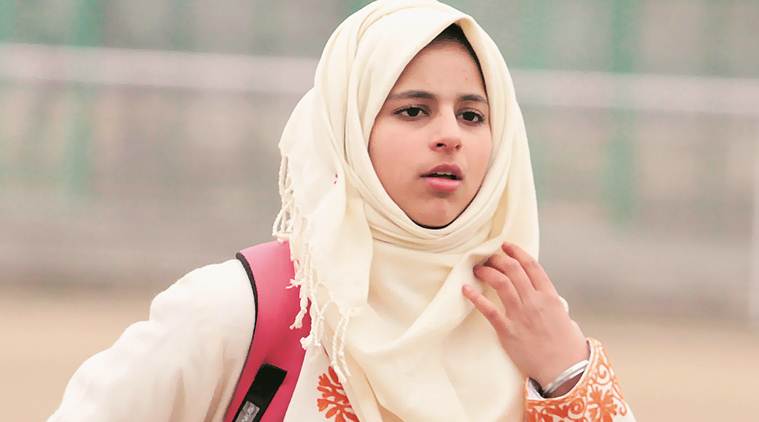
‘I will keep fighting for them, their rights.’ (Express photo by Shuaib Masoodi)

It’s a white winter morning in Srinagar, and a 16-year-old girl has set out from her cramped home on the city’s outskirts to help a group of badminton players prepare for a tournament at the indoor stadium.

Arwa Imtiyaz Bhat is not a coach, or a player. But this Class X student performs a more important role. She translates the sound of silence.

The players are among the around 250 sportspersons registered with the J&K Sports Association for the Deaf, and Arwa, who is well versed in sign language, is their voice, their mentor. Often giving up classes at school, she’s accompanied J&K teams to tournaments across the country, from Delhi to Chennai, fielding calls from worried families, helping liaise with organisers and officials.

She says the reward is not money — she’s not paid any — but moments such as those last December when the J&K team won four gold, three silver and two bronze medals in the National Games for the Deaf in Ranchi.

“My mother Rehana can’t speak or hear. Her brother Mohammad Saleem, a good badminton player, is also deaf and mute. And ever since I can remember, I have seen them struggle, facing discrimination outside and within our family. I could not stand that, and decided to do whatever I could to help anyone in that situation… I learned how to communicate in sign language from my uncle who had undergone training in Delhi,” says Arwa.

It hasn’t been easy, she admits, especially convincing parents of deaf and mute children to let go.

“When the J&K deaf team was planning to go to Ranchi, the parents sought an assurance from me that they would be safe and secure. I had to finally give them a guarantee. At times, I have had to fight with the families of players for permission to let them play,’’ she says.

According to Waheed ur Rehmad Parra, secretary, J&K Sports Council, Arwa is an inspiration.

“I am surprised by the dedication of this girl. And I try my best to help out and speed up paperwork of any team with which this girl is involved. She is an inspiration for all of us, and she should never feel that she has been let down by the system,” he says.

“There are very few people in the world who really care about deaf and mute children such as mine,” says Nazir Ahmad Bhat from Baramulla, whose two sons Mohammad Ashraf and Showkat Ahmad are sportspersons.

“Whenever my children go for any sports activity, Arwa keeps me informed, even when they are outside the state. At times, we call her so many times every day for information about my sons, she never loses patience,’’ says Bhat.

But for Arwa, who dreams of becoming a doctor, and her family, all of this has come at a cost.

“Last year, I had to accompany these players to different parts of Kashmir and various offices of sports organisations. I missed a lot of classes and was reprimanded by my teachers,” says Arwa.

At home, Arwa’s parents say it’s time someone showed similar concern for their daughter.

“I am an autorickshaw driver, and I want to provide my children, especially Arwa, with a good education. But I struggle to do that because I find it very difficult to keep my house running,’’ says Arwa’s father, Imtiyaz Ahmad Bhat. Arwa’s younger brother Abu Zar is a student of Class V but her elder brother Arbaz dropped out of school in Class X four years ago after he met an accident.

“I don’t think my dream of becoming a doctor will ever come true because I belong to a very poor family. At times, my father doesn’t have money to even deposit my school fees. This is why I was moved from the Fayaz Educational Institute in Naikbagh to the Government High School in Nowgam. But I will still try to complete my education,’’ says Arwa.

Yet, at the end of the day, Arwa says the joy that she sees on the faces of her players is what makes her go to sleep with a smile.

“Whenever they win any game or event, I hug them. At that moment, many of these players struggle to control their emotions and finally break down… I will keep fighting for them, their rights. Here, I am the only person who can highlight their misery.’’

source: http://www.indianexpress.com / The Indian Express / Home> India / by Mir Ehsan / Srinagar / February 05th, 2018
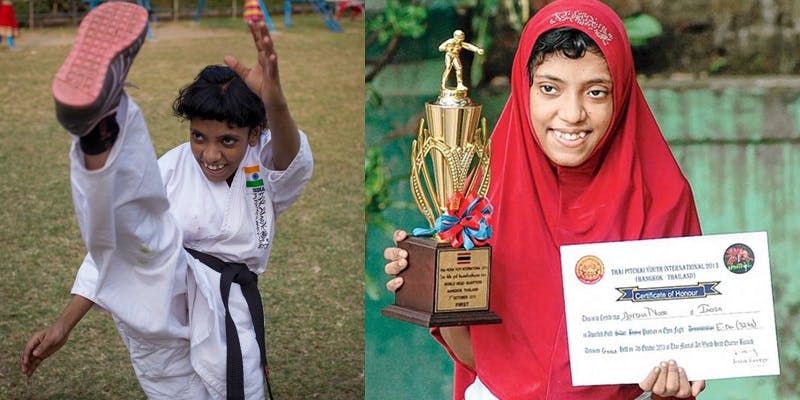
19-year-old Ayesha Noor battled epilepsy and poverty to become a karate champion

Kolkata, WEST BENGAL :

Ayesha Noor was born in a slum in Kolkata. Suffering from epileptic seizures, Ayesha was asked to leave school when she was just five. Only a year later, she decided to learn karate. Today, at the age of 19, Ayesha is an inspiration for many.

Images (L) Huffington Post (R) YourStory.com

Ayesha is the winner of two gold medals at the national level and has brought home three gold medals from international events. She also trains girls in Kolkata in self-defence. “I become a sherni (tigress) when I teach karate,” Ayesha told Huffington Post.

Ayesha’s journey hasn’t been an easy one. Her father passed away when she was just 13. Life has been difficult for the family of three that lives in a one-room house in a Kolkata slum. While her mother works as a tailor, her brother sells slippers to make a living.

Despite her inspirational triumphs in the international arena, Ayesha wants to teach karate to people across the world. Her coach and mentor MA Ali told Business Standard, “She is a completely different personality once she hits the ring and the fighter in her takes over.”

source: http://www.yourstory.com / YourStory.com / Home> HerStory> Think Change India / November 16th, 2016

Three Muslim candidates make it to Gujarat Assembly

GUJARAT :

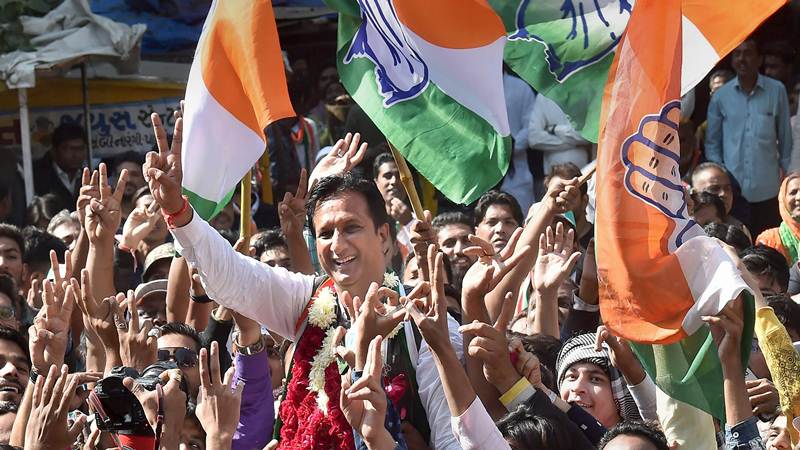
Congress party's Jamalpur - Khadia seat candidate Imran Khedawala flashes victory sign along wih his supporters. PTI photo by Santosh Hirlekar
Congress party’s Jamalpur – Khadia seat candidate Imran Khedawala flashes victory sign along wih his supporters. PTI photo by Santosh Hirlekar

Ahmedabad:

Three Muslim candidates, all fielded by the Congress, emerged victorious in the Gujarat Assembly elections this time, against two in the previous House. The ruling BJP did not put up any Muslim candidate in the state where the minority community accounts for 9.67 per cent of the population. The Congress this time put up six Muslim candidates, three of them in urban seats.

The party nominees romped home in Jamalpur-Khadia, Dariapur in Ahmedabad and Wankaner in Rajkot. Whereas the party candidates in Surat-West, Vagra in Bharuch and Bhuj rpt Bhuj lost to their BJP rivals.

Javid Peerzada (Wankaner), Gyasuddin Sheikh (Dariapur) and Imran Khedawala (Jamalpur-Khadia) are the candidates who made it to the Assembly on Congress’ ticket. The Congress nominee wrested the Jamalpur-Khadia seat from the BJP.

The Aam Aadmi Party, which entered the Gujarat polls for the first time, fielded Muslim candidate Usman Gani Sherasiya from Wankaner seat. He finished way behind other nominees by securing just 2,808 votes.

The Janata Dal (United), which contested independently this time, unlike in 2012 when it was in alliance with the Congress, put up a Muslim candidate in Dariapur, but he got only 82 votes, as per figures of the Election Commission.

The Muslim candidates fielded by the BSP and the NCP in Jamalpur-Khadia also failed to make a mark.

In the 2012 Assembly elections also, the Congress had offered tickets to six Muslims, out of whom two had won.

source: http://www.freepressjournal.in / The Free Press Journal / Home> Elections / by PTI / December 19th, 2017

The minimalist creations of product designer Saif Faisal

Bengaluru, KARNATAKA :

From designing cars to designing products for your home—Bengaluru-based Saif Faisal is fast becoming a name to reckon with

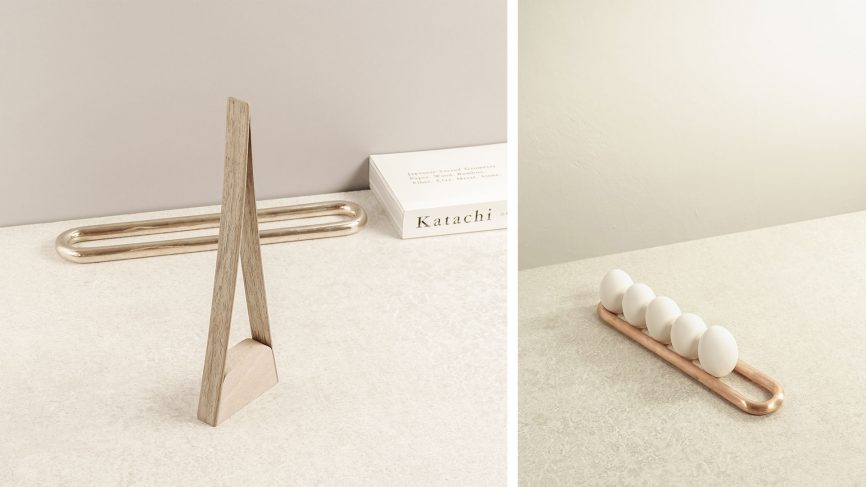
Foster Memo Clip (Left). Brackett Trays (Right).

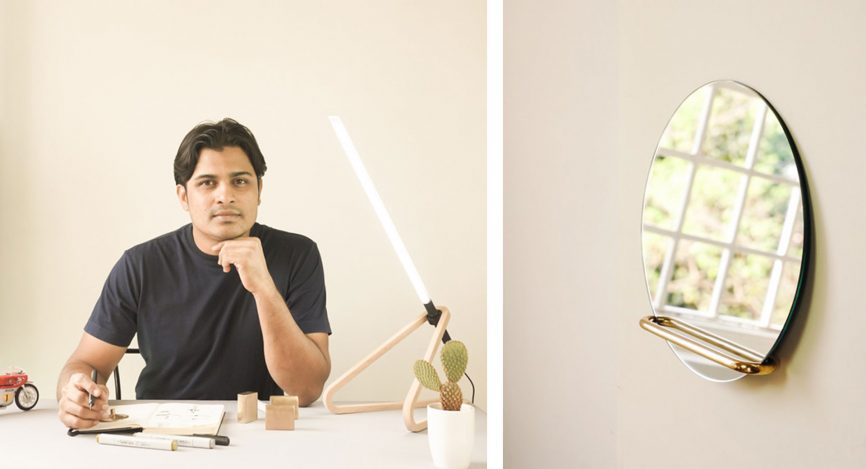
Product designer Saif Faisal who started his career designing cars has very successfully ventured into designing products for your home. Trained as an architect at Bengaluru’s RV College of Architecture, Faisal previously represented his college at Formula SAE, a student design competition, where he worked on driver safety and ergonomics. Now, Faisal’s eponymous studio has created a collection of home accessories with a markedly minimalist design. AD sat down with the designer to get a more intimate understanding of his design instincts and inspirations.

Architect and product designer Saif Faisal (Left). Loop Mirror (Right).

Architectural Digest (AD): Where did you learn wood working?
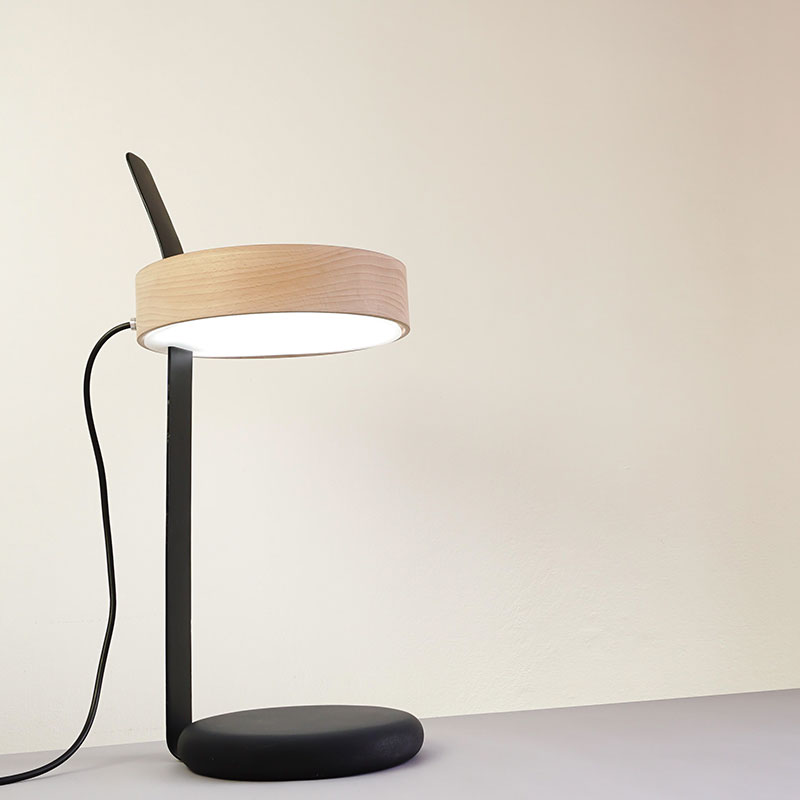
Saif Faisal (SF): It was more like collaborative learning with a couple of people in the trade to understand the craft. This helped a lot in the design and product development. With my earlier design and engineering work in Formula Student racing, this brought the two extremes of craft and high-tech together. For instance, our design, the Counterpoise lamp uses the dynamics of gravity but is made in a humble natural material: wood.

AD: Did you start the brand with the intention of specializing in table-top office accessories (like lamps, trays, clips, coasters, etc)?
SF: Actually it’s the contrary; initially we were more focussed on furniture. We have worked on a lot of furniture, the String Series for Godrej Design Lab, a book case, and a series of Roto-molded seating for indoor/outdoor use. The development process of larger projects take quite a while so we started doing smaller objects in between, which can be self-produced and completed quickly as well—again something which we didn’t favour much earlier. I have to admit it’s quite enjoyable doing smaller stuff.

AD: Will we see any other products—like kitchen or tableware for instance—from your brand?
SF: Maybe…in 2015 we ventured into jewelry and craft that was a surprise for us. Every new thing we do is an exploration and adventure.

Counterpoise Lamp. Principle: Function and flexibity with ease.

AD: In its minimalism and simplicity, your products remind one of Scandinavian design. What/who is your design inspiration?
SF: You are right; they are reminiscent of Scandinavian design, and I suppose, of Japanese design too. I would say its Essentialism and not merely Minimalism, as we try to be more honest to the design essence with no frivolous decorative elements. If you see our Qaiser series in Bidriware, it has the Zillij pattern on it—that’s not minimal but essential. On that note, Essential Design can help the world become a better place, and it’s not just with the products…my observation is cultures with a better sense and appreciation of design have holistic politics and interactions.

AD: You mention ‘poetry’ and ‘harmony’ in design (in the notes on the products) several times. Why is this so important to you?
SF: It’s quite important that a design be poetic, to express to a user the object needs to communicate on a poetic level.

source: http://www.architecturaldigest.in / Architectural Digest – AD / Home> Perspective> Profile / by Leena Desai / February 24th, 2017

Young Kashmiri awarded the coveted India’s Top 100 Young Leader’s Award-2017

Srinagar, JAMMU & KASHMIR :

Affan Yesvi continues to bring laurels for the state

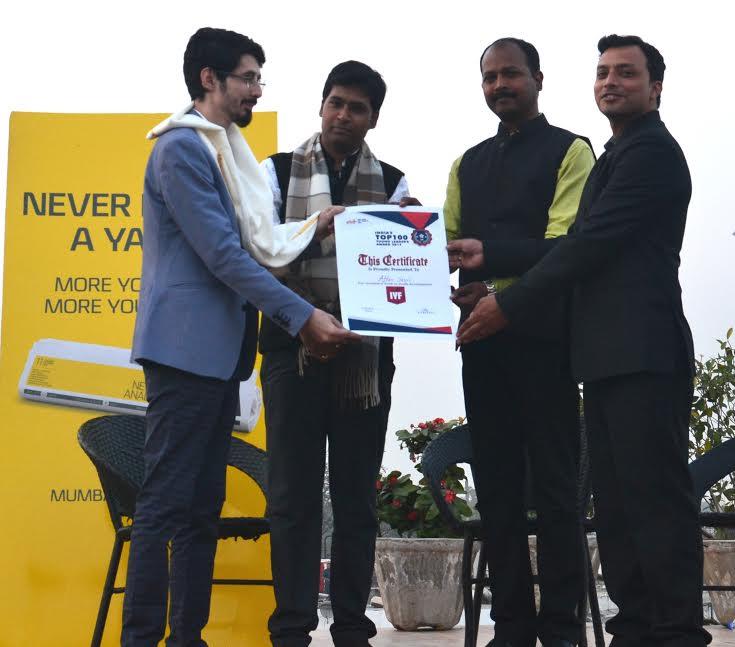
AffanMPOs31jan2018

New Delhi :

Affan Yesvi, a young award-winning social activist from Kashmir was facilitated with India’s Top 100 Young Leader’s Award 2017 in a glittering award function held at Connaught Place, New Delhi. The event was organized by Indian Youth Forum and the attendants included a diverse crowd of young enthusiasts from all walks of life.

The India’s Top 100 Young Leader’s Award is the one of the most coveted fellowship that is managed through Indian Youth Forum.
Affan, a regular contributor in Huffington post, Hindustan Times, The Tribune, DailyO, The Quint, Speaking Tree, & First Post has been an avid writer on various social issues. He has also presented research papers in various international conferences.
At a very young age, he founded a non-profit organization by the name of ‘The Inner Call – a forum for Evolution, Development and Awareness’ in 2009. The organization has been contributing in spheres of mental health, environment protection, women empowerment, youth activities and social research, with the sole aim of promoting human values. The organization has also organized various legal awareness camps.
In 2011, Affan founded the Yasawi Foundation, a non-profit organization dedicated to promote research and aesthetic development in the Sufi world heritage. Yasawi Foundation has been actively conducting Sufi Workshops and research in mysticism.
It is pertinent to mention that Affan Yesvi has received numerous applauds and recognitions for his efforts in the past as well. Indian Youth Forum is a youth network founded in order to meet people and inspire them to participate in the nation-building process. Creating India’s largest online platform for young people to express themselves on issues of importance, IYF finds and tells stories of people doing good to inspire global action.

Top 100 young leaders Awards is recognition for all those who have brought a change to the society through their actions.

source: http://www.thenewsnow.co.in / The News Now / Home / by TNN Bureau / January 15th, 2018

Safikul and Rokeya impress

BENGAL (British India ) :

Calcutta:

Safikul Mondal and Rokeya Khatun emerged the fastest man and woman in the Amway 67th West Bengal State Athletic Championship on Sunday.

Safikul Mondal
Safikul Mondal

There were two meet records on the concluding day. Trisha Dhar set a meet mark in women’s U-20 heptathlon and East Bengal’s 4×400 U-20 relay team clinched the gold with a record performance.

North 24 Parganas emerged overall champions while East Bengal were runners-up. Nadia took the third spot.

Trisha, who is a first year student at Charu Chandra College, trains under Kuntal Roy at SAI campus and Sodepur Coaching Centre. The heptathlete, who accumulated 4218 points, broke the 21-year-old record set by another of Kuntal’s students, Soma Biswas. “I don’t get time to attend college regularly but Somadi’s husband Samir Bera, who works at Charu Chandra, has ensured that I don’t face problems… I haven’t spoken to Somadi yet,” said Trisha with a sheepish smile.

She had won the event last year too but an ankle injury had prevented her from performing at her best. She plans to participate in the Inter-state Open meet in Guntur later this month.

The East Bengal quartet of Chandan Barui, Santu Biswas, Sourav Ghosh and Sujoy Soren won the 4x400m relay with a record timing of 3:24.60. They bettered the record set last year by North 24 Parganas DSA (3:32.20).

Safikul has had a rich haul this time with three gold medals – 100m, 200m and 4x100m. The 21-year-old from Debagram in Nadia recorded 10.7 seconds edging out Tanmoy Chakraborty (10.8) in a photo finish. “I didn’t know I had won… Later I was informed by my coach,” he said. “I had a hamstring injury last month and haven’t fully recovered. There’s still tightness which prevents me from running at full tilt… I could have done much better had I been full fit,” said Safikul.

Rokeya Khatun
Rokeya Khatun

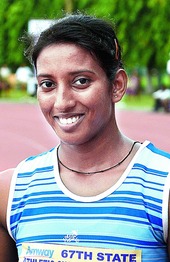
The women’s 100m gold is Rokeya’s second in this meet after having won the 100m hurdles. The Chapra girl, whose parents struggle to make ends meet, finished in 11.9 seconds.

“My parents wish I continue with the sport and that has kept me going. It pretty expensive to stay alone here. If I can finish in the top-4 in Inter-state Open meet, I will get a seat in the SAI hostel… That will help,” said the 20-year-old.

source: http://www.telegraphindia.com / The Telegraph, Calcutta,India / Front Page> Sports> Story / Monday – July 03rd, 2017

Meet the Men Behind the Red Banarasi Saree Anushka Sharma Wore

Varanasi (earlier Benares), UTTAR PRADESH :

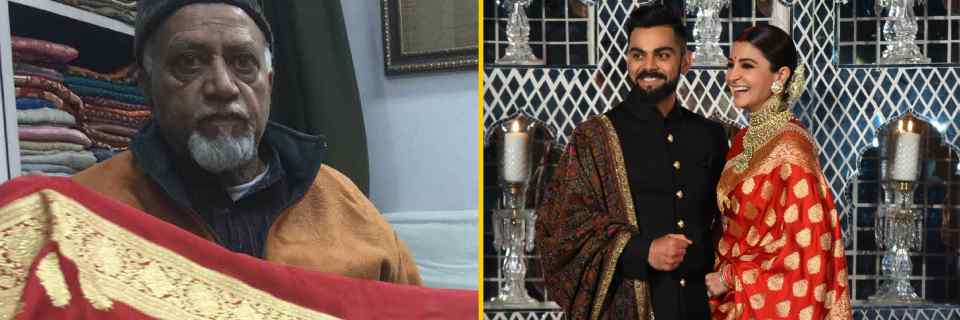
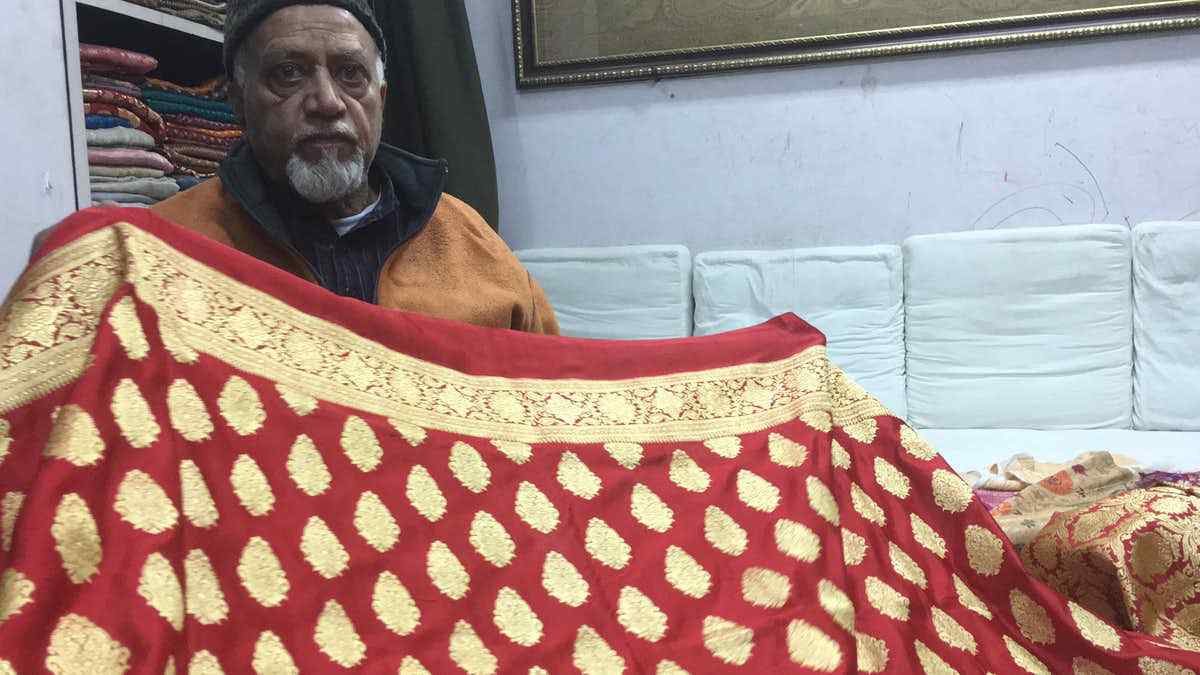
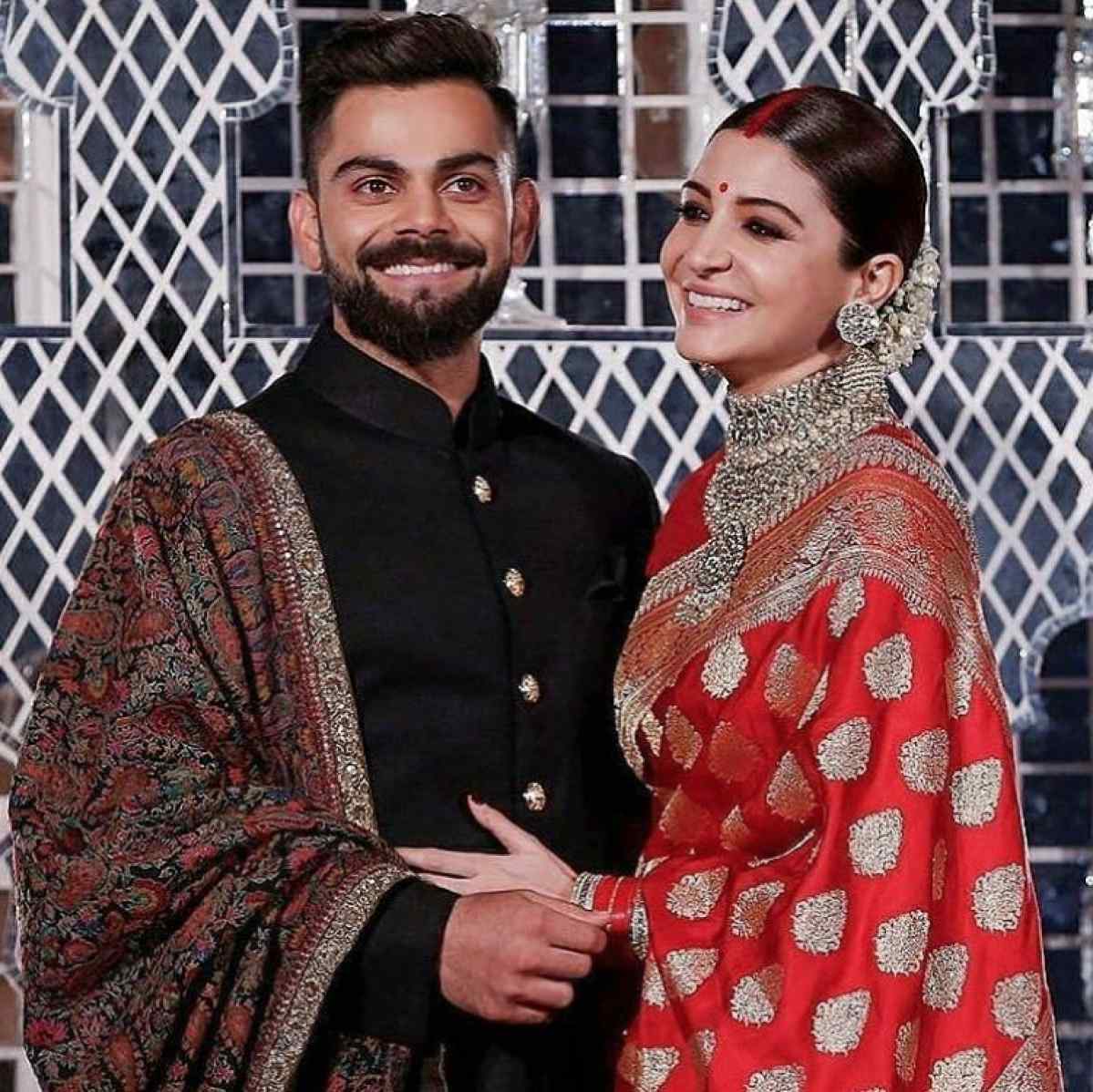
Here’s a look at the craftsmen who worked on the gorgeous Banarasi saree that Anushka Sharma wore for her wedding reception in Delhi on 21 December. (Photo Courtesy: Vikrant Dubey (L), Yogen Shah (R))

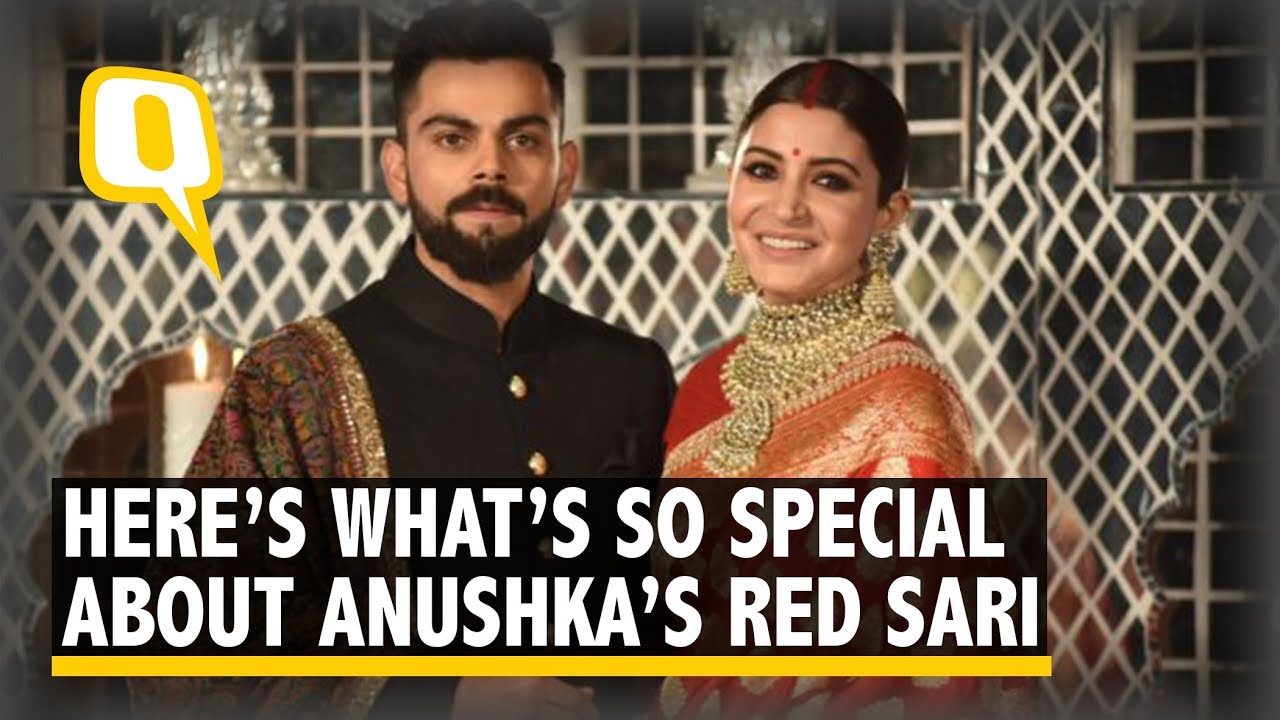
Muazzam Ansari of Benares was among several thousands who were glued to the television screen for news of the glitzy Virat Kohli and Anushka Sharma wedding. But unlike several others, Ansari was watching the ‘Indian wedding of the decade’ closely for a very special reason – the gorgeous Banarasi red saree that Anushka wore for her reception in Delhi.

Anushka02jan20th2018

Ansari was among a team of three craftsmen who toiled day and night for two months to create the exquisite saree. And the saree maker says having the world fawn over it was a moment of great pride.

Muazzam Ansari, the man behind the red Banarasi saree that Anushka Sharma wore for her wedding reception in New Delhi. (Photo Courtesy: Vikrant Dubey)
Muazzam Ansari, the man behind the red Banarasi saree that Anushka Sharma wore for her wedding reception in New Delhi.
(Photo Courtesy: Vikrant Dubey)

As the Virat-Anushka reception photos went viral, Ansari was quick to post photos of the saree on his Facebook page – a move that would quickly bag him the nickname, ‘Anushka Sharma’s Saree Man’.

Anushka’s saree called for extensive planning. After the designers decided on a Banarasi saree came the tough part – selecting a craftsman from the thousands of skilled workers in this trade in Benaras.

Maqbool Hassan Gets the Job

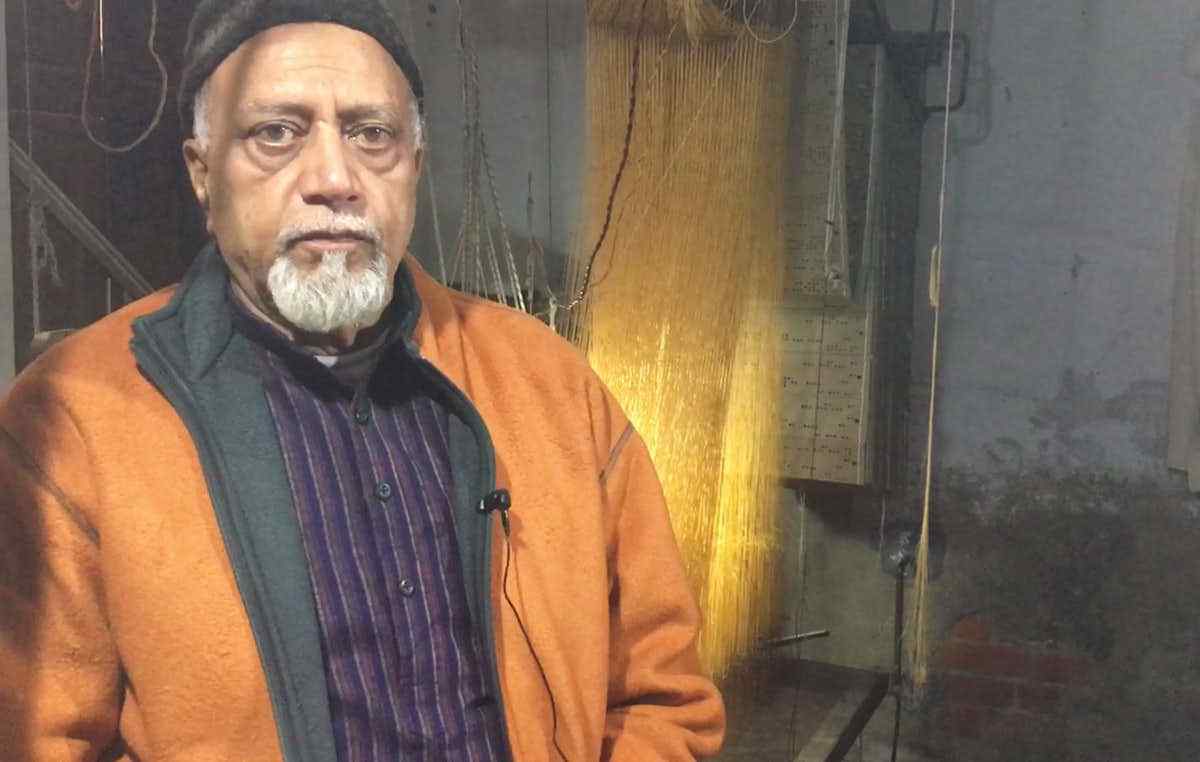
Craftsman of Anushka’s Banarasi saree, Maqbool Hassan. (Photo Courtesy: Vikrant Dubey)
Craftsman of Anushka’s Banarasi saree, Maqbool Hassan.
(Photo Courtesy: Vikrant Dubey)

The important task was given to Maqbool Hassan from Peeli Kothi in Benaras, who has been in the business since 1966. Hassan, whose family has been engaged in the business for over two centuries, is also credited with having created a saree for Aishwarya Rai and a sherwani for Abhishek Bachchan.

Maqbool Hassan of Peeli Kothi in Benaras has been in the business since 1966. (Photo Courtesy: Vikrant Dubey)
Maqbool Hassan of Peeli Kothi in Benaras has been in the business since 1966.
(Photo Courtesy: Vikrant Dubey)

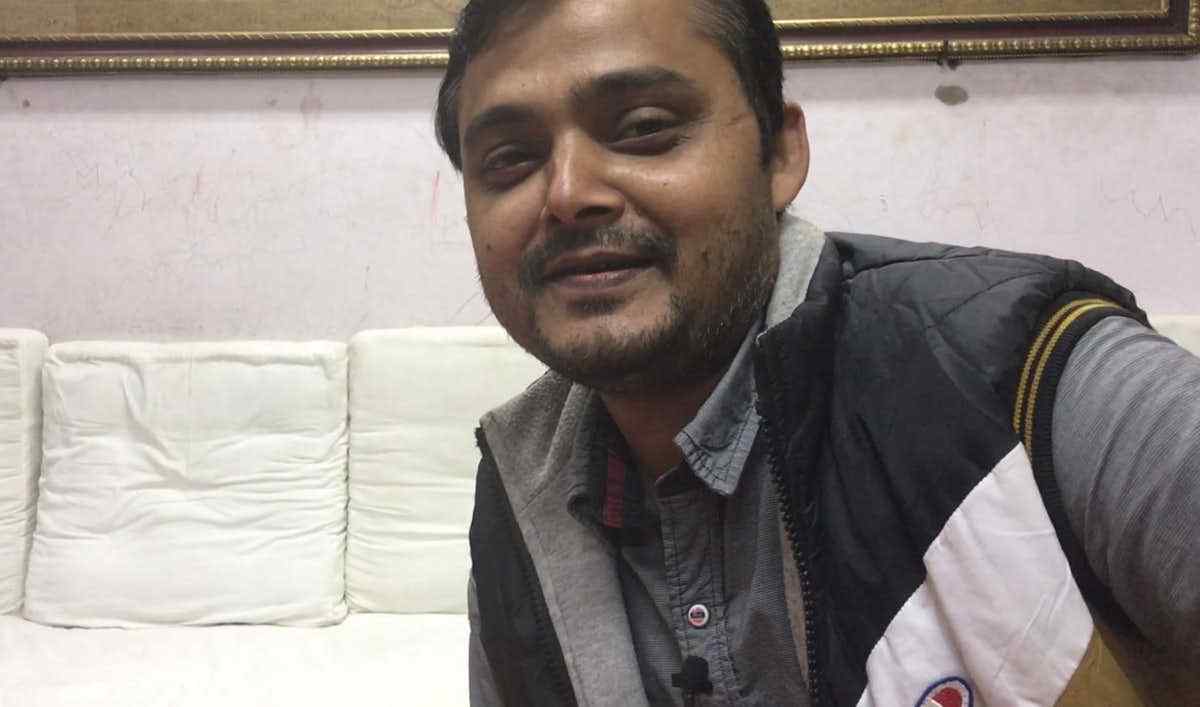
After the Cottage Emporium in Delhi reached out to Maqbool Hassan with the order to create the sari, he set about creating a team of three of his most skilled craftsmen. Among his top three were Muazzam Ansari, whose work is already popular in Benaras, despite the fact that he only joined the industry five years ago. What’s more, fans of Ansari’s work reportedly compare his work with craftsmen with over 20 years of experience.

Months of Secret Planning & Weaving

From planning to making the saree it took almost six months. (Photo Courtesy: Vikrant Dubey)
From planning to making the saree it took almost six months.
(Photo Courtesy: Vikrant Dubey)

As soon as the dates for Virat and Anushka’s wedding were decided, the designers zeroed in on the Banarasi saree for their Delhi reception.

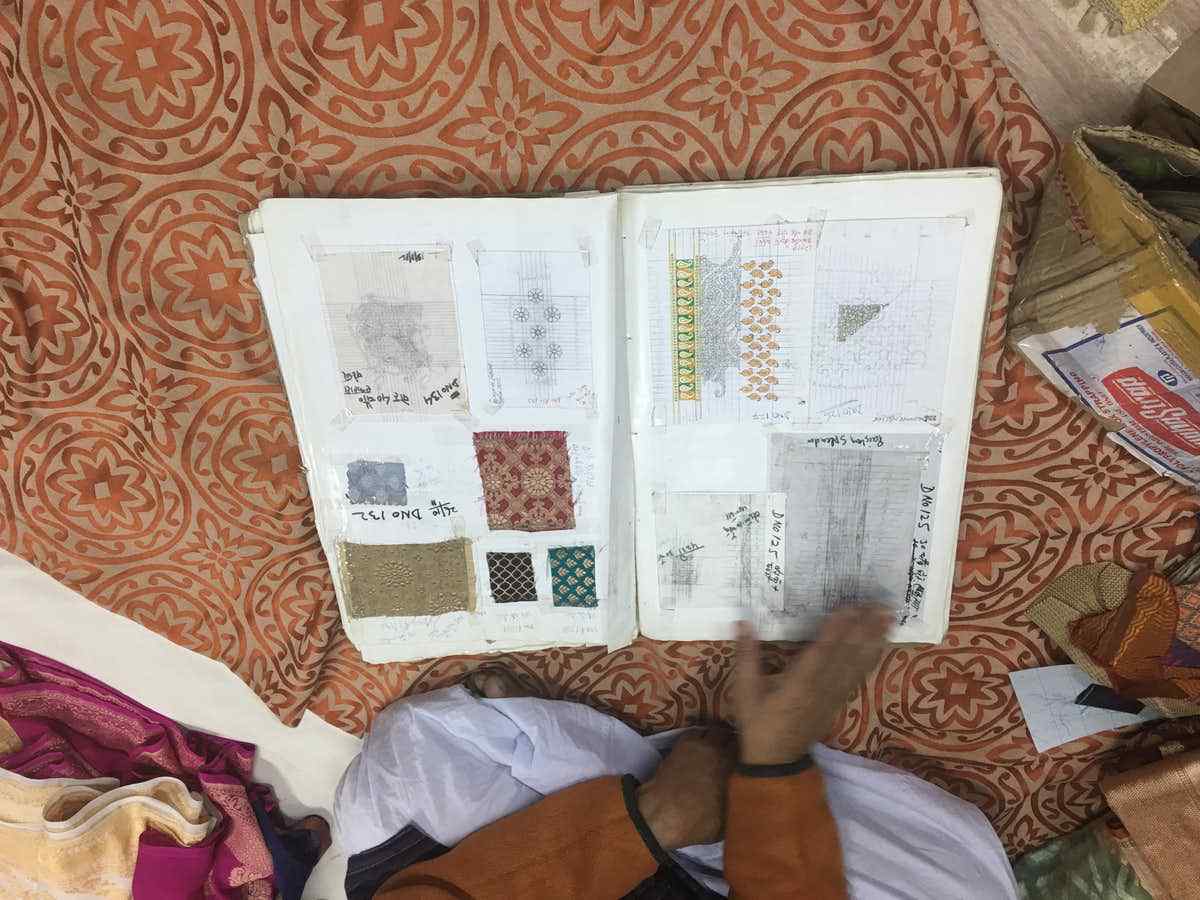
Then began the hunt for the saree design. After much debate and decision, the creators decided on a bright red colour with traditional golden work. The entire process of selecting a colour, finalising a design, and finishing the design took six months. All of it was done in absolute secrecy.

It took total of 60 days for Anushka’s saree to be made. (Photo Courtesy: Vikrant Dubey)
It took total of 60 days for Anushka’s saree to be made.
(Photo Courtesy: Vikrant Dubey)

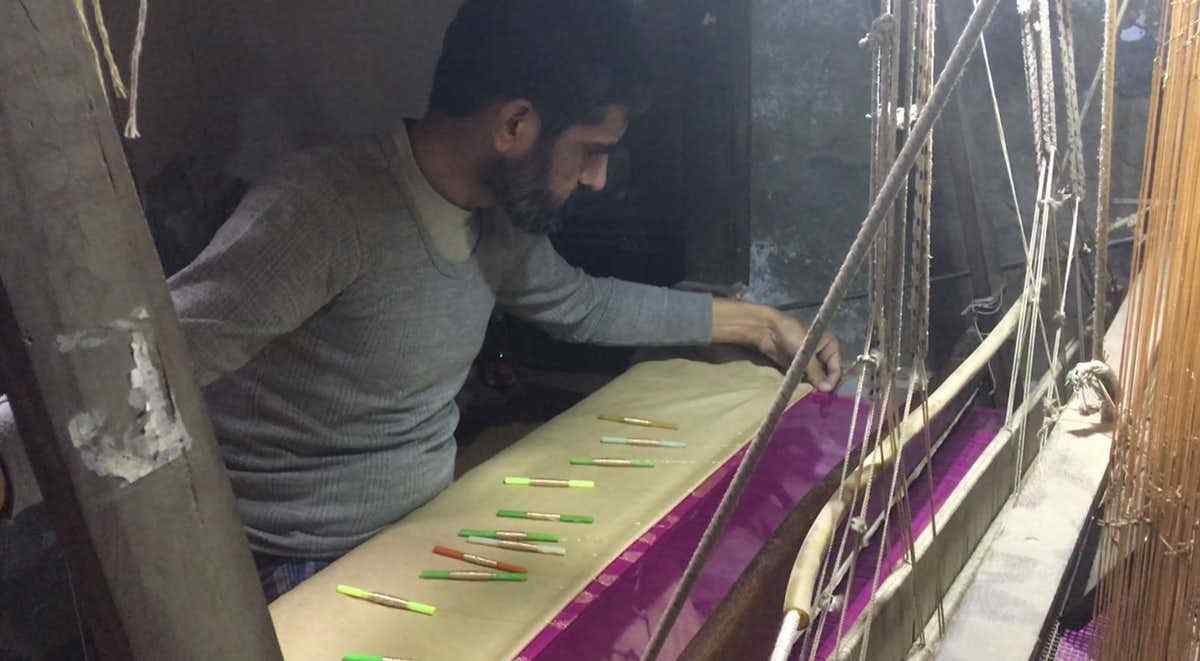
Once the design, colour, and fabric was finalised, it was time for the actual weaving. Banarasi sarees are made on handlooms – each thread and the colour for every bit of the design is put in place by hand.

The saree called for three weavers to work day and night for 45 days. It took another 15 days to add the finishing touches, taking it to a total of 60 days.

Painstaking Effort

Anushka Sharma’s saree took 60 days to make. (Photo Courtesy: Instagram)
Anushka Sharma’s saree took 60 days to make.
(Photo Courtesy: Instagram)

A mixture of silk and chiffon was used to make the saree in order to create an outfit that was both soft and light, despite all the embroidery and the seemingly-heavy work on it. The craftsmen also ensured that the saree did not have a glittery shine, even with real gold being used for the zari – with each motiff being worked on separately.

The three craftsmen tasked with making the saree had to work simultaneously on the weaving, and the absence of even a single craftsman made weaving impossible. With all the work that has gone into the saree, it is small wonder why Banarasi sarees are known for their timeless allure.

(This article was first published on QuintHindi.)

source: http://www.thequint.com / The Quint / Home> Entertainment / by Vikrant Dubey / December 27th, 2017

Princess Omdutel of Oude Buried At Paddington Old Cemetery

Awadh, UTTAR PRADESH / London, U. K / Paris, FRANCE :

While walking around Paddington Old Cemetery during my lunch break earlier today, for some reason I felt compelled to read the faded stone slab that marked the resting spot of Princess Omdutel. Instantly my attention was grabbed, a Princess buried in Kilburn, North West London of all places, that sure wasn’t something I was expecting to find.

PrincessOmdutelMPOs20jan2018

I have walked past the grave of Princess Omdutel, perhaps a 100 times or more since I moved to Kilburn and never paid it any attention. Now she had my full attention.

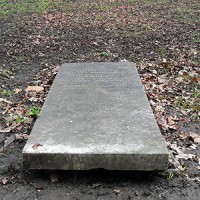
The badly worn and faded inscription on the stone slab was barely readable, but after a lot of scratching of my head, I finally managed to decipher the words: Sacred to the memory of Princess Omdutel Aurau Begum, daughter of the late General Mirza Sekunder Hishmut Bahadur, Brother to His Majesty King of Oude, who died 14th April 1858 aged 18 months.

With a little help from Google and www.findagrave.com, I managed to find the following information: Princess of Oude. Oude, or Awadh, which was the epicentre of the 1857 Indian Mutiny, when the sepoys rebelled against the British after baulking at orders to use cartridges greased in pig and beef fat. Members of the Awadh Royal Family arrived in London soon afterwards, lobbying unsuccessfully for the return of their lands. The princess’s father, Mirza Bahadur, died two months before her and is buried in Père Lachaise in Paris.

The British obviously offered the Awadh Royal Family a haven in London after they were ousted. I’m not sure how long the family had ruled for in Awadh, which is a region in India. But from what I can gather it seems likely that they were a puppets installed by the British Government.

Princess Omdutel Aurau Begum, her life had barely begun, when she died at only 18 months of age. I wonder if any of the family survived and if so what became of them. It is also intriguing that her father died two months before her in Paris. No mention of the mother, which is kinda sad if you ask me…

I find it strange that I have walked past the grave of Princess Omdutel numerous times over the past twenty months and never once read it, until today. Very strange. Maybe she was wanting a mention on London Is Cool…

source: http://www.londoniscool.com / London is Cool – a blog about Life in London / Home> Out and About in London / by William Wallace / February 21st, 2011

Malika Kishwar: A forgotten Indian queen in Paris

Awadh, UTTAR PRADESH / London, U. K / Paris, FRANCE :

The tragic story of Malika Kishwar, who rests in an unmarked grave in France’s most famous cemetery

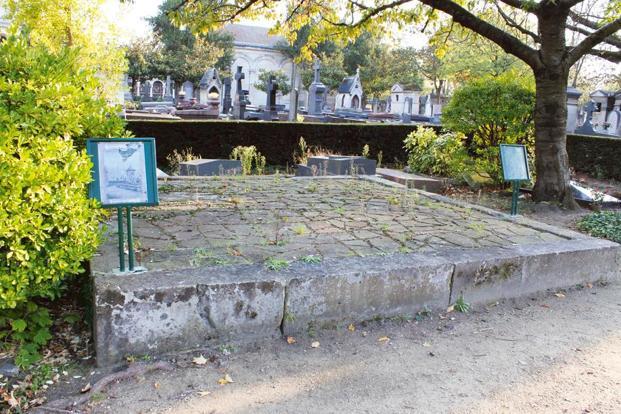
The grave of Malika Kishwar at the Père Lachaise cemetery in Paris. Photo: Wikimedia Commons

She lies buried amidst sepulchres that house the remains of many who are still famous.

There is Jim Morrison on the premises, the American rock legend whom trains of tourists come to pay homage, like pilgrims bearing flowers. Edith Piaf, the waif who sang her way to greatness, finds her peace nearby, as does Frederic Chopin, the composer whose pickled heart is in Warsaw but whose body dissolves in the French capital. Benjamin Franklin’s grandson rests here, and in the vicinity there is a man believed to have been sired by Napoleon. Oscar Wilde’s sculpted grave competes with Marcel Proust’s neat bed of stone, and many more still are the artists, writers, and persons of esteem who crowd the hillside cemetery that is Père Lachaise in Paris.

And yet, between them all, under a platform of rugged rock, lies this tragic Indian woman. Her name and cause have been largely forgotten, but since 1858, she has been here, longer than many of her revered neighbours. Tourists walk by with cameras, oblivious to her unmarked square existence. But every now and then there is a stray visitor who arrives on a quest: to locate the final resting place of that remarkable woman, the last queen of Awadh.

I was that visitor a few days ago, when I trekked up Paris’ most famous graveyard to look for this forgotten tomb.

The lady appears in yellowed old books by several names. She was to some Malika Kishwar, while others knew her as Janab-i Aliyah, Her Sublime Excellency, mother to the ruler of “Oude”, Wajid Ali Shah.

In 1856, when the British deposed this nawab from his ancestral seat in Lucknow, his family departed for colonial Calcutta, with all the money they could gather and what dignity they had left. But while the son (a “crazy imbecile” in the eyes of his sneering oppressors) prepared to fade quietly into history, the mother was determined to win back that which was her family’s by right.

That very year, this woman who knew little beyond her sequestered palace, set foot on a ship, determined to sail to England so she might speak—woman to woman—to the English queen in person. After all, declared the middle-aged begum, Victoria was “also a mother”; she would recognize the despair her people had unleashed, and restore to the House of Awadh territory, titles, and its rightful honour. And so proceeded Malika Kishwar, her health already in decline, braving cold winds in a foreign land, to plead the cause of royal justice.

The mission was doomed from the start. Advisers were many and much was the money they sought for the privilege of their counsel. The results, meanwhile, were nowhere to be found.

As historian Rosie Llewellyn-Jones records, Kishwar discovered quickly enough that Queen Victoria, in her “circular dress”, had little power to bestow anything more than polite conversation on her and her Awadhi line—when an audience was granted, they spoke about boats and English mansions, not about imperial treacheries and the unjust business in Lucknow.

In the British parliament, things got worse. A prayer at long last prepared was dismissed on spurious bureaucratic grounds: the begum was to submit a “humble petition”, words that she failed to use in the document laid before the House. While her son accepted British imperium, the mother was obstinate in battle. So, when she wished to travel, they sought to dragoon her into acknowledging their suzerainty—if Malika Kishwar and her ménage wanted passports, she would have to declare herself a “British subject”.

The begum refused to do anything of the sort, prepared, at best, to be under “British protection”, but never anybody’s “subject”. And legal quibbles aside, the Great Rebellion of 1857 compounded matters—there was now no prospect of relinquishing even a fragment of British power when the hour called for a demonstration of obdurate strength alone. Awadh was lost forever.

The tide having turned, in 1858, the begum decided to return at last, defeated and unhappy in the extreme. But in Paris she fell ill and died on 24 January. The funeral was simple, but there was yet some dignity and state—representatives of the Turkish and Persian sultans gave this Indian queen the regard the British denied her and her line.

A cenotaph was constructed by the grave, but it has long since fallen to pieces—when decades later the authorities at Père Lachaise sought funds to repair the tomb, her exiled son decided from Calcutta that it was simply not worth his pension, while the colonial state was even less inclined to honour a difficult woman lying several feet underground in an alien European country. And so, since that time, in a graveyard full of magnificent memorials, the queen of Awadh has remained, a shell of broken stone sheltering her from the weeds and overgrowth that alone have made a claim upon her and the story that she tells.

Others of her suite also suffered. A younger son had come with her, Sikandar Hashmat by name. He died in England, and was carried to join his mother in her unmarked grave. A grandson’s infant child was also buried within, turning the tally in Paris to three.

But it was in London that one more of the delegation fell, this one a baby princess, born to Sikandar Hashmat from his Rajput wife on British shores. I walked around a dull little place called Kilburn to look for this grave. And there, in a cemetery, after an hour between tombs set in the soggy English ground, I found a memorial to the child: Princess Omdutel Aurau Begum, “who died 14th April 1858”, months after her grandmother who was once a queen.

But Omdutel, all of 18 months, had a minor triumph where her royal grandmother had none—lying by a pathway in that cemetery in Kilburn, her grave at least bears her name.

The begum, on the other hand, has become to the passing tourist at Père Lachaise in Paris a plinth on which to rest, smoking a cigarette and looking on to a horizon full of the dead, till a stranger might appear to tell how they have under them.

Medium Rare is a column on society, politics and history. Manu S. Pillai is the author of The Ivory Throne: Chronicles Of The House Of Travancore.

He tweets at @UnamPillai

source: http://www.livemint.com / LiveMint / Home> Leisure> Medium Rare / by Manu S. Pillan / Friday – Jan 12th, 2018

Role of Muslims in freedom struggle

The freedom movement of India was not the sole agenda of a particular political party but it had moved aam aadmi in the form of masses in his/her own capacity. The history of Indian national movement would be biased and incomplete without the presentation of the actual role of Indian Muslims in it, right from the revolt of 1857 to the day of Independence in 1947.

Shoulder to shoulder they fought with the other communities for the Independence of India. The contribution of Muslim poets, revolutionaries and writers is not known today. Instead of secular historiography, it has been communalised.

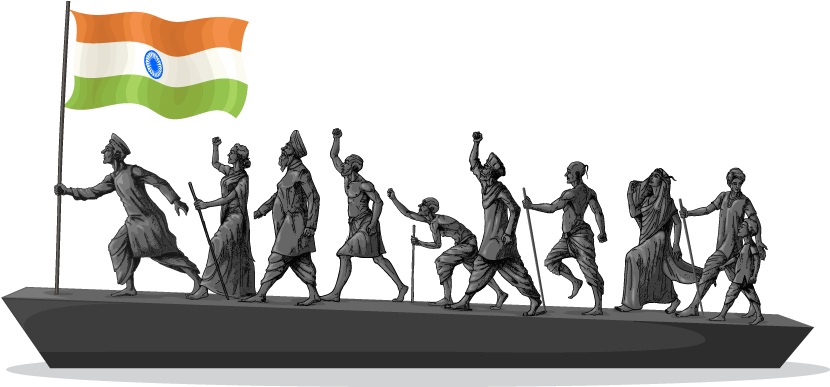
                                             Courtesy: Mapsofindia.com

The Muslims and other minorities never envisaged India as adopted land because Muslims of India have not come from outside but are the converts to Islam and have deep feeling sense of belonging to this country and therefore contributed to the cultural, economic, intellectual and spiritual progress throughout the ages.

The role, significance and uprising of Indians against British imperialists can be seen since mid of 18th century in the form of Battle of Palashi (Plassey), June 23, 1757. It was Nawab Siraj-ud-Daulah who first awakened Indian rulers and gave a call to oppose the British. He, however, lost the battle and was executed at the young age of 24. This was soon followed by the great Tipu Sultan, who was killed by Lord Wellesley during the fourth Anglo-Mysore war in 1799.

The contribution of Muslim revolutionaries can be witnessed from the first half of 19th century. The Faraizi and the Wahhabi Movements had disturbed the pace of British plan in the initial stages of its expansion in India. The Wahabi movement of Syed Ahmed Barelvi was the most organised one. He appealed to all Hindus and Muslims to overthrow the British and thus he was killed in 1831 at Balakot.

The number of Muslims executed only in Delhi during 1857-58 was 27,000. During this revolt, Asghari Begum (mother of Qazi Abdur Rahim, the revolutionary of Thana Bhawan, Muzaffarnagar) fought against the British and was burnt alive when defeated. It was estimated that about 225 Muslim women gave their lives in the revolt.

Similarly, barely is known about the contribution of Muhammad Ashfaq Ullah Khan of Shahjehanpur who conspired and looted the British treasury at Kakori (Lucknow) to cripple the administration and who, when asked for his last will, before execution, desired: “No desire is left except one that someone may put a little soil of my motherland in my winding sheet.”

Likewise, the present generation does not know about Khan Abdul Gaffar Khan, a great nationalist who had passed 45 years of his 95-years of life in jail for the freedom of India and thus awarded ‘Bharat Ratna’ in 1987. Barkatullah and Syed Rehmat Shah of Ghadar Party sacrificed their lives. Umar Subhani, an industrialist and a millionaire of Bombay who, then, presented a blank cheque to Gandhiji for Congress expenses and who ultimately sacrificed his life for the cause of Independence. Maulana Hasrat Mohani, with his poetry, infused zeal of freedom in young hearts.

Maulana Abul Kalam Azad, at the age of 35, became the youngest person to serve as the President of the Indian National Congress. He was the icon of Hindu-Muslim unity as well as espousing secularism and socialism. Raj Mohan Gandhi in his book ‘Understanding Muslim Minds’ mentioned that Maulana went straight to Congress office just after the funeral procession of his wife, Zuleikha Begum and led Quit India Movement.

Manmohan Kaur in her book entitled as ‘Women In India’s Freedom Movement’ makes reference to only Begum Hazrat Mahel and Bi-Amma out of the hundreds of women who fought the battle of freedom along with their men folk against the British Raj. The history of the Indian national movement would be incomplete without mentioning the heartily services of Abadi Begum (mother of Maulana Muhammad Ali), Amjadi Begum (wife of Maulana Muhammad Ali), Amina Tyabji (wife of Abbas Tyabji), Begum Sakina Luqmani (wife of Dr Luqmani and daughter of Badruddin Tyabji), Nishat-un-Nisa (Begum Hasrat Mohani), Saadat Bano Kitchlew (wife of Dr Saifuddin Kichlew), Zulekha Begum (wife of Maulana Azad), Mehr Taj (daughter of Khan Abdul Ghaffar Khan), Zubaida Begum Daoodi (wife of Shafi Daoodi, the reputed nationalist of Bihar) and many others.

Santimoy Ray’s ‘Freedom Movement And Indian Muslims’ challenges the many prejudices that generate bias and hatred against the Indian Muslims, particularly their contentions role in Indian freedom movement.

This shows the great sacrifices they made to oust the British rule in all the national uprisings from Sanyasi Movement to Independence, finally led to the withdrawal of British from India in 1947. It is such a pity that their roles in the struggle for freedom has not been adequately presented in the Indian history. The comprehensive study about the role of Muslims struggle for freedom is essential to help eradicating prejudices and many misconceptions against the Muslims grown in the absence of fair historiography.

I’m recalling some of the beautiful lines of Faiz Ahmed Faiz …

Ye daagh daagh ujaalaa, ye shab-gaziida sahar,
Vo intizaar thaa jis-kaa, ye vo sahar to nahiiN,
Ye vo sahar to nahiiN jis-kii aarzu lekar
Chale the yaar ke mil-ja`egi kahiiN na kahiN
Falak ke dasht meN taroN kii aakhiri manzil,
KahiN to hogaa shab-e sust mauj kaa sahil,
KahiN to jaake rukegaa safiina-e-gham-e-dil.
Abhii chiraagh-e-sar-e-rah ko kuchh khabar hii nahiiN;
Abhii giraanii-e-shab meN kamii nahiiN aa’ii,
Najaat-e-diidaa-o-dil ki ghaRii nahiiN aa’ii;
Chale-chalo ke vo manzil abhii nahiiN aa’ii.

Meaning:

This stain-covered daybreak, this night-bitten dawn,
This is not that dawn of which there was expectation;
This is not that dawn with longing for which
The friends set out, (convinced) that somewhere there we met with,
In the desert of the sky, the final destination of the stars!
Somewhere there would be the shore of the sluggish wave of night,
Somewhere would go and halt the boat of the grief of pain.
The lamp beside the road has still come no lessening,
The hour of the deliverance of eye and heart has not arrived.
Come, come on, for that goal has still not arrived.

(Author is currently preparing for civil service examinations.)

source: http://www.twocircles.net / TwoCircles.net / Home> Articles> Indian Muslim / by Shaik Amer Arafath / August 14th, 2015