Tag Archives: Allahabad Muslims

Mujawar Hussain Unveils Harsh Realities of Ghostwriting in Pre-TV Literary World

Allahabad, UTTAR PRADESH :

The acclaimed Urdu and Hindi writer from Allahabad exposes how poverty forced him to ghostwrite 1,065 novels.
New Delhi :

In the decades before television became a household staple in India and Pakistan, millions turned to novels filled with mystery, romance, and detective tales for entertainment.

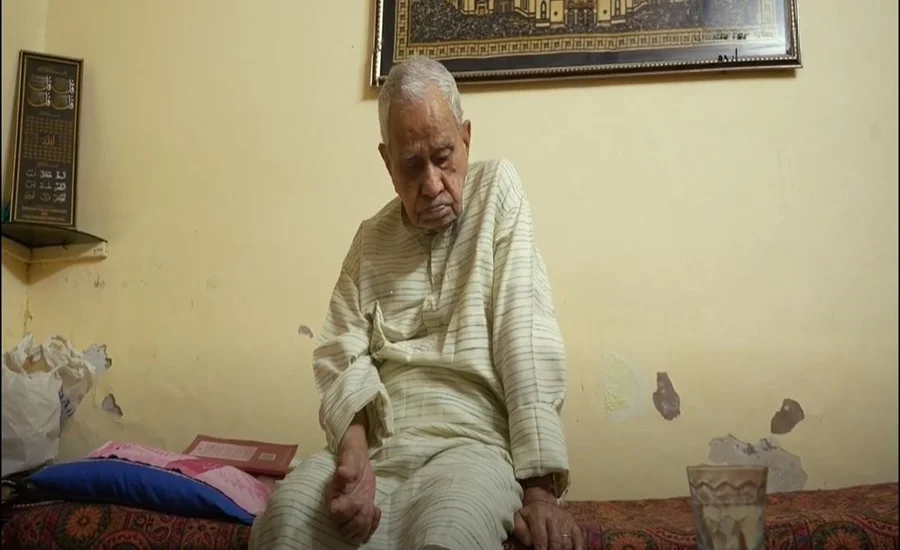
One Muslim writer’s story reveals the untold hardship and exploitation faced by many like him during that time. Mujawar Hussain, a prolific Urdu and Hindi author from Allahabad, has exposed the difficult truth behind the 1,065 novels he ghostwrote for Hindu publishers, many under pseudonyms.

Now in his elderly years but still sharp, Hussain shared his painful journey of writing stories for survival rather than pride. “The number of such books combined is 1,065,” he told Clarion India recently. “But the books I consider a source of pride are my research paper, Elements of National Unity in Urdu Poetry, and a collection of my religious essays,” he said.

Hussain’s writing career began in the 1950s when major publishers churned out fiction in bulk to satisfy growing demand. Muslim writers like him were often paid meagre sums to produce thick novels under pseudonyms for Hindu authors and publishers, including names such as Janardan Prasad Jaiswal, Shambhu Prasad Jain, Ashok BA, and the mysterious “Neqab Posh Bedi.” Hussain estimates he wrote 30 to 32 novels under Bedi’s name alone.

“Some of them were non-Muslims,” Hussain said, naming former students turned authors. “I wrote in their names because I had to. The money kept my family alive.”

His words underline the economic hardship faced by many Indian Muslims, forced to work behind the scenes without recognition while Hindu publishers reaped profits. Hussain recalls the pressure of poverty pushing him to write constantly. “I remember those days when I’d enter the house, and my wife would tell me food and drinks would last until the next evening. I’d sit down with a pen, write, and hand over the manuscript to the publisher. I’d take money — 30 rupees at first, then 60, then 100, and finally up to 2,500 rupees. With that, household expenses were met.”

Hussain’s experience highlights the sidelining of Muslim talent in the Indian literary scene, where Hindu publishers held most of the power. “That forced me,” he said. “The memory of that time is painful, and the work was painful. After that, I put down the pen.”

He also revealed working for Nikhat Publications, famous for publishing the works of legendary Urdu detective novelist Ibne Safi. When Ibne Safi’s manuscripts stopped coming to India due to political tensions between India and Pakistan, Hussain was asked to fill the void by writing novels under his name. “When I realised the institution was going to close, I started writing under his name,” he said. “I wrote very few novels in Urdu under his name — half partridge, half quail, meaning some was his, some I mixed.”

In Hindi, Hussain wrote extensively in Ibne Safi’s style, including the novel The Barrister’s Wife, though he remains uneasy about these works. “Even now, I don’t feel good about them,” he admitted. “I didn’t consider them a source of pride.”

Despite his difficult path, Hussain’s academic achievements stand tall. He earned an MA in Urdu in 1958 with two gold medals, a silver medal, a Victoria Gold Medal, and another prize he cannot recall. “No one has ever scored higher than me,” he said proudly. Yet this success did not shield him from the economic hardship that forced him into ghostwriting.

Dr Ayesha Khan, a literary historian specialising in the pre-television literary world, explains that Hussain’s story reflects a larger pattern of exploitation faced by Muslim writers. “Many Muslim authors like Mujawar Hussain were sidelined, forced to write under pseudonyms or for others to survive,” she said. “Hindu publishers often held the power, dictating terms and profiting from their work.”

Hussain’s reflections carry a sense of regret. Quoting a poem, he said, “Remembering the past is a punishment.” He sees much of his commercial writing as a compromise born of necessity, not passion. “Due to the compulsion of circumstances, I wrote some books that I do not consider a source of pride,” he said. “I was writing incessantly.”

Today, Hussain hopes that sharing his story will reveal the struggles of Muslim writers who toiled behind the scenes while others took credit. “I wrote for survival,” he said quietly. “But I want people to know the real story behind those books.”

source: http://www.clarionindia.net / Clarion India / Home> Editor’s Pick> Featured> India / by Mohammed Bin Ismail / May 26th, 2025
Prayagraj Muslims set an example of communal harmony by helping out pilgrims stranded in Maha Kumbh stampede

Prayagraj (Allahabad), UTTAR PRADESH :

New Delhi :

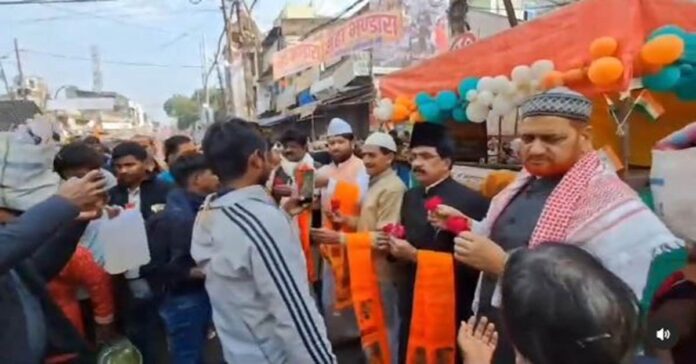
Setting a rare example in communal harmony, the Muslim community in Prayagraj has extended a helping hand to the pilgrims stranded in the city after the stampede in the ongoing Maha Kumbh on Mauni Amavasya, in which more than 30 persons have died.

Muslims have opened their homes, mosques, dargahs and public spaces to accommodate the Hindu pilgrims needing help and depicted the laudable Islamic spirit of compassion during the crisis.

The tragedy of stampede occurred in Prayagraj in the night intervening January 28 and 29 when the pilgrims rushed to participate in the ritual of bathing and taking a dip in the confluence of Ganga and Yamuna rivers during the night. The people sleeping and sitting on the ground near the rivers were trampled by huge swells of devotees coming towards them in the darkness.

Significantly, the selfless service from the Muslim community for the Hindu pilgrims has come when they were facing a financial and social boycott during the Maha Kumbh. Muslims have been kept away from the Kumbh festivities with an open boycott and banned from taking up the event-related employment works. Despite this, the local Muslims have disregarded their exclusion and are providing food, shelter, and medical aid to stranded pilgrims.

Reports emerging from Prayagraj say that Muslims have actively come forward to the rescue of pilgrims caught in distress. They are offering food, water, clothes, medicine, and even shelter to the devotees, displaying an unshaken commitment to humanitarian values. Videos and pictures circulating on social media depict local Muslims distributing essential supplies and aiding the pilgrims, defying efforts to sow division.

The Muslim community in Prayagraj, earlier known as Allahabad, has historically played an active role in Kumbh Mela, which has benefited both Hindus and Muslims socially and economically. The event had long provided business opportunities for Muslim shopkeepers, transporters and labourers. This year, calls for their boycott from certain religious figures led to their exclusion from trade and services at the event. Even Muslim shopkeepers who attempted to operate discreetly were targeted and harassed.

Despite being told that they were not welcome in the Maha Kumbh and the labour force being denied work, Muslims have not turned their back on the Hindus in the hour of need. Following the stampede, several mosques, including Jama Masjid at Chowk and another in Khuldabad, were opened to house distressed pilgrims.

Moreover, Muslim volunteers have set up food stalls and medical aid stations to assist the injured and hungry. A community-run ‘bhandara’ (free meal service) has been organised, serving hundreds of devotees irrespective of religion. Even the Muslim medical professionals have also stepped forward to help, and a local physician, Dr. Naz Fatima, has turned her clinic into a relief centre, offering free treatment to injured devotees.

The stampede in Maha Kumbh led to a complete collapse of arrangements made for the devotees and their entry to the venue was stopped. Whoever had reached at a nearby point, he was stopped there. In such a situation, Muslims living in more than 10 areas in the city showed a big heart and opened the doors of mosques, shrines, dargahs, imambaras and their homes for 25,000 to 26,000 devotees. Arrangements were made for people to stay and food, water and tea were provided to them, while those who needed medicines were taken care of.

A news report carried in ‘Dainik Bhaskar’ newspaper stated that ‘bhandaras’ were organised for pilgrims in more than 10 areas. On the night of January 28, there were 8 crore people in the 10 km area of the Maha Kumbh. After the stampede, the highways got jammed and all the vehicles carrying the pilgrims came to a halt. A large number of people had to spend the night on the roads.

The devotees had to spend the night of January 29 also on the road. In this situation, the Muslims accommodated the Hindu pilgrims in Khuldabad Sabzi Mandi Mosque, Bada Tazia Imambara, Himmatganj Dargah and Chowk Mosque, 10 km away from the fair area. Some pictures and videos of this were also circulated on the social media platforms.

People of the Muslim-dominated localities, such as Nakhas Kohna, Roshanbagh, Himmatganj, Khuldabad, Ranimandi and Shahganj, accommodated the devotees in their homes. A local resident, Irshad, said: “They were our guests, we took full care of them.” Bahadur Ganj locality’s Mohammed Irshad said: “After the stampede that night, we realised that a large number of people were in trouble. Where would they go in the cold night? After this, mosques and dargahs were opened. Many people were given shelter in Muslim homes. Arrangements for their stay and food were made. Later, bhandaras were organized. They were guests of Prayagraj; we tried to take full care of them.”

The news report in ‘Dainik Bhaskar’ quoted a Muslim man, Masood Khan, as saying: “Muslims were following their religion by helping out the people in need.” Masood Ahmed, a teacher from Chowk area, said: “Such a big event is being organised in Prayagraj. That night when it was time to help, we all worked together. Food stalls were set up. Muslims came forward to help as a gesture of humanity.”

“Our aim was that the people who have come here should not face any problem of accommodation. There should not be any problem of food and water. This is our responsibility. The elderly people walking on foot were helped, they were taken to the places for stay. We just wanted that whoever goes back from here should take the message of humanity with them,” Masood Ahmed said.

Another local resident, Afsar Mahmood, living in Khuldabad area, said: “While earlier it was announced that Muslims should not enter Maha Kumbh, ultimately the fair itself came to the Muslim localities.” Moinuddin of Chowk area said: “The Muslims of Prayagraj only wanted that whoever is coming here should not spend the night under the open sky, so everyone opened the doors of their homes. This is an example of harmony.”

Mohammed Azam of Civil Lines area said: “Food was arranged at night in front of Hari Masjid. People were suffering from cold that night. As many blankets and quilts as possible were made available. We only wanted that they should not face any problem. Arrangements for their food were also made at night.”

The spirit of mutual support was not limited to providing shelter, as the arrangements were made for food, water, and medicines for those in need. Hundreds of blankets were distributed to protect people from the cold. Local Muslim organisations, social activists, and common citizens actively participated in this initiative, making the relief efforts even more effective.

The assistance provided by Muslims in Prayagraj was not just a humanitarian aid, but it also sent a strong message of communal harmony, unity, and human values to the society. The devotees not only appreciated this generosity but also described it as a symbol of India’s rich composite culture, where different communities consider each other’s hardships as their own responsibility.

source: http://www.indiatomorrow.net / India Tomorrow.net / Home> News / by Correspondent India Tomorrow / February 02nd, 2025