Maj Gen SM Hasnain’s contributions to the Indian Army, including his leadership of the 4 Garhwal Rifles, were remembered with reverence.
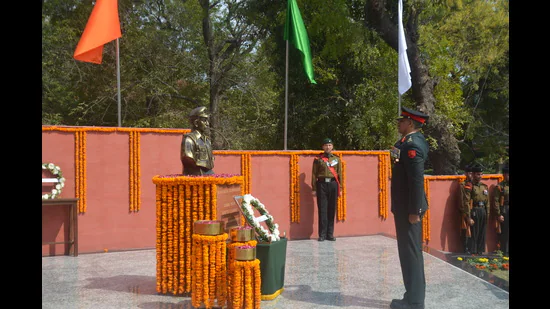
Tributes being paid to Maj Gen Syed Mahdi Hasnain on Sunday. (HT)
A solemn remembrance and memorial service was conducted at Prayagraj Military station to honour the legacy of Maj Gen Syed Mahdi Hasnain here on Sunday. The service paid tribute to his distinguished military career and unwavering commitment to duty.
Maj Gen SM Hasnain’s contributions to the Indian Army, including his leadership of the 4 Garhwal Rifles, were remembered with reverence, said Group Captain Samir Gangakhedkar, public relations officer (defence), Prayagraj region.
The speakers reflected on his valour during WW-II and his role in safeguarding refugees during the Partition. In his sterling military career Maj Gen SM Hasnain commanded a Mountain and an Infantry Brigade, an illustrations Mountain Division and was the first Inspector of Infantry at Army Headquarters. The service served as a reminder of Maj Gen SM Hasnain’s enduring impact on the nation, the Indian Army and Prayagraj town where he lived his post service life, he added.
Lt Gen NS Raja Subramani presided over the function as the Colonel of the Regiment of the Garhwal Rifles and Garhwal Scouts and paid his tributes to the legend.
Lt Gen (Retd) Syed Ata Hasnain, son of Maj Gen SM Hasnain, also served the Indian Army in his father’s regiment and went on to command the prestigious 15 Corps. Presently, he continues his service to the nation as member of the National Disaster Management Authority.
source: http://www.hindustantimes.com / Hindustan Times / Home / by HT Correspondent, Prayagraj / February 26th, 2024
Mehndauri Village (Chail Pargana,Allahabad District), UTTAR PRADESH :
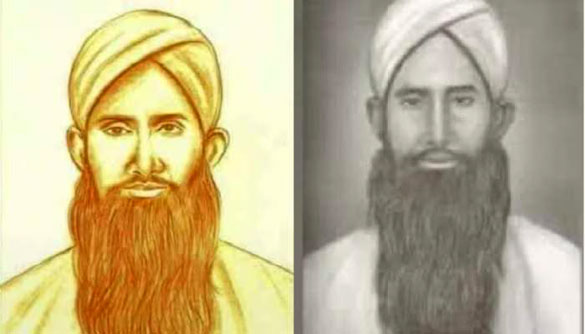
Maulvi Liaquat Ali Qadri, a religious scholar, led the 1857 Allahabad rebellion, uniting communities against British oppression. Declaring jihad, he fought for India’s freedom, faced exile, and died in Kala Pani in 1892, leaving a lasting legacy.
Main Points:
1. Maulvi Liaquat Ali Qadri (1817–1892), born in Allahabad, was a revered religious scholar and freedom fighter.
2. He led the 1857 rebellion in Allahabad, uniting Hindus and Muslims against British rule.
3. Declared jihad, organized public gatherings, and hoisted Bahadur Shah Zafar’s flag.
4. Fought British oppression, faced exile, and continued guerrilla warfare.
5. Sentenced to life in Kala Pani; died in 1892.
———-
Maulvi Liaquat Ali Qadri was born on October 15, 1817, in the village of Mehndauri, Chail Pargana, Allahabad district, to Syed Meer Ali and Aamna Bibi. He was a revered religious figure of his time, embodying the spirit of both spiritual and national liberation. During that era, Islamic scholars viewed the country’s independence and religious freedom as inseparable causes. This conviction led a significant number of religious scholars to participate in the Indian Rebellion of 1857, many of whom attained martyrdom in their fight for freedom.
Maulvi Liaquat Ali was a simple man deeply connected to the struggles of the common people in his region. He was acutely aware of the hardships faced by the masses under British colonial rule. Alongside his profound religious knowledge, he harbored an intense passion for liberating his country from the shackles of foreign oppression. Leading a life of piety and integrity, he consistently advised others to uphold honesty, empathy, and mutual support in times of distress. He considered it the duty of every Indian to strive for the nation’s independence.
The Rebellion in Allahabad
Following widespread looting and arson, Allahabad fell under the control of the rebel Indian forces. Maulvi Liaquat Ali, accompanied by a large number of his followers, threw himself into the struggle against British rule. Seizing the opportunity, he declared jihad against the British, galvanizing thousands to join the fight. Under his leadership, the people of Allahabad (now Prayagraj) united to drive the British out of the city. Maulvi Liaquat Ali delivered a powerful message of unity to both Hindus and Muslims from a public platform in Allahabad. In his sermon, he emphasized, “We are all one. Together, we must confront the foreigners.” With this spirit of unity, he proclaimed the establishment of an independent government in the region and hoisted the flag of Bahadur Shah Zafar, the last Mughal emperor.
The British were not only plundering India’s wealth but also subjecting its people to relentless oppression. Beyond economic exploitation, Christian missionaries, backed by colonial authorities, were attacking India’s religious traditions and sacred texts. They propagated Christianity while attempting to demean Hindu and Muslim scriptures.
Unable to tolerate these affronts, Maulvi Liaquat Ali organized a massive public gathering on June 7, 1857, at Khusro Bagh in Allahabad. The event drew a large number of patriotic Hindus and Muslims. In a fiery speech, he condemned the British for their atrocities, including looting, arson, and desecration of holy texts. Declaring that such oppressors could not be tolerated, he called for jihad against the “sinners.” His impassioned address stirred the hearts of the audience, who were already exasperated by the British’s sacrilegious actions.
Under his leadership, a week-long uprising against the British began on June 9, 1857. Rebels set fire to British bungalows, inflicted casualties, and damaged government property. The widespread unrest created panic among the colonial authorities. However, the British retaliated with heavy shelling and arson, driven by a desire for vengeance. Entire settlements were razed, forcing residents to flee their homes. Maulvi Liaquat Ali, too, was compelled to leave Allahabad and sought refuge in Kanpur.
A Champion of Communal Harmony
Maulvi Liaquat Ali was a firm advocate of Hindu-Muslim unity and cooperation, despite his opposition to Christian missionaries, whose actions, fuelled by colonial arrogance, insulted Indian religions and scriptures. He was among the few leaders who demonstrated through their revolutionary actions that they were fully aware of the socio-political realities of their time. The British, he believed, were not only exploiting India’s resources but also undermining its social fabric. He tirelessly worked to counter their divisive tactics, raising his voice for the dignity of women, religious communities, and the upper classes, earning widespread admiration for his efforts.
Despite his religious persona, Maulvi Liaquat Ali was always ready to take risks for the sake of his country and faith. He never feared for his life or shied away from potential losses. His revolutionary activities were driven by a singular goal: to free India from British rule and rid the sacred land of their oppressive presence. When a Muslim shrine, Bakhtiar Bakhtiyar, and the Telegraph Band were seized by the British, Muslim youths fought to protect them, resulting in losses on both sides. Clashes between Indian rebels and British forces continued across various regions, making it increasingly difficult for the British to maintain their grip on India.
A Lifelong Struggle for Freedom
Maulvi Liaquat Ali swore to dedicate his life to the cause of India’s independence. After leaving Allahabad, he moved to Muzaffarnagar, a stronghold of the freedom struggle, where he joined other revolutionaries. His authority was such that no orders were issued without his approval. Whenever British forces attempted to suppress the rebellion, Maulvi Liaquat Ali, alongside another freedom fighter, Azimullah, embarked on a perilous journey on foot toward Gujarat. Despite facing numerous hardships along the way, they reached their destination and launched guerrilla warfare against the British. For years, their tactics kept the colonial administration on edge.
According to Rakesh Verma, technical assistant at the Regional Archives, “Administrative records written in Urdu titled Naksha Bagiyan Kotwali Allahabad, listing police constables who forcibly took their salaries for May and June 1857 and participated in the revolt, including Hanuman Prasad, Imdad Ali, Ashraf Ali, etc. were hung by Major Henry Court on July 14, 1857,” (From the HT)
The British resorted to various conspiracies to capture him, but Maulvi Liaquat Ali’s stature among freedom fighters only grew. He continued to plan large- and small-scale operations against the British, opening new fronts in the fight for independence.
Imprisonment and Legacy
Ultimately, the Allahabad court sentenced Maulvi Liaquat Ali to life imprisonment in the Andaman Islands, infamously known as “Kala Pani.” Enduring the harsh conditions of imprisonment, this brave son of India passed away on May 17, 1892, bidding farewell to his beloved homeland and the world.
Maulvi Liaquat Ali Qadri’s sacrifices for India’s freedom struggle remain an enduring legacy. His contributions must be remembered and celebrated as an inspiration for future generations, reflecting the indomitable spirit of a man who fought tirelessly for his country’s liberation.
The acclaimed Urdu and Hindi writer from Allahabad exposes how poverty forced him to ghostwrite 1,065 novels.
New Delhi :
In the decades before television became a household staple in India and Pakistan, millions turned to novels filled with mystery, romance, and detective tales for entertainment.
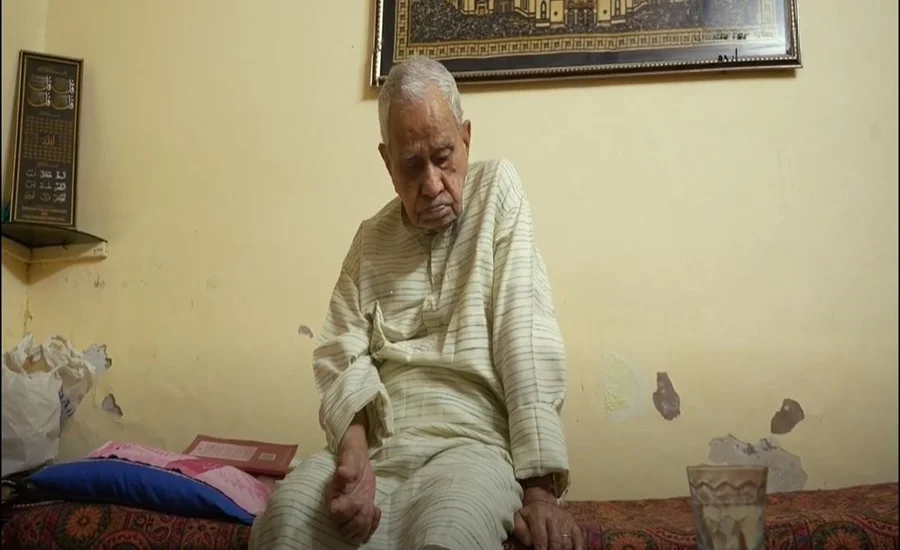
One Muslim writer’s story reveals the untold hardship and exploitation faced by many like him during that time. Mujawar Hussain, a prolific Urdu and Hindi author from Allahabad, has exposed the difficult truth behind the 1,065 novels he ghostwrote for Hindu publishers, many under pseudonyms.
Now in his elderly years but still sharp, Hussain shared his painful journey of writing stories for survival rather than pride. “The number of such books combined is 1,065,” he told Clarion India recently. “But the books I consider a source of pride are my research paper, Elements of National Unity in Urdu Poetry, and a collection of my religious essays,” he said.
Hussain’s writing career began in the 1950s when major publishers churned out fiction in bulk to satisfy growing demand. Muslim writers like him were often paid meagre sums to produce thick novels under pseudonyms for Hindu authors and publishers, including names such as Janardan Prasad Jaiswal, Shambhu Prasad Jain, Ashok BA, and the mysterious “Neqab Posh Bedi.” Hussain estimates he wrote 30 to 32 novels under Bedi’s name alone.
“Some of them were non-Muslims,” Hussain said, naming former students turned authors. “I wrote in their names because I had to. The money kept my family alive.”
His words underline the economic hardship faced by many Indian Muslims, forced to work behind the scenes without recognition while Hindu publishers reaped profits. Hussain recalls the pressure of poverty pushing him to write constantly. “I remember those days when I’d enter the house, and my wife would tell me food and drinks would last until the next evening. I’d sit down with a pen, write, and hand over the manuscript to the publisher. I’d take money — 30 rupees at first, then 60, then 100, and finally up to 2,500 rupees. With that, household expenses were met.”
Hussain’s experience highlights the sidelining of Muslim talent in the Indian literary scene, where Hindu publishers held most of the power. “That forced me,” he said. “The memory of that time is painful, and the work was painful. After that, I put down the pen.”
He also revealed working for Nikhat Publications, famous for publishing the works of legendary Urdu detective novelist Ibne Safi. When Ibne Safi’s manuscripts stopped coming to India due to political tensions between India and Pakistan, Hussain was asked to fill the void by writing novels under his name. “When I realised the institution was going to close, I started writing under his name,” he said. “I wrote very few novels in Urdu under his name — half partridge, half quail, meaning some was his, some I mixed.”
In Hindi, Hussain wrote extensively in Ibne Safi’s style, including the novel The Barrister’s Wife, though he remains uneasy about these works. “Even now, I don’t feel good about them,” he admitted. “I didn’t consider them a source of pride.”
Despite his difficult path, Hussain’s academic achievements stand tall. He earned an MA in Urdu in 1958 with two gold medals, a silver medal, a Victoria Gold Medal, and another prize he cannot recall. “No one has ever scored higher than me,” he said proudly. Yet this success did not shield him from the economic hardship that forced him into ghostwriting.
Dr Ayesha Khan, a literary historian specialising in the pre-television literary world, explains that Hussain’s story reflects a larger pattern of exploitation faced by Muslim writers. “Many Muslim authors like Mujawar Hussain were sidelined, forced to write under pseudonyms or for others to survive,” she said. “Hindu publishers often held the power, dictating terms and profiting from their work.”
Hussain’s reflections carry a sense of regret. Quoting a poem, he said, “Remembering the past is a punishment.” He sees much of his commercial writing as a compromise born of necessity, not passion. “Due to the compulsion of circumstances, I wrote some books that I do not consider a source of pride,” he said. “I was writing incessantly.”
Today, Hussain hopes that sharing his story will reveal the struggles of Muslim writers who toiled behind the scenes while others took credit. “I wrote for survival,” he said quietly. “But I want people to know the real story behind those books.”
source: http://www.clarionindia.net / Clarion India / Home> Editor’s Pick> Featured> India / by Mohammed Bin Ismail / May 26th, 2025
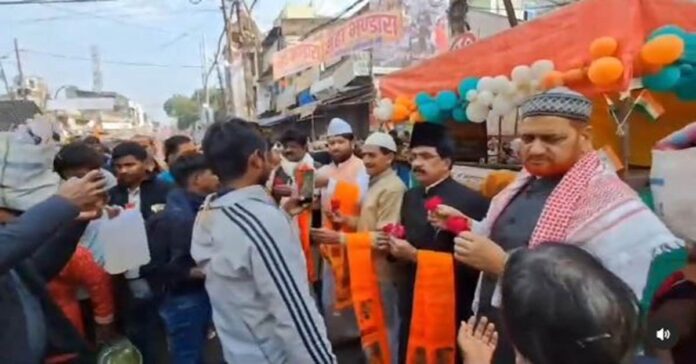
Setting a rare example in communal harmony, the Muslim community in Prayagraj has extended a helping hand to the pilgrims stranded in the city after the stampede in the ongoing Maha Kumbh on Mauni Amavasya, in which more than 30 persons have died.
Muslims have opened their homes, mosques, dargahs and public spaces to accommodate the Hindu pilgrims needing help and depicted the laudable Islamic spirit of compassion during the crisis.
The tragedy of stampede occurred in Prayagraj in the night intervening January 28 and 29 when the pilgrims rushed to participate in the ritual of bathing and taking a dip in the confluence of Ganga and Yamuna rivers during the night. The people sleeping and sitting on the ground near the rivers were trampled by huge swells of devotees coming towards them in the darkness.
Significantly, the selfless service from the Muslim community for the Hindu pilgrims has come when they were facing a financial and social boycott during the Maha Kumbh. Muslims have been kept away from the Kumbh festivities with an open boycott and banned from taking up the event-related employment works. Despite this, the local Muslims have disregarded their exclusion and are providing food, shelter, and medical aid to stranded pilgrims.
Reports emerging from Prayagraj say that Muslims have actively come forward to the rescue of pilgrims caught in distress. They are offering food, water, clothes, medicine, and even shelter to the devotees, displaying an unshaken commitment to humanitarian values. Videos and pictures circulating on social media depict local Muslims distributing essential supplies and aiding the pilgrims, defying efforts to sow division.
The Muslim community in Prayagraj, earlier known as Allahabad, has historically played an active role in Kumbh Mela, which has benefited both Hindus and Muslims socially and economically. The event had long provided business opportunities for Muslim shopkeepers, transporters and labourers. This year, calls for their boycott from certain religious figures led to their exclusion from trade and services at the event. Even Muslim shopkeepers who attempted to operate discreetly were targeted and harassed.
Despite being told that they were not welcome in the Maha Kumbh and the labour force being denied work, Muslims have not turned their back on the Hindus in the hour of need. Following the stampede, several mosques, including Jama Masjid at Chowk and another in Khuldabad, were opened to house distressed pilgrims.
Moreover, Muslim volunteers have set up food stalls and medical aid stations to assist the injured and hungry. A community-run ‘bhandara’ (free meal service) has been organised, serving hundreds of devotees irrespective of religion. Even the Muslim medical professionals have also stepped forward to help, and a local physician, Dr. Naz Fatima, has turned her clinic into a relief centre, offering free treatment to injured devotees.
The stampede in Maha Kumbh led to a complete collapse of arrangements made for the devotees and their entry to the venue was stopped. Whoever had reached at a nearby point, he was stopped there. In such a situation, Muslims living in more than 10 areas in the city showed a big heart and opened the doors of mosques, shrines, dargahs, imambaras and their homes for 25,000 to 26,000 devotees. Arrangements were made for people to stay and food, water and tea were provided to them, while those who needed medicines were taken care of.
A news report carried in ‘Dainik Bhaskar’ newspaper stated that ‘bhandaras’ were organised for pilgrims in more than 10 areas. On the night of January 28, there were 8 crore people in the 10 km area of the Maha Kumbh. After the stampede, the highways got jammed and all the vehicles carrying the pilgrims came to a halt. A large number of people had to spend the night on the roads.
The devotees had to spend the night of January 29 also on the road. In this situation, the Muslims accommodated the Hindu pilgrims in Khuldabad Sabzi Mandi Mosque, Bada Tazia Imambara, Himmatganj Dargah and Chowk Mosque, 10 km away from the fair area. Some pictures and videos of this were also circulated on the social media platforms.
People of the Muslim-dominated localities, such as Nakhas Kohna, Roshanbagh, Himmatganj, Khuldabad, Ranimandi and Shahganj, accommodated the devotees in their homes. A local resident, Irshad, said: “They were our guests, we took full care of them.” Bahadur Ganj locality’s Mohammed Irshad said: “After the stampede that night, we realised that a large number of people were in trouble. Where would they go in the cold night? After this, mosques and dargahs were opened. Many people were given shelter in Muslim homes. Arrangements for their stay and food were made. Later, bhandaras were organized. They were guests of Prayagraj; we tried to take full care of them.”
The news report in ‘Dainik Bhaskar’ quoted a Muslim man, Masood Khan, as saying: “Muslims were following their religion by helping out the people in need.” Masood Ahmed, a teacher from Chowk area, said: “Such a big event is being organised in Prayagraj. That night when it was time to help, we all worked together. Food stalls were set up. Muslims came forward to help as a gesture of humanity.”
“Our aim was that the people who have come here should not face any problem of accommodation. There should not be any problem of food and water. This is our responsibility. The elderly people walking on foot were helped, they were taken to the places for stay. We just wanted that whoever goes back from here should take the message of humanity with them,” Masood Ahmed said.
Another local resident, Afsar Mahmood, living in Khuldabad area, said: “While earlier it was announced that Muslims should not enter Maha Kumbh, ultimately the fair itself came to the Muslim localities.” Moinuddin of Chowk area said: “The Muslims of Prayagraj only wanted that whoever is coming here should not spend the night under the open sky, so everyone opened the doors of their homes. This is an example of harmony.”
Mohammed Azam of Civil Lines area said: “Food was arranged at night in front of Hari Masjid. People were suffering from cold that night. As many blankets and quilts as possible were made available. We only wanted that they should not face any problem. Arrangements for their food were also made at night.”
The spirit of mutual support was not limited to providing shelter, as the arrangements were made for food, water, and medicines for those in need. Hundreds of blankets were distributed to protect people from the cold. Local Muslim organisations, social activists, and common citizens actively participated in this initiative, making the relief efforts even more effective.
The assistance provided by Muslims in Prayagraj was not just a humanitarian aid, but it also sent a strong message of communal harmony, unity, and human values to the society. The devotees not only appreciated this generosity but also described it as a symbol of India’s rich composite culture, where different communities consider each other’s hardships as their own responsibility.
source: http://www.indiatomorrow.net / India Tomorrow.net / Home> News / by Correspondent India Tomorrow / February 02nd, 2025
Khushboo has been practising different forms of martial arts for about 11 years.
Leaving her home and family behind in Uttar Pradesh, 23-year-old Khushboo Nishad secretly travelled to Hyderabad two years ago under the guise of a job transfer to become a mixed martial artist. Within a short period of time, she earned a silver medal at a national-level amateur Mixed Martial Arts (MMA) tournament.
A native of Allahabad, Khushboo has been practising different forms of martial arts for about 11 years now. She started with Judo at the age of 12, moving on to master the South Korean art of Taekwondo for another three years. Khusboo’s father taught her Karate.
Mastering different styles of fighting consequently developed her interest in the fastest-growing combat sport- Mixed Martial Arts. Khushboo said she tried learning MMA in UP, however,”I couldn’t find the level of training I was looking for,” she told Siasat.com.
She started her own research, some ‘asking around,’ and concluded that the best training she could find was in Hyderabad under the guidance of Sheikh Khalid. Moreover, Khalid taught MMA in a traditional form.
Khusboo never told her family about her dream to become a mixed martial artist. “I worked for Radisson in Ludhiana for eight months in order to save money and persue my goals,” she added.
Knowing very well her family would not allow her to go to Hyderabad, Khusboo told them she was transferred to the city of pearls by her company.
Narrating an incident that led to this decision Khushboo said, “One day my father saw a video where I was punched on my face by my coach. Disturbed, he immediately called me back.”
Khusboo was studying at Amity University, Lucknow at that time.
To keep her father happy, Khusboo studied hard and secured a top rank in her college. However, she still nourished the dream of becoming a mixed martial artist.
“I am extremely grateful to the person who recommended Sheikh Khalid to me. I have learned so many new things here,” she concludes adding that she has fallen in love with the city.
source: http://www.siasat.com / The Siasat Daily / Home> News> Hyderabad / by Usama Hazari / July 28th, 2022
Allahabad, UTTAR PRADESH / Kaloor , Kochi, KERALA :
Ashad Hasim, a student of Darul Uloom VHSS at Kaloor, talks to TNIE about how he started improving his scores in Malayalam despite speaking only Hindi.
Kerala SSLC topper Ashad Hasim with sister sister Falak Bano, who scored A+ in five subjects.
Kochi :
Hard work and perseverance paid for a 16-year-old boy who triumphed over the language barrier to score A+ in all subjects in SSLC examinations. Ashad Hasim, a student of Darul Uloom VHSS at Kaloor, hails from a family that migrated to Kerala from Uttar Pradesh seeking better education prospects for the children. And their gamble paid off.
“My parents, Mohammed Hasim and Mahjabeen Bano, came to Kerala from Allahabad in Uttar Pradesh after I was born. They wanted to come to a place that would provide us with ample opportunity to study and achieve our dreams,” said Ashad who wants to be a doctor.
“My achievement wouldn’t have been possible without the help provided by my teachers. Right from the start of my educational journey, my teachers have been my anchor. They went all out to help me tide over the language barrier that made it very difficult for me to learn Malayalam,” said Ashad who speaks only Hindi at home. “In the junior classes, I used to score very badly in Malayalam though my marks in all other subjects were 38-39 out of 40,” he said.
“I wanted to overcome this obstacle and decided to concentrate on scoring better in Malayalam. Gradually, my scores improved and for my model examinations in Class X, I was able to score 38 and 37 out of 40,” he added.
Ashad, whose father Mohammed earns a living as a butcher, said, “When it comes to studies, my parents never held me back. They have been encouraging both me and my sister to achieve our goals.” Ashad’s sister Falak Bano too cleared SSLC exams but couldn’t bag the perfect score of full A+. “She scored A+ in five subjects,” said Ashad who will opt for the science stream in Plus-One.
source: http://www.newindianexpress.com / The New Indian Express / Home> States> Kerala / by Anu Kuruvilla, Express News Service / June 16th, 2022