Tag Archives: Anwar Ali

How KA Abbas gave Amitabh Bachchan his big break in ‘Saat Hindustani’

Panipat (Undivided India), HARYANA / Mumbai, MAHARASHTRA :
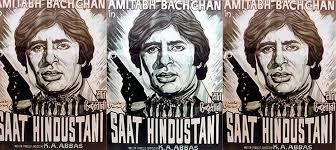
Multi-hyphenate talent Khwaja Ahmed Abbas worked in Urdu, Hindi and English and across writing mediums. Abbas, who died in 1987 at the age of 71, wrote social realist screenplays for Raj Kapoor and V Shantaram, directed films, published short stories and plays,and contributed a long-running weekly newspaper column. Among the best-known films he directed are Neecha Nagar, Sheharaur Sapna and Saat Hindustani. Set in Goa and tracing the efforts of seven revolutionaries to free the state from Portuguese rule, Saat Hindustani marks the debut of Amitabh Bachchan. An essay from the anthology Bread Beauty Revolution, edited by Iffat Fatima and Syeda Hameed, relates Abbas’s encounters with the “tall young man” and future screen icon. Bread Beauty Revolution includes writings from Abbas’s memoir I Am Not An Island: An Experiment in Autobiography as well as essays, stories,poems, photographs and columns.

The story of Saat Hindustani came out of the Goa struggle reminiscences of my assistant, Madhukar, who would often regale us with the adventures he had while trekking up with the non-violent commandos to hoist the tricolour on every police station they came across…

I was so excited when I finished the screenplay that I telephoned all my friends and informed all my assistants, including Madhukar, to come and hear it in my fourth floor office on the very next day. That was a ritual which they never missed and I would get their suggestions for casting the film.

I wanted to prove by my casting that there was no particular Hindu or Muslim, Tamilian, Maharashtrian or Bengali ethnic type. To begin with, I would transform the smart and sophisticated and versatile Jalal Agha into the Maharashtrian powada singer. Even Jalal was shocked to hear this. But I reassured him that, with the proper make-up and get-up, nobody would recognize him except as a rural Maharashtrian folk singer. Madhukar, who hails from Meerut, would be a Tamilian; Sharma (Brahmin by caste) would also undergo a similar transformation; and Utpal Dutt, the cigar-chewing admiral,would be the tractor-driving Punjabi farmer. So far the casting was clear in mymind. On one of my visits to Kerala I had met Madhu, the handsome hero of the Malayalam screen, and he had approached me and expressed his desire to work in a Hindi film with me. I would make him the sensitive Bengali; I wouldn’t have to work much on his Bengali accent for he had lived with a Bengali family. Now only the Hindi and Urdu fanatics were left. Jalal one day brought with him his friend Anwar Ali (brother of the comedian Mehmood), in whose eyes I saw the Jana Sanghi fanaticism. So I decided to make him the Swayam Sevak who hates Urdu and speaks jaw-breaking Hindi. That left one Indian, the Muslim Urdufanatic. Since I wanted these boys to be of different ages and different heights, the one vacancy left was for a tall and handsome man. He had to be thin, also corresponding to the thin image of my friend, the late Asrarul Haque “Majaz”.

One day someone brought a snapshot of a tall young man and I thought that the boy was in Bombay. I said, “Let me see him in person.” “He will be here day after tomorrow evening.” Again, presuming he was in Bombay, I thought he must be working somewhere and wouldn’t be free till the evening. On the third day, punctually at 6 pm, a tall young man arrived who looked taller because of the churidar pajama and Jawahar jacket that he was wearing. This young man would one day be known as Amitabh Bachchan, the heart-throb of millions. But I did not know his name. Roughly, the following dialogue took place between us:

“Sit down, please. Your name.”

“Amitabh.” (Not Bachchan.)

It was an unusual name — so I asked, “What does it mean?”

“The sun. It’s also one of the synonyms for the Gautama Buddha.”

“Education?”

“B.A. from Delhi University.”

“Have you worked in films before?”

“No one has taken me so far.”

“Who were they?”

He mentioned very prominent names.

“What did they find wrong with you?” The boy spoke with frankness. “They all said I was too tall for their heroines.”

“Well, we have no such trouble. In a way we have no heroine in our film. Even if we had, that wouldn’t prevent me from taking you.”

“Taking me? Are you really going to take me? Without even a test?”

“That depends. First I must tell you the story. Then I must tell you your role and see if you will be enthusiastic about playing it. Then I shall tell you what we can afford to pay you. Only then, if you agree, shall we sign the contract.”

I read him out the complete story and saw his face become alive with interest. I asked him which role he would like to play. He told me the two which particularly impressed him. The role of the Punjabi, and the role of the Muslim. I told him he was perhaps a Punjabi, and that made him unfit to play that role. He asked me why. I gave him the reason, the reason for having a scrambled cast. The idea appealed to him greatly. He said, “I think, I know what you mean. Then I would like to play the Muslim role, specially because he is under a cloud of suspicion. And only at the end the suspicions are removed and he is proved a patriot.” Then I told him we could pay him no more than five thousand rupees,which was the standard figure for all the roles.

He seemed a little hesitant, and I asked him, “Are you earning more than that?”

“I was,” he said.

I asked him what he meant.

He said that he was getting about sixteen hundred a month in a firm in Calcutta.

“I resigned the job and came over.”

I was astonished. “You mean to say that you resigned a job of sixteen hundred rupees a month, just on the chance of getting this role! Suppose we can’t give the role to you?”

He said, “One has to take such chances” with such conviction that I said, “The role is yours.”

Then I called my secretary, Abdul Rehman, to dictate the contract. I asked the tall young man for his name and address.

“Amitabh—” after some hesitation, “Amitabh Bachchan, son of Dr H.R. Bachchan.”

“Stop,” I said. “This contract cannot be signed until I telegraph and get your father’s consent. He is a colleague of mine on the Sovietland Nehru Award Committee. I wouldn’t like to have a misunderstanding with him. I am afraid you will have to wait for two days more.”

“You can ask my Dad, but frankly, do I look like a runaway?”

I told him that runaways don’t have any particular look. So I dictated, instead of the agreement, a telegram to Dr Bachchan in New Delhi and asked him if he was willing to let his son become an actor. Two days later a telegram came reading “No objection where you are concerned.” This is the whole story about how Amitabh Bachchan came into films.

Excerpted with permission from Bread Beauty Revolution, edited by Iffat Fatima and Syeda Saiyidain Hameed, Khwaja Ahmed Abbas Memorial Trust and Tulika Books.

source: http://www.scroll.in / Scroll.in / Home> Book Excerpt / by Khwaja Ahmed Abbas / November 14th, 2015
M.A. Maula elected as new President of Udupi District Muslim Okkuta

Udupi, KARNATAKA :

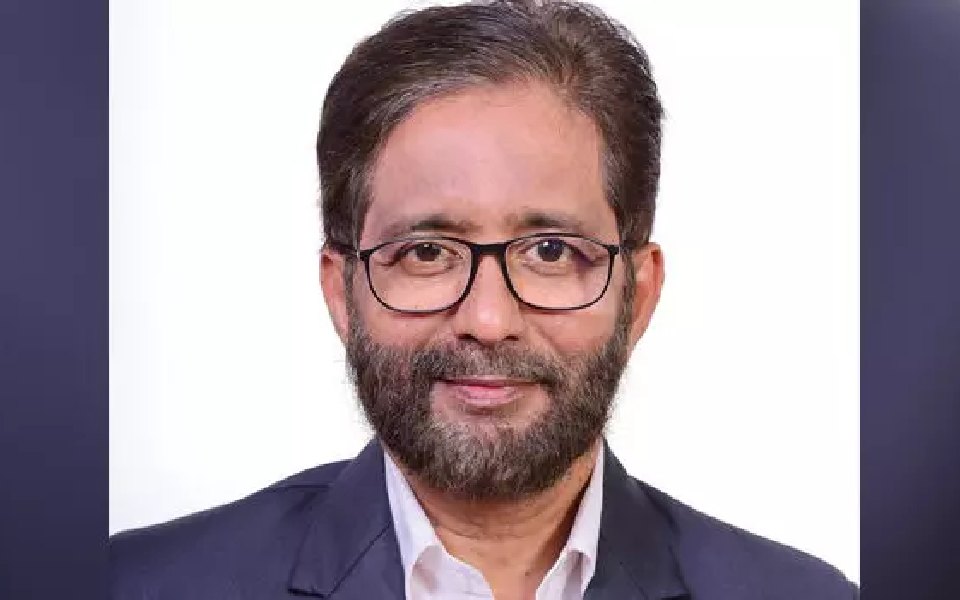
M.A. Maula

Udupi: 

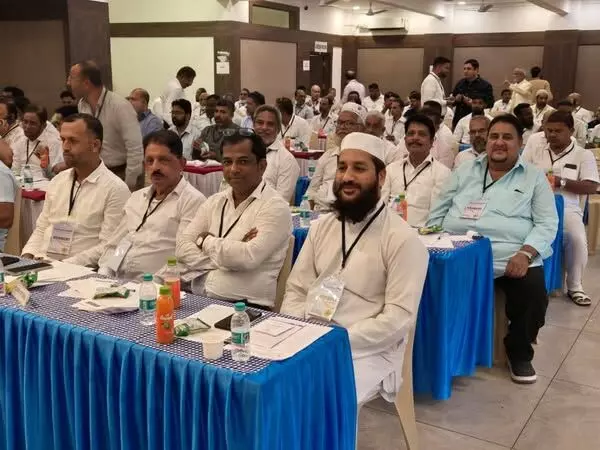
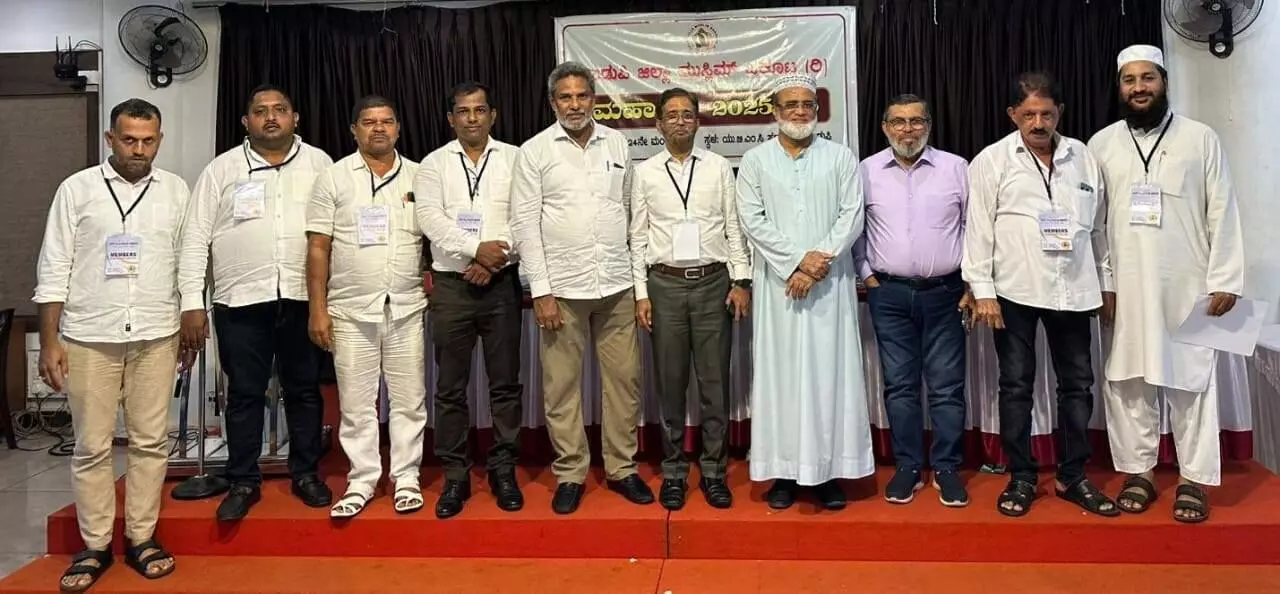
Popular businessman Muhammad Maula has been elected as the new president of the Udupi District Muslim Okkuta for the next two years. The decision was made during the 2025-26 general meeting held at the UBMC hall in Udupi.

M.A. Maula, known for his various social, educational and community activities, has previously served as the general secretary of the Okkuta twice and as the vice-president once.

Additionally, Yaseen Malpe, Idris Hoode, Iqbal Katapady, Rafiq Gangolli and Maulana Zamir Ahmed Rashadi Kandlur were elected as district committee members at the central level.

Taufiq Abdullah Navunda, Dr. Abdul Azeez Manipal, Abdurrahman Kannangar and Khalid Manipura were appointed as representatives of various organizations.

Abdul Aziz Udyawara, Yaseen Bengre, Syed Farid, Iqbal Manna, Shabbir Malpe, Irshad Nejar, V.S. Umar and Adil Hoode were elected as district committee members from Udupi taluk.

From Kundapura, Riyaz Kodi, Dastagir Kandloor, Shaban Hanglur, Mushtaq Hennabailu, and Hanif Gulwadi were elected.

Shabhi Ahmed Qazi, Nasir Ahmed Sharfuddin, Anwar Ali, Muhammad Azam Sheikh, and Muhammad Iqbal from Kaup taluk; Muhammad Ghouse, Ashfaq Ahmed, Nasir Sheikh, Muhammad Sharif Banglegudde, and Muhammad Sharif Renjala from Karkala taluk; Tajuddin Ibrahim, Ibrahim Kota, Asif Baikady, Aslam Haikadi, and Haroon Rashid Sastana from Brahmavar; and Shams Tabrez, Sheikh Fayyaz Ali, Amin Golihole, and Aftab Kiri Manjeshwara from Byndoor taluk, along with Tufail Shahabuddin, were elected.

In the subsequent district committee meeting, Ismail Hussain Katapady, Mustafa Saadi Mulur, T. M. Zafrullah Hoode, Khatib Rashid Malpe, Buaji Muhsin Byndoor, Sheikh Abdullatif Madani, Raihan Trasi, Abu Muhammad Mujawar Kundapur, Peer Saheb Adi Udupi, and B. Muhyuddin Katapady were co-opted as members of the district committee.

Maulana Abdur Raqib Nadvi, the General Secretary of Majlis-e-Islah wa Tanzeem, Bhatkal, oversaw the election process.

The general assembly commenced with the recitation of the Quran by Maulana Zamir Ahmed Rashadi, the vice-president of Udupi district Muslim Okkuta. General Secretary Muhammad Idris Hoode delivered the introductory remarks, followed by Secretary Ismail Hussain, who presented the biennial report. Treasurer Syed Farid then presented the biennial accounts to the assembly. The session concluded with the presidential address delivered by Muhammad Yasin Malpe.

source: http://www.english.varthabharati.in / Vartha Bharati / Home> Karavali / by Vartha Bharati / January 01st, 2025

Veteran Actor and Mehmood Ali’s Sister Minoo Mumtaz Dies in Canada

Mumbai, MAHARASHTRA / Toronto, CANADA:

Photo Source: https://commons.wikimedia.org/wiki/File:Minu_Mumtaz.jpg

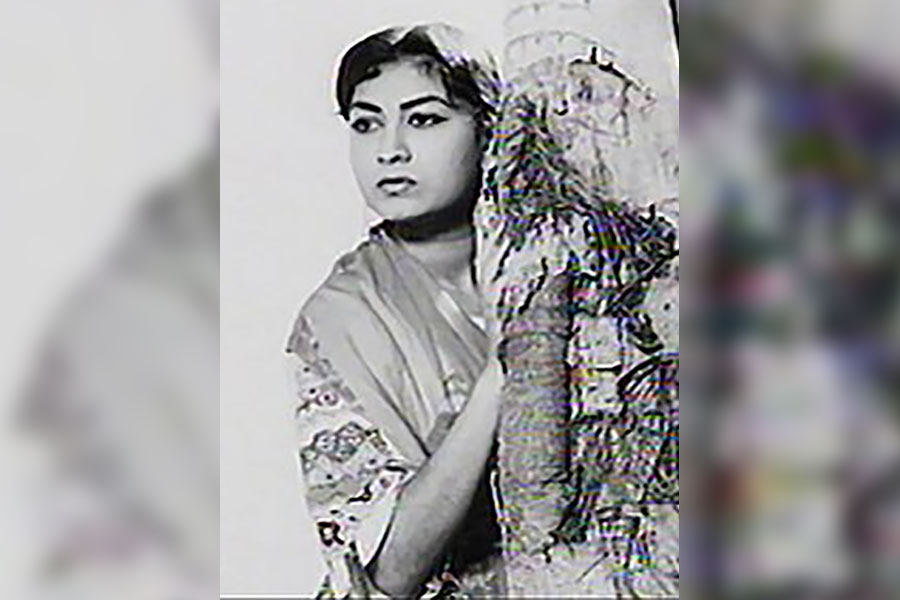
Minoo Mumtaz aka Malikunnisa Ali, the veteran Hindi actor and comedian Mehmood’s sister, died in Toronto in Canada on Saturday.

She was recently diagnosed with cancer and her health deteriorated quickly, leading to her demise, ETimes reported.

Mumtaz’s nephew Naushad, confirming the news to the publication, said, “Since she was old, 80 plus, there wasn’t much to be done. She was one of the loveliest people I had ever met”.

Her younger brother Anwar Ali, who is also part of the film industry and is now a producer, wrote, “Regret to inform that my loving sister Minoo Mumtaz, passed away (in Canada) a few minutes ago… Deep gratitude to the film fraternity, press, media, fans, friends, for decades of love and adulation showered upon her.”

Born to a family of four brothers and four sisters, Mumtaz was the daughter of Mumtaz Ali, a dancer and character artiste in Hindi films in the 1940s. She was renamed Minoo by actor Meena Kumari, her sister-in-law and Mehmood Ali’s wife.

While she started her career as a stage dancer, Mumtaz appeared in several Hindi films in the 1950s and 1960s as a dancer and character actor. She made her debut with Sakhi Hateem, and moved on to play the lead opposite Balraj Sahni in Black Cat (1959) and appeared in several Guru Dutt films including Kaagaz Ke Phool (1959), Chaudhvin Ka Chand (1960) and Sahib Bibi Aur Ghulam (1962). Other Hindi films that she appeared in include Taj MahalAlibaba, Ghoonghat, Ghar Basake Dekho, Insan Jaag Utha, Sindbad, Jahanaara, Aladin, Gazal, Dharmaputra. She also appeared in the 2002 television serial Chalo Chale Pardes.

Expressing her condolences on the late actor’s demise, author Bhawana Somaaya wrote, “#MinooMumtaz lead dancer of Hindi movies in the 50s and the 60s dies in Canada. Condolences to #AnwarAli family.”

Actor Nasirr Khan also mourned Mumtaz’s death.

Mumtaz is survived by her husband Sayyed Ali Akbar, son and three daughters who lived with her in Toronto.

Namrata Ganguly is a Correspondent at Silverscreen India, and can be reached by email at namrata@silverscreen.in

source: http://www.silverscreenindia.com / SilverScreen India / Home> Hindi> News / by Namrata Ganguly / October 23rd, 2021

Good Samaritans with an abiding passion for books

Kochi, KERALA :

Two teachers set precedent by promoting reading habit among students

Kochi :

The tale of Totto-Chan, a girl who has come to symbolise unorthodox learning, is among the best-selling books published by NBT in Malayalam. Translated by poet and film-maker Anwar Ali, the book has been flying off the shelves like no other.

But besides the big purchasers, there are dedicated souls like Ramanunni, a retired teacher from Palakkad who set up a non-profit book selling venture. He has also played a key role in popularising books among school students and teachers.

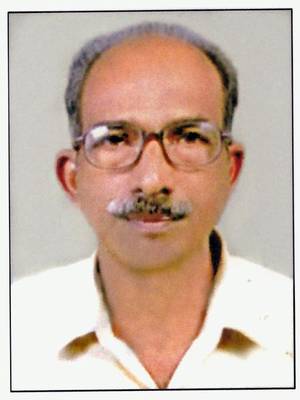
T.N. Gopalakrishnan Nair

Another compulsive book promoter is T.N. Gopalakrishnan Nair, a resident of Kallara near Koothattukulam, who retired as a government high school Malayalam teacher in 1994. “He comes with an autorickshaw to ship books for sales exhibitions,” says NBT assistant editor Rubin D’Cruz. “Considering that NBT books are heavily subsidised, leave alone profit, he ends up spending money from his own pocket in popularising these books.” Sure enough, Mr. Nair’s tryst with books began back in the 1980s during his association with the Kerala Sastra Sahitya Parishad. He saw before his eyes his son becoming a bookworm and excelling in studies and co-curricular activities alike. “This brought me closer to books big time. Subsequently, I found myself sourcing rare volumes for parents and teachers alike and began to extensively travel between Thiruvananthapuram and Kozhikode for books which were in short supply those days,” he says. Over time, Mr. Nair carved a niche for himself by single-handedly organising book exhibitions, which grew in scale with publishers, NGOs, schools, and like-minded individuals coming on board.

Recuperating from a medical condition, Mr. Nair is concerned about not being able to host a few exhibitions he had promised at schools in Kottayam this month.

“I should be active, hopefully from the second week of August, and I have committed book exhibitions at three spaces already. I have enough books with me now to hold five such. Fortunately, there is an auto driver who helps me out in transporting books,” says Mr. Nair.

source: http://www.thehindu.com / The Hindu / Home> News> Cities> Kochi / by Special Correspondent / July 09th, 2017