Tag Archives: Danish Iqbal

Dr. Hussaini founder chancellor of Khaja Bandanawaz University conferred with “Mohsin-E-Millat Award”

Kalaburagi, KARNATAKA :
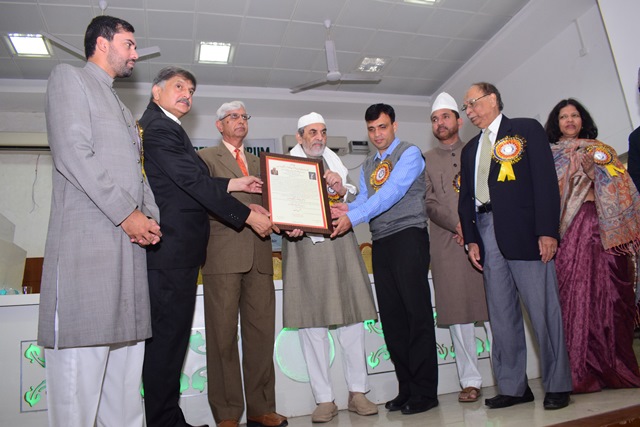
Mohsin E Millat Award being presented to Dr. Syed Shah Khusro Hussaini by Prof. Shakeel Samdani

Aligarh :  

Dr. Syed Shah Khusro Hussaini, Founder and Chancellor, Khaja Bandanawaz University was conferred with  “Mohsin-E-Millat Award” by Sir Syed Awareness Forum (SAF) during a function which was attended by many prominent personalities from the field of education at  University Polytechnic Auditorium, Aligarh Muslim University (AMU).

During the occasion  a seminar on “Modern Education and Muslims” was also organised by the Forum.

Addressing the seminar  Dr. Syed Shah Khusro Hussaini said that education is necessary for Muslims throughout the world. He said that, Islam is a modern religion and if the principles of Islam are followed honestly, then everyone can achieve success in their lives. He further said that he is the admirer of Sir Syed Ahmad Khan and he is trying his best to carry forward the mission of Sir Syed by establishing a university. He appealed to the Muslims to focus on education as it is the key to success. In the last he said that division on the basis of school of thought is causing harm to the Muslims. It should be avoided by them.

Presiding over the seminar, Prof. Mohd. Hanif Beg, Pro Vice Chancellor, AMU said that in today’s world it is very important to discuss on the issues of education. He congratulated the SAF for organizing the seminar on modern education. He further said that Sir Syed has always given importance to modern education. At the end he requested the students to work hard for civil services and judicial examinations.
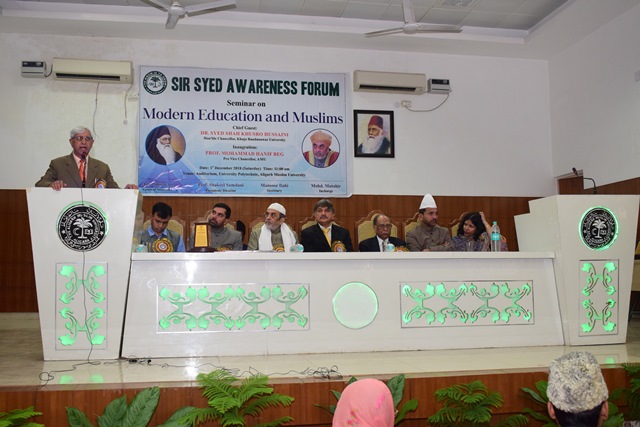
Prof. M H Beg, PVC, AMU delivering Speech sitting IPS Abdul Hamid, Dr. Khusro Hussaini, Prof. Shakeel Samdani, Prof. Pathan and others

Guest of Honor, Mr. Abdul Hamid, IPS and Registrar, AMU said that today Muslims are lagging behind in the field of modern education. Sachar Committee report has confirmed that the educational status of Muslims in India is lower than Scheduled Castes and Scheduled Tribes. He said that higher education is the only solution of this problem. He requested the students of AMU to focus on their education and keep themselves away from unnecessary activities. At the last he congratulated Prof. Shakeel Samdani, President SAF for organizing a wonderful seminar on a very important topic.

President of the forum, Prof. Shakeel Samdani, while delivering his speech, said that Muslims have dominated the world in the field of education, science, literature, etc for about 600 years and this was only possible because they focused more on education and research. He congratulated the South India for carrying forward the mission of Sir Syed Ahmad Khan. South Indian Muslims have established much more education institutions as compared to Muslims of North India. He further said that Dr. Khusro Hussaini has established 24 educational institutions and the most important among them is the Khaja Banda Nawaz University. He said that the work of Dr. Hussaini is appreciable as he has helped the poor sections of the society by establishing educational institutions. At the last he said that it is the pleasure of SAF that Dr. Hussaini has accepted the Mohsin-E-Millat Award.

Principal of Abdullah College, Prof. Naima Gulrez said that North India is lagging behind in establishing educational institutions as compared to South India. She gave the example of Parsis that although they are numerically less in population but they are one of the most prosperous community in the country. It is because they are educationally advanced and they focus very much over modern education. She expressed her sorrow about the condition of Muslim women in the society.

Vice Chancellor of Khaja Banda Nawaz University, Prof. Abdul Jaleel Khan Pathan congratulated SAF for conferring ‘Mohsin-E-Millat Award’ on Dr. Hussaini. He said that it is the need of hour to carry forward the mission of Sir Syed and to provide quality education to Muslims.

Dr. Mohib Ul Haque, said that the time has come for Muslims to focus on modern education if they want to succeed. He congratulated Prof. Shakeel Samdani and SAF for their contribution in establishing Tipu Sultan Block at AMU.

Anjum Tabassum Lashkri (Karnataka) and Mr. Tariq Hussain, AMU were felicitated with “SAF Excellence Award”. Ayesha Samdani conducted the seminar and Mansoor Ilahi proposed the vote of thanks. Sarah Samdani also spoke on this occasion. Poetess Rehana Shaheen recited a Nazm on Sir Syed.

Wajahat Jilani welcomed the guests and Aman highlighted the objectives of the Forum.

On this ocassion, Mr. Syed Ali Hussaini, Pro Chancellor of Khaja Banda Nawaz University, Mr. Haider Pasha Qadri, Sajjada Nasheen, Dr. Moinuddin, Superintendent, KBN Medical College, Gulbarga, and Maulana Syed Abdur Rasheed were present.

Seminar was made a great success with the tireless work and efforts of Adv. Shoeb Ali, General Secretary, SAF, Dr. Haider Ali, Abdullah Samdani, Mohd. Muthair, Hunain Khalid, Danish Iqbal, Sarim Ali, Hamza Noman Masood, Saad Asad, Pawan Varshney, Himanshu Singh, Ajay Singh, Hamda, Kashif Sultan, Ayesha Farheen, Razia Chauhan, Talat Anjum, Rubia, Fauzia, Faiz, Adeel Shervani, etc.

Many prominent figures who attended the program include  Prof. Tariq Chattari, Chairman, Dept. of Urdu, Prof. Humayun Murad, Dr. Iqbal Siddiqui, Prof. Zafar M. Nomani, Prof. Kamil, Prof. Khalid Azam, Prof. Ashar Ansari, Prof. Mujeeb Ansari, Prof. K. Khalil Ahmad, Prof. Shakeel Ahmed, Dr. Nazar Abbas, Dr. Ayesha Munira, Dr. Raihan Akhtar, Dr. Rahat Abrar, Dr. Masood Anwar (Shahjahanpur), Dr. Yameen Ansari (Delhi), Syed Ikram Ul Haq (Hapur), Dr. Raghib, Dr Wasim Ali, Mohd Nasir, Dr. Kalimullah, Dr. Rahmat Ullah, Dr. Qaiser Ansari, Dr. Obaid Iqbal Asim, Dr. Iqbal Hadi, Dr. Naseem Ahmad Khan, Dr. Ali Nawaz Zaidi, Dr. Zafar Ahmad, Dr. Mohsin Khan, Adv. Khan Wajahatullah, Rabab Khan, Dr Zeba Azmat, Dr  Tabassum Chaudhary, Huzaifa Amir, Secretary, AMUSU, Khalid Masood, Ex President, AMUSU, Raas Masood Khan, Court Member and a large number of students were also present in the seminar.

source: http://www.muslimmirror.com / Muslim Mirror / Home> Exclusive Reports> Indian Muslims / by Muslim Mirror Networks / December 10th, 2018
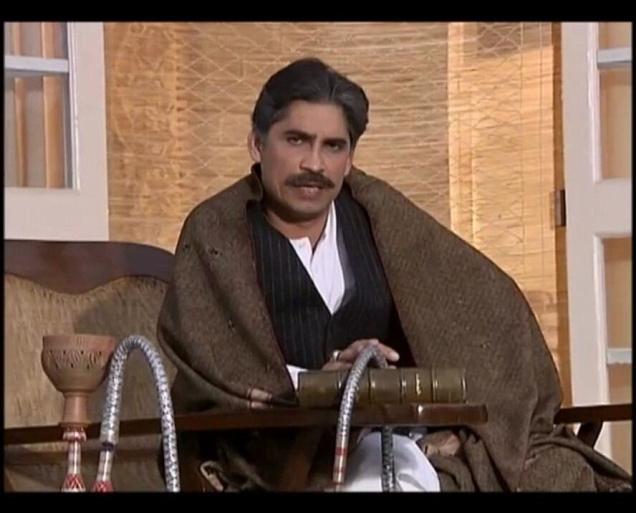
UK Asian Film Festival: Filmmaker Danish Iqbal’s movie will be screened

Allahabad, UTTAR PRADESH / NEW DELHI :

Allahabad:

Filmmaker Danish Iqbal’s movie, “Sadho” will be screened at UK Asian Film Festival. This festival will begin on 14th March and is planned to be held in Edinburgh, Manchester Leicester and London.

Sadho is a film based on true events and it highlights Child Trafficking menace.

Talking about the movie, Mr. Danish said that Sadho is a heart touching film. In the film, character Sadho finds a newborn child who survives in a car accident. He was supposed to make a decision whether to return the child to parents or not.

It may be mentioned that the movie was produced by Mr. Varad Gupta. Role of Sadho was played by Mr. Sukumar Tudu.

Earlier, Sadho was selected in nine international film festivals.

In Haryana International Film Festival, the movie won best film critics award and best actor award.

Filmmaker Danish’s career started from the theatre in 1994. He did graduation from Allahabad University and was a student of National School of Drama and Central School of Speech and Drama, London.

He got British Council’s Charles Wallace Award, Sahitya Kala Parishad’s Mohan Rakesh Award and Sangeet Natak Akademi’s Ustad Bismillah Khan Award.

source: http://www.siasat.com / The Siasat Daily / Home> Entertainment / February 21st, 2018

Life and times of Iqbal

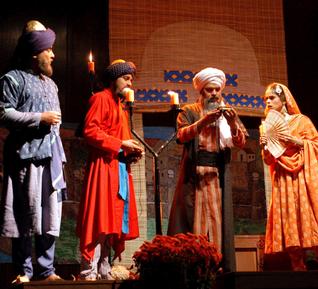
A scene from Sir Iqbal.

M. Sayeed Alam’s “Sir Iqbal” will be staged in the Capital this Sunday

The most sung poet and perhaps the most sung song in India “Saare Jahan Se Accha” written by Allama Muhammad Iqbal is all set to ignite the imagination of theatre lovers in Delhi. Playwright and directors, M. Sayeed Alam and Danish Iqbal’s spring time production ‘Sir Iqbal’ is a biographical work on the life, times and scholarship of Allama Iqbal who continues to be misunderstood in India but is celebrated in Pakistan as the man who came up with the idea of a separate nation for Muslims.

“Iqbal’s love for India which clearly comes through in the poem ‘Saare Jahan Se Accha’ and yet his choice of living in Islamic Pakistan over a secular India is in itself a study in contrast, a paradox that has pushed him far away from public memory in India. Iqbal died in 1938 much before the idea of Pakistan even took shape. Doctored history, misapprehensions about Allama being a fanatical Muslim who chose to live in a Muslim dominated undivided India needs to be closely looked into. My play is an effort to demystify Iqbal and clear some perceptions about the great poet, philosopher and politician and above all a humanist who has given India its most enduring patriotic poem yet remains forgotten in the country,” said Alam in the midst of rehearsals for the play which opens to public on March 20 at Sri Ram Centre.

“From what I have read about Iqbal’s political philosophy, he never demanded a separate home for Muslims outside India. Iqbal’s formulations somehow suited the supporters of Pakistan and they hailed him as the ideological father of the country – something that many Indians came to detest and therefore Iqbal remains forgotten whereas his poem as a song is sung everyday in schools all over the country. Our play brings out this dichotomy,” said Alam.

“Sir Iqbal” had first premiered in Kolkata in November last year to much critical acclaim. The one and half hour play with a 15-member cast will see Alam himself essay the role of Iqbal. The play is centred around the poet and philosopher’s life. In the play, Iqbal’s story is narrated by his trusted servant Ali Baksh who enjoyed Iqbal’s confidence and had witnessed many events in his life. Set in British India in the backdrop of the first half of the 20th Century, ‘Sir Iqbal’ will mirror the socio-political churnings during Allama’s times till his death in 1938 in undivided India. The play will perhaps set some records straight and clear many perceptions about Iqbal, who for many Indians still remains an enigma.

source: http://www.thehindu.com / The Hindu / Home> Features> MetroPlus / by Anasuya Basu / March 18th, 2016

Return of the prince

THEATRE Playwright Danish Iqbal tells SWATI DAFTUAR about “Dara Shikoh”, a play that takes a look at one of Mughal India’s great lost names.

The cerebral MughalA scene from the play; (left) Danish Iqbal

It is 1653, and the siege of Kandahar is raging. Dara Shikoh sits in his tent at night, writing his treatise on comparative religion. His general, a veteran and a contemporary of his great grandfather, enters with the request to discuss battle strategy for the next day. Dara Shikoh explains that for him, the treatise is more important. He doesn’t ask the general to sit down, showing him this respect only later, when the general’s conversation takes an intellectual turn.

This is a scene from “Dara Shikoh”, the modern classic directed by M.S. Sathyu and written by Danish Iqbal, which encapsulates the play’s portrayal of the young Mughal prince and heir apparent to Shah Jahan. The play, being performed after three years, is once again being directed by the eminent director and stage designer and art director M.S. Sathyu and presented by Impressario Asia. After a recent show in Gurgaon’s Epicentre, it will be performed this Friday at the India Habitat Centre in New Delhi.

The play, Iqbal believes, cannot be considered a revival. “It’s been performed on and off over the years. This time, it’s only got minor changes. It’s a little shorter now, and there are a few new scenes.”

It was ten years ago, in 2004, that Iqbal, who confesses that he only works on commission because he needs to know that the words he pens will be performed, was approached by K.K. Kohli of Impressario Asia, the play’s producer. It could easily have been action oriented, a harsh, blood and gore portrayal of a prince whose life ended brutally and violently, killed in a succession struggle by his own brother. Iqbal and Kohli, though, decided to go a different way. The Dara Shikoh that Iqbal has penned is a prince who respects intellect over privilege. He is an egoistical, liberal, peace loving man who ignored war and translated scriptures.

“Dara was, in my opinion, the greatest person in Mughal history. I think he was greater than Akbar too.” Iqbal, while researching his play, says that he was surprised to see that this giant had been ignored by history. In this play, he has been careful to highlight Dara to the maximum, not allowing Aurangzeb or Sufi Sarmad, Dara Shikoh’s mentor, to take the stage. “I was questioned about this, but I think that in the case of Aurangzeb, the fear of the invisible and unknown would be much greater. Plus I didn’t want Dara overshadowed in any way.”

The playwright also goes on to admit that he owes more than half his knowledge about writing and stage skills to Sathyu. “He’s a grand old man of Indian theatre. He has a terrific sense of aesthetics. He makes sketches of every scene before the performance, to work out how the stage characters, headgear, beards, dresses, everything would look. He’s a very meticulous person. It’s a pleasure working with him. His art work is tremendously beautiful.” Iqbal adds that while he has indeed provided the dialogues, characters and content of the play, they’ve been given shape by Sathyu.

The shape this play has taken seems strangely placed in the past and the present. For Iqbal, the play holds a sort of every day importance. “In the past 10 years the challenges to inclusiveness and coexistence have increased in a big way; people are more fanatic. And terrorism is a bigger threat than before. The play has actually become more relevant.” He terms Dara as the first prince who died for his ideals, and adds that “Dara Shikoh” is today’s play. “It is a metaphor. We discussed if this play, because of how it ends, was becoming too sad and tragic, but it was in his defeat and death that Dara’s principles emerged victorious. This is what we wanted the play to show.”

Iqbal, a student of philosophy, has written a work that plays with many concepts and ideas that affect and influence human existence. Of death, a quote from the play says, “ Maut kya hai, maut hai fakth ek dehleez ”, which loosely translates to mean that death is ultimately the first step to a door between one chamber and the next. That death, ultimately, is nothing.

In a play packed with such layered, ambiguous dialogues, Iqbal confesses that it has become hard to cast the right actors for the roles. “It’s a great challenge. We don’t have very good actors, and especially young actors lack the capacity to understand the nuances of the play, absorb its ideas and translate them into emotions and gestures. This requires intellectuals of a certain calibre, and not all actors can deliver. Often, the average actor only sees the superficial meaning of a dialogue. To overcome this, we have conducted workshops with the actors, to explain the multilayered aspects of play.” Iqbal adds that there are hardly any professional actors hired for this season of the play. “They have their jobs, and (we have) amateur actors who wanted to be part of the production.”

He’s holding a book on Pataudi, and as a closing remark, adds that he’s working on another story that gives him the goose bumps, that of Mansoor Ali Khan Pataudi. “Like Dara Shikoh, his story is also inspiring, and can reach people in manifold ways.”

Director M.S. Sathyu says, “We’ve only made minor changes in the play, and this time there is a new choreographer (Astha Dixit) and they’ve got trained Kathak dancers. The casting is always a problem, because this play requires a lot of Urdu and there are very few actors who can speak good Urdu. They can speak in Hindi and Punjabi but Urdu is a challenge.”

source: http://www.thehindu.com / The Hindu / Home> MetroPlus / by Swati Dastur / January 23rd, 2014