Wani (Vidarbha Region), MAHARASHTRA / Boston, U.S.A. :
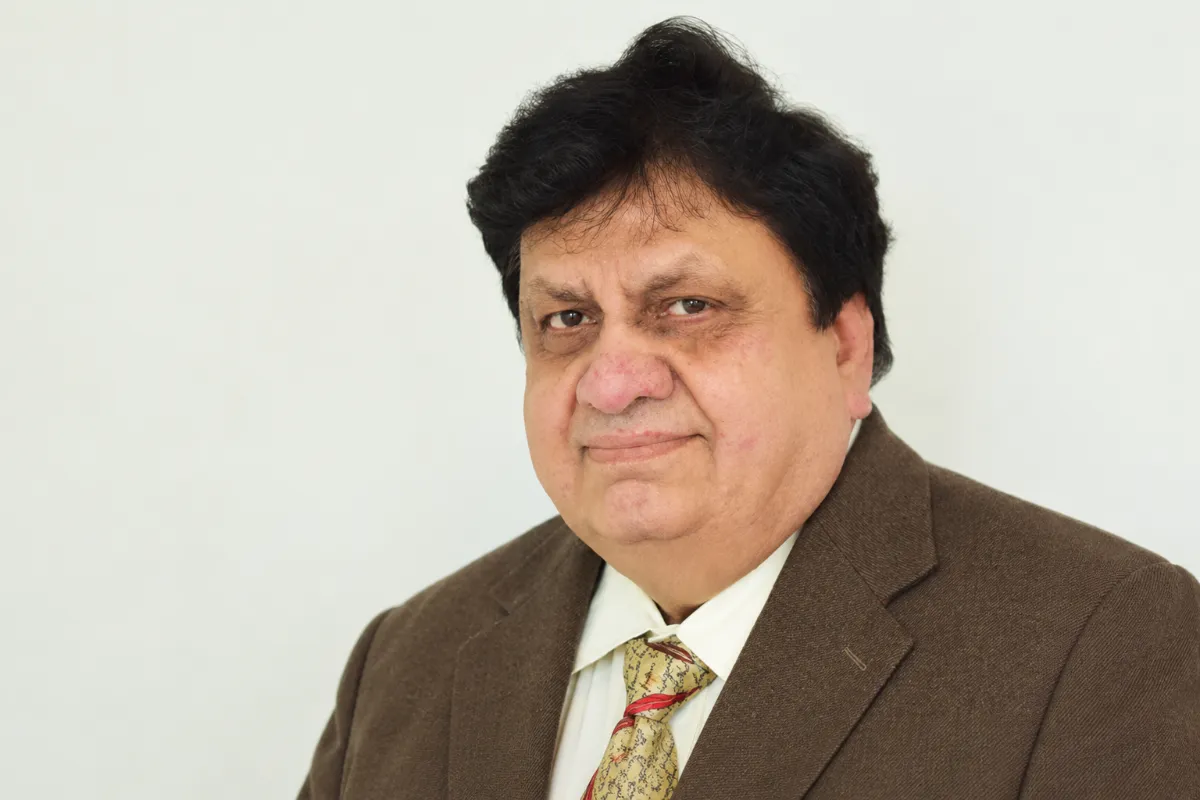
Dr. Abdul Razzaque Ahmad
Wani, historically known as Wun, is an old town of the Vidarbha region whose history reflects the changing political boundaries of central India. At different times, the Wani area was connected with the Nizam’s dominions, while the neighbouring Chandrapur region was historically associated with the Gond rulers. To the east and south lay territories of the erstwhile Hyderabad State, including the area that subsequently became Adilabad district and is today part of Telangana.
Wani’s political identity changed with successive territorial reorganisations. The area was once associated with the Nizam of Hyderabad. After independence, it came under the larger Central Provinces and Berar/Madhya Pradesh administrative framework before becoming part of Maharashtra when the state was formed in 1960.
This layered history is important in understanding the social background of Dr Abdul Razzaq Ahmed, a prominent Muslim of Wani. His family belonged to an established local community whose standing was associated with both landholding and professional achievement. Dr Abdul Razzaq Ahmed was a dermatologist, while later generations entered administration, medicine, and law.
Today, Dr A. Razzaque Ahmed, MD, DSc, is internationally recognised as a dermatologist, immunologist and academic physician, and as a pioneer in autoimmune blistering diseases. He has served as Professor of Dermatology and Director of the Centre for Blistering Diseases at Tufts University School of Medicine in Boston. He is associated with the Ibn Sina Professorship. His career has brought together clinical medicine, molecular immunology, laboratory research, therapeutic innovation, teaching and philanthropy.
Yet his significance lies not simply in professional distinction. His life represents the transformation of education into knowledge, knowledge into healing, and achievement into service.
Roots, Education and the Making of a Cosmopolitan Mind
Dr Ahmad spent his early childhood in Wani in a house built by his great-grandfather around 1875. He was the son of Salam Ahmed and Begum Noor Jehan and grew up in a family that regarded education and social advancement as important instruments of human development.
That ethos subsequently found institutional expression through the Begum Noor Jehan Salam Ahmed Trust in Yavatmal district. Under Begum Noor Jehan’s leadership, the Trust established educational institutions including the Sunrise English Medium Convent, Wani; the Noor Jahan Begum Salam Ahmed Arts and Commerce College, Wani; and the Noor Jahan Begum Salam Ahmed Women’s College of Law.
The women’s law college was particularly significant, reflecting a deliberate commitment to giving women access to professional education, legal knowledge and greater independence. The family tradition therefore gave education a meaning larger than individual advancement: it expanded opportunity and enabled others to participate more fully in society. That principle would later find expression in Dr Ahmad’s own teaching and philanthropy.
His early education exposed him to unusually diverse intellectual and cultural environments. Until the age of seven, he studied at a convent run by French nuns and later attended a Jesuit Catholic boarding school in Nagpur.
At fifteen, an American Field Service International Scholarship took him to Le Mars, Iowa, where he lived with the Thompson family, attended the local high school and studied at Westmar College. The experience gave a young student from central India an early encounter with American society and education, broadening his intellectual horizons.
Returning to India, he pursued pre-medical studies at Nagpur University before entering the All-India Institute of Medical Sciences in New Delhi. At AIIMS, he distinguished himself academically, standing first in many classes and receiving the Gold Medal as the outstanding graduate of his cohort. The movement from Wani to Nagpur and from Nagpur to AIIMS marked the first major stage in a life that would repeatedly cross geographical and intellectual boundaries.
After completing his medical education, Dr Ahmad moved to the United States for specialist training. He trained in Internal Medicine at the University of Pittsburgh, Dermatology at the University at Buffalo and Clinical Immunology at the University of California, Los Angeles, where he subsequently joined the faculty.
His growing interest in the molecular basis of disease led him to Harvard, where he pursued advanced research in molecular immunology and earned a Doctor of Science degree. His investigations attracted National Institutes of Health support and developed into the Ahmed Laboratory, which remained NIH-funded for more than two decades.
A defining feature of his career was integrating laboratory science with clinical medicine. Disease encountered in the clinic generated scientific questions; laboratory research sought their answers; and those discoveries returned to patients through improved diagnosis and treatment.
From Molecular Discovery to a New Paradigm of Care
Dr Ahmad became an international authority on autoimmune blistering diseases, particularly pemphigus and mucous membrane pemphigoid. These rare disorders can be debilitating, disfiguring and, in severe cases, life-threatening.
His research examined the immunological and genetic mechanisms underlying these diseases. Among his key contributions was identifying associations between specific HLA-DQB1 genes and pemphigus in different populations. He reported the association of HLA-DQB10402 with Jewish pemphigus patients and HLA-DQB10501 with non-Jewish patients. Studies of relatives helped demonstrate that low titres of pemphigus autoantibodies could occur without full clinical disease. He also distinguished pathogenic from non-pathogenic autoantibodies, demonstrating the pathogenic significance of IgG4 and the non-pathogenic character of IgG1 in pemphigus.
His investigations involving patients from Northwestern Iran and comparisons with Ashkenazi Jewish patients in the United States and Israel revealed striking genetic homology. They contributed to wider research concerning the population history of Ashkenazi Jews.
His molecular research extended to mucous membrane pemphigoid. He identified alpha-6 integrin as a putative antigen in oral pemphigoid and beta-4 integrin in disease involving other mucosal sites, identified epitopes on these molecules and investigated their role experimentally in animal models and tissue cultures. These studies helped shift the field from clinical description towards molecular understanding.
But Dr Ahmad’s contribution did not end with discovery. He sought to create a system that could translate scientific knowledge directly into comprehensive patient care. In Boston, he established the Centre for Blistering Diseases, bringing together specialists in oral medicine, ophthalmology, ENT, gastroenterology, urology, gynaecology, proctology, internal medicine, nutrition and clinical psychology.
The multidisciplinary model reflected the nature of the diseases themselves, which can affect several organs and mucosal surfaces. Rather than leaving patients to navigate separate specialities, the Centre organised care around the patient’s complexity.
His commitment to patients extended beyond medical treatment. In 1993, he established the Boston Blistering Diseases Support Group, recognising that people living with rare and potentially life-threatening disorders also require emotional support, information and a community of shared experience. The model was subsequently emulated elsewhere, including by the International Pemphigus and Pemphigoid Foundation.
Transforming Treatment and Restoring Lives
One of Dr Ahmad’s most consequential contributions was his pioneering work with intravenous immunoglobulin (IVIg) in autoimmune blistering diseases.
Severe disease had traditionally been treated with corticosteroids and other immunosuppressive drugs, which could themselves produce serious complications. Dr Ahmad developed and refined IVIg protocols that enabled some patients to achieve prolonged remission and, in certain cases, discontinue conventional therapy.
He also addressed access. Because IVIg is expensive, he presented clinical and pharmacoeconomic evidence involving 160 patients to Medicare authorities. The resulting policy permitting Medicare coverage for IVIg in blistering diseases helped broaden access, and private insurers later adopted similar policies.
His work with rituximab marked another major therapeutic advance. In collaboration with Harvard oncologists, he developed a protocol combining rituximab and IVIg that targeted the B-cell mechanisms involved in autoimmune disease. The results were reported in the New England Journal of Medicine, with subsequent long-term follow-up demonstrating sustained disease control in treated patients.
Some patients achieved exceptionally prolonged remission without continuing therapy, in some cases for more than 20 years. His continuing research has examined whether successful treatment can restore immune balance rather than merely suppress disease. Long-term follow-up of patients with pemphigus treated with IVIg contributed to this emerging understanding, with findings reported in the Proceedings of the National Academy of Sciences in 2024.
His work has also addressed ocular cicatricial pemphigoid, a rare autoimmune disease capable of causing progressive scarring and irreversible blindness. Research into its mechanisms helped establish therapeutic approaches involving IVIg and subsequently rituximab combined with IVIg.
The significance of such work extends beyond disease control. Preventing blindness preserves independence, employment, family life and human dignity. It exemplifies a broader principle in Dr Ahmad’s career: the ultimate measure of medical success is not simply suppressing disease but restoring a patient’s capacity to live a meaningful life.
This philosophy also shaped the institutions he built. He developed an outpatient infusion model that enabled patients to receive sophisticated intravenous therapies without prolonged conventional hospitalisation, attracting patients from across the United States and other countries.
As a teacher and mentor, he has influenced generations of medical and dental students, residents and researchers. Many former trainees subsequently became professors and departmental leaders. He has lectured internationally for decades and served as a visiting professor at universities worldwide. His influence has therefore travelled not only through publications and therapies but through the people he taught.
The breadth of his contribution has been recognised through numerous professional honours, including the William Gies Award, the Walter F. Lever Award, lifetime achievement and research contribution awards, and international awards for excellence. The International Pemphigus and Pemphigoid Foundation honoured him as Physician of the Year, and he has also received India’s Charaka Award. In 1999, the Governor of Massachusetts and the Massachusetts House of Representatives separately recognised his contribution to the Commonwealth’s citizens.
Science, Faith and the Larger Meaning of Service
Another dimension of Dr Ahmad’s life is his religious commitment. During his extensive international travels, he has repeatedly visited Makkah and performed more than one hundred Umrahs. His scientific and spiritual commitments have existed alongside one another. Scientific inquiry seeks to understand disease; faith provides a framework of gratitude, humility and responsibility.
That sense of responsibility has also shaped his philanthropy. In addition to the educational legacy of the Begum Noor Jehan Salam Ahmed Trust, Dr Ahmad has devoted substantial resources to educating disadvantaged young people, particularly women, supporting higher education, professional training, books, computers, transport and leadership development.
The results have reportedly reached thousands of students, with women beneficiaries entering the judiciary, public prosecution and legal practice. The objective is therefore not simply charitable relief but the creation of durable opportunities through education.
Dr Abdul Razzaque Ahmad’s life is not merely a story of migration from India to America or advancement from a small town to elite academic institutions. It is a story of continuity through transformation.
Wani provided the beginning; Nagpur broadened the horizon; AIIMS supplied an exceptional medical foundation; Pittsburgh, Buffalo and UCLA provided specialist training; Harvard deepened his scientific inquiry; and Boston became the centre from which his clinical and research contributions reached the wider world.
The ancestral house in Wani and the laboratories, clinics and lecture halls of Boston may appear to belong to different worlds. In his life they form a single continuum. The family gave him an inheritance of education and responsibility. He transformed that inheritance into scientific discovery and clinical innovation, and then extended its benefits through teaching, patient care and philanthropy.
His legacy is therefore measured not only by publications, professorships and awards, but by what those achievements enabled: patients who obtained relief, individuals protected from irreversible disability, students who gained educational opportunities, physicians shaped by his mentorship, and a field of medicine advanced by his research.
The distance from Wani to Boston is considerable. The distance his ideas travelled is greater still. A journey that began in the hinterland of India entered the global corridors of academia. Its deepest destination, however, was neither fame nor distinction, but service—to the patient seeking relief, the student seeking opportunity, the scientist seeking truth, and society seeking a more humane future.
source: http://www.muslimmirror.com / Muslim Mirror /Home>Personalities> Positive Story / by Moin Qazi / October 10th, 2026