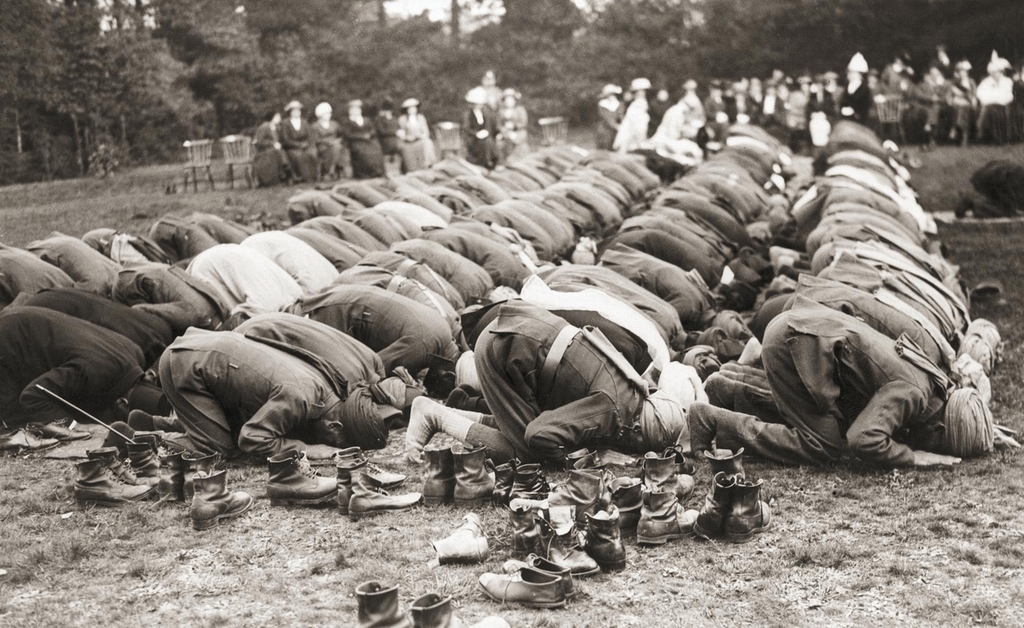
Tag Archives: Indian Muslims in the British Indian Army

Ghee Bowman (1961-2025): A British historian who unearthed the stories of Indian soldiers at Dunkirk

BRITISH INDIA :

He shone the spotlight on the often-ignored role of the 2.5 million members of the British Indian Army who had served during the Second World War.
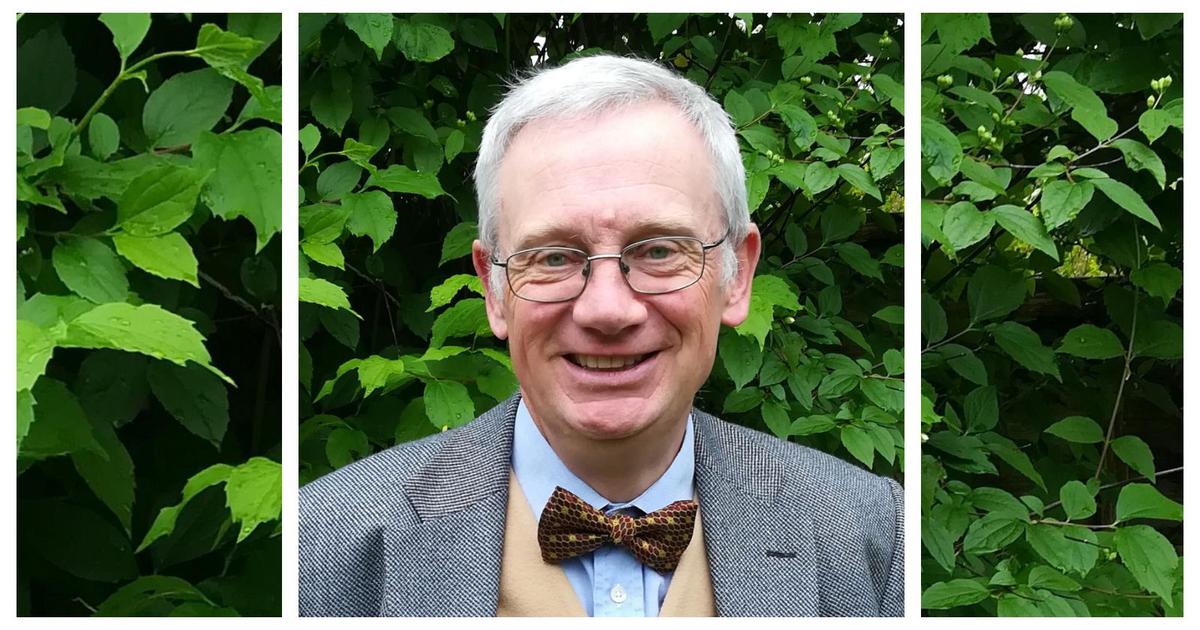
Historian Ghee Bowman. | https://www.forcek6.org.uk/about

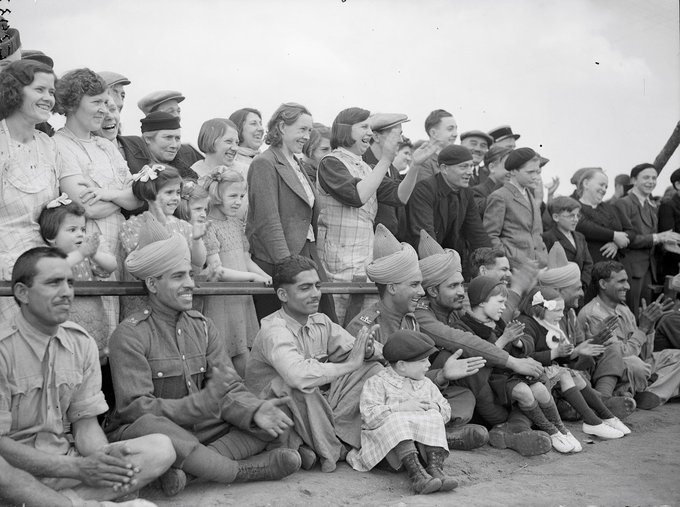
One day in 2013, when Ghee Bowman was working on a project on the city of Exeter’s multicultural history, he found a book featuring three photographs of Indian soldiers in the English county of Devon during the Second World War.

It piqued his curiosity.

“I thought I knew about the Second World War, but I’d never imagined that there were Indian soldiers with turbans and mules in Devon,” he wrote.

Though he had a BA in drama, Bowman decided to start an MA in history – and went on to write a PhD dissertation on the 4,227 men of Force K6 contingent who spent most of the war in England.

Through their stories, he shone the spotlight on the often-ignored contribution of the 2.5 million men and women of the British Indian Army who had served during the Second World War.

When Bowman started digging, he found that the British Army arrayed against Nazi Germany in Europe early in the war needed mules to transport artillery and supplies. The men of Force K6 and their mules were shipped in from India, more than 11,000 km away.

Several had been evacuated from Dunkirk in France in 1940 when the Allied defense collapsed and spent years in England.

source: youtube.com

Before Bowman died on May 10, he had spent the previous 12 years researching the Indian Army in Europe during the Second World War. His two books on the subjects are superbly researched and cracking reads.
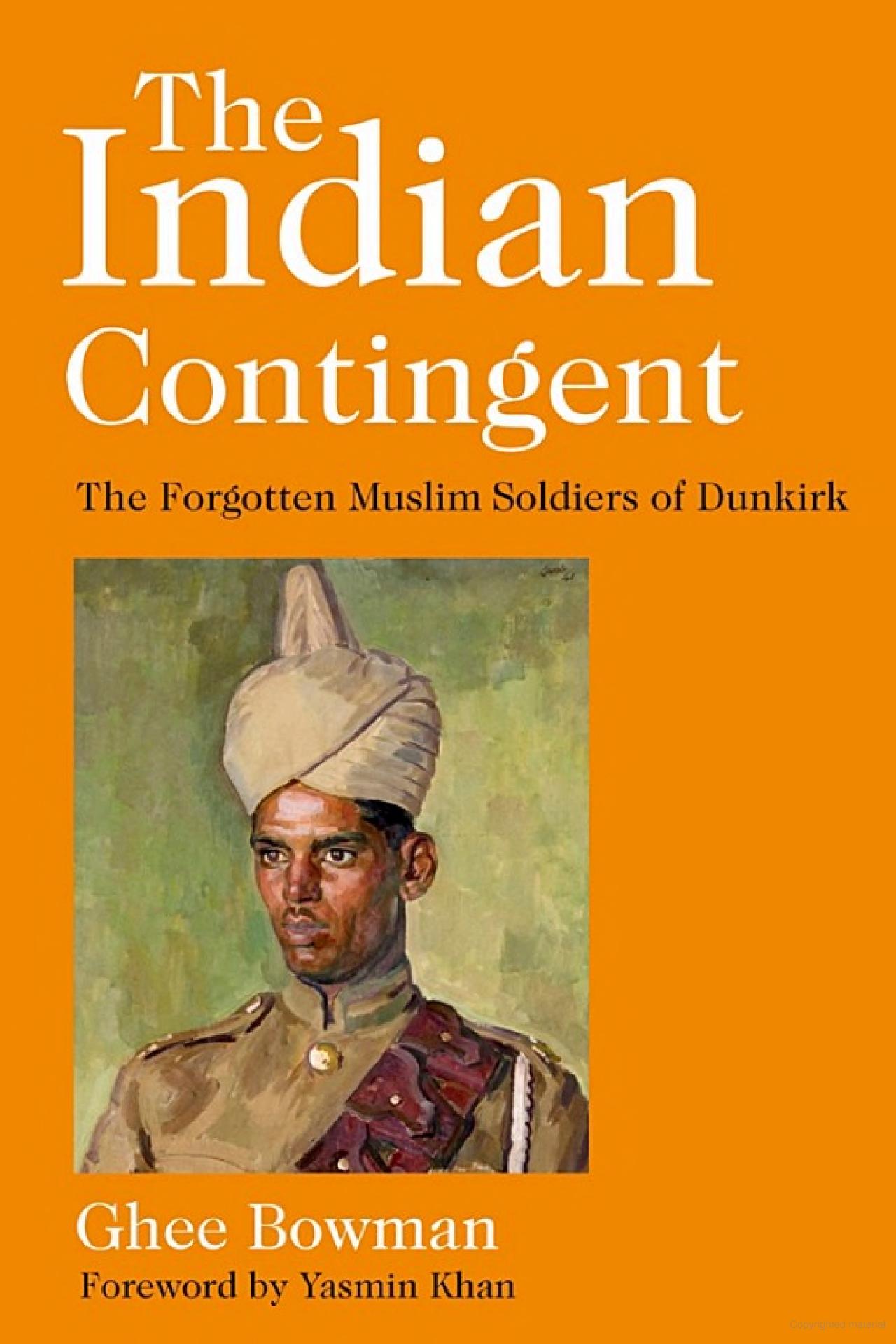
pix: google.co.in/books

Bowman’s first book was The Indian Contingent – The Forgotten Muslim Soldiers of the Battle of Dunkirk, published in 2020. It is the story of the 299 men of the 25th Animal Transport Company of the Royal Indian Army Service Corps.

Because the British used to group men of the same religion and creed together, these men were mainly Muslim. The role of Indian soldiers fighting in North Africa and Italy during the war had been documented. But little was known about the men who were in France.

The Great Epinal Escape – Indian Prisoners of War in German Hands was published in late 2024. Bowman had been toying with the title The Greatest Escape, a reference to the popular movie about the war, The Great Escape. It was about the escape of 500 Indian prisoners of war from a camp at Epinal in France in 1944.

On May 11, 1944, American planes bombed a camp at Epinal in France housing 3,000 Indian prisoners, breaking some walls. Several hundred escaped, of whom 500 reached Switzerland. It was the largest PoW escape during the Second World War.

Though the Indians were conspicuous in the middle of France, they managed to make their way across the border through their grit and the bravery of civilians who helped them along the way.

______________________________

Ghee Bowman / @GheeBowman

#OTD 11th May 1944; a sunny day in Épinal, a small town on the river Moselle, close to the Vosges mountains and Germany. The scene is set: nobody knows that this quiet French place, untouched by war since 1940, will become the site of the largest POW escape of #WW2
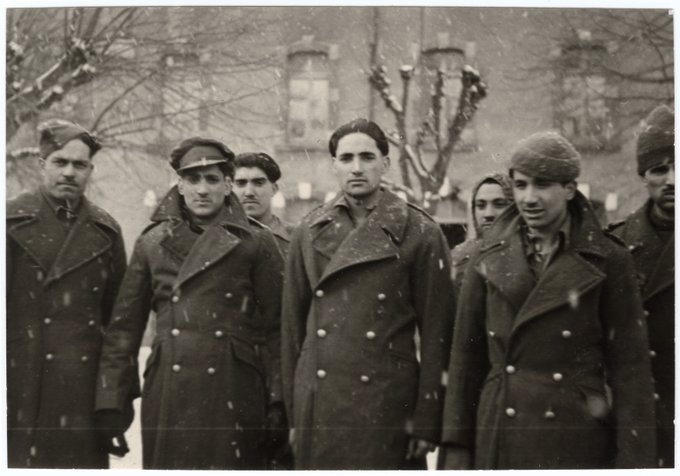
1:21 PM . May 12, 2024· / 18.7K View

________________________

Very little has been written about the experience of individual Indian soldiers in the Second World War. With his micro-histories, Bowman took a step towards filling this gap – and pointed the way for other researchers to do so too. Besides, in a time of rising xenophobia in the UK, Bowman’s work serves as a reminder of the long presence of South Asians – and Muslims – in the country and their contributions to keeping it secure at one of its most vulnerable moments vulnerable moments .

After submitting the manuscript for his second book, Bowman wondered how he could do more to tell the story of Indian soldiers during the Second World War. About six months ago, he decided that he had he hit upon the best and most gratifying way of doing this – not by writing more books or articles and making podcasts but by helping families get to know more about a grandfather or uncle who had fought in the conflict.

This would not result in thousands of social media posts and perhaps only one family would get to know about the work. But to Bowman, helping even one person trace their family history was priceless.

“I’m very happy to share what I already know with families and the wider Indian public,” he wrote. “I’ve got letters, photos, recommendations for medals that I’ve found in archives and newspapers. I would love to be able to restore these to the descendants of these brave men.”

He decided to co-opt the willing and reached out to researchers across the world. He created a page on his website listing useful resources. I was proud to be his man in India and Southeast Asia.

____________________

Ghee Bowman / @GheeBowman

To the good people of #Plymouth. As you think about Muslims in the city this morning, you might like to know about the 4 Muslim graves at Weston Mill Cemetery, 3 miles from where the #plymouthriots happened last night.

@BBCSpotlight / @Plymouth_Live / @SAHM_UK
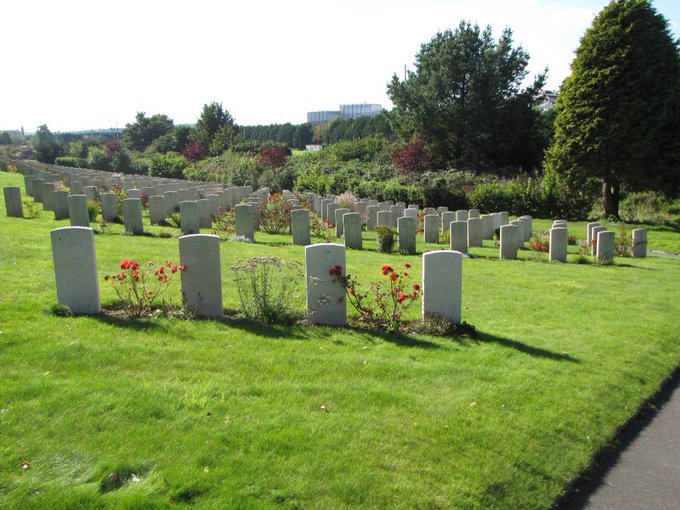
5:30 PM . Aug 06, 2024 / 3,216 Views

_____________________________________________________________

____________________________________________________________

Ghee Bowman / @GheeBowman

These four men were soldiers of the Indian Army, part of #ForceK6 – Muslim Punjabis sent 7000 miles to help the British in its hour of need. Here are some of their officers inspecting coastal defences in November 1941.

5:30 PM . Aug 06, 2024 / 264 Views

_______________________________________________________

I had the privilege of getting to know Bowman in June 2023, when I reached out to him as I had just begun researching the Indian Army in World War II Singapore. He helped me find sources, to write a book proposal and introduced me to his publishers and others who turned out to be crucial for my own book.

Even as he was trying to help family members trace their relatives, Bowman had been going through a grave personal health crisis. In his regular newsletter in May 2024, he mentioned that he had a fall. His last newsletter was on February 1. He said he had been diagnosed with a brain tumour, was undergoing radiation and chemotherapy and doing well.

He died three months later. Bowman once described himself as “a historian, teacher and story teller…a Quaker and a lifelong learner”. He was all that and much more – he helped others without any gain for himself.

Gautam Hazarika is a Singapore-based author whose book The Forgotten Indian Prisoners of World War II is being published by Penguin India and Pen & Sword UK later this year. He can be contacted at  ghazarika70@yahoo.com.sg

source: http://www.scroll.in / Scroll.in / Home> Tribute / by Gautam Hazarika / May 27th, 2025
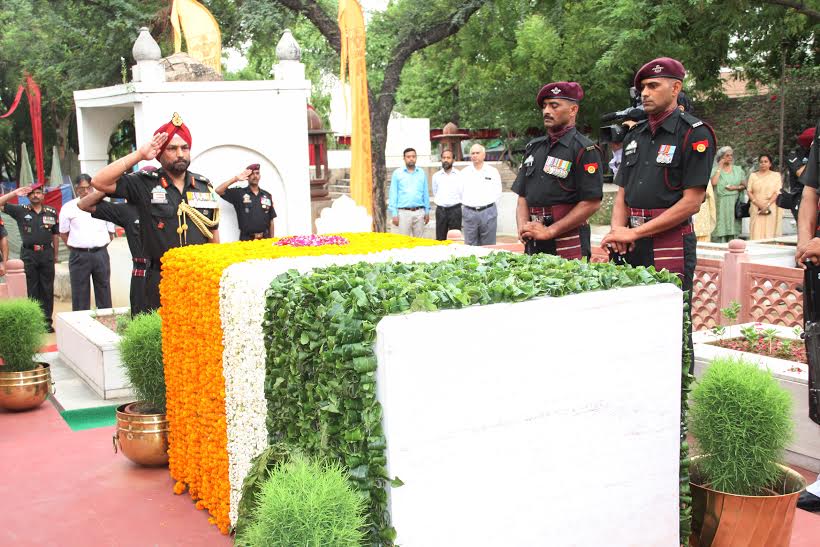
Wreath laying ceremony to commemorate death anniversary of Brigadier M. Usman, MVC (P), July 03rd

INDIA:

A Wreath Laying Ceremony to commemorate the death anniversary of Brigadier Mohammad Usman, MVC (P) was organised at his Memorial in Jamia Millia Islamia (JMI) Cemetery on 03rd July 2023.

 Wreath laying ceremony of late Brig Mohd Usman held


Several Retired and Serving officers including Lt Gen Pushpendra Singh, SM** Col of the PARA Regiment and DG OL & SM, Brig. Rajneesh Mohan Cdr 50 (I) PARA Bde, Lt. Gen Gurbir Pal Singh, AVSM, VSM, DG NCC Delhi, Lt. Gen Velayudhan Sreehari, AVSM, SC, SM, AG’s BR DG (MP&PS), Lt Gen Subriti S Dahiya, SM VSM, Comdt NDC and Maj Gen Prashant Srivastava, AVSM, SM, Addl MS (B) attended the function and paid their
tributes by laying a wreath at the Memorial of Brig. M. Usman, MVC (P).


A wreath was also placed at the Memorial of Brig. M. Usman PVC (P) on behalf of JMI Vice Chancellor Prof. Najma Akhtar (Padma Shri), as her tribute to the memory of the gallant officer. NCC cadets and officers were also present to witness the solemn occasion and pay their respects.

Jamia Millia Islamia (NAAC A++ Grade Central Univ) on Twitter: "A wreath  laying ceremony to commemorate the death anniversary of Late Brigadier M.  Usman, MVC was organised today by a contingent from


Under Brig. Mohammad Usman, MVC (P) Para Brigade successfully defended the city of Naushera against Pakistani Tribal forces, and then valiantly recaptured the city of Jhangar.

Late Brigadier Mohammad Usman, also known as the savior of Naushera, was responsible for the recapture of Jhangar & Naushera (Jammu & Kashmir) during 1947- 48 war with Pakistan.

The gallant officer attained martyrdom on 03rd July 1948 when an
enemy artillery shell landed close to him in Naushera.

source: http://www.jmi.ac.in / Jamia Millia Islamia – JMI / Home / by Public Relations Office / July 03rd, 2023

Interview: Shoeb Farooq, Business Head, Triumph Motorcycles India

NEW DELHI :

Triumph India has plans to assemble the upcoming Tiger 660 in India. More than 50 percent sales of Triumph are coming from CKD models, and the brand is eyeing to close around 1,200 units.

Over 50% of our sales volumes are coming from CKD models

Over the last 12 months (November 2020 to October 2021), there has been about 10% de-growth in the Indian premium motorcycle segment (usually 500cc and above engine size, and costing more than Rs 5 lakh), but Triumph Motorcycles India grew by about 30% in this period. “We are confident of holding on to this growth over the next few months as well,” Shoeb Farooq, business head, Triumph Motorcycles India, tells FE’s Vikram Chaudhary.

He adds that the Trident, its entry-level 660cc motorcycle, has brought in a new set of customers to the brand. Excerpts:

What all reasons do you attribute to Triumph Motorcycles India’s growth in a shrinking market?

The basic strength of Triumph lies in its product, and we have been pretty aggressive in our product strategy, right from the BS4-to-BS6 transition to now. We have continuously built on our product range; we have 15 models right now, which is one of the largest in the premium motorcycle segment in India.

We have also entered a new territory, which is the 660cc motorcycle segment, and this has given us a completely new set of customers. We also have a very strong dealer network.

Then we aligned our global launches with India launches, and if a product is launched globally we try to ensure that within a few months it is available in India as well.

All these things put together have given us robust growth in a shrinking market.

How many motorcycles have you sold in the last 12 months?

We have sold about 1,050 units in the last 12 months, but in our financial year (which runs from July to June) we will close around 1,200 units.

This will be one of our best sales performances in India.

Did the chip shortage create supply challenges for you?

It’s not just the chip shortage, but also the container shortage (motorcycle parts come to India in shipping containers) that is a challenge, but we are trying to ensure minimum waiting period for our customers.

Have you become India’s largest premium motorcycle player, or is it still Kawasaki?

The premium motorcycle market size in India is close to about 4,500 units, and we represent a quarter of that.

The focus is not about becoming number one, but to create unique post-purchase experiences for our customers, by taking care of all their needs, from curated rides and track days and even choice in terms of riding gear.

Has the Trident become your largest selling single model, considering that it is the most affordable and must have gotten a new set of customers to Triumph India?

We are averaging close to 30-odd unit sales of the Trident motorcycle every month in India, which is about 30% of our monthly sales; our Classic motorcycle range together contributes another 30%, and the remaining is contributed by the Street Triple, the Rocket and the Tiger.

The average age of the Trident buyer is also lower than buyers of other Triumph models.

Going forward, we are getting more products on the 660cc platform, including the Tiger 660, and this will attract a lot of first-time buyers to the premium motorcycle segment.

The 660cc segment has also gotten us some buyers from tier-2 and tier-3 cities, and this is expected to only grow with more models in the 660cc range.

The Trident is assembled in India. Will the Tiger 660 also be assembled in India?

Yes we plan to make it in India; now with the Trident, more than 50% of our sales volumes are coming through CKD models.

source: http://www.financialexpress.com / Financial Express / Home> Express Drives> Auto> Bike News / by Vikram Chaudhary / November 29th, 2021

The forgotten Muslim heroes of WWI

FRANCE / EUROPE :

How Muslim soldiers helped save the allies from defeat in the First World War

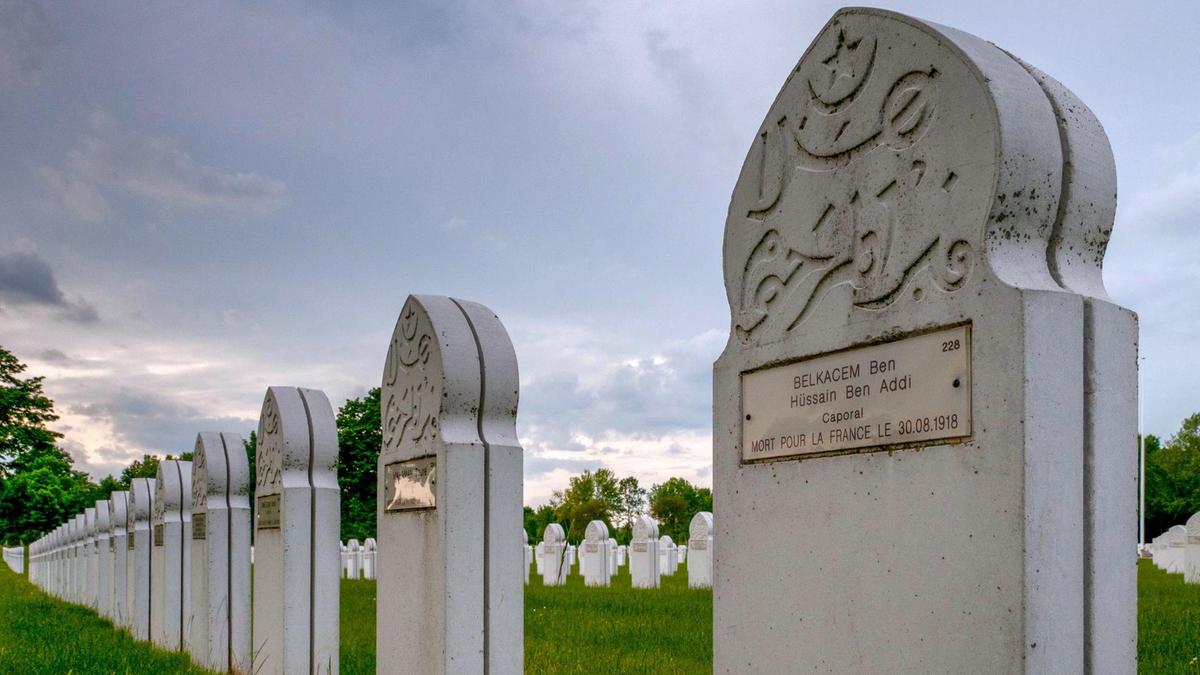
A grave of a Muslim soldier who died during the First World War in the French war cemetery La Ferme de Suippes, Champagne. David Crossland / The National

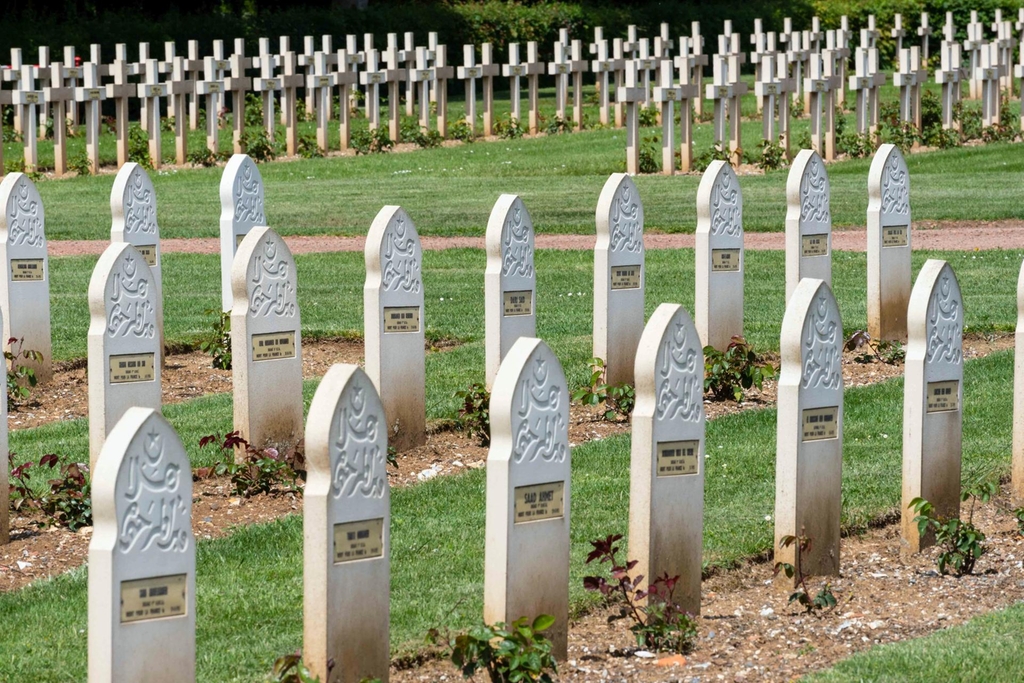
Engraved with Islamic inscriptions, the headstones of 576 Muslim soldiers stand in ranks facing Mecca at Notre Dame de Lorette, the biggest of France’s many war cemeteries.

Each one is also inscribed with the words “Mort Pour La France” – died for France – like the massed crosses of their Christian comrades in this 62-acre memorial containing the remains of over 40,000 soldiers. Today it is a lonely place of birdsong and rustling trees overlooking the slag heaps of the Artois mining region but it was once one of the bloodiest battlefields of the First World War.

The Muslim graves have lain mostly forgotten for almost a century, save on three occasions in the last decades when their graves were desecrated with anti-Muslim graffiti. The sacrifices made by these soldiers and their 2.5 million fellow Muslims who fought for France, the British empire and Russia has been largely ignored, especially in comparison with the exhaustive accounts of Western troops in poems, diaries and histories.

Muslim headstones from the First World War in Notre Dame de Lorette French national cemetery. In the background are Christian headstones. David Crossland / The National

Luc Ferrier, the Belgian founder and chairman of the Forgotten Heroes 14-19 Foundation, is battling to change that.

He is convinced that without Muslim troops and labourers, the Allies would have lost the war. Raising public awareness of their contribution could help counter anti-Islamic sentiment in Europe, and give immigrant communities a stronger sense of belonging, he told The National.

“This project is contradicting the myth that Muslims have not played a positive role in Europe or in modern history,” he said.

“By adding a wealth of authentic documented evidence portraying Muslims positively, we can counter Islamophobia, as well as the divisive ‘clash of civilisations’ narrative which both the far-right and ‘religious’ extremists rely on to further their narrow aims.”

The last four years have seen intense commemoration of the war’s centenary, which will culminate in ceremonies marking the armistice on November 11.

Paradoxically, the remembrance has coincided with a rise in the kind of nationalism that spawned the “war to end all wars.” Right-wing populists across Europe are targeting immigrants but also the European Union, set up in the wake of the Second World War to bring lasting peace to the ravaged continent.

Mr Ferrier, a 55-year-old former executive in the aeronautical industry who is not Muslim, set up the foundation in 2012 after discovering the diaries of his great-grandfather, a soldier in the First World War. “I was impressed by the enormous respect he had for his Muslim brothers in arms from all these continents, while he himself was a very devout Christian,” he said.

When he tried to learn more, he found there was a dearth of literature on Muslim troops. The foundation has encouraged broader research into the topic. He has addressed conferences and secured the support of researchers worldwide who helped unearth and translate historical documents. His book, The Unknown Fallen, contains stories and photos that convey the global Muslim contribution in the war.

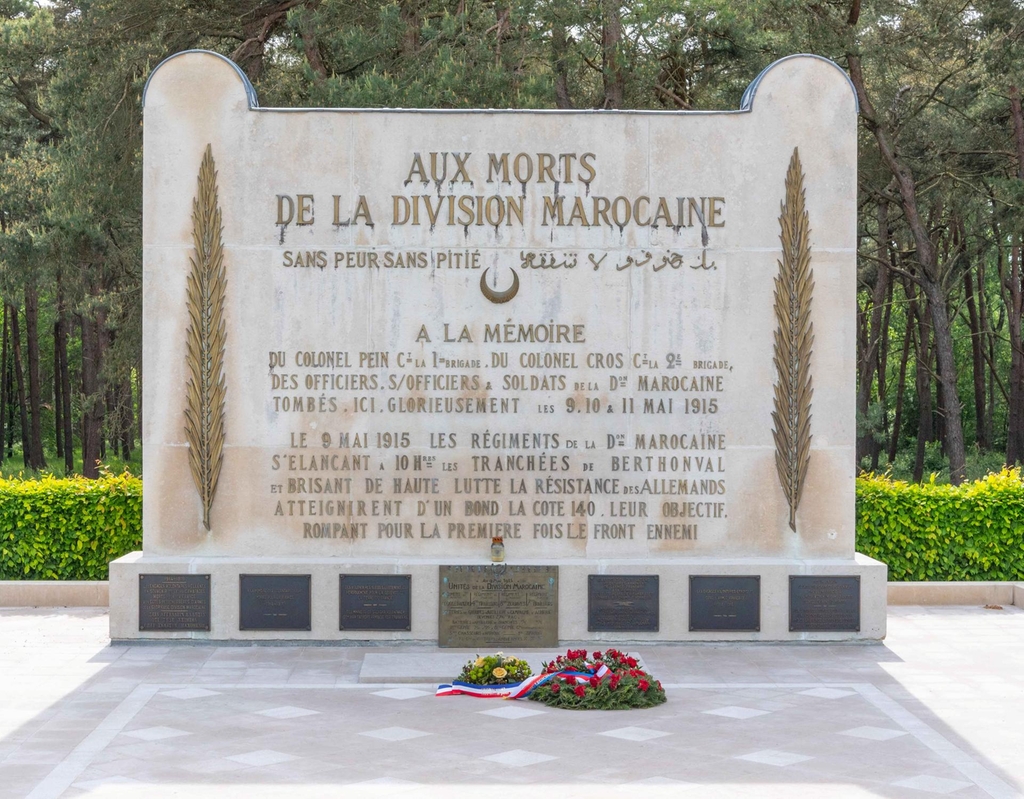
The memorial to the French-Moroccan division at Vimy Ridge, northern France. David Crossland / The National

Researchers have unearthed accounts of comradeship that saw priests, imams and rabbis learn each other’s burial ceremonies and prayers so that they could lay the dead of all faiths to rest on the battlefield. Stories have surfaced of North African Muslims saving the lives of European soldiers using herbal medicines when field medical supplies ran out.

After German troops marched into France in August 1914 and got close enough to Paris to see the Eiffel Tower, the French hastily summoned soldiers from French North Africa — Algeria, Morocco and Tunisia — while the British called troops from across its empire including India.

They cut dashing figures arriving in Marseille in their fezzes, turbans and brightly coloured uniforms, and crowds welcomed them as saviours. They were quickly dispatched to the front.

Troops from the British Indian Army, consisting of Muslims, Sikhs and Hindus with Muslims making up around a third, were in the thick of the fighting almost from the start. Arriving before troops from Canada, Australia and New Zealand, they reinforced exhausted British troops just in time to stop the German army breaking through to ports on the English channel in the First Battle of Ypres in 1914.

They were volunteers, trained and experienced soldiers, but like Western troops they were unprepared for the inferno of shells, machine guns, poison gas and rat-infested trenches they were thrown into.

“Just like a turnip is cut to pieces, so a man is blown to bits by the explosion of a shell,” wrote a Pathan soldier from northern India. “All those who came with me have ceased to exist … In taking a hundred yards of trench it is like the destruction of the world.”

But they didn’t buckle in the face of gas, freezing weather and the best-equipped army in the world, and quickly gained the admiration of European officers and men.

“It was known that Muslims troops attacked fiercely,” said Mr Ferrier. “Western troops had an ambiguous feeling when they showed up; they were happy to have them on their side but it was also a sign that an attack was on the way.”

Indian troops serving with the British Army pray outside the Shah Jahan Mosque in Woking, Surrey, during the Muslim festival of Baqrid, or Eid al-Adha, (Festival of Sacrifice), circa 1916. (Photo by FPG/Hulton Archive/Getty Images)

In this merciless war, they saw their comrades gassed and bayoneted to death. Yet the British and French were struck by how humanely Muslim troops treated prisoners of war. Asked why, they referred to Islamic teaching that prisoners must be fed in a dignified manner.

They won medals for their courage, and the British, masters of propaganda, ensured that photos of King George V, Emperor of India, pinning medals on their chests were circulated around India to encourage more men to volunteer.

Recipients included Sepoy Khudadad Khan of the 129th Baluchis, who won Britain’s highest military award, the Victoria Cross, at the Belgian village of Hollebeke near Ypres on October 31, 1914 for preventing a German breakthrough by continuing to fire his machine gun after all his comrades had been killed and he had been wounded.

He was the first South Asian to win the VC, and Indian forces won around a dozen more during more the war. Some 1.5 million men from what is now India, Pakistan, Bangladesh and Myanmar fought on the Western front, in Africa, the Middle East and Gallipoli.

Officers made efforts to provide troops with halal food and there was a high death rate among Indian cooks who advanced dangerously close to German shells to serve the men chapatis and hot curry.

The cold was as bitter an enemy as the Germans and the incessant, freezing rain in the autumn of 1914 brought wistful memories of the monsoon that gave relief from the summer heat back home, so far away. There was no home leave. Going back all the way to India was too expensive, the troops were told.

“They suffered from frostbite and exposure, causing them to lose fingers,” said Mr Ferrier. “The trenches did little to provide shelter or warmth from the extreme low temperatures, especially at night, when even clothes and blankets froze solid.”

His foundation approached Britain’s Anglia Tours, which has experience in running guided visits to First World War sites, to help organise bespoke visits to the battlefields and memorial sites where Muslims fought.

The company started off with a promotional tour last November with about 50 people, including Muslim community representatives, journalists and historians.

“We’ve done a lot of work with Forgotten Heroes to make sure it’s their tour and that we get it exactly right from their point of view and make sure it’s historically accurate,” said Alison Biegel, the company’s operations director.

“As yet we don’t have a lot of people travelling because it’s still very much in its infancy. We would expect it to attract inter-faith groups and school groups as it’s a fascinating area that is of general interest. But it’s taking time. The community are not used to touring in this way so there’s quite a lot of confidence-building.”

Anglia Tours is talking to a mosque in London about a tour in September which may be the next one.

The lack of awareness of the Muslim contribution can’t be blamed solely on Western indifference. “It was more the global lack of interest from the grassroots Muslim community that caused it,” said Mr Ferrier.

In India, which lost over 70,000 troops in the war, that indifference is easily explained. The returning troops got no heroes’ welcome because they had fought for the British cause at a time when India was pushing for greater autonomy. Hopes that the sacrifice of so many Indian soldiers would persuade Britain to give in to demands from nationalists were brutally shattered by the massacre of Amritsar in 1919, when British troops murdered hundreds of people during a protest in Punjab.

“The soldiers and the war were already in the past,” wrote London-based historian Shrabani Basu in her 2015 book For King and Another Country. Nationalists were the new heroes, so the names etched on war memorials and headstones erected by grateful colonial rulers were forgotten.

For Mr Ferrier, the time has come to remember them.

source: http://www.thenational.ae / The National / Home> World> Europe / by David Crosland / June 07th, 2018