Bujhawar Village(Jodhpur), RAJASTHAN :
Jodhpur :
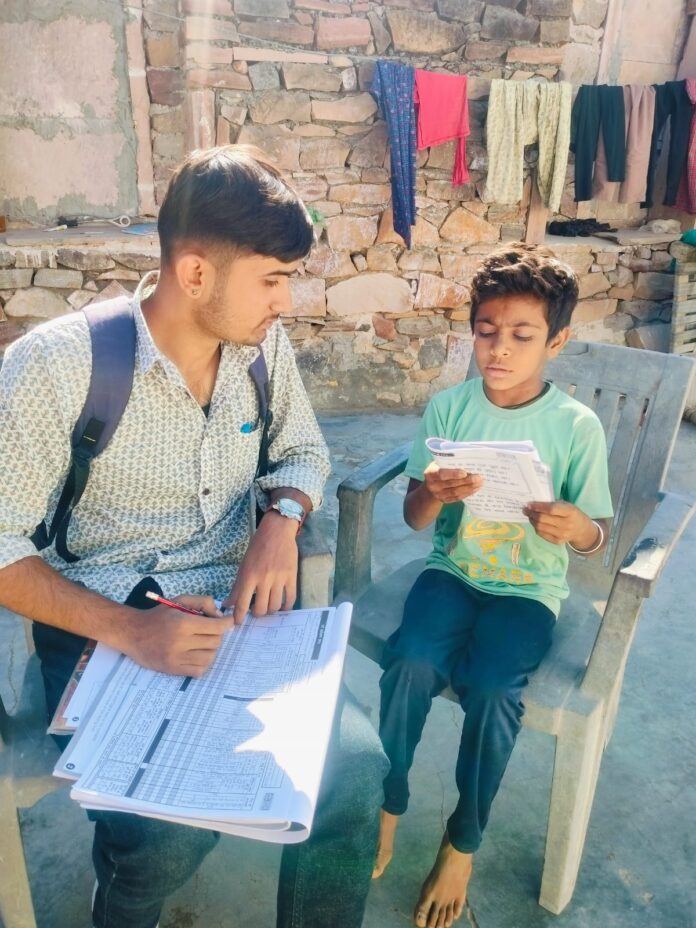
Maulana Azad University’s extensive survey of basic education and students’ enrolment in 30 villages of Jodhpur district as part of the Annual Status of Education Report (ASER)-2024 has found a notable increase in private school enrolment, and a sharp decline of children at age 3 who do not attend pre-school or early childhood education programmes.
However, the survey has found a continued challenge with learning outcomes, particularly in basic reading and arithmetic, meaning that while more children are going to school, many of them are still not learning at the expected level for their age and grade. The survey shows that children in primary classes often cannot solve basic arithmetic problems such as simple addition, subtraction, multiplication, or division.
Maulana Azad University, Jodhpur, is the first and the largest Muslim-run private higher educational institution in Rajasthan.
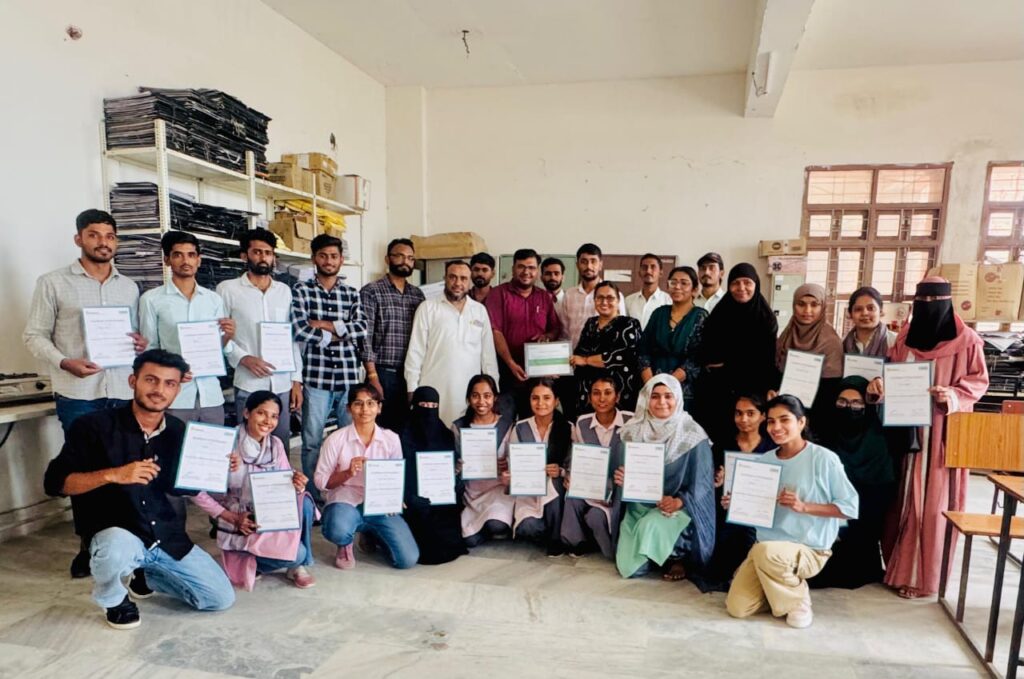
The survey was conducted by a total of 60 students of the university. The survey report was released by a non-governmental organisation, Pratham. The students who took part were drawn from the sixth semester and were felicitated at a function in the university here in the first week of July.
The Jodhpur-based university has already set up a Minorities Research Chair for conducting targeted studies and research on the issues, problems and challenges confronting the minority communities in Rajasthan, as part of its initiatives to generate new avenues. The research chair will make important recommendations after its studies.
Maulana Azad University was established by the Marwar Muslim Educational & Welfare Society (MMEWS) at Bujhawar village on the outskirts of Jodhpur in 2013. The institution of higher education is now imparting education to more than 15,000 students belonging to Muslim and other less privileged communities in multiple disciplines of study.
ASER Team Convener Raju Ram Bishnoi said the main points of conclusion of ASER-2024 were an increase in student and teacher attendance, use of smartphones among the youth, focus on pre-school enrolment, learning level challenges and gender gaps in enrolments for the subjects of science, technology, engineering and mathematics.
Bishnoi said the ASER-2024 survey in Jodhpur district assessed enrolment and basic reading and arithmetic abilities of children aged 3 to 16 years in the rural areas. The digital access and skills of children aged 14-16 years were also tested time, with smartphone-based tasks. At the national level, the survey was conducted in 17,997 villages in 605 districts and a total of 6.49 lakh children were reached.
The proportion of older children, in the age group of 15 to 16 years, not enrolled in school has been steadily declining in recent years. About 7% boys and girls of this age group are not enrolled in schools at present. Nationally, more than 90% of rural adolescents have access to a smartphone. About 70% of adolescents in this age group can perform basic digital tasks such as setting alarms, searching for information on the Internet, finding specific online content and sharing with others.
Dean of the university’s Education Department, Dr. Samina, said the ASER survey was switched in 2016 to an alternate year model, as part of which a “basic survey” is conducted every two years in the rural areas of all districts, with smaller surveys focusing on other age groups and regions in the intervening years.
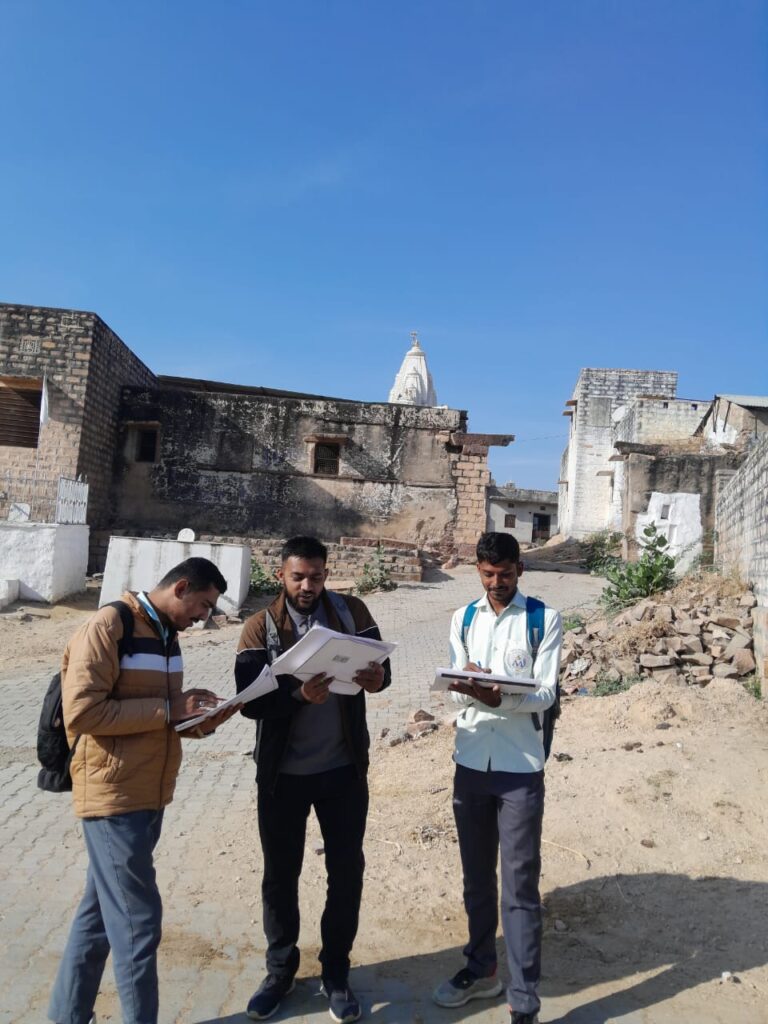
The villages covered in the extensive survey were situated in Bawari, Bhopalgarh, Bilara, Mandor, Luni, Osian, Bap, Phalodi, Balesar and Shergarh blocks of Jodhpur district.
Misbah Noor, a III year student of B.Sc., B.Ed. (combined) at Maulana Azad University, told India Tomorrow that she spent two days at Uchiyarda village in Mandor block to study the educational scenario. Misbah was given a certificate of participation for the survey report submitted by her.
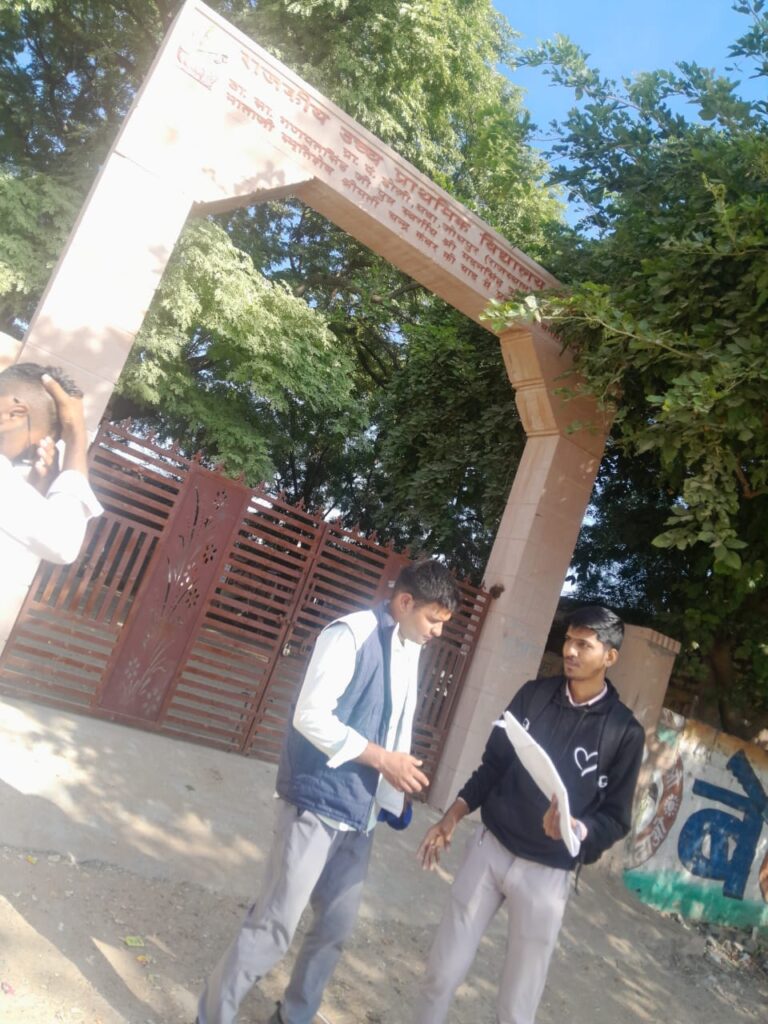
Another student, Afzal Khan, said he went to Bilara block’s Pichiyak village for the survey, in which he recorded the efficiency levels of young children after interacting with them. Afzal is studying for B.Ed. (Urdu) in the university. The surveyors selected 20 houses in each village and tested the basic reading and arithmetic abilities of children aged between 5 and 16 years, besides testing digital literacy skills of adolescents between 14 and 16 years.
Mauala Azad University’s Chairperson and noted educationist Mohammed Atique said the university was willing to work with the government agencies and non-government organisations for works at the grassroots level for the benefit of future generations. Atique said all kinds of support, including financial, would be extended for such works.
University’s officiating Registrar Mohammed Amin, who has earlier worked with several international NGOs, said the ASER surveys had helped out the government, which had incorporated their recommendations in its educational programmes. “I have had the experience of working with ASER since 2010. Our university has made a significant contribution to the exercise with the active participation of students,” he said.
The MMEWS, established in 1929 during the pre-Independence era, runs as many as 330 educational, health and social institutions. Atique, 77, has been instrumental in easing the lives of more than 45,000 youths through these institutions working in varied fields of education, health care, community development, rural development, waste-to-wealth initiatives and skill development programmes during the last four decades.
The then ruler of Jodhpur princely state, Maharaja Umaid Singh, was the patron of MMEWS and had gifted a school named ‘Durbar Muslim School’ to the Society in 1936. The Rajasthan government allotted five acres of land to the MMEWS in 1978, on which the Maulana Abul Kalam Azad Muslim Senior Secondary School was constructed.
Since then, the MMEWS has established several institutions, including the Industrial Training Institute, Nursing College, Pharmacy College, B.Ed. College, Mai Khadija Hospital, Rahmatul-Lil-Alameen Blood Bank, Marwar Adarsh Gaushala and Bujhawar Veterinary Hospital. The MMEWS established the university in 2013 with the intention of providing higher education to the most deprived and marginalised sections of society.
The first president (Vice-Chancellor) of Maulana Azad University was the noted Islamic scholar from New Delhi, Akhtarul Wasey. The current president, Jameel Kazmi, hailing from Jaipur, has taken steps for interdisciplinary studies while maintaining the indigenous ethos and the spirit of plurality in the university’s functioning.
About 50,000 students have so far passed out from the MMEWS group of institutions and become doctors, engineers and business people and entered other professions as well. Some of them have also established nursing homes and clinics in remote rural areas, which are often ignored in the government’s development plans. Maulana Azad University has set the motto, “Gain Knowledge and Serve Mankind”, for itself.
source: http://www.indiatomorrow.net / India Tomorrow.net / Home> Education / by India Tomorrow Correspondent / July 13th, 2025