The new Governor of Andhra Pradesh has once said ‘he has lived a dream’
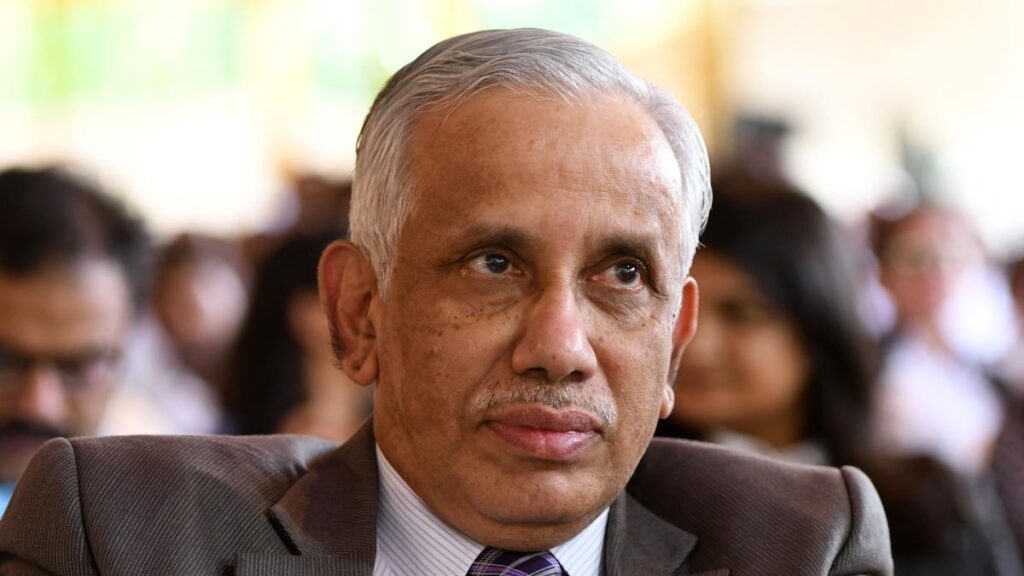
File photo of retired Supreme Court judge Justice Abdul Nazeer. | Photo Credit: Sandeep Saxena
Justice S. Abdul Nazeer, retired Supreme Court judge and the new Governor of Andhra Pradesh, once said “he has lived a dream”.
The man whose face, Supreme Court lawyers say, breaks into a “million dollar smile” before dismissing their cases, started his life’s journey in singularly tough circumstances in Karnataka’s Beluvai and later in Mangaluru.
Chief Justice of India D.Y. Chandrachud narrated how a young Nazeer worked in his uncle’s farms to make ends meet. During those bleak early years, he would scavenge for fish which washed up ashore at the Panambur beach to supplement his family’s income.
Justice Nazeer was born in 1958 into a family of several brothers and a sister. His father died early. He has often spoken about the sacrifices of his mother for the family. Justice Nazeer completed his graduation in Commerce and obtained a law degree from SDM Law College in Mangaluru. He was the family’s first lawyer. He moved to Bengaluru, overcame his natural shyness and “difficulty with the English language” to set up a substantial practice in tax and civil laws.
‘Duck syndrome’
He compared his early years as a lawyer to the “duck syndrome”. “I was like a duck who is seen gliding smoothly on the water, but is actually paddling furiously under the water just to keep itself afloat,” Justice Nazeer said at his farewell from the Supreme Court.
Justice Nazeer was elevated to the Karnataka High Court Bench at the early age of 45, largely owing to the recommendation of Justice R.V. Raveendran, the senior-most local judge of the High Court at the time. He spent 14 years at the High Court before his appointment as a Supreme Court judge on the proposal of a Collegium led by then Chief Justice of India J.S. Khehar in 2017.
Justice Nazeer was not even a Chief Justice of a High Court when he was elevated to the Supreme Court. He was in fact the fourth senior-most among minority community judges of the High Courts.
His tenure gave him opportunities, one after other, to be in the thick of almost every momentous decision of the apex court.
He supported Chief Justice Khehar’s minority view to uphold triple talaq while the majority on the Constitution Bench struck it down. He was part of the nine-judge Bench which upheld privacy as a fundamental right.
Then came his role as the sole minority judge on the Ayodhya Bench, which gave the title of the disputed Ramjanmabhoomi to the Hindus. Senior advocate Vikas Singh said the unanimous Ayodhya judgment showed Justice Nazeer had “placed the nation first, him as a judge second and him as an individual last”.
On Justice Nazeer’s last working day, Chief Justice Chandrachud, who was also part of the Ayodhya Bench, said “Justice Nazeer was not the one who would be neutral between right and wrong but he stood for what is right. We shared the Ayodhya Bench and we worked together and delivered a decision together”.
His last few days as apex court judge saw a Constitution Bench presided by Justice Nazeer uphold the government’s 2016 demonetisation policy as flawless.
Justice Nazeer is also remembered for his speech at the National Council meeting of the Akhil Bharatiya Adhivakta Parishad in Hyderabad in December 2021, highlighting the need to chuck the colonial legal system detrimental to national interest and embrace the “great legal traditions as per Manu, Kautilya, Katyayana, Brihaspati, Narada, Parashara, Yajnavalkya and other legal giants of ancient India”.
Justice Nazeer is known for his fondness for theatre. He writes dialogues and composes songs for his dramas. He is also well known for his Tulu songs. Justice Nazeer has learnt Sanskrit. Chief Justice Chandrachud credits this endeavour to his “diversity, inclusion and openness of mind”.
source: http://www.thehindu.com / The Hindu / Home> News> India / by Krishnadas Rajagopal / February 13th, 2023
The first Muslim judge of a high court in colonial times, Syed Mahmood’s professional conduct offers a counterpoint to the declining standards in Indian judiciary.
WHEN Justice Abdul Nazeer addressed the 16th national council meeting of the RSS-affiliated Akhil Bharatiya Adhivakta Parishad at Hyderabad last December, he said, “Great lawyers and judges are not born but made by proper education and great legal traditions, as were Manu, Kautilya, Katyayana, Brihaspati, Narada, Parashar, Yajnavalkya, and other legal giants of ancient India.” In the symposium on “Decolonisation of the Indian Legal System”, Justice Nazeer also said the “continued neglect of their great knowledge and adherence to the alien colonial legal system is detrimental to the goals of our Constitution and against our national interests…”.
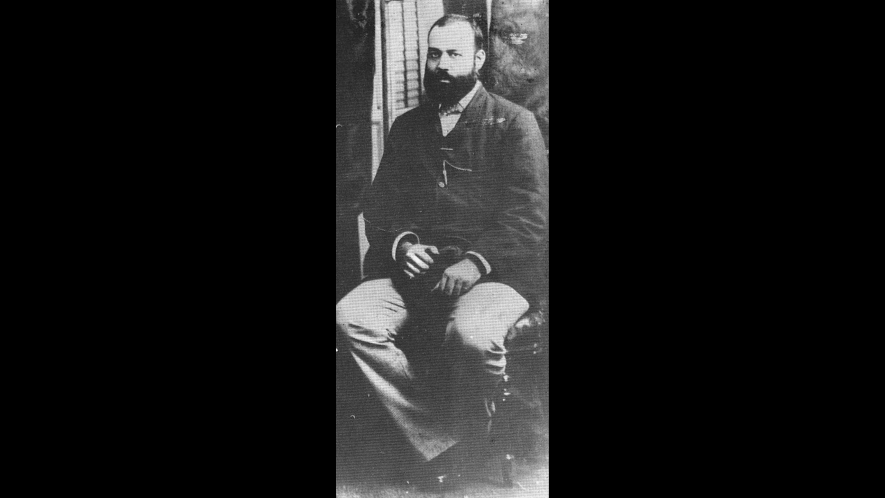
Perhaps Justice Nazeer should have also recalled 19th-century jurist Justice Syed Mahmood (1850-1903). A pioneer in bold assertions against the colonial judiciary, he produced incisive legal commentaries that reflect an audacious dissenter’s point of view. Writing in an Urdu newspaper, his father, Sir Syed Ahmed Khan, narrates Mahmood’s resignation from the Allahabad High Court in 1893 to “protect the self-respect of Indians against the racism of British judges”.
In that era, conceptions of nationhood were still evolving in India. Indian judges would not muster the courage to contest the racism of the imperial power or fellow European judges. But Mahmood did, in intrepid ways. Khan founded the Mohammedan Anglo-Oriental (MAO) College at Aligarh in 1877 and figures prominently but contentiously, stereotyped as a British loyalist and separatist in debates on contemporary nationalism. Mahmood supported his father’s modern education project, but unfortunately, his contributions are largely ignored by historians and the legal fraternity.
By 1920, MAO College, now Aligarh Muslim University, was the most prominent residential university in the country. Its history department has been a premier centre for advanced studies for a half-century. In 1889, primarily on Syed Mahmood’s initiative and his gifts in terms of books, journals and cash, AMU established a law department. Yet, he was neglected in its research. Only in 1973, seven years after the centenary of the Allahabad High Court, the Aligarh Law Journal brought out Mahmood’s contributions, and legal scholars reflected on his high calibre as a lawyer and judge.
The good news is, in 2004, Alan M. Guenther did his doctoral thesis on Mahmood at McGill University, Canada, which is available online for the public to access. His meticulous and well-researched account touches almost every aspect of Mahmood’s public life. Guenther also published an extended essay in 2011on Mahmood’s views on English education in 19th-century India. (In 1895, Mahmood had written a book on the theme for his speeches at the Educational Conference.)
In 1965, Asaf Ali Asghar Fyzee (1899-1981) complained, “Syed Mahmood’s contributions to the transformation of Muslim law in India have been largely neglected by historians and survive primarily as footnotes in legal texts on Muslim law.” Guenther, too, observes, “…overshadowed by the life and writings of his illustrious father, Ahmad Khan, his legacy has not received the attention it deserves. A large part of his father’s achievements in the reform of education, in fact, would not have been possible without the assistance of Syed Mahmood. But when he reached the age at which his father had made his most significant achievements, [Mahmood] had his life cut short.”
Mahmood had laid out his life plans clearly. S. Khalid Rashid, writing in 1973, reports that Mahmood decided early on that, like his ancestors, he would devote the first third of his life to educating himself, the second to earn a living, and the last to “retired study, authorship and devotion to matters of public utility”. But Guenther writes about how Mahmood’s health had deteriorated through alcohol abuse and disease. He died before he turned 53, broken by forced retirement, estranged from his father (who had died five years previously), stripped of responsibilities at the college he had helped found, separated from wife and son, and in poverty. He was selling personal items to repay debts. “His father’s numerous writings and letters are still republished, but Syed Mahmood’s contributions to Muslim thought are hidden in bound volumes of the Indian Law Reports and brittle files of government correspondence,” Guenther writes.
One aspect of Mahmood’s last years is captured by Prof. Iftikhar Alam Khan’s Urdu books, Sir Syed: Daroon-e-Khana (2006, 2020) and the recent Rufaqa-e-Sir Syed: Rafaqat, Raqabat wa Iqtidar Ki Kashmakash. These accounts expose the smear campaigns of the three companion successors of Sir Syed—Samiullah, Mohsin-ul-Mulk and Viqar-ul-Mulk—against Syed Mahmood as they vied for the secretary’s post at MAO College. Often European members of MAO College conspired with them. Exploiting his weaknesses and eccentricities, they ousted him to get a hold over college affairs, compounding his hurt during his tragic final years.
SYED MAHMOOD’S ROLE IN SIR SYED’S EDUCATIONAL ENTERPRISE
Having returned to India in 1872 after studying in England, Mahmood took time out of his budding legal career to assist his father’s reform work, particularly setting up MAO College. He prepared a detailed plan along the lines of his experiences in Cambridge. His specific aim, explained in February 1872, was to produce future leaders of India through an educational institution whose residential nature would be “as indispensable an education as the course of study itself”. The aim was to create a society of students and teachers quite different from the rest of society.
He travelled with his father to Punjab in 1873 and spoke at a rally to promote the project. In 1889, Sir Syed introduced a motion to nominate Mahmood as joint secretary of the board of trustees of MAO College by highlighting his assistance despite the opposition he faced. In particular, he considered his son’s influence the primary factor that persuaded European professors to come to India and teach there.
European staff members confirmed this around six years later when there was renewed opposition to Mahmood continuing as joint secretary. The principal, Theodore Beck (1859-1899), testified, “Syed Ahmad….acknowledged his reliance on Syed Mahmood for advice in all matters, and his imprint could be noted in the correspondence relating to the school. He declared his firm conviction that Syed Mahmood was the one person who shared his vision for the college, and apart from him, no one would be able to administer the school in keeping with that vision.” However, Samiullah (1834-1908) disagreed with Sir Syed on this count. As a result, a tussle for power began in the college management. The power-play could explain why AMU felt inhibited in bringing out a biography of Mahmood, a research gap that Guenther’s doctoral thesis fills. He has extensively relied on important correspondences of Mahmood preserved in the London India Office (British) Library.
SYED MAHMOOD’S TRYST WITH MUSLIM LAW
Mahmood is a forgotten pioneer of the transformation of Muslim law in modern South Asia. In 1882, at just 32, he became the first Muslim judge of the high courts in British India. He delivered numerous landmark decisions that shaped Muslim law, the law in general, and its administration.
Earlier, he blazed a trail his younger contemporaries followed in their judicial roles in British India. He was one of the first Indian Muslims to study in England and train in the English system of jurisprudence, the first Indian to enrol as a barrister in the High Court of Judicature at Allahabad in 1872, the first appointed as a district judge in the restructured judicial system of Awadh in 1879 and the first Indian assigned as a puisne judge to the High Court at Allahabad. He was the first Muslim in any High Court of India. He cleared a path for Indian Muslims to participate in administering justice in India. But his contribution is not limited to creamy career opportunities for Muslim youngsters. His lasting legacy is how Muslim law is perceived and administered in South Asia today.
CHAMPION OF ACCESSIBLE JUSTICE
An abiding concern of Mahmood was the cost of administration of justice. Court procedures were lengthy and expensive, and the “mass of law” was complicated. Distance from courts was another concern, for which he proposed a network of village courts for “on-the-spot” adjudication. He sought to make justice accessible through unpaid tribunals and honorary munsifs. He prepared a comprehensive draft for this, Guenther informs.
Furthermore, he attacked the [racial] mindset and court fees and stamp duties on legal documents. He ruled in August 1884 and February 1885 that “…if justice costs the same amount [to the] rich and poor, it follows that the rich man will be able to purchase it, whilst the poor man will not.” He declared, more than once, that British judges in India were too quick to find fraud.
In a speech at the Allahabad Bar in April 1885, Mahmood raised the language issue in judicial transactions, saying laws should be in languages intelligible to the masses. He insisted on the vernacular in arguments, pleadings and justice delivery and translated verdicts so that people unfamiliar with English could rest assured that judgments are reasoned. Of course, the issue of judicial language continues to be debated, and for this, acknowledgement is due to Mahmood.
AN INDIAN DISSENTER IN THE HIGH NOON OF BRITISH COLONIALISM
Mahmood is known most for outstanding dissenting judgements. In volume 2 of his 2021 book, Discordant Notes, Justice (retd.) Rohinton F. Nariman writes that Mahmood was known for detailed judgments, some of which stand out for thoroughness and fearless language. Mahmood would refer to the original Sanskrit versions when ruling on Hindu laws and the Arabic texts for Muslim laws, rather than using interpretations of the relevant texts.
From the 1860s to 1880s, during the codification of laws, he sought limits on importing British laws and protested that the local context was getting overlooked. His concern was not just the laws but their efficacy and adaptability within India’s cultural diversity.
Guenther observes, “…throughout his life, he identified himself as a Muslim as well as an Indian and a subject of the British crown, and that he was actively involved in the education and improvement of the Indian Muslim community. At the same time, Mahmood… [made] efforts to promote harmony between people of diverse backgrounds, and…[supported] initiatives that improved the situation of all Indians, regardless of religious affiliation…”
An anecdote from Altaf Hali’s Hayat-e-Javed (1901), cited by Shamsur Rahman Faruqi (2006), is worth sharing. “Contrary to the culture of sycophancy and genuflecting before the English colonial authority….Syed Ahmad Khan and his high-profile and brilliant son Syed Mahmud strived to conduct themselves as if they were equal to the English….Syed Ahmad Khan had stayed away from the [1867 Agra] Durbar because Indians had been given seats inferior to the English. A medal was to be conferred on Syed Ahmad Khan at that Durbar. Williams, the then Commissioner of Meerut, was later deputed to present the award to Syed Ahmad Khan at Aligarh railway station. Willams broke protocol and showed his anger at having to do the task under duress and said that government orders bound him, or he wouldn’t be presenting the medal to Syed Ahmad Khan. Syed Ahmad Khan accepted the medal, saying he wouldn’t have taken the award, except that he too was bound by government orders.”
Indian democracy is an outcome of anti-colonial nationalism, and dissent is its core component: Mahmood’s dissent contributed to nationalism in his time. In 2022, the V-Dem Institute described India as an electoral autocracy where dissent is being criminalised, and the judiciary is failing to contain the majoritarian upsurge. Mahmood’s professional conduct is an encouraging counterpoint to the degeneration in the Indian judiciary.
WHAT DID MAHMOOD THINK OF THE INDIAN NATIONAL CONGRESS?
According to Guenther, though Mahmood never joined the Congress, he was “equally aloof” from the anti-Congress propaganda his father indulged in. “…a rare catholicity characterised his views on most of the controversial questions,” he writes. He adds, “His acceptance among the Hindus [elites] generally was demonstrated by the fact that they tried to send him as their representative to the Imperial Legislative Council, though he never received that appointment.”
Nonetheless, like his father, Mahmood harboured class and regional prejudices. Guenther reveals an article Mahmood wrote in The Pioneer on 4 September 1875, suggesting the government must strive to with the sympathies of the “higher classes of natives”. When challenged to defend his position by “Another Native” in the same newspaper two weeks later, Mahmood responded that people in Punjab and the North-western Provinces [now Uttar Pradesh] were, historically speaking, of “much greater political significance” than those of Lower Bengal. Gunther cites his write-up: “…any educational system that succeeded in ‘attracting the Bengalee and fail(ed) to exercise any influence upon the higher classes of the Rajpoot, the Sikh, and the Mussulman’ must be regarded as a failure.”
Considering the socio-regional composition of top functionaries of AMU, even impartial insiders would testify that it still harbours regional and sub-regional prejudices. The Sir Syed Academy is releasing many publications during the ongoing centenary celebration of AMU. Publishing Guenther’s dissertation may be a fitting tribute to Mahmood, who must be regarded as a prominent co-founder of MAO College.
Mohammad Sajjad teaches modern and contemporary Indian History at Aligarh Muslim University. Md. Zeeshan Ahmad is a lawyer based in Delhi. The views are personal.
First published by Newsclick.
source: http://www.theleaflet.in / The Leaflet / Home> History / by Mohammad Sajjad and Zeeshan Ahmad / April 01st, 2022
Justice Nazeer said that considering the “Constitutional importance” and “significance” of the issue, the Ram Janmabhoomi land dispute case should be referred to a larger bench.
The majority verdict by other members of the bench, comprising Chief Justice Dipak Misra and Justice Ashok Bhushan, said that this observation was made in the context of land acquisition.
The observation in the 1994 Ismail Faruqui case that a mosque is not an essential part of Islam and namaz by Muslims can be offered anywhere, “even in open” was arrived at “without undertaking a comprehensive examination,” Supreme Court judge Justice S Abdul Nazeer said Thursday.
The majority verdict by other members of the bench, comprising Chief Justice Dipak Misra and Justice Ashok Bhushan, said that this observation was made in the context of land acquisition.
Disagreeing with this in his 42-page dissenting judgment, Justice Nazeer said that considering the “Constitutional importance” and “significance” of the issue, the Ram Janmabhoomi land dispute case should be referred to a larger bench.
Justice Nazeer referred to the Srirur Mutt case which had observed that “what constitutes the essential part of a religion is primarily to be ascertained with reference to the doctrines of that religion itself”. Ismail Faruqui needs to be brought in line with the “authoritative pronouncements in Shirur Mutt,” he said.
Justice Nazeer posed four key questions.
First, whether in the light of Shirur Mutt, “an essential practice can be decided without a detailed examination of the beliefs, tenets and practice of the faith in question” ; second, whether the test for determining the essential practice is both essentiality and integrality; third, does Article 25 (Freedom of conscience, practice and propagation of religion), “only protect belief and practices of particular significance of a faith or all practices regarded by the faith as essential” ; fourth, do Articles 15 (prohibition of discrimination on grounds of religion, race, caste, sex or place of birth), 25 and 26 (freedom to manage religious affairs) read with Article 14 (right to equality) “allow the comparative significance of faiths to be undertaken”.
Justice Nazeer also referred to a string of rulings on similar issues that have been referred to a larger bench: a three-judge bench of the SC has referred the matter relating to polygamy including Nikah Halala, Nikha Mutah, and Nikah Misya to a Constitution Bench; a two-judge Bench had has referred the matter in relation to the policy decision permitting Ram Leela and Puja once in a year in public parks to a Constitution Bench; and, most recently, a three-judge bench considering the question relating to banning the practice of Female Genital Mutilation (FGM) has referred the matter to a larger bench.
The issue of referring the observation of 1994 verdict had cropped up when the three-judge bench headed by the CJI was hearing the batch of appeals filed against the Allahabad High Court’s 2010 verdict by which the disputed land on the Ram Janmabhoomi-Babri Masjid area was divided into three parts.
Justice Nazeer said that this 2010 verdict has been “expressly and inherently” affected by the questionable observations made in Ismail Faruqui case.
The issue of referring the observation of 1994 verdict had cropped up when the three-judge bench headed by the CJI was hearing the batch of appeals filed against the Allahabad High Court’s 2010 verdict by which the disputed land on the Ram Janmabhoomi-Babri Masjid area was divided into three parts.
A three-judge bench of the high court, in a 2:1 majority ruling of 2010, had ordered that the 2.77 acres be partitioned equally among three parties — the Sunni Waqf Board, the Nirmohi Akhara and Ram Lalla, the deity.
source: http://www.indianexpress.com / The Indian Express / Home> India / by Kaunain Sheriff M / New Delhi / September 28th, 2018
It was a proud moment for the Karnataka High Court as two of its judges were elevated to the Supreme Court.
Bengaluru :
It was a proud moment for the Karnataka High Court as two of its judges were elevated to the Supreme Court. In a rare instance, one of the judges has been elevated even before becoming the chief justice of a high court.
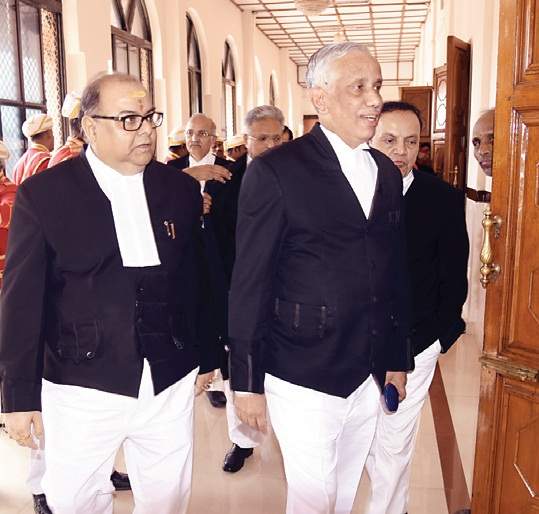
Chief Justice Subhro Kamal Mukherjee, Justice S Abdul Nazeer (right) after a farewell programme at the High Court on Thursday | Vinod Kumar T
The elevated judges are Justice S Abdul Nazeer from the Karnataka High Court and Justice Mohan M Shantanagoudar, who was recently transferred from Karnataka High Court as chief justice of Kerala High Court. They will be sworn in as judges of the Supreme Court on Friday. Both the Judges will have a six-year tenure in the apex court.
Justice Nazeer is perhaps the third judge elevated directly to apex court before becoming the chief justice of a high court.
Earlier, Justice S Rajendra Babu, former Chief Justice of India and Justice N Venkatachala, former Lokayukta were elevated directly as judges of the Supreme Court from the Karnataka High Court.
“I have become emotional.. the reason is my elevation to the apex court and also heading towards Delhi, leaving all the legal fraternity of the state. The real power of courts lie in the trust and confidence reposed by the people and the power vested with them to decide or punish the guilty. Continuing efforts are needed by the bar and bench to keep the faith of people in judiciary,” Justice Nazeer said, while thanking his mother for “raising him to this level despite poverty.”
A warm farewell was given to Justice Nazeer by both the Bar and bench on Thursday. His elevation was described as a proud moment for the Karnataka High Court by those who were on the dais as well as those who were in attendance.
source: http://www.newindianexpress.com / The New Indian Express / Home> Cities> Bengaluru / by Express News Service / February 17th, 2017