Tag Archives: Maulvi Liaqat Ali

Maulvi Liaquat Ali Qadri (1817–1892): A Stalwart of India’s Freedom Struggle

Mehndauri Village (Chail Pargana, Allahabad District), UTTAR PRADESH :
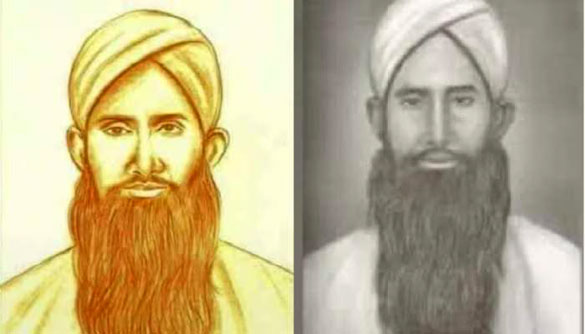
Maulvi Liaquat Ali Qadri, a religious scholar, led the 1857 Allahabad rebellion, uniting communities against British oppression. Declaring jihad, he fought for India’s freedom, faced exile, and died in Kala Pani in 1892, leaving a lasting legacy.

Main Points:

1.    Maulvi Liaquat Ali Qadri (1817–1892), born in Allahabad, was a revered religious scholar and freedom fighter.

2.    He led the 1857 rebellion in Allahabad, uniting Hindus and Muslims against British rule.

3.    Declared jihad, organized public gatherings, and hoisted Bahadur Shah Zafar’s flag.

4.    Fought British oppression, faced exile, and continued guerrilla warfare.

5.    Sentenced to life in Kala Pani; died in 1892.

———-

Maulvi Liaquat Ali Qadri was born on October 15, 1817, in the village of Mehndauri, Chail Pargana, Allahabad district, to Syed Meer Ali and Aamna Bibi. He was a revered religious figure of his time, embodying the spirit of both spiritual and national liberation. During that era, Islamic scholars viewed the country’s independence and religious freedom as inseparable causes. This conviction led a significant number of religious scholars to participate in the Indian Rebellion of 1857, many of whom attained martyrdom in their fight for freedom.

Maulvi Liaquat Ali was a simple man deeply connected to the struggles of the common people in his region. He was acutely aware of the hardships faced by the masses under British colonial rule. Alongside his profound religious knowledge, he harbored an intense passion for liberating his country from the shackles of foreign oppression. Leading a life of piety and integrity, he consistently advised others to uphold honesty, empathy, and mutual support in times of distress. He considered it the duty of every Indian to strive for the nation’s independence.

The Rebellion in Allahabad

Following widespread looting and arson, Allahabad fell under the control of the rebel Indian forces. Maulvi Liaquat Ali, accompanied by a large number of his followers, threw himself into the struggle against British rule. Seizing the opportunity, he declared jihad against the British, galvanizing thousands to join the fight. Under his leadership, the people of Allahabad (now Prayagraj) united to drive the British out of the city. Maulvi Liaquat Ali delivered a powerful message of unity to both Hindus and Muslims from a public platform in Allahabad. In his sermon, he emphasized, “We are all one. Together, we must confront the foreigners.” With this spirit of unity, he proclaimed the establishment of an independent government in the region and hoisted the flag of Bahadur Shah Zafar, the last Mughal emperor.

The British were not only plundering India’s wealth but also subjecting its people to relentless oppression. Beyond economic exploitation, Christian missionaries, backed by colonial authorities, were attacking India’s religious traditions and sacred texts. They propagated Christianity while attempting to demean Hindu and Muslim scriptures.

Unable to tolerate these affronts, Maulvi Liaquat Ali organized a massive public gathering on June 7, 1857, at Khusro Bagh in Allahabad. The event drew a large number of patriotic Hindus and Muslims. In a fiery speech, he condemned the British for their atrocities, including looting, arson, and desecration of holy texts. Declaring that such oppressors could not be tolerated, he called for jihad against the “sinners.” His impassioned address stirred the hearts of the audience, who were already exasperated by the British’s sacrilegious actions.

Under his leadership, a week-long uprising against the British began on June 9, 1857. Rebels set fire to British bungalows, inflicted casualties, and damaged government property. The widespread unrest created panic among the colonial authorities. However, the British retaliated with heavy shelling and arson, driven by a desire for vengeance. Entire settlements were razed, forcing residents to flee their homes. Maulvi Liaquat Ali, too, was compelled to leave Allahabad and sought refuge in Kanpur.

A Champion of Communal Harmony

Maulvi Liaquat Ali was a firm advocate of Hindu-Muslim unity and cooperation, despite his opposition to Christian missionaries, whose actions, fuelled by colonial arrogance, insulted Indian religions and scriptures. He was among the few leaders who demonstrated through their revolutionary actions that they were fully aware of the socio-political realities of their time. The British, he believed, were not only exploiting India’s resources but also undermining its social fabric. He tirelessly worked to counter their divisive tactics, raising his voice for the dignity of women, religious communities, and the upper classes, earning widespread admiration for his efforts.

Despite his religious persona, Maulvi Liaquat Ali was always ready to take risks for the sake of his country and faith. He never feared for his life or shied away from potential losses. His revolutionary activities were driven by a singular goal: to free India from British rule and rid the sacred land of their oppressive presence. When a Muslim shrine, Bakhtiar Bakhtiyar, and the Telegraph Band were seized by the British, Muslim youths fought to protect them, resulting in losses on both sides. Clashes between Indian rebels and British forces continued across various regions, making it increasingly difficult for the British to maintain their grip on India.

A Lifelong Struggle for Freedom

Maulvi Liaquat Ali swore to dedicate his life to the cause of India’s independence. After leaving Allahabad, he moved to Muzaffarnagar, a stronghold of the freedom struggle, where he joined other revolutionaries. His authority was such that no orders were issued without his approval. Whenever British forces attempted to suppress the rebellion, Maulvi Liaquat Ali, alongside another freedom fighter, Azimullah, embarked on a perilous journey on foot toward Gujarat. Despite facing numerous hardships along the way, they reached their destination and launched guerrilla warfare against the British. For years, their tactics kept the colonial administration on edge.

According to Rakesh Verma, technical assistant at the Regional Archives, “Administrative records written in Urdu titled Naksha Bagiyan Kotwali Allahabad, listing police constables who forcibly took their salaries for May and June 1857 and participated in the revolt, including Hanuman Prasad, Imdad Ali, Ashraf Ali, etc. were hung by Major Henry Court on July 14, 1857,” (From the HT)

The British resorted to various conspiracies to capture him, but Maulvi Liaquat Ali’s stature among freedom fighters only grew. He continued to plan large- and small-scale operations against the British, opening new fronts in the fight for independence.

Imprisonment and Legacy

Ultimately, the Allahabad court sentenced Maulvi Liaquat Ali to life imprisonment in the Andaman Islands, infamously known as “Kala Pani.” Enduring the harsh conditions of imprisonment, this brave son of India passed away on May 17, 1892, bidding farewell to his beloved homeland and the world.

Maulvi Liaquat Ali Qadri’s sacrifices for India’s freedom struggle remain an enduring legacy. His contributions must be remembered and celebrated as an inspiration for future generations, reflecting the indomitable spirit of a man who fought tirelessly for his country’s liberation.

References:

https://www.hindustantimes.com/cities/others/maulvi-liaquat-ali-to-mass-killings-hanging-of-cops-1857-revolt-in-allahabad-101749063190844.html

Bhatnagar, A. P. (2009). Maulvi Liaqat Ali: Icon of 1857 uprising at Allahabad. Shubhi Publications.

https://timesofindia.indiatimes.com/india/unsung-heroes-of-the-freedom-struggle-maulvi-liaqat-ali/articleshow/93492245.cms

Khan, K. M. (2019). Jang-e Azadi aur Musalman. Pharos Media.

https://www.qaumiawaz.com/social/maulvi-liaquat-ali-the-pioneer-of-the-war-of-independence-special-offer-on-the-occasion-of-the-anniversary-shahid-siddiqui-ali

source: http://www.newageislam.com / New Age Islam / Home> Islamic Personalities / by Sahil Rizvi / August 05th, 2025
‘Ulema’s Role in India’s Freedom Movements’: An Academic Bid to Stop Saffron Eraser in its Tracks

NEW DELHI :

UlemasRole01MPOs13nov2019

New Delhi :

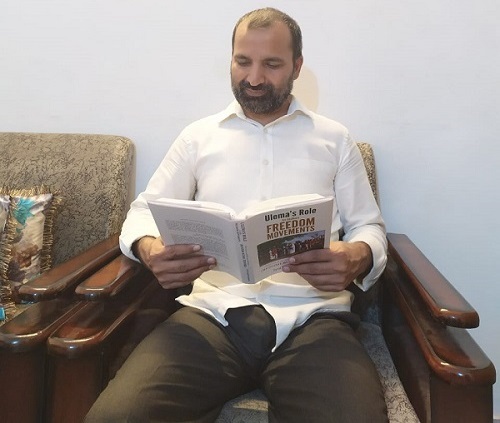
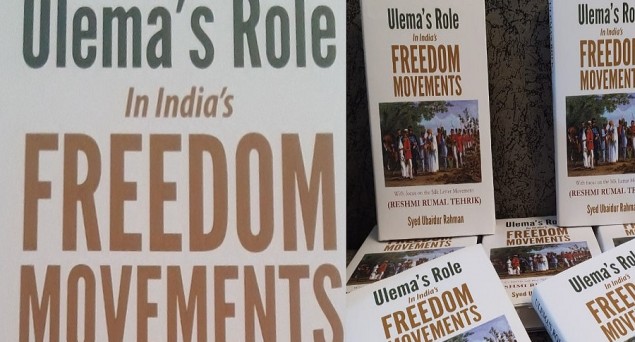
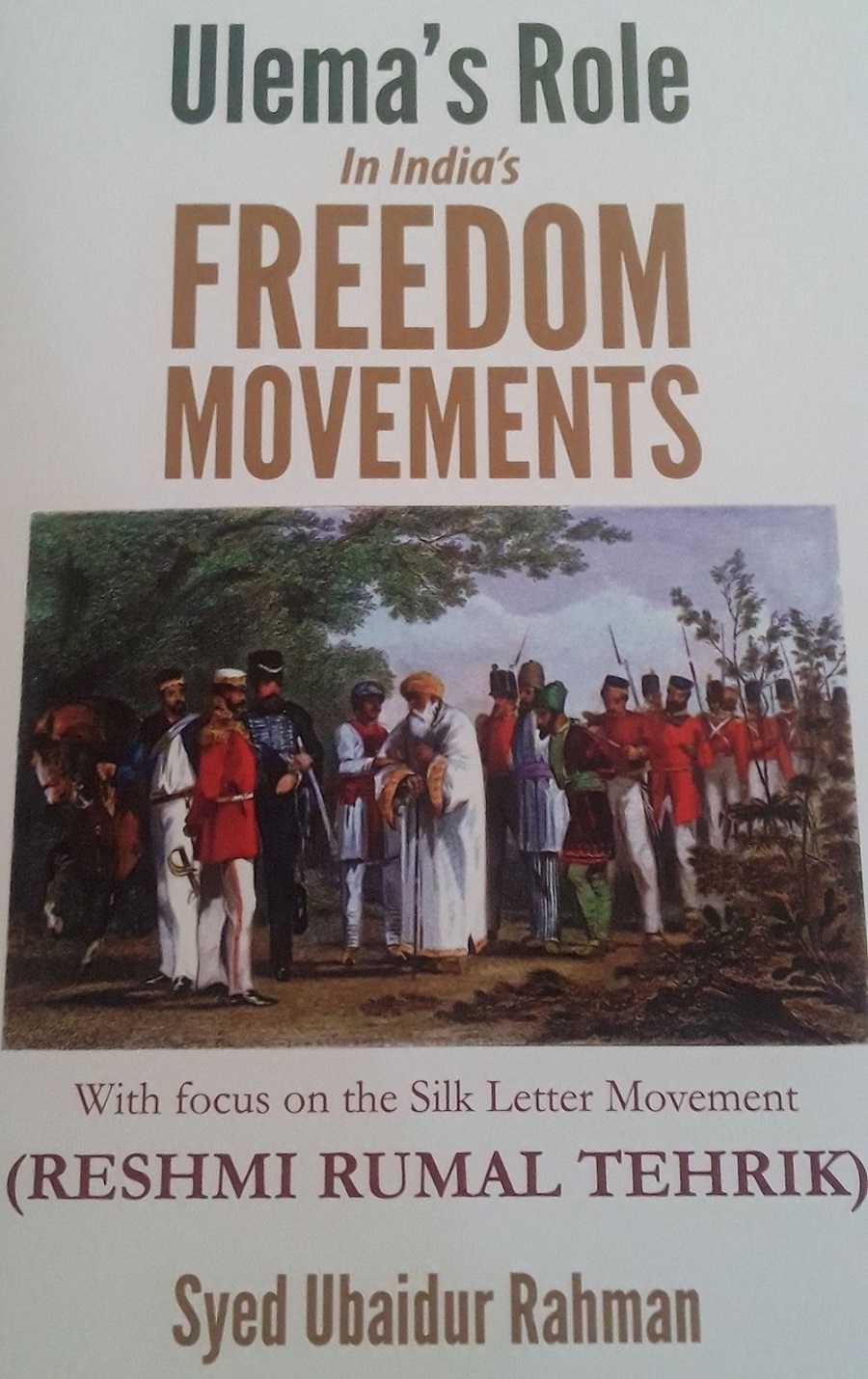
Amidst well-organized and power-backed attempts to erase M-word from the history of India’s freedom movement, has come out a humble academic bid to preserve in black and white the key role of Ulema or Muslim clerics in the ‘bloody’ freedom struggle spreading over around one century. Written by a young writer Syed Ubaidur Rahman, who is just 44, the book ‘Ulema’s Role in India’s Freedom Movements: With focus on Silk Letter Movement (Reshmi Rumal Tehrik) captures Ulema’s sacrifices in the Mutiny of 1857 and 1858, Faraizi Movement and Sayyid Ahmad Barelvi’s movement besides mainly focusing on the Silk Letter Movement as the title declares.

“The word ‘Ulema’ has become a rather very misunderstood term in the present day Indian society. Like everything Muslim, a conscious effort has been made to malign and ridicule the Muslim clergy…Over the last few centuries, the Muslim scholars have contributed immensely in seeing to it that the nation remains a single, united and cohesive unit and have made significant contributions to this end,” writes the author in the introduction of the book.

While admitting that “Ulema’s role in the society has considerably shrunk over the last several centuries,” he says that Ulema “used to have a very important place in the Indian society during Muslim rule in the country and even after the dismantling of the Mughal empire…over the centuries, on many occasions, they have led not just on spiritual front but on temporal front as well.”

“Every time in the past, when the country found itself in challenging situations, they stepped in and tried to play a much bigger role than what is usually anticipated from them. This was seen during different phases of freedom movements beginning with the first war of independence of 1857,” writes Rahman, a journalist by career who has penned several books in the last one decade, besides regularly writing articles and columns for various periodicals.

The 280-page book deals with different phases of India’s freedom struggle “with special focus on Silken Letter Conspiracy, better known as the Reshmi Rumal Tehrik.”

Highlighting the need and relevance of the book, the author says: “Not much has been written on Reshmi Rumal Tehrik or the people behind it and thus it remains shrouded in mystery. The book also discusses at length the Mutiny of 1857 and 1858, Faraizi Movement that was anti-colonial movement launched and sustained by Islamic scholars, besides Tehrik-e-Jihad of Sayyid Ahmad Barelvi in North Western Frontiers and Kashmir.”

The author says: “Despite the slide of the Muslim empire and the subsequent dismemberment, first between Muslim nawabs in the North, Deccan and South India, and later the annexation of these territories by the East India Company, Muslim scholars remained instrumental in trying to keep the Muslim empire intact. They were at the forefront in trying to stop the slide, and in posing challenges, first against those who fought the Mughals and later against the British East India Company. Shah Waliullah, the legendary Islamic scholar and reformist, did everything to stop the Mughal Empire from going to dogs. But, when despite all his efforts nothing happened, he sent a later to Ahmad Shah Abdali and also to Nawab of Oudh and Hafiz Rahmat Khan, the shrewd Ruhella chieftain. The rest is history.”

Deliberating on the core topic of the book, that is the role of Ulema in India’s freedom movement, the author writes: “Muslim ulema’s role was not limited to merely giving advice to the rulers and then become mute spectators of what was taking place. On the contrary, when they realized that there was no one coming forward to lead the masses, they took up leadership role, and fought off the invaders. From Bengal to Balakot and from Delhi to Lucknow, Muslim ulema played prominent roles in all the uprisings against the British (mis)rule. Be it Faraizi Movement, first war of independence of 1857 or the Reshmi Rumal Tehrik, they were instrumental and took leadership role. During the Mutiny of 1857, ulema were at the forefront and paid heavy price for their leadership role.”

UlemasRole02MPOs13nov2019

The book highlights the contributions of some Ulema during the Mutiny of 1857 and subsequent fights.

The author says: Maulavi Ahmadullah Shah was one of the most prominent leaders of the entire freedom movement, who led on many war fronts and collaborated with all other renowned freedom fighters. Despite being among the most prominent leaders of the 1857 Mutiny, Maulavi Ahmadullah Shah remains a rather unknown figure in the country. He was a stalwart, a shrewd military planner, a great scholar of Islamic sciences and above all a unifier beyond any iota of doubt. He allied with almost all the leading actors of the 1857 revolution, be it Tantia Topi, Nana Sahib, Begum Hazrat Mahal, Bakht Khan Ruhilla, Khan Bahadur Khan Rohilla of Bareilly or any other freedom fighter of repute. It is an irony that despite his military successes against the British East India Company in 1857 from Lucknow to Bareilly and Shahjahanpur, his name is not even mentioned. His military planning unnerved the colonial rulers and his bravery won praise from the British generals like George Bruce Malleson and Thomas Seaton.

Haji Imdadullah Muhajir Makki was another alim of repute, known for his personal piety, scholarship, courage and military exploits during the Mutiny of 1857. A father figure among ulema of his time, his most renowned disciples include Maulana Qasim Nanotwi and Maulana Rasheed Ahmad Gangohi who not just fought alongside him in Thana Bhawan and Shamli but later went on to launch Darul Ulum Deoband. Maulvi Liaqat Ali, another alim was behind the uprising in Allahabad and evicting the East India Company out of the major North Indian town. It was his personal charisma and shrewd military planning that first brought together the mutineers and later successfully beat back the Company forces. Many more ulema played prominent roles during the uprising and paid dearly when the Company came back with a vengeance. Tens of thousands of ulema were hanged to death. Even those ulema who had nothing to do with the Mutiny were implicated, jailed, sent to kalapani and unceremoniously killed. However, this dance macabre didn’t stop them from taking to the same means to defeat the colonial rulers later.

Silk Letter Movement

The author says: “Reshmi Rumal Tehrik is a freedom movement that remains largely unknown. Not much has been written on it and both its top leaders, Mahmud Hasan and Ubaidullah Sindhi, despite their stellar roles and sacrifices, remain rather unknown. While Shaikhul Hind spent three years in trying circumstances in Malta, Ubaidullah Sindhi spent more than three decades in exile, first in Afghanistan and then in Turkey and Hejaz.” 

Silk Letter Movement, known more widely as the Reshmi Rumal Tehrik, was launched by ulema of Deoband, particularly Mahmud Hasan and his renowned disciple Ubaidullah Sindhi, who later went on to become the Home Minister in the first provisional government established in Kabul. Raja Mahendra Pratap Singh was its President and Maulana Barkatullah Bhopali was its Prime Minister. The Reshmi Rumal Tehrik had a two-fold objective, one to incite the tribal people in North Western Frontier region and then forging alliance with other world powers including Afghanistan, Turkey and Germany. While Mahmud Hasan headed to Hijaz to seek help from Turkish officials, Ubaidullah Sindhi went to Kabul to forge alliance with Afghan amir. Both were very successful in their planning, but while Mahmud Hasan was still in Hijaz, Ottomans suffered heavy reverses against Sharif of Mecca who was being propped by Britain. At the same time, the entire planning of Ubaidullah Sindhi was discovered when the Silken Letters, sent by him to Mahmud Hasan were unearthed by the British CID. Hundreds of their supporters across Punjab, United Provinces and Delhi were arrested by British police.

In the introduction of the book, author Rahman says: “The pages that follow unravel a history that has been often suppressed and not much has been written on it. To many people, this side of the history may seem rather bewildering as I examine it and try to make sense as to what happened in our part of the world and how those brave men, despite the failure of 1857 mutiny rose repeatedly to defy the British Raj.”

How Important Is This Book when saffron eraser is moving fast on the canvas of freedom history of India?

Talking to India Tomorrow, the author responded to the question: “History needs to be preserved. It is the responsibility of the people, communities and the nations to preserve their histories and present right perspectives to what happened in the past. Indian Muslims have done precious little when it comes to presenting their perspective in right context. On the contrary, the Sangh Parivar, bent upon distorting the history of the last few centuries, has made strides in this field. Despite the fact they were never part of the freedom movement, they have claimed an important role for them, and have tried to co-opt major historic figures as part of their narrative. This began with Patel. Now they are trying to claim Gandhi and Ambedkar as their own, despite both being fiercely opposed to their ideology of hate. On the contrary, the Muslims have ignored this part completely. Hope this book serves its purpose and creates awareness among masses about what Muslim scholars and ulama did for the nation in the freedom struggle.”

The book has come out at a time when the BJP government in Karnataka has decided to scrap the state’s official celebrations around Tipu Sultan’s birth anniversary. Going one step ahead, the government announced to remove the lesson on the 18th century Mysore ruler from school history books.

Author Syed Obaidur Rahman

Given the communal hatred widening the gulf between Hindus and Muslims, the author wants the book reaches the masses.

“While this is of paramount importance to render this book in Hindi and other vernacular languages, this seems a hard nut to crack due to want of resources. God willing, I would definitely like to bring it in Urdu, Hindi and other regional languages,” says Rahman who has several other books to his credit, including Muslim Freedom Fighters: Contribution of Indian Muslims in the Freedom MovementUnderstanding Muslim Leadership in India and Muslim Mujahideen e Aazadi, aur Tehrik e Azadi mein unki khidmaat (Urdu).

Book: Ulema’s Role in India’s Freedom Movements: With focus on the Silk Letter Movement (RESHMI RUMAL TEHRIK)

Author: Syed Ubaidur Rahman   /  Price: Rs 595  /  Pages: 280

Publisher: Global Media Publications  /  D-204, 4th Floor, Abul Fazl Enclave, Jamia Nagar, New Delhi-110025

Email: syedurahman@gmail.com, gmpublication@gmail.com / Contact: 9818327757

source: http://www.indiatomorrow.net / India Tomorrow / Home / by Mumtaz Alam, India Tomorrow / November 11th, 2019