Tag Archives: Muslims of India

Brahmaputra devoured Abdul Barek’s land and made him run to glory

Kamrup District, ASSAM :
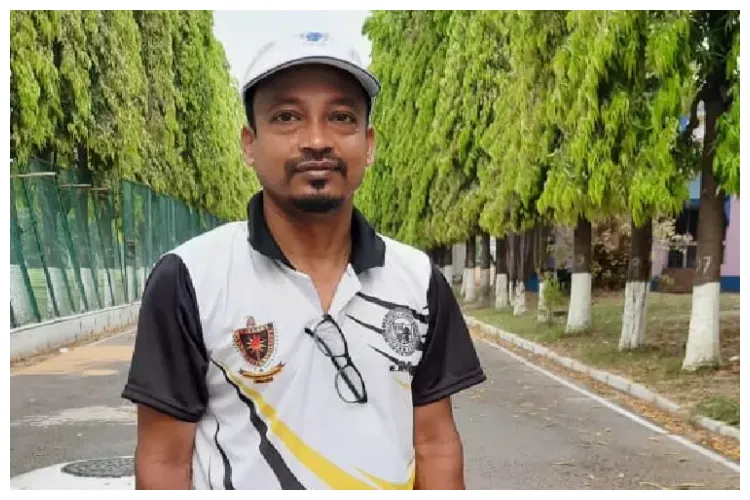
Abdul Barek

The saying that ‘Necessity is the mother of invention’ is so much actualized by Assam’s long-distance runner Abdul Barek. In his case, the ‘necessity’ was the money he desperately needed to buy food and books after his family farmlands were washed away by the mighty Brahmaputra

“It was not out of love for a particular sport… I was born and brought up in a self-sufficient family in a rural hamlet in the Kamrup district. However, when our farmlands were eroded by the Brahmaputra, we were left with nothing for sustenance. The little produce from our livestock was not enough for the family. I was in standard IX when for the first time I participated in a Rongali Bihu Marathon in a nearby locality and came first in it to win prize money of Rs 1,000. Well, that was a lot of money for me! I could buy my school uniform and books with it.

 “Now that I’ve discovered a way of earning and my family was in a very bad financial shape, I have started looking to every marathon event as a means to earn. I participated in every known event and would look for all the prize money up for grabs. Gradually, I developed a yearning for winning all possible cash prizes in marathons in Assam and the Northeast. And, for that, I started practicing regularly and improving my performance with each run,” Barek told Awaz-the Voice.
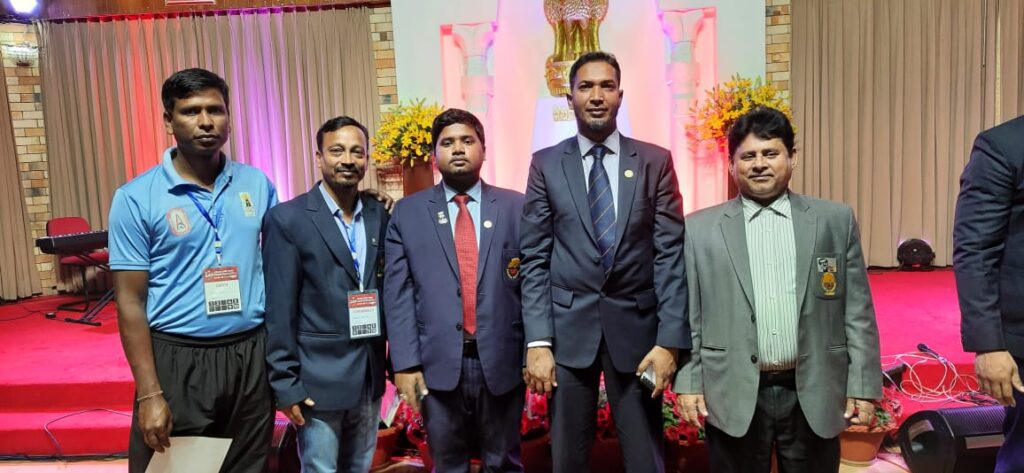
Abdul Barek (second from left) with fellow sportspersons from Railways

Barek craved newer heights in the no-cost sport. Having bagged scores of medals and trophies at state and national levels, his campaign culminated in the World Railways Athletics Meet at Denmark in 2005 where he emerged 10th in the individual event and third in the team event of the marathon championship. He is the first-ever sprinter from NF Railway to participate and win a medal in World Railways Meet.

 “My success lies in my perseverance. I’ve never compromised with my practice. My job with NF Railway has helped me a lot because I don’t have to forgo practice due to household work as I did in the past … I would like to thank former international athlete Tayabun Nisha for suggesting my name to the Indian Railways which promotes sports. I had also appeared in interviews with Central Excise and Indian Army,” Barek explained.

On his success, Barek said: “Practice, rest, and nutrition are the key to performance. There was hardly any infrastructure during our times. But, after the 2007 National Games, we’ve got a whole lot of infrastructure and necessary facilities including coaches. However, the problem now is that our young players have lost interest in sports. The smartphone and fast food have spoiled a generation. Most of the youngsters nowadays munch on fast food, and keep themselves glued to their mobile phones when they should be at the playground.”
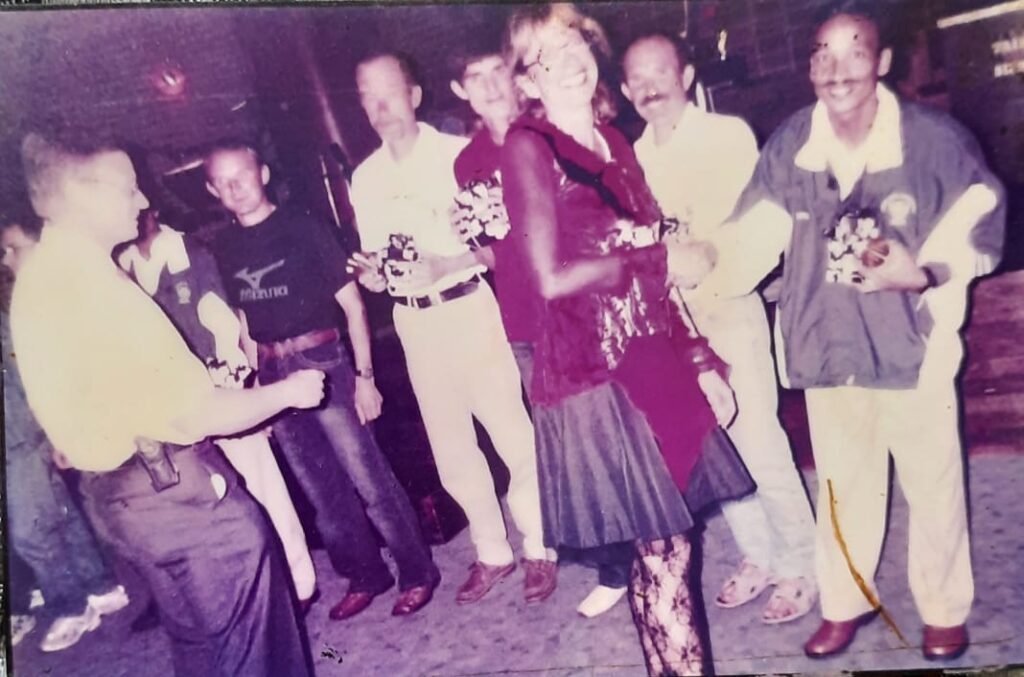
Abdul Barek in the international Railways sports meet

Regarding his food habits, Barek is a follower of cricketer MS Dhoni; both love to drink milk as an energy booster. “I used to drink a lot of milk. My father used to tell us to drink milk instead of water and that I used to do. I don’t like fast food and I’ve always preferred vegetables with our staple rice.” Barek also lamented that the urban youth were reluctant to do hard work. “Since I am based out of Guwahati and I am associated with an athletic academy, I always wanted to groom some good athletes. But, what pains me is that the rural youths can’t sustain long-term coaching and urban youths are reluctant to do hard work. A few very talented youngsters from Baihata Chariali and Morigaon were training under me for some time. But, they could not sustain the tough regime and left. One basic requirement of a marathon runner to be successful is to run at least 200 km a week which is divided into a scientifically designed schedule.”

source: http://www.awazthevoice.in / Awaz, The Voice / Home> Youth / by Imtiaz Ahmed, Guwahati / May 04th, 2022

Just like old times

Bengaluru, KARNATAKA :

Musical duo Lucky Ali and Mikey McCleary, who first worked together on O Sanam, is collaborating again after almost 11 years for an album, Intezaar, the first song of which is out and trending.

Singer Lucky Ali. (File | PTI)

Bengaluru :

Lucky Ali turns to music to express himself. He might never be in a hurry to create tunes, but Ali makes sure the wait is worth it. The singer is now out with his latest album Intezaar, which has touched over 2 million views.      

Ali’s loungey music has always been popular among music lovers and Intezaar has something to it that makes it a crowd-puller too. The music of the album is by composer and long-time associate Mikey McCleary. The first time McCleary and Ali worked together was for the singer’s first album Sunoh in 1996, which created magic with the song O Sanam. The duo subsequently went on to work on many projects but is back together after a long break.

Ali says this is the first of many songs that is going to be out. “It’s an album, but we’ll be releasing one song at a time,” says Ali, adding that the composition was done a while ago but they were waiting for the right time to release it. The lyrics are by IP Singh which was a ‘new experience’ for Ali. “IP brings in more depth and has worked around the tunes,” he adds. 

When the seasoned musical duo took a break from working together, 63-year-old Ali says it gave him time to explore live shows. “Music took me to live experiences where I overcame stage fright. Performing live was a new experience all together,” says Ali. 

Meanwhile, McCleary has been a shining star in the Bollywood music scene, whose last project was in Priyanka Chopra and Farhan Akhtar-starrer The Sky is Pink. This song, for McCleary, has been about revisiting some of his older ideas. “Intezaar was actually an idea that we had worked on around 10 years ago. I was going through some of the older works and found a rough outline.

After developing the work, I showed it to Lucky who really liked it,” says McCleary, speaking to CE from New York. “I loved working on it because even if it is not a fast track, there is an uplifting feel to it. It’s a nice track that feels appropriate for the times we live in,” he adds. 

In times where remixes are trending, McCleary’s music, especially his remix of Khoya Khoya Chand for the movie Shaitan in 2011, has revamped the notion of remixing old classics. “My interest in classics, like Hindi film songs from the ’50s and ’60s, came from my wife (Diksha Basu, an author), who used to play Geeta Dutt’s classics. She encouraged me to experiment with that and I started doing that as a passion project,” says McCleary.

source: http://www.newindianexpress.com / The New Indian Express / Home> Cities> Bengaluru / by Monika Monalisa, Express News Service / May 02nd, 2022

Atiqa Bano’s Meeras Mahal heritage museum to be refurbished

Sophore (Suvyyapur) Town (Baramulla District), JAMMU & KASHMIR :

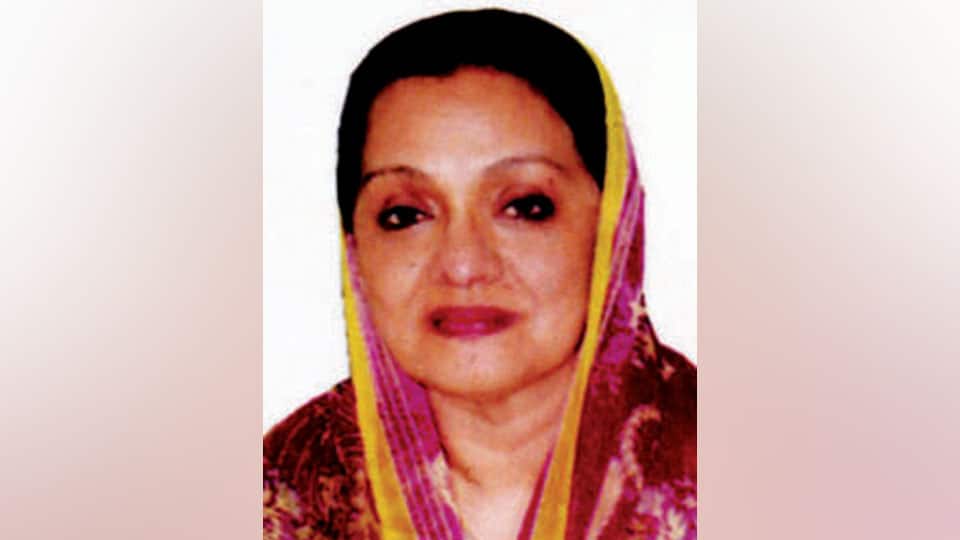
Atiqa Bano
Atiqa Bano

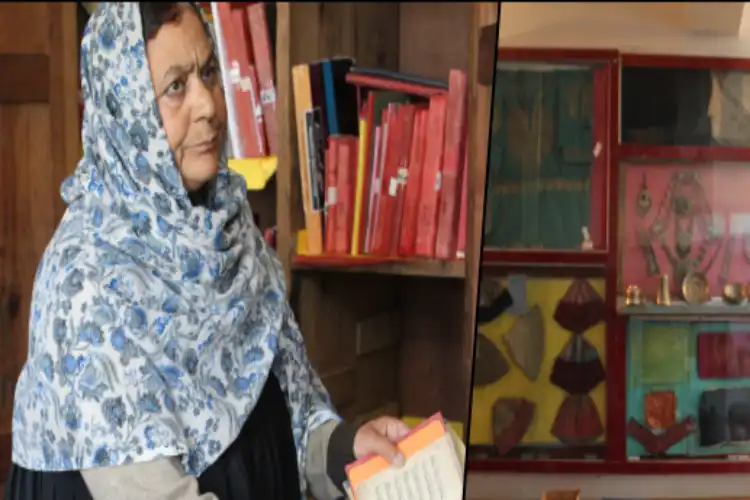
Atiqa Bano’s vision that the generations to come must know how people lived in Kashmir over centuries had made this retired Kashmiri educationist collect ancient households articles like hey mats (Waguv), multipurpose earthen pots, wooden doors, latches, and possibly all things used by humans over two centuries and create the first-ever private museum in the Valley.

Called “Meras Mahal” (The palace of heritage), it houses more than 5,000 artifacts reflecting the social and cultural life of Kashmir over two centuries.

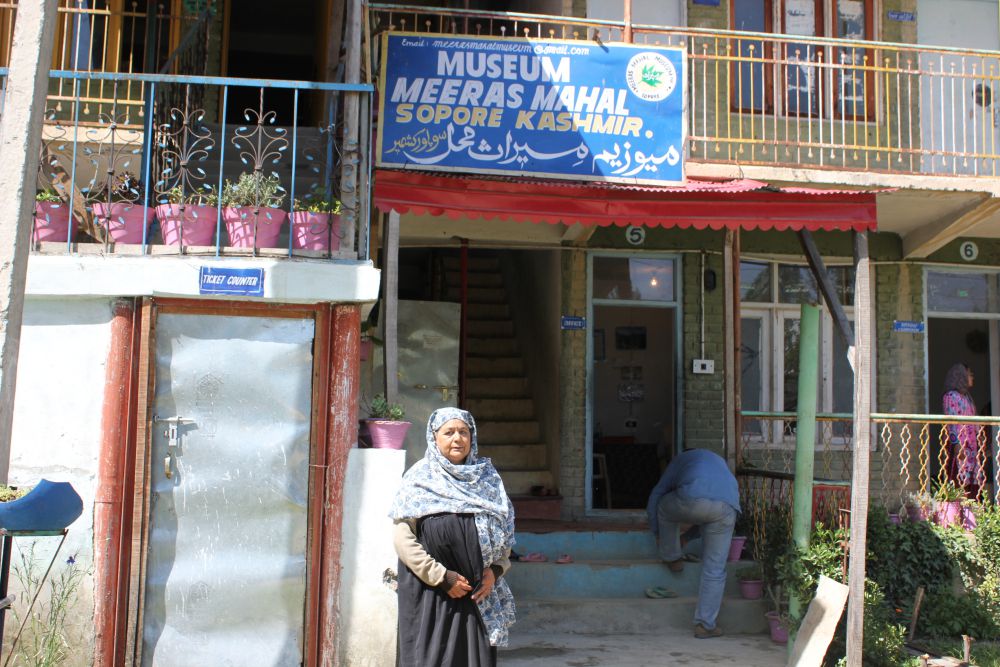
Atiqa Bano standing in front of Meeras Mahal

Atiqa Bano passed away in 2017 and her family continued to struggle to maintain it and not let forces of Nature damage this treasure trove. However, they always lacked resources for this gigantic task.

Finally, Atiqa Bano’s love of her labour is all set for a major revamp and scientific conservation as this historic treasure had attracted the attention of the Indian National Trust for Art and Heritage (INTACH), J&K Chapter.

Atiqa Bano, an educationist, had made great efforts to collect the exhibits over two decades after she retired from the J&K Government services in 1998. A woman of strong resolve, Atiqaji, as she was popularly called, had taken to looking after her father after her mother’s death. She had chosen to remain single and devote her life to education, women’s welfare, and society.

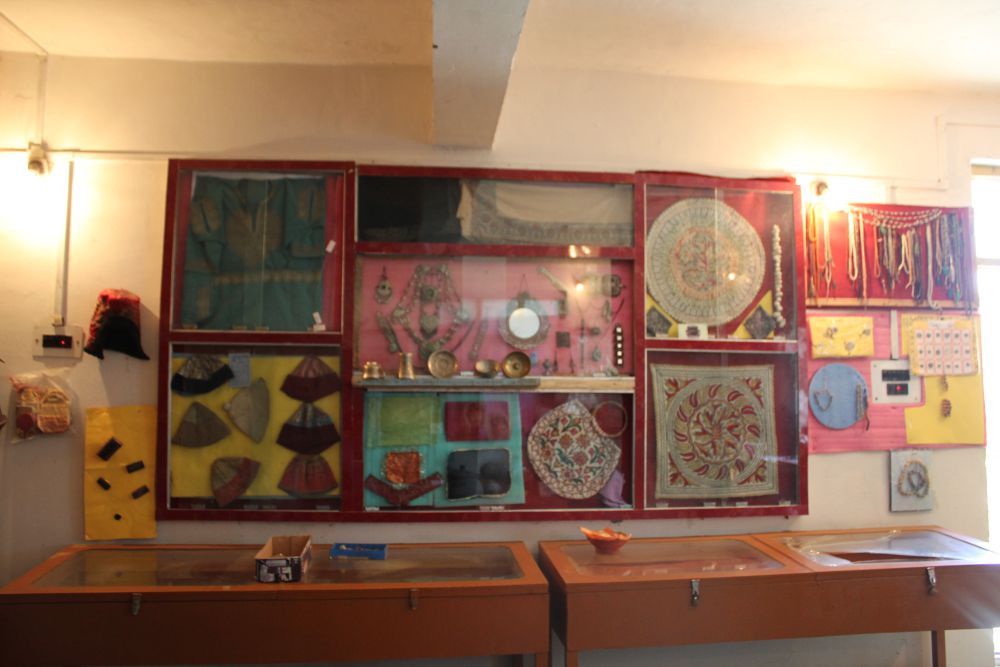
Household items on display in Meeras Mahal

It was during her campaigns for women’s empowerment that she was drawn to the collection of rare kitchenware, old ornaments, agricultural tools, clothing, earthenware, and manuscripts lying around in many Kashmiri households. It dawned upon her that with the changing times, all these human inventions would be lost to time if not preserved for posterity.

She started collecting artifacts in 2002 and continued her mission till her death.

Atiqa Bano is gone from this world, but her memory and work is commemorated for posterity, and, as she wished, for the generations to come.

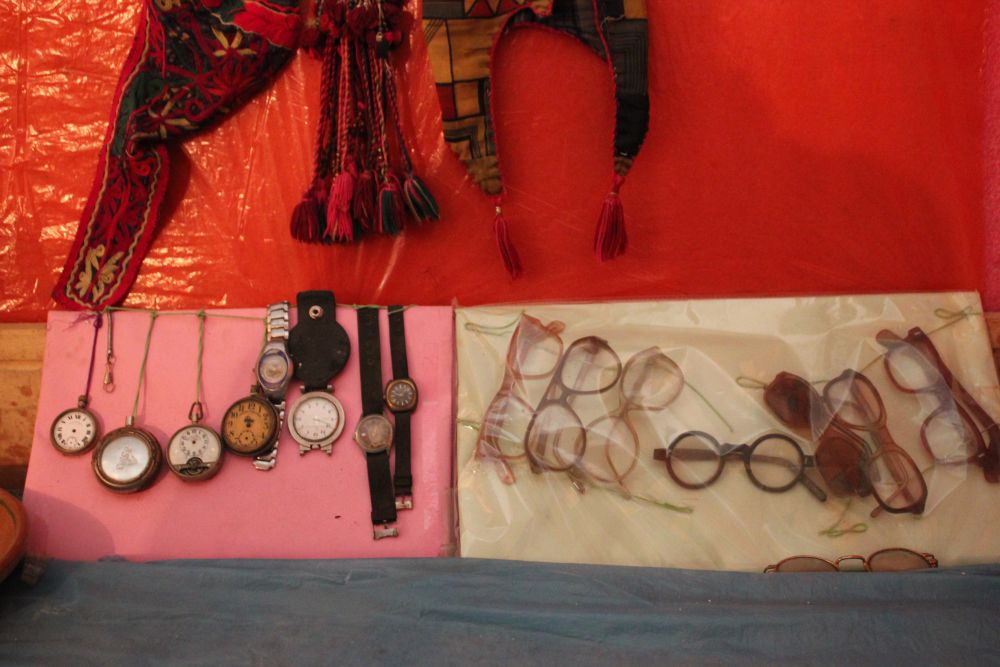
A collection of watches and eye glasses on display at Meeras Mahal

Realizing the importance of Atiqaji’s rich heritage collection, the J&K Chapter of INTACH and HELP Foundation have taken up the gigantic task of rejuvenating  Meeras Mahal.

Saleem Beg, head of the INTACH, J&K Chapter, said, “Saima Iqbal and INTACH team are digitizing, curating and contextualizing the rich collection of vernacular objects after preventive conservation. The museum will have a thematic display demonstrated through sketches and write-ups supported by an elaborate digital presence.”

Saima Iqbal said, the work, supported by ALIPH- an international alliance for the protection of heritage in conflict areas, is getting streamlined. She stated that a team comprising a web designer, photographer, conservator, curator, and illustrator is working in tandem as all are interdependent and need to work in sync.

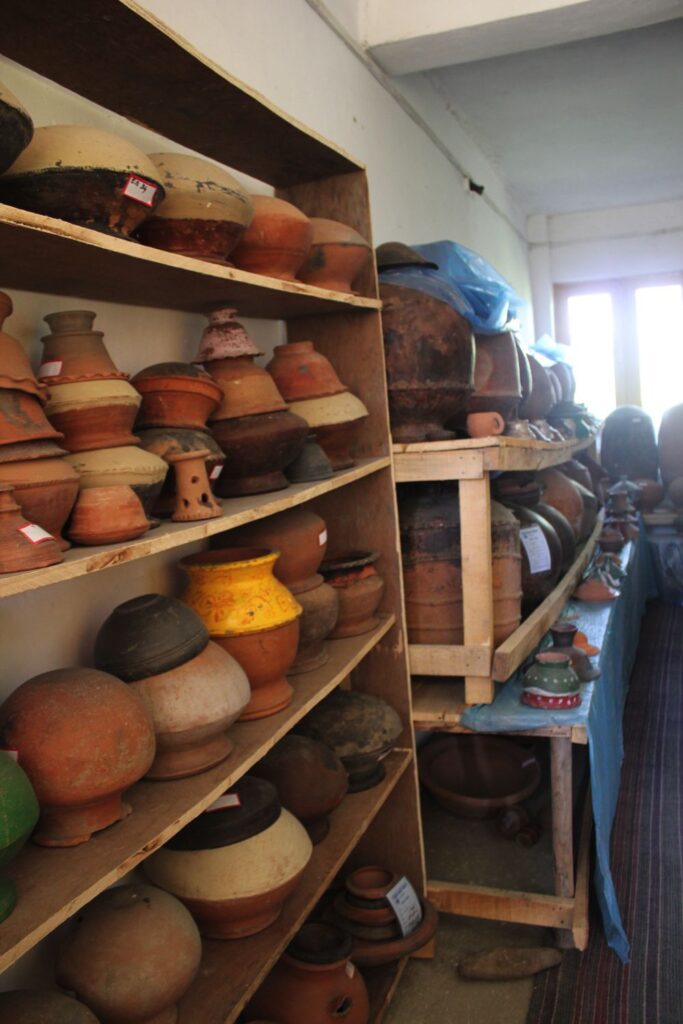
Earthenware used in Kashmiri households in Meeras Mahal

“I have to say that the challenges are many and we are making the best use of available meager resources here but the passion is alive and the project will be a great success”, she said.

“The first article preserved in the museum is Kondul, an earthen bowl that holds smoldering embers in Kangri, a personal and portable heating device of Kashmiri, said Muzamil Bashir Masoodi, Caretaker or (Honorary) President of the five-member Trust of prominent literary personalities, constituted to look after the museum.

Muzamil, who is also Atiqa Ji’s nephew had been taking a keen interest in maintaining and preserving the rare articles of the museum. The initially preserved items also included hand-written books of Ghulam Mohammad Hanfie, a scholar, Ateeqa Ji’s grandfather.

“All the items are counted one by one like 10 different Charkhas (spinning wheels) are counted as 10 separate items”, explained Muzamil.

The museum was initially set up in their private B. Ed College, Kashmir Women’s College of Education, at Noorbagh, Sopore. It was shifted in 2012 and called Meeras Mahal to a Hostel building of the College, at Highland Colony, where the rare items are “stored” due to the paucity of space.

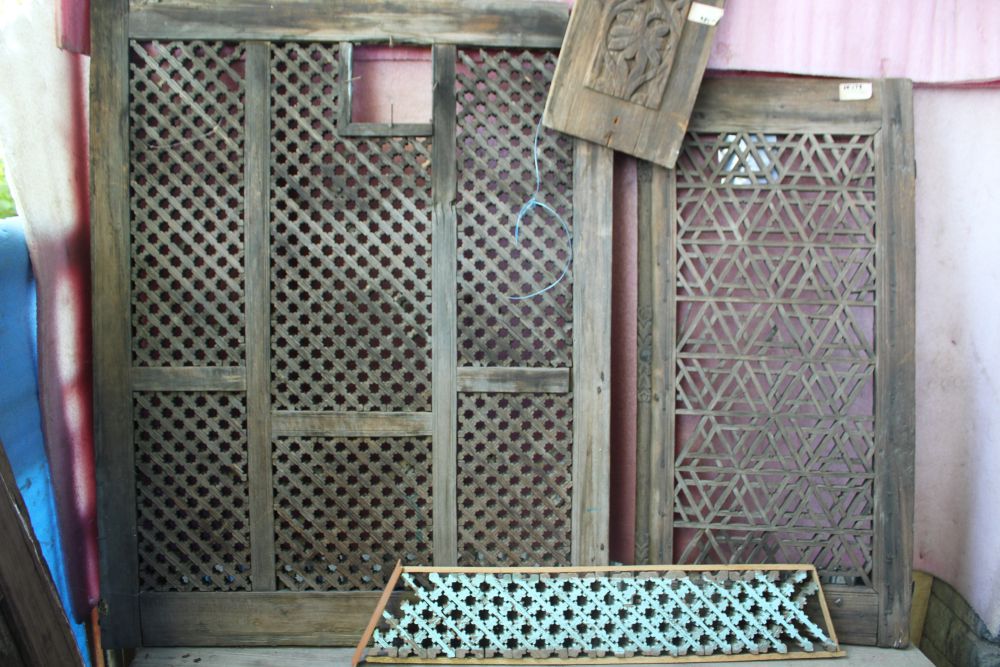
Doors and windows used in Kashmiri architecture

Muzammil said that “we cannot provide the normal gap of at least two feet between the items”, which makes it difficult to maintain the entire treasure. “There has been no support from the Government”, he said. He said so far he has been getting a token amount from the college funds for maintaining the museum.

“During the Covid restrictions, when everything was closed, we managed to be in the museum to provide basic maintenance,” Muzamil said. He had submitted a detailed project report, for conservation and preservation of the museum to the UT Government in 2019.”

Nothing has came his way so far.

source: http://www.awazthevoice.in / Awaz, The Voice / Home> Culture / by Ehsan Fazli, Srinagar / April 11th, 2022

Shaharabanu is bringing smiles on faces of would-be brides from poor families

Chettali (Madikeri Talu), Kodagu, KARNATAKA :

From pre-wedding shoots to the selection of bridal outfits, the stress, especially on the bride-to-be, is tremendous.

Shaharabanu shows one of the many bridal outfits which is available at The Rainbow Free Bridal Boutique, opened just weeks ago | Express

Madikeri : 

From pre-wedding shoots to the selection of bridal outfits, the stress, especially on the bride-to-be, is tremendous. It is the day when she hopes to look her most beautiful.

However, not every bride can afford a dream wedding, and many young women are forced to stick to simple and inexpensive wear. The Rainbow Free Bridal Boutique in Kodagu is taking these weddings up by a notch. Established by Shaharabanu (20), the Free Bridal Boutique is just weeks old, and operates from the rural part of Chettalli in Madikeri taluk.

Shaharabanu, who quit studies after completing PU examinations last year, is a YouTuber, and had also worked as a beautician for some time. The strong calling to do charity work has manifested itself in the form of this boutique.

“I always looked forward to doing charity work, but my family is not very well-to-do. Financial hurdles are many. However, a unique initiative has been started by one of my friends in Kerala, which led to the establishment of the Rainbow Free Bridal Boutique, a first of its kind in Karnataka,” explained Shaharabanu.

So, what is so unique about this boutique? It provides free bridal dresses to brides from economically weaker sections of society. “Weddings are very special to girls, and almost every girl dreams of wearing a special outfit on that day. However, many cannot afford these bridal outfits, and hence, I started a boutique to collect bridal clothes from women from rich families,” she explained.

She laid out her plan on social media platforms and received positive feedback and support. Responding to her social media post, many women donated their wedding attire, like sarees which they had worn for their own nuptials, and fancy outfits from their trousseau.

The clothes were collected and dry cleaned. “I have collected many wedding clothes, some even from my family members. These clothes will be handed over to brides from weaker sections of society, including orphaned girls who are unable to afford wedding clothes,” she said.

“Our generation is very active on social media and we often make new friends virtually. A WhatsApp group of like-minded girls who were on Instagram was created almost a year ago. In the group, one of the girls, who was poor, requested us to help her out for her wedding,” recalls Shaharabanu.  

However, she felt helpless with her family’s meagre earnings, since her parents, Ameena and Maanu from Chettalli, are daily wage workers. Despite the impediments, the girls managed to collect funds and bought their friend a new bridal outfit, she added.

Following the incident, she realised that many girls face this challenge before their wedding, which the girls discussed in the group. That is when one of the girls from Kerala informed her about a boutique that donates bridal dresses to girls from poor families. “This boutique was started by a Kannur resident, Sabeeda, and I contacted her for support. Initially, when everyone was reluctant to donate their bridal wear to my boutique, Sabeeda helped me and brought many dresses all the way from Kannur to Chettalli,” she recalled.

When dresses were donated to a couple of poor girls, residents from Madikeri and Virajpet came forward and donated their bridal outfits. “My house is small. I had to make space to keep the dresses without damaging them. I bought a shelf for this purpose which is in my mother’s room, where the dresses are kept neatly,” she said. “It has been just 15 days since I started the boutique. There is no bar on religion or community of the brides. They can book the service and visit my place in Chettalli to select the dresses they want from what’s available. They can keep the outfits for themselves. This service is for those brides across the state who are battling economic hardship,” she said.  

To ensure that the dresses reach the needy, she asks the beneficiary to submit a letter from the religious committees concerned, about the family’s financial situation. In just two weeks, more than 40 brides from across the state contacted the boutique, and Shaharabanu is working towards making their weddings special. “I ask the girls to visit my place 20 days prior to the wedding day. Their happy faces when they find the right bridal dress give me immense pleasure and satisfaction,” she added.

source: http://www.newindianexpress.com / The New Indian Express / Home> Good News/ by Prajna GR, Express News Service / April 24th, 2022

Dr. Mehar Sultana

Mysuru, KARNATAKA :

Dr. Mehar Sultana (64), daughter of late Maj. M.S. Khan and a resident of Bogadi here, passed away yesterday.

She was serving as the Principal of Karwar PU College in Karwar.

She leaves behind her husband S. Nisar Ahmed Bilgunda (South Coorg), two daughters, sons-in-law, and a host of relatives and friends. Namaz-e-Janaza was held at Kabristan Mosque in Bade Makan after Zohar.

source: http://www.starofmysore.com / Star of Mysore / Home> Obituary / December 29th, 2018

‘The Greatest Telugu Stories Ever Told’ provide an insight into Telugu short fiction realm

TELANGANA / ANDHRA PRADESH :

Anthologist and translator Dasu Krishnamoorty’s ebook ‘The Greatest Telugu Stories Ever Told’ gives a tapestry of Telugu experiences for readers.

The Greatest Telugu Stories Ever Told (Aleph Book Company) provides us a glimpse into the huge Telugu literary realm. Spanning virtually a century of literary works by a number of the most interesting writers of short tales, the gathering mirrors the Telugu-speaking individuals’s perspective of the world.

Co-authored by anthologist and translator Dasu Krishnamoorty along with his daughter Tamraparni Dasu, the anthology incorporates works of 21 writers, proper from Chalam and Kanuparthi Varalakshmamma to Vempalli Gangadhar and Vempalle Shareef.

The anthology

Influence on society

Elaborating on the factors in choosing the tales, the writers say they seemed for brokers of change. “Vempalle Shariff’s ‘Curtain’, for example, is a diatribe against the norms that keep Muslim women behind a curtain of patriarchy and prevent them from participating in the wider society. Sometimes, the story is so compelling in its cathartic message that it requires no other reason than its merit to be included.

‘Mother’s Debt’ (Mohammed Khadeer Babu) and ‘Predators’ (Syed Saleem) both highlight the wretched lives of those compelled to live in poverty at the edges of society,” says 93-year-old Krishnamoorty, connecting with us from New Jersey.

On selecting works of writers like Kanuparthi, Illindala Saraswati Devi, Achanta Sarada Devi and Chalam — who wrote about social inequity — Krishnamoorty says the brand new technology of writers continues to push that battle ahead in new instructions and develop into energetic devices of social change, as evidenced by Boya Jangiah, Jajula Gowri and others. “Writers alone cannot cause a change but are certainly a big part of the process,” he says.

 On being requested if some writers are both overrated or underrated, Tamraparni responds, “All the writers in the anthology, and many more that could not be included, deserve their reputation and accolades. The younger ones are perhaps underrated simply because the world doesn’t know of them yet. We hope that our anthology helps them gain the recognition they deserve.”

Diverse works

The anthology consists of works by six Muslims, 5 ladies and 5 Dalits. Krishnamoorthy says their goal was to provide a platform for the varied assortment of expertise significantly in underrepresented communities. “Telugu Muslims have always been a beacon of literary excellence. Only they can write with such passion and knowledge about their lived experience that comes through with such heart-wrenching intensity in ‘Adieu, Ba’ and ‘A Mother’s Debt’,” he provides.

Speaking of the challenges in translating, Tamraparni says, “Translation is inherently tricky; matching the idiom of the original with an equivalent one in English, rather than a literal translation; finding the equivalent of unique words, for example a word like ‘ thaayilam’ (a special treat, typically sweet, for a child) in Dada Hayat’s ‘The Truant’; retaining the voice of the original writer intact; avoiding the temptation to editorialise or tamp down unorthodox content as in Chalam’s ‘Madiga Girl’; how to preserve the musicality of the original language, as in ‘Molakala Punnami’.”

Describing working together with her father as a excessive octane expertise, Tamraparni says story choice was a degree of rivalry. “Some of the differences were generational, and some were temperamental. We agreed on most stories but there were four or five that needed energetic debate,” she provides.

Support system

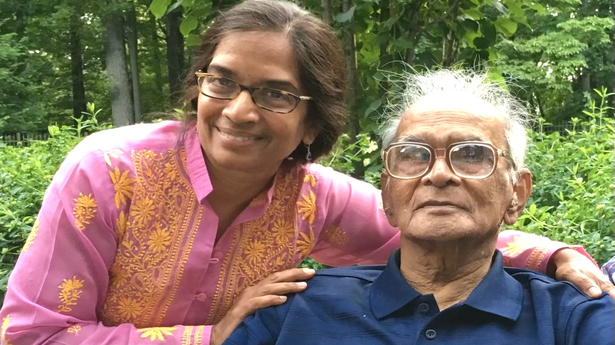
Krishnamoorty had moved to the US to dwell along with his daughter’s household after he misplaced his spouse and there, he discovered translation a solution to keep engaged to tide over the powerful interval. “He brought an amazing level of intensity and enthusiasm to it even though he was almost 80 at that time,” says Tamraparni who alongside together with her father, launched a literary non-profit organisation, IndiaWrites Publishers, to assist the interpretation of up to date Indian short fiction into English. Together additionally they revealed a month-to-month on-line literary journal, Literary Voices of India, for a number of years. And 15 years later, the father-daughter duo revealed their second anthology The Greatest Telugu Stories Ever Told.


”I’m grateful that translation has given me such a stimulating and rewarding expertise to share with my father,” says Tamraparni. 

Source hyperlink

source: http://www.dksnewsonline.com / DKS News / Home> Entertainment> Art / by devanandsingh9199 / April 08th, 2022

Kishtwar girl awarded gold medal in Integrated Zoology

Kishtwar, JAMMU & KASHMIR :

Kishtwar ::

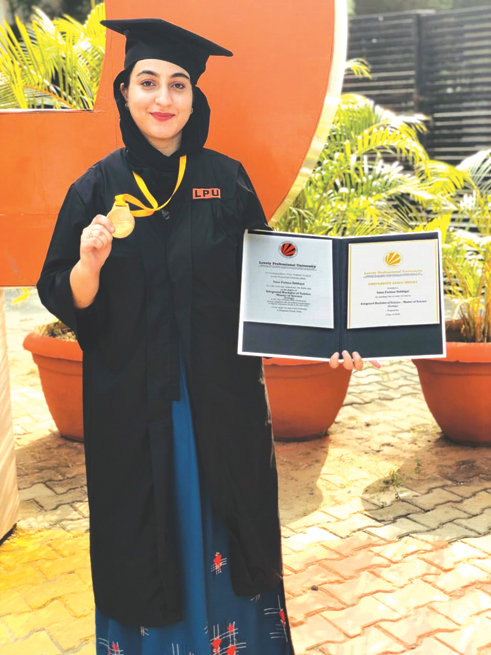
Once again showing her excellence in the field of education, Kishtwar girl identified as Sana Fatima Siddiqui Daughter of Syed Ajaz Ahmed Resident of Bunastan Kishtwar was awarded University Gold Medal for standing First in Order of Merit in Integrated BSc- MSc Zoology program, Class of 2019 at 10th Annual Convocation Ceremony of Lovely Professional University by Mr. Michael Ashwin Satyandre Adhin, Hon’ble Vice-President of Suriname (South American Country).

The convocation was recently held at Ludhiana.


Speaking to Early Times, Sana attributed her success to her parents, siblings, friends and family members added that without support from parents and family it is not possible for girls to get her admissions in universities which are far away from home.
She said that she will continue her hardwork to bring lure for her parents and Kishtwar District in future as well.

She also thanked her teachers who guided her from time to time through out her life.

source: http://www.earlytimes.in / Early Times / Home> News Details / by Early Times Report / September 10th, 2019

Ironman ‘finisher’ Javed is up for new challenges

KARNATAKA, INDIA / BAHRAIN :

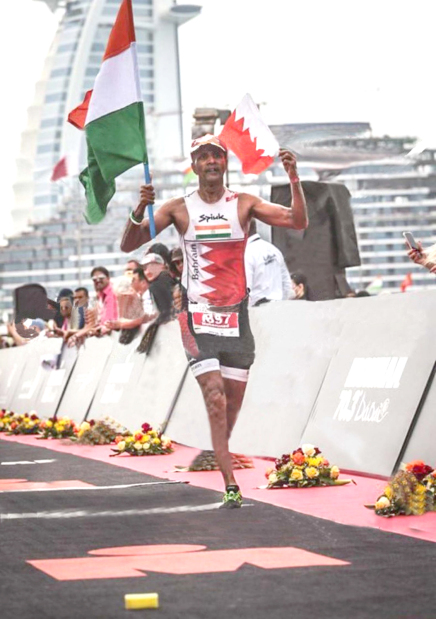
By the time Mohammed Javed participated in his first Ironman competition, he was already 53 – an age when most people have begun making retirement plans.

But, for Javed, now a lithe 62, the Ironman competition in Port Elizabeth, South Africa, in March 2015, marked the beginning of a new life: one that took him on globe-trotting adventures around the world as he participated in more such challenges in France, Germany and Malaysia, among others.

“These are all ‘finisher’ medals,” he told the GDN proudly, pointing to an array of medals he brandished in one hand. “They are given to every athlete that participates in these competitions, regardless of which position they finish in.”

Given the tough nature of the Ironman Triathlon, which requires a 3.8km swim, a 180.2km bicycle ride and a marathon 42.2km run to be completed in under 17 hours, Javed had every reason to beam as he did.

“Even though it was my first Ironman,” he said, referring to the Port Elizabeth event, “I completed it in just over 14 hours and came seventh in my age category. I was extremely happy to just be able to participate in it and to complete it in the time that I managed was the icing on the cake, especially after the really taxing swim in the very rough sea.”

He repeated the feat in Malaysia, almost mirroring the time he managed in South Africa and actually bettered that in the next Ironman he registered for, which was in Nice, France.

Outperform

“It was just by a few minutes and still just over 14 hours,” Javed laughed. “But, as every athlete will tell you, when you compete in such events, you’re not just competing with others, you’re also trying to outperform your previous attempt and trying to improve on it. So I was really happy about that.”

As someone who is essentially only a part-time athlete juggling a full-time job with his passion for running, Javed explained, he approached every competition with the clear understanding that winning was never an option – and that, just the thrill of being able to participate would have to do.

“There’s no way that someone like me, who works 12-14 hours and only gets a couple of hours to train every day, could hope to compete with elite, professional athletes, who are able to devote every day of the year to their training,” he added.

“But, again, I am so happy and blessed that I have been able to participate in these competitions, rub shoulders with those athletes, watch how they go about their business and learn and apply that to my own preparation.

“It’s all due to the very generous support I have been given by my benefactors who have sponsored me and enabled my participation in these events. I am especially grateful to the late Shaikh Ebrahim bin Abdulla Al Khalifa, who was the chairman of Bahrain Road Runners for over a decade, and the very generous Fouad Hussain Showaiter. Both these gentlemen went out of their way to financially support my participation in all these international events.”

The biggest blessing, Javed said, as he looked back on the 40 years he has spent in Bahrain since arriving here as a 22-year-old from Karnataka, India, in 1982, is the opportunity he’s had to grow and flourish as an athlete.

When he first landed in Bahrain, he worked initially as a labourer before a leading construction company hired him as a heavy machinery operator. Then, in 1989, he applied to a leading hotel and was hired in housekeeping and soon made the transition to bell captain.

And then, came the first of many lucky breaks. “The hotel used to have inter-department sports competitions,” Javed said. “I took part in one – a 3km race – and I finished it in 9 minutes 27 seconds. That was it – the trajectory of my life changed from then on.”

The hotel’s general manager was so impressed by his performance that he decided to encourage Javed by granting him access to the health club and swimming pool – usually only allowed to hotel guests and top management.

“I was always a good sportsman – in fact, I was, and still am, a good cricketer too,” Javed explained. “And, suddenly, my athletic ability had a chance to be nurtured and prosper. So I really focused on long-distance running after that. I had run sprints – 100m, 200m – in school, but this was a different ball-game altogether.”

He started participating in every long-distance race that took place in the kingdom, thereafter, and eventually ended up becoming a member of the Bahrain Road Runners, a group that focuses on long-distance running and cross-country races.

“I never missed a single race,” Javed exclaimed, proudly. “Triathlons, biathlons, duathlons, aquathlons … you name it, I participated in it! And I won most of them!”

Now, though, despite the fact that he is still running competitively – he just took part in a Half Ironman event in Dubai in March – Javed is grappling with a difficult decision.

“The last few years have been a bit tough, professionally,” he said, contemplating his medals which he had spread out on a table. “Especially after Covid-19 and now, while I do have a job with a food delivery company, I’ve decided to go back to India next month.”

Then, he perked up again.

“While it would be nice to go back to my village and live a quiet life,” he grinned, “I know I won’t be able to run competitively again. And so, just when I thought I’d made up my mind definitively about moving back, I received a call just today from one of my benefactors who urged me to consider staying back so that I could compete in more competitions. So, maybe, I’ll do that instead!”

source: http://www.gdnonline.com / GDN Online, Gulf Daily News / Home> Other Sports / by Adnan Sipra / April 16th, 2022

The Persian gulf

NEW DELHI :

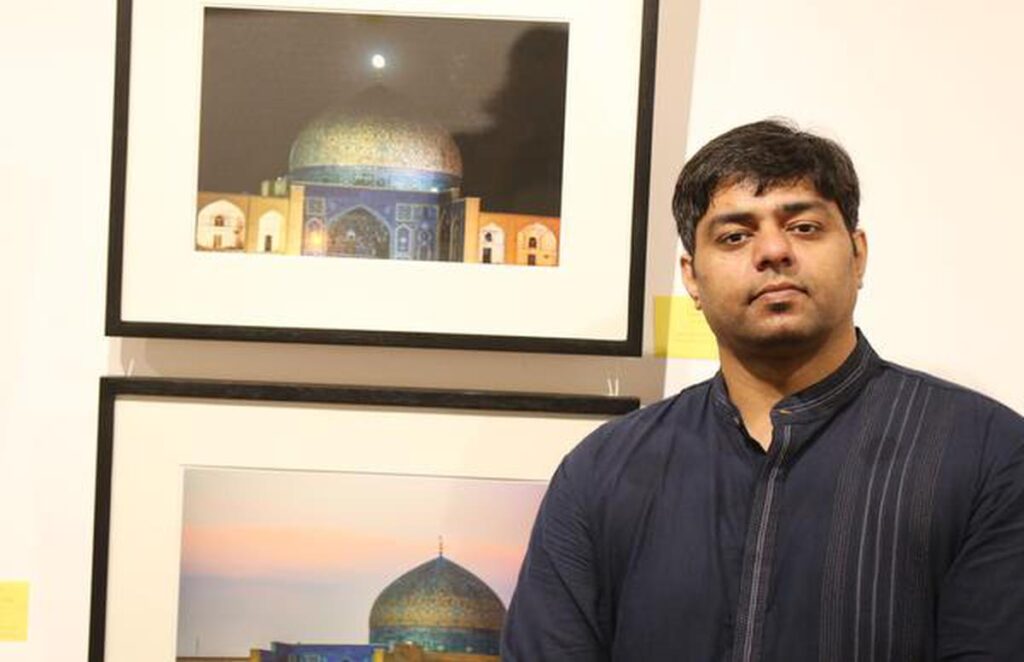
Passionate about photography: Aziz Mahdi, a Persian scholar, who teaches youngsters in Delhi

Aziz Mahdi, a Persian scholar, on how he balances his love for images and the language of his forefathers

To get us, in Delhi, at least a little bit curious about understanding Iran, Aziz Mahdi, a Delhi-ite who lived for a decade in Tehran, where he studied Persian and then taught the language, is showcasing a pictorial exhibition. On display are 40 photographs (selected arduously out of 50,000 images) in different sizes, of this West Asian nation that gives us a glimpse into its culture and history. Aziz, or Dr. Mahdi, as he is fondly called by his Iranian and Indian students in Tehran and Delhi, has used handmade German paper to print on, ensuring the pictures last a lifetime.

Little is known in India about Iran, barring its “political and bureaucratic side”. On the other hand, there’s a fair amount Iranians know about our country. “Some people think Iran is a desert country. Even my father’s friend asked me if I got adequate drinking water in Tehran. I had to explain to him that there are reservoirs all across the country.”

Travel tales

Between 2005 to 2016, when Aziz lived there, doing a Ph.D. at Tehran University, he would get asked questions relating to Amitabh Bachchan, Shah Rukh Khan and Salman Khan. He’s watched Sholay in Persian, while travelling on a bus there. “Most Iranians know that India is a nation of diversity and democracy. They describe India as Haftado do Mellat . In English, it would mean a nation of 72 ethnicities.”

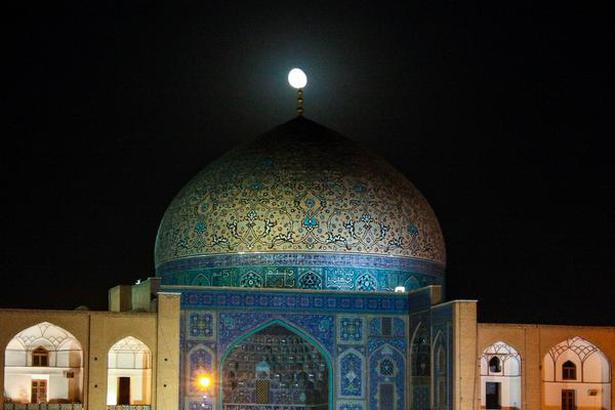
Sheikh Lotfollah Mosque

As a history student at Jamia Millia Islamia in Delhi, Aziz had come across a classical dome of Persian architecture umpteen times in his textbooks. But the moment of seeing the Sheikh Lotfollah Mosque was something else. A perfect example of preserving heritage, it was built during the Safavid Empire, in the early 17th century, and has now been designated by UNESCO as a world heritage site.

“It was almost a surreal experience. Architecturally speaking, Sheikh Lotfollah Mosque has a perfect dome. Domes are usually uneven structures. It also has glazed tiles. It was a palace of princess; royal women would go through the tunnel and come back.”

Everyday life and some of the exotic

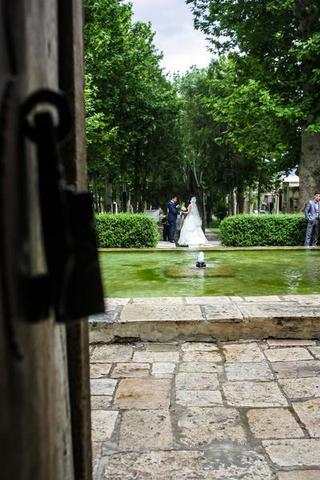
The exhibition has different aspects of daily life, along with architecture. There’s the Zoroastrian side of Iran with the Chakchak Fire temple; a ring seller leaning on his bike, the confidence in the way he wears his hat; the scissor-maker, an elderly man, with eyes sans pessimism, despite his years. Tehran as a cosmopolitan city comes through in a picture of a wedding where the bride and groom wear Western attire.

Early on, one of his friends gave him “sane advise” that if he wanted to be an Iranologist, he needed to know the country inside out. One way was to study it; the other, was through travel. “I explored this scenic country. However, I still like describing myself as a part Iranologist,” says the 36-year-old, who stands at six feet, four inches.

Persian heritage

Iranian Wedding

Aziz’s father, Akhtar Mahdi, retired as professor of Persian language and literature from JNU. “While growing up, I was guided by him and learnt how Persian is important from the historical perspective. From the 11th century onwards, all our official documents, land deeds of the State and historical texts were printed in Persian. So for 800 years, Persian was the official language until the Mughal rule ended and the British abolished it.”

In fact, Urdu is the daughter of Persian. “It was used during Nadir Shah’s military campaign. It was basically a camp language which was spoken by Persian and Turk soldiers.”

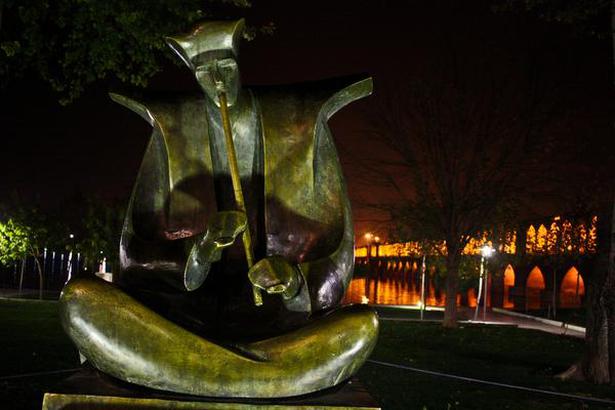
Musician playing a flute

He has roots in Persia too, with his forefathers migrating during the Mughal reign. As for photography, he’s dabbled since childhood, but he began taking it seriously only in Iran. “The sheer beauty of Iran supported the artist in me. Architecturally, it grabs the eye.”

Living in Delhi, where he was used to seeing smoky skies, Aziz was bowled over by blue skies of Tehran (also seen at the exhibition). “They were a welcome relief. Cleanliness and absolute stunning weather are other features of this country.”

His next step is to do a coffee table book. “Not many Indians have stayed in Iran for so long,” says Aziz, on a parting note.

Rowzaneh: Iran Through my Lens is on at the India International Centre Annexe until July 30th

source: http://www.thehindu.com / The Hindu / Home> Entertainment> Art / by Madhu Tankha / July 26th, 2019

There’s a museum in the corridors of Jehan Numa Palace

Bhopal, MADHYA PRADESH :

The New Museum

Tall marble pillars frame photos, automobiles and more, as the Bhopal royals open up their past at the Jehan Numa Palace Hotel

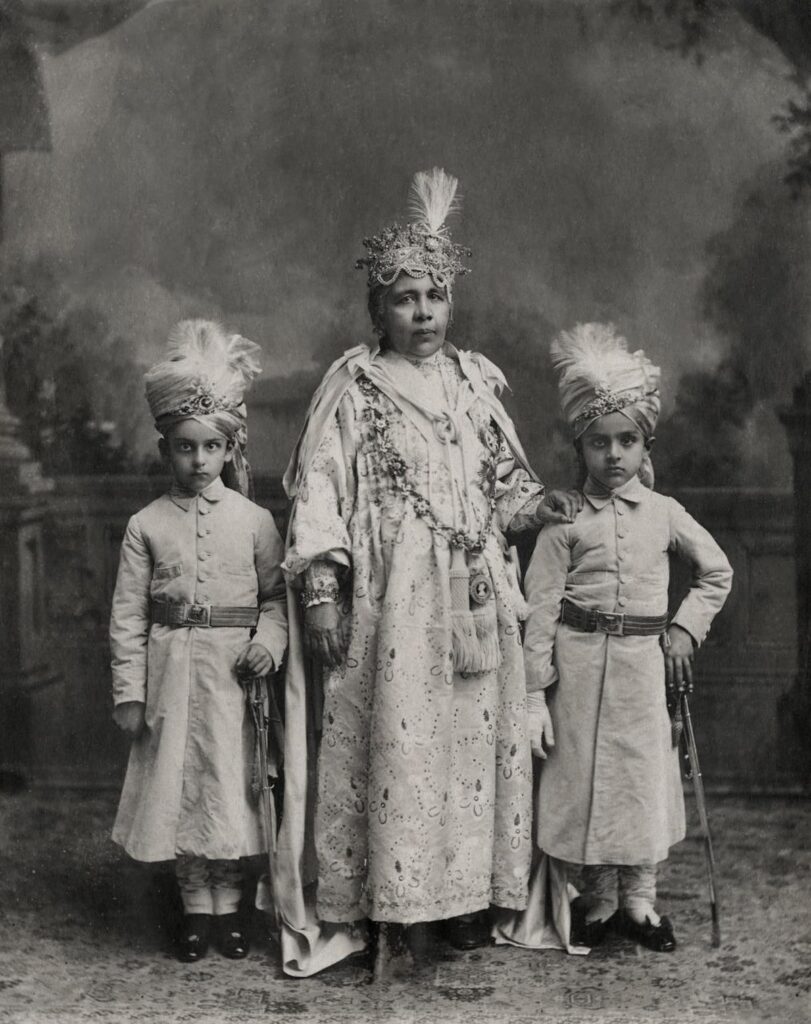
Over the years, the Jehan Numa Palace in Bhopal — built on the slopes of the Shyamla Hills in 1890 by General Obaidullah Khan, commander-in-chief of the Bhopal State Force, and the second son of Nawab Sultan Jehan Begum — has worn many garbs.

The white marble edifice, which melds British Colonial, Italian Renaissance and Classical Greek architectural styles with facets of Art Deco, was constructed as the general’s office, and then used as his sons’ secretariat. After Independence, it became a government hostel, and later, the offices of the Geological Survey of India.

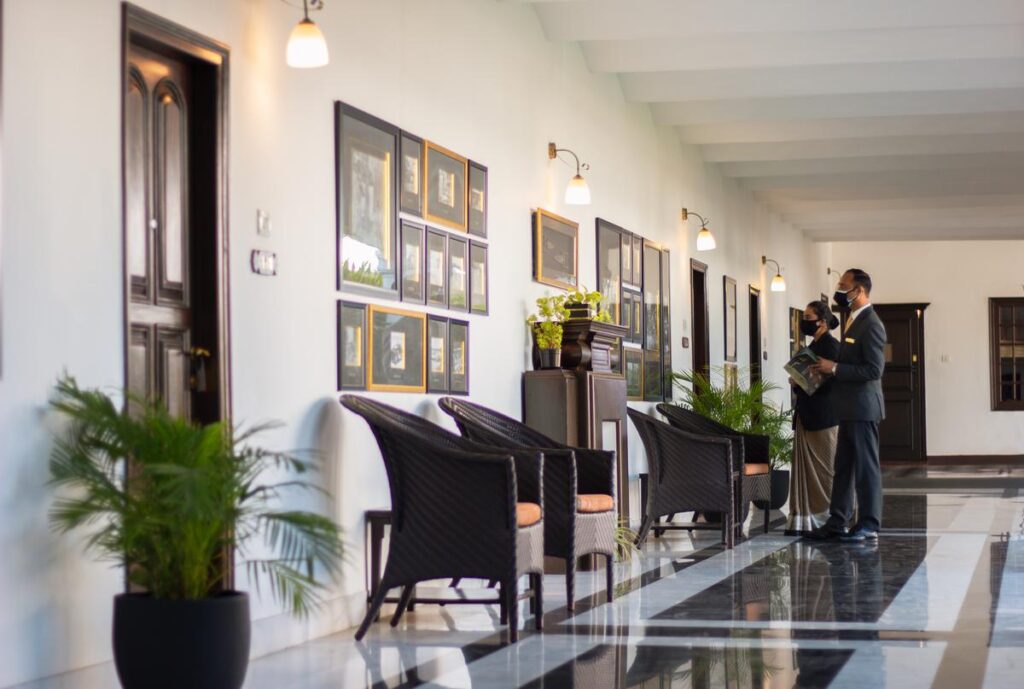
In 1983, after restoring the five-acre property, the general’s grandsons reopened it as a heritage hotel — its colonnaded corridors showcasing sepia-toned portraits, and the interiors housing rooms, four restaurants, two bars and a spa. Now, the pandemic has given it another facet: a museum, which came together almost like a “jigsaw puzzle”, says Faiz Rashid, director of the Jehan Numa Group of Hotels and a member of the Bhopal royal family.

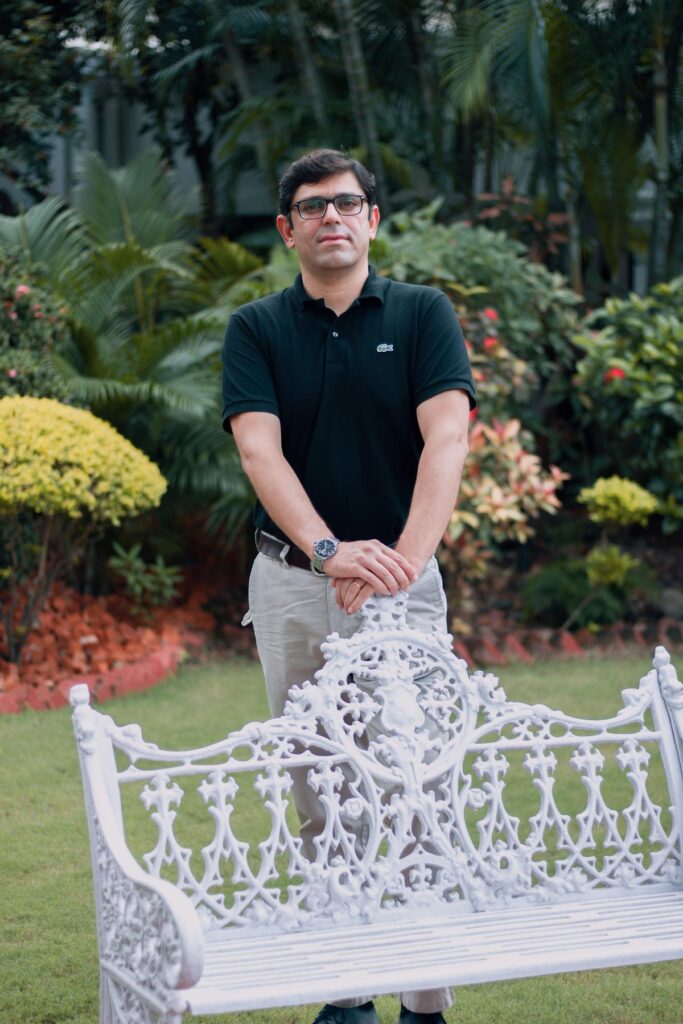
Faiz Rashid

A colonnaded showcase

“[Over the last 20-odd months] we tried to come up with innovative ways to nurture hospitality. Because of the time on hand, we started looking at family archives and thought why not share the legacy with the world,” says Rashid. He tells me about putting together memorabilia: artefacts, attire, “lovely letters in Urdu” written to his great grandfather, documents, “invoices of the cars the royal family bought [like a Ford Phantom and a customised Bentley]” — all of which are now on show at the hotel.

“General Obaidullah Khan accompanied his mother, the last begum, on her foreign trips. He was inspired by different architectural styles, and the display is a pictorial history of the hotel’s evolution from the time it was built in the 19th century,” he says.

The corridors along the central courtyard, with its famed 100-year-old mango tree, were chosen as the ideal backdrop for the display. I take a virtual tour of the elegantly-framed archives, arranged in clusters on the walls of the chequered black-and-white marble and granite corridors, zooming into the photographs, and taking in glimpses of the life and times of a pre-Independence royalty that was progressive and involved, wealthy but not flamboyant, stylish but never garish.

From letters to thoroughbreds

The family took the help of Joe Alvarez, the well-known jazz singer who has written a coffee-table book on Bhopal, to curate the memorabilia.

“We divided them into nine subjects, starting with the four begums, the last nawab, dignitary visits, nawabi sports and the outdoors, and such,” says Alvarez, who has also generated a voice-over, and added a QR code to enable a Walk-In Museum audio guide.

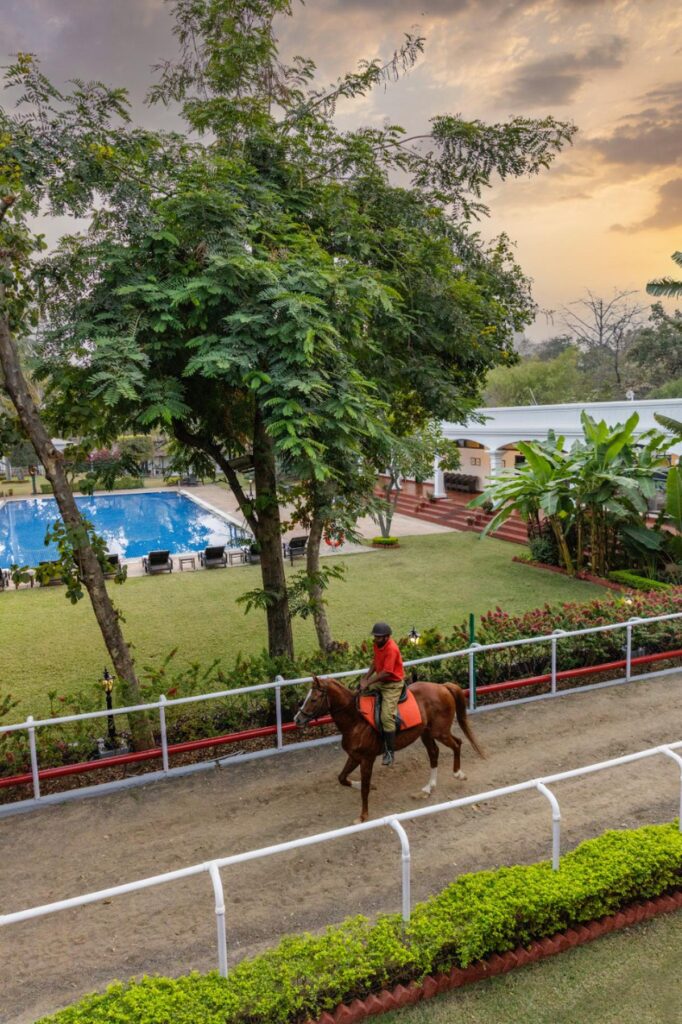
The track at the Jehan Numa Palace Hotel

He expounds about the images of a thriving stud farm, something that continues till date (a trotting track set up when the hotel opened gives visitors a peek into the royal family’s passion for breeding thoroughbreds), of custom-built automobiles, branded guns and weapons, and official visits by dignitaries.

The begum’s photo from the archives

“The nawab begums of Bhopal were very dynamic and built the city differently from male rulers. They focussed on all areas, from education to women’s empowerment. We realised so much of their contribution — like building hospitals, enhancing the railways, opening schools — while putting this together,” shares Rashid, adding that, in 1889, Shah Jehan Begum funded the construction of Britain’s first purpose-built mosque at Woking. The collection is still evolving as more memorabilia makes its way to them slowly, from the extended family. A plan to restore and display the wedding dresses of the begums is also in the pipeline.

The museum is open to all. Rooms at the hotel are from ₹8,000 onwards. Details: jehannuma.com

Bori Safari Lodge

Spot the tiger at Bori Safari Lodge

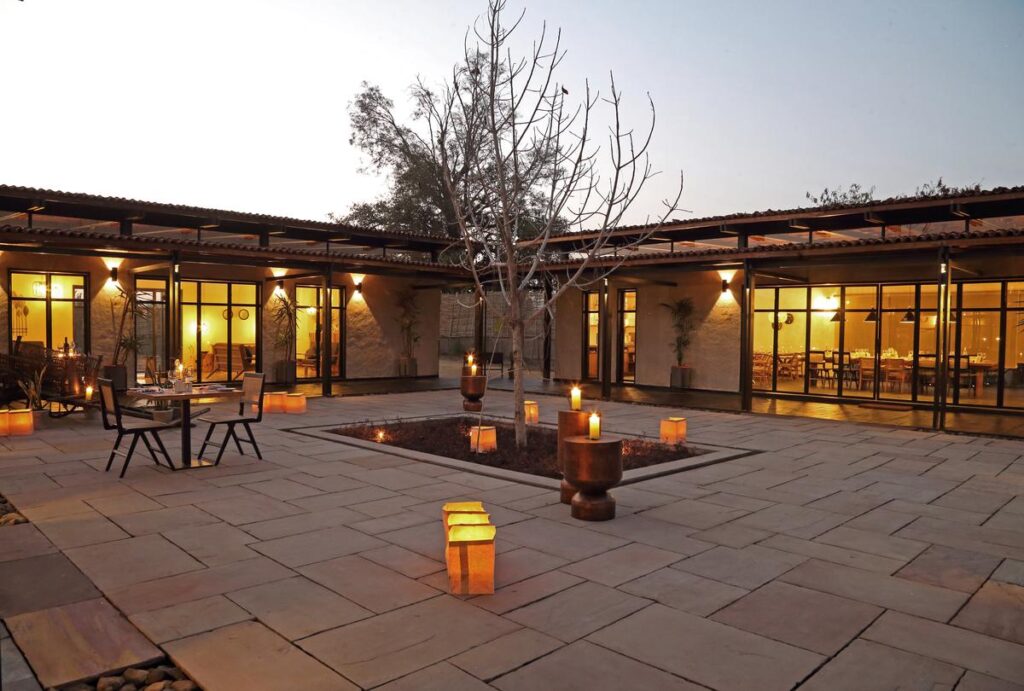
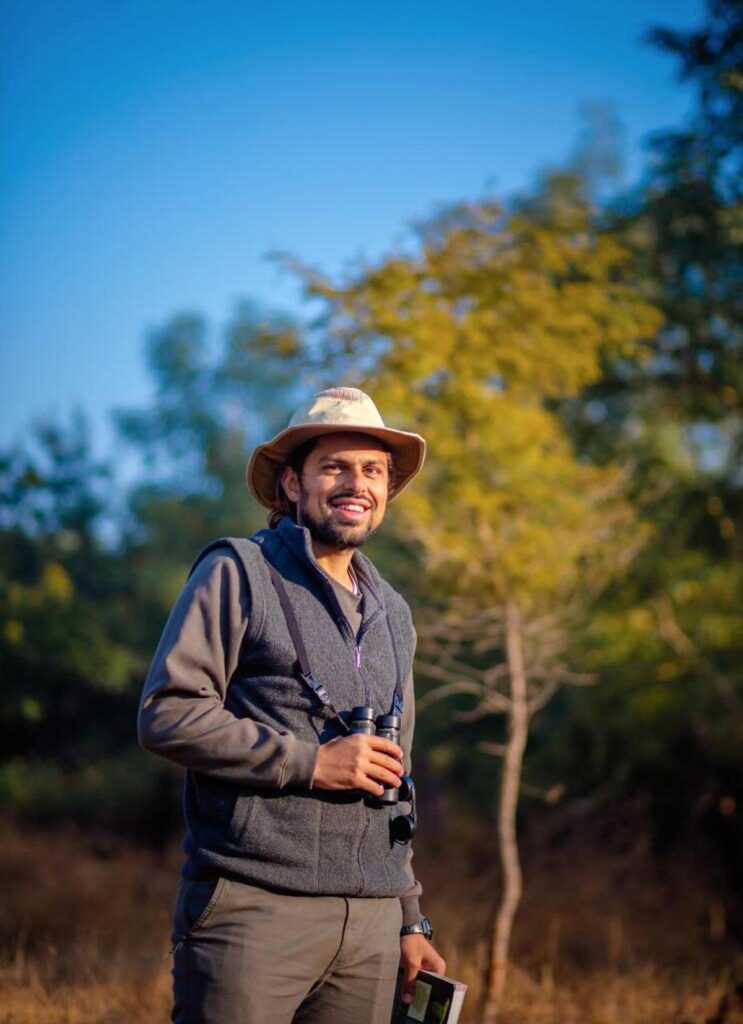
Another post-pandemic hospitality initiative is Bori Safari Lodge, an eight-room wildlife camp started by Rashid’s brother, Aly, in the Satpura Forest. “When we started the Reni Pani Jungle Lodge [a two-and-a-half hour drive away] in 2009, it was about experiencing the diversity of the forest, with river safaris, walking trails and birding. With the Bori, the tiger comes centre stage,” says the trained naturalist, who has partnered with the state tourism department.

Aly is a trained naturalist

A tiger relocation programme successfully initiated four years ago has revitalised the habitat and the local population. “The tigers have not only flourished, but have actively begun mating.” Aly — who has great memories of spending his childhood in the forests — also leads expeditions to spot snow leopards in Ladakh and seek out the red panda in the Northeast. “This [project] is a means to conserve the landscape. The alternate income for the locals will recharge the community, support conservation, and will help wildlife be seen as an asset.”

From ₹25,000 onwards (all inclusive)

source: http://www.thehindu.com / The Hindu / Home> Entertainment> Art> Weekend Travel Special 2022 / by Priyadershini S / April 15th, 2022