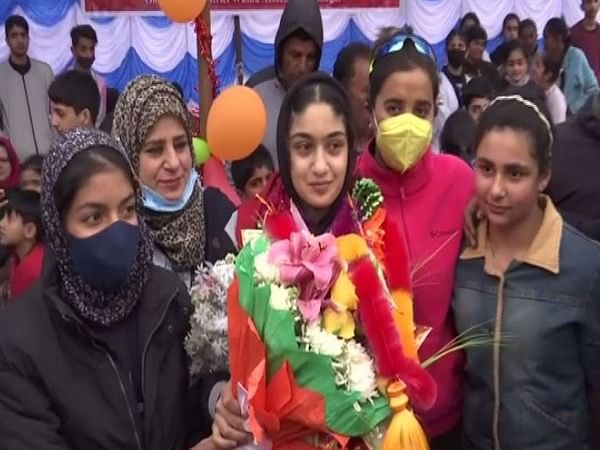
Sadia Tariq who won a gold Medal in the Moscow Wushu Stars Championship received a warm welcome from family and friends who reached Jammu and Kashmir’s Srinagar on Saturday.
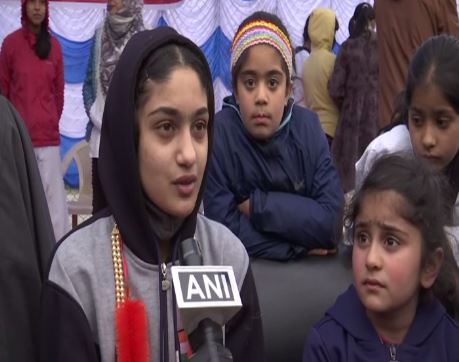
Speaking to ANI, Tariq shared her happiness and thanked her family and coach for supporting her.
“My eyes were in tears when I won the gold medal. If this happened today it is only because of my coach and family. I want to thank my coach who was there supporting me all the time,” she said.
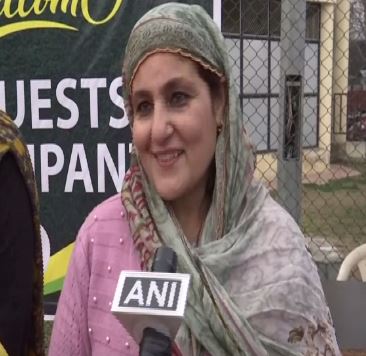
Maimoona Tariq, mother of Sadia said her daughter was passionate about this since she was in the third standard, today she made all of us proud.
“I am proud of my daughter, she made us proud. She was always engaged in this game since the third standard. I want other children to participate in the game also and made their parents proud,” she added.
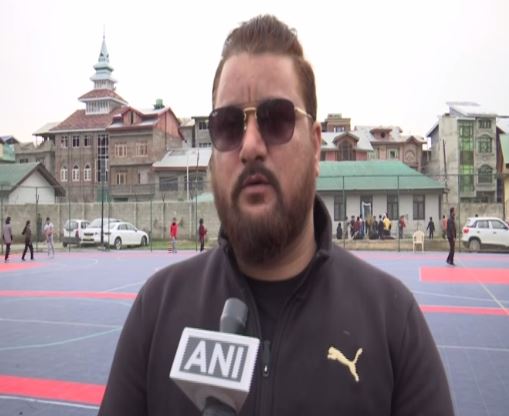
Masood Rather, Joint Secretary of Srinagar Wushu Association said “we all are very proud of Sadia. She performed very well in Wushu Stars Championship. Sadia already won two gold in national, it is her third gold medal.”
“As far as talking about Wushu, it is very popular in Jammu and Kashmir,” he further added.
Earlier in the last week of February, Prime Minister Narendra Modi congratulated Sadia Tariq on winning a gold medal in the Moscow Wushu Stars Championship, which is being held from February 22 to 28.
Sadia won the gold medal in Wushu Championship in Moscow by defeating a local player. Moscow Wushu Stars Championship is the approved event in the Annual Calendar Training and Competition of the Sports Authority of India. (ANI)
This report is auto-generated from ANI news service. ThePrint holds no responsibility for its content.
source: http://www.theprint.in / The Print / Home> India / by ANI / March 06th, 2022
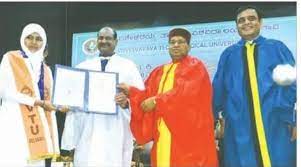
Bushra topped among all institutes of the VTU with an aggregate CGPA of 9.73. She is also the first-rank holder in the civil engineering branch as well as in the women’s category.
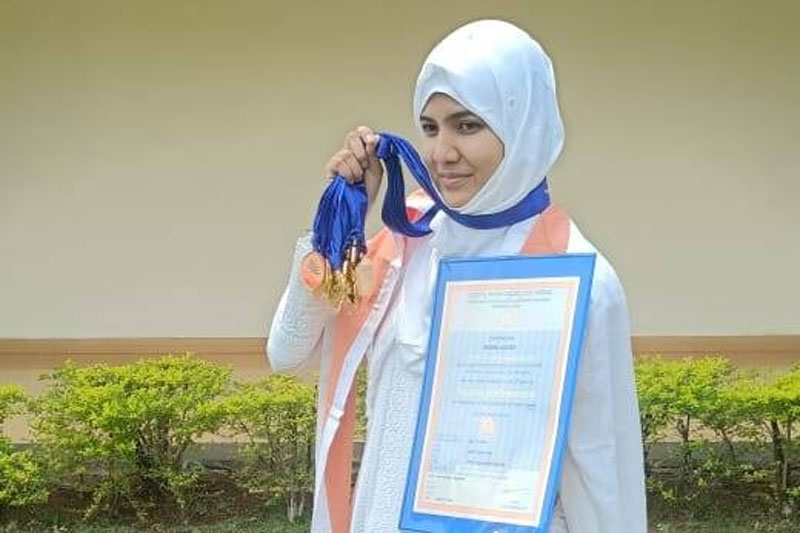
Bushra Mateen receives the gold medals during the 21st annual convocation ceremony of Visvesaraya Technological University in Belagavi on Thursday
Bushra Mateen, a civil engineering student of SLN College of Engineering, Raichur, won 16 gold medals at the 21st annual convocation ceremony of Visvesvaraya Technological University (VTU) in Belagavi on Thursday. Bushra thus set a record for the most number of gold medals by a student in VTU’s history to date, overhauling the previous tally of 13.
Bushra topped among all institutes of the VTU with an aggregate cumulative grade point average (CGPA) of 9.73. She is also the first-rank holder in the civil engineering branch as well as in the women’s category.
She won the Shri SG Balekundri gold medal, JNU University gold medal, VTU gold medal, RN Shetty gold medal among others. She won two cash prizes too.
Bushra Mateen, a civil engineering student of SLN College of Engineering in Raichur
‘My father is a civil engineer and so is my elder brother. I got my inspiration from them. My family has been supportive of my choices, from taking up the course to choosing the college, they agreed with my choices and interest. My father wanted me to study medicine, but he was equally supportive when I told him about civil engineering. It involves visiting sites, practical and labour work that can challenge a girl’s capabilities but I always believed in my strength. This branch is not restricted to private companies but also has government jobs and my goal is to prepare for the UPSC now,” said Bushra.
“I always referred to textbooks as it increased my knowledge and prepared me for a competitive environment. I believed in God and never compared myself to others. I believe nothing is impossible to achieve if you have self-confidence and determination,” added Bushra who also expressed her gratitude towards the faculty of SLN College of Engineering for guiding her throughout the degree.
source: http://www.indianexpress.com / The Indian Express / Home> Cities> Bengaluru / by Rishita Khanna, Bengaluru / March 11th, 2022
Rishita is an intern with The Indian Express, Bengaluru
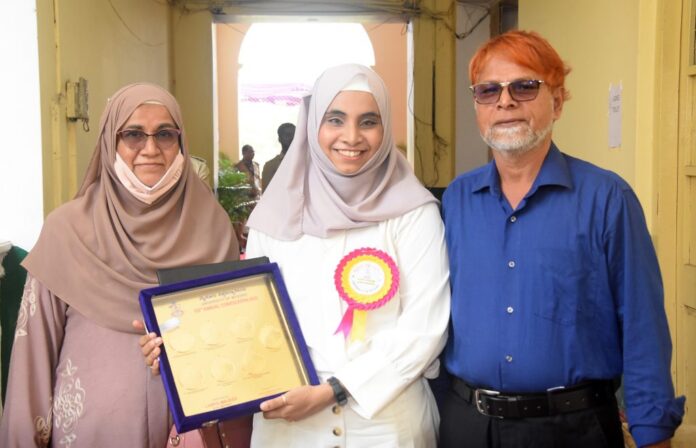
Amid the ongoing hijab row in Karnataka, another hijab-clad student Lamya Majeed from Karnataka has bagged seven gold medals and two cash prizes in M.Sc Botany at the 102nd convocation of the University of Mysore.
Majeed, a native of Mangalore district is currently working on her master’s thesis in the University of Mysore. She opted to study M.Sc Botany but didn’t have anything specific in her mind. As the years passed and she developed an interest in the subject and wants to engage in research works to help farmers.
Interested in plant pathology and plant disease, Lamya has also applied to go abroad for more research work, especially in the UK. She has also cleared the Graduate Aptitude Test in Engineering (GATE).
Speaking to THG, Lamya said, “I’m a very average student and didn’t expect to get this much. But I really like the subject and my dreams are to do research in the field of Life Sciences. I had good company with me who also had similar dreams are like-minded people. We would all support each other and some of my best friends were like good support for me. Particularly, my parents, they’re my greatest support.”
When asked if she faced any obstacles during her journey, the gold medalist said, “I didn’t face any obstacles from my family but some other people have done it. Especially, because I opted for regular science courses, you know, the general Indian mentality of engineering and medicine. So my subject wasn’t something that is kind of not even mainstream, especially in my family. There are not many like the people who have done BSc or MSc, everyone took. And people were like because I couldn’t study engineering, I took botany. It’s not something that was hyped, I would say, not the first choice for many people.”
But the good thing is, Lamya said, the environment in her university was really nice. “They really encouraged research. So, I am someone who wants to get into research, which is why I am doing botany. It was a risky move in a way that you know, most of us are expected to just like go into teaching, or do this thing. I want to continue doing a Ph.D.,”
The 23-year-old topper wants to encourage to people to come in this field because basic sciences and research is something that is a thought like only certain section certain people can do but “it’s obtainable and not out of reach for not general public. An average person can dream of being a scientist or researcher,” she said.
With a percentage of 86 in her Pre University Exam and interest in biology, people expected Lamya to go into medicine. She said, “But that was not where my interest was. I have massive respect for whoever takes medicine but it was not for me.”
“I wasn’t really sure what a gold medal is, who select it or how do they select, nothing. It was actually a shock for me because one of my friends called me early in the morning and asked did you see they released the gold medalists’ names and your name is there several times on the list. I was like, oh my god, it was completely unexpected. My parents are so proud of me,” she told THG, when asked what was her reaction when she first got to know that she bagged 7 gold medals.
Daughter of a retired employee of Bharat petroleum, Lamya has worn hijab all her life, and never faced any problem at all. She said, “I have worn hijab and never faced any problem even now.”
“I really don’t want to comment on this (hijab controversy) although, I’m just upset that it has happened. I don’t really want to say anything I’m just wearing that itself is a statement,” Lamya said she doesn’t want to engage in the hijab dialogue.
Further talking of her future plans, she said, “I want to do PhD and become a research scientist in Plant Sciences. So right now I am in the University of Mysore working in the final year of my master’s thesis. I am currently working on that but in the meantime, I have been writing competitive exams. I’m trying to trying to build a portfolio so I can apply for PhD. I would either study here or even abroad because the opportunities are there in many places. I’m just seeing where I can fit the best.”
Conveying a message to especially young girls, the golden girl from coastal Karnataka said that they should trust themselves. “Girls should believe in their own worth and believe that they are as capable as anyone in their peers.”
When we feel like we are not being provided with the right opportunities, or we are not being taken seriously compared to others then we should take a stand because we are worth just as anyone else,” she adding that when given opportunies, “we can do so much more.”
“I believe everyone deserves the rights and opportunities that should be available to every child, regardless if they’re a boy or girl or trans or whatever they are. I want them to feel like they are deserving of every opportunity, deserving of love. They should feel that way and work towards their goals. They should believe in themselves, no matter who they are, and work towards their dream. If they trust themselves in the long run, no matter what people say, they’ll have themselves.”
source: http://www.thehindustangazette.com / The Hindustan Gazette / Home> News> Education / by Rabia Shireen / March 26th, 2022
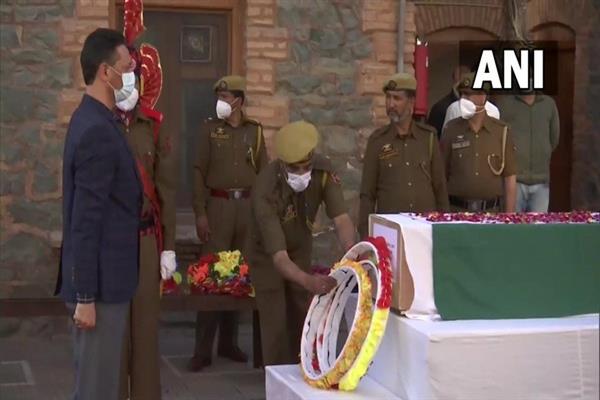
A constable Amir Hussain was killed in a brief encounter between police and militants in the Soura area of Srinagar on Tuesday, informed Vijay Kumar, Jammu and Kashmir IGP.
During the shootout, one militant who belonged to the LeT group was also injured. “In a brief encounter one militant and one jawan were injured. The jawan succumbed to injuries and attained martyrdom.
Soon we will neutralize all three militants , they belong to the LeT group,” Jammu and Kashmir IGP told media persons here.
A wreath-laying ceremony of SgCT Amir Hussain was also held by the police personnel today. (ANI)
source: http://www.risingkashmir.com / Rising Kashmir / Home / by ANI / March 22nd, 2022
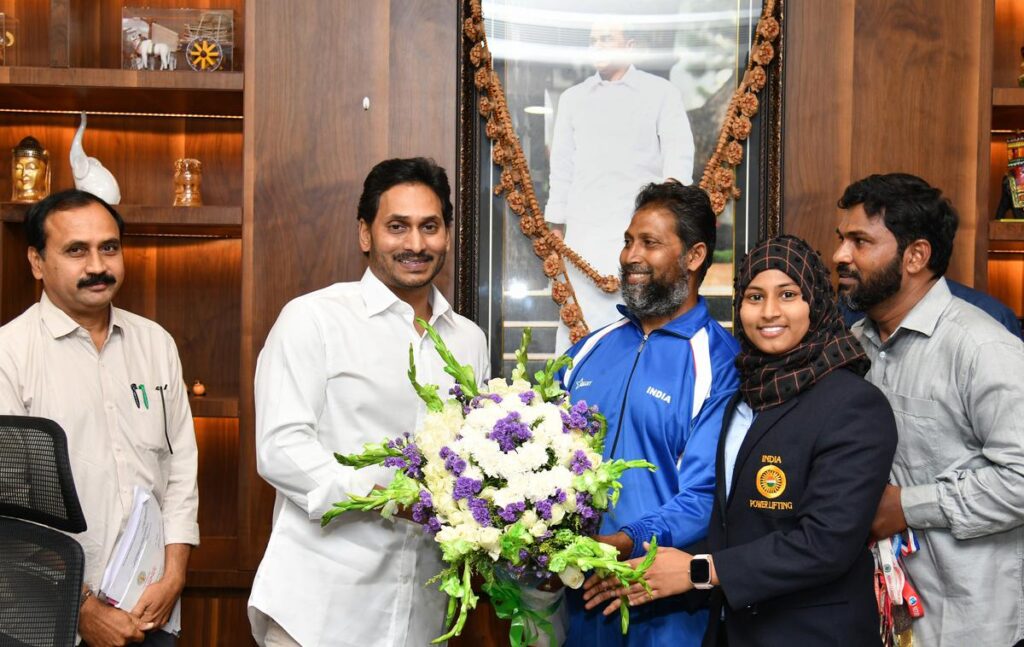
Powerlifting champion Sk. Sadia Almas presenting a bouquet to Chief Minister Y.S. Jagan Mohan Reddy at Tadepalli on Tuesday.
Proposal for setting up a powerlifting academy at Mangalagiri approved
Chief Minister Y.S. Jagan Mohan Reddy has announced a final assistance of ₹5 lakh on behalf of the Andhra Pradesh government for international powerlifting champion Shaik Sadia Almas.
Ms. Sadia, along with her father Samdhani, met Mr. Jagan Mohan Reddy at his chamber in the Assembly . She won three gold medals and a bronze medal at the Asian Powerlifting Championships held at Istanbul in Turkey in December 2021.
Mr. Jagan Mohan Reddy appreciated Ms. Sadia and approved the proposal of establishing a powerlifting academy in her hometown of Mangalagiri. He said that the government would make all efforts to encourage athletes in the State.
Sports Minister M. Srinivasa Rao, Mangalagiri MLA Alla Ramakrishna Reddy, Special Chief Secretary Rajat Bhargava and others were present on the occasion.
source: http://www.thehindu.com / The Hindu / Home> News> National> Andhra Pradesh / by Tharun Boda / Vijayawada – March 22nd, 2022
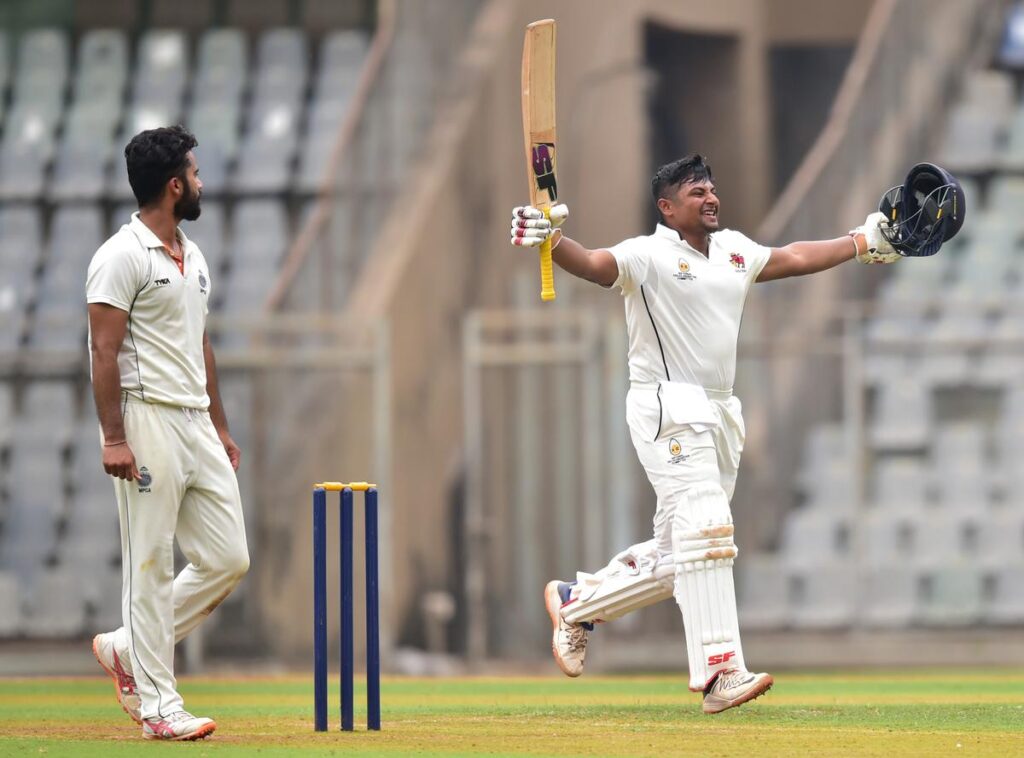
Sarfaraz Khan has rained runs in the domestic circuit. | Photo Credit: VIVEK BENDRE
Living father Naushad’s dream, hitting 400 balls every day, driving across north India to find a game or practice session during the lockdown, never settling for just a hundred — the prodigious Mumbai run-scorer offers an insight into his life and methods
You may have come across the 3 Ps and 3 Ds in self-help books. Sarfaraz Khan, the record-breaking Mumbai run machine, has been performing such exceptional feats that he deserves new terminology devised especially for him.
A kid from the by-lanes of Kurla, a central Mumbai suburb, Sarfaraz isn’t one for corporate jargon; he prefers ‘Bambaiya’ lingo. But having tracked his cricketing sojourn for over a decade, one can sum him up in the 4 Os: Obsession, Outstanding, Occupation and Opportunity. Let’s look at each of these facets.
Obsession
Hours after being adjudged the Player of the Match in Mumbai’s final Ranji Trophy league game in Ahmedabad, Sarfaraz reaches his home in Taximen’s Colony in Kurla at around 10 p.m. The first thing he asks his father Naushad is whether the ‘nets’ are booked for the morning.
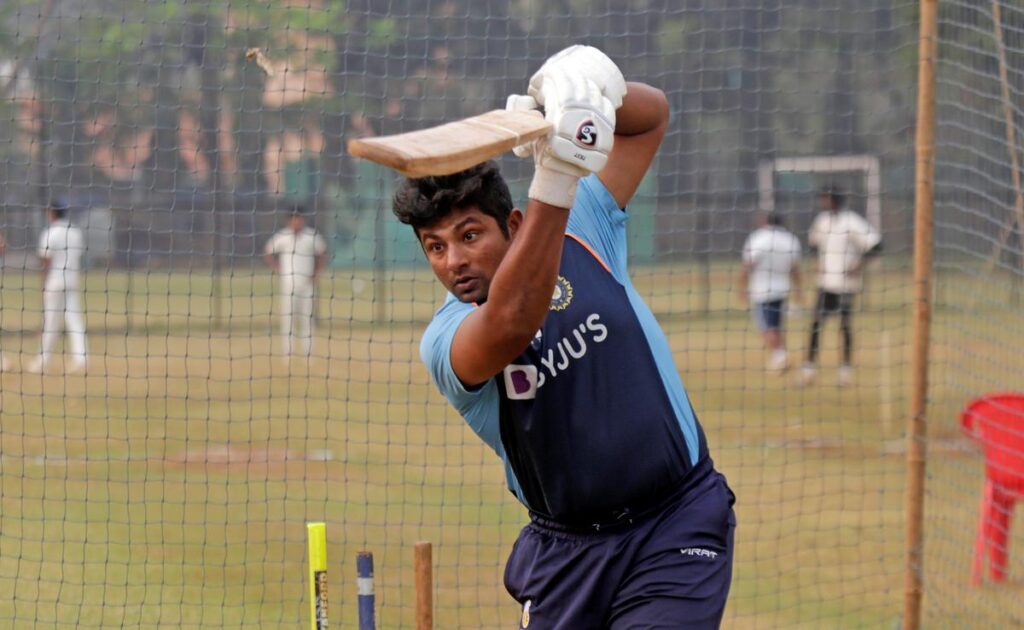
At 7 a.m. the next day, Sarfaraz is padded up at the Karnatak Sporting Association at Azad Maidan, ready for the daily drill of facing at least 200 balls in the session (he will repeat this dose on a makeshift turf pitch outside his house in the afternoon).
This is the routine Sarfaraz has followed ever since he was hailed as a ‘boy wonder’ in Mumbai’s school cricket circles a decade ago. The 24-year-old has had a topsy-turvy ride though. He has enjoyed the high of playing two Under-19 World Cups and being retained by an IPL franchise ahead of an overhaul. Then came a challenging phase when he left Mumbai for Uttar Pradesh before returning to the domestic powerhouse and establishing himself as a vital cog.
Sarfaraz’s stupendous success — he averages a staggering 77.74 in First Class cricket — has been driven by his determination and maturity at the crease. But the stocky batter says the runs are also a consequence of trying to repay his father’s faith and hard work. In many ways, he has been living his father’s dream.
Sarfaraz Khan at Cross maidan. | Photo Credit: EMMANUAL YOGINI
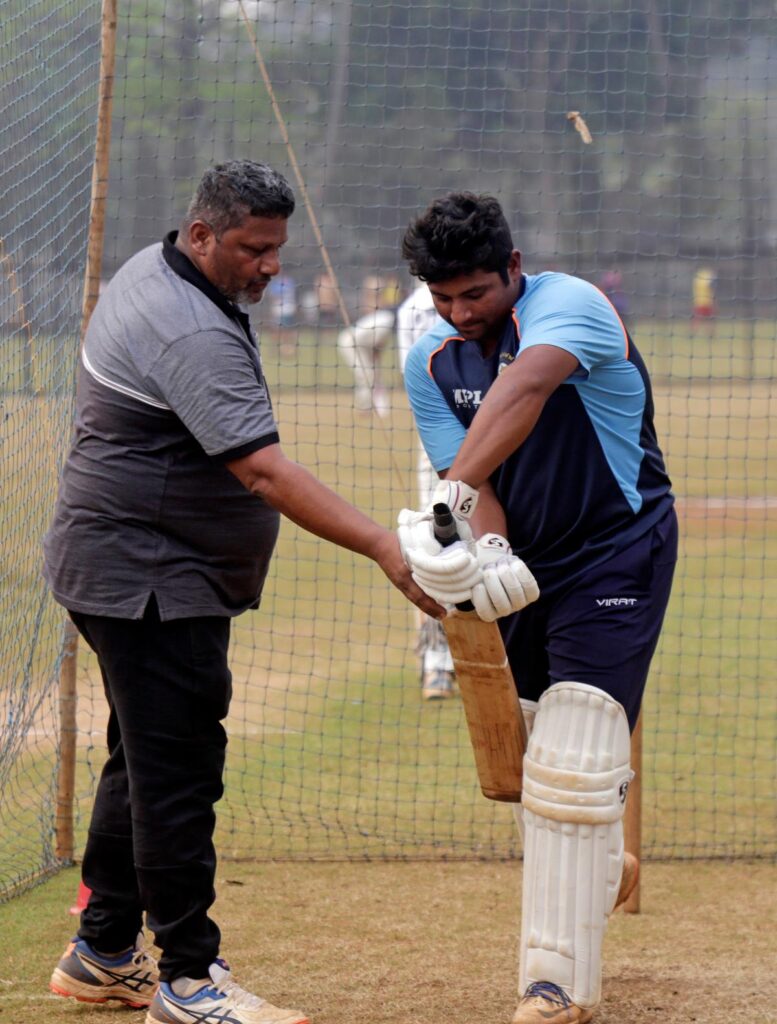
“I have struggled quite a lot. Especially with Abbu. Even after playing two World Cups, the IPL, to be lined up alongside 400-odd cricketers for selection trials (in Uttar Pradesh in 2016-17) and wear the badge of player No. 315, it was quite weird. I used to feel bad for Abbu. We used to stay in a hotel and Abbu would have sleepless nights,” says Sarfaraz, having taken a break from his morning drill and made way for Naushad, who has padded up to ensure the “net bowlers don’t feel like wasting their time”.
“He has worked so hard on me that I feel I have to do it for Abbu. I don’t know whether I will eventually end up playing for India but I want all his hard work to pay off. That’s what I am striving for. He has left everything for our cricket, so I am glad that he has that [chance] to see his son scoring so heavily in Ranji Trophy, that too for a team like Mumbai. To play for Mumbai in itself is a big deal. And to be able to play again means a lot.”
For a sense of the family’s obsession with cricket, sample this: during the pandemic-enforced lockdown, Naushad drove his sons and a couple of local net bowlers in an SUV all the way to Azamgarh, his ancestral town in Uttar Pradesh, to ensure they stayed playing cricket. For the next year or so, the Khans would drive to every town and city across north India that offered the opportunity to play a practice game or have an outdoor net session.
“Be it Meerut, Mathura, Ghaziabad, Azamgarh…. he would drive us all over north India. In Mumbai, people couldn’t drive down for two hours and here we were, travelling all over India in our car to play cricket,” Sarfaraz says.
“Abbu would drive us all over so that our cricket didn’t stop. Sometimes when I travel to other places in the north — be it Delhi or Jaipur or Mohali — I feel as if it’s a home game and not away. I am so used to playing in those conditions that acclimatisation is never an issue.”
Outstanding
You cannot separate Naushad — a former Western Railway cricketer who has devoted his life to moulding Sarfaraz and his younger brother Musheer, an all-rounder, into classy cricketers — from Sarfaraz’s cricketing journey. But this day is about Sarfaraz. And Naushad realises it and doesn’t intervene even once when Sarfaraz is chatting with The Hindu.
Sarfaraz Khan at Cross maidan. | Photo Credit: EMMANUAL YOGINI
Ask the plain-speaking Sarfaraz how well he remembers his First Class hundreds and pat comes the reply: “Six centuries… ek (one) triple, three doubles because a triple is also counted as a double. And every century is 150-plus, the one I scored for UP was 150 (155), it is the lowest.”
He says it as a matter of fact. But his returns since returning to Mumbai in January 2020 after a three-year hiatus are gargantuan: 1,564 runs in 15 innings at 142.18! And he isn’t a wee bit surprised by his phenomenal consistency, be it for Mumbai or for India-A against an all-international bowling attack in South Africa.
“I used to score heavily in school cricket, so it feels the same. I have done the same all my life, be it at Azad Maidan or a club ground or at a big stadium, I just am used to going through the motions and scoring runs,” he says.
“Every day brings a new challenge, a new ball, a new set of bowlers and it just doesn’t feel like I scored a hundred yesterday. It just feels like I have to work all over again and go through the routine and the process all over again and score runs. That’s what I have done since school cricket and since I started training with Abbu.”
And what’s the secret behind his daddy hundreds? The response offers a peek into his mindset.
“A lot of players tend to play a rash stroke after getting to the hundred. Once I celebrate the hundred, I keep telling myself — obviously every batter wants to score a hundred — ‘your aim is achieved, now do it for the team by converting it into a big one’.
“Also, there are so many quality players who score hundreds,” he says. “If you want to stand out, you have to score big hundreds, so I wait for four-five balls after the hundred and then start playing freely. Till the 100, I tend to plan in 10s, once I cross the 100, I start looking at it in 20s or 30s because every 20-30 runs that I add, not only will I get to another milestone but I will be taking the team to safety.”
Occupation
In addition to being obsessed with making it big as a cricketer and living his father’s dream, a changed batting outlook has also helped Sarfaraz. He has begun treating the match as his “office” and batting as his “job”. He refers to a dialogue from M.S. Dhoni’s biographical feature film: “Duty ke baad bhi practice (Your practice continues even after office hours)”.
“For me, it’s duty ke pehle and office ke baad bhi practice (it’s practice both before and after office),” he says. “I don’t have an off day. If I am not playing a match, I face at least 400 balls a day once Daddy wakes me up at 5 a.m.”
So how does he put his astounding form into perspective? “I have always been grounded, whether I score or not. I know that you enjoy when you perform well but there are always more sad days in life. That’s why we don’t tend to get excited. Even when I score, I don’t throw parties, nor do I attend anyone else’s. I don’t celebrate my birthday, nor do I attend someone else’s birthday party,” Sarfaraz says.
“My Daddy says, ‘You have so many followers and fans, so if you end up being friends with everyone, someone will have his or her birthday. So if you attend a birthday party every day, when will you play cricket?’ So I don’t go out much nor does our household get over-excited with any achievement. For us, doing well is like our daily job. And I’ve been learning something every day. But I keep telling myself two things: not to repeat the same mistake and follow whatever Daddy says.”
Opportunity
As someone who adapts to red-ball and white-ball formats as seamlessly as he switches between “Abbu” and “Daddy” when he refers to Naushad, Sarfaraz is making a strong case for an India call-up. One can sense that he desperately desires that India cap, especially with the sensational form he has been in, but he spells his position out calmly.
“There would be at least 500 cricketers toiling around us here at the maidan right now. And each one of us aspires to play for India. Whenever the chance comes, I have to be ready for it. That’s all that I am prepping for. If I can do it, I know I shall make my Daddy happy. And that’s what matters the most,” Sarfaraz says, before padding up again and replacing Naushad in the nets.
While Sarfaraz’s range-hitting keeps fielders and bystanders on their toes, Naushad expresses the hope that Sarfaraz gets a chance at the earliest in his new IPL franchise, the Delhi Capitals.
Had the Ranji Trophy not been postponed due to the Omicron variant, Sarfaraz could well have triggered a bidding war instead of being bought at base price in the accelerated auction. But as he starts walking towards his father’s SUV — the same one that had turned into his virtual home-cum-cricket room during the lockdown — Sarfaraz has a parting shot.
“It’s not about the money. It’s about the opportunity.”
With the dazzling form and frame of mind he is in, don’t be surprised if Sarfaraz adds ‘Optimisation’ to his 4 Os the moment he gets an opportunity in the IPL.
source: http://www.thehindu.com / The Hindu / Home> Sport> Cricket / by Amol Karhadkar / March 19th, 2022
At Falak in Bengaluru, a custodian of the old Urdu-speaking culture and culinary traditions brings storytelling to the table
While the lights of Dubai-esque skyscrapers speak of a new Bangalore and its ambition, the salubrious weather on the terrace is a testament to an old city — pleasant and genteel, never mind traffic, chaos or climate change!
This convergence of the old and the new is a theme, as I sit down to a meal at Falak, the new restaurant at Leela Bhartiya City. The meal is to flow like a quintessential 19th century Lucknowi dastaan (story), hyperbolic and stylised, to mimic the oral storytelling tradition, dastaan-e-goi.
In my bookcase, I have a copy of Tilism-i-Hoshruba, the truly first Indo-Islamic romance epic, an extension of the dastans of Amir Hamza, of the Persian tradition, albeit in translation. When it was first published, in a serialised form, between 1881-93, by the iconic Naval Kishore Press in Lucknow, it marked an important moment for the Urdu-speaking-and listening audience of northern India, long familiar with the Persian romance tradition — with fantasy, adventure and the implausible built in. But I turn to Hamza, to also dive into the inherent syncreticism on the pages, as the mores of a Persian world collide and merge with those of local Braj Bhasha-speaking cultures of the Indo-Gangetic plain.
Finding nuanced Avadhi in Bengaluru
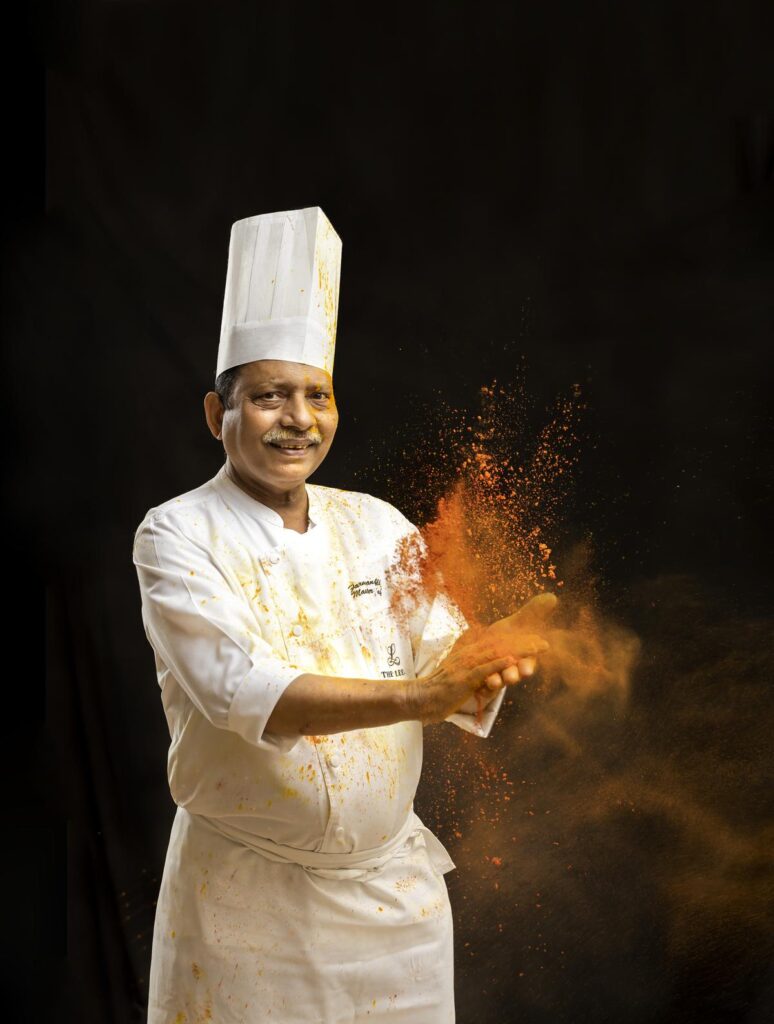
It’s a surprise to find a restaurant referencing this art form, to present Lucknowi (as also other Mughalai) dishes. Used to so much pastiche when it comes to Avadhi, the detailing in the menu is also unexpected. The food that arrives confirms that this perhaps is one of the most nuanced Avadhi/Mughalai restaurant opening in recent times — here in Bengaluru, rather implausibly, rather than Delhi, Mumbai or even London! Everything falls into place, however, when Farman Ali, all of 70, a chef who cooks behind the fiery range and sigri himself, and presides over the kitchens of Falak, makes his appearance.
When he hears about of my own Lucknowi antecedents, Ali abandons the idea of narrating food lore. With an extreme politeness that marks old Nawabi etiquette, he asks me, “ Ab aap ko kya dastan sunaye? [what possible tales can I tell you?].” And bursts into poetry, instead!
The rest of the evening goes by with the chef dropping verses from Daag or Ghalib or the other few who made 19th century Delhi one of the most literary cities in the world, even if we have forgotten that genre of poetry of lament created almost exactly at the time as Shelley, Wordsworth and the Romantics.
pix
Parts of an ancient story
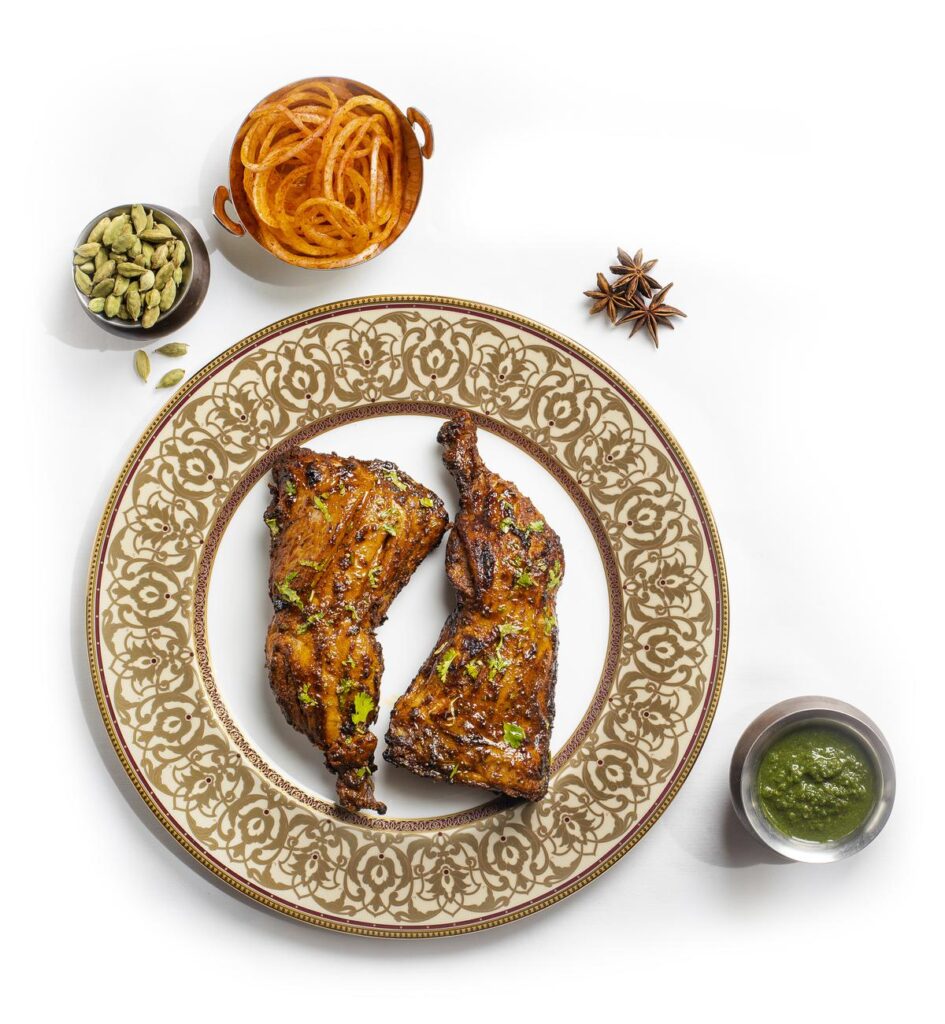
For Ali, I realise, this is not performance — though it is quite in sync with modern chefs expected to be performative as they spend time building brands ‘front of the house’. Instead, this is a way of life, a culture that has all but completely faded. As the meal progresses — the nihari (pepper-laced stew of old Delhi’s spice market, concocted, according to lore, to ward off cold and flu thought to emanate from the Yamuna canal in Chandni Chowk) being replaced by the qorma ( nihari evolved into the subtle Avadhi qorma, catering to aristocrats who thought it ill-mannered to be smelling of spices after a meal) being replaced by the ‘ balai’ka tukda for dessert (not dubbed ‘ shahi’ royal bread pudding here; balai being the correct term for clotted cream) — we talk not food but art.
One of the dishes served at Falak | Photo Credit: Special arrangement
“After 1857, so many artisans and poets fled Delhi for the Deccan,” says Ali. “Culture spreads like this.” He is right, of course. But the ghazal or qasidas aside, it’s also the biryani that has diffused. Farman Ali’s is the old Delhi/Lucknowi style (he grew up in old Delhi and still has a house there) where rice is cooked in stock, and the ‘ pulao’ is not the layered and overtly spiced dish that its Hyderabadi cousin is. Old ‘Nakhlauwallas’ — such as yours truly — contend there was no Avadhi biryani at all, before the restaurants took over, just many fanciful and well-documented pulaos such as the ‘ moti’ (pearls) or the ‘cuckoo’, served with fried onions and thin yoghurt, no chutney or gravy.
The man behind Jamavar
Ali worked in restaurants in Delhi and Dubai before being handpicked by The Leela’s Capt CP Krishnan Nair to create the food of Jamavar nationally, to cook and serve pan-Indian food. Based in Bengaluru, he curiously escaped much national attention, retiring just before the pandemic, but was called back by the owners of Bhartiya City, foodies themselves, to cook food closer to his roots.
If cuisine is an expression of a culture, at a particular point in history, its custodians and storytellers are as important as the taste of dishes.
In India, at this moment in time, it is perhaps important to look back on the custodians of the old Urdu-speaking cultures and their culinary expressions. What kind of a society produced these stylised dishes? Farman Ali, in many ways, is the last of the great chefs, many of whom were feted much more and earlier in their careers than him — such as Imtiaz Qureshi of ITC Hotels (and his family, such as son-in-law Ghulam Qureshi of Dumpukht), and chef Ghulam Rasool of Taj Hotels.
source: http://www.thehindu.com / The Hindu / Home> Life & Style> Food / by Anoothi Vishal / March 19th, 2022
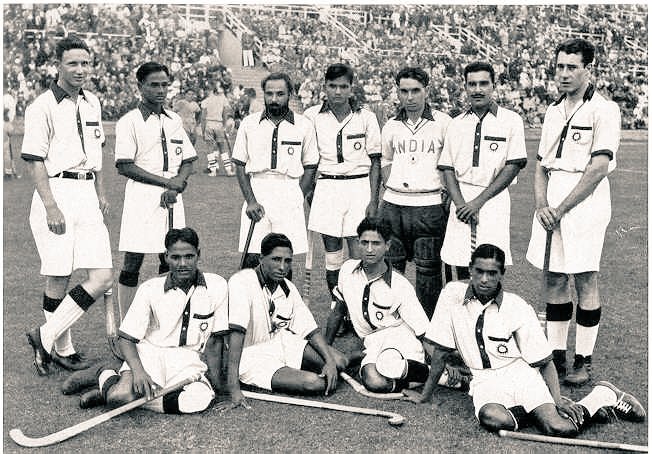
SM Jaffar was one of India’s finest hockey players in an era when the country reached near invincibility in the sport.
In the warm southern California summer of 1932, a group of young and colourfully-dressed athletes caught the attention of the residents of the Olympic host city. Angeleños, as the residents of Los Angeles were called at that time, had been expecting to see exotic looking foreigners, but even so, it would have been hard for many of them to not take a second look at turbaned Sikhs, Muslims and Hindus from faraway India.
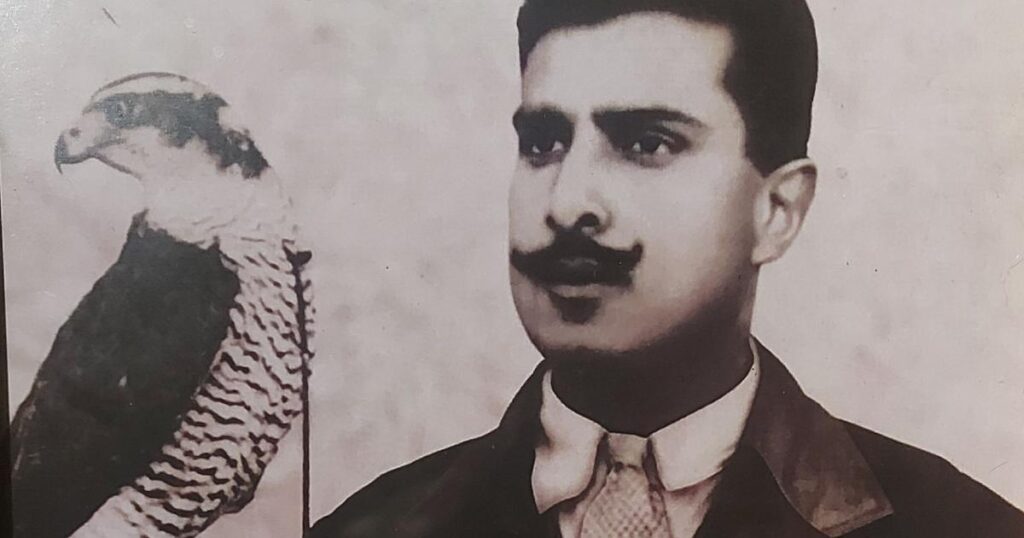
Accounts from diaries from the 1930s suggest that one 20-year-old with his trademark moustache and turban caught the attention of both athletes and fans. This hockey player from Shergarh, in what was then the Montgomery district of western Punjab, was one of the rising stars of the Indian hockey team: Sayed Mohammed Jaffar Shah (SM Jaffar), who played the left-out (forward) position.
Like his teammates, who undertook the 42-day journey by ship from Colombo to California, SM Jaffar could have easily been distracted by the attractions that Hollywood offered, but his focus on the hockey was unwavering. “This charming athlete from India, this sheikh from the deserts of Montgomery, this man who carried with him something of an atmosphere of vast extensive plains and cornfields and open air wherever he went, attracted many admirers,” writer Syed Ahmed Shah, better known as Patras Bokhari, wrote in an essay in the 1930s. “But this stranger with a manly moustache had the modesty of a village virgin that was both fascinating and forbidding.” SM Jaffar was Bokhari’s student at the Government College in Lahore.
Jaffar had a reputation of being a disciplinarian to the core. He even eschewed coffee, as his only attempt at drinking the beverage resulted in the loss of an entire night of sleep. “Myriads were the temptations in the way of a young man so far away from his mother and his father and his friends and dear ones at home,” Jaffar was quoted as saying by Bokhari.
The hockey player, who was a hawking and hunting enthusiast and a regular patron of Amritsar’s hawk sellers, chose to spend his free time in Los Angeles visiting the zoo and the city’s lion farm.
It was a foregone conclusion that the Indian team, which won the gold medal in the 1928 Amsterdam Olympics, would crush the only two opponents – the Unites States and Japan. Like the ongoing Tokyo Olympics, which have lost their sheen because of the global pandemic, the Los Angeles games had reduced participation on account of the Great Depression. Only 37 nations participated in the 1932 Olympics, compared to 46 in Amsterdam four years earlier. The Indian team, divided by groupism between Anglo-Indians and others (the captaincy went to Lal Shah Bokhari), beat the United States 24-1 and Japan 11-1 to win the gold.
“I have had the privilege of seeing many cuttings from American newspapers and I can say without the least fear of contradiction that no other player was more popular, more skilful and more highly praised than Jaffar, with perhaps the solitary exception of Dhyan Chand,” Syed Zulfiqar Ali Shah, who was Jaffar’s teacher at Lahore’s Aitchison College, wrote in 1937.
Shah, who would later become the principal of the prestigious Lahore institution, added, “…and what was true at Los Angeles, was equally true at the time of the Olympic Games in Berlin.”
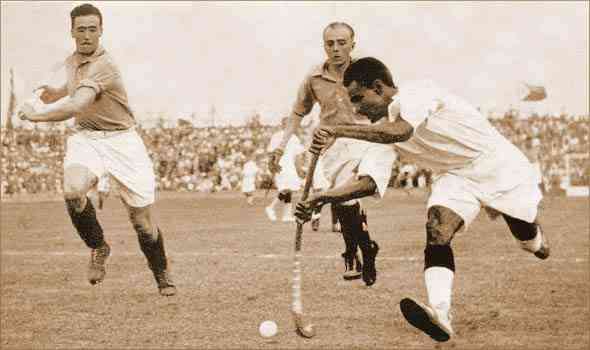
Dhyan Chand runs away with the ball in an Olympic contest. Credit: Wikimedia Commons [Public Domain]
Road To Berlin
After returning to Lahore, Jaffar immersed himself in his studies. He completed his degree and was appointed Extra Assistant Commissioner of Lahore and even took the Indian Police Competitive Examination. His hockey career also continued to flourish. By 1936, he was the captain of the Punjab hockey team at the inter-provincial hockey tournament in Calcutta.
The tournament, won by host Bengal, was used as a selection criterion for the 1936 Berlin Olympics. In a country which had several strong hockey sides such as Bengal, Bombay, Bhopal and Manavdar, just two players from Punjab were selected – Jaffar and Gurcharan Singh. Despite a request from the hockey authorities, the Indian Army initially refused to grant superstar Ali Iqtidar Shah Dara leave to play for the national side.
When it was time to select the captain of the Indian team, there were three candidates: Dhyan Chand, Jaffar and Manavdar’s MN Masood. “The IHF [Indian Hockey Federation] met at Delhi sometime in April to select the captain and officials of the tour,” Dhyan Chand wrote in his 1952 autobiography. “For the office of the captain, three names were put up – Jaffar, MN Masood and myself. Jaffar subsequently withdrew in my favour.”
It is widely accepted that the 1936 Indian team was the greatest to ever take the field in the history of the sport. Two-time defending champions, they were the favourites to win the gold, but the German side was a formidable opponent.
1936 :: Indian Hockey Team That Won Gold Medal In Berlin Olympics .
In Final, India Defeated Germany 8-1
In Tournament India Scored 38 Goals , Dhyan Chand Scored 13 Goals and His Younger Brother Roop Singh Scored 9 Goals
9:49 PM – Aug 1, 2021
_______
Panic seized the Indian team when they lost a warm-up game to the Germans by a score of 4 to 1. Dhyan Chand and Jaffar requested the army to release Dara for the tournament, and the legend was flown in to Germany a day before the semi-final. Till that point, India had little trouble in the tournament, easily defeating Japan, Hungary and the United States. The champions then crushed France 10-0 in the semis.
The final between India and Germany was witnessed by 40,000 spectators , most of them cheering for the home side.
India had some supporters in the stand too, including members of the Baroda and Bhopal royal families as well as some Indians who lived on the continent. The clinical performance of the Indian team, which won 8-1, threw the theory of Aryan Supremacy to the bottom of the Spree River that runs through the centre of Berlin. In a match where Dhyan Chand scored three goals, Dara added two and Jaffar contributed to the tally with a solitary goal. India could have easily scored more, but Dhyan Chand decided to give the “rough” Germans a “lesson in ball control” and the Indian team toyed with their opponents, moving the ball around endlessly.
“During the tour, he was a very great asset to the team, both on and off the field, and was highly praised by the German press,” Syed Zulfiqar Ali Shah wrote about Jaffar. “…He was Dhyan Chand’s right hand man and extremely useful in maintaining the morale of the team.”
The Olympic gold in hockey would stay in the subcontinent until 1972, with India winning gold in 1948, 1952, 1956 and 1964 and Pakistan doing so in 1960 and 1968.
A Tragic End
Unlike Olympic legends, Dhyan Chand and Ali Dara, SM Jaffar, who was at the peak of his athletic abilities in the mid-1930s, would not live to see the departure of the British from the subcontinent.
On the morning of March 21, 1937, Jaffar, an avid hunting enthusiast, went on a duck shoot with his friends on the banks of the Ravi River, near Lahore. The Olympian waded into the river to retrieve a duck that his dog was unable to get. Unknown to the party, the duck fell near a whirlpool in waist-deep water. Jaffar was sucked in, and his boots got caught in the reeds in the water. Despite being a skilled swimmer, he could not set himself free. The two-time Olympic gold medallist drowned in front of his friends in the Ravi. He was 25.
“It is too painful for me to recall here the incident of his most tragic death, which has deprived us of a brilliant ‘Old Boy’ of whom we were all unreservedly proud; no institution will mourn the death of Jaffar more than Aitchison College, of whose products he was the finest example,” Syed Zulfiqar Ali Shah wrote.
SM Jaffar is remembered as an all-time hockey great in Pakistan. As a tribute to his contribution to hockey, Aitchison College constructed a hockey pavilion in 1939. The Ali Institute of Education in Lahore organises an annual hockey tournament in his name. In India, however, his name is known only among the diehard hockey fans of a much older and dying generation. Perhaps a celebration of the legacy of such common heroes of the subcontinent would act as a catalyst for better relations between the South Asian countries?
Ajay Kamalakaran is a writer and independent journalist, based in Mumbai. He is a Kalpalata Fellow for History & Heritage Writings for 2021.
source: http://www.scroll.in / Scroll.in / Home> Remembering History / by Ajay Kamalakaran / August 06th, 2021
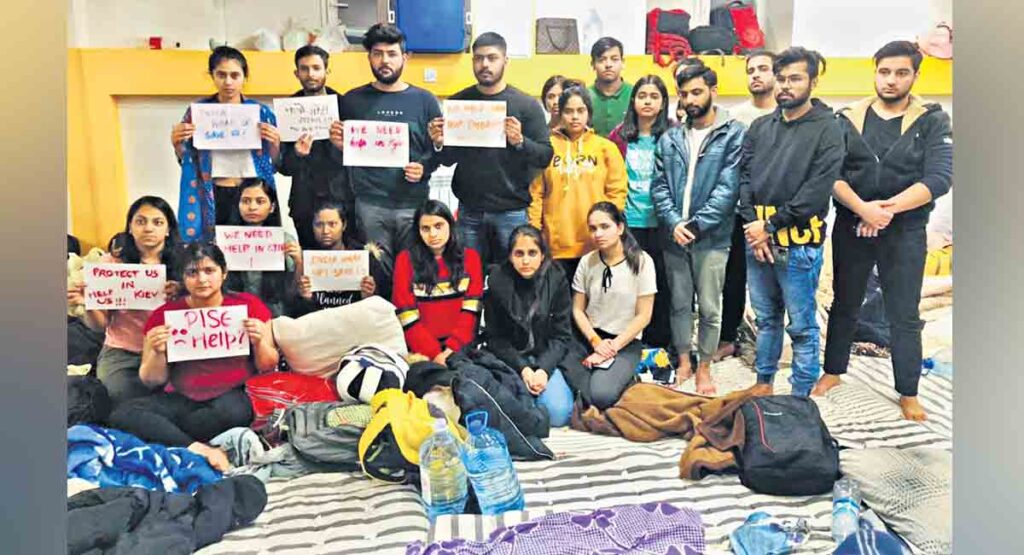
Indian students who are in Kyiv appeal for their evacuation.
Hyderabad:
Cook food in the confines of house in the morning and take refuge in the nearby bunkers all through the day. This has become routine for several Telugu students who are caught in the war-torn Ukraine for the past a few days. Worst is the situation for students who are staying in Kyiv, the capital of Ukraine, which has been witnessing heavy bombardment from the Russian forces.
“On February 23 at 3.30 am, we heard the first heavy explosion nearby our house that was deafening. The bombing was followed thereafter. Last night, an oil factory was bombed and fire could be seen from far of places. We are really scared for our lives. We are cooking in the house and staying in bunker,” says Sai Naik, a Warangal native who is staying in Kyiv with seven other students.
As the war-torn Ukraine announced martial law which includes curfew, all establishments have shut their shops. While some students had managed to stock-up, but needless to say, they do not last long.
“We bought groceries and other edibles for five days and we are already into the fourth day the food stock for one-day left. We have no idea what we will do now as all stores are closed since February 24.|
There is a shortage of water as well,” said Naik, who is a student of Bogomolets National Medical University, Kyiv.
Another student from Hyderabad, Gulam Ahmed Mohiuddin Salman who is currently taking shelter in Kyiv Medical University hostel said there were no responses from the Indian Embassy officials regarding their evacuation.
“There are 200 Indian students presently in the hostel basement. We are running short of groceries and other provisions. Given the situation with no transportation facility, it is impossible for us to travel to the Ukraine border which is 800 kms away from the hostel,” Salman said.
Naik, Salman and several other Indian students have made desperate appeals to the Indian government to at least transport them to the nearest border post.
Shoot at sight orders
“Shoot at sight orders was issued by the Ukraine government, so we cannot move out. We want the Indian government to help us reach the Ukraine border so that we can board a flight from neighbouring country,” Naik appealed.
source: http://www.telanganatoday.com / Telangana Today / Home / by Yuvraj Akula / February 27th, 2022
In a video of the incident, Mehboob can be seen holding the woman’s head down to prevent it from hitting anything protruding from the undercarriage.
Muslim man jumps under moving train to rescue woman fallen on tracks
Bhopal:
In an act of tremendous courage a 37-year-old Muslim man jumped in front of a moving goods train to save a woman who had fallen on the railway track in Madhya Pradesh’s Bhopal, an official said on Saturday.
While the incident took place on February 5, a video of the occurrence went viral on social media on Friday, garnering praise from all quarters.
______
एक युवती ने आत्महत्या के नज़रिए से चलती मालगाड़ी के आगे छलांग लगा दिया।
वहा पर मौजूद युवक महबूब ने किशोरी को बचाने के लिए ट्रेन के समाने छलांग लगा दी, लड़की को पटरी के बीच पकड़े रहा जब तक ट्रैन ऊपर से नहीं निकल गई, दोनों सुरक्षित।
The incident took place in Barkhedi around 8 pm on February 5, when Mohammed Mehboob, a carpenter, was walking near the scene after offering namaz.
A woman in her 20s carrying a backpack was crossing the railway track at the time when a goods train started approaching, said Shoaib Hashmi, a friend of Mehboob told PTI on Saturday.
The woman got scared and tripped on the tracks and could not get up and move away from the train’s path, he said.
When onlookers started shouting in panic, Mehboob acted on impulse and jumped on the track and ran up to the woman, dragged her to the middle of the trackbed, and kept her from lifting her head as the train passed over them, Hashmi said.
People kept cautioning the duo to stay down till at least 28 wagons on the train passed over them, he added.
After the near-death experience, the woman broke down in tears and hugged her father and brother who had not crossed the railway track with her at the time, Hashmi said.
In a video of the incident, Mehboob can be seen holding the woman’s head down to prevent it from hitting anything protruding from the undercarriage.
Ever since the video went viral on social media, people have been flocking Mehboob’s home in Ashok Vihar Bank Colony, Aishbag to congratulate him.
source: http://www.siasat.com / The Siasat Daily / Home> News> India / by Syeda Faiza Kazim , the News Desk / February 12th, 2022