Mahinpura (Bahraich District) UTTAR PRADESH / Mumbai, MAHARASHTRA :
An Inspiring Journey of IIT Bombay Professor Dr. Azizuddin Khan from a Small Town in Bahraich to Global Recognition in Science and Research
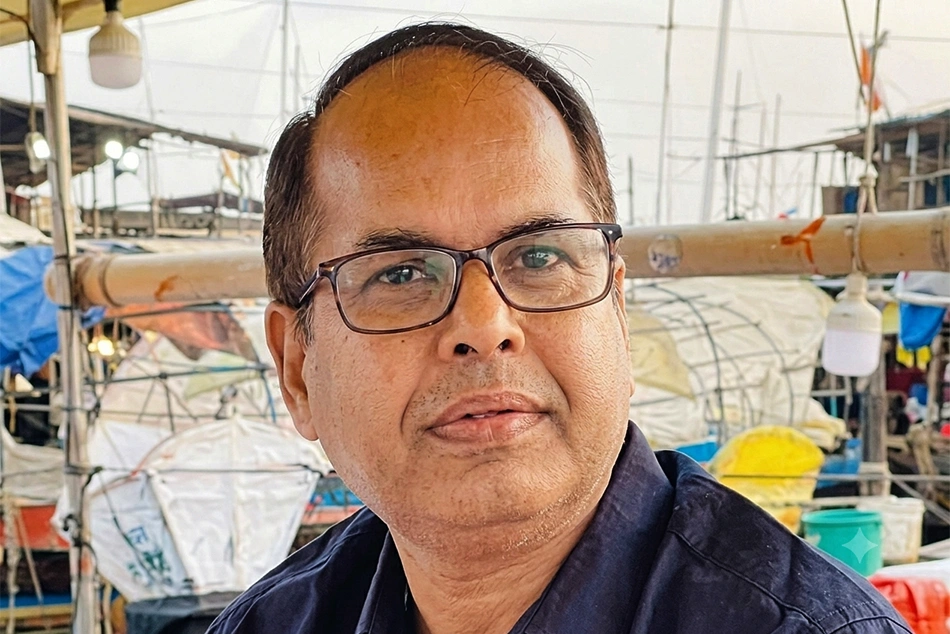
In a landmark achievement for Indian Science and Research, Prof. Dr. Azizuddin Khan, eminent Psychologist, Neuroscientist and Psychophysiologist at the Indian Institute of Technology Bombay (IIT Bombay), has been recommended for the prestigious J.C. Bose Fellowship (ANRF J.C. Bose Grant).
The Anusandhan National Research Foundation (ANRF) recommended the honour in recognition of Dr. Azizuddin Khan’s outstanding scientific research, innovation and contributions aimed at improving human well-being in August 2026.
The J.C. Bose Fellowship is one of India’s prestigious recognitions for active senior scientists and engineers who have made outstanding contributions to science, engineering, medicine and related fields. The fellowship provides research support to enable distinguished scientists to continue advanced research and mentor the next generation of researchers.
From a Small Town to IIT
Prof. Dr. Azizuddin Khan hails from Mahinpurwa, a small town in Bahraich district of Uttar Pradesh. After completing his early education at a local inter college, he chose psychology as his field of study despite family expectations.
He secured first position in his undergraduate studies at Aligarh Muslim University (AMU) & subsequently completed his M.A. in Clinical Psychology. He later earned his Ph.D. in Cognitive Psychology from IIT Kanpur, which laid the foundation for his distinguished research career.
Distinguished Research at IIT Bombay
Prof. Khan has been associated with IIT Bombay for nearly two decades and currently serves as an India Value Chair Professor. He is among the leading researchers associated with the Psychophysiology Laboratory.
He is also associated with important research initiatives including the Sunita Sanghi Centre for Ageing & Neurodegenerative Diseases (SCAN), Koita Centre for Digital Health (KCDH) and the IIT Bombay-FedEx ALFA Centre.
He has played an important role in developing an advanced Psychophysiology Laboratory at IIT Bombay, where researchers use technologies such as EEG, Eye Tracking, Event-Related Potentials (ERP), Neurofeedback and other modern neuroscientific techniques to study the human brain, cognition and behaviour.
Diverse and Human-Centred Research
Prof. Khan’s research is closely connected with real-life human challenges. His major areas of research include:
- Dyslexia and Reading Disorders
- Autism and ADHD
- Memory and Prospective Memory
- Attention, cognition and brain processes
- Parkinson’s disease and Alzheimer’s disease
- Psychological stress and depression
- Brain activity during Urdu, Hindi and bilingual reading
- Urdu script and its processing in the human brain
- Artificial Intelligence and mental health
- Human psychology under extreme environmental conditions
Through his multidisciplinary research, he has contributed significantly to the fields of psychology, psychophysiology and neuroscience.
Technology-Based Research for Dyslexia
One of the most significant areas of Prof. Khan’s research is dyslexia. He has contributed to the development of ‘Brainu’, a screening application designed to facilitate the early identification of children who may have reading difficulties.
The application uses engaging, game-based activities to assess certain reading-related abilities and help identify children who may require further assessment or support.
He has also worked on innovative Haptic Belt/Bracelet technology, which uses specific vibrations to help children recognise and experience the correct sounds associated with letters and words.
Such technology has the potential to support children learning Urdu, Hindi, Marathi, Arabic and English, particularly those experiencing difficulties in reading and phonological processing.
Pioneering Research on the Urdu Script
Another distinctive area of Prof. Khan’s research is the neural processing of the Urdu script. His research examines how the human brain processes Urdu text written from right to left while simultaneously dealing with numbers written from left to right.
Using Eye Tracking and EEG technologies, he has investigated the cognitive and neural processes involved in Urdu and bilingual reading. His work has contributed to the scientific understanding of how multilingual readers process different writing systems.
Research in Antarctica
Prof. Khan has also participated in India’s Antarctic research programme, where he studied human psychology under extremely cold and isolated environmental conditions.
His research examined aspects such as memory, mental health, emotional well-being and behavioural changes among people living and working in extreme environments. He has also undertaken research related to self-awareness in penguins, attracting attention within the scientific community.
Representing India on the Global Research Platform
Prof. Khan has represented India at numerous international academic and scientific forums. He has presented his research in countries including the United States, United Kingdom, Germany, France, Japan, Australia, Finland, Spain, Italy, South Korea, Turkey, Brazil, the United Arab Emirates and several other countries.
His academic contribution includes more than 200 research publications, several international book chapters, patents and research projects. He has also guided numerous Ph.D. scholars, many of whom are today working as professors and researchers at leading IITs, NITs and universities in India and abroad.
An Inspiring Message for Young Students
According to Prof. Dr. Azizuddin Khan, success depends not merely on intelligence but on hard work, curiosity, perseverance, patience and a continuous desire to learn.
His own journey demonstrates that a student from a small town can achieve global recognition through education, determination and sustained research.
A Matter of Pride for the Nation
The recommendation of Prof. Dr. Azizuddin Khan for the J.C. Bose Fellowship is not only a personal achievement but also a matter of pride for the Indian scientific community, IIT Bombay, Aligarh Muslim University (AMU) and the residents of Bahraich.
His continuing work in psychology, neuroscience, education, mental health and artificial intelligence is expected to open new avenues of research and contribute to improving the lives of children, students and society at large.
[The writer, Akhlaq Shaikh, is a Career Counsellor, Mumbai. He alsow writes for Urdu Daily Inquilab.]
source: http://www.ummid.com / Ummid.com / Home> Education & Career / by Akhlaque (Akhlaq) Shaikh / August 18th, 2026


