Tag Archives: Pervez Bari

Book on Bhopal’s noted Urdu journalist ‘Arif Aziz – Ek Tajzia’ released

Bhopal, MADHYA PRADESH :
Bhopal: 

When a journalist is eulogized in a function by speakers after speakers wherein a book critically analysing his works and personality is being released then it is but natural that tears of joy start rolling down the journalist’s cheeks.

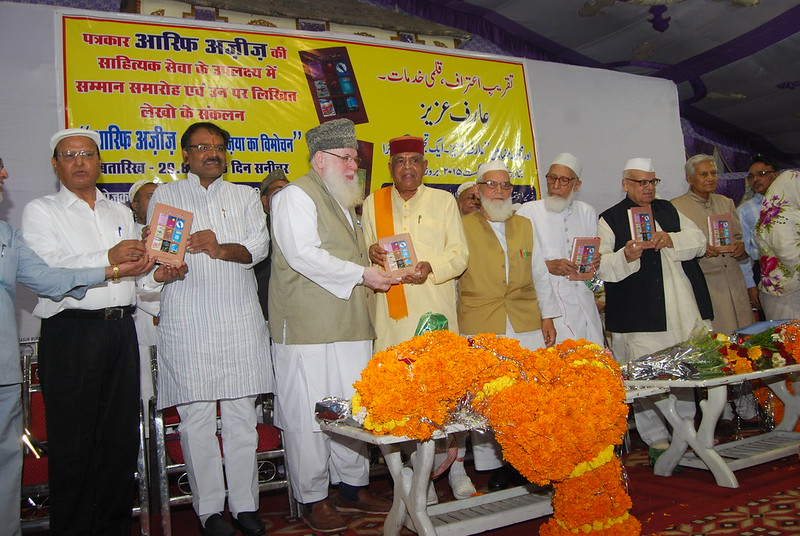
Such was the case with the well-known Urdu journalist Arif Aziz of Bhopal when at the fag end of the function of releasing the book on him entitled “Arif Aziz – Ek Tajzia” (Arif Aziz – An Analysis) here he was asked to speak after the dignitaries on the dais one by one lauded his journalistic and literary services spanning over 40 years. He was overwhelmed by the occasion as the cup of love was brimming or even overflowing. When he rose to address the assemblage he found his voice virtually chocked and eyes welled up with tears. He was seen sobbing involuntarily while standing mute for a minute or two as volunteers ran helter-skelter to fetch water so that he could wet his parched throat. Another volunteer fetched a tissue paper to help him wipe off his tears and gain composure to be able to speak a few words on the occasion.

Arif Aziz, the “Son of the Soil”, struggling for words told the jam-packed Hindi Bhavan auditorium in a chocked voice that whatever has been said about his works and personality is an exaggeration. He is not an iconic figure to be showered such praises upon him by his well-wishers.

“Whatever I did in my life as a journalist I did it with all my honesty and sincerity and saw to it that the profession to which he belonged does not get blotted by his actions”, he added.

He gave credit for his success to his journalist colleague Ashfaque Mashhadi Nadwi. The book concept on him is the brain child of Ashfaque Mashhadi and Urdu litterateur Dr. Akhlaque Asar. It was brought into reality by another journalist colleague Inamullah Khan Lodhi and Arif Aziz’s daughter Mardia Arif, who is also a writer in her own right, as they painstakingly compiled the write-ups and essays on him, he revealed.

“Hajji Mohammad Haroon, president of Jamiat-e-Ulma-e-Hind, Madhya Pradesh unit, placed the icing on the cake by organising such a grand function for me that I did not deserve”, he remarked.

Without any doubt the book releasing function was a glamorous and glittering with eminent writers, columnists cutting across language barriers, and famed personalities who graced the occasion.

Arif Aziz’s friends, well-wishers and relatives also thronged the venue in large numbers to make it a most memorable occasion. Not only this outstation relatives, fans and Urdu lovers in large numbers too made it a point to attend the function to make it a memorable one. Apart from Delhi people from Indore, Sagar, Vidisha, Ashta, Sironj, Sehore etc. participated in the function. The representatives of a number of literary organisations and individuals poured out their love for Arif Aziz on the occasion and mobbed him with bouquets, garlands and gifts. Congress MLA Arif Aqueel draped him with a shawl around his shoulders to honour him. About a dozen tiny-tots also did not lag behind and felicitated him with flowers.

It is noteworthy that as the function was moving along telephonic congratulatory messages of Arif Aziz’s friends and fans from across the border poured in hailing his exemplary journalistic journey.

It has been seen that one’s services are usually extolled after one’s death but Arif Aziz is fortunate enough that his untiring efforts were recognized in his lifetime and he saw this all with his own eyes.

The 384 pages book “Arif Aziz — Ek Tajzia” is a voluminous bunch of essays on the personality, services and dedication of authentic, revered writer and Urdu journalist Arif Aziz. It has been compiled by journalist Inamullah Lodhi and Mrs. Mardiya Arif.

The function of the release of the book was organised under the aegis of Maulana Barkatullah Bhopali Education and Social Welfare Society, Bhopal with its president Hajji Mohammad Haroon and his team leaving no stone unturned to make the occasion of the book release a big and a grand success.

Arif Aziz is Special Correspondent of “Nadeem”, the oldest Urdu daily of Bhopal. He is a voracious writer and has authored nine books on various subjects. Daily columns written by him are reproduced by over a dozen national and international Urdu newspapers. He has written over 20,000 articles in the last 40 years of his journalistic life. He has been decorated with All India Hakeem Syed Qamarul Hasan Award of Madhya Pradesh Urdu Academy and 30 other national and state level awards.

The books authored by Arif Aziz include: 1. Nabz-e-Dauran — Anthology of more than 70 essays on Political, Social & Current topics (1994); 2. Zikr-e-Jameel — Comprising of 38 Bio-Sketches published by Madhya Pradesh Urdu Academy, Bhopal (1995); 3. Qadr-o-Qeemat — Anthology of more than 45 critical essays and research papers (1997); 4. Talash-o-Ta’assur — 19 Critical and research papers (1999); 5. Masajid-e-Bhopal — Historical facts of the mosques of world & especially of Bhopal (2003); 6. Had-de-Nigah — An Anthology of 51 Essays on political science & current topics ((2004); 7. Suraj, Chand, Sitare — comprising of 47 Bio-Sketches published by M.P. Urdu Academy, Bhopal (2004); 8. Musafir-e-Haram — Hajj Pilgrimage description (2006) and 9. Azad Hind Mein Urdu Sahafat — from 1947 to 2006 under the project of Makhanlal Chaturvedi Patrkarita Vishvidhayalaya, Bhopal (2010).

The function was presided over by renowned theologian (Aalim-e-Deen), Hazarat Maulana Mohammad Saeed Mujaddadi (popularly known as Peer Saeed Miyan), Rector Dar-ul-Uloom, Taj-ul-Masajid, Bhopal while the chief guest on the occasion was Aziz Qureshi, ex-Governor of Uttrakhand, Uttar Pradesh and Mizoram.

Other guests and dignitaries who participated in the function included: BJP-ruled Madhya Pradesh Home Minister Babulal Gaur; BJP Lok Sabha member from Bhopal Alok Sanjar; Congress MLA Arif Aqueel; Urdu litterateur Prof. Afaq Ahmad; Dr. Tariq Zafar, Vice Chancellor Bhoj Open University, Bhopal; Dr. Khalid Mehmood, ex-Head of Urdu Department, Jamia Millia Islamia, Delhi; Barkatullah University Arabic Prof. Hassan Khan; Maulana (Dr.) Iqbal Masood Nadwi (Islamic Centre, Canada); Senior journalists Masoom Moradabadi (Editor, Urdu daily Jadid Khabar, & fortnightly Khabardaar Jadid, Delhi); Siraj Naqvi, (Rashtriya Sahara, Delhi) and Rajkumar Keswani (Bhopal). Introduction about the book was presented by Prof. Afaq Hasan Siddiqui.

Hazarat Maulana Mohammad Saeed Mujaddadi, Aziz Qureshi, Babulal Gaur, Alok Sanjar, Prof. Afaq Ahmad, Dr. Khalid Mehmood, Alok Sanjar, Dr. Tariq Zafar, and Hajji Mohammad Haroon released the book amidst thunderous applause.

Masoom Moradabadi, Editor of Urdu daily Jadid Khabar & fortnightly Khabardaar Jadid, Delhi, while lauding Arif Aziz and his works strongly pleaded that the veteran journalist be honoured with the Padam Shree award for his yeoman services in the field of Urdu journalism for the last 40 years. He compared him with legendry India’s Freedom Struggle’s first journalist martyr Moulvi Muhammad Baqir, who was editor of Delhi Urdu Akhbar and a great advocate of Hindu Muslim unity. Freedom Fighter Maulvi Baqir was arrested for revolt and without being tried, on September 16, 1957 was tied to the mouth of a canon and was publicly blown up in front of the Khooni Darwaza in Delhi.

Siraj Naqvi, another senior journalist of Rashtriya Sahara, Delhi, also urged that Arif Aziz must be decorated with the Padam Shree award in recognition of his services by the government of the day.

Dr. Tariq Zafar, Vice Chancellor of Bhoj Open University, read out a citation in recognition of Arif Aziz’s services and presented it to him.

Speaking as a chief guest on the occasion Aziz Qureshi while extolling the contribution of Arif Aziz in Urdu journalism and literature lamented that after India’s Independence in 1947 Urdu language has languished due to government’s apathy which history will never forgive. Without batting an eye lid he said that in a calculated move after Independence a campaign was launched to wipe out Urdu. He revealed the campaign was started by the then Union Home Minister Pandit Govind Ballabh Pant, who was responsible for the establishment of Hindi as an official language of the Central government and a few states while dumping Urdu into oblivion. The process started from Uttar Pradesh and is still continuing despite court’s order declaring Urdu as second official language in the state.

In another revelation on the occasion Qureshi informed that after the first war of independence in 1857 the ruler of Bhopal Begum Sikandar Jahan had declared Urdu, in place of Persian, as the official language of her government for the convenience of her Hindu subjects. In the development of Urdu language the contributions of Hindus cannot be ignored, he added.

Maulana Saeed Mujaddadi while presiding over the function blessed Arif Aziz for fulfilling his responsibilities with all sincerity. He prayed he would continue to strive to serve the Muslim community through his journalistic efforts and the Almighty Allah (S) will guide him in all his endeavours.

Home Minister Babulal Gaur, special guest on the occasion, also lauded Arif Aziz’s simple life, his write-ups on social issues and dedication to Urdu journalism. He said he never indulged in yellow journalism for material gains.

At the outset Hafiz Qari Hashim Ansari recited verses from the Holy Quran. Urdu poets Iqbal Baidaar and Zafar Naseemi rendered poetic tributes in praise of Arif Aziz which was applauded by the audience. Khalique Siddiqui and jeweller Sheetal Bhai Soni presented gifts to him on the occasion. In the end Adv. Mohammad Kaleem proposed a vote thanks.

source: http://www.twocircles.net / TwoCircles.net / Home> India News> Indian Muslim> Literature> Top Story / by Pervez Bari, TwoCircles.net / September 04th, 2015
Glowing Tributes Paid To MESCO Secretary Late Dr. Fakhruddin

Hyderabad, TELANGANA :

Dr. Fakhruddin Mohammed, secretary, MESCO, Hyderabad.

Bhopal :

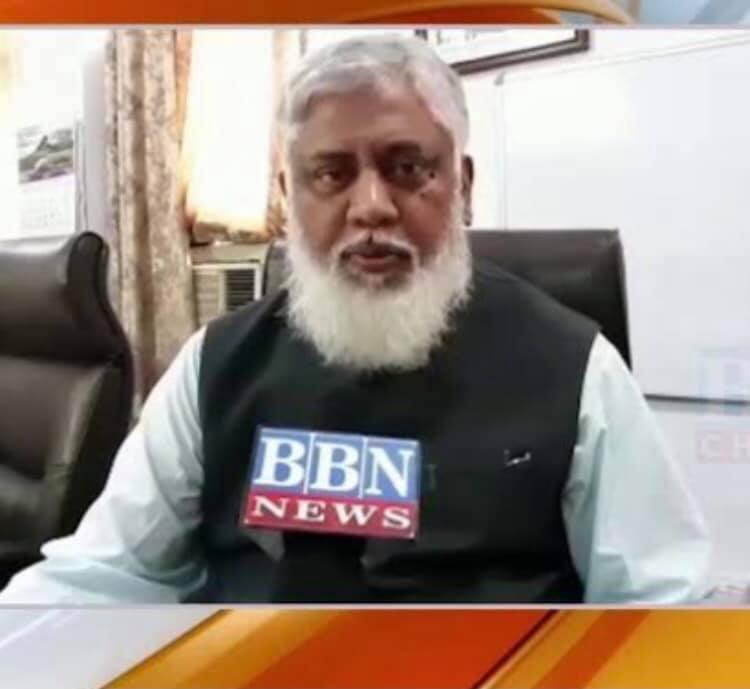
The head and heart qualities of Dr. Fakhruddin Mohammed, secretary of Hyderabad-based MESCO (Muslim Educational Social & Cultural Organization) were recalled in ample measure in an online condolence meeting which was held on Friday.

Dignitaries paid glowing tributes to the departed soul while recalling his contributions in multiple fields with special reference to health and education sectors. Everyone recalled his memories with Dr. Fakhruddin and prayed for his ‘maghfirat’. The meeting was presided over by Arif Mohammad Khan, Governor of Kerala.

Dr. Fakhruddin Mohammed, 61, passed away on May 5, 2021. He breathed his last at AIG Hospital in Hyderabad after a brief illness. He is survived by his wife, two sons and two daughters. He was a noted philanthropist and son of Dr. Shamsuddin, a leading practitioner and superintendent of Government Fever Hospital. There are more than 55 doctors in his family.

Earlier, the condolence meeting started with Tilawat-e-Qur’an and was attended by the family members of Dr. Fakhruddin, friends and former cabinet ministers & head of the institutions like Salman Khursheed, K. Rehman Khan, Sirajuddin Qureshi, SM Khan, Dr. Abdul Qadeer, Naved Hamid, Kamal Faruqui, Khwaja Shahid, Prof. Akhtarul Wasey, Prof. Iqbal Hasnain, Feroz Bakht Ahmed, Quaiser Mehmood, Dr. Salman Asad, Mohammad Naushad, Dr. Rihan Khan Suri, Dr. Mohammad Iftekharuddin and many more dignitaries.

The condolence meeting was organised by architect, writer, and social activist Kaleemul Hafeez, who was a close associate of late Dr. Fakhruddin.

In the meeting, it was collectively felt that Dr. Fakhruddin’s legacy must go on. On this note, five things were decided which included: 1. Scholarship in his name (proposed by Kaleemul Hafeez); 2. Award in his name (proposed by Mohammad Naushad, (president-Lok Seva Samiti); 3. Dr. FM Memorial lecture in IICC (proposed by SM Khan, Vice President-IICC); 4. Biography (proposed by Sirajuddin Qureshi, president, IICC) & 5. Centre in his name in MANUU (proposed by Feroz Bakht Ahmed, Chancellor, Maulana Azad National Urdu University, Hyderabad).

PFI Condoles The Demise Of Dr. Fakhruddin

Meanwhile, Popular Front of India (PFI) chairman OMA Salam has expressed his condolences on the demise of Dr. Fakhruddin Mohammed.

“It is with heavy heart that we received the news of demise of Dr. Fakhruddin Mohammed, renowned educationalist, philanthropist, community leader and secretary of MESCO”, Salam said.

His death, PFI, in a statement, said, will leave an irreparable loss to the Muslim community in Hyderabad and across the country. A physician by profession and a pious servant of the community, Dr. Fakhruddin spent most of his life in efforts for empowering Muslim community. He contributed remarkably by promoting education, community development, religious training and poverty alleviation among the Muslim community. He played instrumental role in the South India Council, a community empowerment initiative that later gave way to the formation of Popular Front of India.

Popular Front expressed its heartfelt condolences to the bereaved family and friends. May Allah Almighty accept his virtuous deeds and reward him with Jannah.

Meanwhile, it may be mentioned here that MESCO was founded in 1983 by Dr. Fakhruddin along with his team and he was instrumental in bringing Muslim doctors around the world on a common platform. He flagged off ambulance and relief aid services during the first wave of Covid in 2020 in collaboration with the Al Hamd Foundation. He transformed MESCO from a Diagnostic Centre to a group of educational institutions from KG to PG level.

source: http://www.indiatomorrow.net / India Tomorrow / Home> News> Society / by Pervez Bari / May 08th, 2021

Exhibition in Bhopal on life & work of freedom fighter Khan Shakir Ali Khan

Bhopal, MADHYA PRADESH :

Bhopal: 

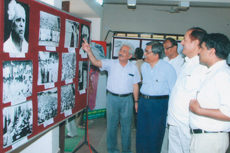
On the occasion of International Day an exhibition on the life and works of Khan Shakir Ali Khan, the great freedom fighter of Bhopal popularly known as Sher-e-Bhopal, was inaugurated in the premises of the regional office of the National Archives of India here on Wednesday.

R. K. Shrivastava, the Administrative Officer Indira Gandhi Rashtriya Manav Sangarahalaya, inaugurated the exhibition by cutting the traditional red-ribbon.

Shahnawaz Khan, nephew of late Shakir Ali, senior journalist Shailendra Shelly along with NAI’s Archivists V. K. Juneja, who is office in-charge NAI regional office, and Muzaffar-e-Islam were present on the occasion. The exhibition is divided into five phases with documents, letters, photographs etc.

Shrivastava speaking on the occasion said that late Shakir Sahab demanded respect from one and all alike for his selfless service towards society. He said Shakir Sahab was symbol of communal harmony as both Hindus and Muslims respected and loved him for his untiring efforts towards poor people especially the labour class.

Shahnawaz Khan revealed that the title of Sher-e-Bhopal was not granted to his uncle Shakir Ali by any government or Nawab of Bhopal but by the common man for his selfless efforts to better their lot.

He was a big hurdle for the communal forces who wanted to engineer Muslim-Hindu riots for their vested interests. When some people wanted to demolish a Jain Mandir in Chowk area of Bhopal he stood at the door of the temple saying demolition could only take place before his dead body and those who had converged for the job had to retreat.

He complimented National Archives for organising such an exhibition to honour the mass leader of his time. He said he was happy to hand over the documents and photographs of his uncle which has been put to very good use.

Shailendra Shelly while paying glowing tributes to the personality of Shakir Ali lamented that Bhopal Municipal Corporation which had announced an award in the name of the great leader about a decade back never implemented it. He said BMC could still honour implement its own announcement. The veteran leader was the voice of the labour class

Juneja conducted the proceedings while Muzaffar-e-Islam proposed vote of thanks. The week long exhibition will close down on May 24. It will remain daily open for public from 10.30 am to 5.30 am in NAI regional office near Polytechnic square.

Khan Shakir Ali Khan (1904-1978) is a person who was more famous by his title Sher-e-Bhopal than his name. He was really a leader of the masses. Throughout in his life he rendered his services to the people, the down-trodden and the poor. He was a true servant of the society. He served both the society and polity of Bhopal. During the time of Nawab, he organized the Labourers of mills and factories under different organizations and Unions and fought for their rights.

To raise their voice many organs and newspapers were published. The most famous was Subh-i-Watan. Unfortunately all such papers were banned. It was not possible for the Government of the day to tolerate such a selfless leader and leave him free to criticize the Government or to fight with the Government on petty issues of rights and liberty of the labourers or to represent such a section of society which has been kept deprived by the destiny himself. The Government thought it right to keep such a mass leader behind the bars most of the time. He was publicly humiliated and even handcuffed like an ordinary man or a thief. He was such a strong man that he did not stop his mission and day by day became stronger and stronger .

Khan Shakir Ali Khan was also a man behind the formation of Praja Mandal besides other at least 15 Unions of Mill and factory labourers. Shakir Ali Khan considered these Unions the real source of strength and inspiration. At one times he was alone on the question of merger of Bhopal with the Union Territory. It was his movement which compelled Nawab Hamidullah Khan, the last ruler of Bhopal state, to hold meetings with the Central Leaders and conclude terms for the merger of Bhopal with the Union Territory. First it was an interim arrangement under which the erstwhile Bhopal state was considered as Part C State for five years and finally it became part of Madhya Pradesh. He is also remembered for his leading role in making Bhopal, the capital of M.P. State. How was he popular that can be judged as he remained a member of Legislative Assembly for consecutive four terms.

On the occasion of International Museum Day, the National Archives of India remembered this great leader by exhibiting his photographs, letters and his own writings.

(pervezbari@eth.net)

source: http://www.ummid.com / Ummid.com / Home> Life & Style / by Pervez Bari /May 20th, 2011

Book on History of Bhopal Riyasat dispelling many myths, fantasy and misinformation released

Bhopal, MADHYA PRADESH:

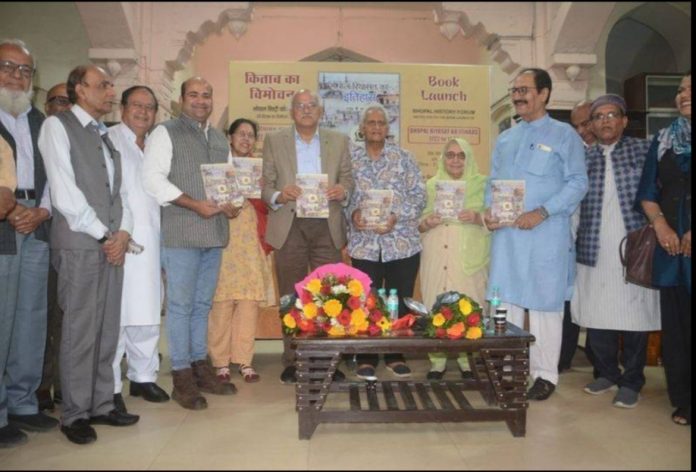
The Book “History of Bhopal Riyasat from 1722 to 1949” dispelling many myths, fantasy and misinformation being released by dignitaries in Bhopal.

Bhopal :

A book christened as “History of Bhopal Riyasat from 1722 to 1949” on the authentic history of Bhopal state was released at the historical Maulana Azad Central Library here the other day in a simple but impressive function amidst a host of enthusiastic intellectuals comprising of the young and the grey-haired both.

The 333-page book has been brought out by Bhopal History Forum (BHF). The Forum comprises of historians, writers, intellectuals and dignitaries of Bhopal. The Forum is working to save the old Ganga-Jamuni culture of Bhopal by connecting people from every section of the society with the youth and elders to save the history, art and culture of the princely state of Bhopal.

The main intention of the Bhopal History Forum in bringing out this book is to dispel many myths, fictions, fantasy, misinformation etc. about the rulers of Bhopal state ruled by its founder Dost Mohammad Khan and his descendants. A group of dedicated young and old mortals got together under the banner of Bhopal History Forum and established truth, authenticity and certainty of the facts lost in the face of parables and fabrications by vested interests to defame the rulers.

It was generally believed and heard about the princely state of Bhopal that it was merged into the Union Government of India in 1949 which is about two years after the country’s independence. This became a contentious issue between the people living here from the time of Independence with two narrations becoming prevalent in the masses which believed that the merger took place in 1949 while the other was convinced that it took in 1947 when India became free from the British yolk.

Bhopal State merged with Indian Union in 1947  Not 1949

However, Bhopal History Forum with its untiring efforts unravelled the truth with solid documentary proof. The BHF has published in the present book the document of merger of Bhopal State with the Union of India which was signed by Nawab Hameedullah Khan at 8:15 pm on 14th August 1947. Its basis is the Instrument of Accession. A photocopy of this document has been published in the book to establish their claim. The Nawab was asked to look after the administrative system until the constitution was framed. This document has the signatures of Nawab Hameedullah Khan and Lord Mountbatten, the Governor General of India. The Nawab had, however, requested Lord Mountbatten and the Government of India not to make this information public.

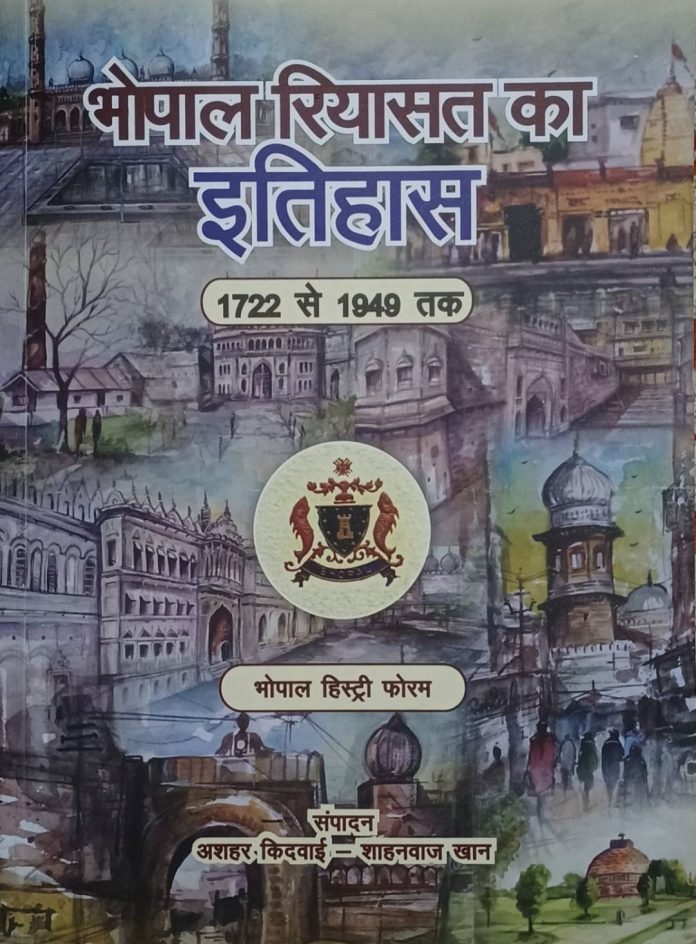
The book “History of Bhopal Riyasat from 1722 to 1949”

While BHF convener Adv. Shahnawaz Khan claimed that the merger movement was a movement for the merger of princely state of Bhopal into Madhya Bharat province. Even before this, the Bhopal state had been merged into the Union Government of India in 1947.

Meticulously crafted tome

Introducing “History of Bhopal Riyasat from 1722 to 1949” – a captivating exploration is aimed to revive forgotten stories and the voices of those who lived within the confines of Bhopaliyat. This meticulously crafted tome, launched amidst anticipation and scholarly fervour, is nothing short of a masterpiece. The book has been edited jointly by erudite historian Asstt. Prof. Ashar Kidwai and Adv. Shahnawaz Khan. The book transcends mere narration, offering readers an immersive odyssey through the corridors of time. With eloquence and insight, the book unfolds the rich tapestry woven from archival documents, letters, transcripts and eyewitness accounts; our journey goes far beyond history.

Putting their best foot forward the editors and contributors have negated the adverse and objectionable comments made by some right wing politicians and others from the cinema world that put the rulers of Bhopal in very poor light calling them names which are unprintable. While burning proverbial midnight oil to search, research and re-research through the historical records available in the National Archives of India, Bhopal Branch and Madhya Pradesh State Archives along with in some personal libraries and collections they dug up the truth to nail the adversaries spreading fabricated facts.

Meanwhile, the book’s launch ceremony was graced by Santosh Choubey, Chancellor of Rabindranath Tagore University, as chief guest and environmentalist Rajendra Kothari was also present as a special guest. 

Many well-known personalities, including educationist and litterateur such as Dr. Razia Hamid, a well-known writer, Nisar Ahmed (Rtd. IAS), Mohammad Asghar, Assistant Director of National Archives of India, Bhopal Unit; Archivist Mirza Mumtaz Beg, Social worker Kalim Akhtar, Mukesh Verma, Chairman of Vanmali Srijan Peeth; Ms Ratna Wadhwani, Librarian of Maulana Azad Central Library, Bhopal; Zainuddin Shah, Secretary of Saifia College Society; Khalid Mohammad Khan, Rizwan Ansari, Syed Khalid Ghani, Sarwat Zaidi etc. (all members of BHF) along with other distinguished citizens were present on this occasion amongst others.

Tagore expressed regret to Bhopal Nawab

Speaking on the occasion Santosh Choubey narrated an incident related to Noble laureate Gurudev Rabindra Nath Tagore, who had come to Bhopal in 1931. He said that after his return to Calcutta Tagore wrote a letter to Nawab Hameedullah Khan thanking him for his warm hospitality and honour extended to him and his entourage which accompanied him. The letter has been published in the book. He, however, in the letter regretted that some persons in his entourage going beyond norms had accepted many valuable gifts presented to them by your courtiers while enjoying sumptuous food.

While Rajendra Kothari recalled that Bhopal had an identity because of its relationship with the Mewati family as Nazir Khan of Mewati gharana was the musician of Nawab Hameedullah Khan. He died in Bhopal and is buried here. This was revealed by Pandit Jasraj (28th January 1930 – 17th August 2020) who was an Indian classical vocalist, belonging to the Mewati gharana.

Book contains 48 articles by various authors

This book is divided into seven sections containing 48 articles by various authors with some rare pictures. The book is in Hindi and but has two chapters in Urdu also. In the book, quoting a photocopy of a letter, it is mentioned that Nawab Hameedullah Khan wrote a letter to Sardar Patel on 26th August 1947 asking him to merge his princely state with India. Apart from this, a photocopy of the Gazette notification regarding keeping holiday in Bhopal state on Independence Day, 15th August 1948 has also been published. There is also a photocopy of the order declaring holiday in the state of Bhopal to celebrate Gandhi Jayanti on 2 October 1948.

What truly sets this book apart is its ability to breathe life into historical figures and events, rendering them vivid and palpable. In sum, “History of Bhopal Riyasat from 1722 to 1949” is a tour de force that will enrapture both seasoned historians and casual enthusiasts alike. Its rich prose, meticulous research, and insightful commentary make it an indispensable addition to any library.

The book is available on Amazon; AISECT Publication, E-7/22, SBI, Arera Colony, Bhopal-462016 (Contact No. +91-8818883165).

source: http://www.muslimmirror.com / Muslim Mirror / Home> Books> Indian Muslim / by Pervez Bari / March 14th, 2024