Muffadal Zahra Deesawala and Bhavtegh Singh Gill won India’s third medal of the International Shooting Sport Federation Shotgun World Championship in Osijek, Croatia. The duo picked up a bronze in the Skeet Mixed Team Junior event here at the Olympic Shooting Range ‘Pampas’ on Tuesday.
They beat the American pair of Aidin Burns and Mikena Grace Fulton 5-1 in the second bronze medal match. They were declared winners by Golden Hit after Bhavteg and Mufaddal shot seven out of eight targets in the last series, enough to ensure that the Americans cannot win the series after Burns missed one out of his four targets.
The first pair to six points usually wins the match but the Indians were up 5-1 already and a tied last series would have given the Indians the point needed to win.
Deesawala and Gill finished sixth in the qualifiers shooting a combined 132 out of 150 targets. Deesawala shot 62 out of 75 and Gill shot 72 out of 75 shots to secure the last position for the bronze medal matches.
The British pairing of Mitchell Brooker Smith and Sophie Herrmann won the Gold in the event beating Haolei Zhao and Dan Wang of China 6-4.
Areeba Khan, on Tuesday, had won India’s second medal of the World Championship after the Junior Men’s Trap Team had won a gold.
Bhowneesh Mendiratta had also won a Paris Olympic quota, India’s first for the 2024 Games, earlier in the championship. He finished fourth in the event.
source: http://www.scroll.in / Scroll.in / Home> The Field> Shooting World Championships / by Scroll Staff / October 04th, 2022
Although known primarily for its food and culture, Hyderabad is fast emerging as a centre for Mixed Martial Arts (MMA). All over the country, those looking to make their mark in the sport make the city their home as the Hyderabad MMA Gym on Kali Khabar Road in Chaderghat churns out well-rounded, technically sound fighters. The man responsible for this, Head Coach Shaik Khalid, creates fighters adept at grappling and striking.
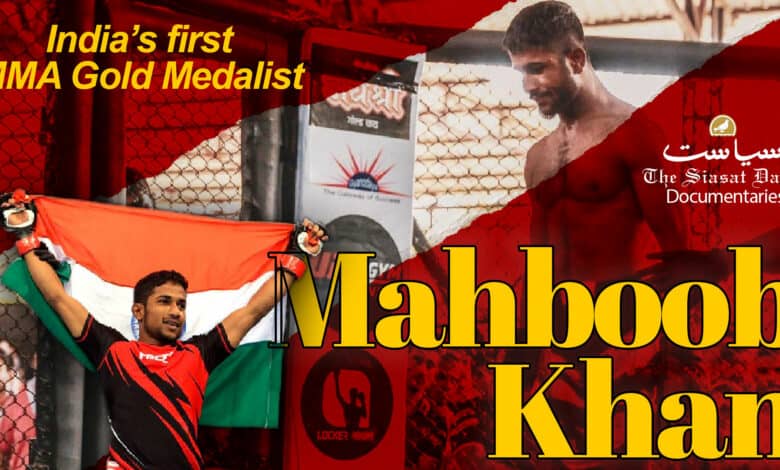
Among his earlier students is India’s first gold medallist in the sport, Mahboob Khan. Originally from Gulbarga, Karnataka, he moved to Hyderabad with his family at the age of 10. To help make ends meet, he began working from a very young age at an onion shop in Madannapet. His work ethic improved even further as helped provide for his family.
But a chance visit to Shaik Khalid’s gym would change his life as Khalid recognized that Mahboob incorporated the same discipline from his previous jobs into his training.
Seeing this potential, Khalid asked Mahboob to quit his job and paid for his daily expenses. The result has been a gold medal on the international stage and more than 10 within the country’s domestic scene. He hopes to also make a professional debut soon. Do check out Siasat.com’s mini-documentary about Khan’s journey.
source: http://www.siasat.com / The Siasat Daily / Home> News> Hyderabad / by Daneesh Majid / September 05th, 2022
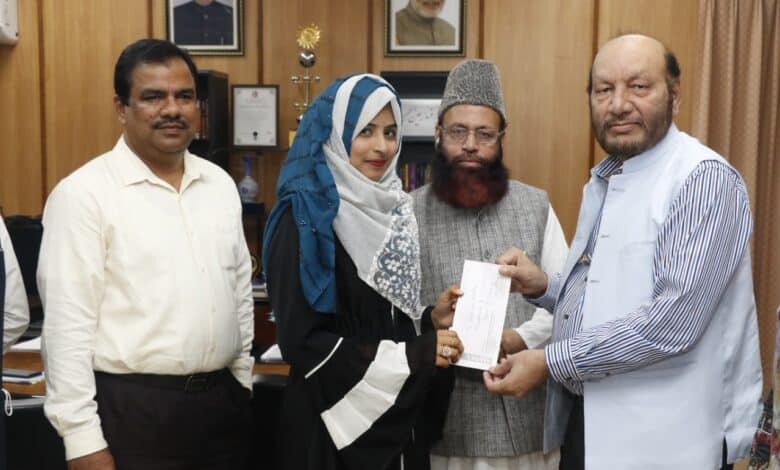
Shabnam Khatoon has been felicitated as best athlete of Maulana Azad National Urdu University (MANUU) on Friday. Prof. Syed Ainul Hasan, Vice-Chancellor, presented a cash award in recognition of her all round performance in sports events held recently during Jashn-e-Baharan, an annual event.
Shabnam, a student of B.Tech III Year, emerged as the fastest running girl of MANUU winning both 100 and 200 meter sprints. She also bagged first place in 50 kgs weight lifting event and led the Department of Computer Science & Information Technology girls’ Kabbadi team to the title.
Prof. Ainul Hasan lauded her performance and announced special coaching facility particularly for girl students at MANUU. He also felicitated Dr. A Kaleemulla, Deputy Director, Directorate of Physical Education & Sports for efficiently organizing the sports competitions.
Prof. Mohammed Abdul Azeem, Proctor, and Chairman Sports Committee informed that MANUU has availed the services of well known badminton coach Mr. Ziaur Rahman for the students. Mr. Muzaffar Ali is the football coach.
source: http://www.siasat.com / The Siasat Daily / Home> News> Hyderabad / by News Desk / July 22nd, 2022
A tribute to a polymath historian who recently passed away.
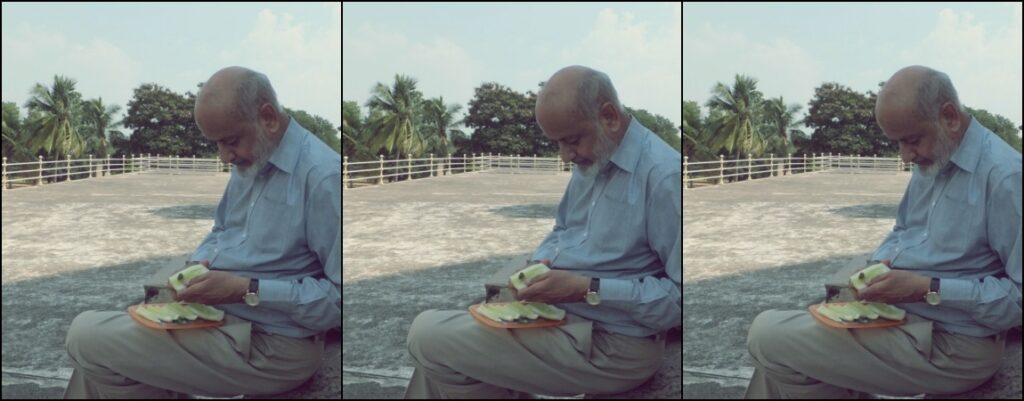
Dr Ziauddin Ahmed Shakeb at the Qutb Shahi tombs in Hyderabad, October 2013. Photo: Author provided
I first met Dr Mohammed Ziauddin Ahmed Shakeb in the summer of 2011, as a naïve PhD student who’d arrived in Hyderabad from Los Angeles wanting to “read Shah Jahan’s documents”. He asked me the very standard question asked of research students in India, “What is your topic?”
I only had a rather incoherent answer to give to Shakeb, the man who had, among other things, created the Mughal Record Room, in what is today known as the Telangana State Archives. Located in a nondescript building at the periphery of the Osmania University campus in the dusty precinct of Tarnaka, this institution has undergone numerous transformations over the course of a half-century of its existence in Hyderabad. But institutions were often narrow and unimaginative places for sustaining a towering figure such as Shakeb. He went on to have a long and eclectic life and career that consistently defied the logic and constraints of institutions, for he was himself an institution. The loss of Shakeb is thus far more than the loss of an individual.
His was a formidable generation of post-Independence intellectuals from different parts of the subcontinent who, from the 1950s, devoted themselves to preserving its languages, repairing and reconstructing our scattered archives and libraries, and re-imagining our past(s) long before colonialism. Shakeb embodied, above all, a boundless curiosity coupled with a complete disregard for trends, ‘schools,’ cliques, and fancy theories.
He was not interested in being a Marxist or a nationalist nor in chasing the Western academy’s greener pastures. In some ways, his foremost allegiance was to the detritus of the past itself – to what paper, ink, and materiality mean and what they can tell us about our past and present selves. He asked, what a document or manuscript had gone through over centuries, how had it come to be, and how can we best preserve thousands of paper fragments for future generations so we can continue to tell their stories?
This rare commitment to the study and preservation of archival knowledge led him to write the landmark catalog, Mughal Archives Vol I: A Descriptive Catalogue of the Documents Pertaining to the Reign of Shah Jahan, in 1977, followed by many publications for The British Library, State Archives Andhra Pradesh, and other repositories, universities, and auction houses. I remember asking Shakeb once why he was so committed to creating reference tools to access rare historical materials, and he answered, “because I know no one will care to read them in the future!” In some ways, he was right.
Today, when the stakes for writing about the subcontinent’s pasts are fraught and closely tied to an ongoing project of hollowing out academic institutions, it’s worth remembering a very different kind of Indian historian.
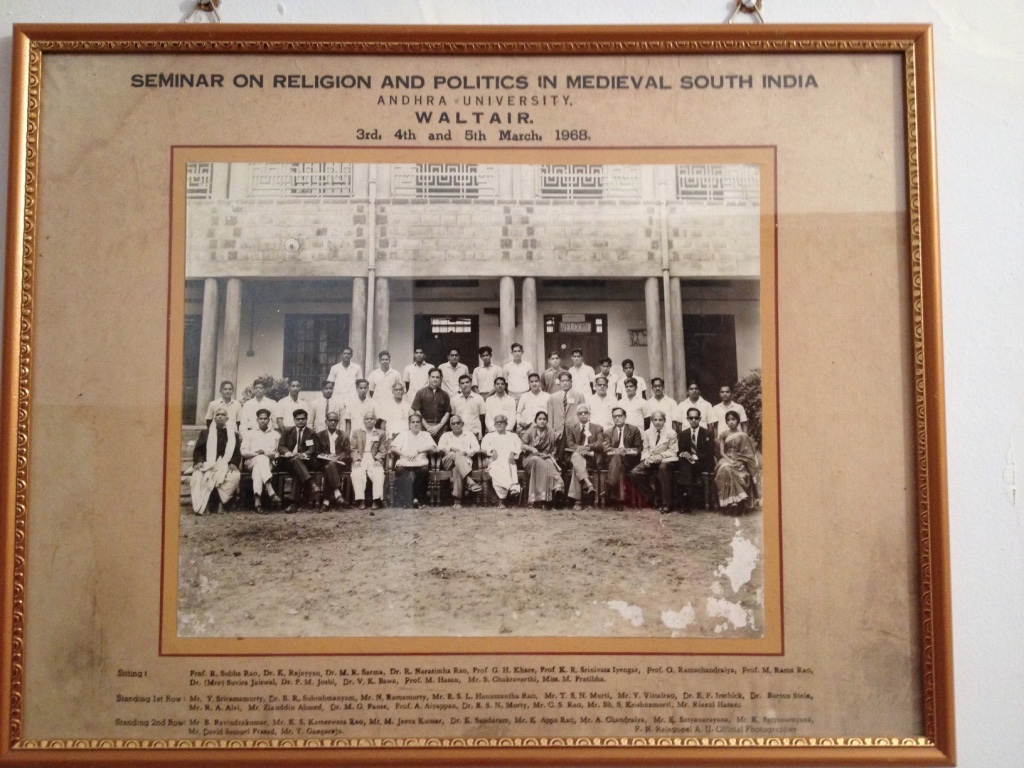
Shakeb standing in the second row, in a group photo from a conference in March 1968 at Andhra University, Visakhapatnam. Also pictured are G.H. Khare, Mohibbul Hasan, V.K. Bawa, P.M. Joshi, Suvira Jaiswal, Burton Stein, and Eugene Irschick, among others. Photo: Author provided
Born on October 21, 1933, Shakeb grew up in Hyderabad and Aurangabad. He studied Political Science and English at Osmania University before heading to Aligarh Muslim University in 1956 for his Masters, where he was taught by Mohammed Habib and S. Nurul Hasan. In 1962, he returned to the south where he was employed as an archivist at what was then known as the State Archives Andhra Pradesh. There, Shakeb acquired the unique training of deciphering documents and identifying their categories, genres, and forms from the last generation of the traditional jagirdari staff of the Nizam’s state who were retiring when he joined the archives. He also worked under Yusuf Husain Khan who had begun the work of processing Mughal administrative documents. The archives thrived under the directorship of committed scholar-administrators such as Hadi Bilgrami and V.K. Bawa.
As rich documentary caches from families, Sufi shrines, and samsthanams were discovered and deposited into state institutions, post-independence archivists and historians confronted challenges, including the reluctance of individuals to part with materials that had been in their homes for centuries. Debates and disputes ensued about what constituted a ‘valuable’ manuscript or document, how to classify materials, and to which regional-linguistic nationalism a remnant ‘belonged.’
These were debates that had already begun in the pre-Independence period, in the work of institutions like the Indian Historical Records Commission. Recent studies of the debates between Jadunath Sarkar and the Maratha historians have traced the longer history of such tensions. Part of the problem was the mutual suspicion between scholars oriented to modern social sciences and those with a more ‘traditional’ orientation and training. Shakeb, the archivist-historian, was at once both and neither.
At a distance from the halls of JNU and Aligarh, where the Mughal state’s merits were being debated, Shakeb inhabited yet another set of worlds. He was at ease reconstructing the household library of Chishti Sufi Abu’l Faiz Minallah in Bidar, discussing the southern India Cholas with the American historian Burton Stein, and discovering a shipwreck off the coast of Masulipatnam in the late 1960s.
Based on newly-processed materials, in 1976, he would complete his doctorate under P.M. Joshi at Deccan College in Pune, a connected history that examined circulation and political diplomacy between Safavid Iran, Mughal India, and the Golkonda sultanate. Shakeb’s study brought the question of mobility and exchange to the centre stage at a time when the norm was to study either the Mughal heartland (often synonymous with Delhi or the northern Indian plains) or select one province of the empire. After many years in archives and universities, Shakeb charted his own path beyond academia. His forensic ability for assessing manuscript provenance, material objects, and documentary genres, allowed him to thrive in other professional contexts, leading to work as a consultant for Christie’s in London.
But, to restrict myself to Shakeb the historian would fail to capture the range of subjects, languages, and disciplines over which he had complete mastery – Persian and Urdu literature, Islamic studies, geography, philosophy, linguistics, and art history. Shakeb always kept the historian’s arrogance in check by reminding her of the literary critic’s skills. The study of prosody and poetics was just as important for making sense of an India without and before English.
Dr Ziauddin Ahmed Shakeb (L) with his friend Dr Leonard Lewisohn (R) at Bidar fort in January 2012. Photo: Author provided
Literary circuits would light up the minute Shakeb landed back in Hyderabad (as they often would in London). He had been working for many years on translating Iqbal’s Persian poetry into Urdu. He was equally committed to the study of Bedil, Ghalib, Dagh, and Amir Minai. He would unveil to students the unique phonetics and cadence of Dakani, the pan-regional literary idiom of southern India, with many living poets and a long literary history, which he emphasised, is yet to be fully understood for its role in shaping classical and modern Urdu.
When he published his dissertation, Relations of Golkonda with Iran, in book form in 2017, he dedicated it to his grandchildren – Itrat, Taha, Mahamid, Khadija, Tawsin, Mahd, Istafa, Fatima, ‘Ali, Nuha – all of whom embody their dadasaab’s fortitude and resilience. I haven’t sufficient words to describe the patience of his wife, Farhat Ahmed, and the enormity of what she has taught me over many years about balancing the scholarly life with everyday living. It was this reminder that grounded Shakeb’s engagement with multiple worlds. His hands that treated every piece of archival paper like a newborn child. Lethal scoldings hurled at junior scholars too convinced of their own greatness. And, never forgetting to make fun of people who take themselves too seriously. With Shakeb’s passing, we are reminded how fragile the threads are that connect us to the past, and how dependent we are on a handful of such individuals. It’s difficult to imagine what, if anything, might come after such larger-than-life figures.
Subah Dayal is Assistant Professor at New York University’s Gallatin School of Individualized Study. Her research is on social and cultural histories of the Deccan and the Indian Ocean world.
source: http://www.thewire.in / The Wire / Home> English> Culture> History / by Subah Dayal / February 10th, 2021
The unit is being run under medical supervision of Dr Shoeb Ali Khan, leading consultant nephrologist and a kidney transplant surgeon.
A patient undergoes dialysis at the unit
Hyderabad :
Probably for the first time in the world, a mosque in Hyderabad has allotted space on its premises for establishing a full-fledged haemodialysis unit. Masjid-e-Mohammadia, located in Langar Houz area now houses a state-of-the-art free dialysis centre that mainly caters to the weaker sections of the society, regardless of caste and creed.
The centre, set up by two NGOs – Helping Hand Foundation and SEED US, has five latest Fresenius brand machines and will acquire five more machines in the next three months. The swanky centre, designed like a corporate hospital, has a separate access for dialysis patients and it is equipped with high quality equipment, clinical care as well as facility to manage onsite emergencies.
The unit is being run under medical supervision of Dr Shoeb Ali Khan, leading consultant nephrologist and a kidney transplant surgeon.A medical doctor, ANMs, dialysis technicians and an ambulance will be available at the centre from 8 am to 8 pm on any given day. “We have invested about Rs 45 lakh for the initial setup of this unit. About Rs 2 lakh per month will be managed by Helping Hand Foundation,” said Mazhar Hussaini of SEED.
To register for free dialysis, one can call Ph: 9603540864.
source: http://www.newindianexpress.com / The New Indian Express / Home> Good News / by Express News Service / July 22nd, 2022