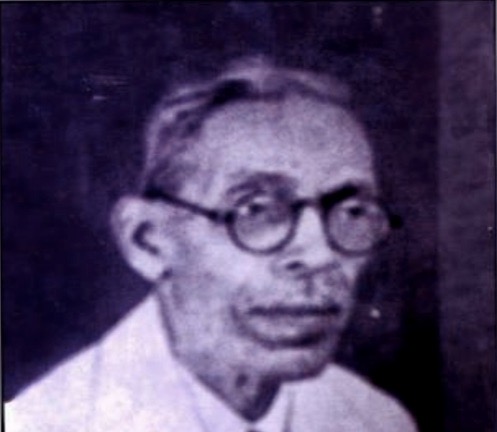
Fasihuddin Balkhi was born in 1885 in Bakshi Mohalla of Patna city. | Picture: Rekhta
Born in Patna, Bihar during the British era, Fasihuddin Balkhi made a tremendous contribution to history-writing in Urdu. Despite this feat, he remains largely unknown to this day.
Many historians have written about the history of Bihar. After taking a cursory overview of the works written by different scholars, one finds that history writing on Bihar, especially in the Urdu language has not yet received due attention in academic circles. Among many others who have written on Bihar and its history, the notable ones include Fasihuddin Balkhi (1885-1962); Taqi Rahim (1921-99); and Shad Azimabadi (1901-1978).
This piece is an attempt to highlight the life and works of Fasihuddin Balkhi. His work has received scant attention from those working in the Bihar region. His contribution remains largely under-acknowledged and under-explored in the existing literature of the Bihar province.
Balkhi was born in 1885, the same year that the Indian National Congress (INC) was founded, in Bakshi Mohalla of Patna city. After receiving his early education at home, he went to Calcutta where he completed his higher education. He became a teacher and initially taught at Poona Military School and later in Calcutta Fort William. Later on, he passed the law examination and was employed in the Bihar government. In 1914, he opted for military service which enabled him to visit different parts of the world like Palestine, Egypt, Iraq and Lebanon.
As India’s independence movement was drawing more followers, Balkhi too joined the movement. In 1921, he became part of the non-cooperation movement. After refusing to accept the post of deputy in Jaunpur, he had to face many hardships. Between 1926-27 he worked as the revenue officer and magistrate in Sarai Kela state.
After retirement, he left his ancestral home and lived the rest of his life till 1962 in his new house in Guzri Bazar Patna city (just behind the present Mohammedan Anglo Arabic school). In the last two years of his life, he worked at Patna University in the department of manuscripts. His hardworking and organizational abilities infused a new spirit in the department.
Although Balkhi was known as a good teacher and a successful officer, he was primarily a historian and researcher, as he stepped into some areas of research that were hitherto almost invisible. Even the noted Bihar-based historian, Syed Hasan Askari (1901-1990) has acknowledged Balkhi’s scholarly and literary abilities. Unfortunately, most of the works of Balkhi could not reach their desired audience. Some of his works remain unpublished even now.
Balkhi’s first book Tarikh-e-Magadh was published by Anjuman-e-Taraqqi-Urdu-Hind (Delhi) in 1944. The second book, Tazkira, was published as Tazkira-e-Niswane Hind (1956).
According to one source, he wrote his first work at the age of 25 in 1910 in Urdu on astrology, a rare case in Urdu, titled as Ilmi-e-Najoom. This work is not easily available or accessible to the readers. A pamphlet on the poetry of Shad Azimabadi titled as Inshad-e-Shad (Qaumi Press Bankipore, Patna, 1939) is his signature piece. The pamphlet demonstrates his power of critique.
Balkhi’s work only gained wider attention after his death. Well-known Urdu publisher Nadeem Bhatti published one of Balkhi’s works Tazkira-e-Hindu Shora-e-Bihar (Poets in Bihar/Urdu) in 1962. Some of Balkhi’s unpublished works such as Dastur-e-Sukhan, a collection of his works on historical places of Bihar province, Aasar-e-Balkhiya, are collected in the book. Several of his scholarly, literary and historical articles are also available in different magazines and journals. A well-researched article on Balkhi’s personality and research guidance was written by Qayyum Khazar for ‘All India Radio Patna.’ Khazar states that “Fasihuddin Balkhi was a great historian and researcher as well as a good poet.”
Balkhi’s work as historian Tarikh-e-Magadh is the first book that earned Balkhi fame as a historian. This seminal work in Urdu was published in 1944 by Anjuman Taraqqi Urdu (Delhi), which was then under the supervision of Maulvi Abdul Haq (Baab-e-Urdu). The book chronicles the history of Bihar province from the earliest times (642 BC) up to the second World War in 1943. The book contains as many as twenty chapters. The book is considered one of the most reliable accounts of the history of Bihar in the Urdu language. The work was constructed from authentic historical sources.
Patna-based historian Imtiaz Ahmad, commenting on the significance of Tarikh-e-Magadh, has said, “It is written authentically and professionally, with proper references from sources (Persian texts).”
Balkhi also wrote another significant work entitled Wahabi Movement, posthumouslypublished in 1983. This book along with Qeyamuddin Ahmad’s seminal work The Wahhabi Movement in India (1966, reprinted 1994) are the most cited works on the history and role of the Wahhabi movement in India.
Balki’s slim book, despite being confined to the Bihar region, is distinctive in many new ways. The sources he cited are primary and useful, such as letters of Syed Ahmad Shah, Calcutta Review, Indian Muslim by Wilson Hunter, Tazkira-e Sadiqa and biographies of Syed Ismail and Syed Ahmad, the founding fathers of the movement in India.
Emphasizing the legacy left behind by the Wahhabi movement, Balkhi writes, “It is highly interesting to note that the use of three great weapons, namely, non-cooperation, passive resistance and establishing of parallel Govt. which the Congress leaders adopted in their fight against the bureaucracy, was originally advocated and preached by the Wahhabis in 1854.” (p. 16).
Apart from these historical accounts, Balkhi wrote another path-breaking book Tazkirah Niswan-e-Hind (1956) in which he documents the short biographical accounts of the notable women of India. He starts his book with Raziya Sultan of the early 13th century and covers the women from various fields across India such as Askari Begum ‘Hijab’ (Lucknow), Chander Mukhi Bose (Bengal), Lal Ded (Kashmir), Raziya Sajjad Zahir (Rajasthan/Bombay), Bibi ‘Tahira’ (Bihar), etc. This book serves as an important source of information on Indian women and their role in different times of history.
Balkhi has also written about the lesser-known aspects of Bihar. This can be gauged from his book Patna Ke Katbe in Urdu, published by Khuda Bakhsh Library, Patna in 1993. This book is a unique study of inscriptions found on graves, mosques, and tombs located in Patna.
Balkhi has made a tremendous contribution to writing the history of Bihar in Urdu. His work serves as a guiding light on the lesser known and under-explored aspects of Bihar. His work needs to be revisited and re-assessed to throw light on many ignored dimensions of Bihar history.
Mohd Hussain Ganie is a PhD student at Aligarh Muslim University (AMU). He tweets at @GanaiHussain1
source: http://www.twocircles.net / TwoCircles.net / Home> Art-Culture / by Mohd Hussain Ganie, TwoCircles.net / August 12th, 2022
With the demise of Dr Naseer Ahmad Shah (January 5, 1929 – October 11, 2017), an era is over. A key decision maker in the health and medical education, he has many things to credit.Saima Bhatmeets some of his students, contemporaries, his widow Dr Girija Dhar, who died on July 13, and daughter to explain the phenomenon called Dr Naseer
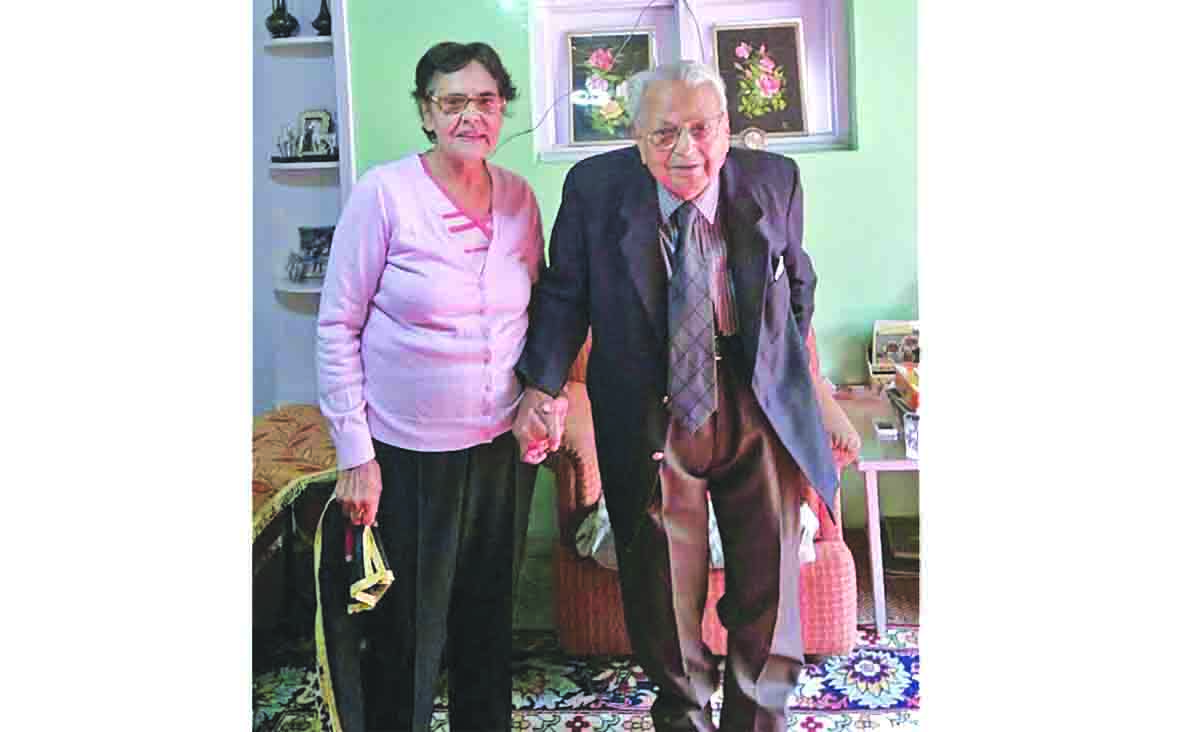
Dr Naseer Ahmad Shah and Dr Girija Dhar
In the first week of October 2017, Noor Jahan, a lady in mid-60s was seen wandering in the corridors of Valley’s only women hospital, Lala Ded. Her only concern was to know about the well-being of her doctor, Dr Naseer. She was perturbed after hearing that “Dr Naseer is unwell.”
Not knowing Dr Naseer’s address, she knocked at the doors of all the senior doctors whom she thought could help her get exact information. She had a belief that only Dr Naseer knew “the treatment of her ailment.”
A week later, on October 11, 2017, the lady lost hope when the news broke about Dr Naseer’s demise. With the death of Dr Syed Naseer Ahmad Shah, at his at Kral Sangri, Nishat residence, an era ended.
As the relatives were preparing for his funerals, not able to comprehend the loss, Kashmir’s renowned gynaecologist, Dr Girija Dhar had a major heart attack. Dhar was Shah’s wife. As an ambulance drove her to the hospital, the coffin moved to the cemetery.
Dr Naseer was an icon, his students say. They termed his era in Government Medical College (GMC) as ‘golden era’ of medical education. Nobody before or after him, they insist, could match what he gave to GMC.
Born on January 5, 1929, in an official quarter in Booniyar (Baramulla), where his father, Ahmad Ali Shah was posted as Forest Range Officer, Dr Naseer’s family has roots in Teetwal village of Karnah. Then, it was part of the Muzaffarabad district in the erstwhile state of Jammu and Kashmir.
The family was well-educated and most of his siblings were serving in good positions, remembers Dr Muneer Masoodi. Syed Nazir Ahmad Shah retired as district and session judge, Syeed Ahmad Shah retired as DIG police, Zameer Ahmad Shah retired as Major in the army, Mehmooda Ali Shah retired as principal of Women’s college M A Road Srinagar. Rehana Jalaluddin Qureshi, remembers Dr Masoodi, also belonged to them.
Dr Masoodi joined GMC Srinagar the month Dr Naseer opted for his voluntary retirement.
The family, according to Dr Javid Khan, a student of Dr Naseer and also a Teetwal resident, has significantly contributed to raising the graph of education in the Valley. “We have a renowned shrine near our house that actually belongs to Dr Naseer’s grandfather,” Javed said. “But his father decided to move out of that place though all their relatives are still living there.”
Dr Naseer had an interesting history. Soon after he finished his MBBS at King Edward Medical College, Lahore, Naseer, according to Meera Khana’s book A State In Violent Peace was arrested in Pakistan for his alleged role in spying. The allegation was later proved to be baseless but only after spending nine months behind the bars.
The time in Jail as shared by Dr Naseer with Khana was spent imagining the long queues of patients. Once out, he was sent to Srinagar, primarily because of his sister Miss Mehmooda’s influence.
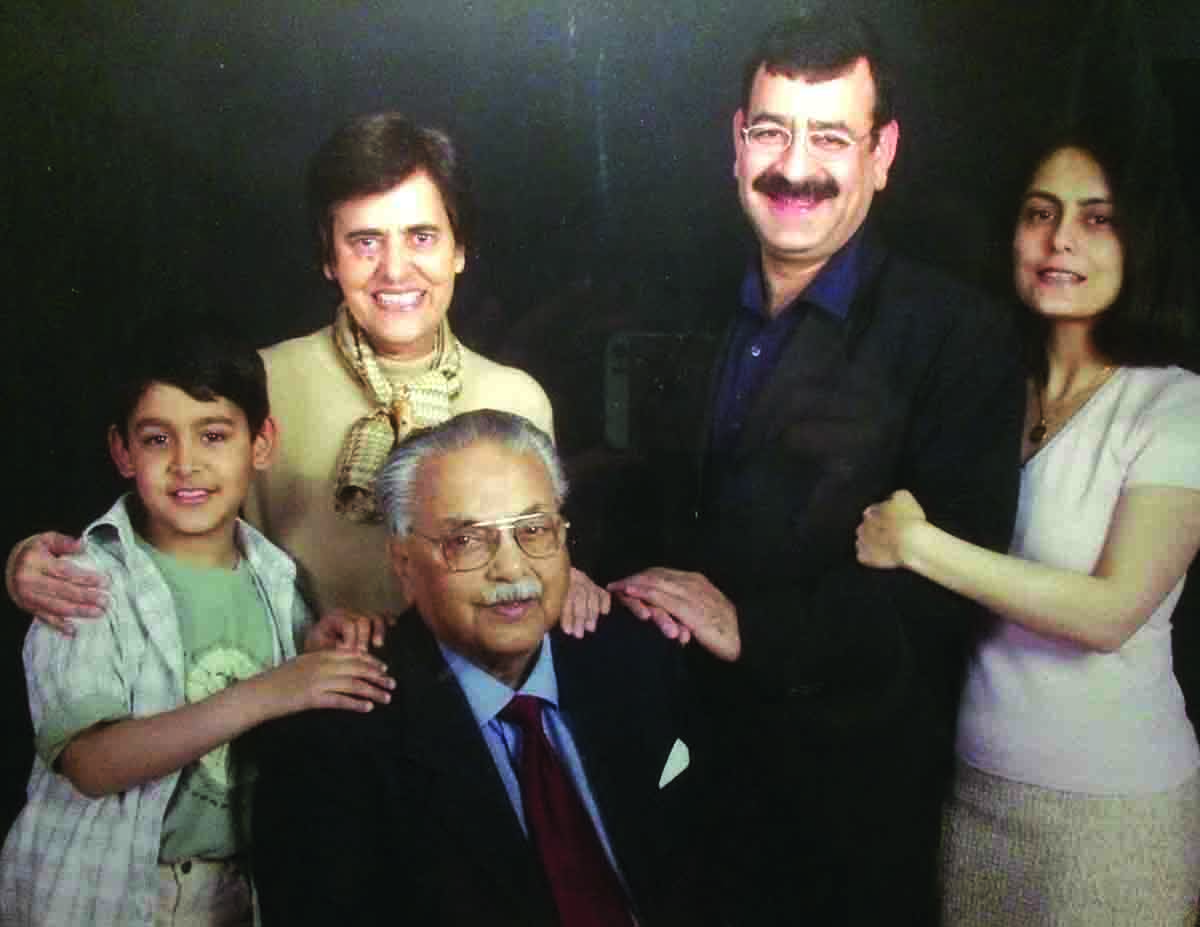
Dr Naseer Ahmad Shah and Dr Girija Dhar with their daughter, son-in-law and grandson.
Back home in the mid-1950s, Dr Naseer tried to look for a job. But Sheikh Muhammad Abdullah was the reason he could not get it, says one of his student on condition of anonymity. This was despite the fact that Sheikh had stayed with Shah in Pakistan, earlier.
“I vividly remember during the college days Sheikh Sahib used to stay with him in Pakistan but once in Srinagar, Sheikh never helped or supported him,” he said.
Literally heartbroken, Dr Naseer left for the United Kingdom to pursue higher education. Once there, he completed his MRCP and became the member of the Royal College of Physicians in London. With one more diploma, he became the first qualified specialist in tropical diseases in northern India.
Specialisations apart, it was his stay in England where he met the love of his life, a Pandit girl, who later became his wife. The couple took seven years to decide whether to marry or not. Finally, the marriage took place on February 05, 1965.
Recuperating from the loss of losing a partner of over five decades and a recent heart attack, Dr Girija Dhar remembers their stay in England and situation before the final call of the marriage.
“We knew each other before as our families knew each other. “Actually we had a lot of understanding and many of our ideas were very similar. He was not a very religious man nor was I, so we thought we won’t do any harm to any religion by marrying each other but still, it took us seven years to decide if we should really marry.” Dr Girija said with a giggle.
Aware of the societal compulsions, the couple before coming to Srinagar decided not to disclose about their marriage but “the news reached Srinagar before we landed.”
Back home, the couple, as per their plan, started living separately. Later, Dr Girija’s mother, a widow, invited Dr Naseer to her home and asked him to take his bride home.
As Dr Girija started to live with her in-laws, she recalls her mother-in-law as a generous lady. Understanding the dilemmas, she told the newly married couple to look for a separate accommodation. “She was of the opinion that if my family wanted to visit me they will hesitate in coming or having any food in our house,” Dr Girija said.
So they got a government accommodation in Tulsi Bagh and started living there. By the time, the couple had joined the newly opened GMC Srinagar, where Dr Naseer was given the post of Assistant professor.
Dr Girija too had a specialisation. When she went to London, women in Kashmir were suffering from a disease Vesicovaginal fistula (VVF), which was usually the outcome of improper care after their delivery. “Because of the high pressure on their bladder, they couldn’t control their urine, they had dribbling urine and as a result of which their families had abandoned them,” Dr Girija said. So in London, she had a special training so that back home she could take care of new mothers in Kashmir.
Dr Naseer rose through the ranks, quickly. Surpassing his two seniors, Dr Karnal Koul and Dr (Prof) Ali Jan, the government led by GM Sadiq appointed him as the Principal and Dean faculty of medicine, GMC Srinagar in 1969. Dr Koul was appointed as director health and Dr Ali Jan retired voluntarily. Naseer retained the position for 12 years, till he opted for premature retirement in November 1981 at the age of 52 years. The reasons were ‘personal’.
The era of Dr Naseer was “golden”, says people who have seen him working. During his tenure, the college received recognition by Medical Council of India (MCI). He started multiple academic activities in the Medical School including the first-ever national conference in Pharmacology. A postgraduate laboratory was established in the Medical School for advanced biochemical laboratory tests. He strongly supported post-graduation in various specialities and used his personal influence to get it started and recognized by the MCI.
An outreach programme, the Chitranjan Mobile Hospital was his significant contribution. This hospital extended high-quality healthcare to far-flung regions of the state including border regions like Karen, Kargil, Karnah and Gurez.
Making the medical graduation impactful, GMC Srinagar had reached No 4, in an all India ranking. “This made a big impact as the acceptability of medical students at national and international level became easier and smoother,” says a student.
In between, he was also awarded the prestigious fellowship of the Royal College of Physicians, for his performance as a medical profession both as a treating physician and as a medical academician.
Besides medical competence, Dr Naseer raised the bar of GMC in many ways. During those days, Dr Muneer says Prime Minister of J&K would never dare to call the principal of GMC to the secretariat. “But with due respect, they were invited for tea in their houses. And up to Dr Girija Dhar, no principal ever visited secretariat.”
Recalling his student days in GMC, Dr Muneer vividly remembers how Dr Naseer used to book cinema for all of his students and during cultural programme or sports week, Sheikh Abdullah used to join the students. This precedence continued till GM Sadiq’s tenure, Kashmir’s ‘armchair’ Chief Minister for managing the state from his office.
“He was a fatherly figure for all of us, including the international students who used to come to GMC Srinagar under an exchange programme. He even used to buy books for the students who couldn’t afford it,” Dr Muneer adds.
There are little disagreements that some of his students talk about. One is that he permitted his daughter to avail the backward certificate to get into GMC despite being a proud city resident.
A farsighted person, Dr Naseer, however, changed lives. During his tenure as the principal, he was known for his ‘recommendations’. “I once approached him for my post-graduation seat but instead he advised me to work hard. I felt very bad that time but in the long run, that advice helped me a lot to grow,” remembers one of his students.
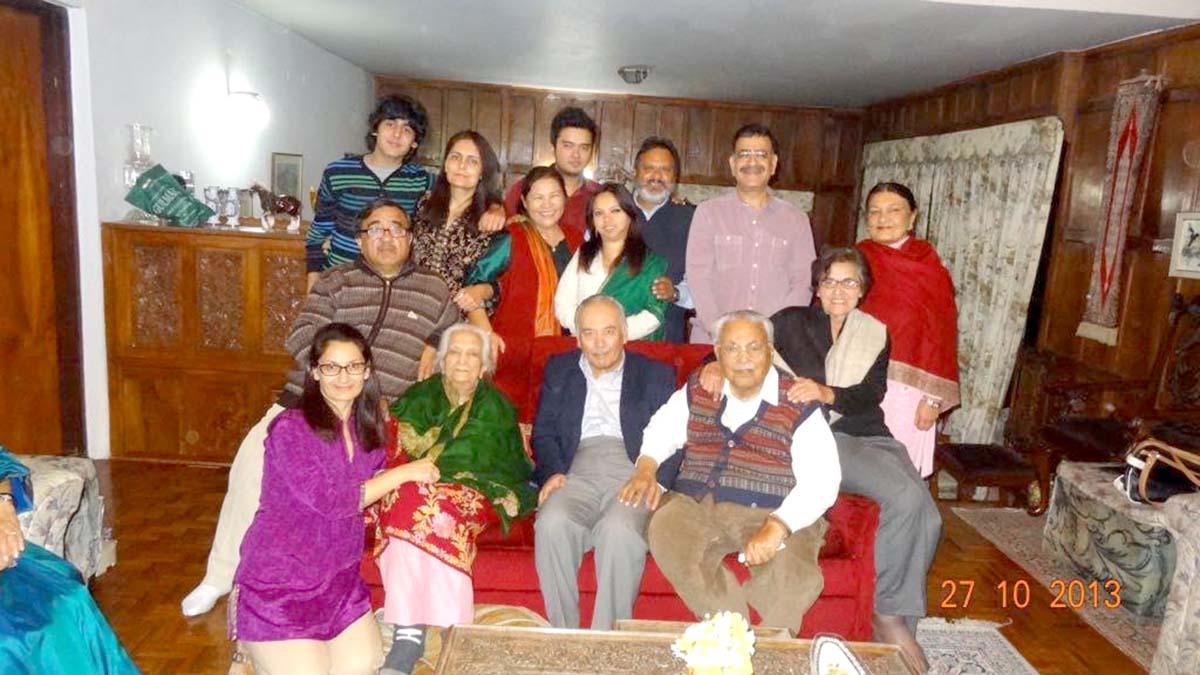
Family picture of Dr Naseer Ahmad Shah.
Dr Naseer helped students who were in extracurricular activities. Dr GM Malik, his student who later became a GMC faculty says he was one among the topmost students of his batch with Dr Jalal ud Din (medicine) and Dr Ashiq Hussain (surgery), “We were dropped from the MD list as he had started giving preferences to the students who were active in cultural programmes.” Malik said they had to fight with the government to cancel the list.
Malik once interviewed Naseer for his medical journal and asked him this uncomfortable question. “He accepted the fact that he used to help ‘needy’ people by going out of the way. And some people below the ladder ‘misused’ their position,” Malik said. “He was generous so he would help anybody but that was at the cost of meritorious students.”
Cited as “personal reasons” for opting voluntary retirement had actually many contributing things. The primary reason being, Dr Naseer was not “happy the way the government was treating him.”
“During Sadiq’s time he enjoyed absolute powers up to minister level and every decision was taken by him which include the selection of MBBS as well as PG candidates, even appointments in the health department used to be as per his choice, health secretary too was appointed by him,” says another student, wishing anonymity.
It changed when Abdul Gani Lone became a health and education minister. “Lone got PGI director Dr Santokh Singh as secretary cum advisor to the health department and all the selections were done as per PGI Chandigarh guidelines,” another of his students, who wish to remain anonymous, said. “When Sheikh Abdullah resumed power, DrAllaqbandh was given powers of all associated hospitals and it was parallel to the principal post and in Jammu, the responsibilities were given to Dr Zutshi.”
Dr Malik says, Dr Naseer was short tempered but at the same time he would forgive and forget things, which are the qualities of a great man. “He was a good administrator. He would not bother with smaller things. We as students could freely enter his room. He was never into corruption and he would hardly go to the secretariat. He would settle all student problems in college only,” Dr Malik said. “That was the reason why after so many decades of service, he just had only his home as the main property.”
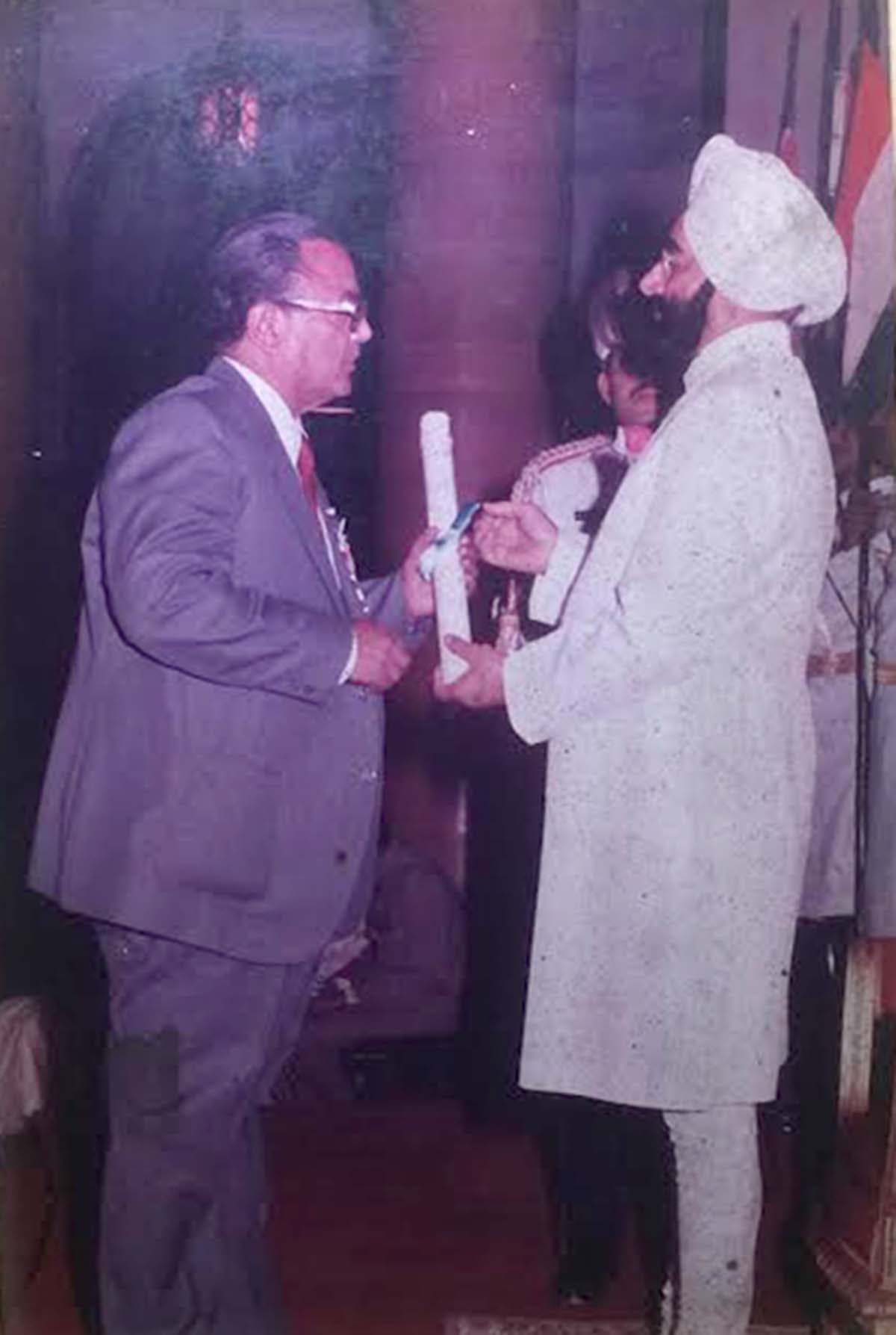
Doctors who served under him said that he was known to stand by his principles. After his retirement, he was appointed as a member of legislative council in 1996, and he held the position for six years, left it in 2002. He was also awarded Padma Shree in 1984.
Dr Naseer being facilitated by then president of India Gyani Zail Singh
Post-retirement, he continued his practice at his Dalgate clinic. On weekends he would visit Gulmarg along with his family where he used to treat the people of Gulmarg and Tangmarg for two decades (the 60s and 70s) free of cost. He even used to distribute medicines and sometimes he would buy medicines for the destitute patients. His contemporaries say his medical practice was highly ethical.
At home the doctor couple had a girl child, Tina Angila Shah, born in 1967. A doctor by profession, 50-year-old Tina is currently practising medicine in England, the place where her parents, met, married and studied. She is married to Anil Koul.
Remembering the day Tina was born, Dr Girija says by then both families had adjusted, reconciled fully and there were great celebrations.
Tina remembers her father as a friend of whom she was never scared off. “My childhood was happy like any other normal child but I was brought up in a very liberal atmosphere where I was encouraged to think. Nothing was enforced on me and I was able to make my own choices.”
By the time Tina was four years old, her family adopted a Ladakhi girl child, Deldun, then 7, who could give company to their daughter all the time.
Deldun, now a senior technician in SMHS, was an orphan and had a posthumous birth. She says those days education was not very common in Ladakh so she came to Kashmir and got a new family.
When Tina was studying in Presentation Convent School, Deldun started her education from Kothi Bagh Girls School, and after completing their 12th exams Tina got admission in GMC and Deldun got interested in Lab and joined Diploma in Medical Laboratory Technology (DMLT).
While in SMHS, Deldun says she is witness to her Dadu (Dr Naseer’s) generosity who helped a number of doctors financially. “He used to call class four employees before retiring and ask them if they have any source of income. In case of negative response, he managed employment for any of their family members,” Deldun said.
After Tina left for England, Deldun decided to stay with the couple till she got married in 1984. “We had a big shamiyana on my marriage and now for the second time it was on his death,” she said and broke down. Deldun’s marriage was a grand affair, she remembers. She said that Indira Gandhi also attended her wedding and she had all Kashmiri cuisine. “All of the father’s rights were paid by Dadu on my marriage. And after that, I used to frequently visit them.”
Deldun says he always used to wear good matching clothes and everything had to be in order, perfect and clean.
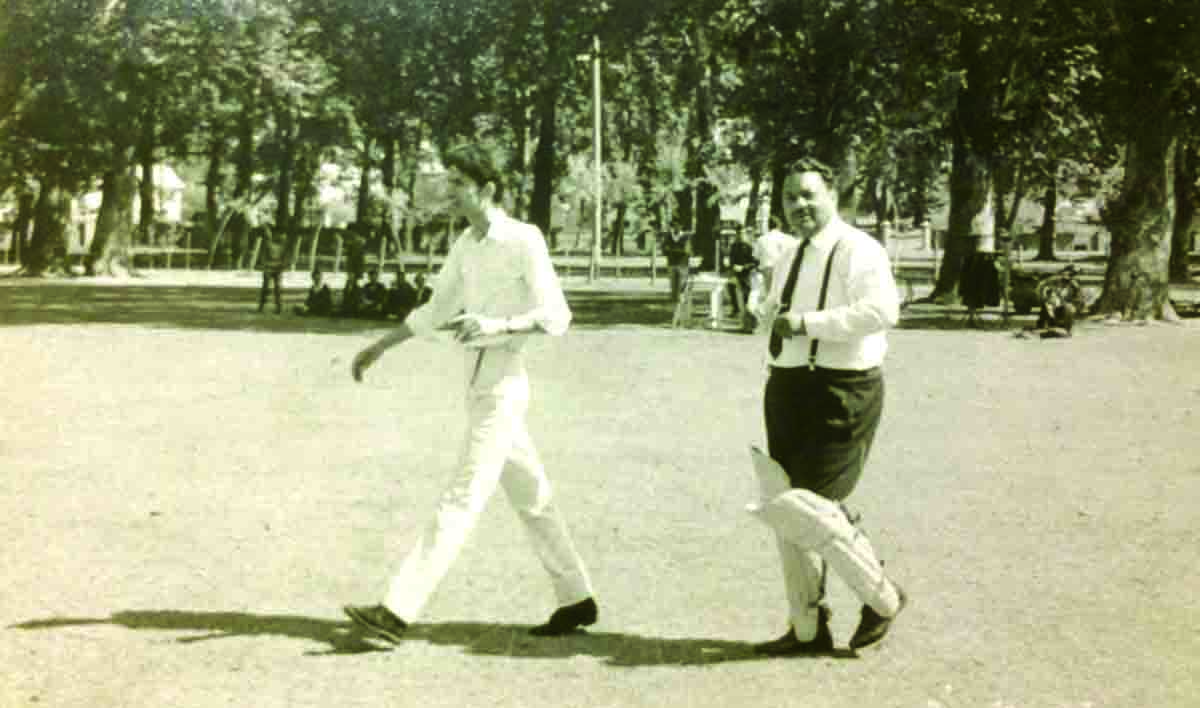
Dr Naseer’s address changed many times since 1952. It was Dalgate first, then they moved to Tulsi Bagh and later to 5 Transport Lane, behind SP College and finally to Kral Sangri in late 70’s, which they owned. Dr Naseer was fond of golf.
In March 2016, Dr Naseer had a fall in Jammu and fractured his right arm, which later became a cold shoulder. But Dr Girija says before that fall he had developed some spinal problem. For a complete year, he had no major illness but the problem was with his mobility only.
“He was a great storyteller and had a fantastic memory. If he would have been here, he could have told you each memory with dates,” shares Tina, who herself refused to talk much about her memories saying they are ‘personal’. “Generosity is the word to describe my father.”
But Dr Girija, who does not remember many things now, says that she has now realised what kind of a person he was. “We never boasted about our work but now when I am receiving patients from far-flung areas who come to pay their condolences, I am realising what kind of a person my husband was.”
After taking seven years to decide, the couple lived together for 52 years. The heart attack, moments after Dr Naseer was taken for final burial revealed the bond the two souls shared. As Dr Girija talked about Naseer, her eyes were moist.
source: http://www.kashmirlife.net / Kashmir Life / Home> Obituary / by Saima Bhat / July 21st, 2018