Sahranpur, UTTAR PRADESH / NEW DELHI :
The evocative recapitulation of eminent personalities provides a quick, candid, exquisite and scrupulous portrayal of those who retain their abiding presence without being physically present in the world.
The unprecedented acceptance of monolingualism has put a big question mark on the existence of numerous languages through which people stitch up a warm social rapport and seek to fulfill their cultural aspirations. India, an awe-inspiring repository of innumerable dialects, languages and different linguistic traditions, finds it nerve-racking to carry through the challenges thrown open by the technology-savvy language-English. The domination of English has taken a heavy toll on regional languages, and Urdu, once considered a significant link language, is no exception. Though Urdu is widely used as a spoken language, and its sensitively rendered poetry gets across the country, its script has been fading away with bewildering speed.
It aches much to realize that the popularity draws its sustenance from its oral rendering, and familiarity with its distinct script has been melting away steadily. Barring some notable exceptions, only faculty members and research scholars associated with various departments of Urdu of the universities and colleges use Urdu as the medium of trifling academic discourse. At a time when Urdu faces the threat of obsolescence, the gleam of hope emerges from the citadel of learning, Aligarh, where academicians not belonging to humanities draw on Urdu to initiate a perceptive discourse on a plethora of issues without bringing rhetorical flourish into play.
Professor Saeeduz Zafar Chagatai (Physics), Professor Faseeh Ahmad Siddiqui (Chemistry), Professor Athar Siddiqui (Zoology), Professor Shaan Mohammad (Political Science), Professor Iftikhar Alam Khan (Museology), Professor Zilur Rehman (Unani Medicine), Professor Mohammad Sajjad( History ), Professor Zafar Mahfooz Nomani (Law) Dr Asad Faisal Farooqui (Mass Communication) and the like seek to strengthen non-fiction prose in Urdu.
Autobiography, memories, diary, letters, sketches and anecdotal scrolls are much-adored genres of non-fiction prose, but in Urdu, they usually betray a strong sense of gushiness and sickening self-adulation. The preponderating narrative of reminisces does not go well with the celebrated author, Professor Athar Siddiqui, whose evocative recapitulation of eminent personalities appeared.
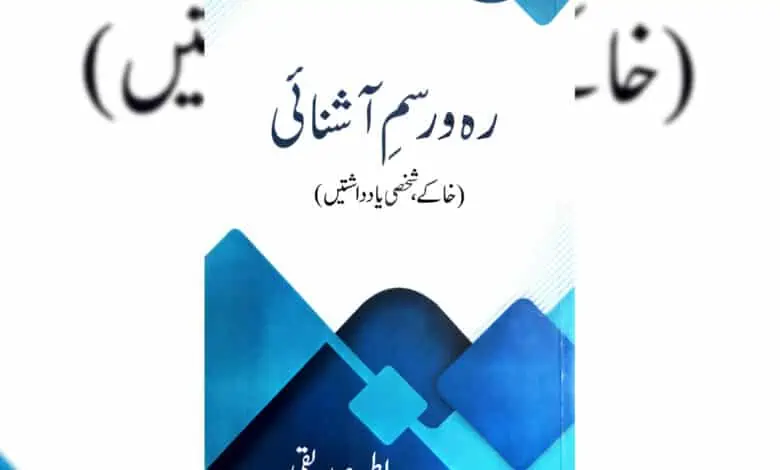
The book Rahe wa Rasm-e-Aashnai (sketches and personal memoirs) provides a quick, candid, exquisite and scrupulous portrayal of those who retain their abiding presence without being physically present in the world.
Professor Athar Siddiqui, a widely recognized scientist, has produced a captivating narrative of his eventful life, Main Keya Meri Hayat kaya, with disarming humility and jotted down travelogues vividly calling attention to down reaching human experiences that frequent foreign travels produce. Interactive media frequently carry intriguing stories featuring commonplace occurrences. The stories with a strong sense of moral tutoring dished out by the digital world need to be shared with non technology conversant Urdu knowing people.
He left Professor Athar Siddiqui to supplement what had been missing and started translating these pulsating stories into Urdu. It was left to Professor Athar Siddiqui to supplement what had been missing, and he translated these pulsating stories into Urdu.
Tahzibul Aklaqh, a prestigious periodical launched by Sir Syed in 1870, started serializing it with a suggestive title Hairat Sarai Ki Kahaniyan (The stories of wonderland), and two volumes of these laconic and absorbing stories have appeared so far.
He meticulously edited two autobiographies of two illustrious alums of Aligarh Muslim University–Dr. Sheikh Mohammad Abdullah (founder of women’s college, AMU) and Nawab Ahmad Saeed Khan Chattari ( former Governor of Uttar Pradesh). He had astutely done over translating books on Shaheryar and Musa Raza.
Athar Siddiqui’s recently published book, Rah-o-Rasam-e – Aashnai,” creatively maps out the accessible and unchartered terrains of thirty-five personalities in candour-driven idiom, and he hardly holds with the popular notion that put a lock on showing the slightest discourtesy to the deceased. The author asserts, “It is widely mentioned that the sketch writer must not use any indecent or improper word for those resting in the peace. If this sort of exhortation is adhered to, then the sketch, personal article and memories will be read as appreciation and admiration-filled text. If history writing sticks to this principle, then the authentic history of any period could not be produced. I do not buy this argument.”
The subtle wised-up mélange focuses on nine creative writers such as Shahryar, Iqbal Matin, Sajida Zaidi, Qazi Abdus Sattar, Professor Mukhtar Uddin Arzoo, Syed Hamid, Lateefuz Zaman and a couple of close relatives, teachers, friends and former vice-chancellors.
Iqbal Matin, whose awe-inspiring artistic sensibility could not get him the recognition across the country he fully deserved, has come in for a refined exploration. Athar Siddiqui’s reminiscence is peppered with unusual but fascinating details about the author. The author living in Aligarh tried desperately to contact Iqbal Matin (Hyderabad) when the letter was the preferred communication medium. He realized that his letters were not delivered to the addressee, who was prone to change houses. Iqbal changed thirty-five houses and bore testimony to his nomadic lifestyle.
Much has been written on Jnanpith awardee and prominent poet Shahryar but a comprehensive and insightful article highlighting his distinctive personal traits and oeuvre is still looked-for. The piece titled “Shahryar as a man and poet” fills the bill with remarkable ease. Athar saheb cites many instances to prove Shahryar’s unflinching loyalty to his friends but never spitting upon the rivals. The voice of modernism with strong traces of neoclassicism, Shahryar never nurtured animosity and did whatever he could for those who looked up to him in their hours of peril. People, even authors and pushover critics tend to read creative texts in the backdrop of personal details; hence when Shahryar suffering from a terminal illness- cancer–composed a couplet; Aasman ab kuch nahi tere karney ke liye/Ham ne sab taiyaariyan karli hain marne ke liye (O sky, now you have nothing to do/I have completed all the preparations for dying) it was considered as the affirmation of impending death. Employing critical acuity, Athar saheb mentioned that the couplet has nothing to do with a nagging sense of personal extinction; the poet laments how we perfected the art of self-destruction reflected in the depletion of Ozone layer manufacturing of weapons of mass destruction.
Athar Siddiqui wrote an immensely readable sketch of Qazi Abdus Sattar, a much overrated and pretentious writer who always took pride in using ornate and florid language in his fiction. His novel Tamam Sultan has been described as magnum opus, but it is hardly more than an oft-repeated titillating story of unrequited love. Athar Saheb and Qazi have had close ties for over fifty years, but Qazi was so intemperate that he pulled ties into pieces as Athar could not attend his facilitation function. It was an act of civility to describe this narcissism as uniqueness of personality.
Prof Zilur Rehman, a widely- respected academician of Unani medicine, is a well-known scholar of Urdu, Persian and Arabic and has more than fifty books to his credit. His books, especially on Ibne Sina, Hakim Ajmal Khan, Sir Ross Masood, Hakim Ehshanullah Khan, and Hakim Abdul Moid, got widespread admiration. In addition to discussing his well-documented and invigorating writings, Athar Siddiqui effortlessly unravels his amenable nature and inimitable passion for books and artefacts. He has a collection of over 70,000 and set up a museum and library, Ibne Sina Academy, which has its website.
Seldom does one attempt to spell out what essentially embodies his wife, going beyond the adulation and berating with a sense of objectivity. This nagging edginess seems to have no bearing on Athar saheb, who painted a stirring wordy portrayal of his wife Zakia Siddiqui, a renowned academician and former principal of Women’s College, Aligarh Muslim University.
One tends to agree with the author when he asserts that during the first ten years wife is treated as the beloved; with the birth of children, she takes over the role of the mother. If harmonious marital life continues, she becomes an inseparable friend who hardly gets perturbed, no matter how annoying one becomes. It is all momentary, and the bond of affinity never weakens.
Athar saheb also evocatively narrated his mother’s life story, and he recollects his memories and anecdotes to document her extraordinary considerate nature. Suhail (son) and Taab (daughter) get pat on the head by the caring and unerring father for their abiding sympathy for others.
The book turns attention to a dozen vice-chancellors and pro-vice-chancellors of AMU, such as Dr Zakir Hussain, Bashir Hussain Zaidi, Badruddin Tyabji, Abdul Aleem, Ali Mohammad Khusro, Syed Hamid, Syed Hashim Ali, Wasiur Rehman, Naseem Farooqui, Mahmoodur Rehman, Hamid Ansari and Abul Hasan Siddiqui.
The author’s appraisal of them looks convincing, but occasionally subjectivity surfaces. The assortment of sketches offers a discerning peep into the life of all who impressed the author. The nuanced and readable prose is used impeccably, and Athar Siddiqui deserves accolades for producing such picturesque vignettes.
Shafey Kidwai is an Indian academic, communication scientist, translator, columnist, and author. He is the chairman of the Department of Mass Communications at Aligarh Muslim University.
source: http://www.siasat.com / The Siasat Daily / Home> Featured News / by Shafey Kidwai / September 26th, 2025