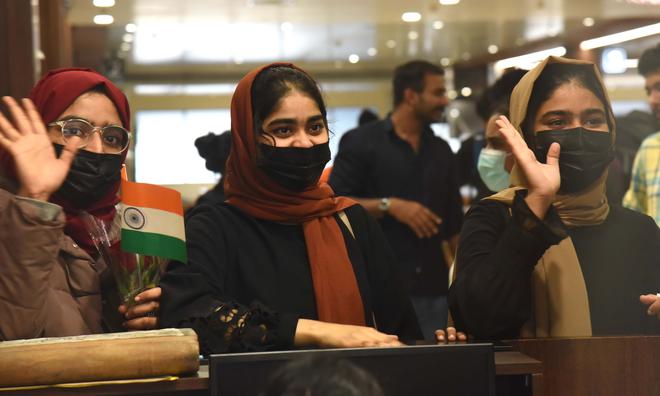
Indian students, evacuated from Ukraine, on their arrival at Kochi International Airport in Kochi on March 5, 2022. | Photo Credit: PTI
‘We will soon be left with no option but to start walking to the nearest border ourselves’
Students in Sumy on Saturday said they were running out of hope after several days of promises on their evacuation through a “humanitarian corridor” and that continued bombardment in the city indicated there was no sign yet of a ceasefire for them.
The city also saw a blackout for most part of the day, leaving students without a means to cook.
“There is no water, no food, no electricity for the past two days and the bombings keep getting worse every passing day. Often bombs land a few hundred metres away from us,” said Zara Azan.
Another student, Hitesh Kumar Gujjar, said there were sirens at least thrice on Saturday forcing students to rush to their bunkers.
“Today is the 10th day. Every day we hear that we will be evacuated, but that is yet to happen. We will soon be left with no option but to start walking to the nearest border ourselves. We would prefer to die trying to escape rather than die of hunger and thirst ,” said Dushyant Siraw, who was echoing what a group of students said in a video threatening to walk to the Russian border armed with Indian flags amidst intense fighting in Sumy.
“The latest we have heard is that there will be an effort on Sunday to try and evacuate us. But this is not through official sources. If not tomorrow, we will lose all hope,” said Ms. Azan.
Mr. Gujjar said though there was a water tanker sent for the students, it was not enough.
“We got one litre of water. How can one tanker for 700 Indian students and hundreds from Uzbekistan, Kyrgyzstan and Nigeria be sufficient,” he said, adding that with no electricity, cooking on induction was not possible and students were making do with “biscuits and chips”.
Students say some of their friends are seeing their health deteriorate from exhaustion and scarcity of food.
“Several of my friends and I have fainted more than a few times. There is physical and mental breakdown. Many students are also experiencing asthma attacks, but inhalers and drugs or any medical assistance is just not available,” said Ms Azan.
source: http://www.thehindu.com / The Hindu / Home> News> National – Indians in Ukraine / by Jagruti Chandra / New Delhi – March 05th, 2022
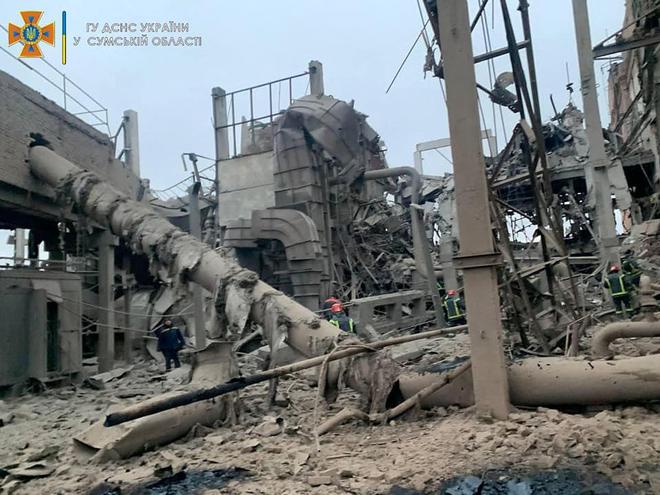
A view shows thermal power plant destroyed by shelling, amid the Russian invasion of Ukraine, in the town of Okhtyrka in the Sumy region, Ukraine, in this handout picture released on March 4, 2022. | Photo Credit: Reuters
Their fate hangs in the balance as there is no progress on ‘humanitarian corridor’ for evacuation
The fate of several hundreds of students at Sumy in eastern Ukraine hangs in the balance as there was little progress on a “humanitarian corridor” for evacuation of civilians on Friday, while students who were able to reach Pesochin from Kharkiv after an advisory continued to leave for the western border on privately arranged buses.
“There were air-strikes and bombings on Sumy yesterday, which led to power and water supply being cut-off. We spent the entire night without electricity, and we can’t cook without water. If we don’t get killed by bombs, we will definitely die of starvation and thirst,” says Shivangi Jaiswal, who shared videos of students collecting snow and water from roof channels.
She says that unlike Kharkiv, where there was some movement because of a train station, Sumy is cut off from all sides as roads and rail tracks have been damaged, entrapping students in their hostel bunkers.
“Only a government intervention can help us escape from here. But it seems no decisions are being taken for Sumy,” said Ms. Jaiswal
‘Buses not helpful’
On Thursday, Russia and Ukraine agreed to create humanitarian corridors for evacuation of civilians and there were reports that 130 buses were waiting on the Russian border for Indian students.
But Ministry of External Affairs spokesperson Arindam Bagchi said at a press interaction on Friday that there would be difficulties in evacuating students from an active conflict zone until there was a ceasefire and Russian buses were very far from Kharkiv and Sumy and were not proving to be helpful.
Reacting to these comments from Sumy, Zara Azan said, “the government says they are waiting for us at the borders. I want to ask them, if you can’t brave the shelling to reach us, then how do you expect young college students to make their way to the border without cabs, buses or trains. The least the embassy can do is arrange buses for us.”
“Yesterday we saw several fighter planes drop bombs just metres away from our hostel, and several girls fainted on seeing that. Increasingly, children are falling sick due to cold or complaining of low blood sugar levels or suffering panic attacks. We may even have to carry them while planning our escape as we can’t leave our friends behind,” said Zara.
She asked why did the embassy not forewarn its citizens about escalating tensions between Russia and Ukraine.
“In February, I had to travel from India to Ukraine and I called the Indian embassy to know if it was safe to travel as several other countries had started issuing advisories for their citizens and I was told that I could travel,” says Zara.
‘No info on exit plan’
In Pesochin, where nearly 1,200 students fled to from Kharkiv following a government advisory on Wednesday, students continued to leave for the western border on privately arranged buses for which they have paid from their own pocket. They were earlier expecting that they would be able to make their escape through the border with Russia on buses they believed the embassy would arrange for them.
“There is no information yet from the embassy on an exit plan for us through Russia. Our student coordinator has arranged a few buses and we are slowly leaving on them. Two buses with 60 students left yesterday and nearly six are leaving today. We have been told that all students will be able to leave Pesochin by Saturday,” said Mohamed Thaha Sheikh.
source: http://www.thehindu.com / The Hindu / Home> India> National / by Jagriti Chandra / New Delhi – March 04th, 2022
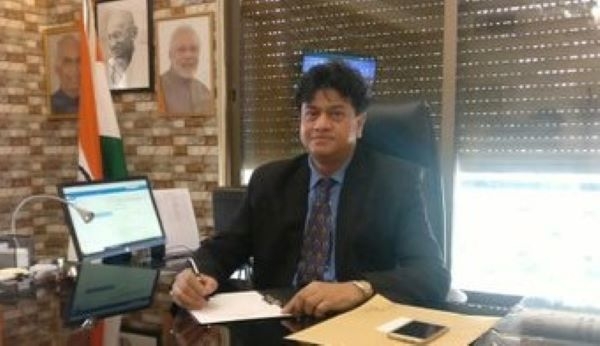
Veteran Indian diplomat Anwar Haleem today assumed charge as the Ambassador of India to the Hashemite Kingdom of Jordan.
The new Ambassador was given warm welcome by all Mission officials in Amman upon his arrival at the Embassy premises. He presented a copy of his Credentials to H.E. Mr. Zaid Al-Louzi, Secretary General, Foreign Ministry in Amman.
Anwar Haleem is an IFS officer passed out in 1991. He was working as the Additional Secretary in the National Defence College before taking charge as an ambassador.
Anwar Haleem obtained the MA degree in Indian History and International Studies from JNU. He joined M Phil in Disarmament Division as JRF Scholars. He has MBA Finance & LLB. He has a very distinguished academic record and varied experience in public affairs.
Anwar Haleem joined the Indian Foreign Service in 1991. He has served at Indian missions in Egypt, UAE and Saudi Arabia. He has vast experience of working in different divisions of the Ministry of External Affairs.
Haleem has served in different capacities in foreign missions, covering range of political, economic, cultural and community affairs activities as well as crisis management. He has Arabic as his foreign language with vast experience of Gulf and Muslims countries.
At South Block, he was the Desk officer for Sri Lanka and later Director for Latin American Countries, Director SAARC and Director Gulf. He has served as Deputy Director General of India Council of cultural Relations (ICCR), India Council of World Affairs (ICWA) and Joint Secretary in MEA.
Haleem has been the editor of ‘Gagananchal’ a Hindi magazine and ‘India Quarterly’, published by SAGE. He has published works on Technology Transfer from MacGraw Hill.
source: http://www.newsbharati.com / NewsBharati.com / Home / August 01st, 2019
Kalaburagi-based artist Mohammed Ayazuddin Patel will participate in a three-day International Art Festival titled Colours of the World organised in collaboration with Amman Greater Municipality and SMD Foundation at Ras Al Ain Art Gallery, Amman in Jordan.
The festival will be inaugurated under the patronage of Anwar Halim, Ambassador of India in Oman, on Saturday.
Artists from the U.S., Jordan, Canada, Taiwan, India and other countries are taking part in the art festival.
Mr. Patel will display his digital painting works based on Indian culture.
source: http://www.thehindu.com / The Hindu / Home> News> National> Karnataka / by Staff Reporter / Kalaburagi – March 02nd, 2022
Only a comprehensive, all-encompassing dialogue can resolve this situation and that is best-presented in a fast-paced drama.
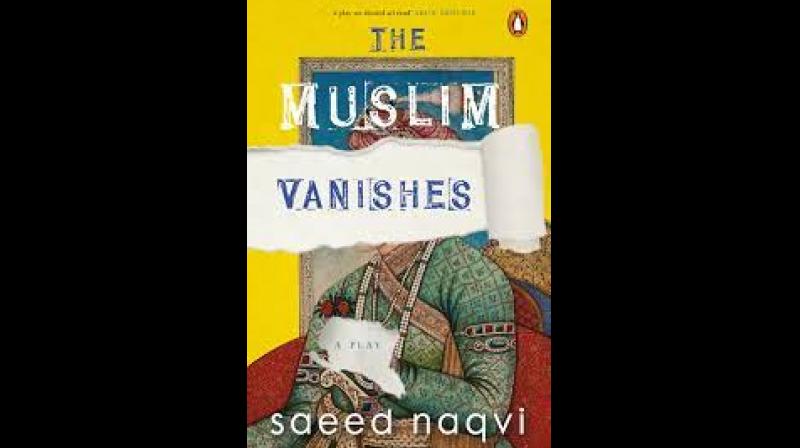
Cover Image of the book ‘The Muslim Vanishes: A Play’ by Saeed Naqvi. (By arrangement)
“If we take the Muslim out of India, what becomes of the country?” This is the central question that veteran journalist Saeed Naqvi’s recent three-act play The Muslim Vanishes seeks to answer.
In a crisp preface he first explains the premise of his plot and then the choice of “play” as his genre: Politicians hold two interlocking triangles in their hands, both feeding on each other. The first is the caste pyramid, the second has three intrinsically intertwined sides — “India-Pakistan, New Delhi-Srinagar, Hindu Muslim”. Without the second, the Hindu Right will not be able to manage the first. Combine the two triangles with the deliberately misunderstood complications of Partition and you have the perfect recipe for hate. Only a comprehensive, all-encompassing dialogue can resolve this situation and that is best-presented in a fast-paced drama. Standing on this brief but compelling introduction, Naqvi dives straight into Act 1, Scene 1: a distraught and excited junior journalist rushes into a busy news studio telling two primetime anchors that all Muslims have vanished from India overnight and, along with them, has vanished the Qutab Minar. It seems they have “taken it back”. Much as this opening seems to lay the ground for what the reader can expect later, not one of the next 150 pages is monotonous.
As the scene progresses, the characters debate among themselves — What else did, or can, the Muslims take back? Writings of great poets — Mir, Ghalib, Josh. But what about Hindu poets of the ghazal — Brij Narain Chakbast, Raghupati Sahai Firaq? Can they take them back, too? And those exquisite terms used in our courts — munsif, farraash — will they also disappear? And what about our great musical repertoire, the gharanas? And food? Can they also reclaim nihari and kabab and the rista and gushtaba? Perhaps Hussain’s paintings will also magically vanish. But for those who think that the Muslim vanishing will only be about the loss of literature, art and culture, Naqvi has news. It will have far deeper socio-political consequences. It will change the power equation in a way few realise. In an early scene, a dalit, who had never dared to enter the main gate of a Hindu Brahmin leader’s house without being summoned, not only enters uninvited but also sits on the sofa without permission. The leader’s son, one of the two primetime anchors to whom the news of the vanishing Muslims was first broken, explains. “Today, without the Muslims, the battlelines have been redrawn. It is Savarnas versus Avarnas, upper castes versus lower castes”.
The problem has become so serious that a special court has been set up on the issue of the Muslim vanishing. And, this is where Naqvi shows his prowess as an eclectic thinker. To assist the court, an 11-member jury has been constituted. On the recommendation of the great Sufi saint of Barabanki, Shah Abdul Razaq, who has a deep mystical link with the Hindu court at Maihar, the jury is chaired by Urdu poet and Constituent Assembly member, Maulana Hasrat Mohani. Best known as the author of the romantic ghazal “chupke chupke raat din aansu bahaana yaad hai”, it was the Maulana who coined the slogan ‘Inquilab zindabad’. He is accompanied by the social activist Mahatma Phule, poets Raskhan, Salbeg, Abdul Rahim Khan-e-Khana, Mohsin Kakorvi and Chunnalal Dilgeer, Classical singer Alladiya Khan, Kabir, Tulsi Das, an anonymous nominee of Guru Nanak and Amir Khusro.
The lawyer in me applauds Naqvi’s jury-selection skills — four Muslim poets who are devotees of Hindu dieties (Maulana and Raskhan of Krishna, Salbeg of Jagannath and Khan-e-Khana of Ram), one Muslim Urdu poet who uses Hindu imagery in praise of the Prophet (Kakorvi), one Muslim proponent of Marathi Natya sangeet (Alladiya), one Hindu poet known for his poetry on Karbala (Dilgeer), two mystic poets whose philosophy cuts across religion (Kabir and Tulsidas) and one anti-caste reformer (Phule).
The jury chooses Amir Khusrau as its spokesperson. Again, an incredible choice. Khusrau is one of the most influential figures in the cultural history of the subcontinent and perhaps the most transformational part of the “long tradition of eclectic liberalism” that Naqvi alludes to. Who better than him, then, to speak for a composite India?
The judicial proceedings that follow through an entangled web of examination and cross-examination, unravel the rich and diverse history of the Hindustan that was. From complexities of the partition to the making of the Constitution, from mystic syncretism to the politics of conversion, from the special status of Kashmir to urban Naxalism and from cultural renaissance to quelling free speech, Naqvi steers through Hindustan’s intricate landscape with a masterly hand. Riding on his vast knowledge of politics, society, history, literature, art and culture, he moves between time and space with tremendous poise. I wish he had occasionally interspersed his scenes with some Mir and Ghalib, like he does when he speaks, but this wish arises more out of my constant greed for ‘Saeed Naqviesque’ narratives than by any insufficiency in the script.
The expression “Ganga Jamuni tehzeeb” must be one of the most misused ones in recent times. In their bid to buy an imprimatur of approval from the majority, Muslim apologists have abused the idea to such an extent that it has now entered the realm of the ridculous: “Oh, but we are secular Muslims. We celebrate Raksha Bandhan and participate in Diwali puja.” Though the very foundation on which Naqvi’s play stands is “Ganga Jamuni tehzeeb”, he does not tom-tom it as a saleble commodity to barter acceptance with. Instead, he forcefully situates the followers of this tehzeeb as equal participants in the making of a secular, democratic republic, demanding their indispensability in all decision-making processes in the present. This, to me, is his biggest win.
Sociopolitical writing has immense potential to exhaust the reader. But Naqvi’s satirical tone and terrific sense of humour compel the reader to go on, and expect something exciting every now and then. To quote Asghar Gondvi: Sunta hoon bade ghaur se afsaana-e-hasti Kuchh khvaab hai, kuchh asl hai, kuchh tarz e ada hai.
[Intently I listen to his life-story. It’s part dream, part reality and part style.] The play has immense potential to be performed on stage and I hope that, when it is performed, none other than its author is persuaded to direct.
source: http://www.asianage.com / The Asian Age / Home> Books / by Saif Mahmood, The Asian Age / Februrary 13th, 2022
Gopalganj Village (Seoni District), MADHYA PRADESH :
Arshad with his team. | Picture by arrangement
Bhopal :
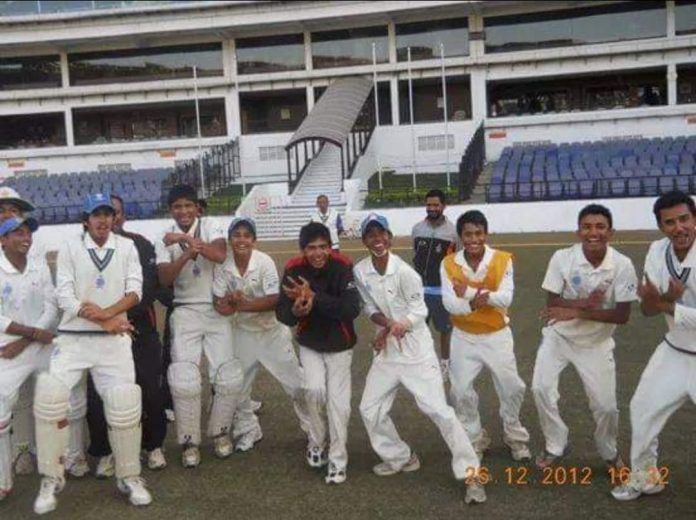
Ashfaq Khan (63) and his wife Aliya Khan (56), residents of Seoni district of Madhya Pradesh’s Gopalganj, were glued to the television set watching the Indian Premier League (IPL) auction as the league had put his youngest son Arshad Khan’s name in the auction list of IPL players. With the completion of every auction, the duo eagerly waits to hear the next name which might be of their son’s.
With dim hope, Ashfaq, a retired teacher-turn-farmer, who wants to see his son in the Indian cricket team, left home for the mosque to offer evening Namaz (Magrib), pondering on the future of his son. As he completed the Namaz, his eldest son Zakariya Khan whispered, “Arsad ko Mumbai Indians team ne kharid liya hai. Wo IPL khele ga.”
Elated with the news, “I thanked Allah and offered namaz of shukrana,” recalled Ashfaq.
The left-arm seamer and left-hand batsman, Mohd Arshad Khan has been picked up by Mumbai Indians worth Rs 20 lakh in the mega auction of the 15th season of IPL 2022 held in Bangalore recently. His consistent performance in the Under-23 VK Naidu tournament organised by BCCI in the year 2020, Vijay Hazare Trophy and Syed Mushtaq Ali Trophy in the same year caught the eyeballs of the selectors.
In the VK Naidu tournament, Arshad took 36 wickets in 10 matches and also scored 400 runs. He shot into the limelight in 2019-20 when he took 5 wickets and scored a century, batting in the tail end. “The match was against Assam and my team had lost 7 wickets for 87 runs. I went in and scored 134 runs. That inning has been the best of my career,” said Arshad. He always punched above his weight, getting selected for under-14 when he was just 11-year-old.
It was an unforgettable moment for Ashfaq, who coached Arshad for almost eight years since he was eight-year-old. “He was born to be a cricketer. I saw a player in him when he performed well during a trial that took place in Chhindwara in 2008.”
With the selection in Mumbai Indians, Arshad became a superstar in his village as well as in the district. When an overwhelmed Ashfaq was rushing home, he was surrounded by the villagers who were rejoicing at Arshad’s selection. “It was like a village fair. Hundreds of people have gathered outside the home, crackers were burnt, drums have begun to beat and everyone is distributing sweets,” said Aliya, mother of Arshad.
Recalling the contribution of Arshad’s father, his mother Aliya said, “Cricket is an expensive game and there were occasions when his father purchased his cricket kit way more expensive than his month’s salary. Besides, the efforts of his coaches Abdul Kalam, from Seoni and his coaches in Indore — Shantanu Tripathi and Chandrakant Pandit —have polished his talent to become a good cricketer.”
Belonging to a humble background and youngest among the four siblings, Arshad and his family live in Gopalganj village, around 13-km from Seoni town. “Even Seoni didn’t have a proper turf, what to talk of my village when I began playing cricket,” said Arshad speaking over the phone. “I was in Gujarat when I got a phone call that you have been selected for Mumbai Indians.
“My phone was buzzing non-stop the day I got selected. I don’t even have time to speak with my father. It was the next morning when I spoke to him on a video call. He was blushing and smiling. It was an unforgettable smile which I have been waiting to see for years,” the budding cricketer Arshad giggled.
Talking about the struggle, Arsad said, “From 2017 to 2019, it was the years of despair. I had multiple injuries and have stopped playing cricket. But then my father encouraged me to restart afresh and boosted my morale. From that day to today, I never looked back.”
“The journey would have been much more difficult if my partner-in-dream; Ashfaq Khan, my father, did not stand beside me like a rock,” said Ashfaq adding that I want to live his dream and will play for the Indian cricket squad.
Madness for cricket has forced Arshad to quit education after matriculation. But, now, he is determined to resume his studies.
Just like Arshad, Kuldeep Sen, a son of saloon shop owner from Madhya Pradesh’s Rewa, was also auctioned in the the15th edition of IPL. Rajasthan Royals took him at a base price of Rs 20 lakh.
source: http://www.twocirlcles.net / TwoCircles.net / Home> Lead Story / by Kashif Kakvi, TwoCirlcles.net / Februrary 25th, 2022
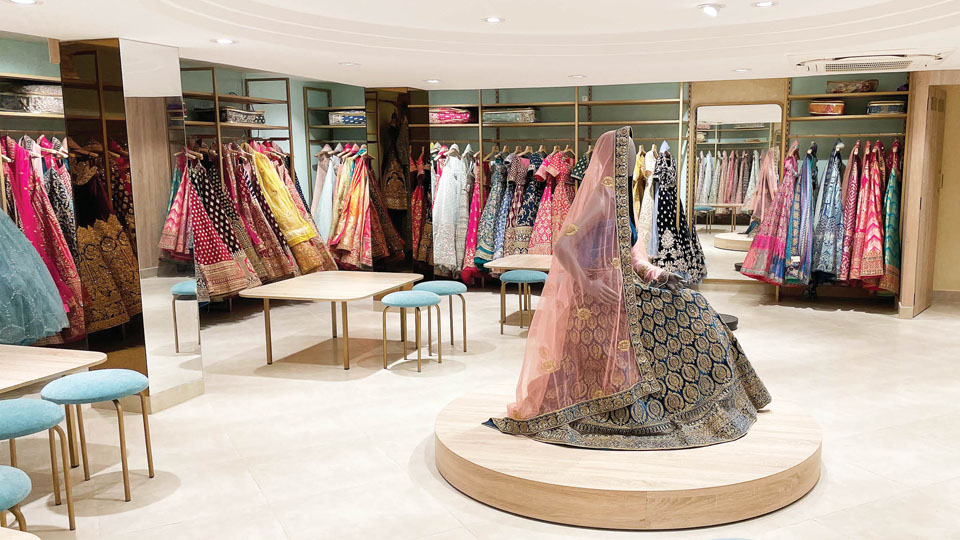
Badsha’s ‘Tehey’ is a one-stop shop for a new bridal experience in city.
‘Tehey’ means layers in Sanskrit and there are layers of ceremonial wear — from exquisite bridal lehengas for the foremost bride to classy ethnic wear for the guests.
‘Tehey’ traces its roots to the early 1900s when a successful silk and cotton textile business was established by their ancestor Abdul Rehman Badsha and his four sons in Virajpet, Kodagu. The first formal retail outlet was opened in Mercara in 1922.
Now with the launch of ‘Tehey’ people can choose from a range of exclusively designed Indian ethnic occasion wear sarees, lehengas and salwars.
‘Tehey’ also offers Kodava attires for men and women, including the Kupya-Chele & Mande Tuni for men; Bottu Podiya, Kambi Podiya, Muskoli and Checked Vastra for women.
To enjoy the shopping experience, visit ‘Tehey’ which was inaugurated on D. Devaraj Urs Road in city on Feb. 26.
source: http://www.starofmysore.com / Star of Mysore / Home> News / March 03rd, 2022
Screenshot from a video sent to The Peninsula by one of the students
Doha :
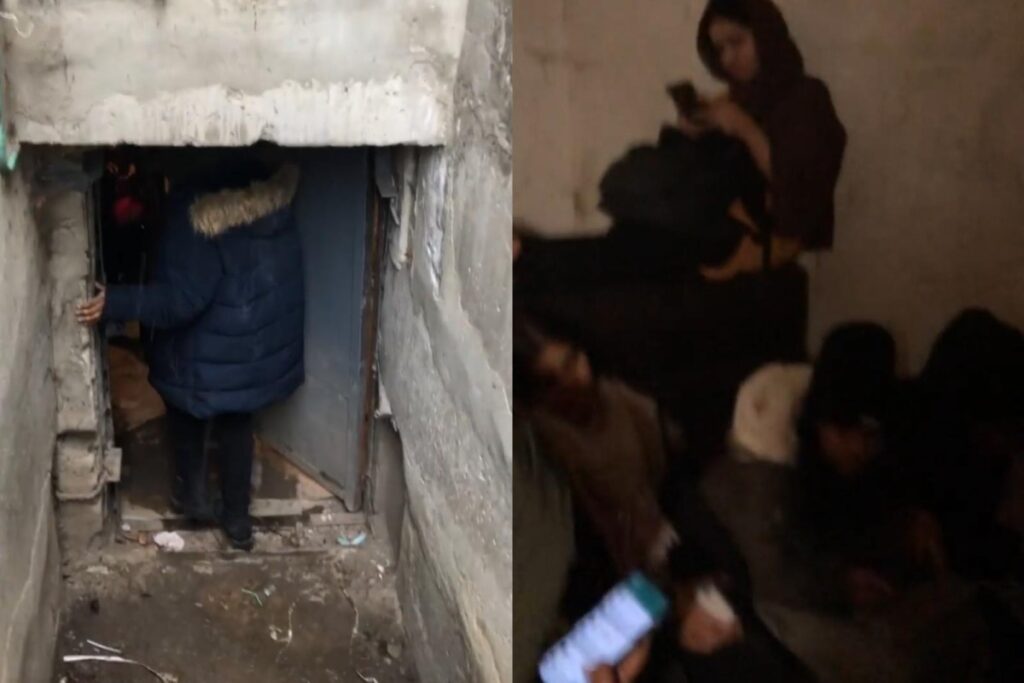
Around 23 Doha-based Indian medical students in Ukraine’s Kharkiv university have been staying in bunkers for the last four nights as fierce fighting between the Russian and Ukrainian forces has prevented them from fleeing the war-torn country.
The panic-stricken parents of these stranded students shared their anxiety with The Peninsula yesterday while requesting Indian authorities to quickly make arrangements for bringing back their children safely.
“It’s scary. We’re worried about the plight of our children after receiving disturbing text messages from them.
Even in this difficult situation, they’re consoling us saying Allah will show a way to overcome, says Doha resident Aysha Saibool, mother of Dua Khadeeja, a first-year medical student at the V N Karazin Kharkiv National University in Kharkiv.
She said that her daughter has informed that it will take at least seven hours from Kharkiv to reach the nearest border and since no security is guaranteed it is unsafe to travel.
The plight of the stranded students in the war zone was raised by her with the Minister of State of India’s External Affairs, V Muraleedharan.
The Minister said that travelling from Kharkiv, which lies in the eastern part of Ukraine, to the south – west borders of Romania, Hungary or Poland is not safe. He advised the students to stay where they are, until they receive further instructions from the Indian Embassy in Ukraine.
Dua Khadeeja
The Peninsula contacted Dua Khadeeja over telephone in Kharkiv and she said that she and 131 other students were stranded in the Mir hotel bunker in dire condition. They were told not to move out because of security reasons.
“We are sitting inside the bunker with the hope that we will be evacuated soon. Everyone is terrified. Some experience nose bleeding due to allergies and severe cold,” said Dua.
“There’s hardly any space to stand. We cannot even go to toilet. This morning we were allowed to go to hostel for a few minutes to freshen up. That was a little bit of comfort from this harrowing experience. Dua said that food is provided at the bunker.
The parents of Doha-based students have been sharing the latest developments through their whatsapp group.
Nusrath Shamseer, whose daughter Fathima Sharbeen is also stranded in the hostel bunker in Kharkiv University, said they are worried about the situation. Fathima’s classmates Hiba and Riya are also staying in the hostel bunker since Thursday.
Fathima Sharbeen
“The easiest way for the students from Kharkiv to be evacuated is via Russia. But it is dangerous to cross the border without adequate security escorts from both Ukraine and Russia,” one parent said quoting his son’s message.
“The alternative routes are Romanian border in the south-west and Poland, Hungary and Slovakia in the west. These are too far from Karkhiv,” he added.
India has so far evacuated 709 students from Ukraine with the third flight carrying 240 students arriving in Delhi from the Hungarian capital Budapest last morning. The flight landed a few hours after Air India’s second evacuation flight from the Romanian capital Bucharest carrying 250 Indian nationals landed at Delhi Airport.
India’s evacuation operation of its stranded citizens, codenamed as ‘Ganga’, began on Saturday with the first flight bringing back 219 people from Bucharest to Mumbai.
Disturbing accounts by Indian students stranded in Ukraine are also circulating in social media with some complaining that they were beaten up by Ukrainian forces and were being kept from leaving the country.
According to Ukraine’s Ministry of Education and Science, there are over 18,000 students from India study in the country. Most of the students are from the southern Indian state of Kerala.
source: http://www.thepeninsulaqatar.com / The Peninsula / Home> Qatar> General / March 01st, 2022
Amidst the blitzkrieg from the Russian military, three students from Kodagu managed to leave the conflict zones in Ukraine and safely returned to India much to the relief of their family members who were pleading for their safe evacuation ever since Russian forces invaded Ukraine.
Alisha Sayyad Ali, Siniya V.J. and M.P. Nirmala, who managed to reach the borders in available modes of transport from their respective cities, returned on Wednesday in the evacuation flights operated by the Indian government.
The girls’ return was confirmed to The Hindu by the Kodagu district administration, whose officials were in touch with the stranded students since the war broke out. A few of the students from Kodagu and Mysuru are said to have reached Poland and are waiting for their evacuation. All of them are safe.
Siniya, who landed in Bengaluru airport on Wednesday evening, was welcomed by her family members.
Jose, her uncle, said Siniya had to walk about 20 km from her shelter in Kyiv along with other students to the railway station to reach Livv. She was evacuated from Budapest in Hungary to New Delhi.
“Minutes before Siniya was supposed to board a flight to Dubai on February 24 from Kyiv to join her sister for a vacation, Russian forces attacked Ukraine and the flights got cancelled. She had to rush back to her accommodation in available means of transport for her safety. Her 40-kg baggage was stuck in Kyiv airport and she flew to India with only a few pairs of clothes as all her belongings are at the airport,” Mr. Jose said.
Alisha, a student of Ivan Francisco Medical University, has also returned.
M.P. Nirmala, a student of Bogomoleth National Medical University in Kyiv, was stranded at a school after the invasion. Her mother Rajani was praying for her early return, pleading with the authorities for her evacuation. Ms Rajani said, “My daughter landed in Delhi this morning and is on her way to Bengaluru.”
Karthik, brother of Likith, who was stranded in Kharkiv with eight others, said his brother and some of his friends have reached Poland. “It was tough for them to reach the borders but they managed and are now away from the conflict zone Kharkiv which is under siege. They are waiting for their turn to board the next evacuation flights,” he said.
source: http://www.thehindu.com / The Hindu / Home> News> National> Karnataka / by Special Correspondent / Mysuru – March 02nd, 2022
Senior Indian journalist P A Mubarak, 66, passed away on Friday night in hospital. He was undergoing treatment post Covid-19 complications for last two months.
He was the former Qatar correspondent for Chandrika daily in India. He worked with the Ministry of Commerce and was running his own business own company after leaving the ministry.
He was an active presence in Indian community activities over the years and has been general secretary of Kerala Muslim Cultural Centre (KMCC) and Pravasi, Indian expat organisations in Qatar.
He wife Najiya succumbed to Covid-19 in Qatar on April 30.
He is survived by two daughters Nadia Shameen and Fatima Mubarak and sons-in-law Muhammad Shameen (Etisalat, Dubai) and Parvez Vallikkad (Doha, Qatar Foundation).
The burial will be held this evening at Abu Hamour cemtary.
source: http://www.thepeninsulaqatar.com / The Peninsula / Home> Doha Today> Community / October 27th, 2021