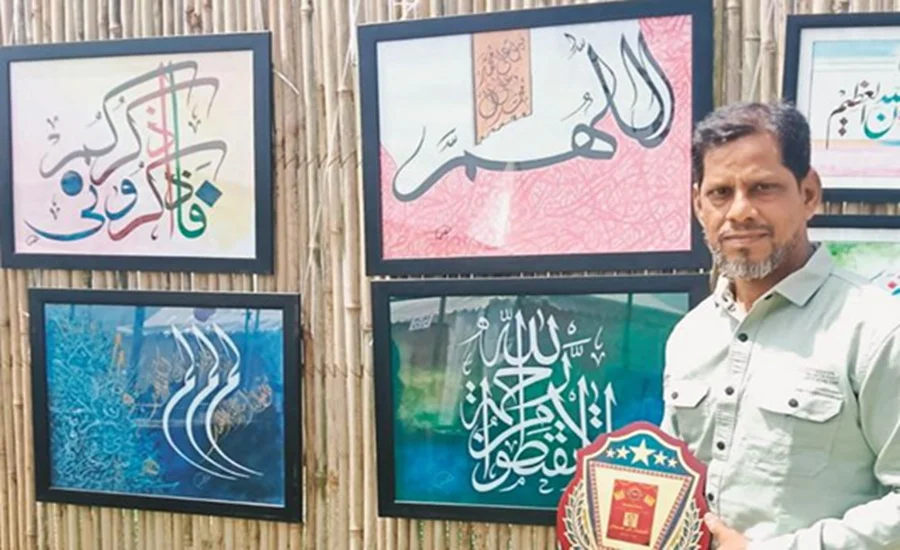
The two-day exhibition brought together artists from several countries; Momin was selected for the upcoming international exhibition in Norway
Bhiwandi :
A young calligrapher from Bhiwandi has brought pride to his city after gaining special recognition at an international Qur’anic calligraphy exhibition in Delhi held recently.
The two-day (March 28-29) exhibition aimed to connect the younger generation with the art of calligraphy and spread the universal message of the Holy Qur’an in a beautiful and meaningful way. The event saw participation from artists and representatives from countries including Switzerland, France, Turkey, Saudi Arabia and the United Arab Emirates, making it a truly global platform.
Among the selected participants from across India, only ten prominent calligraphers were chosen to showcase their work. Mansab Momin, also known as Mansab Art, was one of them. His inclusion in the exhibition was seen as a recognition of his skill and dedication to the art.
Momin’s Qur’anic designs and calligraphy pieces drew strong attention from visitors. People who attended the exhibition closely observed his work and appreciated the detail and balance in his writing.
During the event, Momin also conducted a live workshop which became a major attraction. He created calligraphy on canvas in front of the audience and wrote names and phrases on the spot for hundreds of visitors.
Speaking about his experience, Momin said, “Calligraphy is part of our rich cultural and religious heritage. It is important that we pass this art on to the next generation.” He added, “I will continue my efforts to teach and promote this art, and I plan to restart calligraphy training classes soon.”
Organisers of the exhibition were also impressed by his performance. Due to his strong command over the art, Momin has been selected to participate in an upcoming international calligraphy exhibition in Norway.
One of the organisers said, “His work reflects deep understanding and control. The response from the audience shows how powerful this art form can be.”
The exhibition was held under the supervision of noted calligrapher Gauri Yusuf Hussain from Gujarat. It was seen as an important step in promoting calligraphy and introducing it to a wider global audience.
Momin’s achievement is being seen as a matter of pride not only for him but also for the people of Bhiwandi, as his work continues to carry forward a meaningful artistic and spiritual tradition.
source: http://www.clarionindia.net / Clarion India / Home> Editor’s Pick>India>Indian Muslims / by Team Clarion / April 16th, 2026
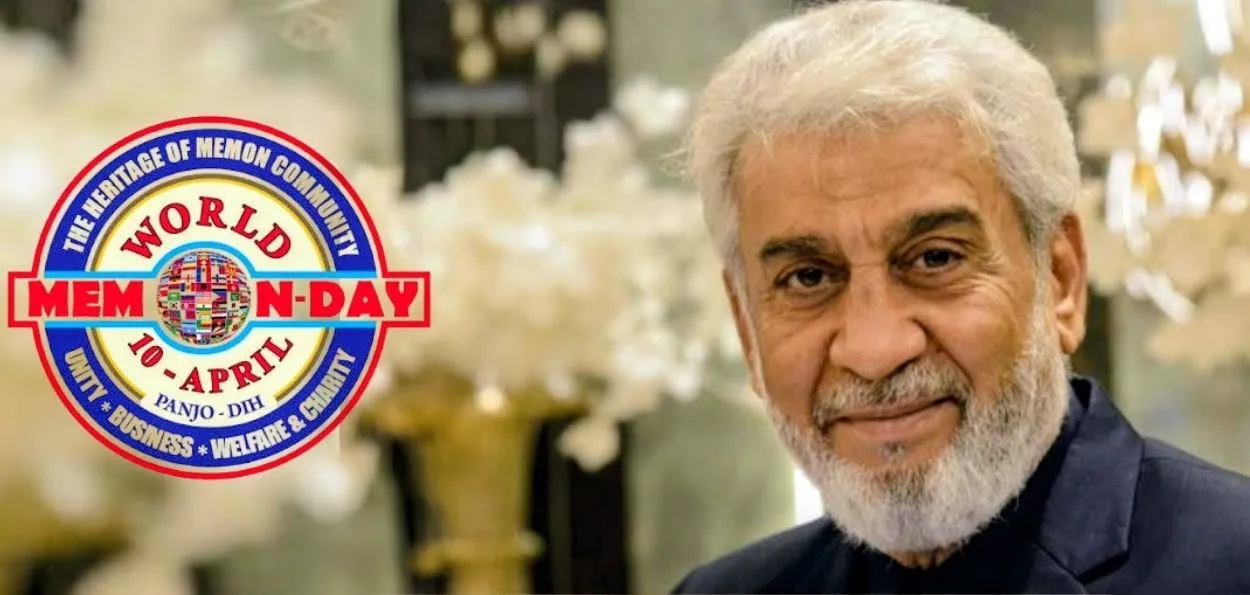
The Memon community—numbering around four million globally—is widely regarded as a globalised group known for its business acumen, prosperity, patriotism, and pro-development outlook.
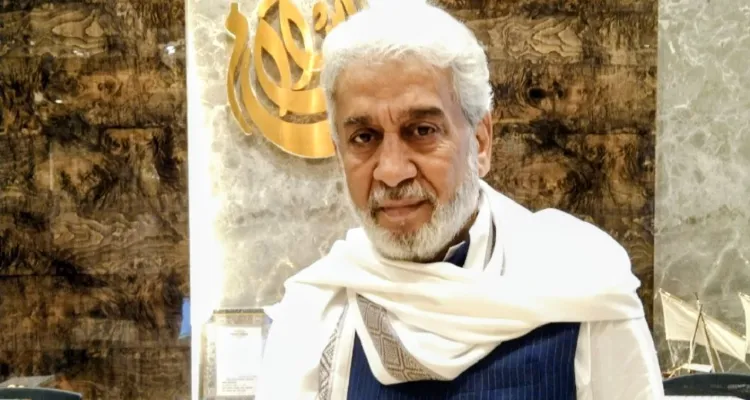
These observations were shared by prominent Memon leader Yusuf Abrahani on the occasion of World Memon Day.
The Memons are a close-knit, predominantly Sunni Muslim business community. They trace their origins to Gujarat in India and Sindh in Pakistan. Historically known as maritime traders, they are largely concentrated in Mumbai and Karachi, where they have flourished as entrepreneurs in sectors such as import-export, shipping, and textiles.
The community’s roots go back to the 15th century, when members of the Lohana community in Sindh embraced Islam under the guidance of Syed Yusufuddin Gilani.
Known for their peaceful temperament and adaptability, Memons have built a reputation not only for prosperity but also for their strong commitment to social service.
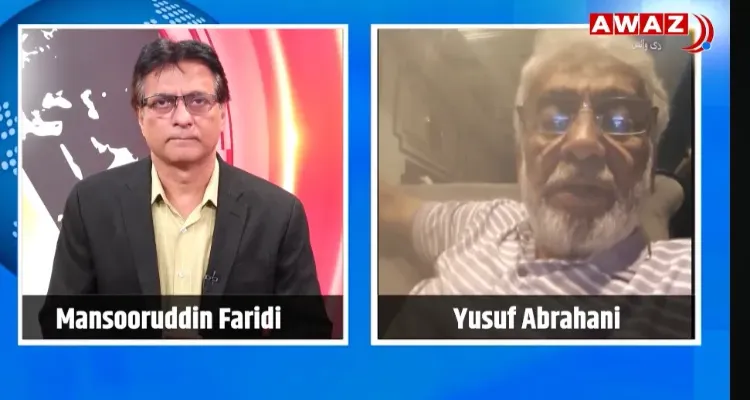
Yusuf Abrahani, a former Member of the Legislative Assembly and president of the Islam Gymkhana, remains actively engaged in Mumbai’s political, business, and social spheres.
In a special interview with Mansooruddin Faridi, Editor of Awaz-the Voice Urdu, Abrahani noted that the Memon community is spread across the world, with members having migrated from Gujarat to various countries.
Describing the community’s ethos, he said, “Allah has blessed Memons immensely—with wealth, a generous spirit, and grace. Wherever a Memon settles, the first priority is to establish a madrasa, mosque, community hall, and medical dispensary. This tradition continues even today.”
Drawing from his six decades of experience, he added that Memons have established numerous institutions in Mumbai, including hospitals, mosques, madrasas, and charitable facilities.
World Memon Day is observed on April 10, and is marked by extensive charitable activities. Community members visit hospitals, organise welfare programmes for the poor and marginalised—including widows, the visually and physically challenged—and distribute essential supplies.
Abrahani noted that this culture of service has gained further momentum under the leadership of Iqbal Memon. Similar programmes are also organised in countries such as the United Kingdom, the United States, Australia, Canada, and New Zealand.
Despite their relatively small population, Memons have achieved notable success in education and economic development. Alongside India, significant Memon populations reside in countries like Canada, the United Kingdom, the United States, and Sri Lanka.
Honesty and integrity remain the hallmarks of the community, with a strong emphasis on imparting religious and ethical values to younger generations.
source: http://www.awazthevoice.in / Awaz, The Voice / Home> Stories / posted by Aasha Khosa / April 10th, 2026
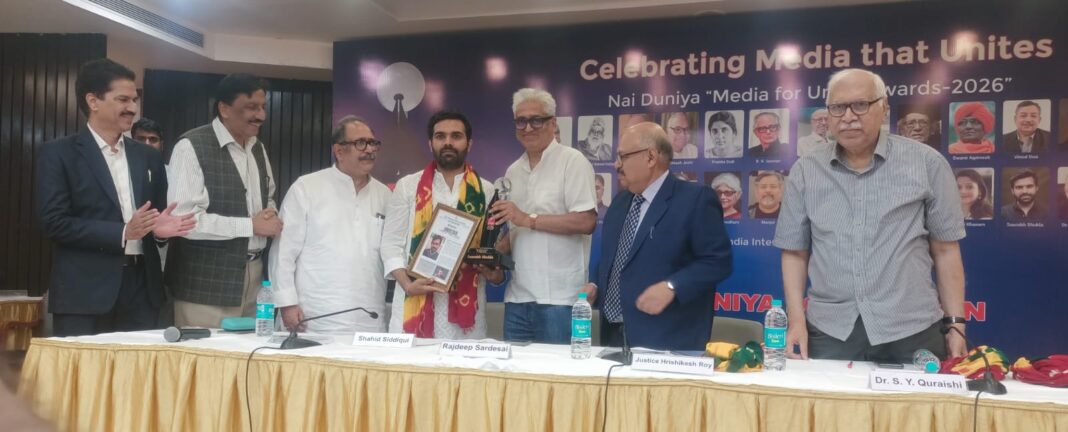
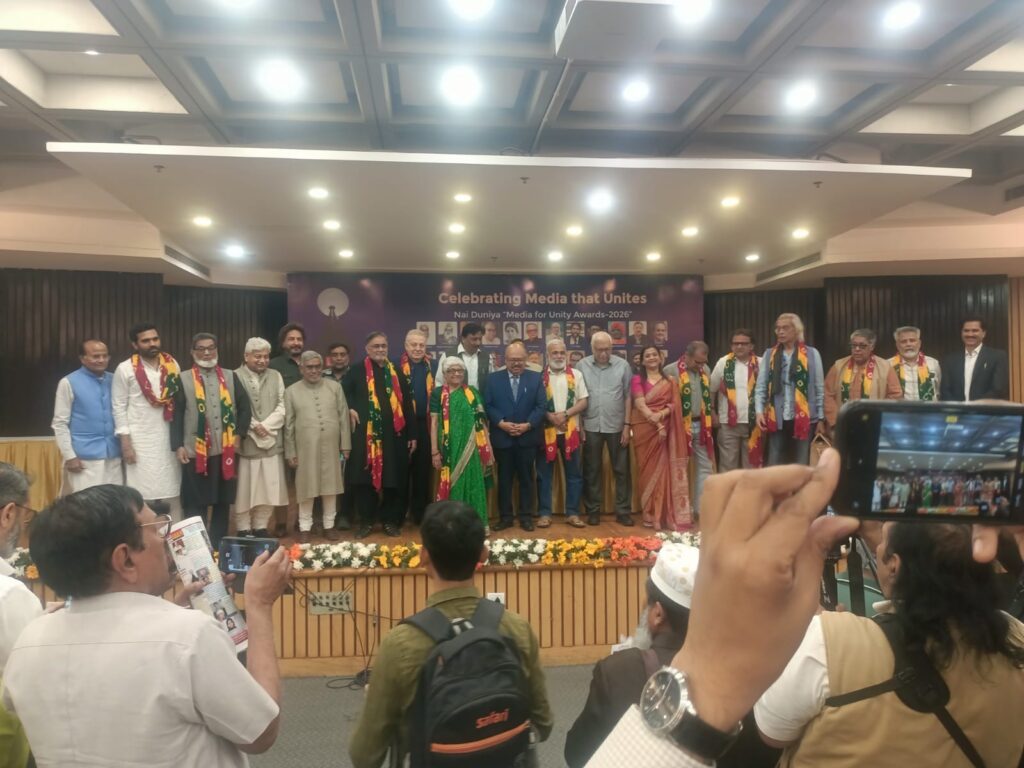
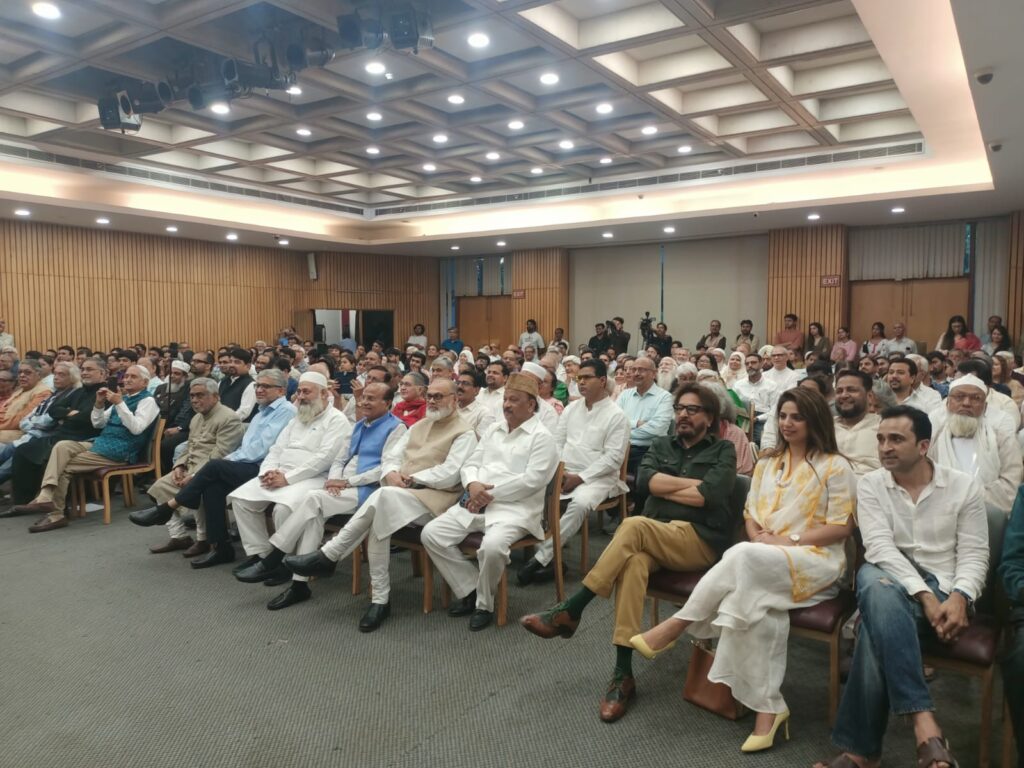
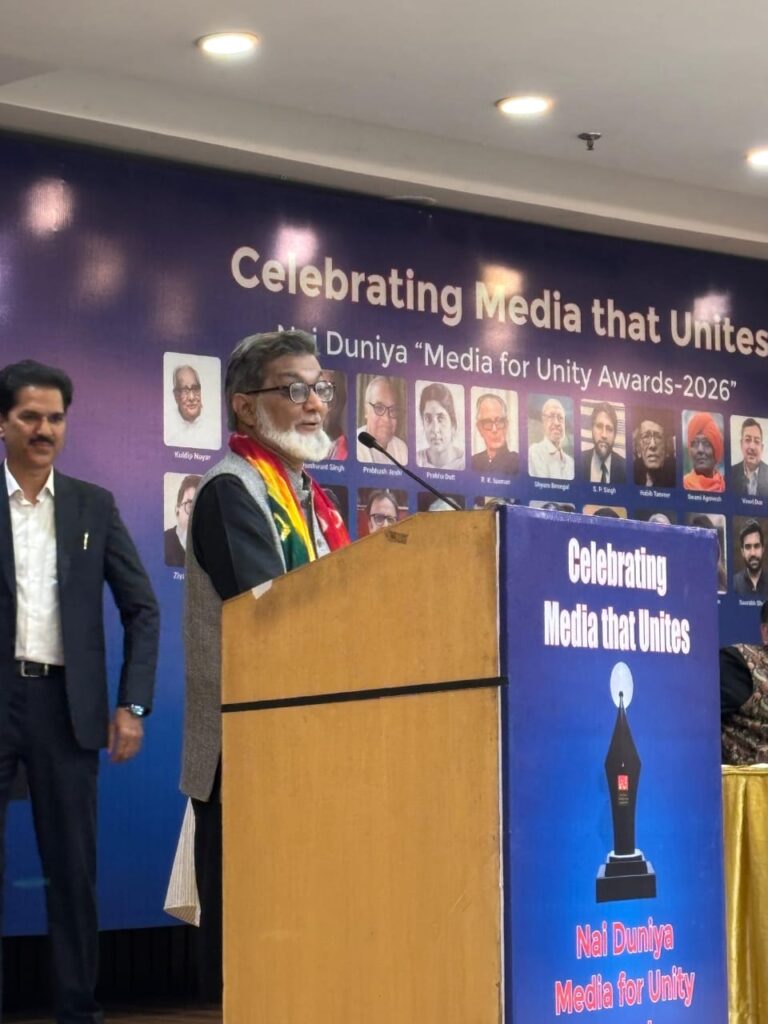
The Nai Duniya Foundation honoured leading journalists, authors, writers and filmmakers at the Media for Unity Awards 2026, held at the India International Centre on Saturday evening. The event celebrated individuals who have demonstrated courage in “speaking truth to power” during what many speakers described as challenging times for Indian media and democracy.
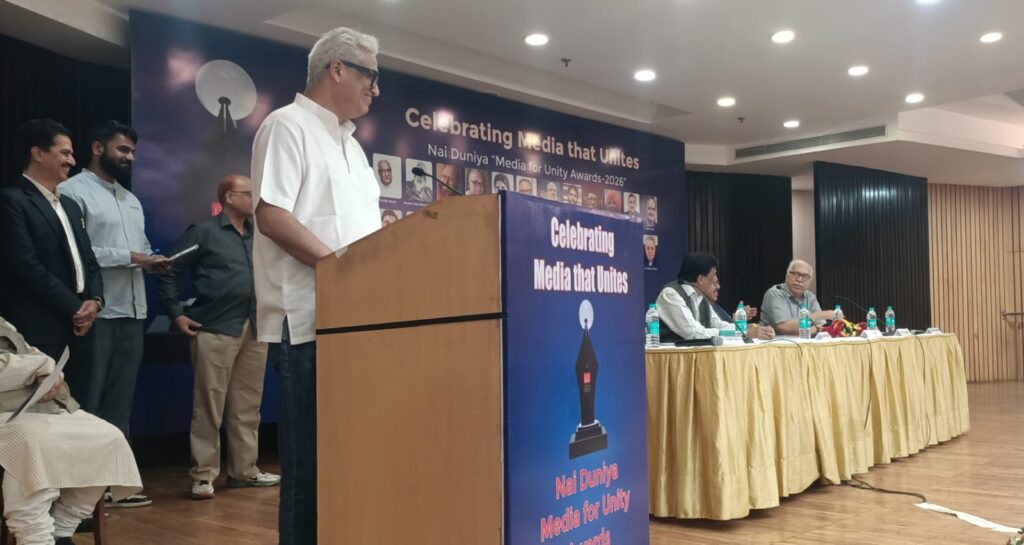
Senior journalist Rajdeep Sardesai, consulting editor and anchor of India Today Television, reflected on the evolving role of journalism amid what he termed a period of “darkness.” He emphasized that even small efforts, “a spark or a candle”, can help keep truth alive. Recalling his early career, Sardesai spoke about the discipline and dedication he learned from legendary cartoonist R. K. Laxman, whose name is correctly spelled as R. K. Laxman. He noted that Laxman’s insistence on constant improvement shaped his approach to journalism.
Senior journalist Rajdeep Sardesai speaking at the Nai Duniya “Media for Unity Awards 2026” at the India International Centre in New Delhi on April 18, 2026.
Drawing parallels between past and present, Sardesai remarked that many political realities remain unchanged, pointing to Laxman’s decades-old cartoons that continue to resonate with contemporary audiences. With over three decades of experience, he expressed concern that some voices which once illuminated public discourse are now contributing to its decline. Addressing criticism surrounding “Godi media,” Sardesai maintained that perseverance and faith in eventual change remain essential.
He also highlighted India’s resilience, stressing that no individual or authority is permanent. Sharing an anecdote about a hardworking woman named Elizabeth from Kerala, he underscored the strength of ordinary citizens who sustain the nation through their efforts. Concluding on an optimistic note, Sardesai praised India’s diversity and encouraged young journalists to continue their pursuit of truth despite adversity.
Senior Congress leader Shashi Tharoor, emphasized the media’s vital role in preserving democracy and national unity. He described the current era as a paradox, marked by unprecedented connectivity alongside deep social fragmentation, and argued that the media serves as the “soul of democracy.”
Reflecting on his upbringing as the son of a journalist, Tharoor spoke about the traditional trust placed in media as a reliable source of truth, a trust he believes is now under strain. He warned against the growing trend of sensationalism in television and social media, where debates often devolve into confrontational spectacles rather than meaningful discussions. Such practices, he cautioned, risk reducing complex issues to simplistic binaries and eroding public trust.
Using his well-known “thali” metaphor, Tharoor highlighted India’s pluralistic identity and stressed that the media must provide a fair platform representing all voices. He reiterated that a free and impartial press is essential to democracy, acting as a watchdog that holds power accountable. He concluded by urging journalists to reclaim their core mission, to inform without inflaming and to unite rather than divide, while praising the awardees for embodying these ideals.
Justice Hrishikesh Roy, who was the chief guest, spoke about the emotional resonance of the awardees’ remarks, stating that such voices are crucial in today’s India. He commended the Nai Duniya Foundation for inspiring individuals and acknowledged the contributions of Shahid Siddiqui, Zubair, and Atul Tiwari in organizing the event. Referring to figures like R. K. Laxman and other speakers, he noted that their words left a deep impact on the audience.
Senior journalist Zia-us-Salam speaking at the Nai Duniya “Media for Unity Awards 2026” at the India International Centre in New Delhi on April 18, 2026.
Justice Roy also highlighted the fairness of the selection process, praising the jury led by S. Y. Quraishi for making thoughtful choices that left little room for dissatisfaction. He concluded with a message of optimism, urging attendees to remain hopeful and appreciative of such initiatives.
Former Chief Election Commissioner S. Y. Quraishi reflected on his long association with the media, recalling his early career in public relations. While acknowledging journalism’s strengths, he expressed concern about its current state in India, particularly the country’s low ranking in global press freedom indices. Although he noted slight improvements recently, he argued that the media has often failed to question those in power, instead focusing disproportionately on the opposition.
Quraishi lamented what he described as a shift from the media’s role as the “fourth estate” to a “fifth column.” Despite this, he expressed hope in journalists like Rajdeep Sardesai and others who continue to uphold democratic values, as well as citizens committed to defending secularism and pluralism. He concluded by appreciating the jury’s careful selection of awardees and thanking the organizers.
Senior journalist Neerja Chowdhury, after receiving the lifetime achievement award, reflected on her early career and the influence of pioneering journalist Prabha Dutt. She recalled Dutt’s fearless reporting, including her coverage of the 1978 Sanjay and Geeta Chopra case, war reporting, and her landmark Supreme Court petition advocating press freedom.
Chowdhury emphasized that today’s journalists face more complex challenges in a polarized society shaped by religious, regional, and political divisions. She stressed that the media must not act as government propaganda but instead hold power accountable and reflect diverse perspectives. Highlighting the importance of dissent, she argued that diversity is essential for creativity and progress. She concluded by reaffirming her commitment to journalism and nation-building.
Senior journalist Saurabh Shukla spoke about the difficulties faced by independent reporters, including arrests, legal harassment, and limited access to timely justice. He pointed out that many journalists struggle to secure bail due to financial and legal constraints and called for the establishment of fast-track tribunals to address such cases promptly.
Shukla also raised concerns about social media trials, surveillance, and professional blacklisting, which he said further complicate the work of journalists. Reflecting on his departure from NDTV, he emphasized the importance of maintaining independence in journalism. He additionally highlighted systemic bias, alleging that Muslim journalists are disproportionately targeted, while noting that his own identity has sometimes shielded him from similar scrutiny.
Despite these challenges, Shukla reaffirmed his commitment to ground reporting and amplifying marginalized voices. The event concluded with a shared sense of concern and hope, as speakers collectively underscored the enduring importance of independent journalism in strengthening democracy and fostering unity in India.
Ziya Us Salam, Associate Editor of The Hindu, Fazil Hussain Parvez, Editor of Gawah, Prof. Purushottam Agarwal, Writer, Vivek Shukla, Journalist, Neerja Chowdhury, Journalist, Manjul, Cartoonist, Sudhir Mishra, Filmmaker, Sandeep Chaudhary, Senior Journalist and Anchor of ABP News, Arvind Gaur, Theatre Director, Rani Khanam, Artistic Director Aamad and Choreographer, Saurabh Shukla, Journalist and Co-founder of The Red Mike and Dr. Waiel Awaad, Senior Journalist and Middle East Analyst were given the Nai Duniya Media for Unity Awards 2026.
1. Kuldip Nayyar Award for English journalism, Ziya-us-Salam, Associate Editor, The Hindu
2. Khushwant Singh Award for the most inspiring book, ‘Mazbooti ka naam Mahatma Gandhi’, by Prof. Purshottam Aggarwal
3. Prabha Dutt Lifetime Achievement Award Neerja Chowdhry
4. Maulana Abdul Waheed Siddiqui Award for Urdu Journalism Fazil Hussain Pervaiz, Editor Gawah
5. Prabhash Joshi Award for Hindi Journalism Vivek Shukla
6. S P Singh Award for Electronic Media Sandeep Chowdhry
7. Swami Agnivesh Award for Social Causes Rani Khanam
8. Shyam Benegal Award for Visual Media Sudhir Mishra
9. Habib Tanvir Award for Theatre Arvind Gaud
10. Vinod Dua Digital Media Award Saurabh Shukla
11. RK Laxman Award for Satire Alok Nirantar
12. Mark Tully Award for a Foreign Correspondent Dr Waeil Awwad
source: http://www.indiatomorrow.net / India Tomorrow / Home> Human Rights > Communalism / by Mohd Naushad Khan / April 19th, 2026
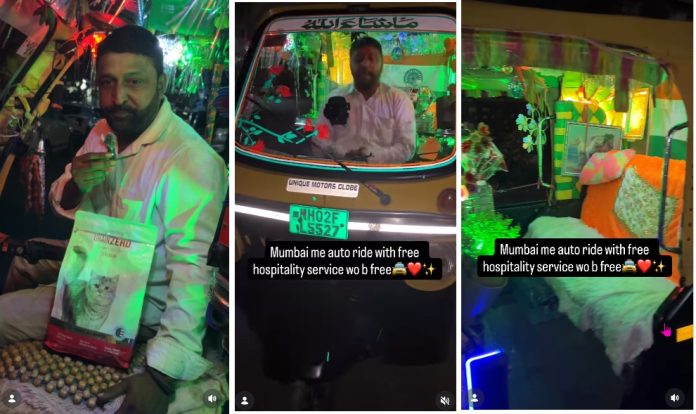
In a city where commuters often face refusals from auto drivers, one Muslim driver has earned appreciation for his consistent service and care for passengers. Habib Bhai, an auto rickshaw driver, has gained attention for never refusing rides and offering added comfort to those who travel with him.
Passengers shared their experience, noting that finding an auto in Mumbai often involves repeated refusals for short or inconvenient routes. In contrast, Habib Bhai accepts all rides, whether short distance or long distance, across routes including the western line. This approach has changed the travel experience for many regular commuters.
What sets him apart is the effort he makes to ensure passenger comfort. His auto carries free drinking water, biscuits, chips, and sometimes fruits for riders. For many, the journey feels less like a routine commute and more like a welcoming service. His vehicle also includes simple arrangements to provide relief during hot weather.
Habib Bhai says his motivation comes from a sense of duty and the blessings he receives from people. He believes that refusing passengers causes inconvenience, so he makes it a rule to accept every request. He also shares that he keeps items ready for passengers so they feel cared for during the ride.
Beyond passenger service, he extends his care to animals on the road. He keeps food with him and offers it to animals he encounters during his daily work. This practice reflects his broader approach of kindness in everyday life.
His auto also displays the national flag, showing his sense of belonging and pride. Through small actions, he has built a reputation among commuters who now seek him out for a reliable and respectful ride.
Regular passengers say such examples highlight how simple efforts can improve daily experiences in a busy city. His work shows that public service roles carry opportunities to create positive impact through consistency and empathy.
source: http://www.radiancenews.com / Radiance News / Home> Latest News> Pride of the Nation> Markers of Excellence> Report / by Radiance News Bureau / April 07th, 2026
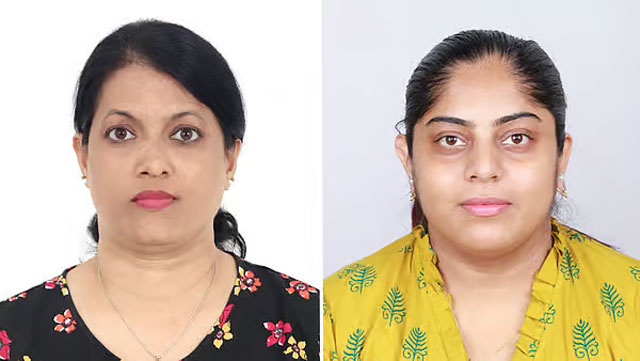
In a streak of luck for Indian expatriates in the Middle East, four individuals have bagged Dh 25,000 each in the first weekly e-draw of Abu Dhabi’s Big Ticket for the month of April. Among the winners is a Mangaluru native who turned her birthday into a life-changing celebration.
Double celebration for Mangalurean winner
Veera Lobo, a 50-year-old Dubai resident originally from Mangaluru, received the best birthday gift she could have imagined. Lobo decided to purchase her ticket on Easter Sunday, which coincided with her 50th birthday.
Participating as part of a group of four, Lobo expressed her shock and joy upon hearing the news. “I was overwhelmed with happiness and excitement. I never expected it at all,” she said. The group plans to split the prize money, and Lobo has pledged to donate a portion of her share to charity.
Other winners from the region
The weekly draw saw three other Indian expats, including residents from Kerala and Kuwait, securing the Dh 25,000 prize:
Anzil Nazar: A 33-year-old aircraft technician with Air Arabia originally from Kerala, Nazar has lived in the UAE since 2022. Unlike his usual practice of pooling money with friends, he tried his luck independently this time with a random ticket selection. Initially mistaking the winning notification for a promotional call, Nazar said he plans to continue participating in the future.
Amritha Babu: A 30-year-old teaching assistant at a GEMS school in Sharjah, Amritha’s win came on only her fourth ticket purchase. A resident of the UAE for eight years, she chose her ticket based on her lucky number, ‘8’. She recognised the voice of Big Ticket host Richard over the phone before the news even sank in.
Fathima Afeedha: Another native of Kerala, Fathima’s winning ticket was purchased by her husband, a supervisor based in Kuwait for the last 15 years. Her husband, who has been buying tickets for five years, expressed his delight and stated he would continue to try his luck in the upcoming draws.
Grand prize awaits
The weekly e-draws are part of the lead-up to the grand live draw on May 3, which features a massive Dh 25 million jackpot. In addition to the top prize, five other participants will walk away with Dh 1 million each. Three more weekly draws remain for the month of April, with four winners guaranteed to win Dh 25,000 every week.
source: http://www.daijiworld.com / DaijiWorld.com / Home> Top Stories / by Daijiworld Media Network – Abu Dhabi / April 15th, 2026
In the narrow lanes of ‘Kelabadi’ locality in Durg, a 9-year-old girl could be seen playing hockey with boys. She had neither expensive shoes nor her own hockey stick. She used her elder brother’s old, broken stick, wrapped with tape, to step onto the field. Her father worked as a muezzin in a local mosque.
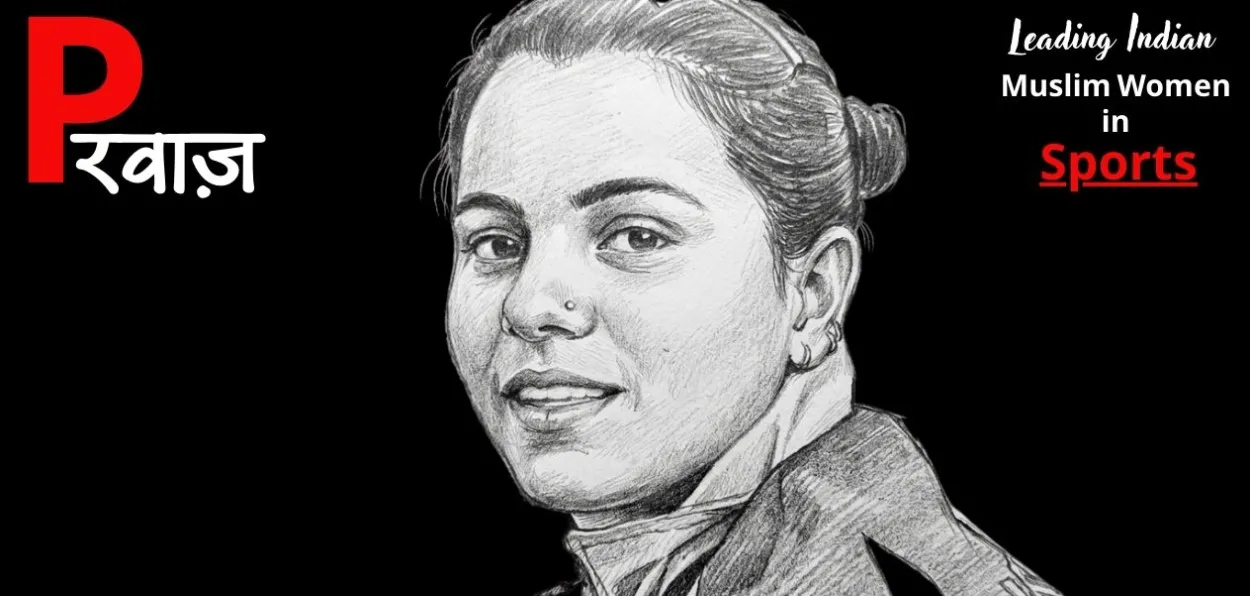
The family’s income was so low that sometimes it was difficult to light the stove even for one meal a day. When she decided to pursue hockey as her passion, society mocked her, “A girl will play wearing shorts?” But her father was determined that his daughter would write her own destiny. This is the story of Saba Anjum Karim, the girl who rose from the dusty lanes of Chhattisgarh to wave the tricolor on global sports fields.
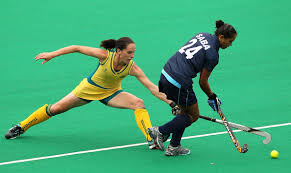
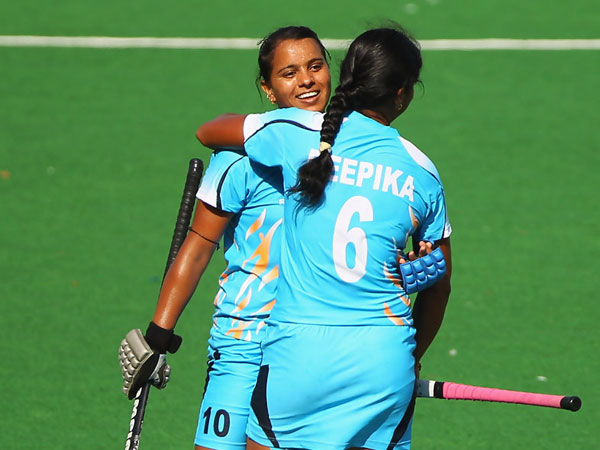
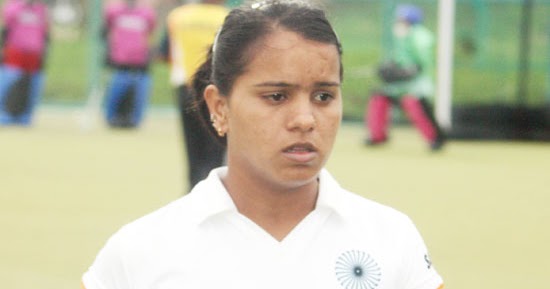
Saba Anjum playing hockey
Former Indian women’s hockey forward Saba Anjum says that when she started playing, her family’s financial condition was not good. Her father worked as a muezzin in the mosque, while her mother worked to support household expenses. Once, during a summer camp at the playground, children were given jaggery and chickpeas after playing. She started playing thinking she would get jaggery and chickpeas. With this thought, she began her sports journey. Later, a running competition was organized where she participated and secured first place. As a prize, she received a hockey stick. That moment became her inspiration to continue playing hockey.
Her school later participated in the Nehru Hockey Tournament, after which she was selected for the Indian national team. She never looked back after that. She played the Nehru Hockey Cup in 1999. From 2002 to 2012, she was a member of the Indian national hockey team and represented the country in many competitions. During this period, she also captained the Indian team. Her elder brother was also a national-level hockey player.
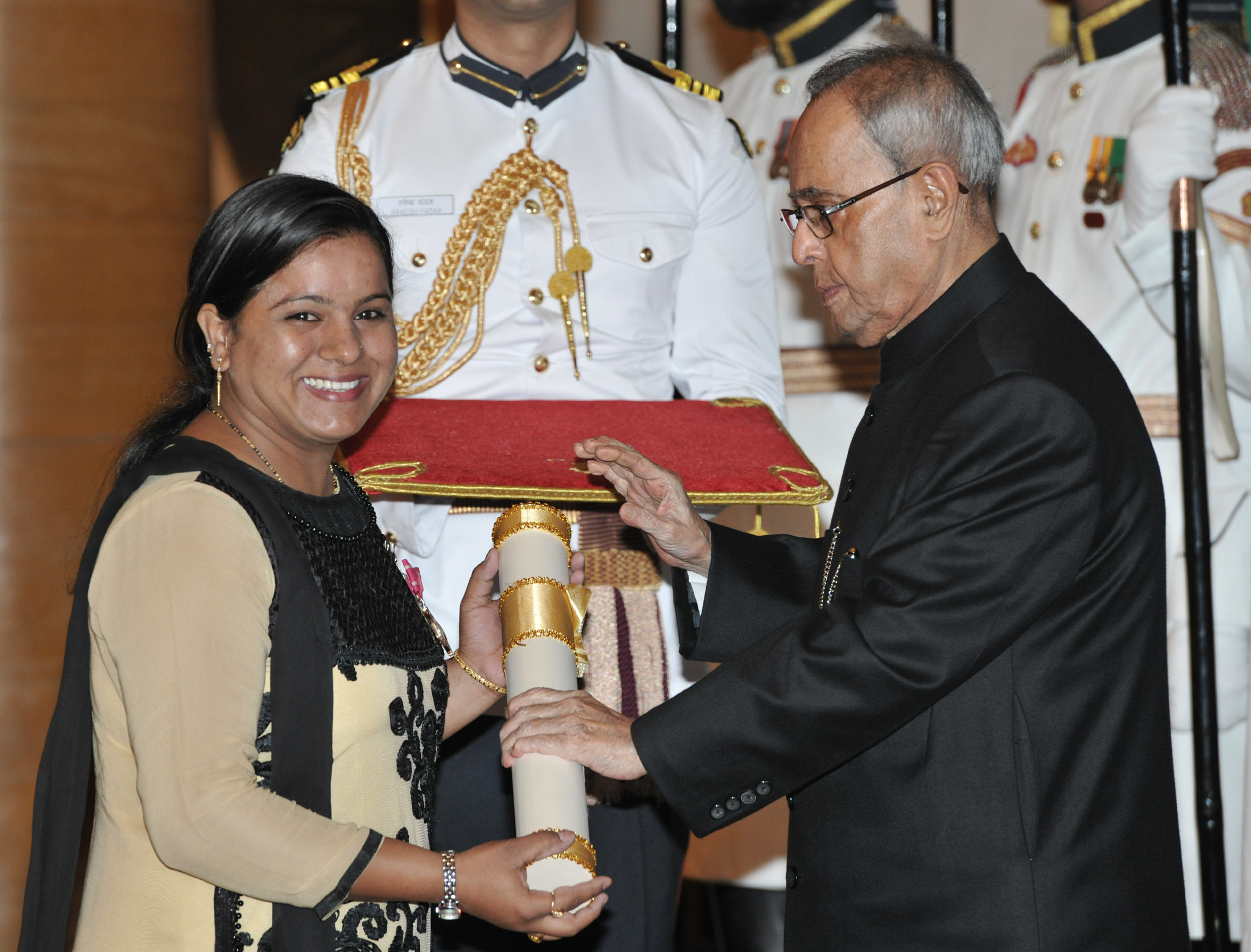
The President, Shri Pranab Mukherjee presenting the Padma Shri Award to Smt. Saba Anjum, at a Civil Investiture Ceremony, at Rashtrapati Bhavan, in New Delhi on April 08, 2015.
Saba Anjum receiving an award from former President Pranab Mukherjee
Born on 12 June 1985, Saba Anjum shared that in 1997, during a match, her coach dropped her from playing and did not give her another chance in the team. She was only 11 years old then. Her father went to the coach and requested him to give his daughter another opportunity to play. That moment remains very special in her memory. Her father was pleading with the coach to allow her to play. This incident motivated her to continue playing and improve. That day became a turning point in her life.
Padma Shri awardee Saba Anjum says that during her childhood, when she returned home after playing, her father worked at the mosque. She would wait outside the mosque for him to come out and buy her cashews, raisins, or some food items. She often sat outside the mosque waiting for him. That memory remains very close to her heart.
Saba Anjum on the hockey ground
According to the Arjuna Award-winning player, there were some social barriers because she came from a Muslim family. But her father and mother always supported her. They encouraged her to play at all times. When she was selected for the Indian team, she faced difficulties in making her passport because of financial problems. At that time, her mother even sold household utensils to arrange money for her passport. Her parents made countless sacrifices for her future.
Serving as an Additional Superintendent of Police (ASP), Saba Anjum said that when she joined the Indian team, she was inspired by senior players. She was motivated to perform better and one day become the captain of the Indian hockey team. Hockey gave her a lot in life. She received the Arjuna Award and the Padma Shri award. She was also appointed as a DSP in the Chhattisgarh Police.
Saba Anjum playing hockey
She gave a clear message to the youth — whether they are athletes or students, they should recognize their potential and work continuously to improve it. Success comes only through hard work. Hard work gives you a unique identity. There is no shortcut to success; only dedication leads to progress.
Educated in Raipur, Sab a Anjum was a regular member of the Indian women’s hockey team. Her ability to run fast on the wings and carry the ball toward the goalpost gave her a unique identity. In 2002, the world was watching the Manchester Commonwealth Games. Seventeen-year-old Sab a was the youngest player in the Indian team. When India won the gold medal in the finals, she became an overnight star.
Saba Anjum on the hockey ground
She not only scored goals but also pierced through the opponent’s defence with her speed. Success continued after that. Whether it was the 2004 Asia Cup gold or captaining the Indian team in 2011, she proved herself at every stage. Scoring 92 goals in 200 international matches showed her skill and talent.
After shining on the hockey field, the Government of India honored her with the Arjuna Award (2013) and Padma Shri (2015). The Chhattisgarh government also recognized her achievements and appointed her in the police department. Today, when Sab a wears her police uniform, she is not just an officer but a beacon of hope for thousands of girls living in hardship.
People who once mocked her near the same playground in Durg now salute her with pride.
source: http://www.awazthevoice.in / Awaz,The Voice / Home> Stories / by Mandakini Mishra, Raipur / April 06th, 2026
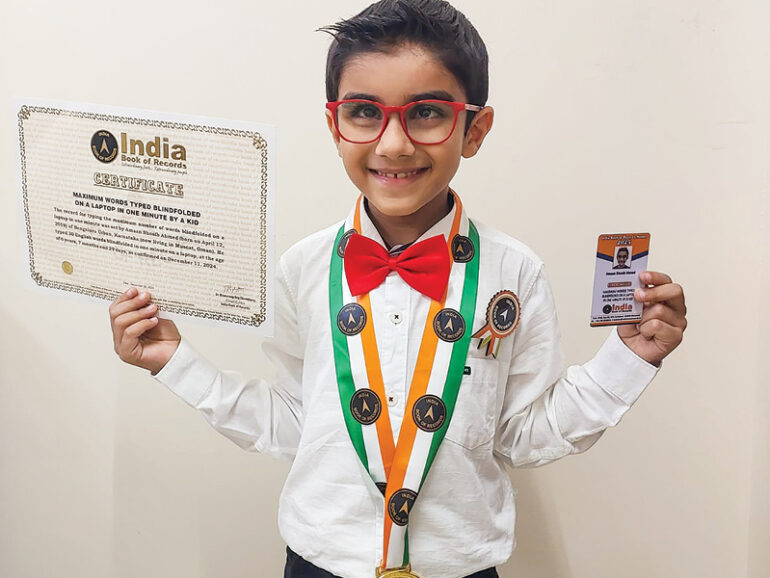
At just seven years, Amaan Ahmed, a visually impaired student of Indian School Al Seeb, is showing that disability is no obstacle to achievement.
Armed with remarkable technological skills, a passion for public speaking, and a record of academic excellence, Amaan has become an inspiration for his peers, teachers and parents alike.
Born with a vision impairment, Amaan quickly adapted to the digital world. By the age of four, he was already using a laptop in class, mastering touch typing, screen readers and shortcut keys. Unlike many visually impaired children who depend on scribes, he answers exams on his own and often scores a perfect 100 per cent.
Teachers at his school fondly call him a ‘hero’. His accomplishments include winning awards in storytelling, recitation and quizzes, among them the top prize at ISQUIZ, a mega inter-school competition of 22 Indian schools in Oman.
At his school’s Fusion Fest, he captivated audience by reciting 200 digits of Pi, earning a standing ovation.
Speaking to Muscat Daily, Amaan’s mother, Nausheen Galaria, said, “Every time I see Amaan conquer a new challenge, I am reminded that disability is not a limitation but a different way of achieving greatness. His achievements give hope to parents like me, and I believe he will continue to inspire many more children to dream without fear.”
She added, “In my own journey with Amaan, I’ve had to learn a whole new world of skills – from teaching maths on a computer to using screen readers and accessibility shortcuts. I’ve learned not just for him, but with him.”
Amaan has also been recognised beyond the school walls. In 2024, he was featured at the National Awards for the Empowerment of People with Disabilities, where he demonstrated how assistive technology can transform education. More recently, he received the Robinage Bright Spark Award 2024-25, a recognition of outstanding young achievers across India.
Beyond academics, Amaan holds a national record in the India Book of Records for blindfold typing and has delivered motivational speeches, including a 12-minute address to graduating seniors at his school, which gained over 1,300 views on YouTube.
Through his own channel, WonderBoy_Amaan, he shares tutorials and motivational videos on assistive technology, AI tools and mental maths, spreading awareness about inclusive education.
Amaan dreams of one day becoming an inventor. “I want to create a suit or belt with smart navigation systems that will let humans fly,” he said.
For him, the sky is not the limit, but only the beginning.
source: http://www.muscatdaily.com / Muscat Daily / Home> Oman / by Muscat Daily Correspondent / Setember 01st, 2025
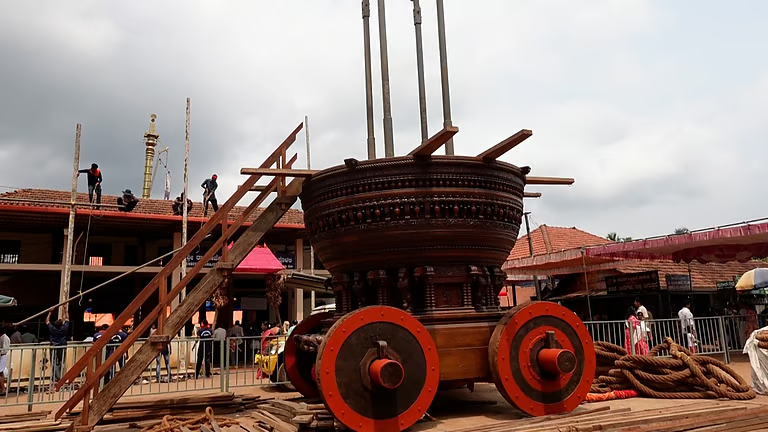
Despite the challenges, 74-year-old Mohammed has carried out this responsibility with unmatched expertise year after year, ensuring smooth continuation of this important tradition.
The chariot of Sri Polali Rajarajeshwari temple is getting prepared ahead of temple annual fair on April 10 / Photo | EPS
Mangaluru :
AH Mohammed, fondly known as Monakka from Ammunje, has been serving at the renowned Polali Sri Raja Rajeshwari Temple for the past 48 years. His primary responsibility, which is managing and steering the temple chariot using traditional wooden stoppers and preparing the chariot during the annual fair, is both demanding and highly skilled.
Handling the massive temple chariot is no simple task. It requires precision, coordination, and deep understanding to guide it safely along its route. Despite the challenges, 74-year-old Mohammed has carried out this responsibility with unmatched expertise year after year, ensuring smooth continuation of this important tradition.
A resident of Ammunje Kalai, Mohammed is retired, and had previously worked as sales manager at the cooperative society within the temple premises. Over time, he developed a strong rapport with the temple administration. Nearly five decades ago, when the temple authorities were planning to build a chariot, they sought his advice, recognising his background in the wood industry. Impressed by his knowledge, they entrusted him with the responsibility of managing the chariot during the annual fair.
Mohammed fondly recalls the support he received during the initial days from former temple administrators who stood by him throughout his journey.
Traditionally, the chariot is required to complete one full circle of the temple. In earlier days, this was particularly challenging due to muddy roads, which made navigation slow and difficult. Using wooden stoppers and his technical skills, Mohammed mastered the art of steering the chariot with remarkable ease and precision.
“We faced several challenges while moving the chariot, but I always had alternative solutions ready. It’s not as easy as it looks. Even preparing the chariot during the annual fair is a difficult task; installing ropes, wooden planks, sticks, and ensuring everything is in place for the fair requires careful supervision,” said Mohammed.
He says trust and teamwork have been key to his long service. “It’s the mutual trust between me and the temple administration that has helped us manage the chariot successfully all these years,” he says.
With the temple’s annual fair scheduled for April 10, preparations are already in full swing, and Mohammed is once again actively involved in decorating and readying the chariot. His daughter, Fathima Nusaiba, shares how deeply this service is woven into their family life. “Visiting the temple during the fair is as important to us as Eid. My father spends more time at Polali than at home. Even during Eid, he would be working at the temple. Despite having BP and diabetes, he becomes energetic when it comes to his work at Polali,” Fathima shared.
She also highlights the respect he has earned over the years, saying, “His friends from other communities often step forward to help even before family members do. Our family is always treated with great warmth and respect when we visit the temple.”
source: http://www.newindianexpress.com / The New Indian Express / Home> Karnataka / by Abhijith N Kolpe / April 02nd, 2026
In an era where corporate success is often measured solely in balance sheets, Hamid Ahmed stands out as a rare blend of business acumen and social commitment—quietly carrying forward the towering legacy of his grandfather, Hakim Abdul Hameed, a visionary who believed that enterprise must serve society.
A young, suave, and dynamic Indian business leader, Ahmed today occupies multiple roles with ease and purpose. As the Chief Executive Officer and Trustee of Hamdard Foods India, and former Chancellor of Jamia Hamdard, he represents a new generation of leadership rooted in legacy but driven by innovation.Owing to his leadership acumen and expanding contributions to the service of humanity, he has been featured among the 100 Most Influential Muslims of India in the 2025 list compiled by the Muslim Mirror. The list also features distinguished personalities such as former Vice President of India Mohammad Hamid Ansari, noted industrialist Azim Premji, and politician-barrister Asaduddin Owaisi, among several other eminent names.
Born in 1977 in New Delhi, Ahmed’s early education at St. Columba’s School laid the foundation for a disciplined and forward-looking career. He went on to pursue a Bachelor’s degree in Economics from the University of Delhi, graduating in 1998, before earning an MBA from London in 2000—equipping himself with a global outlook at a young age.
His association with the Hamdard legacy began early. In 1995, he was appointed as a Trustee of Hamdard Laboratories India by his grandfather. By 2000, he had formally joined the organization, embarking on a professional journey that would span over two decades. When he assumed the role of CEO in 2016, Ahmed brought with him not just experience, but a renewed vision—one that sought to modernize while preserving the ethos of Unani medicine and ethical enterprise.
Under his leadership, Hamdard Foods India has expanded its footprint across both domestic and international markets, strengthening its position in the food and Unani healthcare sectors. His approach combines strategic expansion with a nuanced understanding of regional consumer behavior, reflecting years of hands-on experience across diverse markets.
Yet, Ahmed’s influence extends well beyond boardrooms. His commitment to education is deeply intertwined with the legacy of Jamia Hamdard, an institution founded on the principles of accessible and value-based learning. As Chancellor, he played a key role in reinforcing its academic and institutional growth, ensuring that the university continues to serve as a hub of excellence for students from all backgrounds. Today, Jamia Hamdard has secured a top-tier position among a plethora of private universities, distinguished for its academic excellence, research output, and commitment to holistic education.
He is also the Founder and President of the Unani Drug Manufacturers Association (UDMA), where he has worked to strengthen the traditional medicine sector and advocate for its modernization and global relevance.
Philanthropy remains central to his work. Through the Hamdard National Foundation India and the Hamdard Learning and Welfare Society, Ahmed has championed initiatives focused on education, skill development, employment generation, and the upliftment of economically weaker sections. These efforts echo his grandfather’s philosophy—that business must ultimately serve humanity.
His contributions gained particular prominence during the COVID-19 pandemic, when he led large-scale vaccination drives, organized holistic healthcare camps, and initiated environmental campaigns such as tree plantation drives—demonstrating a hands-on approach to crisis response and community care.
In recognition of his service, he was conferred the Paul Harris Fellow award by the Rotary Club of Delhi South in 2022—an honor reserved for individuals who make significant contributions to society.
Beyond his executive and philanthropic roles, Ahmed has also brought his expertise to the corporate governance space. He has served as a Non-Executive Independent Director on the boards of several prominent companies, including Religare Enterprises Limited, Religare Finvest Limited, Religare Housing Development Finance Corporation Limited, Care Health Insurance Limited, and Religare Broking Limited.
At a time when legacy institutions often struggle to remain relevant, Hamid Ahmed’s journey offers a compelling narrative—of continuity without stagnation, of growth anchored in values, and of a leadership style that sees business not merely as a vehicle for profit, but as a force for social transformation.
On his inclusion in the 100 Most Influential Muslims-2025 list, senior journalist Abdul Bari Masoud engaged Hamid Ahmed in an in-depth conversation for Muslim Mirror, exploring a wide spectrum of issues—from his leadership at Hamdard and vision for the Unani sector to his commitment to education, philanthropy, and inclusive nation-building.
Excerpts from the Interview
Q:To what extent were you inspired by your grandfather, Hakim Abdul Hameed Sahib?
A : Hakim Abdul Hameed Sahib was not only the founder of Hamdard but also a visionary who believed in combining traditional health system with modern scientific approaches. His life’s work was deeply rooted in service to humanity, education, and healthcare. His philanthropic initiatives, like establishing Jamia Hamdard University and other institutions, shows how he linked business success with social responsibility. His vision continues to inspire Hamdard’s focus on blending tradition with innovation. His humility and dedication to public welfare set a self reliant leadership and business model that balances growth with ethical responsibility.
Q:Which aspects of his life and philosophy had the greatest influence on you?
A: His decision to dedicate Hamdard as a charitable institution inspires my own sense of responsibility towards society. His passion for education, his humility and ethics, simplicity and global vision not only motivates me but drives me to spend my energies in the research, innovation and making Hamdard’s every effort relevant to the human beings in everyday life. For me, his life is a compass that shapes my journey into the future.
Q:What made Hamdard diversify into the food sector? And what was the thinking behind this transition?
A: Having Rooh Afza- a beverage stalwart already a household name, diversification into the food sector was a natural extension of consumer trust in Hamdard’s quality and purity. Naturally consumers expected that Hamdard could reach out for their food’s need requirements in the categories of core food and functional foods. This way Hamdard could see the light of faster growth and avenues for ensuring sustainable revenue growth, which helps out our charitable mission requirements. To meet India’s growing demand and global needs of quality foods, we introduced several products in a short span of time like, Milkshakes, Lassi, Juices, Squashes, Coconut Water, Honey, Saffron, Soya Nuggets, Vermicelli, Mustard Oil, Olive Oil and range of Spices.
Q:How do you assess the position of Hamdard Foods India within the current Indian food industry?
A: At Hamdard Foods, we have always believed in blending tradition with innovation. Consumer preferences in India are evolving rapidly, with a growing emphasis on quality foods and convenience. Our iconic brands like Rooh Afza continue to resonate deeply, but we are also expanding into new product categories that meet modern lifestyles — from ready-to-drink formats to sugar-free variants. Sustainability and quality remain at the heart of our mission, and we are committed to ensuring that every product we deliver carries forward our legacy of trust while embracing the future of the food business.
Q:What are your future plans and long-term ambitions for Hamdard Foods and the broader Hamdard legacy?
A: Hamdard Foods has always stood for trust, tradition, and purity. As we look ahead, our future plans are centered on three pillars: innovation, expansion, and sustainability. We are committed to introducing new product formats that cater to evolving consumer lifestyles, while ensuring that our heritage brands like Rooh Afza continue to remain relevant across generations.
On the global front, we aim to strengthen our presence in international markets, taking the Hamdard legacy of quality to new geographies. At the same time, we are investing in sustainable practices — from responsible sourcing to eco-friendly packaging — so that our growth is aligned with the well-being of both people and the planet.
Our long-term ambition is to ensure that Hamdard remains not just a household name in India, but a global symbol of nutritious food producer imbibing traditions along with innovations. We want the Hamdard legacy to inspire future generations by showing that a company rooted in heritage can thrive in modern times while staying true to its values.
Q:Is there any particular experience or anecdote that significantly shaped your outlook or altered the course of your thinking?
A: One experience that profoundly shaped my outlook was witnessing how Rooh Afza continued to unite generations within families. I recall visiting a household where grandparents, parents, and children all had their own stories tied to the drink — from Ramadan evenings decades ago to modern-day summer gatherings. That moment reminded me that Hamdard is not just about products, but about memories, traditions, and emotional connections.
It strengthens my thinking by reinforcing the idea that our responsibility goes beyond business growth. We are custodians of a legacy that touches lives deeply in personal ways. This realization drives me to ensure that every decision we make — whether it’s innovation, expansion, or sustainability — honors that heritage while preparing the brand for the future. It’s a constant reminder that Hamdard’s strength lies in being timeless yet adaptable.
source: http://www.muslimmirror.com / Muslim Mirror / Home> Interviews> Positive Story / by Abdul Bari Masoud / April 02nd, 2026
Recognising Hanif’s potential, Javed has been providing everything needed to ensure that his studies continue.
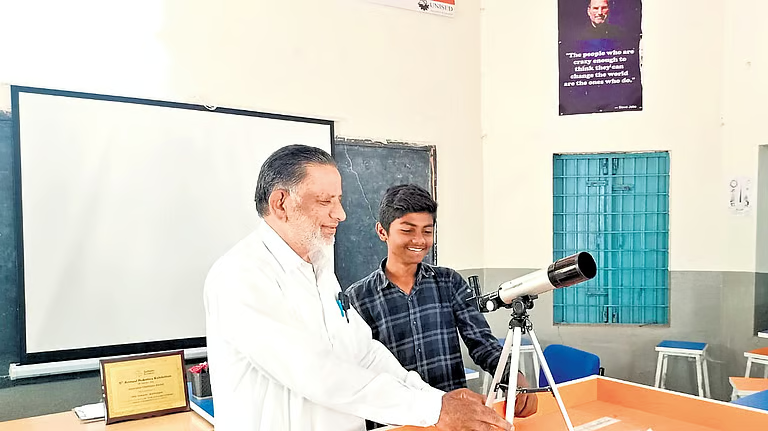
Md Javed, a Hindi teacher at the Government High School in Savaran, explains the working principle of a telescope to his student, Syed Hanif.(Photo | Express)
Karimnagar :
It began years ago with one struggling student — a boy who is now a software engineer in Hyderabad.
Today, government school teacher Md Javed is repeating that quiet act of kindness. Determined that poverty should not crush talent, he has stepped forward to support another promising student, Syed Hanif.
Javed, a Hindi teacher at Government High School in Savaran, has taken responsibility for the education and welfare of Hanif, a Class 9 student from a financially struggling family. The teacher has promised to support him until he completes his SSC.
For the teacher, this is not the first time he has changed a life. Earlier, while working at Government High School Dhangarwadi, he had supported another poor student — a boy who today works as a techie in Hyderabad.
Recognising Hanif’s potential, Javed has been providing everything needed to ensure that his studies continue. He arranged a bicycle for the student to commute to school, pays the rent for his room and has also arranged tuition in mathematics and spoken English, facilities usually available only to private school students.
To encourage better learning habits, the teacher provides Hanif with newspapers, study materials and nutritious food, including fruits. A small library has also been set up in the room where the student stays. Javed’s gesture has inspired others at the school. Fellow teachers recently contributed Rs 10,000 to support the boy’s education.
Hanif’s family had migrated to Karimnagar from Manuguru in search of work. His father earns a livelihood by selling buttermilk on a pushcart. To help the family become financially stable, Javed even purchased a pushcart and handed it over to Hanif’s father.
“I recognised Hanif’s talent, but poverty was holding him back. I wanted to ensure he gets the opportunity to succeed and become a responsible citizen,” Javed tells TNIE. With support from donors, he now spends nearly `1 lakh every year on Hanif’s education and other needs.
Hanif said the support has changed his life. “Earlier, I struggled to focus on studies because of our financial problems. Now I feel confident and can concentrate on my education,” he says.
Javed believes the boy will perform well in the SSC examinations among students from nearly 20 government schools in Karimnagar.
source: http://www.newindianexpress.com / The New Indian Express / Home> Good News / by Naveen Kumar Tallam / March 22nd, 2026