All posts by mpositiveone@gmail.com

Kerala Govt, IUML hand over 229 houses to Wayanad landslide survivors in major rehabilitation push

KERALA :

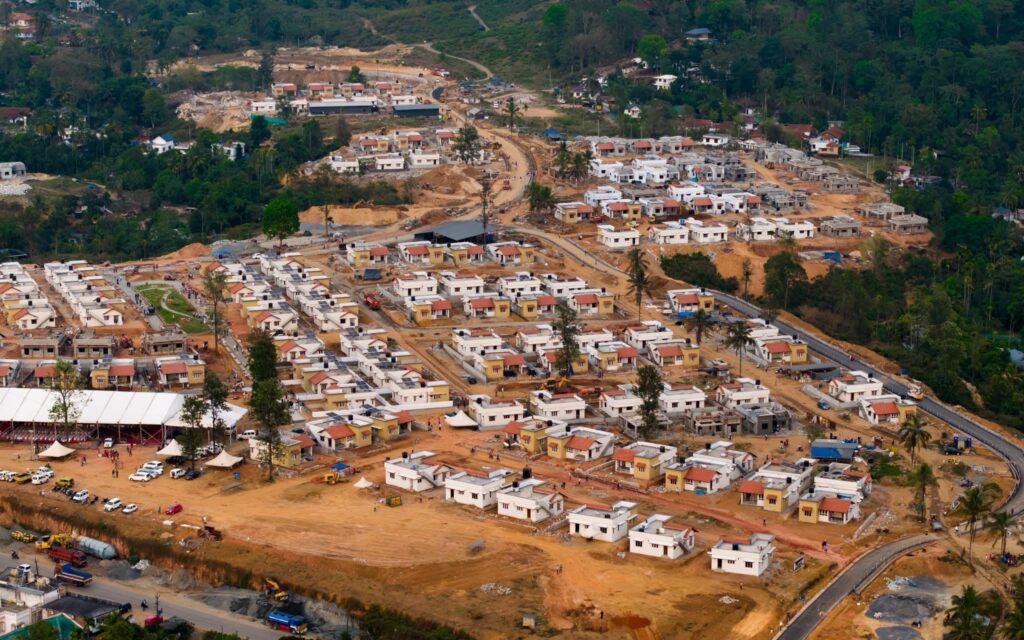
Nearly two years after the massive landslides that struck Kerala’s Wayanad district, the state government on Sunday handed over houses to survivors at a rehabilitation township in Kalpetta, with Chief Minister Pinarayi Vijayan distributing title deeds to 178 families in the first phase of the ₹299-crore project.

The township, located over 20 kilometres from the worst-affected villages of Chooralmala and Mundakkai, has been built on 64 hectares of land acquired from Elston Tea Estate and is expected to accommodate around 1,600 people across 410 houses. The first phase, comprising 178 houses, was inaugurated on Sunday.

Each house is built on seven cents (3,049 sq ft) of land and is a single-storey, 1,000-square-foot unit. The structures are designed keeping Wayanad’s terrain and climate in mind and include provisions for an additional floor if families choose to expand. Every house features a master bedroom, two additional rooms, a living room, a study, a dining area, a kitchen, storage space, and a sit-out.

Beyond housing, the township will include roads, a health centre, an anganwadi, a market, children’s play areas, a sports club, common halls, an open-air theatre, and a memorial to honour those who lost their lives.

Chief Minister Vijayan had laid the foundation stone for the township on March 27 last year. Around 1,500 workers worked round the clock to complete the first phase in less than a year.

On Sunday, beneficiaries received not only title deeds but also ownership certificates and connections for electricity and water. The government has announced that utility bills will be covered until June.

Kerala Chief Minister Pinarayi Vijayan described the handover of houses under the Wayanad rehabilitation project as a symbol of collective resilience and solidarity.

“Words fall short to describe this emotion. Rising above those who ignored and undermined us, an entire state came together to wipe the tears of our brothers and sisters. Today, as we hand over the first phase of the Wayanad Model Township, 178 homes, to the survivors of Mundakkai and Chooralmala, it stands as a powerful testament to Keralam’s resilience,” Vijayan said.

He noted that despite challenges and delays in receiving rightful aid, the state remained united in supporting those affected.

“Even when rightful aid was denied, we did not back down; we held each other closer. This is our Keralam,” he said.

The Indian Union Muslim League also handed over 51 houses constructed under the first phase of its rehabilitation initiative for families affected by the Chooralmala landslide in Wayanad district on Saturday.

IUML State president Panakkad Syed Sadikali Shihab Thangal distributed the keys at a function held at Vellithode near Thrikkaipetta in Wayanad, with Sharada becoming the first beneficiary to receive the key.

Wayanad MP Priyanka Gandhi Vadra said she was proud of the collective efforts across political parties in rehabilitating survivors of the Wayanad landslides.

“The day before yesterday, we laid the foundation stone for the 100 houses we promised. This morning, I visited the houses built by the government, and this evening I am here to acknowledge the IUML’s monumental efforts in providing homes to help survivors rebuild their lives,” she said at the event.

The July 2024 landslides claimed 298 lives, destroyed 59 houses completely, and rendered hundreds more uninhabitable.

In the immediate aftermath, 2,569 people from 728 families were housed in 17 relief camps across Wayanad. The government later facilitated relocation to rented homes, covering rental expenses from the state exchequer.

Livelihood assistance was extended to 752 families at ₹9,000 per month for one earning member and to 507 families at ₹18,000 per month for two members. Twenty-one children who lost both parents received total assistance of ₹2.10 crore. Additionally, 858 families continue to receive monthly food coupons worth ₹1,000.

source: http://www.maktoobmedia.com / MaktoobMedia.com / Home> India / by Maktoob Staff / March 12th, 2026
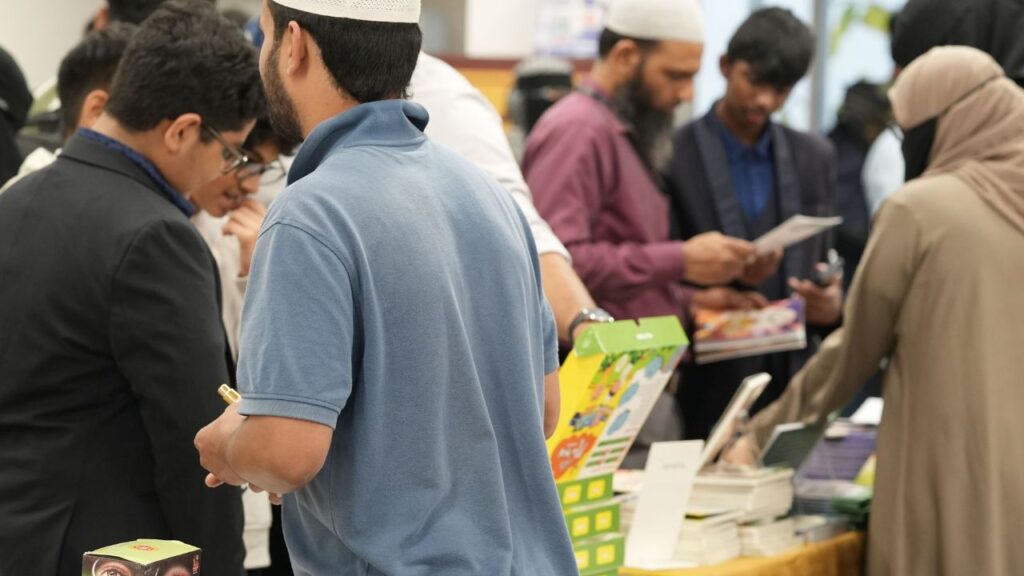
India’s First Ramadan Book Fair Held in Bengaluru to Promote Reading and Spiritual Preparation

Bengaluru, KARNATAKA :

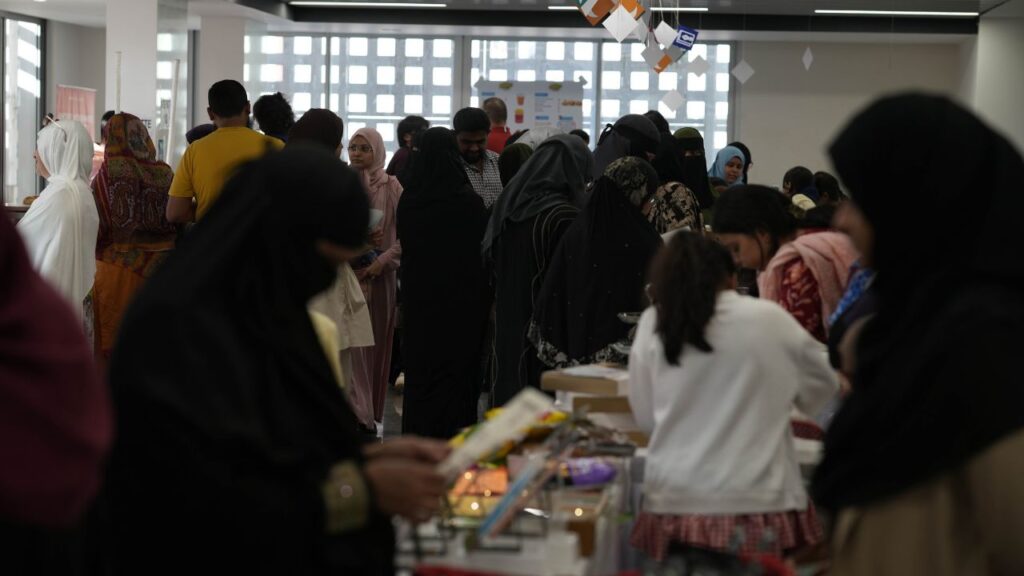
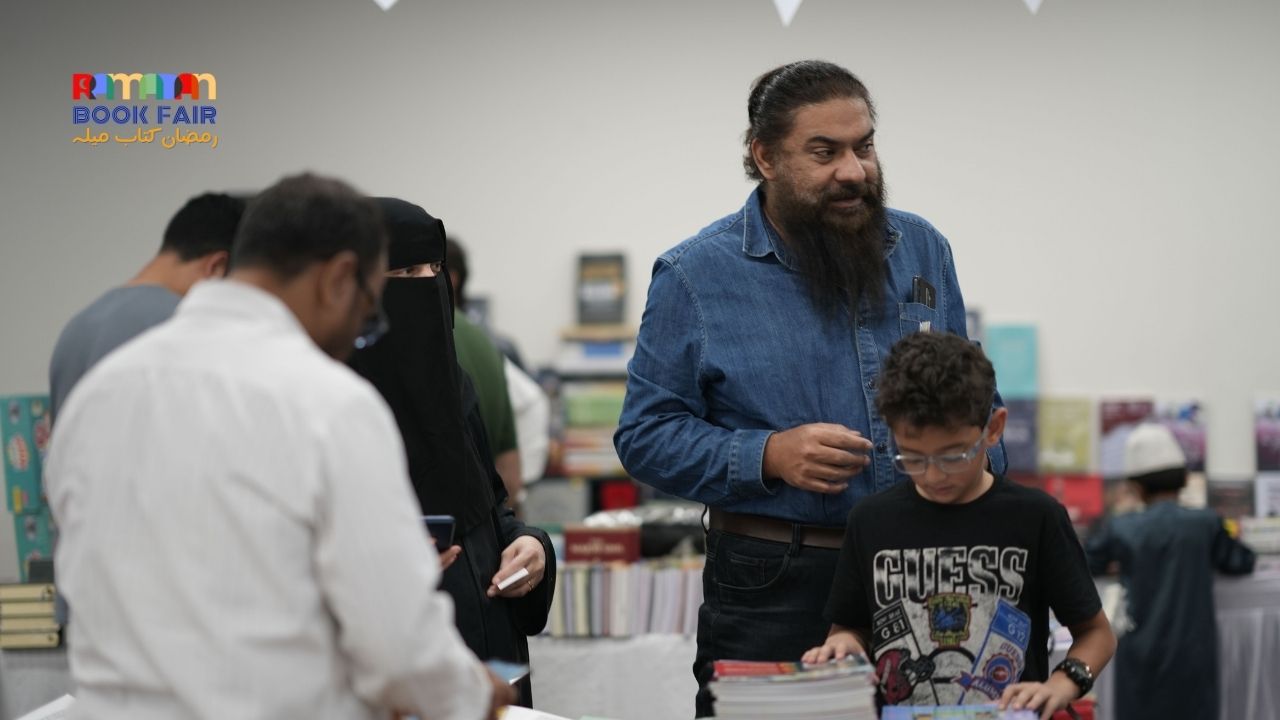
The first edition of the Ramadan Book Fair was held on 7 and 8 February at Beary’s Amity, Bengaluru. Photo: Saad Khan

The first edition of the Ramadan Book Fair was held on 7 and 8 February at Beary’s Amity, Bengaluru. The two-day event was organised by Little Amanah and House of Peace (HOP Club) with the aim of promoting a culture of reading and helping the Muslim community prepare spiritually and intellectually for the holy month of Ramadan.

The Ramadan Book Fair was founded by Shaik Zakeer Hussain and Zulekha Shakoor Rajani of Little Amanah, and Ambreen Vikhar of House of Peace (HOP Club). The fair was organised nearly two weeks before the start of Ramadan to encourage engagement with books, ideas, and discussions relevant to faith, learning, and contemporary life.

Speaking about the vision behind the initiative, Ambreen Vikhar, co-founder of the Ramadan Book Fair and founder of House of Peace (HOP Club), said, “The idea behind the Ramadan Book Fair was to re-centre reading as an act of spiritual preparation, not merely information consumption. The response showed us that people are yearning for spaces that invite depth, reflection, and intentional engagement, especially in the lead-up to Ramadan.”

The event featured a wide range of Islamic books covering the Qur’an, Seerah, spirituality, parenting, youth issues, character development, and contemporary challenges facing the Ummah. The fair aimed to revive reading and reflection by connecting readers with Islamic publishers, scholars, and educators. It also provided a platform for local Muslim NGOs, Islamic schools, and ethical brands to present their initiatives in a family-friendly and value-aligned environment.

In addition to book kiosks, the fair included a display of rare historical books and manuscripts by M.A. Delvi’s Indo-Orient Library. The collection featured rare Urdu books, manuscripts, and works on Sufi traditions, including writings related to Jalaluddin Rumi. The library is recognised as an important resource for researchers and scholars of Indo-Islamic history, spirituality, and literature.

Both days of the book fair began with the recitation of the Holy Qur’an. The inauguration and inaugural address were delivered by Maulana Anees Ahmed Rashadi, Vice Principal of Darul Uloom Sabeel-ur-Rashad, Bengaluru.

The first day included a session conducted by Ambreen Vikhar for members of the House of Peace (HOP Ladies Club). Other sessions on the first day included a workshop on Why Learn the Seerah by Mohammed Yunus, panel discussions titled Breaking the Silence: Understanding Addiction and Mental Health in the Muslim Community and From Vision to Collective Action: Building a Community Around a Cause, and a skit performance by students of Iqra International School. The day also featured the release of The Prakritic Diet by Dr Farah Adam Mukadam, along with a workshop on Exploring Halal & Regulated Wealth Building by Abdul Hadi Shaikh, Founder and CEO of Islamicly.

On the second day, Zaid Hussain delivered a talk titled Joys of Fasting. Panel discussions were held on Taʿleem and Tarbiyah and The Many Voices of Muslim Women Authors, featuring Muslim women writers. Syed Habeeb (Coach Habeeb) spoke on What Legacy Are You Leaving Behind, and Dr Maria Khan delivered a talk titled Raising Readers, Nurturing Believers: From Bedtime Stories to Believing Hearts. The day also included a skit performance by children of House of Peace (HOP Club) and the release of the Faris and Reem children’s book series by Shaik Zakeer Hussain and Zulekha Shakoor Rajani, published by Little Amanah.

A strong focus of the Ramadan Book Fair was on children and youth. Several children’s workshops were conducted, along with story writing and public speaking competitions. A dedicated section titled Kidspreneur allowed children to set up stalls and sell products, introducing them to entrepreneurship at an early age.

The Ramadan Book Fair received an overwhelming response, with more than 2,000 people attending the two-day event. Reflecting on the response, Zulekha Shakoor Rajani, co-founder of the Ramadan Book Fair, said, “While the footfall of over 2,000 people was encouraging, what truly stayed with us were the quiet, human moments, children asking how to motivate themselves to read and write, families leaving with bags full of books, and people from all backgrounds feeling that this space was meant for them. The fair showed us that when access is kept open and intention is sincere, reading, learning, and community can become deeply inclusive and transformative.”

The organisers stated that the Ramadan Book Fair aims to become a recurring platform to encourage reading, reflection, and community learning, particularly among younger generations, in preparation for the month of Ramadan.

source: http://www.thecognate.com / The Cognate / Home> News / by The Cognate News Desk / February 10th, 2026

Inspirational story of Kolkata’s ‘Hijabi Biker’ Alima Rahman

Kolkata, WEST BENGAL :

Alima Rahman alias Hijabi Biker of Kolkata

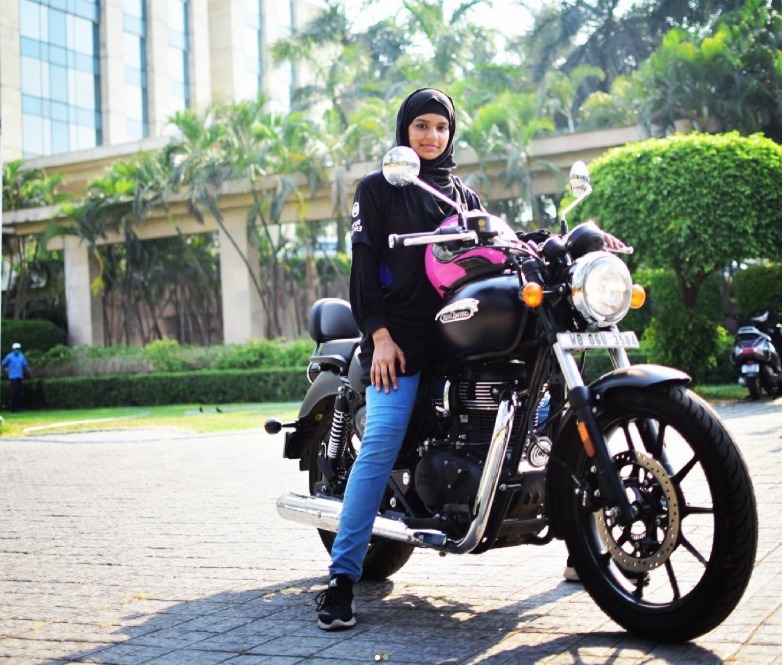
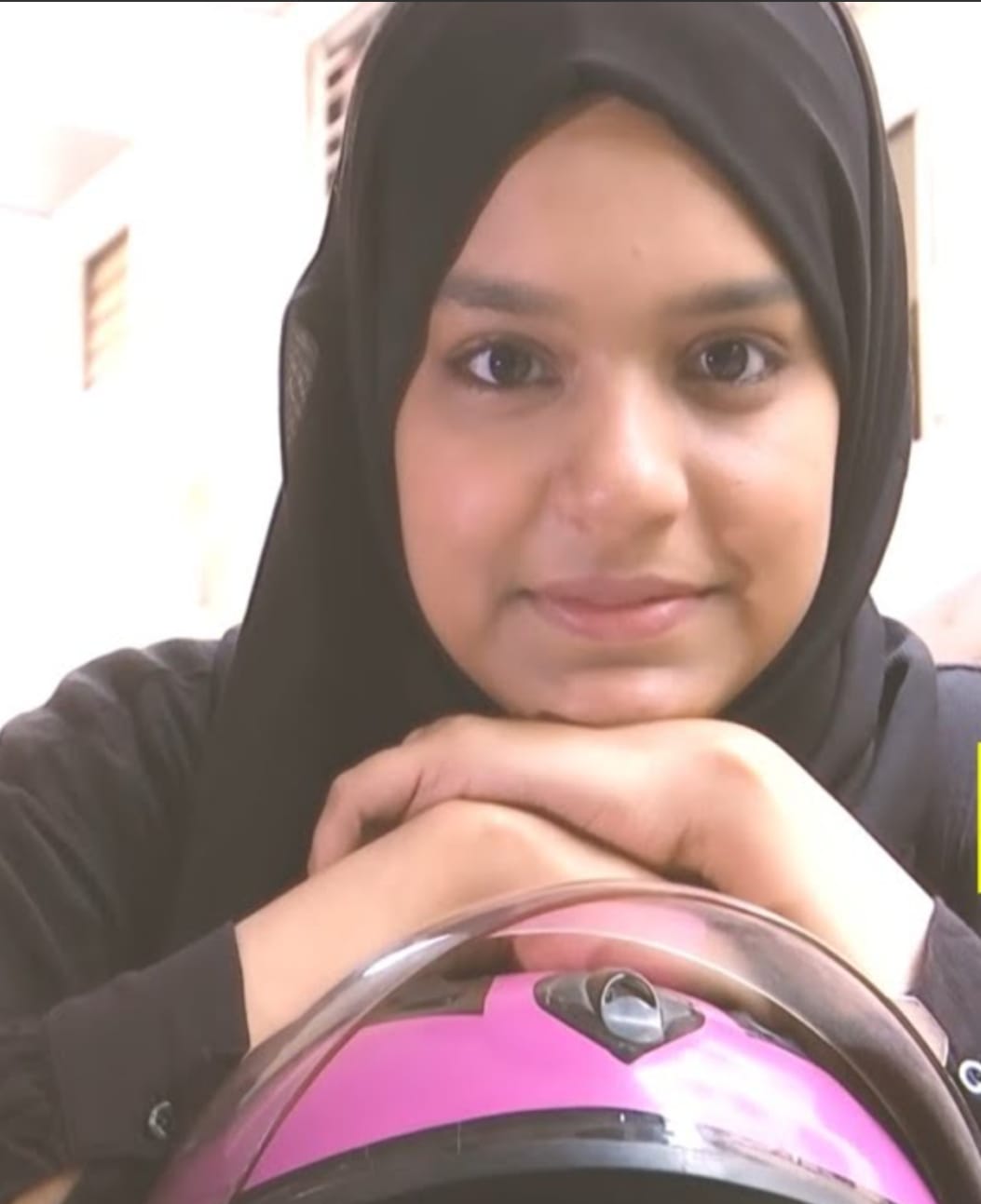
People in Kolkata no longer feel surprised to see a young woman in a hijab riding a motorcycle along the city’s busy streets these days. She is known as Alima Rahman, but more popularly known as ‘Hijabi Biker’.

Alima Rahman comes from a middle-class Muslim family. Her determination, perseverance and family support have earned her the identity of a daredevil woman.

Alima’s love for motorcycles began in childhood. Watching her grandfather ride a motorbike sparked her fascination, and her interest gradually turned into a passion. However, she faced problems. In her conservative Muslim family, the idea of a girl riding a bike met with strong opposition from relatives. The notion that “a girl from a purdah-clad (veiled) family riding a motorcycle on the streets” was difficult for many to accept.

Alima Rahman on her bike

However, Alima’s father, Azizur Rahman, was firmly by her side. Instead of suppressing his daughter’s dreams, he offered to train her. Alima began learning to ride at the age of just 10. Handling gears, practising in open and empty grounds, her confidence grew steadily.

Yet societal disapproval continued to trouble her. She had to face taunts, mockery and, at times, deliberate harassment from local men. Every time she stepped out, strangers would hurt uncharitable comments at her. But Alima did not give up. Quietly and with restraint, she kept moving towards her goal. She had only one aim — to learn to ride a bike and to prove that there is no difference between boys and girls.

Today, Alima, now in her twenties, is a familiar face in Kolkata. Clad in Hijab, her regular bike rides have given her a unique identity. She wears her hijab whenever she steps out, and behind that hijab lies the confidence of a strong-willed biker. Once on the road, her eyes remain focused on her destination — nothing distracts her.

Azizur Rahman said, “Naturally, I worry until my daughter returns home. I can’t sleep; I keep pacing outside. But I never wanted to restrict her freedom. A daughter should not be confined.” He believes that with trust and courage, daughters, too, can carve out their own paths.

Alima Rahman

Alima herself repeatedly acknowledges the role of her parents. According to her, one cannot move forward in life by opposing parents. “You have to explain things to them properly and move ahead with mutual understanding. For progress, parents’ blessings are essential,” she said.

Alima’s message regarding bike riding is clear. She feels that many girls are stepping out today, which is undoubtedly positive. However, being mindful of safety is extremely important. She advises avoiding rash driving and reckless overtaking. Alima believes that not only girls, but everyone — boys and girls alike — should follow traffic rules.

Despite riding a motorcycle for many years, she has never faced an accident. According to her, accidents can be avoided by being cautious and following rules. This is the message she wants to spread — that while being on the road, one must look out not only for one’s own safety, but also for the safety of others.

Today, Hijabi Biker Alima Rahman is not just a motorcyclist; she is a social message. She has proven that faith, culture and dreams can move ahead together.

source: http://www.awazthevoice.in / Awaz, The Voice / Home> Stories / by Sampee Chakraborty Purkayastha / March 30th, 2026

Muslim Founders’ Halwa Start-Up from Kozhikode Secures Investment from Shark Tank India Judge Aman Gupta

Kozhikode, KERALA :

New Delhi:

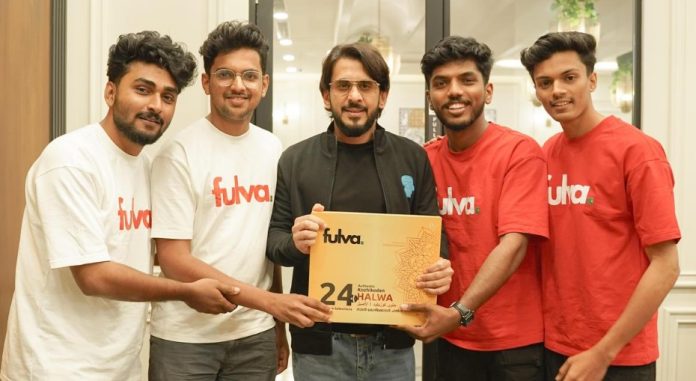
Fulva, a halwa start-up from Kozhikode founded by Muslim entrepreneurs, has secured investment from celebrated Shark Tank India judge Aman Gupta, co-founder of boAt, marking a new phase of growth for the young venture.

Founded in September 2023 by childhood friends Shabas Ahamed NC, Sanu Muhammed C, Irfan Safar S, and Thasreef Ali PK, the venture draws inspiration from Kozhikode’s long tradition of halwa making. The idea emerged during a trip when a request for Kozhikodan halwa highlighted its strong demand beyond Kerala.

The team began with small capital contributions of Rs 30,000 each. They operated from a room above a family restaurant and sold 300 assorted boxes within the first month. Their product line included 24 flavours, ranging from black halwa to options like green chilli and passion fruit.

Early feedback revealed inconsistency in taste. The founders responded by improving ingredient quality and standardising production. They later took over a production unit with an experienced halwa maker. The unit now produces up to 1000 kilograms daily and handles around 200 orders.

The brand gained attention after a customer connected them to boAt’s network. A sample reached Aman Gupta, leading to an investment discussion. Earlier, the start-up had raised Rs 10 lakh from entrepreneur Rahul Abraham Mamman through a Malayalam reality show.

Fulva now offers multiple price points and product formats, including single flavour boxes and combo packs. While most customers remain in Kerala, the company has begun reaching cities like Bengaluru and Chennai.

The founders aim to expand across India and enter international markets. They also plan to introduce other halwa varieties and later diversify into wider sweet segments.

source: http://www.radiancenews.com / Radiance News / Home> Latest News> Markers of Excellence> Report / March 30th, 2026

UPPSC 2024 Final Result Declared, 33 Muslims Among Toppers

UTTAR PRADESH :

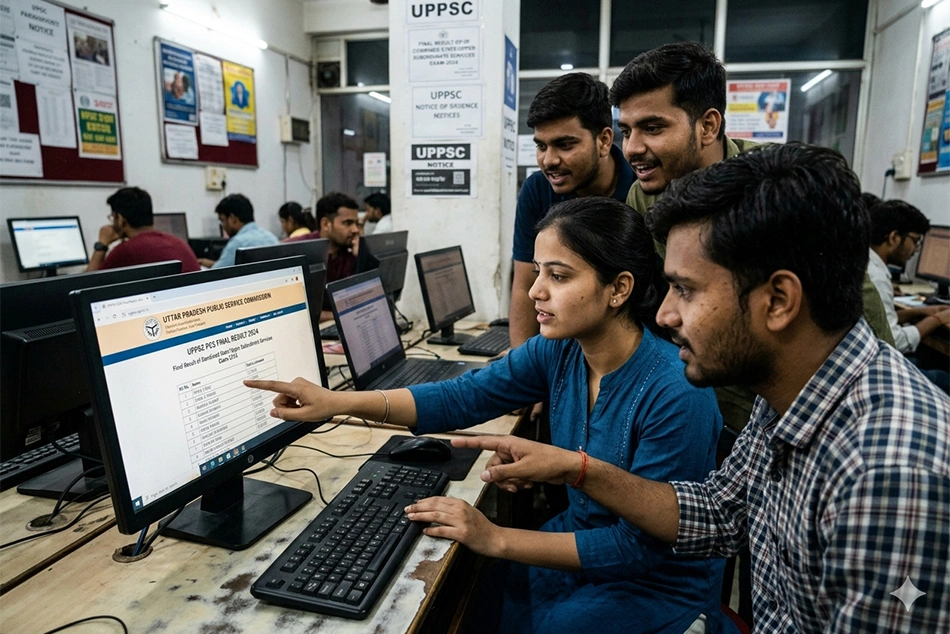
Uttar Pradesh Public Service Commission (UPPSC) Sunday March 29, 2026 declared the final result of Provincial Civil Services (PCS) Examination 2024 on its official website along with the list of toppers recommended for various posts.

Uttar Pradesh PCS 2024 Final Result: 

Uttar Pradesh Public Service Commission (UPPSC) Sunday March 29, 2026 declared the final result of Provincial Civil Services (PCS) Examination 2024 on its official website along with the list of toppers recommended for various posts.

A total of 932 candidates from various districts of Uttar Pradesh have qualified for different state civil services posts that also include the post of Deputy Collector. As many as 33 of the total 932 candidates, who have qualified for these posts, are Muslims.

Among the 33 Muslims, who have qualified the Uttar Pradesh Provincial Civil Services (PCS) 2024 exams, is Md Gulrez Khan. Gulrez Khan is the only Muslim who will be appointed as Deputy Collector. A maxium 10 Muslims have been recommended for the post of Naib Tehsildar.

Full List of UPPSC 2024 Muslim Toppers

DEPUTY COLLECTOR

  1. MD GULREZ KHAN

ASSTT. COMMISSIONER (COMMERCIAL TAX)

  1. GULAM GAUSH RJJA MANSURI
  2. TARIQ SAMAD

ASSTT. REGIONAL TRANSPORT OFFICER

  1. AQUIB KHURSHEED
  2. FARAZ AHMAD SIDDIQUI
  3. HUMA PRAVEEN
  4. YAWAR TAUFIQ
  5. SANYA

ASSTT. COMMISSIONER, INDUSTRIES

  1. MD SARFARAZ ALAM

WORK OFFICER

  1. FARAZ AHMAD
  2. ATHAR JAMAL KHAN

BLOCK DEVELOPMENT OFFICER

  1. FARHANA ZEENAT KHAN
  2. AHSAN
  3. PERVEZ ALAM

COMMERCIAL TAX OFFICER

  1. AZAM FATIMA
  2. FAREEN RANA
  3. ROSHAN PARVEEN
  4. SUZAIN KHAN
  5. MO TAUSEEB

NAIB TEHSILDAR

  1. MD MUKARRAM BADAR KHAN
  2. MOH HASEEN
  3. RIYAZ AHMAD
  4. AZIM AHMED
  5. SAHIBA BANO
  6. FARZAND ALI
  7. MOHAMMAD HARIS
  8. RUBI ANSARI
  9. MD ZAMA SHAIKH
  10. AMJAD ALI KHAN

DEPUTY JAILOR

  1. MD MASHOOQ RAZA
  2. DILSHAD HUSAIN

DISTRICT HANDICAPPED WELFARE OFFICER

  1. BUSHRA REHMAN

SUB REGISTRAR

  1. FIZA GALHOTRA

06 AMU students among UPPSC Toppers

The Residential Coaching Academy (RCA), Aligarh Muslim University (AMU), has achieved a remarkable milestone as 06 of its students have been selected in the Uttar Pradesh Provincial Civil Services (UP PCS) Examination 2024, conducted by the Uttar Pradesh Public Service Commission.

Among the successful candidates, AMU RCA student Kaushiki has been selected as Commercial Tax Officer, Tariq Samad as Assistant Commissioner, Azim Ahmad, Farzand Ali, and Neha Sharma as Naib Tehsildars, and Athar Jamal Khan as Work Officer.

Prof. Naima Khatoon, Vice-Chancellor, AMU, congratulated all the successful candidates for their outstanding achievement and expressed hope that such results will continue to improve in the future.

Prof. M. Mohsin Khan, Pro Vice-Chancellor, AMU, congratulated the selected candidates, lauding their hard work. Registrar Prof. Aasim Zafar and Director of RCA Prof. Mohammad Hasan also conveyed their best wishes to the achievers.

This achievement reflects not only the determination and perseverance of the students but also the sustained efforts of the Residential Coaching Academy in preparing aspirants for competitive examinations.

Steps to Check UPPSC Final Result

  • Step 1: Go to uppsc.up.nic.in.
  • Step 2: Select “What’s New / Latest Updates.”
  • Step 3: Click the “LIST OF SELECTED CANDIDATES IN ADVT. NO. A-1/E-1/2024, COMBINED STATE/UPPER SUBORDINATE SERVICES EXAMINATION, 2024” link.
  • Step 4: Get the PDF here.
  • Step 5: Enter your roll number by pressing Ctrl + F.
  • Step 6: Keep the result for future reference

UPPSC 2024 Improtant Dates

  • PCS Mains results announced – February 4, 2026
  • 2,719 applicants selected for the interview stage – February 4, 2026
  • Interviews conducted – February 26 to March 23, 2026
  • UPPSC Final Result Announced on March 29, 2026

source: http://www.ummid.com / Ummid.com / Home> Education & Career/ by ummid.com news network / March 31st, 2026

Eid Milan Gathering Honours Human Rights Lawyers at Islam Gymkhana

Mumbai, MAHARASHTRA :

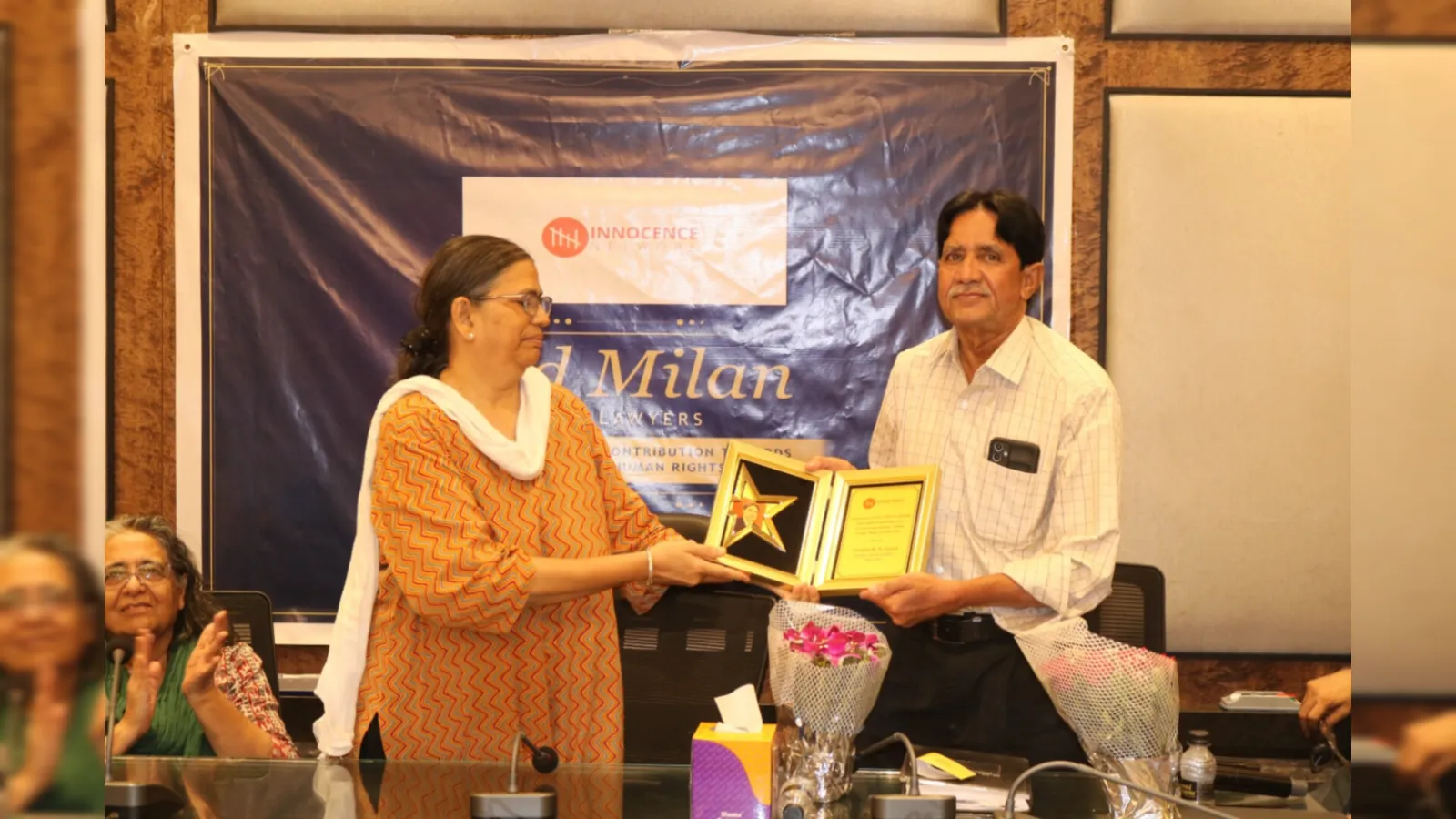
A packed hall at Islam Gymkhana witnessed a festive Eid Milan that brought together over a hundred lawyers, scholars, activists, and students, culminating in the conferment of the Champions of Human Rights Award 2026 on three prominent legal practitioners.

Held on March28, by the innocence network, the event blended celebration with reflection, as attendees marked the festive occasion while foregrounding ongoing struggles within the justice system. The highlight of the programme was the recognition of three advocates for their sustained contributions to civil liberties and defense law.

Among the awardees was Advocate Surendra Gadling, currently incarcerated in connection with the Bhima Koregaon case. In his absence, the award was received by his son, Sumit Gadling.

Also honoured was Advocate Ibrahim Harbat for his legal representation of Ayan Sheikh, a 20-year-old student recently arrested by Mumbai’s ATS, and his work despite threats by the ATS The third awardee, Advocate M M Sayyad, was recognised for his work defending several accused in cases linked to the Students Islamic Movement of India.

The gathering featured addresses by noted speakers, including Trade Unionist an Human Rights Lawyer Sudha Bharadwaj, herself an accused in the Bhima Koregaon case, who underscored the importance of legal aid and the intellectual rigour required in rights-based litigation. She reflected on the continued relevance of collective legal efforts in safeguarding civil liberties.

Senior advocate Gayatri Singh spoke candidly about the layered challenges of navigating the profession as a Muslim and a woman , while emphasising resilience and the need to persist despite systemic barriers.

The evening concluded with the formal presentation of awards and a shared resolve among attendees to continue engaging in human rights work.

The programme closed with a community dinner, marking both solidarity and celebration at the conclusion of the Eid Milan gathering.

source: http://www.muslimmirror.com / Muslim Mirror / Home> Human Rights / March 31st, 2026

The Rajas who shaped Indian history: The legacy of Prof Mahmudabad’s family

UTTAR PRADESH :

The family of Ali Khan Mahmudabad, the Ashoka University professor whose social media post on Operation Sindoor set off a storm, footprint on Indian history stretches back to the medieval period.

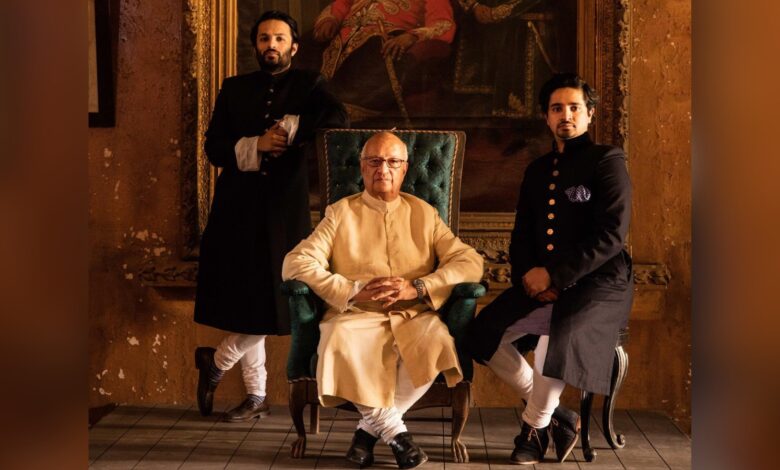
 Prof Ali Khan Mahmudabad, his father Raja Mohd Amir Mohd Khan (centre) and brother Rajkumar Amir Hasan Khan. Image courtesy: Mahmudabad Estate

The Supreme Court on March 16 closed the case against Prof Ali Khan Mahmudabad, the Ashoka University historian and columnist, after the Haryana government declined to grant sanction for his prosecution for his social media post on Operation Sindoor, a decision the court had itself nudged the state towards in an earlier order. 

A Division Bench comprising Chief Justice of India (CJI) Suryakant and Justice Joymalya Bagchi had, in its order of January 6, asked the Haryana government to consider refusing sanction as a “one-time magnanimity.” The state obliged, bringing to an end a case that had drawn global attention to questions of free speech and academic freedom in India. 

The matter had originated in a social media post made by Prof Mahmudabad in connection with Operation Sindoor of 2025. It snowballed rapidly after he received summons from the Haryana State Women’s Commission on May 12, 2025. The Supreme Court had granted him interim bail on May 21. 

The man behind the case

Prof Mahmudabad holds a doctorate and a master’s degree from the University of Cambridge and teaches history and political science at Ashoka University. Also known by his courtesy title “Raja of Mahmudabad,” he is the latest in a long and storied line – a family whose footprint on Indian history stretches back to the medieval period. 

During the Nawabi rule in Awadh and later under the British, the Rajas of Mahmudabad were among the largest Taluqdars, or feudal landholders, of the region, controlling over 400 villages and extensive urban properties across Lucknow, Sitapur, Lakhimpur Kheri and Nainital. 

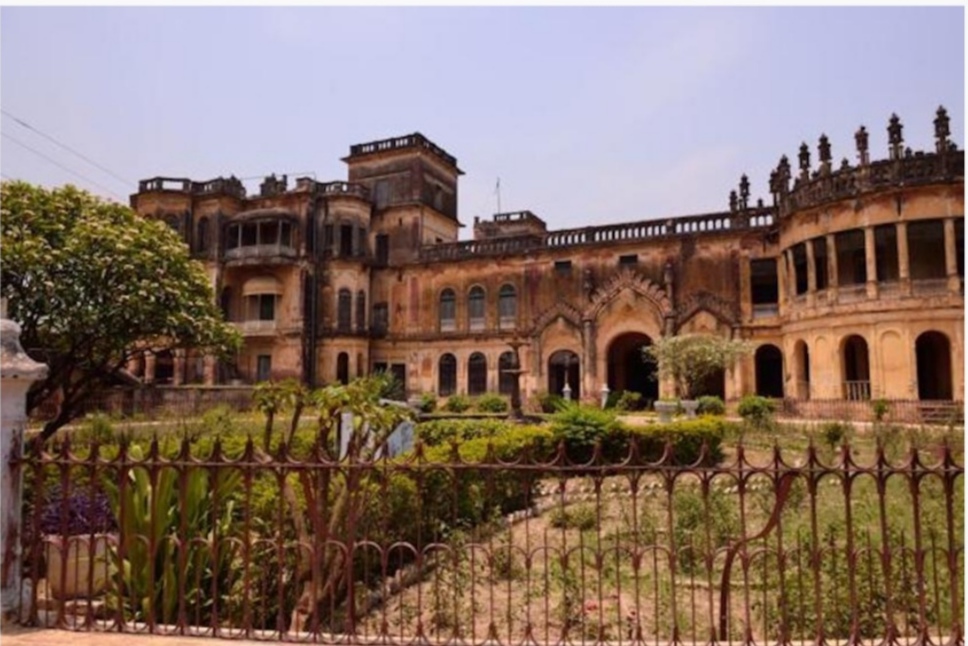
The family’s most visible legacy is the Mahmudabad Fort in Sitapur, a 19th century structure built in the Indo-Saracenic style that counts among the largest private residences in the world. It has hosted royalty, diplomats, political leaders and intellectuals from across the globe. Its library holds thousands of rare books and manuscripts in English, Hindi, Urdu, Sanskrit, Persian and Arabic – including handwritten copies of the Quran, the Bhagavad Gita and the Mahabharata, some dating to the 16th century. 

Mahmudabad Fort. Image courtesy: Mahmudabad Estate

The fort’s kitchens, too, have kept alive culinary traditions that have largely disappeared elsewhere. The original mud fort on the site was set ablaze by the British during the Revolt of 1857 and later rebuilt. 

The family’s syncretic character runs deep. Its charitable endowments include temples, one gifted to the Udasin Sect founded by Sri Chand, son of Guru Nanak, replicas of the Muslim shrines of Najaf and Karbala in Iraq and a caravanserai built to shelter travellers. 

Revolt of 1857 and after

The family’s political legacy is equally significant. During the Revolt of 1857, Muqim-ud-Daula Raja Nawab Ali Khan commanded several thousand rebel troops before being killed by British forces – the same forces that burned down his 16th century fort. His role has been documented in historical accounts of the period and in the Urdu novel “Aghaz-e-Sahar” by Khan Mahbub Tarzi, translated into English by Prof Mahmudabad himself under the title “The Break of Dawn.” 

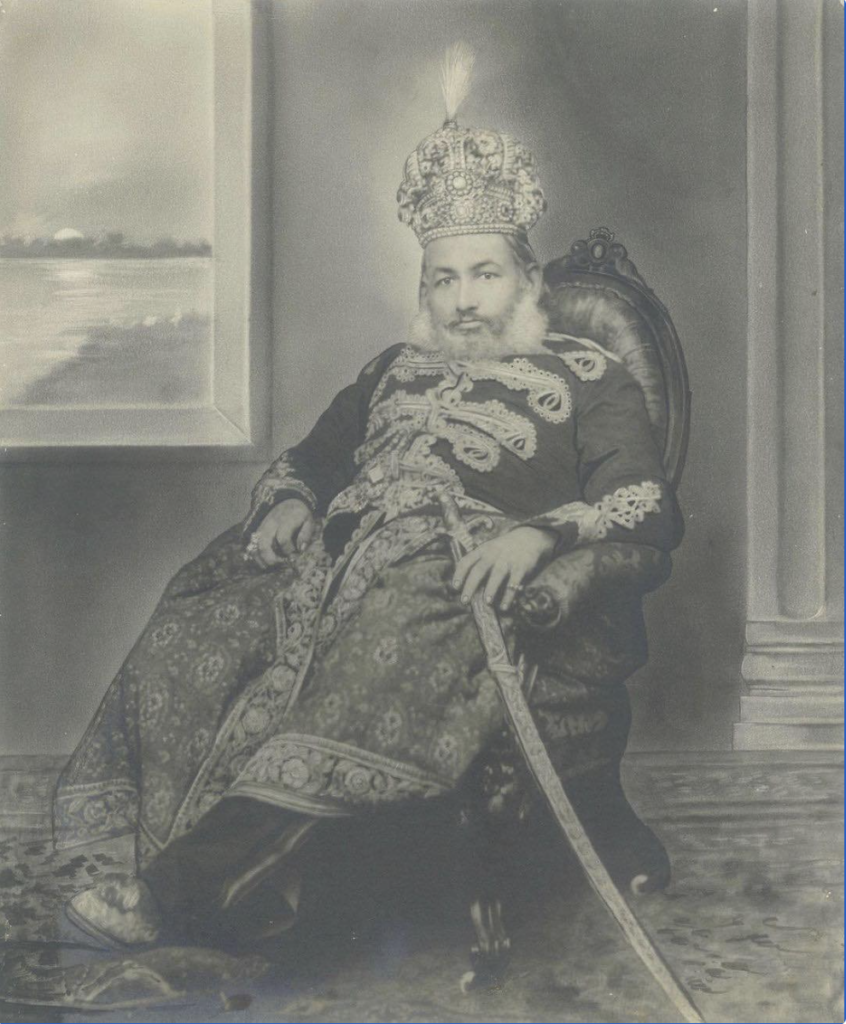
His son, Amir-ud-Daula Raja Sir Mohammad Amir Hasan Khan, served on the Legislative Council of the Lieutenant Governor of the North Western Provinces. Lucknow’s Amir-ud-Daula Public Library and Amir-ud-Daula Islamia Degree College are named after him. 

Amir-ud-Daula Raja Sir Mohd Amir Hasan Khan. Image courtesy: Mahmudabad Estate

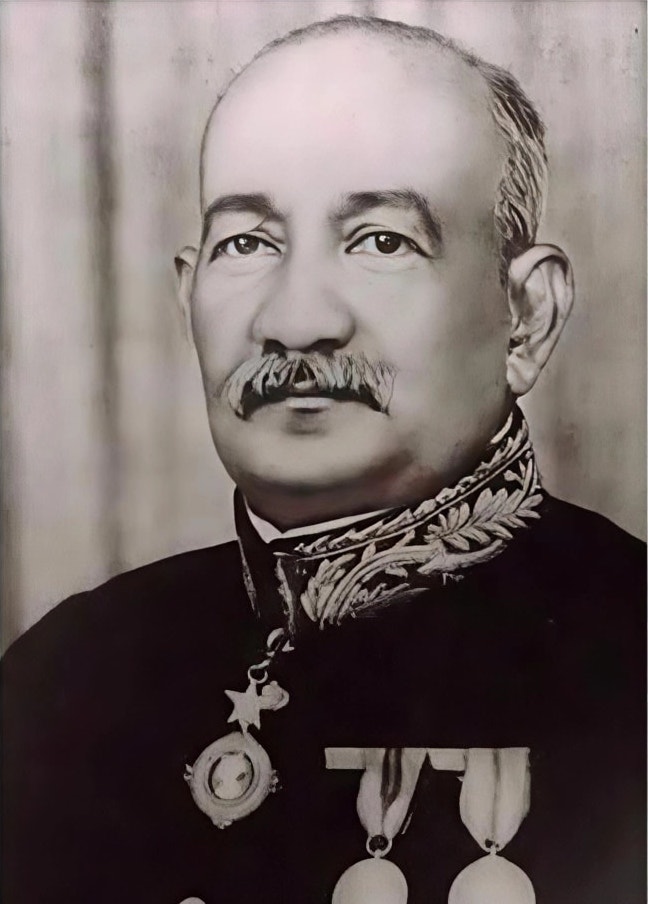
His son, Prof Mahmudabad’s great-grandfather Maharaja Sir Mohammad Ali Mohammad Khan was a pioneer of education who played a central role in establishing both Lucknow University and the Aligarh Muslim University, serving as the latter’s first Vice-Chancellor from 1920 to 1923. A residential hostel, Mahmudabad House, in Aligarh Muslim University’s Sir Shah Sulaiman Hall is named after him. He also served as the Home Member of the Governor of UP’s Executive Council.

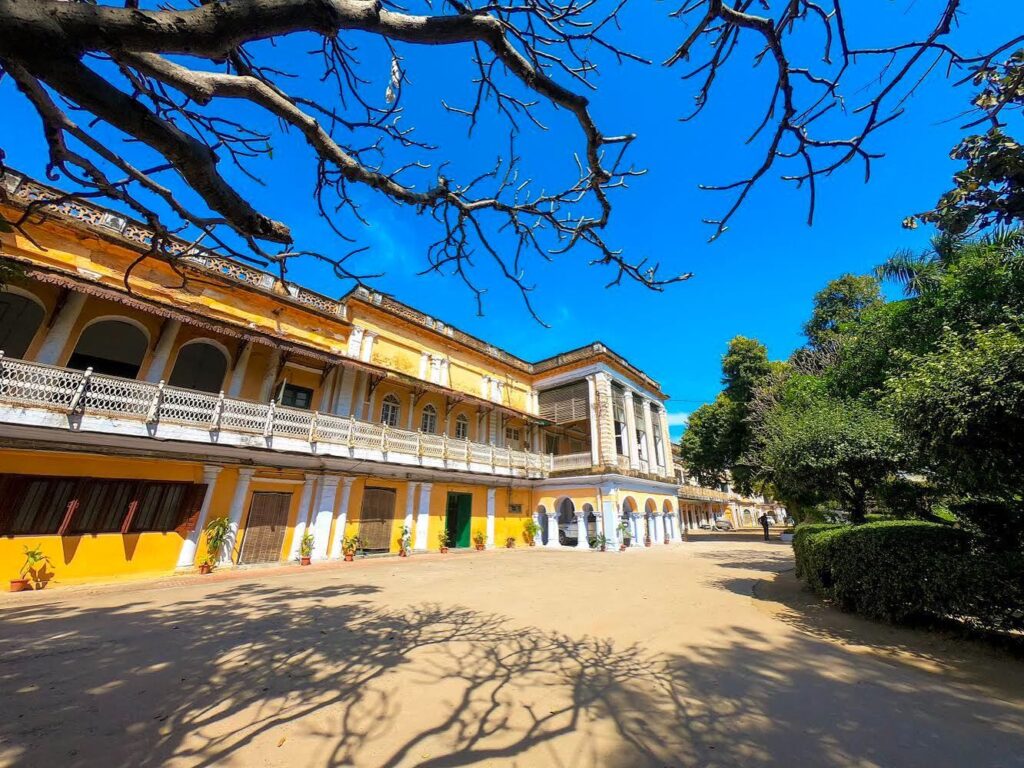
Mahmudabad House in Lucknow. Image courtesy: Mahmudabad Estate

A close friend of Motilal Nehru, he was instrumental in the signing of the Lucknow Pact of 1916 and served on the Imperial Legislative Council, the Council of State and the United Provinces Legislative Council. Lucknow’s Butler Palace, named after former UP Governor Sir Spencer Harcourt Butler, was built by him. 

Maharaja Sir Mohammad Ali Mohammad Khan

Prof Mahmudabad’s father, Raja Mohammad Amir Mohammad Khan, was also a Cambridge graduate and an occasional professor of astrophysics at Imperial College London and the Institute of Astronomy at Cambridge. He was elected twice to the UP Legislative Assembly on a Congress ticket, in 1985 and 1989. 

When he passed away in October 2023, thousands joined his funeral procession across religious lines, and schools, markets and commercial establishments across the area shut down in mourning. 

A vindication, and a reminder

Prof Mahmudabad’s Lucknow home, Mahmudabad House – part of the historic Qaiserbagh Palace complex – continues to serve as a gathering place for intellectual and cultural exchange, much as the family’s spaces have for centuries. 

The closure of his case, then, is more than a personal reprieve. Coming at a time of heightened scrutiny over free expression in India, it is being seen as a reaffirmation, however fragile, of the right to speak, question and dissent. 

(Aman Alam is a student Barrister at the University of London and an Advocate in the
Supreme Court. He has been a former Law Clerk-cum-Research Associate to a Supreme Court judge. He is also a Fellow of the Royal Asiatic Society of Great Britain and Ireland)

source: http://www.siasat.com / The Siasat Daily / Home> Featured News / by Aman Alam, Guest Contributor March 27th, 2026

Ex-Calcutta HC judge to move tribunal after name deleted from Bengal voter list

Kolkata, WEST BENGAL :

Justice Munshi said the names of his wife and elder son continue to remain under adjudication.

Retired Calcutta HC judge Shahidullah Munshi

Kolkata: 

After the first supplementary list of “under adjudication” voters was published on Monday, March 23, Calcutta High Court’s retired judge and West Bengal Waqf Board chairperson Shahidullah Munshi claimed that his name had been deleted and decided to move an appellate tribunal.

This comes amid the growing number of reports indicating a rise in Muslim voter names being deleted or filed under adjudication during West Bengal’s Special Intensive Revision (SIR) process as it reaches its final stages.

Justice Munshi said the names of his wife and elder son continue to remain under adjudication.

The chairperson of the state Waqf Board also said he had appeared for the SIR hearing, submitted his passport and offered to provide his Aadhaar and PAN cards.

The retired judge said his family found their names marked as “under adjudication” in the post-SIR electoral roll published on February 28.

“My name was deleted in the first supplementary list. I have submitted all required documents, including my passport, but I received no acknowledgement,” he said on Thursday, March 26.

About 8.3 pc of electorate deleted

According to official data released on February 28, as many as 63.66 lakh names, around 8.3 per cent of the electorate, have been deleted since the SIR process began in November last year, reducing the voter base from about 7.66 crore to just over 7.04 crore.

In addition, over 60.06 lakh electors have been placed in the “under adjudication” category, and the eligibility of these people as voters is being determined through scrutiny by judicial officers.

Describing the situation as distressing, he said, “So far, only my name has been deleted, while the names of my wife and son are still under consideration. This is extremely humiliating and amounts to harassment. I do not understand how the decision was taken or on what basis my name was removed.”

Munshi said he would soon move the appellate tribunal seeking restoration of his name in the electoral rolls.

The retired judge said he and his wife were earlier voters of the Bowbazar Assembly constituency and had later shifted to Entally.

The issue has triggered a political row, with the ruling Trinamool Congress criticising the Election Commission over the exclusion.

“When a former high court judge’s name is deleted from the voters’ list, one can imagine the plight of ordinary citizens, including the poor and marginalised,” a TMC leader said.

Meanwhile, West Bengal’s Communist Party of India (Marxist) on Thursday said it has formed teams consisting of lawyers and volunteers to assist those whose names were deleted from the electoral rolls.

Md Salim, CPI(M) state secretary, said the SIR is being processed aligned with Prime Minister Modi’s “demographic mission.”

“It is a demographic mission of Narendra Modi, a part of the divisive propaganda of the Rashtriya Swayamsevak Sangh (RSS) — raising issues like infiltration, the Rohingya and jihadis to mislead people. It is unfortunate that the Election Commission has become a part of this mission,” he said.

Muslim-dominated areas seeing mass voter deletion

Multiple pockets of rural Bengal, specifically the Muslim-dominated areas, have seen major disenfranchisement, with residents claiming they ensured every step was followed but their names were still not included.

In Malad district, at least 427 voters were excluded from the first supplementary electoral roll in the Silampur 1 Panchayat of the Sujapur Assembly constituency. These individuals claimed to have attended all necessary hearings and submitted the required documents during the SIR process and yet their names did not appear on the final list.

The Election Commission has not issued any official statement on the matter so far.

Meanwhile, a senior Bharatiya Janata Party (BJP) leader said there were legal remedies available in case of discrepancies.

“If there has been any error, the person concerned can approach the tribunal as permitted by the court. The legal route is open,” he said.

(With inputs from PTI)

source: http://www.siasat.com / The Siasat Daily / Home> News> India / by News Desk X / March 27th, 2026

Tanuja Sande’s inclusive narrative is a rage on social media

Pune, MAHARASHTRA :

Tanuja Mohsin Sande

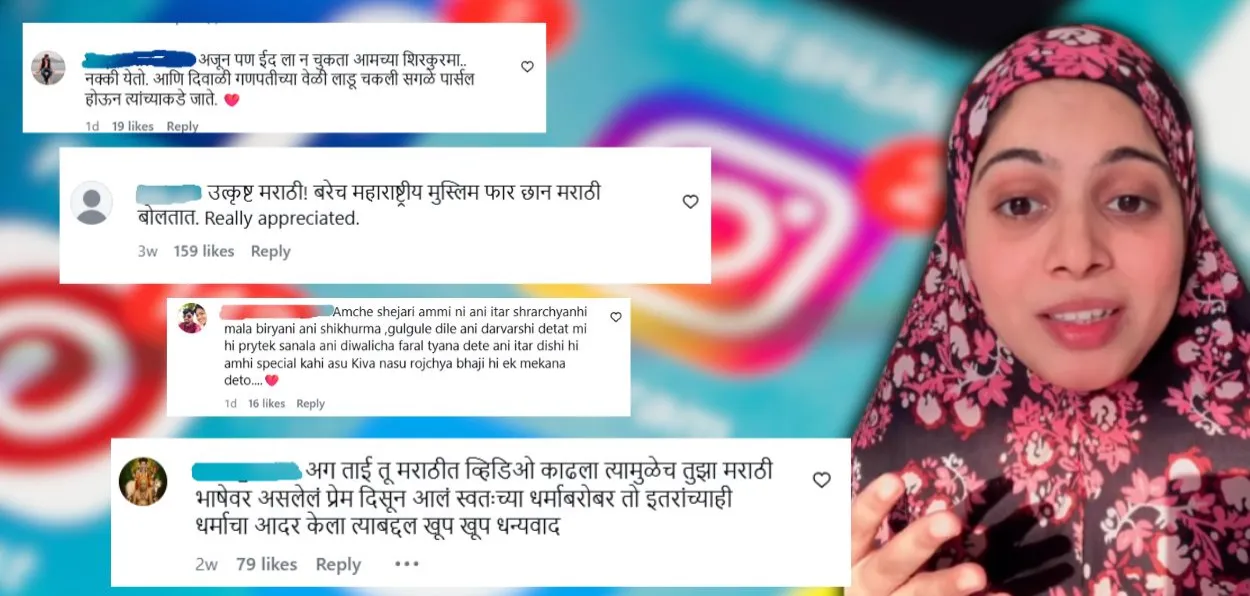
Using social media, Tanuja Mohsin Sande, a young Muslim woman from Pune, Maharashtra, is addressing a general perception that Muslims in Maharashtra do not speak Marathi. Tanuja has shattered this myth through her videos POSTED ONLINE.

In her videos, the Hijab-wearing Tanuja is seen communicating in fluent Marathi.

She says, “Many people think that Muslim people do not speak Marathi. But I want to tell them that I am a Maharashtrian Muslim and I was born in this very soil. Therefore, taking pride in the language, I decided to make my videos only in Marathi. And the majority of the audience watching my videos is Marathi-speaking. “

This style of speaking and her activism on social media were behind her special initiative ‘Ramadan Eid cha Dabba’ (Ramadan Eid Lunchbox).

Because of TV news and videos on social media, a perception is that there is inherent enmity between Hindus and Muslims.

However, if you peek into the life of a common man, the picture looks different. Through her initiative, Tanuja has highlighted this reality.

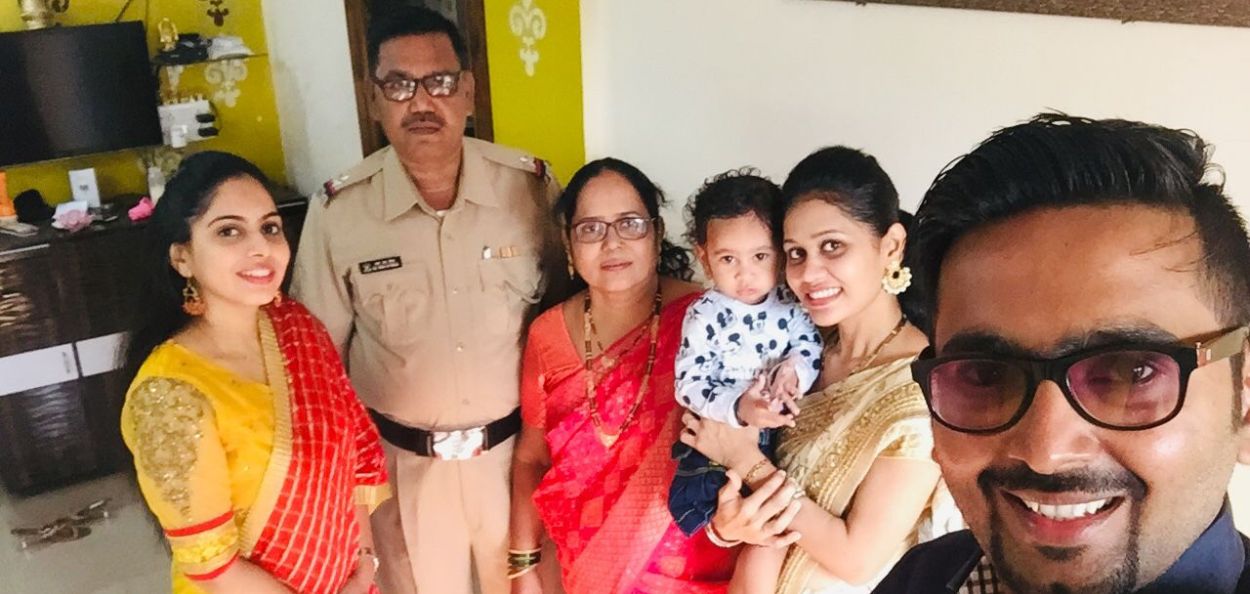
Tanuja spent her childhood in the police line of Dadar Hindmata, Mumbai. Her father, Rashid Shaikh, was an Assistant Sub-Inspector (ASI) in the Mumbai Police force.

Tanuja Mohsin Sande (Holding the baby) with her family

Spending her childhood in the police line, she says she never faced discrimination in the name of religion. Despite hers being the only Muslim house in the colony, she celebrated all festivals like Holi, Dahi Handi, and Shimga (a form of Holi) along with her Hindu neighbours.

Even today, while living in Pune, she preserves this legacy. Jain, Marwadi, and many Hindu families live in her society. On the day of Diwali, after the Lakshmi Pujan, the first plate of Faral (Diwali snacks) is delivered at her place.

Similarly, on Eid, Tanuja personally delivers 30 to 35 lunchboxes to her neighbours before the family eats their meal. This year, under the concept of ‘Ramzadan Eid cha Dabba‘, of her offering to her neighbours, Tanuja made a video and posted it on social media.

In that video, she mentioned that she was giving Eid lunchboxes to her Hindu neighbours. And she also gave a message of communal harmony.

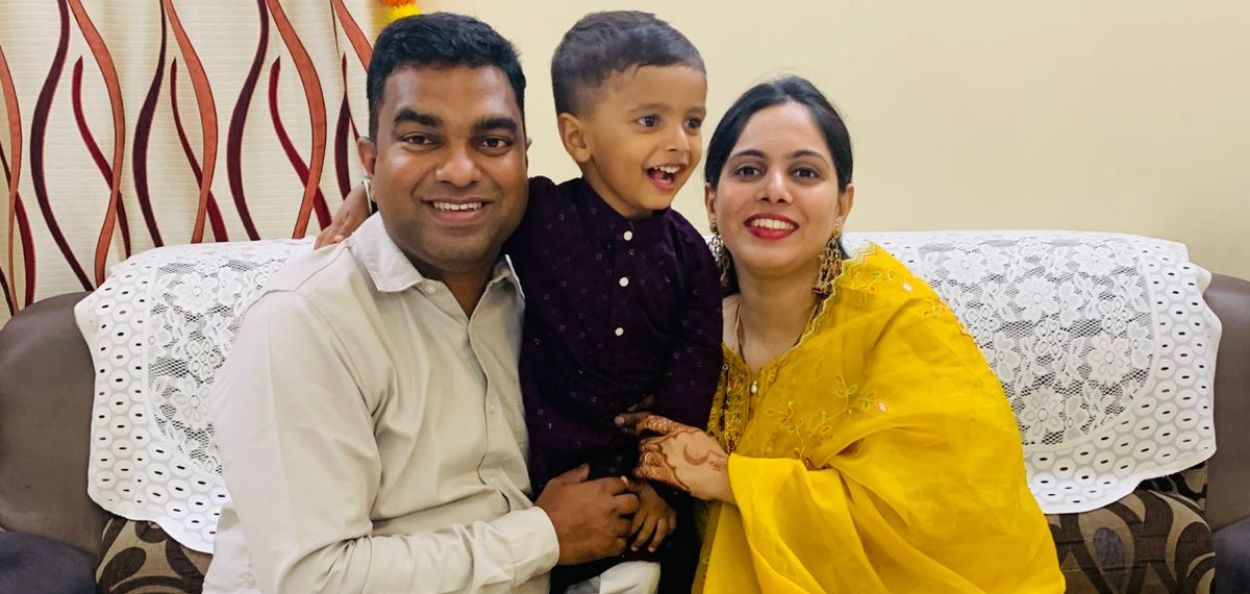
Tanuja Mohsin with her husband and son

Tanuja Sande explained the concept of her ‘Ramadan Eid cha Dabba’ initiative.

She says, “The politics in the name of religion makes people feel that Hindu-Muslim means something that creates enmity. But in reality, there is nothing like that. We are all still together today. When I participate in Hindu festivals, no one ever considers me an outsider. The things shown on social media are not true; what we actually experience is very different from the world of social media.”

She further says, “While giving the Ramadan lunchboxes, there is no compulsion of non-vegetarian food on anyone. To those who want vegetarian food, I lovingly give Sheer Khurma. Actually, our neighbours are very eagerly waiting for the Sheer Khurma.

How did you make this? What ingredients did you put in it? They ask for its recipe with such questions. And the joy one gets while sharing this recipe and spreading sweetness cannot be put into words.”

Tanuja Mohsin packing food for neighbours

After posting the video on social media on the day of Eid, she received a 99% positive response, but 1% of people made negative comments. Because of this, she was disturbed for some time. She thought of turning off the comment section or deleting the video.

She says, “When I turned off the comment section, people started messaging me. They requested, ‘Sister, your video is very nice, we want to share our experiences, please turn on the comments.'” After that, Tanuja decided to ignore the negativity. In her comment section, many people also wrote memories of their childhood Hindu-Muslim friendships.

Tanuja started a series of videos during Ramadanan. Interestingly, it was a question asked by the house help that made her start content creation.

She says, “I have a three-year-old son. When I fast for the whole month of Ramadan, our helper asks me many questions. Since she is a Hindu, it is natural for her to have all these questions. She was very curious to know how I would look after the baby while fasting.

“Will you stay hungry the whole day? How do you fast without drinking water? Do you break the fast after seeing the moon?”

The idea of making this series came from such simple questions of hers.” She made this series completely in Marathi, and people gave a tremendous response.

Tanuja is an engineering graduate, and she worked in the IT sector for 5 years. During the lockdown, she got married. She currently lives in Pune with her IT engineer husband, Mohsin Sande, and their 3-year-old son.

Her brother is also a content creator. He inspired Tanuja to do something different while staying at home. Her family supported her content creation. The very first like and comment on any of her videos comes from her father, she says.

Tanuja Sande’s message to the youth is: “Let politics remain only online. The politics on TV is different, and our real life is different. There has been equality of religions in Maharashtra right from the beginning, and it will remain so. My father raised me with this leaning, and I will raise my son with these same values.”

“In crises, nobody cares who is helping whom. Respecting all religions is Maharashtra’s culture, and we must preserve it,” she says.

source: http://www.awazthevoice.in / Awaz, The Voice / Home> Stories / by Bhakti Chalak / March 25th, 2026

Dr Afrah of Maharashtra’s Bhiwandi Creates History with 231st All India PG NET Rank

Bhiwandi, MAHARASHTRA :

From a tailor’s household to national achievement, Dr Afrah Ansari’s success inspires Muslim students across India, proving that patience, sacrifice and hard work can overcome every difficulty in education and life

Bhiwandi :

In a moment of joy and pride for the Muslim community, Dr Afrah Wasim Ansari from Bhiwandi in Maharashtra has secured the 231st rank in the All India PG NET examination. This is the first time a student from the city has reached such a level in the medical field.

Her achievement has been described as “historic” by teachers and community leaders, with celebrations spreading in Bhiwandi’s educational and social circles.

Dr Afrah began her early studies at Aqsa Girls High School, where she was always among the brightest students. She later joined MES Junior College, excelling in all disciplines. Preparing at CCPT Institute in Milind, she earned admission to Rajiv Gandhi Medical College, Kalwa, purely on merit.

Throughout her studies she was a topper many times. Her consistent success has now culminated in this national rank, making her a role model for young Muslims across the country.

Dr Afrah belongs to a modest family. Her father, Wasim Moinuddin Ansari, is a tailor by profession and is popularly known as Wasim Master. Despite financial challenges, he and his wife worked tirelessly to educate their children.

Speaking to reporters, Wasim Master said: “I never dreamed that my three children would become doctors and one a chartered accountant. But by the grace of Allah, the prayers of my parents and the support of friends, I am seeing this day.”

He credited much of the family’s success to his late father, Moinuddin Samiuddin, who served as a teacher in Swat district of Allahabad for nearly five decades. Samiuddin was respected for his knowledge of Arabic, Persian, Sanskrit, English, Latin and other languages.

Dr Afrah is not the only achiever in the family. Her elder sister, Dr Zara, is pursuing MS in Gynecology at Neeraj Government Medical College after completing her MBBS. Her younger sister, Fariza Ansari, is a final-year Chartered Accountancy student. The youngest brother, Muhammad Ayan, is entering the final stage of BDS admission this year after scoring excellent marks in NET.

The parents proudly note that none of their children took private tuition until the tenth grade, relying instead on discipline, self-study and guidance from their father.

Local teachers, students and community leaders have hailed Dr Afrah’s achievement as an inspiration.

One of her former teachers at Aqsa Girls High School said: “Afrah was always hardworking and respectful. She showed that when girls from our community get proper guidance, they can shine at the highest level.”

A student from MES Junior College added: “Her success gives us courage. It tells us that if she can do it with limited resources, we too can aim high.”

Dr Afrah’s success has brought immense pride to Bhiwandi, a city that has often struggled with lack of educational opportunities. Her achievement is now being spoken of as a milestone for the entire Muslim community.

A local community elder remarked: “This is living proof that lack of money cannot stop talent. Dr Afrah has shown that courage and determination are stronger than circumstances.”

As celebrations continue, Dr Afrah’s name is being remembered as an example of how sacrifice, patience and faith can transform dreams into reality.

source: http://www.clarionindia.net / Clarion India / Home> India> Indian Muslim / by Team Clarion / August 27th, 2025