Watrina Village (Bandipora District, North Kashmir), JAMMU & KASHMIR :
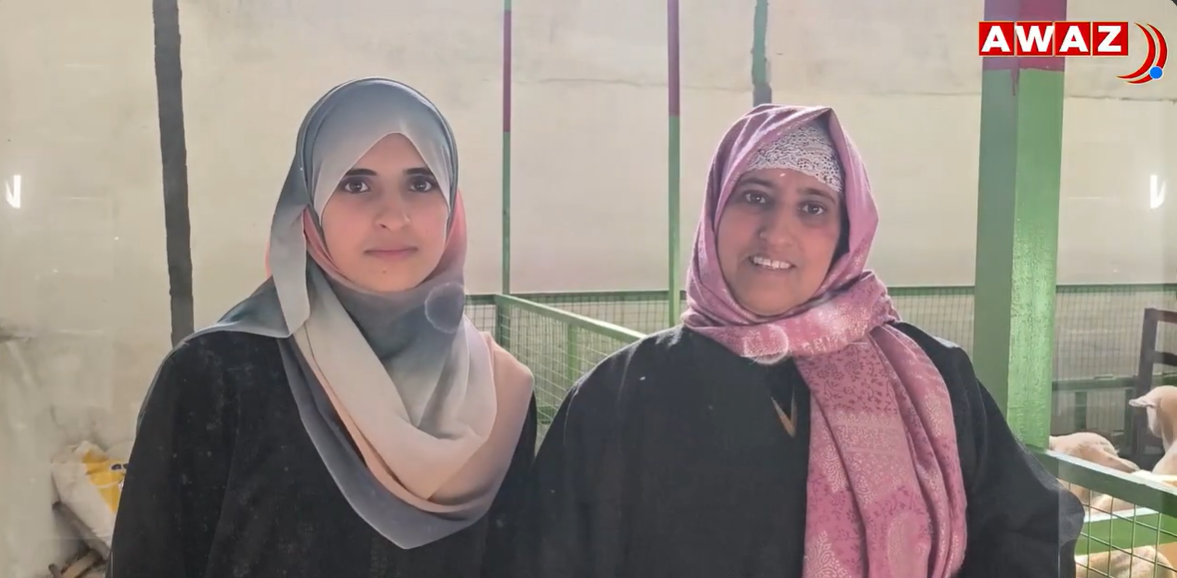
Mumtaza Begum, Sheep farm owner
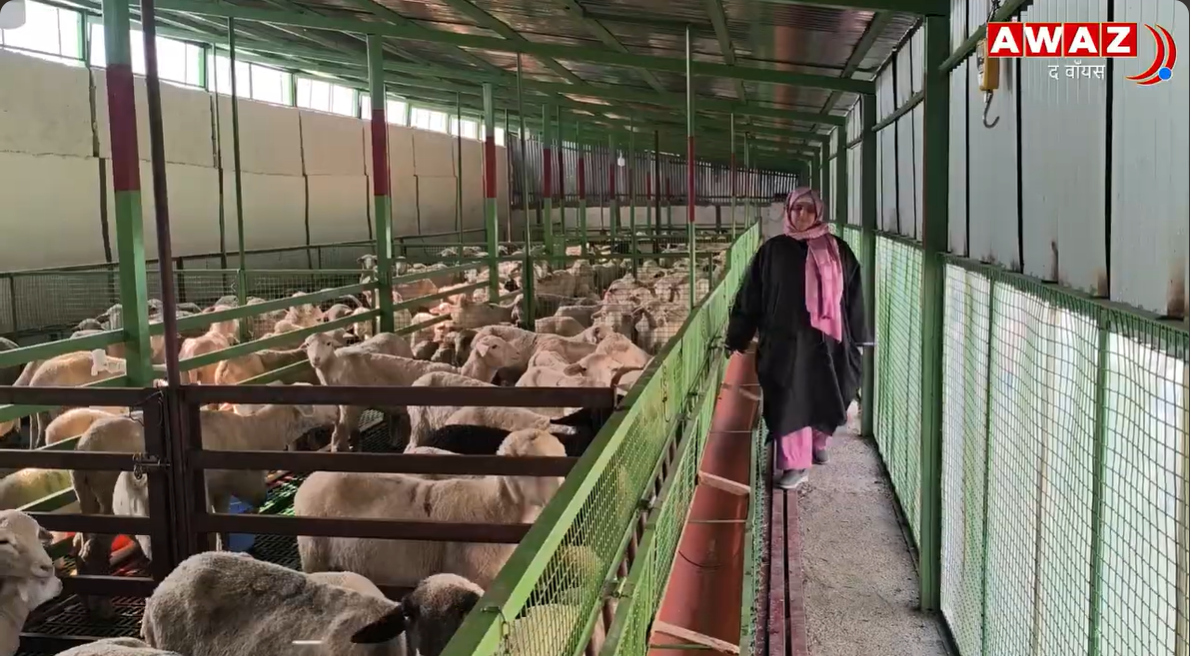
Mumtaza Begum, a 33-year-old homemaker from Watrina village in Bandipora district, North Kashmir, has changed her life through sheep farming. Despite limited resources, social challenges, and the compulsion to drop out of college early, Mumtaza refused to give up and is today recognised as a successful female entrepreneur in the area.
Mumtaza’s story is one of struggle and the spirit of fighting out adversity. Financial difficulties forced her to drop out of college, but she never gave up on her dreams. Her matrimonial family had 10 to 15 sheep, which were reared using traditional methods. This sparked the idea of pursuing sheep farming on a larger scale.
Mumtaza’s dream wasn’t limited to mere subsistence; she wanted to turn it into a systematic and successful business.
With this thought in mind, she approached the Animal Husbandry Department in Bandipora. With the department’s guidance, she applied under the state-sponsored subsidy scheme, “Mini Sheep Farm.” In February 2019, she was selected and allotted a unit of 50 sheep.
Sheep rearing requires hard work and patience. Besides, for Mumtaza, the lack of experience was also a major challenge. But Mumtaza didn’t give up. Through persistent hard work, a passion for learning, and a strong will, she gradually expanded her business. Over time, her experience grew, and her farm expanded.
Mumtaza credits her family, especially her husband, for her success. She says that her husband stood by her every step of the way. “He is always there for me, offering emotional support and actual help with work,” she says.
Mumtaza believes that family support is crucial for women entrepreneurs, especially when they have to juggle both home and work responsibilities.
Mumtaza also praises the officials of the Animal Husbandry Department for her success. Proper guidance, technical advice, and knowledge of government schemes helped her overcome many challenges. With the department’s support, she could manage her farm efficiently and increase production.
Today, Mumtaza Begum owns a successful farm with over 210 sheep. She earns a net income of over 5 lakh rupees annually. Most of her sheep are sold during Eid al-Adha, providing her with a substantial income. This work has not only improved her financial situation but also boosted her confidence and self-worth.
Mumtaza no longer considers herself merely a sheep herder; She wants to inspire other women to opt for entrepreneurship.
She shares her experiences with women and encourages them to move forward. She says that if women utilise the opportunities available to them, they can certainly improve their social and economic status.
Mumtaza says that the true rewards of hard work come when one proves oneself. For her, sheep farming is not just a means of earning money, but a path to self-reliance and respect.
This woman from Bandipora has proven that with the right mindset, hard work, and support, any dream can become a reality.
source: http://www.awazthevoice.in / Awaz, The Voice / Home> Stories / by Arsla Khan, New Delhi / February 11th, 2026
Kirugavalu Village (Malvadi Taluk, Mandya District), KARNATAKA :
Passionate efforts
Farmer Syed Ghani Khan has brought back the use of traditional varieties even as farmers are lured into buying unsustainable varieties.
Some farmers have been the victims of forceful marketing and have opted for commercial varieties of rice and other crops promoted by seed firms.
In effect, they have switched from native varieties — which suit the soil and climatic conditions — to the ones that consume more water and fertilisers, and are easy prey for insects and pests. But it does not take farmers long to realise that the yield comes down after a few years, leaving the soil toxic.
Remedy lies in returning to traditional grains. But wooing farmers away from commercially promoted seeds, fertilisers and insecticides is a task.
Syed Ghani Khan, a farmer from Kirugavalu, a village in Mandya district, has been pursuing that task as a lifetime passion.
He has set up a museum in his village home by setting apart two rooms for the purpose.
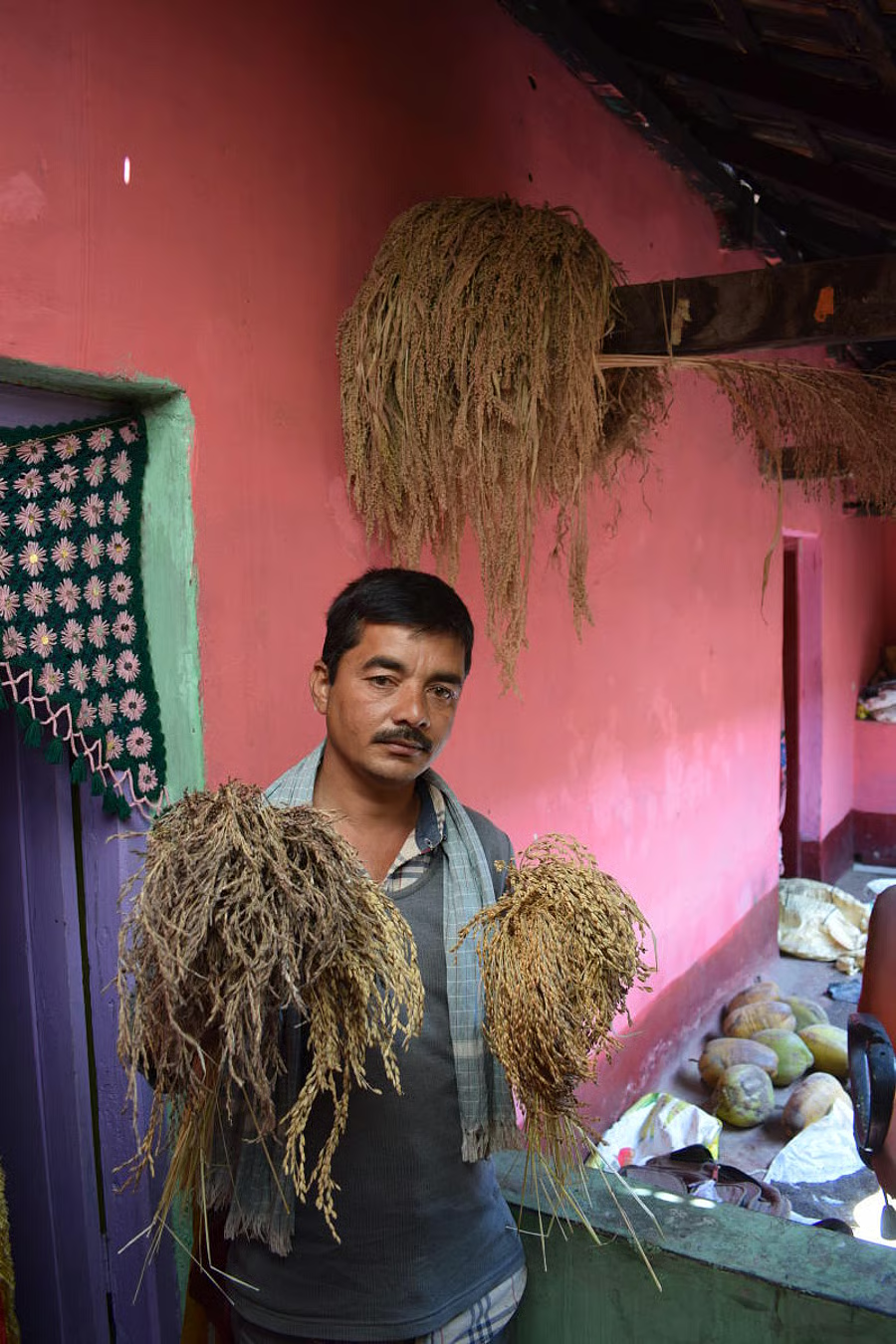
He has conserved over 700 varieties across 15 and more acres of land. These crops are harvested carefully, and the panicles laden with grain are bunched, marked with names and numbers, and arranged systematically on the walls of the two-room museum.
Some of them are even stored in bottles to be given away to farmers around the village to experiment with the heritage crops they lost in the race to boost harvest with new varieties.
Khan is a graduate from Mysore University with a degree in Archaeology and Museology. After completing his studies in Mysuru, Khan joined his father in tending to his farm.
He was pained at the sight of farmers getting addicted to industrial products and giving up the traditional varieties and practices.
He took up the task of preserving traditional seeds in packets and supplying them to those who were converts to his cause. Yet, he was not satisfied with what he did. He thought he needed more systematic efforts to create awareness about the usefulness of the old varieties and the supply of seeds.
According to Khan, continuous onslaught of publicity for industrial farm products has misled farmers into switching over to newer seeds — be it cereals, lentils, vegetables or fruits. This has led to enmasse shift to high-yielding varieties like MTU-1001, IR-64, Jaya etc.
Khan says traditional varieties hold the key to sustainable farming that is less expensive, does not erode the fertility of the soil. “In our pursuit of bumper harvest, we have damaged the soil and have made paddy an aquatic crop, which it is not,” he laments.
He began collecting varieties like Rajmudi, Ghamgadale, Doddibatta, Parimala Sanna, Basmati, Ratnachudi, Gandhasale, Mysore Mallige, Jeerige Sanna, Burma Black, Rasakdam, Thai Jasmine etc in earnest. Several of these varieties harbour medicinal properties while others emit aroma while being cooked.
According to Khan, varieties such as Doddibatta, Ghamgadale and Biddi Doddi can be grown in farms that receive just one or two spells of shower.
Ratnachudi, HMT, NMS-II are high-yielding traditional varieties while Jeerige Sanna, Rasakdam, Gandha Sale, Parimala Sanna and Mugadh Sugandh turn aromatic while being cooked.
He says most of the seeds of paddy varieties collected by him have a shelf life of 18 months. In contrast to the practice of preserving seeds in freezers, he applied on-field conservation methods where no synthetic chemicals were used.
Propagator
Farmers from all over South India have been approaching him for seeds of the native varieties.
Shiv Prasad, who has a farm in the outskirts of Hyderabad, took seeds of nearly 200 varieties from him. He has since been a promoter of the cause in his region.
Khan maintains a meticulous record of all those who have procured seeds from him. During the last two decades, nearly 10,000 farmers have accessed supplies from him.
Krishna, a farmer from a village in Maddur taluk, is a regular visitor to his farms. Rachanna, from Hosamalangi village in T Narsipura taluk, successfully grows around 25 varieties in his farm. He had visited him a decade ago.
A corner of his museum displays several medals, certificates and awards. He was conferred with Krishi Pandit Prashasti by the Govt of Karnataka (2008). National Genome Seed-saver Recognition Award was conferred on him a year later by Plant Protection Variety Forum. Govt of Karnataka chose him for ‘Biodiversity Award’ in 2010, while Directorate of Rice Research in Hyderabad presented him ‘Rice Innovative Farmer Award’ for the year 2011-12.
Ghani Khan says one should not be surprised to find one variety being replaced by another after every 40 km as India is home to thousands of varieties of rice.
He says several of them carry medicinal properties.
He says while Karigajivili and Ambe Mohur from Karnataka are said to be good for lactating mothers, Navara of Kerala is good for those who have joint pain. While Mappillai Samba from Tamil Nadu improves virility, Mehdi is held to be good for healing of bone fracture. Khaima provides relief for those suffering from piles.
Mangoes, too
Ghani Khan has taken up the conservation of native varieties of mango, too. He has registered himself with the National Bureau for Plant Genetics, New Delhi.
He has trees that have been there in the family farm for the last six to seven generations. These trees yield native varieties like mosambi ka aam (tastes like sweet lime); seb ka aam (tastes like apple); pheeka aam (bland mango) for those with diabetes; kaale malghoba, bada gola; mangamari; manji bi pasand and mittmia pasand.
His family has been supportive of his efforts and to this day help him in maintaining their farms and marketing the produce.
Womenfolk of his family use paddy in making decorative art.
Syed Ghani Khan can be reached on 9901713351 or muhinuha786@gmail.com
source: http://www.deccanherald.com / Deccan Herala / Home> India> Karnataka / by M A Siraj / October 12th, 2019
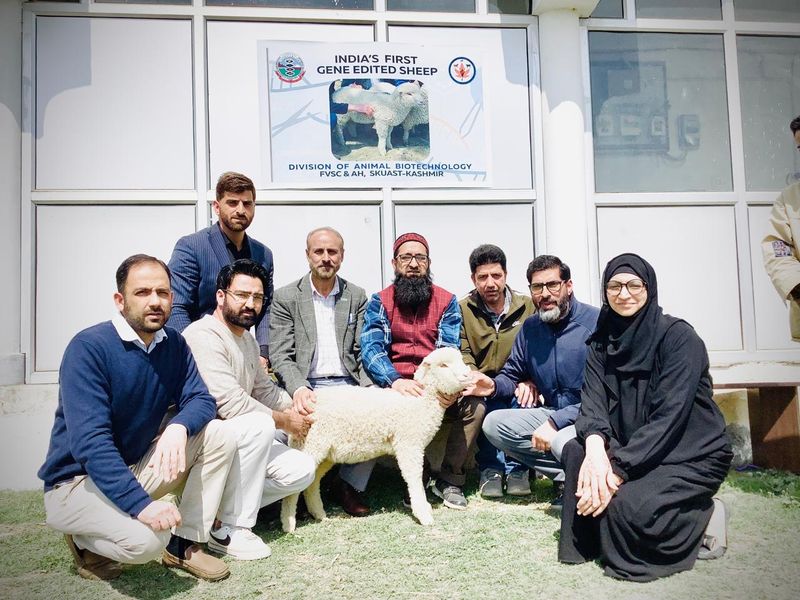
A team from SKUAST-Kashmir with country’s first gene-edited sheep.
In a landmark achievement in the field of animal biotechnology, Sher-e-Kashmir University of Agricultural Sciences and Technology (SKUAST), Kashmir, has successfully produced India’s first gene-edited sheep. University officials are calling it a “historic milestone” in genetic research and livestock development.
“This is a major breakthrough at the national level. It is the first of its kind in India, and everyone at the university is thrilled,” said Dr Riyaz Ahmad Shah, Professor of Animal Biotechnology, who led the expert team behind the project.
Dr Shah revealed that a female gene-edited lamb was born four months ago. The team specifically targeted the myostatin gene, which regulates muscle growth, making changes at the embryonic level. “The gene editing was carried out using CRISPR-Cas9 technology,” Shah explained. This revolutionary tool has broad applications in medicine, agriculture, and biotechnology. Importantly, he noted, “The edited sheep contains no foreign DNA,” distinguishing it from transgenic organisms and easing its path under India’s evolving biotech regulatory framework.
“All international biosafety protocols were strictly followed throughout the process,” he added.
The university views this achievement as a major step in placing India on the global map of advanced genome editing technologies. It also positions SKUAST-Kashmir at the forefront of reproductive biotechnology research.
Experts say the lamb’s muscle growth is expected to be enhanced due to the gene editing, although a few years of observation will be required to fully understand the differences between the edited lamb and a normal one.
Notably, Dr Shah and his team were also behind the creation of “Noori,” India’s first cloned Pashmina goat, in 2012. Noori lived for 11 years before passing away in 2023.
Vice Chancellor of SKUAST-Kashmir, Prof Nazir Ahmad Ganai, recently briefed Lieutenant Governor Manoj Sinha about the development. “This is not just the birth of a lamb, but the birth of a new era in livestock genetics in India,” Prof Ganai remarked.
University officials said the Lieutenant Governor praised the team’s efforts and their contribution to advancing scientific research in the region.
Looking ahead, the university plans to produce more gene-edited sheep. “We’re exploring possibilities in other areas like twin births and disease resistance,” said Shah. “For now, we are closely monitoring the lamb for safety and other parameters. Everything is normal so far.”
The team is also in the process of selecting a name for the pioneering lamb. “We’ll announce it soon,” Shah said.
source: http://www.tribuneindia.com / The Tribune / Home> Jammu & Kashmir / by Adil Akhzer / May 27th, 2025
Bhoothpur Town (Mahbubnagar District), TELANGANA :
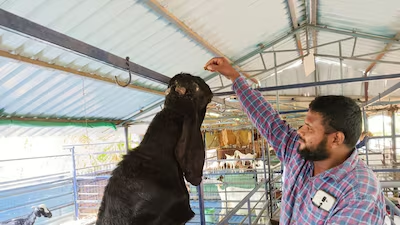
Anwar, a native of Bhoothpur town in the Mahbubnagar district, opened a private goat breeding farm in his native town in 2018, with the intention to rear goats of different breeds.
A private goat breeding farm in Telangana has been rearing goats of different breeds with utmost care. Anwar, a native of Bhoothpur in the Mahbubnagar district, opened a private goat breeding farm in his native town in 2018, with the intention to rear goats of different breeds.
They include African Boer, a breed developed in India after being imported from South Africa, Mewati of Haryana, Hyderabadi and other domestic and foreign breeds of goats.
The farm has been developing new breeds by mating a male goat of one breed with a female goat of another breed.
In a first of its kind in the state, the farm has implemented a cage system, where the goats are kept in cages according to their breed. The cage system is built on a plastic floor with holes three to four feet height from the ground for the disposal of waste from the goats. The cage system is built in a way that helps keep the cages clean and the goats safe from diseases, Bhoothpur animal husbandry development officer Madhusudan said.
In order to develop a new breed, one male goat has to mate with female goats of three generations. The process takes almost two-and-a-half years depending upon the preparedness of the female goat to mate with the male.
“We bought goats and sheep from different places and performed some experiments in which we succeeded. We are not selling them as we aim to supply the best breeds to the farmers. It is a costly procedure but we are doing it for the farmers,” Anwar told News18.
The farm has been mating breed couples such as Mewati – Sojat, Mewati – Hyderabadi, Domestic breed – African Boer and so on.
Anwar told News18 that he has spent Rs 25 lakh on the farm so far. Currently, the farm has 160 goats, but Anwar aims to rear as many as 10,000 goats on his farm.
source: http://www.news18.com / News18.com / Home> English edition / by Mohd Rafi Ahmed Ahmed / April 01st, 2024
Prof. Abdul Qavi Desnavi (November 1, 1930 – July 7, 2011)
Bhopal:
A two-day National seminar is being organised on “Prof. Abdul Qavi Desnavi Hyat Aur Adabi Khidmat” here on April 1 and 2 at Mulla Ramuzi Sanskriti Bhavan, the headquarters of Madhya Pradesh Urdu Academy, (MPUA).
The seminar is being organised by Ilma Education Society, Bhopal under the joint aegis of National Council for the Promotion of Urdu Language, (NCPUL) and MPUA.
Mr. Kailash Sarang, former Rajya Sabha member, will inaugurate the seminar on April 1 at 10 am which will be presided over by Urdu litterateur Prof. Afaq Ahmad.
AThe guests of honour on the occasion include: Mr. Aziz Qureshi, ex-member of Lok Sabha, Mr. Iqbal Majeed, Prof. Shakoor Khan, Prof. Muzaffar Hanafi and Prof. Ateequllah.
Prof. Afaq Husain Siddiqui will deliver the keynote address in the inaugural function while Kausar Siddiqui, director of the organising committee shall welcome the guests. Mr. Ali Mutaqqui Desnavi, the eldest son of late Prof. Abdul Qavi Desnavi will propose vote of thanks.
After the inaugural function there would be two sessions on April 1 and three on the next day. Two-and-a-half dozen scholars and writers from all over India will present their papers in different sessions of the seminar.
They include: Prof. Muzaffar Hanafi (Delhi), Mr. Ayub Waqif (Mumbai), Master Akhtar, Mr. Arif Aziz & Dr. Arjumand Bano Afshan (all three from Bhopal), Prof. Ateequllah (Delhi), Prof. Khalid Mahmood (Delhi), Maulana Syed Sharafat Ali Nadwi (Bhopal), Dr. Yaqoob Yawar (Banaras), Mr. Iqbal Masood, Mr. Rasheed Anjum & Dr. (Mrs.) Razia Hamid (all three from Bhopal), Dr. Saifi Sironji (Sironj), Prof. Manzar Husain (Ranchi), Prof. Afaq Ahmad (Bhopal), Dr. Maula Baqsh (Delhi), Mr. Naseem Ansari (Bhopal), Mr. Zia Farooqui, Mr. Ashfaq Mashhadi, Mr. Khalid Abidi, Dr. Mahtab Alam & Mr. Javed Yazdani (all six from Bhopal), Dr. Mohammad Nauman & Dr. Khalid Mubashshir (both from Delhi), Dr. Abdul Waheed Khan (Jabalpur), Mr. Naeem Kausar, Mr. Khursheed Akhtar (both from Bhopal), Dr. Shan Fakhri (Sironj), Mr. Habib Ahmad & Mr. Inamullah Lodhi (both from Bhopal).
Meanwhile, it may be stated here that Prof. Abdul Qavi Desnavi (November 1, 1930 – July 7, 2011) was an Indian eminent Writer, Critic, Bibliographist, Linguist and Scholar of Urdu language. He has authored more than 50 books on Urdu literature. His books were also translated in other languages. His important work was about Maulana Abul Kalam Azad, Mirza Ghalib, Allama Muhammad Iqbal and litterateurs of Bhopal.
He was recipient of several awards. He received Senior Fellowship from the Union Ministry of Culture, Govt. of India. His great treatise was a voluminous book on one of India’s frontline freedom fighter and first Union Education Minister Maulana Abul Kalam Azad over 900 pages titled “Hayat-e-Abul Kalam Azad” which he penned in the year 2000. It was acclaimed nationally and internationally.
Desnavi was born in Nalanda Prof. Desnavi was born on November 1, 1930 in village Desna of block Asthawan in Nalanda district Bihar. He belonged to the family of Great Muslim scholar Syed Sulaiman Nadvi, who was one of the eminent historian and biographers of the Islamic Prophet Muhammad (PBUH), during his times. He was the second son of late Prof. S. M. Saeed Raza, who was Professor of Urdu, Arabic and Persian languages in St. Xavier’s College, Mumbai. His elder brother was Prof. Syed Mohi Raza and younger brother was Syed Abdul Wali Desnavi.
Education Prof. Desnavi had his primary education in Arrah town of Bihar state. After completing his graduation & post-graduation in First Division from St. Xavier’s College, Mumbai, he joined Department of Urdu in Saifia Post Graduate College, Bhopal in February 1961. He went on to become Professor and Head of the Urdu Department of Saifia Post Graduate College. He was well-known literary figure in India and in the Urdu world.
His shining disciples Many scholars, poets and teachers of today such as lyricist Javed Akhtar, Poet Mushtaq Singh, Prof. Muzaffar Hanafi, Selani Silwatte, Prof. Khalid Mehmood, Prof. Mohammed Naumaan Khan, Prof. Afaq Husain Siddiqui, poet Iqbal Masood, Dr. Iqbal Masood Nadvi, Ahsanuddin Farooqui, Khurshid Akhtar, Mohammed Naseem, Dr. Qamar Ali Shah, Prof. Yaqoob Yawar, Maulana Syed Sharafat Ali Nadvi, Prof. Arjumand Bano Afshan etc. were under his tutelage during their student days in Bhopal and are now sparkling in the Urdu world. Under his guidance many students attained Ph.D. degrees.
He retired in 1990. He was also holding many Honorary positions such as: • Additional Principal of Saifia Post Graduate College, Bhopal.(1983–1985); • Secretary of Madhya Pradesh Urdu Academy, Bhopal (1991–92); • Elected Member Majlis-e-Aam Anjuman Taraqqui Urdu (Hind), New Delhi (1979–1984); • Member of All India Anjuman Taraqui Urdu Board, New Delhi, (1977–1978); • Member of Program Advisory Committee, All India Radio, Bhopal (1978–1979); • Member Executive Council, Barkatullah University Bhopal, (1980–1982); • Chairman of Board of Studies, Urdu, Persian & Arabic, Barkatullah University Bhopal, (1977–1980) and (1984–1985); • Dean Faculty of Arts, Barkatullah University Bhopal, (1980–1982) & • Member Working Committee, Taj-ul-Masajid, Bhopal (1997-2007)
Awards Prof. Desnavi received many awards in his lifetime such as Shibli Award, Mumbai, 1957; Senior Fellowship, Ministry of Education & Culture, Government Of India for 4 Years, 1979-1983; Sanad “Imteyaz Meer” All India Meer Academy, Lucknow 1981; Nawab Siddique Hasan Khan Provincial Award, Bhopal 1986; Bihar Urdu Academy Award, for recognition of Urdu services (1988–89) & (1989–90); All India “Parvez Shahidi Award” West Bengal Urdu Academy, Calcutta 1998.
His books The books Prof. Desnavi authored to enrich the Urdu literary world included: Ek Aur Mashriqi Kutub Khana (1954); Hasrat Ki Siyasi Zindagi (1956); Aur Hindustan Jag Utha (1963); Allama Iqbal Bhopal Mein (1967); Mazameen Lisan-un-Sidque (1967); Bhopal Aur Ghalib (1969); Ghalibyaat (1969); Nuskha-e-Bhopal Aur Nuskha-e-Bhopal Sani (1970); Qadir Nama-e—Ghalib (1971); Anis Numa (1973); Ek Shahar Panch Mushahir (1973); Nazr—e-Sajjad (1974); Mota’ala—e—Khotoot—e—Ghalib 1975, (Edition 2nd 1979); Saat TahrireiN (1975); Hindustan MeiN Iqbaliat (1976); Talash-o—Taasur (1977); Mehdi Hassan Efadi (1977); Iqbal Uneesween Sadi MeiN(1977); Mirza Salaamat Ali Dabeer (1977); Bachon Ka Iqbal (1978); Iqbal Aur Dilli (1978); Abdul Haque Banam Mahvi (1980); Nazr-e-Takhallus (1981); Mota’ala-e-Ghobar-e—Khatir (1981); Dhanpat Rai Nawab Rai Premchand (1981); Iqbal Aur Darul Iqbal Bhopal (1983); Iqbaliat Ki Talash (1984); Yadgar—e—Sulaiman (1984); Iqbaliat Ki Talash Publisher, Globe Publishers, Urdu Bazar Lahore, Pakistan (1985); Armoghane-Saifia (Co—Editor) (1986); Abul Kalam Azad (1987); Maulana Abul Kalam Mohiuddin Ahmad Azad Dehlavi (1988); Mahanama Lisan-un-Sidque (1988); Yadgar—e—Azad (1989); Mataihiyat (1989); Talash—e—Azad; Talash-e-Azad, Shaqsiyat, Khidmat, Chand JhalkiaN (1990); Jawaharlal—o—Azad (Co—Editor) (1990); Ajnabi Shahar (1992); Fakhernama (Co—Editor) (1997); Urdu Shairi Ki Gayarah AwazaiN; Masreen wa Mutaliqat Azad; Hayat Abul Kalam Azad (2000); Bombai Se Bhopal Tak (2004); Dur Dais Se (2005); MaiN Urdu Hoon (2006).
His books translated in other languages are: Abul Kalam Azad in Hindi language Translated by Janki Prashad Sharma, Publisher Sahitya Akademi (1987); Abul Kalam Azad in Punjabi language Translated Inder Singh Raz Publisher Sahitya Akademi (1988); Abul Kalam Azad in English language translated by Syeda Syedain Hamid Publisher Sahitya Akademi(1991); Abul Kalam Azad in Maithili language translated by Fazlur Rehman Hashmi, Publisher Sahitya Akademi (1994)
The awards Prof. Desnavi received on his books are: Saat TahrireiN – Uttar Pradesh Urdu Academy Lucknow, 1975; Uneesween Sadi Mein Iqbal – Bihar Urdu Academy Patna, 1977; Mota’ala-e-Khotoot Ghalib – Bihar Urdu Academy Patna, 1979; Mota’ala-e-Ghobar-e-Khatir – Bihar Urdu Academy Patna, 1981; Iqbaliat Ki Talash – Bihar Urdu Academy Patna, 1984, Abul Kalam Azad Academy, Bihar Urdu Academy Patna, 1987; Yadgar—e—Sulaiman – Maghribi Bengal Urdu Academy Calcutta, 1984; Talash—e—Azad – Uttar Pradesh Urdu Academy Lucknow, 1991; Talash—e—Azad – Bihar Urdu Academy Patna, 1991; Talash—e—Azad – West Bengal Urdu Academy Calcutta, 1993; Urdu Shairi Ki Gayarah AwazaiN – Uttar Pradesh Urdu Academy, Lucknow, 1993; & Urdu Shairi Ki Gayarah AwazaiN – Bihar Urdu Academy, Patna, 1993.
Under his guidance the Ph.D. degrees were awarded by Barkatullah University to • Dr. Muzaffar Hanafi – “Shad Arfi Shaksiat Aur Fun” 1974 Published – 1977; • Dr. Hadiqa Begum – “Abdul Rehman Bijnori Hayat Aur Khidmat” 1981 Published – 1984; • Dr. Naseem Shanvi- “Urdu Tanquid Ka Marxi Dabistan” 1981; • Dr. Mohammed Ayub Khan – “Iqbal Aur Gazal Goi” 1982; • Dr. Safia Wadood – “Takhalus Bhopali Hayat Aur Khidmat” 1984 Published – 1993; • Dr. Arjumand Bano – “Riasat Bhopal Aur Mushahir Urdu” 1989; • Dr. Shan Ahmed Fakhri – “Sironj Ki Khidmat” 1990 Published – 1999; • Dr. Yaqoob Ali Khan – “Taraqqui Pasand Shairi Aik Jaiza” 1990 Published – 1997 and • Dr. Mohammed Naumaan Khan – “Bhopal MeiN Urdu Inzamam Ke Baid”1990.
Poems The poems composed on Prof. Desnavi include: • Pasban-e-Urdu by Rahbar Jaunpuri; • Nazre Abdul Qavi Desnavi by Arshad Siddiqui; • Anjuman Ilm-O-Kamal by Zafar Sahbai; • Herf-e-Khuloos by Kausar Siddiqui; • Shan-e-Imtiaz by Zafar Naseemi; • Qandil-e-Hikmat, Abdul Qavi Desnavi by Wafa Siddiqui;
• Kharaj-e-Tehsin by Arman Akberabadi; • Pahchaan Hai Saifia by Kamil Baihzadi; • Prof. Abdul Qavi Desnavi by Mateen Qurashi Shaheed and • Aik Nazem by Iqbal Masood.
Last breath Prof. Desnavi died at about 5 am on 7 July 2011 in a private hospital where he was admitted following complaints of old age related diseases. He is survived by his wife, three sons and four daughters and a large number of relatives and literary friends to mourn his loss.
(pervezbari@eth.net)
source: http://www.twocircles.net / TwoCircles.net / Home> Indian Muslim> Literature / by Pervez Bari, TwoCircles.net / March 30th, 2012
Sir Hamid Patel, also known as Mufti Hamid Patel, has been appointed as Interim Chair of Ofsted Board in the United Kingdom
London :
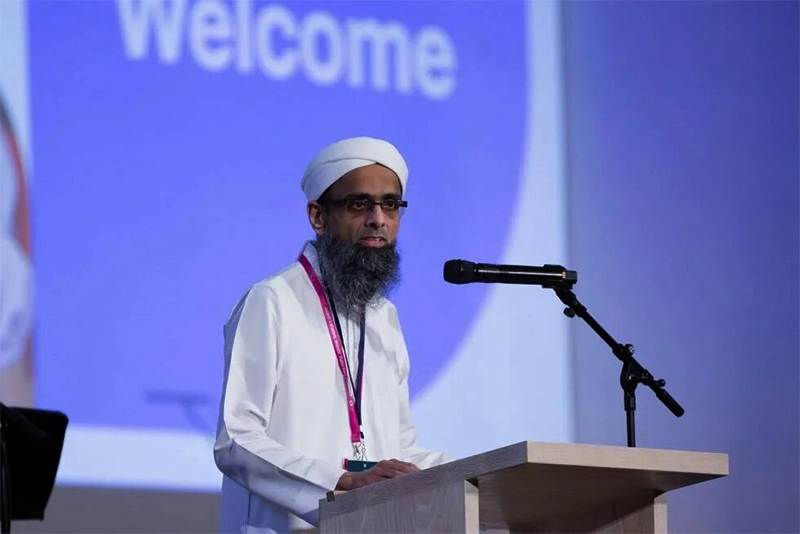
Sir Hamid Patel, also known as Mufti Hamid Patel, has been appointed as Interim Chair of Ofsted Board, short for Office for Standards in Education, in the United Kingdom.
The Ofsted Board oversee the curiculum and teaching practices in all British schools. Hamid Patel has been a member of the Ofsted Board since 2019
The Indian origin British educational and thought leader has been appointed as Education Chair in UK following the exit of Dame Christine Ryan.
Mufti Hamid will hold this position until a substantive Chair is appointed, which will take no longer than five months.
Who is Hamid Patel?
Hamid Patel was born and grown up in Britain. His parents hailed from Bharuch in Gujarat and had migrated to Britain about half a century ago, in late 70s. He comes from a family of 5 – three girls and two boys.
Sir Mufti Hamid Patel left school in Blackburn at 16, without himself excelling academically.
A qualifed Mufti and Islamic Scholar, Sir Hamid’s career began as a teacher, though he wanted to become a footballer. In 2010, he became the Chief Executive of Star Academies, formerly known as Tauheedul Education Trust.
Under his leadership, the trust expanded to manage over 34 schools, primarily serving communities in areas with high levels of social deprivation. Many of its schools are rated outstanding by Ofsted and rank high in performance tables.
In 2024, three Star Academy schools were in the top 10 Schools of UK for Progress 8. In 2023, five Star schools were in the top 10 in England for their GCSE performance.
The trust’s Tauheedul Girls’ School in Blackburn was named State Faith Secondary School of the Year 2025 by The Sunday Times.
The Olive School in Bolton ranked sixth highest among primary schools in the North West, while other top-performing schools include The Olive School in Small Heath, The Olive School in Blackburn, and Eden Girls’ Leadership Academy in Birmingham.
While ‘secular’ schools such as Michaela Community School get positive right-wing media coverage, observers have noted that Muslim-run schools — which outnumber other types of schools in the national top ten — fail to get any recognition.
Other Positions Hamid Patel hold
Sir Hamid Patel CBE also served as Vice Chair of the National Institute of Teaching, which promotes standards, innovation, and quality in education.
He is also Chair of the Education Honours Committee and the Confederation of School Trusts driving excellence and collaboration across the sector.
In addition, as an Honorary Professor of Education at Birmingham University, he connects academic research with implementation in schools.
In his early days of career, Sir Hamid also worked with taxi drivers of Asian origin to help them in getting permits and other such work.
Sir Hamid was made a Commander of the Order of the British Empire (C.B.E.) in 2015 for education services, and he was knighted in the Queen’s Birthday Honours in 2021.
Hamid Patel’s appointment as Ofsted Board Chair, though interim, is hailed. But, the right wing is fuming.
“We’re very lucky to have Sir Hamid on our board – and we’re grateful he’s stepping into this role. He runs some of the best schools in the country, is a brilliant system leader and a very good man”, Rory Gribbell, Director of Strategy and Engagement at Ofsted, wrote.
[With inputs from Islam Channel and BBC Radio]
source: http://www.ummid.com / Ummid.com / Home> United Kingdom / by ummid.com news network / March 17th, 2025
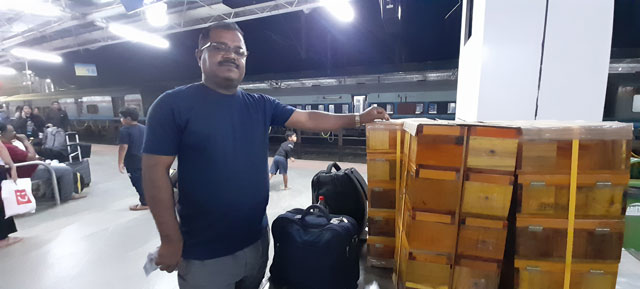
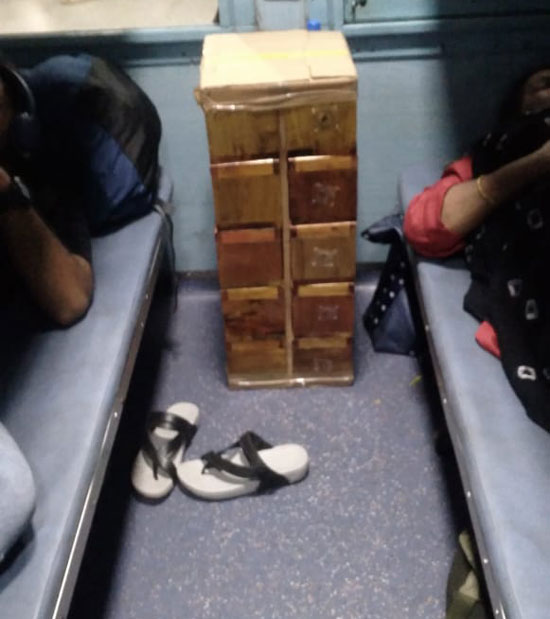
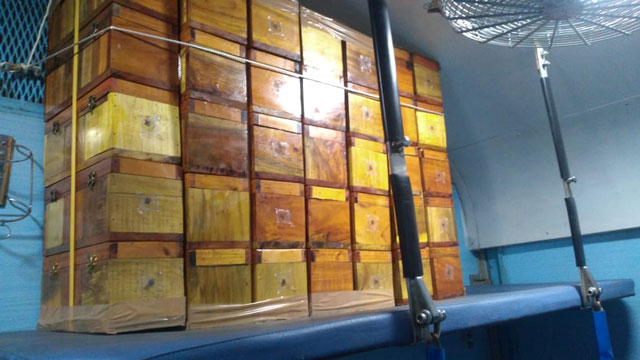
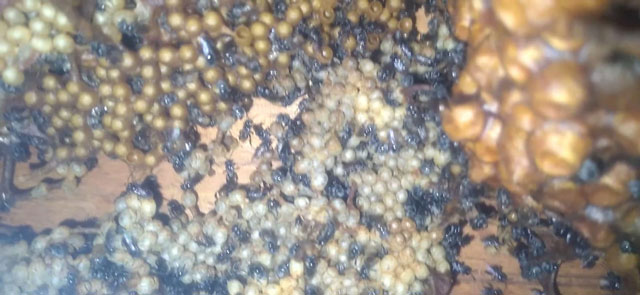
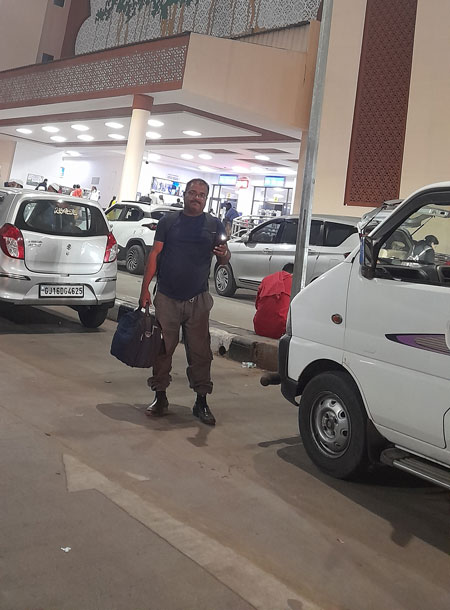
In a significant achievement, Abdul Gaffar, a resident of Berikey House, Nekkilady, Uppinangady, has successfully transported 100 stingless bee colonies along with bees to Gujarat. The transportation was carried out via train from Mangaluru to Gujarat, passing through Bengaluru.
A Gulf returnee, Gaffar initially took up beekeeping as a hobby during the COVID-19 pandemic. However, his passion soon turned into a full-time profession. He attributes his success to the guidance of Manmohan Arambya, who directed him to RUDSETI Ujire for scientific training in beekeeping.
Today, Gaffar manages an extensive collection of bee colonies, including 2,000 stingless bee colonies, 500 cerana bee colonies, and 10 white stingless bee colonies, known as Lisotrigona.
Notably, he is the only beekeeper in Karnataka to own Lisotrigona colonies. As part of his contribution to research, he has also donated one Lisotrigona colony to the University of Agricultural Sciences, Bengaluru.
Gaffar has expanded his work beyond beekeeping. He now deals in high-quality honey, bee pollen, beeswax, bee comb, and bee propolis. Additionally, he has designed innovative beehives tailored for stingless bees, making beekeeping more accessible and efficient. With the increasing demand for stingless bee colonies due to their medicinal benefits, his work has gained widespread recognition.
Acknowledging his journey, Gaffar expressed gratitude to his mentor Manmohan Arambya, RUDSETI Ujire, and senior researchers from the University of Agricultural Sciences, Bengaluru—Dr Shashidhar and Dr K T Vijayakumar—for their unwavering support and guidance.
His remarkable success stands as an inspiration, highlighting the potential of beekeeping as a promising profession and contributing to the preservation of these essential pollinators.
source: http://www.daijiworld.com / Daijiworld.com / Home> Karnataka / by Media Release / January 29th, 2025
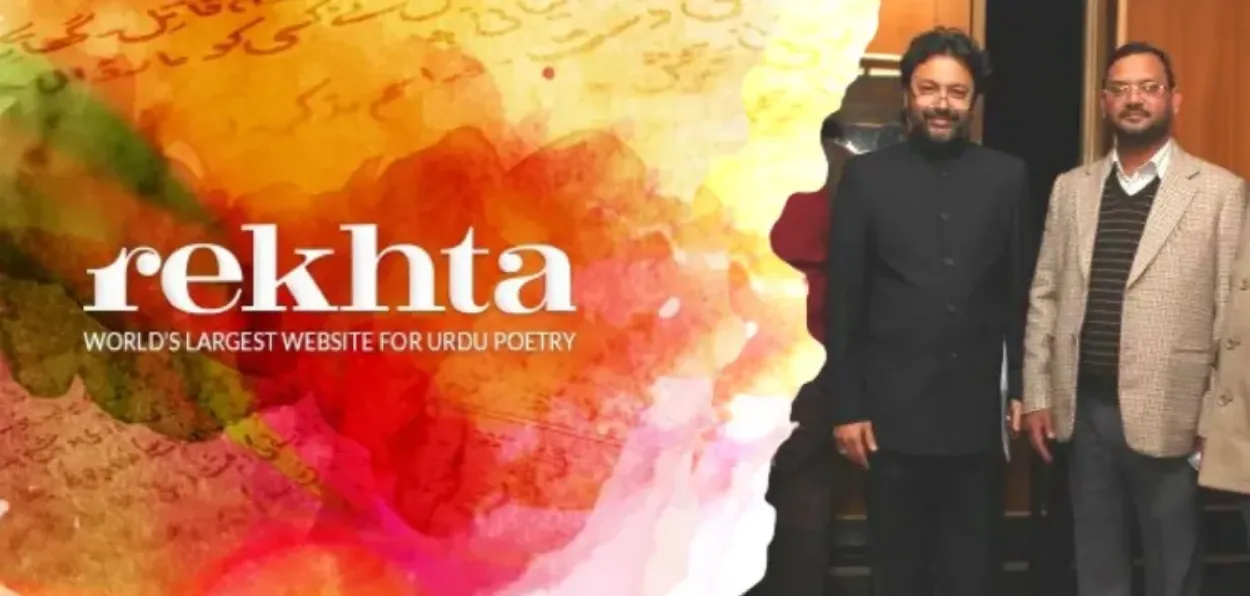
Founder of the Rekhta Foundation Sanjeev Saraf (left) with Dr Umair Manzar
“Umair Manzar was the first to join me in my journey of Rekhta,” said Sanjeev Saraf, the founder of the Rekhta Foundation. He said this before a smaller audience at the launch of the first Jashn-e-Rekhta, the festival of literature and performing arts in 2012.
The festival has become a major annual cultural event in Delhi, and the Rekhta Foundation portal is a key resource for Urdu language and literature and a peg for the online and offline community of Urdu literature lovers.
This year the three-day Jashn-e-Rekhta is being held in Delhi from December 13.
Saraf said Umair was his first Urdu teacher. He was the one who proposed the name Rekhta for the website and became the first member of the online community of Urdu aficionados on Rekhta Foundation.
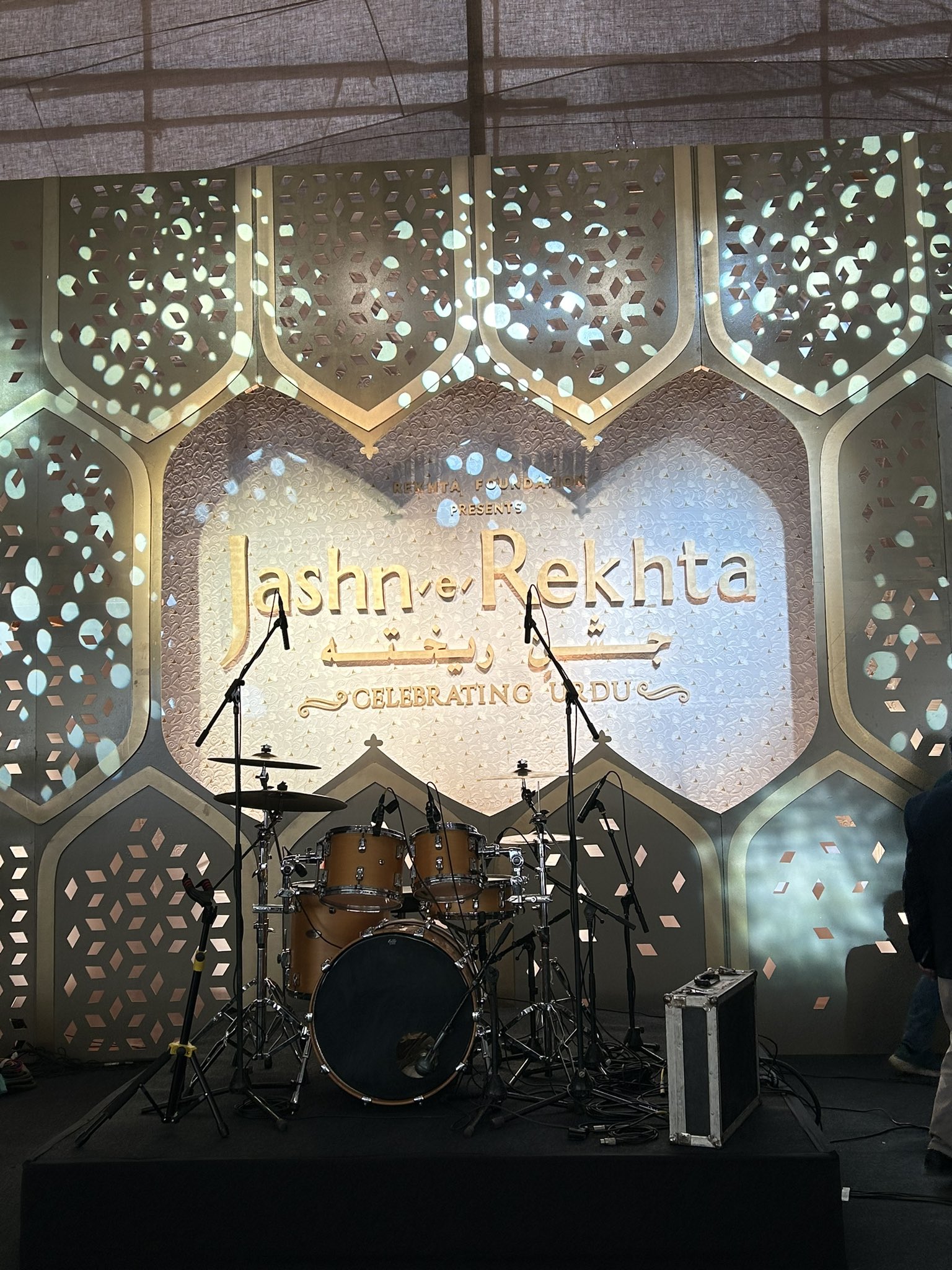
Stage for artists to perform in Jashn-e-Rekhta
Today, Dr. Umair Manzar is an Assistant Professor in the Urdu Department of Maulana Azad National Urdu University, Lucknow Campus When Awaz-the Voice contacted him, he was surprised at his name being mentioned by Safar.
Awaz-The Voice contacted Umair Mazhar on the phone. He came across as a simple and humble person not too keen to take credit for his key role in setting up Rekhta.
After initial reluctance, Umair Manzar agreed to share his interaction with Sanjeev Saraf.
Manzar’s version of the initial days of Rekhta threw up many more characters in this journey. He says many other people also played their part in helping Sanjeev Saraf concretize what was his passion for the language.
Umair Manzar said that he met Saraf during the 2010 spring.”Summer had not started.”
One day Vice Chancellor Jamia Millia Islamia Najeeb Jung called Urdu’s Head of Department Professor Khalid Mahmood and asked him to send a tutor to a particular person to teach Urdu. At that time, Umair was teaching at the university. His HOD gave him a piece of paper with a name and a telephone number scribbled on it and asked him to contact him.
“The name was Sanjeev Saraf. I called that number, we fixed a time for the tuition class.”
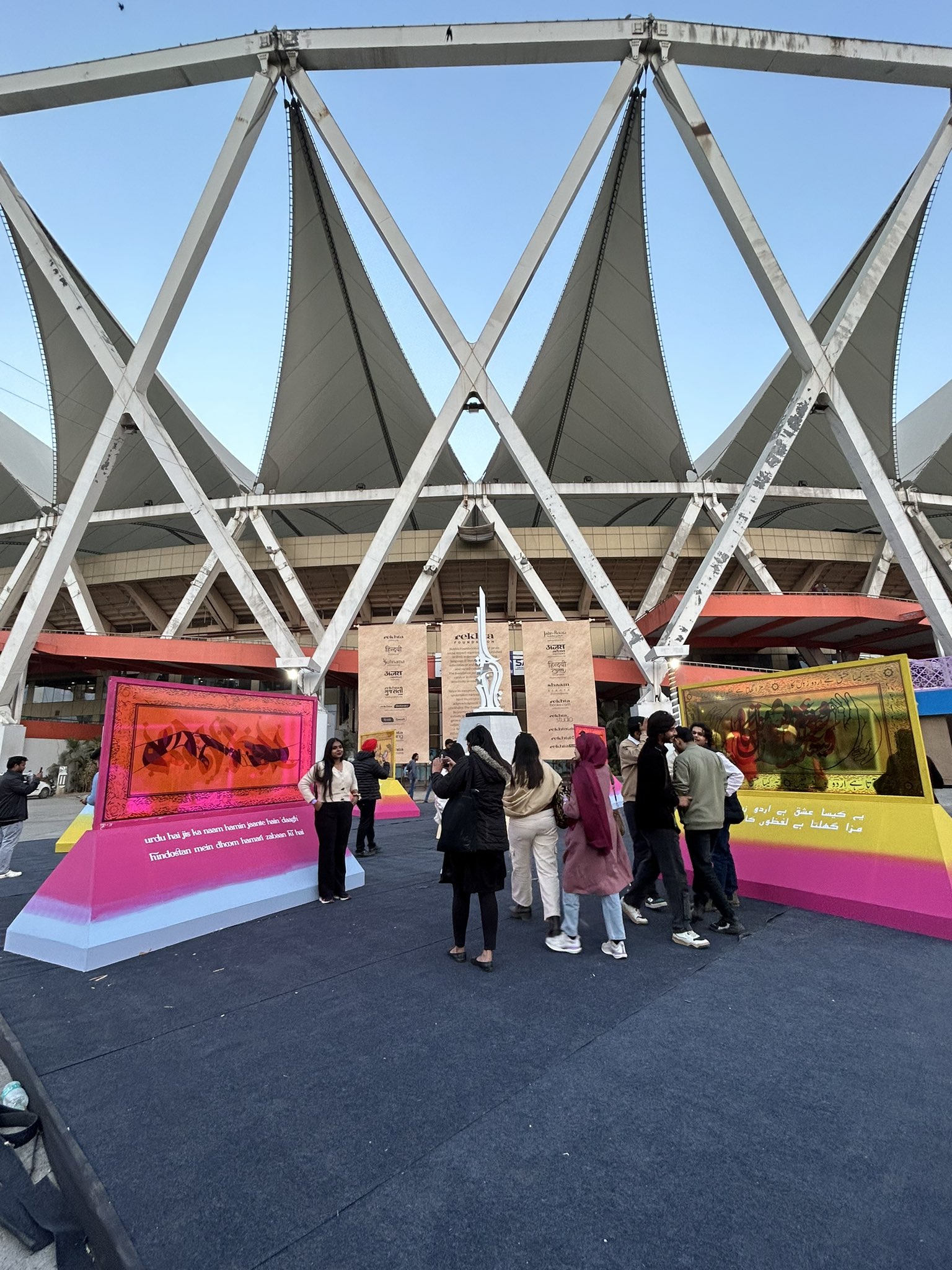
Jashn-e-Rekhta festival
“The first time I met him at his home. I had no idea who he was. Yet I found him a serious person; there was a certain calm in his way of speaking.”
“I liked him instantly as he spoke candidly. After a few meetings, he told me that he was very fond of Urdu and wanted to learn it.
“He especially wanted to understand poetry. In a few meetings, I realized that apart from learning the language, he was also interested in creating an Urdu website. He has nursed a dream of starting an Urdu website for many years,” Manzar said
Sanjeev Saraf seemed to be learning the language out of love for it. He also thought Urdu could become a bridge among diverse people of India who loved the language.
He thought the website of this idea could increase their love for Urdu. Thousands of people want to learn the language because of its poetry. However, there is no one to help them. Sanjeev Saraf had faced this problem and therefore empathized with others. He had the resources, including time to learn Urdu. However, everyone could not do it.
Manzar told Awaz that he soon realized Sanjeev Saraf wanted to do something beyond learning Urdu.
After a few days, he said, “Every person needs a teacher; my website can fulfill the needs of all such people.”
Manzar said, “This got me thinking seriously about this issue. By now I was visiting the Noida office of Mr Saraf. One day he said that we can start Urdu work in a part of that office.”
Umair Manzar also did not realize that he had become a part of the initiative to establish a website that would help Urdu lovers all over the world and bind them in a community.”
He also realized that he was dealing with a passionate lover of Urdu and not a mere learner.
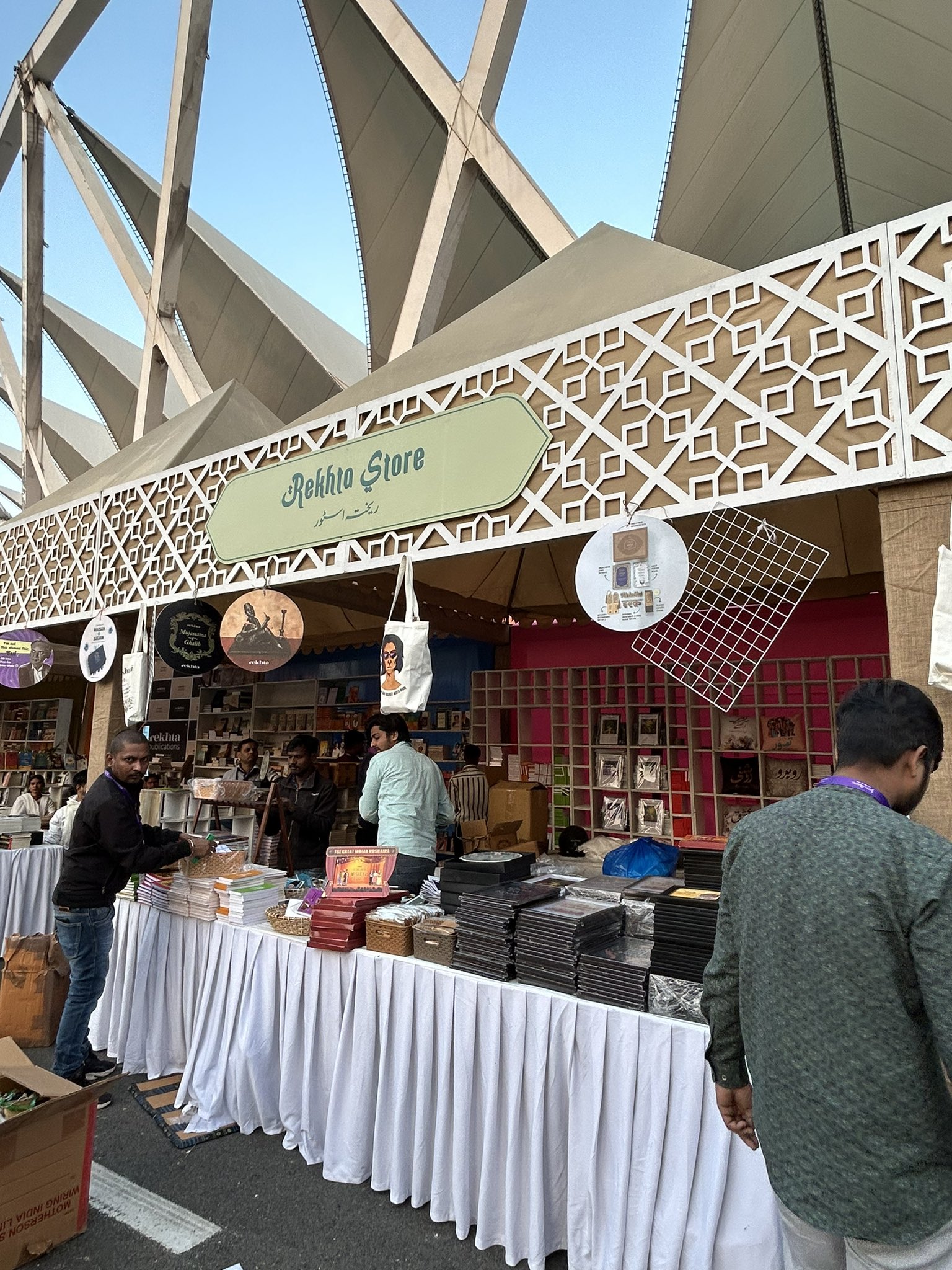
A bookshop in Jashn-e-rekhta
One day Safar spoke formally to him. We decided to discuss it in detail.
And finally one day Sanjeev Saraf asked him to start work on the website,
The first name for the website he suggested was Kavita. This was already bought by someone. The same was the case with many other titles. “I also felt if we had to buy the already registered name for the website, the prices were ridiculously high.”
He suggested ‘Rekhta’ to Sanjeev Saraf. ”He asked me its meaning. When I explained it to him he was happy. Soon we registered rekhta.org as the domain name. I remember he liked the harmony of the words. He was sitting with us during the entire process of registration online.”
Thereafter the work on the website started and many targets were achieved before the scheduled time. This was the journey of paper preparation for the Rekhta Foundation.”
Umair Manzar says he had met Sanjeev Saraf with the sole purpose of teaching him the language but he got involved in his mission.
When asked about the preparations after naming, Umair Manzar said, “After the name was decided, work on the website started. In the summer of 2011, I officially launched the website. The first step was to choose poems of classical poets and the unanimous choice was Mirza Ghalib.”
The selection of contemporary poets started from Jamia Millia Islamia and other libraries. Their compositions were recorded. Saraf hired composers and they worked out of the Noida office. It started slowly and then it gained momentum.”
Umair Manzar said, he also contacted Professor Ahmed Mahfooz and Professor Abdul Rashid for their suggestions and advice.”I also arranged a meeting of both gentlemen with Sanjeev Saraf and this meeting lasted for several hours.”
Saraf expressed his intentions and ambitions; the professors also gave their input and suggestions. “Sanjeev Saraf noted every suggestion and tip the two learned professors offered.”
Prof. Rashid suggested that the way to preserve old books was to scan them and upload them on the website.
Umair Manzar says,” One day when I went to the office, Sanjeev Saraf announced the (scanning) machine had arrived. “Now you people bring the books. The scanning process will begin.”
This was a challenge to all of us. Initially, we tried to upload only selected and important books on the website. Later this also opened a new possibility.
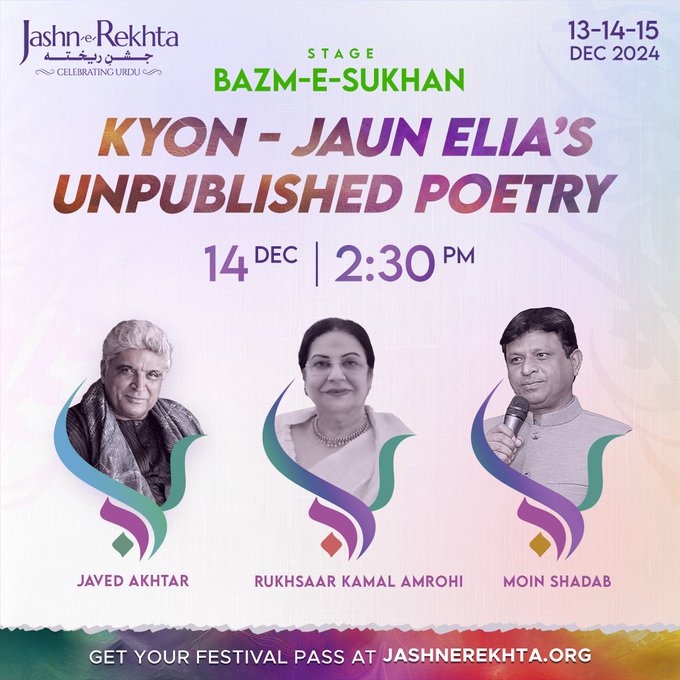
A poster of Jashn-e-Rekhta
Umair Manzar says that initially, people like Rehman Farooqi, Prof. Shamim Hanafi, and Prof. Walwasa ignored the website as another wannabe.
Probably the first column about Rekhta was written by Professor Vasa, Vice President of the Urdu Academy. He also gave Rekhta an award for the promotion of Urdu.
Umair Manzar joined Maulana Abul Kalam Azad Urdu University as an assistant in the early days of Rekhta.
Initially, the Rekhta Foundation was recruited only on the recommendation of a group of like-minded people like Professor Ahmed Mahfooz, Professor Abdul Rashid, and Umair Manzar.
Abdul Rashid, who is from Delhi, had done his research on dictionaries. This year the Ghalib Institute is giving him its prestigious literary and research award. Professor Ahmed Mahfooz is the HOD Urdu Department of Jamia Milia Islamia. He is an expert on poetry.
Professor Abdul Rashid and Dr. Amir Manzar are among the people who have been actively associated with the Rekhta Foundation since its inception.
Dr. Umair Manzar and Prof. Abdul Rashid were included in this team to scan books from Raja Mahmoodabad library and make them part of e-books.
Similarly, access to some private libraries and some important books was very active. Along with them, Professor Abdul Rashid and Dr. Umair Manzar have played a role.
source: http://www.awazthevoice.in / Awaz, The Voice / Home> Stories / by Mansooruddin Faridi, New Delhi / December 12th, 2024
Farooq Ganai’s approach to recycling food waste is benefitting him and the community too. Fayaz Wani highlights Ganai’s eco-friendly entrepreneurship.
Jammu & Kashmir :
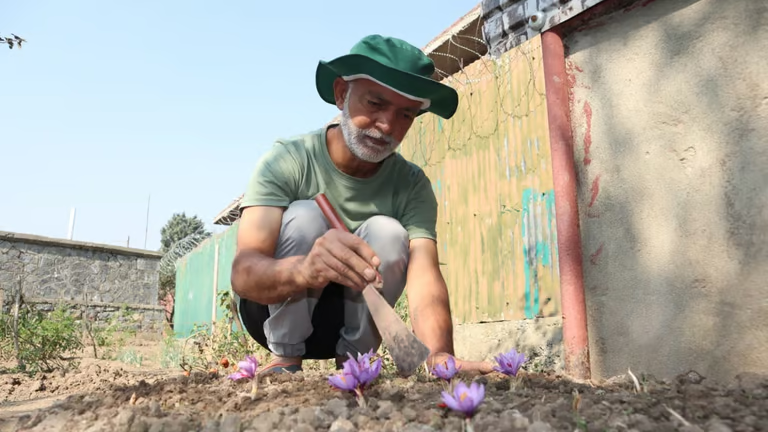
A lawyer by profession and a former sarpanch Farooq Ahmed Ganai, who is also known as a ‘garbage man’, has successfully grown saffron by using compost made from vegetable scraps generated at his home.
His actions have a message that not only can discarded waste contribute to a cleaner and greener environment but it can bring wealth as well.
He is leading a “quiet revolution” of turning waste into wealth and now, wants to educate people about the incredible potential of managing waste.
“I had started the initiative ‘give me garbage, I give you gold coins’ in my village (Sadiwara in Anantnag district) when I was sarpanch of the hamlet. The motive behind the initiative was to attract people and inform them as to how worthy the waste is,” Farooq told The Morning Standard.
Now, with this latest effort, he has been stressing behavioural changes – segregating waste at source, i.e. dividing waste into multiple categories but mainly organic (food waste) and recyclable (plastic, paper etc.)
“From the last year, I have been working on it. People usually throw the domestic waste in rivers and nallahs, and it leads to choking of drains and unhealthy living conditions during the rainy season,” Farooq said.
“I segregate whatever waste is generated in my home. The onion, potato, banana and orange peels, and egg shells; whatever has to be discarded in the form of domestic waste, I segregate it from non-organic waste,” he said.
The primary objective of this, he said, is to promote source segregation of waste at the household level and use the food waste for composting. Now, this effort has led to the successful cultivation of saffron in his garden.
Saffron, known as red gold, is traditionally grown in Pampore and adjoining areas in south Kashmir’s Pulwama district. It requires specific climatic conditions, and its cultivation has remained confined to some areas of the district.
Recalling how he got the idea of growing saffron in his village, Farooq said when he had to say “no” to a friend who had asked him if saffron is grown in his village.
“It pinched me and also motivated me to grow saffron,” he said. “I got some saffron corn from a farmer from Awantipora in Pulwama. He provided me 60 corns on October 2 this year, and I sowed those corns using the domestic waste and other things,” the lawyer-cum-farmer mentioned, holding back the excitement.
Farooq said what followed was nothing short of miraculous. “Within just 19 days, the first saffron flower bloomed. And I have harvested 85 saffron flowers so far,” Farooq said.
According to him, the result proves two things – with proper management, organic waste can be turned into wealth and traditionally climate-specific crops like saffron can be grown in different parts.
“If we can grow saffron using domestic waste as compost, we can turn all the waste in our surroundings into a resource, which will not only make our environment clean but also help us monetarily,” Farooq said.
He now plans to adopt four households in every village and teach the villagers about source segregation, which he hopes will lead to behavioural change.
Through education, community involvement, and transformative potential of waste, Farooq is hoping to pave the way for a cleaner, greener and wealthier Kashmir.
source: http://www.newindianexpress.com / The New Indian Express / Home> The Sunday Standard / by Fayaz Wani / November 24th, 2024
The Aligarh Muslim University (AMU) alumnus Zeyad Masroor Khan has won the prestigious Crossword Book Award-2024 in the nonfiction category for his gripping and coming of age memoir City on Fire: A Boyhood in Aligarh.
The awards ceremony took place at Mumbai on Sunday. The Crossword Book Award, established in 1998, honours and promotes Indian writing in English. Honours were bestowed in six diverse categories – fiction, non-fiction, children’s books, business and management, mind, body and spirit, and translations.
The winning authors received a cash prize of Rs 50,000 each.
The short list in non-fiction category included some of the best writings such as Sudha Bharadwaj’s From Phansi Yard, Sohini Chattopadhyay’s The Day I Became a Runner, Zeyad Masroor Khan’s City on Fire: A Boyhood in Aligarh, Yamini Narayanan’s Mother Cow Mother India, and Arati Kumar-Rao’s Marginlands.
In his review of the book, Prof Mohammad Asim Siddiqui, wrote: “Though Aligarh has found a worthy mention in many recent memoirs penned by writers having some association with Aligarh, like Naseeruddin Shah, an alumnus of AMU, wrote a chapter on ‘Aligarh University Absurdists’ in his excellently-written memoir And Then One Day (2014), his brother Zameer Uddin Shah, vice chancellor of AMU from 2012 to 2017, talked about his efforts to make AMU a top-ranked university and his spats with some political leaders during his tenure in his memoir The Sarkari Mussalman (2018), and Muzaffar Ali credits AMU’s poetic culture and its celebrated Urdu poets for influencing his visualisation of subjects in his films in his autobiography Zikr: In the Light and Shade of Time (2023), Aligarh city is missing in these memoirs.”
Prof Sidddiqui noted that “Zeyad Masroor Khan’s City on Fire fills this gap. It vividly describes life in Aligarh city, particularly Muslim localities such as Uper Coat, Bhujipura, Nuner Gate, Babri Mandi, Mian Ki Sarai, Thakurwali Gali, Haddi Godam, Sarai Sultani and Shah Jamal inside out to debunk many myths about them”.
Sahitya Akademi award winning author Professor Shafey Kidwai congratulated Mr. Zeyad Masroor Khan on winning this prestigious award. “Zeyad Masroor Khan’s spectacular success should inspire other young writers, particularly those coming from Aligarh Muslim University,” he added.
Prof Shaheena Tarannum, Chairperson, Department of English, congratulated Mr. Khan on winning the prestigious award.
Notably, Zeyad Masroor Khan studied BA English at AMU, and now works as a journalist, writer and documentary film-maker.
Each category of the award was judged by a separate jury, and the non-fiction jury consisted of TCA Raghavan, Anuradha Sengupta, and Kaveree Bamzai.
source: http://www.radiancenews.com / Radiance News / Home> Pride of the Nation> Awards> Latest News / by Radiance News Bureau / December 10th, 2024