Category Archives: Bharat Ratna, Padma Vibhushan, Padma Bhushan, Padma Shri Award (since January 01st, 2024)

The stirring raga rages on: Adjectives are too limited to describe the golden voice of Rashid Khan

Sahaswan (Budaun) , UTTAR PRADESH / Kolkata, WEST BENGAL :

He could captivate the audience and eradicate the thin line between a structured format and the playfulness of a classical composition while his voice moved through the shades of ragas.
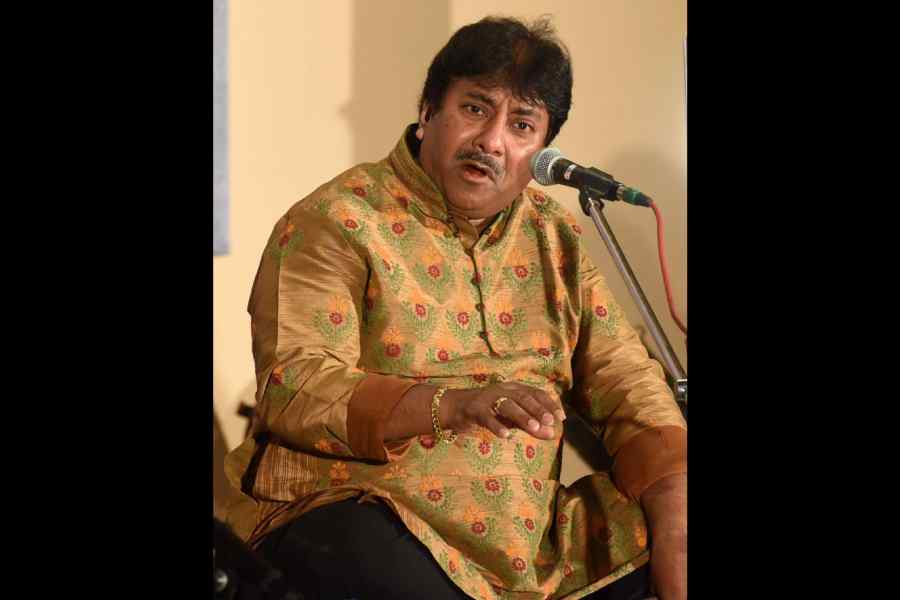
Rashid Khan./ Sourced by The Telegraph

The name of Ustad Rashid Khan reminds one of the words of T.S. Eliot: “Music heard so deeply/that is not heard at all, but/you are the music/while the music lasts.’’

A born genius, talented and extraordinary musician… adjectives are too limited to describe the golden voice of Rashid Khan.

The fulfilment of an art form touches immortality when the artist becomes the art, as the poet said. Diehard listeners of Rashid Khan and ardent music lovers know the truth because they have discovered the artiste’s voice in different genres of music and steeped integrated melodies.

The great-grandson of the legendary Ustad Inayat Hussain Khan, the founder of the Rampur Sahaswan Gharana, Rashid was born on July 1, 1968, at Badaun in Uttar Pradesh.

Memory and melancholy created the soul of the artiste, although he was completely unaware he would one day become one of the greats of Indian classical music. He lost his mother and younger brother at a very early age; he found solace in kabaddi and cricket.

Rashid studied in Mumbai for about a year and after coming back to his hometown, his tutelage was started under his illustrious granduncle and guru, Ustad Nissar Hussain Khan. He also carried the lineage of renowned vocalists like Mushtaq Hussain Khan and Ghulam Mustafa Khan. But the rather authoritarian Ustad Nissar Hussain Khan changed the course of his life and made him what he became over the years. He nurtured the latent potential of Rashid through his training, first at his own residence at Badaun and subsequently at the Sangeet Research Academy in Calcutta.
Young Rashid Khan, an assured voice of the future of Indian classical vocal music, certified by none other than Pandit Bhimsen Joshi, was to evolve into a formidable talent, especially with his prowess in taankari and gamak.

His full-throated voice was an exceptional amalgamation of depth and rhythmic generosity. He could captivate the audience and eradicate the thin line between a structured format and the playfulness of a classical composition while his voice moved through the shades of ragas. He was adept at the instrumental stroke-based style which he inherited from his gharana, as well as an expert at infusing emotion into an elaborate musical verse.

Probably this is the reason he was successful in different styles of singing and innovation despite being a rooted classical musician.

For example, when he sang Tagore songs based on various ragas, he focused on the rendition of the quintessential flavour; his command over the notes and tunes brought out the charm of the song with skilful originality.

Rashid had fond memories of the town of Badaun and its surroundings where he spent his early days. The river which flows by the town was a witness to the number of hours Rashid spent by its side singing.

He paid his respects on his visits to his hometown at the cemetery where his parents and young brother were laid to rest.

It may well be the inexplicable pain and loneliness of childhood filtered through his every rendition of ‘Yaad Piya ki Aye’ (composed originally by Ustad Bade Ghulam Ali Khan) — a Rashid reinvention that became very popular. As with the Bollywood hit ‘Aoge Jab tum o saajna’ from Jab We Met.

He skilfully obliterated differences between musical genres and was able to recreate a unique combination of love and exuberance with the full boom of his voice in three octaves, as manifested in each and every song. In numerous playback essays, he successfully broke traditional boundaries with his scintillating voice and evoked sensibilities even when he was out of his core expertise.

In the words of senior organiser of the Dover Lane Music Conference, Bappa Sen: “Rashid contributed an unparallel range to the music fraternity. We have seen him grow as a man as well as an artiste and witnessed his excellence in all spheres of music. He was an integral part of this music festival from a very young age and even performed in the periodicals. Along with his talent, he excelled himself to heights that required enormous hard work and open-mindedness. As a person he was as humble and respectful to all of us as he was from the very first day.”

Sarodiya Amaan Ali Khan thinks: “Unki voice mein to Ishwar hain.” He had countless memories with this senior artiste, fellow musician and co-performer who, Amaan says, was always an inspiration to him. “He was a person as clear as water,” said Amaan.

To his close friends and contemporary musicians, Rashid Khan was an irreplaceable voice and human being in every sense. The absence of Rashid’s mortal existence has now created a vacuum in the world of Indian classical music which is now devoid of his rich depth of voice.

Rashid’s son Armaan is carrying the torch of the legacy, his daughters Suha and Shaona are into Sufi music.

Rashid flourished as the breaking dawn with Lalit, Ahir Bhairon, Miyan ki Todi, returned to the root with Puriya Kalyan, Puriya Dhaneshree, Shree, sparkled with Sohini.

He has left behind an unforgettable repertoire of renditions and the gift of his unbridled imagination to lovers of his singular work.

source: http://www.telegraphindia.com / The Telegraph Online / Home> Culture> Music / by The Telegraph / January 10th, 2024
Padma Shri G M Mir who helped forces end terrorism in Kashmir lives a modest life

JAMMU & KASHMIR:

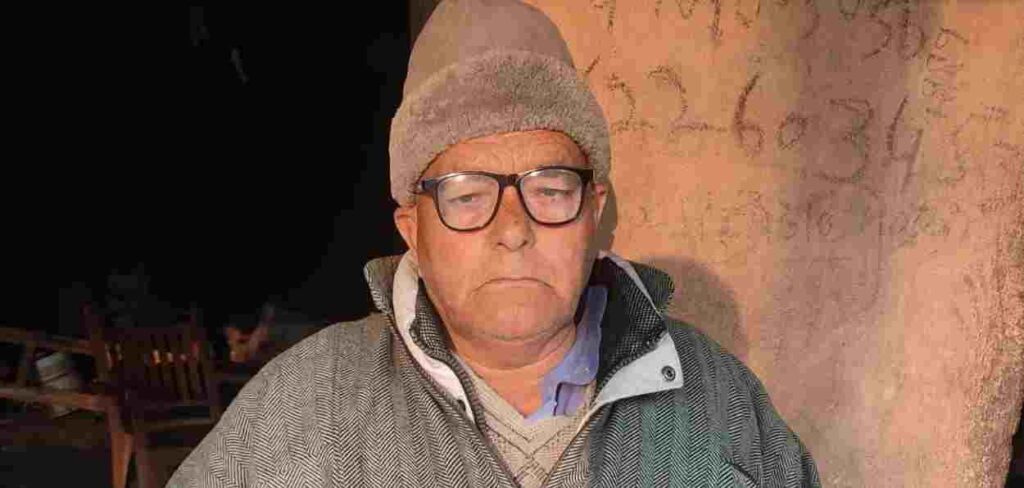
Ghulam Mohammad Mir at his house in Magam, Kashmir

This is the story of how a powerful lobby in Kashmir comprising men and women in politics, bureaucracy, media, and academia was allowed to spread fake narratives for years with the apparent motive of currying favours with pro-Pakistan terrorists and separatists, and it went unchallenged. 

It’s interesting to note that the two Kashmiris, who were conferred India’s fourth highest civilian award—Padma Shri—for helping security forces in service of the nation, were poor and uneducated residents of Central Kashmir’s Tangmarg-Magam belt.

While Mohammad Deen Jagir of Tangmarg was conferred upon Padam Shri for foiling Pakistan’s “Operation Gibraltar” in 1965, Ghulam Mohammad Mir of Magam aka Moma Kanna, was honoured in 2010 for wiping out insurgency in its hotbed in the 1990s.

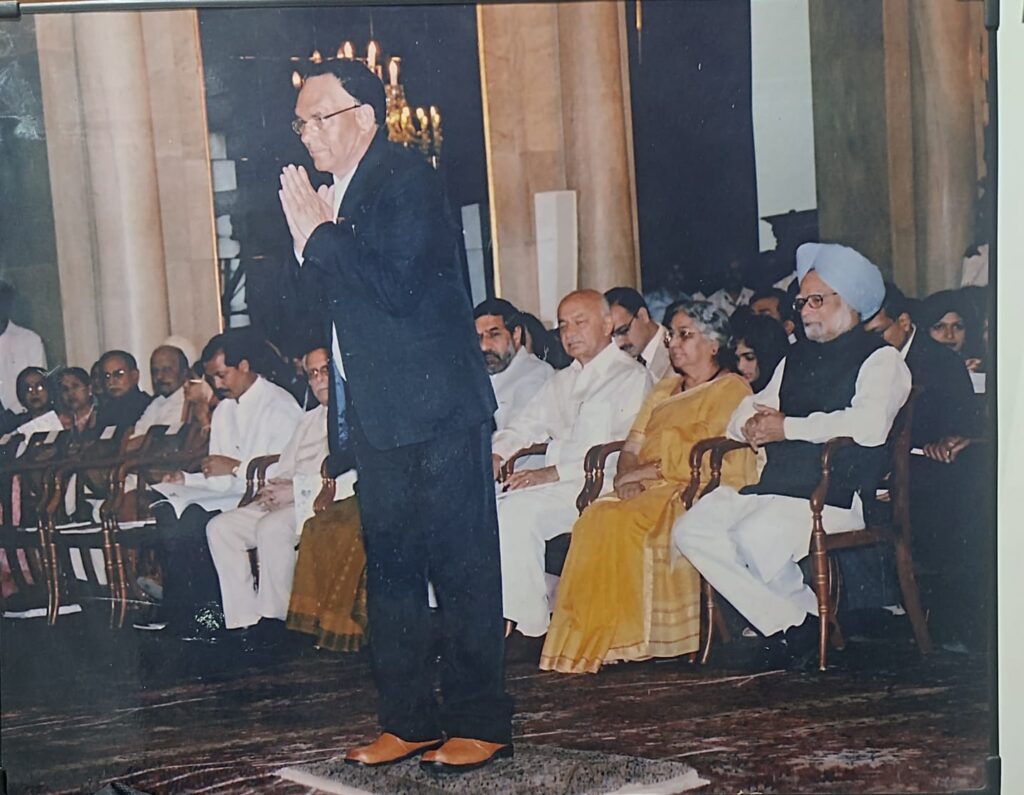
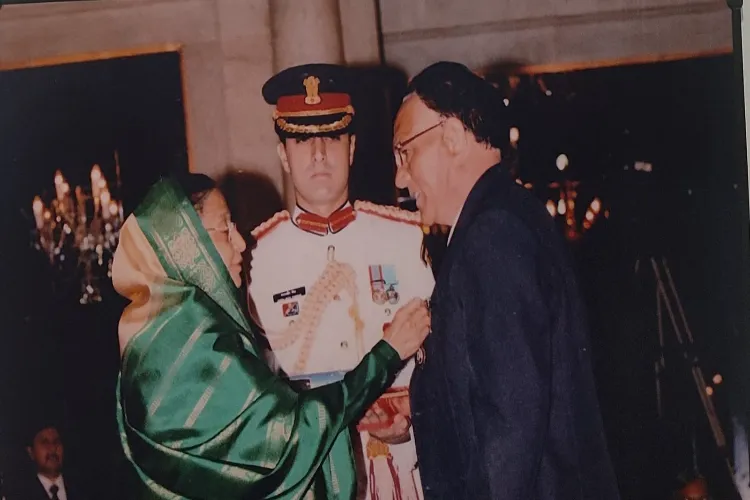
Ghulam Mohammad Mir receiving Padma Shri from President Pratibha Patil

Kanna, who claims to have neutralized “more than 5,000 militants”, also lost 10 of his relatives, including three family members, before his services to the nation were recognized in 2010.The announcement of Padma Shri to Kanna in February 2010 triggered controversy and prodigious reactions from the Valley’s mainstream politicians. In the era of competitive separatism being at its peak, the mainstream leaders outsmarted even the rank secessionists, raising questions about how a ‘collaborator of security forces’ had been selected for a prestigious national honour.

Interestingly, it was Farooq Abdullah, a Minister in Manmohan Singh’s cabinet, who had recommended the award for Kanna. Interestingly, his son, Omar Abdullah, then the chief minister publically distanced himself from the award. He denied that his party or government had recommended the name of a man who was seen as working against terrorists. 

Ghulam Mohammad Mir at the Padma Awards ceremony

In an op-ed in the local newspaper Greater Kashmir, a top bureaucrat, who later held key positions in Mufti Mohammad Sayeed’s cabinet also blasted Kanna and those behind Padma Shree to Kanna.All those in power alleged that Kanna was behind the custodial killing and fake encounters of “hundreds of innocent civilians”. Reports in the media claimed that Kanna was a pro-Pakistan militant who subsequently became a pro-India ‘renegade’. However, Farooq Abdullah quickly admitted that he had recommended Kanna “on the merit of his services to the nation”.

Kanna’s name was recommended by top Army and BSF officers and also the then Chief Information Commissioner of India, Wajahat Habibullah. Habibullah was Kashmir’s Divisional Commissioner when Kanna helped security forces.

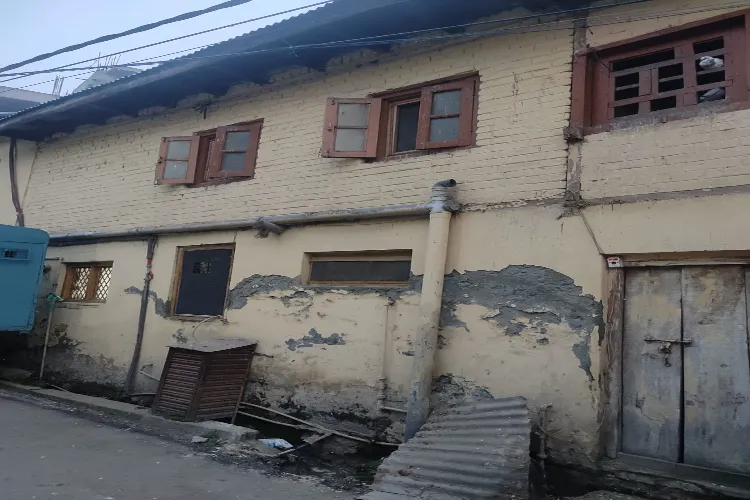
The house of Ghulam Mohammad Mir at Magam, Kashmir

The local and the national media demonized Kanna, buttressing the populist narrative that informers and counterinsurgents were not entitled to Padma awards. They conveniently glossed over the fact that the very first Padma Shree in Kashmir had gone to Mohammad Deen, who had informed the authorities of the presence of Pakistani intruders in Gulmarg in 1965-66.

In an interview with Awaz-The Voice at his Magam residence this week, 73-year-old Kanna claimed to have neutralized “more than 5,000 militants” in the first 10-12 years of the insurgency but asserted that he had never killed a civilian in custody, a fake encounter or otherwise. He said that thousands of militants got either killed or arrested even as hundreds more surrendered. 

This 73-year-old man, who lives in a nondescript mud-plastered house under the Police and CRPF protection, and runs an ordinary sawmill on the premises to eke out his family’s livelihood, claimed he was never a militant.

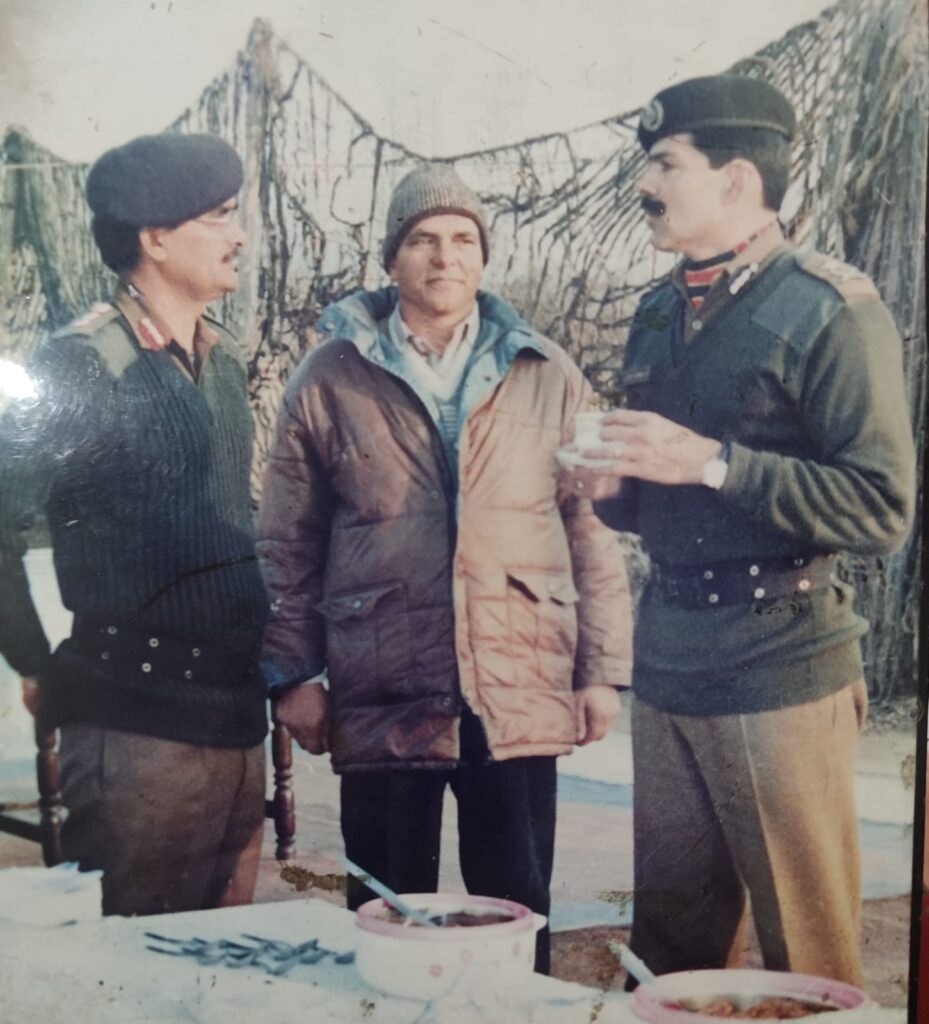
Ghulam Mohammad Mir with security forces in Kashmir

“All those politicians and journalists were lying to the world as they were darlings of (Syed Ali Shah) Geelani and (Mohammad Yasin) Malik and their job was limited to their glorification and appeasement. Go and check the records at all Police Stations. Not a single FIR for murder or any other crime was registered against me”, Kanna asserted.

“I began helping the security forces from day one of militancy in 1989 as I firmly believed that gun culture, violence, and terrorism, would lead us to nowhere. Since I was never a militant, there’s no question of my becoming a renegade. All those media reports about me were trash. I never killed a civilian in custody or encounter. I never committed any atrocities on any human being. That’s why there wasn’t any complaint against me”, Kanna added. 

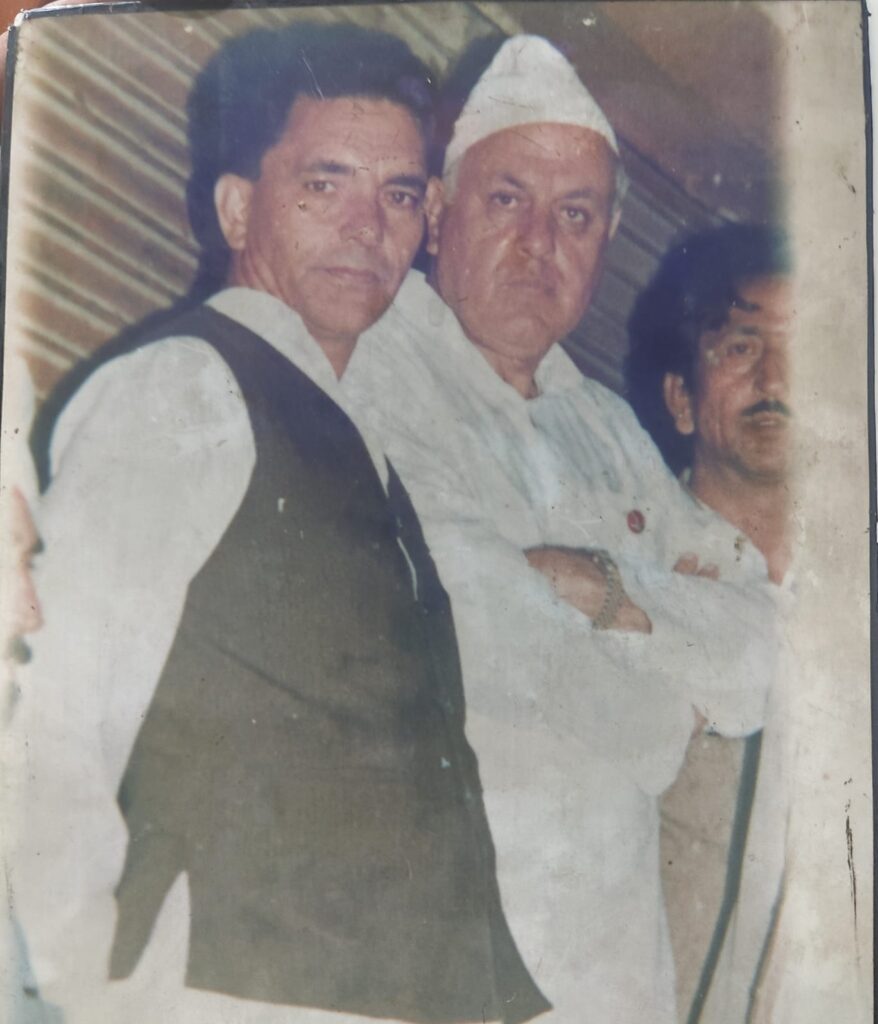
Ghulam Mohammad Mir with Dr Farooq Abdullah

“I didn’t kill anybody even after the militants killed 10 of my relatives including three of my family members”.

Kanna disclosed that being in the Congress party, he knew Mufti Mohammad Sayeed as J&K Pradesh Congress Committee president in the 1980s.

“I was given a temporary class-IV job in the Forest Department when Ghulam Mohammad Shah was the Chief Minister in 1984. In December 1989, when Mufti Sahab became India’s Home Minister and I heard about his daughter Rubaiya’s kidnapping, I did my bit to trace her to Uthura village of Baramulla with the help of a brick kiln owner who was my friend. Later, she was released when Mufti’s men struck a deal with the militants”, Kanna said.

“I met the Minister in charge of J&K in VP Singh’s government, George Fernandes, at Bakshi Stadium in Srinagar. He sought my help to contain insurgency. Ghulam Ahmad Itoo alias ‘Ama Kanna’ of Sultanpora was the first militant who surrendered before me”.

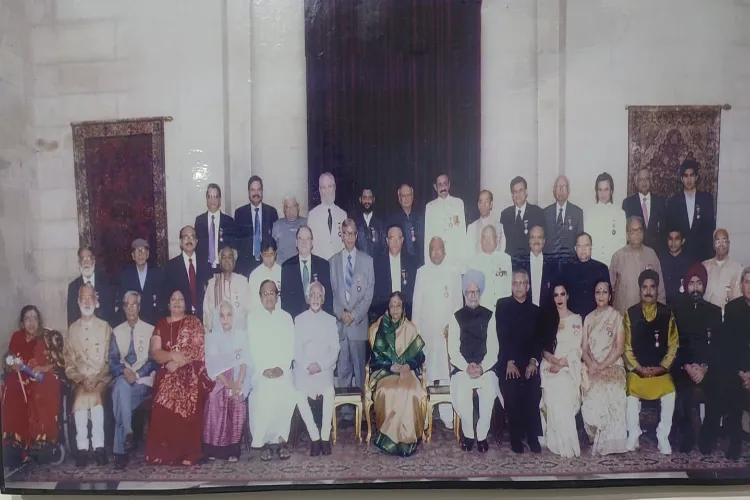
All the Padma awardees of 2010 with President Pratibha Patil in one frame

Later Qasim Khar of Nowgam and three militants of Dab Wakora surrendered before Kanna. This was the first group of Kashmiri youths who switched loyalties and helped security forces in counterterror operations. Within a year, it grew into a sizable network.

Kanna turned to the security forces’ side when some civilians and militants captured and killed Constable Samrat Singh of the CRPF 48th battalion. “They got him booby-trapped in our neighbourhood. They snatched away his .303 rifle. A government school teacher, who is still alive, set him on fire and burned him alive at Hagarpora. There was never any action against him and other killers”, Kanna said.

Unlike Moma Kanna, Amma Kanna indulged in human rights abuse and allegedly committed atrocities against the militant families. Over a year after his surrender, he was buying a lamb for sacrifice on the eve of Eid-ul-Azha near Magam when some militants seized him and chopped off his head with a butcher’s cleaver. It was carried to Budgam and hanged to a tree at Nasrullahpora to terrorize those daring to side with the forces.

source: http://www.awazthevoice.in / Awaz, The Voice / Home> Story / by Ahmed Ali Fayyaz, Magam (Budgam) / November 19th, 2023

Assam’s ‘family planning jihadi’ Dr. Ilias Ali finally gets his dues in form of Padma Shri

ASSAM:

The retired surgeon of Gauhati Medical College and Hospital traverses like a nomad to advocate birth control, especially among Assam’s rural Muslim populace.

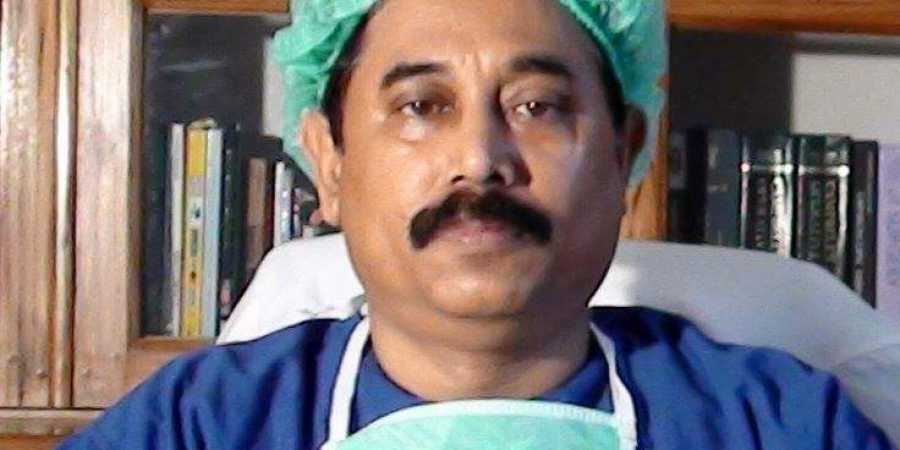
Dr. Ilias Ali. | Express Photo Services

Guwahati :

Assam’s “family planning jihadi”, who quotes from the holy texts, has finally got his dues, the Padma Shri.

For the past many years, Dr. Ilias Ali has been on a holy mission. The retired surgeon of Gauhati Medical College and Hospital traverses like a nomad to advocate birth control, especially among Assam’s rural Muslim populace.

The 63-year-old often adopts unusual but unique methods to motivate people to go for ‘No Scalpel Vasectomy’ (NSV). He quotes verses from the Quran and the Hadith to encourage people to go for NSV. He mostly works in the state’s Bengali Muslim settlements where people view NSV and the use of contraceptive pills as un-Islamic. Resistance is common, yet he has been able to motivate over 55,000 people to go for NSV.

“The first few years of my mission were very challenging. Those days, my family would get scared when I embarked on a journey to conduct an NSV camp. It feared for my life,” Dr. Ali, who is still a part of Assam’s NSV programme, told this correspondent.

Image
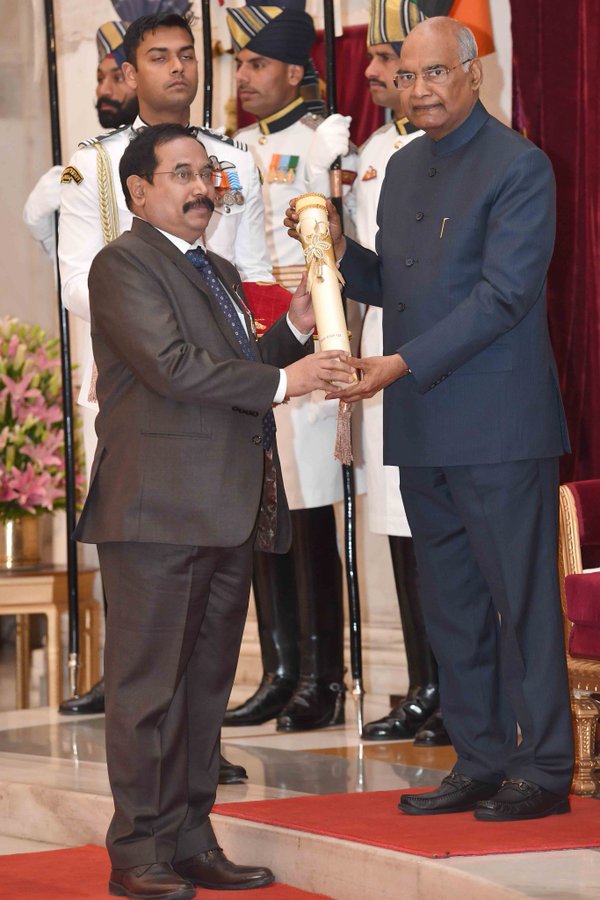
President Kovind presents Padma Shri to Prof Dr Ilias Ali for Medicine. A public health specialist, he has spread awareness about family planning and popularised different means of birth control / pix: rashtrapatibhvn

He is happy that the government has recognised his contribution to society.

“I am very happy that my contribution has been recognised. It is an honour to the entire medical team that I have been a part with for years,” he said.

Uddhab Bharali is the other person from Assam to be named for the award. The 57-year-old has to his kitty over 150 innovations.

Three decades ago, Bharali had to drop out of his engineering studies as he could not afford to pay fees and was required to take care of his family. However, that was hardly an obstacle. Riding on his passion for creativity and innovation, he started developing machines, mostly from scrap, for everyday use. The turnaround was when he created a polythene-making machine for surrounding tea estates. 

Much of his inventions are today centred round agriculture. His machines for de-seeding of pomegranates, peeling areca nuts and cassava, cutting tobacco leaves to extracting passion fruit juice helped in speedy agricultural process and provided livelihood to many.

Earlier, the BBC had done a documentary on the innovations of Bharali who is a recipient of several awards including three from abroad. He said he was very happy to be honoured.

“I’m feeling very happy that I have got a national recognition. I will continue with my work,” the innovator who works with students from various IITs, said. Bharali takes care of 25 families with poor financial backgrounds and is widely known for his philanthropic works.

Two others from the Northeast to be named for Padma Shri are archer Bombayla Devi Laishram of Manipur and flutist Thanga Darlong of Tripura. The 99-year-old Darlong is the last tribal musician to play “Rosem” which is a bamboo-made flute-like musical instrument.

source: http://www.newindianexpress.com / The New Indian Express / Home> Nation / by Prasanta Mazumdar (picture edited) / Express News Service / additional photograph of Padma Shri Award introduced – pix: source: rashtrapatibhvn: / January 26th, 2019

Mentor and Guide to Many Stage Actors, Creator of Epic Plays, Aamir Raza Husain Departs at 66

NEW DELHI:

Mentor and Guide to Many Stage Actors, Creator of Epic Plays, Aamir Raza  Husain Departs at 66

New Delhi:

Much before India was swept off its feet by big-screen spectacles such as ‘Baahubali’, ‘RRR’ and now the upcoming ‘Aadipurush’, Aamir Raza Husain was the creative powerhouse who gave us our earliest experience of a mega theatrical production in ‘The Fifty Day War’, which till the year 2000 had not been replicated on any stage in either scale or vision.

On Saturday, June 3, Husain, 66, passed on, leaving behind a legacy of memorable stage productions.

He is survived by his wife and creative partner, Viraat Talwar, whom he met when she was a student of Lady Shri Ram College and had come to audition for a play (‘Dangerous Liaison’), and their two sons.

If ‘The Fifty Day War’ narrated the Kargil story on a scale that had not been attempted by anyone with an original Indian script on an Indian stage (Alyque Padamsee did something similar with Andrew Lloyd Weber’s ‘Jesus Christ Superstar’, but then, it was not an original production), ‘The Legend of Ram’, which was staged on a smaller scale in 1994, became the gold standard for theatrical spectacles when it was relaunched in 2004.

The production of ‘The Legend of Ram’ involved 19 outdoor sets spread over three acres and a cast of 35 actors playing different characters drawn from the epic, and a 100-member technical crew. The last show was staged in front of the then President, A.P.J. Abdul Kalam, on May 1, 2004.

Husain was born into an aristocratic Awadhi family on January 6, 1957. His parents were divorced — his father, whom be barely saw was an engineer with Bechtel and set up the water works of Mecca-Medina — so he was brought up by his mother and her family — in the days of the British Raj they presided over a little principality named Pirpur.

He went to Mayo College, Ajmer, and after he completed his schooling, he read History at St Stephen’s College, where he acted in several college plays under the direction of such legends as Joy Michael, Barry John and Marcus Murch. It was an early start to a career devoted to English theatre and his company, Stagedoor Productions, which became known to lift ordinary theatre to the realm of the spectacular since 1974.

Husain did appear in two films — in ‘Kim’ (1984), based on Rudyard Kipling’s novel, with Peter O’Toole playing the lead, and Shashanka Ghosh’s romantic comedy drama, ‘Khubsoorat’ (2014), starring Sonam Kapoor and Fawad Khan — but he was wedded to theatre.

Over the years he produced several plays staged at outdoor locations — ‘Sare Jahan Se Achcha’, ‘1947 Live’ and ‘Satyamev Jayate’, which was staged along the backdrop of the 14th-century Hauz Khas monument, in Delhi in 1999.

Previously in 1998, Husain and his troupe, in collaboration with Delhi Tourism, organised the Chaudvin ka Chand festival on a 2-km stretch between the Red Fort and Fatehpuri Mosque in Chandni Chowk in the neighbourhood now celebrated as Dilli-6.

With 91 productions and more than 1,100 performances behind him, and a Padma Shri awarded to him in 2001, Hussain spent his last years developing the Qila next to the Select CityWalk mall in South Delhi’s historic Saket neighbourhood.

Like all things bearing the Husain stamp, the Qila has emerged as a co-working space where corporates and creative souls work under one roof to incubate business ideas or the next big theatre production.

Unfortunately for Husain, as he lamented in a recent interview, theatre remains a hobby, or at best a second profession in India, but fortunately, thanks to the efforts of pioneers like him, it is by no means wallowing in poverty. Far from that being the case, it has become the nursery of the best and brightest in cinema. — IANS

source: http://www.clarionindia.net / Clarion India / Home / by Clarion India / June 03rd, 2023

Interaction with author of ‘Talat Mahmood – The Velvet Voice’

It will be held at 4.30 p.m. on Saturday

The Manipal University Press will hold the ‘Author Meets Readers’ event ‘From the Horse’s Mouth’ with Manek Premchand — author of the book ‘Talat Mahmood – The Velvet Voice’ — at the AC Seminar Hall on the MIT campus here at 4.30 p.m. on Saturday.

According to a press release issued by Manipal University here on Thursday, Mr. Premchand will share his thoughts and feelings in a conversation with Manipal Centre for Philosophy and Humanities faculty member Gayathri Prabhu.

A film will be screened and that will be followed by a music programme with Premchand and a few others singing Talat Mahmood’s songs.

source: http://www.thehindu.com / The Hindu / Home> National> Karnataka / by Special Correspondent / Manipal – September 25th, 2015