Lucknow, UTTAR PRADESH / Mumbai, MAHARASHTRA :
The book reads more like a collection of anecdotes
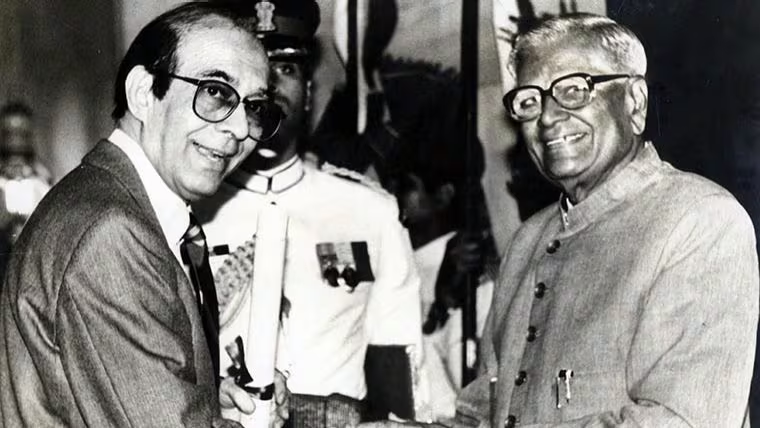
Nation’s pride: Talat Mahmood receiving Padma Bhushan from president R. Venkataraman in 1992 | P. Musthafa
To encapsulate the life of a man often described the ‘King of Ghazals’, though he was much more than that, is no easy task. Just for attempting that, Sahar Zaman deserves applause.
” Mahmood’s musical life was a rich amalgamation of traditions and languages “
Talat Mahmood, born in Lucknow and trained at what was then the Marris College of Music (now Bhatkhande Sanskriti Vishwavidyalaya) was a singer unlike any other. His natural velvet voice bore a slight quiver. It is a quiver which singers take years to cultivate. Musically termed vibrato, this quick and subtle change of voice between notes which are pitched very closely conveys emotions more powerfully than lyrics. When used without dedicated cultivation, a vibrato sounds contrived and the unevenness of breath can be made out by the trained ear; but when it comes naturally, it is as smooth as the wax and wane of emotion. Yet, in his early years in Mumbai, Mahmood strove to hide this unique quality, attempting often to sing in the nasal tones of his idol K.L. Saigal. This would not last long as Anil Biswas, a composer he had worked with for long, angrily walked out of a recording studio asking Mahmood to return only when the real Talat was found.
Ghazals came first to Mahmood because of his affinity with Urdu, and also because of the cultural bearings at home. His father, Manzoor Mahmood, who was a member of the Indian Medical Mission to Ottoman, would often sing to pep up his fellow travellers, while his sisters were flawless renderers of the nath (songs in praise of the Prophet), and his elder brother, Kamal, too, had a rich singing voice. While everyone in the family had strong voices with good throws, Mahmood’s was tuned differently. It was far gentler, almost like a dewdrop caressing a rosebud. It was the kind of voice that could dull the impact of the unkindest of blows. In the 2022 release Gangubai Kathiawadi, for instance, when the lead character learns of being sold to a brothel by her boyfriend, there is a snippet of a song that plays in the background. Mahmood’s voice is like a gentle nuzzle that softens the harsh truth.
Pathos was the most marked emotion of Mahmood’s voice. It was the embodiment of a disembodied, deep sadness. No wonder then that ‘Tragedy King’Dilip Kumar spoke of him as the ‘true musical speaker of my soul’.
Mahmood’s musical life was a rich amalgamation of traditions and languages. Under the name Tapan Kumar, he was a leading voice of the modern Bengal Music movement in which lyrics became as important as the music. He sang in 16 languages including Malayalam, Tamil and Kannada. And while you can close your eyes and imagine him most readily as a dejected Dilip Kumar pictured behind gauzy, fluttering curtains singing ‘Shaam-e-Gham ki qasam’ (On the promise of this sadness soaked evening), close them for some more time and you will just as easily picture him as a boyish Raj Kapoor singing ‘Main dil hun ek armaan bhara’ (I am a heart full of desires), a song that lends itself most readily to the waltz.
As a singer he had many firsts to his name, including being the pioneer of world tours. His pleasant face (which incidentally is also the meaning of Talat) made him a singing-actor and he also dabbled in composition. To audiences in the USA, he was introduced as the Frank Sinatra of India. He became a recognised voice, courtesy All India Radio, at just the age of 16. The book records a delightful incident in which the young Mahmood was accosted by a group of girls in Lucknow to sing as he cycled his way to his music college. Among that gaggle of fans was Qurratulain Hyder, who would go on to become a famed Urdu writer.
He was also a man deeply devoted to the larger cause of his art. He raised his voice for the payment of royalties to singers and also became a part of programmes to raise funds for senior, out-of-work artists. He joyfully gave away songs to Mukesh when he was going through a rough patch. His delight in singing for troops and in encouraging new talent all made him a perfect gentleman, a word often used in the book to describe him.
Biographies can never be divorced from the times that their subjects lived in. Thus, we read in bits about the decline of the film industry in Kolkata after the partition of Bengal, the government’s press for the Bhoodan movement, for which Mahmood sang; the start of recordings in sound-proof rooms; the introduction of multi-instrument orchestra for playback singing; and the rise of version songs. We also read of how the Partition tore apart Mahmood’s family. In a particularly poignant recollection, his father asked his elder son who would water the plants in the courtyard if he left for Pakistan (he did anyway).
The book at places digresses from a linear telling of Mahmood’s story and moves to talking about other stars of the time. This could appear jarring to some, but it is perhaps inevitable given that Mahmood’s journey was intertwined with those of others. One example being that of the actor Shyam, whose death resulting from an accident on a film set is talked about in some detail, to later merge it with the fact that his last three songs, sung by Mahmood, became ‘locked’in his voice.
If you are looking for a book which offers an undeviating narrative of Mahmood’s life, this perhaps is not it. This book reads more like a collection of anecdotes―some known, some not so well known. His gentleness is a quality emphasised throughout the book. He earned it perhaps from spending his formative years with his paternal aunt Mahlaqa Begum. We also come to know that he was a keeper of his words―both to friends and the girlfriend he left in Kolkata.
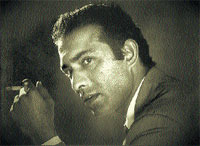
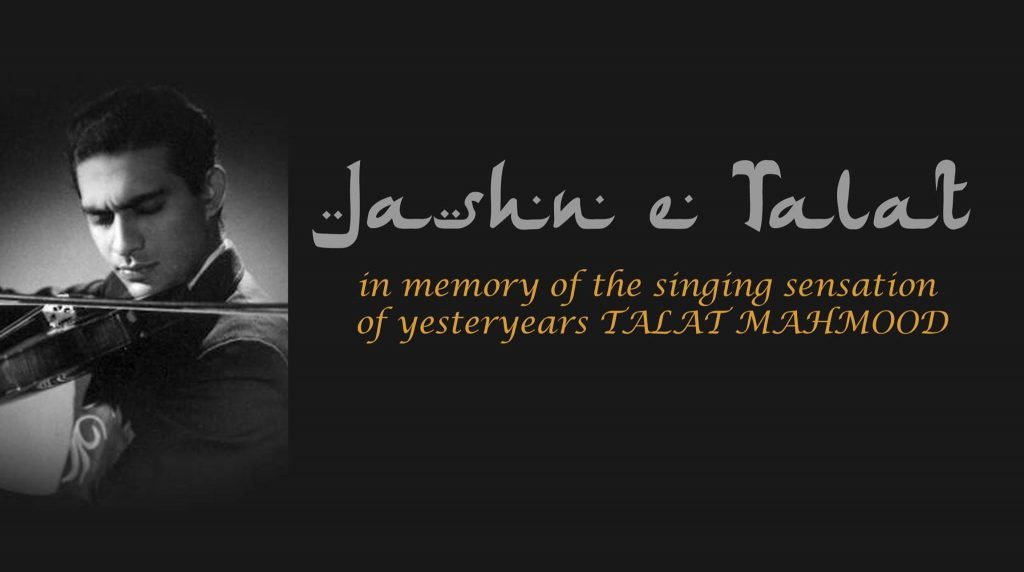
To those who have known the music of Mahmood, this book is a ready reckoner of his songs and will send you to listen to those you have loved and search for those you have forgotten. To those who do not know the music of Mahmood, take this as a befitting introduction to a singing genius. To do both in under 500 pages, in easy language, peppered with countless photos of the handsome Mahmood, is Zaman’s biggest achievement.
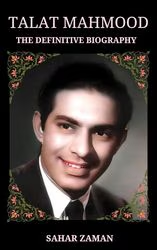
TALAT MAHMOOD: THE DEFINITIVE BIOGRAPHY / Author: Sahar Zaman / Pages: 480
source: http://www.theweek.in / The Week / Home> TheWeek / by Puja Awasthi / February 11th, 2024