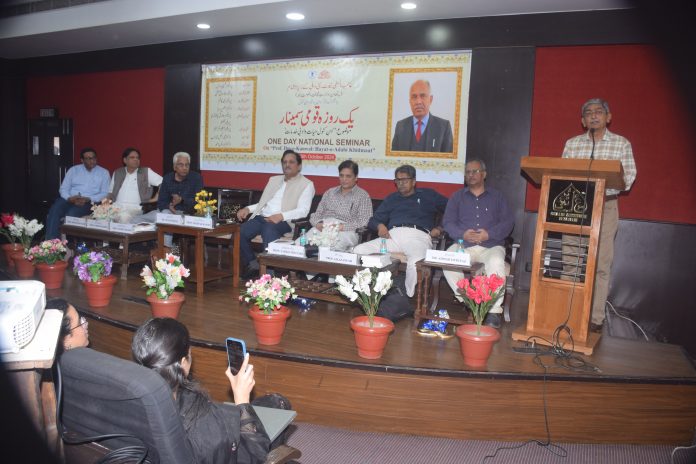
The book Kasb-e-Maash Ka Islami Tasawwur (Islamic Concept of Livelihood) by Maulana Muhammad Anas Falahi Madani was launched at the Indian Center for Islamic Finance (ICIF) on Saturday. This publication was made possible through the collaboration and financial support of ICIF and Rafah Chambers of Commerce, along with the coordination of Tasneefi Academy.
In his introduction, the author discussed two prevalent attitudes towards wealth in Muslim society: one driven by inflation and the other by extravagance. He noted that some individuals disregard ethical boundaries in their pursuit of wealth, often ignoring whether their means are halal or haram, driven solely by the desire to accumulate more.
“Islam recognizes wealth as a vital necessity of life. While individuals are encouraged to earn as much as they wish, it is imperative that they do so through legitimate means and adhere to the limits set by Allah,” he emphasized.
Dr. Razi-ul-Islam Nadvi, National Secretary of Jamaat-e-Islami Hind, expressed his appreciation for the book’s detailed exploration of this balanced perspective of Islam. He outlined the book’s structure, noting that it consists of six chapters: the first examines the nature of worldly life through the lens of the Qur’an and Sunnah; the second highlights motivational aspects of earning a living as described in the Qur’an and Hadith; the third discusses legitimate versus illegitimate sources of income; the fourth reflects on the economic life of the Prophet Muhammad; the fifth covers methods of earning and spending; and the sixth analyzes the consequences of Islamic and non-Islamic approaches to wealth accumulation.
Dr. Nadvi expressed hope that the book would be well received in both academic and religious circles, clearing up many misunderstandings in the process.
Professor Mohsin Usmani Nadvi praised the author for illustrating Islamic principles of earning through various examples from the Qur’an and Hadith.
In his closing remarks, Professor Jawed Ahmad Khan, Chairman of ICIF, pointed out the abundance of literature focused on spending, contrasting it with the scarcity of works aimed at wealth creation. He urged young students and researchers to engage in research that meets the demands of our rapidly evolving economic landscape, where the focus increasingly lies on wealth generation and investment. H. Abdur Raqeeb, General Secretary of ICIF, concluded by emphasizing the importance of financial literacy, particularly for women.
source: http://www.indiatomorrow.net / India Tomorrow / Home> Economy / by admin indiatomorrow / October 07th, 2024
Marsiya Dilli ye marhoom ka ae dost na cher Na sunaa jaaye-gaa hum se yeh fasaanaa hargiz
Do not strike the chords of the story of Delhi My heart won’t bear the woeful tale of its loss
Delhi, the city of lights and poetry, has been destroyed seven times only to rise again each time from the ashes of memory, a memory painted into vivid relics and commemoratives; the memoirs of loss and longing.
The life of the last King of Delhi, the poet Bahadur Shah Zafar, took a drastic turn in 1857 when the British exiled him to Rangoon for his alleged role in the uprising of 1857. His sons were shot, his titles stripped and his poetry confiscated. Denied a pen and paper, the exiled and imprisoned poet-king used a burnt stick to write his epitaph on the walls of the small room, outpouring his desolation and heartache:
The siege of Delhi marked the end of a literary epoch, but the nostalgia inspired numerous fictitious and fanciful accounts of the city, colonial rule playing an ironic impetus in this memorialisation, with its blooming print culture and a fetish for memorabilia. Among those who bled the evocation of the lost city in their accounts were Munshi Faizuddin, Rashid-ul-Khairi, Nasir Nazeer Firaq, Hasan Nizami, Arsh Taimuri and others.
Murraqa literature
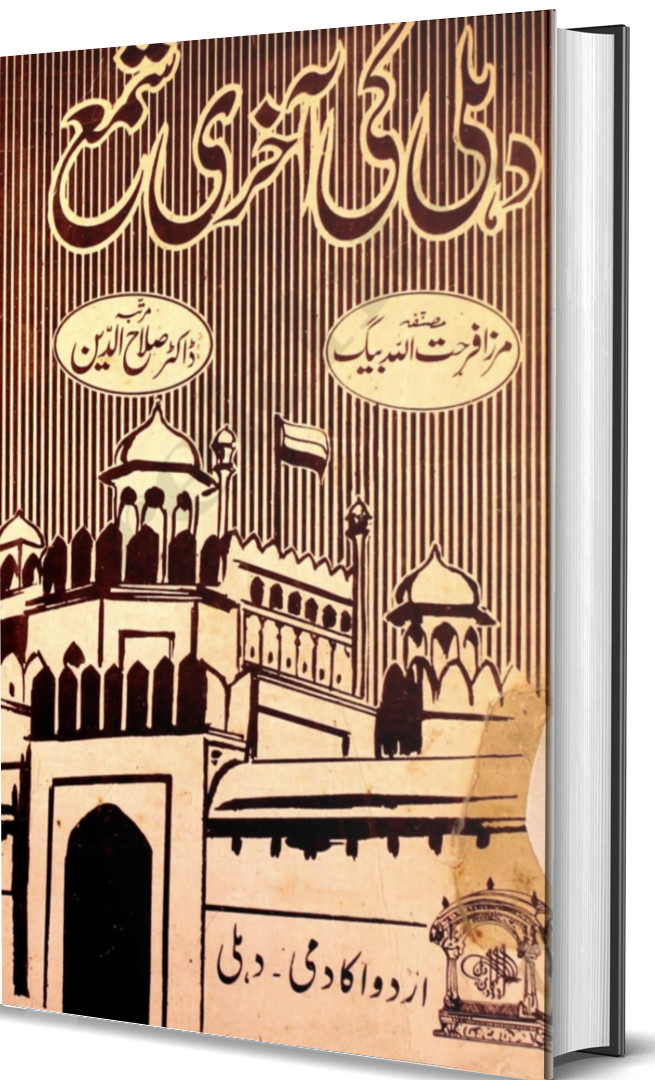
Dehli Ki Aakhri Shama, written by Mirza Farhatullah Baig in the early 1900s, is considered as one of the most splendid pieces of murraqa literature, interlocking overlapping layers of lived experiences with a poetic interlude. The writer of this splendid vignette, Mirza Farhatullah Baig, is considered one of the finest satirical writers of the Urdu language, his sketches rich with colourful characterisation emanating from a sense of deprivation and despondency; a theme that is constant across the writings of the authors mentioned above.
The historical novel is a story of a fictitious mushaira (poetic symposium) held in Delhi in 1845 under the patronage of Bahadur Shah Zafar, with his son Mirza Fakhru (pen name Ramz) as its chief guest. The artistic rendition, even though an imagination, turns out to be much more than that. It draws the sketch of the culture and tradition of pre-1857 Delhi in the most ornate and poignant colours, something well deserved by the ever-persevering city of lights.
Mirza Baig mentions a portrait of the great Urdu poet Momin Khan Momin that inspires him to draw a similar portrait of all the poets in the form of a novel, something that the posterity could dwell upon and find pride in, especially when everything was marred by a sense of impotence during the worst periods of British colonial rule. The second inspiration drawn by Mirza was from the famous narrative of Muhammad Hussain Azad, called Nairang-e-Khayal (An imaginal play) and Maulvi Karimuddin’s Tabqaat-ul-shoora-hind (Biographies of the Poets of Hind).
Interestingly, Maulvi Karimuddin mentions a mushaira that is actually held in 1845 at his home and Mirza Baig redraws the same gathering, albeit at a larger scale as a key literary event in Delhi. In his debt to Maulvi Karimuddin, he makes him the sole narrator of the novel and mirthfully limns him deserving any praise and all the criticism that his account would draw from the audience. The mushaira runs across the poetic eras and exhumes characters, known, unknown and forgotten, from across the length and breadth of Rekhta (the original name for Urdu).
Dehli Ki Aakhri Shama by Mirza Farhatullah Baig.
Delhi, a city in motion
The novel starts with a frazzled air of self-awareness of the city it is penned down in: once a patron city of arts and now a vestige of the East India Company. Molvi Karimuddin, who belongs to an opulent family of Molvis (Muslim preachers) in Panipat, now reduced to pennies, comes to the capital Delhi during the days when Delhi College is newly founded and the city has acquired printing presses for the first time. He enrols himself in the college and in order to earn a living starts publishing translations of well-known Arabic books from a rented building: Mubarak-un-Nissa’s haveli (Mubarak-un-Nisa was a courtesan in Mughal court and built a beautiful red mosque in old Delhi, that is often referred to as Randi ki Masjid) in Qazi Ka Hauz (now Hauz-e-Qazi).
However, his business fails.
Karimuddin, never fond of poetry, is left with no option but to organise a gathering of poets so that he can publish an account of the life and works of great poets based on it to get the press going. He starts his journey by meeting Nawab Zain-ul-Abideen Khan Arif, Ghalib’s nephew and Hakeem Ahsanullah Khan, the Prime Minister of Bahadur Shah Zafar.
The book gives very picturesque details of the lanes, houses and markets of Delhi. The canals in the courtyards, large platforms pillared halls, recliners, fountains, and porches. An especially opulent and splendid silhouette of the old city is drawn for the reader. The two associates of Maulvi arrange his meeting with Emperor Bahadur Shah for official permission for the gathering. The author describes the ease of access a commoner had to the royal court and the mannerisms that were prevalent among the nobility. The acronyms detailed in the book are unheard of in any book of history, with the Emperor being referred to as Jahan Panah, Zil-e-Elahi, Badshah Salamat, Fath-ul-Mulk, Hazrta Peer-o-Murshid, Zilullah, Qibla-e-Alam etc.
These are the times when what was once referred to as Lal Qila (Red Fort) or The Qila Mubarak (The Sacred Fort) is referred to in an ironic diminutive Haveli or Lal Haveli (red mansion), implying a shrinking influence of the Mughal family in the backdrop of growing colonial power. The book mentions the scheme of the fort, its Islamic, Persian, Timurid and Hindi styles, and details the conduct of personal and public life there. The physical sketches of kings, princes, ministers and poets are intricately penned down giving the reader a tactile presence of each of them. Baig writes that it had become customary in the last days of Mughal rule for princes to swear by the throne or the crown, political conditions being so uncertain that every potential heir thought he might be the next king.
A culture of poetry
The author profiles the three great poets Mirza Ghalib, Ibrahim Zouq and Momin Khan Momin with such eloquent artistic ingenuity that the reader is teleported to Ballimaran, Kabuli Gate and Cheelon ki Ghali in the very presence of Ghalib, Zouq and Momin, witnessing their aristocratic styles and patrician demeanour. The lanes leading to their houses, the shops en route, their mansions, their taste in dressing and most of all their behaviour towards the guests and strangers are detailed lucidly with an immaculate imaginative prowess that gives the book an exquisite artistic life of its own.
The Mughal empire was a great admirer of art which is evident in its marble and sandstone. However, it did not only leave stones and sand, its high culture left us a wealth of disquisition: poetry, prose and letter. A simple mushaira would be a central event receiving an inordinate state patronage. The alleys leading to the venue would be strung with coloured glass lamps, the roads would be cleaned and sprinkled with water for the guests and volunteers would offer water to the passersby. The whole city would be abuzz with the news and the lights (described beautifully as qandeel, jhar, fanoos, qumquma, deewar gir, hoondi, shama) would dazzle the eyes.
The poetic symposium, mushaira, was a cultural institution unlike any other with etiquettes of its own. It would also serve as a testing ground for the abilities and talent of the poets. The poets critics attended to evaluate the standard of poetry, rhetoric and prosody. Not only the use of language or the contents of poetry were subject to meeting certain standards, but the mannerism, the delivery and traditions too counted a lot. Even saying “Waah, waah” and “Subanallah” had limits and rules, and the tonality of each would convey a different intent every time. Mirza Baig defines these limits for the reader, “The ghazal that should not be praised is not praised”. The culture of starting the gathering with “Fatiha”, reading the poem of the patron (usually the emperor) by his emissary and then commencing the event by moving a lamp/candlestick/lantern among the poets as described in the book was prevalent until the late 20th century.
The author brings nearly 60 poets, a gamut of eccentric and interesting characters from different eras, on a same dais. The leading names of sukhan(narration) like Ghalib, Dagh, Momin, Bedil, Zauq and Aish are put up against the forgotten masters like Yusuf Tamkeen, Ghulam Ahmad Tawseer, Mohammad Jafar Tabish, Syed Mohammad Tashuq, Haji Beg shohrat, Nawazish Tanweer, Mirza Mahir, Najmuddin Barq, Mirza Pyare Refat and others whom Baig digs out from the antediluvian. Every poet is introduced with a physical sketch and his profession and interests, his expertise in poetry, his teachers and his immediate friends and foes. Then each of them uses the medium of the ghazal in exquisite ways to articulate complex human thoughts, philosophical concepts, revolutionary ideals, and, of course, the universal emotions of humankind. Some of the finest ghazals find their way in the book, becoming the vehicles of rebuttal, reconciliation and revenge between the poets.
The poets chant the withering of the rose of happiness. They echo the transitory nature of life in numerous metaphors and combine it with a desire for immortal beauty, strongly influenced in their world view by the imagery of Muslim mystics. The beloved to whom the poets refer to is always considered cruel whom one only knows by hearsay: a noble virgin living in purdah, a coy courtesan, a despotic ruler whose will is inscrutable and who is beyond the reach of a common man. The “rival and the reproacher”, so closely associated with the love drama, fit as well in the scenery of court intrigue, the ambiguity permitting numerous interpretation of an outwardly simple verse.
This is the time when Persian poetry, which according to Ethe had lived through the Mughal court its “Indian summer”, was burning its last embers. Other than a few masters like Mirza Ghalib hardly anyone would write in Persian. The fact is alluded to when Maulana Sahbai recites a Persian ghazal, and in the words of Karimuddin (Farhatullah Baig), “Persian ghazal is imposed on the Urdu mushaira”; and everyone is left blank faced: unable to appreciate the profundity of the dying language. The mehfiland its labyrinth of poignant inventivenessgo on the whole night in a sublime poetic ecstasy, occasionally marked by twangs of jealousy and rancour that were prevalent among the poets of past and often served as a goad for improvisation.
The mushaira and the novel end with the the word of God just as they had started, remembering the bygone era in all its lost glory. Drawing upon the living memories the book blends fact and fiction seamlessly keeping alive the high culture of old Dilli. Conscious of the decline and defeat of the cultural sophistication, Mirza Baig, like many of his times, seemed to be living somewhere between the struggle of two worlds: A world of poetry and a world of ashes.
Ab kharaba hua Jahanabad Warna Har ek qadam pe yahan ghar tha
Now Jahanabad (Delhi) has become a barren land Otherwise every footstep was a home here.
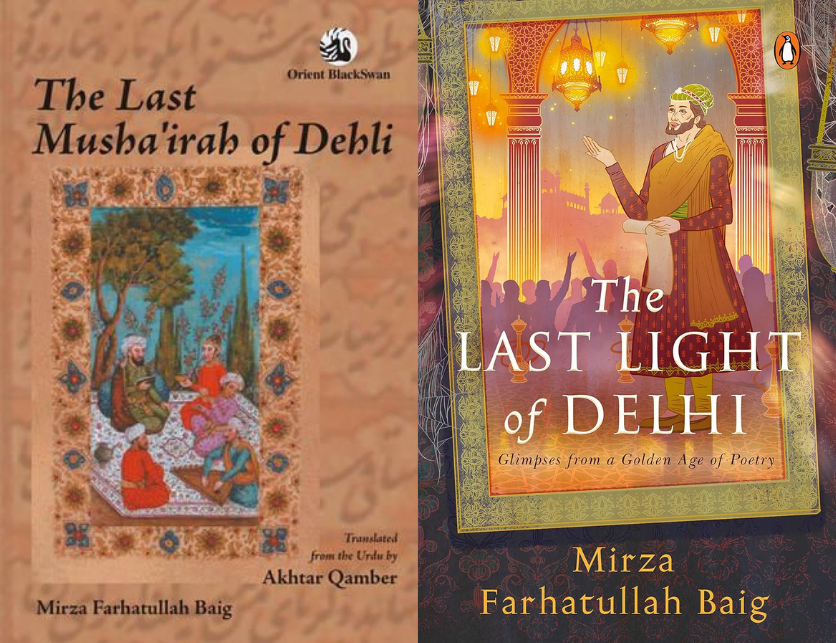
The English translation of Dehli Ki Aakhri Shama is available as The Last Mushaira of Delhi translated by Akhter Qamber (Orient Black Swan) and The Last Light of Delhi translated by Parvati Sharma and Sulaiman Ahmad (Penguin India).
source: http://www.scroll.in / Scroll.in / Home> Talking Books / by Khawar Khan Achkzai / September 29th, 2024
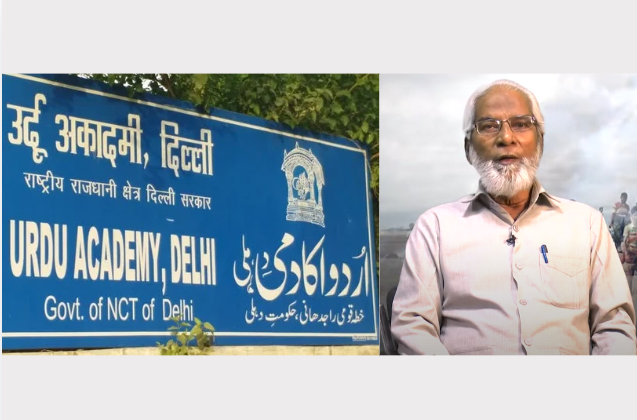
The Delhi Urdu Academy has announced the prestigious award, recognizing Intizar Naeem’s autobiography Ujalon Mein Safar.
Intizar Naeem, a renowned poet, intellectual, former General Secretary of Idara-e-Adab-e-Islami Hind, former Director of Radiance Viewsweekly and Ex-Managing Editor of Peshraft, and founder of Madhur Sandesh Sangam – an institution dedicated to the representation of Islam in Hindi – has been lauded for his contribution to Urdu literature with his autobiography. Ujalon Mein Safar has been awarded first prize in the Academy’s 2021 awards.
His autobiography has already received recognition from the Uttar Pradesh Urdu Academy as well.
In this work, Naeem encapsulates his seven decades of experiences, highlighting his efforts, particularly in the preservation and reclamation of Waqf properties.
Critics have praised his insight, noting that if Muslim leaders had acted upon his recommendations, the serious challenges facing Waqf assets today might have been averted.
source: http://www.radiancenews.com / Radiance News / Home> Pride of the Nation> Awards> Report / by Radiance News Bureau / October 16th, 2024
(From R to L) Prof. Aslam Parvaiz, Dr. Ahmad Imtiyaz, Prof. Ghazanfar, Prof. Tariq Chhatari, Prof. Shahpar Rasool, Prof. Sagheer Afraheem, Prof. Farooq Bakhshi, Prof. Muhammad Kazim
Special Report by Dr. Afzal Misbahi, Assistant Professor of Urdu, MMV, BHU, Varanasi, and former student of Prof. Ibn Kanwal.
New Delhi:
The Ghalib Institute, in collaboration with students of the late Prof. Ibn Kanwal, organized a one-day national seminar titled “Ibn Kanwal: Life and Literary Contributions” at the Ghalib Institute’s seminar hall. The event saw participation from renowned scholars, writers, and academics who reflected on the multifaceted legacy of Ibn Kanwal, known for his mastery in fiction, storytelling, and academic research.
Presiding over the inaugural session, Professor Shahpar Rasool highlighted Ibn Kanwal’s deep connection to Urdu literature and his dedication to mentoring students. Distinguished guests included Prof. Aslam Parvaiz, Prof. Tariq Chhatari, and Prof. Ghazanfar, with the keynote address delivered by Professor Sagheer Afraheem.
In his keynote, Prof. Afraheem provided a comprehensive overview of Ibn Kanwal’s journey from his early days as a student to his celebrated career as a literary figure. He emphasized Kanwal’s innate love for storytelling, a passion inherited from his family, and his ability to poignantly capture the pain of lost relationships and cultural decay in his stories.
Speaking on the occasion, Prof. Muhammad Kazim remarked that the overwhelming response from those wanting to contribute to the seminar showed the deep respect and admiration many held for Ibn Kanwal. He revealed that four universities are currently conducting research on Kanwal’s contributions to Urdu literature.
In a heartfelt opening address, Prof. Farooq Bakhshi shared personal memories of Ibn Kanwal, describing him as a person whose depth of character could be likened to the vastness of the sea. He recited a couplet to encapsulate Kanwal’s unique persona: “A man as deep as the waters of the ocean, A figure as intriguing as tales and legends.”
Prof. Ghazanfar presented his essay titled “Band Raste,” which artfully chronicled Kanwal’s life and achievements. Prof. Tariq Chhatari delved into Kanwal’s short stories, highlighting his distinctive style influenced by the tradition of storytelling, which brought a unique richness to his fiction.
Prof. Aslam Parvaiz, in his address, praised Ibn Kanwal’s honesty and integrity, calling him a sensitive and compassionate individual. Prof. Parvaiz noted the large number of students who attended Kanwal’s funeral as a testament to his popularity and impact as a teacher.
Delivering the presidential address, Prof. Shahpar Rasool reflected on Kanwal’s close relationships with his peers and his passion for poetry and literature. He commended Kanwal’s vast literary activities and lasting influence on Urdu literature.
The seminar featured papers from scholars across institutions, including Dr. Abu Shaheem Khan, Dr. Afzal Misbahi, Dr. Akmal Shadab, Dr. Mumtaz Alam Rizvi, Dr. Yameen Ansari, Dr. Uzair Israel, Dr. Mohammad Arshad, Dr. Shamsuddin, Dr. Wasi Ahmad Azmi, Dr. Alia, Dr. Nisar Ahmad, Dr. Tufail, and Dr. Abdul Hafeez, among others. Participants from Aligarh Muslim University, Banaras Hindu University, MANUU Hyderabad, and other prestigious universities also contributed to the seminar.
The event concluded with the launch of Ibn Kanwal’s book “Mazeed Shuguftagi,” edited by his daughter, Sabiha Nasir. The seminar witnessed attendance from his family members, students, and well-wishers, along with notable figures like Prof. Khalid Alvi and Prof. Mohibullah.
Dr. Idris Ahmad, Director of Ghalib Institute, delivered the vote of thanks, while Dr. Imtiaz Ahmad conducted the session. The seminar was a heartfelt tribute to the life and contributions of a beloved teacher and literary giant, Ibn Kanwal.
source: http://www.radiancenews.com / Radiance News / Home> Latest News> Report / by Radiance News Bureau / October 15th, 2024
The Urdu scholar community expressed deep grief and regret on the death of the country’s famous playwright and poet Professor Ibne Kanwal and called his death a loss for the Urdu world. Condolences on the death of Professor Ibne Kanwal.
Patna:
As soon as the news of the death of Prof. Ibn Kanwal (Nasir Mehmood Kamal), the former President of the Urdu Department of Delhi University, fiction writer, dramatist and poet, became public, the literary and academic circles of Dabestan Azeem mourned.
Prof. Ibn Kanwal retired from the Urdu Department a few months ago after teaching for almost 40 years in the Urdu Department of Delhi University.
In recognition of his literary services, he has been awarded many honors at home and abroad, including the Sir Syed Award, Kunwar Mahinder Singh Awards, etc.
Prof. Ibn Kanwal’s teachers include Prof. Khurshid-ul-Islam, Prof. Qazi Abdul Sattar, Dr. Khalilur Rehman Azmi, Prof. Shahryar, Prof. Noorul Hasan Naqvi, Prof. Atiq Ahmad Siddiqui, Prof. Manzar Abbas Naqvi, Prof. Naeem Ahmed and Prof. Asghar Abbas.
More than thirty books of Professor Ibn Kanwal have been published. Among them, the people of the third world, Indian civilization in the context of Bostan Khyal, from the story to the novel, closed roads, criticism, and Hussain and Urdu fiction became famous.
Prof. Safdar Imam Qadri, president of the College of Commerce, expressed his condolences on the death of Professor Ibn Kanwal and said that the Urdu world has suffered a great loss due to the death of Ibn Kanwal.
He had made his unique identity among the contemporary fiction writers as well. He said that I had a friendly and brotherly relationship with Ibn Kanwal. He was often met at Aligarh Muslim University, he was a very creative and affable person. His disciples are spread in every corner of the country.
Renowned critic Prof. Aleemullah Hali said that the most important feature of Prof. Ibn Kanwal’s fictions was their narrative color and harmony. He saw the present era from a new angle and used to create his creations accordingly. He had a deep study of stories and stories remained his favorite subject.
Professor Shahab Zafar Azmi, President of the Urdu Department of Patna University, said that many fiction writers who wrote after the eighties wrote fiction in a narrative style, but among them, Ibn Kanwal is unique and prominent. He used to be popular in every gathering due to his good manners and serious nature. He gave many important creations to Urdu literature, by which the Urdu world recognized these abilities. He used to have deep ceremonies with the writers and poets of Azimabad. His sudden death is a great loss to the Urdu world.
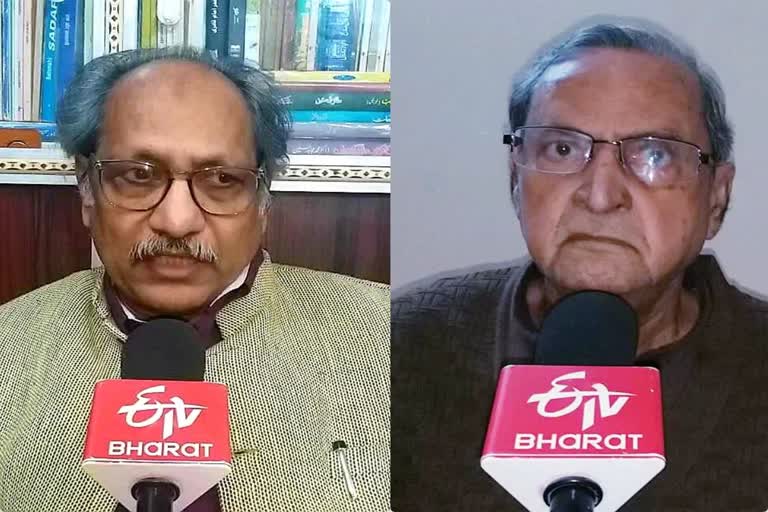
source: http://www.etvbharat.in / ETV Bharat / Home> ETV Urdu / by translation from Urdu / February 12th, 2023
Rainbow Peacock Marbled Paper (source: The Whimsical Marbler)
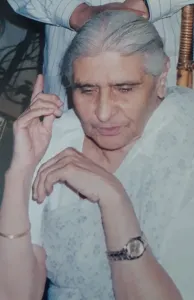
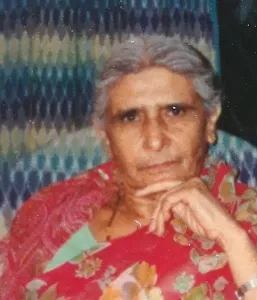
Fatima Alam Ali (1923-2020) was a writer of pen portraits (khaake) and humorous essays (tanz-o-mizah) from Hyderabad. Her work offers an untapped and intimate glimpse into the literary personalities and gatherings that flourished in mid-twentieth century Hyderabad.
Fatima Alam Ali (Source: Asma Burney)
Surprisingly, her writing has not received the proper attention it deserves. This can be attributed to the general neglect of the pen-portrait and non-fiction writing in general in the study of Urdu literature. Most scholarly work and translation has focused on poetry and fiction. However, her work is also neglected, in part due to the triple marginalization that women writers from Hyderabad face—as women, as citizens of a former princely state, and as Urdu writers from the Deccan.
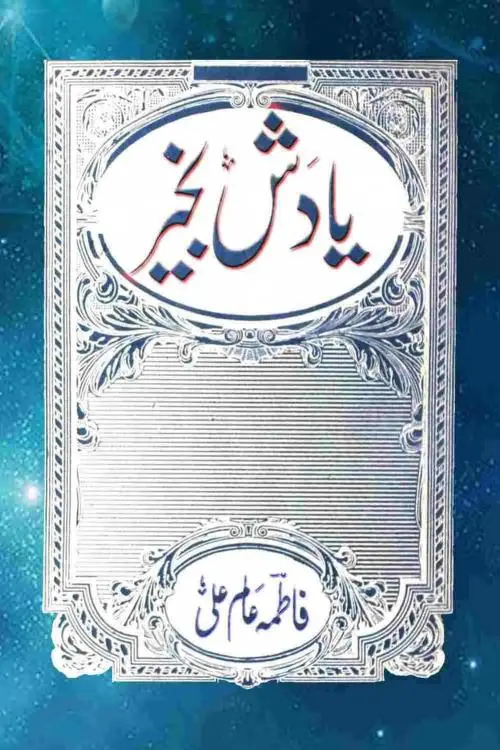
Yaadash Bakhaer by Fatima Alam Ali (Source: Archive.org)
Fatima first began writing at school in Lucknow at the behest of Urdu teacher and writer Razia Sajjad Zaheer. She was later encouraged to continue by Jahanbano Naqvi, another Urdu teacher and writer, when she was at Women’s College (Osmania University) in Hyderabad in the 1940s. Nurtured by a network of women writers, Fatima published widely in newspapers, magazines, and books while also reading her work on All-India Radio and at literary gatherings. In 1989, a collection of her pen-portraits and humorous essays were compiled in a book called Yaadash Bakhaer (“May God Preserve Them”). This text is a rich storehouse of information and insight into contemporary figures living in Hyderabad as well as the reflections of a woman writer coming into her own.
Fatima was the daughter of one of the great Urdu luminaries of the mid-twentieth century, Progressive writer and journalist Qazi Abdul Ghaffar (1889-1956). He began the influential left-wing newspaper Payaam in Hyderabad. Her cheerful and lively personality notwithstanding, Fatima mentions how she felt not only gratitude but also a sense of anxiety about this connection.
Interactions with her father’s peers and members of the Progressive Writers movement were always burdened by the awareness that she was Qazi Sahab’s daughter. She believed that she was respected because of her relationship to Qazi Sahab and not the merit of her own achievements. This left Fatima’s writing dotted with self-deprecating and apologetic comments that gesture towards a certain “anxiety of authorship.” The gendered aspect of this anxiety has been explored by Sandra Gilbert and Susan Gubar in the context of Victorian Women’s writing.
One place this anxiety of authorship appears in Fatima’s work is a long disclaimer she gives about her perceived inability to write about her father. She appeals to her readers that if they do not like her pen-portrait of him, they should forgive her, and if they do like it, then they should attribute it to the “noorani faiz” (luminous grace) of her father. Such prefacing apologies are part of established convention in Urdu and Persianate prose genres (such as the biographical tazkira). However, with women writers, they can be additionally tinged with gendered anxieties stemming from durable patriarchal norms and values.
Fatima’s pen-portraits draw attention to many contemporary Hyderabadi authors. Her portraits bring to life luminaries such as the writer and scholar Agha Hyder Hasan, an old Aligarh connection and dear friend of her father’s, and the scholar Habib ur-Rehman. We also see through her eyes her childhood playmate Ainee, who met her unchanged and with the same affection after a meteoric rise in the literary firmament as Qurratulain Hyder. She remembers Razia Sajjad Zaheer – “a woman in a man’s world” – as a mesmerizing teacher, hardworking mother, talented writer, and maternal figure. Fatima, whose own mother had died soon after her birth, remembers Razia with great emotion and is unable to find the words to describe the love she had given her.
Fatima grew up being mothered by the father figures in her life, an analogy she frequently draws. She describes her unusual and lively relationships with these men, who included, besides her father, her maternal uncles, Agha (whom she called “Chacha”), Habib ur-Rehman (“Baba”), and even Makhdoom Mohiuddin. With Qazi Sahab and Agha, the teenaged Fatima had relationships that were akin to friendships, marked by banter that was strangely grown-up. This was frowned upon in a conservative society that still believed in upholding a certain image of older men as abstract figures demanding veneration and formal distance. Fatima’s banter included teasing her father about the women who would fall for his dashing good looks and jokes with Agha Chacha about her future marriage.
It is not surprising, then, to locate the sense of ease with which Fatima writes and remembers the towering male literary figures of her youth. She writes fluidly and eloquently about them and with the same comfort and affection as she does about Razia Sajjad Zaheer or Zeenath Sajida.
Of particular interest and value in this regard is a memorable essay called “Adabi Mehfil” (“Literary Gathering”) that Fatima wrote – decades later – about an all-male mushaira that was hosted at Qazi Sahab’s home when the Progressive Writers’ Conference took place in 1945. Those who attended included Agha, Makhdoom, Jigar Moradabadi, Fazlur Rehman, Sikandar Ali Wajd, Hosh Bilgrami, Kaifi Azmi, Majrooh Sultanpuri, Ali Sardar Jafri, Ghulam Rabbani Taabaan, Sahir Ludhianvi, and Srinivas Lahoti.
Qazi Sahab could not afford the arrangements that were made in aristocratic homes, so they had only a buffet table under the open night-sky. There were no huqqas, only cigarettes, and the sole accessory demonstrating any continuity from an older tradition of mushaira was the paan that was arranged carefully and offered from a khaasdaan.
Fatima Alam Ali (Source: Asma Burney)
In engaging detail, Fatima introduces us to the august personalities of poets, writers, and intellectuals, as they dine with friends and peers before the mushaira begins. It is in her astute, sympathetic observations of these quintessential performers over dinner that we see their human dimensions, somewhat stripped of the dazzle of celebrity. Indeed, small aspects of their personalities often form the most attractive and compelling features of Fatima’s writing. She explains how they spoke more than they ate, how Srinivas Lahoti took over as host and led people to the table, and how Agha Hyder Hasan, who was unaccustomed to the new culture of buffet dining, sat by himself on a chair and balanced his plate on his lap.
Yet, Fatima writes as much as a fan as the host of such a gathering. She tells us, for example, how she held her breath while Makhdoom recited, afraid to disturb even the air around him. In vivid, engrossing detail, she recreates the charged atmosphere of the mushaira, where “in the Lakhnavi style,” everyone gives way to the others until Qazi Sahab intervenes and directs one of the younger poets to begin.
The euphoria when a striking verse is skillfully recited, the enthusiastic requests for certain well-known compositions, the restlessness when a particularly fraught verse is delivered, the unspoken code of hierarchy and ceremony, and even the specific verses that were produced – all these are represented in sparkling prose and bring the mushaira alive for the reader. What adds to the immediacy and vividness of her writing is that she addresses the reader periodically, saying “just look at this!” or “did you see that?,” transporting the reader to the time of imaginative reconstruction.
At the same time, Fatima does not shrink from criticizing these great men, telling us regretfully that the gifted ghazal proponent Majrooh Sultanpuri is now but a “filmi” poet or that Sahir Ludhianvi was already full of himself before he became famous. Through her sensitive, discerning descriptions of their appearance, temperament, and individual style of recitation, we get an intimate glimpse into their personalities: Majaaz, who was always shy when sober; sleepy, languid, dishevelled Kaifi, who always had a strange glitter in his eyes at mushairas; Jigar’s jaunty self and the errant wisp of hair that peeped flirtatiously from his cap; Sulaiman Areeb, who would cadge cigarettes from an indulgent Qazi Sahab, who in turn would sway in pleasure when Makhdoom sang his best verses; Makhdoom, the people’s poet, who would ask for achaar with his qorma and later be inundated with requests for his verses; and the evergreen wit and flamboyance of Agha, the quintessential Mughal from old Delhi.
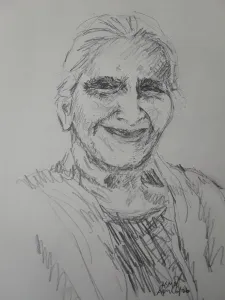
Fatima Alam Ali (Artist and Source: Asma Burney)
In engaging detail, Fatima introduces us to the august personalities of poets, writers, and intellectuals, as they dine with friends and peers before the mushaira begins. It is in her astute, sympathetic observations of these quintessential performers over dinner that we see their human dimensions, somewhat stripped of the dazzle of celebrity. Indeed, small aspects of their personalities often form the most attractive and compelling features of Fatima’s writing. She explains how they spoke more than they ate, how Srinivas Lahoti took over as host and led people to the table, and how Agha Hyder Hasan, who was unaccustomed to the new culture of buffet dining, sat by himself on a chair and balanced his plate on his lap.
Yet, Fatima writes as much as a fan as the host of such a gathering. She tells us, for example, how she held her breath while Makhdoom recited, afraid to disturb even the air around him. In vivid, engrossing detail, she recreates the charged atmosphere of the mushaira, where “in the Lakhnavi style,” everyone gives way to the others until Qazi Sahab intervenes and directs one of the younger poets to begin.
The euphoria when a striking verse is skillfully recited, the enthusiastic requests for certain well-known compositions, the restlessness when a particularly fraught verse is delivered, the unspoken code of hierarchy and ceremony, and even the specific verses that were produced – all these are represented in sparkling prose and bring the mushaira alive for the reader. What adds to the immediacy and vividness of her writing is that she addresses the reader periodically, saying “just look at this!” or “did you see that?,” transporting the reader to the time of imaginative reconstruction.
At the same time, Fatima does not shrink from criticizing these great men, telling us regretfully that the gifted ghazal proponent Majrooh Sultanpuri is now but a “filmi” poet or that Sahir Ludhianvi was already full of himself before he became famous. Through her sensitive, discerning descriptions of their appearance, temperament, and individual style of recitation, we get an intimate glimpse into their personalities: Majaaz, who was always shy when sober; sleepy, languid, dishevelled Kaifi, who always had a strange glitter in his eyes at mushairas; Jigar’s jaunty self and the errant wisp of hair that peeped flirtatiously from his cap; Sulaiman Areeb, who would cadge cigarettes from an indulgent Qazi Sahab, who in turn would sway in pleasure when Makhdoom sang his best verses; Makhdoom, the people’s poet, who would ask for achaar with his qorma and later be inundated with requests for his verses; and the evergreen wit and flamboyance of Agha, the quintessential Mughal from old Delhi.
At the same time, she comments on the unreliability and instability of memory, cautioning us that time, place, and people are likely to get mixed up in her writing. And yet, she reveals an astonishing ability to reproduce verbatim specific verses or entire ghazals or nazms that were recited at literary gatherings. This signals how our memories operate, focusing on the enduring impression that certain events and experiences make on us, rather than external or superficial contexts.
Fatima’s pen-portraits are always coloured with expressions of nostalgia and loss and an urgency to record these figures, their work, and their milieu for posterity to ensure that they are not forgotten. In the process, she creates an important “memorative” collection that provides unique information, insight, and perspective upon a particularly important period in the history of Urdu literature.
source: http://www.maidaanam.com / Maidaanam.com / Home / by Nazia Akhtar / October 11th, 2011
By Nazia Akhtar. Nazia is Assistant Professor of Literature at the International Institute of Information Technology, Gachibowli-Hyderabad. Her research interests include the literature and history of Hyderabad, Partition Studies, women’s writing, and comparative literature.
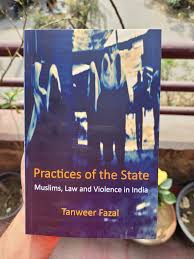
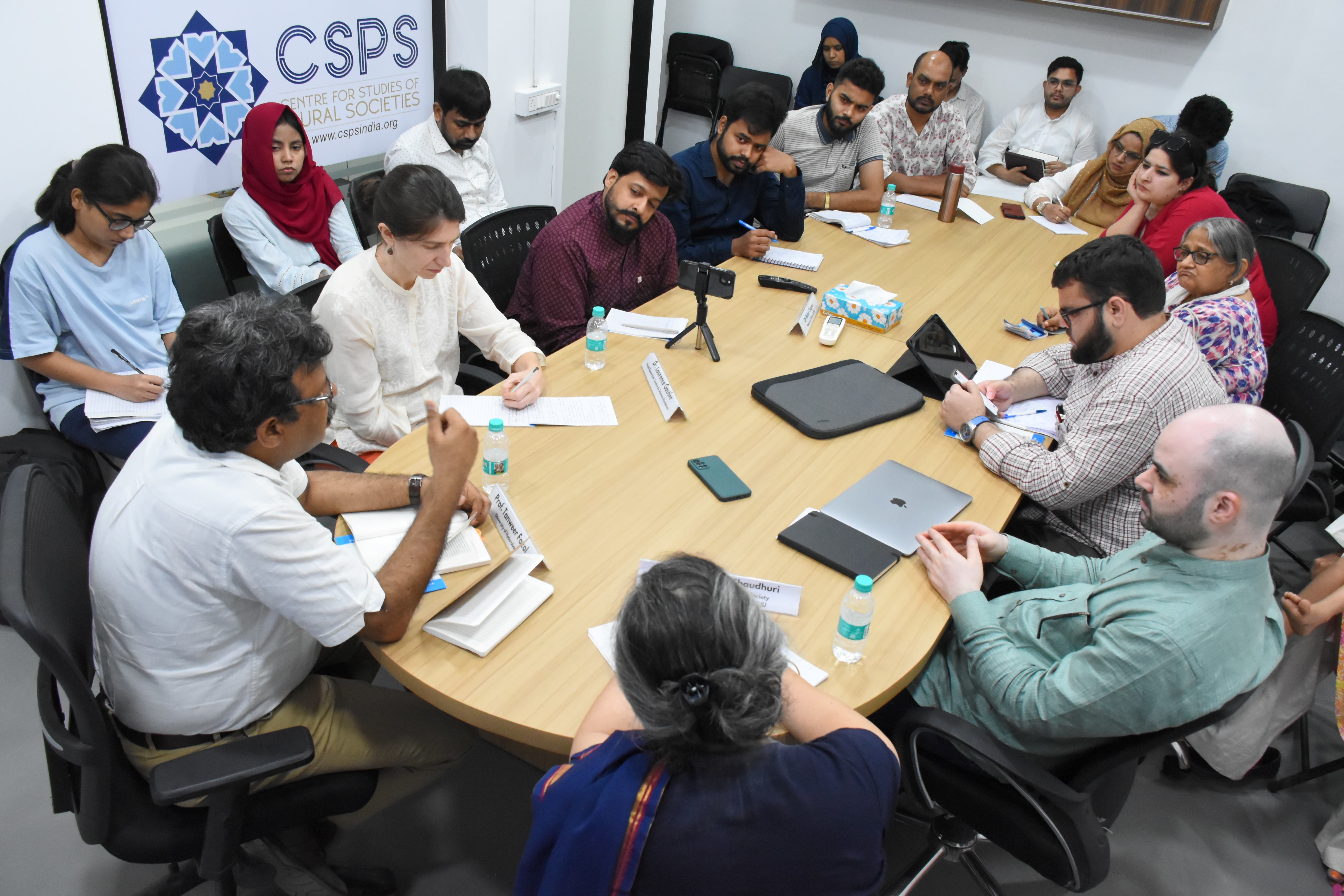
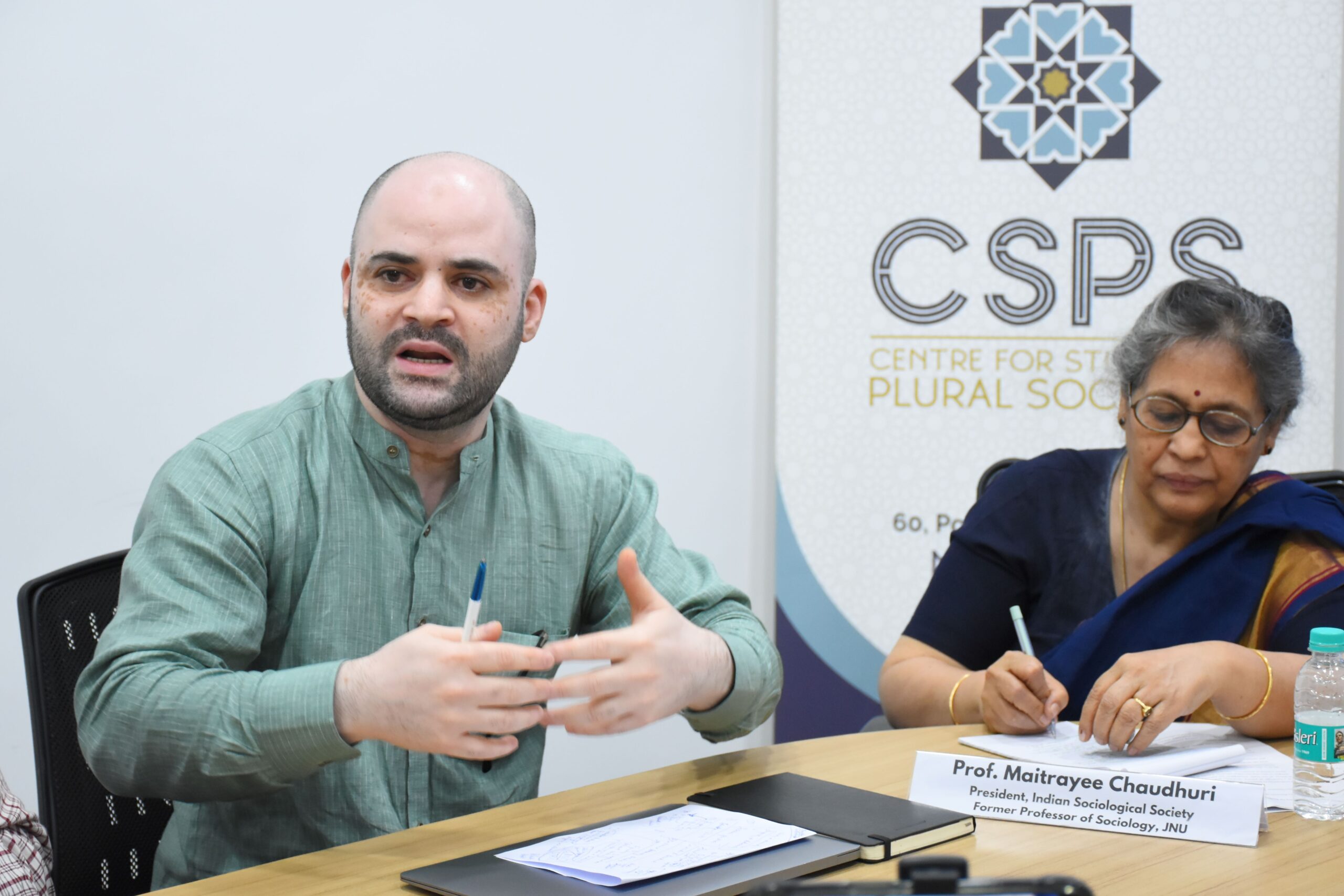
Centre for Studies of Plural Societies (CSPS) organised a book discussion on “Practices of the State: Muslims, Law and Violence in India,” authored by Professor Tanweer Fazal, a professor of sociology at the University of Hyderabad. Prof. Maitrayee Chaudhari, former professor of sociology at Jawaharlal Nehru University, New Delhi chaired the discussion.The session was moderated by Dr. Javed Iqbal Wani, Head of Research and Publications at the Centre for Studies of Plural Societies (CSPS).
pix: facebook.com/threeessayscollective
Professor Tanweer Fazal commenced the session emphasising on the 5 essays that comprised his book as an exercise to decode the complexities of the Indian State and its evolution in interacting with society and Muslim communities in particular. He spoke on the projection of the scapegoating of minority communities as well as vulnerable citizenry amidst an emerging silence within academia that led legitimacy to the current regime. By interrogating the idea about whether a pre-2014 India lacked the same level of vitriol and aggression as the previous years, Prof. Fazal instead follows a historical and anthropological understanding of the state and calls for a reworking of analytical frameworks to decode the present state of affairs. He posited his work as a continuation of placing the state as a subject of analysis and weighs the Indian State’s substantive realities against its constitutional ideals.
Prof. Fazal makes a note to remind his audience that the question of ‘Muslims’ cannot and should not be treated as a monolithic community and instead as a collective of communities that interacts with larger institutions and collectives outside it. Simultaneously however, it becomes important to acknowledge that there is a level of vulnerability that a Hinduised state uniquely targets Muslim communities with. He starts by tracing the history of cow-slaughter laws and frames it through three different time periods; pre-independence, post-independence and post-2014, where he elucidates that while law and public order was given primacy in the previous two periods, there has been a shift in the past two decades towards open hostility and institutional impunity for perpetrators of violence. The author mentions the Shaheed Ganj Mosque, which came under Sikh occupation when later Muslim organisations petitioned for its restoration, but British courts, fearing public disorder, chose to maintain the status quo. Fazal notes the fundamental changes post-1947, with the establishment of deities within the Babri Masjid from 1950 onwards, the 1992 demolition to the Supreme Court verdict, reflecting shifts to address majoritarian anxieties. These instances showcased how earlier institutions and the state managed communal disruptions while also positing the post-2014 era as marking a shift towards triumphalism and defiance where the priority was no longer the preservation of law and order, but instead the accentuation and placating of majoritarian anxieties.
The discussion also touched upon the shifting ideological stance of the state from precolonial times wherein various theoretical approaches to understanding the state were examined, highlighting the importance of political economy and the relationship between the state and society. An anthropological analysis of the state, focusing on its experience by populations, was emphasised, particularly in situations of violence and crisis. The author in his discussion also examined the production of impunity in post-conflict incidents, such as the Bhagalpur riots of 1989 and the Ranvir Sena massacre of Dalits in 1997. He discussed how media narratives, court proceedings, and inquiry commissions contribute to impunity while critiquing the Citizenship Amendment Act (CAA) and National Register of Citizens (NRC), which rendered 1.9 million people stateless in Assam.
Prof. Maitrayee Chaudhari, chairing the discussion, reflected on the rapid dismantling of past ideals. She took the example of the ‘Subcommittee on the Role of Women’ under the National Planning Committees of 1947 and identified three ideological strands: the socialist idea of a working class woman, the liberal idea of an individual unencumbered by caste or religion, and lastly, cultural nationalism, which has become more prominent as of late. Chaudhari emphasized the convergence of dominant societal forces with the state, subsuming academia, judiciary, and media into a nationalistic framework that seems to have gained currency in recent times. Prof. Chaudhari also spoke about how the past functioning of committees following a particular violent incident were set up as a means to resolve tension but ultimately failed to reach substantive resolutions. In the present context, there then comes a point where a belief that the state should follow ‘social law’ has taken root with the 2014 Lok Sabha elections being a populist, majoritarian articulation of grudges that previously may have gone unaddressed. These occasions of tensions get heightened in times of crisis, much like the COVID pandemic where there was massive inequalities, communal tensions and stark vulnerabilities in full display.
Prof. Fazal also highlighted instances where Muslims have been treated by the state, law and subjected to persecution because of a particular making of law, showcasing the way the state interacts with its constituents. He argues that one can understand community formations and the narrative of the ‘us versus them’ through a ‘Triadic lens’ where the state plays a central role in the construction of community boundaries. The triad consists of the nation-state at the centre, the communities on the spectrum and the national public on the other spectrum. The state and the national public have a close relation with the state drawing legitimacy from the national public who approves the bulldozing of houses and grants legitimacy to the state. This national public is then constituted and reconstituted according to political negotiations and the needs of those in power.
The moderator Dr. Javed Wani, also spoke about the blurry lines between what constituted the state and society and whether the ‘impunity’ that is becoming more prevalent belongs to the sacred or the profane. He touches upon the crisis of sovereignty and the incomplete project of decolonisation that has led to it triggering old claims in new repackaged ways that underline the continuities of social formations. One good measure to markedly chart this departure would be a relook into the Constituent debates, as the moderator put it, which mentioned many unresolved questions that have now come to the forefront. Prof. Javed also drew a parallel between the NRC process with the Criminal Tribes Act used by British colonialists, both of which placed the burden of proof on the accused while not requiring evidence collection when a testimony was enough to declare anyone as an ‘illegal/criminal’.
The discussion also saw questions raised about the ‘us versus them’ narrative being raised in states like Assam, to which the author posits that the process of ‘otherisation’ is one that is not new and instead follows a larger history. The superimposing of past boundaries, claims and the overlooking of histories such as when migration into the valley was sought by colonialists and land owners to overcome labour shortages, have instead given way to regional chauvinism that have translated into anti-migrant rhetoric and violence. The author also talked about how there is an evolving political articulation using the language of rights and citizenship that are now being wielded by the Muslim community alongside exclusionary aspirations of institutions and political forces.
The discussion concluded with reflections on the state’s relationship with society, the role of social media, and multivocality of the Indian State while pointing future researchers towards the need to map these evolving changes. Overall, “Practices of the State: Muslims, Law and Violence in India” offers a crucial lens to understand the intricate dynamics of state practices in India. Prof. Fazal’s work challenges us to critically evaluate the past and present, urging a deeper understanding of the state’s role in perpetuating violence and exclusion. The book discussion highlighted the need for continued discourse and analysis to address these complex issues and foster a more inclusive society.
The report is prepared by Callistine Lewis, a research intern at CSPS
source: http://www.cspsindia.org / CSPS / Home> Book Discussion – Seminar Report / by CSPS Team
City author Salil Gewali received Dr. APJ Abdul Kamal award recently during the release of Urdu edition of his book — ‘Great Minds on INDIA’.
The book was released by the Governor of Assam Gulab Chand Kataria at Raj Bhavan, Guwahati.
The function was attended by scholars and guests from Assam, Kolkata, Meghalaya and Manipur.
During the programme, Gewali was awarded “Dr. APJ Abdul Kalam Rashtra Gaurav Samman” by a Muslim organisation, Dr. APJ Abdul Kalam Foundation of Howrah, West Bengal for Gewali’s contribution to the nation.
The governor formally presented the award to the author and lauded him for his contribution to the country through his research-based book highlighting the profound impact of ancient Indian literature on Western luminaries.
Great Minds on India” was translated into Urdu by Dr. Syed Hussain of Hyderabad and edited by Abdul Khalique of Kolkata.
The book published by Dr. APJ Abdul Kalam Foundation, Howrah, has so far been translated into thirteen languages, including German.
The secretary of the organisation Abdul Khalique has also promised to distribute the Urdu edition to a minimum of sixty countries worldwide, ensuring its global reach and impact.
Gewali extended his appreciation to each member of the organisation for their support in translating and publishing his book in Urdu. He acknowledged the organisation’s dedication and commitment to its cause.
Gewali was honoured with multiple Ananda Sammelan Puraskars and Bhanu awards. In 2011, his contribution was further acknowledged with the prestigious Thomas Jones Award from the United Christian Writers’ Association.
Also having been prescribed as a study textbook in several academic institutes in India and Virginia in the USA, ‘Great Minds on INDIA’ stands as a testament to the rich cultural heritage and intellectual contributions of India to the world. It is an inspiring read that bridges the ancient wisdom of India with modern scientific and philosophical discourse, Gewali said.
“Know Your India” is Gewali’s another patriotic book, released by the Chief Minister of Sikkim in 2022. This title has recently been approved for higher classes in one of the prestigious schools in Kolkata. Gewali is also credited with a series of school textbooks prescribed by the Meghalaya Board of School Education (MBOSE).
source: http://www.meghalayamonitor.com / Meghalaya / Home> State / by Reporter (headline spell corrected) / June 25th, 2023
This is just not another memoir of a politician happily or unhappily bounds to look back; the author, instead, talks like a grandmother narrating a story of post-independent India somewhat interlinked with the Congress.
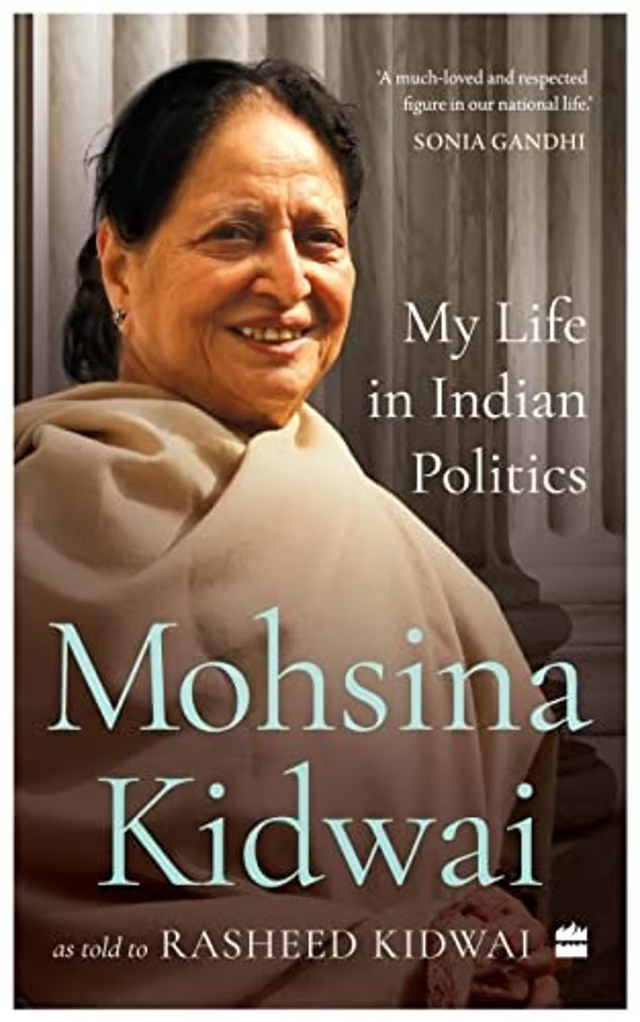
Mohsina Kidwai, author of the book ‘My Life in Indian Politics’
Book Review: Non-fiction (Memoir)/2022; My Life in Indian Politics by Mohsina Kidwai (As told to Rasheed Kidwai); HarperCollins, 300pp (Hardback)
Indian politics is a sort of ‘wonder’ and its unique existential positioning can’t be imagined without people behind its ups and downs. Reading the memoirs, especially of those who served in public life for long, is amongst the rewarding pastimes of a reader. I read Mohsina Kidwai’s memoir as a manuscript, and of course, I reread it even more carefully in its print version. Here is a candid account of a prominent political figure of India who dispels the stereotyped traditional notions that are usually expected to be self-centred and being extra boastful in the first person narrative.
Mohsina Kidwai has been in public life as a member of the Indian National Congress for over six decades. A cabinet minister in several successive central governments and a senior office-holder in the Congress, she has had a ringside view of Indian politics for almost the entire span of independent India’s existence. She has witnessed, and been a participant in, the tenures of prime ministers from Jawaharlal Nehru to Indira Gandhi and Rajiv Gandhi, and was a member of parliament until 2016, one of only twenty Muslim women to have been elected to the Lok Sabha since 1951. She has had a prolific track record that can’t be compared with her fellow women politicians, more so, from the Muslim community.
My Life in Indian Politics by Mohsina Kidwai
The book reflects well on her long and eventful life in politics and covers quite skilfully her contributions to public life, and also succeeds in providing an honest appraisal of the turn in fortunes of the political party she has remained a loyal member of over the decades. The author along with co-author and senior journalist Rasheed Kidwai, endow the readers with rare glimpses to homes, lives and hurly-burly of election campaigns from bygone era when Congress dominated the political landscape at centre and in the states.
One such memorable one was the Azamgarh bypoll in 1978, which Mohsina Kidwai won as Uttar Pradesh Congress Chief, and which signalled a revival of the Congress’s fortune after its spectacular defeat in the post-Emergency general elections of 1977. The book’s cover informs you and inside, the details and rich and beautifully presented.
We get to see little known facts about India’s Prime Ministers Pandit Jawaharlal Nehru, Lal Bahadur Shastri, Indira Gandhi, Rajiv Gandhi and P V Narsimha Rao. Similarly, she is forthright in accepting that her move to join the breakaway Tiwari Congress in 1995 was a mistake.
Here is a quick recap of a few of them:
Mohsina Kidwai talks about an incident which happened when Lal Bahadur Shastri had visited Barabanki sometime in the early 1950s. “A few years after marriage, I saw Shastriji, who had come to meet my father-in-law. Jameel ur Rahman Kidwai Saab had stood for elections and Shastriji was canvassing for him. Shastriji was a simple man. Our domestic help, who did not recognize him, asked him where he was from. Shastriji, by then already a Union minister, replied that he had come in connection with the election and wished to meet Jameel Saab.
“He will return home in the evening,” the domestic help told Shastriji and asked him to wait. Shastriji waited. The servant served him tea.
In the evening, when my father-in-law returned, he saw Shastriji waiting.
A little embarrassed, my father-in-law scolded the servant for not informing him about the guest. After that Shastriji became a member of our extended family.” Some rarest accounts on Indira Gandhi:
“Indiraji was extremely caring and attentive. I can go on talking about many instances. Sometime after the 1977 Lok Sabha polls when Indira ji was in opposition, she planned to visit Badrinath for puja. I and Narayan Dutt Tiwari and I accompanied her. It was an October month. We were told that puja starts at 4 am. Asking us to wait, she went to the temple for Puja. We were to start at 6 am on the return journey to New Delhi. At 5 am, Indiraji returned from the temple and checked whether all the vehicles of our convoy were ready. The pundit of the temple offered us breakfast. When we were having breakfast, the drivers were heating the engines of their respective vehicles. I told Indiraji, we had breakfast but poor drivers must be hungry. They have not even had tea as they were busy heating vehicle engines. I suggested we stop at the first tea shop in return for the drivers to have tea. She agreed.
Indiraji had the habit of carrying some snacks with her in a basket during travel. After a while I saw her taking out some biscuits from the basket kept beneath her seat. She tore the biscuits in four pieces and asked the driver to pick the pieces one by one from her hand while driving. She extended her hand carrying biscuit pieces and the driver did what he was told to do. Indiraji used to enjoy such affection and spontaneous display of it that it often stunned me and used to fill my heart with admiration and pride for my leader.”
“Indiraji could also sense what people around her were feeling. Once we were traveling by an overnight train to Gorakhpur and I suddenly realised I was alone with the Prime Minister in the first-class coupe. She sensed that I was a little uncomfortable and directed me to turn my face towards the wall and go off to sleep,” adds the author.
Undeniably, the book is written with honesty and simplicity, and should be better known as a work to assess an entire era in Indian politics. This is just not another memoir of a politician happily or unhappily bound to look back. She, instead, talks like a grandmother narrating a story of post-independent India somewhat interlinked with the Congress. The book is essential reading for anyone interested in knowing India, its democracy and the foundational stories of a remarkable journey.
(The author is a policy professional, columnist and writer with a special focus on South Asia. Views expressed are personal.)
source: http://www.outlook.com / Outlookindia.com / Home> Culture & Society> Book Review / by Atul K Thakur / January 07th, 2023
The development of Urdu prose and journalism and the parallel agenda of social reform in 19th-century Hyderabad played a vital role in setting the ground for the emergence of the Progressive Writers’ Movement a few decades later. The aims and objectives of the Progressive Writers’ Movement (PWM), which began in the 1930s in North India, resonated with students, poets, writers and scholars in Hyderabad. The PWM urged writers and poets to organise and break away from the hackneyed tropes, themes and genres of classical, romantic poetry that had dominated the literary milieu of Hyderabad and were associated with great cultural capital. Instead, the PWM wanted to create a new, more meaningful aesthetic that would represent changing political and social conditions and confront the material realities and experiences of everyday life. Apart from class struggle and class injustice, which was a major concern for the PWM, progressive writers also stressed the need to fight for political freedoms, resist political repression, and forge grassroots connections with the people 1.
The Hyderabad chapter of the Progressive Writers’ Association (PWA) was established by Makhdoom Mohiuddin along with Akhtar Hussain Raipuri and Sibt-e-Hasan in 1936. Sarojini Naidu offered her home, The Golden Threshold, as a venue for PWA gatherings and, later, for meetings of the banned Communist Party of India (CPI) 2. Among the women writers, journalists, intellectuals and activists associated with the PWA in the 1940s and 1950s were Jahanbano Naqvi, Zeenath Sajida, Rafia Sultana, Azeezunnisa Habibi, Brij Rani, Jamalunnisa Baji, her sisters Razia Begum and Zakia Begum, and Najma Nikhat. Amena Tahseen emphasises that the period after 1936 was critical for the history of women’s writing in Hyderabad because although women had been publishing their work, forming associations, and leading and participating in social, educational and literary initiatives for decades before the formation of the PWA, these endeavours were limited largely to women’s gatherings alone 3. The PWA changed this forever, and women began to attend and participate in literary and intellectual gatherings which had previously been restricted to men only.
Sarojini Naidu’s first collection of poems, named The Golden Threshold was published in 1905. (Photo: Getty Images)
The most vivid example and description of this shift comes from Jamalunnisa Baji’s autobiography, Bikhri Yaadein (Scattered Memories; 2008), which not only documents and assesses the political and literary events that took place in Hyderabad over the span of almost a century, but also furnishes information and reflection on what these events meant to women like Baji. Pardah is an important preoccupation in this account. Baji had long considered it her bane but had been unable to give it up. She describes how her younger sisters—who had had more freedom than her, were better educated, and were allowed greater choice in choosing their partners—had discarded the pardah at a young age. Literary gatherings with the leading Progressive figures of the day began to take place in Baji’s house in the 1940s on her and her brother Akhtar’s initiative. She had always been interested in literature and politics and was supported by parents and siblings who had an apparently insatiable appetite for education and literature. This drew her all the more to discussions that were happening beyond the curtain that separated her from gatherings where her sisters and other women who did not observe pardah, listened and spoke 4. Such gatherings offered her the opportunity to gradually emerge out of pardah.
The Telangana people’s armed struggle. (Photo: People’s Democracy)
The Progressive writers and the Telangana People’s Struggle
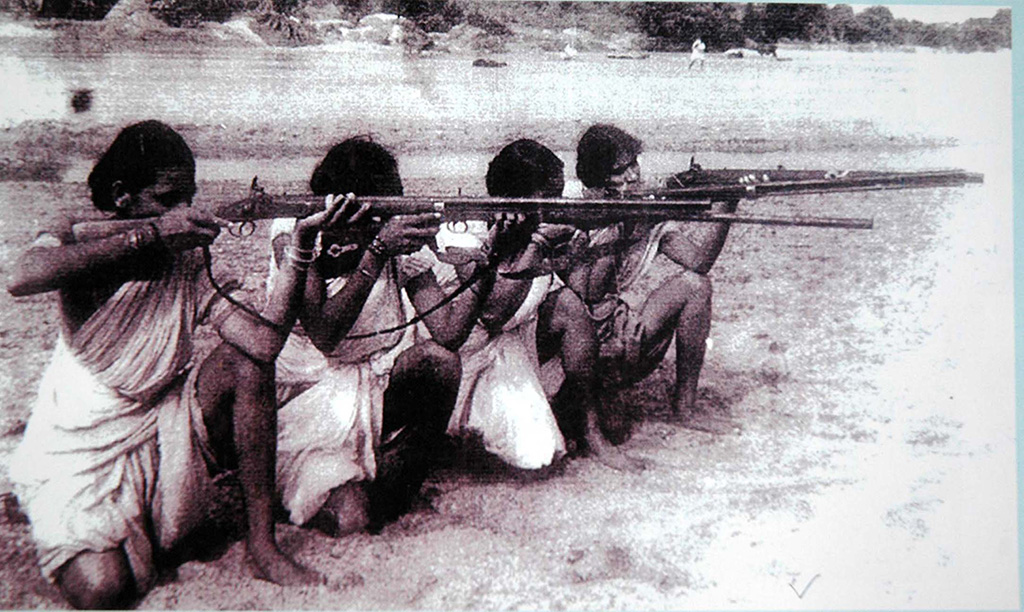
Between 1946 and 1951, the rural districts of Telangana had risen against the feudal structure of the Hyderabad state and the oppression it had wreaked on peasants and agricultural labourers for generations. The struggle began organically, with a tenant cultivator named Chityala Ailamma refusing to hand over her harvest to the landlord’s men. Within a few months, however, the Communist Party entered the fray and began to operate under the aegis of the Andhra Mahasabha, which had been formed in 1930 to champion the cultural and social rights of Telugu-speaking people. At its height, the Telangana People’s Struggle involved three million people from 3,000 villages 5. The struggle also made its way to the cities, as factory workers and students protested and went on strike. Many Progressive writers also identified as communists and were active members of the CPI. As the people’s struggle intensified in Telangana, the CPI was banned in Hyderabad and many PWA members had to go underground. So,
PWA meetings began to take place at Baji’s house at night, which was less conspicuous than the Golden Threshold, Sarojini Naidu’s house, and offered better cover to the likes of Makhdoom, who was well-known and easily recognised.
Baji formally discarded the pardah during the All-India Progressive Writers’ Conference in 1945, which was held in Hyderabad. She, her sisters, and one other woman were the only women to sit in the open with the men 6. What enabled the participation of a large number of Hyderabadis, especially women, in the Progressive movement was the PWA’s approach right from the start to not limit their membership to committed socialists 7. To be sure, there was always a core group of socialist writers at its centre, but the only expectation from all member writers—irrespective of ideological persuasions—consisted of them sharing the basic agenda of the manifesto, i.e. to build a sturdy organisation of writers who opposed reactionary social tendencies and stood for a literature rooted in reality. Indeed, so successful was this broadly defined manifesto that there were many writers who would not fall easily into this category if it had been ideologically restricted, but who nonetheless identified as Progressive and were closely connected with the PWM.
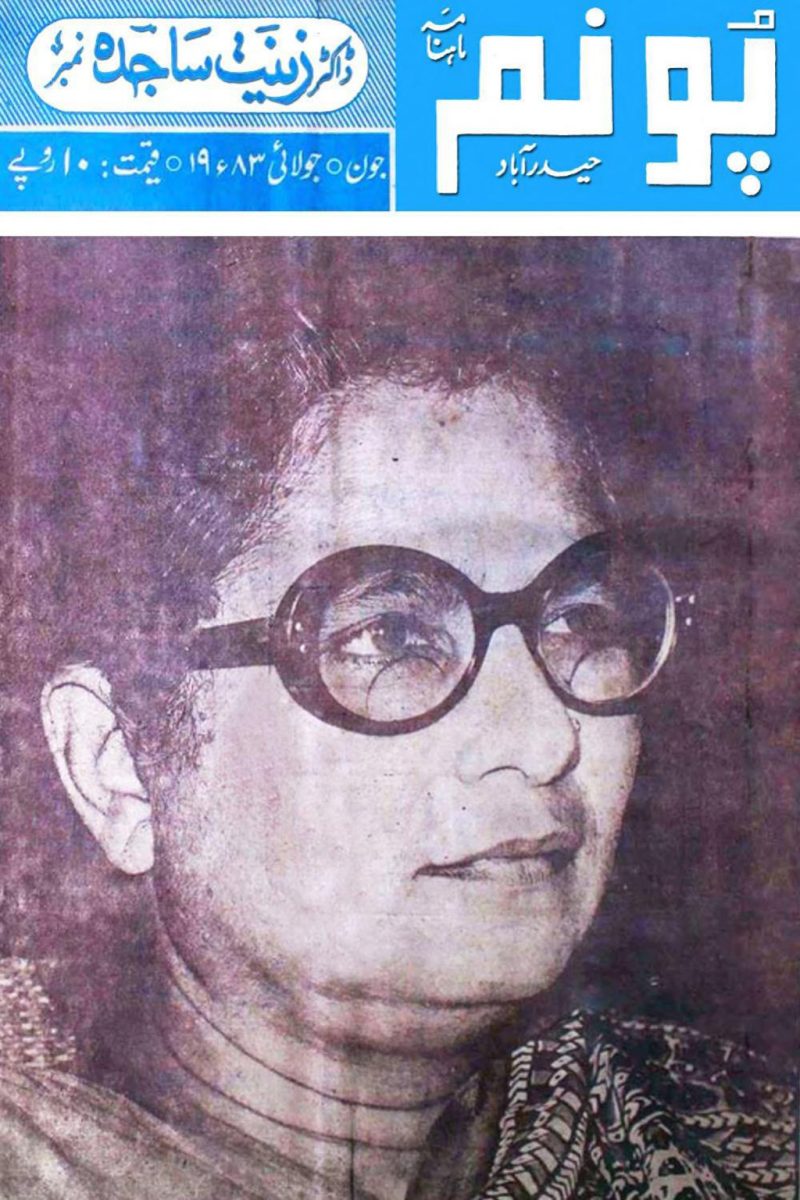
Dr. Zeenath Sajida on the cover of Poonam, Urdu monthly magazine in Hyderabad. (Photo: archive.org)
Zeenath Sajida (1924-2009) and a thriving culture of women writers
Zeenath Sajida was one such figure who dominated the literary and cultural circles of Hyderabad. She is a good example of a Progressive writer who not only wrote works criticising social injustices and exposing the hollowness of middle-class values, but also those that were less political and consisted of humorous essays as well as classic, romantic short stories. Sajida was most prolific in the decades spanning the 1940s to the 1960s, publishing an anthology of short stories in 1947 and several academic manuscripts on literatures of the Deccan. But the most fascinating literary writings she produced consisted of her essays in the genres of tanz-o-mizah (humour and satire) and khaake (pen-portraits), which were published in different newspapers and literary magazines and compiled only after her death in 2009. They cover subjects as varied as the gendered perspectives and lived experiences of women from different walks of life, critiques of social manners and everyday human folly, and nuanced documentation of the history and heritage of her beloved Hyderabad.
In the most political and radical of these texts, Sajida artfully and rigorously debates provocative social questions and taboos while disguising them in the genre of inshaiye or light sketches.
In these, she shows herself to be far ahead of her time, writing about things that we know today as gender fluidity, gender privilege, the mental load of women in relation to household management, the invisibility of domestic labour, and the unfair and unrealistic demands made of middle-class women professionals.
These essays also reveal the narrator’s most disarmingly vulnerable thoughts, feelings, and frailties; in the process, Sajida emerges as a writer who knows how to use emotion to extract both empathy as well as laughs from her readers.
There was a thriving culture of women writers of humour, satire and pen-portraits in Hyderabad right from the 1940s, which both received individual and institutional support from male writers and scholars and was also subjected to ridicule by them 8. Sajida’s work marks the best of this tradition of women’s non-fiction and is important to read and know also because non-fiction is generally neglected in favour of fiction and poetry, which have greater cultural capital; have come to form well-defined and durable stereotypes of Urdu literature; and, thus, capture the attention of translators, scholars and publishers alike.
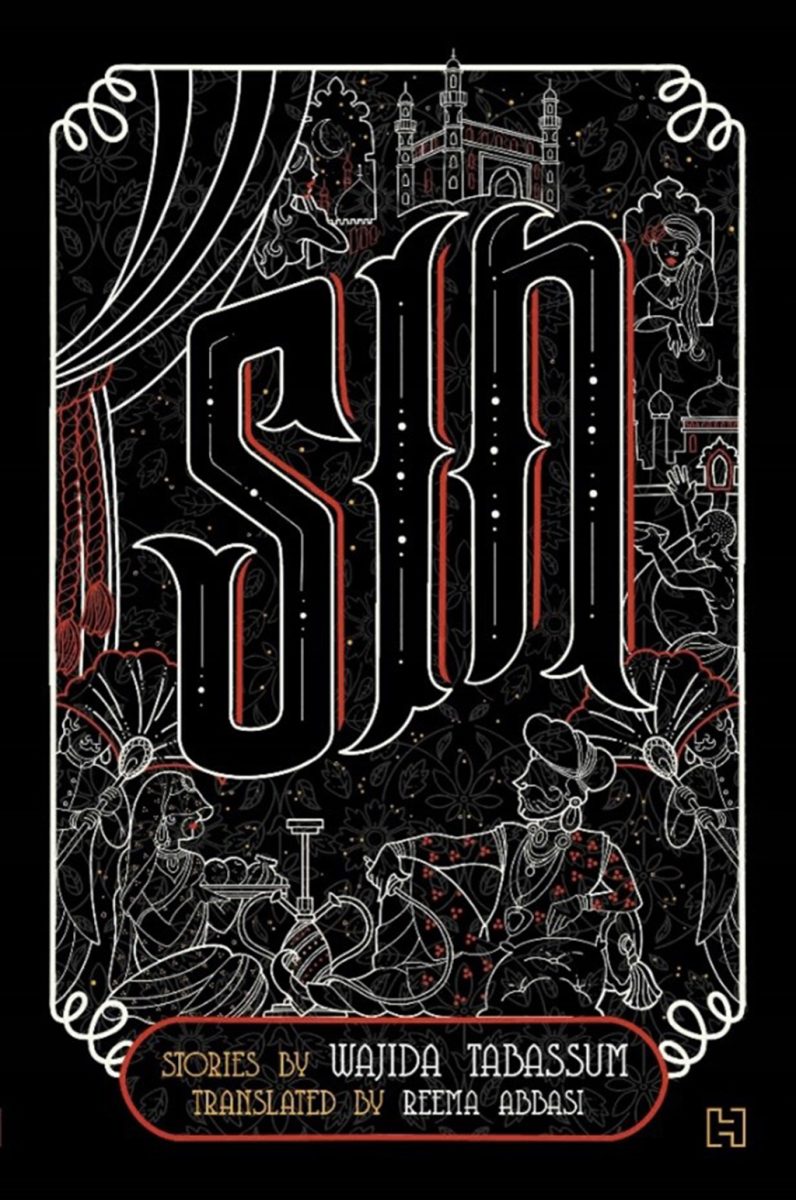
Among Sajida’s younger contemporaries were Jeelani Bano (b. 1936), Najma Nikhat (1936–1997), and Wajida Tabassum (1935–2011). Nikhat was a writer of short stories whose loyalty and commitment to the PWM exceeded the heyday of this organisation. Like Sajida, although Nikhat produced a relatively modest number of short stories, her oeuvre demonstrates skill and is important for its sustained engagement with her lifelong preoccupations and concerns. Her stories about life in the feudal deodis of Hyderabad are insightful and instructive in establishing how women of both working as well as upper classes lived and negotiated feudal patriarchy and the conservative social world of princely Hyderabad. She also wrote hopeful stories about the revolution and depicted the lives of the poor in the rural districts of Telangana and Andhra, where she lived for many years.
A rare picture of R-L Qurratulain Hyder, Ismat Chughtai and Wajida Tabassum – known names in Urdu Literature. Twitter- FaseehBariKhan
Wajida Tabassum is understood today to be more of a feminist than an avowed Progressive. This is because she writes defiantly and unselfconsciously about female sexuality, caste patriarchy and sexual violence against women in feudal homes.
Although her many novels and short stories were successful and popular and the latter, in particular, are enjoying a resurgence of interest among youth after the Me Too movement, many Hyderabadis, including scholars, look down on her work as “obscene” and “unjust” towards the feudal aristocracy 9.
The “shock value” of Tabassum’s approach often belies her profound and nuanced understanding of the precise workings of culture and society towards concentrating and maintaining power in a few hands. Until recently, only a couple of Tabassum’s stories were available in English translation.
Other continuities
Over time, the PWM—its ideology and aesthetic—acquired a hegemony that ensured the marginalisation of writers who did not consider themselves Progressives. This became a big problem when in the tension between the “creative section” and the “political section” of the PWA (Progressive Writers’ Association), the latter prevailed, and this often resulted in didactic writing dominated by socialist themes and motivations 10. The ambivalence and even disenchantment of writers in other places towards the PWA, which increasingly adopted a rigid, even conservative stance towards the choice and treatment of themes employed by its members, is well known 11. But given that it had such a compelling social message, an influential platform, and an overarching visibility and influence, it is understandable that many women writers would continue to operate under the aegis of the PWA and utilise its many resources.
Other writers who did not subscribe to Progressive writing often represented literary and cultural continuities that were desirable and significant in other ways. After 1948, Urdu had been relegated to a secondary place in Hyderabad, and its resources and institutions were severely undermined by the minoritisation imposed by the new regime. Despite this, nuha, marsiya, azadari and salaam, traditional poetic genres that belong to the Shia practice of Muharram, continued to be regularly published in magazines and newspapers and also performed in ashurkhanas. Other religious or mystical genres, such as hamd and naat, and ghazals, nazms, and qasidas that did not represent Progressive thought or aesthetics persisted too. Many women poets wrote and published in these genres. Additionally, nazms for children were very popular in Hyderabad, and women were enthusiastic proponents of this genre as well 12. Often, these engagements revealed completely different ways of engaging with social and political discourses from Progressive writing, as can be seen in the way the poet Syeda Bano “Hijab”/Hijab Bilgrami juxtaposed the battle of Karbala with the struggle for freedom from colonial rule 13.
New woman, new writing
The next major shift in Urdu literature came with jadeediyat or modernism in the 1960s, which turned the subject of literature inwards and focused on the psyche of the individual, allowing for much experimentation in genre, mode and language. Some of the short stories and novels of Jeelani Bano and Rafia Manzoor ul-Ameen are good examples of jadeediyat from Hyderabad. Both wrote short stories and novels about contemporary protagonists struggling with the human condition as well as a variety of issues associated with the modern state and society. They also produced scripts and screenplays for successful TV serials, documentaries and films.
Jeelani Bano
Rafia Manzoor ul-Ameen
Rafia Manzoor ul-Ameen is best known today for her novels, especially Alam Panaah (Refuge of the World; 1983) and Yeh Raaste (These Paths; 1995), and the immensely popular TV series that was based on the former text and whose screenplay she wrote too. Both novels fall in the genre of romantic fiction and testify to her craft with language, narration, plot, and pace. The most attractive feature of this writer’s work is her psychologically and emotionally complex heroines, who represent a new world after the transfer of power in Hyderabad, in which young women were stepping out of the ostensible “protection” of the zenana, seeking education, professional employment and financial independence, and negotiating a society that did not appear to be prepared for their entry and often openly expressed its disapproval. These novels also offer multifaceted commentary on the social culture and ethnography of groups associated with Hyderabad and the Nilgiris respectively.
The significance of Jeelani Bano’s modernist writing can be appreciated from PWA co-founder Sajjad Zaheer’s comment in a letter to Sulaiman Areeb, editor of Saba (Hyderabad), that as long as Jeelani Bano is in Hyderabad, they need not worry about the Naya Afsana (New Short Story), a genre that had picked up pace in Urdu-Hindi literature in the 1950s and focused more on the inner state of the individual subject than on the external world or its ideological preoccupations 14. Over more than 50 years of writing, Bano’s nationally and internationally acclaimed short stories span three identifiable schools of Urdu literature: taraqqi-pasand adab (Progressive writing), jadeediyat (modernism), and tajreediyat (abstractism), although she has consistently refused to declare her affiliation or identification with any of these schools, explaining that there are many influences in her work and that she seeks only to represent the world around her and does not adhere to any particular ideological position.
Although some of Bano’s work has been admirably translated into English by Zakia Mashhadi, her two novels have not been given their due by English-language readers and scholars. Aiwan-e-Ghazal and Baarish-e-Sang represent the most serious and rigorous engagement with the history of princely and post-princely Hyderabad in creative writing. While the former narrates the lives of four generations of an aristocratic family against the backdrop of transformative change during and after the transfer of power, the latter represents the lives of landless tillers and labourers tottering under the weight of crushing debts in the rural districts of Telangana. Both texts offer rich and sombre insight into urgent questions of class and gender and offer a remarkable degree of depth where class, in particular, is concerned.
Radio continued to be an important medium for women’s voices in Hyderabad after the transfer of power, and the work of most Progressive writers in Hyderabad (and elsewhere) as well as those who did not subscribe to this category remained in demand. Among the many women who wrote for All India Radio (AIR) and read out their stories and essays were Zeenath Sajida, Najma Nikhat, Fatima Alam Ali and Badrunnisa Begum. Another vital development for women’s literary culture was the establishment of the Mehfil-e-Khawateen (Women’s Gathering) in 1971 at Urdu Hall (f. 1955), which became a flourishing platform for Hyderabadi women writers. Women poets of Progressive and other persuasions, such as Azmat Abdul Qayyum, Azizunnisa Saba, Ashraf Rafi and Muzaffarunnisa Naz, were instrumental in founding and running the Mehfil over the years. Monthly meetings and annual events are conducted and are well attended. The association also publishes an annual magazine.
Life-writing and auto/biography
Another important feature of Hyderabadi women’s writing in Urdu is an enduring affinity for different forms of life-writing. While Jamalunnisa Baji’s autobiography is the richest example, meaningful deployments of auto/biography emerge also in other genres that demonstrate a strong element of self-construction and self-performance, usually through first-person narration. The travelogues of Sughra Humayun Mirza and the humorous essays and pen-portraits of Fatima Alam Ali (1923-2020) are a good example of this trend. Fatima Begum grew up in an environment suffused with literary, political and intellectual discussions in the 1930s and 1940s, for her father was Qazi Abdul Ghaffar (1889-1956), the immensely popular and admired Progressive editor of Payaam. Her humorous essays were published in Siasat from the 1960s to the 2000s and also read on AIR. Some of them were compiled into a book called Yaadash Bakhaer (May God Preserve Them; 1989), which also furnishes a selection of her pen-portraits of the poets and scholars she knew. These portraits animate in words the rich and potent milieu of the mid-20th century and vividly perform and re-create the development of Fatima Begum’s own subjectivity.
Fatima Alam Ali (Photo: Scroll.in)
Finally, scholar and translator Oudesh Rani Bawa (b. 1941) writes a weekly column, titled Mujhe Yaad Hai Sab Zara Zara Sa (My Blurred Memories of Yesteryear), in the Urdu daily Munsif, where she engages with popular and historiographical narratives of the past, filtered usually through her memories and research on the material and linguistic heritage of Hyderabad. She also uses this column as a platform for her political and social critique, and has, most recently, begun to actively criticise local and national events, with respect to government policies, heritage and development, and growing right-wing intolerance and violence.
Hyderabad continues to have a thriving culture of humorous writing among women in both prose and poetry, besides other modes of writing, such as the short story, novel, novelette, plays and ghazals.
Stree Shakti Sanghatana, We Were Making History: Life Stories of Women in the Telangana People’s Struggle, New Delhi: Kali for Women, 1989, 3.
Jamalunnisa 2008: 103. Op. cit.
Ordinary Hyderabadis were suspicious of communists because they were all thought to be atheists. Ibid. 121).
Habeeb Ziya, who is a humourist herself and has compiled and edited a collection of Hyderabadi women’s humorous writings, reveals that Mujtaba Hussain, the most prominent and celebrated humourist from Hyderabad, had criticised her article on Hyderabadi women’s humour in the Siasat newspaper. He had wondered if men are supposed to sweep and mop, while women write humour in large numbers. Ziya Hyderabad ki Tanz-o-Mizah Nigar Khawateen. Hyderabad: Shagoofa Publications, 2005, 7.
See e.g. Ashraf Rafi, “Hyderabad ki Afsana-Nigar Khawateen,” in Tahseen 2017: 173.
Mir and Mir 2006: 28. Op. cit.
See Ayesha Jalal, The Pity of Partition: Manto’s Life, Times and Work across the India-Pakistan Divide, Noida: Harper Collins, 2013, 162–72; Jalil 2014: chapter 7; Mir and Mir 2006: 33.
Tahseen 2017: 136. Op. cit.
Riyaz Fatima Tashhir, “Hyderabad mein Khawateen ki Rasaai Shayari,” in Tahseen 2017: 219.
Mosharraf Ali, Jeelani Bano ki Novel Nigari ka Tanqeedi Mutala, Delhi: Educational Publishing House, 2003, 21.
Nazia Akhtar is an Assistant Professor (Human Sciences Research Group) at the International Institute of Information Technology (IIIT), Hyderabad (India). In 2017, she was awarded a New India Foundation fellowship to write a book on Urdu prose by Hyderabadi women. Bibi’s Room: Hyderabadi Women and Twentieth-Century Urdu Prose went into print in July 2022.
source: http://www.thethirdeyeportal.in / The Third Eye / Home> Praxis / by Nazia Akhtar / January 19th, 2023