Category Archives: Books (incl.Biographies – w.e.f.01 jan 2018 )

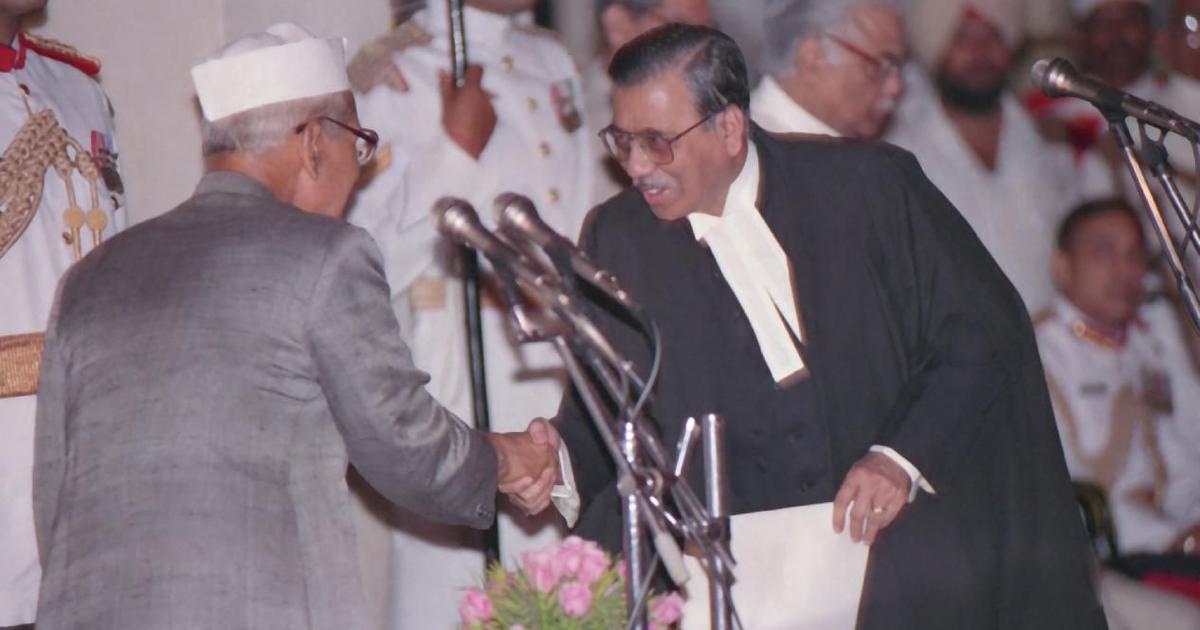
Aasim Bihari: Freedom fighter who led movements, battled for downtrodden all his life

BIHAR :

Ali Husain Aasim Bihari who was a freedom fighter, big leader, organised workers in Bihar & Bengal, brought out newspapers, formed multiple organisations.

He, led Momin Ansari community, and all his life fought for workers’ rights. Suffered a lot in process and his family also lived in challenging circumstances.

Hailing from Bihar Sharif, Nalanda, he had to shift to Kolkata to earn a living and it was here that he began involved in freedom movement and started an unprecedented political and social journey despite financial constraints.

Aasim Bihari left a huge legacy but led a tough life. His family bore consequences of his immense passion for awakening the masses, at the cost of his own health and finances. He opposed partition of India and worked for uplift of downtrodden. He passed away in independent India and was buried in Allahabad.

I don’t think it is easy to write about his missionary zeal and his sacrifices without getting tears in eyes. He faced personal tragedies, the death of his brother, the lack of money that caused hardships to his daughter, the suffering of his wife and entire family. 

He was ailing and couldn’t be treated. He had declined the post of minister, also refused to take a princely sum, luring offer from a major political party, and his integrity for the cause was unquestionable.

In a life of constant struggle. Aasim Bihari formed organisations, led agitations, ran campaign to release nationalist leaders from jails after Jallianwalabagh massacre by sending letters from people of all parts of country to Queen & Viceroy. Brought out journals, weavers were organised amd turned into a political force.

Born in 1889 [1890*], he passed away in 1953. From Jamiatul Momineen, his lifelong fight for rights, awareness, awakening and education among masses, continued.

CM recently released book on him and it has been decided to add a chapter on his life in school textbook.

Book ‘Banda e Momin Ka Hath’ by Prof Ahmad Sajjad , pic: rekhta.org

[There is slight variation in references about his year of birth. However, the date of birth is April 15.]

source: http://www.anindianmuslim.com / Indscribe / Home / by Shams ur Rehman Alavi (image of book cover edited – source: rekhta.org) / June 22nd, 2023

Shibli Nomani’s Educational Legacy: A Special Tribute on His Birthday

Bindwal (Azamgarh District), UTTAR PRADESH :

Allama Shibli Nomani was born in Bindol Azamgarh village on June 4, 1857, and passed away on November 18, 1914. He possessed a multifaceted personality and held an esteemed position in various fields. Considering his contributions to knowledge and literature from different perspectives, it is hard to believe that it was the work of a single individual. Besides his contributions to poetry and literature, Allama Shibli Nomani put his indelible mark on history and biography, research and criticism, and education and preaching.

The main focus of Shibli’s academic endeavours was education and religion showing a deep interest in education and educational philosophies. His life was dedicated to the educational activities of his time. From Aligarh Muslim University to Nadwatul Ulama, his sacrifices in the field of education were immense. His vision extended beyond India, encompassing the educational activities and needs of the Islamic world as well.

While he valued traditional education, he was also a proponent of modern sciences. At Nadwatul Ulama, when he was entrusted with educational responsibilities, he included “Al-Durus al-Awliyyah fi al-Falsafah al-Tabi’ah” in the curriculum. This book, written by Christian scholar Allen Jackson and published in Beirut in 1882, was an illustrated text on the basic sciences of its time, covering practical topics such as matter, motion, gravity, liquids, optics, heat, and electricity. Shibli appointed Allama Muhammad Hameed-ud-Deen Farahi and Mirza Muhammad Hadi Ruswa to teach it. This information is derived from Shibli’s letters.

Additionally, in 1901, Shibli hired an English teacher at Nadwatul Ulama with a monthly salary of 15 rupees. This decision led Maulana Abdul Bari Nadvi to translate several modern books on philosophy. The inclusion of English and modern philosophy in the curriculum was a revolutionary step by Shibli. However, after Shibli stepped down in 1913, these subjects were dropped from the curriculum.

Shibli spent his entire life cultivating knowledge and literature. He wrote books, encouraged others to study, and was devoted to the national spirit. Not only did he inspire the youth of the nation towards education, but also guided them in their educational pursuits. The openness of Shibli’s educational ideas is evident from his belief in higher education for women and his support for a curriculum that was equal for both boys and girls. In a letter to Atiya Faizi, he expressed his wish for her to become a speaker and lecturer like other famous women.

In a letter to Maulana Habib-ur-Rehman Khan Sharvani, he wrote about the impressive patterns of women’s education he observed in Bombay. Similarly, during his visits to Italy, Egypt, and Syria, he admired the women’s education and training system in Turkey, spontaneously writing words of praise for the Turks. Shibli tirelessly worked for the education and social awareness of Muslim women.

In 1908, when Nawab Bahawalpur’s grandmother donated 50,000 rupees for the construction of Nadwa, Allama Shibli wrote an enthusiastic article in Al-Nadwa. He referred to her as a “Living Zubaida Khatun,” comparing her generosity to that of Zubaida Khatun, Baramakka, and Taimoor. He wrote:

“The generosity of this lady has not only strengthened the foundation of Darul Uloom Nadwatul Ulama but has also paved the way for its future advancements.”

Extraordinary Passion

“O Subah Allahabad, O Oudh, you are a vast and distinguished region, but the truth is that now you must admit that it is not Punjab, but a part of it, that has earned your enduring respect through one of its revered women. You may have produced Burhan-ul-Mulk and Asif-ud-Daulah, but you cannot claim a Zubeda among your ranks.” (Maqalate Shibli, Vol. 8, p. 80)

Shibli’s travelogue “Safarnama-e-Room-o-Misr-o-Sham [Travelogue of Rome and Egypt, Syria] is essentially an educational report. Shibli’s writings reflect the deep passion he had for education and the kind of education he envisioned. His interest was not confined to India; he also kept a keen eye on the educational landscape of the Islamic world. The core of Shibli’s educational mission was the openness and spread of thought. While he respected ancient academic traditions, he was not averse to embracing new knowledge and wisdom. This excerpt from his travelogue is a significant reflection on the integration of modern and ancient educational ideas:

“Education among the Turks began with the Empire, which is what we now remember as ancient education… But the current state of education has declined so much that, in comparison, our education in India seems deteriorated. The realisation of this in the travelogue shattered all my joy and satisfaction — the fallacy of this ancient teaching… The grief and sorrow expressed by the newly educated in our country over the old education is not genuine sorrow, but rather arrogance and disdain. Although I appreciate new education, I am a strong advocate of old education. I believe that old education is necessary and very important for the survival of Muslim nationality.” (Safarnama-e-Room-o-Misr-o-Sham p. 56)

Due to his constant stress on education, Shibli concluded that it would be beneficial to reduce the gap between ancient and modern education and educational institutions, fostering a mutual exchange of benefits. Shibli believed that English education alone cannot address our current challenges, nor can the old style of education fully support us in the present era. In his opinion:

“We have said this again and again, and now we say it once more: it is not enough for us Muslims to only have English madrasas or ancient Arabic madrasas. The remedy for our pain is a combination of Eastern and Western education.” (Maqalate Shibli, Vol. III, P 57)

In his reference to Constantinople, Shibli emphasises that freedom of thought cannot thrive under government control. He also mentions educational institutes in Europe, where the people, rather than the government, play a significant role. He writes:

“What’s even more regrettable is that all the colleges and darul ulooms in Constantinople that I have mentioned are run by the government. The nation has not paid any attention to this yet. That is, there is not a single national college in such a big capital. No government, no matter how powerful and wealthy, can support the educational needs of the entire country. Even if it could, it wouldn’t be useful. The mental and spiritual powers of a nation whose needs are fulfilled by the government become dead and useless.” (P 40)

Shibli writes in his report on the School of Harbiya in Constantinople, after mentioning the happiness of the students, the ethics of the teachers, and the many branches of education:

“In fact, there is no better college in all of Constantinople in terms of building, supply of equipment, knowledge, education, and good management. However, it is regrettable that most of the people studying in its classes are Christians and the number of Muslims is very small.” (P 59)

Shibli’s analysis needs no further comment after mentioning the academic condition of Turkey, its authors, libraries, newspapers, magazines, and the writings of the masters of various arts:

“The fact is that the method of education in the Islamic world has become so degraded that people are not interested in any kind of modern information except for a few textbooks. As a result, the spirit of innovation and invention is lost to the nation, and there is no hope for it as long as this situation remains.” (P 69)

Shibli writes about the ethics of the students of Al-Azhar University:

“Throughout my journey, I was not as disheartened by the plight of Muslims as I was by the conditions at Al-Azhar University… But sadly, it has destroyed millions of Muslims instead of benefiting them… The condition of the students is such that when they buy goods in the market, they swear by ‘Bras Sayyidina al-Husayn,’ meaning they swear by the price of Imam Hussain’s head. Can such trained people be expected to enhance the glory of Islam?” (P 70)

Regarding the curriculum, Shibli writes:

“There is a continuous and basic teaching of fiqh and syntax, each for eight years. Logic, philosophy, mathematics, astronomy, and other sciences are not included in the teachings. The principles of fiqh, tafsir, hadith, literature, semantics, and narration are taught, but it is done at such a low level that such a large Darul Uloom does not hold any honour in any way.” (P 85)

About the teachers, he writes:

“Sheikh Taban has recently passed away. One of his works has been considered so significant that its annotations and commentaries are included in the curriculum. It is considered a great achievement to understand and memorize this entire series. I asked the students if Sheikh Azhar, who is regarded as a teacher, had done any original work. They proudly said yes, the annotations on Saban’s work are written by him.” (90)

Shibli was constantly active in the educational development of Muslims and did whatever was necessary to achieve this goal. The year 1913 was particularly challenging for him. After Aligarh, Nadwatul Ulama was the only centre of his aspirations, but he had to resign from there. He then dedicated himself to writing biographies. Meanwhile, in the April 15, 1913 issue of the Daily Zamindar Lahore, a proposal by Allama Shibli Nomani regarding the establishment of an Islamic university in Makkah was published. This proposal received many reactions, but Maulana Abul Kalam Azad and some other scholars supported it. Allama Shibli wrote:

“For me, the most important proposal is to establish a university of Islam in Makkah with a high level of education in all religious and worldly sciences (including modern sciences). It is obvious that today all kinds of power are based on knowledge, and in fact, knowledge is the real power. Therefore, nowadays the survival of every nation depends on being proficient in the sciences and arts.” (Ma’arif: November 2013, P 384)

Shibli provided several reasons for the establishment of a university in Makkah. The holy city is a centre of Muslims worldwide, and every Muslim could study there with enthusiasm. He also argued that no other place has as much financial resources as Makkah. If the pilgrims who visit every year were to contribute ten rupees individually to this university, the total amount could reach millions. Shibli also mentioned the presence of a very good library in Makkah. Additionally, he highlighted its pleasant weather conditions; favorable for both teachers and students. Moreover, he pointed out that all the tribes of Arabia, who have been “ignorant for thousands of years,” would benefit from education, with branches of the university being established in their major regions. They would be drawn to knowledge through consistent effort. Shibli concluded by expressing his conviction:

“All I can do is travel all over India for this and then migrate to Makkah and serve this blessed university.” (Zamindar/ April 15, 1913)

Allama Shibli holds a prominent position as a great writer and scholar, with a well-established reputation in this regard. However, less attention has been given to his educational efforts. The reality is that Shibli led a highly active life dedicated to education and educational activities. From his journey from Aligarh to Nadwa, he endured numerous challenges solely for the cause of education. He also faced adverse life circumstances in pursuit of education. If his curriculum reforms had been accepted at that time, the educational landscape today would be completely different. If Nadwatul Ulama had embraced his curriculum a hundred years ago, the madrasas in India today would have a distinct history and glory.

— Dr. Omair Manzar is an Assistant Professor in the Department of Urdu at Maulana Azad National Urdu University.

This article has been translated from Urdu to English by Mohammad Alamullah with the author’s permission.

source: http://www.clarionindia.net / Clarion India / Home> Clarion Special / by Dr Omair Manzar / translated by Mohammad Alamullah / June 05th, 2024

Mangaluru’s Tauseef Ahmed Honored with ‘Animal Rescue Hero 2024’ award in Mumbai

Kudremukh (Chikkamagaluru District) / Mangaluru, KARNATAKA:

Mangaluru :

Tauseef Ahmed from Mangalore , a renowned figure in animal rescue, has been awarded the prestigious ‘International Iconic Animal Rescue Hero 2024’ in Mumbai Film City. He was recognized in the social service category for his significant contributions to rescuing animals from the streets of Mangalore over the past 15 years.

Known as Mister Rescuer on Instagram, Tauseef Ahmed has rescued more than 8,000 street animals to date. His dedication extends beyond cats and dogs to include reptiles and birds. Despite facing threats from the cattle mafia, Ahmed’s commitment to animal rescue has continued. His efforts earned him the ‘Best Street Care and Rescue Award’ from India for Animals (IFA) in Hyderabad in 2018.

Originally from Kudremukh in Chikkamagaluru district, Tauseef Ahmed relocated to Mangalore at a young age. His passion for animals led him to join the  Animal Care Trust (ACT) in 2010, where he discovered his life’s purpose. He quickly became one of the leading rescuers within the trust. During the devastating floods in Kodagu in 2018, Ahmed’s team played a key role in rescuing hundreds of animals abandoned by their owners, some even untied from their sheds.

In 2019, Ahmed delivered a TEDx talk titled ‘Our Planet, Theirs Too’ at Nitte Deemed to be University, emphasizing the importance of conserving and protecting not only exotic wildlife but also common animals.

Despite holding an MBA degree and owning a real-estate firm, Ahmed remains dedicated to his mission.

He trained in first aid and basic veterinary treatment under Dr. Lakshmi to enhance his rescue efforts during emergencies.

His first book, ‘Straying Around,’ is based on his experiences in animal rescue.

source: http://www.english.varthabharati.in / Vartha Bharati / Home> Karavali / by Vartha Bharati / June 08th, 2024

How Babri demolition threw up new voices in Telugu Muslim writing: Interview

INDIA / Pennsylvania, U.S.A :

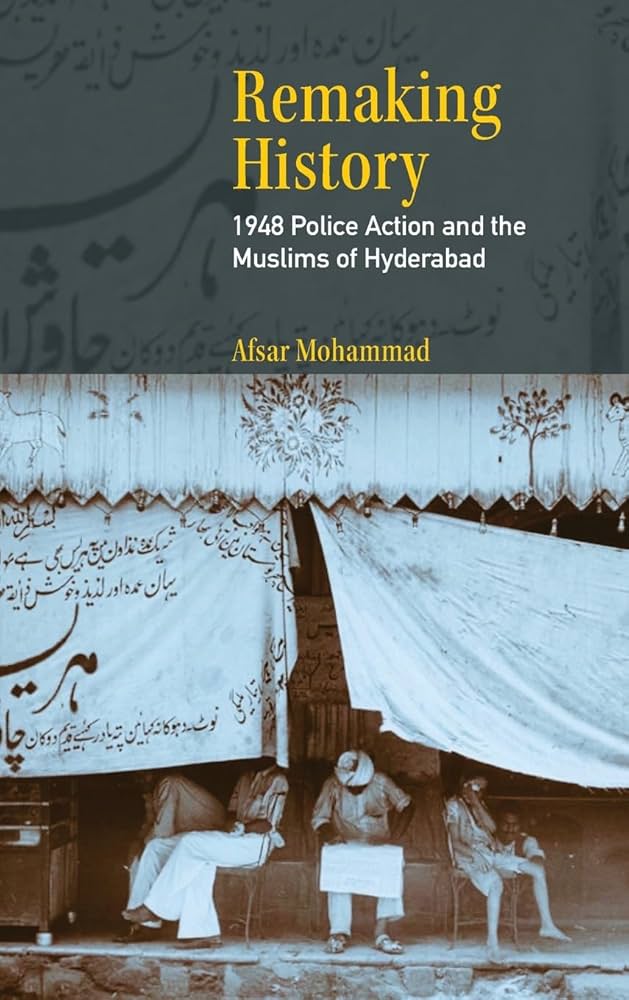
In an interview with TNM, academician Afsar Mohammad speaks of how Telugu writing suffers from a lack of adequate representation of Muslim voices and the current dearth of research into Telugu literature.

There was a paradigmatic shift in Telugu literature post the demolition of Babri Masjid, says Afsar Mohammad, senior faculty at the University of Pennsylvania in the US. In an interview with TNM, Afsar Mohammad speaks about how mainstream Telugu dailies like Eenadu and Andhra Prabha were unwilling to accommodate voices keen on promoting identity politics, citing his academic paper published in December 2023, titled ‘The Rise of a Muslim Voice: Telugu writing in the Times of Hindu Nationalism.’

According to Afsar, this vacuum created by mainstream papers gave rise to counter-culture magazines such as Kanjira, Ujwala, Chinuku, and others, which ensured representation of female, Muslim, lowered caste voices in the Telugu heartlands. “The Muslim question was discussed using a new vocabulary,” he tells TNM, adding that in Telugu folklore, a visible syncretic relationship between Hindus and Muslims was witnessed. 

Afsar speaks of how Sita, from the Hindu epic Ramayana, and Fatima, Prophet Mohammad’s daughter, are both invoked by female storytellers during Muharram in Telangana’s Karimnagar district. “The narrative describes certain commonalities between Fatima and Sita that represent the pain and suffering of many women and transcend the boundaries of a devotional text,” he writes in his paper.

In the interview with TNM, he speaks about how one year following the demolition of Babri Masjid, the Muslim subcaste group of dudekula (cotton cleaners classified as BC-B) started chronicling their distinction from upper-caste Muslim voices in Telugu. He also says that the connections Telugu literature and culture shared with Tamil Nadu were severed, and how as things stand, there exists a visible lack of research into Telugu writing.

source: http://www.thenewsminute.com / The News Minute / Home> Telangana / by Anjana Meenakshi / January 12th, 2024

Book Review | Salim Ali: An unlikely beginning, a great end

Mumbai, MAHARASHTRA :

It’s the author’s well-founded belief that Salim Ali’s life offers today’s children a role model.

Here’s hope for those young people who are mediocre with mathematics and other studies, and likely to be uninterested in business. Salim (pronounced Saalim, not Saleem) Ali’s interest in birds began to awaken when he shot a male sparrow, standing guard over its mate’s nest, with an air rifle. Next morning he found that another male sparrow had taken its place, and he shot that too… This went on until he had shot eight male sparrows, and then wonderment took the place of whatever had urged him to shoot those sparrows. This wonderment gave his life a foundation of incredible strength. It enabled him to survive the loss of several salaried jobs, and, later, the loss of Tehmina, his wife, who, throughout their 21 years together, supported his efforts wholeheartedly.

This book is his life story, told simply, and for children. It’s the author’s well-founded belief that Salim Ali’s life offers today’s children a role model.

The author makes no effort to sugar-coat the story. Salim’s initial difficulties with academics are covered in some detail, as well as mediocre performance in school, and his inability, found in many others of his extended family, to run a business successfully. This mediocrity at school had nothing to with his powers of observation, though. For example, it was known that the houbara bustard he saw in Sind (now in Pakistan), under normal hot and dry conditions, has a colour that affords perfect camouflage, enabling it to hide easily in the sand. Salim discovered, however, that the bustard’s colour changes in the rains, enabling it to hide in wet sand as well!

Also included is the story of Salim’s relationship with Colonel Richard Meinertzhagen, a former British Intelligence officer. The Colonel’s claims to being a hero might have been authentic, but his claims as an ornithologist were proven false in the 1990s, decades after his death. It illustrates Salim’s naivete with people, but also warns youngsters of the possibility of charlatanry in science.

My favourite story, though, is about Salim’s encounter with a bandit in the summer of 1945. Near the Tibetan border, poking around among the bushes, he saw a bandit armed with a dagger and a rifle. Escape was impossible, so he resorted to a ruse. He had a collapsible chair, a small folding seat on a stick. He pretended that the stick was a rifle barrel, and clicked the folding seat open to give the impression that he was loading and cocking his own rifle. It worked, for the bandit fled.

So here’s proof that commitment, integrity, and hard work — combined with observation, quick thinking, and luck — will get you where a great academic background won’t. A terrific lesson for youngsters, and packaged well, to boot.

The Bird Man of India: Salim Ali for Children

By Zai Whitaker / Hachette / pp. 142; Rs 350

source: http://www.asianage.com / Asian Age / Home> Books / by Shashi Warrier / August 27th, 2023

A documentary record of trauma and resilience

NEW DELHI :

Shaheen Bagh: From ‘Anti-National’ to Nation Saviour
Author: Asad

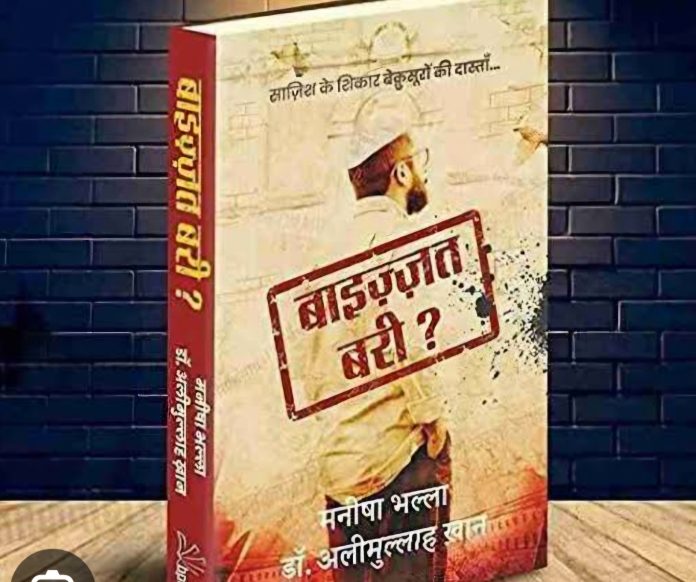
Don’t judge a book by the cover, they say. But in this book, the cover has a lot going for it. The photo is arresting. A Muslim man, dressed in a PPE suit and a white skullcap, holding an oxygen cylinder. His eyes stare right at the reader. COVID narratives are all over mainstream and alternative media. There have been films made on the pandemic; featuring some testimonies and narratives. But overall, they have been a discomfiting read. Many people, despite appreciating the quality of the film, found themselves struggling to get through films such as Bheed (2023), a stirring black-and-white account of the workers’ migration and the quarantine. No one wishes to revisit some of the darkest times in recent history. It is also perhaps too soon. 2023 was perhaps the first year since the pandemic resembling full ‘normalcy’. But where is the normalcy for those who suffered directly from it? Asad’s book is a haunting testimony to those days, particularly in Delhi.

Ask any Delhiite and they will tell you that the sound of ambulances in those times is not forgotten. This book too, takes you back into those days. Many videos of families stranded outside hospitals with no knowledge of their loved ones come back to mind as you flip through the pages. A large chunk of Asad’s narrative is based in Jamia Nagar and Okhla. The award-winning journalist brings to life familiar names and familiar losses.

Resilience is a common term that comes to mind in times of great tragedy. Cities that suffer great loss are called resilient. They bounce back. Resilience is a running theme here too. When you reach the end of the book and you can feel the sirens slowing down for a while, you breathe a sigh of relief. But then, you think – the book might be over, but the trauma isn’t, for many families. Does resilience need to go hand in hand with justice, restoration and adequate redressal?

There are many parts of the book that highlight and centre the subtitle of the book – from ‘anti-national’ to nation saviour.

Muslims became the target of a media campaign. Members of the Tablighi Jamaat were unfairly arrested and held responsible for the pandemic. Shaheen Bagh had been cleared forcefully. A pogrom ripped through the city. The facts do not need to be repeated but recalled. Muslims emerged to fight back against this narrative and help out their own; people set up helplines, task forces, did everything in their human capacity to help others even at great human risk. Asad, with the true quality of a journalist, does not gloss over failures or places where more efficiency was needed.

The book, unfortunately, like many other self-publishing efforts was in dire need of a good editor. There are errors and lack of standardisation that can be corrected if a second edition emerges. The book also needed more structure to make it clearer; in parts, the book reads like news reports and first-person narratives running into one. However, as an act of record-keeping, it is a vital contribution and a brave effort, and must be supported.

source: http://www.radiancenews.com / Radiance News / Home> Focus> Review Article / by Shayma S / Radiance News Bureau / February 08th, 2024

Book Review | An Indian with an Arab’s inner reserves

INDIA :

Cover page of Ebrahim Alkazi: Holding Time Captive

Ebrahim Alkazi’s father Hamed Alkazi was an immigrant businessman in India. He came from Nejd in Saudi Arabia as a young man to Calcutta and then to Bombay. Through hard work and honesty, he established himself in the export business. He raised his family in India. The children stayed back in India when he left the country in 1948 after Gandhi’s assassination, first for Karachi, then London, and to Beirut. Hamed while providing for their Western education in Poona saw to it that they were taught Arabic and also the Quran. Ebrahim and his siblings retained their parents’ values of etiquette and social conservatism.

Ebrahim grabbed the opportunities his education provided him of plunging into literature, music, art of times that India was exposed to during the colonial period. The politics of the period had a different impact on Hamed and Ebrahim. The father was apprehensive of the political volatility, but the son was electrified.

Amal Allana, the daughter, theatre personality in her own right and biographer, captures the magical moment of Ebrahim’s indirect baptism. He is pulled into the Congress session of August 8, 1942, when the Quit India movement was announced. Ebrahim was on his way to Sophia College for a debate at 9 am and reach St Xavier’s for an audition for the college drama at 2 pm. The streets were crowded and people were rushing in one direction. He goes to the meeting and he is mesmerised by Gandhi’s simple words. Amal recounts the episode intertwining it with that of his elder brother Ali going off to join the army even before Ebrahim came to Bombay.

If business was what engaged Hamed Alkazi, it was the arts, especially theatre, that absorbed the full attention of Ebrahim. His burning passion was to do something in the theatre and Bombay provided the door to enter upon his lifelong vocation. He had ready entry to a group of young men led by Sultan Padamsee, known to the social group as Bobby, who belonged to a well-off Khoja family, and the upper social circle of Bombay. Ebrahim became a natural member of the group. It was here that he met Roshen Padamsee, whom he will marry when he barely 21. But before that Bobby commits suicide. Amal handles his sexuality issue in the most natural manner, which any other biographer would have made into a major talking point of the 1940s Bombay.

Ebrahim, like many young men and women of the time in urban India, was consumed by the passion for radical modernism that was unfolding all over Europe in the arts and in literature. It was this mission that drove Ebrahim to go to England, and he sought his father for financial help, to pursue first painting and then theatre at the Royal Academy of Dramatic Art (RADA) in London. Despite his hunger for all that is modern, Ebrahim was not a bohemian. He remained an Arab at heart, simple, reserved and taciturn. He had studied deeply the issues of theatre but he was not loquacious. He could explain his point of view emphatically, and this is what carries the day for him when he attends the theatre seminar in Delhi to which he is invited in the early 1950s, and which leads to the government appointing him the director of the National School of Drama in Delhi in the early 1960s.

At one level, Ebrahim’s and Roshen’s life is a swirl of celebrities in the art circle of Bombay, and later in Delhi. But the relations between Ebrahim and Roshen were strained. At one point, Ebrahim was drawn to Uma, the first wife of Chetan Anand, and after her divorce from Chetan, she was keen to be with Ebrahim. But Ebrahim decides to hold back. The Arab sense of duty remains ingrained in him. When he is facing an internal crisis, he returns to his family, to the Arab lands, to recover his sense of balance. Here is the strange case for today’s India, which is turning ominously xenophobic. Ebrahim, the Arab at heart, was passionately devoted to create a vibrant contemporary, modern theatre in independent India, and he showed how to do it when he turned from the production of plays in English in Bombay to producing Mohan Rakesh’s Aashaadh ka Ek Din and Dharamvir Bharati’s Andha Yug in Hindi. He was an Indian with an Arab’s inner reserves. It is something that will beat the understanding of many in today’s India.

Ebrahim Alkazi: Holding Time Captive

Amal Allana / Penguin Vintage / pp. 647; Rs 1,299

source: http://www.deccanchronicle.com / Deccan Chronicle / Home> Lifestyle> Books and Art / by Parsa Venkateshwar Rao Jr / May 25th, 2024

Empowering Minds: Dr. Ayesha Sultana’s Visionary Impact on Online Islamic Learning

TELANGANA :

Dr. Ayesha Sultana stands as a beacon of innovation in the realm of Islamic education, particularly for youth and women, through her pioneering online initiatives. Armed with a profound grasp of both Islamic studies and psychology, Dr. Sultana is on a steadfast mission to imbue moral values and Islamic teachings in the hearts of the youth, with a special focus on empowering women, through accessible and dynamic courses.

Her latest endeavor, the “Taalimul Islam Certificate Course,” stands as a testament to her unwavering dedication to delivering high-quality education. Tailored for children up to 14 years old, this comprehensive 10-week online program provides an interactive platform to acquire fundamental Islamic knowledge. Transitioning seamlessly from physical to online classes, Dr. Sultana, former assistant secretary of the Women’s Wing of Jamaat-e-Islami Hind Telangana, has impacted over 1500 women during the pandemic.

Under the esteemed banner of Al Huda, Dr. Sultana established the Ayat Al-Fariya Islamic Academy, a sanctuary of knowledge catering to women and children alike. Here, hundreds of women benefit from Quranic teachings and personality development courses, while children engage in interactive sessions on Quranic memorization and Islamic principles.

In her pursuit of holistic development, Dr. Sultana organizes summer short courses for children, blending physical activities with essential Islamic values. Moreover, she offers initiatives such as the “Fahm e Quran” course and “Talaash e Qadr” series for women, enriching their Ramadan experience.

Dr. Sultana’s commitment to empowering youth extends to organizing online competitions for children, where participants are recognized and awarded certificates and trophies for their accomplishments in various categories, including video competitions, speech contests, and oral exams. With 300 children joining the course and 100 already certified, the impact of her initiatives is palpable.

The journey of Al Huda Islamic School began in 2013 in Khammam, Telangana, under Dr. Sultana’s guidance. Initially offering offline classes for women, complete with free transportation facilities, the school provided courses such as Certificate in Islamic Studies, Diploma and Memorization of Quran, Basic Arabic Grammar, Tafseer, Seerah, and Personality Development until 2018. Hundreds of women benefited from these courses, with many now actively involved with Jamaat-e-Islami Hind as volunteers and members.

Dr. Sultana’s dedication to education led her to conduct motivational lectures in numerous colleges, including medical and engineering institutions, and to organize moral classes for school children. Despite her busy schedule as the assistant secretary and Dawah secretary of Telangana, she spearheaded various women empowerment programs throughout the region. With the onset of the pandemic in 2019, she seamlessly transitioned to online classes, offering a plethora of courses and short programs for women, including Akse Furqan, Dawah classes, Qasal ul Ambiya course, Qurb e Ilaahi, and numerous quiz and exam series, engaging over 1500 women.

In 2023, Dr. Sultana expanded her online educational initiatives with the establishment of Ayat Al Fariya Online Academy under the auspices of Al Huda Islamic School. Introducing short courses for women, such as Tafseer and Memorization of Surah Mulk, Surah Rahman, and Surah Yaseen, the academy continued to positively impact hundreds of women. Additionally, pre-Ramadan courses like Shahru Ramadan, along with courses during Ramadan such as Fahm e Quran and Talaash e Qadr series, were conducted, benefitting a vast number of participants.

Despite her demanding schedule, Dr. Sultana remains resolute in her commitment to providing education free of charge.

Her recent accolades, including the Rastra Ratna Puraskar Award from the Veniyl Foundation, attest to her dedication to nurturing young minds. Additionally, she has been recognized with the Best Educator and Academician Award from the Book of Excellence and the Worthy Well Foundation, earning her a place in the prestigious Book of World Records.

Beyond her educational initiatives, Dr. Sultana is also an accomplished author, with titles such as “Beyond Ramadan” and “Embodied Wisdom” under her belt. As the Assistant Editor of Radiance News Portal and a member of the Aware Trust at Jamaat-e-Islami Hind Markaz, she continues to inspire and empower individuals through her tireless efforts in education and community development.

In line with her commitment to continuous improvement and advancement, Dr. Sultana announces the upcoming launch of the Taalimul Islam Level 2 advanced course for children from May 16th to May 31st. This 15-day program will further enrich the educational journey of young learners under her guidance.

Dr. Ayesha Sultana’s tireless dedication to Islamic education and community development continues to leave an indelible mark, inspiring countless individuals to pursue knowledge and virtue.

source: http://www.radiancenews.com / Radiance News / Home> Features> Pride of the Nation> Markers of Excellence / by Radiance News Bureau / May 11th, 2024

Ex bureaucrat Moosa Raza passes away at 87: A Journey of dedication, integrity, and public service

Chennai, TAMIL NADU:

Moosa Raza

Ex bureaucrat Moosa Raza has passed away in Chennai on Thursday. He was 87. He is survived by his son and two daughters.

Moosa Raza’s life is a testament to dedication, integrity, and a deep-rooted commitment to public service. Born on 27th February 1937 in Minambur, a small village in Tamil Nadu, India, Moosa Raza’s journey from humble beginnings to becoming a respected bureaucrat and prolific writer is marked by his unwavering principles and tireless efforts to make a positive impact on society.

Education played a pivotal role in shaping Moosa Raza’s worldview. He displayed exceptional academic prowess from a young age, graduating with a Bachelor of Arts (Honours) degree in English Language and Literature from Madras Presidency College, now Presidency College, Chennai. His academic achievements were exceptional, winning seven college medals across various disciplines. This included a First Class First in his degree, a testament to his dedication and intellectual acumen.

In 1958, Moosa Raza embarked on a dual path of academia and civil service. He was appointed as an Assistant Professor of English at Presidency College, his alma mater, while also preparing for the prestigious Indian Administrative Service (IAS) examinations. His commitment to both teaching and public service underscored his multifaceted talents and passion for contributing to society.

In 1960, Moosa Raza’s dedication paid off as he was selected for the Indian Administrative Service for Gujarat in his first attempt. This marked the beginning of a distinguished career that spanned over three decades and left an indelible mark on India’s administrative landscape.

Throughout his career, Moosa Raza held several key positions that showcased his leadership abilities and commitment to public welfare. He served as Collector and District Magistrate in various districts of Gujarat, managing critical responsibilities such as flood relief operations and drought management with unparalleled dedication and effectiveness. His tenure as Principal Secretary to the Chief Minister of Gujarat and later as Chief Secretary of Jammu and Kashmir demonstrated his administrative acumen in handling complex governance challenges.

Moosa Raza’s contributions extended beyond government service. He played pivotal roles in prestigious industrial and commercial enterprises, including chairing the National Textiles Corporation and Gujarat State Fertilizers Company Ltd. His strategic leadership helped turn around struggling enterprises, saving thousands of jobs and contributing to Gujarat’s industrial growth.

In recognition of his exemplary service and contributions to society, Moosa Raza was awarded the Padma Bhushan in 2010, one of India’s highest civilian honors. This prestigious accolade is a testament to his lasting impact and dedication to public welfare.

Apart from his illustrious bureaucratic career, Moosa Raza is also a celebrated author. His book “Of Nawabs and Nightingales” offers a glimpse into his early experiences in the Indian Administrative Service, showcasing his keen observations and insights into governance and society. He has also authored books on spirituality and personal reflections, such as “In Search of Oneness” and “Khwab-e-Natamaam” (Incomplete Dreams), showcasing his diverse literary interests and philosophical depth.

Moosa Raza’s contributions go beyond professional achievements. He has been actively involved in educational initiatives, serving as the chairman of the South Indian Educational Trust (S.I.E.T.) and supporting initiatives for women’s education, dyslexic children, and communal harmony.

In his personal life, Moosa Raza is a devoted husband and father, exemplifying the values of family and community that underpin his life’s work.

Moosa Raza’s journey from a small village in Tamil Nadu to a revered bureaucrat, accomplished author, and dedicated advocate for societal progress embodies the essence of service, leadership, and intellectual pursuit. His life and legacy continue to inspire generations, reminding us of the transformative power of individuals committed to making a positive difference in the world.

source: http://www.muslimmirror.com / Muslim Mirror / Home> Indian Muslim> Obituary / by Muslim Mirror / May 08th, 2024

Indian Muslim women have a stronger voice today: Zeenat Shaukat Ali

Mumbai, MAHARASHTRA:

Dr Zeenat Shaukat Ali (In white dress) Counsel General of Afghanistan in Mumbai

Caught in the panoramic whirl of life, there are thousands of affluent ladies one interacts or brushes shoulders with, but Dr. Zeenat Shaukat Ali shines out amongst many with her warm charming smile, down-to-earth nature, while showering pearls of knowledge. Born in an affluent home in Mumbai, she holds no superficial airs and graces. When someone mentioned to her that she should get the Padma Shri award for her remarkable service, she replied, “My greatest reward is when my students run up to me telling me they never forgot what I taught them in class.”

She told me, “Even you, asking me for an interview is like a reward for my service to the nation.” She said that during her daughter’s birthday party when she was in Dubai, a girl came up to her daughter and asked her, “Are you Zeenat’s daughter? You look just like her”, and when she replied, “Yes’, the girl said, “Let me tell you what she taught me I have never forgotten!”

Dr. Zeenat Shaukat Ali is a former professor of Islamic studies at St. Xavier’s College in Mumbai, fluent in English, and a seasoned speaker during debates on leading television channels and also heads the World Institute of Islamic Studies for Dialogue, Organization of Mediation and Gender Justice. She is clear on her religion: “I follow Prophet Muhammad’s teachings and no sects made by humans, these are all here to divide us.”

On Women’s International Day, speaking to Awaz-the Voice about Indian Muslim women, she said with a sigh of relief, “Indian Muslim women have a stronger and larger voice today than earlier, cutting across all sects and today, we have a long way, hundreds of Muslims contributed to India and I think all-around whole education is the answer to all problems. Women should be given a key role in the decision-making process, and be able to implement laws for the nation.

There are 33% seats for women in parliament. Ilm in Arabic means knowledge and there are 800 plus verses upholding ilm or knowledge and it’s derivatives. There are hundreds of verses in the Quran elucidating scientific facts. In Indian society, we see that the Parsees are highly educated and have become the best doctors, and lawyers, excelling in all spheres because they proficiently educated themselves.

Dr Zeenat Shaukat Ali participating in an interfaith conference

“We are no longer the India of a hundred years back. With education, we can get rid of misogyny, and inequality, giving equal respect and equal understanding to each other. On a flight back to Mumbai, I watched Sri Devi’s excellent movie, English Vinglish and one line that stood out was the aspect of respect where she said, “Teach me, don’t make fun of me, and don’t take it for granted that I will only sit in the kitchen and make ladoos …”

Dr. Zeenat Shaukat Ali on reminiscing about her early life said, “My interest in studying the Quran began early, around the age of 16 when I was trying to understand a paragraph (ruku) a day in depth to try and comprehend its meaning, and very often, I would be the only girl sitting among all the wise spiritual white-haired Maulanas some even in their 80s, learning from them. With their help, I began to understand the message of compassion, peace, and harmony. My prayers also began at that age and continue to date.

At a young age, she looked up to her excellent teachers who were like father figures and sculptured her thinking to analyze as she went into research. “Dr NS Gorekar was my teacher of Islamic Studies and my Ph.D guide and Professor Kamran taught me how when one goes deep into relics, where the finishing steps are like jewelled stones and thesis is like a manuscript which should never be discussed with anyone or they would steal your thoughts!”

Her childhood home was always buzzing with activity, guests filling the home with visitations, while house helpers hurried around in their daily tasks. Lunchtimes were blissfully wonderful for Zeenat Ali when her father’s friends visited, Dr. Shukri and Maulana Abdul Rahman who were both very knowledgeable and the young Zeenat could pour out all her questions quenching her thirst for deeper spiritual understanding. Her spare time was immersed in activities visiting the club and libraries. Her favourite sports were badminton and horse riding and a day was never too long for her and she spent more time in libraries than in clubs, though!

Fortune smiled on her with her happy family life, with one brother and being the only daughter always felt the warm arms of her parents embrace her equally. In this close-knit family, they shared everything and were like the best of friends. “There was a gender parity in our household,” she says. While her brother went on to study engineering and business management, she went on to study English Literature and delve deeper into Islamic Studies. Both parents, Gulam Ali and Sheereen were advocates of intellectual secularism. Traditionally, every Friday, her father gave the queues of poor people outside their homes a delicious meal. Good works were an integral part of her family’s faith and her great-grandfather and his dear brother opened an orphanage in Pune giving solace to hundreds of children. She also received personal care from her grandmother as she was growing up.

Dr Zeenat Shaukat Ali with a Minister in Azerbaijan

Her mother was anxious to see her well settled in marriage at a young age, but her father and grandmother opposed an early marriage wanting her to only get married after her education. When the day of a suitor arrived, her future husband Shaukat Ali was informed that he could only marry her if he allowed her to complete her graduation, to which he readily agreed and in fact, encouraged her to pursue her higher gradution after marriage in the 1980s.

While her mother was a great source of inspiration, it was her father, Zeenat Shaukat Ali says, who stood as a powerful influence in her life, always urging her to study more, taking a keen interest in her subjects, and asking her questions about the subjects in her class, discuss enriching topics with her and always spurred her on for higher graduation. Her taught her the concept of humanity drawing her into the world of all people as one, where he had friends from all religions, Hindus, Parsees, Sikhs, Christians, Jains, Buddhists, and others and he looked at all people as humanity.

She grew up with Muslim cooks crafting delicacies who skillfully knew the art of laying out an elaborate meal on a dining table, Hindu and Christian domestic workers and maids rich in their traditions and beliefs and all were respected. She specially mentions Abdul the cook who made her beloved cheese sandwiches with hot tea, so she could concentrate on her work without interruptions.

The school was all about sharing tiffins as constantly hungry students generously shared each other’s lunch boxes. “Those were happy days in St Xavier with long animated discussions in the college canteen and festival seasons were times of sharing and visiting Hindus, Christians, Jains, Muslims, Parsees, and others alike.”

When she got married, her Christian maid, Rosy Fernandez helped to bring up her three children amidst her very hectic schedule. Rosy had her method of praying as did the other house helpers and she says, “We learned the art of humanity.”

Dr Zeenat Shaukat Ali at St Xavier’s Alumuni meet

Her husband and three children (two daughters and a son) used to tell her that her quest for knowledge was insatiable and likened it to taking a “deep dive into the ocean to touch the ocean floor,” meaning, she always had to dig deeper and was never satisfied with just bright glimmers of knowledge and also went to the roots of William Shakespeare’s literature, which in themselves were always complicated. Her husband, Shaukat Ali was a remarkable sportsman, a great businessman, and a wood connoisseur who at parties would often delve into a rich conversation on any type of furniture wood, being an interior designer, he was artistic and loved flowers, music, and took a profound interest in Zeenat’s writing, even though at times, he fell asleep in the middle of it, she says with a laugh. When her father suddenly died of a heart attack, it was a shock to her and Dr. Zeenat found her comfort in the pristine purity of the Quran she grew up with.

She said, “After the sudden loss of my Father, it was my husband who said I should take up my PhD seriously instead of dropping tears.” With eyes filled with tears and a choked voice, she said that her husband and her mother both passed away in 2018 and it was a particularly difficult time for her.

She says, “I matured bit by bit as I was doing my thesis until I realized the ideas and values of Islam had to be brought out as there was an alarming deafening silence from our scholars, very disappointing as they also have a responsibility to bring the right representation of Islam to the nation.”

Her husband and three children (two daughters and a son) used to tell her that her quest for knowledge was insatiable and likened it to taking a “deep dive into the ocean to touch the ocean floor,” meaning, she always had to dig deeper and was never satisfied with just bright glimmers of knowledge and also went to the roots of William Shakespeare’s literature, which in themselves were always complicated. Her husband, Shaukat Ali was a remarkable sportsman, a great businessman, and a wood connoisseur who would often in parties delve into a rich conversation on any type of furniture wood, being an interior designer, he was artistic and loved flowers, music, and took a profound interest in Zeenat’s writing, even though at times, he fell asleep in the middle of it, she says with a laugh. When her father suddenly died of a heart attack, it was a shock to her and Dr. Zeenat found her comfort in the pristine purity of the Quran she grew up with.

She said, “After the sudden loss of my Father, it was my husband who said I should take up my PhD seriously instead of dropping tears.” With eyes filled with tears and a choked voice, she said that her husband and her mother both passed away in 2018 and it was a particularly difficult time for her.

Dr. Zeenat Shaukat Ali receiving an award

She says, “I matured bit by bit as I was doing my thesis until I realized the ideas and values of Islam had to be brought out as there was an alarming deafening silence from our scholars, very disappointing as they also have a responsibility to bring the right representation of Islam to the nation.”

A recent book entitled “I Am ?” a Hinduja Foundation Publication brought out by Mr. Gopichand Hinduja and Mr. Ashok Hinduja is the result of  Mr. Gopichand Hinduja’s inspiration. In the Introduction of “Why this Book ?” Mr Gopichand Hinduja, a great spiritualist states that he wanted an “l state to bring all virtuous teachings of all the important religions of the world that have influenced and shaped humanity in a single book to share their oneness.”

A Par Excellence Message has been penned by Sheikh Al Nahyan, Minister of Tolerance and Coexistence, UAE as Dedication to Humanity” where the message of the book is “dedicated to those who want to explore their life beyond the known and visible,” she said,” It was an honour for me when I was invited to write the conclusion to the book. It was to be on the commonalities existing among religions. I titled the chapter “Connecting the Magical Dots in the Infinite Cosmos” where I wrote, “We are all like a beautiful rainbow, where all colours stand together yet remain distinct to form the exquisite rainbow. We say similar things at different times, in different languages but have to stand together to form the rainbow. Our commonness lies in our humanity, to be compassionate,   to care for each other.”  She added, “A Chart of the Commonalities has been drawn up and affixed at the end of the book.”

Achieving powerful landmarks, invited all over the world as a delegate, she is an integral part of many organizations. She is the Founder and Director-General, of Wisdom Foundation, founded in 2006 in Mumbai, a registered body that has many national and international advisors which focus on Gandhian values of nonviolence, and humanitarian service. 

She bagged the Vijaya Shree National Award for Education Enriching Human Life and Outstanding Attainment in 1997-98.  She spearheads an innovative peace initiative in the city. With over three years of existence, the program features a cricket match at the Brabourne Stadium, involving teams comprised of Muslim, Hindu, and Christian clerics, deliberately not segregated along religious lines. Additionally, Ali leads the World Institute of Islamic Studies for Dialogue, Organization of Mediation, and Gender Justice. She actively participated in the International Higher Education Interfaith Leadership Forum.

She has attended very important, excellent Conferences in Doha, Qatar organized by the Ministry of Foreign Affairs on Interfaith Dialogue in 1922 and 23 where interfaith scholars and dignitaries around the world were invited. In 2022, she attended an Excellent International Conference in Azerbaijan on Dialogue and Preservation of Cultural Sites.

Also known as an activist and author of several books, she has made a powerful impact with her writings. Her famous book The Empowerment of Women in Islam With Special Reference to Marriage & Divorce, was highly felicitated by great leaders in India.

Justice A. M. Ahmadi, Chief Justice Supreme Court of India said, “The author in her book seeks to knock on the doors of Islamic Jurisprudence to secure gender justice for Muslim Women. It is path-breaking in the sense that it is a bold endeavour to show how social reform can be introduced into the Muslim society through traditional strategies…”

Dr Zeenat Shaukat Ali Presenting her book I AM to Sheikh Al Nahyan, Minister of Tolerance and Coexistence of the UAE

Achieving powerful landmarks, invited all over the world as a delegate, she is an integral part of many organizations. She is the Founder and Director-General, of Wisdom Foundation, founded in 2006 in Mumbai, a registered body that has many national and international advisors which focus on Gandhian values of nonviolence, and humanitarian service.

She bagged the Vijaya Shree National Award for Education Enriching Human Life and Outstanding Attainment in 1997-98.  She spearheads an innovative peace initiative in the city. With over three years of existence, the program features a cricket match at the Brabourne Stadium, involving teams comprised of Muslim, Hindu, and Christian clerics, deliberately not segregated along religious lines. Additionally, Ali leads the World Institute of Islamic Studies for Dialogue, Organization of Mediation, and Gender Justice. She actively participated in the International Higher Education Interfaith Leadership Forum.

She has attended very important, excellent Conferences in Doha, Qatar organized by the Ministry of Foreign Affairs on Interfaith Dialogue in 1922 and 23 where interfaith scholars and dignitaries around the world were invited. In 2022, she attended an Excellent International Conference in Azerbaijan on Dialogue and Preservation of Cultural Sites.

Also known as an activist and author of several books, she has made a powerful impact with her writings. Her famous book The Empowerment of Women in Islam With Special Reference to Marriage & Divorce, was highly felicitated by great leaders in India. Justice A. M. Ahmadi, Chief Justice Supreme Court of India said, “The author in her book seeks to knock on the doors of Islamic Jurisprudence to secure gender justice for Muslim Women. It is path-breaking in the sense that it is a bold endeavour to show how social reform can be introduced into the Muslim society through traditional strategies…”

M Hidayatullah, Former Chief Justice and Vice President of India said, “This is a treatise of Marriage and Divorce in Islam…written in a scholarly way, it will keep these difficult subjects alive for lawyers, teachers, and students. I wholeheartedly recommend the book.”

The Implementation of a Uniform Civil Code, Winning the Peace: A Quest/edited by Dr. Zeenat Shaukat Ali, contributor Shaukat Ali. She wrote Healing Memories – Civilizations in Dialogue; The Legacy of India – Pluralism, Tolerance and Peaceful Coexistence, and many other erudite thesis papers.

Among her cherished mentors are Father Simon D’ Souza who had been teaching at St. Xaviers College Mumbai and serving as in-charge Principal for a while, and Raymond Bodin from UNESCO, among many others. She also says, “I pray to Allah with my hands folded.”

She explained that the phrase Vasudhaiva Kutumbakam from Hinduism which means “The World Is One Family” is similar to the words of Prophet Muhammad  who said” All creatures form the family of God and he is best loved by God who best loves his creatures”.

Jesus taught similar ideologies to love all people, as did Buddha and other religions. Unfortunately, religion over time has been manipulated for political gains. Islam means peace comes from Salam.

She expressed, “One of the people who were dear to me was Father John Misquitta SJ, Principal of St Xavier’s when I began to teach, who loved my thesis. He was dynamic, encouraging he believed in academic excellence like all other principals. Fr John Correia-Afonso, Director of the Heras Institute of Indian History and Culture, St Xaviers College was a distinguished renowned historian who invited me to join the Heras Institute. He was an exceptional person – a legend who guided many a student. He was a great instructor and teacher who inspired many academicians, including me.”

“The whole world of Islam where Muslim majorities prevail are now re-thinking issues so it’s time for us now that our Ulema, our learned, our scholars should not drown themselves in silence or should not give misleading misinformation, where Islam is teaching you to preserve life. If you kill one person, it is as if you have killed all mankind Surah 5:33, so we have to bring these to life not only in words but in our actions…”

Reiterating that learning and knowledge were an essential part of their lives as Islam teaches “Whoever follows a path to seek knowledge, Allah will make the path to Jannah (Paradise) easy for them.’ it was incredible that her grandmother at the age of 70 was learning to read and write Urdu,” Zeenat Ali said that similar to her male counterpart, every woman is morally and religiously obligated to pursue knowledge, enhance her intellect, broaden her perspective, nurture her talents, and subsequently utilize her potential for the betterment of both her soul and her society.

She shares special nuggets of gold with Indian Muslim women today, and on Women’s International Day, with this message, “Have a wonderful vision for your country and your family. Educate yourself to the fullest, endeavour to be the best in the world, and be part of nation-building. Be compassionate and caring. Dream big! Know that you are beautiful in the heart and the soul, you are an achiever, you are a doer, you can do it and you will make a difference!”

Rita Farhat Mukand is an independent writer

source: http://www.awazthevoice.in / Awaz, The Voice / Home> Stories / by Rita Farhat Mukund / March 08th, 2024