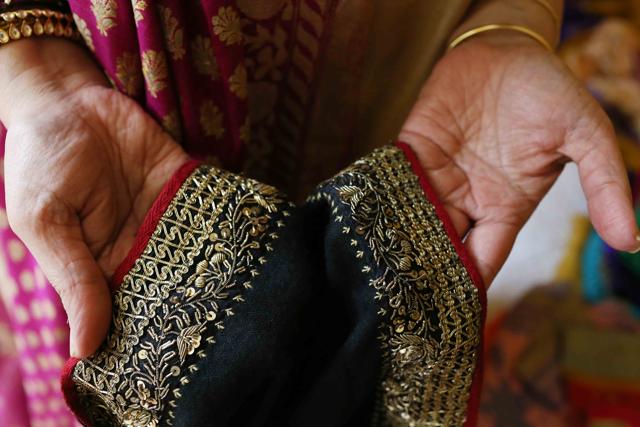
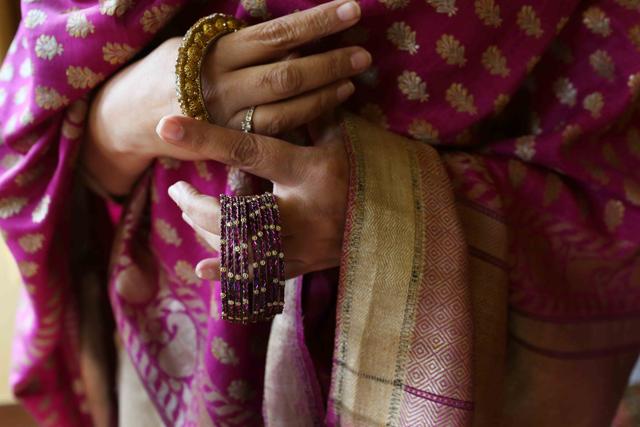
Saleem Kidwai’s translations of Qurratulain Hyder’s novels bring out the author’s command over the Urdu idiom.
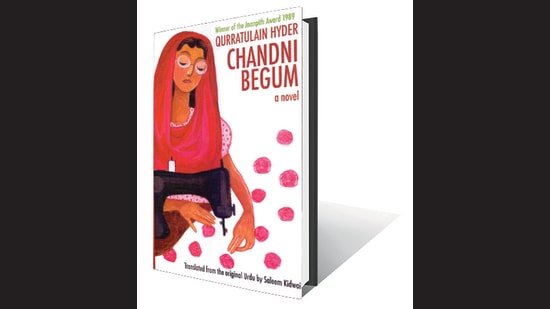
Qurratulain Hyder’s last novel, Chandni Begum, almost predicted an increasingly intolerant India. (HT Team)
Saleem Kidwai died earlier this year. Apart from being a translator par excellence he was a medieval historian, and queer rights activist, best known for co-authoring Same-Sex Love in India: Readings from Literature and History.
Urdu phrase in Chandni Begum – Allah maaf kare as “Allah, forgive my sins”. I thought the phrase had lost its zing and frankly told him that the dramatic, half-mocking Allah maaf kare should have been retained like Aye bahu, a lament that is difficult to express in English.
We discussed the possible alternatives, Kidwai graciously half-defending the phrase, and then he revealed that he was translating Hyder’s Safina e Gham e Dil (Ship of Sorrows). Both books are my absolute favourites, and I re-read them after his untimely demise.
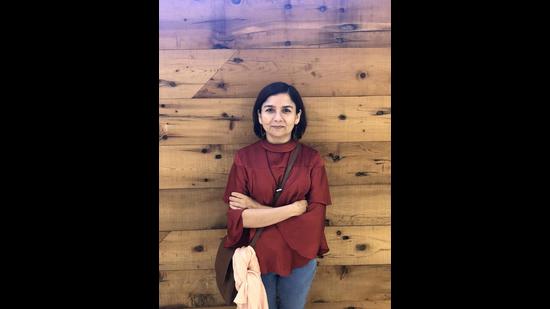
Lamat R Hasan (Courtesy the reviewer)
Chandni Begum, 1989
The novel centres around the lives of two aristocratic families living on a controversial estate with a mosque and a temple in its compound. The story moves at a fierce pace, shuffling between the past and the present, from the Partition of India to the Mandir-Masjid dispute in Ayodhya, amplifying the complexities of life, trying to find coherence in the class-caste chaos.
She wrote this tale of love and loss a few years before Babri Masjid was razed to the ground, almost predicting the future course of events, of an India that would become increasingly intolerant. This was Hyder’s last novel.
Ship of Sorrows, 1952
Only when I was holding “Ship of Sorrows”, Hyder’s part memoir, part fictional work in hand, did I learn that Kidwai had decided to abandon the project midway.
Unlike other Partition stories written from the perspective of average men and women who witnessed its horrors, this novel is a coming-of-age story, without a conventional storyline, of a privileged set of six friends from Awadh. The author herself debuts as Anne Hyder and fictionalises her experience during the communal riots in Dehradun.
Kidwai praises Hyder’s command over the Urdu idiom, with its Persian and Arabic inflections, and her equal ease with English and western idioms. Her fiction is not easy to read and she was impatient with critics who tried to evaluate the impact of modernism and of particularly Virginia Woolf, on her work. Kidwai was indeed overwhelmed by her genius, but after two years of hard work he successfully anchored his ship.
In Kidwai’s memory next up on my reading list is his biography of the legendary singer Malika Pukhraj. Song Sung True (Kali for Women, 2005) was first published in translation in India. The original Bezubaani Zubaan Na Ho Jaey was recently published in Pakistan.
Lamat R Hasan is an independent journalist. She lives in New Delhi.
source: http://www.hindustantimes.com / Hindustan Times / Home> Books / by Lamat R Hasan / December 17th, 2021
The anecdotes about chieftains and their chelas, the ode to Farrukhabad, and the art of expressing time through chronograms make Tarikh-i-Farrukhabad a compelling read.
Local histories of little-known provinces and sketches of its people are fascinating but hard to come by (Courtesy Lamat R Hasan)
Mufti Syed Waliullah Farrukhabadi’s Tarikh-i-Farrukhabad is written in Persian, a language I do not know.
But I made up my mind to read it when I found it being referenced in historical accounts of the decline of the Mughal dynasty – and in some detail in British historian William Irvine’s account of The Bangash Nawabs of Farrukhabad.
As a civil servant in India, Irvine learnt to read Persian, and started collecting manuscripts – including Waliullah’s (1751-1833). With some difficulty I traced Waliullah’s manuscript, written in 1829, measuring 10 inches by six inches, with exquisite gold inscriptions. Acquiring a digital copy of the manuscript was another task and then engaging a Persian instructor to help me wade through significant chunks.
Waliullah writes that after Delhi was invaded by the Marathas around 1757, many of the nobles from the former Mughal capital sought shelter in Farrukhabad, named after Farrukhsiyar, the tenth Mughal emperor. It was Nawab Mohammad Khan Bangash who founded the city in 1714. It was also home to a lot of holy men and referred to as “Faquirabad” (the land of ascetics). With the setting up of a mint in 1803, it became an important centre of commerce and was known for its superior quality of silver and gold coins.
The title of the book is a little misleading as Waliullah’s work doesn’t quite fit into the genre of microhistory. Though his focus is on Farrukhabad, the scope of his work is not restricted to the town or the tiny settlements around it, its chieftains and their chelas (followers), but covers the decline of the Mughal empire and the rise of British imperialism as well.
The little anecdotes about the chieftains and their chelas, the shair-o-shairi, such as an ode to Farrukhabad, the town Waliullah moved to from Sandi as a nine-year-old, and the art of expressing time through trsim waqt or chronograms (a sentence in which letters interpreted as numerals stand for a specific date) make for a compelling read.
Lamat R Hasan (Courtesy the subject)
Waliullah informs that the tomb of poetess Gunna Begum (wife of a vizier in the Mughal empire and daughter of a famous Iranian poet) bears a trsim waqt which translates as “Alas! Gunna Begum”. Other chronograms mention date of births or deaths such as “Hai, Hai, Hatim Tai séni na mand”, which is interpreted as 1771. Incidentally, Waliullah’s own date of death was derived from a chronogram – “Ganj-z-ma’ni ba-raft zer zamin” – inscribed by his contemporary Bahadur Ali Syed.
Other fascinating details include the inventions of the qutub-nama (magnetic compass), doorbeen (binoculars), and the types of weapons the British possessed to conquer new lands.
Local histories of little-known provinces and sketches of its people are fascinating but hard to come by – no surprise then that I devoured the very pages Irvine critiqued as “biographies of obscure Muhammadan worthies who lived in, or had visited Farrukhabad”.
Lamat R Hasan is an independent journalist. She lives in New Delhi.
source: http://www.hindustantimes.com / Hindustan Times / Home> News> Books / by Lamat R Hasan / December 22nd, 2023
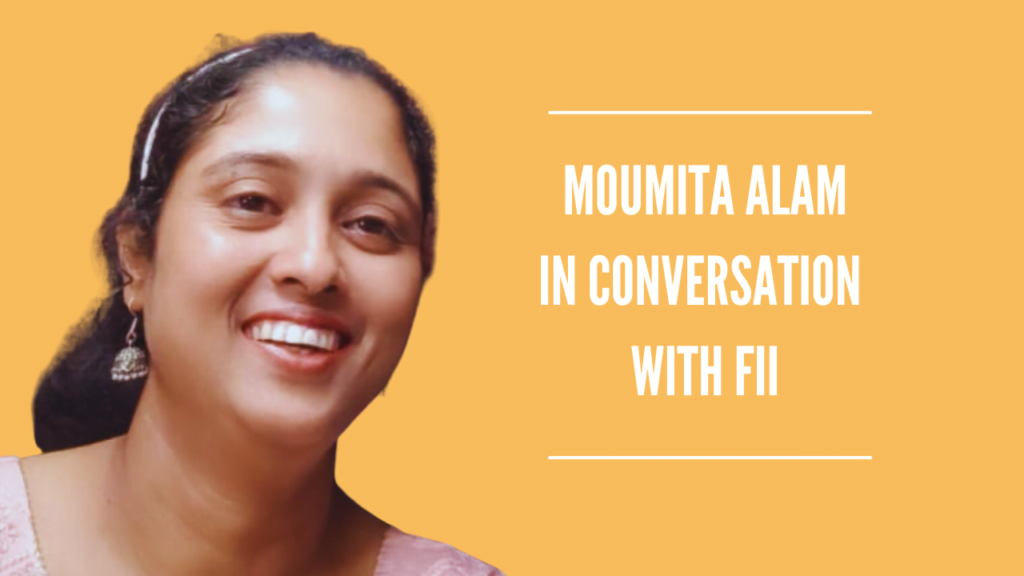
In a conversation with FII, Moumita Alam discusses how she began writing poetry, and what it is like being a Muslim woman in a Hindu majoritarian state and how the voices of certain minorities have been silenced throughout Indian history.
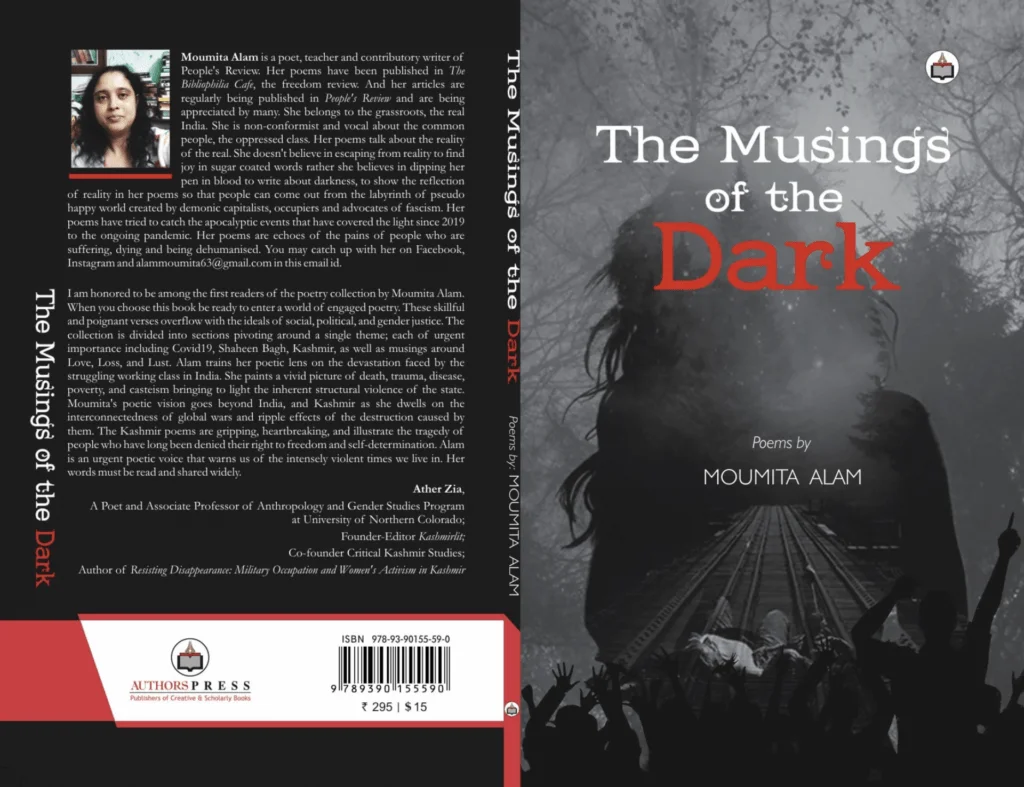
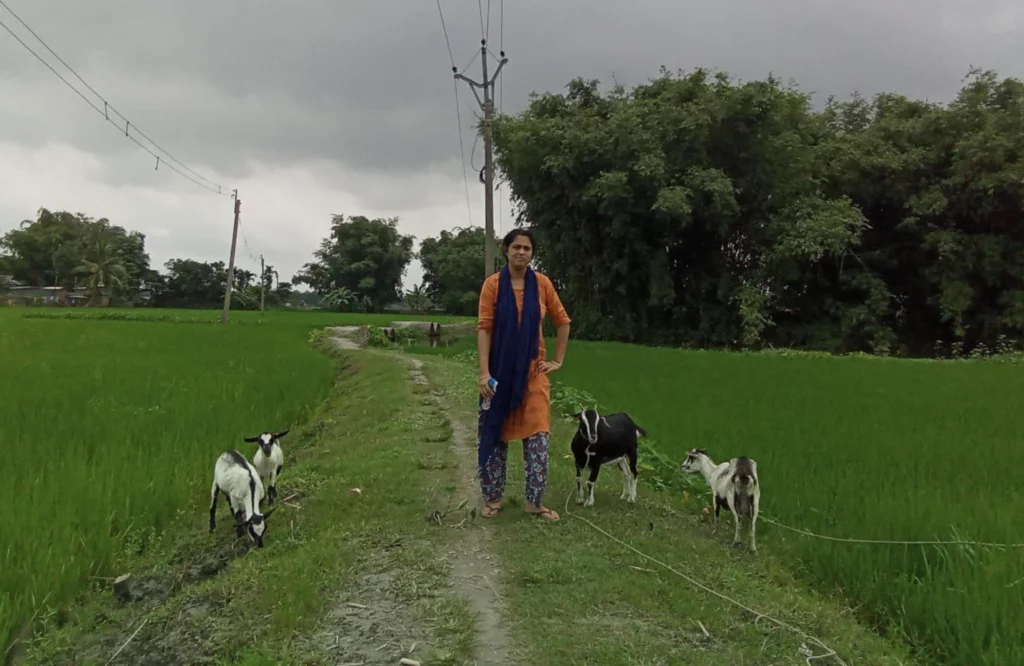
Moumita Alam is a teacher based in West Bengal whose political poetry, over the past few years, has gained incredible popularity in South Asia due to its powerful messages and themes. As a Muslim woman, through her poems, essays and opinion pieces, she attempts to bring out the atrocities faced by the women of her community alongside critiquing the larger issue of rising Islamophobia in India. Her first and only book, The Musings of the Dark was published in 2020.
In a conversation with FII, Moumita Alam discusses how she began writing poetry, what it is like being a Muslim woman in a Hindu majoritarian state and how the voices of certain minorities have been silenced throughout Indian history, particularly in West Bengal ever since the 1947 partition.
FII: You have, over the past few years, used your poetry to both raise awareness about and protest against the Islamophobia propagated by the ring wing in our country. Would you like to shed some light on what your writing journey has been like?
Moumita: I began my poetic journey after 2019. In 2019, on the 5th of August, the abrogation of Article 370 happened. I had a friend who lived in Kashmir, so I lost connection with him. He was an aspiring advocate who would regularly speak with me. I, as a teacher and a single mother, would share my life journey with him in return. But in 2019, when I could no longer talk to him, a sense of guilt began haunting me — how could a land become a prison where the people couldn’t even make a phone call to the ones in the outside world?
At some point in time, I thought of writing a letter to him, but receiving a letter from here could land him in trouble. He was much younger than me but was my only friend who would listen to my feelings, my happiness, my sorrows. So, I began writing.
I am against the use of the term “migrant labourers,” because India is our own country, so how can its citizens be called migrants? — to come on the grounds and walk for miles and miles to reach their homes.
Moumita Alam
That same year, in December 2019, the Anti-CAA-NRC movement started and we suddenly became aware of our religious identities. Everyone around me would ask me, “Are you legal? Are you a Bangladeshi?” But, believe me, I was born and raised in West Bengal. I have never even seen or visited Bangladesh. Every Muslim I know — whether practising or non-practising — was being asked this question. So, after my Kashmiri friend, I lost my other friends too because their questions would hurt me. I wrote about those feelings too.
Source: Moumita Alam’s FB
And then again in March 2020, we saw how the unplanned lockdown forced the workers of the unorganised sector — I am against the use of the term “migrant labourers,” because India is our own country, so how can its citizens be called migrants? — to come on the grounds and walk for miles and miles to reach their homes. I could not sleep for days because I live in a village and many of my relatives and fellow villagers used to work in Kerala and Delhi as labourers. So, I also started to write poems about their plights and sufferings.
One of my friends asked me to send my poems for publication, which had never crossed my mind because I stay far away from Delhi and its so-called “English literary circle.” But I still emailed a publisher who agreed to publish and then, my first and only book, The Musings of the Dark came out in August 2020.
FII: Since your poems usually focus on the theme of gendered Islamophobia or the issues that Muslim women face in our country, what is it like being a Muslim woman in a country governed by the right-wing?
Moumita: In 2021, I got to know that a few right-wing fanatics had created an app to sell Muslim women and had named it ‘Bulli Bai.’ I was so disturbed after reading the news about this because this is such a heinous thing to do — how can anyone do this in a democratic country like India?
So, I wrote this poem, “I am a Muslim woman and I am not for sale.” This poem was translated into many languages — in Telugu, Assamese, Bengali, Tamil, Kannada, and others — and was also published on various platforms.
If you follow the news, you would know that in 2022, hijab was banned in schools across the country. Even if I don’t wear hijab, you can’t ban other women who do from getting an education. As women, we are a minority in many ways — first, as Muslims in this country and then, because of our gender. We have to bargain our choices and sometimes, we have to compromise in front of our families by saying, “I will work hard, I will wear a hijab, please let me go to the doors of education.”
When a man is interpreting religious scriptures for you, he will — whether consciously or unconsciously — view religion through a patriarchal lens. They might not allow us to gain an understanding of the equal rights that Islam gives to Muslim women.
Moumita Alam
After becoming independent, I, as a Muslim woman, can decide for myself whether or not I wish to wear a hijab. But, you can’t put a blanket ban on hijab like that.
While I do write poems on the rising Islamophobia in our country, I also write about the oppression we Muslim women face within our own communities. Look, our society is based on patriarchal notions which means that even a lot of religious preachers are men. When a man is interpreting religious scriptures for you, he will — whether consciously or unconsciously — view religion through a patriarchal lens. They might not allow us to gain an understanding of the equal rights that Islam gives to Muslim women.
FII: Have you ever faced censorship for having political themes and highlighting the various injustices particularly on the basis of religion, in your work?
Moumita: Thankfully, we still have some platforms that provide a space to people like me where we can raise our voices. I am thankful to the Editor of LiveWire, who recently resigned. She was an immense pillar of support for me because she never censored my work — she either accepted it or denied it from being published, but never censored it. Even the Editor of Outlook is brilliant that way.
Source: Moumita Alam’s FB
Sometimes, however, my poems get rejected by other platforms because they say my work is too political, but I think we are living in a time during which one can’t be apolitical. If you are, then you are indirectly standing with people who are unleashing injustice towards minorities.
FII: As a poet who writes in both English and Bengali, you have often talked about how the voices of certain minorities have been neglected even within Bengali literature and poetry — an example of which can be the Marichjhapi massacre in 1979. Is there anything that you would like to discuss about the domination of certain elite classes and castes in Bengal?
Moumita: You might have noticed that for the non-Bengalis, West Bengal is equal to Kolkata — all of Bengal is just Kolkata for most people who aren’t from Bengal. This suggests a very Kolkata-centric attitude that most people have about Bengal. The literary world is, of course, not an exception — it’s so Kolkata-centric that people like me who are living in the margins find it almost impossible to reach the centre that is Kolkata.
Also, the Bengali literary world has been dominated by upper-class, upper-caste people for a very long time. So, they write about only those issues that they know about and that suit their narrative. Things are changing, some voices are getting spaces. However, we still have a long way to go. »
FII: When we usually talk about the India-Pakistan partition, the discussion inevitably gets centred around the division of what is present-day Punjab with little being said about how the refugees of Bengal, particularly the oppressed even among the displaced, were impacted. As someone who has written articles on this theme for both English and Bengali publications, can you tell us a little about your understanding of the same?
Moumita: Yes, I agree with you that the pains and sufferings of the Bengali refugees haven’t found expression in the so-called mainstream literature, particularly English literature. When I’m talking about “Bengali,” I mean both Hindus and Muslims. The plights of the oppressed class like the Namasudra community who were forced to migrate to West Bengal from the then East Pakistan is missing from the literary narrative. Equally, even the traumas and voices of the Muslims who stayed back while the other members migrated to East Pakistan are missing from the literary imagination.
Source: Moumita Alam’s FB
Most importantly, after partition, no political establishment tried to heal the wounds of the refugees. We all understand how the various European governments attempted to heal the wounds of the holocaust survivors after the second world war, but the same did not happen in India, even though the partition is often compared to the Holocaust.
Instead, every political party tried to gain political mileage from the religious fault lines. If I am not mistaken, nothing much has yet been written about internal migration. How many partition museums do we have?
FII: Every time your poems about the Babri Masjid demolition or about Kashmir get published, there are a lot of derogatory things that are often said by right-wing people— such as a lot of Kashmiri Pandits who end up claiming that their own stories need to be heard over yours. Since you have been doing what you believe in for so many years, is there any advice that you’d like to give to the young girls of our country about how they can voice their thoughts fearlessly even when they are intimidated?
Moumita: We are living in a critical juncture of time. As witnesses of this time, we can’t let the fascists win. How are they winning? They are winning through their narrative — a narrative of hatred towards minorities, towards women. We have to tell our own stories, we have to counter their narrative by our narrative.
So, here is my message for all women:
I wish you,
Oh women,
A savage fury
To throw all the
Dos and don’ts
Under a ravaging bus.
And begin from the beginning
All-new, all equal.»
FII: You write and publish your creative works and political thoughts as a freelancer, which means there is very little for you to gain from it as a poet. If anything, your poems and articles have mostly just led people to threaten you. What is it that motivates you to continue writing even when things don’t entirely work in your favour?
Moumita: Silence is not an option. The hatred that engulfed my friends still haunts me. I am a villager and I know how common people are suffering every day. The silence of the intellectual people saddens me. I want to jolt them, wake them up from their hibernation.
I am a villager and I know how common people are suffering every day. The silence of the intellectual people saddens me. I want to jolt them, wake them up from their hibernation.
Moumita Alam
You know, potatoes are the only profitable crop in my village. This year, the poor farmers incurred a heavy loss and couldn’t repay the loans they had to take from private microfinance companies at heavy interest rates. I asked a very old farmer how they plan to survive after this loss? And he replied, “Next year we will get some profit.” I was just amazed at his belief and relentlessness. I believe we can bring a change. We have to hope because we don’t have any other option.
The interview has been paraphrased and condensed for clarity.
source: http://www.feminisminindia.com / Feminism In India / Home> Interview / by Upasana Dandano / June 09th, 2023
Amar Sohal’s ‘The Muslim Secular’ is a compelling exploration of ideas, identities, and legacies that takes you on a scholarly journey that traverses the intricate terrain of India’s struggle for Independence and its subsequent partition through the lens of three influential Muslim leaders: Maulana Abul Kalam Azad, Khan Abdul Ghaffar Khan, and Sheikh Abdullah.
Photo: Getty Images
Amidst the dynamic sociopolitical landscape of the subcontinent, the Muslim community grapples with multifaceted challenges, navigating issues of identity, representation and political agency. It is against this backdrop that Amar Sohal’s book ‘The Muslim Secular: The Parity and Politics of India’s Partition’ emerges as a pertinent exploration.
Sohal embarks on a scholarly journey that traverses the intricate terrain of India’s struggle for Independence and its subsequent partition through the lens of three influential Muslim leaders: Maulana Abul Kalam Azad, Khan Abdul Ghaffar Khan, and Sheikh Abdullah. This meticulously crafted work not only delves into the historical narratives surrounding these figures but also navigates the complex intersectionality of religion, politics, and regional identity, offering readers a profound and nuanced understanding of a pivotal period in South Asian history.
Sohal’s narrative unfolds with the exploration of Azad’s vision, which significantly departs from conventional perspectives. Azad, rather than emphasising a stark dichotomy between Hindus and Muslims, envisions a shared Indian nationality rooted in historical evolution. His integrationist stance grapples with the challenges of sectarian antagonism, weaving a narrative that transcends the simplistic notions of religious division. Sohal adeptly captures Azad’s dynamic response to historical exigencies, portraying him not merely as a religious leader, but as a visionary navigating the multifaceted socio-cultural landscape of India.
The focus then shifts to Ghaffar Khan, a transformative figure whose reinterpretation of the Muslim Pashtun warrior archetype challenges prevailing stereotypes. By divorcing bravery from violence, he introduced an ethical dimension to the pursuit of freedom. Sohal meticulously unravels the intricacies of Ghaffar Khan’s advocacy for a symbiotic relationship between Muslim Pashtuns and Hindu Hindustanis. The book doesn’t shy away from the complexities of Ghaffar Khan’s engagement with the post-Partition referendum in Kashmir, illuminating the enduring impact of his ideas on regional political dynamics.
Amar Sohal’s book ‘The Muslim Secular: Parity and the Politics of India’s Partition’
Abdullah emerges as another pivotal figure and Sohal meticulously traces the evolution of his perspectives on Kashmiri identity. Abdullah’s delicate balance between preserving the region’s distinctiveness and fostering unity with the broader Indian context adds layers of complexity to his political trajectory. Sohal deftly navigates Abdullah’s integrationist phase in later years, providing readers with a nuanced understanding of the man and his enduring influence on the Kashmiri political landscape.
What distinguishes ‘The Muslim Secular’ is its seamless transition between historical narratives and contemporary implications. Sohal draws intriguing parallels with the present, shedding light on how the legacies of Azad, Ghaffar Khan, and Abdullah continue to shape the political landscape. The comparison with the Pashtun Tahafuz Movement in Pakistan adds depth to the exploration of non-violence and symbiotic centre-region relationships, offering readers insights into the ongoing dynamics in the region.
Expanding the scope of the book, Sohal delves into the role of large Muslim-minority communities in Kerala, West Bengal, and Assam. These communities, constituting a significant portion of the population, actively resist the homogenising efforts of the Bharatiya Janata Party (BJP) through sub-national political formations. Inspired by the integrationist visions of Abdullah and Ghaffar Khan, they navigate the intricate socio-political terrain, contributing to the overarching theme of the book. This expansion not only enriches the narrative but also provides a holistic understanding of how these visions transcend regional boundaries.
‘The Muslim Secular’ stands out as a seminal work that transcends traditional historiography. Sohal’s narrative is not only informative but also reflective, inviting readers to engage deeply with the complexities of India’s political trajectory. The book encourages a nuanced understanding of the legacies of Azad, Ghaffar Khan, and Abdullah, urging readers to contemplate their enduring impact on the current socio-political milieu.
In conclusion, ‘The Muslim Secular’ is a compelling exploration of ideas, identities and legacies. Sohal’s nuanced and insightful approach ensures that readers not only gain a profound understanding of the historical context but also appreciate the lasting relevance of these visionary leaders in shaping India’s political landscape. The book serves as an indispensable resource for scholars, historians, and anyone seeking a comprehensive understanding of the intricate interplay between religion, politics, and regional identity during a pivotal period in South Asian history.
However, it is imperative to recognise that the book might present challenges for the general reader, particularly in the initial sections. The narrative, laden with academic jargon and intricate historical details, necessitates a certain familiarity with the subject matter. While this scholarly depth undoubtedly elevates the work, it could potentially form a barrier for readers less acquainted with the nuances of Indian history and politics. Yet, for those willing to navigate this initial complexity, the reward is a profound and enlightening exploration that unveils the complex tapestry of India’s political evolution, offering insights that extend far beyond the pages of this thought-provoking work.
Sohal’s ‘The Muslim Secular’ not only adds scholarly richness to the discourse but also invites readers to confront and engage with the multifaceted dimensions of a crucial period in South Asian history.
(Saleem Rashid Shah is a literary critic and an independent writer based in New Delhi. He tweets at @SaleemRashid176. Views expressed are personal.)
source: http://www.outlookindia.com / Outlook / Home> Weekend Reads / by Saleem Rashid Shah / October 28th, 2023
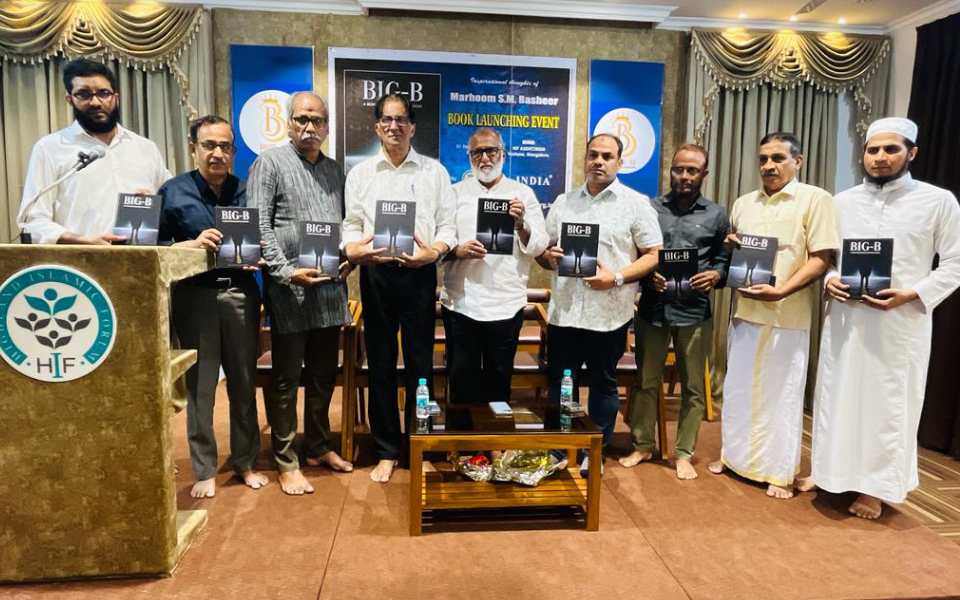
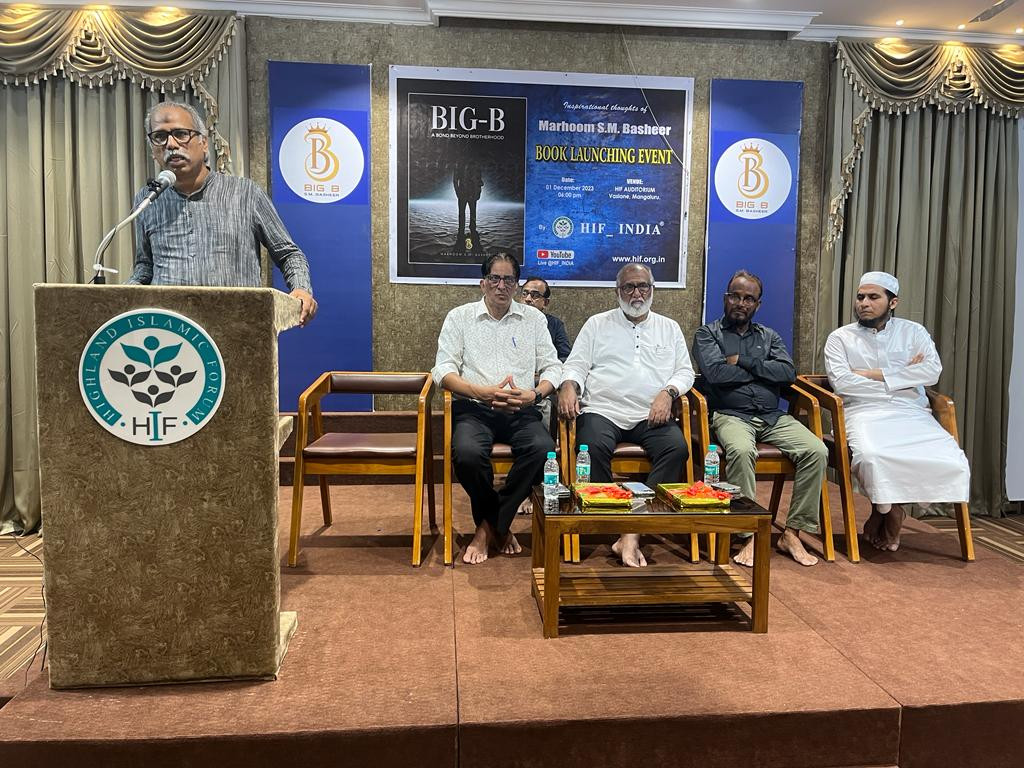
In an event held at the Highland Islamic Forum (HIF) Auditorium in the city, the Highland Islamic Forum (HIF) unveiled a new book titled ‘Big B,’ a tribute to the late SM Basheer.
Subtitled ‘A Bond Beyond Brotherhood,’ the book is centered around the inspirational thoughts and life of Late SM Basheer.
Addressing the gathering at the book launch, NA Muneer, Ex-Chairman of the Kuwait Kerala Muslim Association (KKMA), shared memories of his association with SM Basheer. Muneer spoke about the charismatic personality and powerful aura that SM Basheer possessed, leaving a lasting impact on everyone who met him.
Recalling his memories, Muneer emphasized that even a year after SM Basheer’s passing, he continues to remember and honor the late leader. He praised SM Basheer’s instrumental role in organizing significant events at KKMA and acknowledged his invaluable contributions to the organization while serving as its chief.
Fatah Tayyil, Ex-President of KKMA, also paid tribute to SM Basheer, acknowledging his substantial contributions to the KKMA.
SM Rasheed, Chairman of Bearys Chamber of Commerce and Industries (BCCI), spoke about SM Basheer’s profound influence on people’s lives and commended his contributions to the BCCI.
Other speakers, including Mohammed Ali Uchchil and Rizwan Pandeshwar, shared their views on the life and impact of SM Basheer during the event.
The book ‘Big B’ was released by AK Niyaz, MD of AK Group of Companies, along with HIF India President Adil Parvez, and other guests present at the event.
Hussain Shafi, the author of the book, was felicitated by HIF for his contributions.
HIF also presented a documentary-style short video introducing SM Basheer and showcasing his life.
Prominent figures such as SM Basha, MD of SM Group of Companies, SM Farooq, KK Abdullah, officials, and executive members of KKMA and BCCI graced the occasion.
The event, hosted by AK Shaaz, concluded with supplications led by Moulana Tayyub, Khateeb Ehsan Masjid.
source: http://www.varthabharati.in / Vartha Bharati / Home> Karavali / by Vartha Bharati / December 01st, 2023
A peek into a precious wardrobe of strange outfits that are fast becoming invisible from Delhi evenings.
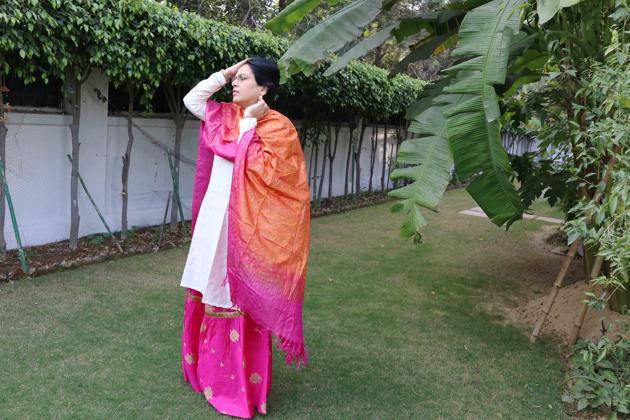
Ghararas, too, are fast becoming invisible from Delhi evenings, although Rakhshanda Jalil is often spotted wearing it in literary gatherings.(Mayank Austen Soofi / HT Photo)
The other day, we spot a strange outfit. It is neither a skirt, nor a gown, and definitely not a sari. It is also not a pajama.
What is it, we ask.
“It is gharara,” says author Rakhshanda Jalil, pronouncing the ‘gh’ from the base of the throat.
We are at Ms Jalil’s home in central Delhi. Her most precious wardrobe is a treasure-house of about two dozen ghararas. Most have been passed on to her from her mother and mother’s mother; a few are even older.
Indeed, Ms Jalil has a fascination for souvenirs of the past. One of her many books is titled Invisible City: The Hidden Monuments of Delhi. Ghararas, too, are fast becoming invisible from Delhi evenings, although Ms Jalil is often spotted wearing it in literary gatherings.
Years ago, she had worn a pink gharara for her wedding. Her two young daughters also wear it on during special occasions such as… well, weddings, particularly in Uttar Pradesh, where more people are likely to be similarly attired.
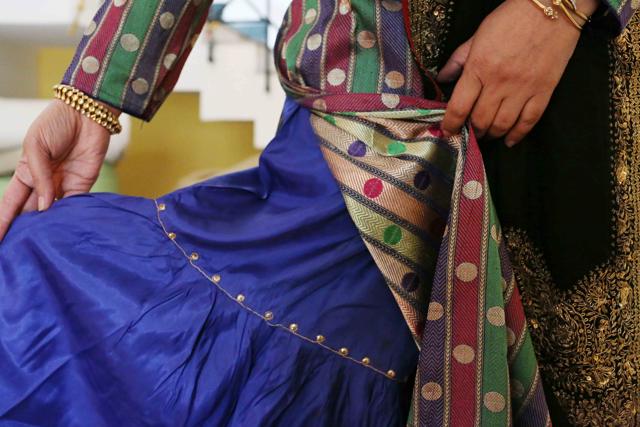
It is not unusual in Delhi weddings to see women in gharara’s sister dresses, such as the lehenga and the sharara — which is like flared pants. The gharara is more complicated. Each leg is comprised of two parts. The first goes down from the waist to the knee, and the second, which is much wider, begins from the knee and goes down to the foot.
Truth be told, Ms Jalil prefers saris and trousers for ordinary outings. But the gharara was the daily costume of her maternal grandmother, Zahida Suroor, who lived in the university town of Aligarh. “In my grandmother’s time, it was common for women to wear cotton ghararas made of chintz (called chheent by Urdu speakers) at home,” says, Ms Jalil. “Silk or satin ghararas were worn on formal occasions. And the heavy brocade, called kamkhaab, was worn at weddings.”
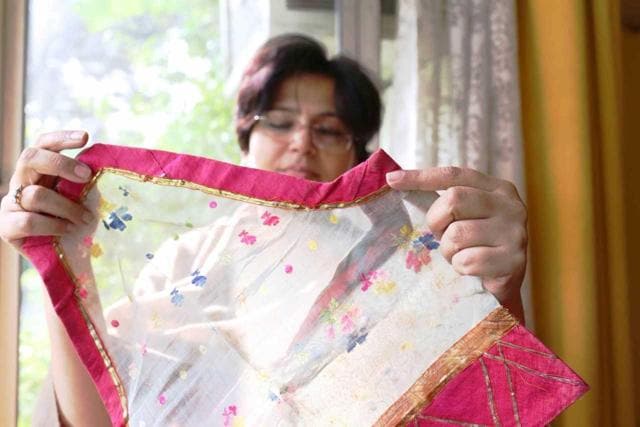
Each gharara should have its own kameez and dupatta, though these days one has more liberty to mix and match. Ms Jalil says that back in the day an entire gharara was sewn in four or five days. Each piece was stitched by hands. The entire hem was turned in with tiny invisible stitches. Sparkling bits of gold lace were tagged to camouflage the joints at the knees.
Ms Jalil’s mother, Mehjabeen, recently hand-stitched a red gharara for her. The happy daughter gave it a trial run at a dinner in her own home. There was much applause. The gharara came with a short white shirt. The red dupatta was lined with gold frills.
In the old days, women of a family gathered together to sew a gharara if it had to be made for a bride’s trousseau. Neighbours and friends also chipped in. Opinions were eagerly sought on the design, and the leftover cloth was never thrown away — it was used to make an accompanying batua (wallet), or jootis (sandals).
There was a time when a few cities were known to make special types of ghararas, says Ms Jalil. Benares was famous for its brocade ghararas, with master-weavers painstakingly transporting the design to lighter gauzier material for the accompanying dupatta. Lucknow favoured a patchwork design called chatapati. Delhi specialized in something called ‘farshi’, with a long train that women were supposed to hold delicately in their arms.
Perhaps the most ideal way to study this old-world costume is to ask the wearer to sit still. On request, Ms Jalil settles down beside a window with an Eric Segal novel. While the book belongs to her elder daughter, Aaliya, the gharara belongs to her great grandmother. Made of atlas (no relation to the book of maps), the fabric is so fragile that it can tear at the slightest tug. It has a blue background with yellow, orange and pink flowers. At one point, Ms Jalil looks out of the window. Her gharara ceases to be a dying tradition, and seems very much a part of the present.
source: http://www.hindustantimes.com / Hindustan Times / Home> News> Cities>Delhi News / by Hindustan Times / by Mayank Austin Soofi / October 09th, 2017
I can only write about a country that is dead and gone, Zeyad’s book is about living in the corpse of a body politic that has abandoned even the desire to be fair and just to all its citizens.
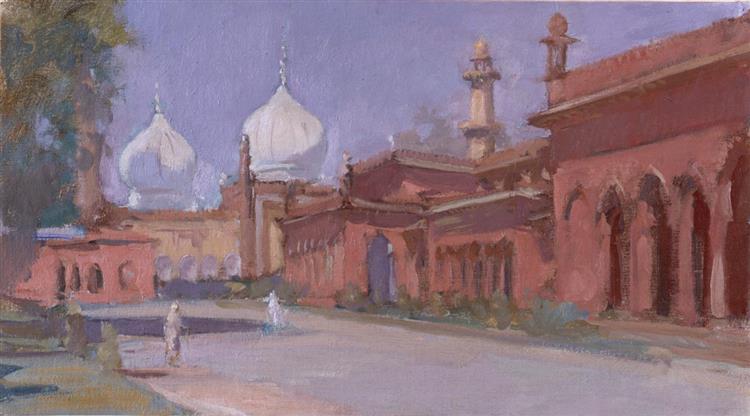
Jami Masjid, Aligarh. Artwork: Martin Yeoman/Public domain
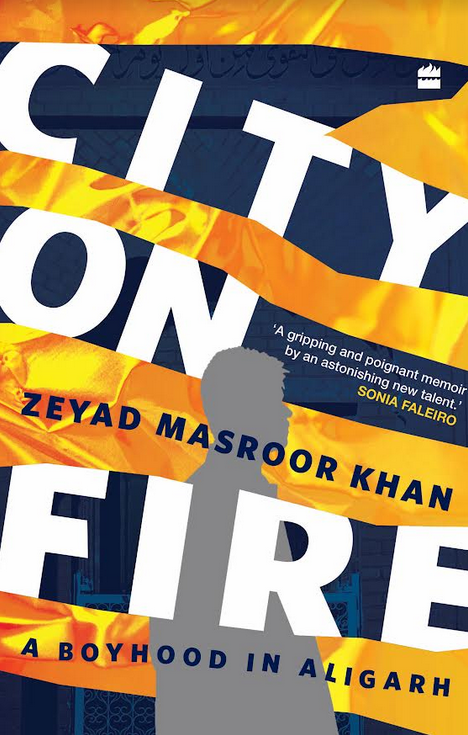
It is impossible for me to dispassionately review Zeyad Masroor Khan’s evocative memoir, City on Fire: A Boyhood in Aligarh. Both of us were born in Aligarh, my first novel and his memoir are both set in the city, and the earliest of our memories are those of Hindu-Muslim riots. In my case, it was a riot in Ahmedabad, Gujarat, where a policeman had called my father’s colleague to tell him that the police cold not guarantee our safety. We were the only Muslims in the ONGC colony, and my father was on the oil rig. A Muslim boy and a Hindu girl had eloped. Men and boys with something to prove were out with swords, so Khan uncle smuggled my mother, my elder sister, and me in the dead of the night.
Zeyad Masroor Khan / City on Fire /Harper Collins, 2023
These similarities, however, are swamped by the differences. We were both born in houses our grandfathers built – in my case it was on the Civil Lines part of the city, where my grandfather served as the chief medical officer –and was one of the set of houses my grandfather bequeathed to his sons. Muslims in this area – except for some university students – were those whose families might have a member in the bureaucracy. And as the Sachar Committee Report highlighted in 2005, Muslims accounted for only 2.5% of the bureaucracy.
In Zeyad’s case, his house was built by, “Ashfaq Ahmed Khan, and his brother, Aashiq Ahmed Khan… from a nearby village” that was shared by his progeny. Khan’s house, where Zeyad grew up, was grandly named Farsh Manzil, with Farsh referring to the ground between heaven and earth. But it was also in Upar Kot in the commercial city or sheher.
Civil Lines is mostly known for Aligarh Muslim University, a somewhat elitist institution, while the sheher is known for locks crafted by hard-working labourers. Very few of those in the sheher, particularly the Muslims who were largely part of an underclass, received a good education, fewer still made it to the university. The small bridge, memorably named the Kathpula or half-bridge, is a border as real as that between different countries. One could cross it, but only reside in one part.
The difference was stark. When I was at the university in the early 90s, I did not attend classes, beat up my seniors, and eventually flunked out; Zeyad was a topper. Riots meant that the university was swamped by hundreds from the Rapid Action Force in their blue camouflage uniforms meant to make them visible. In Upar Kot, it was hand-to-hand combat, painfully illustrated by the chapter titled “The Button” in Zeyad’s book. There was a button in Zeyad’s house – which abutted the Hindu areas – that he once pressed as a child after climbing a chair. Unknown to him, it was linked to a lightbulb that alerted the neighbours against rampaging mobs coming to attack and kill them. The police, much less security forces like the RAF, were never there to protect the people (although, to be fair, even in the university they were seen more as a tool of repression). Instead, for Upar Kot residents, the police were often seen as part of the mob, firing on the Muslim areas.
Throughout the nearly 300 pages of the memoir there is only one mention of a policeman actually doing his duty. And that was from a childhood prank his mother and her friends pulled to get Zeyad to report that he was “lost” at the Numaish (something like an annual circus fair) so that they could see his cute face on the newly installed TV screens.
It is hard to overstate how real and important this is. For the vast majority of Indians, and the overwhelming majority of Muslims – let’s not even talk about Kashmiris or Dalits and those we call “tribals” – the state is absent, or sometimes overtly hostile. “We, the people of India” might be the first words of the constitution, but that “we” has hardly any power over, and any (good) expectation from the state in which they find themselves.
Nonetheless, the power of people “just doing their jobs” cannot be overstated. They are the one and only source of hope in the long journey from riot to riot that Zeyad maps. There are two outstanding heroes in the book. One, Bablu, is the rather slow-witted but intensely brave bus conductor on their school bus. Surrounded by a stone-pelting crowd after the bus has dropped off the Hindu children, Bablu single-handedly staves off the mob baying for blood, keeping the door closed, and showing off his Hanuman locket to show he is Hindu, and claiming that all the people inside are as well. Much, much later, a Hindu Ola taxi driver in Delhi during the 2020 pogrom drives Zeyad and his friend from a Hindu majority area to Jamia, unwilling to fall prey to the binaries and the hatred being pumped out on social media. Bablu is never recognised or rewarded for the amazing courage he shows, except maybe the grateful love of other bus passengers like Zeyad who carry a portrait of his valour in their hearts. The Ola driver would probably be attacked if identified.
Along the way, there are also others just doing their job that sustain Zeyad and open the world to him. This includes the storeowners who rent out comic books that open up a world of imagination to him; Father Joseph, the vice-principal at his school who promptly orders the removal of an article on display depicting the Prophet since some of the Muslim children found it disturbing; and Usha Aunty who rents him and his friends a flat in Delhi allowing them to live a “normal” life. There is also his teacher, Sara Job, who counsels him after he writes a provocative essay on Osama bin Laden in school, setting off an intense debate about his suitability among the schoolteachers.
What is entirely missing though, is politicians or leaders carrying out their constitutional duties. The only politician that appears is one filled with hatred towards Muslims. This is the other difference between Zeyad’s vision and mine, and it is a matter of age. I turned eighteen a few weeks after the demolition of the Babri Masjid, Zeyad was only four. In my novel set in Aligarh, the celebration of hate was an anomaly, a breakdown and a source of confusion even if communal violence was well known (my father had gone to assist people after the first major anti-Muslim riot after independence, in Jabalpur in 1961). In Zeyad’s time hate against Muslims has become a national passion. I can only write about a country that is dead and gone, Zeyad’s book is about living in the corpse of a body politic that has abandoned even the desire to be fair and just to all its citizens.
It is remarkable, then, that the book is as compulsively readable as it is. The bleakness of the terrain that Zeyad inhabits is undercut by his own humanity and humour – quite often about his own failures as well as the foibles and problems of those among whom he lives. Resilience is too often used as a word with little content. Talking recently to a friend – a Hindu, I might add – who worried whether it was even possible to just do her job, to honestly work in an atmosphere of constant baiting and attacks, I found I had little advice to offer her except to say that oppression is expensive. In Zeyad’s moving memoir, in which he returns repeatedly to how people emerge after rounds of communal violence to buy and sell to each other, to just live, even among people they have seen call for their deaths, there is an almost superhuman quality to this “resilience”. We ask much of Indians living in burning cities, demand more than humanity should bear. They shame us by giving more.
Omair Ahmad is an author and journalist.
source: http://www.thewire.in / The Wire / Home> Books / by Omair Ahmad / November 29th, 2023
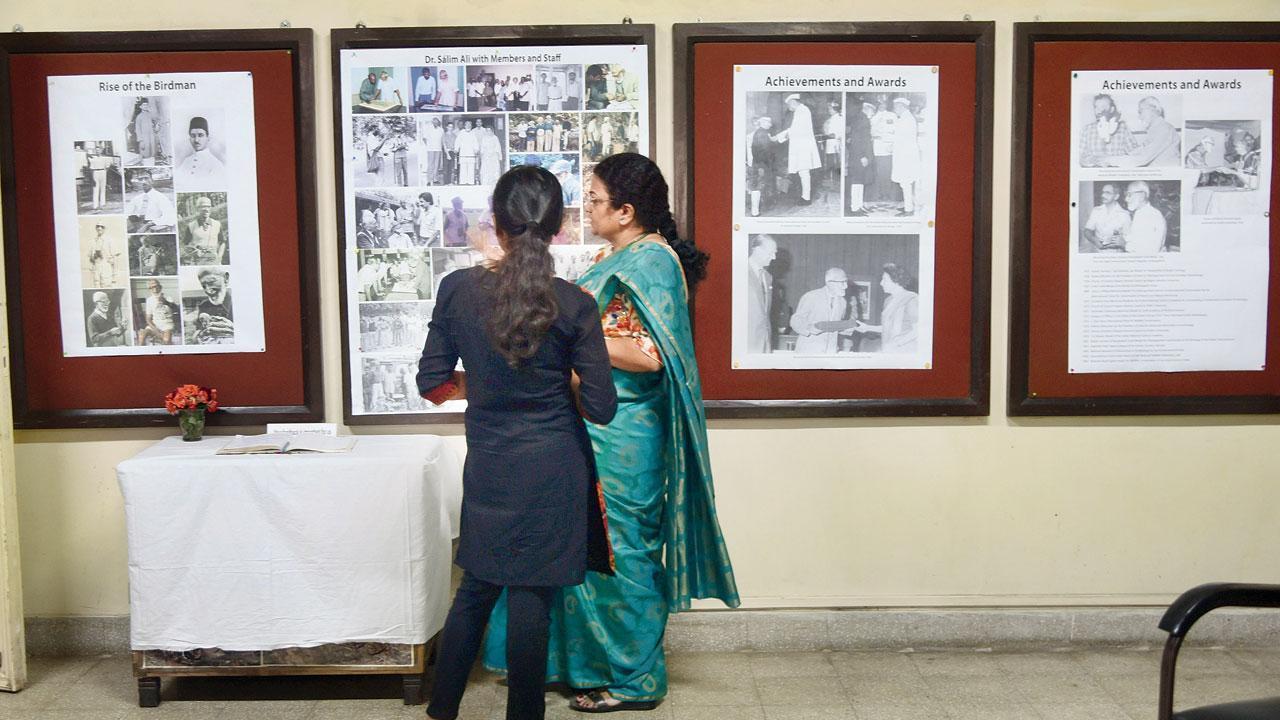
The ongoing exhibition on iconic birder Dr Salim Ali at Bombay Natural History Society offers rare insight into the meticulous life of the man who shaped India’s avian conservation programme.
Barure (in saree) guides a visitor
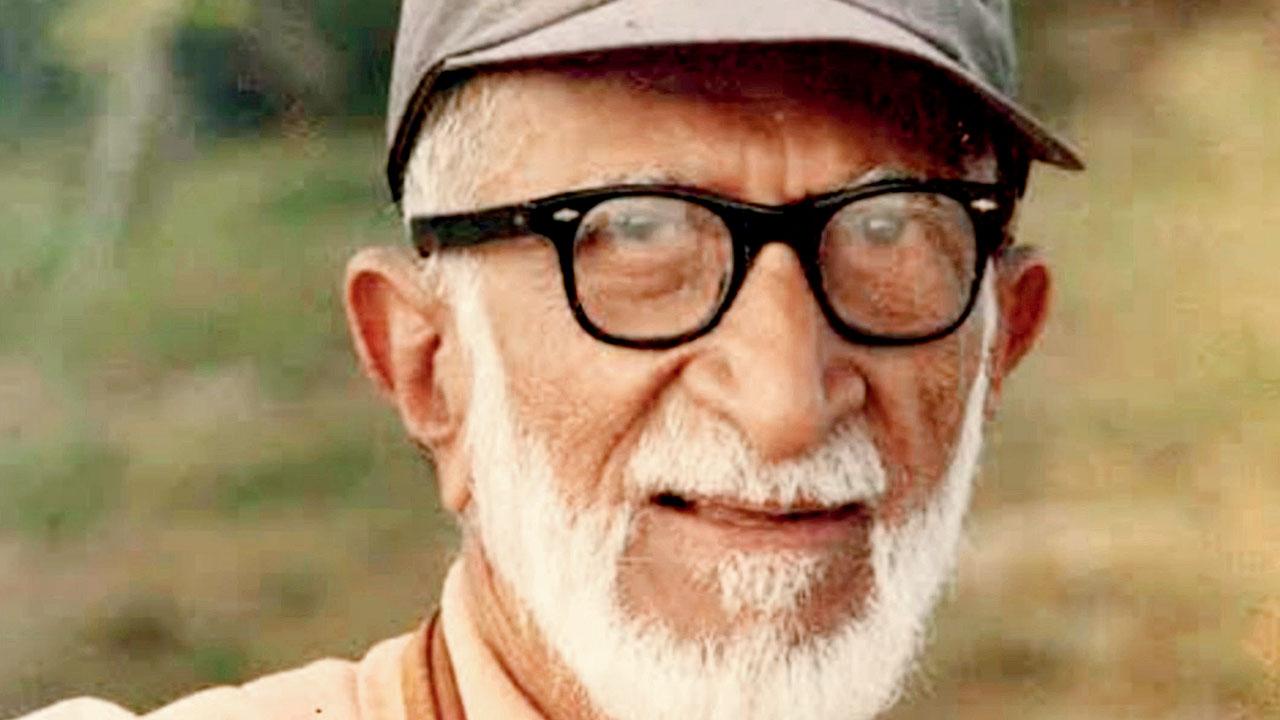
In the quiet landmark of Hornbill House at Fort, a buzz is slowly developing. On International Bird Week (November 5 to November 12), the Bombay Natural History Society (BNHS) is celebrating one of the pioneers of Indian ornithology, Dr Salim Ali, with an exhibition from his personal archives. Today might be the last opportunity to peek into the life of a man whose efforts paved the way for conservation study in the country.
Dr Salim Ali. / File pic
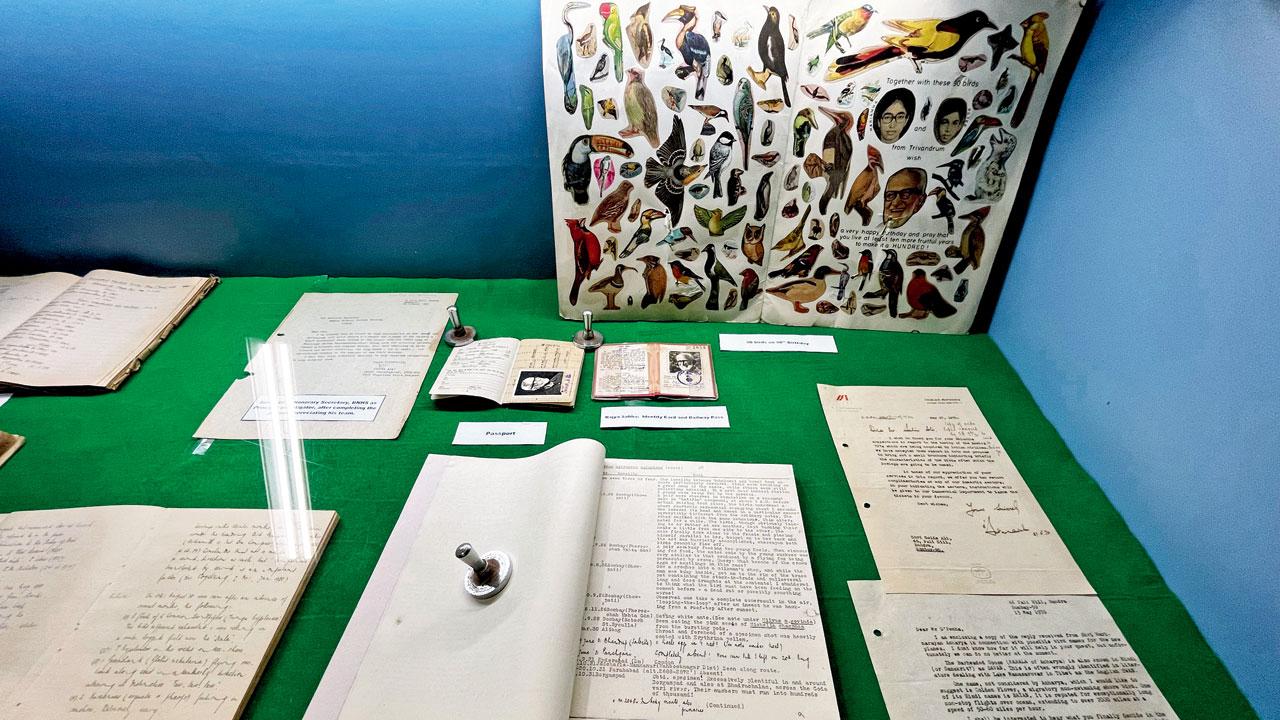
“Research and conservation were two very important facets of his life,” shares Kishor Rithe, director, BNHS. The exhibition brings to fore his professional expanse and personal meticulousness. The collection was brought together by curator and BNHS librarian, Nirmala Barure. The work began in 2014, she reveals. “The process is still ongoing since it is such a monumental record of correspondence, research and notes over a period of 60 years,” Barure remarks.
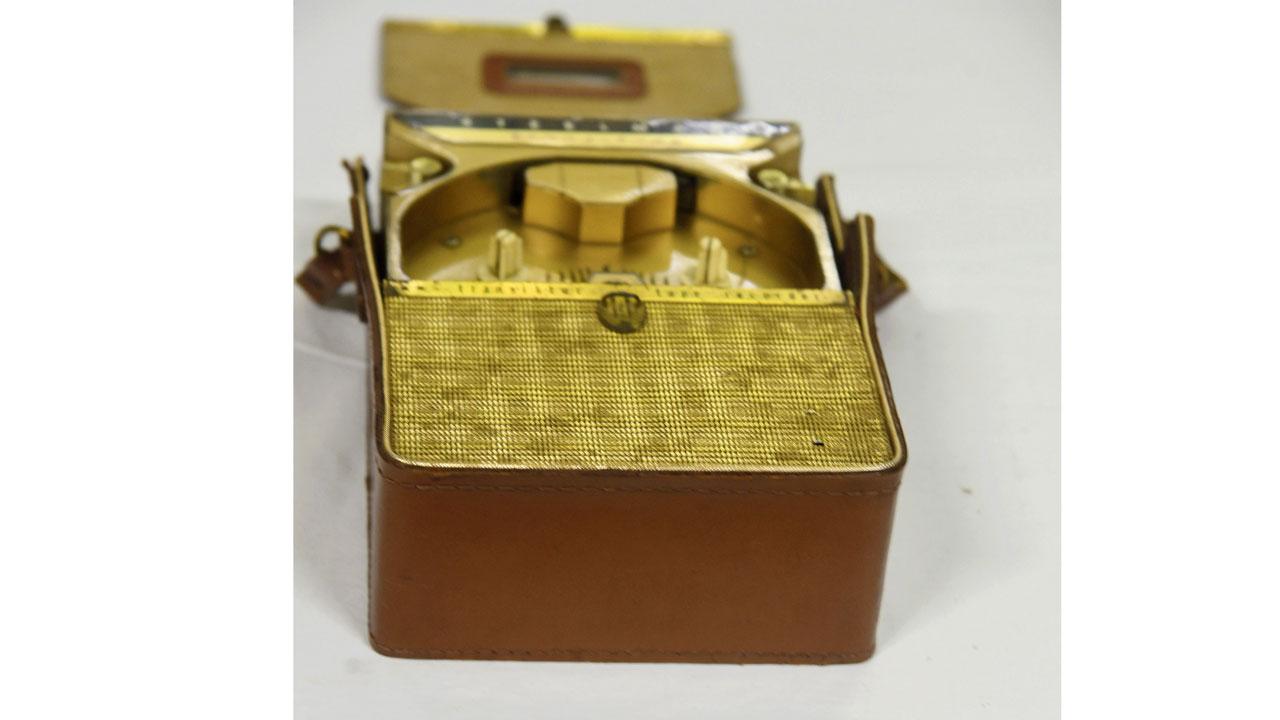
The tape recorder used by Dr Ali to record bird sounds
The theme for the exhibition, Rithe adds, is a focus on the layman. It includes correspondence to prime ministers, policy makers, as well as people on the ground — from forest officials to students and villagers. Barure points out that the correspondence also has some touching personal moments.
His filming equipment. Pics/Atul Kamble
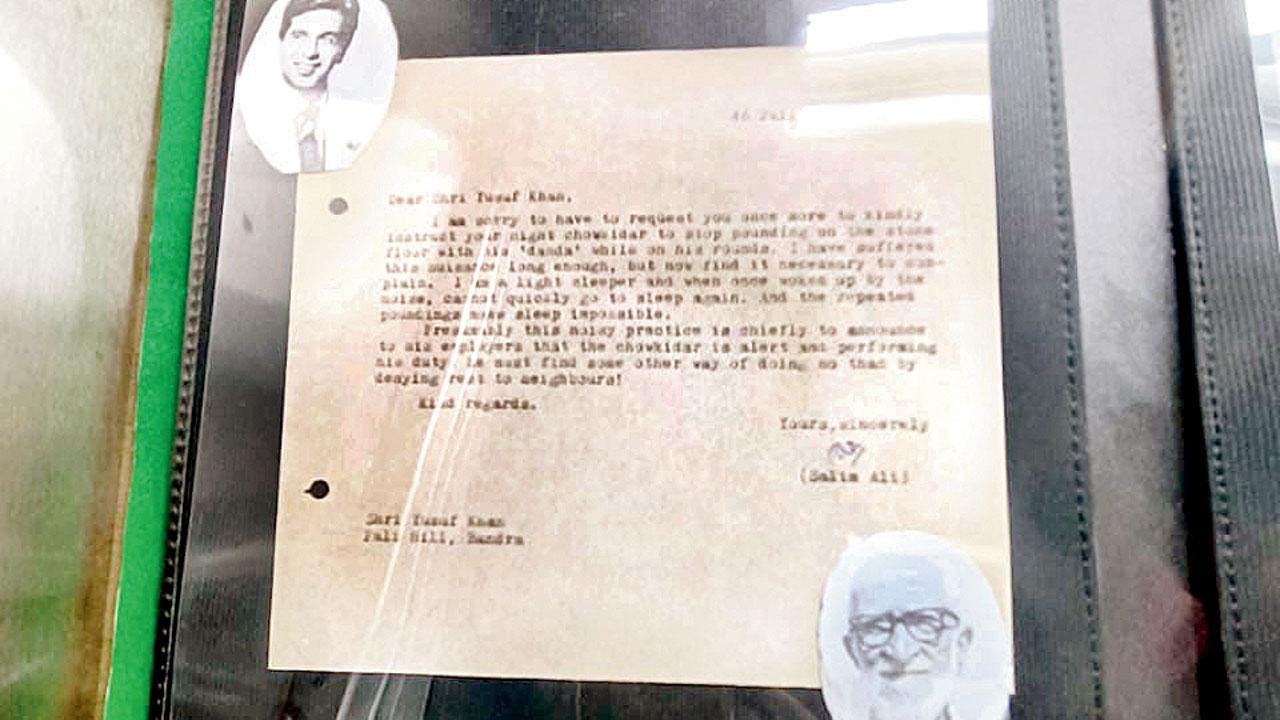
“There are greeting cards from Mrinalini Sarabhai, and a commendation letter from the famed botanist Ethelbert Blatter of St Xaviers’ College,” she notes. One of the more remarkable objects was a complaint written by Dr Salim Ali to a Bandra neighbour — Yusuf Khan aka Dilip Kumar — complaining about the noise the latter’s watchman made in the night.
A letter written by Dr Salim Ali to Dilip Kumar from 1975
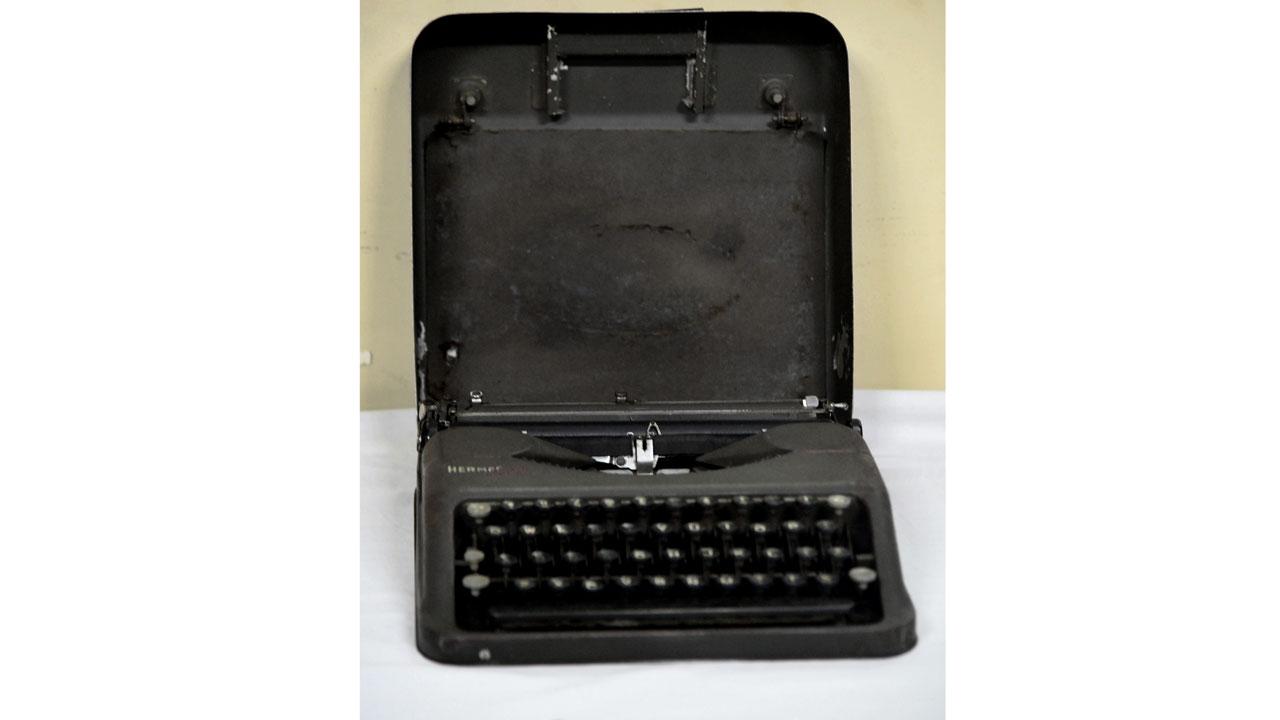
Then, there is his equipment — from typewriters and cameras to telescopes and lenses. “While technology has advanced, this equipment is proof of how challenging it was for the early pioneers to make audio visual records and document their studies,” Rithe notes. Among the equipment on display is a rare find of 16mm films, shot by Dr Ali during his many journeys, that were preserved by the Smithsonian Institution in Washington DC.
Dr Ali’s portable typewriter
The society is already in the process of dedicating a space to honour Dr Ali’s collection. Rithe shares, “This year, we plan to begin renovation work on the space, and will dedicate some part of it to Dr Salim Ali’s collection. This exhibition is just a rehearsal of those plans.” For now, visitors would want to hurry to Hornbill House to catch a glimpse of the rare treasure trove.
A collection of Dr Ali’s correspondence
On: Today; 10 am to 5 pm At: BNHS, Hornbill House, opposite Lion Gate, Fort. Call: 9594953425 Log on to: bnhs.org
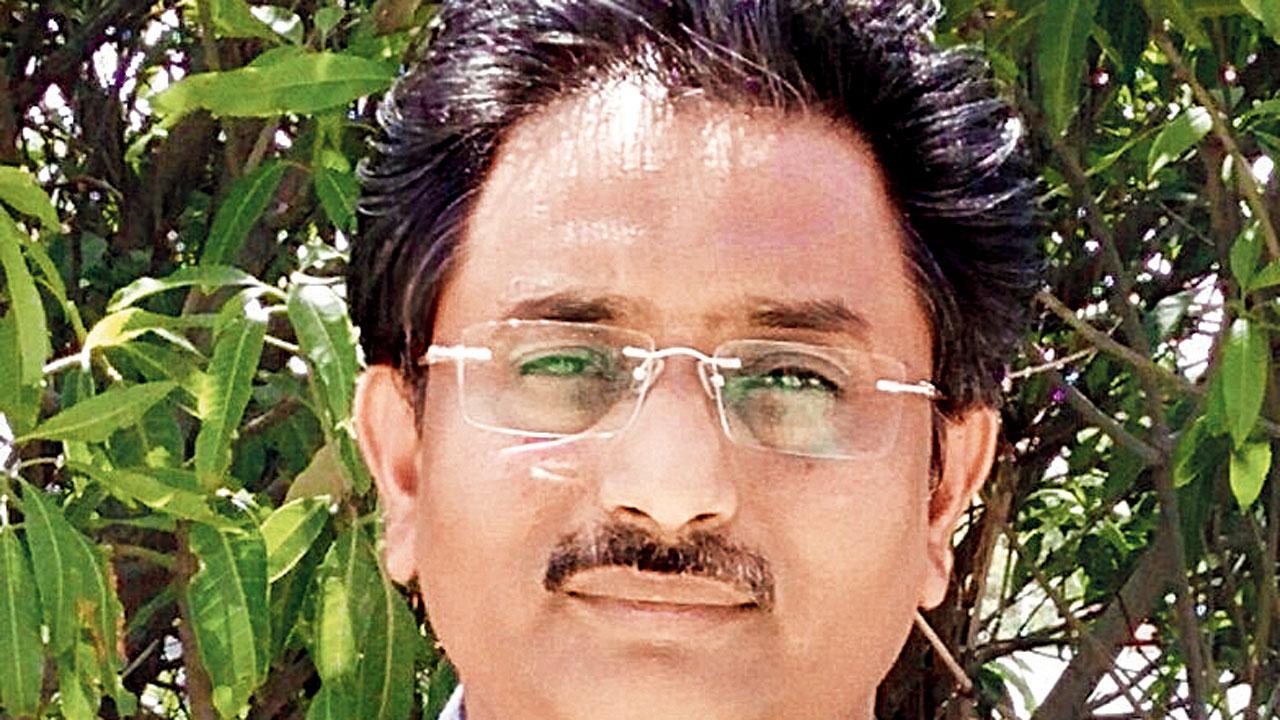
Kishore Rithe
source: http://www.mid-day.com / mid-day.com / Home> Mumbai Guide News> Things to do News/ Article / by Shriram Iyengar (shriram.iyengar@mid-day.com) / November 10th, 2023
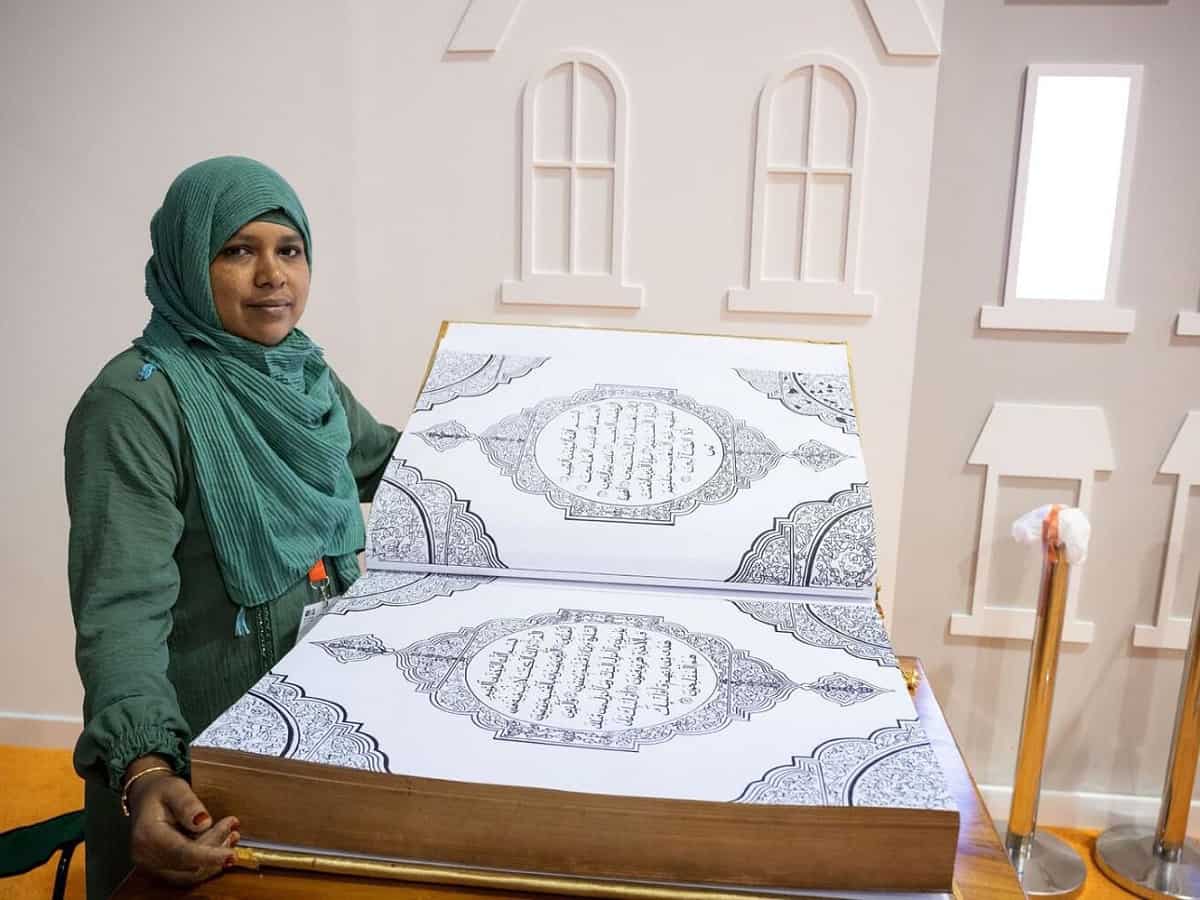
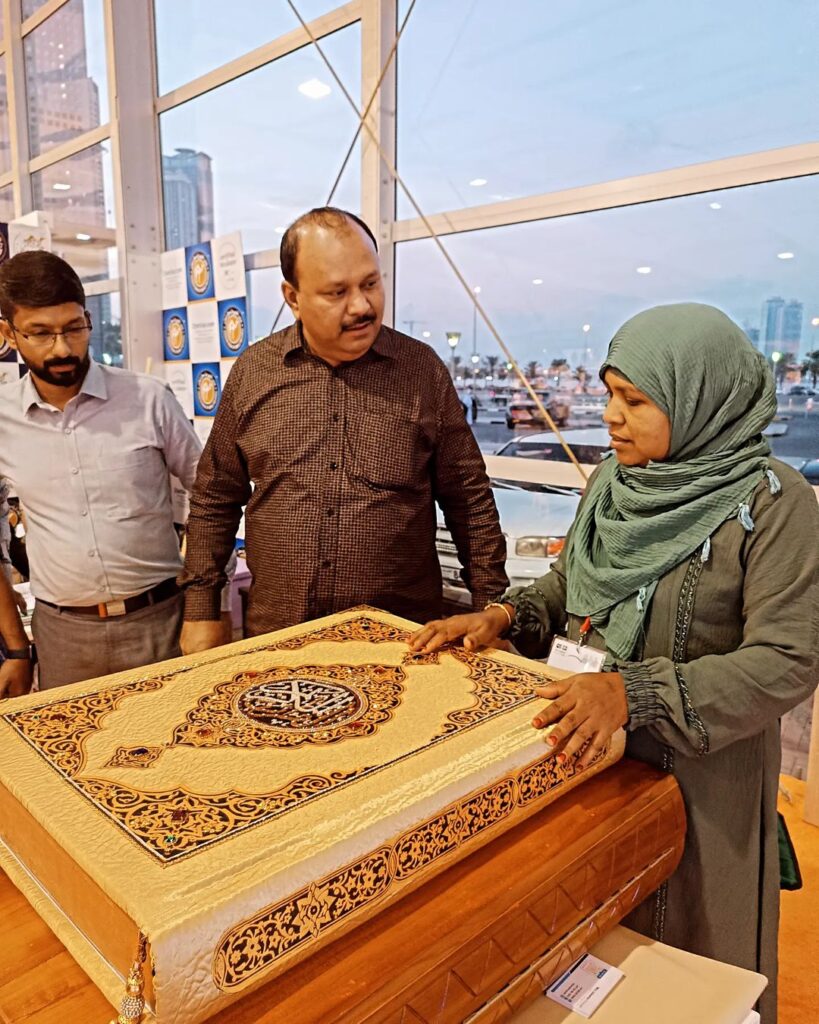
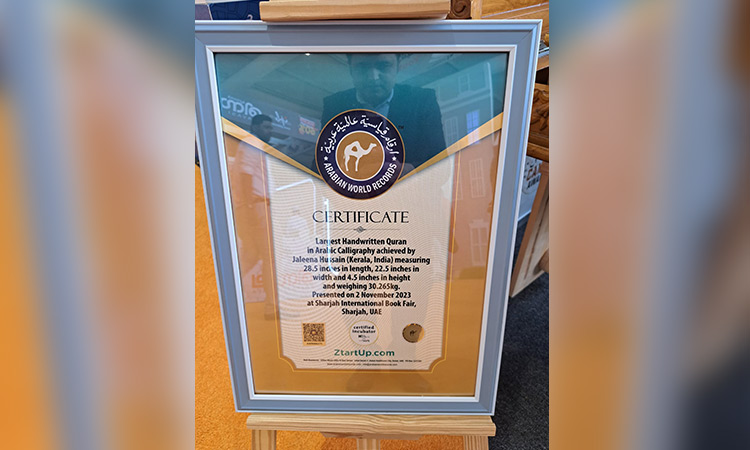
The holy book, which weighs 54 kg with the cover, measures 28.5 inches long, 22.5 inches wide, and 4.5 inches high.
Abu Dhabi:
A 46-year-old Indian woman has displayed her handwritten Holy Quran in Arabic calligraphy weighing over 30 kgs at the 42nd Sharjah International Book Fair (SIBF).
Jaleena Hussain, who hails from Indian state of Kerala, has spent over a year creating a unique edition of 114 surahs, covering 604 pages.
Speaking to Sharjah 24, Jaleena said writing the Quran was her way of fulfilling her desire to memorize the Holy Book.
She expressed gratitude to the Sharjah authorities for allowing her to showcase her talent.
Jaleena, a former rubber plantation worker and Urdu teacher, has been recognized by the Arabian World Records and the India and Asia Book of Records for her handwritten Quran.
source: http://www.siasat.com / Siasat.com / Home> News> India / by Sakina Fatima X / November 12th, 2023
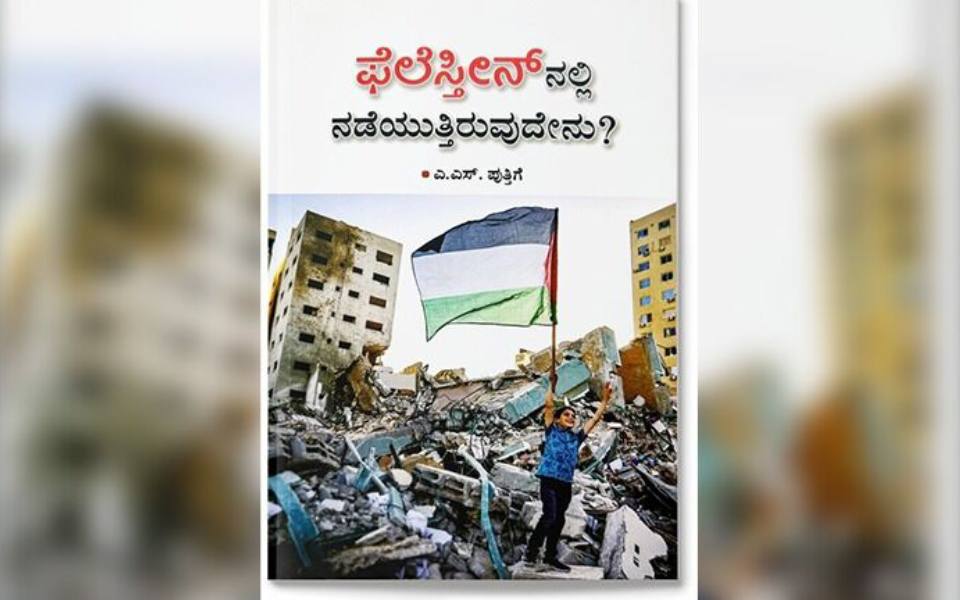
Abdussalam Puthige in collaboration with NGO Sahabalve’s “Palestine nalli nadeyuttiruvudenu?” (What is going on in Palestine?) book is all set to be released on Saturday, November 18, at 6:15 PM in the Don Bosco Hall, read a release.
The book will be formally released to the public by Rev. Fr. William Martis, Thinker and Author Shiv Sundar will grace the event as the Chief Guest.
Critic Mushtaq Hennabailu will introduce the book during the ceremony.
The release further added that co-ordinator of Sahabalve Prof. K. Phaniraj will be presiding over the event.
source: http://www.english.varthabharati.in / Vartha Bharati / Home> Karavali / by Vartha Bharati / November 17th, 2023