The book will take ‘you on a gripping roller-coaster ride of various cultures’
Image Credit: Goodreads
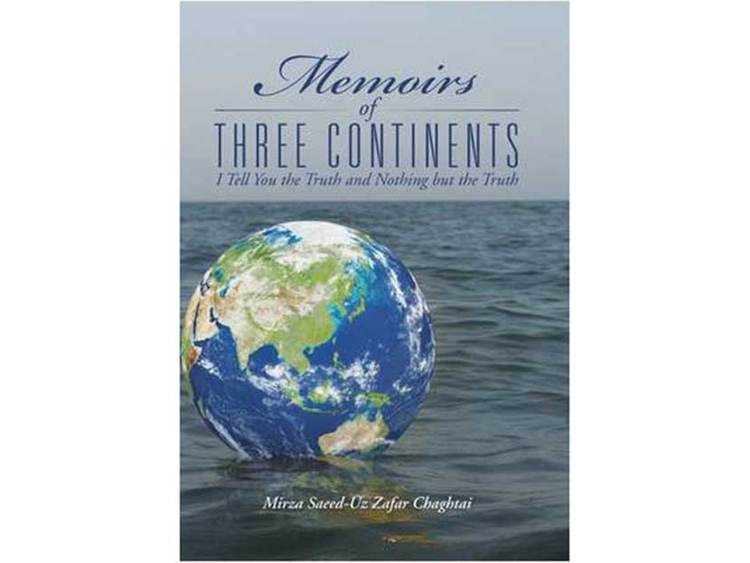
From a roiling India of the 40s and rollicking France of the 60s to a fear-stricken US post 9/11 terror attacks, ‘Memoirs of Three Continents: I Tell You Nothing But The Truth’, takes you on a gripping roller-coaster ride of various cultures and author Mirza Saeed-Uz Zafar Chagthai’s own journey of self-discovery.
Born in a middle class Indian Muslim family in the small town of Daryabad, Uttar Pradesh, India, Chagthai, earned a string of scholarships and went to Europe for higher studies after topping at his university.
Over the past few years, he has authored many books, but the latest one is easily at the top of the heaps. Laced with anecdotal vignettes from his professional experiences as a scientist and globe-trotting scholar, the memoirs give fascinating insights into scientific and literary life in India, Europe and the US that inform and amuse in equal measure.
But, what makes the book such an absorbing read is Chaghtai’s self deprecating humour and guileless candour.
One chapter deals with the evolution of the French Fifth Republic and a detailed eyewitness account of the 1968 Revolutionary while another dwells on the idiosyncrasies and insecurities of scientists, including some Nobel Laureates.
Then there is this whole section that gives a hitherto unknown perspective on Aligarh where Chaghtai spent 40 years of his life.
Whether you are a history buff or just someone keen to learn about people and places, especially India and Europe through the turn of the century, you will be thoroughly enjoy Memoirs of Three Continents.
source: http://www.gulfnews.com / Gulf News / Home> Entertainment / by Mazhar Farooqui, Xpress Editor / June 12th, 2016
Lt Gen (Retd) Zameer Uddin Shah in his autobiography refers to himself a ‘Sarkari Musalmaan’ – a Muslim who, according to him, is pro-establishment and supports the government of the day. A Sarkari Musalmaan defines his religion in a way that is acceptable to the establishment and projects himself as a modern rationalist by being submissive, or worse, by actively pandering to the bigotry against his co-religionists.
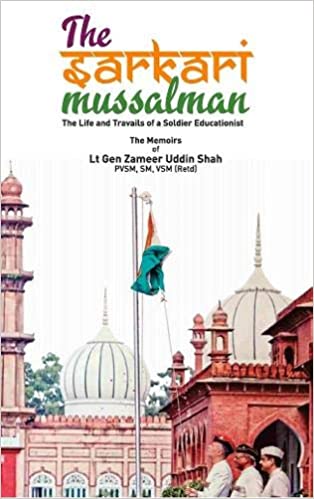
Sarkari Musalmaan: The life and Travails of a soldier educationist released in 2018 is the story of author’s journey from a Madrassa to becoming the Deputy Chief of the Indian Army and finally the Vice-Chancellor of the Aligarh Muslim University.
Book Review:
Zameer Uddin Shah’s ancestors came to India from Afghanistan during early nineteenth century. Being the second of the three children of Syed Aley Mohammed Shah and Farrukh Begum, Zameer was given to his mother’s spinster sister for adoption. He grew up being more attached to his foster mother than his own. At 17, he joined the National Defence Academy at Khadakwasla, Pune. Despite being a lone Muslim in his class of 200 cadets, he ‘was warmly welcomed, treated fairly and experienced affirmative action.’
Cover of the Book
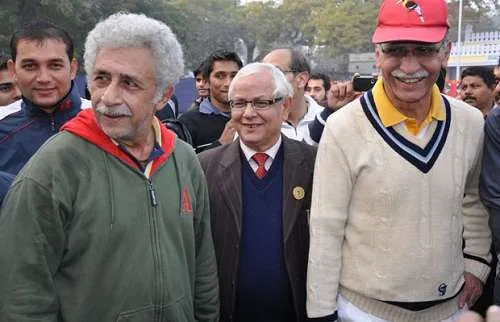
The author talks of living under the shadow of his celebrity brother actor Naseeruddin Shah and being his greatest fan. Nasser always wanted to become an actor and was not as good in academics as he or even their elder brother Zaheer. He recalls Zaheer as being the smartest of all. The family photographs in the book give a visual context of author’s narrative.
The author talks about his indomitable presence in the 1971 Indo-Pak War. Being a part of several hundred officers of the Battle Axe Division, he fought for his country on the desert sands of Jaisalmer. He recounts that this was the most taxing phase of his life that had a strong bearing on his family. Nobody knew whether he would come alive from the war but he did and was awarded a prized posting as a Defence Attache to Saudi Arabia and had an opportunity of serving with Hamid Ansari, the then Ambassador to Saudi Arabia. The author recounts “The fact that my country could repose faith in me and send me to Saudi Arabia strengthened my belief in the fundamental inclusive and secular fabric of Armed forces.” He goes on to explain in detail his stay and his travels across the Middle East with supporting photographs. This part of the book comes across as a travelog and makes reading even more fun.
The famous siblings: Zameer Uddin Shah with his brother, actor Naseerudin Shah
He describes the sheer inclusiveness with which his profession treated him as a Muslim and says that ‘I never wore my religion on my sleeve. My beliefs were between me and my maker. Whilst on parade, the Army was my religion. My men cared for my sentiments too. During Ramadan fasts, they would make sure I got breakfast every morning at 3 a.m.’
The most interesting chapter of the book is the one that deals with ‘Operation Aman’, an operation that his regiment carried out to bring peace and quell the riots and communal upheaval of Gujarat in 2002. The then Chief Of Army Staff, General S Padmanabhan handed over this responsibility to Zameer Uddin Shah.
‘We landed on a dark deserted airfield in Ahmedabad’ says the author En route to Chief Minister’s residence at Gandhi Nagar he was horrified to observe the rampaging mobs, burning and pillaging the police as mute spectators. With the army at the helm of affairs, the situation finally came under control and the operation was a success. This added one more feather to his cap.
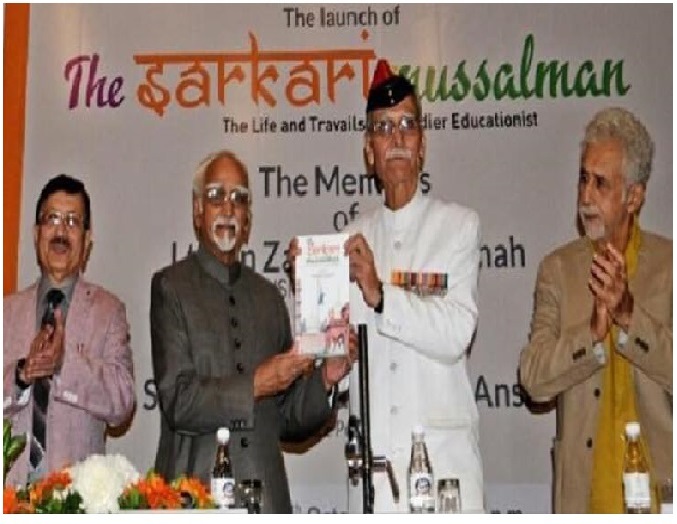
Vice-President Mohd Hamid Ansari releasing the book
In the last chapters, the author talks about his tumultuous tenure as the AMU Vice Chancellor where hostile forces kept trying to pull the rug from beneath his feet. Kapil Sibal, the then HRD Minister had offered him the post and he had taken it, despite the disapproval of his friends and family. During his tenure, the university emerged as the best one in the country according to international ranking agencies like Times Higher Education, London, and US News World Report.
Throughout the book, the author constantly tries to make a case that Indian Muslims need education above anything else and there is an urgent need to draw them into the mainstream.
‘Discrimination’ says the author does exist but it certainly affects the lesser educated. The book would interest anyone who wishes to opt for a military career and also the young Indian Muslims who think that the odds are against them. This autobiography is there to suggest otherwise.
The Sarkari Mussalman: Life and travails of a soldier educationist ; Lt Gen Zameer Uddin Shah, Rs 599, Konark Publishers
(Saleem Rashid Shah is a research scholar and a non-fiction book critic based in New Delh).
source: http://www.awazthevoice.in / Awaz, The Voice / Home> Story / by Saleem Rashid Shah / May 2023
A Jamia Millia Islamia University student provides a snapshot of history made at Shaheen Bagh.
The content of Nothing Will Be Forgotten is as direct as its title. A Ph.D. scholar at Jamia Millia Islamia University, Nehal Ahmed, was present on the campus during the days leading up to the police attack on Jamia students on December 15, 2019. What he witnessed on that “darkest day of his life”, he documents in detail.
The 138-pages centre around the peaceful agitation turning into a warzone and the unique gathering of Muslim women in nearby Shaheen Bagh to lead the protest against the Citizenship (Amendment) Act, 2019 (CAA). Ahmed writes a passionate first-hand account of a student shattered by the violence inside his university and how it led to a creative resistance and evolved into an inspiring movement spanning three months.
Harrowing experience
Fearless discussions in college canteens, lawns and libraries taught him more about meaning and purpose of life, values, tolerance and faith. But on that fateful day when police beat up his fellow mates purportedly for joining the protest march against the CAA on December 13, Ahmed felt the only way to give vent to his angst would be to write a book.
“Pliant media demonised us; the distorted truth and incorrect portrayal of a Jamia student’s identity and overnight labelling them as rioters, anti-nationals and terrorists made me put out my version of truth as I experienced it,” he writes.
While the world vividly saw and remembers the visuals on TV channels, Ahmed revisits those horrific hours when he himself was caught in the crossfire and had to run helter-skelter for his life. He details how the police rampaged through reading rooms and libraries, hunting for students, dragging them out and beating them brutally. Bloody wounds, injuries and broken limbs crushed their belief in the ethos of constitutional values and inflicted grave psychological wounds.
Ahmed talks of the harrowing experience of state violence for speaking out against laws that discriminated against Indian Muslims. The venue of agitation shifted to Shaheen Bagh and Ahmed mentions how a three km walk by students and residents brought Jamia and Shaheen Bagh together, shining with the idea of secular India.
But Hindu majoritarianism gave it a communal colour. What transpired between December 15, 2019, and February 24, 2020, (the orchestrated riots in northeast Delhi) was traumatising. The innate power of people cannot be denied but after more than two years, many emotional scars have not healed.
Moments of solidarity
A heartwarming chapter in the book is on ‘Resistance Through Art’ that highlights how students responded to violence and hatred with love, peace, poetry and painting. It radiates positivity and hope that is true of revolutions through art. They focussed on engaging with the community; and created walls of graffiti, slogans, paintings and posters, wrote poems and sang songs of resistance, set up a library with books and pamphlets to educate and explain the CAA to people.
In between the many stories of sadness, fear and pain were also entwined moments of solidarity, happiness and a sense of fire to safeguard the country’s secular fabric. But when the riots began in northeast Delhi, Ahmed says for the first time he felt scared as an Indian minority. “I lost hope as a citizen but the cycle of learning has not stopped,” he writes.
Nothing Will Be Forgotten: From Jamia To Shaheen Bagh; Nehal Ahmed, LeftWord, ₹250.
soma.basu@thehindu.co.in
source: http://www.thehindu.com / The Hindu / Home> Books> Review / by Soma Basu / April 16th, 2022
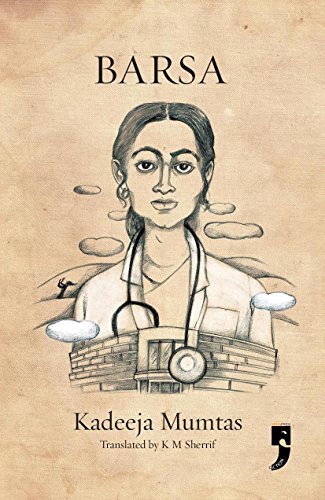
Barsa, written by Kadeeja Mumtas, is the first Malayalam novel to be set in Saudi Arabia and as its introduction states, is a record of “a woman’s scrutiny of Islamic scriptures and Muslim life”.
Barsa, as its introduction states, is the first Malayalam novel to be set in Saudi Arabia. Written by Kadeeja Mumtas and translated into English by K M Sherrif, the book acts as a record of “a woman’s scrutiny of Islamic scriptures and Muslim life”.
Sabitha, the protagonist of the novel, after moving to Saudi Arabia, starts questioning every aspect of her every day life – including religion.
The novel traces her personal journey as she is caught amidst culture, religion, and personal agency, and struggles to assert her own identity.
One hot afternoon, Rasheed and Sabitha first stepped out like refugees on the large expanse of land surrounding the grand mosque which housed the holy Ka’aba. Other travellers who knew their way hurriedly moved on while the two of them stood hesitantly at the crossroads, unsure of their next step. The coppery glare of the sun sat on their heads like the legs of a giant spider.
Rasheed glanced at Sabitha. He could sense her discomfort in the headscarf and the abaya, looking like a lawyer’s coat, which the Malayali workers at the airport had helped her buy. But he thought that even in those uncomfortable clothes, Doctor Prabhakaran’s niece, with her wheatish complexion, had a particular charm. He wanted to tell her this with a little smile, but with his tongue stuck to the roof of his dry mouth. He just couldn’t do it, which was a pity. If he had, maybe the wrinkles on her forehead would have lost at least one crease.
A yellow taxi backed up and stopped near them. Th e face of a man with a shabby headdress clamped down by a black ring came into view, and an arm jerked out of the window at the driver’s seat. “Fain aabga ruh?” Rasheed guessed he was asking where they wanted to go and replied, “Mudeeriya Musthashfa”—the Health Directorate. He had gleaned the Arabic expression from the conversation he had had in halting English with the Palestinian doctor they had met at the airport emergency service. He had seen Sabitha too write it down in her diary.
“Ta’al ”—come. Th e driver opened the car doors and invited them in. As he could not understand the driver’s sarcastic remark, directed obviously at his fairly large suitcase, Rasheed, with some embarrassment, chose to put it on his lap as he sat down and leaned back comfortably.
As the car sped at breakneck speed, Sabitha felt a tremor run through her, but she suppressed it immediately. She felt helpless at having to depend on a complete stranger, an Arab driver whose language she did not know. But she was also reassured by Rasheed’s presence. They had reached this far, trusting strangers, many of whose languages they did not know.
As they boarded the Saudi Airlines flight to Riyadh from Mumbai, Thambi, the man from their ticketing agents Ajanta Travels, had said reassuringly, “The flight will take about four and a half hours. Someone from the Ministry will be waiting to receive you. There is nothing to worry about, Riyadh is a nice city. Okay then, happy journey!”
From the moment Thambi, with that characteristic city dweller’s way of waving goodbye had raised his hands and walked away, Rasheed and Sabitha had taken comfort in each other’s presence. They could make this journey together only because of their decision to stick to each other, come what may. At the interview in Mumbai, it was Sabitha who was selected first, as a lady gynaecologist. The interview for ophthalmologists had not yet been conducted and, as there were a large number of applicants, Rasheed was not too hopeful of getting in. When she was asked to sign the contract, Sabitha hesitated, “I will sign only if my husband too is selected.” She had by then realised that lady gynaecologists were much in demand. “You sign; even if he is not selected, he can come with you on a family visa and then try for a job there.”
The man at Ajanta Travels, a go-getter, tried to hustle her. “No, I am not that keen to go to the Gulf to work. I will go only if he also gets a job there.” Her stubbornness paid off . An interview was fixed for Rasheed as a special case.
Excerpted with permission from Barsa, by Kadeeja Mumtas, Yoda Press. You can buy this book at 20% off at the FII-Yoda Press Winter Book Sale on 21st and 22nd December 2018 in New Delhi. For more details, check out the sale page.
source: http://www.feminisminindia.com / Feminism In India – FII / Home> Culture> Books / by FII Team / December 21st, 2018
The narrative is lucid, and the book is an important read for individuals, policymakers and think tanks to understand the ground reality.
pix: amazon.in
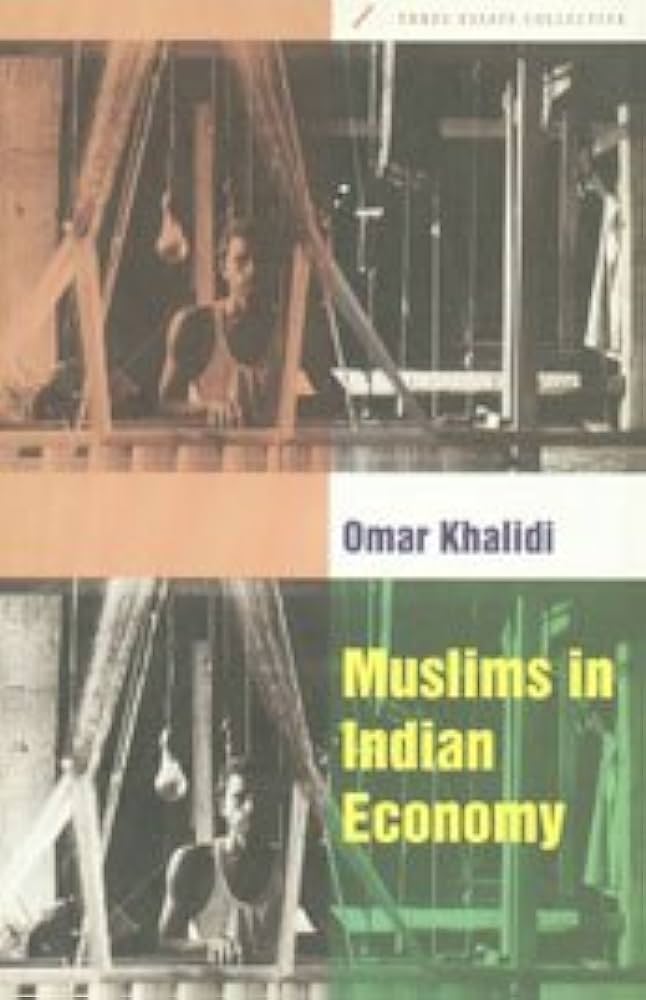
Written by an independent scholar Omar Khalidi, the book Muslims in Indian Economy tries to describe the economic condition of Muslims in India. The narrative is lucid, and Khalidi’s target audience are laymen along with policymakers and think tanks.
The whole book is divided into two major sections. The first is the description of the economic condition of Muslims at the pan-India level. It has two sub-sections dealing with the economic status of Muslims: in colonial India and Independent India. The second major section is the description of the economic conditions of Muslims in the six states of India: Delhi, Uttar Pradesh, Bihar, Andhra Pradesh, Karnataka and Maharashtra. These two sections are followed and preceded by an introduction and conclusion chapter, respectively.
Written by an independent scholar Omar Khalidi, the book Muslims in Indian Economy tries to describe the economic condition of Muslims in India. The narrative is lucid, and Khalidi’s target audience are laymen along with policymakers and think tanks.
The book states that the revolt of 1857 and the Partition of India in 1947 were the two most important events that affected the lives of Muslims. The Mutiny of 1857 nearly completed the destruction of the Muslim aristocracy in northern India, thus curtailing the prospects of the soldiery, intelligentsia and artisans dependent on feudal patronage. However, the event which affected a significant population of the Muslims of South Asia was the partition of India. It had severe economic consequences, as the poorer Muslims had to stay in India without any protection from the elites. Some Congress leaders also took an anti-Muslim stance during the partition. Similarly, Operation Polo had an enormously negative impact on the Deccani Muslims.
From its extensive research, the book elucidates how a detailed description and analysis of the state of education among Muslims during British times are absent. An 1870 report shows Muslim students to be a lower percentage when compared to other communities. The Union Ministry of Home Affairs sponsored a survey in 1981 of forty-five districts in states with a large Muslim population. It showed that Muslim enrolment in elementary, secondary, and high schools was poor.
This is not to deny that Muslim elites in various parts of the country made efforts for the promotion of modern education. Nawab Syed Wilayat Ali Khan’s efforts for Patna College, Syed Ahmad Khan’s for MAO College, which later became AMU and Khan Bahadur Mir Abu Saeed’s endeavours for an educational society in 1865 in Bihar need to be focussed upon.
The whole book is divided into two major sections. The first is the description of the economic condition of Muslims at the pan-India level. It has two sub-sections dealing with the economic status of Muslims: colonial India and Independent India. The second major section is the description of the economic conditions of Muslims in the six states of India: Delhi, Uttar Pradesh, Bihar, Andhra Pradesh, Karnataka and Maharashtra. These two sections are followed and preceded by an introduction and conclusion chapter, respectively.
Jawaharlal Nehru and his colleagues like Mahavir Tyagi (Minister of State for Defense) were well aware of the declining number of Muslims in the central services and armed forces in the 1950s. Suren Navlakha, in a study of the elite Central officers like IAS and IES, found that there is a proportionate representation of all religious groups except Muslims and Buddhists. Muslims are not in proportion to their population in the Railways, Armed Forces, and various PSUs.
A Panel headed by Gopal Singh (1983) showed that the economic condition of Indian Muslims was at par with that of the Scheduled Castes. A vast majority of Muslims are landless labourers. More Muslims are unemployed than Hindus. The majority of the big trading and banking concerns are Hindu owned, where Muslims and Dalits are nominal. Contrary to popular perceptions, Muslim women, especially those of the working class, are involved in economic activities.
The book stresses how a major educational institution such as Jamia Millia Islamia also became a victim of the partition and was forced to move from its campus in Karol Bagh to Okhla. It also explains how before Independence, Urdu was the language of instruction in a number of schools. Since the early 1950s, Urdu has been edged out of government schools. One reason many Muslim organisations want to establish their own schools is to escape this discrimination.
One of the major reasons for the poor education among Muslims is the discrimination by both the State and the society. A survey in Delhi showed that poor Muslims are concerned about female education. A psycho-social examination of slum-dwelling Hindus and Muslims showed no difference in positive attitude toward education.
The book stresses how a major educational institution such as Jamia Millia Islamia also became a victim of the partition and was forced to move from its campus in Karol Bagh to Okhla. It also explains how before Independence, Urdu was the language of instruction in a number of schools. Since the early 1950s, Urdu has been edged out of government schools. One reason many Muslim organisations want to establish their own schools is to escape this discrimination.
Similarly, the book concludes that the major reason behind poverty among Muslims is discrimination in the job market. It can be as overt as anti-Muslim pogroms and/ or as systemic as State apathy. Interpersonal discrimination is usually couched in the form of efficiency. Unlike the stereotypical image of Muslim women, various studies find that Muslim women are not averse to earning their own living if conditions are proper. Daily wage earners are normally a highly insecure group dependent on the management’s hire or fire at will. The book narrates how sometimes the government itself has segregated Muslim artisans from the mainstream of business at international fairs!
It has been well established by vast scholarship that communal violence is mainly to quell the upward economic mobility of Muslims. It happens particularly in places where Muslims have either made inroads into or displaced Hindu businesses. As long as the Hindu-Muslim relationship in businesses remains asymmetrical, peace tends to prevail.
Throughout the books, various issues come to light. Political representation for religious minorities was accepted by Vallabhbhai Patel in 1947 but rejected later. Recent scholarship has shown that discrimination against Muslims and Dalits is rampant in the private sector. Muslim Dalits and Christian Dalits do not get SC status. Leaders like Ijaz Ali demands giving SC status to OBC Muslims.
Years after years, the government has constituted committees to estimate poverty among Muslims and the policies to remove it. The majority of those were just for tokenism. For example, Justice Ranganathan Mishra headed National Commission for Religious & Linguistic Minorities (NCRLM), and Justice M.S.A. Siddiqui headed National Commission for Minority Educational Institutions (NCMEI), and Justice Rajindar Sachar headed the Prime Minister’s High-Level Committee for the Muslim Community of India (PMHCMCI).
This book must be read by all those who are sensitive to the plight of minorities in an increasingly parochial society and development practitioners who work for an inclusive plural society.
Zeeshan Husain has done BSc (AMU), and MSW (TISS). He is presently pursuing PhD in sociology from JNU. His research interest is in the society and polity of Uttar Pradesh. You can find him on Twitter.
H.S. Madhurani, working as a lecturer in city, has been selected for Eee Hottige poetry award given by Bengaluru-based Eee Hottige Readers Forum. The award carries a cash prize of Rs.10,000 and a citation.
Madhurani has bagged this award for Neeli Chukkiya Neralu, a collection of her poems.
The other winner is Dr. K. Sharifa of Kalaburagi, for her Neerolagana Kichhu, a collection of poems.
Madhurani and Dr. Sharifa will be conferred the awards during Hottigeya Honalu event at Kappanna auditorium in J.P. Nagar, Bengaluru, on Mar. 27.
source: http://www.starofmysore.com / Star of Mysore / Home> News / February 23 rd, 2022
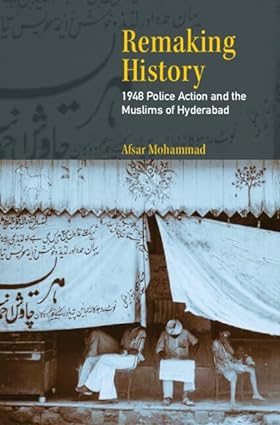
This is an excerpt from Afsar Mohammad’s latest book ‘Remaking History: 1948 Police Action and the Muslims of Hyderabad,’ which documents witness narratives of violence.
Bahadur Yar Jung with young Hyderabadi Muslims / Mohammed Ayub Ali Khan
Continuing our Deccan Series in collaboration with the Khidki Collective, this set of six articles presents alternative perspectives on the 1948 Police Action in Hyderabad. These perspectives challenge, modify, add nuance to the mainstream narrative of Hyderabad’s integration as ‘liberation’, a narrative currently used to further divisive politics.
The following is an excerpt from Afsar Mohammad’s latest book ‘Remaking History: 1948 Police Action and the Muslims of Hyderabad,’ published by Cambridge University Press (2023). Here, the author documents almost one hundred witness narratives of the 1948 violence. This chapter narrates the memories of Quddus Saheb, a folk-performer of Muharram and Prophet Mohammed’s stories. He was one of the witnesses of Police Action. With most witnesses having now passed away, this book then remains the last document of their life stories. Since the 1948 Police Action has been barely discussed, these witness narratives or testimonies offer fresh insights into the documentation of different aspects of everyday life during 1948 in Hyderabad and Telangana.
Note from Khidki: Oral histories not only offer us different perspectives of the past but also provide insights into how those who have lived through momentous times make sense of the challenges of the present. In this excerpt, Quddus Saheb’s account reveals how much Muslim life was affected in post Police Action Hyderabad, with many being branded Razakars and not being able to carry on with their daily lives. For him, contemporary India and the difficult place of Muslims in it is a persistent and poignant reminder that the after-effects of Police Action, such as the decimation of Muslim political leadership, continue to reverberate even now.
The five-day-long “battle” of the Police Action was certainly still fresh in their memory. But they also stressed that the “main history” or “official history” (pradhāna caritra or adhikāra caritra in Telugu) was centred on the celebration of the formation of the Telugu linguistic state of Andhra Pradesh and the leftist-centred Telangana armed struggle. The celebrations of the formation of a new state of Andhra Pradesh became a form of nationalist rhetoric, while the Telangana armed rebellion turned into a leftist campaign for the general elections of 1952. According to the Deccani Urdu literary historian Samala Sadasiva:
The very usage of the term Andhra was meant to relegate the history of Hyderabad and Telangana into some immemorial past. While growing up in the late 1930s or ’40s we all identified ourselves with the term Telangana as it represents the mixed history of Urdu and Telugu. Along with the new usage of Andhra, the state-sponsored histories gradually erased the centrality of Hyderabad and its Muslims. The khoonrezi (“massacre”) of the Police Action was totally removed from the recorded histories.
Sadasiva’s comments took me back to what the folk singer Abdul Quddus Saheb said in the introduction of this book. In 2006, when I was about to wrap up our conversation, he mentioned the statements made by the Bharatiya Janata Party (BJP) in 1998. Specifically, Quddus Saheb spoke of the Home Minister LK Advani’s speech in Hyderabad—a mammoth public meeting and, in fact, one I attended. Referring to the Police Action, Advani made a call to “celebrate” September 17 as a “day of the liberation,” later translated as vimōcana dinam in the Telugu public sphere. Advani’s usage of the term “liberation” triggered a new debate about the Police Action in the local print and electronic media, as well as in various political writings after 1998. Responding to Advani’s statement, several historians and social activists also began to revisit the history of the Police Action. Along with the events that led to the Police Action, what to do with Muslims of Hyderabad was again a question, while Muslims were also in a dilemma about their future. The chronology of this history was repeatedly considered in the public discourse as activists from different social and political groups continued to debate.
Quddus Saheb said:
Advani and BJP had actually stirred the hornet’s nest for their own political benefits! Not that we have all forgotten about it, but the way Advani fueled this issue was quite disturbing! We should talk about the Police Action, but the way Advani and his followers entered into this debate was all hate speech that caused a new antagonism between Muslims and Hindus. He and his party were just using this entire history—tārīkhu—of the Police Action to take advantage of Hindu vote.
Either Islamic or Hyderabad-related, the events from history—tārīkh— had always been a source of passion for Quddus Saheb. Growing up in the critical era of the late 1930s and 1940s, he had developed a keen interest in reading history materials both in Urdu and Telugu. Being a well-known folk performer and a public figure during the late 1940s, Quddus Saheb had also witnessed many historical events during his lifetime—from the powerful public speeches of Nawab Bahadur Yar Jung (1905–1944) to the beginnings of the Telangana separatist movement in 2004. Quddus Saheb recalled for me that:
Bahadur Yar Jung’s party Itteh ād, later known as Majlis-e-Itteh ād’ul Muslimīn (MIM) became extremely powerful and led many political and social movements. He was such an inspiration—josh—to the young Muslims of Hyderabad that we [knew] all his words by heart. He actually provided a language for our emotions and thoughts. Most importantly, he made us realise that young Muslims need to speak out about contemporary politics and understand how Islam could contribute to improve them.
Many times, during our conversations, Quddus Saheb tried to compare the late 1990s to the late 1940s. Of particular and significant concern for him was the lack of “proper” leadership—in his eyes—in the Muslim community. Even now I remember how Quddus Saheb’s eyes glowed when he spoke about Bahadur Yar Jung’s accomplishments. In the midst of his enthusiastic recollections of the speeches of Bahadur Yar Jung, he concluded, “These days we need such an orator and activist who can inspire with words and actions. More than that we need a force that unifies the entire Muslim community from the city to the remotest village in Telangana.” When Quddus Saheb said these words, he was not so much being nostalgic, but he was speaking from a pragmatic viewpoint. Bahadur Yar Jung, according to Quddus Saheb, was a combination of many dimensions—including leadership qualities, oratory, and political awareness—that the Muslim community should emulate in any period, and he emphasised, “particularly after the saffron wave of Hindutva.”
In speaking about the Police Action, Quddus Saheb repeatedly referred to the Battle of Karbala (680 CE), which he described as “the historical event that demanded many sacrifices from the Muslim community.” It took me a while to understand that he was making an important connection between the life story of Bahadur Yar Jung and the martyrdom of Imam Hussein in Karbala. “Just like the Imam Hussain, Bahadur Saheb was also a martyr in the battlefield.” While Quddus Saheb’s own life was filled with many tragic events, such as the loss of family members and close friends in the violence of 1948, he had also witnessed many persons who had gone incognito, been displaced, or had had their lives uprooted, and had seen a new generation of Muslims face the stigma of “being Muslim.” Explaining further about this stigmatisation, he said:
You know how hard it was when you were being labelled as a criminal and antisocial in the name of the Razakars. All Muslims, particularly, the younger generation between the age group 18 and 30 were stigmatised as the Razakars and hunted down. They had a hard time finding work, food, and shelter in their own hometown.
I included several such testimonies from my field research in Chapter 2; some of those testimonies also stressed that “not all Muslims are extremists or Razakars.” Conflating the identity of ordinary Muslims with the Razakars was one of the narrative strategies in many nationalist writings too. According to Quddus Saheb, such demonization was due to a lack of “proper” leadership. He said:
As the times had changed, Muslims had also lost that support and empathy. Now the very word Muslim arouses some fear for many people. Things have gotten even worse now and I feel so bad about the current generation of Muslims. Where have we come?!
Quddus Saheb stressed the Urdu term hamdardi (empathy) and noted a lack of empathy towards Muslims and Muslim issues. Despite all the hardships and tragedies in his personal life, Quddus Saheb had also contributed much to the making of this new generation of Muslims. A devoted performer, he successfully inspired at least a few young men, both Muslims and Hindus, and trained them in the folk performances of Muharram (known as pīrla pand. aga or “the festival of pīrs”) that memorialises the martyrdom of Imam Hussain and the Prophet’s family in the Battle of Karbala. As a performer of Muharram songs, Quddus Saheb had travelled extensively in various regions of the Hyderabad state and the current state of Telangana. Since he feared having to abandon such public performance, he was also passionate about training at least ten or twelve young men to continue the tradition. That way, he was always in communication with the new generation Muslims and Hindus wherever he traveled. He said:
Of course, I can say I was really successful in training more than twenty young men and then it arrived—the saffron wave of the Bharatiya Janata Party. At this moment, even young Muslims were not ready even to participate in any public rituals related to Muslims. I then started witnessing another phase of hatred. For Muslims now in India, it is like every day is a Karbala. Muslims are being killed for no reason and just for a few political motives.
Quddus Saheb was not alone in comparing the fate of Muslims under Hindutva to Karbala. Many interlocutors and contemporary political activists use similar metaphoric language, particularly to speak about their condition in the times of what the political scientists like Angana Chatterji call “a normalised majoritarianism and hostility to Muslims.” During our many conversations, Quddus Saheb often referred to the Babri mosque demolition on December 6, 1992. According to him:
It was nothing but another mode of Police Action, as both religion and governmental politics had joined hands once again to destroy the entire Muslim community in India. In fact, this demolition was more than destroying a mosque and a direct attack on the Muslims. As a person who witnessed the Police Action, I felt like this one is another testing moment, not only for Muslims, but also for Hindus. Here we are at the end of the twentieth century, and I just also heard about what is happening in Gujarat—the killings of Muslims.
As a response to Advani, several Muslim activists returned to the Muslim question discussed during the Police Action. They were concerned about how the “hasty” decision of the “military invasion” by the Union government of India had led to its tragedies. Some now describe those five days between September 13 and 17 as a “battle” and as the earliest phase of Hindutva.
pix: amazon.in
Excerpted with permission from Cambridge University Press.Afsar Mohammad is an internationally acclaimed and award-winning South Asian scholar working on Hindu-Muslim interactions in India. He also focuses on Muslim writing and Telugu studies. Afsar teaches at the University of Pennsylvania, Philadelphia.
The Khidki Collective is a network of scholars committed to building public dialogue on history, politics, and culture. This series has been curated by Yamini Krishna, Swathi Shivanand, and Pramod Mandade of the collective.
source: http://www.thenewsminute.com / The News Minute / Home> Telangana / pix: edited / September 16th, 2023
Karnataka government has awarded the Rajyotsava award to 68 people including ISRO Chairman S Somanath and golfer Aditi Ashok.
S Somanath, Chairman, ISRO
Here’s the complete list:
The Karnataka government’s Rajyotsava Award will be given to 68 people this year, including ISRO Chairman S Somanath and golfer Aditi Ashok, for their excellent service in their fields.
The Rajyotsava Award is the state’s second-highest civilian award given by the Karnataka government annually. The 68th Karnataka Rajyotsava Awards will be conferred on the occasion of the state’s formation day on November 1. This year is the golden jubilee of renaming Mysore state as Karnataka.
Chief Minister Siddaramaiah is the head of the Award committee, who has selected the winners.
The government also decided to give 10 awards to organisations along with 68 Rajyotsava awards on the occasion of ‘Karnataka Sambhrama’.
Minister for Kannada and Culture Shivaraj Tangadagi said that it is ensured that every district has been given representation while selecting the awardees. The awardees also include 54 men, 13 women and one transgender. The list also has two centenarians.
The Rajyotsava Awardee will get cash rewards of Rs 5 lakh, a 25-gram gold medal and a plaque.
Here’s the complete list of Rajyotsava Awardees
Music/Dance
Nayana S. More (Bengaluru)
Neela M. Kodli (Dharwad)
Shabbir Ahmed (Bengaluru)
Balesh Bhajantri (Belagavi)
Sculptures/Art/Handicraft
T. Shivashankar (Davangere)
Kalappa Vishwakarma (Raichur)
Martha Jakimovich (Bengaluru)
P. Gowraiah (Mysuru)
Yakshagana
Agrodu Mohandas Pai (Udupi)
K. Leelavathi Baipadithaya (Dakshina Kannada)
Keshappa Shillikyathara (Koppal)
Dalawai Siddappa (Vijayanagara)
Folk Art
Husenabi Buden Sab Siddi (Uttara Kannada)
Shivangi Shanmari (Davangere)
Mahadev (Mysuru)
Narasappa (Bidar)
Shankuntala Devala Naik (Kalaburagi)
H.K. Karamanchappa (Ballari)
Shambu Baligara (Gadag)
Vibhuti Gundappa (Koppal)
Chowdamma (Chikkamagaluru)
Social Service
Huchchamma Chowdri (Koppal)
Charmadi Hasanabba (Dakshina Kannada)
Roopa Naik (Davangere)
Nijagunanda Mahaswami (Belagavi)
Nagaraju G. (Bengaluru)
Administration
G.V. Balaram (Tumakuru)
Film/Cinema
‘Dingri’ Nagaraj and B. Janardhana (both Bengaluru)
Theatre
A.G. Chidambara Rao Jambe (Shivamogga)
P. Gangadhara Swami (Mysuru)
H.B. Sarojamma (Dharwad)
Thaiyabkhan M. Inamdar (Bagalkot)
Vishwanath Vamshakrutha Mata (Bagalkot),
P. Thippeswamy (Chitradurga)
Medical
C. Ramachandra (Bengaluru)
Prashanta Shetty (Dakshina Kannada)
Literature
C. Naganna (Chamarajanagar)
Subbu Holeyar (Hassan)
Satish Kulkarni (Haveri)
Lakshmipathi Kolara (Kolar)
Parappa Gurupadappa Siddapura (Vijayapura)
K. Sharifa (Bengaluru)
Education
Ramanna Havele (Raichur)
K. Chandrashekar (Kolar)
K.T. Chandru (Mandya)
Sports
Divya T.S. (Kolar)
Aditi Ashok (Bengaluru)
Ashok Gagigeppa Yenagi (Dharwad)
Judiciary
V. Gopala Gowda
Agriculture/Environment
Somanatha Reddy Poorva (Kalaburagi)
Dhyavanagouda T. Patil (Dharwad)
Shivareddy Hanuma Reddy Vasana (Bagalkot)
Miscellaneous
A.M. Madari (Vijayapura)
Haji Abdulla, Parkala (Udupi)
‘Mimikri’ Dayananda (Mysuru)
Kabbinale Vasanth Bharadwaj (Mysuru)
Lieutenant General Codanda Poovaiah Cariappa (Kodagu)
Media
Dinesh Amin Mattu (Dakshina Kannada)
Javarappa (newspaper distributor from Mysuru)
Maya Sharma (Bengaluru), and Rafi Bhandari (Vijayapura)
Science/Technology
S. Somanath (Bengaluru)
Gopalan Jagadish (Chamarajangar)
NRI Kannadigas
Seetharam Iyengar
Deepak Shetty
Shashikiran Shetty
Freedom fighter
Puttaswamy Gowda (Ramangara)
Organisations receiving the Rajyotsav Award
Here’s the list of organisations which received the award.
Karnataka Sangha (Shivamogga)
B.N. Shivarama Pustaka Prakashana (Mysuru)
Mythic Society (Bengaluru)
Karnataka Sahitya Sangha (Yadgiri)
Moulana Azad Shikshana and Samaja Kalyana Sanskrithika Sangha (Davangere)
Muslim Education Institutions Federation (Dakshina Kannada)
Sneharanga Havyasi Kala Samsthe (Bagalkot)
Chinnara Bimba (Mumbai)
Maruthi Janaseva Sangha (Dakshina Kannada)
Vidyadana Samithi (Gadag)
source: http://www.business-standard.com / Business Standard / Home> India> News / by Sudeep Singh Rawat, New Delhi / November 01st, 2023
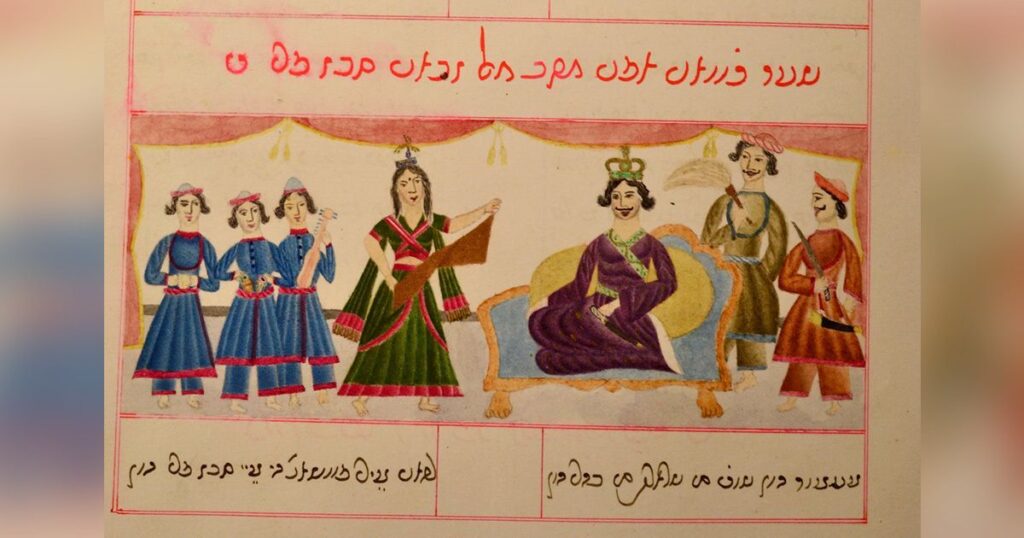
This Judaeo-Urdu manuscript may have been created for (or by) the Baghdadi Jewish community.
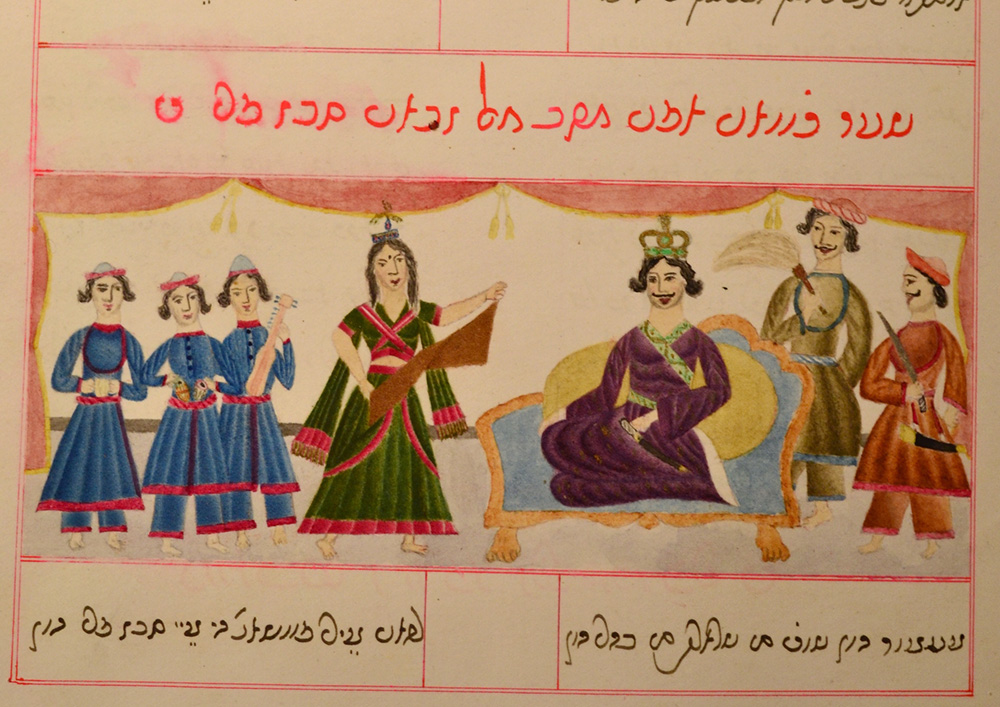
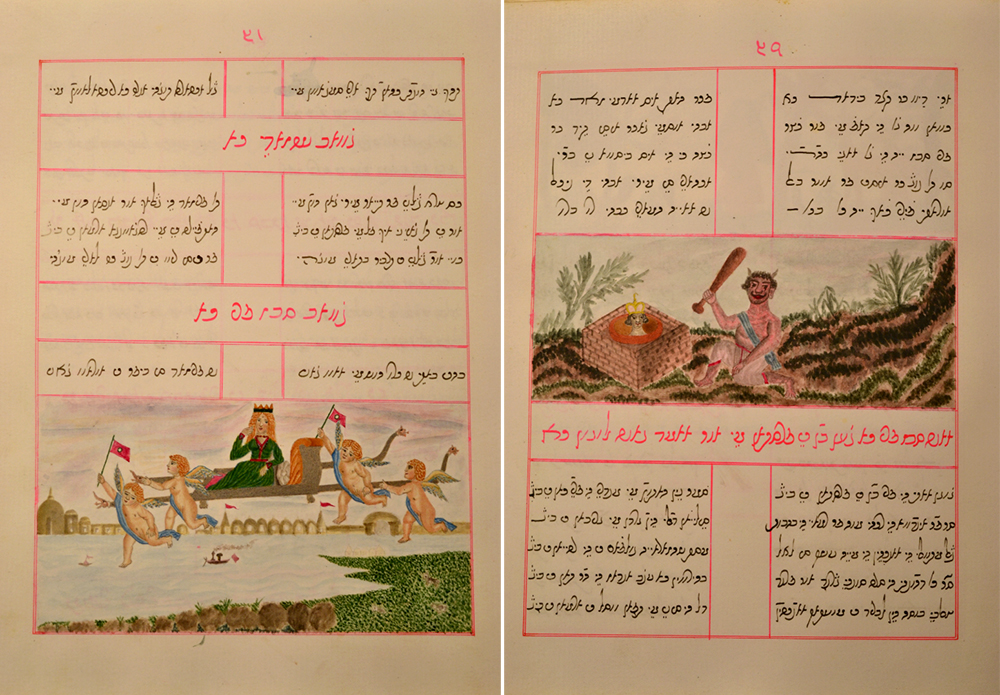
The Emerald Fairy (Sabz Pari) at the heavenly court of Indar (Or.13287, f. 17r). | Public Domain
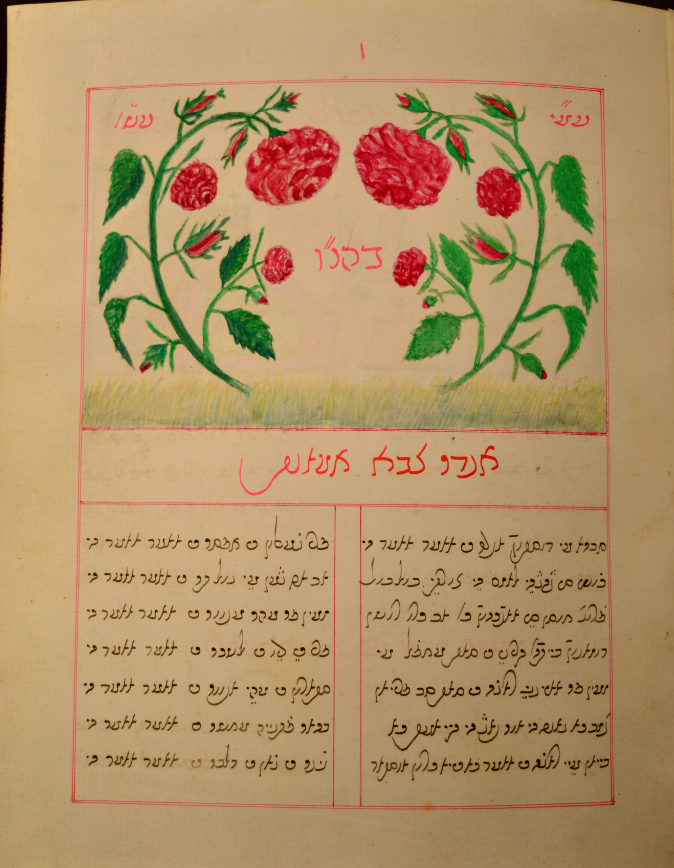
The British Library’s sole Judaeo-Urdu manuscript is a copy in Hebrew script of the well-known Urdu theatrical work, the Indar Sabha, written by Agha Sayyid Hasan ‘Amanat’, a poet in the court of Vajid Ali Shah of Awadh .
Opening folio of the Indar Sabha (Or.13287, f. 7r). [Public Domain]
Our manuscript seems to have been created in the early 20th century, perhaps by a member of the Baghdadi Jewish community of India. Originating in the Arabic-speaking regions of the Ottoman Empire, the Baghdadi Jewish community settled in India from the late 18th into the 19th century and was primarily centred in two major urban centres of India, Calcutta and Bombay [now Kolkata and Mumbai]. A printing industry in Judaeo-Arabic grew in both locations to cater to the religious needs of the community as well as its appetite for news and entertainment, producing devotional treatises, gazettes, and also the occasional historical novel, murder mystery and romance (Musleah, On the Banks of the Ganga, p. 522-531). The British Library’s collections are a rich resource for these publications and for the history of the Baghdadi Jewish community in India, and our Hebrew curator has previously written about a Judaeo-Arabic serial issued in Bombay for our blog.
The Emerald Fairy (Sabz Pari) at the heavenly court of Indar (Or.13287, f. 17r). [Public Domain]
As for the contents of the manuscript, while many elements of the play itself are reminiscent of fabulous Urdu dastaans or legends, such as the Sihr al-Bayan by Mir Hasan (1727-86), the plot itself is relatively simple, avoiding the complex story-within-a-story structure of its predecessors. The play opens with a sensuous depiction of the court of the king of the gods, Indar, populated by fairies bearing the names of jewels (Emerald, Topaz, Sapphire and Ruby).
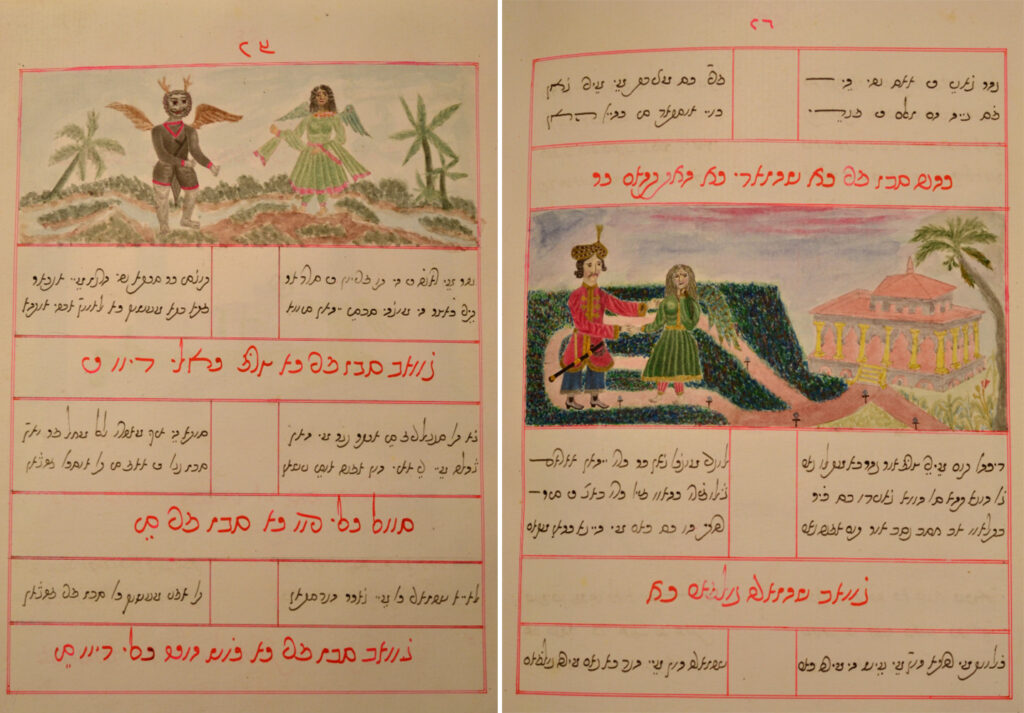
Left (f. 18r): the Sabz Pari (Emerald fairy) and the Kala Dev; right (f. 19v): the Sabz Pari and her earthly lover, prince Gulfam (Or.13287). [Public Domain]
As with many dastaans, a story of forbidden love ensues when the Emerald fairy (Sabz Pari) falls in love with a mortal prince, Gulfam, and conspires with the help of the Black Demon (Kala Dev), to sneak her beloved into Indar’s heavenly court. When this transgressal is discovered, the Emerald fairy’s wings are clipped, and she is ejected from the paradise of Indar’s court and falls to earth, while her lover is imprisoned in a well (Hason, ‘Indar Sabha Phenomenon,’ p. 83).
Left (f. 22r): the Sabz Pari, having been shorn of her wings; right (f. 26r): Gulfam is punished in a well for his transgression of entering the heavenly court of Indar (Or.13287). [Public Domain]
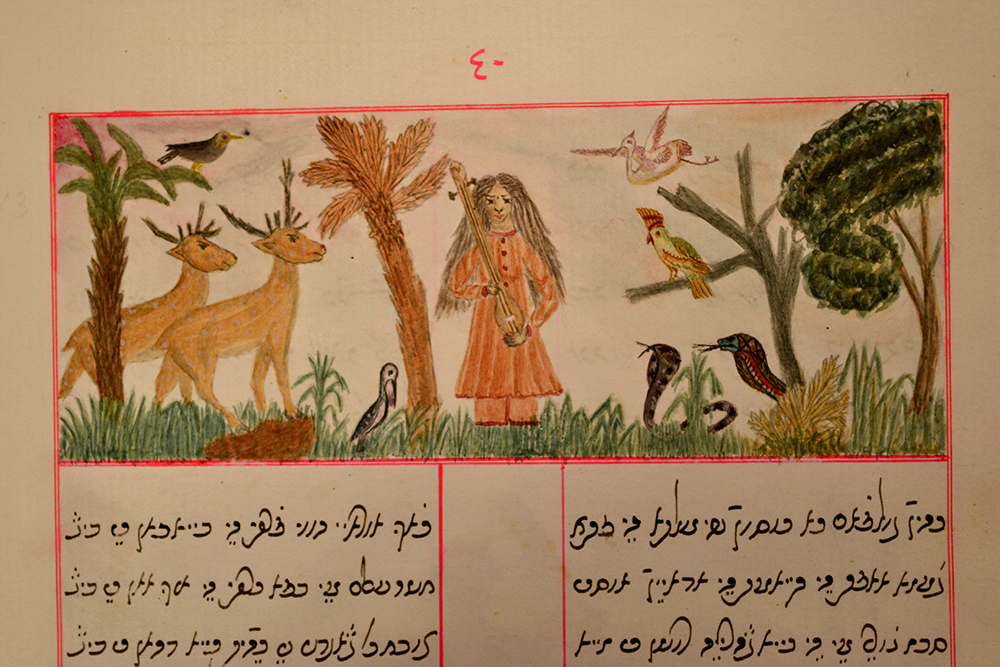
In addition to the echoes of Urdu dastaans, the multi-coloured fairies bring to mind the Haft Paykar of Nizami, in particular, the images of the main character’s fantastical adventures , and the Hasht Bihisht of Amir Khusraw, of which an example can be viewed online, while the unlucky prince hidden in a well as a result of his trangressive love is reminiscent of the story of Bizhan and Manizheh from the Shahnamah, creating a further layer of intertextuality and adaptation of visual motifs from the Persian epics from which the Urdu poetry of the 19th century clearly drew much of its inspiration. However, the story takes a more Indic turn when the Emerald fairy, ejected from heaven, wanders as a yogini or female ascetic, playing music that tells of her love and charms her way back into Indar’s court, wins his favour and secures her lover’s release.
The Sabz Pari wanders on earth as a female ascetic or yogini, charming the wild animals with her beautiful music (Or.13287, f. 26v). [Public Domain]
Establishing a direct link between the Baghdadi Jewish community and theatrical production of the Indar Sabha has proven elusive. According to the gazette of the Baghdadi Jewish community from the early 20th century, social clubs in both Bombay and Calcutta staged events, such as films, plays and musical performances, and hosted amateur dramatic clubs from within the Jewish community (The Jewish Advocate, 1932, p. 425; 1933, p. 9). It also seems that Baghdadi Jewish female actresses took part in early productions of the play and other Urdu-language theatrical productions, establishing a possible connection between the Indar Sabha and the Jewish community. While such a conclusion is purely speculative at this point, it might be the case that this Judaeo-Urdu manuscript was created for (or by) one of the actors or theatre producers of the Baghdadi Jewish community.
Fortunately, due to the generosity of the Hebrew Manuscripts project , this unique Judaeo-Urdu manuscript will be digitised and made freely available online, which we hope will encourage further research into the language, cultural context, and history of this fascinating manuscript.
Nur Sobers-Khan, Lead Curator for South Asia.
This article first appeared on the British Library’s Asian and African Studies blog.
source: http://www.scroll.in / Scroll.in / Home> Literary History / by Nur Sobers-Khan / August 02nd, 2017
If you’re a history buff, World History Encyclopedia has all the lore from the past—conquests, stories, and maps that take you back to the battleground
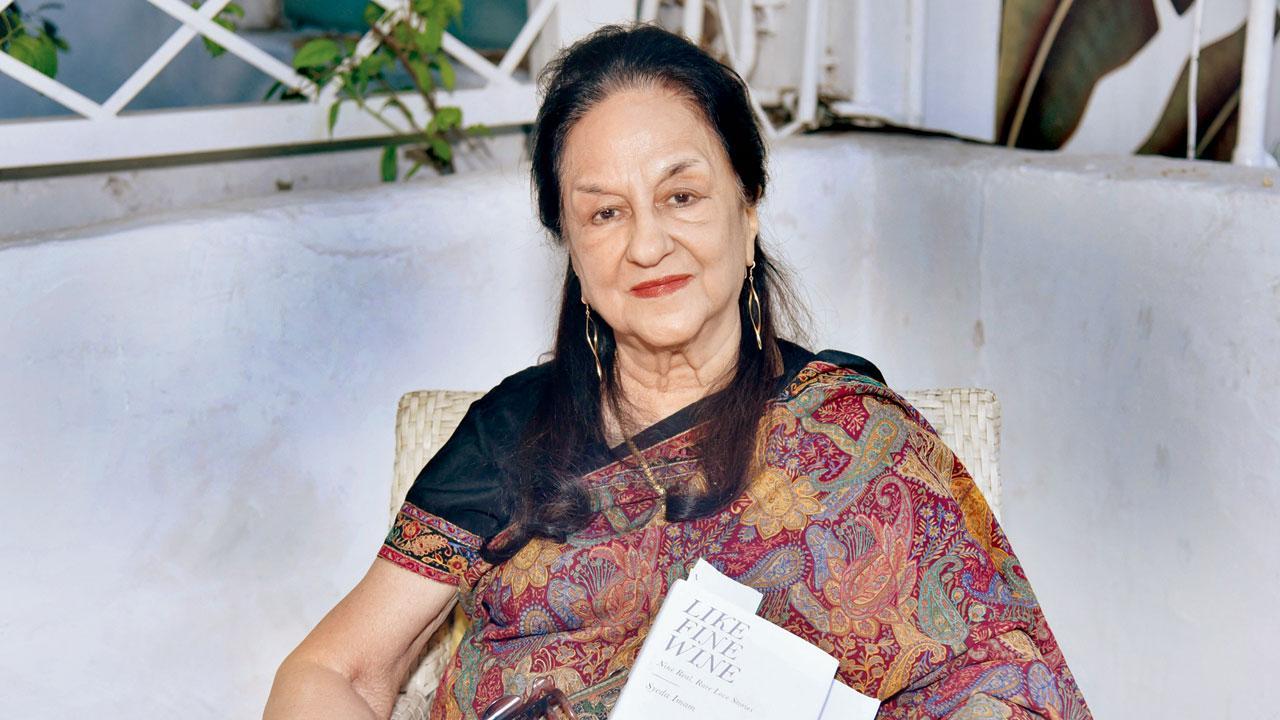
Syeda Bilgrami Imam
Don’t we all enjoy a good love story? Award-winning writer and editor Syeda Bilgrami Imam’s new book Like Fine Wine: Nine Real Love Stories (Roli Books; R695) is that rare keepsake for those who truly believe in matters of the heart, serving as a gentle reminder that love truly wins.
pix: amazon.in
The book, Iman writes in her introduction, was born out of a request from a publisher friend for a monograph on her relatives ,“Sir Syed Ali Imam [former Prime Minister of the state of Hyderabad] and Lady Imam [Anise Karim] and their fateful discovery of each other in the year 1918”.
From one story, it turned into a collection, where she makes sensitive forays into the real love stories of nine unusual couples. From cricketing legend Tiger Pataudi and superstar Sharmila Tagore, to director David Lean and Leila Matkar, chess grandmaster Viswanathan Anand and Aruna, the book takes us through stories that are replete with serendipitous beginnings, chance encounters and love-at-first-sight tropes.
The one story that will remain a personal favourite is that of Sir Ali, a 48-year-old widower, who falls instantly in love with Anise, an 18-year-old high school graduate whose “willowy, erect, curiously collected presence” made him say “without fuss or plea or preamble” if she would marry him.
Available at all leading bookstores
source: http://www.mid-day.com / Mid-Day / Home> Sunday Mid-Day News / by Team SMD (Edited) / Mumbai, May 14th, 2023
.webp)

)