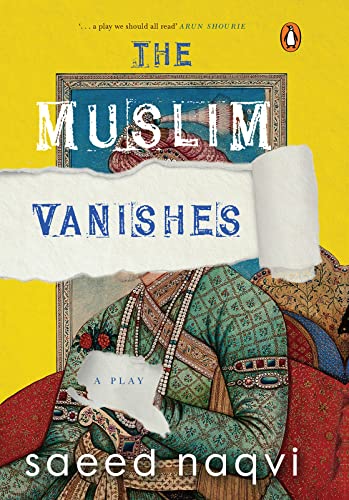
The Muslim Vanishes: A Play in Three Acts Saeed Naqvi Penguin, 2022
The Muslim Vanishes:A Play in Three Acts
Saeed Naqvi / Penguin, 2022
Reviewed by Arshad Shaikh
The Muslim Vanishes by Saeed Naqvi is a thought-provoking play and a timely fable about the dangers of communalism and the importance of empathy.
The play is set in a dystopian future where 200 million Muslims have suddenly disappeared from India, along with their cultural heritage. The remaining population is left to grapple with the consequences of this mass vanishing and to try to understand what happened and why.
The play is told from the perspective of a diverse cast of characters, including a TV news anchor, a Hindu nationalist leader, a Muslim woman, and a Dalit activist. Each character has their unique perspective on the events that have taken place, and their struggles to come to terms with them.
Naqvi’s writing is sharp and insightful, and he uses the play to explore a range of complex issues, including the nature of national identity, the role of religion in society, and the dangers of prejudice and discrimination.
The play is also a powerful plea for empathy, tolerance, and understanding. It challenges us to confront the realities of communalism and intolerance in our world.
The Muslim Vanishes is a must-read for anyone who is interested in contemporary Indian politics and society, or who is concerned about the rise of communalism and intolerance around the world. The play will stay with you long after you finish reading it.
The play is a creative way of exploring the key themes that India is currently grappling with and trying to come to terms with. The play is a powerful critique of communalism, which is a form of ideology that divides people along religious lines.
Naqvi shows how communalism can lead to violence, hatred, and even genocide. The play also makes a case for empathy, tolerance, and understanding. Naqvi challenges us to see the world from the perspective of others, even those who are different from us. He shows how empathy and tolerance can help us to build bridges and to create a more just and inclusive society.
Naqvi explores the complex nature of national identity. He asks us to question what it means to be Indian, and who owns India. He shows how national identity can be manipulated to exclude and marginalize certain groups of people.
The Muslim Vanishes is a powerful and thought-provoking play that is relevant to our times. It is highly recommended to add it to your bookshelf.
source: http://www.radianceweekly.com / Radiance Viewsweekly / Home> Book Review / by Arshad Shaikh / September 26th, 2023
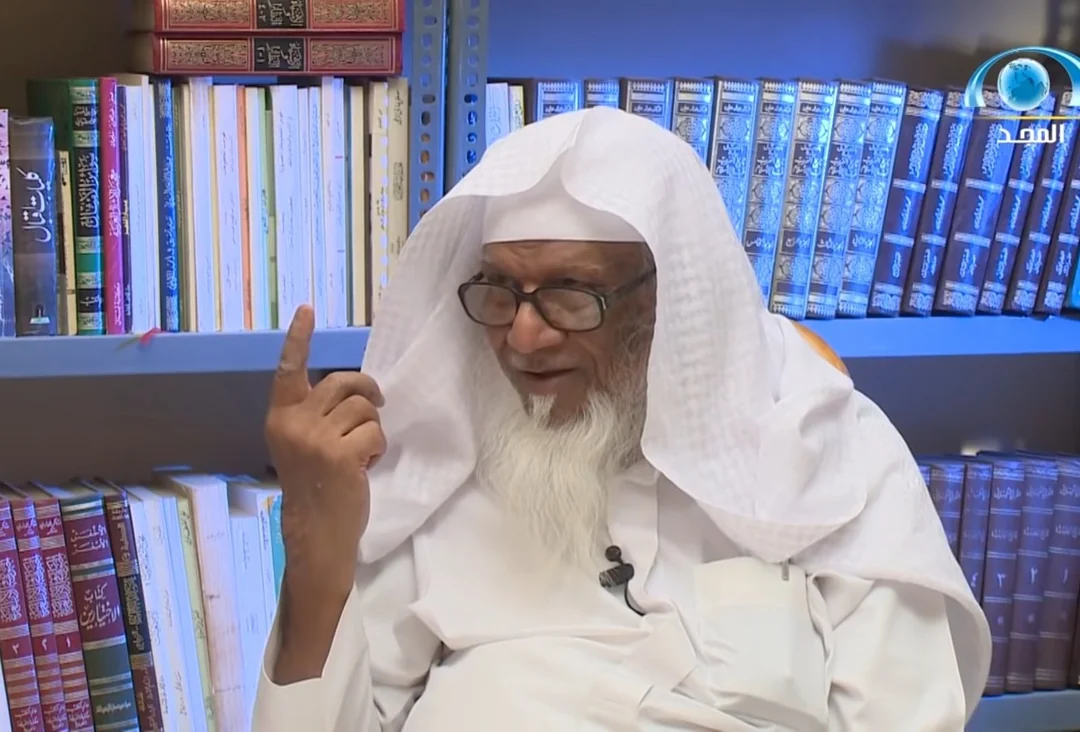
On Friday morning, author of the famous and most resourceful Madinah Arabic Book, Shaikh Dr. V Abdur Raheem, passed away in Madinah, Saudi Arabia at the age of 90.
A master of the Arabic language, a world renowned Islamic Scholar, multi-linguist, author, teacher and translator he dedicated his life to extraordinary contributions to Arabic literature by helping millions learn the Arabic language in his over 50 years of experience.
Born in 1933 in Vaniyambadi, Tamil Nadu, he obtained his B.A in English from the University of Madras and M.A in Arabic from the Aligarh Muslim University, India in 1962. He also held a M.Phil. and a Ph.D. in Arabic Philology from Al-Azhar University, Egypt.
A recipient of the National Award from the President of India in 1997 for his services in teaching, he was a self made man who learnt Arabic from the scarcest resources available to him in his little town. His three-volume series, Madinah Arabic Book, a one of a kind in its field, is the official curriculum of the Madinah University, Saudi Arabia, and is also used widely in schools and universities across the world to teach students the Arabic language.
Former Professor of Arabic Language for 30 years at the International Islamic University of Madinah, he has taught Arabic Language at Islamic Universities around the world including at Omdurman in Sudan, Germany, Washington D.C and British Guyana. An expert on European Languages and their etymology, phonetic change and semantic development he was a former Director of the ‘Institute of Teaching Arabic as a Foreign Language’, at the Islamic University of Madinah.
A close associate of the Islamic Foundation Trust (IFT), Chennai, majority of his books have been published by IFT.
Along with the Madinah Arabic Book series he has to his credit a host of other books too including ‘Let’s Begin to Read Arabic: A Beginners Guide to Learning the Arabic Language and the Qur’aan’, ‘AL-TIBYAAN – Easy way to Qur’aanic Reading’, ‘Arabic Course for Non-Native Speakers of Arabic: Originally Devised and Taught at Islaamic University, Madinah’, ‘From Esfahan To Madinah In Search of Truth: Salmaan al-Faarisi’s Hadiith’,‘Both These Lights Emanate from the Same Niche’ – Hadiith of Umm Salamah (raDiyAllaahu “anhaa).’ ‘Suurah al-Hujuraat – With Lexical and Grammatical Notes and DVDs’.
His passing is indeed a great loss to both the Muslim world and to Islamic literature.
source: http://www.thecognate.com / The Cognate / Home> News / by The Cognate News Desk / October 21st, 2023
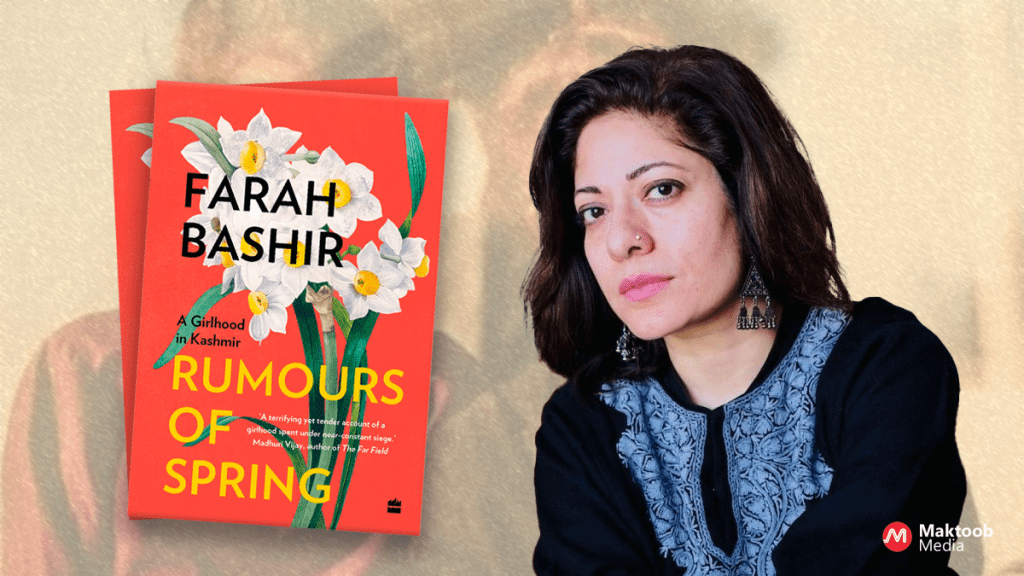
Erstwhile Reuters photojournalist, Farah Bashir’s memoir is a timely and crucial intervention in South-Asian studies. As the title of the book suggests, it is the true story of a girlhood spent in the midst of military occupation and militancy. Launched almost two years after the abrogation of Article 370 by the Indian state, which gave Kashmir a special status in terms of autonomy, followed by an undemocratic lockdown of the state along with house arrest of eminent Kashmiri politicians and communications blackout.
This coming-of-age memoir uncovers the truth about the everyday struggles of Kashmiris in the aftermath of the 1980s, in the land of curfews, gunfights and surveillance.
This memoir also offers a peek into the lives after the abrogation of Kashmir’s special status, which has often been compared to the 1980s Kashmir (Rafiq, 2019). Amidst all the information and knowledge available about Kashmir, Bashir’s novel stands out as one of a kind that puts forth the complexities of a girlhood spent in a conflict zone.
As a memoir, the style of the novel is compelling, to say the least. Although written primarily in English, the book through its usage of Kashmiri language in various interactions between the characters is rooted in the Kashmiri culture, language and traditions. The title of the book is also attributed to famous Kashmiri poet Agha Shahid Ali’s poetry, which she acknowledges as “a place of refuge for years”. (Bashir, 2021)
The book begins with Bashir, as an eighteen-year-old girl, preparing for her beloved Bobeh’s (grandmother’s) funeral procession as she is remembering the previous night she spent with her Bobeh and how she would have been “more polite” (Bashir, 2021) to her had she known it was their “last one together.” (Bashir, 2021) The present, throughout the novel, mingles with the past as Bashir reminisces both poignant and cheerful times of her adolescence spent amidst conflict.
Bashir’s memories take the readers to the Eid of 1989 when she was stuck in a market because of a sudden announcement of curfew. She ends the chapter by disclosing a habit she developed after the incident – pulling out her own hair, which is later reviled to be a consequence of PTSD. Bashir’s memoir reveals many such incidents that not only discuss the violent sounds of gunfire, the cruel silence of curfew or the horrifying cordon searches, but also the perpetual talks of death and murder that form a part of everyday realities in Kashmir.
While Kashmir is largely seen through a political, military or diplomatic angle, what Bashir does through her novel is, she portrays how even simple daily life activities in Kashmir are laden with terror. The chapter titled, The Country with a Burnt Post Office, talks about the heart-wrenching love story that tragically burns along with the only possible way of communication- the Post Office. She plaintively calls her break-up with her lover “neither painful nor acrimonious” (Bashir, 2021) but “a romance that was cut by fire” (Bashir, 2021).
Young girl’s school life also faces upheavals that not only torment her everyday life at school but also her dreams. Bashir dreams about absent girls in school which “sometimes presented the reality as it were” (Bashir, 2021).
Familial relationships are explored with utmost honesty in this 228-paged memoir. Bashir’s keen eye even as a young girl never missed the perturbing face of her mother as she makes little knots in her scarf, awaiting the unusually late father, the lecherous gaze of troops stationed in every nook and corner, her bobeh’s deteriorating wheezing, or her father’s ever worrisome face.
Bashir writes the memoir in the way memoirs are supposed to be honest. She further mentions her love for music as a young girl and her quest to save the music system from frustrated troops as they cordoned their house. Bashir’s memoir is a reminder that things as fundamental as music are under scrutiny in military occupation, that listening to music in itself forms a part of everyday resistance in war-torn zones.
Rumours of Spring takes us through the games that she sees her neighbours play- in the chapter titled “Games our children play” Bashir very smoothly walks us through one of the most harrowing effects of occupation – the echoes of brutal realities in children’s games, Bashir delineates the incident with Omar and Ahmad – where Omar along with his friends pretends to be a kidnapper and abducts studious Ahmad while he is on his way back home and later mocks him for his delayed reaction by calling Ahmad a “Proper Coward” (Bashir, 2021, p. 198).
As young Bashir watches and listens to Omar’s recital, she can’t help but imagine what must Ahmad have thought to have such a delayed reaction to his brother’s prank – “vice-chancellor Mushir-ul-Haq’s kidnapping and killing?” (Bashir, 2021, p. 199). She further looks back on the games they used to play before 1989 and how they disappeared with imposed evening curfews.
Bashir’s memoir is, thus, not just her own, it is the memoir of her people, a whole generation of Kashmiris and another generation of Kashmiris too, who have faced communications blackout, curfew and surveillance as long as they can remember. In many ways, the memoir transcends the space and time it is set in, it’s also crucial to note that Bashir’s memoir is in no way implying a universal experience, but through its individuality, it maintains the essence of humanity. Through her painful yet simplistic descriptions of PTSD and anxiety, Bashir gives us a glimpse into one of the most ignored, yet most prevalent issues among children in a conflict zone.
Bashir’s honest tackling of such a sensitive issue is bound to make readers take a look at the rising number of mental health issues, widespread in children as well as adults of conflict zones.
In this 228-paged memoir, Bashir is able to write her own story, while also representing her fellow Kashmiris. The ubiquitous simplicity, the sincere descriptions, the bitter-sweet moments and the familial relationships in this memoir, is what makes it stand out.
The cobwebs of lies perpetrated by State machinery about Kashmiri women being mere victims at the hands of militants and State- security forces being their saviours, is coherently and comprehensively shut down. This memoir is a resistance in itself, it is a crucial read for anyone interested in South Asian politics and also for those interested in the myriad vastness of human experiences.
Bashir’s memoir is a reminder to humankind, its timely release is a strong plea to the world to take a look at the ever-worsening situation of Kashmir. Rumours of Spring makes its place amidst countless memoirs, fiction and non-fiction that form a part of Kashmiri literature and show the truth against the barefaced lies produced by those in power. Farah Bashir’s memoir is an epistemic resistance to the epistemic violence perpetrated by the State-backed, Machiavellian and megalomaniac modus-operandi of the modes of knowledge productions on Kashmir.
Bibliography
Bashir, F. (2021). Rumours of Spring. Thomson Press, India.
Rafiq, A. (2019, August 29). In Afghanistan and Kashmir, It’s the 1980s All Over Again. Foreign Policy Insider. Retrieved from https://foreignpolicy.com/2019/08/29/in-afghanistan-and-kashmir-its-the-1980s-all-over-again/
Shambhavi Siddhi completed her master’s degree in French and francophone literature from JNU. She is currently pursuing a PG Diploma in Women’s and Gender Studies from IGNOU.
source: http://www.maktoobmedia.com / Maktoob Media / Home> Bookshelf / by Shambhavi Siddhi / November 25th, 2021
City-based Assamese poet Shaheen Akhtar has been awarded the ‘Independence Day Literary Honour’.
Guwahati :
City-based Assamese poet Shaheen Akhtar has been awarded the ‘Independence Day Literary Honour’ by “Motivational Strips – World’s Most Active Writers Forum” in collaboration with the Gujarat Sahitya Academy (Under the Government of Gujarat).
Shaheen was declared as a recipient of the award “owing to her brilliance in poetry which is considered to be at par with world standards”.
The Independence Day Honour’ is conferred annually to the best poets worldwide jointly by the ‘Motivational Strips’ and the ‘Gujarat Sahitya Academy’ . The literary awards are given as a tribute to India’s Independence Day and the honor is considered as the most valued in the global poetic circle. Shaheen was accorded the honour on August 15, 2021.
The awarding procedure undergoes an exhaustive evaluation process, where the poet’s literary acumen, behaviour, global interactions and inclusions are taken into consideration before the recipient is conferred with the honour. A total of 440 poets from 82 countries were selected for this award.
‘Motivational Strips’ includes writers from more than 160 countries. The average visitors to this forum are beyond 7.2 million every month.
source: http://www.sentinelassam.com / The Sentinel / Home> Cities> Guwahati / by Sentinel Digital Desk / August 27th, 2021
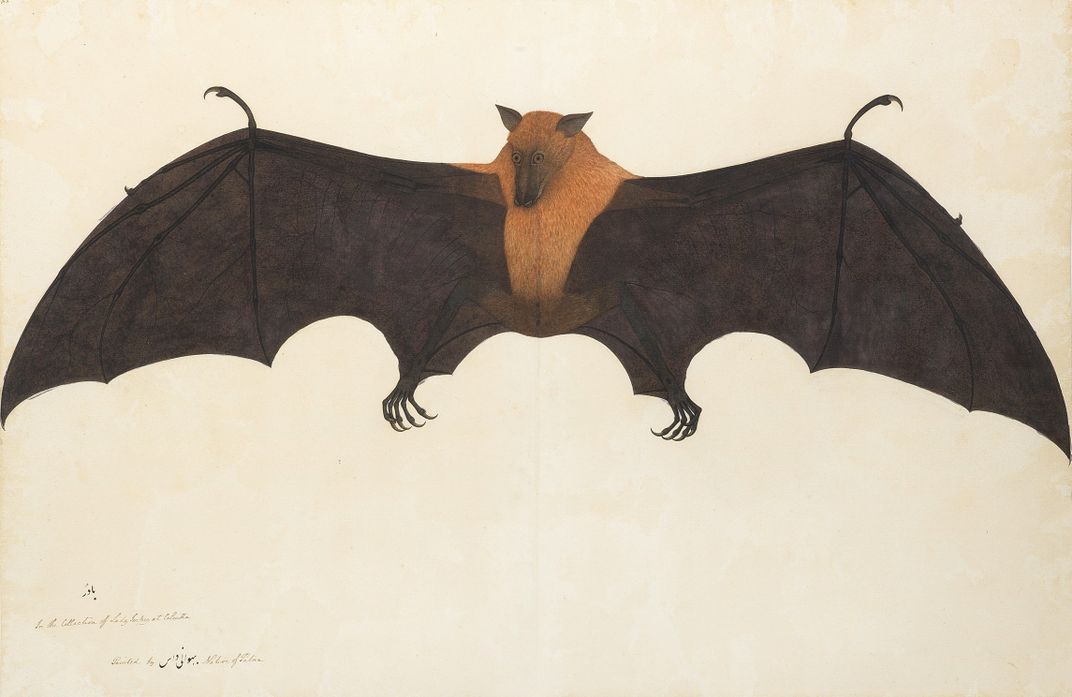
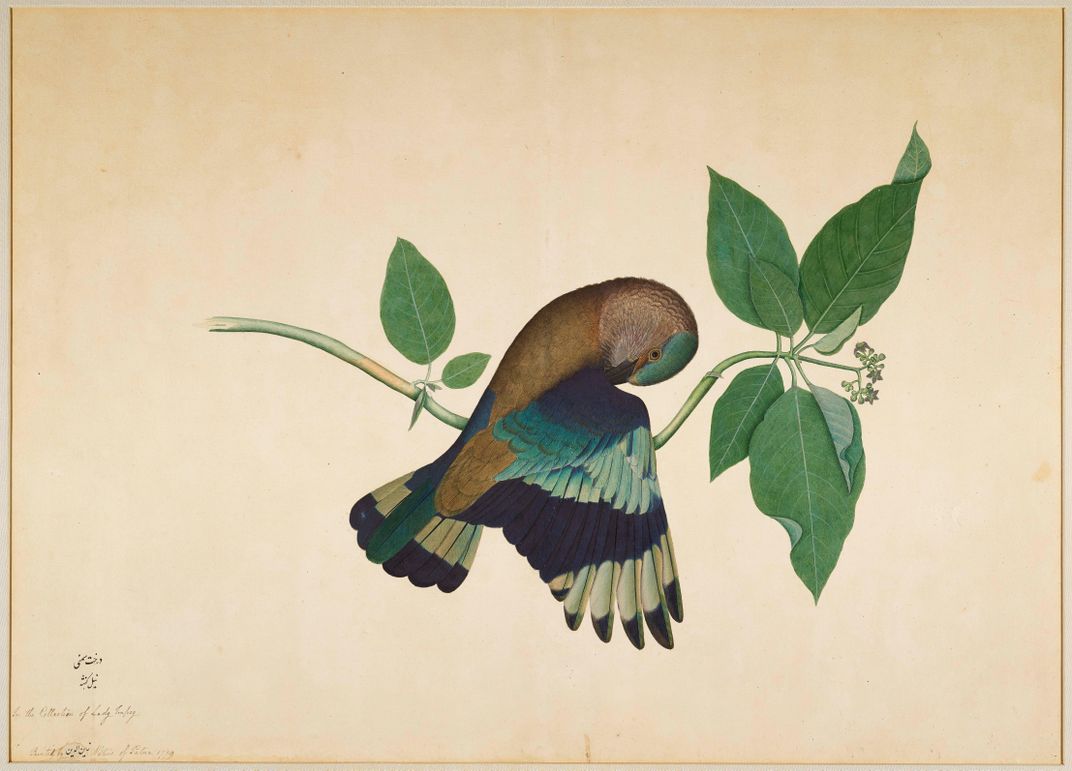
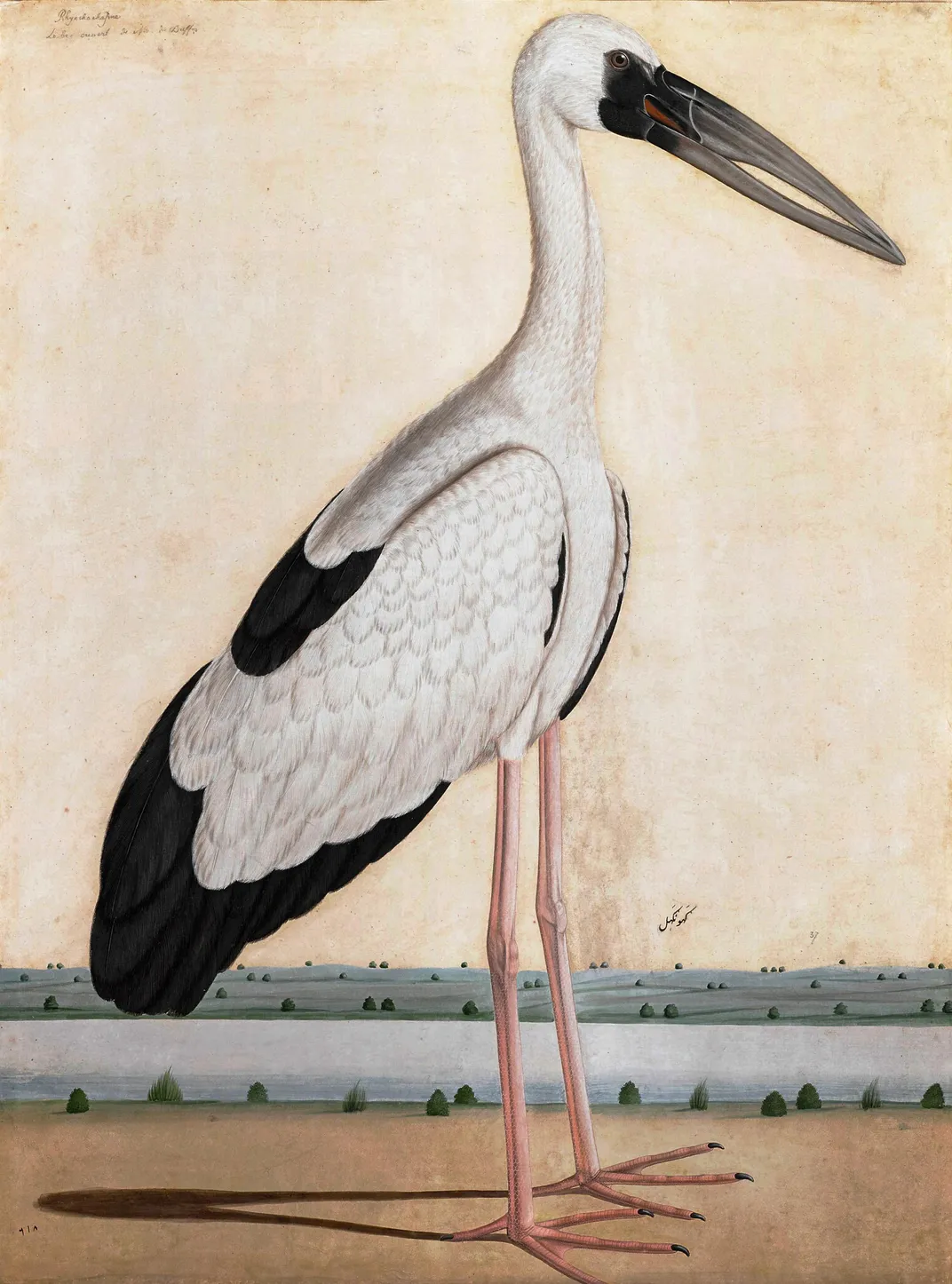
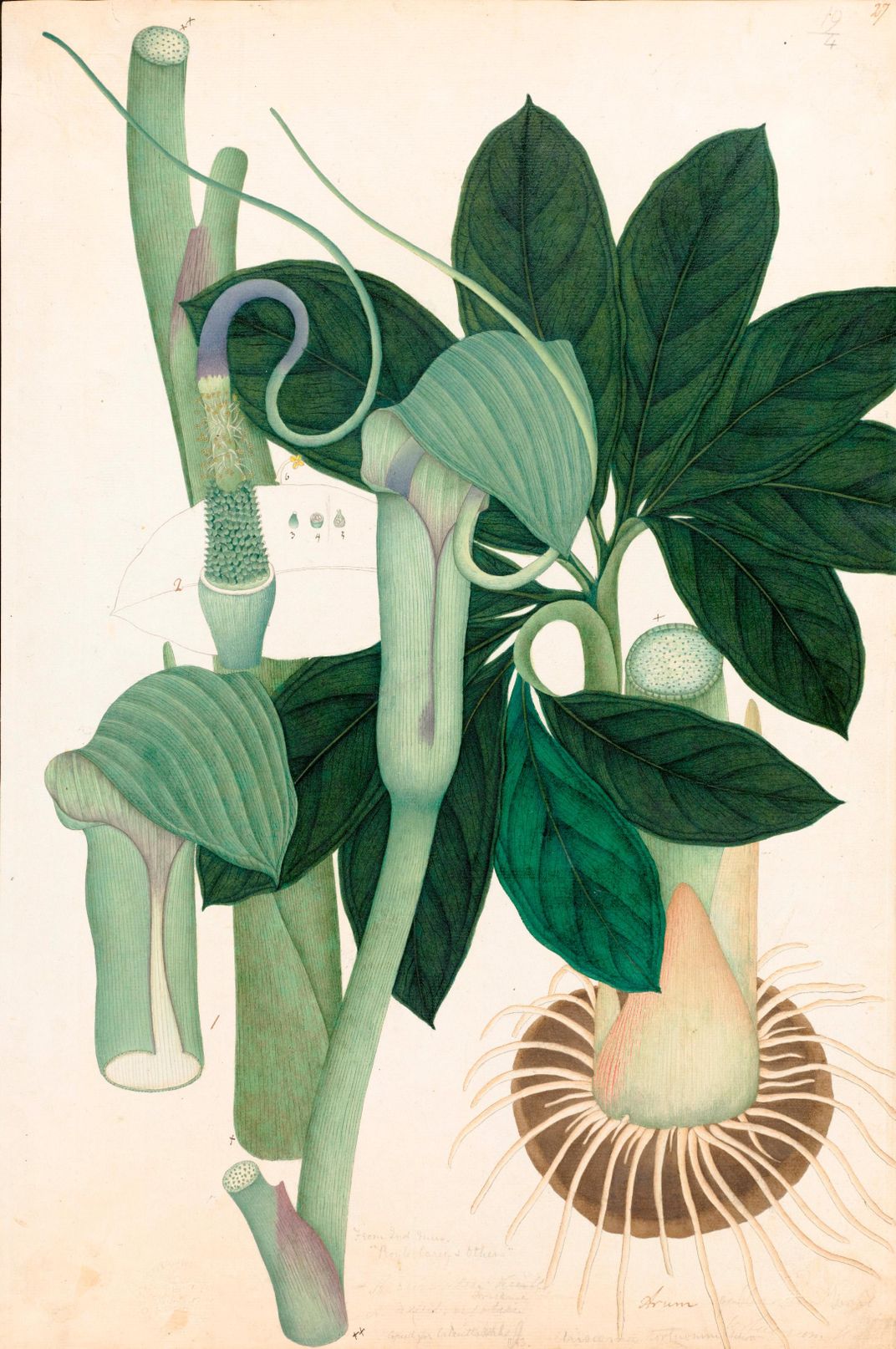
In the late 1770s, a British colonial official named Sir Elijah Impey and his wife, Lady Mary, commissioned the Indian artist Shaikh Zain ud-Din to catalog a private menagerie, including various bird species, the couple had assembled at their home in Calcutta. Using paper and watercolors from England, Zain ud-Din, a Muslim from the city of Patna, modeled his work after English botanical illustration, but he also brought to the job his training in the ornate Mughal artistic tradition—and his own distinctive style. Today critics praise the quality of the colors and the composition, in which a bright, simple background offsets the keenly wrought details of plants and animals. “Everything is incredibly precise and beautifully observant,” says Xavier Bray, director of London’s Wallace Collection, which this month mounts the first UK exhibition of works by Indian artists commissioned by officers of the British East India Company.
The expat aristocrats who patronized Zain ud-Din and his fellow artists had been sent abroad to help manage their country’s growing empire, but once there many, like the Impeys, fell in love with the subcontinent, as well as its flora and fauna. “These paintings,” Bray says, “were made into albums to be leafed through back home, on a rainy day, drinking Earl Grey tea.”
History failed to record much about Zain ud-Din’s life beyond his watercolors for the Impeys. But the new show, which includes 99 paintings of nature studies, portraits and landscapes by 18 artists, makes an argument that he and his contemporaries should be recognized on their own merits, as some of India’s greatest painters. “Anything with a colonial air about it is now considered politically incorrect,” Bray says. “But what we’re trying to do is bring back these extraordinary artists who have been almost completely forgotten.”
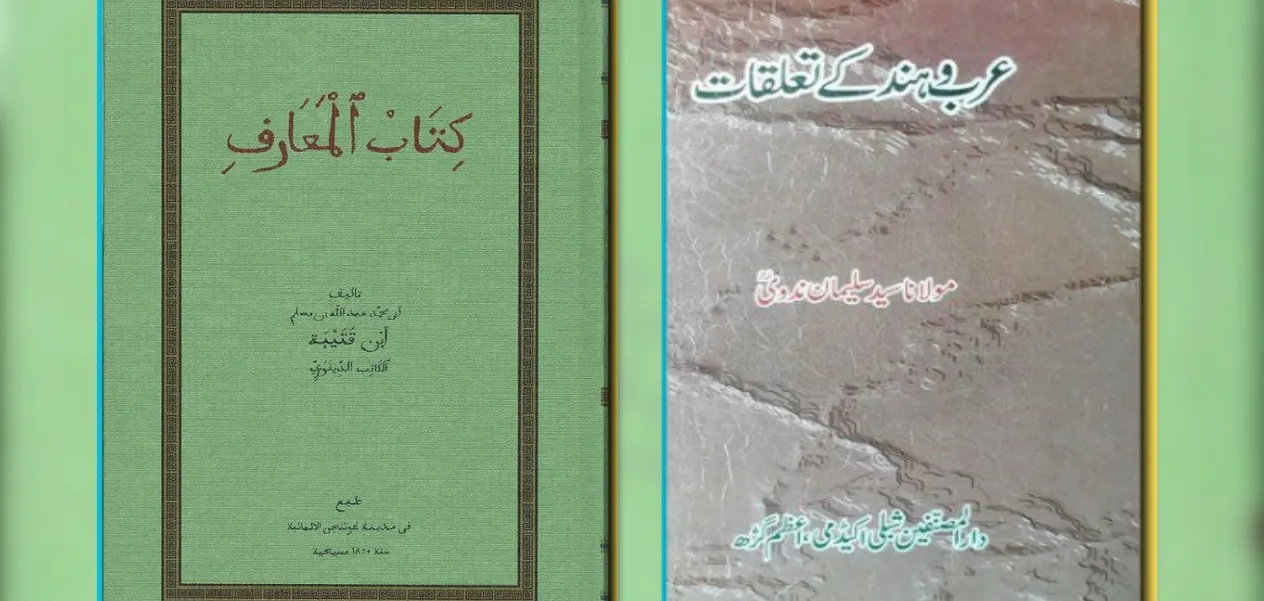
Imam Hussain was the grandson of the Messenger of Allah and Imam Zainul Abidin was his son. According to historical accounts in reliable texts the mother of Imam Zainul Abidin was a Sindhi woman. Imam Ibn Qutiba in Kitab al-Ma’arif, provided detailed information on this fact.
The Muslims refer to Imam Hussain descendants as Sayyid. Despite the fact that Sayyid’s were described as being half Indian by renowned Indian researcher Syed Sulaiman Nadvi in his book on Arab-Indian Relations. He claimed that Sayyids have always been half Indian, while other Muslims may or may not be half Indians.
This is possibly the reason why the Prophet Mohammad claimed in a hadith that he received cold breezes from India. (Mustadrak Al-Haakim Hadith 4053.) and Hazrat Ali also (RA) added,
قال علي بن أبي طالب: أطيب ريح في الأرض الهند، أهبط بها آدم
عليه الصلاة والسلام فعلق شجرها من ريح الجنة
India is the land of best wind, Saydana Adam was sent to India, where He also planted the fragrant Paradise plant.’ This close bond between India and The Prophet is not limited to this; in one of his hadiths, the Prophet said that Adam (peace be upon him) was sent to Indian region.
According to Syed Sulaiman Nadvi, when Hazrat Adam descended from the sky and was brought to India, which was described as paradise.
History is full of instances of such connections. Examples include Hazrat Uthman bin Abi Al-As Thaqafi, Hazrat Huqam bin Abi Al-As, Hazrat Mughira, Hazrat Rabi'ah bin Ziyad, Hazrat Abdullah Ansari, Hazrat Umair bin Usman, and Hazrat Asim bin Umar, among others, who travelled to India to spread Prophet Mohammad’s teachings.
Kitaab Ul Ma’arif and Arab-o-Hind Ke Ta’alluqaat
After Hazrat Umar was elected as a Caliph, a close friend of the Prophet, he asked a traveller about what he thought of India.
The traveller responded as follows
: بحر ھا در و جبلھا یا قوت و شجرھاعطر (he said Indian mountains are rubies, its rivers are pearls,and its trees are fragrances.)
According to a legend, there were many Indian settlers in the Arab region at the time the Prophet declared his Naboovat (Prophethood), and Indians were well settled there even at that time. Indian swords were famous in Arabia even prior to the time of the Prophet.
In addition to the sword, a variety of Indian commodities were discovered in Arabia, and they were there in such large quantities that Syed Sulaiman Nadvi noted that the port of Abla, which is close to Basra, received such a large quantity of Indian goods that the local Arabs thought Abla was a miniature version of India.
Teak wood, swords, cotton and silk cloth, lemons, oranges,bananas, cinnamon, cloves, rubies, pearls, and other items were among the exports from India to Arabia.
The writings of Qazi Athar Mubarakpuri, Syed Sulaiman Nadvi, Akbar Ali Khan Qadri, Gustave Le Bon, and others are testimonials of good relationship between Indians and Arabs during the time of the Prophet.
This is likely the reason that Ibn Qutiba, as opposed to other historians, claimed that Hazrat Zain Albidin’s mother was an Indian.Many Sufis in India during this time worked to spread the teachings of the God-sent Messenger and his Indian associates. They arrived in India made themselves at home and benefited from the lessons of the Sahaba.
The Hindu religious texts examined by Al-Bairuni in Kitab Al-Hind more than a thousand years ago reveal that they are remarkably similar to Islamic teachings.The religious practises of the people of India, according to a sizable group of Sufis and academics, are remarkably comparable to the Messenger of Allah’s description of Wehdat (oneness of god). For this reason, Islam is still the major faith in India today.
source: http://www.awazthevoice.in / Awaz, The Voice / Home> Story / by Sayyed Taleef Haider, New Delhi / September 29th, 2023
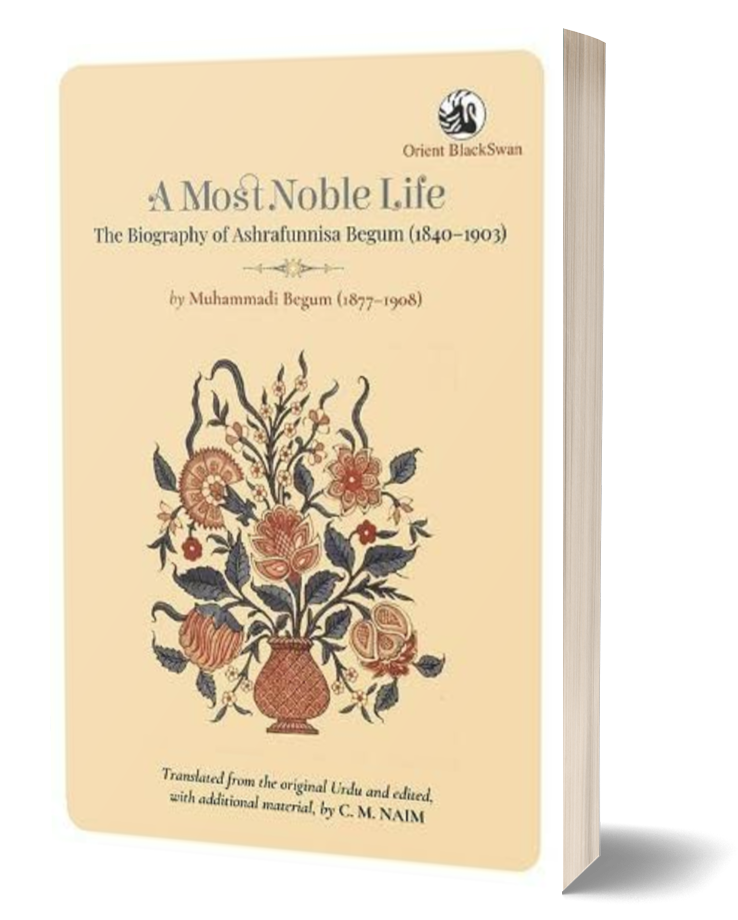
An excerpt from ‘A Most Noble Life: The Biography of Ashrafunnisa Begum (1840–1903)’, by Muhammadi Begum, translated from the Urdu by CM Naim.
Victoria Girl’s School, Lahore was established by Ashrafunnisa Begum. | The school’s Facebook page.
Why was I so eager to read Urdu? At our house, during the 40 observance of Muharram, separate majālis for men and women were held every day. In addition, all year long, a majlis was held every Thursday in fulfilment of someone-or-other’s vow. That was the reason I was so keen to read Urdu. All the ladies in my family knew Urdu quite well. When, on some occasion, happy or sad, they visited other homes, or when other ladies came similarly to our place, my female relatives would read aloud from books on matters of faith and religious observances.
Listening to them, I came to know many of the same by heart – just as one learns stories. It did not, however, lessen my keen desire to be blessed with the gift of reading.
Once I went to all the ladies in the family one by one and implored each to teach me to read. I said, “Teach me just a little bit every day; I would be your slave for life.” But not one was moved in the slightest way by my pleadings. All of them gave the same response: “Have you gone mad, girl? Better find some cure for it. First of all, what would you do with it even if you learned how to read? Secondly, what makes you think it is easy to teach someone to read? It’s not. It is hard work. Who do you think has the time and energy to waste on you?”
I lost all hope when I heard those words, and began to weep. In fact, I felt so hurt that I burst into loud wailing. That made the ladies even angrier. “How nice!” they said, “Now you’re trying to scare us with tears. Well, your silly tears don’t scare anyone. It’s not nice to go around whining all the time just because you want to read. Who ever saw a girl like you? Most girls run and hide if someone even mentions a book. Children your age are scolded and spanked to make them study, but you, on the contrary, weep and wail, wanting to read! Look, you’ve already lost your mother on account of your wretched crying for lessons, who knows what might happen next. Go away! Don’t sit here crying. It gives me the chills.”
I was devastated, and my tears just kept pouring out. Then the ladies said, “For God’s sake, girl, go away! If your grandmother were to see you crying she would immediately assume that one of us had said something nasty to her darling.” God alone knows how I felt when I heard those words. I was not accustomed to such cruel remarks. My parents had brought me up with much love. They had always spoken kindly in my presence, never saying a harsh word to anyone and always treating everyone with patience and civility.
Those words of the ladies were like salt on my already wounded heart. I wiped my tears and, obedient to their command, walked away. But when I was by myself, I prayed to God: “Most Benevolent God, be merciful to me. Guide me to my goal across this dreadful chasm. I promise that if I ever learn how to read, I shall teach that skill to anyone who desires it – even forcibly, God willing, to those who might be unwilling – for so long as I live I shall never forget the pain I feel right now.”
Later one night, when I was beset with similar thoughts, it occurred to me, had I the text of a salām or mujrā, I could myself figure out the words. “It isn’t that great a matter,” I said to myself, “I already know the letters of the alphabet. Let them not teach me. What do I care?” The idea so enhanced my courage and hope that the very next morning I sent a maid to all my friends with this request: “I need some salām and mujre. Please loan me a few. I shall return them after getting them copied.” May God bless them, for each of them sent me one or two.
But who was there to copy them for me? It was only an excuse. I used it again, and said to my grandmother, “Please get me some paper. I shall ask Māmūñ Sahib to make copies of these poems.” She immediately sent someone to the market and got me some paper. Now the question was: how should I make the copies, and where should I hide while I was doing so? I well knew what a disaster it would be if someone became suspicious.
Writing was strictly forbidden to girls, and I had no mother to cover up for me. How was I to reach my goal and also keep it a secret? My aunt was already furious, and called me nasty names for reading the Qur’an so much. “Thank God, this girl hasn’t learned anything else,” she would grumble, “for then she would have time for nothing at all.” God alone knows what my aunt might have said had she ever caught me writing!
Thinking over all this at some length, I finally decided that at midday, when everyone else lay down to rest, I would make some ink with the blacking from the tawā and start copying. And that is exactly what I did. You have to believe me. I scraped some blacking off the tawā, took the ceramic lid from one of the water pots, and grabbed a fistful of twigs from the broom. Thus equipped I went up on our roof, pretending that I was going there to sleep, and excitedly began copying. I cannot describe my happiness at that moment. Childhood is a time of such innocence!
No sooner had I copied a few words than I felt I had won the battle. Before returning downstairs, I broke the lid in which I had made my ink and threw away the pieces. That was the routine I followed every day, using a fresh lid each time to make my ink. The ladies would find the water pot uncovered, and grumble: “What wretch steals the lid every day? May God break her arms!”
I felt so ashamed of my bad deed; I was also scared someone might find out what I was doing. I feared people, for I did not yet have enough sense to consider my misplaced boldness a sin and to fear God. The intensity of my desire made me blind to such matters. I did not give up my improper ways, and continued to blacken sheets of paper with my scribbles. But I had no idea what I was writing. I did not have the sense to know that one cannot learn to read without the help of a teacher. I believed it was like any other skill, that it was something one could learn just by watching others and imitating them. And so I continued to spend much time and effort even if it was for nothing. I still could not read Urdu. Consequently, my crying spells started again. Then God sent me a teacher.
Excerpted with permission from A Most Noble Life: The Biography of Ashrafunnisa Begum (1840–1903), Muhammadi Begum, translated from the Urdu by CM Naim, Orient Black Swan.
source: http://www.scroll.in / Scroll.in / Home> Book Excerpt / by Muhammadi Begum / February 27th, 2023
In the past 75 years a community of Urdu magazines that used to be read by the entire family has disappeared unmourned, so too their journalists and readers. There is also now no major Urdu newspaper or magazine that is edited by a non-Muslim.p
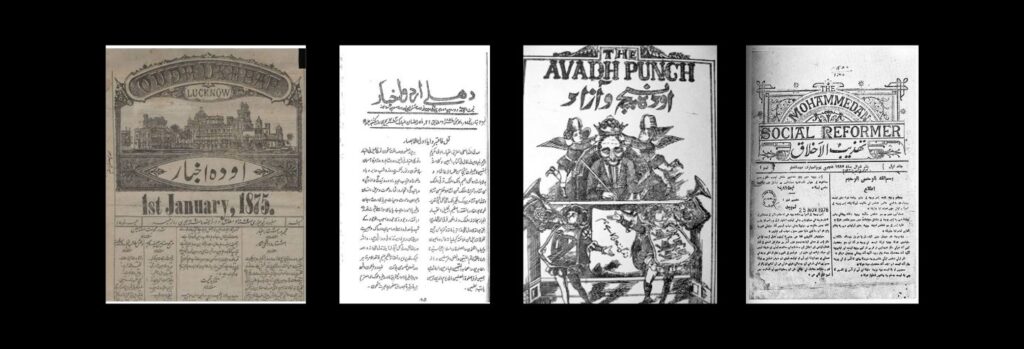
Last year, Urdu institutions in India celebrated a landmark in the history of that language—the 200th anniversary of the publication of Jam-i Jahan-Numa, the first modern newspaper in Urdu. It debuted on 27 March 1822, carrying a name that was clever and most befitting. It referred to the fabled “world-revealing goblet” of the legendary Iranian monarch, Jamshed, into whose depths the regal eyes could peer and see all that was happening in the world.
A big surprise about the new journal was its place of publication, Calcutta (now Kolkata), not known as a major centre of Urdu language and literature. Surprising also was the identity of its publisher, Harihar Dutta, a feisty upper-class Bengali young man with no ties to the north Indian regions more closely identified with Urdu. His grandfather had been the Dewan at the East India Company’s Custom House for 50 years, a position of some status, later held by his father Tarachand Dutta.
Tarachand is better known in records as the co-founder, with Raja Ram Mohan Roy, of the progressive Bangla weekly Sambad Kaumudi in 1821, and the publisher of Roy’s Persian weekly, Mirat-al-Akhbar, arguably the first newspaper in that language, which came out a month after Jam-i Jahan-Numa. Thus, the father and son can rightly be described as the founders of modern journalism in both Urdu and Persian. My account of the Duttas and their journal is based chiefly on Gurbachan Chandan’s Jam-i Jahan-Numa: Urdu Sahafat ki Ibtida (New Delhi: Maktaba Jami’a, 1992), and Nadir Ali Khan’s Urdu Sahafat ki Tarikh (Aligarh: Educational Book House, 1987).
The editor, Munshi Sadasukh Lal, was an equally remarkable man. Hailing from Agra, which had come under British control in 1803, he had travelled to Calcutta to make his fortune, either as a tutor to some foreign employee of the Company, or as a munshi at some business house, handling their formal correspondence. Besides an expertise in Sanskrit, Hindi, Persian, and Urdu, he had some knowledge of Arabic. He also knew English well enough to read and understand official publications, and later translated many professional texts into Urdu and Hindi.
In a few years [after 1828], with the spread of litho technology, Urdu newspapers began to appear all over North India.
We do not know the significant dates of Sadasukh Lal’s life, but he is known to have left Calcutta some years later, travelling first to Allahabad and then to Agra. At both places, he established a printing business and published newspapers and books in both Urdu and Hindi.
The Duttas were not wrong in expecting some demand for the two journals. Persian was still big in Indian upper circles and in the colonial officialdom, and Calcutta was a major trading centre attracting Iranian, Armenian, and Afghan merchants. It also had Warren Hastings’ madrasa that provided instruction to many Indians in Arabic and Persian, and the College of Fort Williams, which trained British and European employees of the Company in whatever Indian language they needed to “command”. But in the 1820s things were also in flux.
After seven issues exclusively in Urdu, Jam-i Jahan-Numa had to include a column in Persian to attract more readers, and after two more issues, it was entirely in Persian. The Calcutta Journal succinctly commented on the change:
The Hindoostani (sic) is merely a popular language, much employed in colloquial discourse, but little used in writing; the taste for reading newspapers is very little among the natives, and perhaps confined entirely to people who have received a polite education. A native newspaper, therefore, can expect little support from those who know only Hindoostani, and those in better circumstances will naturally prefer a paper written in Persian language, which is a necessary part of the education of every person who has any pretentions to respectability.Quoted in M. Aslam Siddiqi (1947): “Persian Press in India”, Indo-Iranica, I: 2, Calcutta, p. 18.
Some months later, a sheet of Urdu was added as a supplement, and a note in English under the title appealed to non-Indian readers: “European Gentlemen, who may wish to be supplied with this paper, either for their own perusal or from a benevolent desire to diffuse knowledge among the native members of their establishment, may be supplied with it […] at three rupees per month, including Ordoo Supplement.” A few years later, it was again an Urdu weekly, but of more general interest than just the news.
In 1828, however, it stopped publication altogether – just two years before Urdu replaced Persian on the colonial pedestal, thus gaining a special appeal. In a few years, with the spread of litho technology, Urdu newspapers began to appear all over north India.
[W]hat had stayed unchanged for well over a century after the appearance of ‘Jam-i Jahan-Numa’ in 1822 has undergone a drastic change in the last 75 years.
The celebrants in India last year noted with a great deal of satisfaction that the very first newspaper in Urdu was edited and published by two non-Muslims. It confirmed their claim that Urdu was not just the language of Muslims.
Urdu had indeed been just like any other Indian language and not restricted to the adherents of any one religion. Like Tamil or Gujarati. Like Braj, Awadhi, or Rajasthani. But I am not sure if the same is true now. I strongly doubt if any ardent ‘Urduwalla’, asked now to name an Urdu newspaper edited by a Hindu or any Urdu journal catering to the needs of a non-Muslim readership, would be able to name either. I may fervently hope I am wrong, but what had stayed unchanged for well over a century after the appearance of Jam-i Jahan-Numa in 1822 has undergone a drastic change in the last 75 years.
Khwaja Hasan Nizami, a self-made man of many talents and varying reputations, was a widely known public figure in the first half of the last century. His weekly, Munadi, was mostly written by him but read by thousands of his admirers across the country. The latter particularly enjoyed his daily “diary”, selections from his correspondence with the high and low, and his polemic against the antagonist of the week—all done in a literary style that was his own.
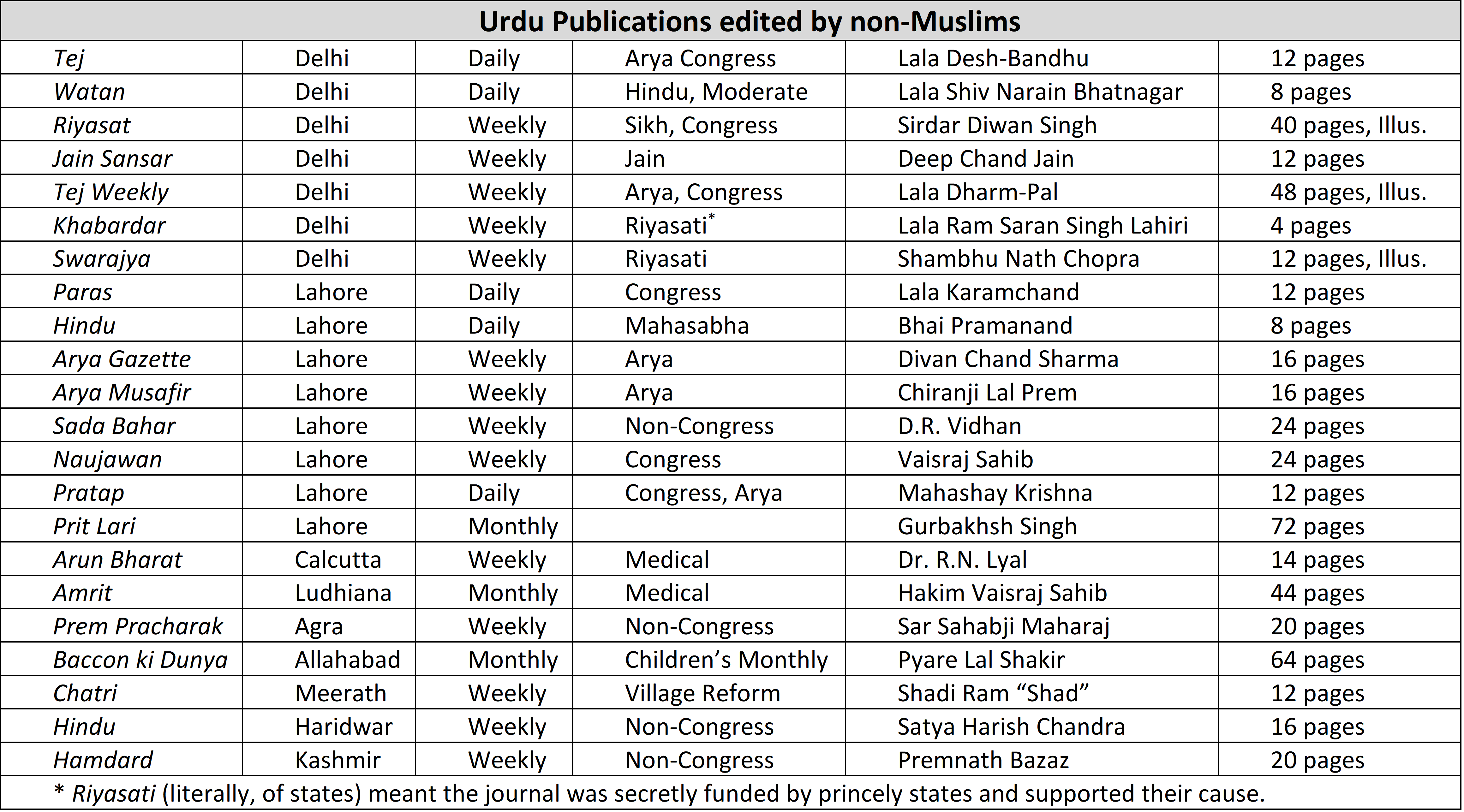
In 1937, in the Annual Number of his journal, he offered his readers a long list of the Urdu journals that came to his office every month, presumably in exchange for his own. Much to our benefit now, he also provided some information on each of them, including the names of their editors and his view of their politics. Of the 147 titles, 22 were edited by non-Muslims.
We see that no category was restricted in range. Jains and Sikhs, Arya Samaji Hindus and Sanatani Hindus, even Radha Swamis, all found it worth their while to publish their concerns and considerations in Urdu to reach a sizable portion of their respective faith communities. So was the case with political identity, where even the Hindu Mahasabha found it useful to make its views available, at least in Punjab, in Urdu. There are two “medical’ journals, indicating the extent to which Urdu was used by Punjabi practitioners of both the indigenous traditions, Ayurveda and the Greco-Arabic Tibb. Most of the journals on the list were seemingly flourishing and were of a respectable size and quality.
Nizami’s list is by no means exhaustive. It only tells us what he liked to get in exchange for his own magazine, which he described as “Islamic, Non-Congress.” I would interpret it as: concerned in particular with Islam and Muslims, not affiliated with any political party, and not disloyal to the colonial government. Despite being a prolific, almost compulsive, writer with an unmistakable stylistic charm, Nizami apparently received no Urdu literary magazine – not even Daya Narain Nigam’s Zamana (Kanpur), which was then in its 34th year of publication.
And though he received a few general magazines, including the newly started Musavvir (Bombay), a film plus literature magazine edited by none other than Saadat Hasan Manto, Nizami does not seem to have been getting Mast Qalandar, ‘Sufi’ Prithi Singh’s highly popular monthly, which was then in its 19th year. It boasted as its motto, Hindu hai ek ankh Musalman dusri – “The Hindu is one eye of India, the Muslim the other”, an image first made famous by Sir Syed Ahmad Khan (1817-1898) in a speech at Banaras when he was posted there as a judge (1867–1876). The magazine claimed to have “the largest net sales of any Urdu monthly printed in India”. It also looks like Nizami did not receive ‘Sufi’ Lachman Prashad’s Mastana Jogi, which was no less successful and had been going strong longer.
Nand Kishore Vikram was only 18 when his family left Rawalpindi for India. He followed an uncle to Kanpur and joined another budding journalist, a similar refugee, to bring out a semi-literary Urdu monthly.
Arguably, the entire non-Muslim population, young and old, that had been engaged in Urdu journalism and publishing in West Punjab fled to India in 1947. Some found permanent refuge in East Punjab, in places such as Amritsar, Ludhiana, and Jalandhar. The more notable went directly to Delhi, and took not long to get going again. The younger upcoming ones sought their fortunes further away.
Nand Kishore Vikram was only 18 when his family left Rawalpindi for India. He followed an uncle to Kanpur and joined another budding journalist, a similar refugee, to bring out a semi-literary Urdu monthly. The venture did not last long but it nevertheless settled his career choice. Moving to Delhi, he took up various jobs involving Urdu, and completed his formal education. Eventually, he worked for the Information Bureau of the Government of India and was for decades on the editorial staff of its Urdu monthly, Ajkal. Its editor was a senior émigré, Balmukund Arsh Malsiyani.
After retirement, Vikram began publishing a bi-annual literary journal of his own, Alami Adab, and also produced a torrent of translations in both Urdu and Hindi. I never met him but had a couple of long chats over the telephone a few years ago. On learning that he was compiling three separate lists of the non-Muslim writers of Urdu – Hindu, Sikh, and Christian – I asked him to share them with me, and he most graciously did. He was compiling them mostly from memory, having access only to the books and journals in his own library. Sadly, he passed away soon after. Abdur Rashid of Delhi and I hope to complete the work as best we can.
Vikram identifies for us 70 Sikh, 97 Christian, and 531 Hindu writers of Urdu prose and poetry, and makes a point of identifying the journalists. Christian names are more numerous because he may have had the benefit of two previous works – Ram Babu Saxsena’s European and Indo-European Poets of Urdu and Persian and D.A. Harrison Qurban’s Urdu Ke Masihi Shu’ra. To my knowledge, no similar work exists for the Sikhs, despite such prominent writers as Rajendra Singh Bedi, Kirtar Singh Duggal, Mahendra Singh Bedi ‘Sahar’, and Sampooran Singh Kalra ‘Gulzar’.
Two other reasons may also have contributed: the steely allegiance amongst the Sikhs to Punjabi and the Gurumukhi script, and a preference amongst the Sikh elite for advanced proficiency in Persian, the formal language of the Sikh Durbar, that ended only when the British took over in 1849 and literacy in Urdu became necessary for government jobs.
Maftun told his rags-to-riches story in a page-turner autobiography,’ Naqabil-i Faramosh’, which is as ‘unforgettable’ as its title proclaims. Intriguingly, another equally candid and thoughtful autobiography, Gyan Singh Shatir, subtitled “a biographical novel”, was also written by a Sikh.
Though not many took to Urdu journalism, at least one Sikh scribe, Sirdar Diwan Singh Maftun, made a lasting name for himself. His slick weekly, Riyasat, was for a couple of decades a dreaded scourge of the rajas and nawabs of India as it exposed their peccadilloes and serious crimes. Printed on fine paper, it regularly carried eight pages of pictures and cost four annas – a princely price in the 1920s. It was, however, so popular that even car dealers regularly advertised in it. (The one and only instance I know of in Urdu.)
Maftun told his rags-to-riches story in a page-turner autobiography, Naqabil-i Faramosh, which is as “unforgettable” as its title proclaims. Intriguingly, another equally candid and thoughtful autobiography – by Gyan Singh Shatir, subtitled “a biographical novel” – was also written by a Sikh. Both books deserve to reach new readers through English translations.
Among the 97 Christians, there are very few prose writers. But one name is very important historically. Yesudas Ram Chandra, better known as Master Ram Chandra, was orphaned at a very young age but with the support of his mother and sheer hard work he managed to finish his education at the old Delhi College, specialising in mathematics. He was then appointed to teach at the college. In 1853, when he was 32, he converted to Christianity. During his tenure at the college, he edited and published two journals, Fawa’id-ul Nazirin and Muhibb-i Hind.A useful account of his life and times is Sadiqur Rahman Kidwai’s Master Ram Chandra, published by the Department of Urdu of Delhi University in 1961.
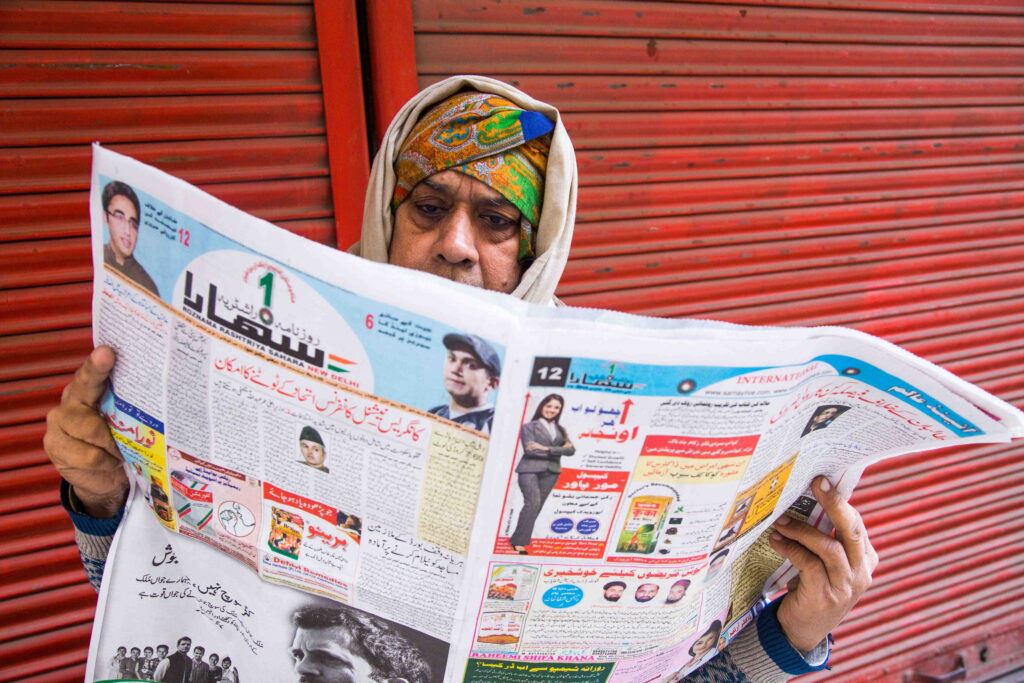
Reading an Urdu daily (Delhi) | Jeremy Graham/Alamy Stock Photo
The first Urdu journal published in Delhi is said to be Dahli Urdu Akhbar. Started in 1837; it was a joint project of a Muslim editor and a Kashmiri Hindu printer and publisher. In 1845, the newly appointed Swiss-German principal of the college, Dr Alois Sprenger, started Qiran-us Sa’dain, a weekly journal containing short essays on social issues, scientific news, and new technology, illustrated with line drawings. Its first editor was Dharma Narain Bhaskar, a “senior scholar” in English at the college. The earnest but preachy journal lasted 10 years, but chiefly on the subscriptions of colonial officers.
Ram Chandra’s first foray into journalism was Fawa’id-ul Nazirin (1845), a fortnightly inspired by Qiran-us Sa’dain, but more outspoken, wider in its range of social concerns, and allowing some space to contemporary Urdu and Persian poets. It regularly challenged the more conservative views of other Delhi papers, and at the height of its popularity had close to 200 subscribers – a notable readership, given that the earlier newspapers were not inexpensive.
Coming to Hindu writers, their sheer number on Vikram’s list sufficiently indicates how significant their role was in the development of Urdu literature.
Three years later, Ram Chandra started Muhibb-i Hind, a monthly of a similar nature. Unfortunately, both journals could not gain enough support from the elite of Delhi and were closed by 1852. A second Christian essayist-poet, Pyare Lal Shakir Merathi, gained prominence in the first half of the last century as the editor-publisher of a literary magazine, Al-’Asr. He also wrote much for younger readers, and several of his poems once had a place in school textbooks. (His short-lived magazine for children is on Nizami’s list.)
Coming to Hindu writers, their sheer number on Vikram’s list sufficiently indicates how significant their role was in the development of Urdu literature. That role becomes crucial when we consider just prose fiction. Nazir Ahmad may have written the first “novel” in Urdu, but the real foundation on which the edifice of Urdu fiction later arose was laid down by a Kashmiri Pundit, Ratan Nath Sarshar, whose episodic sagas were serialised in the pages of Awadh Akhbar, a famous weekly published by Munshi Newal Kishore.
The Urdu word for magazine is risala … a typical risala… normally carried in every issue two or three stories, a dozen pieces of poetry, three or four informative/topical articles, and some regular sections…
No doubt, Hindu journalists wrote in Urdu because it was their preferred means of considered expression, but they also wrote confident in the belief that a large Hindu readership, diverse in its literary tastes, political views, and social concerns, awaited them. (The diversity we glimpsed in Nizami’s categorisation.) There was also something else – a seemingly insatiable demand amongst Urdu readers in general for middlebrow writings, both fictional and factual, that had started in the 1880s and tapered off only after 1950. It gradually created a market for all sorts of magazines. (The first thing Vikram and his friend did after reaching Kanpur was to launch one.)
The Urdu word for magazine is risala (treatise; pamphlet; magazine), and a typical risala, unless further qualified as medical, sectarian, or religious, normally carried in every issue two or three stories, a dozen pieces of poetry, three or four informative/topical articles, and some regular sections, two or three pages each, devoted to “scientific discoveries,” “health news,” “films,” and “entertaining tidbits.” Editorial notes were a must in every issue. They established the tenor of the magazine and also gave it a human identity, to which readers could relate, adversely or in agreement, by submitting letters for the final must-have section: “Letters from Our Readers.”
A simple, all-purpose risala was meant for the whole family. Since some were quite inexpensive, a fairly large number of Urdu reading middle-class families bought one or two every month besides a daily newspaper. ‘Sufi’ Prithi Singh’s Mast Qalandar (Lahore; illustrated; multicolour cover; 90 pages) cost five rupees in 1947 for an annual subscription; “Maulana” Zafar Niyazi’s Kamyab (Delhi; monotone cover; 50 pages) cost only one rupee for 12 issues.
All major journalists, however, sooner or later ended up in Delhi, working for their original journals or for the Information Bureau and the Publications Division of the Government of India.
The large cohort of sharanarthi (refugee) journalists, forced in 1947 to abandon lives and careers in Lahore, Sialkot, Rawalpindi or Sargodha, lost little time in building new lives and careers in Delhi, Amritsar, Ludhiana and Jalandhar. The major publishing outfits already had their branch offices there; the minors took their chance wherever they could. All major journalists, however, sooner or later ended up in Delhi, working for their original journals or for the Information Bureau and the Publications Division of the Government of India.
The famous triad of Pratap, Milap, and Tej probably never lost a publication day. ‘Sufi’ Prithi Singh’s Mast Qalandar, ‘Sufi’ Lachhman Prashad’s Mastana Jogi, and (Ram Rakha Mal Chadda) Khushtar Garami’s Biswin Sadi – all three were perfect examples of a simple risala – were soon reaching the eager hands of thousands of their readers. The last named not only outlasted the two oldies, it grew to be the most popular Urdu risala in post-1947 India. (Two other hugely popular Urdu magazines, Sham’a and Jasusi Dunya, specialised in movies and crime fiction respectively.)
When these seniors left the scene, a younger generation that had come with them and, like them, favoured Urdu, took over. But Urdu’s fate was sealed relative to the very young ones. In economic importance, in Delhi and Uttar Pradesh, Hindi was second only to English, and the long communal tussle for power in Punjab, strategically disguised as a struggle for linguistic rights, made certain that there would be no third generation of Urdu-favouring journalists from amongst the Hindus.
It took six decades, but it happened. In the bicentenary year just ended, there was no major Urdu newspaper or magazine in India that was edited and published by a non-Muslim – and it has been the case for some time. One by one, they took their leave, the “Jolly Jogi” and the “Jolly Qalandar.” The great triad of Tej, Milap, and Pratap, my Delhi friends tell me, still exists but only online – none is seen on newsstands.
The situation, actually, is dire overall. Except for the ones published by a few information bureaus and academic or religious institutions, there is no independent Urdu magazine of any kind that comes out regularly or sells more than a few hundred copies. There is no risala now in Urdu that could claim to be read “in every home and by all members of the household.”
Urdu poetry recitals (musha’ira) may still bring out some enthusiastic non-Muslim participants and connoisseurs, but the prose pages of Urdu newspapers and magazines are starkly devoid of them.
Even the long series of exclusively literary (adbi) monthlies that began with Shaikh Abdul Qadir’s Makhzan (Lahore) in 1901, and continued through Mian Bashir Ahmad’s Humayun (Lahore), Daya Narain Nigam’s Zamana (Kanpur), Shahid Ahmad’s Saqi (Delhi), Ejaz Siddiqui’s Sha’ir (Mumbai), Gopal Mittal’s Tehrik (Delhi), and Abid Suhail’s Kitab (Lucknow), ended with Shamsur Rahman Faruqi’s Shabkhoon (Allahabad) in 2006.
When we turn our gaze away from journalism and take note of the larger literary scene in the 21st century, we see that a much greater and quiet tragedy. There is not a single non-Muslim essayist, literary critic, literary researcher, or fiction writer of significance in Urdu. Urdu poetry recitals (musha’ira) may still bring out some enthusiastic non-Muslim participants and connoisseurs, but the prose pages of Urdu newspapers and magazines are starkly devoid of them.
The present generation of Hindus in north India may well produce some interesting Urdu poets down the line, the likes of Bani, Kumar Pashi, or Manmohan Talkh, but it is certain that we may have to wait a long time for another Joginder Pal, Surendra Prakash, Ram Lal or Balraj Mainra. How this happened, and what it means for Urdu language and literature in India is, of course, a separate sad tale.
This article is dedicated to Nand Kishore Vikram.
C.M. Naim is professor emeritus of South Asian languages and civilizations, University of Chicago. His recent book A Most Noble Life (Orient Blackswan, 2021) is about two remarkable Muslim women of the 19th century.
source: http://www.theindiaforum.in / The India Forum / Home> Culture / by C.M. Naim / February 01st, 2023
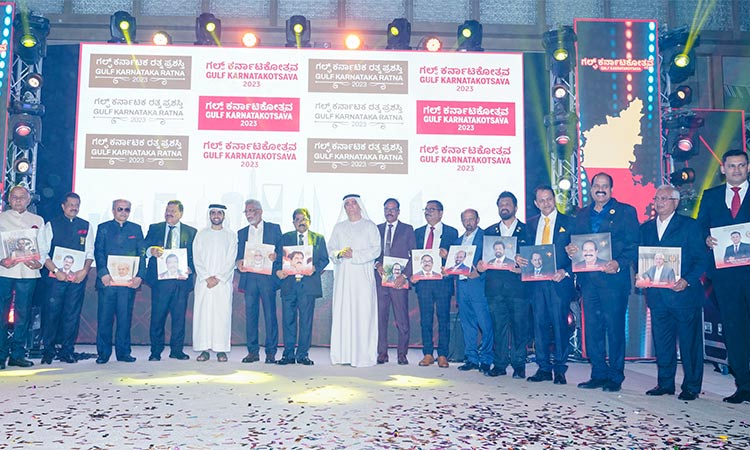
The distinguished honorees pose for a group photo during the mega event in Dubai.
The Gulf Karnatakotsava, an event dedicated to honouring the outstanding contributions and work of Karnataka-origin business icons in the Gulf region, concluded on a grand note.
The mega event marked a significant milestone as it paid tribute to a total of 21 exemplary ‘Most Influential Business individuals’.
These distinguished honorees, recognised as ‘Gulf Karnataka Ratna,’ received their recognition from the esteemed Chief Guest, Sheikh Mohammed Maktoum Juma Al Maktoum, a Member of the Royal Family of Dubai and the Chairman of MBM Group. The heart of this momentous event was a coffee table book launch, capturing their achievements and dedication to both the Gulf nations and their home state of Karnataka.
The Gulf Karnatakotsava was a resounding success, drawing more than 1000 attendees from all walks of life and capturing the essence of Karnataka’s rich culture, heritage, and business prowess. The event served as a platform to acknowledge and celebrate the remarkable success stories of these individuals who have made a significant impact on the economic and social fabric of both the Gulf countries and Karnataka.
The highlight of the event was the felicitation of the 21 distinguished individuals who were honoured as ‘Gulf Karnataka Ratna Awards.’ These business icons, representing the most influential and powerful leaders from a wide array of industries, who have achieved tremendous success but have also contributed significantly to the welfare of their communities and the betterment of Karnataka.
The list of notable icons featured in the coffee table book and ‘Gulf Karnataka Ratna 2023’ awardees included Dr. Thumbay Moideen, emerging as the number one contributor in Medical Education and Healthcare sector of UAE. Notably he’s the only businessman from Karnataka who holds the distinction of being world’s only businessman from Karnataka to own a private medical University outside of India, the leader in healthcare and medical education in UAE.
Other awardees included: Hidayatullah Abbas, Founder & Chairman, Hidayath Group; Mohammed Meeran, Chairman of EMCO International and Electric Way; James Mendonca, Founder & Chairman, Reliable Group of Companies; Nissar Ahmed, Chairman, Nash Engineering; Ramchandra Hegde, Managing Director, Spraytek Coatings; Joseph Mathias, Managing Director, Merit Freight Systems; Vasudeva Bhat Puthige, Owner, Venus Group of Restaurants; Mohammed Naveed Magundi, Intignis Naveed Company; Mansoor Ahmed, Chairman, Saara Group; M. Syed Khalil, Founder Chairman, K&K Enterprises; Michael D’Souza, Managing Director, Ivory Grand Real Estate; Ibrahim Gadiyar, Managing Director – Gadiyar Group of Companies and Director Projects – Pantheon Development Group; Dr. B.K Yousuf, Executive Chairman, Air Chateau International; Dr. Sathish P Chandra, CEO, Global Tech Park; Zafrullah Khan Mandya Chairman and Founder, ZGC Global / Zain Group of Hotels; Devid Frank Fernandes, Chancellor General MEA, Peace Ambassador & Chief of Mission (UAE) ICDRHRP IGO, Martin Aranha, Managing Director, Globelink West Star Shipping, John Sunil, Group Chief Executive Officer, Burjeel Holdings, Mohammed Ashif, Co-president and CEO, Expertise contracting and Ravi Shetty, Managing Director, Advanced Technical Services. Their stories of perseverance, innovation, and commitment to excellence served as an inspiration to all attendees.
The Gulf Karnatakotsava was not just about awards and accolades; it was a true celebration of Karnataka’s vibrant culture and artistic heritage. The event featured a captivating blend of cultural performances, musical concerts, and comedy acts that left the audience enthralled. Traditional dances such as Pili Vesha were showcased, transporting the audience to the heart of Karnataka.
Hidayathullah Abbas, Founder and Chairman, Hidayath Group told Gulf Today that he is honoured to have been recognised at this Gulfkarnatakotsava platform, alongside so many accomplished individuals who share a connection with Karnataka and have made remarkable contributions in the Gulf.
“The Gulf Karnataka Ratna Awards event celebrates our shared heritage and showcases the incredible achievements that have taken shape from this cultural bridge.”
“The launch of the coffee table book emphasizes the stories, journeys, and legacies of Karnataka’s business icons in the Gulf. It serves as a testament to the entrepreneurial spirit of our community and the lasting impact we’ve made across industries and borders. I hope that these stories inspire future generations to continue the legacy of excellence and compassion that our community represents.” Abbas added.
The musical segment of the event witnessed renowned artists and musicians such as, Santosh Venky, Guru Kiran and noted playback singer Chaitra HG, was a testament to the harmonious coexistence of cultures and the bond between Karnataka and the Gulf countries.
Comedy, often regarded as the universal language of laughter, also played a pivotal role in the event. Comedian Kannada actors Prakash Thuminad and Deepak Rai Panaje had the audience in splits, providing moments of pure joy and amusement amidst the grandeur of the evening.
The Gulf Karnatakotsava was a celebration of success and a testament to the strong ties between Karnataka and the Gulf countries. It highlighted the importance of recognizing and honoring the contributions of individuals who have bridged the gap between these two regions, fostering cultural exchange, economic growth, and mutual understanding. As the curtains closed on the Gulf Karnatakotsava, it left behind a legacy of inspiration and pride. The ‘Gulf Karnataka Ratna’ awardees serve as an encouragement for aspiring entrepreneurs and a reminder that Karnataka’s heritage and success stories continue to shine on the global stage.
source: http://www.gulftoday.ae / Gulf Today / Home> Business / by Inayat-Ur-Rahman, Business Editor / September 11th, 2023
Chronogram is an ancient art. On the tombstone, along with the person’s information, the poetry is inscribed and the last couplet or line has a numerical value as per the ‘Abjad’ system that represents the date or year of death. Poets like Dr. Makhmoor, who can compose chronograms or write ‘Qita-e-Tareekh’ are few.
Dr Makhmoor Kakorvi and Chronogram: The poet of Kakori, who keeps alive the ancient art
Lucknow:
One would be surprised to see the passion of poet Makhmoor Kakorvi, who has several books to his credit, is quite often seen visiting graveyards and hospices, dargahs and mazaars.
He started the mission to collect all the ‘chronograms’ on epitaphs in Kakori, one of the most important towns of North India that is known for its litterateurs and writers apart from Sufis.
The master poets who have absolute command over language are able to write poetry in the manner that their numerical value, either of the stanza or a phrase, comes out as the year of a person’s demise. This art is termed ‘Tareekh-Goi.’
It’s an ancient art and such skilled poets who can compose chronograms or write ‘Qita-e-Tareekh’ are few. On the tombstone, along with the person’s information, the poetry is inscribed and the last couplet or line has a numerical value as per the ‘Abjad’ system that represents the date or year of death.
And, this mathematical equation is also engraved, often, on the tombstone’s plaque. In an era when people are no longer able to compose poetry in meters and as per traditional and hard standards of prosody, it is even more difficult to find someone who writes chronograms.
But till a few decades ago, it was common. When Makhmoor began registering the long verses and couplets carrying the chronogram on the epitaphs, he found that there were not a few but dozens of senior poets who had composed them over the last three centuries in Kakori.
In a town that has a population of barely 22,000 but has a history of producing one of the biggest Urdu dictionaries—Noor-ul-Lughaat, as well as being home to writers and poets of the calibre of Shah Turab Ali Qalandar, Mohsin Kakorvi, Furqat Kakorvi and scores of others, Makhmoor found that poets with the ability to write chronograms were exceptional, in fact, too many poets who were perfect in this art in Kakori in the past.
“I would go to the graves, clean the plaque and then try to decipher the verses. The last line or stanza or phrase is the poetic chronogram. I found more than 60 different poets who had written chronograms in Kakori alone. Many of them were poets of such stature and command over language that is not seen anymore.
Some of them wrote many chronograms and the terms used are fascinating as well as a reflection of their mastery over Urdu poetry”, says Makhmoor Kakorvi, who is also a poet and has also written chronograms. He is, perhaps, the only person who can pen it, in the town now. However, he hopes to compile all these couplets and information about these poets of yore in the form of a book.
source: http://www.enewsroom.in / eNewsRoom / Home> Audio-Video> Top Stories / by Shams Ur Rehman Alavi / December 07th, 2022

:focal(5160x3330:5161x3331)/https://tf-cmsv2-smithsonianmag-media.s3.amazonaws.com/filer/0c/d1/0cd129c2-7c42-455e-8e45-6ae7b7da7fce/dec2019_d01_prologue.jpg)