Category Archives: Books (incl.Biographies – w.e.f.01 jan 2018 )

Science made easy

INDIA:

Bal Sahitya Puruskar winner M Khalil | Photo Credit: SOMA BASU

Taking science in Urdu to children is a mission close to the heart of Mohammed Khalil

For years Mohammed Khalil, a veteran writer for children, has written about science and penned essays and stories around 80 scientists during his long fulfilling career. Now he takes science to Urdu-speaking children and the effort has won him the Bal Sahitya Akademi Puraskar for his work, Science ke Dilchasp Mazameen, just before the pandemic.

“Besides the award, the love and recognition of my peers is my greatest reward. I feel happy that my colleagues and friends remembered me. I recall the Urdu magazine Khilona. At one time, I used to read it and also write exclusively for them, contributing essays and stories for children. The Bal Sahitya award has re-energised me as a writer and gives me a new zest to carry on with my work. I have always desired that more children take to science and I am thrilled that my writings on science have clicked with them, “ says Delhi-based Khalil.

Khalil is a widely published author with 15 books in Urdu and a couple of books in Hindi. “It is important to interact with the young generation in the language they are comfortable in. Long ago, when I published Science ki Duniya’s special edition on Dr CV Raman, it was widely praised. Now, I want to communicate with children through short stories based on scientific facts so that their mind develops a scientific bent. The next generation should understand scientific principles and more women also should take to science, he says.”

Khalil was associated with the Council of Scientific and Industrial Research and edited their magazine Science ki Duniya . Some of his widely appreciated works include Ajeeb aur Ghareeb JanwarScience Aur Hum, Nehru Aur Science, Dr CV Raman: Ek Azeem Sciencedaan and Chachajaan ki Scienci Kahaniyan.

A popular speaker in Urdu medium schools, he has been widely felicitated as he is among the first writers to talk of science in Urdu. Happy to dispel the false belief of Urdu being only a language of poetry and novels, Khalil has brought the language into the domain of science laboratories. The awards have come thick and steady. For instance, he won the NCERT’s national award besides numerous awards from the Delhi Urdu Akademi, West Bengal Urdu Akademi, Sir Syed and Vigyan Bharat award, etc. In fact, his mantelpiece is replete with awards of recognition and appreciation. With the Sahitya Akademi award, his cup of joy brims over. Yet he adds, “The biggest joy is to see a child taking to science in Urdu.”

source: http://www.thehindu.com / The Hindu / Home> Sci-Tech> Science / by Ziya Us Salam / August 19th, 2022

The Shama affair worth remembering

INDIA:

Raj Kapoor with the editor Yunus Dehlvi | Photo Credit: Special Arrangement

How the Urdu magazine Shama peaked to popularity and disappeared

In the years gone by, the fountain at the Fawwara intersection in Chandni Chowk seldom worked. Yet, few complained. Most people came to Fawwara for their daily news, for here sat a newspaper seller who sold practically every language newspaper in the country.

Besides English, Hindi and Urdu dailies, one could get Punjabi, Marathi and Bengali papers too. He did not sell many magazines, the sole exception being Shama, the Urdu monthly that presented a heady cocktail of Urdu literature, Indian culture and Hindi cinema. Shama, like water, charted its own course.

Founded by Yusuf Dehlvi in 1939, some bought Shama to read Urdu writers. The who’s who of Urdu litterateurs, including Rajinder Singh Bedi, Sahir Ludhianvi, Saadat Hasan Manto, Ismat Chughtai and Qurratulain Hyder, graced its pages. There were pieces by connoisseurs of Indian culture as well, talking of traditions, little and large, and values, shifting or timeless.

Shama was appreciated in literary circles at a time when Delhi had a lively literary circuit with its mushairas, book readings, debates and even street theatre. Yet it would have remained a niche publication but for a couple of masterstrokes by Yusuf Dehlvi’s sons – the widely read Yunus Dehlvi and the widely popular Idrees Dehlvi – who turned what was otherwise a haloed literary publication into a family magazine.

Literary love 1960 cover of Shama and editor of the Urdu magazine  | Photo Credit: Special Arrangement

Idrees had strong film connections. In a column he wrote under the pen name of Musafir, he talked of little things in the life of film stars: the films they signed, the films they opted out of, the flops they gave or the jubilee hits they notched up. He talked too of their relationships, their moments of stolen pleasure. He backed it all up with photographs of film shooting, movie storylines and lyrics of popular songs.

Readers lapped it up. Within no time, fans of Meena Kumari and Madhubala, Sadhana and Sharmila Tagore, Sridevi and Jayaprada started collecting the photos of their matinee idols.

Emboldened by the success, Shama started its own annual film awards with a graceful function at Ashok hotel’s convention hall. Soon, the biggest stars of Hindi cinema started frequenting Shama Kothi on Sardar Patel Marg in New Delhi, the residence of the Dehlvis named after the magazine. From Dilip Kumar and Sunil Dutt to Dev Anand, Rajendra Kumar, Rajesh Khanna and Dharmendra, they would all come over.

The rise and fall of Shama Shashi Kapoor and Sadia Dehlvi | Photo Credit: Special Arrangement

Once, as Vaseem Dehlavi, son of Yunus, recalls, “Sunil Dutt and Sanjay came shortly after Nargis Dutt had passed away to share their sorrow.” Often, the staff photographer of Shama clicked the pictures of stars here. They were then shared with readers as exclusive photos.

From predominantly abstract illustrations and photographs in the 40s, Shama by the 60s started having film stars on the cover. There were also film quizzes where a hundred cassettes of a new film’s songs were given away as prizes in the 70s and 80s. Every issue sold at least a lakh copies. People went to newspaper stalls to pick up their copy if their vendor delayed in delivering it at their house.

Crossword craze

The other big push was given by Yunus Dehlvi who had joined his father at the magazine as a young boy of 14-15. He started an Adabi Muamma (loosely culture crossword). It was in many ways the first such venture in an Urdu magazine. Men with pretensions to knowledge of varied kind were so hooked to Adabi Muamma that the magazine started getting lakhs of replies to every crossword. They all vied to win the two kilogram of gold bumper prize every month in the 80s.

As Vaseem Dehlavi reveals, “It was a completely honest exercise. When my father started putting the muamma together, he would lock himself in a room for two days and not allow any family member to come in.”

The rise and fall of Shama The magazine crossword | Photo Credit: Special Arrangement

The newspaper sellers matched its huge popularity with their innovation. They started selling forms for the puzzle and photostat copies of the original crossword separately. There was a time in the 70s and 80s when the magazine’s cover price was ₹5 but the photocopies of the muamma were sold separately by some vendors for ₹10!

There was a pickle seller in Old Delhi who made hay while Shama shined. He started selling the muamma, besides his pickle delicacies. Then there was a bookseller at Nai Sarak who mixed books with the puzzle. Children came for books, their parents for the puzzle. “We used to get at least 2 lakh responses to each muamma. If more than one person got the answer right, the prize money was shared between them. If in some issue, nobody got the right answer, it was carried over to the next issue. The prize money for the following month was added to it. There was that level of integrity to the whole issue,” says Vaseem Dehlavi, who is now based in Mumbai.

All good things, however, do come to an end. By the 90s, Urdu was no longer as popular a language. And the internet provided access to films. The heady days of longing for photographs and interviews of film stars are consigned to history. Add to that the crests and troughs of the family business. By December 1999, Shama, meaning candle flame, was extinguished, leaving many a parvana (moth) with happy memories of the years gone by.

source: http://www.thehindu.com / The Hindu / Home> Books / by Ziya Us Salam / July 22nd, 2022

Of a female knight and the Begums of Bhopal

Bhopal, MADHYA PRADESH :

The Moti Masjid in Bhopal. | Photo Credit: FARUQUI A. M.

Tracing the history of a city where four Muslim women ruled for over 107 years  

As the capital of one of the largest States, Bhopal has flown under the radar. It has little of the financial muscle associated with Mumbai, even less historicity to rival that of Kolkata. It has neither the earthiness of Patna nor the niceties of Lucknow. Yet, Bhopal in its own understated way has enough accomplishments to fill up a mantelpiece.

Among all the States, cities and towns of imperial and modern India, Bhopal has done more for women empowerment than probably all States put together. True, back in the 13th century Delhi had a woman ruler, Raziya Sultan, who ruled from 1236 to 1240, but little else.

Bhopal has been ruled by four Muslim women for 107 years. The Begums of Bhopal did not shy away from calling themselves the Nawabs of Bhopal.

Shaharyar Khan, Shobhan Lambert-Hurley and Vertul Singh have authored or edited books on the city, which on the one hand capture its history, and on the other reveal the streak of women dominance for more than a hundred years.

pix: bloomsbury.com

Khan’s The Begums of Bhopal is the most detailed work. Like an artist fills his canvas with colour, Khan fills his pages with details of the city, its illustrious history, and its formidable Begums, now reduced to a faint memory. Khan’s Bhopal was founded by Dost Mohammed Khan. As the author reminds us, “In 1707, before Dost Mohammed Khan arrived in Malwa, central India, Bhopal was a small village on the banks of the River Banganga. An old fort, lying in ruins, was a testimony to Bhopal having known more prosperous times in the distant past.”

Tales of Bhojpal

The earliest reference to Bhopal though dates back to 640 AD when it was ruled by the Parmar dynasty. Its name is derived from that of Raja Bhoj who, as legend has it, contracted leprosy and was advised to build a lake with water from 365 rivers and bathe in it. Raja Bhoj did as advised. The lake was called Bhoj Tal (or Bhoj’s lake). Over time, it got corrupted to Bhojpal, then Bhopal.

The State was formed in 1715. It was the second largest Muslim princely state in pre-Independence India, wherein 90% of the population was Hindu. Interestingly, the Begum of Bhopal, Nawab Sikandar Begum, as Lambert-Hurley writes in the introduction to A Princess’s Pilgrimage, supported the British during the Revolt of 1857.

After the Revolt had been suppressed, this loyalty was rewarded in the Queen’s Proclamation of 1858 in which Sikandar was granted the title of Nawab to rule over Bhopal in her own right as well as given a 19-gun salute, the return of territory lost to a neighbouring prince and the Grand Cross of the Star of India. “This honour made her, at the time, the only female knight in the British Empire besides Queen Victoria, a position that underlines her unique status, as well as her close relationship with the British,” writes Lambert-Hurley.

The story of Bhopal though began not with Sikandar Begum’s rise or the reign of her mother Qudsia Begum or her own daughter Shah Jahan Begum, but with an intrepid young man called Dost Mohammed Khan. As Shaharyar Khan writes, “The story of Bhopal begins with Sardar Dost Mohammad Khan, founder of the state and of the Bhopal dynasty. Born in 1672, Dost was a strapping, handsome, brash and ambitious young man. Like all Pathan noblemen, he had been brought up in the warrior tradition of his clan…Dost’s only ambition was to enlist in Aurangzeb’s army and make his future in the service of the Mughal Empire. Around 1697, Dost was in his mid-20s and a brash, dare-devil, buccaneer of a character. He was restless and ready to seek his fortune by crossing the Khyber Pass into India.” Head to India he did, but it was far from an easy ride.

As he traversed through Jalalabad, Karnal and Delhi, on more than one occasion, he almost kissed death, but he proved a survivor, qualities which came in handy when he got to play a pivotal role in Bhopal.

Though he arrived in Bhopal practically a brigand, he worked his way up, working with a number of local kingdoms and fiefdoms — Rani Kamlapati is said to have sought his protection after the death of her husband Nizam Shah and even tied a rakhi on his hand.

He built the famous Fatehgarh Fort in 1716, including the famous Dhai Seedi ki Masjid, as Vertul Singh writes in BhopalNama: Writing a City. Incidentally, Fatehgarh was probably named after Fateh Bibi, a Rajput princess he married. Fateh was no ordinary woman; she paid ransom for her husband’s release when he was held captive by his own troops in Gujarat, Singh writes.

Khans to Begums

How did Bhopal transition from the Khans to Begums? After Khan’s death, Bhopal was attacked by many mercenaries when Mamola Bai, said by some to be the first Begum, took the help of British General Goddard to repel such forces. Then came Qudsia Begum whose perseverance and wisdom saved the “state from being gobbled up by the Scindias and the Bhonsles”, as Singh states. Her daughter Sikandar took statecraft to another level. Sikandar’s daughter Shah Jahan Begum added fine touches of poetry, art, music to turn Bhopal into a throbbing centre of the arts. Yet, the most maternal approach towards the subjects was displayed by the fourth Nawab, Sultan Jahan, known for administrative reforms, including several measures for the welfare of her subjects. So much so that she came to be addressed as Sarkar Amma.

This succession of matrilineal rulers gave Bhopal a unique identity. They did what a man could never have dreamt of.

For instance, Sultan Shah Jahan Begum initiated the building of a hospital exclusively for women, with women doctors, nurses and other staff. The facility came to be known as Sultania Zenana Hospital.

Likewise Sikandar Begum started the practice of schools for girls, inviting scholars from Yemen, Turkey and Arabia.

Incidentally, she penned her own experience of Hajj to Mecca and Medina in ‘A Pilgrimage to Mecca’ which now forms part of Lambert-Hurley’s A Princess’s Pilgrimage. Sikandar Begum’s was no ordinary trip as Hajj those days was a life-challenging exercise with possibilities of being robbed, injured or killed by marauders along the way.

After Sikandar, Sultan Jahan concentrated on girls’ education. As Singh writes, “Sultan Jahan’s contribution to women’s education is in no way lesser than that of Sir Syed Ahmed Khan.”

Incidentally, she was the only woman chancellor of Mohammedan Anglo-Oriental College which was to become the Aligarh Muslim University.

All the Begums worked well and lived long. Once, all the four queens of Bhopal were alive at the same time with Qudsia living to breathe alongside three of her successors. That’s an interesting footnote in the history of a city where male heirs have been few and far between. Their absence was seldom felt.

source: http://www.thehindu.com / Hindu / Home> Books / by Ziya Us Salam / book cover pix: by bloomsbury.com / September 12th, 2022

Arif Mohammed Khan | His own man

Bulandshahr, UTTAR PRADESH:

The Kerala Governor is in the midst of a controversy after he launched an attack on the State government in a press conference 

What’s unfolding now in Kerala is merely the latest episode in Arif Mohammed Khan’s lifelong story of being his own man, whatever the stakes, whichever the stage. Often loathed, sometimes loved but hard to ignore, Mr. Khan was that way when he entered student politics in Aligarh Muslim University (AMU) in the early 1970s and rose to be the president of the students union. It wasn’t any different when he became an MLA in 1977, aged 26. Or a Minister of State during the Rajiv Gandhi Government. It is scarcely any different now when he is into his 70s and occupies the august, if increasingly controversial, office of the Governor of Kerala. He is his own man.

Another matter not everyone shares his view of what’s right. Least of all Kerala Chief Minister Pinarayi Vijayan. There is little, if any, love lost between the two. There is a reason: Mr. Khan has been publicly critical of the appointment of Mr. Vijayan’s private secretary’s wife as an Associate professor in Kannur University, where Mr. Khan is the Chancellor. So upset was Mr. Khan that casting custom aside, he called a press conference at Raj Bhawan where he fumed against the elected LDF government.

Unsurprisingly, the LDF government can barely stand him today. It is unlikely to worry Mr. Khan a bit. He is known to express himself even at the risk of social opprobrium. His old friends in AMU and Jamia Millia Islamia, where the Bulandshahr-born young man sought education, remember him as a frank and fearless person who was reasonable and open to debate. He is said to have been a good host who loved his Mughlai food and served it with relish to his guests. Today, they are both surprised and a shade speechless at the ideological and political vicissitudes in Mr. Khan’s life.

Indeed, what is happening today in Kerala is not without precedence in Mr. Khan’s multi-layered career which has seen him making pit stops over the Bharatiya Kranti Dal (the predecessor of Rashtriya Lok Dal), the Congress, the Janata Dal, the Bahujan Samaj Party before finally finding a bit of an echo to his views in the BJP. His stint in Kerala, his vehement opposition to noted Marxist historian Irfan Habib and constant run-ins with the Kerala Chief Minister are all attributed to his saffron leaning. Never mind the fact that he has won elections, notably from Kanpur and Bahraich on the tickets of non-BJP parties and has lost elections, as in Kaiserganj, on the BJP ticket in 2004.

Clash with clerics

Back in the mid-1980s, a section of Muslim clerics had no love lost for him at the height of the Shah Bano controversy when he risked it all in opposing Prime Minister Rajiv Gandhi’s move to virtually overturn the Supreme Court verdict on maintenance to divorced Muslim women.

Faced with calls for social boycott and possibility of political oblivion, Mr. Khan did not equivocate then. He is not likely do that now too.

Mr. Khan is a redoubtable scholar of Islam with a uniquely his own interpretation of religion. One could question his interpretation of scripture, not his facts. Equally, unlike many clerics, he is open to being corrected. Faizur Rehman, an independent Chennai-based Islamic scholar himself, at one time agreed with him on the Shah Bano case, but later made his disapproval known when Mr. Khan supported the criminalisation of triple talaq following the Shayara Bano verdict. “Our friendship was not affected by my criticism of his views on criminalisation of talaq,” Mr. Rehman recalls.

One may disagree with Mr. Khan but there is merit in listening to him, even if he himself could do with being a better listener. In the Shah Bano case, the Muslim clerics had agreed for the husbands to pay a substantial one time alimony to a divorced wife. They later retracted. If the maulanas had listened to him then, India’s political trajectory would have been very different.

As for Mr. Khan, he would do well to remember the letter of the rule book he quotes against the Kerala government expects a certain spirit, a certain decorum from the Governor too. It’s time to listen to Mr. Khan as much as for him to listen to voices of constitutional propriety.

source: http://www.thehindu.com / The Hindu / Home> News> India / by Ziya Us Salam / September 25th, 2022

Scrap dealer creates library of over 2,000 books found in trash

Hoovakuvakallu (Belepuni Village, Bantwal ),Mangaluru, KARNATAKA :

Mangaluru : 

Ismail Kannathur (50) is the finest epitome in the society who has proven that being not educated is not a curse, but there is a scope to share knowledge.

Ismail, a scrap dealer by profession, has a collection of over 2,000 books at his residence. He runs a scrap shop at Hoovakuvakallu in Balepuni village in Bantwal. Ismail is not well-educated and studied only up to the first standard. But, he knows the importance of education and knowledge. Knowing the importance of books, Ismail has built a small library at his residence. He has been in the scrap dealing business for 25 years. When he gets good books in his business, he collects and preserves them. Initially, Ismail was a fruit vendor, but due to his helping nature, his business incurred loss. Later, he turned into a scrap dealer as per the suggestion of one of his friends. In the beginning, though he had no experience in scrap dealing, later through hard work, he gained experience.

Ismail is an active social worker. He has helped several people in distress. Whenever an accident occurs in the vicinity, Ismail has rushed several victims to the hospital. Moreover, he has helped poor girls in their marriage by raising funds.

Speaking to daijiworld.com, Ismail said, “I have collected several good books. My intention is to set up this library. I am not educated, but let others be educated by reading books. In the past, I have given over 2,000 books to several people. Some take it by paying a small amount, and though I refuse, they thrust a few currency notes into my shirt pocket. But, many take books free of cost. Some teachers and students also take books from me. As I am not well-educated, I have educated my five children.”

He also said that a person had motivated him to set up a library with the books available.

Ismail has arranged books on wooden shelves at his residence. The public can borrow them.

Ismail is also known as ‘Gandhi’ for his social service. He has been felicitated by many organizations and institutions for his active cleanliness drive. Ismail, for several years, has been involved in the cleanliness drive in the locality. He has helped several poor and downtrodden people. Ismail also actively works for various social causes including helping the police department in tracing thieves who rob offering boxes of temples and masjids.

source: http://www.daijiworld.com / DaijiWorld.com / Home> Top Stories / by Deekshith DV / by Daijiworld Media Network – Mangaluru / September 22nd, 2022

Review of The Dreams of a Mappila Girl — A Memoir: Growing up in a Mappila joint family in Kerala of the 1950s

KERALA :

The socio-cultural landscape of Kerala is also explored in this book with references to myths and legends.

Writer B.M. Zuhara’s early years, spent in a large ancestral home at Tikkodi near Calicut, are brought alive in her evocative memoir

When the writer B.M. Zuhara was little she had three nicknames, Tarkakozhi (because she asked too many questions), Karachapetti (for bursting into tears often) and her favourite, Ummakutty (mother’s darling). She grew up in Tikkodi, near Calicut, at her ancestral home, Kizhekke Maliyakkal, which does not exist anymore. In her memoir,  The Dreams of a Mappila Girl, translated into English by Fehmida Zakeer, she provides a fascinating glimpse into the lives of Malayali Muslims in the 1950s and ’60s.

Born in an aristocratic Mappila family, Zuhara, a well-known novelist and columnist, weaves a magical narrative about her growing up years in northern Kerala. Muslims of the Malabar region of Kerala are called Mappilas. They had trading relationships with Arabs for centuries, and embraced Islam as early as the 7th century. Their unique culture is a fusion of local customs and the Islamic value system.

Ties that bind

Much of the memoir explores Zuhara’s relationship with her loving (but firm) mother and the author’s emotional attachment to her ancestral home. Being the youngest child, she was very close to her mother, and that relationship lasted till her Umma passed away. In the preface, the author declares that her life has always revolved around her Umma, who had seen her family’s wealth decline.

Her mother was deeply concerned about her children, Zuhara says. “Even though Umma was born in an aristocratic family and had lived a privileged life, she had to endure many hardships. Umma’s sadness at the reversal of the family’s fortunes often laced her words. However, she always made sure that her children had a secure and comfortable life.”

Despite having studied only up to the fourth standard, her Umma was a great reader. She managed to find the time to read and learn the  Koran and the  Hadith while raising 10 children. Umma was an excellent storyteller, and Zuhara says her mother’s enchanting tales of ordinary events inspired her to write when she grew up.

One of the reasons for her closeness to her mother was the near absence of her father in her life. Her Uppa and her maternal grandfather, Valiappa, were not on good terms. They were fighting many court cases against each other over property. Since her mother and she lived in Valiappa’s house, her Uppa visited them occasionally. Her grandfather, however, pampered her a lot as she was his favourite child’s daughter.

Beyond these familial ties, the book also chronicles the quotidian struggles and challenges of a Muslim girl in post-independent India. How the conservative mores of that time created hurdles in the way of leading a normal life for girls like Zuhara. For example, while watching her father and her brother practise  kalaripayattu, she yearned to learn this ancient martial art but couldn’t because she was a girl. Later, when she started writing and became the first Muslim woman writer in Malayalam, she faced a lot of criticism and had to be careful with her words. She took time to tell honest stories about Mappila women, their dreams and aspirations. And, finally, she carved out a niche in the world of Malayalam literature.

The socio-cultural landscape of Kerala is also explored in this book with references to myths and legends like Unniarcha, a mythological warrior woman celebrated for her fearlessness, immortalised in the  vadakkan paatu, the ballads of the region. There are descriptions of local foods, customs and traditions, some of them gone forever.

Being a successful fiction writer, Zuhara uses the literary tropes of the genre to make her memoir engaging. Memories can play tricks, but her narrative evocatively captures a lost era. Every character is dealt with sensitively, making them come alive on the pages.

The translator, Fehmida Zakeer, who also comes from the same Mappila background, has done an excellent job while rendering this memoir into English. The aroma of Kerala spices and the fragrance of screwpine waft through the pages. She effectively uses kinship terms in Malayalam giving the prose a distinct ethnic flavour. In a nutshell, the book deserves your attention.

The Dreams of a Mappila Girl: A Memoir; B.M. Zuhara, translated by Fehmida Zakeer, Sage Publications, ₹550.

The reviewer is the author of Patna Blues , which has been translated into 10 languages.

source: http://www.thehindu.com / The Hindu / Home> Books> Reviews / by Abdullah Khan / September 16th, 2022

Rare manuscripts at Telangana institute to get new life with Iran’s help

Hyderabad, TELANGANA :

Telangana and Iran entered for the repair, conservation, digitalization and cataloguing of Urdu and Persian historical manuscripts and documents.

Hyderabad: 

The Telangana State Archives and Research Institute on Wednesday entered into a Memorandum of Understanding (MoU) with Noor International Microfilm Centre, Culture House of the Islamic Republic of Iran, New Delhi for the repair, conservation, digitalization and cataloguing of Urdu and Persian historical manuscripts and documents, a common heritage between India and Iran.

The Telangana State Archives and Research Institute has a collection of rare and historical records dating back to 1406 A.D. pertaining to the Bahmani, Qutb Shahi, Adil Shahi and Mughal dynasties that ruled over the region.

The Institute houses more than 43 million documents, of which eighty percent of the records are in the classical Persian and Urdu languages owing to them being the official languages of the erstwhile dynasties of the Hyderabad Deccan region.

The records also include the original copies of GOs, gazettes etc of unified Andhra Pradesh from 1956 to 2014.

India and Iran have enjoyed a shared history which has influenced both cultures and civilisations. The documents housed in the Telangana State Archives are important historical artefacts of both countries.

This initiative, carried out by the Noor International Microfilm Centre which is housed in the Culture House of the Embassy of the Islamic Republic of Iran in New Delhi, will bring millions of historical documents to life, and give future generations a glimpse of the state’s rich heritage.

It will also be a valuable asset for scholars from other countries who collaborate with Telangana State Archives for their research on the medieval and modern history of India and Telangana.

The entire process will be done at no cost to the state and will be entirely borne by the Government of the Islamic Republic of Iran.

The MoU exchange ceremony took place at T-Hub Phase 2.0, in the presence of Telangana IT minister K.T. Rama Rao and Ambassador of the Islamic Republic of Iran, Dr Ali Chegeni

source: http://www.siasat.com / The Siasat Daily / Home> News> Telangana / by News Desk / September 07th, 2022

Politician K Rahman Khan selected for IOS Lifetime Achievement Award

Bengaluru, KARNATAKA :

New Delhi:

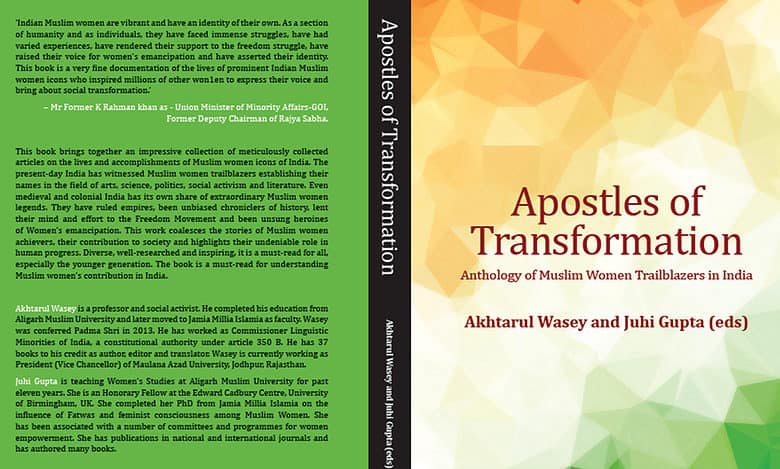
The Delhi-based Institute of Objective Studies has chosen the veteran politician K. Rahman Khan, a former Union Minister for Minority Affairs and Ex-Deputy Chairman of the Rajya Sabha, to receive its 10th annual Lifetime Achievement Award.

The award was created to honour people who have significantly contributed to society’s growth and development across a range of fields. Rahman Khan’s name has been officially approved by the Institute of Objective Studies’ award committee. Khan was instrumental to the passage of the Waqf (Amendment) Act 2013 and the comprehensive report on auqaf in India prepared by   the Joint Parliamentary Committee under his chairmanship.

Rahman Khan was born on April 5th, 1939 in Mandya, then a part of the Mysore State, and established his credentials as an accountant before entering politics out of a desire to aid the general populace. He was the first Muslim from Karnataka to crack the tough Chartered Accountant examination.  Khan holds a D. Lit., is a fellow chartered accountant, and a business degree.

He was first elected to the Karnataka Legislative Council in 1978, rising to become its chairman in 1982–84 and then the head of the Karnataka State Minorities Commission (at the Cabinet level) in 1993–94. As chairman of the Karnataka Minorities Commission, he made recommendations that resulted in a door-to-door evaluation of minorities’ socioeconomic status that led to 4% of State Government offices and educational institutions being reserved for minorities.

He was first chosen to serve in the Rajya Sabha (Upper House) of Parliament in April 1994 and was again chosen in May 2000. He held the position of Deputy Leader of the Indian National Congress in the Upper House from May 2000 until July 2004. He was chosen to serve as the Deputy Chairman of the Rajya Sabha from 22 July 2004 to 2 April 2006 after being appointed as the Minister of State for Chemicals and Fertilizers in the Union Cabinet. He was chosen to serve a third term in the Rajya Sabha in April 2006. He was appointed minister of union minority affairs in the UPA government in April 2012.

Through his association with the Al-Ameen Education Society of Bangalore, which oversees a number of prominent technical and other educational institutions, he established new standards for higher education for minorities. In addition to founding a respectable institution, he also provided the community with a fresh outlook, inspiring them to build and support educational institutions of their own throughout the preceding 50 years.

His most recent book, The Roadmap for Indian Muslims, is regarded as a significant piece of academic literature. K Rahman Khan will receive the 10th Lifetime Achievement Award this year in recognition of his all-around contributions, according to the Institute of Objective Studies’ award committee. The award ceremony date will shortly be made public.

It should be mentioned that the following people have previously received this award based on remarkable services. Emirate Shariah  Phulwari Sharif  , Patna, former Chief Justice of India AM Ahmadi, Akhlaq Rahman Qidwai,  Prof  B. Sheikh Ali, Maulana(Dr.) Saeedur Rahman Azmi Nadvi, A G Noorani Prof  Akhtar Al Wasey, Prof  Mohsin Osmani Nadvi  and Maulana Hakeem Abdullah Mughaisi.

The Institute of Objective Studies first presented the Lifetime Achievement Award in 2007. Recognizing those who have made outstanding contributions to the domains of law, journalism, science, technology, literature, and other relevant fields is the main goal of this award. In order to motivate the future generation and encourage more people to follow their passions and become authorities in their professions, it is important to support and value their services.

source: http://www.muslimmirror.com / Muslim Mirror / Home> Positive Story / September 06th, 2022

Meet Haji Shariatullah who was source of inspiration for freedom fighters

BRITISH INDIA:

His preachings and Farazi movement not only helped the people in fighting against the anarchy, but also provoked the desire for freedom among them

 Haji Shariatullah

Haji Shariatullah, who militantly led Farazi Movement that stood as a source of inspiration for several revolutionaries in the Indian Freedom Struggle, was born in 1780 in Bahadur / Banderlakola village, Faridpur district in Bengal. His father Abdul Zaalib was a weaver.

When Haji Shariatullah was 18 years old, he went on a pilgrimage to Makkah, where he studied spiritual scripts extensively and became a scholar.

In Makkah, Haji Shraiathullah met Syed Ahmed Barelwi, the founder of the Wahabi movement and the warrior Syed Mir Nisar Ali (Titu Mir) who added militancy to the Wahabi movement in India. The trio decided their path of movement before leaving for India. As a result of their decisions, Haji Shariatullah reached Faridpur in 1802.

After returning to the motherland, he settled in Nawabari Village near Dhaka (presently the capital of Bangladesh). While imparting spiritual knowledge, he used to encourage the people towards the movement to emancipate the country from the yoke of British Raj. His movement was known as the ‘Farazi Movement’ and his followers were known as ‘Farazis’ in the history.

When he travelled extensively in Bengal, he saw the woes of peasants and artisans who were being exploited by the officials of the East India Company, Zamindars and the Mahajans. Haji Shariathullh decided to liberate the people from these problems and took to the path of revolution. He garnered support from the farmers, artisans and different classes of people. Haji Shariathulla fought on behalf of the people, against the English rulers, Zamindars and English plantation owners and succeeded several times.

As Shariatullah was very cautious in legal matters, the Courts and the laws could not trouble him. Haji Shariatullah’s preachings and Farazi movement not only helped the people in fighting against the anarchy, but also provoked the desire for freedom among them. Farazi movement was active for about half a century and later it continued to influence the freedom movement for another half a century. Haji Shariatullah, the guiding light of the Farazi movement, passed away in 1839.

Syed Naseer Ahamad is a Telugu writer and journalist who has written several books on the role of Muslims in the struggle for the freedom of India. Many of his books have been translated into other languages. He can be contacted at naseerahamedsyed@gmail.com and cellphone number 91-9440241727.

source: http://www.siasat.com / The Siasat Daily / Home> Opinion / by Syed Naseer Ahamed / posted by Sameer / September 02nd, 2022

Renowned historian and academician Prof. B Sheikh Ali passes away in Mysuru

Mysuru, KARNATAKA :

pix: facebook.com

Mysuru:

Prof B Sheikh Ali, a veteran historian, academician and former Vice-chancellor of Goa and Mangaluru Univeristiy  has passed  away at a private hospital in the city on Thursday. He was 98.

He was a resident of third Cross, seventh main, Saraswatipuram in the city.

He is survived by his son, daughter and relatives and friends. The mortal remains will be taken to Muslim Hostel, Saraswatipuram, Mysuru for Deedar, followed by burial at main Khabrasthan behind Mysore Jail at Tipu Circle.

Sheikh Ali, B was an eminent historian and his contribution to the theory of history and its application to the ground realities of Karnataka is marvelous.

He was a student of University of Mysore and retired from the same institution as a professor of History.

A brief  profile

Academic Distinctions

1. B.A. (Hons.) of Mysore University, I Rank, Gold Medalist, 1945.
2. MA. II Rank, Mysore University, 1946.
3. Ph.D., Aligarh Muslim University, 1954.
4. Ph.D., London University, 1960.
5. General President, Indian History Congress, 47th session, 1986.
6. President, Indian History Section, XXVIII International Congress of Orientalists, Canberra, Australia, 1971.
7. Founder President of Karnataka History Conference.
8. President, South India History Congress, 1985.
9. Delegate to the International Seminar at Ankara, Turkey, 1982.
10. Delegate to the International Seminar at Sofia, Bulgaria, 1986.
11. Delegate to the International Seminar, Moscow, Soviet Union, 1989.
12. Delegate to the International Seminar at Ras-al-Khairna, UAE, 1990.
13. Invited as Consultant to set up Indian Studies Departments and to teach at the University of Georgia, U.S.A. 1976-7.
14. Author of over 100 papers and 40 books.

Awards Conferred

1. Golden Jubilee Award of Mysore University for research in Humanities and Social Sciences.
2. Rajyotsava award of Karnataka State as Distinguished Educationist.
3. Mythic Society of India Award as Distinguished Historian.
4. Maulana Jauhar Award, 2003.
5. Sir Syed Award by American Federation of Muslims of Indian Origin (AFMI) -2004.
6. Canara Bank Award.
7. D.Litt. (Han. Causu) Kannada University, Hampi, 1998.
8. D.Litt. (Hon. Cause) Karnataka State Open University, Mysore.
9. D.Litt. (Han. Causa) Tumkur University, Tumkur.
10. D.Litt. (Han. Causa) University of Mysore, Mysore.
11. Government of Karnataka Award for Social Service.
12. Al-Ameen All-India Community Leadership Award, 2008.

Membership of Prestigious Bodies

1. Member, South and West Asian Regional Branch of the International Council of Archives, New Delhi.
2. Member of the Review Commission of the Karnataka Universities, Bangalore (1992-1994).
3. Member, Indian Historical Records Commission, New Delhi.
4. Member, All India Educational Movement, New Delhi.
5. President of the Cell to draft a project for a new University for the Muslim, New Delhi.
6. Former Member, Dr. Zakir Hussain Memorial Trust, New Delhi. (Prime Minister of India is its Chairman).
7. Member of the Value-Orientation of Education Committee, Planning Commission, New Delhi.
8. Founder Vice-Chancellor of two new Universities, Mangalore and Goa.

Abroad Tours

Great Britain, France, Germany, Switzerland, Portugal, Soviet Union, United States of America, Canada, Turkey, Egypt, Saudi Arabia, United Arab Emirates, Australia, Malaysia, Brunei and Singapore.

Social and Educational Activities 

As the Founder President of Sultan Shaheed Educational Trust, Mysore he established the following institutions.

a) Deeniyat Madrasa : Ghousianagar, Mysore.
b) Belagodu Abdul Sattar Nursery School: Ghousianagar, Mysore.
c) Sultan Shaheed Lower Primary School: Urdu Medium, Ghousianagar, Mysore
d) Sultan Shaheed Higher Primary School: English Medium, Ghousianagar, Mysore.
e) Sultan Shaheed Women’s Tailoring Centre: Ghousianagar, Mysore.
f) Sultan Shaheed Women’s Craft Centre: Ghousianagar, Mysore.
g) Sultan Shaheed Clinic for Women and Children (Charitable): Ghousianagar, Mysore.
h) Azad National Nursery School: Radhakrishna Nagar, Mysore.
i) Azad National Lower Primary School: (Kannada Medium), Radhakrishna Nagar, Mysore.
j) Maulana Azad Girls High School: (English Medium), Radhakrishna Nagar, Mysore.
k) Maulana Azad B.Ed., College: Radhakrishna Nagar, Mysore.
l) Maulana Azad D.Ed., College: Radhakrishna Nagar, Mysore.
m) Maulana Azad AFMI PUC College: Radhakrishna Nagar, Mysore.
n) Maulana Azad Hostel for Girls: Radhakrishna Nagar, Mysore.
o) School for Challenged Children: Ghousianagar Mysore.

He was president of Mountain View chain of institutions in Chikmangalur, Karnataka, where in a sprawling campus of 35 acres of land classes run from Nursery to Degree level with 2500 children with facilities of Hostel both for boys and girls.

As the President of Muslim Education Society in Mysore, he established a dozen Nursery and Primary Schools which have now been upgraded to First grade College level.

He was also president of Central Muslim Welfare Council, Mysore, and  instituted Micro-Finance Credit Scheme benefiting hundreds of poor Muslim women and their families, together with coaching classes both for High School and PUC classes.

He was Editor-in-Chief of Premier Urdu print media of Karnataka, Daily SALAR and Weekly SALAR.

As the President of the New Muslim Hostel Mysore, he completed the following projects:

a. Utility Block
b. Dormitory Block
c. Prayer Hall
d. Commercial Complex, 1st Main, Saraswathipura, Mysore, facing western side.
e. Another Commercial Complex on the same road facing eastern side.

Publications :

He authored  following books:

1) A Leader Reassessed, Life and work of Sir Syed Ahmed Khan: Mysore, 1999.
2) Abul Kalam Azad, Vision and Action: Hyderabad, 2008.
3) Tipu Sultan, a Study in Diplomacy and Confrontation: Rao and Raghavan, Mysore, 1982.
4) Tipu Sultan: National Book Trust of India, New Delhi, 1972.
5) Tipu Sultan, a Great Martyr: Bangalore University, 1993 (Edited).
6) British Relations with Hyder Ali: Rao and Raghavan, Mysore, 1963.
7) Dr. Zakir Hussain, Life & Times, a Comprehensive Biography: Vikas, New Delhi, 1991.
8) Education and National Development: Translation of Dr. Zakir Hussain’s Talimi-Quthbat: New Delhi, 1993.
9) A Great Teacher: Life & Work of Dr: Zakir Hussain: Prasaranga, Mysore, 1997.
10) Makers of Indian Literature series, Dr. Zakir Hussain: (Co-author with Khursheed Alam Khan), Sahitya Akademi, New Delhi, 1991.
11) History: Its Theory and Method: Macmillan Company of India, 1978.
12) Islam, A study in Cultural Orientation: Macmillan Company of India, New Delhi, 1982.
13) Essence of Islam: Mysore, 2004.
14) Comprehensive History of Karnataka: Vol. IV & V Hampi, 1998.
15) Gangas of Talkad: Volume under History of Karnataka, Prasaranga, University of Mysore, Mysore, 1975.
16) The Hoysala Dynasty (Edited): Prasaranga, University of Mysore.
17) A Short History of World Civilization; Prasaranga, University of Mysore.
18) Essentials of Indian Culture Prasaranga University of Mysore.
19) History of Modern Asia: Mysore, 1976.
20) History of South India: Prasaranga, University of Mysore, 1977.
21) Approaches to Harmony, Mysore University, 1994 (Edited).
22) Goa Wins Freedom: Reflections and Reminiscences: Goa, Daman and Diu Silver Jubilee Celebration Volume, Edited, Goa University Publication Series, Goa University, Bambolim, Goa, 1986.
23) Javeed Nama of Allama Iqbal: (English Translation), Knowledge Society Publications, Mysore, 2008.
24) Moulana Jalaluddin Rumi: Knowledge Society Publications, Mysore, 2008.
25) Imam Ghazali: Knowledge Society Publications, Mysore, 2009.
26) Hafiz-e-Shiraz: Knowledge Society Publications, Mysore, 2009.
27) Shaikh Sa’di: Knowledge Society Publications, Mysore, 2009.
28) Umar Farooq: Knowledge Society Publications, Mysore, 2010.
29) Moulana Altaf Hussain Hali: Knowledge Society Publications, Mysore, 2010.
30) Mirza Asadullah Khan Ghalib: Knowledge Society Publications, Mysore, 2011.
31) History of Bahmani and Bijapuri Rulers: Mysore Book House, 2011.
32) My life, (Autobiography): Knowledge Society Publications, Mysore, 2009.

Urdu Publications

1) Hind ki Maya Naz Hastiyan: Urdu, Development Bureau, New Delhi, 1992.
2) Roshan Nuqoosh : Tamilnadu Urdu Publications, Madras, 1995.
3) Irtikh-e-Kayinath aur Insan: Urdu Development Bureau, New Delhi, 1998.
4) Alam-e-Islam-ke-Jawahar-pare: Urdu Vols. Dar-ul-Umoor, Mysore, 2004.
5) ilm-e-Tarikh kay Mukhtalif Goshe : Dar-ul-Umoor, Mysore, 2008.
6) Armughan-e-Salar : Salar Publications, Bangalore – 2008.
7) Anwar-e-Iqbal: Salar Publications, Bangalore – 2011.
8 Noor-e-Baseerath: (26 Special Numbers) (1997-2008).

source: http://www.muslimmirror.com / Muslim Mirror / Home>Obituary / by Muslim Mirror Staff / September 01st, 2022