Badharwa Fateh Mohammad Village, BIHAR / Lucknow, U.P. / NEW DELHI :
New Delhi :
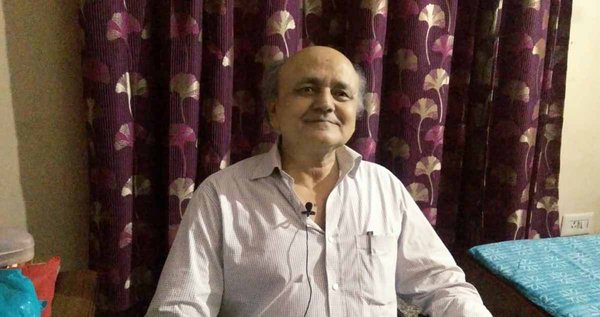
Mohammad Zeyaul Haque, a senior journalist, well known in journalistic and intellectual circles of Delhi, Bihar and UP, passed away on Thursday after a short hospitalisation, the end came around 7:30 pm today. He was 72.
Born in 1948 in a remote village of Bihar called Badharwa Fateh Mohammad, under Dhaka subdivision of East Chamapran district, he received his early education in Dhaka. After schooling, he went to college in Motihari and later joined LS college, Muzaffarpur, from where he graduated with English Literature. Inclined towards Journalism and writing from college days, he went to Lucknow to pursue his Journalistic career, first joining Urdu daily, Qaumi Awaz, published by the associated journals limited which also published National Herald and Navjeevan in Hindi. His journalistic acumen, writing skills and intellectual calibre soon attracted the attention of the Editor of English daily, the pioneer of Lucknow who offered him a job as a reporter for his newspaper.
It was a big jump for a person who started out as a Journalist in an Urdu Daily. From there, there was no looking back for Mr Haque who was affectionately called Zeya Saheb by his friends and journalist colleagues. In Lucknow, he worked National Herald and Times of India which he left to join Russian Embassy to work for its publications as the consultant editor in Delhi. Later, Mr Haque took up the stewardship of a fortnightly, Nation and the World, as its Executive Editor, though he piloted it as its de facto Editor.
He was executive editor of The Milli Gazette and edited a number of books published by Pharos Media. Currently, he was editing the English translation of the Quran by Zafarul-Islam Khan.
He also edited the Magazine ‘The Encounter’, with distinction. Zeya saheb was a trilingual journalist who was a regular columnist of Rajasthan Patrika published from Jaipur and used to contribute articles to the multi-edition Hindi daily The Hindustan. At the time of his death, Zeya saheb was working for an NGO group, Institute of Objective Studies, New Delhi, which he served for long years, as its strongest pillars.
Coming from a rural background, Zeya saheb compared well with many of city-bred and public school educated peers. He had trained and inspired generations of Journalists. Apart from qualities of Head, he was also known for his qualities of heart. He was a thorough gentleman, kind and compassionate, helping people with his right hand without his left hand knowing it.
A gentleman to the core, he had exceptional grasp of English and was highly well-read. Always had a story to share from his treasure.
He is survived by two sons and one daughter and a lot of grandchildren and relatives. His eldest son Waqas is Senior Journalist with India Today and the other son Arafat, is a Senior Manager in an MNC, while his daughter Naila teaches English in Delhi University. May Zeya Saheb’s soul rest in peace.
source: http://www.milligazette.com / The Milli Gazette / Home> News> Community News / by The Milli Gazette Online / April 22nd, 2021
How did the politics of the Ram temple and the demolition of the Babri Masjid secure support for the militant Hindu nationalistic idea?
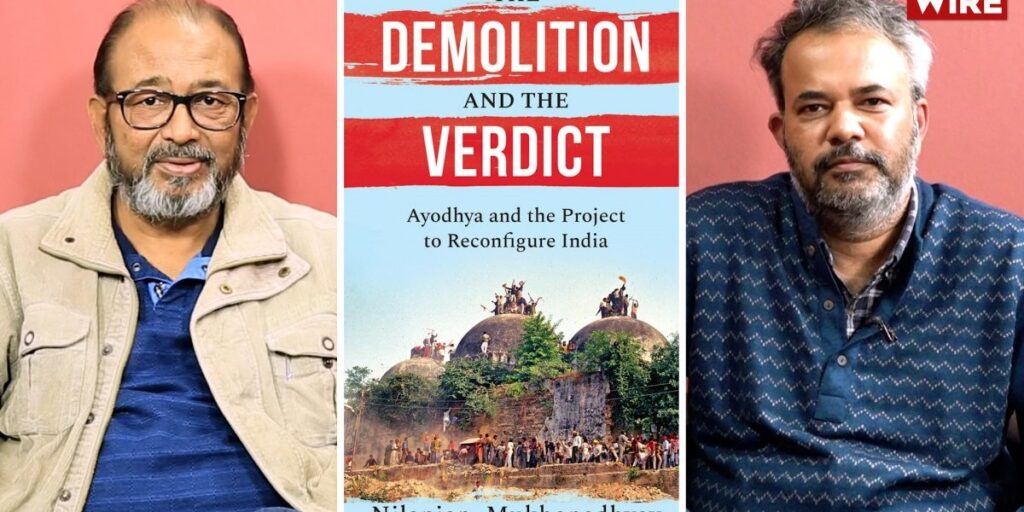
In this episode of ‘In Dino’, Mahtab Alam interviews senior journalist and author, Nilanjan Mukhopadhyay on the impact the Ram Janmabhoomi-Ayodhya movement had on India polity and society.
Mukhopadhyay in his latest book, The Demolition and the Verdict: Ayodhya and the Project to Reconfigure India (Speaking Tiger: 2021) analyses how politics of the Ram temple and demolition of Babri Masjid secured support for the militant Hindu nationalistic idea and the long-term implications of the imminent construction of the Ram Mandir.
source: http://www.thewire.in / The Wire / Home> Books / by Mahtab Alam / December 20th, 2021
Shamnad was not just an expert in intellectual property rights, but a relentless crusader who worked towards ensuring diversity and representation of marginalised communities in legal practice.
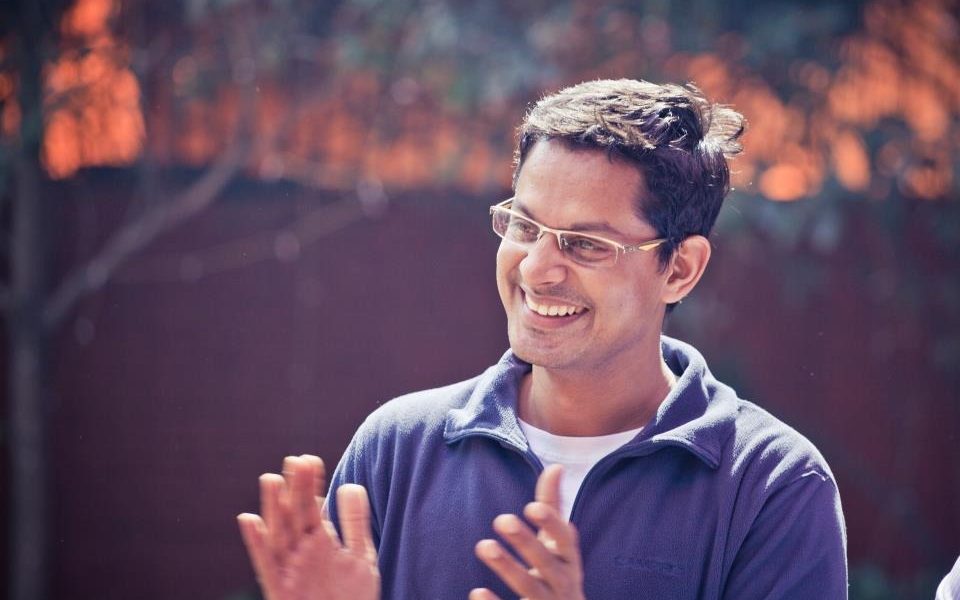
The untimely and tragic death of professor Shamnad Basheer was a bolt from the blue for many of us. As I scuttled to get more information on what initially seemed impossible to believe, I realised that apart from the loss of a friend, the country had also lost one of its finest legal minds. Globally renowned for his expertise in the field of intellectual property rights (IPR), Shamnad was found dead in his car near Bababundangiri in Chikkamagaluru of Karnataka.
As news of his death spread and tributes started pouring in all over my social media timeline, there remained no doubt that his sudden demise was a great loss to the legal fraternity and academia across the globe. Shamnad was a relentless crusader, working day in and out to ensure diversity and representation of marginalised communities in the field of law and legal practice. An alumni of the National Law University, Bangalore and Oxford University, Shamnad was a man on a mission as he championed many causes ranging from internet equality, fairness in IPR, public interest litigation, judicial accountability, to the rights of sexual minorities, visually impaired and physically disabled persons.
For me, Shamnad was more a social justice warrior than a globally-known IPR expert. He was not just the force behind Increasing Diversity by Increasing Access to Legal Education (IDIA), but also Access to Legal Education for Muslims in India (ALEM India).
I first heard of him in 2009, when he wrote a blog about remarks made by then Supreme Court judge Markandey Katju. In open court, Justice Katju equated a young Muslim sporting a beard with a Taliban militant. That year, Justice Katju had rejected an appeal of a Muslim student that he should be permitted to sport a beard in his convent school. Rejecting the plea the judge had remarked that, “We don’t want to have Talibans in the country. Tomorrow a girl student may come and say that she wants to wear a burqa. Can we allow it?”
According to Shamnad, “notwithstanding the merits of the case”, Justice Katju’s comments were “callous and insensitive” and he was “unfit to be an impartial judge”. Back then, Shamnad was the HRD ministry’s professor of intellectual property law at the National University of Juridical Sciences (NUJS), Kolkata. In the conclusion of his blog, he wrote:
“The Supreme Court bench may have been right in denying admission to Salim’s SLP. However, in view of Justice Katju’s statements made in open court that equated every bearded Muslim with a Taliban, the possibility of bias against a community cannot be ruled out. And the Chief Justice must not only censure such remarks, but take immediate steps to have this case reheard before another bench. For justice must not only be done, but also be seen to be done!”
Years passed by, and I kept reading his insightful articles and commentaries in various newspapers and websites. He was prolific, writing on a range of issues related to law, policy and public good. In 2015, a common friend (Tarunabh Khaitan) connected us, asking me if I would be interested in helping Shamnad’s team at IDIA to reach out to the Muslim community. Having admired Shamnad’s writings, the opportunity to work with him was like a dream come true. I readily agreed and eventually, we became good friends.
Shamnad Basheer at a panel discussion of intellectual property rights. Photo: Flickr/World Intellectual Property Organisation CC BY NC ND 2.0
Diversifying the legal field
More than anything, he was always on the lookout for ways and means to ensure that IDIA reaches the remotest parts of the country. To contextualise the need of diversity in national law schools, let me quote a study conducted by the students of NLS Bangalore in 2016. According to the study:
“While the students are somewhat evenly divided across sexes, the income, caste and religion statistics are telling of what constitutes ‘merit’ in this country. While 15% of the students reported their family’s annual income to be above Rs 36 lakh per annum, more than 50% reported an annual income of more than Rs. 12 lakh per annum. Eighty two percent were Hindus and the next largest religious group was the wealthy Jain community (5%), which constitute less than 0.5% of India’s population. On the other hand, Muslims, who constitute 14% of India’s population, make up only 0.5% of that of NLS. The NLS also has predominantly upper-caste students at 65%, with about 27% identifying as Brahmins.”
Similarly, another report found:
“In the last 15 years i.e., from 2000 onwards, only one Dalit advocate has been designated senior by the Supreme Court, and only two from the Muslim Community. The Advocates from backward States like Uttar Pradesh, Chhattisgarh, Jharkhand or Bihar have not been designated at all. The Advocates from rural background are totally ignored. Even with regard to a progressive State like Karnataka, only one Advocate has been designated after a gap of 25 years. It is relevant to mention that in the last round of designation, out of five advocates designated, four of them belonged to one caste.”
Despite being an extremely busy person, Shamnad believed in and practiced mentoring and coaching young minds, individually and personally. Few years ago, when I visited his flat in Bangalore, he was helping two students who were staying at his house to prepare for the CLAT exam. Both belonged to an unprivileged background, a common thread among the spectrum of students whom IDIA supported. A glance at IDIA scholars, like visually impaired Najrul Islam from Siliguri, West Bengal, who studies at the National Law University, Delhi (NLU) or Meraka Mani from Srikakulam district of Andhra Pradesh, currently studying at IFIM Law College, Bangalore, Aparna Amnekar from Nagpur, Maharashtra, a student of Government Law College, Mumbai, Sonia Sabu of Ernakulam district in Kerala, studying at NLIU, Bhopal and Vinatoli of Dimapur (Nagaland), studying at NUJS Kolkata shows an incredible initiative founded and run by him, with diversity and representation at its core.
Learning from IDIA’s experiment and under the guidance of Shamnad, ALEM India was started last year. The initiative tries to ensure access for socio-economically disadvantaged Muslims and improve their representation in Indian law schools.
Personally coaching legal professionals
His objective was not just to coach students for national law schools or produce batches of successful lawyers and legal professionals. He wanted to prepare young minds who are competent yet socially committed. It is hardly a surprise that IDIA produced graduates like Yogendra Yadav, better known as Yogi. The son of a manual labourer (working in Alang, Gujarat) and a resident of Pitij village in Chhatra district of Jharkhand, Yogi graduated from the National University for Study and Research in Law (NUSRL), Ranchi in 2017. He is currently a lawyer in the Ranchi high court. He worked as a newspaper hawker in and around his village from a very early age and it is while distributing newspapers that he got to know about IDIA and CLAT.
In the recently concluded Lok Sabha elections, he contested as an independent candidate. Explaining his rationale to contest the election, Yogi told Bar & Bench, “IDIA always encouraged me to take up community causes and help as best as I could, They were training me to become a CHAMP and this is all part of that.” I clearly remember Shamnad informing us of Yogi’s inspiring story with pride. “Yogendra Yadav, our IDIA Scholar makes his Political Debut!,” read the email he had sent to some of us.
Shamnad was also keen to highlight IDIA scholars to people working in different walks of life, not just those in the law and judiciary. In 2017, got in touch with me to invite the anti-manual scavenging activist and convener of the Safai Karmachari Andolan, Bezwada Wilson, to deliver the key note address at the IDIA conference on creativity and leadership.
Bezwada Wilson. Photo: PTI
“We share the same set of ideals in terms of empowering the marginalised and building a more inclusive India,” he had written to Bezwada, copying me in the email. Bezwada’s key note, according to Shamnad was “a provocative address”. A year later, he also wrote an article on Bandicoot, a robot to replace manual scavenging. He noted:
“Bandicoot is not just a clever idea; it is a game changer, and dare I say a life saver! Putting some teeth back into India’s constitutional promise of “equality” for Dalits and other marginalized sections who’ve had to clean our crap for years. Only a few days ago, the Delhi high court ruled on a case involving the death of two manual scavengers; making the government pay for its murderous negligence!”
His latest email to me was in July this year, a heart breaker titled: “Deeply Disappointing News: 7 IDIA Scholars Still Without Committed Donors!”. “I am deeply saddened to bring you this disheartening message. Unfortunately, of the 12 IDIA scholars that gained admission to leading law schools this year, we found donor support (covering all expenses) for only 5 of our scholars. Which means 7 of our kids are left behind and it will be a struggle to put them through law school without some promise of a committed donor (or donors),” read his email. Little did I know then that this was going to be his last email to me.
Now that Shamnad is gone and we cherish his memory, our duty is to ensure that we carry forward the work he initiated, in the same spirit that he always professed. And that, I believe, would be our real tribute to him.
source: http://www.thewire.in / The Wire / Home> Law> Rights / by Mahtab Alam / August 11th, 2019
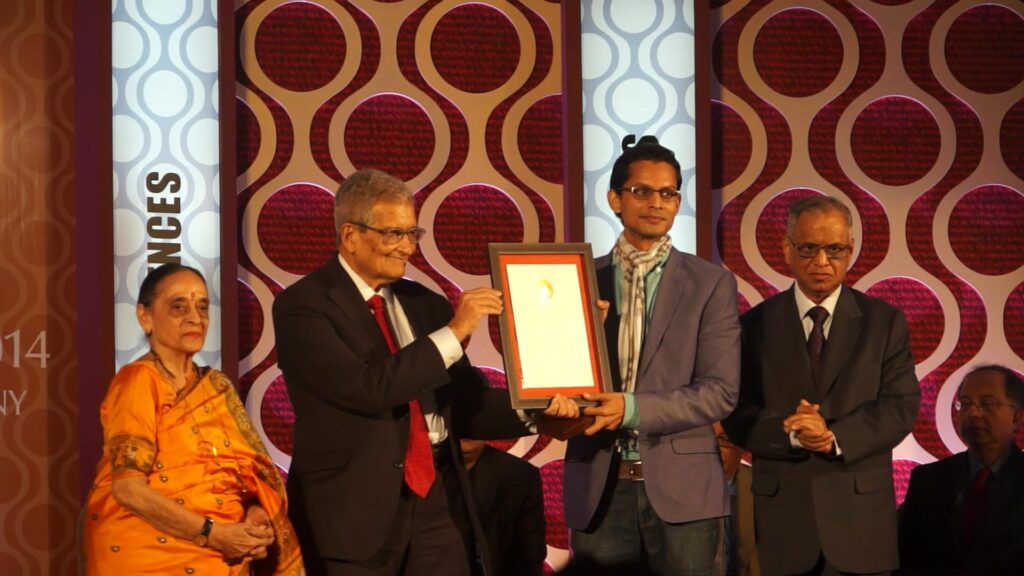
Photo of Shamnad receiving the Infosys Prize (Humanities) in 2014 from Mr. Amartya Sen / pix: shamnad.com
Bengaluru :
Indian Institute of Science (IISc) professor Jayant Haritsa and Intellectual Property (IP) academic and consultant professor Shamnad Basheer, both from Bengaluru, are among six winners of the Infosys Prize for this year.
Each prize, comprising a purse of Rs.55 lakh, a 22-carat gold medallion and a citation, is awarded by Infosys Science Foundation, a not-for-profit trust, set up by the global software major and funded by a corpus of Rs.100 crore ($16 million), contributed by the IT firm, its trustees and co-founders in 2009.
“Haritsa, computer science and automation department professor at IISc, has been awarded the prize under the Engineering and Computer Science category for his contribution to the design and optimisation of database engines,” the Foundation said in a statement here Thursday.
Haritsa also heads the supercomputer education and research centre at the institute.
Basheer, founder of SpicyIP, India, bagged the prize for his contribution to the analysis of a range of legal issues, including pharmaceutical patent injunctions and enforcement in the Humanities category.
As India’s premier blog on IP and innovation law and policy, SpicyIP does accurate reporting of IP developments across the country.
Basheer is also founder and managing trustee of Increasing Diversity by Increasing Access (IDIA) in Bengaluru.
Shubha Tole, associate professor at Mumbai-based Tata Institute of Fundamental Research (TIFR), got the prize under the Life Sciences category for her contribution to studying the hippocampus and amygdale centres of learning and memory in the brain.
“Tole’s work can lead to a better understanding of human behaviour, cognition and emotions,” the statement noted.
Tole is also a principal investigator at the TIFR’s biological sciences department.
Massachusetts Institute of Technology (MIT) adjunct professor Madhu Sudhan has been awarded the prize under the Mathematical Sciences category for his seminal contribution to probabilistically checkable proofs and error-correcting codes.
As a principal researcher at Microsoft Research in New England in the US, Sudan also heads the electrical engineering and computer sciences (EECS) department and computer science and artificial intelligence laboratory (CSASIL) at MIT in Boston.
Council of Scientific and Industrial Research (CSIR) senior scientist Srivari Chandrasekhar at the Hyderabad-based Indian Institute of Chemical Technology (IICT) has bagged the prize under the Physical Sciences category for his contribution to the synthetic organic chemistry with special focus on the synthesis of complex molecules from natural sources.
Abdul Latif Jameel Professor of Poverty Alleviation and Development Economics at MIT, Esther Duflo, got the prize under the Social Sciences category for her pioneering contribution to development economics, including the work related to India and Africa.
Duflo is also founder-director of Abdul Latif Jameel Poverty Action Lab in the US.
“The Foundation has been able to recognise some of the best researchers of our time through the prize. Their contributions are an inspiration to students and professionals and have the potential for real-time impact on individuals and society,” Infosys co-founder and Foundation president N.R. Narayana Murthy said on the occasion.
A panel of jurors, comprising renowned scientists and professors from the world over, evaluated the noted winners.
The Infosys Prize jury chairs are Pradeep Khosla, Nobel Laureate Amartya Sen, Inder Verma, Srinivasa S.R. Varadhan, Shrinivas Kulkarni and Kaushik Basu.
President Pranab Mukherjee will award the winners and felicitate them Jan 5 in Kolkata.–-IANS
www.shamnad.com
source: http://www.muslimmirror.com / Muslim Mirror / Home> Exclusive Reports> Indian Muslims> Youth / November 15th, 2014
After a near-death experience, Badrunissa Irfan, wife of Irfan Razack, CMD of Prestige Group, has put paintbrush to paper, expressing all that she’s been through.
Bengaluru :
11 years ago, Badrunissa Irfan was in a comatose state for almost a month. Doctors had lost hope but Irfan pulled along.
Today, over a decade after the incident, Irfan is sharing what she experienced for the first time, through her art works. Titled ‘Freedom of the Soul’, 35 paintings of Irfan will be on display at Sublime Galleria in UB City through the month of June.
Picking up her acrylic paints after a 20-year break, Irfan questions what a soul is through her paintings. “I had a near-death experience where I was in a state of coma for 23 days and was declared clinically dead twice. But I came back to life and what I witnessed during those days is what I have painted now. I want to convey the message I received from the Almighty through my art.”
While she took to art at a young age, her passion took a backseat when life and responsibilities took over. “It was my daughter Uzma [Uzma Irfan, director of Prestige Group], who encouraged me to pick up the brushes again. When I told her that my body cannot do what it used to before, she sent her daughter (my granddaughter) Alayna Zaid (who is also an artist) to sit with me while working,” she says, adding that she started work on her paintings in January this year.
Talking about her paintings, Irfan says, “You’ll find that most of my paintings are of open skies, mountains, gushing streams, animals and birds.”
Starting at `75,000 and going up to `1,40,000, all proceeds from this show will be donated to charity. She recalls how she couldn’t hear anyone except her daughter reading verses from the Quran every day.
“In my unconscious state, there was a scenario where I felt like I was looking at my own body from the outside,” she says. Every experience that she went through during that period comes to life in this series. “The colours that I use depend completely on my mood. I spend about two hours in the afternoon and another two in the evening and finish one painting within two days. It might take a little longer if it’s a bigger one,” Irfan adds.
Irfan believes she ‘came back to life’ to share what she has seen and witnessed. “I personally feel more connected with nature, animals, birds, flowers and fruits. I feel humans are hypocrites and so I use my art to share the beauty I believe in,” says Irfan, who is also the author of cookbook Duniya-e-Ziyafat.
(Freedom of the Soul will be showcased from June 1 to 30 at Sublime Galleria. All proceeds from this show will be donated to charity)
source: http://www.newindianexpress.com / The New Indian Express / Home> Cities> Bengaluru / by Anila Kurian , Express News Service / May 31st, 2022
One such is a miniature version that can be worn as an amulet
Ramzan marks the revelation of Koran and families go into a huddle reading it through the night. The Abul Kalam Azad Oriental Research Institute in Public Gardens is now hosting an exhibition of copies of some rare Korans.
One of them has been created in Hyderabad with Persian and Urdu translation and explanatory passages on the side. Another Koran is a miniature version which could be worn as an amulet. “This is among the 5,000 Koran amulets commissioned by Hasan Nizami, a legatee of Nizamuddin Aulia of Delhi. It is a priceless object as very few are in circulation,” informs S.M. Ahmed Ali of the institute.
Then there is a Koran which is a gift of Reza Shah Pehlavi, first Shah of the House of Pahlavi of the Imperial State of Iran, when his wife visited the city in 1960. It has the Persian translation along with the Arabic original.
A few facsimile copies show how different writing styles have evolved. A 7 th century Koran in Kufic script is without the diacritical marks. “This is one of the earliest copies and unique. It will be difficult to read as we are used to seeing the sound markers,” adds Mr. Ahmed.
source: http://www.thehindu.com / The Hindu / Home> News> National> Telangana / by The Hindu Bureau / Hyderabad – April 14th, 2022
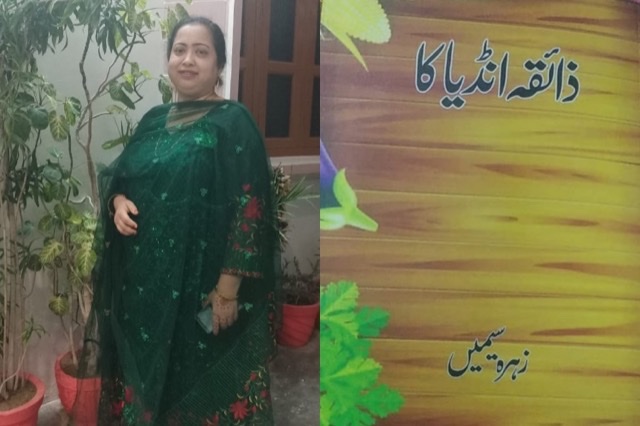
Zohra Seemee(L), her recipe book “Zaykah India Ka”
The month of Ramazan has entered its last leg and thus it is possible that the items on the Iftaar table at dusk must be getting mundane. Here, Awaz-the Voice spoke with Zohra Seeme, author of “Zaykah India ka” and founder of NGO Social Pride Welfare Society about how to pep up the Iftar platter for the family.
“I learnt cooking after I got married..”, was Zohra Seeme’s reply to how and when she learnt how to cook. Zohra said as shewas distributing ration on behalf of Mahila Panchayat (an NGO she collaborates with) to the needy when Awaz the Voice reached her for a tete-a-tete.
Here’s her top dishes that can be tried this Ramazan:
Potato-Chicken Patty: potatoes boiled and mashed properly are used as a base that are then filled with minced meat of either chicken or mutton. Minced meat or keema that is prepared by roasting it with bare minimum spices and a dash of onions till cooked properly.
Chane ki dal ke pakodas with Keema (Gram flour fitters filled with minced meat): preparing the gram flour dough by kneading it with a bit luke warm water, add salt to taste, take small portion, roll it flat, fill it with minced meat (as done with potato chicken patty) and just deep fry it or bake it (whatever suits you best).
Zohra says, “I was the youngest at my place, thus I never touched a thing, but after I got married, my partner ate less but rich food, thus my journey of preparing food started..” “I don’t particularly follow any book, I believe in intuition rather..”, she replies when asked about her mantra behind the delicious recipes.
She adds, “I make up mind as and when I enter the kitchen, I try to think of flavours in my mind and when they click, I try to lay them on the dining table..”
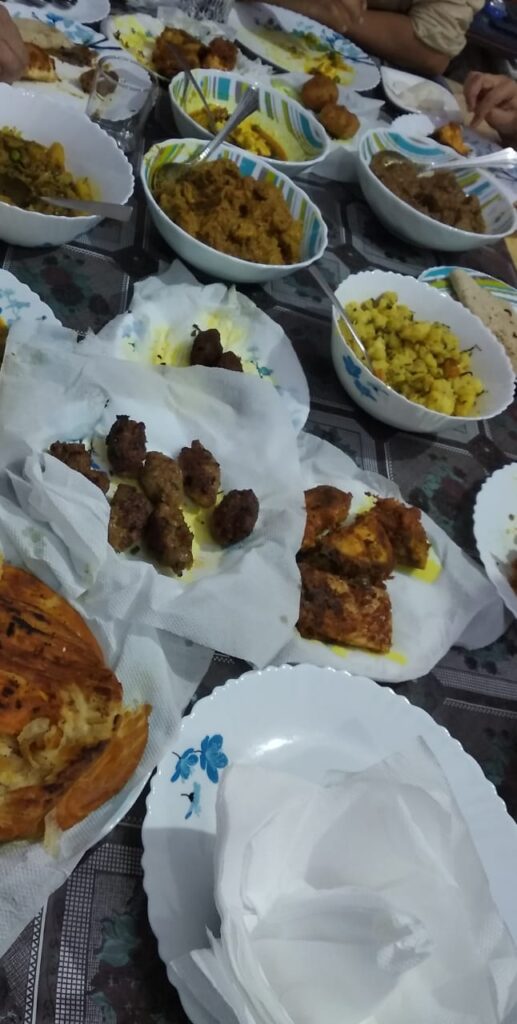
A complete iftar table as laid out by Zohra Seemee
Asked about some oil-less, health conscious recipes she says, “ well, there’s Ghugni (a local name for chana dal soaked overnight and prepared with a dash of lemon, salt, black pepper, and finely chopped onions, tomatoes..”
A healthy potpourri can be prepared by taking sprouts of your choice(soak black gram, green lentils, yellow gram overnight), and just add lemon, salt, black pepper and salad of your choice.
When asked about an all time favourite recipe of her kids she says, “I prepare chicken roast, that is one recipe that is loved by all..”
Here’s the recipe: boil the preferred choice of meat with salt, garlic, ginger and water. Separate the water from the meat when tender. Add a pinch of fine flour (maida), edible food colour and either pan fry or deep fry the same. When done it is served with preferred salad dressing.
source: http://www.awazthevoice.in / Awaz, The Voice / Home> Women / by Shaista Fatima, New Delhi / April 24th, 2022
Whether it is a hundred-year-old dish Kuzi or Fish Salad or Badam Ka Kund or the Noorani Seviyaan, Shahnoor Jehan, the descendent of a Sultan of Yemen, dishes out these mystic 100-year old cuisines for the connoisseurs and the gourmands.
Even as the erstwhile nawabs of India deal with the loss of their titular legacy, tables laden with succulent meats, and the foods flavoured with freshly ground spices and their untranslatable code of tehzeeb- their last standing bastions of power, wealth, and heritage – Shahnoor Jehan, whose grandmother Muzaffar Unissa Begum hailed from the family of the Sultan of Yemen, has kept it alive.
Meeting this soft-spoken lady was a quiet grounding experience given her repertoire of knowledge on food.
Shahnoor Jehan with her daughter
Daughter of an IAS officer and wife of a very supportive businessman Adil Mirza, Shahnoor Jehan was also encouraged by her adorable children Shohrab Mirza and Nimrah Mirza to use her knowledge and the knowhow inherited from her blue-blooded family and preserve the 100-year-old recipes for posterity. Khassa, a food brand, is a reality because of the support Shahnoor Jehan got from her family.
Shahnoor Jehan says, “There’s a certain etiquette that embraces all nawabi culture. It’s not so much about the commonality of ingredients or dishes but the way the food is prepared and served and the way we host our guests. And for these families, it’s comforting if you understand that,” she says. “Khassa is just that.”
In earlier days people never said “food is ready’ while inviting guests to the table,; they would say but said “Khassa Taiyaar Hain.” Shahnoor Jehan has preserved her well-guarded recipes dating back to several generations.
A dish from Shahnoor Jahan’s cook book
Her cookbook which she has preserved to date from her school days takes on a narrative beyond food; it’s about legends, anecdotes, and antiquities that comprise heritage. It is this inherited legacy that has made her take up cooking as a passion and make it her business. “I think cooking was a hidden talent in me. Most of the time friends appreciating my cooking made me ponder over the possibility of taking it up as my profession and when my kids and family support came, I converted my culinary skills into a startup.”
“Till I got married, I never had any experience of cooking; it was only an interest. It was my grandmother and mother who inspired me initially and the realization and confidence that I can cook well came with the appreciation I got from my friends and family who eagerly awaited the indulgence. The original cuisine is slowly fading away. I kept up the tradition of preparing dishes on charcoal and grounding spices made by hand..”
Begum Shahnoor Jehan the granddaughter of Nawab Ahmed Baig and her Grandmother Muzaffar Unissa Begum shares a princely legacy of the Sultan of Yemen and her food is an amalgamation of Mughal, Turkish and Arabic and influences of Hyderabadi cuisine.
She has infused local foods like rice, wheat, and meat dishes and the skilled use of spices herbs, and natural edibles in Khassa,
Owner of brand Khassa, Shahnoor Jehan serves cuisines like mutton haleem, mutton Shikamaru, dum ka murgh, or whether it is her signature dish a hundred-year-old dish called the Kuzi- leg of mutton cooked in pure almonds, saffron, and spices like black pepper enriched further with dry fruits, sugar candy ( Rock Mishri ) saffron, and silver foil are steeped in history.
Shahnoor Jahan’s recipies
While Khassa has been in the limelight for its iconic Kuzi, mutton roast or the kebabs like Shikampoor Shahnoor has also drool-worthy desserts to her credit that you can never say ever! Whether they are the innovative desserts like the Noorani Seviyan or the most rich ones like the Badam ka Kund– a traditional Hyderabadi dessert rich in almonds infused with saffron and cooked for hours together to get that creamy finish.
Says Shahnoor Jehan some of the recipes are native but they have been prepared and perfected down the generations at Shah Manzil, which is the present-day Raj Bhavan (the official residence of the State Governor). They have been part of Shahnoors family legacy for generations over a hundred years of age Adds Shahnoor my maternal Grandmother Muzzafar Unissa Begum, the daughter of the Sultan of erstwhile Yemen, and her grandfather Nawab Ahmed Baig, the son of late Shehzoor Jung, was influenced prominently by the flavours of Yemen, where she was from. I picked up most of her techniques and recipes which were well guarded and preserved by Shahnoor Jehan’s mother Faiq Jehan Till date Shahnoor continues to preserve the diaries and books belonging to her royal family. She adds that while her mother has been an inspiration for her she did pick up a few techniques from her mother-in-law Shaheda Begum she adds.
Today this luxury dining has come alive with her cuisine “Khassa” which is offered to her customers by way of food based on orders from her customers. It is indeed a luxe dining experience as nothing is too extravagant at her end whether it is the use of the saffron or the almonds, or whether it is the use of gold and silver foil, they season most of her meals. Only the finest cuts of meat make it to your orders. Whether it is ordering the mutton roast -chunks of meat soaked in sauces, ginger garlic paste, pepper, and roasted or whether it is Kairi Ka Do Pyaaza chunks of meat cooked alongside with raw mangoes spices and silky onion gravy a seasonal specialty.
Shahnoor says some of her dishes are cooked languorously , sometimes for entire day-the dum (where food is cooked for hours over low heat in lagan and smoked with the piece of burning coals placed on top to flavor the food , and these remain her techniques of choice.
Shahnoor Jahan with Khassa
In the earlier days, the chefs or the bawarchis at her Shah Manzil sometimes specialized in just one dish. Kitchens were considered laboratories, and chefs artists were encouraged to experiment innovate and create. Today we are preserving this past heritage as an agenda. She recalls the Nawabs of yore were patrons of food, helping the food to evolve Now dining With The Khassa brings back some of the grandeur and is a beautiful reminder of the lavish brilliance of nawabi food.
Says Shahnoor Jehan we want to bring a culinary slice of Yemen and the Nawabs of Hyderabad at Khassa with dishes that resonate with our philosophy of cooking with the choicest of ingredients.
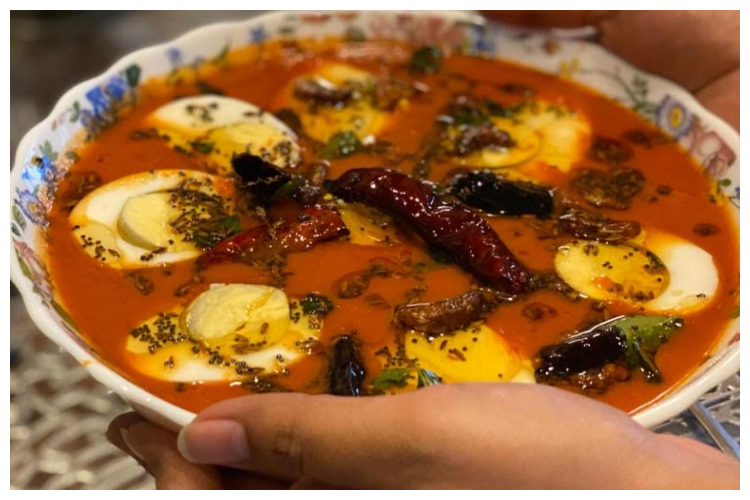
Her spread in her menu looks fit for a king. There are Shammi Kebab-succulent pieces of tender lamb cooked with spices a melt-in-the-mouth experience and the Mutton Shikampur, the iconic kebabs from the royal kitchens of Hyderabad. The main course consists of Tamatar ka Kut a classic Hyderabadi dish and a rich tomato gravy topped with mild temperate spices and boiled eggs. Mutton Dalcha, is an age-old recipe of mutton cooked with lentils and bottlegourd. There are classic dishes such as Chicken or Mutton Korma cooked in rich gravy sauce or the traditional Kairi Do Pyaza a tangy lamb preparation. Her signature dishes include Haleem, Kuzi, Fish Salad Mutton Roast, Dum Ka Murgh, or the Dum Ka Raan all slow-cooked in mild spices.
Also, there are desserts to die for whether it is the Zafrani Badami Kheer, Sheer Khorma, or the Qubani ka Meetha.
Khassa indeed brings the hidden treasures of food that is heavy on aroma and boasts of rich flavours that will hit the spot if you’re looking for a feast.
www.khassabyshahnoorjehan.com
source: http://www.awazthevoice.in / Awaz, The Voice / Home> Culture / by Ratna G. Chotrani, Hyderabad / April 17th, 2022
Anthologist and translator Dasu Krishnamoorty’s ebook ‘The Greatest Telugu Stories Ever Told’ gives a tapestry of Telugu experiences for readers.
The Greatest Telugu Stories Ever Told (Aleph Book Company) provides us a glimpse into the huge Telugu literary realm. Spanning virtually a century of literary works by a number of the most interesting writers of short tales, the gathering mirrors the Telugu-speaking individuals’s perspective of the world.
Co-authored by anthologist and translator Dasu Krishnamoorty along with his daughter Tamraparni Dasu, the anthology incorporates works of 21 writers, proper from Chalam and Kanuparthi Varalakshmamma to Vempalli Gangadhar and Vempalle Shareef.
Influence on society
Elaborating on the factors in choosing the tales, the writers say they seemed for brokers of change. “Vempalle Shariff’s ‘Curtain’, for example, is a diatribe against the norms that keep Muslim women behind a curtain of patriarchy and prevent them from participating in the wider society. Sometimes, the story is so compelling in its cathartic message that it requires no other reason than its merit to be included.
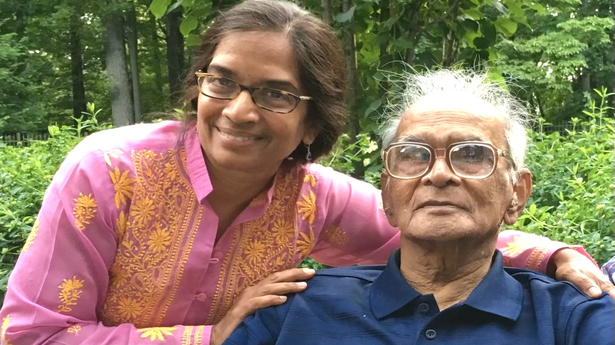
‘Mother’s Debt’ (Mohammed Khadeer Babu) and ‘Predators’ (Syed Saleem) both highlight the wretched lives of those compelled to live in poverty at the edges of society,” says 93-year-old Krishnamoorty, connecting with us from New Jersey.
On selecting works of writers like Kanuparthi, Illindala Saraswati Devi, Achanta Sarada Devi and Chalam — who wrote about social inequity — Krishnamoorty says the brand new technology of writers continues to push that battle ahead in new instructions and develop into energetic devices of social change, as evidenced by Boya Jangiah, Jajula Gowri and others. “Writers alone cannot cause a change but are certainly a big part of the process,” he says.
On being requested if some writers are both overrated or underrated, Tamraparni responds, “All the writers in the anthology, and many more that could not be included, deserve their reputation and accolades. The younger ones are perhaps underrated simply because the world doesn’t know of them yet. We hope that our anthology helps them gain the recognition they deserve.”
Diverse works
The anthology consists of works by six Muslims, 5 ladies and 5 Dalits. Krishnamoorthy says their goal was to provide a platform for the varied assortment of expertise significantly in underrepresented communities. “Telugu Muslims have always been a beacon of literary excellence. Only they can write with such passion and knowledge about their lived experience that comes through with such heart-wrenching intensity in ‘Adieu, Ba’ and ‘A Mother’s Debt’,” he provides.
Speaking of the challenges in translating, Tamraparni says, “Translation is inherently tricky; matching the idiom of the original with an equivalent one in English, rather than a literal translation; finding the equivalent of unique words, for example a word like ‘ thaayilam’ (a special treat, typically sweet, for a child) in Dada Hayat’s ‘The Truant’; retaining the voice of the original writer intact; avoiding the temptation to editorialise or tamp down unorthodox content as in Chalam’s ‘Madiga Girl’; how to preserve the musicality of the original language, as in ‘Molakala Punnami’.”
Describing working together with her father as a excessive octane expertise, Tamraparni says story choice was a degree of rivalry. “Some of the differences were generational, and some were temperamental. We agreed on most stories but there were four or five that needed energetic debate,” she provides.
Support system
Krishnamoorty had moved to the US to dwell along with his daughter’s household after he misplaced his spouse and there, he discovered translation a solution to keep engaged to tide over the powerful interval. “He brought an amazing level of intensity and enthusiasm to it even though he was almost 80 at that time,” says Tamraparni who alongside together with her father, launched a literary non-profit organisation, IndiaWrites Publishers, to assist the interpretation of up to date Indian short fiction into English. Together additionally they revealed a month-to-month on-line literary journal, Literary Voices of India, for a number of years. And 15 years later, the father-daughter duo revealed their second anthology The Greatest Telugu Stories Ever Told.
”I’m grateful that translation has given me such a stimulating and rewarding expertise to share with my father,” says Tamraparni.
Making amends for wrongs done requires compassion and a human touch, says Sandeep Virmani of Hunnarshala Foundation
In 2013, Muzaffarnagar in Uttar Pradesh experienced one of the worst communal riots in recent history. Some 62 people died and more than 50,000 were displaced.
Hunnarshala Foundation helped resettle about 250 families who could not return to their original villages. It was a challenging project for the not-for-profit organisation, which has been working with communities in the area of housing and infrastructure for over 20 years now.
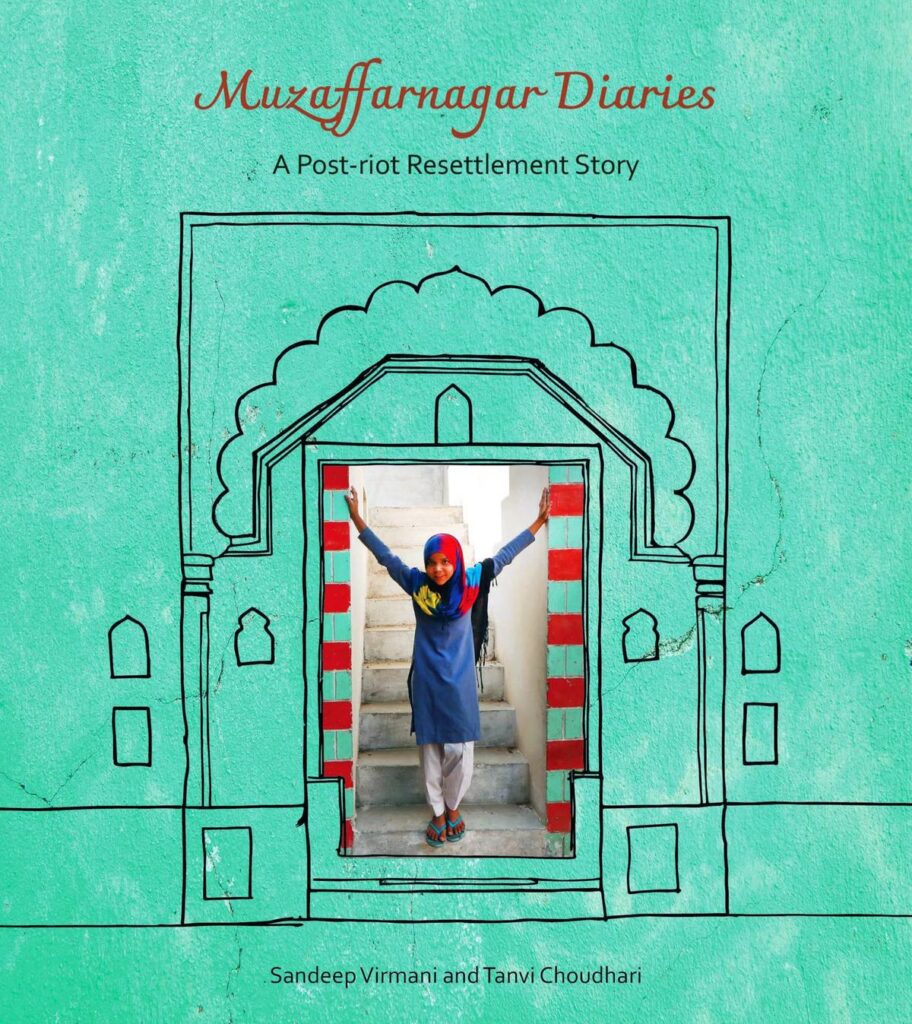
Muzaffarnagar Diaries: A Post-Riot Resettlement Story talks of how the project fell in place. Sandeep Virmani, Executive Vice-Chairman of Hunnarshala, spoke about the importance of empathetic resettlement in the context of this project. Excerpts from the interview:
What is the magnitude of the problem of internally displaced persons (IDPs) in India?
IDPs are people displaced from their homes and communities due to natural disasters, conflicts or development projects. In India, at any given point, we have between 40 lakh and 80 lakh people living in camps, away from home. Of these, about 20,000 are displaced due to conflicts — ethnic, armed, communal, or even targeted violence. India consistently features in the 10 worst affected countries in the world. Conflict victims are the worst hit since invariably, the state is involved in abetting violence or allowing it to happen. For this reason, unlike after natural disasters, very few people come forward to help.
How does Indian law fall short when it comes to reparative justice, especially for victims of incidents such as the 2002 Gujarat riots or the 2013 Muzaffarnagar riots?
Unlike cross-border refugees, IDPs don’t have any rights. Even though the Constitution requires the state to take responsibility for the safety of its citizens, there are no laws, policies, or statutory frameworks for reparative justice. The UN has ‘The Guiding Principles on Internal Displacement’ but these are not binding. Consequently, almost every such event requires the intervention of the courts to provide justice.
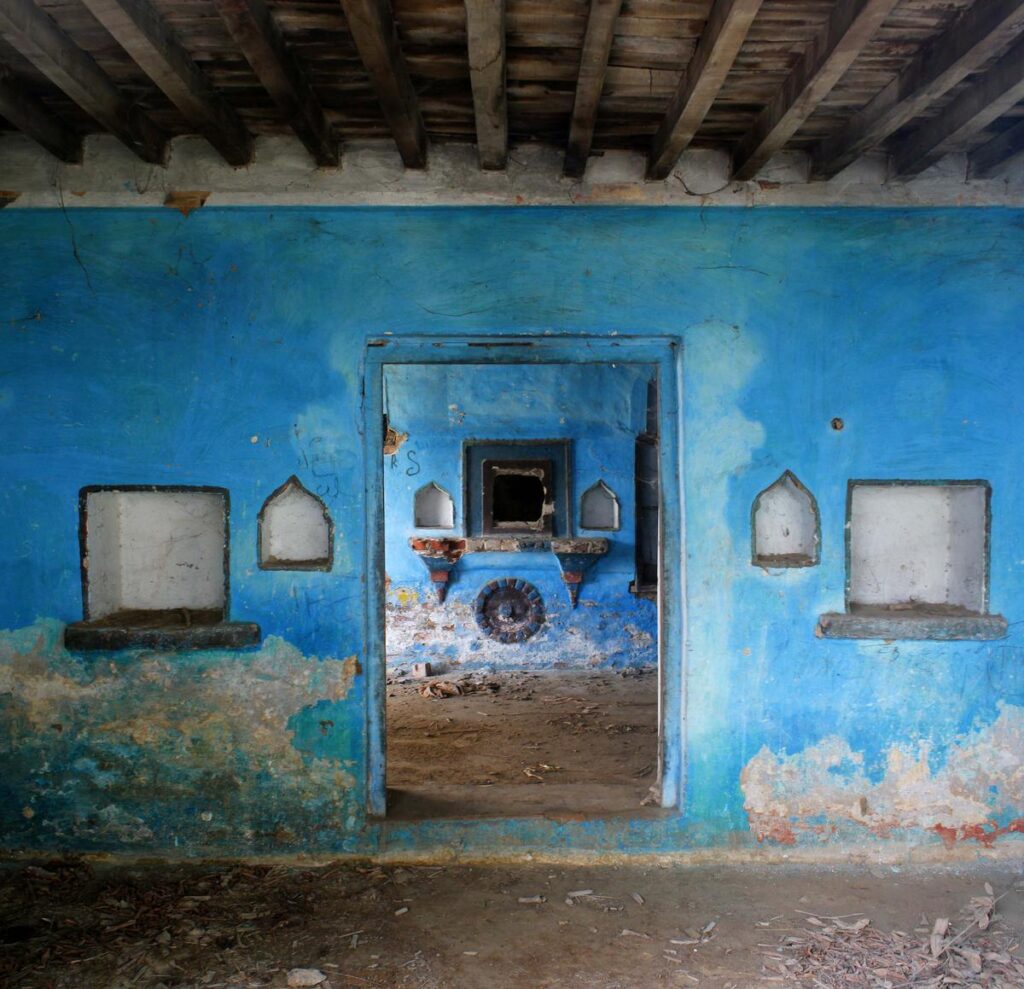
Ruins of a house in Kutba, Muzaffarnagar, after the riots.
The government grants compensation; ₹15 lakh was given per family after the Muzaffarnagar riots. But you call this the ‘compensation trap’?
Invariably, governments directed by the courts want to weigh the losses of IDPs financially and get away with compensation. While compensation for families who lost a member was raised to ₹15 lakh, displaced families who will never be able to return to their villages got ₹5 lakh. But making amends for wrongs done, so that the scars of displacement and loss are healed, requires compassion and a human touch. It requires apology, handholding until they are physically settled, integrated into a new society, so that they and their children can let go of fear. The shock and betrayal, sometimes even unfounded guilt, never leaves one.
When you took up this project, you went to Kutba to see the ruins of the destroyed homes. Can you talk a bit about the ‘culture of spaces’?
The design and skills used in building homes is the collective cultural expression of a community’s values. When you lose everything, you look for hope in two places: community and expression. The process of rebuilding provides both. However, after incidents like the Muzaffarnagar and Shamli riots, most families were scattered in unfamiliar places. It became difficult for them to get new homes. Most used the compensation to rebuild livelihoods and get some land but could not build homes. We helped the community procure land together, so that they were reunited. Giving a house is charity; one is grateful, but it doesn’t rebuild lost confidence. And, invariably, donors and governments give ‘modern’ houses, disregarding cultural moorings.
We wanted to understand their histories, ways of living, skills, aesthetic expressions, identities, before we facilitated the rehabilitation. So, we went to their old village in Kutba. It was difficult; there was fear of the dominant Hindu community, at whose hands they had experienced betrayal, violence, death. People with whom they had lived over generations, people who had convinced them not to migrate to Pakistan in 1947. A mason named Nawab finally agreed to take us there with police escort.
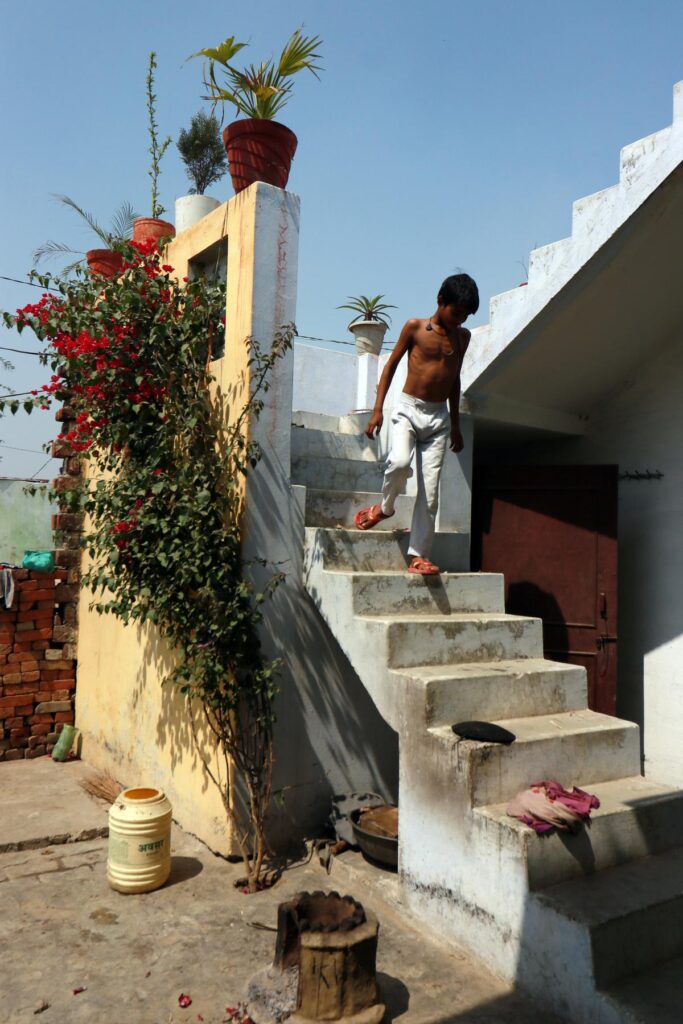
The central stairway in a new house built in Kairana, Shamli district (the ‘chulha’ or stove keeps changing places).
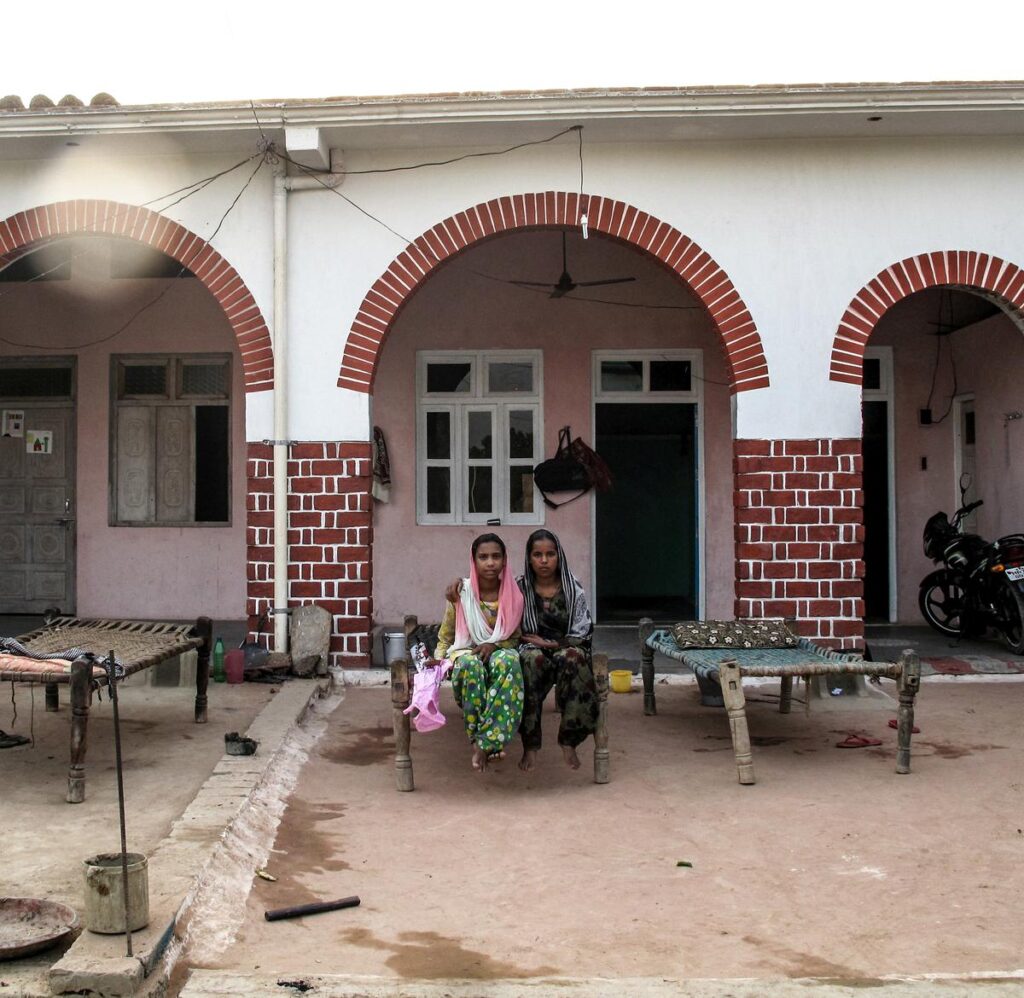
We found a unique lifestyle. For example, the khat (bed) determines the width of the veranda and even the staircase (it is carried to the first floor). The chulha (stove) shifts through the year from kitchen to veranda to courtyard. The old men sit at the juncture of street and house in a unique space called the ‘gallery’. The mother-in-law sits at the other end of the gallery, at a spot from where she can see every part of the house. The sitting room must be accessed straight from the street through a separate door. The houses always have potential for expansion to make room for newly-weds. Families make intricate patterns on coloured cement oxide floors with stencils made from newspapers. They mould concrete into aesthetic forms. The more elaborate the gate, the more the prestige… we found many such features.
A new house in Arya Puri, Muzaffarnagar district, for a rehabilitated family. The house incorporates the classic archways and verandah and makes room for the all-important ‘khats’ (cots).
Your book speaks of how the villagers rejected open-brick facades for painted concrete. Is it a challenge to promote low-cost or green building in the hinterland?
On the contrary, villages are familiar with the advantages of, say, earthen walls or mud mortar for putting bricks together. It is possible to have an informed conversation with them, unlike urban people who reject such technologies based on bias or get fixated on a technology even when not appropriate. In rural homes, many parts of the house are left unplastered due to lack of funds, so exposed material has a different connotation — it means poverty. That is why they wanted to plaster and colour their walls.
Western UP is a seismic zone, but existing building practices are poor due to lack of resources; there is hardly any foundation, very thin mud mortar walls hold up heavy roofs. One shudders to think of earthquakes. We insisted on increasing costs by 15-20% to ensure safe housing. The villagers are extremely proud of this; they say they have the strongest homes in the city now.
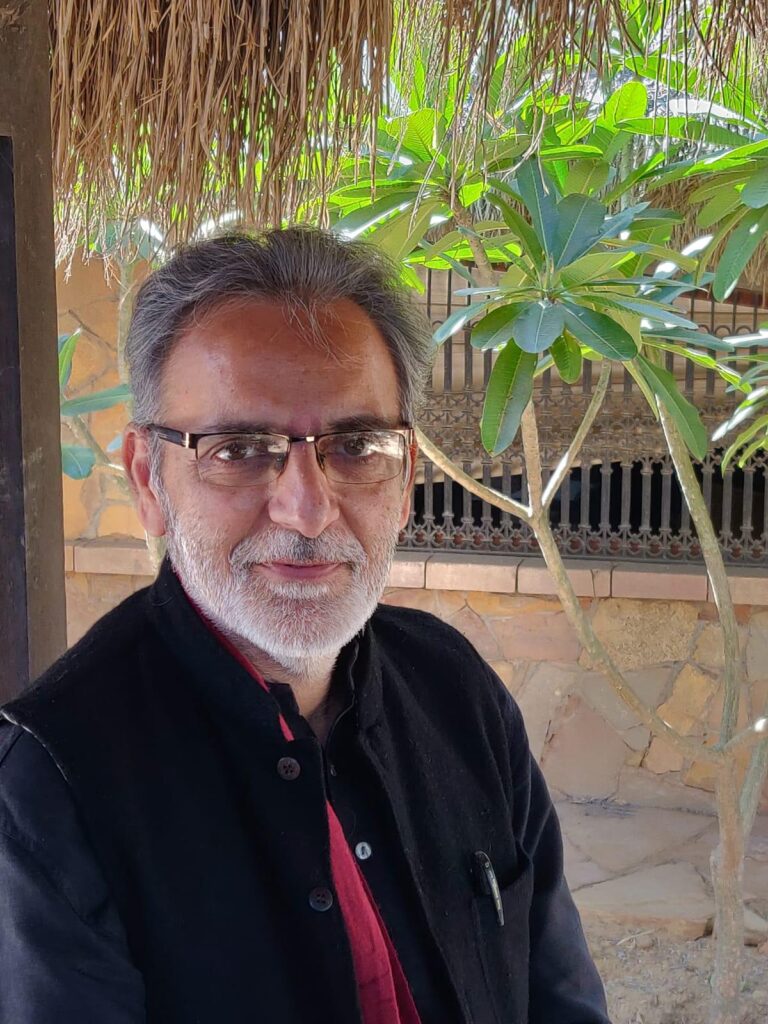
Sandeep Virmani of Hunnarshala Foundation.
What is the nature of the partnership you entered into with the community?
In Shamli, we signed an agreement with each family articulating the roles of the family, the rehabilitation committee, and our organisations. We financed one room, the staircase, and the sanitation. The families paid for the rest.
Misereor Germany gave funding and HT Parekh Foundation supported all sanitation work. It was the government’s responsibility to provide roads, water and electricity, but finally we had to raise money for that too. The villagers were extremely resourceful. They got cheap material and support from former employers. Many local people helped, including a supplier who not just gave extensive credit, but also cash when funding was delayed.
NGOs Sadbhavana and Vanangna supported the rehabilitation committee to ensure that children gave their board exams in their old exam centres and didn’t lose a year. We helped with enrolments into schools, new identity papers, and resuming pensions. We also conducted psycho-social counselling with the children to help them overcome the trauma of loss and separation.
You insisted, for instance, that women be part of the Rehabilitation Committee. Do you think such interventions can have a lasting impact on social mores?
When a big social upheaval happens, it provides opportunities for making paradigm shifts in social norms such as patriarchy. Women are ready to change their roles in a new location where everyone has to contribute; men are ready to turn a blind eye to women in unconventional roles. This provides women the opportunity to not only demonstrate their abilities but also assure men that it doesn’t threaten them. For instance, women are very good at bringing consensus on difficult decisions. It particularly helps the girl child, as they see what is happening and adopt the changes permanently.
And what did you in turn learn from these families?
Perhaps the biggest contribution from the IDPs of Muzaffarnagar has been the building of the daat chat or shallow domes. When we visited the old homes in Kutba, we saw an array of beautifully crafted roofs made with bricks. These roofs look flat but are in fact very shallow domes, where all the bricks are in compression. It allows for flattening the top of the roof and building another storey on top. The masons who build these roofs are expert craftsmen. The importance of the shallow dome roof is that it can reduce the use of cement and steel by 70-75%. This is important; these two contribute most to carbon emissions from the building industry. The roof is cheaper than RCC and more durable. We saw homes with roofs that are 300-400 years old!
We researched and tested the roofs for seismic safety and invited the artisans to share their knowledge at a national conference in Delhi. Since then, many architects are adopting the shallow dome. Artisans are invited to architecture schools to demonstrate and teach the next generation.
Perhaps this is a befitting recognition of a culture and a people who did not deserve to be violently removed from their ancestral homes.
vaishna.r@thehindu.co.in
source: http://www.thehindu.com / The Hindu / Home> Society – In Conversation / by Vaishna Roy / April 16th, 2022