Category Archives: Books (incl.Biographies – w.e.f.01 jan 2018 )

Iqbal’s works to the fore

Hyderabad, TELANGANA :

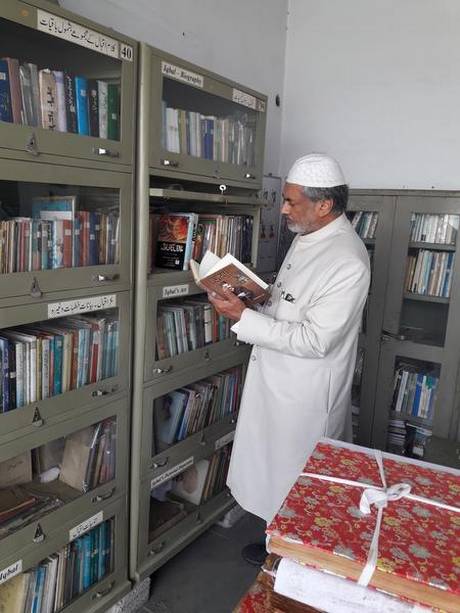
Iqbal Academy has 6000 books on Iqbal | Photo Credit: By arrangement

Hyderabad-based Iqbal Academy brings to light unpublished works of Allama Iqbal

Die-hard fans of Allama Iqbal, one of the greatest of Urdu poets, can now look forward to reading his little known and yet unpublished verses. The Iqbal Academy, Hyderabad, has planned to bring out this 200-page book titled Baqiyat-e-Iqbal in India. After much deliberations, the Academy took this decision on the occasion of the poet’s 141st birth anniversary on November 9.

The poet-philosopher has a huge fan following in the Urdu world, particularly in the sub-continent. Many theories abound as to why these verses were not published during the lifetime of the poet. Some say these were early poems of Iqbal and naturally lacked the philosophical profundity of his later works. Therefore, they were not included in the published works. Some believe that Iqbal had dropped these early verses as his thinking and philosophy had changed a lot by the time his celebrated book Bang-e-Dara was published. Whatever be the reson, these early poems have the distinct stamp of Iqbal — thestyle, diction and the unique choice of words.

Though the Baqiat-e-Iqbal was published in Pakistan way back in the 1950s, it remains unavailable in India. “We will have the credit of publishing it for the first time in India,” says Ziauddin Nayyar, vice president, Iqbal Academy.

Interestingly it was in Hyderabad that the first works of Iqbal was published by Abdul Razzak in 1916. The first Youm-e-Iqbal (Iqbal day) was also celebrated in the city on January 7, 1938 and the Bazm-e-Iqbal, the first Iqbal society was set up here. Also, Hyderabad’s connection with the poet who penned the famous nazm Sare jahan se accha goes deeper. He had visited Hyderabad thrice, first in 1910. He was the guest of the then Prime Minister, Maharaja Kishan Prasad. During his brief visit Iqbal was taken to the Qutb Shahi tombs where he penned the poem Gorastan-e-Shahi mirroring the rise and fall of kingdoms.

The Iqbal Academy, which has a collection of 6000 books on the poet, proposesto set up a research centre and extend all facilities to scholars who intend to do doctoral theses on Iqbal. Last weekend a programme was organised at the Academy’s premises in Gulshan-e-Khaleel complex, Masab Tank to commemorate Iqbal’s birth anniversary.

source: http://www.thehindu.com / The Hindu / Home> News> Cities> Hyderabad / by J S Ifthekhar / November 13th, 2018

The glorious contradictions of Qazi Abdus Sattar

Machreta (Sitapur) –  Aligarh,  UTTAR PRADESH   :

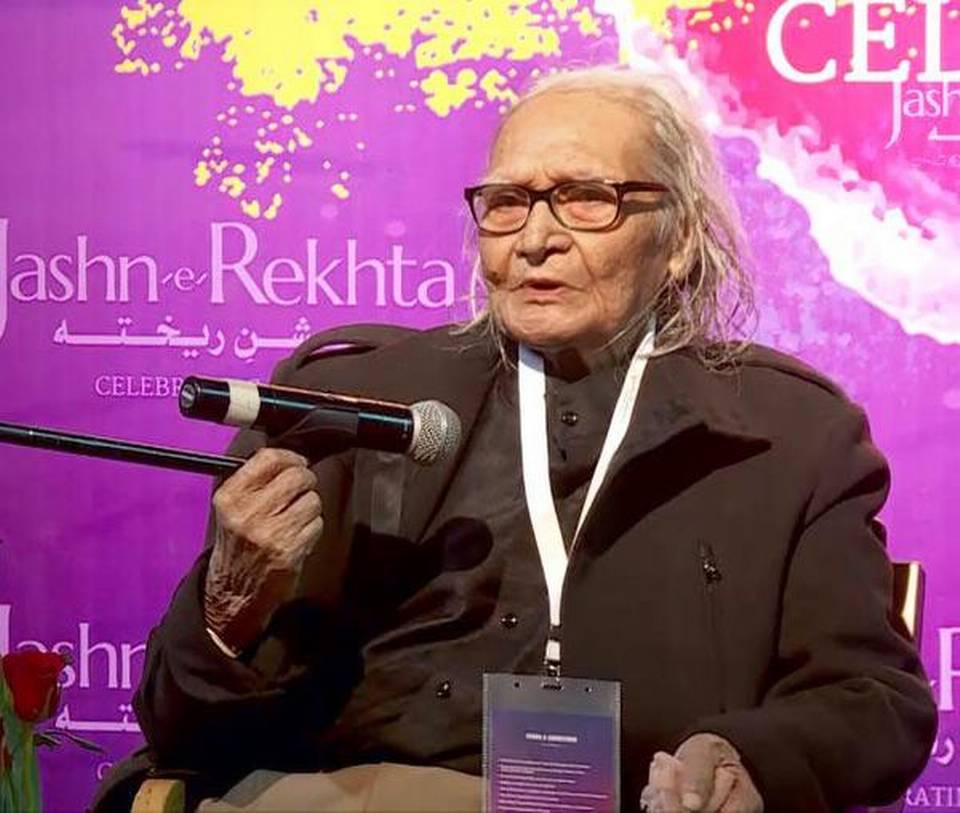
Master of brevity: Qazi Abdus Sattar at Jashn-e-Rekhta

A votary of India’s syncretic culture, the novelist will be remembered for his sketches of Awadh aristocracy and his prose style which has touches of grandeur

‘Do I contradict myself? Very well, then I contradict myself; I am large, I contain multitudes’, wrote Walt Whitman in his famous “Song of Myself”. Qazi Abdus Sattar (1933-2018), a novelist, a literary polemist and a master raconteur, who died last week after a long illness, contained multitudes in his fiction and conversation. If grand historical figures jostle with ordinary folks in his fiction, in his conversation he used his right to offend to the maximum. His fiction always touched crests and his conversation knew no troughs.

Beautiful metaphors

A proper assessment of a writer begins after his death, more so in the relatively limited circle of Urdu criticism where everyone knows everyone else. However, most critics and readers of Qazi Abdus Sattar credit him for writing remarkable historical novels, for his sketches of Awadh aristocracy, and above all for his prose style which has touches of grandeur. Among his historical novels “Dara Shikoh” (1968) gives an account of the war of succession among Emperor Shah Jahan’s four sons and Dara’s defeat at the hands of Aurangzeb, using beautiful metaphors and turn of phrases. His epic style characterises the novel. A votary of harmony and India’s syncretic culture, Qazi Abdus Sattar’s sympathies with Dara Shikoh are unmistakable. A scholar of Sanskrit texts, his Dara is often dressed in traditional Hindu attire and he prevails upon his father Emperor Shah Jahan to exempt the Hindu devotees from paying tax for taking bath in river Ganges.

Delineating the bard

His novel “Ghalib”(1976) captures not only the vignettes of Ghalib’s life – his devotion to poetry, his economic worries, his travels, his wit, his love life – but also the ethos and the milieu of the 19th Century.

Qazi Abdus Sattar is equally comfortable in delineating characters from distant Islamic history in novels like “Salahuddin Ayubi” (1968) and “Khalid Bin Waleed”. His novel “Salahuddin Ayubi” takes the reader into the 12th century period of the crusades in which Salahuddin Ayubi distinguished himself for his bravery, his excellent detective work and his love of human beings. Paradoxically the novel also shows that oppression of the weak and the marginalized groups has been an ugly fact of history.

Qazi is both an heir to and critic of landed aristocracy. The taluqdars of Awadh, who are also the concerns of Qurratul Ain Hyder and Attia Hosain, hold some inexplicable fascination for him. They represented a past that he kept living both in his fiction and life. He appeared to welcome the end of Zamindari but he refused to free himself from its sinister charm. He always aligned himself with progressive causes and was a key figure in Janvadi Lekhak Sangh, but he did not see any contradiction in his celebration of the lifestyle associated with an unjust system.

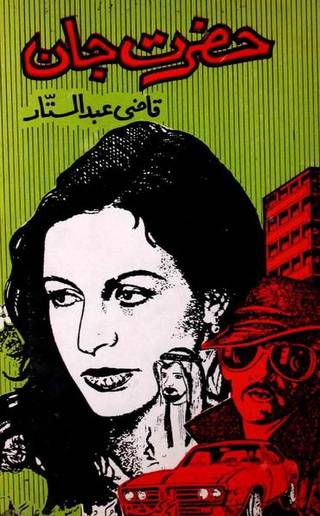
As a fiction writer he is spot on in his treatment of the landed gentry of Awadh. His novel “Shab Guzida”(1966) gives an inside view of the life of zamindars and taluqdars of Awadh. The unjust debauch Bade Sarkar and his virtuous son Jimmy represent different sets of values in the novel. His “Pahla aur Akhiri Khat” (1968) charts a life away from the framework provided by Progressive Writers’ Movement. Through the depiction of the life of Chaudhri Nemat Rasool of Lalpur, the novelist shows zamindars in the grip of economic and social problems after the end of Zamindari. “Hazrat Jaan” and “Tajam Sultan” are his other remarkable works. Unlike many other writers in the past who have made Awadh the subject matter of their work, Qazi’s distinction lies in focusing on the rural life in Awadh in his fiction.

He was equally successful in his novelettes and short stories with Awadh again very much providing the backdrop of many of his narratives. “Peetal ka Ghanta” , a collection of his short fiction, includes ‘Peetal ka Ghanta’, ‘Malkin’, ‘Azu Baji’, and ‘Majju Bhaiya’. “Ghubar-e-Shab”, also set in a village around the period of the Partition, treats the subject of communal disharmony and communal politics with irony.

A Padma Shri awardee, apart from numerous other prestigious awards, Qazi Abdus Sattar worked as professor of Urdu at Aligarh Muslim University and was great friends with scholars and critics of Hindi. He greatly valued his readers in Hindi and stressed the closeness of Hindi and Urdu (even Punjabi). But he was very strongly against changing the script of Urdu. He also strongly believed that literature should be ‘beautiful and wholesome’.

A great fan of Flaubert, he could achieve a lot in very little, thanks to his felicity with language. No wonder he has not written door stoppers and “Ghalib”, all of less than 300 pages, is his longest work.

A raconteur par excellence and not known for mincing his words, he was an interviewer’s dream and an event manager’s guarantee for the success of a literary gathering. Prem Kumar’s remarkable book of his interviews is a blessing for Hindi readers as is Rashid Anwar’s for Urdu readers. Possessed with Oscar Wilde like ability to produce witty (often gossipy) quotes, Qazi Abdus Sattar’s sentences, as Urdu poet Shahryar once said, drew the applause generally reserved for Urdu poets.

QaziAbdusSattar02MPOs14nov2018

The grace and grandeur of his prose style rubbed off on his life. Tariq Chatari, a prominent Urdu short story writer, who believes that Qazi took Urdu afsana to a different level, says that he carried himself very much like a character from his fiction. Qazi Afzal Husain (no relative) considers Qazi a master prose stylist in line with Muhammad Husain Azad and Abul Kalam Azad. Time will tell.

source: http://www.thehindu.com / The Hindu / Home> Books> Authors> Obituary / by Mohammad Asin Siddiqui / November 09th, 2018

The emperor of oleander blossoms

INDIA :

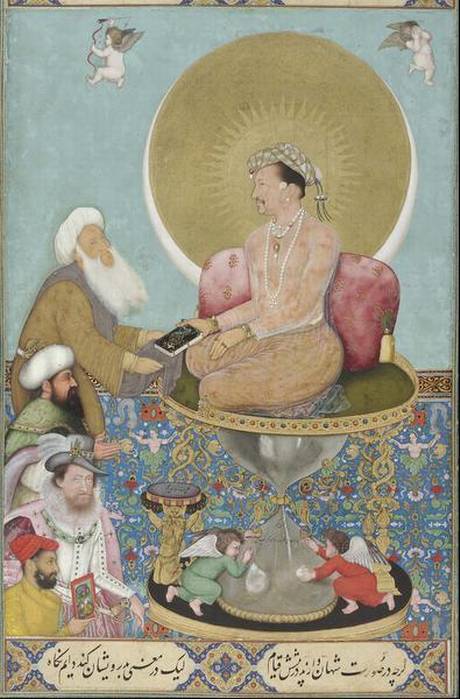
Colourful life: Jahangir preferring a Sufi sheikh to kings, a miniature painting by Mughal artist Bichitr, ca. 1620 | Photo Credit: Wiki Commons

Were the Mughals the most literary dynasty that ever ruled India?

The Mughals have garnered many adjectives over the centuries. Once, when the world looked in awe at the power and wealth of Hindustan, they were simply ‘Great’. More recently, as Hindustan locks itself in a manic tussle with its past, they are ‘foreign’ or ‘invaders’, often both. Perhaps it’s time for a calming epithet: the Mughals were, without question, literary.

The first of them, Babur, is known for defeating Ibrahim Lodi in Panipat, but almost equally renowned for his autobiography. It’s not that kings hadn’t written before. Julius Caesar was composing accounts of his Gallic campaigns in 1 BC. The earliest autobiography — an account of a person’s life, not a record of events — was St. Augustine’s Confessions, written circa 400 AD. Babur, living a millennium later and a world away, invented the form for himself with Baburnama, the first personal memoir in Islamic literature. And he did it with flair — “both a Caesar and a Cervantes”, as Amitav Ghosh has described him — writing with lucid ease, whether of the pangs of his first love or his battle strategies. (The first autobiography in an Indian language, incidentally, may be Ardhakathanak (‘Half Life’) by Banarasidas, a Jain merchant who wrote in Braj Bhasha, and in verse, in the 17th century.)

The urge to write

In the centuries after Panipat, the Mughal empire grew into a global superpower, then shrunk to a wretched speck. The last Mughal ruled little besides the Red Fort, but he did preside over an efflorescence of Urdu poetry: Ghalib, Momin and Zauq shone bright in his court, and Bahadur Shah ‘Zafar’ was no mean poet himself. Imprisoned and exiled after the Uprising of 1857, the frail emperor would write Na wo taj hai na wo takht hai, na wo shah hai na dayar hai (‘No crown remains no throne remains, neither ruler nor realm remains’). The urge to write, however, that remained: Bahadur Shah is said to have etched his verses on the walls of his prison, with charcoal, when he was denied paper and pen.

Babur may not have been entirely displeased. In a letter to his son, Humayun, Babur offers equally urgent advice on how to rule and how to write. The unfortunate Humayun is ticked off on both counts: his desire for solitude is “a fatal flaw in kingship”, and his prose is convoluted. “Who has ever heard of prose designed to be an enigma?” writes Babur, exasperated. Humayun must write, instead, “with uncomplicated, clear, and plain words”.

Father and son

Humayun was unable to meet his father’s exacting standards, both as ruler (he lost the fledgling empire) and as writer (even if he did die in a library), but the literary gene stayed with the dynasty. It blossomed in Gulbadan, one of Babur’s daughters, who wrote the Humayun-nama; it gestated in Akbar, who was as famously illiterate as he was fond of commissioning histories and translations; and, most notably, it flowered in Jahangir, whose literary talents equalled, if not exceeded, his great-grandfather’s.

William M. Thackston, who has translated the Baburnama, admits that despite its many surprises and charms, the memoirs can sometimes lag a bit: the “reader may skip or skim at will”. The Jahangirnama, on the other hand, flows like a breeze — so much as to attract the criticism to which ‘popular’ writing is prone. Thackston, who has also translated the Jahangirnama, writes that while much of this work is “fascinating…for the general reader” much is also “of little or no historical significance”. Fun to read, that is, but inadequately serious. As Jahangir himself is often accused of being: lightweight.

Playful tone

It’s true enough that the Jahangirnama is marked by a sometimes startling whimsy. Once, marching with his nobility along a rivulet, its banks overgrown with oleanders, Jahangir had them all arrange the blossoms on their turbans so that “an amazing field of flowers was… made!” Another time, having caught a dozen-odd fish, Jahangir released them all with pearls pinned to their noses. Even when he is writing of seemingly sober matters, Jahangir can’t help a certain playfulness.

Near the beginning of the book, for example, Jahangir lists a set of decrees that he issued when he became emperor. Among these worthy orders — abolishing certain taxes and punishments, building wells and hospitals — was one that banned the manufacture and sale of alcohol.

Here, however, Jahangir adds a caveat: he has been drinking — and has often been drunk — since he was 18. Later, he offers a detailed account of his alcoholism and de-addiction (his hands shook so much, others poured the liquor down his throat; a doctor told him he wouldn’t last six months; he diluted his arrack with wine and raised his spirits with opium) — a remarkable confession made even more so by the fact that Jahangir makes it immediately after describing the “great persistence” it took for him to get his son, Shahjahan, to down a birthday drink.

A drinking problem is not all the emperor disclosed. The Jahangirnama also contains a frank account of murder; or, at least, an order to murder, which led to the ambush and assassination of Akbar’s friend and biographer, Abu’l Fazl.

Murder most murky

The plot is murky and tangled, but in brief it was thus: as prince, Jahangir felt threatened by Abu’l Fazl’s influence over the emperor, Akbar, and so had him killed. It was a ruthless decision, and reveals a man of steely ambition under the drunken haze and oleander blossoms.

It’s an ambition that’s often overshadowed by Jahangir’s acute sense of beauty and delight in nature. He could describe the weather such that you can feel it, “the air was so fine, a patch of cloud was screening the light and heat of the sun, and a gentle rain was falling”. Spring flowers in Kashmir would make his heart “burst into blossom”.

Among the best-known passages in the Jahangirnama are those about the mating, nesting and eventual parenthood of Jahangir’s pet saras cranes, Laila and Majnu. So intense is his joy in their rituals — “I immediately ran out to watch” he writes of the dawn on which they mated; then of how Majnu would guard his mate all night, and scratch her back with his beak at dawn to relieve her of nesting duties — that one gets the sense Jahangir would have sat on those eggs himself, if he could.

Writers’ prerogative

It’s passages like this that prompted Henry Beveridge, editor of a 19th-century translation of the Jahangirnama, to declare that Jahangir would have been a “better and happier man” as the “head of a Natural History Museum”. And yet, would the head of a museum have commissioned the painting of Inayat Khan? This, too, is a story in the Jahangirnama. A hard-drinking nobleman appeared before Jahangir, asking for sick leave.

Inayat Khan was emaciated beyond belief. “How can a human being remain alive in this shape?” the emperor exclaimed. Jahangir let Inayat Khan go home, gave him a generous grant, but also, he summoned his painters. Like the extinct dodo, of which Jahangir’s atelier has produced the most authentic record, so the painters now created a terribly vivid portrait of a dying man.

Such single-mindedness is, of course, the prerogative of emperors — and also, perhaps, of writers. Both to rule and to narrate requires a certain distance, even coldness. In fact, of late, Jahangir’s writings, and therefore his rule, are being re-evaluated.

The historian Corinne Lefèvre, for example, does not read the Jahangirnama as a record of imperial fancies, but finds it “a masterpiece of… imperial propaganda”. Jahangir himself suggested as much when he ordered copies of his book sent to other kings as a “manual for ruling”.

Unlike his father, Jahangir did not create the intricate foundations of a nation-state. Unlike his son, Jahangir did not build the Taj Mahal. No lasting administrative reforms, no carved blocks of marble, it’s a book that Jahangir left us to read. Just words.

No wonder he’s so open to interpretation.

The writer’s most recent book is Jahangir: An Intimate Portrait of a Great Mughal.

source: http://www.thehindu.com / The Hindu / Home> Books – The Lead / by Parvati Sharma / November 09th, 2018
View from the other side

NEW DELHI :

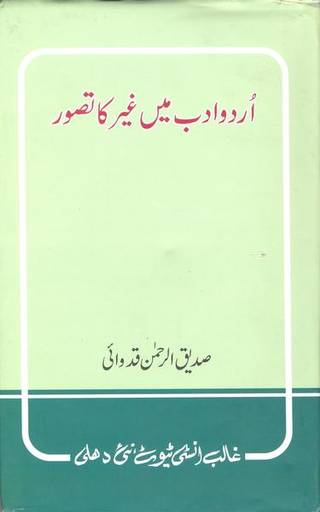
“Urdu Adab Mein Ghair Ka Tasawwur” explores the concept of the other in Urdu literature

The biggest ‘other’ is not the one whose religious beliefs, cultural practices and social convictions and the mode of expression – language – stand poles apart but it is the one who is deeply revered and worshipped and people seek his blessing all the time. It refers to the almighty who remains inaccessible to all those who adore Him. Man cannot reach to Him though he feels His presence everywhere. The multiple and contradictory referents of the term “other” constitute literary texts which set people free from the humdrum of life. These poignant and pithy observations are offered by a widely- acclaimed fiction writer of Urdu, Khalid Javed in his article “Lafz-e-Ghair – Falsafiyana Tanazur Mein” (the Other in Philosophical Perspective) which is carried by an astutely produced anthology, “Urdu Adab Mein Ghair Ka Tasawwur” (The concept of the other in Urdu Literature) published by the Ghalib Institute, New Delhi recently.

The book, carrying 18 articles, presented in an international seminar on the concept of the other and aptly edited by Professor Siddiqur Rehman Kidwai, explains how the much-debated and hatred filled notion of the other is perceived and presented in various genres of Urdu literature. The articles also discuss how this concept is creatively depicted by prominent Urdu authors and poets such as Meer, Ghalib, Daagh, Momin, Manto, Premchand, Qurratulain Hyder, NM Rashid, Meeraji, Akhtarul Iman and Shahryar, etc.

Delineating invisible power

Khalid Javed, whose two novels – “Maut Ki Kitab” and “Naimat Khana” created waves in Urdu literature, asserts that every invisible power is essentially the other, no matter it is God or Devil. Invisible but all-pervasive power conjures up ecstasy and fear simultaneously and it gives birth to “Myth” and “Faith”. According to the ancient Indian philosophy, ‘ego’ is the other as Atma is the essence of existence and Khalid Javed rightly asserts that people completely unaware of their inner self or Atma, take the body, sensory organs and intellect for their existence. When one attains enlightenment, he realises that a marked sense of distance exists between the inner self and its ill-conceived outer manifestations.

Describing the term as the most commonly used tool of political subjugation, Siddiqur Rehman Kidwai points out that the process of othering is conveniently adopted by the people who consider themselves rescuers who assert that they are committed to empowering all those who are at the receiving end.

In his brilliantly structured address, “Formation of the Other – Strategy and Kinds”, noted Urdu critic Qazi Afzal Hussain says that the concept of other portrayed in literature hardly endorses what is being projected by the social scientists.

The collective other created by the power that – be is not acceptable as it unfailingly produces hate literature. In literature, the other is a foil for creativity that refuses to divide men into caste, colour, linguistic and religious categories and in the creative world, political affiliations and ideologies hardly have any significance. Qazi Afzal brilliantly concludes by saying that if a literature does not respect the sensibilities of others , it loses value and it fails to ensure the transcendence of life.

A well- author known fiction writer Zakia Mashadi points out that uneasy co-existence, no matter how old it is, sets in motion the process of subjugation which in the final reckoning perpetuates an intense feeling of impotent rage among people who are being marginalised – unconditional emulations is the most lethal form of othering as it wipes out every trace of self -identity

Dalit novel in Urdu

Can a religious text that espouses the cause of equality can be used as a formidable tool for not granting the right to worship to the subalterns? Yes it is being used for administering severe punishment to those belonging to the downtrodden class and who have been denied and this sums up the poignant narrative produced by a prominent Urdu Novelist Ghazanfar in his novel “Divya Vani” which is perhaps first full-length Dalit novel in Urdu

LucidWritingsMPOs14nov2018

Lucid writings

Many prominent authors such as Anis Ashfaq, Qazi Jamal, Ziauddin Shakaib, Ali Ahmad Fatimi, Abul Kalam Qasmi, Khalid Qadri, Deepak Budiki, Sarwarul Huda, Mushraff Alam Zauqi, Abubakar Abbad and Javed Danish took pains in delineating various manifestation of the other in easy to understand the idiom.

The articles covering across a huge sweep of the time attempt to understand various shades of vexation of the pain of those whose sufferings remains unheard. It is the book that acquaints the readers with varying and enticing perspectives on the dominant discourse of our times.

source: http://www.thehindu.com / The Hindu / Home> Books> Authors / by Shafey Kidwai / August 17th, 2018

FORTUNE COOKIE: The secret recipes of Avadh’s Taluqdars

UTTAR PRADESH / Gurgaon, HARYANA   :

Salma Husain has quietly been digging up culinary gems

When Salma Husain arrived in Delhi in 1964 to take up a translator’s job in the Persian section of the National Archives of India, she was the first young woman from her community to move out of her parental home and pursue a career when she was still unmarried.

Salma apa, as she’s known among her younger colleagues, has never worn this fact as a badge of honour — I have known her well for 20 years, but I just learnt about it.

She doesn’t need to, for Salma apa, encouraged by the former boss of ITC Hotels, Habib Rehman, has quietly been digging up culinary gems lost in old Indo-Persian manuscripts, stumbling upon such beauties at the British Library as the Nuskha-e-Shahjahani, a cookbook dating back to Emperor Shahjahan (that was when red chillies were still not common, nor were tomatoes, and brinjals were popular because of their ubiquity).

The repertoire of Persian scholar and food historian Salma Husain extends from the humble Dabi Arvi Ka Salan to Avadh’s 'national dish', Shaami Kababs (above), without which no royal dastarkhwan is considered complete
The repertoire of Persian scholar and food historian Salma Husain extends from the humble Dabi Arvi Ka Salan to Avadh’s ‘national dish’, Shaami Kababs (above), without which no royal dastarkhwan is considered complete

You’ll find the accumulated fruits (or orchard, I would say) of the long hours she has invested in locating old cookbooks and recreating recipes from royal memoirs and the accounts of foreign travellers in her anecdote-studded cookbook, The Emperor’s Table.

With Flavours of Avadh, though, Salma apa has produced for the first time a cookbook that goes beyond the much-travelled by-lanes of Aminabad, Lucknow, and travels across the kitchens of the taluqdars who defined (and refined) the culture of region after 1857.

Salma apa’s journey starts at the dastarkhwan of Rajkumar Muhammad Amir Naqi Khan of the Mahmudabad family, whose stunningly attractive wife, Kulsum Begum from Hyderabad, has had Delhi and Mumbai eating out of her hands during her stints with the ITC.

It moves on to Kotwara, a principality 160km from Lucknow bordering Nepal in the Lakhimpur Kheri district. Kotwara is famously associated with the filmmaker and fashion designer Muzaffar Ali, whose kitchen in his Gurgaon home is presided over by Rehana, the family’s retainer for six decades.

The Flavours of Avadh story hits the Grand Trunk Road and meanders into the principality of Tirwa in Kannauj district, whose most illustrious ruler, Durga Narain Singh, travelled extensively across Europe in the years before World War II and came home with a French chef to preside over his kitchen.

The story returns to Lucknow, where we meet the colourful Nawab Jafar Mir Abdullah in his lair, Sheesh Mahal; moves to Sitapur, which was awarded by a grateful British Raj to the Kapurthala family for leading the operation against the sepoys behind the historic siege of the Lucknow Residency; and has a Kharbooze Ki Kheer at the Lucknow home of the Zaheer family of old Congress leaders, whose most illustrious member was Syed Nurul Hasan, the erudite historian and Indira Gandhi’s education minister who introduced the 10+2 system.

Itt ends at Shakarganj, the ancestral home of the descendants of Baba Farid, the most famous of whom was the late Dr Abdul Jalil Faridi, a sought-after medical practitioner and popular MLA with a famous sense of humour.

From these blue-blooded families, Salma apa has collected old recipes to put together a fascinating collection. Of course, you can’t have an Avadhi cookbook minus recipes of such celebrity dishes as the Galawat ke Kabab, Kundan Qaliya, Murgh Mussallam, Dumpukht Gosht and Ande Ka Halwa. Salma apa has them all.

What makes her cookbook special, though, is its ability to cater to our appetite for the exotic. We have, for instance, the Mahmudabad house favourite, Dhungare Baigan (smoked brinjals with yoghurt, onions and Serrano chillies), or the Tirwa family’s Subz Mewa Malai Pulao, where ghee, cream and hung yoghurt are used as generously as seasonal vegetables, or the Ananas ke Paranthe (layered pineapple paranthas) served by the Sheesh Mahal family for breakfast during winter, or the Gajar ka Bharta perfected by Sitapur’s cooks, or Baba Farid ki Meethi Khichri, which has been cooked at Shakarganj on every death anniversary of the mystic saint.

Salma apa has made sure that we’ll see Avadhi cuisine in an entirely different light.

source: http://www.dailymail.co.uk / Mail Online India / Home> India / by Sourish Bhattacharyya / February 26th, 2015

The graves unseen by History: The Malabar Struggle and the stories we chose to forget

KERALA :

GravesMPOs10nov2018

This is the first in the two-part series on the much-forgotten Malabar Struggle and stories of ghastly violence committed by the British in the region around 1921. I Sameel, the author of this article, also looks at why and how such incidents were ‘left out’ or/and ignored by our mainstream historians. This article was originally published by Madhyamam Weekly on October 8, 2018. The article has been translated from Malayalam by Najiya O of TwoCircles.net.  

The Malabar Struggle is a critical time space in the Indian freedom struggle. The different angles of viewing the struggle are evident in the terms of Mappila Rebellion and Malabar Revolt etc. The Malabar Struggle has been significant in influencing the creation of the ‘common’ conscience of ‘modern Kerala’, determining the path of the Indian nationality and the formation of the social identity of Malabar, according to EV Ramakrishnan in Malabarine Kandethal: Padanam, Malabar Desheeyathayude Idapadukal (DC Books, 2008).  However, the Malabar Struggle still remains a critical timespace in the history by the different ‘looks’ mentioned above.

The official statements regarding the Indian freedom struggle either kept silent on the popular protests related to Malabar or mentioned them only casually. There are no evidences for even the Wagon Tragedy, which received a bit more public visibility compared to other incidents related to the Malabar Struggle, to have deeply touched the conscience of Malayalis (EV Ramakrishnan – Page 13). Questions are arising as to why the incidents that led Malabar to a battlefield for nearly a century did not receive the deserving relevance in the historical conscience of Malayali. Even the Wagon Massacre (named as Tragedy in history) gained visibility only through the popular cultural media, including the cinema. As MT Ansari points out in ‘Malabar: Desheeyathayude Idapadukal’ (DC Books, 2008) “Only the Wagon Tragedy of November 20, 1921, can be seen in the nationalist history lessons. As if all the other incidents, whether of Muslims or Hindus, insult us.  However, we do not conceal the Jallianwala Bagh massacre of April 19, 1919 (379 people were killed on the orders of General Dyer, according to official records) and the Chauri Chaura incident in which angry peasants burnt alive 23 policemen on February 5, 1922. Compared to the Malabar Revolt (2,337 people killed, 1,652 injured and 45,404 imprisoned in the Malabar Revolt as per official records – and according to unofficial records, 10,000 were killed, 50,000 imprisoned, 20,000 exiled and 10,000 found missing), other incidents are limited in extensiveness.”

Just like the Malabar Revolution was ignored by the national historical studies, it can also be seen that some significant incidents in it were ignored or only casually mentioned even in the special studies related to it. Important among them is the massacre by the British at Melmuri-Adhikarithodi in Malappuram. This incident comes second only to the bloody Pookkottur battle in the number of people killed among the various incidents in the Malabar Rebellion. While more than 350 people lost their lives at the Battle of Pookkottur, the massacre at Melmuri-Adhikarithodi took the lives of 246 people on October 25, 1921. People including women, children, aged and sick people were forced out of their houses, lined up and shot dead by the Dorset Regiment, an infantry regiment of the British army. However, it has not found a place in the public history. Some incidents including the Melmuri-Adhikarithodi massacre have been totally neglected from the general readings about the violence of the colonial government and massacres that took place in Kerala. And hence, more detailed studies should be carried out about the massacres that took place in Kerala, especially Malabar, during the colonial rule.

Massacres: the seen and unseen

It can be seen clearly that the Punnapra-Vayalar struggle (a communist uprising in the princely state of Travancore, British India, against Prime Minister, C. P. Ramaswami Iyer and the state in which around 1,000 people were allegedly killed) has got much importance in the public readings and history in the studies related to the massacres in Kerala. Though the massacres in the Malabar Revolution including the Pookkottur Battle have been exceptional considering the nature of the struggle and power of the enemy etc when compared to the Punnapra-Vayalar struggle, they are given only lesser attention in the public readings.

The Punnapra-Vayalar incident as such is considered a central theme in the history of struggles in Kerala. But such a position is not given to the Mappila struggles in Malabar in which thousands of people have died. The Melmuri-Adhikarithodi massacre has not become a central theme for even the studies about the Malabar Struggle.

There have been studies on whether the massacres related to the Malabar Revolution were part of the national history or not; but even those studies have not probed into the government terror involved.  Such a probe would be possible only through the historiography centred on these massacres. This article is an effort to discover the material causes and archives from the memory of people and historical remnants of this region for such a historiography. And this effort is relevant as the historical narration of the Malabar Struggle should go beyond the colonial records of RH Hitchcock, GRF Tottenham, CT Atkinson and Divan Bahadur C Gopalan Nair as well as the studies carried out by Dr M Gangadharan and Dr KN Panicker.

The second biggest massacre

“Large gang reported last night 4 miles north-west Malappuram.  Operations undertaken against them by Dorsets, Artillery and armoured cars.  Enemy met in jungle west of Melmuri opposing our troops there and in the houses, refusing to come out when ordered to surrender and offering continued and determined opposition resulting in 246 rebel casualties.”  This was the content of a Telegram [No.S 250/453/G] sent by the General Commanding Officer of Malabar to the Madras Government on October 25, 1921. (GRF Tottenham – ‘The Mappila Rebellion 1921-1922’, Madras Government Press, 1922)

Innocent women and children along with old and sick people were forced out of their houses and shot dead, houses looted and set on fire by the British army’s Dorset Regiment. This took place in the places named Konompara, Adhikarithodi, Melmuri Muttippadi and Valiyattappadi, in a 1.5 kilometre circumference on the Kozhikode-Palakkad national highway, which is 3 kilometres from Malappuram town. This is the Melmuri-Adhikarithodi massacre that took place on October 25, 1921. The soldiers in the companies A and D in the second battalion, Dorset Regiment, reached Konompara in armoured vehicles with cannons under the leadership of Lieutenants Hevic and Goff in the morning and massacred 246 people.

Cannon balls were fired in the beginning with a big sound, said Nambankunnan Moideen of Melmuri Valiyattappadi who was born 10 years after the incident. The frightened people hid in their homes. Then the army entered each and every house and forced everybody out. Those who refused to get out of their houses were forced out by hitting and torturing with the stock and bayonet of guns. Wooden storage boxes named ‘mancha’ and ‘pathayam’ were broken and the contents looted.  Books including the Qur’an, Sabeenappattu (Arabic songs praising prophet Muhammed), baiths (Arabic songs), padappaattu (war songs) etc were piled up in the yard and set ablaze, and then the houses roofed by palm leaves and grass were set on fire.  Then all the men were lined up and shot dead one by one. Those who tried to prevent, including women and children, were also shot dead. The operation which began in the morning came to an end by the long siren of the Army Commandant around noon.  The army was aiming the gun at Chalattil Kalladithodi Moideenkutty Haji on a sideway at Konompara when the long whistle blew and they let him free, said PT Muhammed Master who was four years old at the time and died recently. (Nisar Kaderi – ‘Pookkottur Yuddhavum Melmuri Operationum’, ‘1921 Churul Nivaranam’ – Pookkottur Yuddha Smaraka Samithi Souvenir, 2007)

Hundreds of people were killed in the orchards and courtyards, and about 100 houses were set ablaze in the operation of a few hours.  Some remained in a critical situation as good as dead after having been shot. There were some others who lay abandoned for about four days and then died as there was nobody to take care of them.  The martyrs were buried in the places they lay dead.

The graves in the courtyards

Though most of the studies on the freedom struggle and the Malabar struggle kept silent on this massacre, the graves played an important role in keeping the incident alive in the memories of the region and the generations that followed.  Those who were shot dead in the courtyards in front of the houses were buried there itself. The burial was completed by the people who came from nearby places on the request of Kunjithangal of Malappuram Valiyangadi, the president of the Malappuram Khilafat Committee.

Many people have been buried in a single grave.  Many were buried in the dead of the night out of fear of the army.  While some were buried in the laterite stone quarries (Kalluvettukuzhi) near the houses, in some places women alone dug graves and buried the dead.  Women had to do the burials, which is the duty of the men according to the Islamic belief, as all the men in the locality had fled fearing the army.  One of the graves dug by women, which is only 2 feet in depth, is still there.  Now we have information about only 40 people buried in nine graves out of the 246 martyred.

GravesBookMPOs10nov2018

Daughters shot dead for their fathers

Most of the cruelties done to women, children and the aged by the British army during the Malabar Revolution haven’t been included in the public historical narratives.  What the women, children and the aged experienced at the Melmuri-Adhikarithodi incident were cruelties violating the common norms to be followed even during war time.  Among the graves are those of two daughters who were killed while trying to prevent the army taking away their fathers.

One of them is an 11-year old from the Keedakkadan family at Adhikarithodi.  She was beaten by gunstock when she tried to prevent the British from taking away her father from their house, holding him tight.  When they couldn’t take her apart from the father even after several attempts, the army killed both of them together. It is said that they were visiting the girl’s mother’s house.

The other one is Kadiyamu, daughter of Areeppuram Parakkal Kunjeen Haji of Konompara Cheeranganthodi.  Kadiyamu had come from her husband’s house to take care of her sick and aged father. The army tried to push her off too with gunstock when she tried to prevent them dragging off her aged father who was lying on the big wooden storage container (pathayam). At last, Kunjeen Haji was forcefully taken off to the eastern yard of the house and laid on his front on the ground. Kadiyamu lay on her father to prevent him from getting shot. Finally, both were shot dead. Our pages of history couldn’t document these two brave daughters. And this can be read as evidence for the selected silence of the public mind towards Mappila history and Mappila woman.

While the common historical narrations kept silent about the Melmuri-Adhikarithodi massacre, this history was documented at least to some extent by the Qissappattu, a type of songs popular among the Malabar Muslims earlier. One of them is the work of Yogyan Hamsa Master, a Qissappattu expert. This is found in the ‘Abdurahman Qissappattu’ which he wrote about freedom fighter Muhammed Abdurahman Sahib:

“Lahalakkaar Melmuri parisaramil undarivaal

Lahika padayalar vanna aayudhamaale – avaril

Shatham mail aavaasethum balliya thokkum

Shakthamerum peerankiyum bayanettum bombum

Shabdamilla thuppaakkiyal vedivech chirichum

Lakkum lagaanumilla nattare vadhichum.”  (Yogyan Hamsa Master – Page 51)

(*The army came to Melmuri with weapons including cannons, guns and bombs, learning of the presence of mutineers, and laughed and killed people with silenced guns without any heed)

__________________________________________________

PART : TWO (2)

The graves unseen by History: The Malabar Struggle and the history of the silent

This is the second in the two-part series on the much-forgotten Malabar Struggle and stories of ghastly violence committed by the British in the region around 1921. I Sameel, the author of this article, also looks at why and how such incidents were ‘left out’ or/and ignored by our mainstream historians. This article was originally published by Madhyamam Weekly on October 8, 2018.

The nine graves

  1. Eleven people have been buried in the grave dug in the yard of Areeppuram Parakkal Koyakkutty Haji’s house at Adhikarithodi Vattapparamb.  His grandfather Areeppuram Parakkal Ahmedkutty Haji, his brother Moideenkutty Haji, Kuttirayeen, Marakkar and Konkayan Alavi, along with a man and his daughter from the Keedakkadan family are buried her  daughter is the 11-year old girl mentioned above.

Ahmed Kutty Haji’s daughter Ayisha was only four years old at the time, and she had detailed the incident to her son Yogyan Hamsa Master, who is a well-known Qissappattu writer and singer.  Ayisha died last year at the age of 102. When all the members of the house had been forced out and the house set on fire, the women and children moved to the banana plantation nearby.  It was then that the men were killed using rifles with less sound.

Ahmed Kutty Haji’s neighbor and friend Konkayan Alavi was also caught along with them and shot dead, said the latter’s son Alavi’s son Alavi.  One each in four generations of this family is named Alavi out of respect for Mampuram Syed Alavi Thangal, an Islamic scholar from Yemen who settled in Mampuram, now in Malappuram district.  People used to frequent him for spiritual, religious and social advice. He was known for his anti-British stand in the 19th century. His tomb at Mampuram is considered an important pilgrimage site in Kerala.

Mats were laid out in the laterite stone quarry in the yard of the house and all the dead bodies were kept on them and buried.

2. The dead bodies of five members in the Kappoor family have been buried in the grave dug in the plot behind the GMUP (Government Mappila Upper Primary) School at Adhikarithodi.  Kappoor Mundasseri Yusuf, his son Pokker, Kappoor Moosam, Ayamutti and Mammudu were buried here. None of the direct descendants of the dead live in the place now.

3. Six people were buried in the grave dug near the house of Nanath Kuruvayil Hamsa.  Those buried include Hamsa’s paternal grandfather Nanath Kuruvayil Moidu, his brother Kunjimarakkar and Madambi Kunhimuhammed.

Nanath Kuruvayil Moidu was caught when sitting in his house reading the Qur’an with the belief that ‘they needn’t worry as they hadn’t been involved in anything’.  When Moidu was caught by the army, his 14-year-old son Muhammed protested holding on to his father’s hand but was pushed away, said the latter’s eldest son Moidu (82).  Before leaving, the army also set fire to the roof of the old house, which had been there in the place of Hamsa’s house.

The Thiyya (a lower caste, now in the Other Backward Class category) family of Karattuparamban, who were their neighbours, was the first to help in the shocking time, said Moidu.  The Thiyya family, that had to witness everything helplessly, hurried to put down the fire on the roof as soon as the army left. This can be seen as a small example of which side the lower classes including the Ezhavas (a lower caste, now in the OBC category) and Muslims supported in the Malabar Struggle.

4. Five people have been buried in the grave dug behind the house of Mullappalli Ummer at Kannanthodu in Adhikarithodi Aakkaparamb.  Those buried here include Athimannil Mammootty and one from the Vallikkadan family. Mammootty’s son Kunhimuhammed was dressed up as a girl to save him from the army, said his son Moideen (72).  Everybody was forced out and houses were set fire. All the dead bodies were buried in laterite stone quarries.

5. Four people have been buried in the grave dug near the ancestral house of Areeppuram Parakkal Zakariya at Konompara Cheeranganthodi.  They are Areeppuram Parakkal Kunjeen Haji, his son Ayamu, daughter Kadiyamu and son-in-law Nanath Innyali. A sick Kunjeen Haji had asked his family to take him to a sideway which the British may not notice.  But the family expected the army to let him free as he was sick, said Fathima, granddaughter of Ayamu. Ayamu’s son Vappu Haji (who was 14 years old then) and friend Nanath Kunjalavi Haji were dressed up as girls and kept along with the women to save from the army’s cruelty.

A person from the Vallikkadan family lay seriously injured for four days some distance away.  Bappu Haji, who was a boy then, gave him water to drink. But all the water he drank came out through his large intestine.  Having nobody to treat, he died there on the fourth day and was buried at the same place. As time passed, his grave is no more there.

6. Two persons from the Narippatta Kappoor family have been buried in the grave behind the marketplace at Konompara.  Narippatta Kappoor Ahmed and his son Pokker were shot dead. Seeing the army set fire to their house, they both ran off and hid behind a heap of dried leaves from where they were shot. They were buried there itself.  Another son of Ahmed named Kunjalavi was caught by the army and exiled to the Andaman Islands. Ahmed’s grandson Alavi (son of Moideenkutty) lives here with his family now.

7. One person has been buried in the grave in the courtyard of Nambankunnan Muhammedali at Melmuri Valiyattappadi – his great grandfather Alavi. The army caught him when he was peeping out through the tiny window saying nobody would take him away as he was very old.  When he was sure to be shot, he took ablution and stood facing the qibla (direction of the Holy Ka’aba in Makkah), said his nephew Moideen (87). He recalled that in his childhood there were many coconut palms without head as the top portions had been blown off due to the cannon firing of the army. Alavi’s deadbody was buried by the women of the house at night, and the grave is only two feet in depth.

8. Two persons from the Kappoor family were buried in the grave in the courtyard of Kappoor Usman’s house; they were Kappoor Itheerumma’s father’s brother and grandfather. Itheerumma who had no children died recently.  They are also the brother and son of Ismail aka Ithelu, grandfather of Kappoor Usman. Ithelu was caught by the army and jailed at Rajamundhri in Andhra Pradesh where he died. The army had set fire to their ancestral house nearby. Usman’s father Muhammed Haji recalled getting bullets from the wall when the house, which had been partially burnt, was brought down recently.

9. Four people have been buried in the grave dug near the house of Madambi Ubaid, behind the Central Lower Primary School at Melmuri Muttippadi – Madambi Kunjaramu, Madambi Mammunni, Kaderi Moosa Haji and Cherkkadan Moideen. They were shot dead at the verandah of the ancestral house of the Madambis nearby. This house too carried the traces of bullets penetrating the wall till recently when it was repaired. Kaderi Moosa Haji’s son Mammudu Haji bought this piece of land and donated as Waqf to the masjid at Alathoorpadi nearby in the name of his mother Iyyathukutty Hajjumma, so as not to lose the land, informed writer Umar Melmuri, a descendant of the family.

Some people from the Perumkollan caste had accepted Islam and lived at Vaishyarthodi near Thattanthodi. Three among their later generations were shot dead by the army, and their house set on fire. They were then buried near the well of their house, and the grave was not well protected, said PT Muhammed Master of Alathoorpadi.

Goals of the British homicide

The reason for the British to target Melmuri and Adhikarithodi specifically is the influence that Ali Musliyar, leader of the Malabar Struggle, had in the region. Ali Musliyar had run his Dars (religious education centre) in the mosque at Melmuri Podiyad Parammal and later in the mosque at Melmuri Alathoorpadi. He was there for three years, and so quite naturally, had a considerable number of disciples in the area. Palakkamthodi Aboobaker Musliyar, Congress Khilafat leader in the Kozhikode taluka who was an important personality in the Malabar Struggle, was his disciple at the Dars at Podiyad. (AK Kodoor – Page No 98). Many leaders of the Malabar Struggle were young scholars who were the disciples of Ali Musliyar.

Besides Ali Musliyar, another leader of the Malabar Struggle Variyankunnath Kunhahammed Haji had secretly visited Melmuri several times when he was absconding. Madambi Muhammed of Thathiyil house recalled his father as saying Kunhahammed Haji had come to their house one midnight and asked for rice porridge, but could give him only rice-water with grated coconut as there was no rice porridge. (Nisar Kaderi – Page No 23)

The Battle of Pookkottur was another reason that prompted the British to attack this region. The Battle was fought by the Mappilas against the armed forces of the Leinster Regiment (an infantry wing of the British Army) and the Special Police Force on August 26, 1921, which fell on a Friday.  It had a significant role in setting ablaze the Malabar Struggle.  Though the Mappilas tasted huge manpower loss in the battle, the British government saw it very seriously as the Mappilas got ready to fight the best army in the world without the support of any other army or government.  The planning and organization of the ‘Pookkottur gang’, which had earlier served in the British Indian army and then took part in the Malabar Struggle, had made things grave at a point, according to the note given to the Madras Government by the District Magistrate FB Evans. (Tottenham – Page No 48)  The Melmuri-Adhikarithodi massacre was a part of the military action carried out at Kondotty, Manjeri, Areekod and Malappuram between October 20 and November 10, 1921, in order to catch hold of the Pookkottur gang and its supporters. (Tottenham – Page No 40)

Though carried out in the name of eliminating the Pookkottur gang, the real aim of the massacre was terrifying the common Mappilas who were not directly part of the Struggle.  Those including Nanath Kuruvayil Moidu who was massacred had believed that the army wouldn’t attack them as they had not taken part in the struggle. By killing them, the army sent a clear message to the Mappilas to either be a British-supporter or face death.

Even the British records admit that those massacred were innocent.  A concise explanation of the Malabar Struggle by the Under Secretary of the Madras Government says: “… and on October 25th the Dorsets had killed 246 Mappilas in the Melmuri area. Not all of these probably were active rebels, and the encounter seems to have had a considerable moral effect, for shortly afterwards petitions began to be received from amsams (administrative partition of village in Kerala) in the neighbourhood of Malappuram offering submission.” (Tottenham – Page No 39)  Hitchcock also records that the Dorsets entered each and every house to catch hold of the Mappilas.  The Malappuram Qazi had informed that around a thousand people including women and children from different amsams would be ready to surrender if they got the protection of the British Government, says the letter sent by Evans to Madras on November 2. (Tottenham – Page No 257)

The history of the silent and the silence of history

The silence of the thousands of slaves drowned deep in the Atlantic Ocean on their voyage is louder than the voice of the slaves who were taken from Africa to America crossing the Atlantic, observes Afro-American writer Saidiya Hartman in her first book ‘Scenes of Subjection’.  She says that the unheard voices of the thousands of slaves drowned in the sea should have been the archives instead of the available and oral historical remnants. In a way this points towards the crisis of archives.

Using the hypothesis of ‘the silence of archives’ put forward by Ms Hartman to learn the Melmuri-Adhikarithodi massacre, the question remains as to what tools our history owns to record the 200 people without any remnants, beyond the graves of the available 40 people.  Is a historiography still possible to acknowledge their silence?  Those who have drowned in history thus without any address remind us that the crisis of history is not its voices but its silence. If the Malabar Struggle is the silence in our national history, these graves are the silence inside that silence. This important part in the Malabar Struggle reminds us the importance of probing into the history of those not present too, beyond the written, oral and data/artifact histories.

source: http://www.twocircles.net / TwoCircles.net / Home> Historical Facts> Indian Muslim> Lead Story / Originally printed in Madhyamam Weekly on October 08th 2018 (translated by Najiya. O of TwoCirlcles.net) November 05th, 2018 / The 2nd Part on November 06th, 2018

World from a writer’s plane

KERALA :

Writer B.M. Suhara
Writer B.M. Suhara

“I do not mix writing with my life,” novelist B.M. Suhara said at the fourth ‘My Writing, My Life’ programme organised by the Calicut Public Library to facilitate interaction of the public with Malayalam writers here on Wednesday.

“Life is enclosed by physical spaces, family and human relationships but writing is my door to an outside world,” she said.

Born in a conservative Muslim household at Thikkodi in Kozhikode district, Suhara’s family was a bit too restrictive but she read a lot and grew up adoring writers.

“It was my dream to do something with my life, but when the dream took the form of words, my mother was scared,” said Suhara.

Marriage to literary critic M.M. Basheer while pursuing her graduation took her to Thiruvananthapuram and out of her rural confines but the trepidation of stepping into the public sphere, ensured she would not take up a job. Motherhood followed, and the next years of her life was occupied in raising her children.

“My husband had a good collection of books and I read world classics and novels translated from other Indian languages,” Suhara said. “When my children grew up and went pursuing their dreams, a vacuum crept in and I could no more ignore the urge to write.”

Suhara began work on her first novel, Kinavu, but the process took five years. “I constantly wrote, rewrote and reworded to give final shape to the novel.” But a crisis of confidence emerged until her husband convinced her that the work could not be left unpublished.

Like several writers, the transition from the first to second novel was difficult for Suhara too and she decided her store of writing ideas had run dry. Dr. Basheer stepped in again and to provoke or inspire her said, “anybody can write one novel,” Vanitha had then approached her to write a serialized novel and thus Mozhi was born.

Suhara’s most noted work, Aaakashabhoomikalude Thakkol was her critique of polygamy in the Muslim community. The novel dealt with the lives of three Muslim women from different economic classes in society, married to the same man.

Nizhal, her fourth novel was an attempt to step outside the realm of familiar surroundings. The story was set in Thiruvananthapuram, with the characters speaking in the colloquial Trivandrum dialect.

Delving into the writing effort Suhara said, “I write in the daytime after my household chores are done. I get sick if I shun sleep and write at night.”

“Nowadays I feel that without writing, I cannot have a life ahead. The belief that I have more works to offer, fuels my journey ahead.”

source: http://www.thehindu.com / The Hindu / Home> National> Kerala / by Jiby Kattakayam / October 02nd, 2009

What happened to the Mughals after the fall of the Mughal Empire?

INDIA :

MughalsMPOs07nov2018

An intense curiosity led me to research on the life of the dynasty after the British took over Delhi on September 14, 1857.

We read and commemorate the heroes who gave their lives in the first war of Indian Independence, every year on their death anniversaries. But spare a thought for those who lived and lived a life worse than death.

Ahmed Ali in his book Twilight in Delhi describes the Delhi Darbar held in 1911 to celebrate the coronation of King George V a few months earlier.

The British Emperor and his wife Queen Mary left the Red Fort, as the Qila-e-Mubarak, was called by the British in a state procession. Almost every prince and ruler and notable attended it and presented tribute to King George V.

In the background as this princely convoy is moving a beggar known as Bahadur Shah is dragging himself on useless legs, begging on the streets of Shahjahanabad.

Who was this beggar? Why was he named Bahadur Shah?

An intense curiosity led me to research on the life of the Mughals after the fall of Delhi into the hands of the British on September 14, 1857.

Though hardly any English book bar Ahmed Ali’s describes the remaining Mughals, Urdu books of late 19th and early 20th century are full of it.

Ghalib himself describes it in two of his works, Dastanbu and the other is Roznamcha-e-Ghadar. Even though Ghalib was not critical of the British and hoped for their patronage and a pension, he still portrays the desolation of Shahjahanabad.

The major description of the plight of the innocents is found in Khwaja Hasan Nizami’s Begmaat ke Aansu, Zahir Dehalvi’s Dastan-e-Ghadar, Mirza Ahmad Akhtar’s Sawaneh Dehli, Syed Wazir Hasan Dehlvi’s Dilli ka Aakhiri Deedar and from Fughan-e-Dehli or the dirges written by many Urdu poets on the condition of royals left in Delhi.

The prince found begging on the streets of Delhi in 1911 finds mention in Khwaja Hasan Nizami’s (1873 – July 31, 1955) Begmaat ke Aansoo. His name was Mirza Nasir-ul Mulk and after escaping the British wrath in the immediate aftermath of the Uprising he had taken up employment along with his sister in a merchant’s house in Shahjahanabad.

The last Mughal emperor, Bahadur Shah Zafar. (Photo credit: Google)

Later when the British government fixed a pension of Rs5/pm for the Mughal prince and princesses he had stopped working. Soon the pension was squandered away and he was in debt.

After a few years later a peer baba, who looked as if he was from the Timurid-Chengezi lineage used to drag himself around Chitli Qabr and Kamra Bangash area. His legs had been struck by paralysis. He had a bag tied around his neck and he would look at passersby mutely to ask for help. Those who knew who he was would throw in a few coins in his bag.

Someone asked who he was and was told that his name is Mirza Nasir-ul-Mulk and he is the grandson of Bahadur Shah.

Another prince, son of Bahadur Shah Zafar’s daughter Quraishia Begum was also begging on the streets of Shahjahanabad.

Known once as Sahib-e-Alam Mirza Qamar Sultan Bahadur, after the British took control of Delhi he was reduced to begging.

He would come out only at nights as he felt ashamed and embarrassed to be begging on the roads where people bent low to salute him when he rode in the streets.

Mirza Qamar Sultan asked for alms with an aristocratic air. He doesn’t address anyone just cried out, “Ya Allah please get me enough that I can buy provisions for myself.”

Khwaja Hasan Nizami wrote innumerable books on the events of 1857, all based on eyewitness accounts of survivors. One story which I found particularly moving was the story of the daughters of Mirza Kavaish who had been appointed the Heir Apparent of Bahadur Shah Zafar by the British overturning the claims of Mirza Jawan Bakht, the son of Bahadur Shah Zafar’s favourite wife Begum Zeenat Mahal.

In Begmaat ke Aansoo, Khwaja Hasan Nizami has described the story, which he heard from the princess herself.

Her name was Sultan Bano and she was the daughter of Mirza Kavaish Bahadur. When she met Khwaja Hasan Nizami she was 66-years-old but still remembered everything vividly. He recorded it in Begmaat ke Aansoo as Shahzadi ki Bipta.

She tells her story to Khwaja Hasan Nizami:

Although the ghadar took place 50 years ago I still remember it as clearly as if it was yesterday. I was 16-years-old then. I was two years younger than my brother Mirza Yavar Shah and six years older than my sister Naaz Bano, who died.

My name is Sultan Bano. My father Mirza Kavaish Bahadur (he was appointed the Crown Prince by the British in 1856, over the claims of Zeenat Mahal’s son Mirza Jawan Bakht). He was a favorite and able son of Hazrat Bahadur Shah.

We sisters were very fond of our brother Yawar Shah and it was reciprocated fully.

Aqa Bhai had a whole range of tutors who taught him every range of subject and various arts. He had expert calligraphers, Arabic and Persian scholars and ace archers teaching him.

We learnt embroidery, stitching and other household arts from Mughlanis.

The children that Huzur-e-Wala was very fond of would partake breakfast with him every morning. Zill-e-Subhani was very fond of me and I was always called for breakfast with him.

We didn’t observe purdah then or now. Strangers would come and go from the zenana mahal without a problem. But I was shy and I always kept my head covered and didn’t like coming in front of strange men. But I had to obey the orders of the Huzur, even though various male cousins also came there.

The saving grace for me was that because they were in the presence of the Emperor they all kept their gaze lowered. No one could look up or speak out of turn.

As per custom, Huzur-e-Moalla would offer a morsel from some special dish to a few of his children, that person whether young or old, male or female, would get up from their seat and go close to him and present three salams by bending from the waist.

Shahjahanabad, Old Delhi. (Photo credit: Wikimedia Commons)

One day I was called and Huzur gave me a portion of a special Irani dish that had been mde that day. He said, “Sultana, you only peck at your food. It’s good to be respectful but you should not go to the extent that you get up hungry from the dastarkhwan.”

I presented three salams to him but only I know how I went there and came back. I was quaking and tripping over my feet.

Alas! Where did those happy days go? What happened to that era?

We would be roaming about in our palaces without a concern. Zill-e-Subhani’s shadow was on our head and we were addressed as Malika-e-Alam. Such are the ups and downs of life.

I remember the day clearly when Huzur-e-Moalla was arrested in Humayun’s maqbara and a gora shot my Chachajaan Mirza Abu Bakr Bahadur then Mirza Sohrab ran towards him with a naked sword. But he was shot by another gora and he fell down with an aah on chahchajaan’s corpse and died. I was standing there, still as a statue watching it mutely.

A khwaja Sara came and said, “Begum why are you standing here? Your Abbajaan is calling you.”

In a state of stupor I followed him.

Near the river gate, my father, Mirza Kavaish Bahadur was seated on a horse, bare headed and anxious. Abbajan’s hair was covered in dust and straw. He started crying when he saw me and said, “Farewell Sultana, I too am leaving. The light of my life, my young son, who I wanted to see with a sehra of pearls and flowers hiding his face in his wedding, was killed in front of my eyes by a Sikh soldier. ” I screamed loudly and started calling out, “O my brother Yawar.”

He dismounted and pacified naaz Bano and me and said, “Beti, now the goras are looking for me. I don’t know how much longer I can escape them or how much longer I have before my life is snuffed out. You are Masha Allah young and sensible pacify your younger sister and place your trust in God and be patient.

“I don’t know what will happen to either of us. I don’t want to leave you both alone but one day or the other you will be orphaned. Naaz Bano is a child, look after her and live a righteous life.

“Naaz Bano you are no longer a princess don’t throw tantrums or make demands. Just give thanks to Allah and eat whatever you can get. If someone is eating, don’t look at them or people will say Princesses are very greedy.”

He put us in charge of the Khwaja Sara and said, “Take them to where the other members of our family have gone.”

He embraced us and spurred his horse into the jungle. That was the last we saw of him and have no idea what happened to him after that. The Khwaja Sara was an old servant of our family and he set of with us. Naaz Bano walked for a little while but she had never walked in her pampered and protected life and soon her legs gave way.

She started crying. I had never walked much myself but somehow I managed and pulling Bano along stumbled my way through the streets where we once rode elephants in state processions.

A thorn pricked Naaz Bano’s foot and she fell down crying. I picked her up and tried to remove the thorn. The accursed Khwaja Sara kept watching, making no effort to help. He started pushing us to hurry up.

Naaz said, “Apajan I can’t walk anymore. Please ask the steward to send a palanquin for us.”

I started pacifying her through my tears. My heart felt as if it would burst with sorrow.

The Khwaja Sara said rudely, “That’s enough. Make a move now.”

Naaz Bano was high-spirited and was used to obeisance from servants and would always keep them in their place. She scolded the Khwaja Sara. The accursed man flew into a rage and slapped the poor orphaned princess.

Bano trembled with shock. No one had ever laid a hand on her. Even I started crying along with her. The Khwaja Sara walked off leaving the two of us crying there.

Somehow the two of us stumbled our way to the dargah of Hazrat Nizamuddin Auliya rahmatallah alaihe.

Thousands of people from Delhi and our family had taken refuge here. Each was caught up in their own troubles and fears. No one was talking to the other or enquiring after them.

A wave of epidemic diseases, which spread in the wake of the ghadar, claimed my sister’s life.

I was now all-alone.

Though peace returned to Delhi, there was no peace for me.

The British govt fixed a pension of Rs 5/pm for all of us and I still get that.

source: http://www.dailyo.in / DailyO.in / Home> Art & Culture / by Rana Safvi  / November 18th, 2016

How Bahadur Shah Zafar’s daughter had to flee from Delhi after he lost his empire

INDIA :

A translation of one of the many stories collected by Khwaja Hasan Nizami about the survivors of the Mughal emperor’s family.

BahadurShahMPOs01nov2018

Khwaja Hasan Nizami wrote numerous books on the events that unfolded in 1857, all based on eyewitness accounts of the survivors. Begamat ke Aansu: Tears of the Begums are stories collected by Khwaja Hasan Nizami from the survivors of the Mughal family after the fall of Delhi in September 1857, when they had to flee from the Red Fort. Begamat ke Aansu was originally published in 1922 and has been reprinted many times since. This story is one of the accounts from Begamat ke Aansu. It describes Kulsum Zamani Begum’s escape from the Red Fort.

This is the true story of a female dervish who suffered through the travails of life. Her name was Kulsum Zamani Begum, and she was the pampered daughter of Delhi’s last emperor, Abu Zafar Bahadur Shah. Although she died a few years ago, I have heard her story from her own mouth many times. She was a sincere devotee of Mehboob-e-Ilahi Khwaja Nizamuddin Auliya and was so attached to his dargah that she would often come there. I would talk to her there and listen to her tragic tale. Whatever I have written down has been told to me either by her or her daughter, Zainab Zamani Begum, who is still alive and lives in Pandit ka Kucha.

Her story is narrated below in her own words:

“The night my Babajan lost his empire and the end was near, there was a tumult in Lal Qila. The very walls seemed to be weeping.

“The pearly white marble palaces had been blackened by soot from the gunfire and cannon shots in the past four months. No one had eaten for a day and a half. Zainab, my daughter, was a year-and-a-half old and crying for milk. Neither I nor any of the foster mothers were lactating because of the hunger and trouble all around us. We sat disconsolately when Hazrat Zill-e-Subhani’s special khwaja sara came to call us. It was midnight and the pin-drop silence was broken by intermittent cannon shots. We were terrified, but since Zill-e-Subhani had called us, we immediately left our palace and presented ourselves before him.

“Huzur sat on his prayer mat with a rosary in his hands. I stood before him and presented three salutations. Huzur called me close to him with great affection and said, ‘Kulsum, I entrust you to the care of Khuda. If fate permits, we will meet again. Go away immediately with your husband. I am also leaving. I don’t want to separate myself from my beloved children at this stage, but I don’t want to embroil you in my problems. If you are with me, destruction is certain. Maybe if you are alone, God will open a path of escape for you.’

“He raised his shaking hands in prayer and cried out to Allah, ‘Dear god, I entrust this orphan girl into your care. Brought up in magnificent palaces, they now venture into the wilderness and desolate jungles. They have no friends or protectors. Please protect the honour of these princesses of the Timurid dynasty. Preserve their honour. The entire Hindu and Muslim population of Hindustan are my children and trouble surrounds them all. Don’t let them suffer because of my actions. Give them relief from all troubles.’ With that, he patted my head, embraced Zainab, gave a few jewels to my husband Mirza Ziauddin, and sent us off along with Nur Mahal Saheba, who was Huzur’s begum.

“We left the Qila before dawn. My husband, Mirza Ziauddin, and the Badshah’s brother-in-law, Mirza Umar Sultan, accompanied the three women: myself and two other ladies, Nawab Nur Mahal and Hafiza Sultan, whose daughter was married to one of the emperor’s sons.

“When we climbed into our bullock cart, it was dawn. Only the morning star still twinkled in the sky, and all the other stars had vanished. We cast a last glance at the royal palace. We wept and yearned for what had once been our happy abode. Nawab Nur Mahal’s lashes were laden with tears and the morning star was reflected in them.

“We left the Lal Qila forever and reached Kurali village, where we rested for a while in the house of our cart driver. We were given bajra roti and some buttermilk. We were so hungry that the food tasted better than biryani and mutanjan.

“That night was spent peacefully, but the next day jats and gujjars from nearby areas came to loot Kurali. They were accompanied by hundreds of women who encircled us like witches. They took away all our jewellery and clothes. While these coarse women snatched the jewellery off our necks, we got a whiff of their breath which smelt so foul that we felt nauseous. After this, we didn’t even have enough money to buy ourselves our next meal. We didn’t know what was in store for us now.

“Zainab began to howl with hunger. A zamindar was passing by and I cried out, ‘Bhai, please give some water to this baby.’ The blessed man brought some water in an earthen cup and said, ‘From today, you are my sister and I’m your brother.’

“He was a well-to-do person from Kurali, and his name was Basti. He brought his cart and said he would take us wherever we wanted to go. We asked him to take us to Ijara, where Mir Faiz Ali, who was the shahi hakim and a long association with our family, lived. But when we reached Ijara, Mir Faiz Ali was extremely discourteous and refused to shelter us. ‘I am not going to destroy my house by giving you shelter,’ he told us.

“We were heartbroken and didn’t know what to do. Penniless and homeless, we were scared of the British forces chasing after us. Those who were eager to follow every glance of our eyes and obey even our slightest gestures had now turned away from us.

“And then there was Basti, who didn’t leave our side and fulfilled his covenant of calling me his sister. We left Ijara and set our destination as Hyderabad.”

Kulsum Zamani Begum eventually reached Hyderabad with her family and lived there for some time. For some time her husband made a living by making and selling calligraphic pieces and teaching the Quran but as the British influence spread to Hyderabad and they lived in fear of being arrested they were more or less housebound. Whatever jewellery had escaped loot on the way to Hyderabad had been sold off.

The son of Bahadur Shah Zafar’s spiritual master Kale Miyan Saheb Chisti Nizami Fakhri, heard of their plight and arranged finances for them. They left for Mecca to make the Hajj pilgrimage. Basti, who had stood by them like a rock, was sent home from Bombay with whatever reward they afford for his invaluable services.

“Aboard the ship, whoever heard that we were the Shah-e-Hind’s family was eager to meet us. We were all dressed in the clothes of dervishes. One Hindu, who owned a shop in Aden and had no idea who we were, asked us which sect of fakirs we belonged to. The question inflamed our wounded hearts. I replied, ‘We are the disciples of the Mazloom Shah Guru. He was our father and our guru. Sinners have snatched away his crown and separated us from him and exiled us into the wilderness. Now he longs for us, while we are restless and yearn for a glimpse of his face. That is the truth of our faqeeri.’

“The Hindu began to cry when he heard our story and said to us, ‘Bahadur Shah was our father and guru but what could we do? It was Lord Ram’s will, and an innocent man was destroyed.’”

They lived in Mecca for several years before returning to Delhi.

“When we came back, the British government took pity on us and fixed a sum of ten rupees per month for us. I laughed at this pension. They had taken away my father’s empire and offered us ten rupees as compensation.

“But then I remembered, this land belongs to god and he gives it to whoever he wants and takes it as he pleases. Man can do nothing about that.”

BahadurShah02MPOs01nov2018

Excerpted with permission from City Of My Heart: Accounts Of Love, Loss And Betrayal In Nineteenth-Century Delhi, Selected and Translated by Rana Safvi, Hachette India.

source: http://www.scroll.in / Scroll.in / Home> Book Excerpt / by Khwaja Hasan Nizami & Rana Safvi / November 01st, 2018

Meet Shahnaz Habib, whose debut translation has won the Rs 25-lakh JCB Prize for Literature

KERALA / Brooklyn, New York, U.S.A :

Before and after: What translating Benyamin’s ‘Jasmine Days’ involved, and what it means after winning the prize

ShahnazMPOs27oct2018

Shahnaz Habib has hit the proverbial jackpot at the very beginning of her career as a literary translator. Her debut translation, of Benyamin’s Jasmine Days, has won the Rs 25-lakh JCB Prize for Literature in its inaugural year. Habib, who has also translated Al-Arabian Novel Factory,the companion piece to Jasmine Days, has picked up Rs 5 lakh for the winning translation.

Habib wrote recently about the experience of being a first-time literary translator for a novelist whose previous work is highly respected – Benyamin’s Goat Days, for instance, shot to fame in 2012 – and about being a woman in what is still a male-dominated literary culture. She spoke to Scroll.in thereafter in two instalments – before and after winning the JCB Prize – about what drew her to the novel, her procrastinating habits, the differences between Malayalam and English, the migrations that aren’t covered enough, the fears of a first-time translator, and the Agatha Christie-inspired novel she’s currently writing. Excerpts from the interview:

What does Jasmine Days winning the JCB Prize mean to you?
So, to state the obvious, I am super thrilled. And I feel especially happy for Benyamin, who deserves this recognition so much. Jasmine Days is about a young woman who writes a book without knowing that she is writing a book and I feel a bit like she must have when she realised how much her words resonated with people outside her life.

But…there’s also this feeling of strangeness. I think most of us who work with words are so steeled for rejection and killing your darlings that it feels bizarre to win something! It’s also a win for translation in general and that makes me hopeful as a translator and excited as a reader of translations.

What would some of your suggestions be to other literary prizes when it comes to translations (and other forms of writing that they may be neglecting)?
Prizes are wonderful, but I wish we had more grants to encourage all kinds of writing and translation. By that, I mean support for writers and translators and poets so that they can set aside the time to work on projects before they are published. So much energy and struggle goes into the writing process itself and a writing grant can help a writer be more adventurous, take on a translation project that might be financially unfeasible, write essays that may not have mainstream appeal. And we need this now, more than ever.

In a recent essay for Scroll.in, you wrote about the distance between intended meanings and actual meanings – a father in Jasmine Days accidentally gifts his daughter a Christmas card on her birthday. Can you talk to us a little more about this distance? Particularly as it applies to translation within our daily lives?
In India, where many of us negotiate multiple languages daily – one language for work, another at home, a third on the street – we are much more involved in translation on a daily basis than in more linguistically homogeneous places. But even beyond that, at the risk of sounding esoteric, there’s a way in which translation is inherent in all communication. Even when there isn’t a language gap, there might be other gaps – the very different experiences of various generations, genders, sexual orientations, social classes, religions. Brothers and sisters growing up in the same family might need “translation” because their experiences are completely different. Sometimes the gaps come up suddenly in places where we don’t expect them and the friction between the intimacy of the relationship and the gap can be especially painful – that’s what the father and daughter in Jasmine Days find out.

What drew you to Jasmine Days?
I was very intrigued by the narrator – this feisty, funny, talkative young woman who manages to hold her own and even be subversive while living in a household ruled by men. I was also very drawn to the City, the unnamed West Asian city where the novel takes place. Like most Malayalis, I have family in the Gulf states and have always been curious about the many dimensions of migrant life there, how the different diasporas interact with each other, the question of how much you can belong. There is such a great body of American immigrant narratives, but I don’t think we have enough stories about these other migrations.

What are some of your first steps when you begin a translation project?
I light a white candle and wear all white clothes…just kidding! I begin by reading the book, usually way too close to the deadline, making margin notes on tricky passages or words that I don’t understand fully. I love reading the printed version but when I begin the page-by-page translation process, I also try to source a digital copy of the book manuscript because I find it easier to toggle between two documents on my laptop (as opposed to switching between book and laptop).

As a translator, how do you approach the cultural nuances in a story like Jasmine Days? Sunni and Shia Muslim identities, gender, the reality of being an immigrant in the Gulf. Did you draw on your own knowledge of friends and others in the Gulf when you went about choosing a specific word, phrase, dialogue in English?

I didn’t really encounter any dilemmas around the cultural nuances of Sunni and Shia Muslim identities, gender, the reality of being an immigrant in the Gulf – because I am following Benyamin’s lead with all that. I am not reinterpreting the story he wrote in any way. As for choosing specific words or pieces of dialogue, what helped me most was thinking of the young women I know and how they find their identity and power while surrounded by people who want to keep them sheltered.

Jasmine Days is your first foray into literary translation. Were you concerned about how it would be received?
Definitely. At some point during the translation, I was reading Helen Weinzweig’s Basic Black with Pearls, and the protagonist is on an airplane feeling claustrophobic and says, “I am prepared for disaster in two languages.” I felt an immediate recognition! In all fairness, I had very supportive and reassuring editors, so I didn’t worry too much. But if I know Malayalis, I am sure there are at least a few who have made notes in the margins and who will corner me next time I am in Kerala to tell me how I could have done a better job!

Benyamin with the JCB Prize for 'Jasmine Days'
Benyamin with the JCB Prize for ‘Jasmine Days’

Can you talk to us a little about the process of building a bridge between Malayalam and English? What is the relationship between the two languages like?
Beyond the power structures, there are also linguistic structures. Malayalam is agglutinative, so you can have long sentences packed with ideas, whereas in English those long sentences would be awkward and unwieldy. But English also has more words – it has had the opportunity to shop for words in a way that Malayalam has not. There were also some concepts that just didn’t travel well in a literal translation. I’ll give you an example – in Jasmine Days, during the protests, a Malayali man on social media says something that literally translates as “We are people who take care of ourselves, so we are safe.” In Malayalam, he is criticising his fellow Malayalis. The speaker is making a point about the innate selfishness of the Malayali who will look out for himself. The implication is that we take care of ourselves, instead of taking care of others. In English, what was a slightly melancholy, reproachful sentence actually ends up sounding like a compliment or a boast – we are an independent people, we are good at dealing with problems, we are safe. Ironically, this gap in the meaning indicates the community-centredness of a culture where taking care of ourselves first is a small crime. So, I translated it as: “We know how to look out for ourselves.”

Who are some of the translators whose work you admire?
Too many to name – especially since we read so many books without even realising they are translated. As someone who cannot write poetry but wishes she could, I am especially intrigued by Elizabeth Bishop, whose poetry owes much to her translation from multiple languages. Right now, I am loving reading Don’t Want Caste: Malayalam Stories by Dalit Writers, edited by MR Renukumar and translated by Abhirami Girija Sriram and N Ravi Shanker.

Are there texts on translation that have stayed with you?
My favourite text on translation right now is The Ben Vaughn Quintet’s Piece de Resistance song.

The translator Jessica Moore wrote about how she wrote a book of poems as she translated a poetic novel using “translated phrases as leaping-off points for my own pieces.” Does that happen to you, that as you translate you find yourself devising a new piece of writing?
Not yet. I am only two books deep into translation, so I don’t have that kind of bandwidth yet.

What are you currently working on?
A novel. There’s this Indian cook on an archaeological dig in Agatha Christie’s Murder in Mesopotamia. I have been thinking about how he got there, and it is turning into a novel.

source: http://www.scroll.in / Scroll.in / Home> Meet the Translator / by Urvashi Bahagunu / October 27th, 2018