Category Archives: Business & Economy

AMU Professor Dr. Mohammad Rihan Appointed Chairperson of BIS Solar Energy Panel

Aligarh, UTTAR PRADESH :

Prof. (Dr.) Mohammad Rihan, a senior faculty member of AMU, has been appointed Chairperson of BIS Solar Energy Panel

Aligarh:

In a significant development for India’s renewable energy sector, Prof. (Dr.) Mohammad Rihan, a senior faculty member of Aligarh Muslim University (AMU), has been appointed as the Chairperson of the Solar Photovoltaic Energy Systems Sectional Committee (ETD 28) under the Bureau of Indian Standards (BIS).

Prof. Rihan, who previously served as the Member In-charge of Electricity at AMU, is currently on deputation as the Director General of the National Institute of Solar Energy (NISE), an autonomous body under the Ministry of New and Renewable Energy. His appointment is expected to bolster India’s efforts in standardising and advancing solar energy technologies.

The ETD 28 Committee, operating under the Electrotechnical Division Council of BIS, is tasked with developing national standards for photovoltaic systems, encompassing everything from solar energy conversion to electrical system integration. Prof. Rihan’s leadership is anticipated to play a pivotal role in ensuring the reliability, efficiency, and sustainability of India’s solar energy initiatives.

Prof. Rihan’s distinguished career includes roles as Vice Chairperson of the ExCom IEEE UP Section and the IET Delhi Local Network. He has also contributed as a Visiting Scientist at NISE. With his expertise, Prof. Rihan is expected to drive innovation and accelerate India’s transition towards a renewable energy future.

This appointment highlights the growing recognition of academic contributions to India’s renewable energy mission and reinforces AMU’s reputation as a hub of academic excellence in science and technology.

source: http://www.radiancenews.com / Radiance News / Home> Education> Focus> Science & Technology / by Radiance News Bureau / December 07th, 2024

From 4 to 400, how CS Operations Manager Syed Azharuddin built a team that prioritises Meesho entrepreneurs & helps them succeed

xxxxx

Before Syed Azharuddin joined Meesho in February 2018 to set up the company’s first ever call centre, he wasn’t really a stranger to the brand’s reselling business model. That’s because Azhar’s sister-in-law was already reselling on the app. And today, two years later, some of his other family members are also running their businesses on the app, just like the millions of women across India Azhar is helping, to provide a seamless customer experience on the Meesho app.

Over the course of two years, Azhar, now Manager — CS Operations at Meesho, has built a 400-person strong, end-to-end Customer Operations team.

This in-house call centre we have at Meesho, which also includes email supportinbound support and escalations, ensures that the reseller experience on our platform is optimum. And Azhar along with his trusty army of CX executives, make it happen daily. He has built the team and processes from ground up, starting with just a four-person team two years ago to now managing a pan-India, 400 person strong one. Azhar credits learning how to Take Ownership (a core Meesho value) as the reason for his success here, which is why he loves to instil the same in his teammates too.

So, without much further ado, let’s hear from Azhar about his life at Meesho!

I joined Meesho in 2018 to set up its call centre. Before that Meesho only had chat support in place. Our team was envisioned to be that one stop solution for all reseller problems. However, what started as one line of work has expanded over the last couple of years, and now, be it email escalations, Playstore/Facebook escalations, or any other issue that involves a reseller, my and I usually end up pitching in. Though my responsibilities have increased tremendously, it has been a blessing too. At Meesho, each one of us is encouraged to take ownership, which is why I could see my growth within the company from the beginning.

Azhar (centre) flanked by Meesho CEO and Co Founder Vidit Aatrey (left) and CTO and Co Founder Sanjeev Barnwal

Owning it

Once I joined, I was given complete monopoly to set up the call centre and carry out processes and operations the way I wanted to. Thanks to my core domain experience in customer support, I was able to do a good job in setting up processes. Once the call centre proved to be a success story, Meesho went on to add multiple layers to its customer support, and I was right there to take the lead on that as well.

The way customer support works, even challenges like in-bound, email and all time running processes tend to get monotonous, seeing as we can define and stabilise them over time. This is why getting new challenges that come with the opportunity to solve new problems are exciting for me. I also take on new processes and projects such as co-managing qualityimproving cost efficiency, and guiding new resellers on Meesho to grow consistently for this very reason.

Right now, our pan-Indian customer support team has members that speak most if not all Indian languages. From Jammu & Kashmir to Kerala, I am sure I have left no state, when it comes to creating a local team. Based on where volume is coming from, we might add more people for different languages, but there isn’t any language that we have missed out on.

Finding the joys of the job in reseller feedback

Interacting with resellers is where the real satisfaction of the job comes from for me. There have been many resellers who have been associated with Meesho in varying degrees over the years, and when they talk about the business opportunities we are giving them and how satisfied they are, it feels really good to hear that.

Our job is not just to feel the pulse of resellers in terms of how they are doing, but more to understand what problems they are facing. In that process, they also reveal what they like about our work, and that actually puts a smile on our faces. I am reminded of a reseller from Hyderabad, who once rated us as low when asked how likely she was to continue on Meesho. I then called her to understand what was not working for her, and in the process of letting us know where we could improve, she also revealed that she is a single mother and that Meesho gave her a platform wherein she could earn from home.

Azhar (extreme right) with his colleagues

Even with the “We Hear You” videos newsletter format where we address reseller concerns every month, there is a bond that we try to build with our resellers, and it was pretty evident that our efforts are making an impact on them.

Customer support 101

In my line of work, it is important to have domain experience to understand what works well and what doesn’t. Moreover, market research helps us always stay ahead of the competition. As a manager, I have also realised that everything within the team comes from your management style. My simple motto has been to inspire my team so that they inspire the ones that report to them.

I have been inspired by my managers at Meesho, and so I believe that when you’re aware of what you have to do, all that you need to do is inspire and motivate your team members. Whether you get something right or wrong comes in secondary, but all of us are determined to consistently raise our targets and achieve them.

It also speaks to one of our core values of Dive Deep and Solve Problems. When you’re in customer experience there are infinite problems and you just have to pick one and solve one, and keep at it. Even my current VP, Harshit Madan (General Manager & VP — Fulfillment and Experience), asks: Aaj kya problem solve kar rahe ho? You pick a problem and try to solve it the best way you can.

Customer support is not merely a 10–7 or Monday-Friday job; sometimes issues will crop up even at night or during weekends, and you have to be always there to help. And I don’t think I have ever had any problems in doing so and neither has my team.

Living the job 24X7

I have several family members working as Meesho resellers as well, including one of my sisters-in-law. However, I keep things very professional and refuse to discuss any Meesho feedback on a personal level. In fact many resellers within my extended family, are not even aware that I work for Meesho.

My time at Meesho has coincided with some of the best parts of my life, including marriage and becoming a father. I have spent two good years here with a great team. I am reminded of yet another core value that my team and I live by, which is Company>Team>Individual. It works out perfectly because I understand the objective that the company has and when this value gets passed on to the team and the team performs well, it comes down to me. Because team is everything!

Want to join Azhar and team Meesho in creating 20 million entrepreneurs in 2020, then we are hiring across roles. Apply here.

source: http://www.medium.com / Medium / Home / by Mangala Dilip, posted in Meesho Tech / January 31st, 2020

JNMC Pharmacology Department Shines at IPSCON-2024 with Awards and Research Excellence

Aligarh, UTTAR PRADESH :

PG students of Department of Pharmacology with chairman Prof S Ziaur Rahman during the IPSCON 2024

Aligarh:

The Department of Pharmacology at Jawaharlal Nehru Medical College (JNMC), Aligarh Muslim University (AMU), achieved a distinction at the Indian Pharmacological Society Conference (IPSCON-2024), held at AIIMS, New Delhi, from November 28 to 30.

Faculty members and residents actively participated, showcasing their research acumen and academic prowess.

Prof. Syed Ziaur Rahman, Chairman of the Department, received the Dr. SB Pandey Oration Award and delivered a lecture titled “Exploring Medicinal Plants for Morphine De-addiction,” which drew recognition for its innovative approach. Additionally, Prof. Rahman also chaired a scientific session.

Dr. Jameel Ahmad, Assistant Professor, presented his research on “Evaluation of the Effectiveness of Different Inhalers in Patients with Chronic Obstructive Pulmonary Disease,” comparing their performance across varied age groups.

Dr. Syed Shariq Naeem, Assistant Professor, delivered a lecture on “Microplastics: Emerging Challenge for Pharmacology,” addressing critical environmental and health concerns.

Dr. Irfan Ahmad Khan shared his study on “Evaluation of Radio-Contrast Agent-Induced Adverse Reactions in Patients Undergoing Radiological Procedures.”

Residents, including Dr. Aditya Vikram Singh, Dr. Ammar Khalid, and others, presented their research, while several participated as delegates, enriching their academic exposure.

source: http://www.radiancenews.com / Radiance News / Home> Awards> Education> Latest News / by Radiance News Bureau / December 04th, 2024

How 100-Year-Old ‘Osman Sagar’ Becomes A ‘Water Resource’ To Hyderabad?

Hyderabad, TELANGANA :

Osman sagar lake or Gandipet, commissioned by Mahbub Ali Khan after the 1908 flood and completed by Osman Ali Khan, has been serving the water needs of Hyderabad for over a century.

A true Hyderabadi is one who has tasted the water of Gandipet. And once that happens, even heaven cannot entice one to leave Hyderabad. Such is the magic of Gandipet, a crucial lifeline of the city that is turning 100 this year. The city of Hyderabad got Gandipet in 1920, the reservoir then being constructed with the dual purpose of controlling floods and supplying drinking water to the citizens.

The idea of the Gandipet, it is said, stemmed after the havoc caused by the 1908 flood in Hyderabad. The aftermath of the flood forced Mahbub Ali Khan, the sixth Nizam, to think about the possibility of a repeat of such a grisly situation. Around 12 floods had already hit the city before the 1908 floods, each leaving behind its own trail of death and destruction. The 1908 floods alone claimed around 15,000 lives apart from rendering over one lakh people homeless.

Moved by the destruction, Mahbub Ali Khan pondered on finding a permanent solution to the problem. Historian Sajjad Shahid says Mahbub Ali Khan wanted a long-term and effective solution to prevent the flooding of Musi River. He was determined to find a permanent end to the problem and started a process to find an expert familiar with the local irrigation systems to devise a plan to prevent reoccurrence of floods.

The first to come to the rescue of the Nizam were the British who offered services of their experts. “However, the Nizam refused to consider the recommendations of the British who offered the service of Sir Michel Esthesol, the then Director General of Irrigation, Government of India. He also did not consider another British engineer, TD Mackenzie, who was chief engineer of the Nizam State,” said Sajjad Shahid.

And that is when the name of M Visvesvaraya came up. Mokshagundam Visvesvaraya was born in Karnataka in 1861. He worked with the Bombay Public Works Department for 25 years after joining in 1883. He resigned in 1908 and later went around the western countries to study different irrigation systems and designs. To his credit, Visvesvaraya had constructed several irrigation projects and other structures in Mysore and other places then.

After touring western countries, he returned to India in 1909 when he was approached by the Nizam to help in improving the Hyderabad irrigation system and to prevent flooding of the city. “The Nizam wanted a local expert to find a solution to the problem. He had heard about Visvesvaraya and was keen on taking his services,” said historian Mohammed Safiullah.

After accepting the task, Visvesvaraya conducted a detailed survey of Hyderabad’s network of rivers and reservoirs. He also studied the rainfall pattern in other places in India before devoting time towards understanding the engineering aspects of the problem.

After a detailed study, Visvesvaraya proposed to create storage reservoirs above the city to control floods. He submitted the report on October 1, 1909, and the suggestion was accepted by the Nizam. Soon, work began on the construction of two reservoirs – Osman Sagar across the Musi River and the other, Himayat Sagar, constructed across Esi – the tributary of Musi River.

While Osman Sagar was completed in 1920, Himayat Sagar was finished in 1927. It cost Rs 56 lakh for Osman Sagar while Rs 46 lakh was spent for construction of the Himayat Sagar, it is said.

The work started by sixth Nizam Mahbub Ali Khan was completed under the supervision of the seventh Nizam Osman Ali Khan. “The reservoirs are based on the Kakatiya model and are 100 feet above the level of the city. The flow of water was based on the reverse gravity principal,” said Saifullah.

Water was supplied to the city through dedicated water channels laid during the Nizam era. “The Nizam had promised free food to every household. He ensured that at least water was supplied free of cost to the household and he lived up to it. At no point of time, the administration collected any tax or money for water from the common man,” said Captain Pandu Ranga Rao, a historian.

Hundreds years have passed and still water from Gandipet is supplied to a few colonies in the city. “It is cost effective as the cost of supplying the water from Osman Sagar is bit cheaper compared to drawing water from far of places and supplying it to the city,” points out Captain Ranga Rao.

‘Never in his dream might the Nizam have thought that Gandipet, the popular moniker for Osman Sagar, would become a part of the local Hyderabadi lingo.

Hyderabadi standup comedian Khairuddin Baig alias Jani says Hyderabadi lingo has plenty of one-liners or idioms with reference to Gandipet. “See, it depends on the context and situation where the term is used. For example, if a person is a foodie, people generally say ‘tera pet hain ya Gandipet’,” he says and also recalls the popular idiom, ‘Jo bhi Gandipet ka pani piya woh Hyderabadi hua’.

Several local poets and standup comedians have highlighted Gandipet, a popular picnic spot for Hyderabadis for decades, in their narrations. “The sher-o-shayari describes the mood of young boys and girls meeting at the place or a newly-married couple visiting the place. Similarly, comedians refer to the family gatherings there with baskets full of meals and tiffin boxes or men spending time trying to catch a fish from the fresh waters,” he said.

Constructed during the Nizam era, the striking aspect about these twin waterbodies of Osman Sagar and Himayath Sagar is that they are operated manually unlike most other reservoirs, which have hydraulic gates.

Gandipet, popularly known Osman Sagar, along with its twin reservoir Himayath Sagar, has been quenching Hyderabad’s thirst for the last 100 years and continues to do so without any major operational costs.

Such is the significance of Gandipet that, apart from quenching thirst, the common belief for decades among denizens has been that the water reservoir bestows health and vitality.

Constructed during the Nizam era, the striking aspect about these twin waterbodies of Osman Sagar and Himayath Sagar is that they are operated manually unlike most other reservoirs, which have hydraulic gates. All the components like gear boxes, sluice gates, bushes, and ropes have to be maintained well to avoid any glitches during operations.

All the components used at the twin reservoirs belong to the Nizam era and have been functioning without any snags all these years. It is 100 years and not a single component has been changed and they are working perfectly without any signs of wearing out or damages, says a senior official from Hyderabad Metropolitan Water Supply and Sewerage Board (HMWSSB).

Gandipet was constructed in the year 1920 followed by Himayath Sagar in 1928.

HMWSSB conducts overhauling of all components at the twin reservoirs before the onset of monsoon to avoid any glitches. Together, they have the capacity of supplying 40 million gallons per day (MGD) to the city without any cost as the water flows by gravity unlike Krishna and Godavari drinking water schemes.

But with growing population and the city expanding geographically in all areas, supply from Gandipet over the years has been depleting. Presently, only 5 MGD is being drawn from the reservoir and that too through emergency pumping from dead storage level and supplied to different areas in Mehdipatnam, Old Mallepally, Asif Nagar, Humayunnagar, Chintal Basthi and other areas.

Did you know?

  • Osman Sagar was named after Mir Osman Ali Khan Nizam VII
  • Dam was built in 1920 by Nizam VII
  • Built to protect city from flooding after Musi Floods of 1908
  • Lake is around 46 square km
  • Reservoir is around 29 square km
  • Total water level 1,790 feet
  • Has capacity of 3.9 tmc
  • Inflow and outflow from River Musi #KhabarLive

source: http://www.hydnews.net / Hyderabad News / Home / by Ahssanuddin Haseeb / March 08th, 2020

Kerala Scientist Dr. Safeer CK Wins Prestigious Royal Society Fellowship

Malappuram, KERALA / London, U. K :

London:

Dr. Safeer CK, a distinguished physicist from Kerala and faculty member at the University of Oxford, has been awarded the esteemed Royal Society University Research Fellowship for 2024. This recognition comes with a significant funding grant of £1.85 million (approximately Rs 19.73 crore).

A pioneer in spintronics, Dr. Safeer’s groundbreaking research in nanomaterials, just one atom thick, aims to revolutionize next-generation electronics, including brain-inspired computing architectures. He leads the Oxford-MIND group at the renowned Clarendon Laboratory in Oxford.

Hailing from Malappuram, Kerala, Dr. Safeer’s academic journey began at Mongam Ummul Qura Higher Secondary School and Morayur V.H.M. Higher Secondary School.

He later pursued Physics at Delhi University’s Hansraj College, followed by postgraduate studies at Joseph Fourier University in France with scholarships from the Indian and French governments. He completed his doctorate in Nanophysics at France’s Spintec Laboratory, part of the French Atomic Centre.

Dr. Safeer’s accolades include the prestigious Marie Curie Individual Fellowship and three international patents in magnetic memory technologies. He has also published 18 research articles, including papers in Nature journals, and teaches Physics and Electronics at Oxford.

The Royal Society Fellowship, one of the highest honors in the scientific community, has previously recognized legends like Isaac Newton, Albert Einstein, Srinivasa Ramanujan, and C.V. Raman.

source: http://www.thehindustangazette.com / The Hindustan Gazette / Home> News> National> Kerala / by Shifa / November 19th, 2024

India’s First International Conference on Indian Muslims’ Contributions to Nation-Building to be Held in Bidar

Bidar, KARNATAKA :

Bidar :

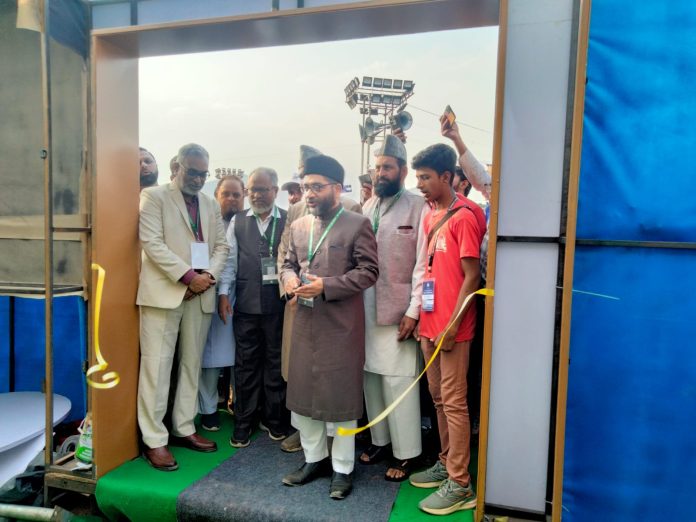
The Shaheen Group of Institutions is set to host a groundbreaking international conference on November 30 and December 1, 2024, in Bidar, Karnataka.

Touted as India’s first event of its kind, the conference aims to spotlight the contributions of Indian Muslims in critical sectors such as education, politics, media, economics, IT, social services, and madrassa education, envisioning their role in shaping a developed India by 2047, the centenary of the nation’s independence.

The conference will serve as a platform for thought leaders, intellectuals, and influencers from India and abroad to network and exchange ideas. Attendees will deliberate on the community’s potential to drive transformative change in various fields, aligning with India’s vision for growth and development.

This pioneering event highlights the Shaheen Group’s commitment to fostering dialogue and collaboration within the Indian Muslim community to contribute effectively to the nation’s progress.

source: http://www.thehindustangazette.com / The Hindustan Gazette / Home> News> Education / by Shifa (image source: shaheengroup.org) / November 27th, 2024

Waqf power at work

NEW DELHI / INDIA :

New battle-lines are being drawn in Parliament, and out of it, with waqf and its management at the centre of a major political slugfest.

New battle-lines are being drawn in Parliament, and out of it, with waqf and its management at the centre of a major political slugfest.

At this juncture, it is appropriate to recall the achievements of Hakeem Abdul Hameed, the founder of Jamia Hamdard, whose birth centenary was celebrated in December 2008, and the waqf he founded ~ the Hamdard (Waqf) Laboratories ~ is well into its ninth decade. Speaking during Hakeem saheb’s centenary celebrations at Jamia Hamdard, then Vice-President of India Hamid Ansari observed, “in our recent history Hakeem Abdul Hameed is probably the first, and the most successful, to resurrect the waqf concept in innovative ways so that a modern company was registered as a wakf institution whose income was to be used for public good in the areas of education, medical relief and the advancement of knowledge.

It was an important signal in the immediate aftermath of the painful Partition of India to thread together the religious element with socio-economic progress and alleviation of poverty.” The Vice-President added, “Since the 1930s and 1940s, over 25 educational research institutions were established, culminating in the Jamia Hamdard. The range is astounding ~ ranging from primary education to post-doctoral research, from Unani Medicine to Information Technology, from Islamic Studies to Business Management. Besides the university, the colleges and hospitals established for service to society, there are a set of institutions that bear testimony to his scholarly interests.

I refer to the Institute of History of Medicine, the Institute of Islamic Studies, the Ghalib Academy and the Institute of Federal Studies. Each of these has rendered significant service to scholarship.” Undoubtedly the list of achievements is long but as Hamid Ansari commented, “these achievements hold a mirror to the potential of what public-minded personalities can achieve through the institution of waqf for the socio-economic, educational and cultural betterment of the community. Future generations would behold Jamia Hamdard and Talimabad and wonder at the capacity, vision and dedication of an individual.” Truly so, for in ‘100 Great Muslim Leaders of the 20th century’, a publication of the New Delhi based Institute of Objective Studies (IOS), Dr Mohd Manzoor Alam provided a larger global context to understanding the achievements of Hakeem Abdul Hameed as an outstanding educationist and social reformer, along with his equally illustrious younger brother Hakeem Mohammad Said.

“In the face of formidable challenges which marked the lives of a selected 100 great Muslim men and women of the 20th century,” wrote Dr Alam in the preface, “their lives, struggles and contributions reflect the response of Muslims to the multiple challenges over the century…the ‘100 Great’ belonged to five continents and they came from different cultural and linguistic backgrounds, they were inspired by the eternal values and principles of Islam and the precepts of their illustrious forebears in the annals of Islamic history.” Through the tumultuous decades of the 20th century, Dr Alam observed that the ‘100 great Muslim leaders’ were unwavering in their “faith in the Holy Quran describing Muslims as ‘good people’, whose mission on earth is to help others live a meaningful life.

Even in the darkest hour the world of Islam was not plaued by a dearth of men and women who had the stature, mettle and competence to rise to the occasion. The two revered Hakim brothers ~ Hakeem Abdul Hameed and Hakeem Mohammad Said ~ who revived the Unani or Greco-Arab system of medicine and created two institutions, the Hamdard in India and its twin in Pakistan, are inspiring examples of leadership. They did not really belong to any one place. This is aggravated by Western colonial redrawing of the Muslim world map: Hakeem Abdul Hameed in India and Hakeem Mohammad Said in Pakistan were, in fact, two sides of a single sub-continental picture of Islamic excellence.”

The lifetime achievements of Hakeem Abdul Hameed were myth-busters: it had been an enduring myth of the 20th century that the Muslim world had been in deep slumber, their state of somnolence stretching back to centuries. Said Dr Manzoor Alam, “the 20th century instead turns out to be a period of extraordinary intellectual, moral and social awakening and struggle across the Muslim world with societies from Malaysia to Morocco trying hard to reform, promote and practice Islam as a living reality that could guide them through difficult times.” The Hamdard story began over a century ago when Abdul Hameed’s father, Hakeem Hafiz Abdul Majeed, established the Hamdard Dawakhana in 1906.

The vision was implicit in the name. Hamdard means ‘the sharing of pain’ and willingness to mitigate it was to be the motto of future generations as well. The vision was also to break the exclusivity of medicinal preparation of each Unani Hakim and make it available to the masses through modern laboratories along scientific lines. A traditional system of medicine was thus modernised with a nationalist inspiration and an indigenous base. “For this reason, Hakeem saheb can rightly be called a Mujaddid (or reformer) of Unani medicine,” said Ansari in the centenary speech.

Writing in ‘Muslim Mirror’, Abdul Rashid Agwan detailed the story. After Independence in 1947, Hamdard University or Jamia Hamdard has been the first institution that was established and managed on the basis of waqf income. In 1948, the manufacturing and selling unit of Hamdard Daw – akhana, Hamdard (Waqf) Laboratories, was converted into an endowment. Its deed dated 28 August 1948 provided for “Qaumi Income” (Public income) and “Khandani Income (Family income). However, the concept of family income was abolished by a declaration of the Settler/ Founder-Wakif Mutawalli in 1985, with retrospective effect from 1 January 1973. From the profits of the company, Hamdard Tibbi College was set up in 1963 in Old Delhi which later shifted to its present 90-acre campus in Tughlaqabad. In order to effectively manage and utilize the income accrued from Hamdard Waqf Laboratories for the promotion of its objective, Hamdard National Foundation was created on 12 May 1964 to disburse company profits to promote interests of society.

All profits of the company were obligated to go to the Foundation. Both Hamdard and the Foundation were registered under Section 12A of the Income Tax Act. Coinciding with the establishment of the Hamdard National Foundation in India, Hamdard Waqf Laboratories Pakistan also formed Hamdard Foundation Pakistan the same year. Its founder, Hakeem Muhammad Said, expressed the mission in these words, “Hamdard … has chosen to serve through activities for the promotion of good health and education ~ the twin pillars of progress.” Through the 1950s and 60s, when educational institutions namely, Indian Institutes of Technology, Indian Institutes of Management, AIIMS and Jawaharlal Nehru University ~ were being established with Government resources and with the focus of providing a new nation the benefit of modern science and education, Hakeem Abdul Hameed was single-handedly building schools, colleges and the university under the Jamia Hamdard banner, relying on internal resources of Hamdard Waqf Laboratories, and focused on rejuvenating the millennia-old Greco-Arab medicine which came to be simplistically known as Unani medicine. In this long process of reviving ancient knowledge, Hakeem saheb’s original contribution was the use of modern scientific methods and technology for the standardisation and manufacture of Unani medicine. “Quite early in life, when he was studying medicine at the Tibbia College, he was deeply impressed by the systematic and methodical approach of Hakeem Ajmal Khan towards the classification and standardisation of Unani medicines,” the IOS publication narrated. The Hakeem brothers travelled across Asia and Europe in the 1950s closely observing modern methods and techniques of drug making. They were convinced of the relevance and necessity of using modern technology for medical experimentation and manufacture of Unani medicines. At Hamdard Laboratories, Hamdard University, Hamdard Nursing Home and Majidia Hospital, these modern methods and technology were put into good use, ensuring the regimen of Unani system of medicine could co-exist with modern science and technology.

“This integrated, holistic approach to diagnosis and therapy is one of the most original and outstanding contributions of Hakeem Abdul Hameed,” the IOS publication stated. Eleven books on Unani medicine: Arab medicine and its relevance to modern medicine; Earth, elements and man: Search for a solid foundation of the theory and practice of medicine; and the magnum opus Qarabadin-e-Hamdard or Hamdard Pharmacopoeia are testimony to Hakeem Abdul Hameed’s medical observations, experiences and researches. In the 1980s, he initiated path breaking research on Ibn Sina’s Al-Qanun fit-Tibb or The Canon of Medicine. The 3-volume study was made available in multiple languages, including English.

Several national and global awards were bestowed on Hakeem Abdul Hameed who lived an austere life on campus till the age of 91, with a Gandhian determination to build the new nation through promotion of medicine, modern education and public charity. Like Sir Syed Ahmed Khan and Hakeem Ajmal Khan, Hakeem Abdul Hameed remains a towering personality whose contribution to modern education and medicine is second to none. It is in the domain of waqf management that Hakeem saheb gave modern India a new path for sustainable, equitable development.

(The writer is a researcher writer on history and heritage issues and a former deputy curator of Pradhanmantri Sangrahalaya)

source: http://www.thestatesman.com / The Statesman / Home> Opinion / by Raju Mansukhani, New Delhi / October 07th, 2024

Jamia’s Mohammad Zahid Ashraf gets Indian Council of Medical Research Award

NEW DELHI :

Jamia Millia Islamia’s Professor Mohammad Zahid Ashraf has been honoured with prestigious Indian Council of Medical Research (ICMR) award for research on oxygen regulation.

Prof. Mohammad Zahid Ashraf receives Basanti Devi Amir Chand Prize, an award instituted by Indian Council of Medical Research (ICMR).

Mohammad Zahid Ashraf, professor in the Department of Biotechnology, Jamia Millia Islamia(JMI) has been awarded the prestigious Basanti Devi Amir Chand Prize, an award instituted by Indian Council of Medical Research (ICMR). The prize was given by Union Health Minister, Harsh Vardhan yesterday in recognition of Prof. Ashraf’s research excellence.

Basanti Devi Amir Chand Prize is one of the earliest instituted awards of the ICMR in the year 1953 for the significant research contributions in the field of biomedical sciences.

What was Prof Ashraf’s research famous for?

Prof. Ashraf’s lab has been instrumental in understanding the role of low oxygen due to high altitude in the development of cardiovascular disorders including blood clotting.

The significance of research of cellular reactions in response to low oxygen could be analyzed from the fact that this year’s Nobel Prize committee for physiology or medicine recognized the potential of the discovery of how cells sense and adapt to oxygen availability and jointly awarded the three scientists for their landmark discoveries in this field. Oxygen is required for the process of oxidation that produces energy. Therefore, its short supply might result in lung damage, brain dysfunction, heart problems and many more.

” Prof. Ashraf’s research has provided an insight into the role of oxygen-regulated mechanisms behind blood clotting disorders and demonstrated the detrimental effects of low oxygen availability at high altitude.

About Mohammad Zahid Ashraf

Dr Ashraf is Fellow of both National Academy of Sciences and the Indian Academy of Sciences. He is also the recipient of prestigious DBT’s S Ramachandran-National Biosciences Award 2018. He is currently holding the position of Director (Academics) in the university.

Prior to his joining at JMI, he was Head of Genomics Division at Defence Institute of Physiology and Allied Sciences (DIPAS), Defence Research and Development Organization (DRDO), Delhi.

source: http://www.indiatoday.in / India Today / Home> News> Education> Today> News / by India Today Web Desk / October 17th, 2019

Sania Khan Bags Prestigious SHE INSPIRES AWARD 2024 in UK’s Rising Star Category

Shahjahanpur (Meerut ),UTTAR PRADESH / London, U.K :

Sania Khan, originally from Shahjahanpur, Meerut, Uttar Pradesh, has been honoured with the prestigious SHE INSPIRES AWARD 2024 in the Rising Star category in the United Kingdom.

Sharing his pride, Sania’s father, Mehr Alam Khan, Editorial Consultant at Cineink, London, said, “This remarkable recognition reflects her inspiring journey marked by resilience, determination, and a commitment to creating meaningful change.”

Sania’s journey began in the small village of Shahjahanpur. Despite facing personal challenges, she founded the Silver Lining Fostering Agency in London, a leading organisation dedicated to transforming the lives of vulnerable children and empowering foster carers.

Under her leadership, Silver Lining Fostering was awarded an “Outstanding” rating by Ofsted in 2024, a testament to its excellence in providing safe, nurturing homes and comprehensive support for foster families. The agency supports over 60 foster families and 70 children across London and the Midlands.

Sania said, “The seeds of my dreams were sown in my village. Despite limited resources, I learned that with determination and vision, the seemingly impossible can be achieved. Those lessons inspire me daily to create opportunities for others, especially vulnerable children.”

Sania completed her early education at Dewan Public School in Meerut and pursued higher studies at Jamia Millia Islamia, New Delhi. In 2018, she founded Silver Lining Fostering, which focuses on tailored support for foster carers and achieving positive outcomes for children, particularly those who have faced immense adversity.

On receiving the award, Sania said, “This recognition isn’t just about me; it’s about the incredible foster carers, staff, and children who inspire me every day. Together, we’ve shown how fostering can change lives. I hope this motivates more families to step forward and provide loving homes for children in need.”

Her agency stands out for its innovative Wrap Around Service and its commitment to recruiting foster carers from diverse and underrepresented communities. Sania’s leadership has not only empowered carers to achieve personal milestones like financial independence and home ownership but has also set new standards in foster care.

source: http://www.radiancenews.com / Radiance News / Home> Pride of Nation>Awards / by Radiance News Bureau / November 23rd, 2024

Prominent NRI businessman SM Syed Khalil passes away in Dubai

Karavali, KARNATAKA / Dubai, U.A.E:

Photo credit: Sahilonline

Dubai:

Prominent Kannadiga businessman SM Syed Khalil passed away after brief illness in Dubai in the wee hours of Thursday.

Syed Khalil SM was also the Chairman of Madhyama Communications Ltd., Mangalore and was known across Coastal Karnataka for his social services and contributions in the fields of Kannada, Konkani languages and their culture.

Syed Khalil, affectionately known as ‘C A Khalil’ among the general public, hailed from the Nawayat community of Bhatkal. His journey to prominence and distinction had not only brought pride to the Nawayat community but also to Kannadigas and Indians at large. He was renowned for his remarkable achievements and dedication to international trade, social service, and the education of underprivileged children.

Having ventured to the Gulf in 1978, Khalil’s faith and dedication to the Galadari family propelled the Galadari Company to unparalleled success over three decades. He was serving as the Founder Chairman of K&K Enterprises General Trading Company in Sharjah. Khalil also held positions in numerous educational and social service organizations in Karnataka and beyond.

Syed Khalil stood as one of the town’s first chartered accountants, renowned for his financial expertise. He was also a respected leader in social service, religious, and educational circles. His leadership roles have included the presidency of prominent organizations such as Anjuman Hami-e-Muslimeen and Rabita Society. Khalil was an advocate for girls’ education and has played a pivotal role in establishing extensive educational institutions.

source: http://www.english.varthabharati.in / Vartha Bharati / Home> Karavali / November 21st, 2024