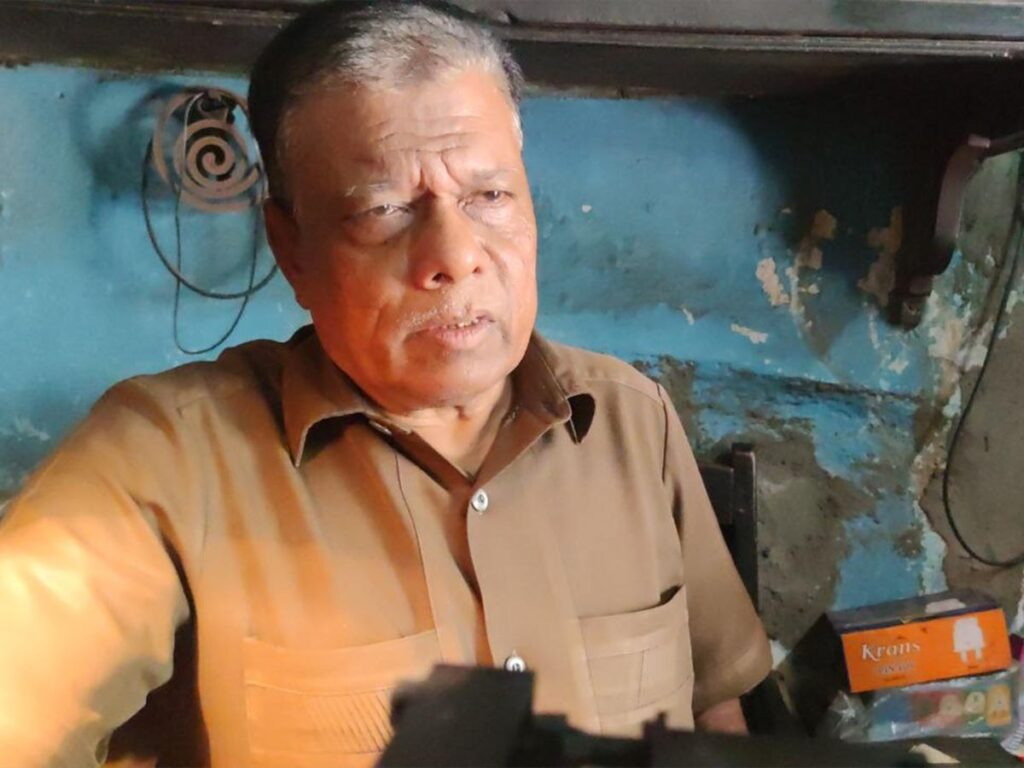
Mohammad Hanief Bhat at his workstation. Photo: Aatif Ammad
Srinagar:
In the early morning, as the streets of downtown Srinagar — known for its artisans and art forms — begin to buzz with activity, shopkeepers display their goods and autowalas wait for customers. Mohammad Hanief Bhat, 62, starts his day by opening a window in his workstation, located on the first floor of a 100-year-old building. As sunlight streams into his room, he begins assembling small pebbles, which he will set into a brass shell to create a necklace. This craft, known as Ferozi in Kashmiri and Turquoise in English, involves making jewellery with stones fixed in brass, and Hanief is its last guardian.
“This is a challenging art, but it is my identity. My father practiced it, and back then, this craft was well-recognized and loved by foreigners. They would come here and purchase items from us. In the 1970s, my father employed more than 30 artisans who worked under him,” he said.
Mohammad Hanief displays a variety of necklaces he has crafted over the past few years. Photo: Aatif Ammad
Hanief was young but the eldest in his family when he lost his father. Since this art form was their only source of income, he eventually had to take matters into his own hands and manage the small workstation where 30 artisans who had worked under his father taught him the craft.
He was just a child, a grade five student, when he lost his father. Being the eldest among his siblings, he had to take on the responsibility of managing the family’s turquoise art workshop, their sole source of income. Fortunately, the artisans working in their workshop were kind and taught him the craft very well.
Over time, Hanief mastered the art, but the demand for it mysteriously declined. Consequently, many artisans abandoned the craft as it no longer provided a sufficient income for survival. The number of artisans dwindled from 30 to just 5.
Hanief adding the finishing touch to a pendant. Photo: Aatif Ammad
Hanief’s father crafted hundreds of pieces of jewellery each week, which he would take in a large basket every Friday to a family with a showroom in Zainakadal, just 2 kilometers from Hanief’s home. This family would then sell the jewellery in their showroom. According to Hanief, they always managed to sell everything they made, despite never having any pre-orders, as everything they produced was sold to that business family.
The same trend persisted when Hanief took over; the demand remained steady, and he was able to sell everything he made. However, over time, the demand declined for reasons Hanief couldn’t understand. Consequently, many artisans abandoned the craft, leaving Hanief as the only one who continued it.
Aside from Hanief’s father, more than 60 families were involved in the craft of turquoise. However, over time, everyone abandoned the craft, leaving Hanief as its last guardian. As the artisans departed, Hanief also quit for a few months, leaving no artisans remaining, and he began selling carpets instead.
“In the 1990s, nearly everyone abandoned the art, and I also thought it was not worth continuing since there were no buyers. I eventually left it and started selling carpets. Although I earned more from selling carpets, I was never satisfied with that profession. I felt it would be a great injustice to the art that my father devoted his life to. So, I left everything else and returned to practicing the art of Ferozi,” Hanief explained.
When Hanief resumed making turquoise jewellery, he found that there were no longer any major buyers to sell it to customers, as the previous showroom owners had lost interest due to decreased demand.
However, his sister, whose family runs businesses in Bangalore, suggested he come to Bangalore for art exhibitions to sell his jewellery. There, he discovered that people were attracted to his art, with many NRIs and foreigners purchasing from him. This allowed him to sell a significant amount of jewellery, but the exhibitions only lasted a few days.
Hanief visited Bangalore every year and set up a stall at the exhibition, managing to sell a good quantity of jewellery. However, it wasn’t enough for him to sustain a livelihood solely from the craft.
“Bangalore exhibitions gave me a lot of hope and motivation to continue the craft,” said Hanief, adding, “People used to come and praise me there. It gave me a lot of confidence and recognition”.
New Innovations in the Craft
Traditionally, turquoise jewellery was exclusively blue and featured very simple designs. However, Mohammad Hanief introduced innovations after several buyers in Bangalore expressed a desire for more colours and designs. Upon returning to Kashmir, he thoughtfully incorporated new colourful stones and created different designs. He even added unique elements, such as breaking thin wires into small pieces to use in necklaces for a distinctive look.
Colourful necklaces from Hanief’s collection. Photo: Aatif Ammad
Hanief remarked, “I used to get bored making the same designs and colours every time, but I never thought of doing something new. It was only when some foreign buyers at an exhibition in Bangalore suggested that I introduce more varieties and colours. I then started creating jewellery in different colours that people would love and adore. I felt happy and satisfied making these new types of jewellery.”
He currently makes turquoise jewellery in almost every colour.
No Government Support
Despite the widespread appreciation for Hanief’s art of crafting turquoise jewellery, the local government has never recognized his efforts, even though he received accolades from states like Kerala.
Hanief remarked, “Although I have carried this art on my shoulders for years and I am the only one left practicing it, our government has never appreciated or recognized me. However, officials from Kerala and Karnataka have always praised me and assisted in setting up stalls in Bangalore.”
Mohammad Hanief’s artisan card, issued to artisans of various crafts, expired in 2022. Despite submitting it to officials for renewal, the process is still pending. Hanief believes that the officials do not take his art seriously, which is why they show little interest in his official matters.
Concern for the Art’s Survival
Mohammad Hanief, now in his sixties, is deeply concerned that his craft will perish with him, as he has no children to carry on his legacy as he did after his father’s passing.
source: http://www.twocircles.net / TwoCircles.net / Home> Art>Culture / by Muhammad Aatif Ammad Kanth, TwoCirlces.net / August 18th, 2024
Wajid Khan Artist with the portrait of Mahatma Gandhi he made with nails.
Few artists are as passionately obsessed with Mahatma Gandhi as Wajid Khan, whose love and reverence for Gandhi manifest in extraordinary ways through his art. Wajid’s devotion to the Father of the Nation is evident not only in the subjects of his artwork but also in the innovative techniques he uses to create them. Whether by assembling nails, arranging goggles, or using other unconventional materials, Wajid Khan’s portrayal of Gandhi is a testament to his deep admiration.
Wajid Khan a multifaceted artist—a portraitist, sculptor, inventor, and patent holder—known for pushing the boundaries of traditional art. He specializes in creating intricate works of art using unconventional materials such as iron nails, bullets, metal, stones, automobile parts, medical equipment, iron rods, and more. His passion for creativity is boundless, and his art often reflects his deep emotions and thoughts about the world and the figures who have shaped it.
Among his many talents, Wajid’s ability to carve canvases using iron nails has garnered international acclaim. His work has earned him places in prestigious records such as the Guinness Book of World Records, Limca Book of Records, and Asia Book of Records. His artistic prowess is admired from Mumbai to Dubai, captivating both art connoisseurs and the general public with his exceptional nail art.
Although Wajid has made portraits of numerous iconic personalities, including Indira Gandhi, Jawaharlal Nehru, Sardar Patel, Dhirubhai Ambani, and Nelson Mandela, his fascination with Mahatma Gandhi stands out. His first portrait, fittingly, was of Gandhi—a powerful expression of his love and passion for the man who led India to independence. Wajid meticulously used thousands of iron nails to craft this portrait, each nail symbolizing the unwavering dedication and perseverance Gandhi embodied throughout his life.
Wajid’s connection to Gandhi goes beyond artistic inspiration. His admiration for Gandhi stems from the values of patience and truth that Gandhi represented. “There are many qualities in Gandhiji that impressed me deeply,” Wajid shared in an interview. “His power of patience and his commitment to truth are what stand out the most. For me, those who hold onto patience and never lie are truly great individuals.”
One of the moments that left an indelible mark on Wajid was when he visited a museum and saw letters written by Gandhi in which the leader openly admitted his mistakes. “It takes a big heart to admit one’s mistakes in public,” Wajid reflected. “I greatly admire Gandhi’s patience and steadfastness.”
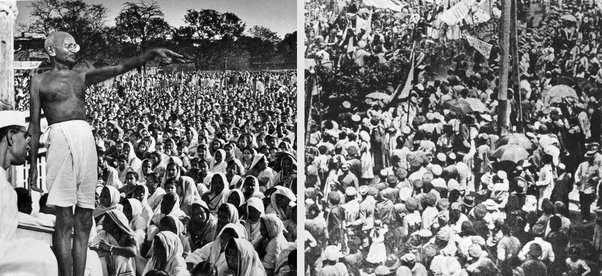
Wajid’s connection to Gandhi also has personal roots. He fondly recalls stories from his grandfather, who would attend Gandhi’s meetings during the freedom movement in India. “My grandfather used to tell us about the time when he was very young and would participate in Gandhi’s meetings. Enthusiastic crowds would gather to listen to Gandhi, and when they returned, they were always calm and composed,” Wajid recounted. The calm demeanor Gandhi inspired in his followers left a profound impact on Wajid, influencing both his life and his art.
In one of his most ambitious projects, Wajid demonstrated the extent of his dedication to honoring Gandhi. He organized an event where 6,000 people were gathered in a stadium, carefully arranged in a formation that created a massive portrait of Gandhi. This live depiction showcased not only Wajid’s artistic genius but also his ability to bring people together to celebrate Gandhi’s legacy.
Wajid Khan’s artistic journey is a remarkable blend of creativity, innovation, and an unyielding devotion to Gandhi’s principles. Through his portraits, sculptures, and inventive techniques, he continues to keep the spirit of Gandhi alive, inspiring others with the same values of patience, truth, and perseverance that Gandhi embodied.
source: http://www.muslimmirror.com / Muslim Mirror / Home> Indian Muslim> Positive Story / by Syed Zubair Ahmad / October 02nd, 2024
Father Muller Medical College is celebrating a landmark achievement as Dr Ashique K T, an esteemed alumnus of the Department of Dermatology, Venereology, and Leprosy, has been awarded a patent for his innovative medical device, the Dr Ashique’s Skin Clamp.
The patent, issued by the Controller General of Patents, Designs, and Trade Marks of the Government of India (Patent No. 548121, dated November 26, 2020), acknowledges the groundbreaking work of Dr Ashique, who is currently the medical director and senior consultant dermatologist in Perinthalmanna, Kerala. His invention holds far-reaching implications across multiple medical disciplines, including dermatology, dermatosurgery, dental and maxillofacial surgery, hair transplantation, ENT, emergency medicine, general surgery, and gynecology.
The Dr Ashique’s Skin Clamp is a sterilizable, metallic surgical tool designed for use in a wide range of medical procedures. Its versatility and effectiveness have already caught the attention of professionals across various medical fields. The device offers a practical solution to complex surgical challenges and is set to make a significant impact on clinical practices once commercial production begins.
Dr Ashique’s journey toward this patent was marked by close collaboration with his former professors and mentors from the Father Muller Medical College Dermatology Department. Throughout the development and research phases, he regularly sought their advice, leveraging their expertise to refine his innovative design. This spirit of partnership and academic support has been instrumental in transforming his idea into a patented reality.
In a statement, Fr Richard Aloysius Coelho, director of Father Muller Charitable Institutions (FMCI), expressed pride in Dr Ashique’s achievement. “It is a moment of great pride for our institution to witness one of our own making such a meaningful contribution to the medical field. His innovation is a testament to the excellence fostered within the walls of Father Muller Medical College,” said Fr Coelho. The administrative heads of both the medical college and hospital also joined in congratulating Dr Ashique on this remarkable accomplishment.
The Department of Dermatology, Venereology, and Leprosy at Father Muller Medical College continues to shine as a center of excellence, cultivating bright minds who contribute groundbreaking solutions to the medical world. Dr Ashique K T’s patent is just the latest example of how the institution empowers its students to innovate, achieve, and redefine the future of healthcare.
With plans to publish detailed research on the skin clamp’s many uses and the upcoming commercial production, Dr Ashique’s contribution to modern medicine is just beginning to unfold. The medical world is watching eagerly as this revolutionary device prepares to hit the global market.
source: http://www.daijiworld.com / Daijiworld / Home> Top Stories / by Media Release / September 26th, 2024
The annual Global Islamic Finance Conference 2024 was recently held in the Maldives, organized by the Maldivian government. The event was graced by the presence of former Maldivian President Mohamed Waheed Hassan and Finance Minister Mohamed Shafeeq, alongside representatives from various Muslim countries and Islamic banking institutions, reported the Siasat.
During the conference, Syed Moosa Kaleem Al-Falahi, Chief Business and Investment Officer of the Islamic Bank of Afghanistan, was honored with the Global Islamic Finance Award 2024 (GIFA). The award was presented by former President Waheed Hassan and Finance Minister Dr. Mohamed Shafeeq in recognition of his significant contributions to the field.
Hailing from Hyderabad, Syed Moosa is the son of the late Syed Yusuf, former Secretary of the Andhra Pradesh Legislature and former Hon. Editor of Radiance Viewsweekly. He has an impressive track record, having served in prominent roles at the Dubai Islamic Bank, the Islamic Bank of Afghanistan, and various other Islamic banking institutions.
Syed Moosa has played a pivotal role in promoting the concept of Islamic banking in Afghanistan, facilitating the establishment of new branches of the Islamic Bank of Afghanistan to enhance banking services. His extensive experience and commitment to advancing Islamic banking principles were acknowledged at the global conference.
The event was jointly organized by Cambridge IFA and the Maldivian government, where Syed Moosa’s contributions to small and medium enterprises and retail sectors through the introduction of Islamic products were particularly highlighted. His expertise has been instrumental in promoting the ideals of Islamic banking across multiple countries.
source: http://www.radiancenews.com / Radiance News / Home> Muslim World> Asia> Awards> Focus / by Radiance News Bureau / September 19th, 2024
Featuring the work of Asif Shaikh and his artisan studio
Mary Giles Gallery • April 18 – June 7, 2023
Textile Center is honored to host this special exhibit of work by Asif Shaikh, from Ahmedabad, India. As one of India’s most accomplished and acclaimed embroidery and textile artists and experts, Asif’s incredible embroideries, research, and writing create a bridge between East and West, old and new, tradition and innovation. His intricate and labor intensive artisan stitching “mends” a historic gap in Indian craft through his revival of Mughal (court) embroidery.
This collection of work from his studio highlights his leadership and influence in the revival of India’s textile heritage, focused on hand embroidery. Throughout his life, Asif’s work has developed with a highly refined and deeply held sense of aesthetics, steeped in detailed design and technical tradition. His dedication to the making of the ornate embroideries featured in the exhibition serves is testament to the social and cultural value of embroidery.
Born in Ahmedabad, a city renowned for its rich culture and textile heritage, Asif took up embroidery when he was about ten years old. At an age when embroidery was rarely pursued by young boys, Asif chose needle, thread and fabric over other interests. He explored a spectrum of traditional Indian embroidery techniques from different regions of India by learning the stitch himself, to build a sound technical foundation and fundamental understanding of stitch. Currently, his studio employs artisans who produce a range of embroidered yardage, which is transformed into garments and textiles. Showcasing a sophisticated juxtaposition of contemporary style and traditional textile techniques in stitch, motif, composition, and color palette, these textiles recreate the grandeur and fineness of India’s fabled royal textiles and attire, while reviving and preserving the tradition of Indian embroideries and supporting local artisans.
Reflecting on his sought-after works, Asif says, “Embroidery is what I live for. I will always immerse myself into this mesmerizing world because it gives me utmost satisfaction and happiness. No matter how fanciful, I love to give shape to an idea and bring it to life using timeless techniques with an innovative twist.”
Thanks to Mary Anne Wise for introducing us to Asif’s work and to Shelley Wells for delivering, curating, and installing this exhibition.
_____________________Art Speaks: Resurgence with Asif Shaikh_______________
In this virtual conversation in June 2023, Asif Shaikh joined Textile Center from Ahmedabad, where he presented his work and practice, including his most recent projects.
____________________In the Gallery_________________
source: http://www.youtube.com / Art Speaks: Resurgence with Asif Shaikh
One of the most precious links between India’s ancient history and the present moment is the living heritage of her textile art – those rich and glorious traditions that effortlessly interlink the Maker, myths, human hands and time honored skills as weft meets warp and needle meets cloth. Manifest throughout this vast and varied country is a rich diversity of woven, embroidered, printed, resist dyed and embellished handcrafted textiles intended for use as attire for deities and mortals, as decorations for places of worship and homes and as items of trade. Today’s textiles still carry the history of early cargoes that set sail from India to the ancient Roman Empire, the Indonesian archipelago and courtly Europe.
Amongst those historic shipments were India’s highly sought after embroideries. Initially created to strengthen and join fabrics, embroidery has been finely crafted over time for its decorative effects, as an expression of the skill, creativity and belief of the needle worker and as a reflection of regional styles and variations. The rich repertoire of Indian embroidery includes a beautiful range of stitches and techniques worked on fabric with supplementary threads, as well as further embellishment with elements such as mirrors, metals, coins and shells. Drawing on the wealth of traditional techniques, 21st century needle workers are able to create a range of exquisite traditional and contemporary embroideries for garments and home décor.
________________________AARI on KARCHOB______________________________
The karchob is imperative in order to create fine quality embroidery. Basically two types of embroidery can be done on the karchob; Aari (chain stitch) with silk and metal thread (kasab / kalabattu) with a number of variations in the stitch and Zardozi with metal threadand other elements once again using a variety of stitches. Aari work is executed with the aari needle, a fine awl similar to the European tambour hook, while zardozi is executed with a regular needle.
The aari needle has a notch incised just above its point and this forms the hook. The thread is held under the fabric, the aari needle is pressed through the fabric to take up the thread and pull it through to th e upper surface thus forming a small loop. The tip of the aari needle is then inserted through the loop and into the fabric once again and the process is repeated to form a continuous line of chain stitch.
Chain stitch remains the most popular stitch worked with the aari needle and several stitches can be developed from this. Basic chain stitch can be worked with single, double, three and four ply threads which make stitches of varying fineness.
Stitches that can be worked with the aari needle are:
Bal taka – twisted chain stitch creating a knotted effect
Batt – close lines of chain stitch to fill shapes
Jali – a netting effect created by pulling threads with the aari (different effects are created by varying the stitches)
Lote – closely worked, long chain stitch similar to satin stitch
A variety of threads including cotton, silk, wool and metal are used to create embroidery with the aari needle. According to the thickness/fineness of the thread an aari needle of suitable thickness/ size of notch is selected for the work.
Pitta work is aari embroidery using metal threads. When the motifs are completed the metal thread is gently tapped with a small wooden hammer. A wooden dabber is held below the surface of the fabric to support the embroidery, to smooth the work and give it a soft sheen.
The aari needle is also used to secure beads and various elements such as sequins onto the fabric using fine stitches.
Ajrakh is a multi-layered resist block printing technique. This exquisite example is created with the use of natural dyes on a base of gajji silk.
In this piece, the all-over design is of a repeating star-like pattern and is embellished with aari embroidery. With the use of sequins and gold thread, the aari embroidery highlights a lattice pattern (jaali) seen at the top and bottom borders. The gold stitch work and sequins are also incorporated into the central field, emphasizing the star motif.
The ajrakh on the silk fabric is the work of Abdul Jabbar Mohammad Khatri of Dhamadka.
Bandhani is a resist tye-dye technique created by tying tiny knots on fabric. The detailing on the sleeves and base of the skirt show aari pitta embroidery using metal threads.
When the embroidered motifs are completed, the metal thread is gently tapped with a wooden hammer. A wooden block is held below the surface of the fabric to help support the embroidery. The tapping smooths the stitches and gives the work a soft sheen.
The observe of sash is embellished with parallel aari chain stitching and a smaller aari pitta motif on the reverse.
The bandhani on the silk fabric is the work of Abduljabbar and Abdullah Khatri and the artisans of SIDR Craft studios, Bhuj, Gujarat, India.
Chikankari is a subtle, sophisticated style of embroidery worked with white cotton threads on fine white cotton fabric using a round frame. This ethereal needlework, often referred to as ‘shadow-work’, was perfect for embellishing summer attire for royalty families.
The technique and skill of chikankari remains Lucknow’s forte, and is passed down through the female line. Chikankari was traditionally worked on very fine muslin, making the embroidery appear to be a part of the fabric. Motifs are stamped on the fabric with small wooden blocks dipped in colour that is washed off after the embroidery is completed.
The motifs are generally floral and paisley in design. Each pattern is designed in such a way that it seamlessly forms part of the garment in terms of size, shape and placement. Since the colour palette was traditionally limited to white on white, it was through the incorporation of different stitches that varied effects were created.
Chikankari comprises six main stitches – taipchi, bakhia, khatao, murri, phanda, jali, and their variations. Some on the reverse, while others pull the threads to create a ‘jali’ (net). A garment or textile frequently incorporates more than one of these stitches. To create a rich formal look, kamdani and fardi are added to chikankari.
The delicacy and fineness of chikankari is dependent on the care and patience of the artisan. One garment can take months to complete.
This work is stitched on fabric woven by the artisans of Bhairvis Chikan, a cooperative textile center founded by Mamta Varma, in Lucknow, India.
Danka embroidery is practiced in Udaipur by the Bohra community of Rajasthan and is named after the square pieces of gold plated silver foil used in its creation.
Danka squares are made from thin sheets of polished silver which are gold plated, cut into shape and then further hammered to obtain the curved surface typical of this embroidery.
The squares are arranged into motifs and multiple strands of metallic thread are couched on the edge of the danka using the tool called fatila. The tip of the motif is usually finished with a loop couched onto the fabric.
Danka embroidery can be further embellished with metal aari, sequins, dabka, nakshi, and beads.
The motifs used are inspired by nature and include paisley, flowers, peacocks and the sun and moon.
This embroidery, using floral and geometric motifs, is executed on thick fabrics including velvet. In past centuries, Dokh embroidery was mainly used in furnishings, carpets and flags.
Different metal threads including badla are used to create dokh. Essential to this embroidery, a foundation padding up to one inch in thickness is created by the use of soft thick cotton thread. The raised surface at the center of the floral motif gradually tapers down to its pointed edges.
These padded surfaces are then covered with thick metallic thread using a ‘fatila’. This one-inch square wooden bar measuring 6 inches in length is the exact size and weight required to prevent the threads from becoming entangled.
The edges of the shapes are finished with couching using an ‘S’ twist. The overall appeal of dokh embroidery is its elegant embossed surfaces.
Girah is a type of surface stitch commonly associated with Chikankari embroidery from the Lucknow community. Also known as pipal girah, the stitch is similar to what we in the West would know as the French knot.
To obtain the variation in the design, two types of girah are employed; traditional girah and chhalle girah. Traditional girah gives a tighter, more controlled stitch, as seen in the center of the flower, and chhalle girah gives a looser, more relaxed stitch, as seen in the petals.
Gota is a flat woven ribbon that uses thin strips of gold/silver wire in the weft and silk/cotton in the warp. It is mainly woven in Surat and in Ajmer (Rajasthan).
Gotta ribbon is used as a decorative element on textiles and is practiced mainly in Jaipur in Rajasthan. The motifs are mainly inspired by nature and include plant forms and stylized paisley.
To create the motifs, different shapes of cut pieces called ‘gota patti’ are sewn together. The cut ‘gota patti’ is first attached to the base fabric and then couched with multiple strands of metallic threads using the fatila. Further embellishment is created by the addition of various metal elements such as beads and sequins.
This type of embroidery is generally used to cover larger surfaces of textiles and thus giving a heavy look while remaining light weight.
Kamdani is one of India’s most beautiful and versatile embroideries worked with badla or flat metal strips to create a dressy and sophisticated look. While zardozi tends to be heavy with its metal threads and elements, kamdani is lighter as it is worked with only one element – badla.
In kamdani, the badla is used like a thread to create stitches.
To begin embroidery, the embroiderer threads a thick needle with a short length of thread making a small loop towards its end. One end of the badla is then attached to the loop. The needle is slipped in and out of the cloth in a continuous movement and the badla is pulled along with it. Only a small amount of the badla is then visible on the upper surface of the fabric. The end piece of badla is then turned under in order to secure it, while the needle is once again pierced into the fabric and stitch is continued.
Kamdani requires a high degree of skill, as after a few stitches the badla tends to get twisted.
Treating the badla as if it were a thread, embroiderers are able to work a variety of stitches. Traditionally, floral motifs were most popular in kamdani with few geometric motifs. Different types of jalis can be created using badla, including wave patterns, parallel lines, stars and diagonals.
Badla is also used for making ‘fardis’ (small dots). Fardi is created by knotting a short length of badla. The process is repeated to fill the space. For fardi a flat thick needle with two eyes is used to take the badla through the fabric.
Fardis are an effective way of embellishing a textile. Dots can be placed in patterns and combined with other textile techniques such as bandhani, chikankari, and printed or woven textiles to enhance their beauty. In this way badla can be used to create rich, formal and elegant work on clothing.
After the work is completed, the embroidery is placed against a hard surface and the reverse side is very gently rubbed with a cowrie shell to smooth the work and flatten the badla against the fabric.
_______________________KARCHOB – THE SCROLL FRAME__________________
The karchob, a traditional, horizontal, floor-mounted hardwood frame, is the tool that assists needle workers to create fine embroideries. In fact, this frame is so closely linked to the work itself that embroideries thus created – although very different in the use of materials, techniques and effects – are traditionally referred to as ‘karchobi’ meaning `worked on the karchob’.
The word karchobi instantly distinguishes an embroidered work as it conveys that it was created on this frame rather than by hand holding or using a small frame. While embroidery can be executed in various ways either with or without a frame, it is by working on a karchob that the art of embroidery is extended well beyond that which is otherwise possible. Furthermore, as it allows up to 20 embroiderers to work at the same time on one piece, the karchob permits working on a large scale as well as producing the volume required for commerce.
The karchob has four wooden bars; two short horizontal bars called Shamsheer and two long vertical bars called Adda that rest on wooden legs. These bars are fixed to each other on all four sides using nails. The fabric to be embroidered is stretched across the framework and affixed to the horizontal and vertical bars with the help of additional cotton fabric, cord and thread. This is the most important stage where the fabric needs to be attached with precision keeping the grain line of the fabric parallel to the bars of karchob.
The karchob helps in keeping the right tension of the fabric to be embroidered. As the fabric is stretched across the frame it becomes convenient to stitch, that is, to move the needle in and out of the cloth. The frame also provides much needed support for the hands/arms of the embroiderer who generally works long hours. Furthermore, both hands are free to work the embroidery. At the end of the day the embroidery in progress is wrapped around an arm of the karchob.
A karchob can vary in size – up to 3 metres in length and 1.5 metres in width. A small karchob is used when working on small textiles and this can be placed on any structure that supports each corner leaving the centre free for stitching. A large karchob is used when working on large textiles and the work is often divided between embroiderers who sit on the floor to work. Sections of large textiles such as saris, that are typically 5.5 metres in length, are worked on and then wrapped around an arm of the karchob to facilitate embroidery on the unworked section.
_____________________KUTCHI AARI EMBROIDERY, example 1____________________
One of the most fascinating historical and cultural inheritances of Kutch, a desert area located in the western most part of Gujarat, is its wealth of textiles. Kutch women traditionally create densely worked embroideries to beautify fabrics, create social wealth and express their skills and identities.
Kutchi embroidery features several stitches one of which is an adaptation of the cobbler’s stitch. This stitch, worked with an awl, was executed by ‘mochis’ (cobblers) to embellish leather goods such as shoes, bags, camel saddles and other articles. It is interesting to note that this technique was adapted over time for use on fabric and is now known as aari embroidery.
An entire spectrum of Kutchi embroidery is worked with the creative and skillful use of the needle without the use of frames. Exquisite and fine motifs inspired by nature, mythology and tradition are thus created.
Inspired by mochi embroidery motifs, Asif’s studio gives new dimension to this karchobi aari technique. Through the clever use of hue and shading, new looks and palettes are created. The most eminent aspect of this embroidery technique is the quality and depth created in the motifs which are further adorned with badla, beads and sequins thus creating contemporary and rich textiles.
Asif’s studio created a collection of Kutchi embroideries especially for the V&A Museum in London. This collection referenced motifs featured in antique aari embroideries exported to Europe in past centuries. The shapes, colors and proportions of the original motifs were refined by Asif to create the modern masterpieces.
_____________________KUTCHI AARI EMBROIDERY, example 2________________
One of the most fascinating historical and cultural inheritances of Kutch, a desert area located in the western most part of Gujarat, is its wealth of textiles. Kutch women traditionally create densely worked embroideries to beautify fabrics, create social wealth and express their skills and identities.
Kutchi embroidery features several stitches one of which is an adaptation of the cobbler’s stitch. This stitch, worked with an awl, was executed by ‘mochis’ (cobblers) to embellish leather goods such as shoes, bags, camel saddles and other articles. It is interesting to note that this technique was adapted over time for use on fabric and is now known as aari embroidery.
An entire spectrum of Kutchi embroidery is worked with the creative and skillful use of the needle without the use of frames. Exquisite and fine motifs inspired by nature, mythology and tradition are thus created.
Inspired by mochi embroidery motifs, Asif’s studio gives new dimension to this karchobi aari technique. Through the clever use of hue and shading, new looks and palettes are created. The most eminent aspect of this embroidery technique is the quality and depth created in the motifs which are further adorned with badla, beads and sequins thus creating contemporary and rich textiles.
Asif’s studio created a collection of Kutchi embroideries especially for the V&A Museum in London. This collection referenced motifs featured in antique aari embroideries exported to Europe in past centuries. The shapes, colors and proportions of the original motifs were refined by Asif to create the modern masterpieces.
Marodi, simply worked with twisted plied yarns, is one of the most eye-catching embroideries of North India.
The name ‘marod’ – meaning twist – explains the embroidery. The yarns are twisted manually to make a cord which is in turn used to create repeated loops that form a continuous line. The twisted cord is wrapped around a square 6-inch long wooden bar pointed at one end. Also known as fatila, this tool allows the cord to be uniformly tensioned and create loops of equal size. Furthermore, its pointed end shows the right direction for the loops to follow.
In marodi, couching threads are visible. The twisted cords are couched together with a contrasting thread to form ornate patterns. The cotton threads were traditionally dyed in saffron when used for gold and white cotton threads used for silver couching.
The motifs have a curved contour, usually forming a loop at the tip. Unlike zardozi, where the patterns are completely embossed, marodi features slightly open work. Badla, dabka, salma, and sitara are used for embellishment.
Marodi can also be executed with twisted silk cord.
Originating in China, Parsi embroidery was noted for the use of different kinds of minute knots, satin, chain and couched stitch worked with silk, metal and untwisted silken floss yarn with the addition of beads and sequins.
Asif’s studio has simplified the technique of ‘khakha’ knots by employing ‘palti taka’ (reverse chain stitch) with the aari needle on karchob.
This new technique was created for the textile chapter of the UNESCO Parzor Project.
____________________________TREE of LIFE____________________________
This exquisite piece of needlework can be viewed from both sides. Similar to the Chinese form of Su embroidery, this double sided embroidery depicts the Tree of Life, found in the stone fretwork of the historic Sidi Saiyyed Mosque (built in 1573) Ahmedabad, India.
In the piece, the ground cloth is handwoven fabric made of silk and linen. The aari stitch, seen throughout the exhibit, is seen here crafted in fine silk, half the thickness of traditional embroidery thread.
Vasli embroidery is named after the paper that is used in its creation.
Vasli, a special paper used in miniature painting, has high archival properties making it favorable for use in embroidery. Several layers of paper are glued together using a glue made of a cooking flour that is not only free of synthetic chemicals but is also insect resistant.
Cut paper shapes of the specially designed motifs are stitched onto the fabric. Metal thread embroidery is then closely worked on the paper pieces. Metallic thread is couched on the edge of the paper shapes in an ‘S’ twist leaving a well defined edge. Multiple strands of metallic threads are used for this embroidery. The tip of the motif is usually finished by a loop that is couched to the fabric.
After the couching is completed the metal thread is gently tapped with a wooden hammer which compresses the stitch and gives a soft sheen. Further embellishment is created by the addition of various metal elements.
Zardozi is derived from the Persian words ‘zar’ meaning gold and silver thread and ‘dozi’ meaning ‘karigari’ (craftsmanship). In zardozi, metal elements are threaded through a needle and the motifs are embroidered wholly or partially in different stitches such as satin, darning and stem stitches as well as couching.
As well as metal thread, metal wires of different shapes, size and thickness are cut into required lengths. Metallic elements such as kangani, dabka, badla, salma, and sitara are attached using fine stitches for embellishment.
The karchob is useful in creating zardozi embroidery. Metal elements to be stitched onto the work are placed on the stretched piece and thus easily taken up by the needle as the artisan embroiders the fabric.
Zardozi embroidery recreates the splendor of the textiles and garments created in imperial workshops during past centuries.
source: http://www.textilecentermn.org / Textile Center / 2023
A few members of the once famed horseshoe maker generation work in cramped spaces on Pulikeshi Road in Tilaknagar, Mysuru. Like the many old structures dotting the area’s landscape that stand amidst high-rises, refusing to change with time’s swift change, these professionals have the unyielding spirit of holding on to the past.
These horseshoe makers — farriers — are carrying on the legacy till their bodies can take the immense physical endurance demanded by the profession. They harbour no illusions and every time their hammers strike the metal, they know their profession has not many takers.
The invention of horseshoes revolutionised ancient means of trade, transportation and warfare. It was necessitated as horses were being exposed to harsh conditions on a daily basis that resulted in breakage, wearing off or damage to their hooves. By providing sufficient protection from sharp objects in the ground and the constant stress of travelling hundreds of miles every day, horses became more useable for longer periods of time.
Strike while the iron is hot: Mohammed Ghouse (standing) and his assistant moulding a shoe
Playing with fire
Moreover, the horses that are equipped with protective foot gear ran faster compared to other horses. However, the work of these farriers is delicate and requires a hard-earned skill. They play with fire and embers to produce that perfect horseshoe to fit the hooves.
Any wrong design or a wrong hole in the horseshoe makes the animal bleed and would lead to a lot of suffering, even death. Although hooves are strong, even stronger than bones, they sometimes developed cracks because of horseshoes. Damage to hooves must be avoided. Hooves have dead tissues and cannot heal themselves. Any crack that reaches the living tissue inside the hoof becomes a spot for infection that takes the life of the animal.
Age is just a number: 88-year-old Abdul Rasheed (squatting) and his assistant engrossed in making a tong
Beating red-hot iron
Farriers on Pulikeshi Road get the iron from scrap yards, heat them, and beat the hot iron to the desired shape. The efforts of three persons are required to make a U-shaped horseshoe. While one person stokes fire to soften the iron, the other person takes a huge hammer and beats the red-hot iron into desired shape.
Excessive heat is involved in the process and these men do not wear any protective gear. After the metal is beaten to shape, holes are drilled into horseshoe to nail them to the hooves. And this is taken care of by another person.
Meagre profits
While U-shaped metal forms the horseshoe for horses, crescent moon shaped shoe is fixed for cows and oxen. These metal pieces wear out quickly and they must be replaced once in two months. Over 20 farriers on Pulikeshi Road work from an old building. There are seven pits where the fire is stoked and horseshoes weighing over 30 kgs are prepared every day in each pit and the income is shared among the three persons.
They do not take a single day off and work tirelessly from 6 am to 3 pm. The horseshoes prepared here is primarily supplied to Nanjangud, Mandya, Handpost, H.D. Kote and surrounding areas. The finished horseshoes are taken in a bag and marketed at designated areas.
Dearth of skilled workers
“Each kilogram of horseshoes is sold at Rs. 150. There is huge demand but we cannot fulfil that as we are facing dearth of skilled workers. Raw materials like iron and coal eat away most of the income and each box of coal costs Rs. 80 and 1 kg of iron costs Rs. 35. Profit is less and we pay a house rent of Rs. 5,000 and we have to maintain the family with the rest of money,” says Fairoz Khan of Aziz Sait Nagar who works as a farrier.
“My grandfather and father were doing this work and I learnt from them. I have not studied beyond second standard and I have been doing this work since 22 years,” he says. In summer, the sun’s heat and the heat generated while making the horseshoe result in boils and even sparks fly to burn their skin. “We don’t know any other work and if we stop this work, our families will go hungry. There is no alternative,” he says.
No one-size-fits all rule
In this skilled work, there is no one-size-fits all rule as hooves are different. Machines cannot produce these horseshoes as there are animals of different age groups. “In the Mysore Race Course, the requirement is for bigger horseshoes which they get from Bengaluru. I have been doing this work since 35 years and I used to work with my father. Even I studied till second standard and I also worked in a scrapyard but returned to this profession,” says 50-year-old Ammanulla Khan.
These farriers also sell crowbars, files, chisels, pliers and tongs. The 88-year-old Abdul Rasheed has been doing this since 50 years. “Earlier, our life was very busy as horse owners, tongawallas and owners of oxen used to line up before our shops for horseshoes. Now, horses have been limited to races and even tongas and bullock carts have been replaced by automobiles,” Rasheed rues.
source: http://www.starofmysore.com / Star of Mysore / Home> Feature Articles / by Rajkumar Bhavaskar / pics by Lakshminarayana Yadav / February 23rd, 2021
India has one of the greatest traditions of paintings on walls. Called murals or frescos, we see a high level of technical excellence, grace and sublime beauty among Indian murals right from the time of Ajanta.
In 1335 AD, the remarkable city of Vijayanagar or the ‘city of victory’ was established in south-central Karnataka. In no time, the city and the empire became a fertile ground for creativity, thanks to the patronage of its powerful King Krishnadeva Rai. A remarkable style of painting evolved with ideas merging from Deccan, Cholas of Tamil Nadu and Jain tradition. When the Vijayanagar Empire collapsed after the battle of Talikota in mid-16th century many of state artists moved to Serirangapatna, a pristine and sacred land surrounded by Cauvery River on all sides. Here they thrived under the royal patronage of the Mysuru Wodeyers. In 1761 AD, the island became the seat of power of Haider Ali Saheb. He and his son Tipu Sulatan established Mysuru as a vibrant Sultanate and continued to patronage the artisan of Vijayanagar ancestry.
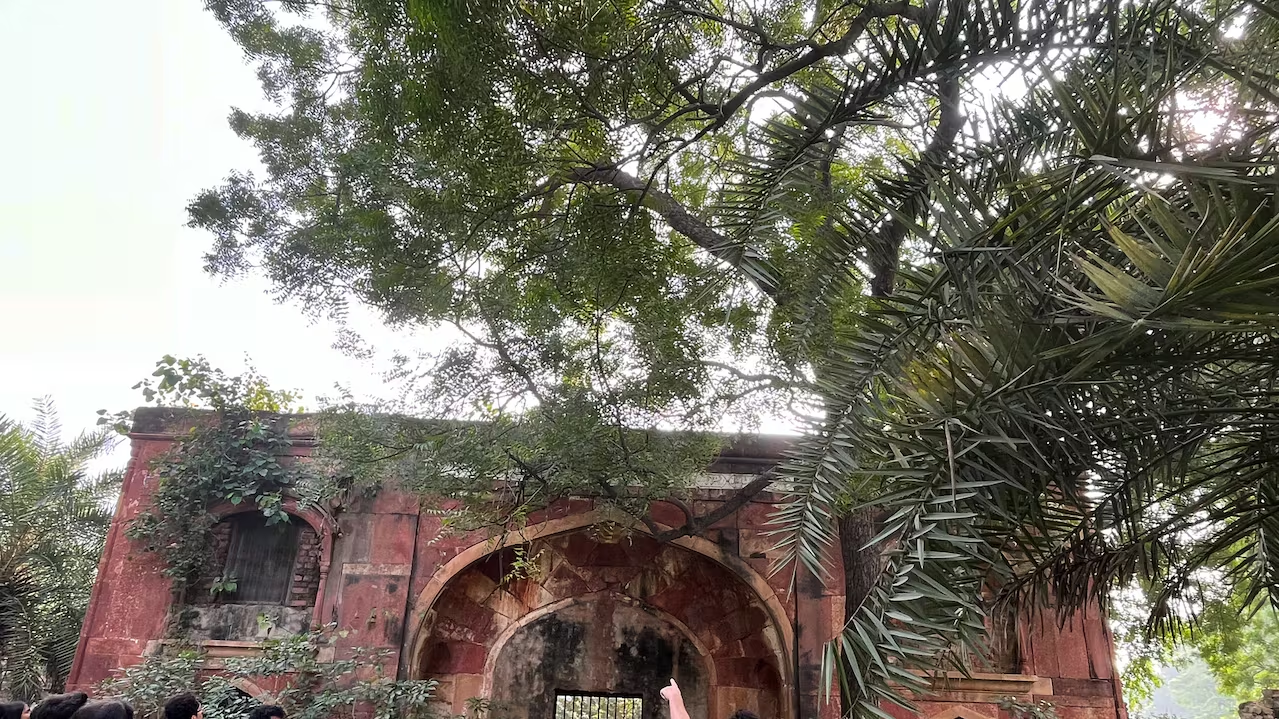
Daria Daulat Bagh is a palace situated in the island near the village Ganjam at Seringapatna. The village is set amidst beautiful gardens. It was built by Tipu Sultan in 1784 as his summer palace.
Built entirely out of teakwood, the architecture of the palace shows remarkable fusion of Deccani, Persian and Rajput styles. The most stunning feature of the palace is that all the space available on the walls, pillars, jharokas and arches have colourful fresco work in the style of Vijayanagar-Mysuru paintings.
On the western wall right to the entrance is depicted the battle scene of second Anglo-Mysore war or the battle of Pollilur. The battle had been fought between Haider-Tipu and the British forces, in which Haider and Tipu combated splendidly and won.
The paintings executed by the artists at the instance of Tipu Sultan where primary aim was to glorify their victory over the British. Colonel Bailley, the defeated British officer was taken to Serirangapatna after his defeat. The battle mural is seen in four different panels portraying Tipu and Haider marching in procession towards Pollilur near Kanchipuram. Tipu is depicted in all finery, himself leading the army towards Pollilur riding a beautiful white horse. Baillie sits in a palanquin as he is wounded and biting his pointing figure – a gesture employed by many to signify defeat in dismay.
The climax of the battle scene depict Baillie’s defeat giving special prominence to the explosion of tumbril and to the consternation of the British square colonel.
On the eastern part of the building there are a number of small frames containing figural motifs, architecture in brilliant composition. The most special is the one where the queen is seen seated on a carpet smoking a hookah. Some of the layouts strongly resemble Rajasthani miniature. The other panels illustrate incidents in the lives of princes, rulers and grandees of Tipu’s contemporary and also includes several rajas defeated by him. There are also neighbouring nawabs and kings including the Hindu Rani of Chittore, Rajas of Tanjore, Benaras, and Balajirao Peshwa II.
Come, lets discover the murals of Daria Daulat Bagh and appreciate the legacy of Tipu Sulatan, a brave son of the soil and perhaps one of the earliest freedom fighters.
YOUTUBE
source: http://www.blogvirasatehind.wordpress.com / September 26th, 2016
Super India, dedicated to serving India’s rural population, has opened its new, well-equipped Dawa Pharma branch at Sana Complex on the Vamanjoor-Pilikula connecting road, on the outskirts of the city.
The branch was inaugurated by Abdul Khader Ahmed Vamanjoor, owner of Super India Dawa Farma, along with Sheikh Hasan Abbas Vamanjoor, Fakir Hussain Ullal, and other prominent personalities by cutting the ribbon. Speaking at the event, Abdul Khader Ahmed Vamanjoor said, “Super India Dawa Pharma is always ready to serve the rural population and has a system in place to deliver quality medicines to consumers’ doorsteps. We request consumers to continue supporting the organization.”
He further added that the Dawa Farma branch is well-equipped with a wide range of medicines and medical kits for local residents. Additionally, the service includes free home delivery of medical supplies without any extra charges.
Sheikh Hasan Abbas Vamanjoor highlighted, “Instead of traveling to the city to purchase medicines, customers can now visit Super India Dawa Pharma and receive quality medicines at affordable prices.”
source: http://www.daijiworld.com / Daijiworld.com / Home> Karnataka / by Daijiworld Media Network – Mangaluru (MS) / September 12th, 2024
Acclaimed actor Adil Hussain, known for his significant contributions to Indian and international cinema, has been awarded the prestigious Anandaram Dhekial Phukan Award for 2024. The award recognises Hussain’s achievements in the film industry and his continued efforts to bring Assamese culture and stories to a global audience, reported India Today.
Expressing his gratitude, Hussain took to social media, writing, “Thank you so much for choosing me for the Anandaram Dhekial Phukan Award. I am honoured and humbled.” The actor, who hails from Goalpara in Assam, has long been celebrated for his versatile performances in independent films and his work in international cinema.
The Anandaram Dhekial Phukan Award is named after one of Assam’s literary pioneers, who played a vital role in promoting the Assamese language during the Orunodoi era. The award commemorates Phukan’s contributions to Assamese literature and culture, and it is given to individuals who have made outstanding contributions in their respective fields.
Hussain’s recognition with this award highlights his deep connection to his Assamese roots and his dedication to representing his culture on a global stage.
source: http://www.radiancenews.com / Radiance News / Home> Pride of the Nation> Awards> Latest News / by Radiance News Bureau / September 01st, 2024
City-based Rose Wood Inlay artiste Luqman Khan was presented with the Kamaladevi Chattopadhyay Viswakarma Award during an event organised by the Crafts Council of Karnataka at Karnataka Chitrakala Parishath in Bengaluru recently.
Crafts Council of Karnataka Chairperson Mangala Narasimhan, former Additional Chief Secretary Chiranjeev Singh and Crafts Council of Karnataka Treasurer Mir Shafi Farooq were present on the occasion.
source: http://www.starofmysore.com / Star of Mysore / Home> Gallery>Photo News / August 31st, 2024