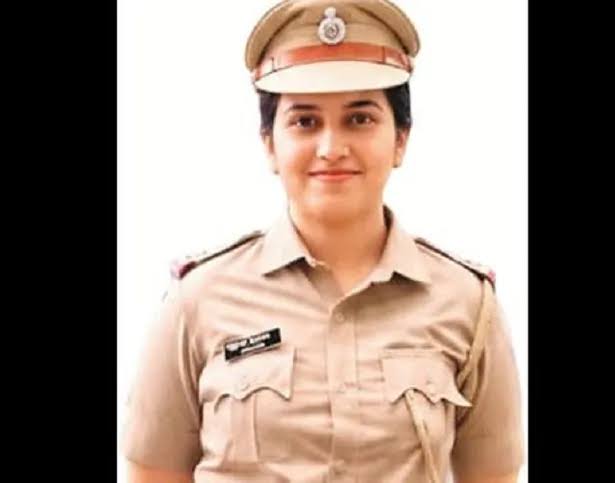
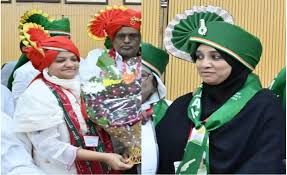
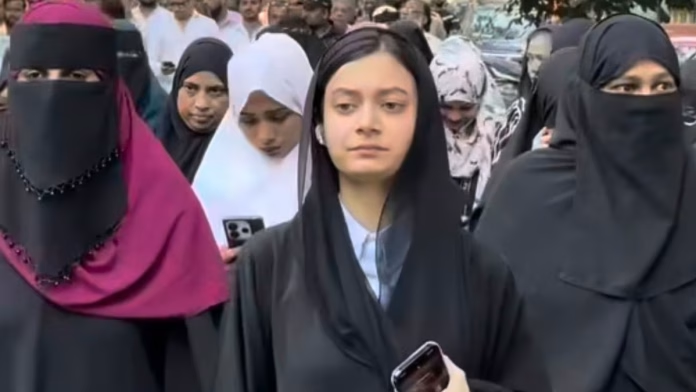
Dr Hina Qasim Foplinkar, daughter of an ST bus driver, completed BHMS, served as an excise inspector and fought a legal battle before securing her police selection in Maharashtra
Mumbai :
Dr Hina Qasim Foplinkar, who began her education at an Urdu-medium school in the small Konkan village of Sai, has been selected for the post of Deputy Superintendent of Police/Assistant Commissioner of Police after clearing the Maharashtra Public Service Commission examination.
The daughter of a Maharashtra State Road Transport Corporation bus driver, Foplinkar first became a doctor, then spent nearly seven years working as an inspector in the Maharashtra Excise Department before clearing the MPSC examination. She is currently undergoing training at the Maharashtra Police Academy in Nashik.
Foplinkar completed her early education at RZP Urdu School in Sai. She then studied at Advocate Haroon Solkar High School in Sai, where she completed Class 10, followed by Class 12 in science at SS High School and Junior College in Morbe.
She completed her BHMS in 2014 and became a doctor.
Speaking to Urdu daily Inquilab, Foplinkar said her teachers in Sai and Morbe played an important role in her educational journey by guiding her and encouraging her to pursue higher education.
“During my BHMS studies in Kharghar, I learnt about government jobs and competitive examinations,” she said.
After completing her graduation, Foplinkar worked for a year at different hospitals. During this period, she came across an advertisement for a free competitive examination preparation programme run by Savitribai Phule Pune University.
She cleared the entrance examination and was subsequently provided free accommodation and preparation facilities for around two years. She said this period helped her prepare for competitive examinations.
“During this period, I successfully cleared all the stages of the examination for Excise Inspector,” she said.
Nearly Seven Years in the Excise Department
Foplinkar joined the Maharashtra government’s Excise Department as an inspector in 2018. During her nearly seven years in the department, she served in areas including Andheri, Matunga and Chembur.
Despite having a government job, she continued preparing for further competitive examinations.
“I had a feeling that I had to do more. I continued my studies while performing my government duties,” she told Inquilab.
Her attempt to move into the state police service, however, did not come without setbacks.
Foplinkar appeared for the MPSC examination in 2023 and cleared all three stages but did not succeed at the medical stage and therefore could not secure a place in the final merit list.
She appeared again in 2024 and cleared the examination, but her name was again absent from the final list. She then challenged the matter through legal proceedings.
According to Foplinkar, she spent eight months pursuing the case before the decision was made in her favour.
“I had to fight a legal battle for eight months for my right. You have to raise your voice against injustice within the system and within the prescribed legal framework. It is not an easy task. In the end, the decision came in my favour,” she said.
Parents’ Sacrifices
Foplinkar has attributed her success to the sacrifices and support of her parents.
Her father worked as an ST bus driver but later decided to go to Kuwait to provide better educational opportunities to his two daughters. He worked as a driver for a private company there for around 10 years.
“My parents’ sacrifices are part of my success. Their prayers and hard work are the reason I have reached this position today,” Foplinkar said.
Her career has also drawn attention because of her educational background. She studied in an Urdu-medium school in Sai before pursuing science education, completing BHMS, entering government service and later clearing the state civil services examination.
Foplinkar’s journey is being seen as an example for students studying through Urdu, particularly those from smaller towns and villages.
She believes Urdu does not prevent a student from achieving professional success, provided students continue to acquire knowledge and skills and prepare themselves for competitive examinations and new opportunities.
Her progression from an Urdu-medium school in a small Konkan village to the medical profession, the Excise Department and now police service has made her an example of perseverance for students, particularly Muslim girls pursuing higher education.
source: http://www.clarionindia.net / Clarion India / Home> Editor’s Pick> India> Indian Muslims / by Clarion India Team/ August 25th, 2026
Berar (During British in Hyderabad), now in MAHARASHTRA :
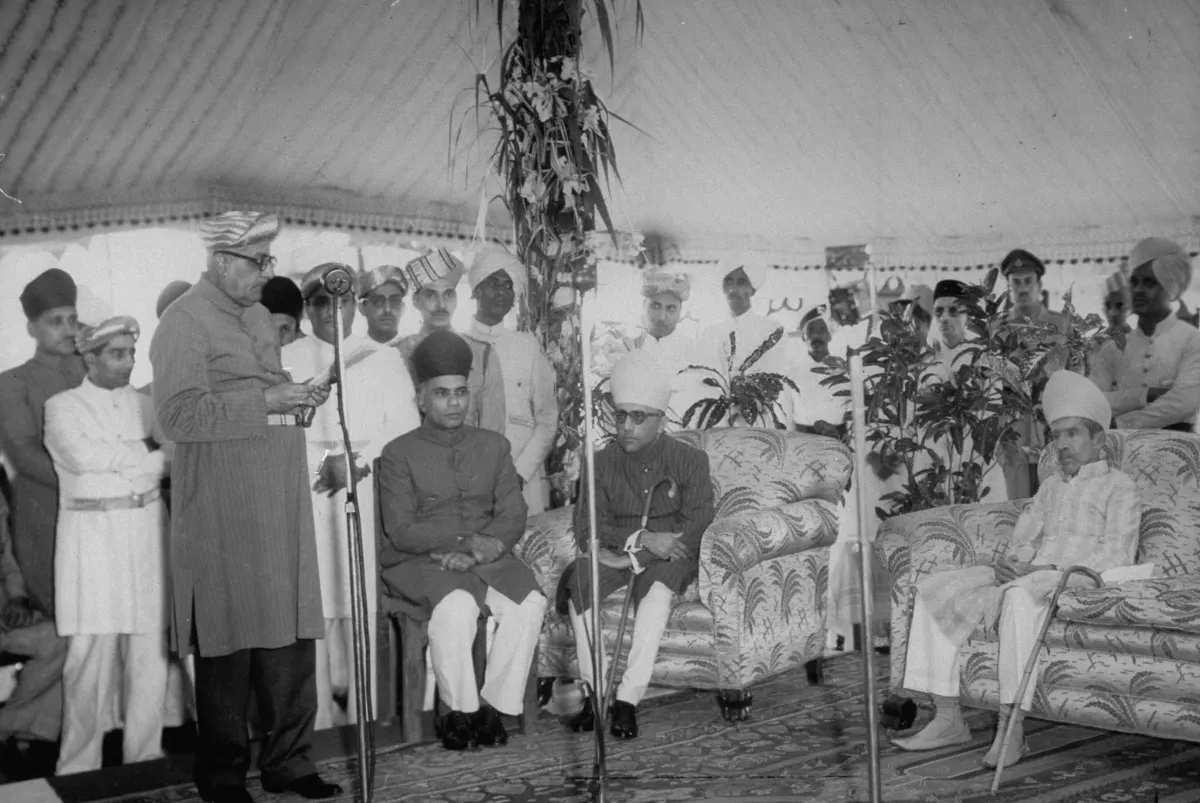
Nizam Osman Ali Khan of Hyderabad and Berar, Himayat Ali Khan the Prince of Berar listening to a presentation
The universal ideals of Islam found a distinctive expression in the historic region of Berar, where the faith spread not only through political authority but also through the influence of scholars, Sufis, jurists, poets, educators and public servants. Over the centuries, Berar became a centre of Islamic learning, Urdu and Persian literature, social reform and public service, producing generations whose lives reflected the Qur’anic ideals of knowledge, justice, compassion and service to humanity.
Situated in the heart of the Deccan, Berar emerged as a meeting ground of diverse cultures and traditions. Mosques, madrasas, khanqahs, libraries and charitable institutions shaped both the religious and intellectual life of society. Islamic scholarship developed in dialogue with local cultural currents, creating a rich and distinctive regional heritage.
The Muslims of Berar were notable not merely for their attachment to religious tradition but for their active engagement with the wider world. They served as judges, administrators, teachers, physicians, lawyers, bankers, writers, journalists, freedom fighters and philanthropists, contributing significantly to the social and cultural development of the region. Their achievements demonstrate that Islam, when lived in its authentic spirit, inspires excellence in every sphere of human endeavour.
Unlike historical accounts that focus mainly on rulers and political events, this work highlights individuals whose enduring influence arose from scholarship, moral leadership and public service. Some belonged to the medieval period, when Islam was taking firm root in the Deccan through scholars and Sufi saints; others flourished under the Bahmani, Imad Shahi, Mughal and Hyderabad administrations; many emerged during the colonial era and in independent India, responding creatively to changing social and educational challenges.
Their fields of achievement varied greatly, yet they were united by common values: knowledge as a sacred trust, integrity as the foundation of leadership, and service to humanity as an expression of faith. Whether they taught in madrasas, administered public institutions, wrote poetry, healed the sick, established schools or worked quietly for community welfare, each contributed in some measure to the intellectual and moral life of Berar.
The spread of Islam in Berar was gradual and deeply connected to institutions of learning and public welfare. From the fourteenth century onward, the growth of towns, educational centres and religious institutions transformed the region into an active participant in the intellectual currents of the medieval Deccan. Persian scholarship flourished for centuries, later enriched by the development of Urdu literature, poetry and historical writing.
Equally important were the contributions of ordinary men and women whose names seldom appear in conventional histories. Teachers in village maktabs, imams guiding local congregations, merchants supporting charitable works and families nurturing learning within the home collectively sustained the spiritual and cultural life of the community. Their quiet efforts formed the unseen foundation upon which more celebrated achievements were built.
The personalities presented in the following pages represent only a small cross-section of this rich inheritance. Some attained national prominence, while others exercised influence within local communities. Together they illustrate how Islamic values were translated into scholarship, public service, literature, education, jurisprudence, spirituality and community leadership across successive generations.
This section is therefore more than a collection of biographies. It is a tribute to a civilisational tradition that flourished in Berar and formed an integral part of India’s composite cultural heritage. In remembering these distinguished men and women, we preserve not merely their personal achievements but also the ideals they embodied—faith enlightened by reason, learning tempered by humility, and devotion expressed through selfless service to society. Their legacy continues to inspire future generations and deserves an honoured place in the history of both Berar and Indian Islam.
The Modern Legacy
Berar’s rich intellectual traditions continued into the modern era through its judicial lineages, literary circles, educational institutions, and public service. Madrasas, mosques, khanqahs, libraries, and scholarly households remained the custodians of an intellectual culture that regarded knowledge as an amanah—a sacred trust to be exercised with integrity, wisdom, and responsibility for the common good.
Across the Bahmani, Imad Shahi, Mughal, and Asaf Jahi periods, the Qazis of Berar successfully adapted to changing political systems without compromising the ethical foundations of their office. Their authority rested not upon political power but upon scholarship, moral integrity, and the confidence of the communities they served. This remarkable continuity enabled the House of Qazis to maintain its influence even as successive dynasties transformed the Deccan’s administrative landscape.
With the advent of modern India, this legacy assumed new forms. Descendants of Berar’s scholarly traditions emerged as judges, advocates, parliamentarians, educationists, scientists, physicians, administrators, industrialists, writers, entrepreneurs, and spiritual leaders. While their professional pursuits diversified, they remained united by a shared commitment to justice, learning, ethical leadership, and public service. In doing so, they demonstrated how a centuries-old culture of scholarship could flourish within the institutions of a democratic nation.
Foremost among these distinguished personalities stands Justice Mohammad Hidayatullah (1905–1992), one of the greatest jurists produced by the erstwhile Central Provinces and Berar. Educated at Morris College, Nagpur, before proceeding to Trinity College, Cambridge, and Lincoln’s Inn, he returned to practise at the High Court of the Central Provinces and Berar. His brilliant legal career included serving as Advocate General, Judge, and Chief Justice of the Nagpur High Court before his elevation to the Supreme Court of India in 1958. In 1968, he became India’s first Muslim Chief Justice. He subsequently served the nation with distinction as Acting President of India and later as Vice President of India, embodying the highest ideals of constitutionalism, judicial independence, and public service.
The biographical sketches that follow present some of the most eminent representatives of Berar’s modern legacy. Though drawn from diverse professions and walks of life, each reflects the enduring values that have characterised the region’s intellectual and spiritual heritage: scholarship, integrity, compassion, and an unwavering commitment to serving humanity.
Kazi Syed Karimuddin belonged to the distinguished Qazi family of Berar, a lineage renowned for its contributions to Islamic jurisprudence, education, and public service. A respected lawyer, parliamentarian, and statesman, he combined professional distinction with an unwavering commitment to constitutional values. As an active member of the Constituent Assembly of India, he made thoughtful and principled interventions in the framing of the Constitution, particularly in defence of civil liberties, minority rights, and the guarantees of equality, freedom, and the rule of law that now form the bedrock of the Republic. Through his legal practice, public service, and constitutional vision, he strengthened the Qazi family’s enduring reputation for scholarship, integrity, and enlightened leadership while promoting education, communal harmony, and ethical public life.
Kazi Syed Ghiyasuddin belonged to the eminent hereditary Qazi family of Berar, renowned for its legacy of judicial scholarship and public leadership. A distinguished statesman of Maharashtra, he served as a Cabinet Minister for over a decade during the tenure of Chief Minister Y. B. Chavan. He later held several key portfolios in the State Government, exemplifying the family’s enduring tradition of service, integrity, and administrative excellence.
Justice Mohd. Mujibuddin Qazi served with distinction as a Judge of the Bombay High Court, being appointed an Additional Judge in September 1981 and confirmed as a permanent Judge in December 1982. Widely admired for his judicial scholarship, integrity, fairness, and balanced judgments, he retired in February 1992 after a distinguished career devoted to the administration of justice. Following his retirement, he served as Chairman of the Maharashtra Administrative Tribunal and later as Chairman of the Anjuman Hami-E-Islam Trust, continuing his distinguished contribution to public life and educational administration.
Justice Mohd. Arifur Rahman Khan was a distinguished member of the higher judiciary whose career was marked by scholarship, integrity, and judicial independence. Through his service on the Bench, he upheld constitutional values and the rule of law while contributing significantly to the administration of justice. His achievements reflect Berar’s enduring legacy of legal excellence.
Justice Zaka Azizul HaqHaq is a distinguished former Judge of the Bombay High Court, serving principally at the Nagpur Bench. Elevated to the Additional Judge rank in 2013 and later confirmed as a permanent Judge, he became widely respected for his judicial scholarship and integrity. Following his retirement, he was designated a Senior Advocate by the Supreme Court of India. He was appointed sole Administrator of the Anjuman Hami-E-Islam Trust, one of Nagpur’s foremost educational institutions, where he has continued to render distinguished service in educational administration and public life.
Dr Syed Mahmood Hussain (S. M. H.) Khatib was an eminent zoologist, pioneering entomologist, and former Head of the Department of Zoology at the Institute of Science, Nagpur. His outstanding research advanced entomological studies in Central India and inspired generations of scientists. Rashtrasant Tukadoji Maharaj Nagpur University perpetuates his memory through the Dr S. M. H. Khatib Memorial Gold Medal and the S. M. H. Khatib Memorial Entomology Research Forum.
Dr Fauzia Khan traces her lineage to the Naqshbandi spiritual tradition through her father, Dr Zafar Naqshbandi, a distinguished physician of Aurangabad. She is a prominent politician from Maharashtra and an advocate of women’s empowerment, education, and public welfare. She made history as the first Muslim woman to serve as a Minister in the Maharashtra Government, holding the portfolios of Education, Health, and Women & Child Development. A former Member of the Rajya Sabha, she has devoted her public life to advancing inclusive governance, social justice, and the welfare of women and marginalised communities.
Qazi Syed Sirajuddin belonged to the distinguished hereditary lineage of the Qazis of Berar. He was a scion of the historic Qazi family of Kalamb, whose judicial and religious authority extended over several generations. Associated with the honorary office traditionally held by the family, he upheld its long-established reputation for integrity, scholarship, and public service. Through his standing within the community, he helped preserve the prestige of an institution that had long served Berar as a guardian of justice, Islamic learning, and moral leadership, while sustaining the family’s enduring legacy of civic responsibility.
Manzoor Hussain Shor (1916–1991) was a distinguished Urdu poet born in Amravati, Berar, where he first established his literary reputation. Following the Partition of India, he migrated to Pakistan and became a respected poet, critic, academic and teacher, later serving at the University of Karachi. His landmark poetry collection, Nabz-e-Dauran (1959), established him as a leading voice of modern Urdu nazm, while subsequent works further enhanced his literary stature. His poetry combined classical elegance with modern sensibilities, preserving the rich literary heritage of Berar while making a lasting contribution to Urdu literature across the subcontinent.
Dr Syed Naimuddin was an eminent scholar of Urdu and Persian who served with distinction as Professor, Head of the Department, and later Principal of the Government Vidarbha Institute of Science and Humanities, Amravati. His pioneering research in Persian and Indo-Turkish literary studies earned international recognition, and one of his scholarly works was published by the Government of Turkey—a rare honour reflecting the global appreciation of his academic contributions. Through his teaching, research, and literary scholarship, he made a lasting contribution to the advancement of Urdu and Persian studies in India.
Dr Syed Rafiuddin Qadri was a distinguished scholar of Arabic and Islamic Studies, renowned for his profound erudition and lifelong dedication to higher learning. A recipient of the President’s Award for Arabic, he earned national recognition for his outstanding contribution to Arabic language and Islamic scholarship. He was also the son-in-law of the revered Sufi saint, Peer Nahe Miyan of Bhopal, reflecting his close association with a distinguished spiritual lineage alongside his own remarkable academic achievements.
Wajida Tabassum was an acclaimed Urdu novelist and short-story writer born in Amravati, Berar. Later associated with Hyderabad, she emerged as one of the most distinctive voices in modern Urdu fiction. Renowned for her bold narrative style and unflinching portrayal of Hyderabadi aristocratic society, gender relations and social change, her works challenged conventional norms and secured her a prominent place in twentieth-century Urdu literature.
Manzar Bhopali (Syed Ali Raza) was born in Amravati, Berar, and is one of the most celebrated contemporary Urdu poets of India. Widely admired for his powerful recitation and lyrical expression, he has represented Urdu poetry at prestigious national and international mushairas. His poetry, rooted in classical tradition yet responsive to contemporary concerns, has earned him recognition across the Urdu-speaking world.
Qaisar Amravatwi was a distinguished Urdu poet and writer born in Amravati, Berar. A respected representative of the classical literary tradition, he contributed significantly to the development of Urdu poetry through his refined diction, literary scholarship and elegant style. His writings enriched the cultural life of Berar and secured him a lasting place among the region’s notable literary figures.
Dr Bano Sartaj was born in Pandharkawada, Yavatmal district of erstwhile Berar. Dr Bano Sartaj is a distinguished fiction writer, humorist, translator and educator. Former Principal of Lal Bahadur Shastri College of Education, Bilaspur, she has made significant contributions to Hindi and Urdu children’s literature. Through her creative writings and academic engagement, she has enriched literary culture while promoting education and imagination among younger generations.
Dr Syed Firozuddin Qadri was a distinguished scholar of Islamic thought and Urdu literature. His doctoral research on Shah Waliullah Dehlawi made a significant contribution to the understanding of one of the greatest reformers, theologians, and intellectual figures of eighteenth-century India. Through his teaching, research, and scholarly writings, he enriched the fields of Islamic studies and Urdu scholarship while upholding Berar’s enduring tradition of learning and intellectual inquiry.
Syed Saulat Hussain Kazi served with distinction as a District Judge and earned widespread respect for his impartiality, legal scholarship, and administrative ability. Though descended from the Khateeb family, Saulat Husain retained the title of Kazi because his branch held the hereditary Qaziat of Anjangaon. Besides his public standing, he was an accomplished writer and reciter of devotional na’ats, earning admiration for his literary and religious contributions. He was an accomplished mystic poet whose writings reflected spiritual insight and literary refinement. His wife, Mrs Surayya Saulat, was a poet whose literary talent found expression in a published collection of poetry.
Shaukat Husain Khateeb e belonged to the distinguished Khateeb family of Ellichpur (Achalpur), a lineage closely associated through matrimonial ties with several eminent Kazi families of Berar. He served as Assistant Director of Education in the erstwhile Hyderabad State under the Nizam.
Dr G. S. Khwaja, a native of Patur, Akola district, is an eminent historian, epigraphist, scholar of Arabic and Persian inscriptions, medieval numismatics, Islamic calligraphy, and architecture.After completing his postgraduate studies in Arabic and Persian literature and journalism, he obtained his Ph.D. from Nagpur University. Retired s Director, Epigraphy, in 2016.A recognised khattat (calligrapher) and scholar of Indian Islamic heritage, he authored important works including Mashaheer-i-Berar Biographies (2005), which preserves the memory of distinguished personalities associated with Berar’s historical and cultural tradition.
Syed Qasim Rasool Ilyas, son of Late Syed Akhtar Husain, represents the contemporary intellectual and public leadership tradition of Berar.He obtained his Ph.D. in Chemistry from Nagpur University in 1983, after completing his M.Sc. and B.Sc. from Nagpur institutions.Alongside his academic background, he has contributed to journalism, public affairs, and social issues. He was associated with the founding of the Welfare Party of India in 2011 and serves as its National President.He has also been associated with the All India Muslim Personal Law Board as a senior member and spokesperson, contributing to public discourse through writing, lectures, and organisational work.
Khan Mohammad Azhar Hussain was a distinguished public figure from Akola who served as a Minister in the Government of Maharashtra and represented the Akola Assembly constituency in the Maharashtra Legislative Assembly. Known for his integrity and commitment to public welfare, he worked for educational advancement, minority welfare and regional development. His enduring association with educational institutions and community service earned him wide respect in Berar’s public life.
Dr Mirza Rafi Ahmad Baig, affectionately known as “Mirza Express,” spent much of his later life in Amravati, from where he captivated audiences across Maharashtra through more than 6,000 performances. His residence, aptly named Mirza Express, became a landmark for admirers of his wit, Varhadi humour, poetry and literary brilliance. Through his unique blend of satire, storytelling and cultural insight, he emerged as one of the finest ambassadors of Varhadi literature and Berar’s rich literary heritage.
Dr Humayun Athar Khatib is a distinguished ophthalmic surgeon from Berar who has earned international recognition for excellence in eye care. After advanced specialist training in Edinburgh, Scotland, he served with distinction in the Kingdom of Saudi Arabia, where his clinical expertise and compassionate service won wide professional respect. His outstanding contributions to ophthalmology have enhanced the reputation of Berar’s medical fraternity both in the Middle East and internationally.
Hamid Husain Khateeb was a distinguished Islamic scholar, accomplished orator, and prolific writer who served as the All-India Secretary of Jamaat-e-Islami Hind. Widely admired for his eloquence, intellectual depth, and leadership, he made significant contributions to Islamic thought and public discourse. Through his scholarship and organisational work, he promoted religious education, moral reform, and social awareness.
Sulaiman Khateeb was the foremost exponent of Dakhani Urdu poetry and was celebrated as the Badshah-e-Mizahiya Shayari. Through humour, satire, and vivid portrayals of everyday Deccan life, he elevated Dakhani into a respected literary medium while preserving its distinctive language, culture, and enduring literary heritage.
Ahmad Husain (Talegaon)was remembered as a prominent literary and political figure. His family’s enduring commitment to scholarship is reflected in later generations, including his grandson SQRIlyas, a noted authority on Muslim Personal Law and a prominent member of the All India Muslim Personal Law Board.
Nawab Anees Ahmad Khan graduated in Commerce from Jamia Millia Islamia, New Delhi. A distinguished philanthropist, educationist, and community leader, he devoted his life to the advancement of education and public welfare in Berar. He rendered valuable service as a member of the Maharashtra State Urdu Academy, the Berar Muslim Education Society, and the Vidarbha Youth Welfare Society.
Shafaqat Husain Kazi He was a distinguished public servant who served as the Honorary Magistrate of Anjangaon during the late nineteenth and early twentieth centuries. Renowned for his exceptional command of English, sound administrative acumen, and unimpeachable integrity, he enjoyed widespread respect among both the public and the civil administration. His career reflected the ideals of justice, enlightened leadership, and civic responsibility, leaving behind a legacy of public service that continued to inspire subsequent generations of the Kazi family.
Khan Bahadur Azmat Husain Khateeb was a distinguished religious scholar and public figure whose learning, integrity, and service earned him the prestigious title of Khan Bahadur. As Khatib of the historic Jama Masjid of Ellichpur, he played a pivotal role in preserving the region’s rich Islamic scholarly tradition while promoting education, religious instruction, and community welfare. Revered for his eloquence, moral leadership, and commitment to public service, he remains one of the most respected figures in the intellectual and religious history of Berar.
Syed Zulfiquar Hussain Khatib was the son of Syed Azmat Hussain Khatib and Mohammadi Begum. After obtaining his LL.B. from Aligarh Muslim University, he devoted himself to legal practice, public service, and the preservation of the distinguished religious and educational traditions associated with the historic Jama Masjid of Achalpur.
Zehra Begum Khatib received her education at home, when formal schooling for girls was uncommon. A gifted Urdu and Persian poet, her literary works were deeply rooted in classical Islamic learning, ethical values and traditional literary culture. Her poems became for her the primary medium of communication. Alongside her devotion to family life, she actively encouraged education, particularly for girls. She is remembered for her literary refinement, cultural influence, and enlightened vision, which harmonised religious learning with intellectual cultivation. She rendered her poems in a mellifluous tone.
Bughdadi Begum was a distinguished Urdu poetess from Berar whose literary talent earned her admiration in the region’s vibrant cultural circles. Her poetry, frequently recited at mushairas, was celebrated for its elegance, sensitivity and expressive beauty. Unlike poets whose writings centred on classical religious themes, her work explored the experiences, emotions and everyday concerns of ordinary life with remarkable grace and insight. She occupies a respected place in Berar’s rich Urdu literary tradition.
Syed Akram Husain Khatib studied under the Calcutta Board before pursuing higher education at Aligarh Muslim University. He served as Rationing Officer at Nagpur from 1945 to 1955 before assuming the hereditary office of Khatib of Ellichpur. Remembered for his generosity and compassion, he devoted his life to assisting students, patients, and families facing social and legal difficulties. His humility, scholarship, and spirit of public service earned him enduring respect throughout Berar.
Syed Abdur Rauf Shah was one of the foremost political leaders produced by Berar during the closing years of British rule. A Member of the Legislative Assembly in the Central Provinces and Provincial President of the All-India Muslim League, he worked closely with Quaid-e-Azam Muhammad Ali Jinnah in strengthening the League’s organisation. At the historic Lahore Session of March 1940, he emerged as one of the principal spokespeople of the Muslims of the Central Provinces in support of the Lahore Resolution. He also served as Salar-i-Ala (Supreme Commander) of the Muslim League National Guards in the region.
Sami Khatib was an eminent industrialist and philanthropist, and the founder of one of India’s leading pharmaceutical enterprises. Widely recognised as a pioneer of the Indian pharmaceutical industry, he received the prestigious Vijay Ratna Award in 1991. He subsequently served on the Government of India’s Drugs Advisory Committee (1996–1999). Through the Sinkhai Foundation and his long association with Anjuman-i-Islam, Maharashtra College, and Kamala Nehru College of Pharmacy, he rendered distinguished service to healthcare, higher education, and philanthropy.
Mohammad Mohibbul Haq was a distinguished parliamentarian of the Indian National Congress who represented the Akola Parliamentary Constituency in the Third Lok Sabha after his 1962 election. A respected public representative from Vidarbha, he actively participated in parliamentary affairs and consistently worked for the region’s political, educational, and economic development.
K. M. Asghar Husain represented Akola in the Fourth and Fifth Lok Sabhas as a distinguished parliamentarian of the Indian National Congress. Throughout his public life, he devoted himself to advancing Vidarbha, earning widespread respect for his integrity, accessibility, and steadfast commitment to democratic values.
Qazi Syed Shahabuddin obtained postgraduate qualifications in the humanities and law. He is remembered among the eminent personalities associated with Berar’s intellectual heritage for his contributions to education, scholarship, and community life. His career reflected the family’s enduring commitment to learning and public service.
Mohd Izhar Qazi is a distinguished human resource professional based in Mumbai. He has served as a trustee of one of India’s leading minority educational institutions and has actively contributed to educational administration, institutional development, and community service. His professional accomplishments demonstrate the Qazi family’s continued engagement with modern educational and social institutions.
Razia Sultana Ahmed was a distinguished educationist and social worker based in Mumbai. She was the first woman from Berar to obtain a postgraduate degree from Osmania University, Hyderabad. Throughout her career, she occupied leadership positions in several Muslim educational and social organisations, becoming a pioneer in promoting women’s education and social empowerment.
Khalida Sultana Qazi obtained her postgraduate degree in Philosophy from Osmania University. Widely respected as an authority on the philosophy and thought of Sir Muhammad Iqbal, she made significant contributions to the study of Islamic philosophy, comparative thought, and modern Muslim intellectual history through her scholarship and public lectures.
Dr Rana Noor Siddiqui is the founder of the Begum Noor Jehan Salam Ahmed Trust, based in Yavatmal district, an educational trust dedicated to the advancement of learning and women’s empowerment. Under her visionary leadership, the Trust has established and nurtured several educational institutions, beginning with the Sunrise English Medium Convent, Wani, followed by the Noor Jahan Begum Salam Ahmed Arts and Commerce College, Wani, and the Noor Jahan Begum Salam Ahmed Women’s College of Law, an exclusive institution devoted to women’s legal education.
Qazi Syed Moinuddin was a prominent advocate practising at Yavatmal. Widely respected for his integrity, legal scholarship, and public spirit, he enjoyed an excellent reputation within the legal fraternity. His distinguished professional career strengthened the longstanding association of the Qazi family with the administration of justice.
Prof. Mohd. Ahtemad Qazi devoted his academic career to the teaching of Zoology. An inspiring teacher and respected scholar, he earned the admiration of generations of students through his scholarship, dedication, and commitment to scientific education. His work exemplified the growing contribution of the Qazi family to higher education.
Prof. Syed Salahuddin Qazi was an accomplished teacher of Zoology at a leading college. Remembered for his commitment to scientific education and academic excellence, he inspired generations of students through his disciplined scholarship and devotion to teaching.
Prof. Syed Minhajuddin Qazi was a distinguished educationist and social figure of Nagpur. A respected Professor of Chemistry, he devoted his career to higher education while actively participating in educational, literary, and community initiatives. His influence extended far beyond the classroom through his mentorship of students and involvement in public life.
Qazi Syed Saifuddin graduated in Science from Aligarh Muslim University after securing a merit scholarship. Deeply committed to humanitarian service, he made his residence in Nagpur a welcoming home for students from Yavatmal and neighbouring districts pursuing higher education. His generosity and hospitality benefited countless young scholars.
Prof. Abrar Hussain Khatib earned a doctorate in Physics and taught at a leading college. Alongside his distinguished academic career, he served as the Khatib of Ellichpur, exemplifying the harmonious integration of religious scholarship with modern scientific education. He remains an outstanding example of intellectual versatility.
Syed Hishamuddin Khatib was a prominent political leader of Balapur. Serving for many years as President of the Municipal Council, he earned widespread respect for his civic leadership, administrative ability, and dedication to public welfare. His long public career contributed significantly to local self-government.
Syed Natiquddin Khatib represented Balapur in the Maharashtra Legislative Assembly and also served as Chairman of the Municipal Council. His distinguished public career reflected his commitment to democratic governance, efficient administration, and community development, making him one of the region’s respected political leaders.
Syed Mukarram Husain Khateeb, currently serving his third consecutive unopposed term as President of the iconic, over-a-century-old Sadar Muslim Library, Nagpur, established in 1922, has also been deeply involved in strengthening school education and uplifting students from poor and working-class families, often extending financial assistance to deserving pupils. With a collection of more than 30,000 books in classical and modern languages, the Library has long been a distinguished centre for promoting Berar’s rich literary and cultural heritage.
Abdul Qadar Khatib was a distinguished educationist and scholar of Urdu, Arabic, and Persian. He taught these classical languages at a leading college in Vidarbha and inspired generations of students through his scholarship, simplicity, and devotion to learning. His intellectual legacy continued through his son, Dr Humayun Khatib, an internationally respected ophthalmic surgeon based in Edinburgh.
Dr Naim Durdana Kazi was an eminent scholar of Urdu, Persian, and Arabic, holding Triple M.A. degrees, a PhD, and the traditional qualifications of Maulvi, Munshi, and Fazil. She served as Principal of Bapuji Aney Mahila Mahavidyalaya, Yavatmal, and was a member of the Boards of Studies of both Nagpur and Amravati Universities. Her research on Allama Rashidul Khairi and her contribution to Urdu scholarship earned her widespread academic respect.
Mardan Ali Khan was a distinguished jurist, Urdu poet, and public figure. A recipient of the Nagpur University Gold Medal in Urdu, presented by Prime Minister Jawaharlal Nehru, he began legal practice at Akola before serving as a Civil Judge and First Class Magistrate. Returning to the Bar in 1973, he authored the acclaimed ghazal collection Sarood-e-Rafta, leaving an enduring legacy in law, literature, and public service.
Dr. Mansha-ur-Rahman Khan was a distinguished Professor of Urdu, celebrated poet, literary critic, and scholar. Through his teaching, research, and creative writings, he made enduring contributions to the Urdu language and literature. Widely respected as a mentor and public intellectual, he enriched the literary and cultural heritage of Berar through his refined scholarship and poetic expression.
Syed Ejauddin Tariq Qazi is a distinguished civil engineer who graduated from the Maulana Azad National Institute of Technology (MANIT), Bhopal. He also obtained professional qualifications in accountancy in the United Kingdom and is presently settled in London. His successful international career reflects the continuing professional excellence and global outlook of the Qazi family.
THE ENDURING LEGACY OF BERAR
The history of Berar’s scholarly families is ultimately the history of ideas carried through generations. Kingdoms disappeared, political frontiers shifted, and administrative systems were repeatedly transformed, yet the ideals that sustained these families remained remarkably constant. Justice, learning, ethical leadership, and service to society continued to define their identity across nearly seven centuries.
The preservation of this legacy now assumes particular importance. Many manuscripts remain unpublished; family archives await systematic documentation; oral traditions risk disappearing as older generations pass away; and numerous scholars who contributed significantly to regional intellectual life remain absent from mainstream historical narratives. Recovering these forgotten histories is therefore not merely an academic exercise but an act of cultural preservation.
Future research must extend beyond biography to encompass the broader institutional history of Berar’s mosques, madrasas, khanqahs, libraries, schools, and courts. Such studies will reveal that the region’s intellectual life was sustained through networks of scholars whose influence extended across the Deccan, Central India, and beyond. Berar deserves recognition not merely as a geographical region but as one of India’s important centres of learning.
In remembering the Houses of Qazi, Khatib, and Qadri, we recover more than the history of distinguished lineages. We recover a vision of civilisation in which knowledge is inseparable from character, public office is inseparable from moral responsibility, and learning achieves its highest fulfilment in the service of humanity. That vision constitutes Berar’s enduring gift to India and secures its rightful place in the nation’s intellectual history.
source: http://www.muslimmirror.com / Muslim Mirror / Home> Indian Muslims / by Moin Qazi / August 04th, 2026
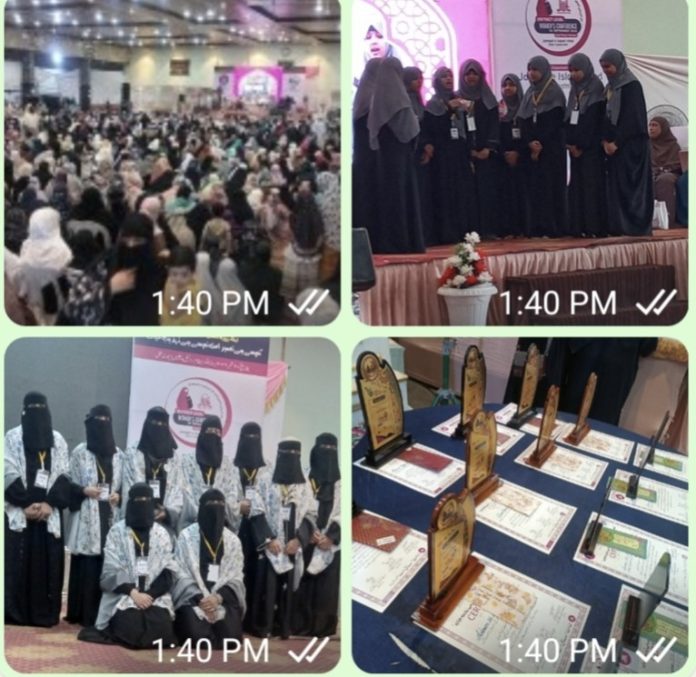
A district-level Muslim Women’s Conference was held at Royal Palace, Yavatmal, under the Women’s Wing of Jamaat-e-Islami Hind (JIH), Yavatmal (North), drawing more than 3,000 women and girls from across the district. The conference was organised around the theme “Tum Se Hai Taameer-e-Ummat, Tum Se Hai Tehzeeb-e-Hayaat,” focusing on women’s role in family life, moral values and social responsibility.
In the run-up to the event, a district-wide quiz competition was held based on Hum Aisi Banein by Mael Khaerabadi, a book on the lives of the Sahabiyaat, the female companions of Prophet Muhammad ﷺ. Copies of the book were distributed to students in high schools and colleges across Yavatmal district, with the Girls Islamic Organisation (GIO) and the Women’s Wing coordinating the effort in towns and villages.
Winners across three categories received cash prizes totalling ₹30,000, along with mementos and certificates, presented during the conference.
The presidential address was delivered by Maulana Ilyas Khan Falahi, State President of JIH Maharashtra, who spoke on the importance of prayer (Salah) as a pillar of Islamic life.
Other speakers included Prof. Mubashshira Firdaus Khan, Assistant National Secretary of the Women’s Wing; Nafisa Atiq, State Secretary of the Women’s Department, Vidarbha Region; Dr. Sabiha Khan, a member of JIH’s Representative Council; and Shameem Bano, District President of the Women’s Wing, Yavatmal. Dr. Rana Noor of Wani, a social worker and educationist involved in setting up the first women’s law college in the Vidarbha region, was also present.
Sessions covered topics including women’s role in building society, household financial management, and raising children with strong values. A separate session addressed the challenges young women face online, including social media platforms and artificial intelligence, and the need to navigate digital spaces responsibly.
The conference featured what organisers described as the first interactive panel discussion of its kind held exclusively for Muslim women on such a scale, facilitated by Dr. Uzma Shah of Wani. The panel discussed family and societal challenges and the multiple roles of Muslim women as students, mothers and community leaders, along with discussions on mental and spiritual well-being and parenting.
Children from the Children’s Islamic Organisation (CIO) performed the CIO Tarana, and the event was anchored by GIO members Aqsa Mirza and Fariha.
The concluding address was delivered by Maulana Ilyas Khan Falahi on the theme “O Daughters of Islam! You Are the Pride of the Ummah,” focusing on women’s character, values and responsibility in strengthening families and society. Organisers said the event, supported by the Yavatmal Volunteer Tehreeki Team, was conducted with discipline and coordination despite the large turnout.
source: http://www.radiancenews.com / Radiance News / Home> Latest News> Report / by Radiance News Bureau / September 29th, 2026
Banner image: Images courtesy of Parveen Shaikh/Whitley Award.
Scientist Parveen Shaikh has been awarded a 2026 Whitley Award by the UK charity Whitley Fund for Nature, recognising her efforts to protect the endangered Indian skimmer along India’s rivers. The award comes with funding to expand her community-led conservation model from Chambal river to Prayagraj, where the Ganga and Yamuna rivers converge.
The Indian skimmer is identified by its vivid orange bill and its habit of flying low over water, skimming the surface to catch fish. India holds over 90% of the world’s population of the bird, with roughly 3,000 individuals, making the country critical to the species’ survival. The birds breed on seasonal sandbars and mid-river islands, making their nests vulnerable to changes in river flow, predators, and human disturbance.
When Shaikh, who works with the Bombay Natural History Society, began her “Guardians of the Skimmer” initiative on the Chambal river, the local Indian skimmer population stood at around 400 individuals in 2017. As of 2025, the population has grown to approximately 1,000. Nest survival has nearly doubled, rising from 14 percent to 27 percent, a direct result of community involvement and scientific monitoring.
“Local guardians help identify new sandbars, monitor nests, and prevent disturbance during the breeding season. Some now proudly refer to the skimmers as “our birds,” which reflects a growing sense of ownership,” says Shaikh.
With the Whitley Award funding, her team will now expand to Prayagraj in Uttar Pradash, a place of cultural significance and also home to breeding populations of Indian skimmers, river lapwings, and little terns. The challenges here include heavy boat traffic, fishing activity, religious practices along the riverbank, and urban pollution all increase pressure on nesting colonies. The team plans to appoint new local guardians, install predator-proof fencing, and use GPS mapping for real-time nest monitoring.
The Whitley Award, also known as the Green Oscars, is given annually to those achieving exceptional success in grassroots community-led protection for threatened species and habitats.
This year, the award includes two Indians among the six winners. In addition to Shaikh, the other winner from India is Barkha Subba who is leading the first grassroots movement to protect the Himalayan salamander and its fragile wetland habitat in the Darjeeling Himalaya, West Bengal.
Read about Parveen Shaikh’s work in Chambal river and the community champions that she works with in this 2021 story on Jagdish, one of the nest guardians.
source: http://www.india.mongabay.com / Mongabay / Home> Global> Beyond Protected Areas / April 30th, 2026
Adibah Anam, rickshaw driver’s daughter, becomes Maharashtra’s first Muslim woman IAS officer.
Defying immense odds, Adibah Anam, daughter of a rickshaw driver from Yavatmal, Maharashtra, has achieved an extraordinary feat by securing All India Rank 142 in the UPSC Civil Services Examination 2024.
With this, she becomes the first Muslim woman from her state set to join the prestigious Indian Administrative Service (IAS), according to Clarion India.
Raised in a modest household, Adibah’s story is one of sheer determination and purpose. She began her education in a Zilla Parishad Urdu School, scoring an impressive 94% in SSC and 92.46% in HSC (Science).
Though she once dreamt of becoming a doctor, her maternal uncle, Jan Nizamuddin Sahib, guided her toward civil services, believing she could bring broader change. He supported her emotionally and financially, becoming a pillar in her journey.
Adibah completed her graduation in Mathematics from Abeda Inamdar College, Pune, with 85.20%. Despite clearing the NET exam, she chose not to enter academia and began preparing for the UPSC.
Her early attempts were marked by struggle, especially during the COVID-19 pandemic. Her third attempt, from Mumbai’s Hajj House under Maqsood Khan Sahib’s mentorship, brought her closer, but she still missed the final list.
Refusing to give up, she joined the Residential Coaching Academy at Jamia Millia Islamia in Delhi, where she finally succeeded. Choosing Urdu Literature as her optional subject despite a science background, she showcased her academic versatility and deep cultural roots.
Her parents remained her silent strength. “My father never asked me to stop. He only said, ‘May Allah make you successful,’” she shared.
Today, Adibah’s success is a beacon of hope for marginalized communities. “This victory belongs to every girl told to stay behind,” she says. “This is just the beginning.” — With Agencies Inputs
source: http://www.muslimmirror.com / Muslim Mirror / Home> Indian Muslim / by Muslim Mirror Desk / April 27th, 2025
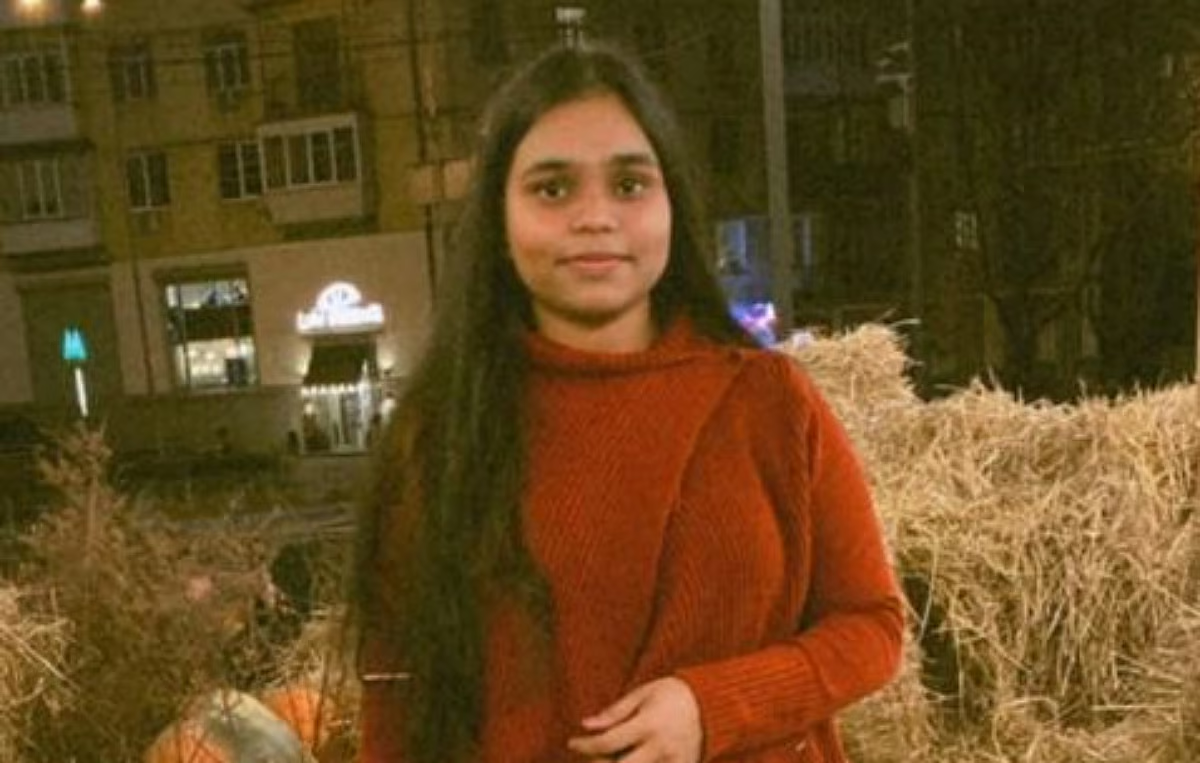
A 21-year-old third year student pursuing MBBS in UKraine shared a video with her family about a group staying in the bunker of their college. Muskaan Firoz Shaikh contacted the Indian embassy for help but they asked to stay here at the same place and said they will reach.
Muskaan’s father Firoz who is working with the Bhiwandi-Nizampur city municipal corporation claims the family is tensed as the attack is going on in the nearby areas.
“She is staying inside the bunker of Bhuko Vibiyan University in Ukraine. Muskaan said there are around 150 students inside who are from across the countries. While, around 7 of them are from Delhi and Gujarat,” said Asma Shaikh, her mother who are from Padgha in Bhiwandi.
Asma through a video had appealed to the Indian government to help her daughter who is stuck inside a bunker.
Navid Shaikh, her maternal brother, claims Muskaan had approached the Indian embassy for help. “But in reply they told her to stay at the same place for a while. Till the help reached them as they were on the way. Muskaan is in regular touch with her parents and is scared as the attacks are going on in the nearby area,” added Naved.
Muskaan had shared a video with her family which shows the person shooting it. Later, the camera reached a room where three girls including Muskan were seen holding a Persian cat. The video was shared by muskaan to confirm the parents about her safety.
Naved Shaikh said they have been staying in the bunker for the last three days. “Usually they are at home and cook food. As soon as the siren buzzes they get inside the bunker. They either stay for three hours or full night in the bunker. It depends when the siren buzzes again to give a signal about the safety and they move out. But they are staying in with fear and threat to life and need immediate help. Just like others our sister too can reach home safely if the Indian government helps them,” added Naved Shaikh.
source: http://www.freepressjournal.in / The Free Press Jounal / Home> Mumbai / by Faisal Tandel / February 22nd, 2022
The Malegaon Secular Front of ISLAM Party and the Samajwadi Party, secured the mayor and deputy mayor posts in the civic body, while AIMIM and BJP stayed away from voting
Malegaon :
Malegaon in Maharashtra has entered a new phase in local politics after the mayor and deputy mayor elections brought a clear win for the ISLAM Party–Samajwadi Party alliance, known as the Malegaon Secular Front. Sheikh Nasreen Khalid was elected mayor, while Shan-e-Hind Nihal Ahmed was chosen as deputy mayor on Saturday.
The election took place in the 84-member Malegaon Municipal Corporation, where 43 votes were needed to secure a majority. With the backing of the Congress, the Malegaon Secular Front reached the required number and took control of the civic body.
Sheikh Nasreen Khalid received 43 votes in the mayoral election. These included 35 councillors from the ISLAM Party, five from the Samajwadi Party, and three from the Congress. Her nearest rival, Shiv Sena candidate Lata Ghodke from the Eknath Shinde group, managed to secure only 18 votes.
All India Majlis Ittehad-ul Muslimeen’s (AIMIM) 21 councillors and the BJP’s two councillors stayed away from the voting process. The BJP, which is part of the ruling alliance at the Centre and in Maharashtra, did not vote in support of the Shiv Sena candidate, dealing a setback to the Shinde faction in Malegaon.
Speaking after her election, Mayor Sheikh Nasreen Khalid said, “This victory belongs to the people of Malegaon. We will work for justice, development, and equal respect for every section of society.”
In the deputy mayor election, Samajwadi Party councillor Shan-e-Hind Nihal Ahmed defeated Shiv Sena’s Advocate Nilesh Kakade by the same margin. Nihal Ahmed secured 43 votes, while Kakade received 18. AIMIM again stayed away, and the BJP did not take part in the vote.
After her win, Deputy Mayor Nihal Ahmed said, “Malegaon has shown faith in secular values. Our duty is to serve the city honestly and listen to the voice of the common people.”
The municipal elections were held on 15 January. Results showed the ISLAM Party emerging as the single largest party with 35 seats. AIMIM won 21 seats, Shiv Sena secured 18, the Samajwadi Party five, Congress three, and the BJP two.
The ISLAM Party was founded by former Congress MLA Sheikh Asif Sheikh Rashid on 20 October 2024. In its first civic election, the party succeeded in winning the mayor’s post, marking a strong start in local politics.
District Collector Ayush Prasad conducted the election as the presiding officer. He said, “The mayor and deputy mayor elections were completed in a peaceful and orderly manner.”
For many residents, the result reflects the political strength and unity of Malegaon’s Muslim-majority population and reinforces their role in shaping the city’s democratic future through the ballot box.
source: http://www.clarionindia.net / Clarion India / Home> Editor’s Pick> India> Indian Muslims / by Team Clarion / February 08th, 2026
Congress leader retains Prabhag 19 seat, credits public trust, service record and cross-community support
Mira-Bhayandar, Thane :
Congress leader Rubina Feroze has returned to the Mira-Bhayandar Municipal Corporation in Thane district of Maharashtra for a second consecutive term, winning from Prabhag No. 19 and leading all four candidates of her panel to victory. Her win stands out in an election largely dominated by the BJP, which saw several smaller parties wiped out.
Rubina, who first won the ward in 2017, secured a fresh mandate from the same constituency. Prabhag 19 has a mixed population of Marathi and Gujarati speakers, with Hindus, Muslims, Christians and Jains living together. Muslims form a small minority in the ward, yet the results reflected broad support cutting across community lines.
Speaking to Urdu daily Inquilab, Feroze said repeated attempts were made to polarise Mira-Bhayandar on religious and linguistic lines. “Over the last three years, there was a clear effort to push the city towards communal tension. Even the Marathi language was dragged into politics last year,” she said.
“Many parties tried to win votes by invoking religion and identity,” she added. “But in ward number 19, that kind of politics did not work. People judged me by my work and by the stand taken by the Congress.”
Overall, the Congress improved its performance in the civic polls, winning 13 corporator seats compared to 12 in the previous election, helping the party avoid a poor showing in the city. Shiv Sena (Shinde faction), backed by state minister Pratap Sir Naik, was restricted to just two seats.
Describing her victory as a responsibility rather than a personal achievement, Rubina Feroze said, “I thank the people of my ward for trusting me again. I will work harder in the new term and address every issue faced by residents.”
During her previous term, she focused on welfare initiatives and local issues, including helping women access government schemes, organising self-defence classes, holding a job fair for unemployed youth, and conducting career guidance programmes for students. She also assisted cancer patients in securing financial aid from the Municipal Corporation.
Residents cited her accessibility as a key factor behind her re-election. “She listens to people and follows up on issues. That is why people from every community voted for her,” a local voter said.
The result is being widely seen as a signal that development-oriented politics and social harmony continue to resonate with voters, even amid a charged political climate.
source: http://www.clarionindia.net / Clarion India / Home> Editor’s Pick> India / by Team Clarion / January 23rd, 2026
KUWAIT / Raigarh District (MAHARASHTRA) / New Jersey (U.S.A) :
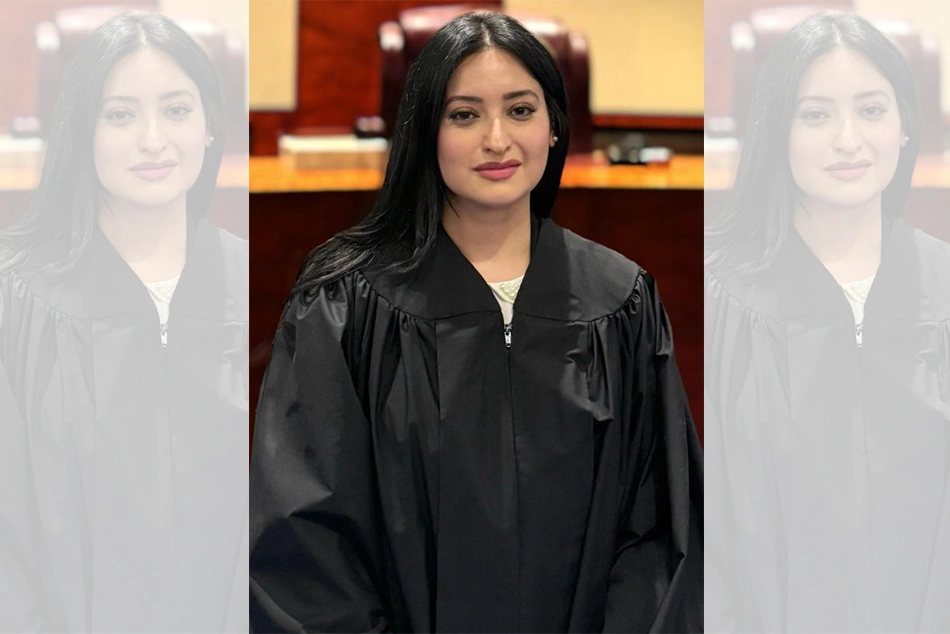
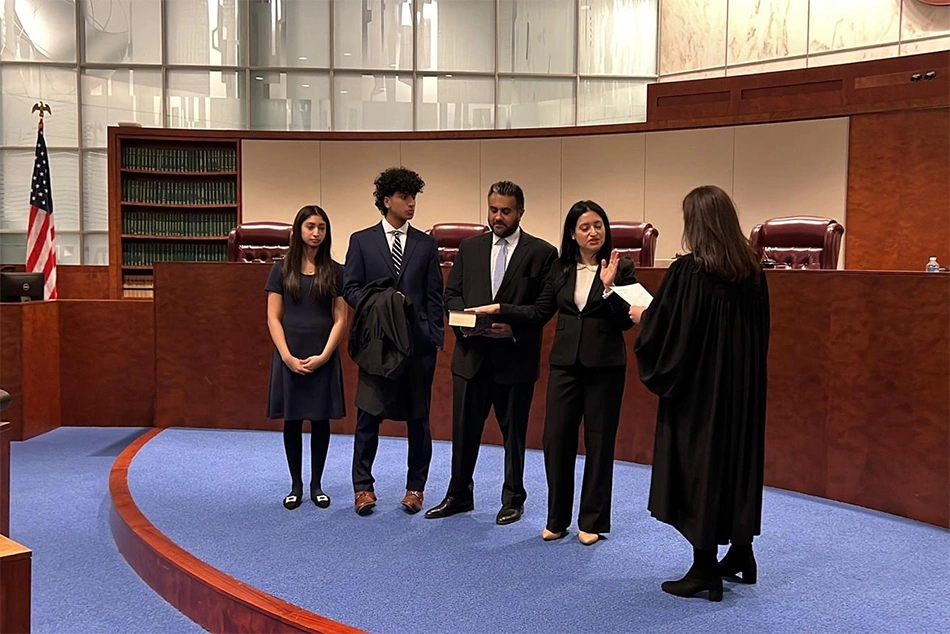
Kokan’s daughter Lubna Qazi Chaudhry took the oath as Administrative Law Judge in New Jersey with her hand placed on The Holy Quran, pledging to uphold constitutional responsibilities.
Mumbai:
Lubna Qazi, a lawyer originally from Maharashtra’s Raigad district, has created history by taking oath as an Administrative Law Judge (ALJ) in the US state of New Jersey, becoming the first Muslim woman to be appointed to this position in the state. The appointment is being widely regarded as a significant milestone for minority representation in the American judiciary.
The oath-taking ceremony was held recently, where Associate Justice Rachel Wainer Apter of the New Jersey Supreme Court administered the oath. On the occasion, Lubna Qazi placed her hand on the Holy Quran and pledged to faithfully discharge her constitutional duties.
The position of Administrative Law Judge holds considerable importance within the American judicial system. ALJs preside over cases involving decisions of government agencies, administrative disputes and public grievances, delivering rulings based on established legal principles.
Lubna Qazi’s Life Journey
Lubna Qazi’s life journey spans multiple countries and cultures. She was born in Kuwait, where she spent her early childhood with her parents. In 1990, during a school vacation, she travelled to the United States. However, following the outbreak of the Gulf War, the family decided to settle there permanently.
Lubna later pursued her education in California, completed her graduation from the University of California, and earned her law degree from Western State University College of Law.
After marrying Ahsan Chaudhry in 2005, Lubna moved to New Jersey, where she served in various government legal positions for nearly two decades. Recognising her extensive legal experience and professional competence, the Governor of New Jersey nominated her for the post of Administrative Law Judge in 2025.
Lubna Qazi is also distinguished for her linguistic abilities. In addition to English, she is fluent in Urdu, Hindi and Konkani, and has working knowledge of Arabic. Committed to preserving cultural and linguistic heritage, she is personally teaching Urdu and Arabic to her two children at home.
Family Feels Honoured
Expressing his pride, Lubna’s father Inayatullah Qazi said that the entire family feels honoured by her achievement. He described the appointment not merely as a position, but the result of years of hard work, sacrifice and prayers.
Speaking to the correspondent, Inayatullah Qazi said that his family hails from Tala taluka of Raigad district in the Konkan region. He completed his education up to Class VI at Jamia Millia Islamia School, Delhi, and his high school education at Anjuman Islam, Mumbai.
After obtaining a degree in Mechanical Engineering from Government College of Engineering, Aurangabad, in 1975, he moved to Kuwait for employment, beginning his career with an air-conditioning company. After working there for fifteen years, he migrated to the United States with a single suitcase following Iraq’s invasion of Kuwait after the Gulf War, as his children were already in the US at the time. He later ensured higher education for all four of his children.
Inayatullah Qazi said that the family’s roots are deeply embedded in Islamic tradition and that Urdu is spoken with pride at home. He added that Lubna completed recitation of the Holy Quran at the age of seven.
He further shared that around five to six generations ago, their ancestors were sent to the Konkan region as Qazis (judicial authorities) to administer justice without discrimination based on religion, caste or race. Although the profession discontinued a few generations ago, he expressed happiness that his daughter has now proudly revived the family’s judicial legacy.
Lubna Qazi is also the granddaughter of Dr Rehana Ahmed, a noted educationist and Executive Chairperson of the Girls’ Board of Anjuman Islam, Mumbai. Dr Ahmed expressed joy over Lubna’s achievement, stating that it serves as a shining example for young women across the community and will inspire girls to pursue higher education and professional careers. She is widely recognised for her dedicated efforts toward the promotion of girls’ education, particularly within the Muslim community.
Meanwhile, several social and legal organisations, including the Asian Pacific American Lawyers Association of New Jersey, have congratulated Lubna Qazi on her appointment. Observers believe that this development marks a significant step forward in strengthening Muslim and minority representation within the American judicial system.
source: http://www.ummid.com / Ummid.com / Home> United States / by Mohiyuddin Altamash / January 30th, 2026
The All India Majlis e Ittehadul Muslimeen has defended newly elected Mumbra corporator Sahar Sheikh amid controversy over remarks described by critics as communal. Party leaders said her words targeted no community and called the backlash an example of selective scrutiny faced by Muslim representatives.
At a press conference, AIMIM state president and former MP Imtiaz Jalil said Sahar Sheikh made no remark against Hindus and issued no call for removal of any group from Mumbra. He said pressure continues for police action despite absence of any offensive content. He said the party stands with its corporator and treats her position as the party position.
The controversy followed remarks made after her election from Panel No. 30 B in Mumbra. AIMIM leaders said sections presented the remarks out of context to create a national level dispute soon after a Muslim woman secured an electoral win.
Jalil said the party will challenge the police notice served on Sahar Sheikh. He said the matter will reach the Supreme Court if required. He also questioned demands for an apology raised by BJP leader Kirit Somaiya. Jalil asked under which authority such demands were made while similar or harsher remarks by ruling party figures drew no response.
He referred to public statements by leaders speaking about entering mosques or issuing threats against Muslims. He asked why police action failed to follow in such cases. He said swift notices appear when Muslim women speak, while silence follows other instances.
Jalil pointed to the presence of Mayur Sarang, a Hindu supporter, at the press conference alongside AIMIM’s five elected corporators from Mumbra. He said such presence reflected the inclusive nature of the party stand.
Sahar Sheikh sat with party leaders and maintained her statement. AIMIM said it will pursue legal remedies and urged calm, asking authorities to address the issue within constitutional limits.
source: http://www.radiancenews.com / Radiance News / Home> Latest News> Report / by Radiance News Bureau / January 29th, 2026